
4
Future Residential Development Patterns
This chapter explores the potential for more compact, mixed-use development and reduced automobile travel. It first examines the opportunities for growth in the demand for compact developments, starting with demographic trends—primarily the aging of the population and immigration—that will shape housing needs and preferences, the location of housing, and travel well into the middle of this century and beyond. The discussion then turns to best estimates of new housing units needed by 2030 and 2050, some of which could be developed at higher densities. These estimates form the basis for the scenarios developed in the next chapter to estimate potential effects on vehicle miles traveled (VMT), energy use, and carbon dioxide (CO2) emissions. Also discussed are the potential effects of higher energy prices and measures to curb greenhouse gas (GHG) emissions on development patterns. Although the future provides many opportunities for change, the various impediments to the supply of compact development are discussed next. The resulting apparent undersupply of more compact development is then considered, followed by strategies for addressing impediments and increasing the supply of compact, mixed-use development. The chapter ends with a summary of key findings.
OPPORTUNITIES FOR GROWTH IN DEMAND FOR COMPACT DEVELOPMENT
The primary opportunity for changing development patterns lies in the number of new housing units that will be constructed. Millions of new units will be required every year, both because the population is projected to grow (largely as a result of immigration) and because some housing units are torn down and replaced every year. Demographic and economic trends, particularly the retirement of the baby boom generation, the increasing importance of immigrants, and higher energy prices, could result in a larger share of these new units being built in more compact, mixed-use developments.
Demographic Trends
Aging of the Population
Aging of the baby boom generation over the next several decades will result in a historically unprecedented generational shift with profound implications for the housing market in the United States.1 By 2010, the leading edge of the boomers will pass the age of 65, and growth of the elderly population will substantially exceed that of younger adults (see Table 4-1). As they have in every decade since the 1970s, the boomers will dominate changes in the housing market until at least 2030 as they downsize and eventually withdraw entirely from home ownership. Because of the size of the boomer cohort, nearly every state will experience these trends (Pitkin and Myers 2008).
Two effects are of particular interest in this study. First, starting in about 2015, the boomers may begin to sell off their large supply of housing, primarily in low-density suburban areas, as they move to smaller units (Pitkin and Myers 2008). Second, new construction will likely cater to the demand of seniors for retirement housing, following
TABLE 4-1 Population Growth Each Decade and by Dominant Age Group, 1960–2050 (in millions except as indicated)
|
Decade |
Population Growth |
Dominant Age Group |
||||
|
Total 25+a |
Ages 25–64 |
Ages 65+ |
Age Group |
Growth |
Percent of Total |
|
|
1960–1970 |
10.6 |
7.1 |
3.4 |
55–64 |
3.1 |
28.9 |
|
1970–1980 |
22.9 |
17.3 |
5.6 |
25–34 |
12.1 |
53.0 |
|
1980–1990 |
25.1 |
19.6 |
5.5 |
35–44 |
12.0 |
47.7 |
|
1990–2000 |
24.0 |
20.2 |
3.8 |
45–54 |
12.8 |
53.5 |
|
2000–2010 |
21.4 |
16.3 |
5.2 |
55–64 |
11.8 |
54.8 |
|
2010–2020 |
22.1 |
7.8 |
14.4 |
65–74 |
10.5 |
47.5 |
|
2020–2030 |
19.2 |
2.4 |
16.8 |
75–84 |
8.3 |
43.4 |
|
2030–2040 |
20.1 |
11.5 |
8.6 |
85+ |
5.8 |
28.9 |
|
2040–2050 |
19.0 |
12.3 |
6.7 |
85+ |
5.5 |
28.7 |
|
Note: Since 1970, when the leading edge of the baby boomers turned 25, and continuing until 2030, when the leading edge will turn 85, this generation accounts for more than 40 percent of the growth in the U.S. population each decade. aThose age 24 and younger are excluded because few persons in this age group are homeowners. Source: Pitkin and Myers 2008, Table 4. |
||||||
the general principle that future housing development demand is shaped by growth at the margin rather than by the average growth in new households.2
These effects could represent an important opportunity for shifts to denser development patterns as boomers downsize and move to smaller housing units and possibly to more central, walkable locations (Myers and Gearin 2001). These preferences could shift even more strongly once such new retirement-friendly developments are available
in greater numbers in the market and boomers become more familiar with them. Recent studies suggest, however, that the jury is still out on whether boomers will move in large numbers to city centers (Engelhardt 2006; Frey 2007).3 On the one hand, perhaps more than past retiring generations, the boomers possess the education, wealth, interest in amenities, and potential to continue to work and pursue leisure activities longer to be attracted to cities. Nevertheless, they are the first truly “suburban generation,” born and raised in the suburbs, and it is unclear whether they will be interested in moving to a city environment (Frey 2007, 15). As yet there is little evidence from current retirees of any net shift of population toward central cities, nor has the amount of new construction been sufficient to indicate a structural shift in the location of new urban development (Engelhardt 2006; Pitkin and Myers 2008).
Regardless of whether the boomers retire to central cities, their travel will be reduced as they age. The 2001 National Household Travel Survey found that licensed drivers age 65 and older drove an average of about 7,700 miles annually, more than 40 percent fewer miles than the next lowest age group (55 to 64) (Hu and Reuscher 2004, Table 23). Older drivers also took fewer daily person trips (3.4 on average)—about one-quarter fewer than the 55 to 64 age group (Hu and Reuscher 2004, Table 13). The trend over time, however, has been toward increased VMT and trip taking by older drivers (Hu and Reuscher 2004, Tables 13 and 23). The extent to which the boomers will drive more than current retirees depends on their continuing suburban lifestyle; their health; and their propensity to prolong working, either full- or part-
time. If future cohorts of retirees are healthier and wealthier, as many expect, they will likely drive longer. To the extent they choose to live in more urban settings with mixed uses and good transit, their continued mobility will also enable them to travel by other transportation modes (e.g., transit, walking).
Immigration
Immigrant populations have risen sharply in recent years and are younger than the existing population on average. As noted, they are the primary source of U.S. population growth, helping to offset the nation’s aging population. Immigrant populations will also play an important role in future housing demand and provide another opportunity for denser development patterns.
Immigration levels increased sharply between 1997 and 2006 to an average annual net flow of about 1.16 million per year, with the result that the foreign-born share of the U.S. population has more than doubled from its historic observed minimum in 1970 to 13.1 percent in 2006 (Pitkin and Myers 2008, 22). The foreign-born share of new entrants to the housing market has increased accordingly, to about 25 percent in 2006 (Pitkin and Myers 2008, 23).
Projecting the future housing demand of foreign-born households involves many uncertainties, not the least of which is forecasting immigration flows. The latter can be significantly altered by changes in U.S. laws regulating immigration, border enforcement, numbers of illegal immigrants, the demand for labor in the United States, and population and economic growth in source countries. Pitkin and Myers (2008) recommend use of an intermediate-range population forecast, which projects a foreign-born population in the range of 13 to 16 percent of the total population by 2030, growing to 14 to 19 percent by 2050 (see Table 4-2). Individuals of Hispanic origin represent the dominant immigrant group. Together with native-born Hispanics, they are projected to represent 20 to 23 percent of the total U.S. population by 2030 and 22 to 29 percent by 2050.
TABLE 4-2 Population of the United States by Nativity and Ethnicity, 2006 and Projected for 2030 and 2050 (in millions except as indicated)
|
|
2006, Observeda |
2030 |
2050 |
||
|
Censusb |
Pewc |
Censusb |
Pewc |
||
|
Total population |
298.8 |
363.6 |
371.8 |
419.9 |
438.2 |
|
Percent foreign born |
12.5 |
12.8 |
16.0 |
13.8 |
18.6 |
|
Percent Hispanic, native and foreign born |
14.7 |
20.1 |
22.5 |
22.3 |
29.2 |
|
aU.S. Census Bureau estimate for July 1, 2006; percent foreign born from American Community Survey 2006. bCensus 2004 Interim. Foreign-born share inferred from Census 2000, Middle and High series on which the Interim series immigration is based. cPew (Passel–Cohn) Main. Source: Pitkin and Myers 2008, Table 6. |
|||||
Immigrant flows have tended to be geographically concentrated, with new immigrants settling near groups with the same ethnicity. Before the 1990s, densely settled areas in the northeast and west were the dominant destination. Since about 1990, new immigrants, especially those of Hispanic origin, have been locating in the south and midwest in much greater numbers than previously (Pitkin and Myers 2008). Nevertheless, and of direct relevance to this study, foreign- and native-born Hispanics are much more likely to locate in central cities and remain there than are non-Hispanics of similar nativity status (Figure 4-1). In fact, between 2000 and 2004, Los Angeles and New York still accounted for nearly one-quarter of the increase in the U.S. foreign-born population (Frey 2007).
The housing patterns of foreign-born householders, Hispanic and non-Hispanic alike, differ substantially from those of the native born, in part reflecting the greater propensity of immigrant populations to locate in central cities. For example, immigrants who arrived in the United States in the previous 10 years are about three times as likely to live in multifamily housing (Pitkin and Myers 2008, 26). This large
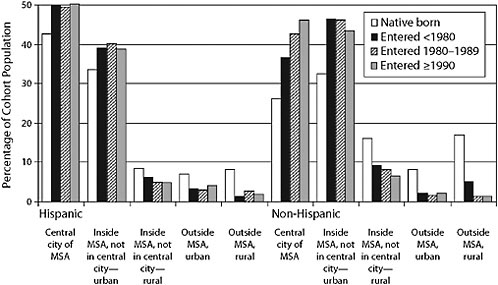
FIGURE 4-1 Distribution of population among metropolitan locations, 2003, by origin, nativity, and period of entry (MSA metropolitan statistical area).
Source: Pitkin and Myers 2008, Figure 7.
difference, however, is short-lived, falling by more than half within a decade of arrival, reflecting income growth and assimilation of immigrant populations (see Figure 4-2). The convergence pattern of Hispanic immigrants is thought to be somewhat slower because of continuing educational and income gaps, but the evidence here is mixed (see Smith 2006 and Perreira et al. 2006, for example, in Pitkin and Myers 2008).
A similar pattern of differences and then convergence toward the mean is found in the travel behavior of immigrant populations. For example, a study of immigrant populations in California, where the foreign-born population now represents more than one-quarter (26 percent) of the total, found that recent immigrants, regardless of race or ethnicity, are significantly more likely to commute by transit than are native-born adults of a similar race or ethnicity, controlling for other determinants of mode choice (Blumenberg and Shiki 2007). After their first 5 years in the United States, however, immigrant
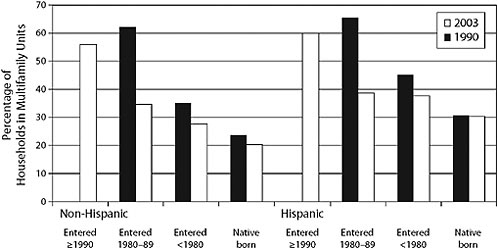
FIGURE 4-2 Households in multifamily units, by origin and nativity of householder, 1990 and 2003.
Source: Pitkin and Myers 2008, Figure 5.
populations, much like their native-born counterparts, begin to purchase and use automobiles as their economic status rises (Blumenberg and Shiki 2007). The rate of assimilation for different ethnicities varies considerably, though, even after controlling for income. Asian immigrants, for example, move rapidly to automobile use. Hispanics, who make up close to one-third (32 percent) of California’s population, tend to use transit more than do native-born commuters even after 20 years in the United States, which perhaps suggests cultural differences for this group (Blumenberg and Shiki 2007).
The Youth Market
Another opportunity for more compact, mixed-use development may be found in young adults. Although young adults who are entering the housing market are less numerous than the baby boom generation, they appear to exhibit a stronger preference than their predecessors for urban living (Pitkin and Myers 2008). The amenities and sophistication of many cities are magnets for the often young, highly educated niche
market of nontraditional households, variously termed the “creative class” (Florida 2002) and “knowledge workers” (Storper and Manville 2006; Cervero 2007). The resurgence in apartment construction in many central cities (Birch 2002 in Pitkin and Myers 2008) is consistent with growing preferences for more compact development and more central locations. The amount of new construction has not yet been sufficient, however, to demonstrate a significant shift in development patterns (Pitkin and Myers 2008).
High Energy Prices
The demand for more compact development might also be encouraged by a future that could include sustained higher energy costs or the lingering effects of the current subprime mortgage crisis.4 What if, for example, higher energy prices persist—both gasoline prices at the pump and residential heating and cooling costs—or a significant carbon tax is imposed to reduce GHG emissions? In the short to medium term, consumers would likely respond by driving less, reducing VMT, and purchasing more fuel-efficient vehicles. In the longer term, higher energy prices could motivate residents and businesses to relocate to more densely developed areas, both to reduce travel distances and to increase opportunities for travel by alternative modes (e.g., transit, walking, bicycling).
What evidence is available that these changes will occur? The Congressional Budget Office (CBO) published two studies in 2008 examining consumer response to the most recent upward trend in gasoline prices that began in 2003.5 The first study examines changes
from 2003, when gasoline cost $1.50 per gallon, to 2006, when it cost $3 per gallon (CBO 2008b). The second study is an update that examines consumer response to the increase in the price of gasoline to $4 per gallon by May 2008 (CBO 2008a). CBO finds that consumers were less responsive to the price of gasoline, particularly in the short term, than they had been several decades ago. CBO attributes this finding to growth in real income, which has made the cost of gasoline a smaller fraction of consumers’ disposable income; improved fuel economy; and the development of distant suburbs, which has made some consumers more reliant on the automobile (CBO 2008b). Nevertheless, CBO cites evidence that motorists cut back on the number of trips, and with gasoline at $4, they drove less than in previous years.6 In addition, there was a shift to cars and away from less fuel-efficient sport utility vehicles and minivans. The share of light trucks fell from about 55 percent of the light-duty vehicle fleet in 2004, to below 52 percent by 2006, to a seasonally adjusted annual rate of 44 percent when gasoline prices rose above $4 per gallon in 2008 (CBO 2008a; CBO 2008b).
CBO also quantifies the relationship between gasoline prices and fuel consumption. Estimates of the short-run elasticity of demand for gasoline indicate a modest response; each 10 percent increase in the retail price of gasoline is estimated to have reduced consumption by about 0.6 percent (CBO 2008b). Estimates of the long-run elasticity of demand for gasoline indicate that a sustained increase of 10 percent in price would reduce gasoline consumption by about 4 percent. The substantially larger long-term effect is attributed to the ability of consumers to make more significant changes, such as purchasing more fuel-efficient vehicles and moving jobs or residences or both to
reduce their commuting and other trip distances. For the effect to be fully realized, however, CBO notes that prices would have to remain sufficiently high for about 15 years for the entire stock of passenger vehicles to be replaced (CBO 2008b).
CBO also examines the impact of higher gasoline prices on possible government policies to reduce gasoline consumption and CO2 emissions, including taxes and more stringent fuel-efficiency [corporate average fuel economy (CAFE)] standards. CBO notes that a gasoline tax increase, or a carbon tax under a cap and trade system, would have to be very high to make a difference in motorist behavior, both because such taxes represent a relatively small share of the total price of gasoline7 and because Americans have limited alternatives to automobile travel. In Europe, for example, high energy prices have probably contributed to higher-density developments, and high taxation has sustained these prices. Moreover, because of more stringent CAFE standards promulgated as part of the Energy Independence and Security Act of 2007, which require manufacturers to increase the fuel-efficiency of passenger vehicles to an average of at least 35 miles per gallon by 2020, CBO concludes that carbon taxes on CO2 emissions envisioned in current climate change legislation would probably have little or no effect on average fuel economy (CBO 2008a).8 Nevertheless, were it politically feasible, raising gasoline prices would encourage motorists to drive less. In contrast, the CAFE standards should encourage driving by reducing gasoline costs (motorists can drive farther on a gallon of gasoline), although CBO notes that the “rebound” effect may be small (CBO 2008a).
Small and Van Dender (2007a; 2007b) explore the size of the rebound effect by decomposing the effects of an increase in fuel prices into two
components: (a) reduced travel or VMT and (b) a fuel-efficiency effect (i.e., drivers choose more fuel-efficient vehicles). If the net effect of the two is to reduce the cost of driving, drivers may drive more (the rebound effect).
Using cross-sectional, time-series annual data for U.S. states from 1966 through 2004 on VMT, fuel intensity, real fuel prices, real per capita income, population, and urbanization, among other variables, Small and Van Dender (2007a; 2007b) estimate the price elasticity of gasoline as well as its two components.9 They find that the short-term10 price elasticity of gasoline is about −0.074; that is, if the price of gasoline doubles (increases by 100 percent), consumers cut back on gasoline use by a little more than 7 percent. Over the longer term, a doubling of fuel prices is estimated to result in a much larger 36 percent reduction in gasoline consumption. These results are consistent with those found by CBO.
When these elasticities are further decomposed into the two components discussed above, Small and Van Dender find that the rebound effect was modest and declined as income rose.11 In other words, very little of the cutback in gasoline consumption was due to changes in VMT; much more was due to changes in fuel efficiency—the effect of either changes in vehicle choice or government policy (CAFE). One of the primary reasons for the modest overall price effect was the steady rise in income over the period, which made fuel costs a smaller share of consumer budgets. What are the implications for the future?
Small and Van Dender (2007b) conclude that as long as incomes continue to rise, the price elasticity of gasoline will continue to fall slowly, and the rebound effect will decline, even if gasoline prices rise.
In summary, the evidence with regard to the effect of higher energy prices on VMT suggests that consumers do respond to rises in the price of gasoline by driving less and by shifting to more fuel-efficient vehicles. However, the latter effect has been much greater in the past than the former. If energy prices were to rise significantly and stay at these levels, then reducing travel and relocating to a more dense location where many destinations were closer and alternatives to driving more numerous would be a rational response. Nevertheless, as long as real income continues to rise, transportation costs will represent a relatively small share of consumer and business budgets and thus will continue to be just one of many factors that drive residential and business location decisions.12
FORECASTING THE DEMAND FOR NEW HOUSING
If the implications of sustained higher fuel prices for future housing demand are uncertain and seem likely to be modest, the implications of the aging of the population and continued immigration for the total number of housing units are substantial and more readily quantified. Forecasts typically comprise two elements: (a) projections of the number of new households that provide the demand for new housing units and (b) estimates of net replacement units. The latter is composed of housing unit gains from conversions from nonresidential use and splitting of existing housing units, less the removal of units as a result of damage and demolition (Pitkin and Myers 2008).
Estimates of new construction are strongly dependent on demographic trends, particularly changes in the numbers, characteristics, size, and age of households. Few forecasters, however, make quantitative projections
beyond 2030, and for good reason (Pitkin and Myers 2008). Most of the people who will be old enough to form households in 2030 have already been born, and mortality rates are not expected to change dramatically. The main unknowns are the projected number of households in that year and the fraction of adult immigrants who will form households.13 Projecting further into the future requires making assumptions about future fertility rates and the propensity for household formation of those who are as yet unborn. Nevertheless, such uncertainties can be handled by providing ranges.
Using a well-supported macrosimulation model, Zeng et al. (2006) (cited by Pitkin and Myers 2008, 11) project an increase of about 40 percent in the number of U.S. households by 2030 and a 45 percent to 83 percent increase by 2050, reflecting the greater uncertainty of estimates further into the future (see Table 4-3).14 The estimates reflect the aging of the population and the resulting changes in household composition, including a rapid increase in one-person households and in the numbers of those aged 65 and older and living alone (see Table 4-3). Low and high estimates for many of these factors are also provided, including estimates of the size of immigrant populations (the latter, which uses census estimates, is not shown on the table).
Pitkin and Myers (2008, 14) also estimate net housing replacement rates. They start by examining historical rates of housing loss and replacement (i.e., from 1980 to 2006) on the basis of census data. The average annual net replacement rate for that period (excluding mobile homes) was 0.4 percent. The authors project net replacement rates substantially below current levels, or about 0.2 percent annually (Pitkin
TABLE 4-3 Projected New U.S. Households by Type, 2030 and 2050 (in millions)
|
Year |
Total Number of Households |
One-Person Households |
Married-Couple Households |
Households with Persons ≥65Years Old and Living Alone |
|
2000 |
105.2 |
27.1 |
57.8 |
3.6 |
|
2030 |
142.8–153.2 |
38.3–48.4 |
61.9–82.6 |
4.7–5.7 |
|
2050 |
152.8–192.0 |
43.2–57.0 |
58.2–107.3 |
4.2–6.8 |
|
Source: Zeng et al. 2006 in Pitkin and Myers 2008, Table 1. |
||||
and Myers 2008). Their forecast is based on projected higher costs of building materials and reduced capital availability, which will make the existing housing stock more valuable and resistant to change. Their forecast also reflects the rapid increase in one-person households and greater demand for smaller housing units, which, in their judgment, will favor adaptive splitting and reuse of existing housing units rather than replacements in new locations.15
Another well-known forecaster of housing demand, Nelson (2004; 2006), closely matches the estimates of new housing units by Zeng et al. (2006), although Nelson’s forecasts do not extend beyond 2030. [Ewing et al. (2007) extend these estimates to 2050 by using Nelson’s work as well as their own projections.] Table 4-4 compares the different estimates. The totals are similar, as are the shares of new housing units estimated to be needed by 2030 and 2050. The primary sources of the differences in the estimates are (a) the number of net replacement units and (b) the types of units that will be built. Nelson projects net replacement rates of 0.58 percent per year, well above current rates (Nelson 2004 in Pitkin and Myers 2008). He also believes that there will be a sea change in preferences, with all new housing and replacement
TABLE 4-4 Comparison of Estimates of New Housing Units, 2030–2050 (in millions)
|
|
Pitkin and Myers |
Nelson and Ewing et al. |
|
2030 |
|
|
|
New units for population growth |
37.6–48.0 |
38.8 |
|
Net replacement units |
8.2–8.7a |
20.1b |
|
Total new and replacement units |
45.8–56.7 |
58.9 |
|
Percent of 2000 dwelling units |
43.5–53.9c |
50.8c |
|
2050 |
|
|
|
New units for population growth |
47.6–86.8 |
52.0 |
|
Net replacement units |
14.8–18.6a |
37.0b |
|
Total new and replacement units |
62.4–105.4 |
89.0 |
|
Percent of 2000 dwelling units |
59.3–100.2c |
71.8d |
|
aPitkin and Myers assume a net replacement rate of 0.2 percent per year. bNelson assumes a net replacement rate of 0.58 percent per year. Ewing et al. extrapolate this rate to 2050. cPitkin and Myers’ 2000 base is all occupied housing units (105.2 million), while Nelson’s 2000 base is all housing units (115.9 million). dThe base year of Ewing et al. is 2005 (124 million housing units from the American Housing Survey). Using census population estimates for the same year, they derive a ratio of units per capita, which they then apply to census population estimates for 2050, assuming household size will not change substantially. Sources: Pitkin and Myers 2008; Nelson 2004; Ewing et al. 2007. |
||
units divided equally between attached units (apartments, townhouses, and condominiums) and small-lot houses (on less than one-sixth of an acre). The result will be a major reversal of current trends, which favor suburban areas, to a move back to urban centers. Pitkin and Myers (2008) are critical of these assumptions for the reasons discussed above, as well as of Nelson’s strong reliance on changing preferences, rather than a combination of changing demographics and preferences, as the driver of future household demand.
Nelson (2004) also estimates a large increase in commercial and institutional space by 2030. He projects that about 96.4 billion square feet will be added, nearly as much as existed in 2000 (106.7 billion square feet). While the committee recognizes the importance of commercial space that complements more compact development,
it was unable to predict how this space would be distributed within metropolitan areas and thus focused solely on residential development.
IMPEDIMENTS TO THE SUPPLY OF COMPACT DEVELOPMENT
If the millions of new housing units required each year provide an opportunity to build more compactly, doing so will require overcoming numerous impediments to change, many of which are on the supply side.
Durability of the Housing Stock
The durability of the housing stock makes it difficult to change development patterns, at least in the short and medium terms. In contrast to passenger vehicles, whose median age in 2007 was 9.2 years,16 housing typically lasts 50 years or longer (Brown et al. 2005). The longevity of existing housing is often coupled with the negative receptivity of existing homeowners to change, particularly to increasing density levels in their communities, which is frequently perceived as threatening the value of their homes. More generally, most U.S. metropolitan areas have mature land use patterns and transportation systems that make change difficult, except at the margin. The maturity and durability of metropolitan development patterns help explain why policies to change land use have incremental effects that only cumulate over a long time frame.
Local Zoning Regulations
Local zoning regulations are a significant impediment to more compact, mixed-use development in many U.S. communities. Land use planning
and regulations are controlled by local governments. The authority to create zoning and subdivision controls and building regulations, which have the force of law, is a powerful tool in establishing the design requirements and physical context of a community’s development. The two most important impediments to more compact development from current zoning regulations are development densities and mixing of land uses.
Zoning was introduced by urban reformers in the United States in the early 20th century to help alleviate the impacts of urban overcrowding on disease and illness—hence the focus on limiting development densities and segregating incompatible land uses, such as residential and high-polluting industrial uses (see TRB 2005). The product of lower-density development and separation of land uses, however, was often long distances between destinations, creating dependence on the automobile.
As they evolved, zoning regulations also operated to reinforce economic and racial separation. Exclusionary zoning in wealthier communities restricted multifamily housing, for example, by establishing minimum lot sizes or housing square footage, which had the effect of keeping housing prices high and thus excluding lower-income families (NRC 1999; Pendall et al. 2006). Once in place, such zoning regulations tended to be reinforcing; homeowners viewed efforts to incorporate more affordable multifamily housing as a threat to their property values (Fischel 1999 in NRC 1999).
It is difficult to overcome such exclusionary zoning by persuading local governments to permit higher-density development. As Downs (2004) points out, most local governments have strong incentives to support the land use preferences of their own citizens and ignore the needs of the metropolitan area as a whole. As noted, many homeowners appear to prefer single-family, detached housing and the perceived amenities of suburban living (e.g., access to open space and recreation, less congestion) and view zoning changes, particularly those allowing increased density, as threats to the value of their homes and the
ambience of their neighborhoods.17 Policies adopted by territorially broader levels of government, especially state governments, that are focused on encouraging higher-density development in areas of new growth should be more successful (Downs 2004). However, states are reluctant to overrule local governments on such issues as zoning by mandating growth boundaries or other metropolitan planning measures with teeth. There is a strong tradition of deference on these matters, which may explain why metropolitanwide or state policies that attempt to control land use are not widespread.
Engineering Requirements, Street Design, and Parking
Municipal street designs and parking regulations, which often tend to emphasize the needs of motorized travel at the expense of other modes, have also had an important impact on the design of communities (Meyer and Dumbaugh 2004). Municipal street design requirements favor minimum street widths to provide accessibility for fire trucks, long straight sight lines, and street layouts that discourage through traffic.18 The result has been to reduce the desirability and safety of nonmotorized forms of transport, such as walking and bicycling, and limit the connectivity of streets, tending to isolate residential from other land uses.
|
17 |
Indeed, according to the 2007 American Housing Survey, some 83 percent of owner-occupied housing is made up of detached single-family units, and nearly 70 percent is located in suburban areas, with the highest share in the south followed by the midwest (HUD and U.S. Census Bureau 2008, Table 3-1). In contrast, only 25 percent of renter-occupied housing units, which represent 32 percent of total occupied housing units, are detached single-family units. Fewer than half (49 percent) are located in suburban areas (HUD and U.S. Census Bureau 2008, Table 4-1). |
|
18 |
Early municipal street designs incorporated in guidelines issued by the U.S. Federal Housing Administration in 1935 recommended that residential streets be designed to “discourage through traffic, have a minimum paved width of 24 feet, use cul-de-sacs as much as possible, and avoid excessive planting in the front yards to have a ‘more pleasing and unified effect along the street’ ” (FHA 1935 in TRB 2005). Wide streets were believed necessary to accommodate the worst-case emergency scenario—two high-rise ladder trucks jockeying for position on a dead-end street (Duany et al. 2000 in Meyer and Dumbaugh 2004). |
Most community zoning codes for new development require that a minimum number of parking spaces be provided per housing unit or per 1,000 square feet, reflecting the maximum demand for parking (Meyer and Dumbaugh 2004). Parking requirements, which Shoup calls a “blind spot” and “unstudied link between transportation and land use,” are calculated on the basis of meeting peak demand for free parking, not on how many spaces drivers will demand at a price that covers the cost of the spaces. In most cases, this number is greater than what is needed to handle normal demand and results in an oversupply of parking, particularly in suburban areas (Shoup 2005, 3). Minimum parking requirements encourage driving to most destinations and take up space that could be used for neighborhood amenities, such as parks and greenspaces (TRB 2005).
The Institute of Transportation Engineers’ (ITE) trip generation rates are the standard by which local traffic impacts of new development are typically estimated and parking requirements and development impact fees are set. Generally, the data used to set trip rates are drawn from suburban areas with free and plentiful parking, low-density land uses, and minimal transit service (Cervero and Arrington 2008; Smith 2009). A recent study of vehicle trip generation rates in 17 transit-oriented developments (TODs) in five U.S. metropolitan areas found that vehicle trip rates were significantly overstated (Arrington and Cervero 2008). TOD housing projects averaged 44 percent fewer trips than estimated by the ITE manual.19 The researchers recommend that both traffic impact fees and parking requirements be reevaluated, potentially reducing the development costs of many TODs (Cervero and Arrington 2008, 1).20
APPARENT UNDERSUPPLY OF HIGHER-DENSITY, MIXED-USE DEVELOPMENTS
The impediments discussed in the previous section, particularly exclusionary zoning regulations, have resulted in an apparent undersupply of higher density, mixed-use developments. Downs (1999) and Levine (2006), for example, challenge the notion that the low-density, automobile-dependent pattern that dominates U.S. metropolitan areas simply reflects consumer preferences operating through the free market. Instead, they argue that land development is one of the most regulated sectors of the U.S. economy. Rather than operating freely, land use markets have limited the supply of alternative higher-density, mixed-use developments (Levine and Inam 2004; Levine 2006).
A survey of developers conducted in conjunction with the Urban Land Institute in 2001 provides evidence of this market bias (Levine and Inam 2004). Developers reported considerable market interest in compact developments but an inadequate supply.21 The two most important reasons cited were government regulations hostile to such developments and neighborhood opposition (Levine and Inam 2004). For developers that actually proposed more compact developments and were granted variances, more than 80 percent of the modifications involved reduced density, higher than any other category and signaling strong resistance to this design feature.22 If regulations could be relaxed, developers identified close-in suburbs rather than the metropolitan fringe as areas with the most potential for more compact development.
Since the 2001 survey, several other surveys have found increasing support among U.S. households for more compact development.23 Using data from Porter Novelli’s 2003 and 2005 annual consumer behavior surveys, for example, Handy et al. (2008) find a statistically significant shift in favor of more compact development between survey years, signaling a substantial change in attitude.24 After sociodemographic characteristics are controlled for, support was most positively related to expectations for child-friendliness in such communities and most negatively related to their likelihood of having space limitations (Handy et al. 2008). The researchers cite three reasons why the evidence of strong and increasing support for more compact development has not always translated into a greater supply of such housing. First, stated support in a survey does not always translate into political support for change. Second, even when there is such support, modifications in laws, regulations, codes, and the like are necessary and often difficult to effect. Finally, development itself is a slow process; even if policy changes are enacted, a meaningful increase in the supply of housing is likely to take several years (Handy et al. 2008).
Where well-designed compact, mixed-use developments are built, they can command a price premium. A few studies have attempted to explore the relationship between housing prices and development types. Eppli and Tu (1999 in TRB 2005) compare sales transactions and characteristics of homes in compact developments in four regionally
diverse areas with those of homes in nearby conventional suburban neighborhoods. Properties in Kentlands, a compact development in Maryland, sold for $30,000 to $40,000 more, on average, than homes in the surrounding conventional suburbs, even after site traits, housing characteristics, unit quality, neighborhood, and other market factors were controlled for. More recent research by the National Center for Smart Growth Research and Education at the University of Maryland found that home buyers will pay a substantial price premium to live in communities that emphasize quality design and walkable neighborhoods (Song and Knaap 2003). However, home buyers do not favor higher densities or certain other characteristics, such as commercial, multifamily, and public uses (relative to single-family uses) or proximity to major transportation arterials.
A recent study (Yang 2008) of Portland, Oregon, a model of smart growth, and Charlotte, North Carolina, one of the most sprawling metropolitan areas, explores the relationship among neighborhood satisfaction, density, and mixed land uses at both the neighborhood and block levels.25 The results suggest that context and spatial scale are important planning variables. At the neighborhood level, density and mixed land uses are associated with higher neighborhood satisfaction in Portland but lower neighborhood satisfaction in Charlotte (Yang 2008). At the block level, single-family detached housing is associated with higher neighborhood satisfaction in both metropolitan areas, suggesting that homeowners value the greater spaciousness and privacy of single-family housing. The results indicate that compact developments that increase density by reducing lot sizes but retain single-family housing may have greater appeal to homeowners.
STRATEGIES FOR OVERCOMING IMPEDIMENTS TO COMPACT DEVELOPMENT
In this section, the committee discusses broad strategies for increasing the supply of compact, mixed-use developments in areas of new development and as strategic infill. The strategies are not intended to be an exhaustive list; instead, they address the key impediments to compact development discussed in the prior section.
Focusing on New Housing
Although the longevity of existing housing slows the process of recycling existing units into more compact developments, substantial progress can be made by simply focusing on new housing units, built either in new neighborhoods or as strategic infill in existing neighborhoods (e.g., in inner suburbs or near major transit stops and along major highway corridors or interchanges). As Table 4-4 shows, even as early as 2030 the projected new construction for population growth, and to a much lesser extent net replacement units,26 can represent more than 40 to 50 percent of the housing units that existed in 2000.
Building more compactly does not necessarily mean the demise of single-family housing or the loss of housing value. Single-family housing built on smaller lot sizes, for example, can both meet some households’ preferences for lower-density housing and reduce trip lengths, on average. Moreover, current preferences of some households for large single-family lot sizes are not immutable. As noted previously, over the next several decades, the suburban baby boomers will start downsizing to smaller housing units, dominating changes in the housing market, given their numbers. Their changing preferences for
smaller units and more accessible locations (where shopping is within walking distance or a short trip away) are likely to be reinforced as more compact, mixed-use developments are built.
Relaxing Zoning Restrictions
Relaxing zoning regulations to enable more compact, mixed-use development for those who would like to locate in such communities will require changes on many fronts—not the least of which will be to educate the public, elected officials, realtors, developers, and financial institutions as to how these communities can be financed and developed.
Even when a coalition of interests supportive of more compact development exists, changing conventional zoning requirements and development codes can be time-consuming and politically difficult. Existing local residents and their representatives needed to be persuaded that higher-density neighborhoods will not be detrimental to their own housing values and interests. Instead of overturning longstanding zoning regulations and ordinances, it may be easier to win support through more targeted approaches, such as parallel or overlay zoning27 and incentives (Meyer and Dumbaugh 2004; see Box 4-1). Overlay zones selectively change zoning, typically allowing greater densities, while keeping the underlying zoning intact. Zoning regulations in TODs, such as the incentive program of the Metropolitan Transportation Commission in the San Francisco Bay Area described in the box, are a good example of this approach.
Using overlay zoning as a policy to increase development densities across metropolitan areas, however, is likely to produce piecemeal results. Broader growth management initiatives, such as urban growth boundaries and greenway corridors at the metropolitan area fringe, offer a more comprehensive strategy to help contain the growth of
|
Box 4-1 TWO APPROACHES TO RELAXATION OF ZONING REGULATIONS Overlay districts. Changing a community’s land use zoning is often a difficult political undertaking. One of the approaches used to provide a higher level of urban design while maintaining the underlying zoning is to use overlay zones targeting specific development characteristics. A good example is Portland, Oregon’s, Light Rail Transit Station Zone (Portland Metro 2000). This overlay zone “allows for more intense and efficient use of land at increased densities for the mutual reinforcement of public investments and private development. Uses and development are regulated to create a more intense built-up environment, oriented to pedestrians, and ensuring a density and intensity that is transit supportive.” Actions include prohibition of parking garages within a specified distance of a station, a 50 percent reduction in the minimum number of parking spaces required within 500 feet of a light rail alignment, and required streetscape landscaping to a high level. Compact development incentives. Restructuring longstanding land use ordinances that have been the basic approach to community development is also difficult. A more appealing approach for encouraging more compact development and use of nonmotorized transportation is to provide incentives to both developers and communities. In specified districts, for example, developers could receive income tax credits for certain types of development, reductions in permit fees and other procedural requirements, and relaxation of other zoning requirements that |
|
might save the developer money. Regional planning agencies could reward communities that provided approvals for more compact developments. In the San Francisco Bay Area, for example, the Metropolitan Transportation Commission—that area’s metropolitan planning organization—provides a given amount of money to a community for every bedroom constructed within a given distance of a transit station. These funds can be used by the community for any purpose. By using incentives, policy makers participate in the development market, but not in the traditional regulatory way. Source: Meyer and Dumbaugh 2004 in TRB 2005. |
new suburban low-density development. Here too, though, when such policies are imposed by local communities in isolation, growth may simply leapfrog into exurban areas beyond local urban growth or greenbelt boundaries. Successful implementation of policies aimed at steering new growth into areas of existing development without creating such development elsewhere in a region requires a strong regional or state role in land use planning (Downs 2004). The significant role of Oregon and that state’s governor in the success of Portland’s urban growth boundary was discussed in the previous chapter.28 Several other
states and counties within states have adopted less stringent measures that encourage, but do not mandate, more compact development and preservation of farmland. In Maryland, for example, Montgomery County’s Agricultural Reserve Program, created in 1980, has preserved more than half of the county’s 93,000 acres of viable farmland at the metropolitan area fringe through transfer of development rights and easement purchases.29
A comprehensive survey of local land use regulations in the 50 largest U.S. metropolitan areas found that urban containment programs and measures to control new development, such as growth boundaries or building caps and moratoriums, are far less pervasive than zoning regulations and comprehensive planning (Pendall et al. 2006). At the national level, for example, only an estimated 16 percent of jurisdictions have urban containment programs. However, these jurisdictions tend to be more populous and expansive than others, accounting for 27 percent of the total metropolitan population surveyed and 38 percent of the land area. Only a small fraction of jurisdictions, representing an equally small fraction of population and land area, have permit caps or building moratoriums.30
Nevertheless, states and regions are becoming more proactive about managing growth than they were in the past. Ten states have instituted laws enabling, and in some cases requiring, local governments to adopt growth management measures consistent with state goals. Another 15 states have reformed their planning laws over the past 30 years to encourage stronger local planning (Pendall et al. 2006). At the local level, impact fees, which link permission for new development to the imposition of fees for infrastructure provision, have become one of the most common tools for land use regulation. They are imposed
by 37 percent of survey respondents, representing 56 percent of the population and 46 percent of the land area of the 50 largest U.S. metropolitan areas (Pendall et al. 2006).
California recently became the first state to enact legislation aimed at curbing GHG emissions through land use controls.31 Governor Schwarzenegger directed the California Air Resources Board, which has responsibility for regulating air pollution in the state, to work with California’s 18 metropolitan planning organizations to set and achieve GHG emissions reduction targets for 2020 and 2035. The legislation promotes sustainable community strategies, that is, more compact land use patterns coupled with transit investments, with the objective of reducing automobile trip lengths by bringing people closer to destinations and providing alternative transportation modes. The current recommended target reduction for 2020 from such strategies is small, however—about 5 million metric tons of CO2 equivalent, or approximately 3 percent of the 30 percent reduction needed by 2020 if the state’s GHG emissions are to be returned to 1990 levels (CARB 2008). The long-term goal is to put California on a path to reducing GHG emissions to 80 percent below 1990 levels by 2050.
Making Compact, Mixed-Use Developments More Attractive to Developers and Lenders
Another approach for increasing support for compact, mixed-use developments is to cater to households that have indicated support for such developments. This is a long-term, iterative process, however; increasing supply ought to increase support, but support is needed
|
31 |
SB-375 directs the California Air Resources Board to set targets for reducing GHG emissions attributable to VMT for California’s 18 metropolitan planning organizations. A companion funding bill, SB-732, provides a framework for coordinating state spending to promote planning for sustainable communities and implementation of urban greening projects (Center for Clean Air Policy, October 2008 newsletter, www.ccap.org/docs/news/138/News%20from%20the%20Center%20for%20Clean%20Air%20Policy%20--%20Oct.%2008%20--%20FINAL%202.pdf). Both bills were passed in September 2008. |
to increase supply. Nevertheless, the more it can be shown that such developments can be profitable and not lower surrounding property values, the more acceptable they are likely to become (Meyer and Dumbaugh 2004). This is particularly important for developers and financial institutions, which are risk averse in normal financial times and even more so in the current financial environment of limited credit. Typically, developers and lenders look for projects that are compatible with other developments in local markets (i.e., that meet local zoning and subdivision controls). Financing of mixed-use developments can be particularly problematic because many developers and lenders have experience in dealing with only one type of development (Meyer and Dumbaugh 2004 and Kirby and Hollander 2004 in TRB 2005). An informal survey of institutional lenders in the Atlanta, Seattle, and Boston markets conducted by Meyer and Dumbaugh (2004) revealed that lenders are not averse to more compact developments as long as such developments are not expressly prohibited by local zoning and are not the first such development in an area. The presence of profitable existing compact developments in a local market and evidence of other supporting public and private investments (e.g., transit) should increase the acceptability of similar new projects (Smith-Heimer and Golem 2001).
As the case studies of Portland, Oregon, and Arlington County, Virginia, detailed in the previous chapter illustrate, complementary coordinated public infrastructure investments and development incentives can facilitate the development of more compact, mixed-use communities. In both cases, extensive new rail transit investment was the catalyst for more compact development. Not all urban areas have similar opportunities for such extensive transit investments. Nevertheless, well-targeted investments in public parks and open spaces, sidewalks and walking paths, and other amenities can help make compact developments, either new developments or strategic infill, more pedestrian- and bicycle-friendly. Provision should also be made for upgrading existing infrastructure, including streets and water and
sewer lines, to the extent that compact development occurs in already developed areas, straining the capacity of the existing infrastructure.
Implementing Integrated Street Design and Reduced Parking Requirements
In recent years, transportation engineers have attempted to modify the design of local streets in recognition of their role in shaping the travel patterns of the communities they serve. As part of the movement toward more context-sensitive design,32 strategies such as traffic calming, which has been used for many decades, and “complete streets,” a more recent policy and design approach, are oriented toward serving the needs of all users, not just vehicular traffic, and have begun to take hold. Traffic calming, which is appropriate for new as well as existing developments, is aimed at slowing traffic speeds in residential neighborhoods and near schools through self-enforcing physical devices.33 Complete streets are roadways designed and operated for the safety and access of all users, including pedestrians and bicyclists, as well as motorists.34 Use of street grid patterns in new developments, rather than cul-de-sacs, improves street connectivity and access to neighborhood commercial uses where they exist. Improved connectivity encourages more walking, bicycling, and transit use (where available). It can also result in modest reductions in VMT from shorter trip distances and, more important, reduce congestion on main routes. Organizations that develop traffic engineering standards
|
32 |
Context-sensitive design refers to roadway standards and development practices that are flexible and sensitive to community values, helping to ensure that design projects not only move users safely and efficiently but also are in harmony with the natural and human environ ments (Victoria Transport Policy Institute, TDM Encyclopedia, www.vtpi.org/tdm/tdm57.htm). |
|
33 |
Examples include vertical deflections (speed humps and bumps and raised intersections); horizontal deflections (serpentines, bends, and deviations in a road); road narrowing (via neckdowns and chokers); and medians, central islands, and traffic circles. |
|
34 |
Complete streets typically contain the following features: sidewalks, bicycle lanes, wide shoulders, crosswalks, bus pullouts or special bus lanes, and center medians. |
and guidelines—ITE, the Federal Highway Administration, and the American Association of State Highway and Transportation Officials— have all issued design guidance and manuals on these topics.
Removing “excess” parking can also create more walkable streets and provide more space for other community uses, such as parks and greenspaces. Some municipal governments have begun to establish maximum rather than minimum parking requirements for new developments to curb what they perceive as an oversupply of parking. However, care must be taken to balance parking needs with other uses and to ensure that alternative modes of transport are available (Smith 2009). It is not surprising that minimum parking requirements are being questioned in TODs, where good transit service is typically available. Some cities, such as Portland, Oregon, have developed sophisticated maximum parking requirement ordinances that vary within the city depending on the characteristics of different districts and the distance of a land use from mass transit.35
FINDINGS
This chapter has examined whether decentralization and suburbanization of the population, which have characterized the development of metropolitan areas for decades, are likely to continue. Projections to 2030 and, with less certainty, to 2050 indicate that housing preferences and travel patterns may change in ways that support higher-density development and reduced VMT, although by how much is unclear.
The aging of the population, in particular the aging of the baby boom generation, will have a profound impact on the housing market for many decades once the leading edge of the boomers passes the age of 65 in 2010. The boomers will begin to sell off their large supply of
|
35 |
Portland’s maximum allowed parking spaces ordinance can be viewed online at www.portlandonline.com/auditor/index.cfm?c=28148. |
low-density, suburban housing as they downsize to smaller units in more compact settings or move to retirement communities. They will also drive less as they age. The jury is out, however, on whether this first truly suburban generation will leave the suburbs for center city locations or age in place or near family members.
The foreign-born share of the population is projected to continue to grow to between 13 and 16 percent of the U.S. population by 2030 and to as much as 20 percent of the population by 2050. Immigrant populations, particularly Hispanics, the dominant group, have housing preferences and travel patterns different from those of native-born populations. Recent immigrants tend to live in multifamily housing, Hispanics locate disproportionately in central cities, and all immigrant groups are heavy users of public transportation where it is available. As they become assimilated, however, immigrant groups tend to converge toward the population mean in their housing and transportation preferences.
Young adults who are entering the housing market represent another potential market for more compact development. Although less numerous than the boomers, they appear to be exhibiting stronger preferences than their predecessors for urban living.
The future may also be characterized by sustained higher real energy prices, which could remain well outside the norm of the past 30 years. Evidence from past energy spikes suggests that in the short and medium terms, motorists cut back on the number of trips they take and buy more fuel-efficient vehicles, the latter effect predominating. Whether they would move jobs or residences to reduce travel and energy costs has not been observed because high energy prices have not persisted. As long as incomes continue to rise, however, and transportation costs remain a relatively small share of household budgets on average, high energy prices will be only one of many factors that drive residential and employment location decisions.
In summary, a population that is aging and includes more immigrants and young adults with urban preferences is likely to be more inclined
to live in more compact developments, own fewer automobiles, drive less, and use alternative modes of transportation. Should they occur, sustained higher energy prices would reinforce these trends.
Taking advantage of this potential shift in housing preferences and travel patterns will require addressing numerous impediments to change. Local zoning regulations, particularly regulations that restrict density levels and mixing of land uses, represent one of the most significant impediments to more compact, mixed-use development. Street designs and parking requirements focused on automotive travel reinforce automobile-oriented development. The result of such impediments, particularly exclusionary zoning, is an apparent undersupply of higher density, mixed-use developments, despite evidence from survey research of increased interest in such communities.
Some of these impediments can and are being addressed with new context-sensitive zoning, municipal street designs and parking requirements that reflect the needs of all users, and targeted public infrastructure investments to encourage private development. More stringent measures, such as urban growth boundaries, are being instituted in a few locations characterized by strong regional and state roles in land use planning and growth management. But land use policies aimed at effecting sweeping changes in metropolitan area development patterns are likely to be slowed by political resistance from existing homeowners and local governments that reflect their interests, a lack of metropolitan and state government initiatives that could provide incentives on a large enough scale to counter local resistance, and the durability and value of the existing housing stock itself.
The greatest opportunities for building more compact, mixed-use developments are likely to lie in new housing construction and replacement units in areas already experiencing density increases, such as inner suburbs and developments near transit stops and along major highway corridors or interchanges. The next chapter presents an attempt to measure the potential size of this market and the likely effects on reducing VMT, energy use, and CO2 emissions.
REFERENCES
Abbreviations
CARB California Air Resources Board
CBO Congressional Budget Office
FHA Federal Housing Administration
HUD U.S. Department of Housing and Urban Development
NRC National Research Council
TRB Transportation Research Board
UPI United Press International
Arrington, G. B., and R. Cervero. 2008. TCRP Report 128: Effects of TOD on Housing, Parking, and Travel. Transportation Research Board of the National Academies, Washington, D.C.
Birch, E. L. 2002. Having a Longer View on Downtown Living. Journal of the American Planning Association, Vol. 68, No. 1, pp. 5–21.
Blumenberg, E., and K. Shiki. 2007. Transportation Assimilation: Immigrants, Race and Ethnicity, and Mode Choice. Presented at 86th Annual Meeting of the Transportation Research Board, Washington, D.C.
Brown, M. A., F. Southworth, and T. K. Stovall. 2005. Towards a Climate-Friendly Built Environment. Pew Center on Global Climate Change. www.pewclimate.org/docUploads/Builidngs_FINAL.pdf. Accessed Feb. 2, 2009.
CARB. 2008. Climate Change: Proposed Scoping Plan, A Framework for Change. www.arb.ca.gov/cc/scopingplan/documents/psp.pdf. Accessed Feb. 10, 2009.
CBO. 2008a. Climate-Change Policy and CO2Emissions from Passenger Vehicles. Economic and Budget Issue Brief. Washington, D.C.
CBO. 2008b. Effects of Gasoline Prices on Driving Behavior and Vehicle Markets. Washington, D.C.
Cervero, R. 2007. Economic Growth in Urban Regions: Implications for Future Transportation. www.uctc.net/papers/808.pdf.
Cervero, R., and G. B. Arrington. 2008. Vehicle Trip Reduction Impacts of Transit-Oriented Housing. Journal of Public Transportation, Vol. 11, No. 3, pp. 1–17.
DeGrove, J. M. 2005. Planning Policy and Politics: Smart Growth and the States. Lincoln Institute of Land Policy, Cambridge, Mass.
Downs, A. 1999. Some Realities About Sprawl and Urban Decline. Housing Policy Debate, Vol. 10, No. 4, pp. 955–974.
Downs, A. 2004. Still Stuck in Traffic: Coping with Peak-Hour Traffic Congestion. Brookings Institution, Washington, D.C.
Duany, A., E. Plater-Zyberk, and J. Speck. 2000. Suburban Nation: The Rise of Sprawl and the Decline of the American Dream. North Point Press, Union Square West, N.J.
Engelhardt, G. V. 2006. Housing Trends Among Baby Boomers. Research Institute for Housing America, Mortgage Bankers Association, Washington, D.C.
Eppli, M. J., and C. C. Tu. 1999. Valuing the New Urbanism. Urban Land Institute, Washington, D.C.
Ewing, R., K. Bartholomew, S. Winkelman, J. Walters, and D. Chen. 2007. Growing Cooler: The Evidence on Urban Development and Climate Change. Urban Land Institute, Washington, D.C. www.smartgrowthamerica.org/gcindex.html. Accessed Oct. 17, 2007.
FHA. 1935. Subdivision Development. Circular No. 5,, Washington, D.C.
Fischel, W. A. 1999. Does the American Way of Zoning Cause the Suburbs of Metropolitan Areas to Be Too Spread Out? In Governance and Opportunity in Metropolitan America (A. Altshuler, W. Morrill, H. Wolman, and F. Mitchell, eds.), National Academy Press, Washington, D.C., pp. 151–191.
Florida, R. 2002. The Rise of the Creative Class. Basic Books, New York.
Frey, W. H. 2007. Mapping the Growth of Older America: Seniors and Boomers in the Early 21st Century. Living Cities Census Series, Metropolitan Policy Program, Brookings Institution, Washington, D.C.
Handy, S., J. F. Sallis, D. Weber, E. Maibach, and M. Hollander. 2008. Is Support for Traditionally Designed Communities Growing? Journal of the American Planning Association, Vol. 74, No. 2, pp. 209–221.
Hu, P. S., and T. R. Reuscher. 2004. Summary of Travel Trends: 2001 National Household Travel Survey. Federal Highway Administration, U.S. Department of Transportation, Washington, D.C.
HUD and U.S. Census Bureau. 2008. American Housing Survey for the United States: 2007. Current Housing Reports, H150/07. Washington, D.C., Sept. www.census.gov/prod/2008pubs/h150-07.pdf.
Kirby, S. D., and M. Hollander. 2004. Consumer Preferences and Social Marketing Approaches to Physical Activity Behavior and Transportation and Land Use Choices. Transportation Research Board of the National Academies, Washington, D.C. http://trb.org/downloads/sr282papers/sr282KirbyHollander.pdf.
Levine, J. 2006. Zoned Out: Regulation, Markets, and Choices in Transportation and Metropolitan Land-Use. Resources for the Future, Washington, D.C.
Levine, J., and A. Inam. 2004. The Market for Transportation–Land Use Integration: Do Developers Want Smarter Growth Than Regulations Allow? Transportation, Vol. 31, pp. 409–427.
Masnick, G. S., and Z. X. Di. 2003. Projections of U.S. Households by Race/Hispanic Origin, Age, Family Type, and Tenure to 2020: A Sensitivity Analysis. In Issue Papers on Demographic Trends Important to Housing, Office of Policy Development and Research, U.S. Department of Housing and Urban Development, Washington, D.C.
Meyer, M. D., and E. Dumbaugh. 2004. Institutional and Regulatory Factors Related to Non-Motorized Travel and Walkable Communities. Transportation Research Board of the National Academies, Washington, D.C. http://trb.org/downloads/sr282papers/sr282MeyerDumbaugh.pdf.
Myers, D., and E. Gearin. 2001. Current Preferences and Future Demand for Denser Residential Environments. Housing Policy Debate, Vol. 12, No. 4, pp. 633–659.
Nelson, A. C. 2004. Toward a New Metropolis: The Opportunity to Rebuild America. Brookings Institution, Washington, D.C.
Nelson, A. C. 2006. Leadership in a New Era. Journal of the American Planning Association, Vol. 72, No. 4, pp. 393–405.
NRC. 1999. Governance and Opportunity in Metropolitan America (A. Altshuler, W. Morrill, H. Wolman, and F. Mitchell, eds.), National Academy Press, Washington, D.C.
Pendall, R., R. Puentes, and J. Martin. 2006. From Traditional to Reformed: A Review of the Land Use Regulations in the Nation’s 50 Largest Metropolitan Areas. Research Brief. Brookings Institution, Washington, D.C.
Perreira, K., K. M. Harris, and D. Lee. 2006. Making It in America: High School Completion Among Immigrant Youth. Demography, Vol. 43, No. 3, pp. 511–536.
Pitkin, J., and D. Myers. 2008. U.S. Housing Trends: Generational Changes and the Outlook to 2050. Analysis and Forecasting, Inc., and School of Policy, Planning, and Development, University of Southern California. http://onlinepubs.trb.org/Onlinepubs/sr/sr298pitkin-myers.pdf.
Portland Metro. 2000. Light Rail Transit Station Zone. Chapter 33.450, Title 33. Planning and Zoning, Portland, Ore.
Shoup, D. 2005. The High Cost of Free Parking. Planners Press, American Planning Association, Chicago, Ill.
Small, K. A., and K. Van Dender. 2007a. Fuel Efficiency and Motor Vehicle Travel: The Declining Rebound Effect. Energy Journal, Vol. 28, No. 1, pp. 25–51.
Small, K. A., and K. Van Dender. 2007b. If Cars Were More Efficient, Would We Use Less Fuel? Access, No. 31, pp. 8–13.
Smart Growth Network. 2003. Getting to Smart Growth II: 100 More Policies for Implementation. www.smartgrowth.org/pdf/gettosg2.pdf. Accessed April 22, 2008.
Smith, J. P. 2006. Immigrants and the Labor Market. Journal of Labor Economics, Vol. 24, No. 2, pp. 203–233.
Smith, M. 2009. Planning for Parking. In Transportation Planning Handbook (M. Meyer, ed.), Institute of Transportation Engineers, Washington, D.C.
Smith-Heimer, J., and R. Golem. 2001. Summary of Panel Discussions with California TOD Developers. Appendix 1 to Chapter 6 of Statewide Transit-Oriented Development Study, Technical Appendix, California Department of Transportation, pp. 128–139.
Song, Y., and G. J. Knaap. 2003. New Urbanism and Housing Values: A Disaggregate Assessment. Journal of Urban Economics, Vol. 54, No. 2, pp. 218–238.
Storper, M., and M. Manville. 2006. Behavior, Preferences and Cities: Urban Theory and Urban Resurgence. Urban Studies, Vol. 43, No. 8, pp. 1247–1274.
TRB. 2005. Special Report 282: Does the Built Environment Influence Physical Activity? Examining the Evidence. National Academies, Washington, D.C.
UPI Business News. 2008. Average Age of Vehicles in U.S. Increasing. Southfield, Mich., Feb. 22.
Yang, Y. 2008. A Tale of Two Cities: Physical Form and Neighborhood Satisfaction in Metropolitan Portland and Charlotte. Journal of the American Planning Association, Vol. 74, No. 3, pp. 307–323.
Zeng, Y., K. C. Land, Z. Wang, and D. Gu. 2006. U.S. Family Household Momentum and Dynamics: An Extension and Application of the ProFamy Method. Population Research and Policy Review, Vol. 25, No. 1, pp. 1–41.


