
CHAPTER TWO
What We Know About Climate Change and Its Interactions with People and Ecosystems
Over the past several decades, the international and national research communities have developed a progressively clearer picture of how and why Earth’s climate is changing and of the impacts of climate change on a wide range of human and environmental systems. Research has also evaluated actions that could be taken—and in some cases are already being taken—to limit the magnitude of future climate change and adapt to its impacts. In the United States, a series of reports by the U.S. Global Change Research Program (USGCRP, also known as the Climate Change Science Program from 2001 to 2008) have synthesized the information specific to the nation, culminating in the report Global Climate Change Impacts in the United States (USGCRP, 2009a). Internationally, scientific information about climate change is periodically assessed by the Intergovernmental Panel on Climate Change (IPCC), most recently in 2007. Much has been learned, and this knowledge base is continuously being updated and expanded with new research results.
Our assessment of the current state of knowledge about global climate change, which is summarized in this chapter and described in detail in Part II of the report, leads to the following conclusion.
Conclusion 1: Climate change is occurring, is caused largely by human activities, and poses significant risks for—and in many cases is already affecting—a broad range of human and natural systems.
This conclusion is based on a substantial array of scientific evidence, including recent work, and is consistent with the conclusions of the IPCC’s Fourth Assessment Report (IPCC, 2007a-d), recent assessments by the USGCRP (e.g., USGRP, 2009a), and other recent assessments of the state of scientific knowledge on climate change. Both our assessment and these previous assessments place high or very high confidence1 in the following findings:
|
1 |
As discussed in Appendix D, high confidence indicates an estimated 8 out of 10 or better chance of a statement being correct, while very high confidence (or a statement than an ourcome is “very likely”) indicates a 9 out of 10 or better chance. |
-
Earth is warming. Detailed observations of surface temperature assembled and analyzed by several different research groups show that the planet’s average surface temperature was 1.4°F (0.8°C) warmer during the first decade of the 21st century than during the first decade of the 20th century, with the most pronounced warming over the past three decades. These data are corroborated by a variety of independent observations that indicate warming in other parts of the Earth system, including the cryosphere (the frozen portions of Earth’s surface), the lower atmosphere, and the oceans.
-
Most of the warming over the last several decades can be attributed to human activities that release carbon dioxide (CO2) and other heat-trapping greenhouse gases (GHGs) into the atmosphere. The burning of fossil fuels—coal, oil, and natural gas—for energy is the single largest human driver of climate change, but agriculture, forest clearing, and certain industrial activities also make significant contributions.
-
Natural climate variability leads to year-to-year and decade-to-decade fluctuations in temperature and other climate variables, as well as substantial regional differences, but cannot explain or offset the long-term warming trend.
-
Global warming is closely associated with a broad spectrum of other changes, such as increases in the frequency of intense rainfall, decreases in Northern Hemisphere snow cover and Arctic sea ice, warmer and more frequent hot days and nights, rising sea levels, and widespread ocean acidification.
-
Human-induced climate change and its impacts will continue for many decades, and in some cases for many centuries. Individually and collectively, and in combination with the effects of other human activities, these changes pose risks for a wide range of human and environmental systems, including freshwater resources, the coastal environment, ecosystems, agriculture, fisheries, human health, and national security, among others.
-
The ultimate magnitude of climate change and the severity of its impacts depend strongly on the actions that human societies take to respond to these risks.
The following sections elaborate on these statements and provide a concise, high-level overview of the current state of scientific knowledge about climate change in 12 critical areas of interest to a broad range of stakeholders:
-
Changes in the climate system;
-
Sea level rise and risk in the coastal environment;
-
Freshwater resources;
-
Ecosystems, ecosystem services, and biodiversity;
-
Agriculture, fisheries, and food production;
-
Public health;
-
Cities and the built environment;
-
Transportation systems;
-
Energy systems;
-
Solar radiation management;
-
National and human security; and
-
Designing, implementing, and evaluating climate policies.
The research progress in each of these topics is explored in additional detail in Part II of the report, but even those chapters are too brief to provide a comprehensive review of the very large body of research on these issues. Likewise, this report does not cover all scientific topics of interest in climate change research, only those of most immediate interest to decision makers. Readers interested in additional information should consult the extensive assessment reports completed by the USGCRP,2 the IPCC,3 the National Research Council (NRC),4 and other groups, as well as the numerous scientific papers that have been published since their completion.
CHANGES IN THE CLIMATE SYSTEM5
Earth’s physical climate system, which includes the atmosphere, oceans, cryosphere, and land surface, is complex and constantly evolving. Nevertheless, the laws of physics and chemistry ultimately govern the system, and can be used to understand how and why climate varies from place to place and over time.
The Greenhouse Effect is a Natural Phenomenon That Is Critical for Life as We Know It
GHGs—which include water vapor, carbon dioxide (CO2), methane (CH4), nitrous oxide (N2O), and several others—are present in relatively low concentrations in the atmosphere, but, because of their ability to absorb and re-radiate infrared energy, they trap heat near the Earth’s surface, keeping it much warmer than it would otherwise be (Figure 2.1). The atmospheric concentrations of GHGs have increased over the past two centuries as a result of human activities, especially the burning of the fossil
|
2 |
http://www.globalchange.gov/publications/reports/scientific-assessments/us-impacts |
|
3 |
http://www.ipcc.ch/publications_and_data/publications_and_data_reports.htm |
|
4 |
|
|
5 |
For additional discussion and references, see Chapter 6 in Part II of the report. |
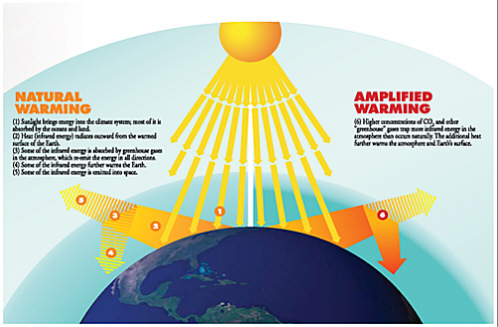
FIGURE 2.1 The greenhouse effect. SOURCE: Marian Koshland Science Museum of the National Academy of Sciences.
fuels—coal, oil, and natural gas—for energy. The increasing concentrations of GHGs are amplifying the natural greenhouse effect, causing Earth’s surface temperature to rise. Human activities have also increased the number of aerosols (small liquid droplets or particles suspended in the atmosphere). Aerosols have a wide range of environmental effects, but on average they increase the amount of sunlight that is reflected back to space, a cooling effect that offsets some, but not all, of the warming induced by increasing GHG concentrations.
Earth Is Warming
There are many indications—both direct and indirect—that the climate system is warming. The most fundamental of these are thermometer measurements, enough of which have been collected over both land and sea to estimate changes in global average surface temperature since the mid- to late 19th century. A number of inde-
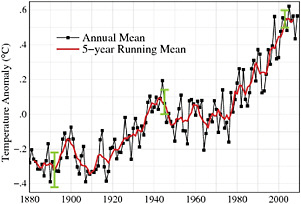
FIGURE 2.2 Global surface temperature change from 1880 to 2009 in degrees Celsius. The black curve shows annual average temperatures, the red curve shows a 5-year running average, and the green bars indicate the estimated uncertainty in the data during different periods of the record. For further details see Figure 6.13. SOURCE: NASA GISS (2010; based on Hansen et al., 2006, updated through 2009 at http://data.giss.nasa.gov/gistemp/graphs/).
pendent research teams collect, analyze, and correct for errors and biases in these data (for example, accounting for the “urban heat island” effect and changes in the instruments and methods used to measure ocean surface temperatures). Each group uses slightly different analysis techniques and data sources, yet the temperature estimates published by these groups are highly consistent with one another.
Surface thermometer measurements show the first decade of the 21st century was 1.4°F (0.8°C) warmer than the first decade of the 20th century (Figure 2.2). This warming has not been uniform, but rather it is superimposed on natural year-to-year and even decade-to-decade variations. Because of this natural variability, it is important to focus on trends over several decades or longer when assessing changes in the heat balance of the Earth. Physical factors also give rise to substantial spatial variations in the pattern of observed warming, with much stronger warming over the Arctic than over tropical latitudes and over land areas than over the ocean.
Other measurements of global temperature changes come from satellites, weather balloons, and ships, buoys, and floats in the ocean. Like surface thermometer measurements, these data have been analyzed by a number of different research teams around the world, corrected to remove errors and biases, and calibrated using independent observations. Ocean heat content measurements, which are taken from the top sev-
eral hundred meters of the world’s oceans, show a warming trend over the past several decades that is similar to the atmospheric warming trend in Figure 2.2.
Up until a few years ago, scientists were puzzled by the fact that the satellite-based record of atmospheric temperature trends seemed to disagree slightly with the data obtained from weather balloon-based measurements, and both seemed to be slightly inconsistent with surface temperature observations. Recently, researchers identified several small errors in both the satellite and weather balloon-based data sets, including errors caused by instrument replacements, changes in satellite orbits, and the effect of sunlight on the instruments carried by weather balloons. After correcting these errors, temperature records based on satellite, weather balloon, and ground-based measurements now agree within the estimated range of uncertainty associated with each type of observation.
The long-term trends in many other types of observations also provide evidence that Earth is warming. For example:
-
Hot days and nights have become warmer and more frequent;
-
Cold snaps have become milder and less frequent;
-
Northern Hemisphere snow cover is decreasing;
-
Northern Hemisphere sea ice is declining in both extent and average thickness;
-
Rivers and lakes are freezing later and thawing earlier;
-
Glaciers and ice caps are melting in many parts of the world (as described in more detail below); and
-
Precipitation, ecosystems, and other environmental systems are changing in ways that are consistent with global warming (many of these changes are also described below).
Based on this diverse, carefully examined, and well-understood body of evidence, scientists are virtually certain that the climate system is warming. In addition, scientists have collected a wide array of “proxy” evidence that indicates how temperatures and other climate properties varied before direct measurements were available. These proxy data come from ice cores, tree rings, corals, lake sediments, boreholes, and even historical documents and paintings. A recent assessment of these data and the techniques used to analyze them concluded that the past few decades have been warmer than any other comparable period for at least the last 400 years, and possibly for the last 1,000 years or longer (NRC, 2006b).
The Climate System Exhibits Substantial Natural Variability
Earth’s climate varies naturally on a wide range of timescales, from seasonal variations (such as a particularly wet spring, hot summer, or snowy winter) to geological timescales of millions or even billions of years. Careful statistical analyses have demonstrated that it is very unlikely6 that natural variations in the climate system could have given rise to the observed global warming, especially over the last several decades. However, natural processes produce substantial seasonal, year-to-year, and even decade-to-decade variations that are superimposed on the long-term warming trend, as well as substantial regional differences. Improving understanding of natural variability patterns, and determining how they might change with increasing GHG emissions and global temperatures, is an important area of active research (see the end of this section and Chapter 6).
Natural climate variations can also be influenced by volcanic eruptions, changes in the output from the Sun, and changes in Earth’s orbit around the Sun. Large volcanic eruptions, such as the eruption of Mount Pinatubo in 1991, can spew copious amounts of aerosols into the upper atmosphere. If the eruption is large enough, these aerosols can reflect enough sunlight back to space to cool the surface of the planet by a few tenths of a degree for several years.
The Sun’s output has been measured precisely by satellites since 1979, and these measurements do not show any overall trend in solar output over this period. Prior to the satellite era, solar output was estimated by several methods, including methods based on long-term records of the number of sunspots observed each year, which is an indirect indicator of solar activity. These indirect methods suggest that there was a slight increase in solar energy received by the Earth during the first few decades of the 20th century, which may have contributed to the global temperature increase during that period (see Figure 2.2).
Perhaps the most dramatic example of natural climate variability is the ice age cycle. Detailed analyses of ocean sediments, ice cores, geologic landforms, and other data show that for at least the past 800,000 years, and probably the past several million years, the Earth has gone through long periods when temperatures were much colder than today and thick blankets of ice covered much of the Northern Hemisphere (including the areas currently occupied by the cities of Chicago, New York, and Seattle). These very long cold spells were punctuated by shorter, warm “interglacial” periods, including the last 10,000 years. Through a convergence of theory, observations, and
|
6 |
As discussed in Appendix D, very unlikely indicates a less than 1 in 10 chance of a statement being incorrect. |
modeling, scientists have deduced that the ice ages were initiated by small recurring variations in the Earth’s orbit around the Sun.
GHG Emissions and Concentrations Are Increasing
Human activities have increased the concentration of CO2 and certain other GHGs in the atmosphere. Detailed worldwide records of fossil fuel consumption indicate that fossil fuel burning currently releases over 30 billion tons of CO2 into the atmosphere every year (Figure 2.3, blue curve). Tropical deforestation and other land use changes release an additional 3 to 5 billion tons every year.
Precise measurements of atmospheric composition at many sites around the world indicate that CO2 levels are increasing, currently at a pace of almost 2 parts per million (ppm) per year. We know that this increase is largely the result of human activities because the chemical signature of the excess CO2 in the atmosphere can be linked to the composition of the CO2 in emissions from fossil fuel burning. Moreover, analyses of bubbles trapped in ice cores from Greenland and Antarctica reveal that atmospheric CO2 levels have been rising steadily since the start of the Industrial Revolution (usually taken as 1750; see Figure 2.3, red curve). The current CO2 level (388 ppm as of the end of 2009) is higher than it has been in at least 800,000 years.
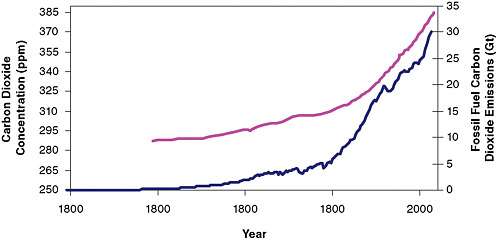
FIGURE 2.3 CO2 emissions due to fossil fuel burning (blue line and right axis) from 1800 to 2006 and atmospheric CO2 concentrations (red line and left axis) from 1847 to 2008. For further details see Figures 6.2, 6.3, and 6.4. Based on data from Boden et al. (2009), Keeling et al. (2009), and Neftel et al. (1994).
Only 45 percent of the CO2 emitted by human activities remains in the atmosphere; the remainder is absorbed by the oceans and land surface. Current estimates, which are based on a combination of direct measurements and models that simulate ecosystem processes and biogeochemical cycles, indicate that roughly twice as much CO2 is taken up annually by ecosystems on the land surface as is released by deforestation; thus, the land surface is a net “carbon sink.” The oceans are also a net carbon sink, but only some of the CO2 absorbed by the oceans is taken up and used by marine plants; most of it combines with water to form carbonic acid, which (as described below) is harmful to many kinds of ocean life. The combined impacts of rising CO2 levels, temperature change, and other climate changes on natural ecosystems and on agriculture are described later in this chapter and in further detail in Part II of the report.
Human Activities Are Associated with a Net Warming Effect on Climate
Human activities have led to higher concentrations of a number of GHGs as well as other climate forcing agents. For example, the human-caused increase in CO2 since the beginning of the Industrial Revolution is associated with a warming effect equivalent to approximately 1.6 Watts of energy per square meter of the Earth’s surface (Figure 2.4). Although this may seem like a small amount of energy, when multiplied by the surface area of the Earth it is 50 times larger than the total power consumed by all human activities.
In addition to CO2, the concentrations of methane (CH4), nitrous oxide (N2O), ozone (O3), and over a dozen chlorofluorocarbons and related gases have increased as a result of human activities. Collectively, the total warming associated with GHGs is estimated to be 3.0 Watts per square meter, or almost double the forcing associated with CO2 alone. While CO2 and N2O levels continue to rise (due mainly to fossil fuel burning and agricultural processes, respectively), concentrations of several of the halogenated gases are now declining as a result of action taken to protect the ozone layer, and the concentration of CH4 also appears to have leveled off (see Chapter 6 for details).
Human activities have also increased the number of aerosols, or particles, in the atmosphere. While the effects of these particles are not as well measured or understood as the effects of GHGs, recent estimates indicate that they produce a net cooling effect that offsets some, but not all, of the warming associated with GHG increases (see Figure 2.4). Humans have also modified Earth’s land surface, for example by replacing forests with cropland. Averaged over the globe, it is estimated that these land use and land cover changes have increased the amount of sunlight that is reflected back to
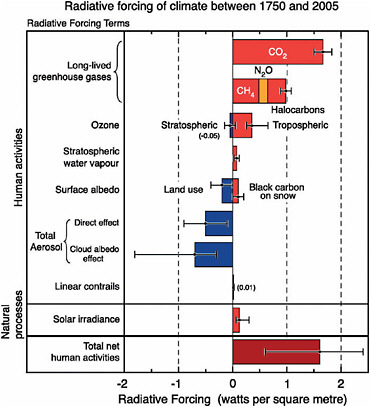
FIGURE 2.4 Climate forcing due to both human activities and natural processes, expressed in Watts per square meter (energy per unit area). Positive forcing corresponds to a warming effect. See Chapter 6 for further details. SOURCE: Forster et al. (2007).
space, producing a small net cooling effect. Other human activities can influence local and regional climate but have only a minor influence on global climate.
Feedback Processes Determine How the Climate System Responds to Forcing
The response of the climate system to GHG increases and other climate forcing agents is strongly influenced by the effects of positive and negative feedback processes in the climate system. One example of a positive feedback is the water vapor feedback. Water vapor is the most important GHG in terms of its contribution to the natural green-
house effect (see Figure 6.1), but changes in water vapor are not considered a climate forcing because its concentration in the lower atmosphere is controlled mainly by the (natural) processes of evaporation and precipitation, rather than by human activities. Because the rate of evaporation and the ability of air to hold water vapor both increase as the climate system warms, a small initial warming will increase the amount of water vapor in the air, reinforcing the initial warming—a positive feedback loop. If, on the other hand, an initial warming were to cause an increase in the amount of low-lying clouds, which tend to cool the Earth by reflecting solar radiation back to space (especially when they occur over ocean areas), this would tend to offset some of the initial warming—a negative feedback. Other important feedbacks involve changes in other kinds of clouds, land surface properties, biogeochemical cycles, the vertical profile of temperature in the atmosphere, and the circulation of the atmosphere and oceans—all of which operate on different time scales and interact with one another in addition to responding directly to changes in temperature.
The collective effect of all feedback processes determines the sensitivity of the climate system, or how much the system will warm or cool in response to a certain amount of forcing. A variety of methods have been used to estimate climate sensitivity, which is typically expressed as the temperature change expected if atmospheric CO2 levels reach twice their preindustrial values and then remain there until the climate system reaches equilibrium, with all other climate forcings neglected. Most of these estimates indicate that the expected warming due to a doubling of CO2 is between 3.6°F and 8.1°F (2.0°C and 4.5°C), with a best estimate of 5.4°F (3.0°C). Unfortunately, the diversity and complexity of processes operating in the climate system means that, even with continued progress in understanding climate feedbacks, the exact sensitivity of the climate system will remain somewhat uncertain. Nevertheless, estimates of climate sensitivity are a useful metric for evaluating the causes of observed climate change and estimating how much Earth will ultimately warm in response to human activities.
Global Warming Can Be Attributed to Human Activities
Many lines of evidence support the conclusion that most of the observed warming since the start of the 20th century, and especially over the last several decades, can be attributed to human activities, including the following:
-
Earth’s surface temperature has clearly risen over the past 100 years, at the same time that human activities have resulted in sharp increases in CO2 and other GHGs.
-
Both the basic physics of the greenhouse effect and more detailed calcula-
-
tions dictate that increases in atmospheric GHGs should lead to warming of Earth’s surface and lower atmosphere.
-
The vertical pattern of observed warming—with warming in the bottom-most layer of the atmosphere and cooling immediately above—is consistent with warming caused by GHG increases and inconsistent with other possible causes (see below).
-
Detailed simulations with state-of-the-art computer-based models of the climate system are only able to reproduce the observed warming trend and patterns when human-induced GHG emissions are included.
In addition, other possible causes of the observed warming have been rigorously evaluated:
-
As described above, the climate system varies naturally on a wide range of time scales, but a rigorous statistical evaluation of observed climate trends, supported by analyses with climate models, indicates that the observed warming, especially the warming since the late 1970s, cannot be attributed to natural variations.
-
Satellite measurements conclusively show that solar output has not increased over the past 30 years, so an increase in energy from the Sun cannot be responsible for recent warming. There is evidence that some of the warming observed during the first few decades of the 20th century may have been caused by a slight uptick in solar output, although this conclusion is much less certain.
-
Direct measurements likewise show that the number of cosmic rays, which some scientists have posited might influence cloud formation and hence climate, have neither declined nor increased during the last 30 years. Moreover, a plausible mechanism by which cosmic rays might influence climate has not been demonstrated.
Based on these and other lines of evidence, the Panel on Advancing the Science of Climate Change—along with an overwhelming majority of climate scientists (Rosenberg et al., 2010)—conclude that much of the observed warming since the start of the 20th century, and most of the warming over the last several decades, can be attributed to human activities.
Models and Scenarios Are Used to Estimate Future Climate Change
In order to project future changes in the climate system, scientists must first estimate how GHG emissions and other climate forcings (such as aerosols and land use) will change over time. Since the future cannot be known with certainty, a large number
of different scenarios are developed, each using different assumptions about future economic, social, technological, and environmental conditions. These scenarios have increased in complexity over time, and the most recent scenario development efforts include sophisticated models of energy production and use, economic activity, and the possible influence of different climate policy actions on future emissions. Future climate change, like past climate change, is also subject to natural climate variations that modulate the expected warming trend.
After future forcing scenarios are developed, climate models are used to simulate how these changes in GHG emissions and other climate forcing agents will translate into changes in the climate system. Climate models are computer-based representations of the atmosphere, oceans, cryosphere, land surface, and other components of the climate system. All climate models are fundamentally based on the laws of physics and chemistry that govern the motion and composition of the atmosphere and oceans. The most sophisticated versions of these models—referred to as Earth system models—include representations of a wide range of additional physical, chemical, and biological processes such as atmospheric chemistry and ecosystems on land and in the oceans. The resolution of climate models has also steadily increased, although global models are still not able to resolve features as small as individual clouds, so these small-scale processes must be approximated in global models.
After decades of development by research teams in the United States and around the world, and careful testing against observations of climate over the past century and further into the past, scientists are confident that climate models are able to capture many important aspects of the climate system. Scientists are also confident that climate models give a reasonable projection of future changes in climate that can be expected based on a particular scenario of future GHG emissions, at least at large (continental to global) scales. A variety of downscaling techniques have been developed to project future climate changes at regional and local scales. These techniques are not as well established and tested as global climate models, and their results reflect uncertainties in both the underlying global projections and regional climate processes. Hence, predictions of regional and local climate change are generally much more uncertain than large-scale changes. Other key sources of uncertainty in projections of future climate change include (1) uncertainty in future climate forcing, especially how human societies will produce and use energy in the decades ahead; (2) processes that are not included or well represented in models, such as changes in ice sheets, and certain land use and ecosystem processes; and (3) the possibility that abrupt changes or other climate “surprises” (see below) may occur.
Projections of Future Climate Change Indicate Continued Warming
The most recent comprehensive modeling effort to date included more than 20 different state-of-the-art climate models from around the world. Each of these climate models projected future climate change based on a range of different scenarios of future GHG emissions and other changes in climate forcing. Continued warming is projected by all models, but the trajectory and total amount of warming varies from model to model and between different scenarios of future climate forcing. Based on these results, the IPCC estimates that global average surface temperatures will rise an additional 2.0°F to 11.5°F (1.1°C to 6.4°C), relative to the 1980-1999 average, by the end of the 21st century. The wide spread in these numbers comes from uncertainty not only in exactly how much the climate system will warm in response to continued GHG emissions, but also uncertainty in how future GHG emissions will evolve.7 Hence, the choices that human societies make over the next several decades will have an enormous influence on the magnitude of future climate change.
As with observed climate change to date, there are wide geographic variations in the magnitude of future warming, with much stronger projected warming over high latitudes and over land areas (see Figure 2.5). In the United States, temperatures are projected to warm substantially over the 21st century under all projections of future climate change (USGCRP, 2009a). Temperature increases over the next few decades primarily reflect past emissions and are thus similar across different scenarios of future GHG emissions. However, by midcentury and especially at the end of the century, higher emissions scenarios (e.g., scenarios with continued growth in global GHG emissions) lead to much warmer temperatures than lower emissions scenarios.
A Multitude of Additional Climate and Climate-Related Changes Are Projected
In addition to increasing global average temperatures, a host of other climate variables are projected to experience significant changes over the 21st century, just as they have during the past century. For example, it is very likely8 that
-
Heat waves will become more intense, more frequent, and longer lasting, while the frequency of cold extremes will continue to decrease;
-
Snow and ice extent will continue to decrease;
-
The intensity of precipitation events will continue to increase;
|
7 |
As discussed in Chapter 6, none of the scenarios considered in this modeling effort attempted to represent how climate policy interventions might influence future GHG emissions. |
|
8 |
Estimated greater than 9 out of 10 chance (see Appendix D). |
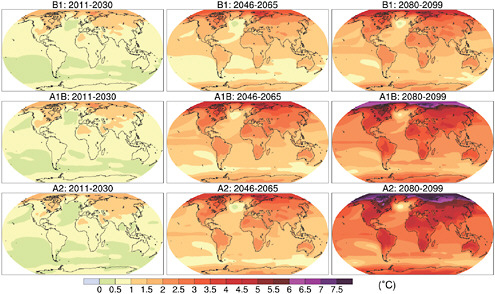
FIGURE 2.5 Worldwide projected changes in temperatures, relative to 1961-1990 averages, under three different emissions scenarios (rows) for three different time periods (columns). For further details see Figure 6.21. SOURCE: Meehl et al. (2007a).
-
Glaciers and ice sheets will continue to melt; and
-
Global sea level will continue to rise.
Many of these changes are discussed below and described in detail in Part II of the report.
Abrupt Changes May Occur
Confounding all projections of future climate is the possibility of abrupt changes in the climate system, other environmental systems, or human systems. Paleoclimate records indicate that the climate system can experience abrupt changes in as little as a decade. The Earth’s temperature is now demonstrably higher than it has been for several hundred years, and GHG concentrations are now higher than they have been in at least 800,000 years. These sharp departures from historical climate regimes raise the possibility that “tipping points” or thresholds for stability might be crossed as the climate system warms, leading to rapid or abrupt changes in climate. Climate change
may also lead to abrupt changes in human or ecological systems, especially systems that are also experiencing other environmental stresses. However, in general we have only a limited understanding of where the tipping points in the climate system, other environmental systems, or human systems might be, when they might be crossed, or what the consequences might be.
Research Needs for Advancing Climate System Science
Additional research, supported by expanded observational and modeling capacity, is needed to improve understanding of key climate processes, improve projections of future climate change (especially at regional scales), and evaluate the potential for abrupt changes in the climate system. The following are some of the most critical research needs for continued improvements in our ability to understand, observe, and project the behavior of the climate system:
-
Improve understanding of how the climate system will respond to forcing.
-
Refine the ability to project interannual, decadal, and multidecadal climate change, including extreme events, at regional scales.
-
Advance understanding of feedbacks and thresholds that may be crossed that lead to irreversible or abrupt changes.
-
Expand and maintain comprehensive and sustained climate observations to provide real-time information about climate variability and change.
For a longer discussion of these and other climate system research needs, see Chapter 6.
SEA LEVEL RISE AND THE COASTAL ENVIRONMENT9
The coastlines of the United States and the world are major centers of economic and cultural development, where populations and associated structural development continue to grow. The coasts are also home to critical ecological and environmental resources. Coastal areas have always experienced various risks and hazards, such as flooding from coastal storms. However, coastal managers and property owners are concerned about how these risks are being and will be intensified by sea level rise and other climate changes.
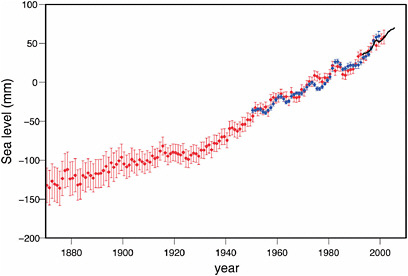
FIGURE 2.6 Annual, global mean sea level as determined by records of tide gauges (red and blue curves) and satellite altimetry (black curve). For further details see Figure 7.2. SOURCE: Bindoff et al. (2007).
Observations of Sea Level Rise
Sea level has been systematically measured by tide gauges for more than 100 years. Other direct and indirect observations have allowed oceanographers to estimate (with lower precision) past sea levels going back many thousands of years. We know that sea level has risen more than 400 feet (120 meters) since the peak of the last ice age 26,000 years ago, with periods of rapid rise predating a relatively steady level over the past 6,000 years. During the past few decades, tide gauge records augmented by satellite measurements have been used to produce precise sea level maps across the entire globe. These modern records indicate that the rate of sea level rise has accelerated since the mid-19th century, with possibly greater acceleration over the past two decades (Figure 2.6). The exact amount of sea level change experienced in different locations varies because of different rates of settling or uplift of land and because of differences in ocean circulation.
Causes of Sea Level Rise
Past, present, and future changes in global sea level are mainly caused by two fundamental processes: (1) the thermal expansion of the existing water in the world’s ocean basins as it absorbs heat and (2) the addition of water from land-based sources—mainly the shrinking of ice sheets and glaciers.
Because of the huge capacity of the oceans to absorb heat, 80 to 90 percent of the heating associated with human GHG emissions over the past 50 years has gone into raising the temperature of the oceans. The subsequent thermal expansion of the oceans is responsible for an estimated 50 percent of the observed sea level rise since the late 19th century. Even if GHG concentrations are stabilized, ocean warming and the accompanying sea level rise will continue until the oceans reach a new thermal equilibrium with the atmosphere. Ice in the world’s glaciers and ice sheets contributes directly to sea level rise through melt or the flow of ice into the sea. The major ice sheets of Greenland and Antarctica contain the equivalent of 23 and 197 feet (7 and 60 meters) of sea level, respectively.
Projections of Sea Level Rise
Projections of future sea level have been the subject of active discussion in the recent literature on climate change impacts. The 2007 Assessment Report by the IPCC estimated that sea level would likely rise by an additional 0.6 to 1.9 feet (0.18 to 0.59 meters) by 2100. This projection was based largely on the observed rates of change in ice sheets and projected future thermal expansion over the past several decades and did not include the possibility of changes in ice sheet dynamics. Scientists are working to improve how ice dynamics can be resolved in models. Recent research, including investigations of how sea level responded to temperature variations during the ice age cycles, suggests that sea levels could potentially rise another 2.5 to 6.5 feet (0.8 to 2 meters) by 2100, which is several times larger than the IPCC estimates. However, sea level rise estimates are rather uncertain, due mainly to limits in scientific understanding of glacier and ice sheet dynamics. For instance, recent findings of a warming ocean around Greenland suggest an explanation for the accelerated calving of outlet glaciers into the sea, but the limited data and lack of insight into the mechanisms involved prevent a quantitative estimate of the rate of ice loss at this time. Nevertheless, it is clear that global sea level rise will continue throughout the 21st century due to the GHGs that have already been emitted, that the rate and ultimate amount of sea level rise will be higher if GHG concentrations continue to increase, and that there is a risk of much larger and more rapid increases in sea level. While this risk cannot be quantified
at present, the consequences of extreme and rapid sea level rise could be economically and socially devastating for highly built-up and densely populated coastal areas around the world, especially low-lying deltas and estuaries.
Ice Sheet Processes Could Potentially Lead to Abrupt Changes
In addition to rapid accelerations in the rate of sea level rise, a collapse or rapid wastage of major ice sheets could lead to other abrupt changes. For example, if the Greenland ice sheet were to shrink substantially over several decades, a large amount of freshwater would be delivered to key regions of the North Atlantic. This influx of freshwater could alter the ocean structure and influence ocean circulation, with implications for regional and global weather patterns. Compelling evidence has been assembled indicating that rapid freshwater discharges at the end of the last ice age caused abrupt ocean circulation changes, which in turn led to significant impacts on regional climate. The recent ice melting on Greenland and other areas in the Arctic, combined with increased river discharges in the Arctic region (see discussion of precipitation and runoff changes below), may have already led to changes in ocean circulation patterns. However, much work remains to develop confident projections of future ocean circulation changes—and the influence of these changes on regional climate patterns—resulting from ongoing freshwater discharges in the North Atlantic.
Sea Level Rise Is Associated with a Range of Impacts on Coastal Environments
Coastal areas are among the most densely populated and fastest-growing regions of the United States, as well as the rest of the world. Such population concentration and growth are accompanied by a high degree of development and use of coastal resources for economic purposes, including industrial activities, transportation, trade, resource extraction, fisheries, tourism, and recreation. Sea level rise can potentially affect all of these activities and their accompanying infrastructure, and it could also magnify other climate changes, such as an increase in the frequency or intensity of storms (see below). Even if the frequency or intensity of coastal storms does not change, increases in average sea level will magnify the impacts of extreme events on coastal landscapes.
The economic impacts of climate change and sea level rise on coastal areas in the United States have been an important focus for research. While economic impact assessments have become increasingly sophisticated, they remain incomplete and are subject to the well-recognized challenges of cost-benefit analyses (see Chapter 17). In addition, while studies of economic impacts may be useful at a regional level,
general conclusions regarding the total magnitude of economic impacts in the United States cannot be drawn from existing studies; this is because the metrics, modeling approaches, sea level rise projections, inclusions of coastal storms, and assumptions about human responses (e.g., the type and level of protection) vary considerably across the studies.
Coastal ecosystems such as dunes, wetlands, estuaries, seagrass beds, and mangroves provide numerous ecosystem goods and services, ranging from nursery habitat for certain fish and shellfish to habitat for bird, mammal, and reptilian species, including some endangered ones; protective or buffering services for coastal infrastructure against the onslaught of storms; water filtering and flood retention; carbon storage; and the aesthetic, cultural, and economic value of beaches and coastal environments for recreation, tourism, and simple enjoyment. The impact of sea level rise on these and other nonmarket values is often omitted from economic impact assessments of coastal areas because of difficulties in assigning values.
Science for Responding to Sea Level Rise
Scientific understanding of people’s vulnerability and ability to adapt to sea level rise (and other impacts of climate change on coastal systems) has increased in recent years. Developing countries are expected to face greater challenges in dealing with the impacts of rising sea levels because of lower adaptive capacity—which is largely a function of economic, technological, and knowledge resources; social capital; and well-functioning institutions. In developed countries like the United States, adaptive capacity may be higher, but this has not been thoroughly examined to date and there are a large number of assets and people at risk. Moreover, significant gaps remain in our empirical understanding of and ability to identify place-based vulnerabilities to the impacts of sea level rise along the U.S. coastline. Considerable challenges also remain in translating whatever adaptive capacity exists into real adaptation actions on the ground.
Virtually all adaptive responses to sea level rise have costs as well as social and ecological consequences, and most are complicated by having effects that extend far into the future and beyond the immediately affected coastal regions. Engineering options such as seawalls and levees are not feasible in all locations, and in many they could have negative effects on coastal ecosystems, beach recreation, tourism, aesthetics, and other socially valued aspects of coastal environments. A wide range of barriers and constraints make “soft” solutions—such as changes in land use planning and, ultimately, retreat from the shoreline—equally challenging. Such constraints and limits
on adaptation are increasingly recognized, but little is currently known about how to determine the most appropriate, cost-effective, least ecologically damaging, and most socially acceptable adaptation options for different places and regions. As discussed below and in further detail in Chapter 4, continued and expanded scientific research can help to address these gaps in understanding.
Research Needs for Advancing Science on Sea Level Rise and Associated Risks in the Coastal Environment
While global sea level rise is certain to continue, the physical science of sea level rise and related climate changes remains incomplete, making future projections uncertain. Moreover, social and ecological understanding of place-based vulnerability and adaptation options in coastal regions of the United States is lacking. Thus, research is needed to improve our understanding and projections of future sea level rise, the impacts of this rise on affected human and natural systems, and the feasibility of adaptation options in the near and longer term. Specific research needs, which are explained in more detail in Chapter 7, include the following:
-
Reduce the scientific uncertainties associated with changes in glaciers and ice sheets.
-
Improve understanding of ocean dynamics and regional rates of sea level rise.
-
Develop tools and approaches for understanding and predicting the impacts of sea level rise on coastal ecosystems and coastal infrastructure.
-
Expand the ability to identify and assess vulnerable coastal regions and populations and to develop and assess adaptation strategies that can reduce vulnerability or build adaptive capacity.
-
Develop decision-support capabilities for all levels of governance in response to the challenges associated with sea level rise.
FRESHWATER RESOURCES10
The availability of water for human and ecosystem use depends on two main factors: (1) the climate-driven global water cycle and (2) society’s ability to manage, store, and conserve water resources. Each of these factors is complex, as is their interaction. Water cycling—which includes evaporation and transpiration, precipitation, and both surface runoff and groundwater movement—determines how freshwater flows and how it interacts with other processes. Precipitation amounts, intensity, geographic distribu-
tion, and other characteristics matter for water management, and all are affected by both short-term climate variability and long-term climate change. Likewise, soils, topography, land cover, precipitation intensity, and other variables influence how much precipitation can be stored for use. Other variables such as level of consumption, pollution, conservation, pricing, distribution, and land use changes are also important for water management decisions. These complex processes prevent any easy conclusions about regional water supplies based solely on climate model-driven projections. Nonetheless, historical and current changes in some variables are becoming clear.
Global Precipitation and Extreme Rainfall Events Are Increasing
In general, changes in precipitation are harder to measure and predict than changes in temperature. Nevertheless, some conclusions and projections are robust. For example, based on the fundamental properties and dynamics of the climate system, it is expected that the intensity of the global water cycle and of precipitation extremes (droughts and extremely heavy precipitation events) should both increase as the planet warms. Increases in worldwide precipitation and in the fraction of total precipitation falling in the form of heavy precipitation have already been observed; for example, the fraction of total rainfall falling in the heaviest 1 percent of rain events increased by about 20 percent over the past century in the United States. Climate models project that these trends, which create challenges for flood control and storm and sewer management, are very likely to continue. However, models also indicate a strong seasonality in projected precipitation changes in the United States, with drier summers across much of the Midwest, the Pacific Northwest, and California, for example.
Snow Cover Is Decreasing
Another robust projection of climate change is that snow and ice cover should decrease as temperatures rise. Worldwide, snow cover is decreasing, although substantial regional variability exists. In the United States, changes in snowpack in the West currently represent the best-documented hydrological manifestation of climate change. The largest losses in snowpack are occurring in the lower elevations of mountains in the Northwest and California, as higher temperatures cause more precipitation to fall as rain rather than snow. Moreover, snowpack is melting as much as 20 days earlier in many areas of the West. Snow is expected to melt even earlier under projections of future climate change, resulting in streams that have reduced flow and higher temperatures in late summer. Such changes have major implications for ecosystems, hydropower, urban and agricultural water supplies, and other uses.
Total Runoff Is Increasing but Shows Substantial Regional Variability
Average flows of streams and rivers in the United States have increased in most areas over the past several decades, which is consistent with observed and expected trends in precipitation. There are regional differences, however, with decreased stream flow in the Columbia and Colorado Rivers, for example. Observed changes in stream flow reflect both natural variability in hydrology as well as the aggregate effects of many human influences, of which climate change is only one. In some areas, changes in climate are exacerbating decreases in river and stream flows that are already declining due to agricultural, residential, and other human uses.
Droughts and Floods Are Likely to Increase
Given the observed increases in heavy precipitation events and the expectation that this intensification will continue, the risk from floods is projected to increase in the future. Local water, land use, and flood risk-management decisions, however, can modify the actual flood vulnerability of communities.
Drought is a complex environmental impact. It is strongly affected not only by the balance between precipitation and evapotranspiration (the sum of evaporation of water from the surface and transpiration of water though the leaves of plants) and the resulting effect on soil moisture, but also by other human influences such as urbanization, deforestation, and changes in agriculture. Additionally, historical data on drought frequencies and intensities are limited, making it difficult to unambiguously attribute severe droughts to climate change. Climate model projections indicate that the area affected by drought and the number of annual dry days are likely to increase in the decades ahead. In areas where water is stored for part of the year in snowpack, reductions in snowpack and earlier snowmelt are expected to increase the risk of water limitations and drought.
Storm Patterns and Intensities May Change
How storm patterns may change in the future is of obvious importance to water managers, but considerably less is known in this area than in the hydrologic changes discussed above. Changes in the intensity of hurricanes have been documented and attributed to changes in sea surface temperatures, but the link between these changes and climate change remains uncertain and the subject of considerable research and scientific debate. The most recent climate model projections indicate that
climate change may lead to increases in the intensity of the strongest hurricanes, but effects on frequency of occurrence are still in an active area of research. Relatively little is known about how climate change will affect midlatitude storm patterns, in part because of the close connection between storm patterns and regional climate variability, although shifts in predominant storm tracks have been observed.
Water Quality and Groundwater Supplies May Be Affected
Some regions of the United States rely on groundwater for drinking, residential use, or agriculture. The impacts of climate change on groundwater are far from clear; in fact, little research effort has been devoted to this topic. Changes in precipitation and evaporation patterns, plant growth processes, and incursions of sea water into coastal aquifers as sea levels rise will all affect the rate of groundwater recharge, the absolute volume of groundwater available, groundwater quality, and the physical connection between surface and groundwater bodies.
Increased temperatures generally have a negative impact on water quality in lakes and rivers, typically by stimulating growth of nuisance algae. Changes in heavy precipitation, runoff, and stream flow can also be expected to have an impact on a diverse set of water quality variables. Water quality will also be affected by saltwater intrusion into coastal aquifers as sea levels rise. In general, the water quality implications of climate change are even less understood than impacts on water supply.
Climate Change May Increase Water Management Challenges
Effective management of water supplies requires fairly precise information about current and expected future water availability. However, the complex processes involved in the hydrologic cycle prevent simplistic conclusions about how to manage water supplies based on climate model projections. In many regions, the uncertainties associated with projections of rainfall and runoff coupled with uncertainties in other changes, such as changes in land use and land cover, leads to cascading uncertainties about changes in freshwater resources. These uncertainties are compounded by uncertainties in the technical capacity to store, manage, and conserve water resources, which in turn are shaped by socioeconomic, cultural, institutional, and behavioral issues that determine the use of water. Two clear messages that emerge from research on water management is that water managers will need to make decisions while facing persistent and sometimes considerable uncertainty, and that improved decision-support tools would be helpful for planning purposes.
Research Needs for Advancing Science on Freshwater Resources in the Context of Climate Change
Changes in freshwater systems are expected to create significant challenges for flood management, drought preparedness, water supplies, and many other water resource issues. Responding to these challenges will require better data and improved model projections as well as a better understanding of both the impacts of climate change and the role of water governance on future water resources. Significant gaps remain in the knowledge base that informs both projections of climate impacts on water resources and governance strategies that can build adaptive capacity of water systems to climate effects. Key research needs, which are explored in more detail in Chapter 8, include the following:
-
Improve projections of changes in precipitation and other water resources at regional and seasonal time scales.
-
Develop long-term observational systems for measuring and predicting hydrologic changes and planning management responses.
-
Improve tools and approaches for decision making under uncertainty and complexity.
-
Develop vulnerability assessments of the diverse range of water users and integrative management approaches to respond effectively to changes in water resources.
-
Increase understanding of water institutions and governance, and design effective systems for the future.
-
Improve water engineering and technologies.
-
Evaluate effects, feedbacks, and mitigation options of water resource use on climate.
ECOSYSTEMS, ECOSYSTEM SERVICES, AND BIODIVERSITY11
Decades of research on terrestrial and marine ecosystems and their biodiversity have improved our understanding of their importance for society and their links to climate. Ecosystems provide food, fuel, and freshwater. They regulate climate through the global carbon cycle and the hydrologic cycle. They buffer against storms, erosion, and extreme events and provide cultural, nonmaterial benefits such as space for recreation, education, and spiritual practices. Ecosystems are thus essential components of Earth’s life support system, and understanding the impacts of climate change on ecosystems is a critical part of the research enterprise.
Climate Change Is Already Affecting Land-Based Ecosystems
Shifts in climate are changing the geographical range of many plant and animal species. A series of place-based observations and syntheses of existing data indicate that many plants and animals have experienced range shifts over the past 30 years that approach the magnitude of those inferred for the last 20,000 years (the time of the last glacial maximum). The phenology (seasonal periodicity and timing of life-cycle events) of species is also changing with the earlier onset of spring and longer growing seasons. The implications of these changes for biodiversity, the provision of ecosystems services, and feedbacks on climate are not well understood.
Large and long-duration forest fires have increased fourfold over the past 30 years in the American West. Forest fires are influenced by many factors, including climate change, but warming has increased the length of the fire season by more than two months in some locations, and the increasing size of wildfires can be attributed in part to earlier snowmelt, temperature changes, and drought. Decomposition and respiration of CO2 back to the atmosphere also increase as temperatures warm. Finally, populations of forest pests such as the spruce beetle, pine beetle, spruce budworm, and wooly adelgid are increasing in the western United States as a result of climate change.
Future Climate Change Will Affect Land-Based Ecosystems in a Variety of Ways
Both the amount and rate of warming will influence the ability of plants and animals to adapt. In addition, temperature changes will interact with changes in CO2, precipitation, pests, soil characteristics, and other factors. Tree species, for example, are expected to shift their ranges northward or upslope, with some current forest types such as oak-hickory expanding, others such as maple-beech contracting, and still others such as spruce-fir disappearing from the United States altogether (Figure 2.7). Experimental and modeling studies indicate that exposure to elevated CO2 and temperatures can lead to increases in photosynthesis and growth rates in many plant species, although at higher temperatures this trend may reverse. Projections suggest that forest productivity will increase with elevated CO2 and climate warming, especially in young forests on fertile soils where water is adequate. Where water is scarce and drought is expected to increase, or where pests increase in response to warming, however, forest productivity is projected to decrease.
Some analyses have indicated the possibility of major changes in ecosystems due to the combined effects of changes in temperature and precipitation, potentially affect-
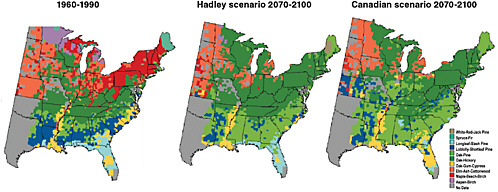
FIGURE 2.7 Potential changes in the geographic ranges of the dominant forest types in the eastern United States under projections of future climate change. Many forest types shift their ranges northward or shrink in areas, while some expand their areas. For further details see Figure 9.2. SOURCE: USGCRP (2001).
ing ecosystem productivity, carbon cycling, and the composition of plant communities. For example, drier conditions in the Amazon could potentially lead to increased susceptibility to fire, lower productivity, and shifts from forest to savanna systems in that region. The strong warming observed across the Arctic is already leading to poleward shifts of boreal forests into regions formerly covered in tundra, and these shifts are expected to continue.
Climate Change Is Also Affecting Ocean Ecosystems
Just as on land, ranges of many marine animals have shifted poleward in recent decades (Figure 2.8). The pace of these changes can be faster in the sea because of the high mobility of many marine species. Changes have also been observed in ocean productivity, which measures the photosynthetic activity of organisms at the base of the marine food web. Model projections suggest that some habitats, such as polar seas and areas with coastal upwelling, may see increases in productivity as climate change progresses. The majority of ocean areas, however, are projected to experience declines in productivity as warm, nutrient-poor surface water is increasingly isolated from the colder, nutrient-rich water below. Even in highly productive coastal upwelling systems, it is possible that even stronger upwelling could draw up deeper, low-oxygen (hy-
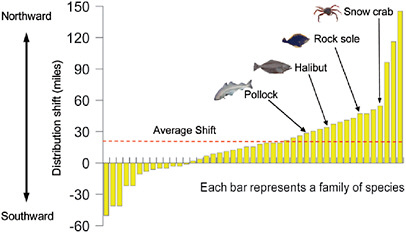
FIGURE 2.8 Observed northward shift of marine species in the Bering Sea between the years 1982 and 2006. The average shift among the species examined was approximately 19 miles north of its 1982 location (red line). For further details see Figure 9.3. SOURCES: Mueter and Litzow, (2008); USGCRP (2009a).
poxic) water, creating dead zones where few species can survive. Such hypoxic dead zones have recently appeared off the coasts of Oregon and Washington.
Continued losses of sea ice and stronger warming at higher latitudes are expected to drive major habitat alterations in Arctic ecosystems. Ice dynamics plays an important role in ocean productivity, and sea ice is a critical habitat for many species, including birds and mammals. Although the details are uncertain, polar ecosystems are at the threshold of major ecosystem changes due to climate change. Without careful management, these changes may be exacerbated by expanding human uses in polar seas as sea ice continues to decline.
In the tropics, warm temperatures pose a bleaching threat to corals. Corals are animals, but they depend on algae growing in their tissues for much of their nutrition. This tight symbiotic relationship can be disrupted by extreme temperatures, which can cause corals to eject the algae and “bleach.” Mass bleaching events, which often lead to coral death, have occurred with increasing frequency over recent decades associated with severe warming events. In the most extreme case, the strong El Niño event of 1998, an estimated 16 percent of the world’s coral reefs died. Models suggest that the fate of corals under future warming scenarios depends critically on the pace of warming.
The Oceans Are Becoming More Acidic, Which Poses Major Risks for Ocean Ecosystems
One of the most certain outcomes from increasing CO2 concentrations in the atmosphere is the acidification of the world’s oceans. Roughly one-quarter of the CO2 currently released by human activities is absorbed in the sea. While some of the CO2 is taken up by marine organisms, most if it combines with water to form carbonic acid. The result has been a roughly 30 percent increase in ocean acidity since preindustrial times. If CO2 emissions continue to increase at present rates, ocean acidification could intensify by three to four times this amount by the end of this century. In addition, ocean acidification may reduce the ability of the ocean to take up CO2; this represents a positive feedback on global warming because it would lead to faster CO2 accumulation in the atmosphere.
Although the acidification of the sea is highly certain, the response of ocean ecosystems to changing ocean chemistry is highly uncertain. Acidification can disrupt many biological processes, including the rates at which marine animals can form shells. Coral reefs are particularly sensitive. If atmospheric CO2 levels reach twice their preindustrial values, the resulting increase in acidity could mean there will be few places in the
ocean that can sustain coral growth. Polar seas could also experience major changes, since many of the species at the base of the food web may be disrupted. Hence, ocean acidification poses a major threat to ocean ecosystems, but the details are only beginning to be understood. A separate report, Ocean Acidification: A National Strategy to Meet the Challenges of a Changing Ocean (NRC, 2010f), examines ocean acidification and its potential impacts in further detail.
Ecosystems Play a Key Role in the Global Carbon Cycle
Plants on land and in the ocean take up carbon during photosynthesis and release it through respiration. Experimental research has shown that some land ecosystems respond to higher atmospheric concentrations of CO2 by taking up and storing more carbon in plant tissues, soils, and sediments. Based on a combination of ecosystem models and observations, it has been estimated that for the period 2000 to 2008, land ecosystems removed roughly one-third of the CO2 emitted by human activities. However, roughly half of this carbon sink was offset by changes in land use that resulted in net CO2 emissions back to the atmosphere (mainly through tropical deforestation).
If the balance between CO2 absorption and emissions by ecosystems were to change in response to either future climate changes or changes in management, this could lead to a significant positive or negative feedback on atmospheric CO2 levels. For example, the warming of ocean surface waters across much of the world may represent a positive feedback on climate change, because warming of surface waters commonly reduces the uptake of CO2 by phytoplankton, which could lead to less ocean uptake of CO2, faster CO2 accumulation in the atmosphere, and accelerated greenhouse warming. However, a number of factors influence the storage of carbon in ocean- and land-based ecosystems. For instance, the availability of nutrients and water can limit uptake by land plants, and increases in temperature or large wildfires can increase GHG emissions from land-based ecosystems to the atmosphere. Other important factors modulating the carbon sink provided by terrestrial ecosystems include species redistributions and changes in growing season lengths, drought, insects, pathogens, and land use. As a result of this complex interplay of factors, projections of the future land-based carbon sink are uncertain.
Changes in terrestrial ecosystems could also potentially lead to abrupt climate changes. For example, increasing temperatures are leading to warming and thawing of permafrost (frozen soils) across the northern latitudes. These frozen soils store vast amounts of carbon. As permafrost continues to thaw, this carbon may be released to the atmosphere in large quantities in the form of the GHGs CO2 and CH4, which would
significantly amplify global warming (and since this warming would then lead to further permafrost thawing, this represents a potential positive feedback). Other such carbon-climate feedbacks are possible, and this area of research is garnering increasing attention and concern.
Several Human Interventions Have Been Proposed to Increase Carbon Storage in Natural Ecosystems
Because productivity in the ocean is often limited by the availability of certain nutrients, it has been hypothesized that ocean fertilization could stimulate plankton blooms and thus enhance the transfer of CO2 from the atmosphere to the oceans. For example, in some parts of the ocean, productivity is limited by the availability of iron, which suggests the potential for increasing carbon uptake via iron fertilization. Experiments to test this hypothesis have so far resulted in considerable uncertainty about its potential. While this approach could store some carbon, the maximum achievable rates might be only a small fraction of the total carbon emitted by human activities.
On land, changes in land use and land cover by human actions have been responsible, over time, for as much as 35 percent of human-induced CO2 emissions. Today, emissions from tropical deforestation and other changes in land use account for around 17 percent of annual CO2 emissions. Land management practices that reduce deforestation and degradation, or that enhance storage of carbon in land ecosystems, could provide potentially low-cost options to reduce GHG concentrations in the atmosphere and thus limit the magnitude of future climate change. Changes in land use can also influence temperatures by changing the reflective properties of the Earth’s surface and by altering rates of transpiration of water. The overall potential to limit climate change through management of land and ocean ecosystems has not been thoroughly evaluated, however.
Research Needs for Advancing Science on Ecosystems, Ecosystems Services, and Biodiversity in the Context of Climate Change
Research is needed to better understand and project the impacts of climate change on ecosystems, ecosystem services, and biodiversity and to evaluate how land and ocean changes and management options influence the climate system. Some of the key research needs in these areas, which are described in further detail in Chapter 9, include the following:
-
Improve understanding of how higher temperatures, enhanced CO2, and other climate changes, acting in conjunction with other stresses, are influencing or may influence ecosystems, ecosystem services, and biodiversity.
-
Evaluate the potential climate feedbacks associated with changes in ecosystems and biodiversity on land and in the oceans.
-
Assess the potential of land and ocean ecosystems to limit or buffer the impacts of climate change through specific management actions.
-
Improve assessments of the vulnerabilities of ecosystems to climate change, including methods for quantifying ecosystem benefits to society.
-
Improve observations and modeling of terrestrial and marine ecosystems and their interactions with the climate system.
AGRICULTURE, FISHERIES, AND FOOD PRODUCTION12
Meeting the food needs of a still-growing and more affluent global human population presents a key challenge. Climate change increases the complexity of this challenge because of its multiple impacts on agricultural crops, livestock, and fisheries. Agricultural management may also provide opportunities to reduce net human GHG emissions.
Agricultural Crops Will Be Influenced in Multiple Ways by Climate Change
Temperature, length of growing season, atmospheric CO2 levels, water availability, pests, disease, and extreme weather events can all affect crop growth and yields to varying degrees—and sometimes in conflicting ways—depending on location, agricultural system, and the degree of warming. For example, growth of some heat-loving crop plants such as melons and sweet potatoes will initially respond positively to increasing temperatures and longer growing seasons in the United States. Other crops, including grains and soybeans, respond negatively, both in vegetative growth and seed production, to even small increases in temperature. Many crop plants, such as wheat and soybeans, respond positively to the fertilization effect of increases in atmospheric CO2, potentially offsetting some of the negative effects of warming.
In the United States, many northern states are projected to experience increases in some crop yields over the next several decades, while in the Midwest and southern Great Plains, temperature increases and possible precipitation decreases may decrease yields unless measures are taken to adapt. Likewise, global-scale studies suggest that
|
12 |
For additional discussion and references, see Chapter 10 in Part II of the report. |
moderate warming of 1.8°F to 5.4°F (1°C to 3°C), increases in CO2, and changes in precipitation could benefit crop and pasture lands in mid- to high latitudes but decrease yields in seasonally dry and low-latitude areas. Projections also suggest that global food production is likely to decrease with increases in average temperatures of greater than 5.4°F (3°C). However, most analyses and projections of future climate change do not include critical factors such as changes in extreme events (especially intense rainfall and drought), pests and disease, and water supplies, all of which have the potential to significantly affect agricultural production.
Forestry and Livestock Will Also Be Affected by Climate Change
Commercial forestry will be affected by factors similar to those affecting crop production and natural forest ecosystems. Climate models project that global timber production will increase and shift poleward due to changes in temperature, longer growing seasons, and enhanced CO2. However, as with projections of agricultural changes, these models typically exclude potentially important factors such as pests, diseases, and water availability, making the results somewhat uncertain.
Livestock respond to climate change directly through heat and humidity stresses and are affected indirectly by changes in forage quantity and quality, water availability, and disease. Because heat stress reduces milk production, weight gain, and reproduction in livestock, the production of pork, beef, and milk is projected to decline in the United States with warming temperatures, especially with increases above 5.4°F (3°C).
Climate Change Impacts on Fisheries and Aquaculture Are Less Well Understood
The impacts of climate change on seafood are far less well known than impacts on agriculture. Year-to-year climate variations cause large fluctuations in fish stocks, both directly and indirectly, and this has always posed a challenge for effective fisheries management. Similar sensitivities to longer time-scale variations in climate have been documented in a wide range of fish species around the globe. Shifts in fisheries distributions are expected to be most pronounced for U.S. fisheries in the North Pacific and North Atlantic, since future temperature increases are projected to be greatest at these higher latitudes and warming will be coupled to major habitat changes driven by reduced sea ice. The effects of ocean acidification (described above) may be even more important for fisheries than the effects of rising temperatures, although they are currently even more uncertain. Many fished species, including invertebrates like oysters, clams, and scallops, produce shells as adults or as larvae, and shell production
could be compromised by increased acidification. Other species fished by humans rely on shelled plankton as their primary food source, and projected declines in these plankton species could have major impacts on fished species higher in the food chain. Finally, acidification can disrupt a variety of physiological processes beyond the production of shells.
Freshwater fisheries face climate challenges similar to those of marine fisheries. Complex interactions among multiple factors such as elevated temperature, reduced dissolved oxygen, increased stratification of lakes, and elevated aquatic pollutant toxicity at higher temperatures pose particular challenges to freshwater fisheries and make projections uncertain. Indirect effects such as altered streamwater flows, changing lake levels, and extreme weather events, coupled with the inability of freshwater fish to move between watersheds, will affect freshwater fisheries, but detailed projections are highly uncertain. Cold-water species such as trout and salmon appear particularly sensitive.
Aquaculture is growing rapidly in the United States and elsewhere as the availability of wild seafood declines. Impacts of climate change on aquaculture are not well studied, but ocean acidification and the difficulty of moving aquaculture infrastructure to new locations as fish habitats shift may pose significant challenges to aquaculture production.
Science for Adaptation in Agricultural Systems
The ability of farmers and the food production, processing, and distribution system to adapt to climate change will to a large extent determine the impacts of climate change on food production. Proposed short-term adaptation strategies include changes in farming locations; shifts in planting dates and crop varieties; increasing storage capacity, irrigation and chemical application; livestock management; and broader-level efforts such as investments in agricultural research (see the companion report Adapting to the Impacts of Climate Change [NRC, 2010a]). However, not all farmers have access to these strategies. Small farms, farmers with substantial debt, and farmers without their own land are much more likely to suffer large negative impacts on their livelihoods.
Models that incorporate possible responses of farmers and markets to climate change generally project only small impacts on the agricultural economy of the United States. However, these models do not incorporate costs of adaptation, rates of technological change, changes in pests or diseases, or extreme events like heat waves, heavy rainfall,
and flooding. Further research will thus be needed to develop a comprehensive and detailed understanding of how climate change will influence U.S. agricultural production and economics. Understanding of international food supplies, distribution, trade, and food security also remains quite limited.
Food Security
Food security—which includes availability of food, access to food, safety of the food system, and resilience to income or food price shocks—is affected by climate change as well as a multitude of nonclimatic factors such as economic markets and agricultural policies. Because the global food system is interconnected, it is not possible to view U.S. food security in isolation. Food security in the developing world affects global political stability and, thereby, U.S. national security (see below). Studies that project the number of people at risk of hunger from climate change are highly uncertain but indicate that the outcome depends strongly on socioeconomic development, since affluence tends to reduce vulnerability.
Modifying Food Production Systems Could Potentially Help Limit the Magnitude of Future Climate Change
Food production systems are not only affected by climate change; they also contribute to it through GHG emissions of CO2, CH4 (primarily from livestock and flooded rice paddies), and N2O (primarily from fertilizer use). Recent global assessments conclude that agriculture accounts for about 10 to 12 percent of total global human emissions of GHGs. With the intensification of agriculture that will be required to feed the world’s growing and increasingly affluent population, these emissions are projected to increase. Many options are available to manage agricultural and livestock systems to reduce emissions, such as changes in feed and feeding practices, manure management, and more efficient fertilizer application. At a landscape level, management of agricultural lands presents opportunities to reduce atmospheric concentrations of CO2 by sequestering soil carbon, shifting to crops with higher carbon storage potential, and reducing forest clearing for agricultural expansion. Neither the factors that affect the ability of farmers to adopt these types of management practices nor the incentives and institutions that would foster adaptation have been well studied.
Research Needs for Advancing Science on Agriculture, Fisheries, and Food Production in the Context of Climate Change
A broad range of research is needed to understand the impacts of climate change on food production systems and to develop strategies that assist in both limiting the magnitude of climate change through management practices and reducing vulnerability and increasing adaptive capacity in regions and populations in the United States and other parts of the world. Some critical research needs, which are explored in further detail in Chapter 10, are listed below.
-
Improve understanding and models of response of agricultural crops and fisheries to climate and other environmental changes.
-
Expand observing and monitoring systems.
-
Assess food security and vulnerability in the context of climate change.
-
Develop approaches to evaluate trade-offs and synergies in managing agricultural lands and in managing ocean resources.
-
Develop and improve technologies, management strategies, and institutions to reduce GHG emissions from agriculture and fisheries and to enhance adaptation to climate change.
PUBLIC HEALTH13
Weather and climate influence the distribution and incidence of a variety of public health outcomes. Indeed, any health outcome that is influenced by environmental conditions may be impacted by a changing climate. However, the causal chain linking climate change to shifting patterns of health threats and outcomes is complicated by factors such as wealth, distribution of income, status of public health infrastructure, provision of preventive and acute medical care, and access to and appropriate use of health care information. Additionally, the severity of future health impacts will be strongly influenced by concurrent changes in nonclimatic factors as well as strategies to limit and adapt to climate change.
Extreme Temperatures and Thermal Stress
Heat waves are the leading causes of weather-related morbidity and mortality in the United States, and hot days and hot nights have become more frequent and more
|
13 |
For additional discussion and references, see Chapter 11 in Part II of the report. |
intense in recent decades. Their frequency, intensity, and duration are projected to increase, especially under the higher warming scenarios. Warming temperatures may also reduce exposure and health impacts associated with cold temperatures, although the extent of any reduction is highly uncertain, and analyses and projections of the impacts of temperature changes on human health are complicated by other factors. In particular, death rates depend on a range of circumstances other than temperature, including housing characteristics and personal behaviors, and these have not been extensively studied in the context of future climate projections.
Severe Weather
Deaths and physical injuries from hurricanes, tornadoes, floods, and wildfire occur annually across the United States. Direct morbidity and mortality increase with the intensity and duration of such events. As a general trend, climate change will lead to an increase in the intensity of rainfall and the frequency of heat waves, flooding, and wildfire. Uncertainties remain in projections of future storm patterns, including hurricanes. The number of deaths and injuries that result from all of these extreme events can be decreased through advanced warning and preparation. Changes in severe weather events may also lead to increases in diarrheal disease and increased incidence of respiratory symptoms, particularly in developing countries. Mental health impacts are often overlooked in the discussion of climate change and public health. Severe weather often results in increased anxiety, depression, and even posttraumatic stress disorder.
Infectious Diseases
The ranges and impacts of a number of important pathogens may change as a result of changing temperatures, precipitation, and extreme events. Increasing temperatures may increase or shift the ranges of disease vectors (and their associated pathogens), including mosquitoes (malaria, dengue fever, West Nile virus, Saint Louis encephalitis virus), ticks (Rocky Mountain spotted fever, Lyme disease, and encephalitis), and rodents (hantavirus and leptospirosis). Consequently, additional people will be exposed to infectious diseases in many parts of the world. Several pathogens that cause food-and waterborne diseases are sensitive to ambient temperature, with faster replication rates at higher temperatures. Waterborne disease outbreaks are also associated with heavy rainfall and flooding and, therefore, may also increase.
Air Quality
Poor air quality—specifically increased ground-level ozone and/or aerosol concentrations—results in increased incidence of respiratory illness. For example, acute ozone exposure is associated with increased hospital admissions for pneumonia, chronic obstructive pulmonary disease, asthma, and allergic rhinitis, and also with premature mortality. Temperature and ozone concentrations are closely connected; projected increases in temperatures in coming decades may increase the occurrence of high-ozone events and related health effects. Climate change could also affect local to regional air quality through changes in chemical reaction rates, boundary layer heights that affect vertical mixing of pollutants, and changes in airflow patterns that govern pollutant transport. In addition to air quality problems driven by pollution, preliminary evidence suggests that allergen production by species such as ragweed increases with high temperature and/or high CO2 concentration.
The relationship between climate change, air quality, and public health is further complicated by the fact that policies designed to limit the magnitude of climate change may be at odds with improving public health outcomes. For example, reducing aerosol concentrations would reduce air pollution–related health impacts, but the resulting changes in atmospheric reflectivlity could further increase temperatures.
Vulnerable Populations
Vulnerability to the public health challenges discussed above will vary within and between populations. Overall, older adults, infants, children, and those with chronic medical conditions tend to be more sensitive to the health impacts of climate change. Susceptibility varies geographically, with the status of public health infrastructure playing a large role in determining vulnerability differences between populations.
Research Needs for Advancing Science on Climate Change and Public Health
Additional research is needed to clarify exposure-response relationships and impacts of climate change on human health, identify effective and efficient adaptation options, and quantify the trade-offs and co-benefits associated with responses to climate change in other sectors. Some key research needs, which are explored in further detail in Chapter 11, include the following:
-
Systematically assess current and projected health risks associated with climate change.
-
Carry out research on the feedbacks and interactions between air quality and climate change.
-
Characterize the differential vulnerabilities of particular populations to climate-related impacts and the multiple stressors they already face or may encounter in the future.
-
Identify effective, efficient, and fair adaptation measures to deal with health impacts of climate change.
-
Develop integrated approaches to evaluate ancillary health benefits (and unintended consequences) of actions to limit or adapt to climate change.
-
Develop better understanding of informing, communicating with, and educating the public and health professionals as an adaptation strategy.
CITIES AND THE BUILT ENVIRONMENT14
Cities now house the majority of the world’s population and are expected to continue to grow more rapidly than nonurban areas. Cities and other built-up areas contribute to global climate change through their consumption—including construction materials, energy, water, and food—and their role as the focus for most industrial production. They also contribute to local climate change via the positive feedbacks on warming associated with the built environment. Given their concentration of people, industry, and infrastructure, cities and built environments are expected to face significant direct and indirect impacts from climate change. These include impacts associated with sea level rise because a large number of cities in the United States and worldwide are located in coastal zones. Just as cities help drive climate change, cities also offer opportunities for limiting the magnitude of climate change, and many cities have also started to consider options for adapting to climate change.
Cities Play a Major Role in Driving Climate Change
As the venue for the majority of the world’s production and consumption, cities are the geographical loci of energy use, which is the primary source of GHG emissions. This role of cities grows even more significant when their environmental footprint is considered, including, for example, the impact of urban dwellers’ emissions on local and regional air pollution and of their materials consumption on distant deforestation.
|
14 |
For additional discussion and references, see Chapter 12 in Part II of the report. |
Built-up areas also change the reflectivity of the terrestrial surface, primarily through increased dark surfaces (e.g., roads, rooftops), which contribute to the urban heat island effect.
Impacts of Climate Change on Cities and Other Human Settlements
Without effective steps to limit and adapt to climate change, cities will face a number of climate-related challenges. For example, an increase in warm temperature extremes, coupled with the heat island effect, could increase heat-related health problems, especially for vulnerable populations. Temperature increases will also increase periods of peak energy demands and, in conjunction with other climate changes, are expected to worsen urban air pollution. In many cases, this pollution could extend well beyond the boundaries of cities, potentially affecting ecosystems and crop production on regional scales. Sea level rise and more intense storm surges are of concern for the 635 million people worldwide who live less than 33 feet (10 meters) above sea level, many of them in coastal cities. Cities and settlements adjacent to fire-prone habitats are projected to confront increasing threats of fire, and desert cities, such as those in the American West, will likely confront water shortages.
Potential for Changes in Cities to Limit Future Climate Change
As the geographical focus of most production and consumption, cities offer opportunities to reduce GHG emissions in both absolute and per capita terms, while also improving air quality and urban heat island effects. Many of these opportunities are ultimately tied to the design and geometry of cities, which can foster more or less energy use and emissions per capita as well as shape urban ecosystem function and biotic diversity. Altering surface reflectivity through changes in impervious features (such as white and green roofs) is another potential action that warrants consideration in many cities (see Chapter 15).
Adapting to Climate Change in Cities
Cities face all the challenges that any other sector encounters in regard to adaptation, but research on urban adaptation has only recently begun in earnest. Attention to date has focused on infrastructure and strategies such as emergency preparedness and response. In addition, where resource stresses have already mounted, such as water shortages in the American West, local and regional entities have begun planning to address their vulnerability to climate change in the context of specific natural
resources. Understanding options for adaptation and preparing to adapt in cities requires attention to differences in vulnerability among subpopulations (e.g., different economic groups, age groups) and across cities of different size, structure, and location.
Research Needs for Advancing Science on Cities and the Built Environment in the Context of Climate Change
Research on the special vulnerabilities of cities and built-up areas to climate change is needed, as is research on the response options available for cities to limit the magnitude of climate change or adapt to its impacts. Some key research needs, which are explored in further detail in Chapter 12, include the following:
-
Characterize and quantify the contributions of urban areas to both local and global changes in climate.
-
Assess the vulnerability of cities and their residents to climate change, including the relative vulnerability of different populations and different urban forms (e.g., design, geometry, and infrastructure) and configurations relative to other human settlements.
-
Develop and test approaches for limiting and adapting to climate change in the urban context, including, for example, the efficacy of and social considerations involved in adoption and implementation of white and green roofs, landscape architecture, smart growth, and changing rural-urban socioeconomic and political linkages.
-
Improve understanding of the links between air quality and climate change, including measurements, modeling, and analyses of socioeconomic benefits and trade-offs associated with different GHG emissions-reduction strategies in the context of air quality, especially strategies that may simultaneously benefit both climate and air quality.
-
Improve understanding of urban governance capacity and develop effective decision-support tools and approaches for decision making under uncertainty, especially when multiple governance units may be involved.
TRANSPORTATION15
In the United States, the transport of goods and services is highly reliant on a single fuel—petroleum—about 60 percent of which is imported. Almost 28 percent of U.S. GHG emissions can be attributed to the transportation sector, with the overwhelm-
|
15 |
For additional discussion and references, see Chapter 13 in Part II of the report. |
ing share in the form of CO2 emitted from combustion of petroleum-based fuels. The transportation sector also emits other pollutants that endanger human health. The transportation sector thus stands at the nexus of climate change, human health, economic growth, and national security.
Transportation Is a Major Driver of Climate Change
Between 1970 and 2007, U.S. transportation energy use and accompanying GHG emissions nearly doubled. This occurred even as the efficiency of light- and heavy-duty vehicles and aircraft increased, because increases in efficiency were offset by an even larger growth in overall transportation activity. Additionally, although the fuel efficiency of passenger vehicles improved, a large part of this improvement was offset by increases in vehicle size and weight, so the average fuel economy (miles per gallon) of new vehicles has been essentially stagnant for two decades.
Limiting Transportation-Related Emissions
Reducing the total volume of transportation activity is one way to limit GHG emissions from this sector. The most obvious target for such reductions is the transport of passengers and goods on highways, which is responsible for 75 percent of the energy used in transportation. Reducing traffic volume is difficult, however, in light of the interconnections among such factors as choices about where to live and work, the built environment (see Chapter 12), and the availability and flexibility of transportation options.
Improving the fuel economy of highway vehicles and shifting transportation activities away from highways and to modes that have the potential to be more efficient (such as rail and public transit) are also important approaches to reducing emissions. However, whether an alternative mode provides net emissions benefit depends on how it is used. For example, except in a few dense urban corridors, such as in New York City, load factors are not high enough to make public transit less energy and emissions intensive (per passenger-mile) than passenger cars, especially outside of rush hours. The “container revolution”—a shift from truck to rail (and ocean) carriers—has increased efficiency of the transportation of goods. The NRC’s Transportation Research Board is currently conducting an in-depth analysis of the technical potential for reducing the energy (and hence emissions) intensity of freight movement.
Improving Efficiency
Many recent studies have pointed out opportunities to improve the efficiency of petroleum-fueled vehicles. In new vehicles, fuel consumption (and GHG emissions) per passenger-mile can be reduced by improving today’s gasoline-fueled and diesel oil–fueled vehicles, by shifting to hybrid or electric vehicles, and by improving today’s hybrid vehicles. The extent to which these changes result in reduced emissions will depend on consumer preferences regarding vehicle weight and power. Reductions in emissions intensity will depend crucially on consumers’ willingness to opt for constant or reduced vehicle weight and power, so as not to offset efficiency improvements. America’s Energy Future (NRC, 2009d) judged that considerable reductions in vehicle weight will be required to meet the newest U.S. fuel economy standards for light-duty vehicles. Energy efficiency improvements are also under way in commercial passenger aircraft, but they are not expected to be large enough to counter the expected growth in demand for air travel over the next several decades.
Alternative Transportation Fuels
In addition to improving the efficiency of vehicles and other transportation modes, biofuels, grid-based electricity, and hydrogen fuel cells could supplement or replace current transportation fuels. However, it is important to consider the full impact of the fuel cycle when considering such approaches. Emissions are reduced only if these alternative fuels are produced through low-emissions processes. Further details can be found in Chapter 13 and in the recent report Liquid Transportation Fuels (NRC, 2009g).
Climate Change Can Affect Transportation Systems in a Number of Ways
For example, increases in the number or intensity of heat waves could affect thermal expansion on bridge joints and paved surfaces, deform rail tracks, and reduce the load limits of airplanes (because warmer air provides less aerodynamic lift). Increases in Arctic temperatures are associated with thawing of permafrost and accompanying subsidence of roads, railbeds, runway foundations, and pipelines. On the other hand, higher Arctic temperatures could provide longer ocean transportation seasons and possibly make a northwest sea route available. Rising sea levels could increase flooding and erosion of transportation infrastructure in coastal areas, and changes in storm patterns could lead to disruptions in transportation services and infrastructure designed for historical climate conditions.
Adapting to Climate Change
Engineering options are already available for strengthening and protecting transportation facilities such as bridges, ports, roads, and railroads from coastal storms and flooding. The development and implementation of technologies that monitor major transportation facilities and infrastructure is an option, as is the development and reevaluation of design standards. However, relatively little attention has been given to evaluation approaches for where and when such options should be pursued, or to the potential co-benefits or unintended consequences of them.
Research Needs for Advancing Science on Climate Change and Transportation
Transportation systems contribute to GHG emissions and are affected by the resultant climate changes. Research is needed to better understand the nature of these impacts as well as ways to reduce GHG emissions from the transportation sector. Some key research needs, which are explored in further detail in Chapter 13, include the following:
-
Improve understanding of what controls the volume of transportation activity and what strategies might be available to reduce volume.
-
Conduct research on the most promising strategies for promoting the use of less fuel-intensive modes of transportation.
-
Continue efforts to improve transportation efficiency.
-
Accelerate the development and deployment of alternative propulsion systems, fuels, and supporting infrastructure.
-
Advance understanding of how climate change will impact transportation systems and develop approaches for adapting to these impacts.
ENERGY SUPPLY AND USE16
The United States is responsible for 20 percent of worldwide energy consumption, and 86 percent of the domestic energy supply comes from combustion of fossil fuels. The CO2 emitted by these activities constitutes a significant portion of total U.S. GHG emissions. Considerable research has focused on the role of the energy sector in emissions of GHGs and on the development of technologies and strategies that could result in increased energy efficiency as well as energy sources that release fewer or no GHGs. Another potential strategy for reducing energy-related emissions—and a key research topic—capturing CO2 during or after combustion and sequestering it from the atmo-
|
16 |
For additional discussion and references, see Chapter 14 in Part II of the report. |
sphere. A small amount of research has also focused on the implications of deployment of energy technologies on human and environmental systems.
Energy Efficiency
Many proposed strategies to limit the magnitude of future climate change focus on increasing energy efficiency, especially in the near term. A substantial body of research backs up the technical potential for large energy efficiency improvements. For example, the recent report Real Prospects for Energy Efficiency in the United States (NRC, 2009c) included a comprehensive review of information on the performance, costs, and GHG emissions reducing potential of different energy efficient technologies and processes for residential and commercial buildings, industry, and transportation.
While a number of proven technologies are available, a host of economic, behavioral, and institutional factors have hampered the United States’ ability to realize these efficiency improvements and associated emissions reductions. Many of these factors have been characterized in the scientific literature (see Chapter 14), and while research has shed some light on ways to overcome these barriers, more work is needed. For example, input from social science research can inform the design of policies, programs, and incentives that are more consistent with knowledge about human behavior and consumer choices.
Low-Carbon Fuels for Electricity Production
Energy systems that do not rely on fossil fuels and will ultimately be needed to limit the magnitude of future climate change. Switching from one fossil fuel to another having lower emissions (e.g., from coal to natural gas for power generation) also remains an important near-term option. Increasing the efficiency of power generation (for example, by adding combined-cycle technology to natural gas-fueled plants) can also contribute to lower carbon emissions per unit of energy produced. However, greater use of technologies with low or zero emissions would be needed to dramatically reduce emissions. These technologies include nuclear energy—which currently provides about 20 percent of U.S. electricity generation—and technologies that exploit energy from renewable resources, including solar, wind, hydropower, biomass, and geothermal energy.
Renewable sources currently account for only about 5 percent of total electricity generation, but there is potential for growth. Many will require advances in technology that optimize performance and lower cost in order to be widely adopted. Both renew-
able and nuclear technology have the potential to provide a large fraction of U.S. electricity supply, but there are a number of distribution, cost, risk, and public acceptance issues that remain to be addressed.
Capture and Storage of CO2During or After Combustion
Fossil fuels will probably remain an important part of the U.S. energy system for the near future, in part because of their abundance and the legacy of infrastructure investments. Carbon capture and storage (CCS) technology could be used to remove CO2 from the exhaust gases of power plants fueled by fossil fuels or biomass (as well as exhaust gases from industrial facilities) and sequester it away from the atmosphere in depleted oil and gas reservoirs, coal beds, or deep saline aquifers. Research to evaluate the technical, economic, and environmental impacts, and legal aspects, of CCS is a key research need. A number of methods and strategies have also been proposed to capture and sequester CO2 from ambient air. Some of these, such as iron fertilization of the oceans, were mentioned above. Other direct carbon capture technologies, such as air filtration, are in early phases of study.
Effects of Climate Change on Energy Systems
Climate change is expected to affect energy system operations in several ways. For example, increases in energy demands for cooling and decreases in energy demands for heating can be expected across most parts of the country. This could drive up peak electricity demand, and thus capacity needs, but could also reduce the use of heating oil and natural gas in winter. Water limitations in parts of the country, and increased demand for water for other uses, could result in less water for use in cooling at thermal electric plants. Increased water temperatures may also reduce the cooling capacity of available water resources. Water flows at hydropower sites may increase in some areas and decrease in others. Changes in extreme weather events—including hurricanes, floods, and droughts—may disrupt a wide range of energy system operations, including transmission lines, oil and gas platforms, ports, refineries, wind farms, and solar installations.
Research on Adapting to Climate Change in the Energy Sector
Actions to help the energy sector adapt to the effects of climate change include increasing regional electric power generating capacity; accounting for changes in patterns of demand; hardening infrastructure to withstand extreme events; develop-
ing electric power generation strategies that use less water; instituting contingency planning for reduced hydropower generation; increasing resilience of fuel and electricity delivery systems; and increasing energy storage capacity. Research is needed to develop and improve analytical frameworks and metrics for identifying the most vulnerable infrastructure and most effective response options.
Research Needs for Advancing Science in the Energy Supply and Consumption Sector
Because energy is a dominant component of human GHG emissions, major investments are needed in both the public and private sectors to accelerate research, development, and deployment of climate-friendly energy technologies. Research is also needed on behavioral and institutional barriers to adoption of new energy technologies. It is critical that energy research not be conducted in an isolated manner, but rather using integrated approaches and analyses that investigate energy supply and use within the greater context of efforts to achieve sustainable development goals and other societal concerns. Some specific research needs, discussed in further detail in Chapter 14, include the following:
-
Develop new energy technologies along with effective implementation strategies.
-
Develop improved understanding of behavioral impediments at both the individual and institutional level to reducing energy demand and adopting energy efficient technologies.
-
Develop analytical frameworks to evaluate trade-offs and synergies between efforts to limit the magnitude and adapt to climate change.
SOLAR RADIATION MANAGEMENT17
The term geoengineering refers to deliberate, large-scale manipulations of Earth’s environment designed to offset some of the harmful consequences of GHG-induced climate change. Geoengineering encompasses two different classes of approaches: carbon dioxide removal (CDR) and solar radiation management (SRM) (see Figure 2.9). CDR approaches (also referred to as postemission GHG management, atmospheric remediation, or carbon sequestration methods), several of which were discussed in the sections above, involve removal and long-term sequestration of atmospheric CO2 (or other GHGs) in forests, agricultural systems, or through direct air capture and geologic
|
17 |
For additional discussion and references, see Chapter 15 in Part II of the report. |
storage. Additional details about these techniques and their implications can be found in the companion report Limiting the Magnitude of Future Climate Change (NRC, 2010c).
SRM approaches, the focus of this section, are those designed to increase the reflectivity of Earth’s atmosphere or surface in an attempt to offset some of the effects of GHG-induced climate change. SRM approaches seek to either reduce the amount of sunlight reaching Earth’s surface or reflect additional sunlight back into space. There is a limited body of research on this topic. While some SRM approaches may be technologically and economically feasible (only considering direct deployment costs), they all involve considerable risk and potential for unintended (albeit currently understudied) side effects. It is unclear at the present time, therefore, whether SRM could actually reduce the overall risk associated with climate change and whether it could realistically be employed as quickly as is technically possible, especially in light of the full range of environmental and sociopolitical complexities involved.
Although few, if any, voices are promoting SRM as a near-term alternative to GHG emissions-reduction strategies, the concept has recently been gaining more serious attention as a possible “backstop” measure, because strategies attempted to date have failed to yield significant emissions reductions, and climate trends may become significantly disruptive or dangerous. Further research is necessary to better understand the physical science of the impacts and feasibility of SRM as well as issues related to governance, ethics, social acceptability, and political feasibility of planetary-scale, intentional manipulation of the climate system.
Proposed Solar Radiation Management Approaches
The SRM approaches proposed to date can be divided into four broad categories: space, stratosphere, cloud, and surface based. Space-based proposals involve placing satellites with reflective surfaces in space. However, to counteract GHG-induced warming, 10 square miles of reflective surface would need to be put into orbit each day for as long as CO2 emissions continue to increase at current rates. The most widely discussed option for stratosphere-based SRM is the injection of sulfate aerosols, which would reflect some amount of incoming solar radiation back to space, offsetting some of the warming associated with GHGs. Another SRM option is to “whiten” clouds, or make them more reflective, by increasing the number of water droplets in the clouds. This could potentially be achieved over remote parts of the ocean by distributing a fine seawater spray in the air. Surface-based options include whitening roofs in the built environment, and planting more reflective crops. While these proposals merit
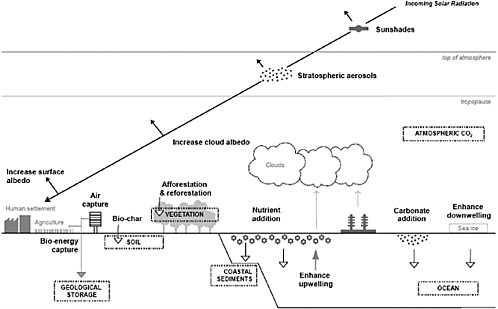
FIGURE 2.9 Various geoengineering options, including both solar radiation management and carbon dioxide removal. For further details see Figure 15.1. SOURCE: Lenton and Vaughn (2009).
further research, their efficacy and environmental consequences are not currently well understood.
Potential Drawbacks and Unintended Consequences
The overall environmental impacts of SRM approaches are not well characterized, and all proposals have the potential for unintended negative consequences. For example, approaches that are intended to offset globally averaged warming may still lead to local- or regional-scale imbalances in climate forcing that could produce large regional changes. Several analyses also suggest that a sudden increase in stratospheric sulfate aerosol could potentially enhance losses of stratospheric ozone for several decades, especially in the Arctic. Additionally, since aerosols remain in the atmosphere for a much shorter time than GHGs, abandonment of aerosol injection could cause warming at a rate far greater than what is estimated in the absence of SRM. These and other issues, including the impact of SRM on precipitation and the hydrologic cycle, are not well understood. Finally, it should be noted that a major shortcoming of SRM approaches is that, while they have the potential to offset GHG-induced warming of the atmosphere, they would not offset ocean acidification or other impacts of elevated CO2.
Governance Issues
Due to the global nature of SRM, and especially considering the drawbacks and potential negative impacts, an international framework is needed to govern SRM research, development, and possible deployment. Important components of such a framework include a clear definition of “climate emergency” that would trigger deployment and criteria for whether, when, and how SRM approaches should be tested and/or deployed. Unilateral SRM testing or deployment could lead to international tension, distrust, or even conflict. Public involvement in SRM-related decision making, including research activities, is likewise important since public acceptance is a key issue in informing governance decisions.
Ethical Issues
Intentional climate alteration, including SRM, raises significant issues with respect to ethics and responsibility. A key consideration in the deployment of SRM, as with other responses to climate change, is the distribution of risks among population groups in
the present generation, as well as future generations. Some have suggested that SRM research efforts may also pose a “moral hazard” by detracting from efforts to reduce GHG emissions or to adapt to the impacts of climate change. SRM and other geoengineering approaches also raise deep questions about humans’ relationship with nature, many of which are beyond the scope of this report.
Research Needs for Advancing Solar Radiation Management
It is beyond the scope of this report to design a research program on SRM, or even to determine the scope, scale, priorities, or goals of such a program. However, the various SRM proposals and their consequences need to be examined, as long as such research does not replace or reduce research on fundamental understanding of climate change or other approaches to limiting climate change or adapting to its impacts. Some key SRM-related research needs, discussed in Chapter 15, include the following:
-
Improve understanding of the physical potential and technical feasibility of SRM and other geoengineering approaches.
-
Evaluate the potential consequences of SRM approaches on other aspects of the Earth system, including ecosystems on land and in the oceans.
-
Develop and evaluate systems of governance that would provide a model for how to decide whether, when, and how to intentionally intervene in the climate system.
-
Measure and evaluate public attitudes and develop approaches that effectively inform and engage the public in decisions regarding SRM.
NATIONAL AND HUMAN SECURITY18
Climate change will influence human and natural systems that are linked throughout the globe, creating important implications for bilateral and multilateral relations and for national, international, and human security. Changes in temperature, sea level, precipitation patterns, and other elements of the physical climate system can add substantial stresses to infrastructure and especially to the food, water, energy, and ecosystem resources that societies use. Key concerns regarding the interactions between climate change and security include direct impacts on military operations; potential impacts to regional strategic priorities; causal links between environmental scarcity and conflict; the role of environmental conservation and collaboration in promoting peace; and relationships between environmental quality, resource abundance, and
|
18 |
For additional discussion and references, see Chapter 16 in Part II of the report. |
human security. In general, these areas are much less well understood than the causes and more direct consequences of climate change.
Military Operations
Climate change may affect military assets and operations directly: through physical stresses on military systems and personnel, severe weather constraints on operations due to increased frequency and intensity of storms and floods, increased uncertainty about the effects of Arctic ice and ice floes on navigation safety both on and below the ocean surface, or risks to coastal infrastructure due to sea level rise. Climate change is expected to increase heavy rainfalls and floods, droughts, and fires in many parts of the world and could lead to changing storm patterns. This may generate a change in military missions because the U.S. military has substantial logistical, engineering, and medical capabilities that have been used to respond to emergencies in the United States and abroad. Finally, the U.S. military is a major consumer of fossil fuels and could potentially play a major role in reducing U.S. GHG emissions.
International Relations and National Security
Climate change has the potential to disrupt international relations and raise security challenges through impacts on specific assets and resources. For example, loss of Arctic sea ice will increase the value of Arctic navigation routes. The legal status of the Northwest Passage in particular has long been contested, but the prospect of it becoming more widely usable raises the stakes substantially. Another possible disruption to international relations is the prospect of substantial mineral reserves under the Arctic Ocean. Climate change will also affect shorelines and in some cases “exclusive economic zones” and baselines used for projecting national boundaries seaward. Boundaries that could be affected include those in the South China Sea and between the United States and Cuba. Climate-related changes in precipitation and the hydrologic cycle will likely result in changes in flow regimes in international river systems, and this raises the possibility of challenges to interstate relationships, even conflict, over shared water resources. Finally, climate-related changes in food supply and sea level rise-related land losses could potentially result in intra- and interstate migration and refugee-related conflicts.
Treaty Verification
The prospect of binding international agreements on GHG emissions will have important implications for treaty verification and compliance. In particular, measurements of GHG concentrations and emissions are needed to inform national and international policy aimed at regulating emissions, to verify compliance with emissions-reduction policies, and to ascertain their effectiveness. Measurements of GHGs for treaty verification or for financial transactions (carbon trading) will require a higher level of scrutiny than that used in the research domain. Key concerns in such a regime are data security, authentication, reliability, and transparency.
Human Security
The impact of climate change may increase the probability of conflict, and this has become a prominent argument for considering climate change in security analyses. The concept of human security, however, goes far beyond the traditional concerns of national security and conflict and instead includes considerations of access to sufficient food, water, and health care infrastructure, as well as freedom from repression and freedom and capacity to determine one’s life path. Analysts have moved toward a more integrative conception of security and threats, one that reflects the lived realities that individuals and communities face. Nevertheless, there are still multiple ways of thinking about human security and no agreement on a policy agenda. Research efforts in this area to date have focused on issues of equity, fairness, vulnerability, and human dignity, and have identified conditions that are critical to maintaining or restoring human security: effective governance systems, healthy and resilient ecosystems, comprehensive and sustained disaster risk-management efforts, empowerment of individuals and local institutions, and supportive values.
Research Needs for Advancing Science on National and Human Security Implications of Climate Change
Scientific understanding of the national and human security implications of climate change are considerably less well understood than many of the other impacts of climate change. As a result, there are a wide variety of research needs for improving understanding of the relationship between climate change and security, including the following:
-
Develop improved observations, models, and vulnerability assessments for regions of importance in terms of military infrastructure.
-
Build understanding of observations and monitoring requirements for treaty verification.
-
Identify areas of potential human insecurity and vulnerability in response to climate change impacts interacting with other social and environmental changes.
DESIGNING, IMPLEMENTING, AND EVALUATING CLIMATE POLICIES19
Analyzing different policy options that might be used to limit the magnitude of climate change or promote successful adaptation is a key area of scientific research. Indeed, the ability to comprehensively assess the potential consequences of various climate policies—including the costs, benefits, trade-offs, co-benefits, and uncertainties associated with their implementation—is paramount to informing public- and private-sector decision making on climate change. Despite a broad range of research focusing on policy making and evaluation in general, policy-oriented research focused specifically on climate change and its interaction with natural and social systems has been relatively limited. Because climate change is becoming an increasingly important public policy concern in the United States and many other countries, additional research to support climate policy design and implementation is needed.
International Policies for Limiting the Magnitude and Adapting to the Impacts of Climate Change
At the international level, examples of climate policies include the United Nations Framework Convention on Climate Change, the Kyoto Protocol, and the Copenhagen Accord. Policy options available at the national, regional, and local levels include direct regulation, taxes, cap-and-trade systems for emissions permits, incentive structures and subsidies for voluntary action, technical aid and incentives for the creation and implementation of new technology portfolios, and adaptation options and planning. Research in this area finds that direct regulation, when enforced, can effectively reduce emissions. It also finds that while taxes are cost-effective, they do not guarantee specific emissions-reduction levels and may be hard to adjust, and that the efficacy of tradable permits depends on the structure of the policy. Voluntary agreements can play a role in accelerating technology adoption, but they are less effective in reducing
|
19 |
For additional discussion and references, see Chapter 17 in Part II of the report. |
emissions. Finally, whereas incentives and subsidies to develop cleaner technologies maybe be slow and costly, they can complement other emissions-reduction policies.
Monitoring Compliance with Emissions-Reduction Policies
International agreements and policies, to be effective, need to be enforced, verified, and monitored. Standards and certification mechanisms for reducing GHG emissions also need to be created and implemented. Constraints to monitoring compliance with and the effectiveness of such policies include lack of adequate and reliable methods for measuring GHG emissions, lack of mechanisms for accurately accounting for GHG emissions and for offsets, and lack of technical capacity to monitor and enforce policies nationally and across international borders.
Assessing Benefits and Costs of Climate Action
Benefit-cost analyses seek to translate climate change impacts, including lost or gained ecosystem services, into a monetary metric so that they can be compared to estimates of the costs and benefits associated with policies to limit the magnitude or adapt to the impacts of climate change. Alternatively, cost-effectiveness analysis is often used when the costs and benefits of action differ greatly in character, or when the benefits are subject to greater uncertainty or controversy. Cost-effectiveness analysis allows analytically based comparisons of decisions without requiring that all impacts—in this case, damages from climate change and costs of emissions reduction—be reduced to a single metric. Both approaches can be powerful tools for informing decisions, but disagreements about (1) how to value ecosystem services or other resources for which market prices do not exist; (2) how to handle low-probability-high-consequence events, discount rates, and risk aversion; (3) prospects for technological innovation; and (4) how to incorporate distributional and intergenerational equity concerns lead to wide ranges in estimates of the social value of climate actions.
Dealing with Complex and Interacting Policies, Multilevel Governance, and Equity
Effective climate policy making requires analyses that consider the complexity of real policies, how institutions interact across levels of government from global to local, and equity issues. Climate policies are not made in a vacuum. They interact with other climate and nonclimate policies and are often nested across different scales from local to global. In the United States, rapidly emerging local and state climate policy agen-
das interact with federal policy. It is not yet clear how these interactions will play out and what the net effect will be. The multilevel and hybrid character of climate policy (both for limiting and adapting to climate change) presents opportunities (such as for synergistic outcomes) and challenges (such as one level of decision making constraining or negating the other). One of the most critical challenges is dealing fairly with the distributional effects of climate change impacts. Three main sources of equity concerns shape climate policy debates: historical responsibility for the problem of climate change, who will bear the brunt of its negative impacts, and who will be responsible for solving it. Scientific research cannot answer these questions, but it can provide relevant information to policy makers as they attempt to do so.
Research Needs Related to Climate Policy Development and Implementation
Research needs in this area, explored in further detail in Chapter 17, include the following:
-
Continue to improve understanding of what leads to the adoption and implementation of international agreements on climate and other environmental issues and what mechanisms are most effective at achieving their goals.
-
Develop and evaluate protocols, institutions, and technologies for monitoring and verifying compliance with international agreements.
-
Continue to improve methods for estimating costs, benefits, and cost-effectiveness.
-
Develop methods for analyzing complex, hybrid policies.
-
Develop further understanding of how institutions interact in the context of multilevel governance and adaptive risk management.
-
Develop analyses that examine climate policy from a sustainability perspective, taking account of the full range of effects of climate policy on human well-being, including unintended consequences and equity effects.


