
CHAPTER FOUR
Integrative Themes for Climate Change Research
One of the main tasks assigned to the Panel on Advancing the Science of Climate Change was to identify the additional science needed to improve our understanding of climate change and its interactions with human and environmental systems, including the scientific advances needed to improve the effectiveness of actions taken to respond to climate change. An examination of the research needs identified in the technical chapters of Part II of the report reveals that there is indeed still much to learn. However, our analysis suggests that the most crucial research needs of the coming decades can be captured in seven crosscutting research themes, whether one is interested in sea level rise, agriculture, human health, national security, or other topics of concern. For example, nearly every chapter in Part II calls for improved understanding of human behaviors and institutions, more detailed information about projected future changes in climate, and improved methods for assessing the economic, social, and environmental costs, benefits, co-benefits, and unintended consequences of actions taken in response to climate change.
Box 4.1 lists the seven crosscutting research themes that the panel has identified, grouped into three general categories: research for improving understanding of coupled human-environment systems, research for improving and supporting more effective responses to climate change, and tools and approaches needed for both of these types of research. These seven crosscutting themes are not intended to represent a comprehensive or exclusive list of research needs, nor do the numbers indicate priority order. Rather, they represent a way of categorizing and, potentially, organizing some of the nation’s most critical climate change research activities. Most of these themes are integrative—they require collaboration across different fields of study, including some fields that are not typically part of the climate change science enterprise. Moreover, there are important synergies among the seven themes, and they are not completely independent. For example, research focused on improving responses to climate change will clearly benefit from increased understanding of both human systems and the Earth system, and advances in observations, models, and scientific understanding often go hand in hand. Finally, because most of the themes include research that contributes both to fundamental scientific understanding and to more informed decision making, research under all seven themes would benefit from
|
BOX 4.1 Crosscutting Themes for the New Era of Climate Change Research Research to Improve Understanding of Human-Environment Systems
Research to Support Effective Responses to Climate Change
Research Tools and Approaches to Improve Both Understanding and Responses
|
increased dialogue with decision makers across a wide range of sectors and scales. As discussed in Chapter 5, these characteristics all point to the need for an expanded and enhanced climate change science enterprise—an enterprise that is comprehensive, integrative, interdisciplinary, and better supports decision making both in the United States and around the world.
In the following sections, the seven integrative, crosscutting research themes identified by the panel are discussed in detail. Our intent is to describe some of the more important scientific issues that could be addressed within each theme, to show how they collectively span the most critical areas of climate change research, and to demonstrate the vital importance of research progress in all of these areas to the health and well-being of citizens of the United States as well as people and natural systems around the world. Issues related to the implementation of these themes are explored in the next chapter.
THEME 1:
CLIMATE FORCINGS, FEEDBACKS, RESPONSES, AND THRESHOLDS IN THE EARTH SYSTEM
Scientific understanding of climate change and its interactions with other environmental changes is underpinned by empirical and theoretical understanding of the Earth system, which includes the atmosphere, land surface, cryosphere, and oceans,
as well as interactions among these components. Numerous decisions about climate change, including setting emissions targets and developing and implementing adaptation plans, rest on understanding how the Earth system will respond to greenhouse gas (GHG) emissions and other climate forcings. While this understanding has improved markedly over the past several decades, a number of key uncertainties remain. These include the strength of certain forcings and feedbacks, the possibility of abrupt changes, and the details of how climate change will play out at local and regional scales over decadal and centennial time scales. While research on these topics cannot be expected to eliminate all of the uncertainties associated with Earth system processes (and uncertainties in future human actions will always remain), efforts to improve projections of climate and other Earth system changes can be expected to yield more robust and more relevant information for decision making, as well as a better characterization of remaining uncertainties.
Research on forcing, feedbacks, thresholds, and other aspects of the Earth system has been ongoing for many years under the auspices of the U.S. Global Change Research Program (USGCRP) and its predecessors (see Appendix E). Our analysis—the details of which can be found in Part II of the report—indicates that additional research, supported by expanded observational and modeling capacity, is needed to better understand climate forcings, feedbacks, responses, and thresholds in the Earth system. A list of some of the specific research needs within this crosscutting theme is included in Table 4.1, and the subsections below and the chapters of Part II include additional discussion of these topics. Many of these needs have also been articulated, often in greater detail, in a range of recent reports by the USGCRP, the National Research Council, federal agencies, and other groups.
Climate Variability and Abrupt Climate Change
Great strides have been made in improving our understanding of the natural variability in the climate system (see, e.g., Chapter 6 of this report and USGCRP, 2009b). These improvements have translated directly into advances in detecting and attributing human-induced climate change, simulating past and future climate in models, and understanding the links between the climate system and other environmental and human systems. For example, the ability to realistically simulate natural climate variations, such as the El Niño-Southern Oscillation, has been a critical driver for, and test of, the development of climate models (see Theme 7). Improved understanding of natural variability modes is also critical for improving regional climate projections, especially on decadal time scales. Research on the impacts of natural climate variations can also provide insight into the possible impacts of human-
TABLE 4.1 Examples of Research Needs Related to Improving Fundamental Understanding of Climate Forcings, Feedbacks, Responses, and Thresholds in the Earth System
|
• Improve understanding of transient climate change and its dependence on ocean circulation, heat transport, mixing processes, and other factors, especially in the context of decadal-scale climate change. |
|
• Extend understanding of natural climate variability on a wide range of space and time scales, including events in the distant past. |
|
• Improve estimates of climate sensitivity, including theoretical, modeling, and observationally based approaches. |
|
• Expand observations and understanding of aerosols, especially their radiative forcing effects and implications for strategies that might be taken to limit the magnitude of future climate change; |
|
• Improve understanding of cloud processes, and cloud-aerosol interactions, especially in the context of radiative forcing, climate feedbacks, and precipitation processes. |
|
• Improve understanding of ice sheets, including the mechanisms, causes, dynamics, and relative likelihood of ice sheet collapse versus ice sheet melting. |
|
• Advance understanding of thresholds and abrupt changes in the Earth system. |
|
• Expand understanding of carbon cycle processes in the context of climate change and develop Earth system models that include improved representations of carbon cycle processes and feedbacks. |
|
• Improve understanding of ocean dynamics and regional rates of sea level rise. |
|
• Improve understanding of the hydrologic cycle, especially changes in the frequency and intensity of precipitation and feedbacks of human water use on climate. |
|
• Improve understanding and models of how agricultural crops, fisheries, and natural and managed ecosystems respond to changes in temperature, precipitation, CO2 levels and other environmental and management changes. |
|
• Improve understanding of ocean acidification and its effects on marine ecosystems and fisheries. |
|
SOURCE: These research needs (and those included in each of the other six themes in this chapter) are compiled from the detailed lists of key research needs identified in the technical chapters of Part II of this report. |
induced climate change. Continued research on the mechanisms and manifesta-mechanisms and manifestations of natural climate variability in the atmosphere and oceans on a wide range of space and time scales, including events in the distant past, can be expected to yield, can be expected to yield additional progress.
Some of the largest risks associated with climate change are associated with the potential for abrupt changes or other climate “surprises” (see Chapters 3 and 6). The paleoclimate record indicates that such abrupt changes have occurred in the past, but our ability to predict future abrupt changes is constrained by our limited understand-
ing of thresholds and other nonlinear processes in the Earth system. An improved understanding of the likelihood and potential consequences of these changes will be important for setting GHG emissions-reduction targets and for developing adaptation strategies that are robust in the face of uncertainty. Sustained observations will be critical for identifying abrupt changes and other climate surprises if and when they occur, and for supporting the development of improved abrupt change simulations in climate models. Finally, since some abrupt changes or other climate surprises may result from complex interactions within or among different components of coupled human-environment systems, improved understanding is needed on multiple stresses and their potential role in future climate shifts (NRC, 2002a).
Improved understanding of forcings, feedbacks, and natural variability on regional scales is also needed. Many decisions related to climate change impacts, vulnerability, and adaptation could benefit from improvements in regional-scale information, especially over the next several decades. As discussed in Theme 7, these improvements require advances in understanding regional climate dynamics, including atmospheric circulation in complex terrain as well as modes of natural variability on all time scales. It is especially important to understand how regional variability patterns may change under different scenarios of global climate change and the feedbacks that regional changes may in turn have on continental- and global-scale processes. Regional climate models, which are discussed later in this chapter, are a key tool in this area of research.
The Atmosphere
Many research needs related to factors that influence the atmosphere and other components of the physical climate system are discussed in the chapters of Part II, and many of these needs have also been summarized in other recent reports. For example, many of the conclusions and research recommendations in Understanding Climate Change Feedbacks (NRC, 2003b) and Radiative Forcing of Climate Change (NRC, 2005d), such as those highlighted in the following two paragraphs, remain highly relevant today:
The physical and chemical processing of aerosols and trace gases in the atmosphere, the dependence of these processes on climate, and the influence of climate-chemical interactions on the optical properties of aerosols must be elucidated. A more complete understanding of the emissions, atmospheric burden, final sinks, and interactions of carbonaceous and other aerosols with clouds and the hydrologic cycle needs to be developed. Intensive regional measurement campaigns (ground-based, airborne, satellite) should be con-
ducted that are designed from the start with guidance from global aerosol models so that the improved knowledge of the processes can be directly applied in the predictive models that are used to assess future climate change scenarios.
The key processes that control the abundance of tropospheric ozone and its interactions with climate change also need to be better understood, including but not limited to stratospheric influx; natural and anthropogenic emissions of precursor species such as NOx, CO, and volatile organic carbon; the net export of ozone produced in biomass burning and urban plumes; the loss of ozone at the surface, and the dependence of all these processes on climate change. The chemical feedbacks that can lead to changes in the atmospheric lifetime of CH4 also need to be identified and quantified. (NRC, 2003b)
Two particularly important—and closely linked—research topics related to forcing and feedback processes in the physical climate system are clouds and aerosols. Aerosols and aerosol-induced changes in cloud properties play an important role in offsetting some of the warming associated with GHG emissions and may have important implications for several proposed strategies for limiting the magnitude of climate change (see Theme 4). Cloud processes modulate future changes in temperature and in the hydrologic cycle and thus represent a key feedback. As noted later in this chapter, the representation of cloud and aerosol processes in climate models has been a challenge for many years, in part because some of the most important cloud and aerosol processes play out at spatial scales that are finer than global climate models are currently able to routinely resolve, and in part because of the complexity and limited understanding of the processes themselves. Continued and improved observations, field campaigns, process studies, and experiments with smaller-domain, high-resolution models are needed to improve scientific understanding of cloud and aerosol processes, and improved parameterizations will be needed to incorporate this improved understanding into global climate models.
The Cryosphere
Changes in the cryosphere, especially the major ice sheets on Greenland and Antarctica, represent another key research area in the physical climate system. Comprehensive, simultaneous, and sustained measurements of ice sheet mass and volume changes and ice velocities are needed, along with measurements of ice thickness and bed conditions, both to quantify the current contributions of ice sheets to sea level rise (discussed below) and to constrain and inform ice sheet model development. These measurements, which include satellite, aircraft, and in situ observations, need
to overlap for several decades in order to enable the unambiguous isolation of ice melt, ice dynamics, snow accumulation, and thermal expansion. Equally important are investments in improving ice sheet process models that capture ice dynamics as well as ice-ocean and ice-bed interactions. Efforts are already underway to improve modeling capabilities in these critical areas, but fully coupled ice-ocean-land models will ultimately be needed to reliably assess ice sheet stability, and considerable work remains to develop and validate such models. Glaciers and ice caps outside Greenland and Antarctica are also expected to remain significant contributors to sea level rise in the near term, so observations and analysis of these systems remain critical for understanding decadal and century-scale sea level rise. Finally, additional paleoclimate data from ice cores, corals, and ocean sediments would be valuable for testing models and improving our understanding of the impacts of sea level rise.
The Oceans
A variety of ocean processes are important for controlling the timing and characteristics of climate change. For a given climate forcing scenario, the timing of atmospheric warming is strongly dependent on the north-south transport of heat by ocean currents and mixing of heat into the ocean interior. Changes in the large-scale meridional overturning circulation could also have a significant impact on regional and global climate and could potentially lead to abrupt changes (Alley et al., 2003; NRC, 2002a). The relative scarcity of ocean observations, especially in the ocean interior, makes these factors among the more uncertain aspects of future climate projections. Changes in ocean circulations and heat transport are also connected to the rapid disappearance of summer sea ice in the Arctic Ocean. A better understanding of the dependence of ocean heat uptake on vertical mixing and the abrupt changes in polar reflectivity that follow the loss of summer sea ice in the Arctic are some of the most critical improvements needed in ocean and Earth system models.
Ice dynamics and thermal expansion are the main drivers of rising sea levels on a global basis, but ocean dynamics and coastal processes lead to substantial spatial variability in local and regional rates of sea level rise (see Chapters 2 and 7). Direct, long-term monitoring of sea level and related oceanographic properties via tide gauges, ocean altimetry measurements from satellites, and an expanded network of in situ measurements of temperature and salinity through the full depth of the ocean water column are needed to quantify the rate and spatial variability of sea level change and to understand the ocean dynamics that control global and local rates of sea level rise. In addition, oceanographic, geodetic, and coastal models are needed to predict the rate and spatial dynamics of ocean thermal expansion, sea level rise, and coastal
inundation. The need for regionally specific information creates additional challenges. For example, coastal inundation models require better bathymetric data, better data on precipitation rates and stream flows, ways of dealing with storm-driven sediment transport, and the ability to include the effects of built structures on coastal wind stress patterns (see Chapter 7). Such improvements in projections of sea level changes are critical for many different decision needs.
The Hydrosphere
There is already clear evidence that changes in the hydrologic cycle are occurring in response to climate change (see, e.g., Trenberth et al., 2007; USGCRP, 2009a). Improved regional projections of changes in precipitation, soil moisture, runoff, and groundwater availability on seasonal to multidecadal time scales are needed to inform water management and planning decisions, especially decisions related to long-term infrastructure investments. Likewise, projections of changes in the frequency and intensity of severe storms, storm paths, floods, and droughts are critical both for water management planning and for many adaption decisions. Developing improved understanding and projections of hydrological and water resource changes will require new multiscale modeling approaches, such as nesting cloud-resolving climate models into regional weather models and then coupling these models to land surface models that are capable of simulating the hydrologic cycle, vegetation, multiple soil layers, groundwater, and stream flow. Improved data collection, data analysis, and linkages with water managers are also critical. See Chapter 8 for additional details.
Ecosystems on Land
Climate change interacts with ecosystem processes in a variety of ways, including direct and indirect influences on biodiversity, range and seasonality shifts in both plants and animals, and changes in productivity and element cycling processes, among others (NRC, 2008b). Research is needed to understand how rapidly species and ecosystems can or cannot adjust in response to climate-related changes and to understand the implications of such adjustments for ecosystem services. In addition, improved analyses of the interactions of climate-related variables—especially temperature, moisture, and CO2—with each other and in combination with other natural and human-caused changes (e.g., land use change, water diversions, and landscape-scale management choices) are needed, as such interactions are more relevant than any individual change acting alone. Climate change-related changes in fire, pest, and other disturbance regimes have also not been well assessed, especially at regional scales.
Research is needed to identify the ecosystems, ecosystem services, species, and people reliant on them that are most vulnerable. See Chapter 9 for additional details.
The Carbon Cycle
Changes in the carbon cycle and other biogeochemical cycles play a key role in modulating atmospheric and oceanic concentrations of CO2 and other GHGs. Scientists have learned a great deal over the past 50 years about the exchange of carbon between the atmosphere, ocean, and biosphere and the effects of these changes on temperature and other climate change (CCSP, 2007a). However, key uncertainties remain. For example, we have an incomplete understanding of how interacting changes in temperature, precipitation, CO2, and nutrient availability will change the processing of carbon by land ecosystems and, thus, the amount of CO2 emitted or taken up by ecosystems in the decades ahead (see Chapter 9). As noted in Chapters 2 and 6, some of these feedbacks have the potential to dramatically accelerate global warming (e.g., the possibility that the current warming of permafrost in high-latitude regions will lead to melting of frozen soils and release huge amounts of CO2 and CH4 into the atmosphere). Changes in biogeochemical processes and biodiversity (including changes in reflectance characteristics due to land use changes) also have the potential to feed back on the climate system on a variety of time scales. Models and experiments that integrate knowledge about ecosystem processes, plant physiology, vegetation dynamics, and disturbances such as fire are needed, and such models should be linked with climate models.
As the ocean warms and ocean circulation patterns change, future changes in the ocean carbon cycle are also uncertain. For example, it is unclear whether the natural “biological pump,” which transports enormous amounts of carbon from the surface to the deep ocean, will be enhanced (Riebesell et al., 2007) or diminished (Mari, 2008) by ocean acidification and by changes in ocean circulation. Recent observational and modeling results suggest that the rate of ocean uptake of CO2 may in fact be declining (Khatiwala et al., 2009). Because the oceans currently absorb over 25 percent of human-caused CO2 emissions (see Chapter 6), changes in ocean CO2 uptake could have profound climate implications. Results from the first generation of coupled carbon-climate models suggest that the capacity of the oceans and land surface to store carbon will decrease with global warming, which would represent a positive feedback on warming (Friedlingstein et al., 2006). Improved understanding and representation of the carbon cycle in Earth system models is thus a critical research need.
Interactions with Managed Systems and the Built Environment
Feedbacks and thresholds within human systems and human-managed systems, and between the climate system and human systems, are a closely related research need that spans both this research theme and several of the other research themes described in this chapter. For example, crops respond to multiple and interacting changes in temperature, moisture, CO2, ozone, and other factors, such as pests, diseases, and weeds. Experimental studies that evaluate the interactions of multiple factors are needed, especially in ecosystem-scale experiments and in environments where temperature is already close to optimal for crops. Of particular concern are water resources for agriculture, which are influenced at regional scales by competition from other uses as well as by changing frequency and intensity of rainfall. Assessments that evaluate crop response to climate-related variables should explicitly include interactions with other resources that are also affected by climate change. Designing effective agricultural strategies for limiting and adapting to climate change will require models and analyses that reflect these complicated interactions and that also incorporate the response of farmers and markets not only to production and prices but to policies and institutions (see Themes 3, 4, and 7 below).
In fisheries, sustainable yields require matching catch limits with the growth of the fishery. Climate variability already makes forecasting the growth of fish populations difficult, and future climate change will increase this uncertainty. There is considerable uncertainty about—and considerable risk associated with—the sensitivity of fish species to ocean acidification. Further studies of connections between climate and marine population dynamics are needed to enhance model frameworks for effective fisheries management. Most fisheries are also subject to other stressors, such as increasing levels of pollution, and the interactions of these other stresses should be analyzed and incorporated into models. Finally, all of these efforts should be linked to the analysis of effective institutions and policies for managing fisheries. (See Chapter 9 for additional details of links between climate change and agriculture and fisheries.)
The role of large built environments (including the transportation and energy systems associated with them) in shaping GHG emissions, aerosol levels, ground-level air pollution, and surface reflectivity need to be examined in a systematic and comparative way to develop a better understanding of their role in climate forcing. This should include attention to the extended effect of urban areas on other areas (such as deposition of urban emissions on ocean and rural land surfaces) as well as interactions between urban and regional heat islands and urban vegetation-evapotranspiration feedbacks to climate. Examination of both local and supralocal institutions, markets, and policies will be required to understand the various ways urban centers drive
climate change and to identify leverage points for intervention. (See Chapter 10 and Theme 4 later in this chapter for additional details.)
Finally, the identification and evaluation of unintended consequences of proposed or already-initiated strategies to limit the magnitude of climate change or adapt to its impacts will need to be evaluated as part of the overall evaluation of the efficacy of such approaches. This topic is explored in more detail later in the chapter, but it depends on a robust Earth system research enterprise.
THEME 2:
CLIMATE-RELATED HUMAN BEHAVIORS AND INSTITUTIONS
Knowledge gained from research involving physical, chemical, and ecological processes has been critical for establishing that climate change poses sufficiently serious risks to justify careful consideration and evaluation of alternative responses. Emerging concerns about how best to respond to climate change also bring to the fore questions about human interactions with the climate system: how human activities drive climate change; how people understand, decide, and act in the climate context; how people are affected by climate change; and how human and social systems might respond. Thus, not surprisingly, many of the research needs that emerge from the detailed analyses in Part II focus on human interactions with climate change (see Table 4.2).
Human and social systems play a key role in both causing and responding to climate change. Therefore, in the context of climate change, a better understanding of human behavior and of the role of institutions and organizations is as fundamental to effective decision making as a better understanding of the climate system. Such knowledge underlies the ability to solve focused problems of climate response, such as deciding how to prioritize investments in protecting coastal communities from sea level rise, choosing policies to meet federal or state targets for reducing GHG emissions, and developing better ways to help citizens understand what science can and cannot tell them about potential climate-driven water supply changes. Such fundamental understanding provides the scientific base for making informed choices about climate responses in much the same way that a fundamental understanding of the physical climate system provides the scientific base for projecting the consequences of climate change.
Research investments in the behavioral and social sciences would expand this knowledge base, but such investments have been lacking in the past (e.g., NRC, 1990a, 1999a, 2003a, 2004b, 2005a, 2007f, 2009k). Barriers and institutional factors, both in research funding agencies and in academia more broadly, have also constrained progress in
TABLE 4.2 Examples of Research Needs on Human Behavior, Institutions, and Interactions with the Climate System (from Part II)
|
• Improve understanding of water-related institutions and governance. |
|
• Improve understanding of human behaviors and institutional and behavioral impediments to reducing energy demand and adopting energy-efficient technologies. |
|
• Improve understanding of what leads to the adoption and implementation of international agreements on climate and other environmental issues and what forms of such agreements most effectively achieve their goals. |
|
• Improve understanding of how institutions interact in the context of multilevel governance and adaptive management. |
|
• Improve understanding of the behaviors, infrastructure, and technologies that influence human activities in the transportation, urban, agricultural, fisheries, and other sectors. |
|
• Improve understanding of the relationship between climate change and institutional responses that affect national security, food security, health, and other aspects of social well-being. |
these areas (NRC, 1992a). This section outlines some of the key areas of fundamental research on human behavior and institutions that need to be developed to support better understanding of human interactions with the climate system and provide a scientific basis for informing more effective responses to climate change. It draws on several past analyses and assessments of research gaps and needs (NRC, 1992a, 1997a, 2001, 2002b, 2005a, 2009g, 2009k).
How People Understand Climate Change and Climate Risks
Climate change represents a special challenge for human comprehension (Fischhoff, 2007; Marx and Weber, 2009). To make decisions about climate change, a basic understanding of the processes of climate change and of how to evaluate the associated risks and potential benefits would be helpful for most audiences. However, despite several decades of exposure to information about climate change, such understanding is still widely lacking. A number of recent scientific analyses (Leiserowitz, 2007; Maibach et al., 2010; Moser and Tribbia, 2006, 2007; Wilson, 2002; see also NRC, 2010b) have identified some of the comprehension challenges people—including both the general public and trained professional in some fields—face in making decisions about how to respond to climate change.
First, because of the inherent uncertainties, projections of future climate change are often presented in terms of probabilities. Cognitive studies have established that humans have difficulty in processing probabilistic information, relying instead on cogni-
tive shortcuts that may deviate substantially from what would result from a careful analysis (e.g., Gigerenzer, 2008; Nichols, 1999).
Second, the time scale of climate change makes it difficult for most people to observe these changes in their daily lives. Climate change impacts are not yet dramatically noticeable in the most populated regions of the United States, and even rapid climate change takes place over decades, making it difficult for people to notice unless they look at historical records (Bostrom and Lashof, 2007; Moser, 2010). Scientists are only beginning to understand how recent and longer-term trends in weather influence perceptions of climate change (Hamilton and Keim, 2009; Joireman et al., in press). It is also difficult to unambiguously attribute individual weather events to climate change, and climate change is easily displaced by events people perceive as exceptional or simply as more important at any one time (Fischhoff, 2007; Marx and Weber, 2009; Marx et al., 2007; Weber, 2006).
Third, people commonly use analogies, associations, or simplified mental models to communicate or comprehend climate change, and these simplifications can result in significant misunderstandings. For example, climate change is sometimes confused with other types of pollution or with other global atmospheric problems (especially the stratospheric ozone “hole,” which some people erroneously think leads to global warming by allowing more solar radiation to enter the atmosphere) (Bostrom et al., 1994; Brechin, 2003; Kempton, 1991). Likewise, confusing the atmospheric lifetimes of GHGs with those of conventional air pollutants sometimes leads people to the erroneous inference that if emissions stop, the climate change problem will rapidly go away (Bostrom and Lashof, 2007; Morgan et al., 2001; Sterman, 2008; Sterman and Booth Sweeney, 2007).
Fourth, individual information processing is influenced by social processes, including the “frames” people apply when deciding how to assess new information, the trust they have in sources providing new information, and the views of those to whom they are connected in social networks (Durfee, 2006; Morgan et al., 2001; Moser and Dilling, 2007; Nisbet and Mooney, 2007; NRC, 2010b; Pidgeon et al., 2008). Information that is consistent with, rather than incongruent with, existing beliefs and values is more likely to be accepted, as is information from trusted sources (Bishr and Mantelas, 2008; Cash et al., 2003; Critchley, 2008; Cvetkovich and Loefstedt, 1999).
These challenges demonstrate the importance of understanding how people—acting as consumers, citizens, or members of organizations and social networks—comprehend climate change, and how these cognitive processes influence climate-relevant decisions and behaviors. Fundamental knowledge of risk perception provides a basis for this understanding (e.g., NRC, 1996; Pidgeon et al., 2003; Renn, 2008; Slovic,
2000), but this knowledge needs to be extended and elaborated (e.g., Lorenzoni et al., 2005; Lowe, 2006; O’Neill and Nicholson-Cole, 2009). A wide range of relevant theories and concepts have been advanced in various branches of psychology, sociology, and anthropology, as well as the political, pedagogic, and decision sciences (among others), but these have yet to be more fully synthesized and applied to climate change (Moser, 2010). Improved knowledge of how individuals, groups, networks, and organizations understand climate change and make decisions for responding to environmental changes can inform the design and evaluation of tools that better support decision making (NRC, 2009g).
Institutions, Organizations, and Networks
Individual decisions about climate change, important as they are, are not the only human decisions that shape the trajectory of climate change. Some of the most consequential climate-relevant decisions and actions are shaped by institutions—such as markets, government policies, and international treaties—and by public and private organizations.
Institutions shape incentives and the flow of information. They can also either encourage or help us avoid situations where individual actions lead to outcomes that are undesirable for both the individual and the group (sometimes called “the tragedy of the commons”). The problem of decision making for the collective good has been extensively studied around localized resources such as forests or fisheries (Chhatre and Agrawal, 2008; Dietz and Henry, 2008; McCay and Jentoft, 2009; Moran and Ostrom, 2005; NRC, 2002b; Ostrom, 2007, 2010; Ostrom and Nagendra, 2006). This body of research can provide important guidance for shaping effective responses to climate change at local and regional levels. It can also inform the design and implementation of national and international climate policies (see Chapter 17). However, improving our understanding of the flexibility and efficacy of current institutions and integrating this body of knowledge with existing work on international treaties, national policies, and other governance regimes remains a significant research challenge.
Many environmentally significant decisions are made by organizations, including governments, publicly traded companies, and private businesses. Research on environmental decision making by businesses covers a broad range of issues. These include responses to consumer and investor demand, management of supply chains and production networks, standard setting within sectors, decisions about technology and process, how environmental performance is assessed and reported, and the interplay between government policy and private-sector decision making (NRC, 2005a). Re-
sponses to climate change in the private sector have not been studied as extensively, but such research efforts might yield important insights.
A number of state and local governments have also been proactive in developing policies to adapt to climate change and reduce GHG emissions. To learn from these experiences, which is a key aspect of adaptive risk management, research is needed on both the effectiveness of these policies and the various factors that influenced their adoption (Brody et al., 2008; Teodoro, 2009; Zahran et al., 2008). In the United States, local policies are almost always embedded in state policies, which in turn are embedded in national policies, raising issues of multilevel governance—another emerging research area (see Chapter 17).
Finally, it is clear that public policy is shaped not only by the formal organizations of government, but also by policy networks that include government, the private sector, and the public. An emerging challenge is to understand how these networks influence policy and how they transmit and learn from new information (Bulkeley, 2005; Henry, 2009).
Environmentally Significant Consumption
Decisions about consumption at the individual, household, community, business, and national levels have a profound effect on GHG emissions. For example, voluntary consumer choices to increase the efficiency of household energy use could reduce total U.S. GHG emissions by over 7 percent if supportive policies were in place (Dietz et al., 2009b). Consumer choices also influence important aspects of vulnerability and adaptation; for example, increasing demand for meat in human diets places stresses on the global food system as well as on the environment (Fiala, 2008; Stehfest et al., 2009), and demand for beachfront homes increases vulnerability and shapes adaptation options related to sea level rise, storm surges, and other coastal impacts.
Considerable research on consumption decision making has been carried out in economics, psychology, sociology, anthropology, and geography (NRC, 1997a, 2005a), but much of this research has been conducted in isolation. For example, economic analyses often take preferences as given. Studies in psychology, sociology, and anthropology, on the other hand, focus on the social influences on preferences but often fail to account for economic processes. Decisions based on knowledge from multiple disciplines are thus much more likely to be effective than decisions that rely on the perspective of a single discipline, and advances in the understanding of climate and related environmental decision making are likely to require collaboration across multiple social science disciplines (NRC, 1997a, 2002b). This is an area of research where
theories and methodologies are in place but progress has been slowed by a lack of support for experiments and large-scale data collection efforts that integrate across disciplines.
Human Drivers of Climate Change
Ultimately, it is desirable to understand how choices, and the factors that shape them, lead to specific environmental outcomes (Dietz et al., 2009c; Vayda, 1988). A variety of hypotheses have been offered and tested about the key societal factors that shape environmental change—what are often called the drivers of change (NRC, 1992a). Growth in population and consumption, technological change, land and resource use, and the social, institutional, and cultural factors shaping the behavior of individuals and organizations have all been proposed as critical drivers, and some empirical work has elucidated the influence of each of them (NRC, 1997b, 1999c, 2005a, 2008b). However, much of this research has focused on only one or a few factors at a time and has used highly aggregated data (Dietz et al., 2009a). To understand the many human drivers of climate change as a basis for better-informed decision making, it will be necessary to develop and test integrative models that examine multiple driving forces together, examine how they interact with each other at different scales of human activity and over time, and consider how their effects vary across different contexts.
To evaluate the effectiveness of policies or other actions designed to limit the magnitude of climate change, increased understanding is needed about both the elasticity of climate drivers—the extent to which changes in drivers produce changes in climate impacts—and the plasticity of drivers, or the ease with which the driver can be changed by policy interventions (York et al., 2002). For example, analyses of the effects of population growth on GHG emissions suggest an elasticity of about 1 to 1.5; that is, for every 1 percent increase in human population, there is roughly a 1 to 1.5 percent increase in environmental impact (Clark et al., 2010; Dietz et al., 2007; Jorgenson, 2007, 2009; Shi, 2003; York et al., 2003). On the other hand, recent research suggests that environmental impact is more directly related to the number of households than to the number of people (Cole and Neumayer, 2004; Liu et al., 2003). Thus, a shift to smaller average household size could offset or even overwhelm the reduction in climate drivers resulting from reduced population growth. Similarly, it has been argued that increasing affluence leads at first to increased environmental impact but, once a threshold level of affluence has been reached, environmental impact declines (Grossman and Krueger, 1995; Selden and Song, 1994). In the case of GHG emissions, however, emissions apparently continue to increase with increasing affluence (Carson,
2010; Cavlovic et al., 2000; Dasgupta et al., 2002; Dietz et al., 2007; Stern, 2004), suggesting that economic growth alone will not reduce emissions.
Processes that Induce or Constrain Innovation
The adoption of new technology is yet another area in which institutions, organizations, and networks have an important influence on decision making. New and improved technologies will be needed to meet the challenges of limiting climate change and adapting to its impacts (NRC, 2010a,c). However, the mere existence of a new technology with desirable properties is not sufficient to ensure its use. For example, individuals and organizations are currently far less energy efficient than is technologically feasible or economically optimal (Jaffe and Stavins, 1994; Weber, 2009). There are also many examples of differential use of or opposition to new technologies among individuals, communities, and even nations. Although adoption of and resistance to innovation, especially in new technologies, have been extensively studied (e.g., Stern et al., 2009), much of this research has been technology specific. A validated theoretical framework has not yet been developed for analyses of adoption issues related to new technologies to reduce GHG emissions or enhance resilience of particular systems, or of proposals to intentionally modify the climate system (see Chapter 15). One lesson from the existing literature is worth highlighting—the earlier in the process of technological development that social acceptance is considered, the more likely it is that technologies will be developed that will actually be used (Rosa and Clark, 1999). Another is that, beyond the character of the innovation itself, it is essential to understand the role of the decision and institutional environment in fostering or constraining its adoption (Lemos, 2008; Rayner et al., 2005). Many of these concepts and research needs also emerge from the next two themes in this chapter.
THEME 3:
VULNERABILITY AND ADAPTATION ANALYSES OF COUPLED HUMAN-ENVIRONMENT SYSTEMS
Not all people, activities, environments, and places are equally vulnerable1 or resilient to the impacts of climate change. Identification of differences in vulnerability across space and time is both a pivotal research issue and a critical way in which scientific research can provide input to decision makers as they make plans to adapt to climate
|
BOX 4.2 Vulnerability and Adaptation Challenges in Coastal Regions Coastal regions house most of the world’s people, cities, and economic activities. For example, in 2000, the coastal counties of California were home to 77 percent of the state’s residents, 81 percent of jobs, and 86 percent of the state’s gross product—which represents nearly 19 percent of the total U.S. economy (Kildow and Colgan, 2005). A number of climate and climate-related processes have the potential to damage human and environmental systems in the coastal zone, including sea level rise; saltwater intrusion; storm surge and damages from flooding, inundation, and erosion; changes in the number and strength of coastal storms; and overall changes in precipitation amounts and intensity. Under virtually all scenarios of projected future climate change, coastal areas face increased risks to their transportation and port systems, real estate, fishing, tourism, small businesses, power generating and supply systems, other critical infrastructure (such as hospitals, schools, and police and fire stations), and countless managed and natural ecosystems. Coastal regions are not homogenous, however, and climate change impacts will play out in different ways in different places. Some areas of the coast and some industries and populations are more vulnerable, and thus more likely to suffer harm, than others. Thus, managers and decision makers in the coastal zone—including land use planners, conservation area managers, fisheries councils, transportation planners, water supply engineers, hazard and emergency response personnel, and others—will face a wide range of challenges, many of them place specific, regarding how to respond to the risks posed by climate change. What does a coastal land use planner need to know about climate change impacts in order to make decisions about land use in a particular region? How can a research program provide information that will assist decision makers in such regions? Knowledge and predictions about just how much sea level will rise in certain regions over time is a fundamental question. However, as noted in Chapter 7, precise projections are not easy to provide. Moreover, sea level rise projections are, by themselves, not sufficient to meet coastal managers’ information needs. Managers also need to know how changes in sea level translate into erosion rates, flooding |
change. Indeed, the companion report Adapting to the Impacts of Climate Change (NRC, 2010a) identifies vulnerability assessments as a key first step in many if not all adaptation-related decisions and actions. An example of the use of vulnerability assessments in the context of climate-related decision making in the coastal zone can be found in Box 4.2.
In addition to merely identifying and characterizing vulnerabilities, scientific research can help identify and assess actions that could be taken to reduce vulnerability and increase resilience and adaptive capacity in human and environmental systems. Combined vulnerability and adaptation analyses can, for example, identify “no-regrets” actions that could be taken at little or no cost and would be beneficial regardless of
|
frequencies, storm surge levels, risks associated with different development setback limits, numbers of endangered species in exposed coastal ecosystems, habitat changes, and changes in water supply and quality parameters. In addition to these climate and other environmental changes, coastal managers need to consider the numbers of hospitals, schools, and senior citizens in potentially affected areas; property tax dollars generated in the coastal zone; trends in tourism; and many other factors. Vulnerability assessments of human, social, physical, and biological resources in the coastal zone can help decision makers identify the places and people that are most vulnerable to climate change and help them to identify effective steps that can be taken to reduce vulnerability or increase adaptive capacity. To help coastal managers and other decision makers assess risks, evaluate trade-offs, and make adaptation decisions, they need a scientific research program that improves understanding and projections of sea level rise and other climate change impacts at regional scales, integrates this understanding with improved understanding or nonclimatic changes relevant to decision making, identifies and evaluates the advantages and disadvantages of different adaptation options, and facilitates ongoing assessment and monitoring. Such a program would require the engagement of many different kinds of researchers, including those focusing on resource and land use institutions; social dynamics; economic resilience; developing or evaluating regional climate models; sea level and ocean dynamics; coastal ocean circulation; spatial geomorphologic, geologic, and geographical characteristics; and aquatic and terrestrial ecosystem dynamics, goods, and services. In addition to interdisciplinary interactions, research teams would benefit from interactions with decision makers to improve knowledge and understanding of the specific challenges they face (Cash et al., 2003; NRC, 2008h, 2009k). The knowledge gained by these researchers needs to be integrated and synthesized in decision-support frameworks that actively involve and are accessible to decision makers (e.g., Kates et al., 2006; Moser and Luers, 2008). Finally, a research enterprise that includes the development, testing, and implementation of improved risk assessment approaches and decision-support systems will enhance the capacity of decision makers in the coastal zone—as well as other sectors—to respond effectively to climate change. |
how climate change unfolds. They can also help to identify sectors, regions, resources, and populations that are particularly vulnerable to changes in climate considered in the context of changes in related human and environmental systems. Finally, scientific research can assist adaptation planning by helping to develop, assess, and improve actions that are taken to adapt, and by identifying barriers to adaptation and options to overcome those barriers. Indeed, many of the chapters in Part II of the report identified vulnerability and adaptation analyses, developing the scientific capacity to perform such analyses, and developing and improving adaptation options as key research needs. Table 4.3 lists some of these needs.
TABLE 4.3 Examples of Research Needs Related to Vulnerability and Adaptation (from Part II)
|
• Expand the ability to identify and assess vulnerable coastal regions and populations and to develop and assess adaptation strategies, including barriers to their implementation. |
|
• Assess food security and vulnerability of food production and distribution systems to climate change impacts, and develop adaptation approaches. |
|
• Develop and improve technologies, management strategies, and institutions to enhance adaptation to climate change in agriculture and fisheries. |
|
• Develop vulnerability assessments and integrative management approaches and technologies to respond effectively to changes in water resources. |
|
• Assess vulnerabilities of ecosystems and ecosystem services to climate change. |
|
• Assess current and projected health risks associated with climate change and develop effective, efficient, and fair adaptation measures. |
|
• Assess the vulnerability of cities and other parts of the built environment to climate change, and develop methods for adapting. |
|
• Advance understanding of how climate change will affect transportation systems and how to reduce vulnerability to these impacts. |
|
• Develop improved vulnerability assessments for regions of importance in terms of military operations and infrastructure. |
Characteristics of Vulnerability and Adaptation Analyses
Vulnerability and adaptation analyses can be performed in many contexts and have a wide range of uses. In general, vulnerability analyses assess exposure to and impacts from a disturbance, as well as sensitivity to these impacts and the capacity to reduce or adapt to the negative consequences of the disturbance. These analyses can then be used by decision makers to help decide where, how much, and in what ways to intervene in human or environmental systems to reduce vulnerability, enhance resilience, or improve efficient resource management (Eakin et al., 2009; Turner, 2009). In the context of climate change, vulnerability analyses seek to evaluate and estimate the harm to populations, ecosystems, and resources that might result from changes in climate, and to provide useful information for decision makers seeking to deal with these changes (Füssel and Klein, 2006; Kates et al., 2001; Kelly and Adger, 2000).
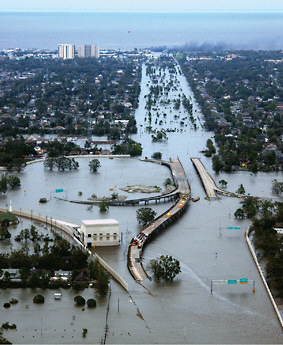
A major lesson learned from conventional vulnerability analyses is that they often miss the mark if they focus on a single system or set of interactions—for example, a certain population or ecosystem in isolation—rather than considering the larger system in which people and ecosystems are embedded (O’Brien and Leichenko, 2000; Turner et al., 2003a). The Hurricane Katrina disaster (Box 4.3) illustrates the importance of interactions among the human and environmental components in influencing vulnerability: land and water management decisions interacted with environmental, social,
and economic dynamics to make the people and ecosystems of New Orleans and surrounding areas particularly vulnerable to storm surges, with tragic results.
As recognition has grown that vulnerability should be assessed in a wider context, attention has increasingly turned to integrated approaches focused on coupled human-environment systems. Such analyses consider both the natural characteristics and the human and social characteristics of a system, evaluate the consequences of climate change and other stresses acting on the integrated system, and explore the potential actions that could be taken to reduce the negative impacts of these consequences, including the trade-offs among efforts to reduce vulnerability, enhance resilience, or improve adaptive capacity (see Figure 4.1) (Eakin and Luers, 2006; Kasperson et al., 2009; Turner et al., 2003a). Integrated approaches that allow the evaluation of the causal structure of vulnerabilities (i.e., the long-term drivers and more immediate causes of differential exposure, sensitivity, and adaptive capacity) can help identify the resources and barriers that can aid or constrain implementation of adaptation options, including
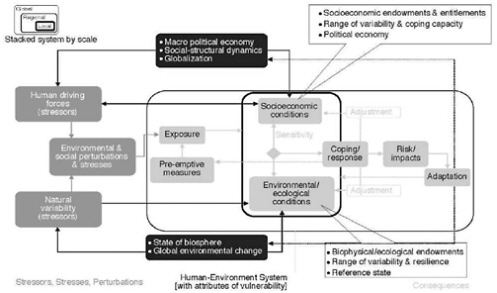
FIGURE 4.1 A framework for analyzing vulnerabilities, focusing on a coupled human-environment system in which vulnerability and response depend on both socioeconomic and human capital as well as natural resources and changes in the environment. From left to right, the figure includes the stresses on the coupled system, the degree to which those stresses are felt by the system, and the conditions that shape the ability of the system to adapt. SOURCE: Kasperson et al. (2009), adapted from Turner et al. (2003a).
|
BOX 4.3 Vulnerability of New Orleans to Hurricane Katrina The Mississippi River, especially in and around New Orleans, has been intensively engineered to control flooding and provide improved access for ships to the port of New Orleans. These hydraulic works significantly reduce the river’s delivery of sediments to the delta between the city and the Gulf of Mexico, and thus the land-building processes that would otherwise offset the gradual subsidence and erosion of the delta. In addition, the construction of channels and levees and other changes in the lower delta have affected vegetation, especially the health of cypress swamps. Together, these changes in elevation and vegetation have weakened the capacity of the lower delta to serve as a buffer to storm surges from the Gulf of Mexico. Various assessments of the condition of the lower Mississippi Delta—which together form a quasi-integrated vulnerability study—revealed that in the event of a direct hurricane strike, the vegetation and land areas south of New Orleans were insufficient to protect the city from large storm surges, and also that various hydraulic works would serve to funnel flood waters to parts of the city (Costanza et al., 2006; Day et al., 2007). Despite this knowledge, little was done to reduce the region’s vulnerabilities prior to 2005. When Hurricane Katrina struck in late August of that year, the human-induced changes in the region’s hydrology, vegetation, and land-building processes, together with the failure to maintain adequate protective structures around New Orleans, resulted in extensive flooding of the city and surrounding area over the following week (see figure below). This, combined with a lack of institutional preparedness and other social factors, led to a well-documented human disaster, especially for the poorest sections of the city (Costanza et al., 2006; Day et al., 2007; Kates et al., 2006). While climate change may or may not have contributed to the Katrina disaster (see Chapter 8 for a discussion of how climate change might influence the frequency or intensity of hurricanes and other storms), it does illustrate how scientific analysis can help identify vulnerabilities. The Katrina disaster also illustrates how scientific analyses alone are not sufficient to ensure an effective response. |
ecological, cognitive, social, cultural, political, economic, legal, institutional, and infrastructural hurdles (e.g., Adger et al., 2009a,b). Integrated vulnerability analyses also allow improved understanding and identification of areas in which climate change works in combination with other disturbances or decisions (e.g., land-management practices) to increase or decrease vulnerability (Cutter et al., 2000; Luers et al., 2003; Turner et al., 2003b).
Challenges of Analyzing Vulnerability
Because of the complexity of interactions within and the variance among coupled human-environment systems, integrated vulnerability and adaptation analyses often rely
on place-based (local and regional) assessments for decision making (e.g., Cutter et al., 2000; O’Brien et al., 2004; Turner et al., 2003b; Watson et al., 1997). However, with few notable exceptions (e.g., Clark et al., 1998; Cutter et al., 2000), there is little empirical research on the vulnerability of places, communities, economies, and ecological systems in the United States to climate change, nor is there much empirically grounded understanding of the range of adaptation options and associated constraints (Moser, 2009a; NRC, 2010a).
The development of common metrics and frameworks for vulnerability and adaptation assessments is needed to assist cross-sectoral and interregional comparison and learning. While some research has focused on useful outputs for decision making and adaptation planning (Luers et al., 2003; Moss et al., 2002; Polsky et al., 2007;
Schmidtlein et al., 2008), developing comparative metrics has been challenging due to a lack of baseline data and insufficient monitoring; difficulty in measuring critical and dynamic social, cultural, and environmental variables across scales and regions; limitations in accounting for the indirect impacts of adaptation measures; and uncertainties regarding changes in climate variability, especially changes in the frequency or severity of extreme events, which often dominate vulnerability (Eakin and Luers, 2006; NRC, 2010a; O’Brien et al., 2004).
Assessing adaptive capacity has also been difficult because of its latent character; that is, although capacity can be characterized, it can only be “measured” after it has been realized or mobilized. Hence, adaptive capacity can often only be assessed based on assumptions about different factors that might facilitate or constrain response and action (Eakin and Luers, 2006; Engle and Lemos, 2010) or through the use of model projections. Progress here will rely on improved understanding of human behavior relevant to adaptation; institutional barriers to adaptation; political and social acceptability of adaptation options; their economic implications; and technological, infrastructure, and policy challenges involved in making certain adaptations.
THEME 4:
RESEARCH TO SUPPORT STRATEGIES FOR LIMITING CLIMATE CHANGE
Decisions about how to limit the magnitude of climate change, by how much, and by when demand input from research activities that span the physical, biological, and social science disciplines as well as engineering and public health. In addition to assessing the feasibility, costs, and potential consequences of different options and objectives, research is critical for developing new and improving existing technologies, policies, goals, and strategies for reducing GHG emissions. Scientific research, monitoring, and assessment activities can also assist in the ongoing evaluation of the effectiveness and unintended consequences of different actions or set of actions as they are taken—which is critical for supporting adaptive risk management and iterative decision making (see Box 3.1). This section highlights some pressing research needs related to efforts to limit the magnitude of future climate change.
Commonly discussed strategies for limiting climate change (see Figure 4.2) include reducing energy consumption, for instance by improving energy efficiency or by reducing demand for energy-intensive goods and services; reducing emissions of GHGs from energy production and use, industrial processes, agriculture, or other human activities; capturing CO2 from power plants and industrial processes, or directly from the atmosphere, and sequestering it in geological formations; and increasing CO2
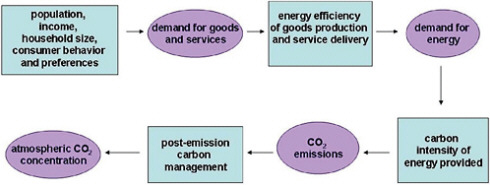
FIGURE 4.2 The chain of factors that determine how much CO2 accumulates in the atmosphere. The blue boxes represent factors that can potentially be influenced to affect the outcomes in the purple circles. SOURCE: NRC (2010c).
uptake by the oceans and land surface. There is also increasing interest in solar radiation management and other geoengineering approaches (see Chapters 9, 14, and 15). While much is known about some of these strategies, others are not well understood, and there are many scientific research needs related to the development, improvement, implementation, and evaluation of virtually all technologies, policies, and other approaches for limiting climate change.
Setting goals for limiting the magnitude of climate change involves ethical and value questions that cannot be answered by scientific analysis. However, scientific research can help inform such efforts by providing information about the feasibility and potential implications of specific goals. The companion report Limiting the Magnitude of Future Climate Change (NRC, 2010c) suggests that the U.S. goal be framed in terms of a cumulative budget for GHG emissions over a set time period. The report does not recommend a specific budget goal, but it examines a “representative” budget in the range of 170 to 200 Gt CO2-eq2 for the period 2012 to 2050.3 As the Limiting report notes, reaching a goal in this range will be easier and less costly overall if actions to limit GHG emissions are undertaken sooner rather than later. It will also require pursuing multiple emissions-reduction strategies across a range of sectors, as well as continued research and development aimed at creating new emissions-reduction opportunities. Finally, to support adaptive risk management and iterative decision making with re-
|
2 |
Gt CO2-eq indicates gigatons (or billion tons) of CO2 equivalent emissions; this metric converts emissions of other GHGs to an equivalent concentration of CO2. |
|
3 |
This range was derived from recent integrated assessment modeling exercises carried out by the Energy Modeling Forum (http://emf.stanford.edu). |
spect to emissions reductions or other climate goals, scientific research will be needed to monitor and improve implementation approaches and to evaluate the potential trade-offs, co-benefits, and unintended consequences of different strategies, as well as the interaction of multiple approaches working in concert. These and other examples of research needs for supporting actions to limit climate change are listed in Table 4.4.
The challenge of limiting climate change also engages many of the other research themes identified in this chapter. For example, understanding and comparing the full effects of various energy technologies or climate policies (including their comparative benefits, costs, risks, and distributional effects) typically requires an integration of climate models with energy and economic models (Theme 7), which in turn are based on fundamental understanding of the climate system (Theme 1) and human systems
TABLE 4.4 Examples of Research Needs Related to Limiting the Magnitude of Climate Change (from Part II)
|
• Advance the development, deployment, and adoption of energy and transportation technologies that reduce GHG emissions. |
|
• Develop and evaluate strategies for promoting the use of less-emission-intensive modes of transportation. |
|
• Characterize and quantify the contributions of urban areas to both local and global changes in climate, and develop and test approaches for limiting these contributions. |
|
• Continue to support efforts to improve energy efficiency in all sectors and develop a better understanding of the obstacles to improved efficiency. |
|
• Improve understanding of behavioral and sociological factors related to the adoption of new technologies, policies, and practices. |
|
• Develop and improve integrated approaches for evaluating energy services in a systems context that accounts for a broad range of societal and environmental concerns, including climate change. |
|
• Develop and improve technologies, management strategies, and institutions to reduce net GHG emissions from agriculture, while maintaining or enhancing food production potential. |
|
• Assess the potential of land, freshwater, and ocean ecosystems to increase net uptake of CO2 (and other GHGs) and develop approaches that could take advantage of this potential without major adverse consequences. |
|
• Improve understanding of links between air quality and climate change and develop strategies that can limit the magnitude of climate change while improving air quality. |
|
• Improve understanding of the potential efficacy and unintended consequences of solar radiation management approaches and direct air capture of CO2, provided that this research does not detract from other important research areas. |
|
• Establish and maintain monitoring systems capable of supporting evaluations of actions and strategies taken to limit the magnitude of future climate change, including systems that can verify compliance with international GHG emissions-reduction agreements. |
(Theme 2), as well as the observations (Theme 6) that underpin such understanding. Similarly, setting and evaluating goals and policies for limiting the magnitude of future climate change involves decision-making processes at a variety of scales that would benefit from decision-support tools that aid in handling uncertainty and understanding complex value trade-offs (Theme 5). These decisions would similarly benefit from integrated analyses or linked “end-to-end” models (Theme 7) of how policies and other actions influence emissions, how the climate system and related environmental systems will respond to these changes in emissions, and how human and natural systems will be affected by all of these changes—all of which again depend critically on observations (Theme 6). Thus, while the following subsections describe a number of key research needs related to limiting the magnitude of future climate change, progress in many other research areas will also be needed.
Developing New Technologies
Efforts to reduce transportation- and energy-related GHG emissions focus on reducing total energy demand (through, for example, conservation or changes in consumption patterns); improving energy efficiency; reducing the GHG intensity of the energy supply (by using energy sources that emit fewer or no GHGs); and direct capture and sequestration of CO2 during or after the combustion of fossil fuels (see Figure 4.2 and Chapters 13 and 14). The strategy of reducing demand is discussed earlier (under Theme 2: Human Behavior and Institutions). Technology development is directed primarily toward the other three strategies: efficiency, lower carbon intensity, and carbon capture and storage.
Numerous scientific and engineering disciplines contribute to the development and implementation of energy technology options: the physical, biological, and engineering sciences, for example, are all critical for the development of new technologies, while the social sciences play a key role in both technology development and technology deployment and adoption. In many cases, these diverse disciplines need to work together to evaluate, improve, and expand energy technology options. A coordinated strategy for promoting and integrating energy-related research is needed to ensure the most efficient use of investments among these disciplines and activities.
A number of reports (e.g., Technology and Transformation [NRC, 2009d] and the Strategic Plan of the U.S. Climate Change Technology Program [DOE, 2009c]) have suggested that priority areas for strategic investment in the energy sector should include energy end use and infrastructure, sustainable energy supply, carbon sequestration, and reduction of non-CO2 GHG emissions. These are discussed in Chapter 14. In the transpor-
tation sector, key research and development topics include vehicle efficiency, vehicles that run on electricity or non-petroleum-based transportation fuels, and technologies and policies that could reduce travel demand (including, for example, communication technologies like video conferencing). Chapter 13 includes additional discussion on these topics.
Technology developments in the energy and transportation sector are interrelated. For example, widespread adoption of batteries and fuel cells would switch the main source of transportation energy from petroleum to electricity, but this switch will only result in significant GHG emissions reductions if the electricity sector can provide low- and no-GHG electricity on a large scale. This and other codependencies between the energy and transportation sectors underscore the need for an integrated, holistic national approach to limit the magnitude of future climate change as well as related research investments. Widespread adoption of new transportation or energy technologies would also demand significant restructuring of the nation’s existing transportation and energy infrastructure, and scientific and engineering research will play an important role in optimizing that design.
As described in Chapter 12, urban design presents additional opportunities for limiting climate change. The design of urban developments can, for example, reduce the GHG “footprints” of buildings and the level of demand they create for motorized travel. However, the success of new urban and building designs will depend on better understanding of how technology design, social and economic considerations, and attractiveness to potential occupants can be brought together in the cultural contexts where the developments will occur. Research is also needed to consider the implication of new designs for human vulnerability to climate change as well as other environmental changes.
Finally, as discussed in Chapter 10, there are a number of potential options for reducing GHG emissions from the agricultural, fisheries, and aquaculture sectors through new technologies or management strategies. Development of new fertilizers and fertilizer management strategies that reduce emissions of N2O is one area of interest—one that may also yield benefits in terms of agricultural contributions to other forms of pollution. Reducing CH4 emissions through changes in rice technologies or ruminant feed technologies are two additional areas of active research. Further research is needed in these and other areas, and also on the effectiveness, costs and benefits, and perceptions of farmers, fish stock managers, and consumers when considering implementation of new technologies in these sectors.
Facilitating Adoption of Technologies
There are a number of barriers to the adoption of technologies that could potentially reduce GHG emissions. For example, the Environmental Protection Agency (EPA) recently suspended Energy Star certification for programmable thermostats because it was unable to show that they save energy in actual use (EPA, 2009a). Similar difficulties could be in store for “smart meters,” which are promoted as devices that will allow households to manage energy use to save money and reduce emissions, but which are often designed mainly for the information needs of utility companies rather than consumers. Research on improved designs of these and other types of monitoring and control equipment could help reduce energy use by helping users operate homes, motor vehicles, and commercial and industrial facilities more efficiently.
There are similar opportunities for improved energy efficiency through behavioral change. For example, U.S. households could significantly reduce their GHG emissions (and save money) by adopting more energy-efficient driving behaviors and by properly maintaining automobiles and home heating and cooling systems (Dietz et al., 2009b). Research on behavioral change suggests that a good portion of this potential could actually be achieved, but further analysis is needed to develop and assess specific strategies, approaches, and incentives.
In general, barriers to technology adoption have received only limited research attention (e.g., Gardner and Stern, 1996; NRC, 2005a; Pidgeon et al., 2003). Such research can identify barriers to faster adoption of technologies and develop and test ways to overcome these barriers through, for example, better technological design, policies for facilitating adoption, and practices for addressing public concerns. This research can also develop more realistic estimates of technology penetration rates given existing barriers and assess the perceived social and environmental consequences of technology use, some of which constitute important barriers to or justifications for adoption. Finally, the gap between technological potential and what is typically accomplished might be reduced by integrating knowledge from focused, problem-solving research on adoption of new technologies and practices (e.g., Stern et al., 2009, in press).
Institutions and Decision Making
The 20th century saw immense social and cultural changes, many of which—such as changes in living patterns and automobile use—have had major implications for climate change. Many societal and cultural changes can be traced to the confluence of individual and organizational decision making, which is shaped by institutions that reward some actions and sanction others, and by technologies. New institutions, such
as GHG emissions trading systems, voluntary certification systems for energy-efficient building design, bilateral international agreements for emissions reduction, agreements on emissions monitoring, and carbon offset markets, are critical components of most of the plans that have been proposed to limit human GHG emissions during the next few decades (see Theme 2 above and also the companion reports Limiting the Magnitude of Future Climate Change [NRC, 2010c] and Informing an Effective Response to Climate Change [NRC, 2010b]). Many such mechanisms are already in operation, and these constitute natural experiments, but the scientific base for evaluating these experiments and designing effective institutions is limited (see, e.g., Ostrom, 2010; Prakash and Potoski, 2006; Tietenberg, 2002). Institutional design would likely be enhanced by more systematic research to evaluate past and current efforts, compare different institutional approaches for reaching the same goals, and develop and pilot-test new institutional options.
A large number of individual, community, and organizational decisions have a substantial effect on GHG emissions and land use change as well as on vulnerability to climate change. Many of these decisions are not currently made with much or any consideration of climate change. For example, individual and household food choices, the layout of communities, and the design of supply chains all have effects on climate. Understanding social and cultural changes is important for projecting future climate change, and, in some cases, these changes may provide substantial leverage points for reducing climate change. Thus, enhanced understanding of the complex interplay of social, cultural, and technological change is critical to any strategy for limiting future climate change.
Geoengineering Approaches
Available evidence suggests that avoiding serious consequences from climate change poses major technological and policy challenges. If new technologies and institutions are insufficient to achieve critical emissions-reduction targets, or if a “climate emergency” emerges, decision makers may consider proposals to manage Earth’s climate directly. Such efforts, often referred to as geoengineering approaches, encompass two very different categories of approaches: carbon dioxide removal (CDR) from the atmosphere, and solar radiation management (SRM). Two proposals for CDR—iron fertilization in the ocean and direct air capture—are discussed briefly in Chapters 9 and 14, respectively. As noted in Chapter 2 and discussed in greater detail in Chapter 15, little is currently known about the efficacy or potential unintended consequences of SRM approaches, particularly how to approach difficult ethical and governance questions. Therefore, research is needed to better understand the feasibility of different geoengi-
neering approaches; the potential consequences (intended and unintended) of such approaches on different human and environmental systems; and the related physical, ecological, technical, social, and ethical issues, including research that could inform societal debates about what would constitute a “climate emergency” and on governance systems that could facilitate whether, when, and how to intentionally intervene in the climate system. It is important that such research not distract or take away from other important research areas, including research on understanding the climate system and research on “conventional” strategies for limiting the magnitude of climate change and adapting to its impacts.
THEME 5:
EFFECTIVE INFORMATION AND DECISION-SUPPORT SYSTEMS
Global climate changes are taking place within a larger context of vast and ongoing social and environmental changes. These include the globalization of markets and communication, continued growth in human population, land use change, resource degradation, and biodiversity loss, as well as persistent armed conflict, poverty, and hunger. There are also ongoing changes in cultural, governance, and economic conditions, as well as in technologies, all of which have substantial implications for human well-being. Thus, decision makers in the United States and around the world need to balance climate-related choices and goals with other social, economic, and environmental objectives (Burger et al., 2009; Lindseth, 2004; Schreurs, 2008), as well as issues of fairness and justice (Page, 2008; Roberts and Parks, 2007; Vanderheiden, 2008) and questions of risk (Bulkeley, 2001; Jacques, 2006; Lorenzoni and Pidgeon, 2006; Lubell et al., 2007; Vogler and Bretherton, 2006), all while taking account of a changing context for those decisions. Accordingly, in addition to climate and climate-related information, decision makers need information about the current state of human systems and their environment, as well as an appreciation of the plausible future outcomes and net effects that may result from their policy decisions. They also need to consider how their decisions and actions could interact with other environmental and economic policy goals, both in and outside their areas of responsibility.
The research needs highlighted in this report are intended to both improve fundamental understanding of and support effective decision making about climate change. As explored in the companion report Informing an Effective Response to Climate Change (NRC, 2010b), there is still much to be learned about the best ways of deploying science to support decision making. Indeed, available research suggests that, all too often, scientists’ efforts to provide information are of limited practical value because effective decision-support systems are lacking (NRC, 2009g). Scientific research on decision-support models, processes, and tools can help improve these systems.
TABLE 4.5 Examples of Scientific Research Needs Pertaining to Decision Support in the Context of Climate Change (from Part II)
|
• Develop a more comprehensive and integrative understanding of factors that influence decision making. |
|
• Improve knowledge and decision-support capabilities for all levels of governance in response to the challenges associated with sea level rise. |
|
• Develop effective decision-support tools and approaches for decision making under uncertainty, especially when multiple governance units may be involved, for water resource management, food and fiber production issues, urban and human health issues, and other key sectors. |
|
• Develop protocols, institutions, and technologies for monitoring and verifying compliance with international climate agreements. |
|
• Measure and evaluate public attitudes and test communication approaches that most effectively inform and engage the public in climate-related decision making. |
Effective decision support also requires interactive processes involving both scientists and decision makers. Such processes can inform decision makers about anticipated changes in climate, help scientists understand key decision-making needs, and work to build mutual understanding, trust, and cooperation—for example, in the design of decision tools and processes that make sense both scientifically and in the actual decision-making context. Table 4.5 provides a list of the related scientific research needs that emerge from the chapters in Part II of the report.
Decision Processes
Even when viable technologies or actions that could be effective in limiting the magnitude or adapting to the impacts of climate change exist, and appropriate institutions and policies to facilitate their implementation or adoption are in place (see Themes 2, 3, and 4), success can depend strongly on decision-making processes in populations or organizations (NRC, 2005a, 2008h). One of the major contributions the social sciences can make to advancing the science of climate change is in the understanding, development, assessment, and improvement of these decision-making processes. Scientific research can, for example, help identify the information that decision makers need, devise effective and broadly acceptable decision-making processes and decision-support mechanisms, and enhance learning from experience. Specific research agendas for the science of decision support are available in a number of other reports (NRC, 2009g, 2010b), and other sections of this chapter describe some of the tools that have been or could be developed to inform or assist decision makers in their deliberations
(for example, vulnerability and adaptation analyses of coupled human environmental systems, which are described in Theme 3).
One of the most important and well-studied approaches to decision making is deliberation with analysis (also called analytic deliberation or linked analysis and deliberation). Deliberation with analysis is an iterative process that begins with the many participants in a decision working together to define a decision problem and then to identify (1) options to consider and (2) outcomes and criteria that are relevant for evaluating those options. Typically, participants work with experts to generate and interpret decision-relevant information and then revisit the objectives and choices based on that information. This model was developed in the broad context of environmental risks (NRC, 1996) and has been elaborated in the context of climate-related decision making (NRC, 1999b, 2009g)
The deliberation with analysis approach allows repeated structured interactions among the public, decision makers, and scientists that can help the scientific community understand the information needs of and uses by decision makers, and appreciate the opportunities and constraints of the institutional, material, and organizational contexts under which stakeholders make decisions (Lemos, 2008; Rayner et al., 2005; Tribbia and Moser, 2008). It also helps decision makers and other stakeholders better understand and trust the science being produced. While research on deliberation with analysis has provided a general framework that has proven effective in local and regional issues concerning ecosystem, watershed, and natural resource management, more research is needed to determine how this approach might be employed for national policy decisions or international decision making around climate change (NRC, 1996, 2005a, 2007a, 2008h).
Effective Decision-Support Systems
A decision-support system includes the individuals, organizations, networks, and institutions that develop decision-relevant knowledge, as well as the mechanisms to share and disseminate that knowledge and related products and services (NRC, 2009g). Agricultural or marine extension services, with all their strengths and weaknesses, are an important historical example of a decision-support system that has helped make scientific knowledge relevant to and available for practical decision making in the context of specific goals. The recent report Informing Decisions in a Changing Climate (NRC, 2009g) identified a set of basic principles of effective decision support that are applicable to the climate change arena: “(1) begin with users’ needs; (2) give priority to process over products; (3) link information producers and users; (4) build connec-
tions across disciplines and organizations; (5) seek institutional stability; and (6) design processes for learning.”
Effective decision-support systems work to both guide research toward decision relevance and link scientific information with potential users. Such systems will thus play an important role in improving the linkages between climate science and decision making called for both in this report and in many previous ones (e.g., Cash et al., 2003; NRC, 1990a, 1999b, 2009g). Research on the use of seasonal climate forecasts exemplifies current understanding of decision-support systems (see Box 4.4).
The basic principles of effective decision support are reasonably well known (see, e.g.,
|
BOX 4.4 Seasonal Climate Forecasts For the past 20 years, the application of seasonal climate forecasts for agricultural, disaster relief, and water management decision making has yielded important lessons regarding the creation of climate knowledge systems for action in different parts of the world at different scales (Beller-Sims et al., 2008; Gilles and Valdivia, 2009; NRC, 1999b; Pagano et al., 2002; Vogel and O’Brien, 2006). Successful application of seasonal climate forecasting tends to follow a systems approach where forecasts are contextualized to the decision situation and embedded within an array of other information relevant for risk management. For example, in Australia, users and producers of seasonal climate forecasts have created knowledge systems for action in which the forecasts are part of a broader range of knowledge that informs farmers’ decision making (Cash and Buizer, 2005; Lemos and Dilling, 2007). In the U.S. Southwest, potential flooding from the intense 1997-1998 El Niño was averted in part because the 3- to 9-month advance forecasts were tailored to the needs of water managers and integrated into water supply outlooks (Pagano et al., 2002). The application of seasonal climate forecasts is not always perfect. Seasonal forecasts have proven useful in certain U.S. regions directly affected by El Niño events but may have limited predictive skill outside those regions and outside the extremes of the El Niño-Southern Oscillation cycle (see Chapter 6). There is evidence that too much investment in climate forecasting may crowd out more sustainable alternatives to manage risk or even harm some stakeholders (Lemos and Dilling, 2007). For example, even under high uncertainty, a forecast of El Niño and the prospect of a weak fishing season give companies in Peru an incentive to accelerate seasonal layoffs of workers (Broad et al., 2002). More recent efforts to apply the lessons from seasonal climate forecasting to inform climate adaptation policy argue for the integration of climate predictions within broader decision contexts (Johnston et al., 2004; Klopper et al., 2006; Meinke et al., 2009). In such cases, rather than “perfect” forecasts, the best strategy for supporting decision making is to use integrated assessments and participatory approaches to link climate information to information on other stressors (Vogel et al., 2007). |
NRC, 2009g). However, they need to be applied differently in different places, with different decision makers, and in different decision contexts. Determining how to apply these basic principles is at the core of the science of decision support—the science needed for designing information products, knowledge networks, and institutions that can turn good information into good decision support (NRC, 2009g). The base in fundamental science for designing more effective decision-support systems lies in the decision sciences and related fields of scholarship, including cognitive science, communications research, and the full array of traditional social and behavioral science disciplines.
Expanded research on decision support would enhance virtually all the other research called for in this report by improving the design and function of systems that seek to make climate science findings useful in adaptive management of the risks of climate change. The main research needs in this area are discussed in Informing Decisions in a Changing Climate (NRC, 2009g), Informing an Effective Response to Climate Change (NRC, 2010b), and several other studies (e.g., NRC, 2005a, 2008g). A recent review of research needs for improved environmental decision making (NRC, 2005a) emphasized the need for research to identify the kinds of decision-support activities and products that are most effective for various purposes and audiences. The report recommended studies focused on assessing decision quality, exploring decision makers’ evaluations of decision processes and outcomes, and improving formal tools for decision support.
The key research needs for the science of decision support fall into the following five areas (NRC, 2009g):
-
Information needs. Research is needed to identify the kinds of information that would add greatest value for climate-related decision making and to understand information needs as seen by decision makers.
-
Communicating risk and uncertainty. People commonly have difficulty making good sense and use of information that is probabilistic and uncertain. Research on how people understand uncertain information about risks and on better ways to provide it can improve decision-support processes and products.
-
Decision-support processes. Research is needed on processes for providing decision support, including the operation of networks and intermediaries between the producers and users of information for decision support. This research should include attention to the most effective channels and organizational structures to use for delivering information for decision support; the ways such information can be made to fit into individual, organizational, and institutional decision routines; the factors that determine whether potentially useful information is actually used; and ways to overcome barriers to the use of decision-relevant information.
-
Decision-support products. Research is needed to design and apply decision tools, data analysis platforms, reports, and other products that convey user-relevant information in ways that enhance users’ understanding and decision quality. These products may include models and simulations, mapping and visualization products, websites, and applications of techniques for structuring decisions, such as cost-benefit analysis, multiattribute decision analysis, and scenario analysis.
-
Decision-support “experiments.” Efforts to provide decision support for various decisions and decision makers are already under way in many cities, counties, and regions. These efforts can be treated as a massive national experiment that can, if data are carefully collected, be analyzed to learn which strategies are attractive, which ones work, why they work, and under what conditions. Research on these experiments can build knowledge about how information of various kinds, delivered in various formats, is used in real-world settings; how knowledge is transferred across communities and sectors; and many other aspects of decision-support processes.
THEME 6:
INTEGRATED CLIMATE OBSERVING SYSTEMS
Nearly all of the research called for in this report either requires or would be considerably improved by a comprehensive, coordinated, and continuing set of observations—physical, biological, and social—about climate change, its impacts, and the consequences (both intended and unintended) of efforts to limit its magnitude or adapt to its impacts (Table 4.6). Extensive, robust, and well-calibrated observing systems would support the research that underpins the scientific understanding of how and why climate is changing, provide information about the efficacy of actions and strategies taken to limit or adapt to climate change, and enable the routine dissemination of climate and climate-related information and products to decision makers. Unfortunately, many of the needed observational assets are either underdeveloped or in decline. In addition, a variety of institutional factors—such as distributed responsibility across many different entities—complicate the development of a robust and integrated climate observing system.
The breadth of information needed to support climate-related decision making implies an observational strategy that includes both remotely sensed and in situ observations and that provides information about changes across a broad range of natural and human systems. To be useful, these observations must be
-
Sustained for decades to separate long-term trends from short-term variability;
-
Well calibrated and consistent through time to ensure that observed changes are real;
-
Spatially extensive to account for variability across scales and to ensure that assessments of change are not overly influenced by local phenomena;
-
Supported by a robust data management infrastructure that supports effective data archiving, accesses, and stewardship; and
-
Sustained by defined roles and responsibilities across the federal government as well as state and local governments, the research community, private businesses, and the international community.
Space-Based Platforms
Our understanding of the climate system and other important human and environmental systems has benefitted significantly through the use of satellite observations over the past 30 years (NRC, 2008c). For example, data from the Earth Observing System (EOS) series of satellites deployed in the late 1990s and early 2000s provide critical input into process and climate models that have provided key insights into Artic sea ice decline, sea level rise, changes in freshwater systems, ozone changes over Antarctica, changes in solar activity, ocean ecoystem change, and changes in land use, to name just a few. Box 4.5 provides an example of a key satellite-based measurement that has promoted enhanced understanding of the physical climate system and how it is changing over time.
TABLE 4.6 Examples of Science Needs Related to Observations and Observing Systems (see Part II for additional details)
|
• Extend and expand long-term observations of atmosphere and ocean temperatures; sea level; ice extent, mass, and volume; and other critical physical climate system variables. |
|
• Extend and expand long-term observations of hydrologic changes and related changes relevant for water management decision making. |
|
• Expand observing and monitoring systems for ecosystems, agriculture and fisheries, air and water quality, and other critical impact areas. |
|
• Improve observations that allow analysis of multiple stressors, including changes in climate, land use changes, pollutant deposition, invasions of nonnative species, and other human-caused changes. |
|
• Develop improved observations and monitoring capabilities to support vulnerability assessments of coupled human-environment systems at the scale of cities, states, nations, and regions, and for tracking and analyzing human health and well-being. |
|
• Develop improved observations for vulnerability assessments related to military operations and infrastructure. |
|
• Establish long-term monitoring systems that are capable of monitoring and assessing the effectiveness of actions taken to limit or adapt to climate change. |
|
• Develop observations, protocols, and technologies for monitoring and verifying compliance with international emissions-reduction agreements. |
|
BOX 4.5 Ocean Altimetrya Ocean altimetry measurements provide an illustrative example of how satellites have advanced scientific understanding of climate and climate change. Sea level changes are a fundamental indicator of changes in global climate and have profound socioeconomic implications (see Chapter 7). Variations in sea level also provide insight into natural climate processes such as the El Niño-Southern Oscillation cycle (see Chapter 6) and have the potential to inform a broad array of other climate science disciplines including ocean science, cryospheric science, hydrology, and climate modeling applications (see, e.g., Rahmstorf et al., 2007). Prior to the satellite era, tide gauge measurements were the primary means of monitoring sea level change. However, their limited spatial distribution and ambiguous nature (e.g., vertical land motion can cause erroneous signals that mimic the effects of climate change at some sites) limited their use for climate research. With the launch of TOPEX/Poseidon in 1992, satellite altimeter measurements with sufficient accuracy and orbital characteristics to monitor small (on the order of millimeters per year) sea level changes became available (Cazenave and Nerem, 2004). Jason-1, launched at the end of 2001, continued the TOPEX/Poseidon measurements in the same orbit, including a critical 6-month overlap that allowed intercalibration to ensure the continuity of records. It is important to note that tide gauges remain a critical component of the sea level observing system, providing an independent source of data in coastal areas that can be used to calibrate and interpret satellite data records. The integration of tide gauge and satellite data provides an excellent example of how satellite and surface-based observations are essential complements to one another within an integrated observing system. Together, the TOPEX/Poseidon and Jason-1 missions have produced a continuous 15-year time series of precisely calibrated measurements of global sea level. These measurements show that sea level rose at an average rate of ~3.5 mm/year (0.14 inches/year) during the TOPEX/Jason-1 period, nearly double the rate inferred from tide gauges over the 20th century (Beckley et al., 2007; Leuliette et al., 2004). Since sea level rise is driven by a combination of ocean warming and shrinking glaciers and ice sheets (see Chapter 7), these altimetry results are also important for refining and constraining estimates of ocean heat content and ice loss. Another powerful aspect of satellite altimetry is that it provides maps of the spatial variability of the sea level–rise signal (see figure on facing page), which is valuable for the identification of sea level “fingerprints” associated with climate change (see also Mitrovica et al., 2001). Sea level measurements are also used extensively in ocean reanalysis efforts and short-term climate predictions. Jason-2,b which carries similar but improved instrumentation, was launched in June 2008. By design, Jason-2 overlaps with the Jason-1 mission, thus providing the requisite intercalibration period and securing the continuity of high-accuracy satellite altimetry observations. Funds have been requested |
|
in the President’s 2011 budget to support a 2013 launch of Jason-3, a joint effort between NOAA and EUMETSAT (the European meteorological satellite program), as part of a transition of satellite altimetry from research to “operational” status. Researchers hope to avoid a gap in the satellite record because measurements from tide gauges and other satellite measurements would not be sufficient to accurately determine the bias between the two time series on either side of the gap. It should also be emphasized that ocean altimetry, despite the challenges of ensuring overlap and continuity, is on a much better trajectory than many other important climate observations, as described in the text. 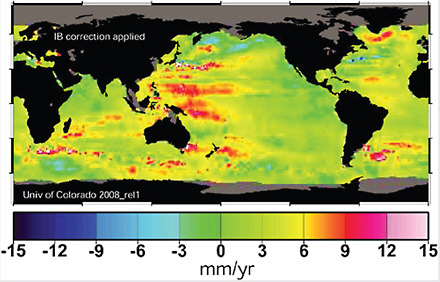 Trends (mm/year) in sea level change over 1993-2007 from TOPEX/Poseidon and Jason-1 altimeter measurements. SOURCE: Courtesy of Colorado Center for Astrodynamics Research, University of Colorado at Boulder (http://sea-level.colorado.edu). |
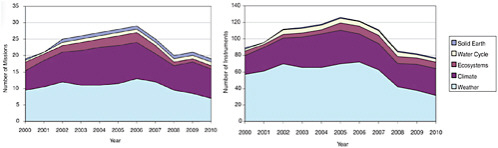
FIGURE 4.3 Number of U.S. space-based Earth observation missions (left) and instruments (right) in the current decade. An emphasis on climate and weather is evident, as is a decline in the number of missions near the end of the decade. For the period from 2007 to 2010, missions were generally assumed to operate for 4 years past their nominal lifetimes. SOURCE: NRC (2007c), based on information from NASA and NOAA websites for mission durations.
Over the past decade, a wide range of problems have plagued the maintenance and development of environmental satellites. In response to a request from several federal agencies, the NRC conducted a “decadal survey” in 2004-2006 to generate consensus recommendations from the Earth and environmental science and applications communities regarding a systems approach to space-based (and ancillary) observations. The interim report of the decadal survey (NRC, 2005b) described the national system of environmental satellites as being “at risk of collapse.” That judgment was based on a sharp decline in funding for Earth observation missions and the consequent cancellation, descoping, and delay of a number of critical satellite missions and instruments. An additional concern expressed in the interim report was attracting and training scientists and engineers and providing opportunities for them to exploit new technology and apply new theoretical understanding in the pursuit of both discovery science and high-priority societal applications.
These concerns only increased in the 2 years following the publication of the interim report as additional missions and sensors were cancelled. The final decadal survey report (NRC, 2007c) presented near- and longer-term recommendations to address these troubling trends. The report outlined near-term actions meant to stem the tide of capability deterioration and continue critical data records, as well as forward-looking recommendations to establish a balanced Earth observation program designed to directly address the most urgent societal challenges (see Figure 4.3). The final report also noted the lack of clear agency responsibility for sustained research programs and
for transitioning proof-of-concept measurements into sustained measurement systems (see Box 4.6).
The National Polar-orbiting Operational Environmental Satellite System (NPOESS) was created in 1994 to merge various military and civil meteorological and environmental monitoring programs. Unfortunately, by 2005, cost overruns triggered a mandatory
|
BOX 4.6 The Development of a Long-Term, Space-Based Earth Observation Systema “There is a crisis not only with respect to climate change … but also [with respect to] the absence of a coherent, coordinated federal environmental policy to address the challenges. In the nearest term possible, aging space- and ground-based environmental sensors must be replaced with technologically improved instruments. Beyond replacing aging instruments, there is a need to enhance continuity in the observations, so that policy makers, informed by science, will have the necessary tools to detect trends in important Earth indicators and craft wise and effective long-term policies. However, continuity, or sustained long-term observations, is not an explicitly stated requirement for either the ‘operational’ or ‘research’ space systems that are typically associated with [NOAA] and [NASA] programs, respectively. The present federal agency paradigm of ‘research to operations’ with respect to NASA and NOAA is obsolete and nearly dysfunctional, in spite of best efforts by both agencies. This paradigm currently has NASA developing and demonstrating new observational techniques and measurements deemed useful for prediction or other applications. These are then transitioned to NOAA (or sometimes DOD) and used on a sustained, multi-decadal basis. However, this paradigm is not working for a number of reasons. The two agencies have responsibilities that are in many cases mismatched with their authorities and resources: institutional mandates are inconsistent with agency charters; budgets are not well matched to the needs; agency responsibilities are not clearly defined, and shared responsibilities are supported inconsistently by ad hoc mechanisms for cooperation…. A new paradigm of ‘research and operations’ is urgently needed to meet the challenge of vigilant monitoring of all aspects of climate change…. Our ability as a nation to sustain climate observations has been complicated by the fact that no single agency has both the mandate and requisite budget for providing ongoing climate observations, prediction, and services. While interagency collaborations are sometimes valuable, a robust, effective program of Earth observations from space requires specific responsibilities to be clearly assigned to each agency and adequate resources provided to meet these responsibilities.” |
review of the NPOESS program, resulting in reductions in the number of planned satellite acquisitions as well as reductions in the instruments carried on each platform—with climate-related sensors suffering the majority of the cuts, in part because of conflicting agency priorities. More recently, there have been several efforts to restore some of the lost sensor capabilities. However, these short-term, stop-gap measures are only designed to preserve the most critical long-term records and do not represent a long-term, comprehensive strategy to observe critical climate and climate-related processes and trends from space (NRC, 2008d). The President’s 2011 budget seeks to restructure the NPOESS program, but details were not available in time to inform the development of this report. An additional blow to the nation’s Earth observing program was the July 2009 launch failure of NASA’s Orbiting Carbon Observatory (OCO), which was expected to provide high-resolution satellite-based measurements of CO2 and other GHGs (NRC, 2009h). The President’s 2011 budget request for NASA includes $170 million for a reflight of the OCO mission, which will be called OCO-2.
Given the global scope of satellite observations and the expense of designing, launching, and operating satellites, the decadal survey (NRC, 2007c) and other reviews call for international coordination as a key component of the nation’s satellite observation strategy. Collaborations with other nations not only save scarce resources for all partners, they also promote scientific collaboration and sharing of ideas among the international scientific community. However, international collaborations come at a cost. Any time partners are involved, control must be shared, and the success of the mission depends critically on the performance of all partners. A successful collaboration also requires assurance that data will be shared and that U.S. scientists are full partners on teams that ensure adequate prelaunch instrument characterization and postlaunch instrument calibration and validation.
Finally, there is a wealth of classified data that have been and continue to be collected by the intelligence community that could potentially provide useful information on understanding the nature and impacts of climate change. Declassified data from the 1960s have already been used for this purpose with great success (Csatho et al., 1999; Joughin et al., 2002; Stokes et al., 2006). More recently, a large amount of sea ice imagery was released for scientific study (NRC, 2009l). Given the importance of the climate change challenge, and the recent struggles of the civilian satellite program, the climate science community should take advantage of such data sets to the extent that they can be made available for scientific purposes.
Ground-Based and In Situ Observations of the Earth System
Ground-based in situ measurements—ranging from thermometer measurements to ecosystem surveys—are the oldest and most diverse type of environmental observations, and they remain a fundamental component of an integrated climate observing system. Over the past 60 years, direct ground-based measurements have been supplemented by airborne in situ measurements, from both aircraft and balloons, and by ground-based, remotely sensed data, such as weather radars and vertical profilers of atmospheric composition. Collectively, these observations span a broad range of instruments and types of information, from instruments initially deployed as part of research experiments to operational networks at the local, state, regional, national, and international levels deployed by a range of public and private institutions. In addition to directly supporting research on the Earth system and specific decision-making needs, these observations are critical for calibrating and validating satellite measurements and for developing and testing climate and Earth system model parameterizations.
There have been significant advances in in situ and ground-based monitoring networks over the past several decades. Examples include the Arctic observing network, the Tropical-Atmosphere Ocean (TAO) array constructed primarily to monitor temperature profiles in the upper equatorial Pacific ocean and support predictions of the El Niño-Southern Oscillation, “Argo” floats that provide dispersed observations of temperature and salinity of the upper ocean, the FLUXNET network of ecosystem carbon exchange with the atmosphere, the Aerosol Robotic Network (AERONET) that provides observations of atmospheric optical properties, and the Atmosphere Radiation Measurement (ARM) program. In addition, there is a wealth of observations from a broad range of public and private systems designed primarily for other purposes—such as wind monitoring for port safety—that could potentially be tapped to supplement existing climate observations and yield new and valuable insights. These systems will have to be integrated and maintained for decades to realize their full potential as components of a climate observing system.
The recent study Observing Weather and Climate from the Ground Up: A Nationwide Network of Networks (NRC, 2009j) discusses the value and challenges of coordinating the wide range of ground-based weather, climate, and climate-related observing systems to create a more integrated system that could be greater than the sum of its individual parts. The report calls for improved coordination across existing public and private networks of in situ observations. However, the number and diversity of entities involved make this a major organizational and governance challenge. If properly developed, an integrated, nationwide network of weather, climate, and related observations
would undoubtedly be a tremendous asset for supporting improved understanding of climate change as well as climate-related decision making.
In addition to maintaining and enhancing observational capacity, research on new methods of observation, such as the miniaturization of instruments for in situ data collection, could both enhance data collection capabilities and lower the often substantial costs associated with data collection systems. To become effective components of an integrated climate observing system, these observational capacities, whether they represent the continuation of existing capabilities or the development of new ones, should be developed with a view toward providing meaningful, accurate, well-calibrated, integrated, and sustained data across a range of climate and climate-related variables.
Observations of Human Systems
Other sections of this chapter highlight the importance of social science research in understanding the causes, consequences, and opportunities to respond to climate change. As with research on the physical and biological components of the climate system, this research depends on the availability of high-quality, long-term, and readily accessible observations of human systems, not only in the United States but also in areas of the world with relevant U.S. interests. Census data, economic productivity and consumption data, data on health and disease patterns, insurance coverage, crop yields, hazards exposure, and public perceptions and preferences are just some of the types of information that can be relevant for developing an improved understanding of human interactions with the climate system and for answering various decision-relevant questions related to the human dimensions of climate change. Socioeconomic data are also critical for linking environmental observations with assessments of climate-related risk, vulnerability, resilience, and adaptive capacity in human systems. As with other types of observations, long time series are needed to monitor changes in the drivers of climate change and trends in resilience and vulnerability. Such observational data are most useful when geocoded (linked to specific locations) and matched (aggregated or downscaled) to scales of interest to researchers and decision makers, and when human and environmental data are collected and archived in ways that facilitate linkages between these data.
Studies conducted in the 1970s and 1980s demonstrate the feasibility of data collection efforts that integrate across the engineering and social sciences to better understand and model energy consumption (Black et al., 1985; Cramer et al., 1984; Harris and Blumstein, 1984; Socolow, 1978). Linkage of data on land-cover change and its social
and economic drivers has also been productive (NRC, 2005c, 2007i). Large-scale social science data collection efforts, ranging from the census to federally funded surveys such as the National Longitudinal Study of Adolescent Health, the Panel Study of Income Dynamics, the General Social Survey, and the National Election Studies show the feasibility and value of long-term efforts to collect high-quality social data. However, to date there has been no sustained support to collect comparable data at the individual or organizational level on environmentally significant behaviors, such as energy use and GHG emissions. As states and other entities adopt policies to limit GHG emissions, sustained and integrated efforts to collect data on environmentally significant consumption will be extremely helpful for monitoring progress and honing programs and policies.
Likewise, data on the impacts of climate change on human systems and on vulnerability and adaptation of human systems to global environmental changes are critically needed (NRC, 2009g,k). Examples include morbidity and mortality data associated with air and water quality, expanded data sets focusing on household risk-pooling strategies and adaptation options, and data on urban infrastructure vulnerabilities to extreme weather and climate events. Methods that allow aggregation of data from across a range of regions to develop national-scale understanding will sometimes be necessary, but local and regional vulnerability assessments will also be needed, and these depend on both local and appropriately downscaled information (Braden et al., 2009).The potential exists for greater use of remote sensing to develop indicators of vulnerability to various climate-related hazards and of the socioeconomic drivers of climate change. If validated against in situ measurements, such measures can allow for monitoring of human-climate interactions at much finer spatial and temporal scales than is currently feasible with surveys or other in situ measures of human variables.
There is also great potential in the use of mobile communications technology, such as cell and smart phones, as a vehicle for social science research that has fine temporal and spatial scales (Eagle et al., 2009; Raento et al., 2009; Zuwallack, 2009). Many data collection efforts previously undertaken for governmental administrative purposes, business purposes, or social science research not related to climate change could potentially support the research needed for understanding the human aspects of climate change and climate-related decision making, but only if they are geocoded and linked to other data sets. International, longitudinal databases such as the International Forestry and Institutions database (e.g., Chhatre and Agrawal, 2008) also have great potential to serve as a bridge between local, regional, national, and global processes, as well as for assessing the dynamics of change across time and space.
Finally, because most major social and economic databases have been developed
for purposes unrelated to climate change, these data have significant gaps from the perspective of climate science. However, all climate-relevant socioeconomic and other human systems data need not necessarily be held in a single common observing system. They simply need to be inventoried, archived, and made broadly accessible to enable the kinds of integrative analyses that are necessary for the new climate change research. A major effort is needed both to develop appropriate local data collection efforts and to coordinate them into national and global systems. Initial progress can be made by coordination across specific domains and sectors (e.g., coastal vulnerabilities, health vulnerabilities) and across scales so that locally useful information also contributes to larger-scale indicators and vice versa. Data integration is also a critical need. Some of these issues are explored in the next subsection.
Data Assimilation, Analysis, and Management
Data assimilation refers to the combination of disparate observations to provide a comprehensive and internally consistent data set that describes how a system is changing over time. Improvements in data assimilation systems have led directly to substantial improvements in numerical weather prediction over the past several decades by improving the realism of the initial conditions used to run weather forecast models. Improved data assimilation techniques have also led to improved data sets for analyses of climate change.
Climate data records (see NRC, 2004a) are generated by a systematic and ongoing process of climate data integration and reprocessing. Often referred to as reanalysis, the fundamental idea behind such efforts (see, e.g., Kalnay et al., 1996) is to use data assimilation methods to capitalize on the wealth of disparate historical observations and integrate them with newer observations, such as space-based data. Data assimilation, analysis, and reanalysis are also becoming increasingly important for areas other than regional and global atmospheric models, such as ocean models, land models, marine ecosystems, cryosphere models, and atmospheric chemistry models.
Improvements have occurred in all components of data assimilation and reanalysis, including data assimilation models, the quality and quantity of the observations, and methods for statistical interpolation (see, e.g., Daley, 1991; Kalnay, 2002). However, additional advances are needed. For example, data for the ocean, atmosphere, and land are typically assimilated separately in different models and frameworks. Given that these systems are intrinsically coupled on climate time scales, for instance through exchanges of water and energy, coupled data assimilation methodologies are needed to take into account their interactions. Next-generation data assimilation and reanaly-
sis systems should aim to fully incorporate all aspects of the Earth system (and, eventually, human systems) to support integrated understanding and facilitate analyses of coupled human-environment systems.
Finally, and critically, all observing systems and data analysis activities depend on effective data management—including data archiving, stewardship, and access systems. Historically, support for data management has often lagged behind support for initial data collection (NRC, 2007d). As the demand for sustained climate observations is realized and actions are taken to improve, extend, and coordinate observations, there will be an increase in the demands on both technology and human capacity to ensure that the resulting data are securely archived, quality controlled, and made available to a wide range of users (Baker et al., 2007; NRC, 2004a, 2005e, 2007d). Likewise, as data volume and diversity expand new computational approaches as well as greater computing power will be needed to process and integrate the different data sets on a schedule useful for planning responses to climate change. Finally, because some data have the potential for violating personal privacy norms and legal guarantees, proper safeguards must be in place to protect confidentiality.
Toward Integrated Observations and Earth System Analysis
An integrated climate observing system and improved data analysis and data management systems will be needed to support all of the other themes described in this chapter. Regular observations of the Earth system, for example, are needed to improve climate models, monitor climate and climate-related changes, assess the vulnerability of different human and environmental systems to these change, monitor the effectiveness of actions taken to limit the magnitude of climate change, warn about impending tipping points, and inform decision making. However, creating such systems and making the information available in usable formats to a broad range of researchers and decision makers involves a number of formidable challenges, such as improving linkages between human and environmental data, ensuring adequate support for data archiving and management activities, and creating improved tools for data access and dissemination.
An integrated Earth system analysis capability, or the ability to create an accurate, internally consistent, synthesized description of the evolving Earth system, is a key research need identified both in this report and in many previous reports (NRC, 2009k). Perhaps the single greatest roadblock to achieving this capability is the lack of comprehensive, robust, and unbiased long-term global observations of the climate system and other related human and environmental systems. Other scientific and technical challenges
include identifying the criteria for optimizing assimilation techniques for different purposes, estimating uncertainties, and meeting user demands for higher spatial resolution.
The NRC report Informing Decisions in a Changing Climate (NRC, 2009g) recommends that the federal government “expand and maintain national observation systems to provide information needed for climate decision support. These systems should link existing data on physical, ecological, social, economic, and health variables to each other and develop new data and key indicators as needed” for estimating climate change vulnerabilities and informing responses intended to limit and adapt to climate change. It also notes the need for geocoding existing social and environmental databases; developing methods for aggregating, disaggregating, and integrating such data sets with each other and with climate and other Earth system data; creating new databases to fill critical gaps; supporting modeling and process studies to improve methods for making the data useful; and engaging decision makers in the identification of critical data needs. That study’s recommendations set appropriate strategic directions for an integrated data system. Ultimately, the collection and archiving of data for such a system would need to be evaluated on the basis of potential and actual use in research and decision making.
The recommendations in Chapter 5 provide advice on some steps that can be taken to address these challenges.
THEME 7:
IMPROVED PROJECTIONS, ANALYSES, AND ASSESSMENTS
Nearly every scientific challenge associated with understanding and responding to climate change requires an assessment of the interactions among different components of the coupled human-environment system. A wide range of models, tools, and approaches, from quantitative numerical models and analytic techniques to frameworks and processes that engage interdisciplinary research teams and stakeholders, are needed to simulate and assess these interactions. While decisions are ultimately the outcome of individual, group, and political decision-making processes, scientific tools and approaches can aid decision making by systematically incorporating complex information, projecting the consequences of different choices, accounting for uncertainties, and facilitating disciplined evaluation of trade-offs as the nation turns its attention to responding to climate change. Table 4.7 lists some of the specific research needs identified in Part II of the report that are related to the development of models, tools, and approaches for improving projections, analyses, and assessments of climate change.
TABLE 4.7 Examples of Science Needs Related to Improving Projections, Analyses, and Assessments of Climate Change (from Part II)
|
• Continue to develop and use scenarios as a tool for framing uncertainty and risk, understanding human drivers of climate change, forcing climate models, and projecting changes in adaptive capacity and vulnerability. |
|
• Improve model projections of future climate change, especially at regional scales. |
|
• Improve end-to-end models through coordination and linkages among models that connect emissions, changes in the climate system, and impacts on specific sectors. |
|
• Develop tools and approaches for understanding and predicting the impacts of sea level rise on coastal ecosystems and infrastructure. |
|
• Improve models of the response of agricultural crops, fisheries, transportation systems, and other human systems to climate and other environmental changes. |
|
• Develop integrated approaches and analytical frameworks to evaluate the effectiveness and potential unintended consequences of actions taken to respond to climate change, including trade-offs and synergies among various options. |
|
• Explore cross-sector interactions between impacts of and responses to climate change. |
|
• Continue to improve methods for estimating costs, benefits, and cost effectiveness of climate mitigation and adaptation policies, including complex or hybrid policies. |
|
• Develop analyses that examine climate policy from a sustainability perspective, taking account of the full range of effects of climate policy on human and environmental systems, including unintended consequences and equity effects. |
The boundaries between various tools and approaches for integrated analysis of climate impacts, vulnerabilities, and response options are not rigid; often, a combination of several tools or approaches is needed for improved understanding and to support decision making. This section highlights a few of the integrated tools and approaches that can be used, including
-
Scenarios of future GHG emissions and other human activities;
-
Climate and Earth system models;
-
Process models of ecological functions and ecosystem services;
-
Integrated assessment approaches, which couple human and environmental systems;
-
Policy-oriented heuristic models and exercises; and
-
Process-based decision tools.
This discussion is not intended to be an exhaustive treatment of these approaches—more detailed discussions can be found in Part II of the report and in other reports (e.g., NRC, 2009g)—nor is it intended as a complete list of important tools and ap-
proaches for integrated analysis. Rather, it provides examples of the kinds of approaches that need to be developed, improved, and used more extensively to improve scientific understanding of climate change and make this scientific knowledge more useful for decision making.
Scenario Development
Scenarios help improve understanding of the key processes and uncertainties associated with projections of future climate change. Scenarios are critical for helping decision makers establish targets or budgets for future GHG emissions and devise plans to adapt to the projected impacts of climate change in the context of changes in other human and environmental systems. Scenario development is an inherently interdisciplinary and integrative activity requiring contributions from many different scientific fields as well as processes that link scientific analysis with decision making. Chapter 6 describes some recent scenario development efforts as well as several key outstanding research needs.
Climate Models
Climate models simulate how the atmosphere, oceans, and land surface respond to increasing concentrations of GHGs and other climate drivers that vary over time (see Chapter 6). These models are based on numerical representations of fundamental Earth system processes, such as the exchange of energy, moisture, and materials between the atmosphere and the underlying ocean or land surface. Climate models have been critically important for understanding past and current climate change and remain an essential tool for projecting future changes. They have also been steadily increasing in detail, sophistication, and complexity, most notably by improving spatial resolution and incorporating representations of atmospheric chemistry, biogeochemical cycling, and other Earth system processes. These improvements represent an important integrative tool because they allow for the evaluation of feedbacks between the climate system and other aspects of the Earth system.
As discussed in Chapter 6, there are a number of practical limitations, gaps in understanding, and institutional constraints that limit the ability of climate models to inform climate-related decision making, including the following
-
The ability to explicitly simulate all relevant climate processes (for example, individual clouds) on appropriate space and time scales;
-
Constraints on computing resources;
-
Uncertainties and complexities associated with data assimilation and parameterization;
-
Lack of a well-developed framework for regional downscaling;
-
Representing regional modes of variability;
-
Projecting changes in storm patterns and extreme weather events;
-
Inclusion of additional Earth system processes, such as ice sheet dynamics and fully interactive ecosystem dynamics;
-
Ability to simulate certain nonlinear processes, including thresholds, tipping points, and abrupt changes; and
-
Representing all of the processes that determine the vulnerability, resilience, and adaptability of both natural and human systems.
As discussed in Chapter 6, climate modelers in the United States and around the world have begun to devise strategies, such as decadal-scale climate predictions, for improving the utility of climate model experiments. These experimental strategies may indeed yield more decision-relevant information, but, given the importance of local- and regional-scale information for planning responses to climate change, continued and expanded investments in regional climate modeling remain a particularly pressing priority. Expanded computing resources and human capital are also needed.
Progress in both regional and global climate modeling cannot occur in isolation. Expanded observations are needed to initialize models and validate results, to develop improved representations of physical processes, and to support downscaling techniques. For example, local- and regional-scale observations are needed to verify regional models or downscaled estimates of precipitation, and expanded ocean observations are needed to support decadal predictions. Certain human actions and activities, including agricultural practices, fire suppression, deforestation, water management, and urban development, can also interact strongly with climate change. Without models that account for such interactions and feedbacks among all important aspects of the Earth system and related human systems, it is difficult to fully evaluate the costs, benefits, trade-offs and co-benefits associated with different courses of action that might be taken to respond to climate change (the next subsection describes modeling approaches that address some of these considerations). An advanced generation of climate models with explicit and improved representations of terrestrial and marine ecosystems, the cryosphere, and other important systems and processes, and with improved representations and linkages to models of human systems and actions, will be as important as improving model resolution for increasing the value and utility of climate and Earth system models for decision making.
Models and Approaches for Integrated Assessments
Integrated assessments combine information and insights from the physical and biological sciences with information and insights from the social sciences (including economics, geography, psychology, and sociology) to provide comprehensive analyses that are sometimes more applicable to decision making than analyses of human or environmental systems in isolation. Integrated assessments—which are done through either formal modeling or through informal linkages among relevant disciplines—have been used to develop insights into the possible effectiveness and repercussions of specific environmental policy choices (including, but not limited to, climate change policy) and to evaluate the impacts, vulnerability, and adaptive capacity of both human and natural systems to a variety of environmental stresses. Several different kinds of integrated assessment approaches are discussed in the paragraphs below.
Integrated Assessment Models
In the context of climate change, integrated assessment models typically incorporate a climate model of moderate or intermediate complexity with models of the economic system (especially the industrial and energy sectors), land use, agriculture, ecosystems, or other systems or sectors germane to the question being addressed. Rather than focusing on precise projections of key system variables, integrated assessment models are typically used to compare the relative effectiveness and implications of different policy measures (see Chapter 17). Integrated assessment models have been used, for instance, to understand how policies designed to boost production of biofuels may actually increase tropical deforestation and lead to food shortages (e.g., Gurgel et al., 2007) and how policies that limit CO2 from land use and energy use together lead to very different costs and consequences than policies that address energy use alone (e.g., Wise et al., 2009a). Another common use of integrated assessments and integrated assessment models is for “impacts, adaptation, and vulnerability” or IAV assessments, which evaluate the impacts of climate change on specific systems or sectors (e.g., agriculture), including their vulnerability and adaptive capacity, and explore the effectiveness of various response options. IAV assessments can aid in vulnerability and adaptation assessments of the sort described in Theme 3 above.
An additional and valuable role of integrated assessment activities is to help decision makers deal with uncertainty. Three basic approaches to uncertainty analysis have been employed by the integrated assessment community: sensitivity analysis, stochastic simulation, and sequential decision making under uncertainty (DOE, 2009b; Weyant, 2009). The aim of these approaches is not to overcome or reduce uncertainty,
but rather to characterize it and help decision makers make informed and robust decisions in the face of uncertainty (Schneider and Kuntz-Duriseti, 2002), for instance by adopting an adaptive risk-management approach to decision making (see Box 3.1). Analytic characterizations of uncertainty can also help to determine the factors or processes that dominate the total uncertainty associated with a specific decision and thus potentially help identify research priorities. For example, while uncertainties in climate sensitivity and future human energy production and consumption are widely appreciated, improved methods for characterizing the uncertainty in other socioeconomic drivers of environmental change are needed. In addition, a set of fully integrated models capable of analyzing policies that unfold sequentially, while taking account of uncertainty, could inform policy design and processes of societal and political judgment, including judgments of acceptable risk.
Enhanced integrated assessment capability, including improved representation of diverse elements of the coupled human-environment system in integrated assessment models, promises benefits across a wide range of scientific fields as well as for supporting decision making. A long-range goal of integrated assessment models is to seamlessly connect models of human activity, GHG emissions, and Earth system processes, including the impacts of climate change on human and natural systems and the feedbacks of changes in these systems on climate change. In addition to improved computational resources and improved understanding of human and environmental systems, integrated assessment modeling would also benefit from model intercomparison and assessment techniques similar to those employed in models that focus on Earth system processes.
Life-Cycle Assessment Methods4
The impacts of a product (or process) on the environment come not only when the product is being used for its intended purpose, but also as the product is manufactured and as it is disposed of at the end of its useful life. Efforts to account for the full set of environmental impacts of a product, from production of raw materials through manufacture and use to its eventual disposition, are referred to as life-cycle analysis (LCA). LCA is an important tool for identifying opportunities for reducing GHG emissions and also for examining trade-offs between GHG emissions and other environmental impacts. LCA has been used to examine the GHG emissions and land use requirements of renewable energy technologies (e.g., NRC, 2009) and other technolo-
gies that might reduce GHG emissions (e.g., Jaramillo et al., 2009, Kubiszewski et al., 2010, Lenzen, 2008, Samaras and Meisterling, 2008).
LCA of corn-based ethanol and other liquid fuels derived from plant materials (e.g., Davis et al., 2009; Kim et al., 2009; Robertson et al., 2008; Tilman et al., 2009) illustrate both the value of the method and some of the complexities in applying it. Because corn ethanol is produced from sugars created by photosynthesis, which removes CO2 from ambient air, it might be assumed that substituting corn ethanol for gasoline produced from petroleum would substantially reduce net GHG emissions. However, LCA shows that these emissions reductions are much smaller (and in some cases may even result in higher GHG emissions) when the emissions associated with growing the corn, processing it into ethanol, and transporting it are accounted for. A substantial shift to corn-based ethanol (or other biofuels) could also lead to significant land use changes and changes in food prices. LCA also points out the importance of farming practices in shaping agricultural GHG emissions and to the potential for alternative plant inputs, such as cellulose, as a feedstock for liquid fuels.
The utility and potential applications of LCA have been recognized by government agencies in the United States and around the world (EPA, 2010a; European Commission Joint Research Centre, 2010) and by the private sector. For example, Walmart is emphasizing LCA in the sustainability assessment it is requiring of all its suppliers.5 Useful as it is, LCA, like any policy analysis tool, has limitations. For example, the boundaries for the analysis must be defined, materials used for multiple purposes must be allocated appropriately, and the databases typically consulted to estimate emissions at each step of the analysis may have uncertainties. There is currently little standardization of these databases or of methods for drawing boundaries and allocating impacts. LCA may also identify multiple environmental impacts. For example, nuclear reactors or hydroelectric systems produce relatively few GHG emissions but have other environmental impacts (see, e.g., NRC, 2009d; NRC, 2009f), and it is not clear how to weight trade-offs across different types of impacts (but see Huijbregts et al., 2008). Finally, LCA is not familiar to most consumers and policy makers so its ultimate contribution to better decision making will depend on processes that encourage its use. These and other scientific challenges are starting to be addressed by the research community (see, e.g., Finnveden et al., 2009; Horne et al., 2009; Ramaswami et al., 2008); additional research on LCA would allow its application to an expanding range of problems and improve its use as a decision tool in adaptive risk-management strategies.
Environmental Benefit-Cost and Cost-Effectiveness Analyses
Integrated assessment models are intended to help decision makers understand the implications of taking different courses of action, but when there are many outcomes of concern, the problem of how to make trade-offs remains. Benefit-cost analysis is a common method for making trade-offs across outcomes and thus linking modeling to the decision-support systems (see Chapter 17). Benefit-cost analysis defines each outcome as either a benefit or a cost, assigns a value to each of the projected outcomes, weights them by the degree of certainty associated with the projection of outcomes, and discounts outcomes that occur in the future. Then, by comparing the ratio of benefits to costs (or using a similar metric), benefit-cost analysis allows for comparisons across alternative decisions, including across different policy options.
As discussed in Chapter 17, the current limits of benefit-cost analysis applied to global climate change decision making are substantial. A research program focused on improvements to benefit-cost analysis and other valuation approaches, especially for ecosystem services (see below), could yield major contributions to improved decision making. Equity and distributional weighting issues, including issues related to weighting the interests of present versus future generations, are areas of particular interest. In all, five major research needs are identified in Chapter 17: (1) estimating the social value of outcomes for which there is no market value, such as for many ecosystem services; (2) handling low-probability/high-consequence events; (3) developing better methods for comparing near-term outcomes to those that occur many years hence; (4) incorporating technological change into the assessment of outcomes; and (5) including equity consideration in the analysis.
In contrast to benefit-cost analysis, cost-effectiveness analysis compares costs of actions to predefined objectives, without assigning a monetary value to those objectives. Cost-effectiveness analysis, which is also discussed in Chapter 17, can be especially useful when there is only one policy objective, such as comparing alternative policies for pricing GHG emissions to reach a specific emissions budget or concentration target. Cost-effectiveness analysis avoids some of the difficulties of benefit-cost analysis. However, when more than one outcome matters to decision makers, cost-effectiveness analysis requires a technique for making trade-offs. Again, additional research can help to extend and improve such analyses.
Ecosystem Function and Ecosystem Services Models
Dynamic models of ecosystem processes and services translate what is known about biophysical functions of ecosystems and landscapes or water systems into information about the provision of goods and services that are important to society (Daily and Matson, 2008). Such models are critical in allowing particular land, freshwater, or ocean use decisions to be evaluated in terms of resulting values to decision makers and society; for evaluating the effects of specific policies on the provision of goods and services; or for assessing trade-offs and side benefits of particular choices of land or water use. For example, Nelson et al. (2009) used ecosystem models to determine the potential for policies aimed at increasing carbon sequestration to also aid in species conservation. Such analyses can yield maps and other methods for conveying complex information in ways that can effectively engage decision makers and allow them to compare alternative decisions and their impacts on the ecosystem services of interest to them (MEA, 2005; Tallis and Kareiva, 2006).
Ecosystem process models and other methods for assessing the effects of policies on ecosystem goods and services (MEA, 2005; Turner et al., 1998; Wilson and Howarth, 2002) also provide critical information about the impacts and trade-offs associated with both climate-related and other choices, including impacts that might not otherwise be considered by decision makers (Daily et al., 2009). If and when such information is available, various market-based schemes and “payments for ecosystem services” approaches have been developed to provide a mechanism for compensating resource managers for the ecosystem services provided to other individuals and communities. The design and evaluation of such mechanisms requires collaboration across disciplines (including, for example, ecology and economics) and improvements in the ability to link incentives with trade-offs and synergies among multiple services (Jack et al., 2008). Valuation of goods and services that typically fall outside the realm of economic analysis remains a significant research challenge, although a number of approaches have been developed and applied (Farber et al., 2002).
Policy-Oriented Heuristic Models
Policy-oriented simulation methods can be a useful tool for informing policy makers about the basic characteristics of climate policy choices. These simulation methods can either involve informal linkages between policy choices, climate trajectories, and economic information, or be implemented in a formal integrated modeling framework. For example, the C-ROADS model6 divides the countries of the world into blocs
with common situations or common interests (such as the developed nations), takes as input the commitments to GHG emissions reductions each bloc might be willing to make, and generates projected emissions, atmospheric CO2 concentrations, temperature, and sea level rise over the next 100 years. The underlying model is simple enough to be used in real time by policy makers to ask “what if” questions that can inform negotiations. It can also be used in combination with gaming simulations in which individuals or teams take on the roles of blocs of countries and negotiate with each other to simulate not only the climate system but also the international negotiation process. When such simplified models are used, however, it is important to ensure that the simplified representations of complex processes are backed up, supported, and verified by more comprehensive models that can simulate the full range of critical processes in both the Earth system and human systems.
Heuristic models and exercises have also been developed that engage decision makers, scientists, and others in planning exercises and gaming to explore futures. Such tools are particularly well developed for military and business applications but have also been applied to climate change, including in processes that engage citizens (Poumadère et al., 2008; Toth and Hizsnyik, 2008). Though not predictive, such models and exercises can provide unexpected insights into future possibilities, especially those that involve human interactions. They can also be powerful tools for helping decision makers understand and develop strategies to cope with uncertainty, especially if coupled with improved visualization techniques (Sheppard, 2005; Sheppard and Meitner, 2005).
Metrics and Indicators
Metrics and indicators are critical tools for monitoring climate change, understanding vulnerability and adaptive capacity, and evaluating the effectiveness of actions taken to respond to climate change. While research on indicators has been a focus of attention for several decades (Dietz et al., 2009c; Orians and Policansky, 2009; Parris and Kates, 2003; York, 2009), progress is needed to improve integration of physical indicators with emerging indicators of ecosystem health and human well-being (NRC, 2005c). Developing reliable and valid approaches for measuring and monitoring sustainable well-being (that is, approaches that account for multiple dimensions of human well-being, the social and environmental factors that contribute to it, and the relative efficiency with which nations, regions, and communities produce it) would greatly aid adaptive risk management (see Box 3.1) by providing guidance on the overall effectiveness of actions taken (or not taken) in response to climate change and other risks.
Development of and improvements in metrics or indicators that span and integrate all relevant physical, chemical, biological, and socioeconomic domains are needed to help guide various actions taken to respond to climate change. Such metrics should focus on the “vitals” of the Earth system, such as freshwater and food availability, ecosystem health, and human well-being, but should also be flexible and, to the extent allowed by present understanding, attempt to identify possible indicators of tipping points or abrupt changes in both the climate system and related human and environmental systems. Many candidate metrics and indicators exist, but additional research will be needed to test, refine, and extend these measures.
One key element in this research area is the development of more refined metrics and indicators of social change. For example, gross domestic product (GDP) is a well-developed measure of economic transactions that is often interpreted as a measure of overall human well-being, but GDP was not designed for this use and may not be a good indicator of either collective or average well-being (Hecht, 2005). A variety of efforts are under way to develop alternative indicators of both human well-being and of human impact on the environment that may help monitor social and environmental change and the link between them (Frey, 2008; Hecht, 2005; Krueger, 2009; Parris and Kates, 2003; Wackernagel et al., 2002; World Bank, 2006).
Certification Systems and Standards
A number of certification systems have emerged in recent decades to identify products or services with certain environmental or social attributes, assist in auditing compliance with environmental or resource management standards, and to inform consumers about different aspects of the products they consume (Dilling and Farhar, 2007; NRC, 2010d). In the context of climate change, certification systems and standards are sets of rules and procedures that are intended to ensure that sellers of credits are following steps that ensure that CO2 emissions are actually being reduced (see Chapter 17). Certification systems typically span a product’s entire supply chain, from source materials or activities to end consumer. Performance standards are frequently set and monitored by third-party certifiers, and the “label” is typically the indicator of compliance with the standards of the system.
Natural resource certification schemes, many of which originated in the forestry sector, have inspired use in fisheries, tourism, some crop production, and park management (Auld et al., 2008; Conroy, 2006). Variants are also used in the health and building sectors and in even more complicated supply chains associated with other markets. Certification schemes are increasingly being used to address climate change issues,
especially issues related to energy use, land use, and green infrastructure, as well as broader sustainability issues (Auld et al., 2008; Vine et al., 2001). With such a diversification and proliferation of certification systems and standards, credibility, equitability, usability, and unintended consequences have become important challenges. These can all be evaluated through scientific research efforts (NRC, 2010d; Oldenburg et al., 2009). For example, research will be needed to improve understanding and analysis of the credibility and effectiveness of specific approaches, including positive and negative unintended consequences. Analysis in this domain, as with many of the others discussed in this chapter, will require integrative and interdisciplinary approaches that span a range of scientific disciplines and also require input from decision makers.
CHAPTER CONCLUSION
Climate change has the potential to intersect with virtually every aspect of human activity, with significant repercussions for things that people care about. The risks associated with climate change have motivated many decision makers to begin to take or plan actions to limit climate change or adapt to its impacts. These actions and plans, in turn, place new demands on climate change research. While scientific research alone cannot determine what actions should be taken in response to climate change, it can inform, assist, and support those who must make these important decisions.
The seven integrative, crosscutting research themes described in this chapter are critical elements of a climate research endeavor that seeks to both improve understanding and to provide input to and support for climate-related actions and decisions, and these themes would form a powerful foundation for an expanded climate change research enterprise. Such an enterprise would continue to improve our understanding of the causes, consequences, and complexities of climate change from an integrated perspective that considers both human systems and the Earth system. It would also inform, evaluate, and improve society’s responses to climate change, including actions that are or could be taken to limit the magnitude of climate change, adapt to its impacts, or support more effective climate-related decisions.
Several of the themes in this chapter represent new or understudied elements of climate change science, while others represent established research programs. Progress in all seven themes is needed (either iteratively or concurrently) because they are synergistic. Meeting this expanded set of research requirements will require changes in the way climate change research is supported, organized, and conducted. Chapter 5 discusses how this broader, more integrated climate change research enterprise might be formulated, organized, and conducted, and provides recommendations for the new era of climate change research.


