
CHAPTER EIGHT
Education and Communication
Climate change is difficult to communicate by its very nature. Greenhouse gases are invisible, and their accumulating effects (e.g., global warming, precipitation changes, and extreme weather events) can take years before they are felt. Worldwide warming trends are hard for the average person to detect amidst the variability of everyday weather and the causes are far removed, in both time and space, from the impacts. Climate change is thus an example of “hidden hazards”—risks that, despite potentially serious consequences for society, generally pass unnoticed or unheeded until they reach disaster proportions (Kasperson and Kasperson, 1991).
Education and communication are among the most powerful tools the nation has to bring hidden hazards to public attention, understanding, and action. Citizens, governments, and the private sector cannot factor climate change into their decisions without a reasonably accurate understanding of the problem. To make informed decisions, people must have at least a basic knowledge of the causes, likelihood, and severity of the impacts, and the range, cost, and efficacy of different options to limit or adapt to climate impacts.
There are a variety of ways to empower decision makers and citizens with knowledge, ranging from formal educational curricula to public service announcements. Maps, graphs, and model-based projections can be especially useful and effective for presenting complex information clearly and understandably. It is critical both to provide new knowledge and to correct common misconceptions. For example, as people typically use fairly simple mental models to understand complex phenomena, it is not surprising that many people currently hold fundamentally incorrect mental models of climate change (Bostrom, 1994; Kempton, 1997; Kempton et al., 1995; Leiserowitz, 2006; O’Connor et al., 1998). Many people believe greenhouse gases are like smog and other kinds of air pollution that dissipate in a matter of days. However, the major greenhouse gases, such as carbon dioxide, will stay in the atmosphere and continue to alter climate for centuries to millennia (Kempton, 1997). Climate change will not stop the moment we limit emissions of greenhouse gases. This basic misconception may thus lead some people to underestimate the risks of delaying action to limit of the magnitude of climate change.
To improve public understanding, natural and social scientists must play an active role in the dissemination of their findings about climate change. At the same time, both
formal and informal educators must develop new ways to translate this information. The steps we describe here can help empower the nation’s present and future decision makers with the basic knowledge required to make informed choices. Although there are many other important approaches, we focus here on three specific areas: climate change education in the classroom, for the general public, and for decision makers.
K-12, HIGHER EDUCATION, AND INFORMAL SCIENCE EDUCATION
A student today may become tomorrow’s business leader setting strategic priorities amidst changing energy markets, a mayor considering a seaport plan, a farmer adapting to new weather patterns, a designing policies to limit greenhouse gas emissions, or a citizen reducing his or her own carbon footprint. Today’s students will need the knowledge and skills that will enable them to make informed decisions and actions, whether as engaged citizens or as future leaders.
The underlying science, while increasingly clear and compelling, involves complex concepts and processes, global perspectives, decades-long planning, and some irreducible uncertainties. Furthermore, decisions involve many other factors besides climate science, including economics, social values, competing priorities, and the risk and inherent messiness involved in virtually all complex decisions. This complexity, coupled with the long-term dynamics of the climate system, makes climate education challenging. Yet this richness and complexity provide an interdisciplinary context for deep learning, grounded in real-world challenges, and a content domain that will help schools implement required standards in science, mathematics, and social studies. For example, K-12 students can learn about the economic, political, and moral dimensions of climate change in addition to the basics of climate science (Figure 8.1). At the college and university level, the issue of climate change provides opportunities to engage students in both basic science and professions such as law and business and is especially useful in training students in the sort of interdisciplinary thinking needed for real world careers and decisions.
Current State of Climate Education
Climate change education confronts many of the same challenges as the broader effort to improve scientific literacy in schools and colleges, including the difficulties many teachers have in keeping up to date with rapidly evolving science and related issues. Professional societies such as the American Association for the Advancement
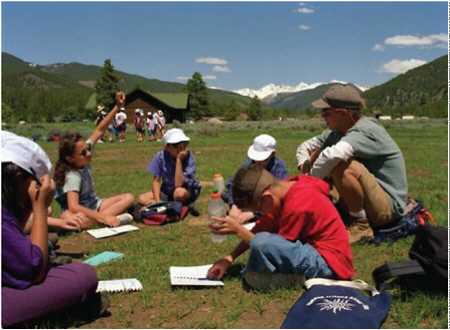
FIGURE 8.1 Summer science adventure programs, such as this one co-sponsored by the National Renewable Energy Laboratory, Denver Public Schools, and the Keystone Science School, expose schoolchildren to environmental science concepts and sustainable living practices. SOURCE: National Renewable Energy Laboratory.
of Science (AAAS) have published detailed definitions and learning progression maps of what citizens should know in order to be science literate. Federal agencies are just beginning to undertake climate change education and training initiatives, either as services they directly provide or as competitive grant programs to fund research, development, and implementation by experts in the field. These initiatives include the following:
-
NASA: Global Climate Change Education. A grant program to develop K-12 education materials, provide teacher training, and conduct research on effective methods (and Space Grant).
-
NOAA: Environmental Literacy. Grants support educators and scientists to develop and implement climate and environmental literacy programs. Sea Grant. A national network of university-based programs that provide workforce development and public education that now include climate as a theme.
-
NSF: Informal Science Education. Grants support museums, after school programs and other informal venues; several current grants focus on climate.
-
U.S. Forest Service: Educator Resources. A web site providing educational resources and highlighting the climate/forest connection.
-
Department of Energy: Global Change Education Program. Provides summer undergraduate fellowships and graduate fellowships for global change.
In 2006, NOAA, in partnership with the AAAS Project 2061,1 funded a workshop to discuss the need for a common set of curriculum guidelines specifically for climate education to be used at the local, state, and national levels. This workshop resulted in a broader interagency effort to coordinate and produce Climate Literacy: The Essential Principles of Climate Science,2 a guide for the integration of climate education into national and state education standards. The document established a peer-reviewed overview of key concepts for climate education and has been used to support teacher workshops to ensure that educators are proficient in teaching climate science concepts.3 Their essential principles of literacy in climate science included the following:
-
The Sun is the primary source of energy for Earth’s climate system.
-
Climate is regulated by complex interactions among components of the Earth system.
-
Life on Earth depends on, is shaped by, and affects climate.
-
Climate varies over space and time through both natural and man-made processes.
-
Our understanding of the climate system is improved through observations, theoretical studies, and modeling.
-
Human activities are impacting the climate system.
-
Climate change will have consequences for the Earth system and human lives.
-
Humans can take actions to reduce climate change and its impacts.
The recognized need for more coordination and support for climate education across the country led to the formation of the Climate Literacy Network in 2007, a group of non-profit organizations, universities, and government agencies that identifies critical needs and opportunities and shares ideas, materials, and resources, both within the network and through its website. The Climate Literacy Network also provides a forum for strategic thinking among the member organizations and develops a common framework for their collective efforts.
In 2002, the Technical Education Research Center (TERC) Center for Earth and Space Science Education reviewed the science standards of all 50 U.S. states and rated the depth and breadth of their treatment of several key concepts in Earth science. The study found that climate change is taught in 30 states directly and 10 states indirectly, the Earth as a dynamic system is taught in 35 states directly and 15 states indirectly, and environmental literacy was taught in 20 states directly and 14 states indirectly. Another national study by the University Corporation for Atmospheric Research (UCAR) found that the backgrounds of high school Earth science teachers (using Earth science as a proxy for climate) also vary widely: only 60 percent of teachers had a teaching certification in earth science and only 27 percent had an undergraduate degree in earth science. Moreover, only 25 percent of high school graduates had taken a course in Earth science. In middle schools, only 13 percent of students had studied some aspect of Earth science. While earth science and climate change are ever more important, these studies demonstrate that climate and earth science education in the K-12 curriculum have been patchy and inadequate.
Research, however, on the best way to integrate climate science into core curricula is limited. Climate education efforts have traditionally been organized as a branch of Earth or physical science and often do not include the human dimensions of climate change or the science of climate response that is now emerging as a critical future need (see further discussion in Advancing the Science of Climate Change, NRC, 2010b).
It is also essential to understand what teachers need to better instruct students about climate change and to involve them in the development of educational tools. The University Corporation for Atmospheric Research (UCAR) has a number of teacher development programs offered through online courses and workshops and has learned several key lessons about integrating climate change in the classroom:
-
Teachers do not want to teach only the science, but also the solutions. They want to use climate change to improve problem solving skills and creative thinking.
-
Teachers do not want to scare their students when teaching climate change. They want to raise students’ awareness and their self-efficacy to address the problems posed by climate change.
-
Students need to understand climate change at the local as well as the global scale, and place current changes in the context of longer time scales.
Some schools do not teach Earth or climate science simply because of a lack of textbooks or standards-based education materials. On average, textbooks are revised only once every 6 years and older editions often have little content on climate change and variability. Schools that lack the resources to buy new textbooks are thus forced
to turn to alternative sources of teaching materials. Moreover, climate science often advances more rapidly than textbook revisions, so even the latest textbooks are soon out of date. Although there is now a wide range of information about climate change on the internet, teachers and students may find it difficult to judge the reliability of different sources.
Fortunately, a growing number of ancillary materials have appeared as supplements to mainstream high school textbooks. Some specific examples include Oceans’ Effect on Weather and Climate: Changing Climate, Climate Change From Pole to Pole: Biology Investigations, and Earth’s Changing Surface: Humans as Agents of Change.4
In addition to printed materials, educators today can use a wide range of media and learning materials, including text, graphics, maps, simulations, websites, television programs, movies, field trips, experiments, and citizen science projects. An NSF-funded cognitive research project, Visualizing Earth, found that images and animations of Earth from space help students understand the complex interplay of Earth’s atmosphere, land, oceans, and life, but that students sometimes needed help in the transition from local to global scales, and in understanding the complexities of change over multiple time scales (Barstow et al., 1999). The Global Learning and Observations to Benefit the Environment (GLOBE) program, established in 1995 through NASA, NSF, the U.S. Department of State, and UCAR, has students around the world collecting environmental data, which they submit to a central database for use by students and scientists to monitor environmental change over time. This program helps elementary and middle school students learn core concepts of Earth system science and climate change and develop scientific thinking and data analysis skills.
To help students better understand the impacts of climate change, teachers may want to use images to which people can relate. For example, some people are more likely to respond to depictions of the impacts of climate change on local areas to which they have emotional connections (O’Neill and Hulme, 2009). Describing the impacts on a time scale of less than 50 years also makes the icons more relatable (Nicholson-Cole, 2005; O’Neill and Hulme, 2009). Unlike icons drawn from the scientific literature (such as the Antarctic ice sheet), to which most people cannot relate, people find it easier to imagine the effects on local places based on personal experience (O’Neill and Hulme, 2009). In addition to impacts, seeing images of “things people could do” may not increase participants’ interest in climate change, but it can raise their perceived ability to change their behavior (O’Neill and Nicholson-Cole, 2009). Catastrophic imagery, however, may not be particularly effective for education (Nicholson-Cole, 2005). Fear-based
|
4 |
National Science Teachers Association Learning Center, http://learningcenter.nsta.org/default.aspx. |
images can help people see the issue as more important, but they can also inspire helplessness or apathy (O’Neill and Nicholson-Cole, 2009).
Using different media and venues also helps teachers reach a wider range of students with diverse learning styles. Students are often more interested in learning about climate change (or any topic) when an immediate and concrete decision needs to be made. The large and growing array of climate-related decisions can be used as compelling contexts for learning and provide an opportunity for students to make direct connections between what they learn and the world around them.
Many colleges and universities are now teaching about climate change, usually as part of environmental science and studies programs, and a growing number of graduate students are studying both the physical and human dimensions of climate change and seeking careers as climate change researchers, educators, and decision makers. However, recent financial cuts at many higher education institutions often make it difficult to add new faculty with climate change expertise and to fund graduate students who wish to study the topic. New NSF and NASA funded programs are seeking to transform climate change education by including a focus on solutions and developing new curricula through consortia and collaborations of institutions.5 Broader curricula in the principles of sustainability and environmental education would be even more effective in equipping students for the issues they will face later in their lives and have already been adopted as university requirements at several institutions, such as the University of Georgia.
Educational institutions can model what they teach and turn their campuses into “living laboratories and classrooms” by making their facilities more sustainable, including efforts to conserve energy and limit greenhouse gas emissions. Michael M. Crow, President of Arizona State University, has stated the challenge clearly: “More than ever, universities must take leadership roles to address the grand challenges of the twenty-first century, and climate change is paramount amongst these.” The American College & University Presidents’ Climate Commitment6 (ACUPCC) brings this recognition into focus. Participating universities and colleges are submitting Climate Action Plans that list specific steps schools are taking to dramatically reduce their emissions toward the goal of climate neutrality. Students are often heavily involved in the design and implementation of these plans, which provide invaluable opportunities to teach the science of solutions and analytical skills and provide hands-on training. The ACUPCC provides several important recommendations about climate change education in higher education, including student involvement in greening campuses; elective, major, minor,
freshman, capstone, and general education classes on sustainability; and the full range of strategies for teaching, including learning through projects with local communities and internships, case studies, and internet-based activities (ACUPCC, 2009).
Federal support to facilitate the greening of schools, museums, and universities could help catalyze a transformation of both education and the nation toward sustainability. Depending on their institutional context, such initiatives can provide living laboratories for students, teachers, parents, and the broader public to explore, learn, and understand what sustainability means and how this relates to reducing the risk of climate change. To give just a very few examples of such initiatives among many:
-
Ball State University will cut its carbon dioxide emissions by about 50 percent through the installation of a campus-wide geothermal district heating and cooling system.
-
The University of New Hampshire will generate up to 85 percent of the energy used by the campus from the EcoLine™ poject, a landfill methane gas-to-energy initiative.
-
At Green Mountain College, a new heat and power biomass facility is predicted to shift 85 percent of current fuel oil usage to sustainable-sourced biomass.
Informal learning in museums, on the web, in after-school programs, in the Girl and Boy Scouts, and in community activities can also provide numerous opportunities to extend and deepen learning for students as well as the general public (see Figure 8.2 and Box 8.1). In fact, the role of informal learning in education has grown considerably over the years, and in some ways it has become as important as formal school learning (NRC, 2009b). While schools provide a formal structure and organized developmental sequence of learning, informal learning environments can provide other experiences of discovery, relevance, and adventure. Increasingly, there are also innovative informal learning settings that provide climate change education through special exhibits, presentations and discussions in town hall meetings, museums, science centers, zoos, aquariums, botanical gardens, planetariums, and other venues that help students and adults learn about climate change and make informed decisions about how to respond.
THE GENERAL PUBLIC
Communication about the risks posed by climate change requires messages that motivate constructive engagement and support wise policy choices, rather than engendering indifference, fear or despair. (Frumkin and McMichael, 2008)
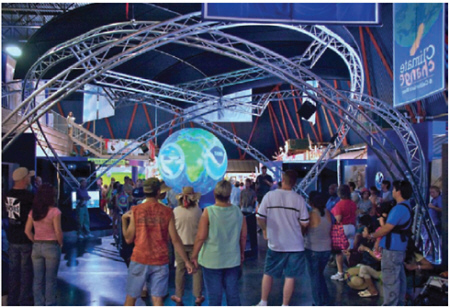
FIGURE 8.2 Museum visitors learn about climate change and its impacts through interactive media and eye-catching displays. SOURCE: U.S. Climate Action Report (2010).
Although nearly all Americans have now heard of global warming, the greenhouse effect, and climate change, many have yet to understand the full implications of the problem, the alternatives for a national response, and the opportunities that lie in the solutions. The field of climate change communication is still relatively young but has identified a number of key knowledge and information needs, roadblocks to understanding, guiding principles, and potential models for improved education and communication that can help advance public understanding of climate change, inform individual and collective choices, and support public deliberation about potential responses.
While no formal national assessment has yet been conducted to determine the full state of public understanding of climate change causes, consequences, and potential solutions, several nationally representative scientific studies, as well as numerous public opinion polls, do provide important insights.
A study of American climate change beliefs, risk perceptions, policy preferences, and
|
BOX 8.1 Informal Science Education “You learn—it’s amazing” (a 73-year-old visitor to the Huntington Botanical Gardens, quoted in Jones, 2005:6). Informal science education (ISE) venues include museums, zoos, aquariums, botanical gardens, cultural centers, summer camps, public lecture series, media programs, science magazines, and even backyards and dinner conversations. ISE thus provides a wide variety of learning opportunities and experiences that speak to multiple audiences and continue through a lifetime. Museums and science centers draw hundreds of millions of visitors every year (NRC, 2009b), while zoos and aquariums attracted 143 million visitors in 2007 alone (Falk et al., 2007). ISE also includes “science-and math-based television and radio programs [that] reach some 100 million children and adults each year” (NRC, 2009b). Memorable science experiences, including encounters with knowledge (e.g., through interactive exhibits, simulations, and movies) are provided through ISE: “Associating scientific thinking with engaging and enjoyable events and real-world outcomes can create important connections on a personal level” (NRC, 2009b). In addition, many scientists trace the origins of their interest and love for science to childhood visits to natural history museums, zoos, aquariums, or botanical gardens, or to television programs like Carl Sagan’s Cosmos. ISE can also inform environmental decisions and actions. For example, in 1997 the Monterey Bay Aquarium established the Seafood Watch Program to raise awareness about overfishing and the importance of purchasing sustainable seafood. In less than a decade, the program has helped individual consumers to change their eating habits and caused seafood restaurants around the world to change their standards (Quadra Planning Consultants Ltd. and Galiano Institute, 2004). Participation in citizen science projects has also been shown to develop scientific thinking and skills among the general public (Bonney et al., 2009). Informal science educators have also been addressing climate change for years. Projects and programs have ranged from large exhibitions like the Association of Science-Technology Centers’ (ASTC) Greenhouse Earth, which opened in 1992, to public television specials such as NOVA’s “What’s Up with the Weather?” More recently, ASTC has initiated a citizen science project called “Communicating Climate Change.” This project is helping science centers across the nation identify local indicators of climate change—such as pine bark beetle infestations in the pine forests of Arizona, spreading disease on coral reefs in Hawaii, and changing patterns of bird migration in Philadelphia—and training “citizen scientists” to observe, monitor, and track these changes over time, thereby helping communities understand global climate change as also a local issue. Despite these innovative examples, there is a demand for climate change materials, including accurate explanations of how the climate system works; how climate affects and is affected by fundamental human systems like food, water, and energy; and the causes, likely impacts, and potential solutions to climate change both locally and globally. Because ISE reaches audiences numbering in the hundreds of millions, connects professional educators through national networks, and partners with diverse media, this field is well situated to help improve public climate change awareness, understanding, and informed decision making. |
behaviors completed in January 2010 found that 57 percent of Americans said that global warming is happening7 and 53 percent believed that human activities are a contributing cause (Leiserowitz et al., 2010). Likewise, 50 percent were personally worried about global warming (Newport, 2008), while 65 percent considered it a serious threat (Pew Research Center for the People and the Press, 2009). Less than half the public (41 percent), however, said global warming is a near-term threat having dangerous impacts on people around the world either now or within the next 10 years. In line with several national polls, this study found significant decreases since 2008 in levels of public belief that global warming is happening (–14 percentage points), that it is human caused (–9), personal worry (–13), and perceptions of climate change as a serious threat (–8) (see Associated Press/Stanford/GfK Roper, 2009; Leiserowitz et al., 2009; Pew Research Center for the People and the Press, 2009; Saad-Gallup, 2009).
A 2008 national survey found that a majority of Americans believed that if nothing is done to address it, global warming will cause more droughts and water shortages, severe heat waves, intense hurricanes, the extinction of plant and animal species, intense rainstorms, famines and food shortages, forest fires, and the abandonment of some large coastal cities due to rising sea levels within the next 20 years. However, most Americans perceived it as a geographically distant problem that will primarily impact people, places, and species far away. Most also had little to no understanding of the potential health impacts resulting from increased climate change, while several studies have documented poor public understanding of some of the fundamental properties of climate change itself (Bostrom, 1994; Kempton et al., 1995; Leiserowitz, 2006; O’Connor et al., 1998; Read et al., 1994).
Importantly, however, a large majority of Americans desire more information about climate change. In 2008, only 12 percent said that they were very well informed about the different causes, consequences, or solutions to global warming,8 while a year later 69 percent of Americans said that they would like more information. Furthermore, 70 percent said “schools should teach our children about the causes, consequences, and potential solutions to global warming” while 60 percent said the “government should establish programs to teach Americans about global warming” (Leiserowitz et al., 2010).
Information Sources
Television remains the primary source to which most Americans turn to keep up with current news and world events (59 percent), followed by the internet (22 percent), print newspapers (10 percent), radio (8 percent), and magazines (1 percent). Most Americans sometimes or often watch their local TV news (75 percent)—many more than the national nightly network news broadcasts on CBS, ABC, or NBC (55 percent), the Weather Channel (47 percent), Fox News (42 percent), CNN (38 percent), or MSNBC (31 percent). Regarding topics, 70 percent of Americans somewhat or very closely follow the local weather forecast—many more than national politics (53 percent), world affairs (47 percent), health (43 percent), the environment (35 percent), sports (33 percent), and science and technology (32 percent) (Maibach et al., 2009). Thus, while the internet and social media are growing rapidly in use, local television remains the primary source of news and information for most Americans.
The perceived trustworthiness and credibility of different messengers also plays a key role in public responses to hazards, especially for scientifically complex problems like climate change (Slovic, 1999). A 2008 study asked respondents who they trusted to tell them the truth about global warming and found that 82 percent of Americans trusted scientists, followed by family and friends (77 percent), environmental organizations (66 percent), and television weather reporters (66 percent). Nearly half of Americans trusted religious leaders (48 percent) or the mainstream news media (47 percent), while only 19 percent of Americans trusted corporations as a source of information (Leiserowitz et al., 2009).
While scientists are still the most trusted source of information, a 2010 survey found that trust in scientists had dropped to 74 percent. Moreover, only 34 percent of Americans believed that most scientists agree that global warming is happening, while 40 percent believed that there is a lot of disagreement among scientists (Leiserowitz et al., 2009). Public perception of whether or not there is widespread agreement among scientists is particularly important.
A number of groups opposed to climate change legislation have attempted to reinforce the perception of scientific uncertainty as a means to delay action (McCright and Dunlap, 2000, 2003). Journalistic norms have also played a role in this process, often through articles that pair quotes from climate scientists with quotes from a small minority of climate change deniers who cast doubt on either the reality of or human contribution to climate change, thereby supporting an inference that the scientific community is equally divided (Boykoff, 2007; Boykoff and Boykoff, 2004). More recently, the unauthorized release of a set of emails from climate scientists at the University of
East Anglia in the United Kingdom, as well as the discovery of errors in the Fourth Assessment Report of the Intergovernmental Panel on Climate Change (IPCC), have been widely reported, used by critics to allege scientific misconduct, and may have contributed to lower public trust in scientists and the perception of greater disagreement among scientists about the reality of climate change.
Policy Support
In a democratic system, public support or opposition to proposed policies plays a vital role in shaping choices about what climate change and energy policies are adopted at all levels of government. While any survey represents a snapshot in time, many public opinion polls have found that the American public supports a wide variety of policies currently being considered by decision makers in local, state, and national governments (Nisbet and Myers, 2007). For example, a survey completed in January 2010 found strong public support, across political lines, for policies to develop renewable energy, improve energy efficiency, establish new regulations, and sign an international treaty to reduce greenhouse gas emissions (see Figure 8.3).
Eighty-five percent of Americans supported funding more research into renewable energy sources, such as wind and solar power, while 82 percent supported providing “tax rebates for people who purchase energy-efficient vehicles or solar panels.” Seventy-one percent supported the “regulation of carbon dioxide (the primary greenhouse gas) as a pollutant,” while 61 percent supported signing “an international treaty that requires the United States to cut its emissions of carbon dioxide 90 percent by the year 2050.”
Fifty-eight percent supported policies to “require electric utilities to produce at least 20% of their electricity from wind, solar, or other renewable energy sources, even if it cost the average household an extra $100 a year.” Likewise, 55 percent supported a government subsidy to replace old water heaters, air conditioners, light bulbs, and insulation, even if the subsidy cost the average household $5 a month in higher taxes. Finally, at the local level, majorities of Americans have also supported changing their own city or town’s zoning rules to decrease suburban sprawl and concentrate new development near the city center (68 percent) and to require that neighborhoods have a mix of housing, offices, industry, schools, and stores close together (65 percent; Leiserowitz and Feinberg, 2007).
Thus, the American public supports a variety of local, state, national, and international policies to reduce greenhouse gas emissions. Surveys have also found, however, that Americans strongly oppose higher taxes on energy. For example, sixty-four (64
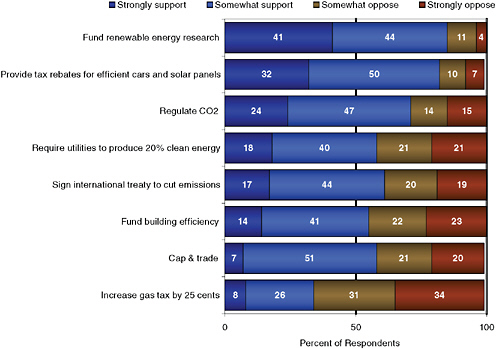
FIGURE 8.3 The percentage of public support for various energy policy options. SOURCE: Leiserowitz et al. (2010).
percent) opposed “a 10-cent city or local fee added to each gallon of gas you buy, to encourage people to use less gasoline” (Leiserowitz and Feinberg, 2007), while 67 percent of Americans opposed a policy to “increase taxes on gasoline by 25 cents per gallon and return the revenues to taxpayers by reducing the federal income tax” (Leiserowitz et al., 2009). Likewise, a 2009 AP-Stanford poll found that 78 percent of Americans opposed a policy to “increase taxes on electricity so people use less of it” (Associated Press/Stanford/GfK Roper Poll, 2009). Moreover, climate change remains a relatively low national priority compared to other national challenges. For example, in January of 2009, a poll conducted by the Pew Research Center for the People and the Press found that global warming was ranked last of 20 national priorities, well below the economy, jobs, terrorism, social security, education, Medicare, health care, the deficit, and others. Energy, however, was the fifth highest national priority (Pew Research Center for the People and the Press, 2009).
Global Warming’s “Six Americas”
Behind these aggregate data, however, lies a diversity of views. In the United States there is considerable variation in how much people know about climate change, the extent to which they have taken personal action to reduce their own carbon footprints, and in deeper-level values, which strongly shape public interpretations of and preferred responses to climate change (see Leiserowitz, 2006). Researchers have identified six distinct segments of the public that conceptualize and respond to the issue in very different ways (Figure 8.4) (Leiserowitz and Feinberg, 2005, 2007, Leiserowitz et al., 2010; Maibach et al., 2009).
For example, one segment of the public is very worried about global warming (the “Alarmed”), strongly supportive of national policies, and beginning to change some of their own climate-related behaviors. By contrast, a different segment of the public does not believe that global warming is happening or human caused (the “Dismissive”). Some within this group simply deny it is happening, others say the science has not been proven yet, while others believe it might be happening but is just part of a natural cycle. Some argue it is just media hype, while a few believe global warming is a hoax (Leiserowitz and Feinberg, 2005, 2007). Between these two extremes lie four other groups: the Concerned, Cautious, Disengaged, and Doubtful.
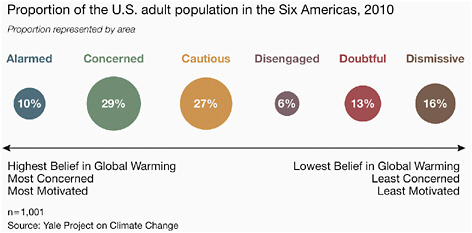
FIGURE 8.4 Adults in the Six Americas are grouped into six categories (Alarmed, Concerned, Cautious, Disengaged, Doubtful, and Dismissive) based on their responses to global warming SOURCE: Leiserowitz et al. (2010).
Overall, each group responds to the issue in its own way. For example, 92 percent of the Alarmed are either very or extremely sure that global warming is happening versus 64 percent of the Concerned, 17 percent of the Cautious, 12 percent of the Disengaged, 6 percent of the Doubtful, and only 3 percent of the Dismissive. Similarly, 85 percent of the Alarmed believe global warming is caused mostly by human activities versus 77 percent of the Concerned, 46 percent of the Cautious, 41 percent of the Disengaged, 14 percent of the Doubtful, and only 2 percent of the Dismissive (Leiserowitz et al., 2010). Moreover, each of these groups has unique demographic characteristics, attitudes, values, political orientations, media preferences, and other attributes.
Each of these audiences is also likely to trust different messengers. For example, 46 percent of the Alarmed strongly trust former Vice President Al Gore as a source of information on global warming, while 89 percent of the Dismissive strongly distrust him. By contrast, 67 percent of the Dismissive somewhat to strongly trust their own family and friends as a source of information on global warming, while 44 percent trust their religious leaders (Maibach et al., 2009). Likewise, messages that highlight the potential impacts of climate change on polar bears and other species may resonate with the strong environmental values of the Alarmed and Concerned, but fall flat with the Doubtful or Dismissive. By contrast, messages that point out the national security implications or a religious-based stewardship ethic may help some Americans understand this issue from the perspective of their own deeply held values. In recent years, many military leaders and analysts have argued that climate change is a national security threat (CNA, 2007; Gilgoff, 2009; Goodstein, 2005; Pumphrey, 2008). In addition, many religious leaders contend that it is a moral imperative. Research has also found that minorities are often more likely to believe climate change is happening, human caused, and a serious threat than white Americans (Leiserowitz and Akerloff, 2010). Climate change is also an issue of environmental justice, as poor and minority communities are often the most vulnerable to the impacts of climate change, despite contributing relatively little to the problem (Morello-Frosch et al., 2009). Thus, efforts to educate the public about climate change must recognize that there are in fact multiple, different audiences within the American public—each requiring tailored information, outreach, and engagement efforts.
Communication Roadblocks and Other Influences on Attitudes
Obstacles to the effective communication of information about climate change include the nature of climate change itself, limitations in individual perception and decision making, structural barriers, and ineffective communication strategies. For example, the causes of climate change are largely invisible to the human eye. Every
day, all around us, carbon dioxide, methane, nitrous oxide, and other greenhouse gases pour from automobiles, buildings, airplanes, feedlots, factories, and power plants. Yet these emissions are invisible and thus remain, at best, abstract knowledge, out of sight and out of mind. These emissions also have distant effects. The full impact of rising greenhouse gas concentrations in the atmosphere will not be felt for years into the future. Moreover, thus far the primary impacts of rising emissions have been felt far away from the cities and factories that produced them (e.g., in the polar regions). Unlike typical pollutants, many of which can be seen and smelled and have a direct impact on the area immediately surrounding the source, greenhouse gases are quickly mixed and diffused throughout the global atmosphere. Finally, climate science itself is highly complex, requiring the integration of diverse and complicated disciplines, and full of inherent uncertainties about the timing, likelihood, and severity of the impacts—all of which make this issue difficult for non-specialists to understand. Some barriers to understanding lie in the individuals themselves. An extensive range of cognitive biases and heuristics influence human decision making (Gilovich et al., 2002), including the reliance on inappropriate mental models to understand climate change. For example, many Americans do not understand the difference between weather and climate, leading some to interpret unusual cold weather as proof that global warming is not happening (Bostrom and Lashoff, 2007). Many others conflate climate change with the ozone hole, leading them to the (erroneous) conclusion that the best solution to climate change is to ban aerosol spray cans (Leiserowitz, 2007).
The first step to improving understanding may be for scientists and educators to recognize that they often understand key climate change concepts differently than the general public. In general, climate scientists investigate complex interactions within the earth system, a way of thinking that many non-scientists struggle with. Climate science itself is often described in abstract, statistical, or technical terms that have little resonance for most Americans (Hassol, 2008). Common examples include debates over how to limit global warming to 2° Celsius (made worse by the fact most Americans use Fahrenheit), atmospheric concentrations of 350, 450, or 550 parts per million, annual emissions of “gigatons of carbon,” and “megawatts of energy” produced by different power sources. Scientists understand that the climate system has non-linear interactions, multiple stable states, and inherent unpredictability. In contrast, non-scientists sometimes struggle with the idea of positive and negative feedback loops, and may even misunderstand the term “positive feedback” as a good thing (see Table 8.1).
Members of the public often lack the spatial and geographic skills that earth scientists have developed. As climate change involves complex interactions and feedbacks as well as delayed impacts at multiple spatial scales, non-scientists often have difficulty understanding how their personal actions influence climate and how geographically
TABLE 8.1 Commonly Misunderstood Terms Relating to Climate Change.
|
What scientists say |
Words More Easily Understood by the Public |
|
Anthropogenic |
Human caused |
|
Spatial and temporal |
Space and time |
|
Positive feedback |
Self-reinforcing cycle, vicious circle |
|
Theory |
Understanding of how something works |
|
Degrees Centigrade |
Degrees Fahrenheit |
|
Solar radiation |
Solar energy |
|
Positive trend |
Upward trend |
|
Climate sensitivity |
How the climate responds to more greenhouse gases in the atmosphere |
|
Uncertainty |
Range of possibilities |
|
Enhanced greenhouse effect |
Stronger greenhouse effect |
|
SOURCE: Hassol (2008). |
|
distant impacts relate to their current lives. Similarly, climate scientists often think about geologic time scales. Some investigate events that occurred millions of years ago, and envision an earth of the past that has little resemblance to the current planet. Because of their familiarity with long time scales, most geoscientists are comfortable imagining climate change’s impacts centuries into the future. By contrast, most people’s ability to conceptualize the future goes “dark” around 15 to 20 years, with 50 years as an upper limit (Nicholson-Cole, 2005; Tonn et al., 2006). At other times, some of those with little knowledge of climate change imagine future impacts that are often unscientific and unrealistically catastrophic (Nicholson-Cole, 2005). Many people have a mental image of climate change as very far away in time and space, unrelated to their actual experience (Leiserowitz and Feinberg, 2005; Nicholson-Cole, 2005). Some research has found, however, that those with a higher level of climate change understanding described impacts that were on a closer time scale, were more realistic, and related to their lives (Nicholson-Cole, 2005). For many Americans, climate change is often lost among the myriad of other day-to-day risks, including unemployment, terrorism, the H1N1 flu virus, nanotechnology, genetic engineering, nuclear power, toxic waste, obesity, tobacco, illegal drugs, violent crime, and health care, among many others. Most Americans have little time to focus on climate change, due to the day-to-day needs of parenting, working, paying bills, socializing, and the distractions of entertainment. Even individuals who are motivated to act often confront other barriers, such as the lack of capital to make household energy efficiency improvements; the lack of clean, safe, and affordable public transportation options; the lack of knowledge about
effective actions; the ruts of personal habit and routine; lifestyle expectations; peer pressure; and pervasive advertising and marketing campaigns to increase consumption. Finally, some Americans view climate change through a political and ideological lens, leading them to be deeply suspicious of both climate science and proposed responses (Dunlap and McCright, 2008).
Although past communication efforts have successfully placed climate change on the national and international agenda, there has been limited change in public knowledge, attitudes, or behavior. Past communication efforts have often implicitly assumed that more information leads automatically to greater public concern and action, but this is often not the case. Studies in related fields demonstrate that although scientific information is often necessary for such change, it is often insufficient, especially for changing behavior (Chess and Johnson, 2007). Communication efforts that have attempted to evoke fear, guilt, or shame to motivate public action have often proven unsuccessful or have even backfired (Moser, 2009).
Another important barrier to improved public understanding in the United States has been the well-organized and well-financed campaigns by special interests, contrarian scientists, and defenders of the status quo to create public perceptions of scientific disagreement and to promote the idea that climate change is not happening, and that if it is happening, it is caused by natural factors or cycles, or will actually be a good thing (McCright and Dunlap, 2003; Menestrel et al., 2002; Oreskes, 2004).
Finally, media—the primary way most Americans learn about climate change—is currently undergoing a massive and historic structural transformation, with many newspapers and broadcast networks cutting science and environment reporters and news desks (Jones, 2009; Meyer, 2004). At the same time, new online social media are emerging as alternative sources of climate and scientific information. However, the promise and perils of this shift to less professionalized, more decentralized, fragmented, and often more biased information sources are still evolving, with uncertain consequences for public understanding (Brown, 2005; Jones, 2009).
These many barriers make communication about climate change challenging. Yet studies of public opinion demonstrate that, despite all of these constraints, the American public does have some understanding (albeit limited) of climate change, its causes, potential impacts, and solutions. A majority of Americans view it as a serious threat, support a wide variety of public policies, and express a willingness to change some of their own behaviors, especially those around saving energy at home and on the road, and as consumers.
Guidelines for Effective Communication
Information campaigns are often used to help achieve different social goals, including raising awareness; improving public understanding of the causes, consequences, and potential responses to hazards; informing consumer choices (e.g., EnergyStar labels); and motivating behavioral changes, such as promoting energy efficiency and conservation, developing emergency plans, taking proactive protective action (e.g., vaccines), and evacuating to avoid extreme weather events (e.g., hurricanes). Different goals require different strategies; thus, any communication effort must start by clearly articulating what it is trying to achieve.
Likewise, different actors in American society often pursue different communication goals: public health officials work to reduce risky health behaviors (e.g., smoking, obesity, and drug use); scientists seek to raise public and policy maker awareness and understanding of new hazards; government agencies seek to provide concrete and usable information to specific stakeholders (e.g., investors, farmers, and natural resource managers); while advocacy groups may attempt to raise public support for or opposition to proposed public policies.
Some information campaigns are essentially one-way, such as from government agencies to the public at large (e.g., public service announcements). These may be most effective at raising public awareness of a risk (such as an impending hurricane). Some information campaigns use formal procedures, such as the development of school curricula, while others work through informal processes, such as changes in social norms, activation of social networks, and the influence of opinion leaders. Other information campaigns are participatory, with experts and different stakeholders within the public engaging in extended dialogue and structured decision making about an issue or hazard (e.g., siting new facilities or changing zoning rules).
Making communications interactive and including citizens as participants in the decision-making process are key components of participative and deliberative decision making and can improve the effectiveness of decision making and action. Deliberative processes provide citizens with basic information about a problem, allow them to process and discuss it through structured deliberations, and reach considered conclusions. The focus is on active rather than passive involvement and on process rather than results (Blowers et al., 2005; Edwards et al., 2008). Events are often described as conversations (rather than one-way information provision) and begin by encouraging participants to ask questions. The recent National Research Council report on public participation in environmental decision making (NRC, 2008b) offers additional recommendations on effective participation, such as inclusive and transparent involvement,
agreement on procedural rules, in-person interaction to build trust, attention to both facts and values, being explicit about assumptions, and iteration to adapt to new information, evaluations, and participants.
Many governmental, non-governmental, and academic organizations use social media outlets to convey information to the general public. For example, NOAA uses tools such as Twitter, Facebook, YouTube, and podcasts to reach broad audiences. Nongovernmental organizations (NGOs) like the World Wildlife Fund are currently utilizing tools such as those mentioned above and additional social networking websites to interact with the public and encourage supporters to recruit others with similar interests. Universities are also increasingly using new social media as an integral part of instruction and to keep their current and prospective students informed of current events and campus news. These and other online communities can diffuse information rapidly through a population. The information is often relatively short and easy to understand, which facilitates sharing and can help those with little background on a subject to understand basic concepts and take meaningful action.
An effective national response to climate change will involve many different goals, actors, and approaches. Although the goals are varied and different actors will use different strategies, certain principles are relevant in each of these contexts (see Table 8.2 and Box 8.2).
One of the first rules of effective communication is to “know thy audience.” Formative research to identify the target audience and their needs is thus a critical first step. Communicators of all types need to know exactly who their audiences are (demographically, geographically, politically, and what communication channels they rely upon), including what they currently know (and misunderstand) about the issue; how they perceive the risks, costs, and benefits of acting (or not acting); whether they understand how they might choose, decide, or act differently; what specific barriers they confront; and whether they believe their actions would be effective. Using local people who are already familiar with an audience may help non-local communicators better express their message (see Box 8.3), especially if they are trusted leaders of community groups such as churches or other social organizations.
This initial understanding of the audience and its specific needs should then guide the production and dissemination of information to meet these needs. In general, the information to be provided needs to be understandable, memorable, useful, and timely. It should be communicated through the channels that the target audience pays attention to, using credible messengers that the audience trusts. For optimal effectiveness, information campaigns should incorporate evaluation and feedback mechanisms to assess what works and what does not, using an iterative, adaptive learning model.
TABLE 8.2 Guidelines for Effective Climate Change Communication.
|
Principle |
Example |
|
Know your audience |
There are different audiences among the public. Learn what people (mis)understand before you deliver information and tailor information for each group. |
|
Understand social identities and affiliations |
Effective communicators often share an identity and values with the audience (e.g., a fellow CEO or mayor, parent, co-worker, religious belief, or outdoor enthusiast). |
|
Get the audience’s attention |
Use appropriate framing (e.g., climate as an energy, environmental, security, or economic issue) to make the information more relevant to different groups. |
|
Use the best available, peer-reviewed science |
Use recent and locally relevant research results. Be prepared to respond to the latest debates about the science. |
|
Translate scientific understanding and data into concrete experience |
Use imagery, analogies, and personal experiences including observations of changes in people’s local environments. Make the link between global and local changes. Discuss longer time scales, but link to present choices. |
|
Address scientific and climate uncertainties |
Specify what is known with high confidence and what is less certain. Set climate choices in the context of other important decisions made despite uncertainty (e.g., financial, insurance, security, etc.). Discuss how uncertainty may be a reason for action rather than a reason for inaction. |
|
Avoid scientific jargon and use everyday words |
Degrees F rather than Degrees C “Human caused” rather than “anthropogenic” “Self-reinforcing” rather than “positive feedback” “Range of possibilities” rather than “uncertainty” “Likelihood” or “chance” rather than “probability” “Billion tons” rather than “gigatons” |
|
Maintain respectful discourse |
Climate change decisions involve diverse perspectives and values. |
|
Provide choices and solutions |
Present the full range of options (including the choice of business as usual) and encourage discussion of alternative choices. |
|
Encourage participation |
Do not overuse slides and one-way lecture delivery. Leave time for discussion or use small groups. Let people discuss and draw their own conclusions from the facts. |
|
Use popular communication channels |
Understand how to use new social media and the internet. |
|
Principle |
Example |
|
Evaluate communications |
Assess the effectiveness of communications, identify lessons learned, and adapt. |
|
SOURCES: CRED (2009), Nerlich et al. (2010). |
|
|
BOX 8.2 Public Health Communication Campaigns to support improved public health decision making and behavior have a long history in the United States, dating back at least to 1721, when Cotton Mather used pamphlets and personal appeals to encourage the citizens of Boston to get inoculated against smallpox (Gross and Sepkowitz, 1998; Paisley, 2001). In the 19th and early 20th centuries, public information campaigns were used to fight slavery, child labor, and tuberculosis. Other well-known national examples include the Smokey the Bear campaign against forest fires, heart disease prevention, anti-tobacco and anti-drug campaigns, skin cancer prevention, seat belt use, mammography screening, and campaigns for improved diets and physical exercise. The U.S. Congress directly mandated two large national campaigns: the $1 billion national youth anti-drug campaign and the Youth Physical Activity Campaign (the VERB Campaign), while recent tobacco court settlements mandated support for the anti-teen-smoking “Truth” campaign (Snyder, 2007). Meta-analysis evaluations have generally found that overall, health campaigns can have a positive, if limited, impact on public health knowledge, attitudes, and behaviors. For example, Snyder and Hamilton (2002:375) found that, on average, campaigns led to “9% more people performing the behavior after the campaign than before” across a variety of health issues. Other researchers note, however, that many prior campaigns have not followed effective design principles, while well-designed campaigns can have significantly larger effects (Noar, 2006) (see Table 8.2 for a summary of effective campaign design principles). In addition, health communication researchers have found that the more information is tailored to the needs of a particular audience, the more effective it is; trusted opinion leaders are especially effective messengers; and public participation, discussion, and dialogue can greatly increase the reach and impact of an information campaign. There is, however, often a tradeoff between reach and impact. A mass media campaign “with a small-to-moderate effect size that reaches thousands [or millions] of people will have a greater impact [than] an individual or group-level intervention with a larger effect size that only reaches a small number of people” (Noar, 2006:36). Each approach is valuable but may be better suited for different goals. For example, mass media campaigns may be better at raising national awareness and basic knowledge about a risk, while behavior change may be more effectively encouraged through grassroots campaigns involving friends, families, co-workers, and local communities. Finally, information campaigns are often more effective when they are combined with new incentives, supporting infrastructure, or the enforcement of laws and regulations (Maibach et al., 2008; Witte and Allen, 2000). |
|
BOX 8.3 Using Local Opinion Leaders Personal interaction can be an important component of climate change communication to the general public. Institutions, such as universities or non-profit organizations, can provide the data and other resources that individuals may not be able to obtain on their own. They can also provide training that can teach important communication or hands-on skills, such as public speaking or conducting energy audits. Drawing upon these resources, communicators who understand the local geographic and social landscape can target their messages to match their audiences’ values and interests. Providing an ongoing “shared space” for these volunteer communicators to learn from one another can reinforce their enthusiasm and improve their messaging. One such program is the Oxfordshire ClimateXChange, run by the Environmental Change Institute at Oxford University. This project connects local people interested in climate change who want to communicate about it to others in their schools, churches, and towns. Events have included weatherization training, skill sharing within the group, and showcases of environmental and energy government agencies. The program’s website has social networking features, offering the opportunity for people to continue the conversation between events. The program also provides resources to the “Climate Explorers,” including informational articles, a film/DVD library, “pub quiz” questions, electronic presentations, and an energy monitor lending program. These events and resources equip ClimateXChange members to speak accurately and effectively to people they know in their communities. Meeting similar people in the same geographic area who are doing related work allows for collaborations. One networking meeting attracted representatives from 30 different local groups. Overall, the project has reached over 13,000 people through more than 120 events. |
The informational needs of American society in response to climate change range from basic awareness and understanding of the problem itself to extremely technical information used only by specialists in specific fields. Communicators at all levels of government and across all sectors of society will thus need to provide a wide variety of different information types for different audiences, from individual households to the nation as a whole. Both scientists and decision makers should seek ways to effectively communicate the complex issues of climate change to others.
COMMUNICATION AND EDUCATION FOR DECISION MAKERS
As citizens, policy and decision makers can also benefit from improved climate change communications to the public. Those communicating with policy makers should keep in mind the principles outlined in the previous section and in Table 8.2. But given their
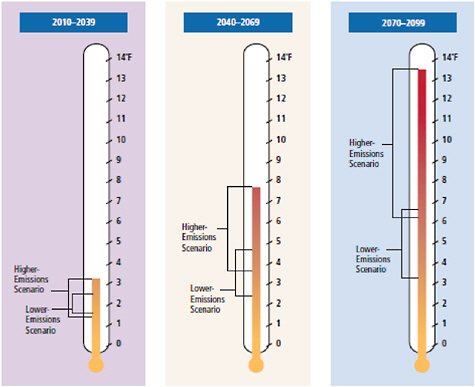
FIGURE 8.5 Changes in Northeast regional summertime temperatures. SOURCE: Union of Concerned Scientists (2006).
unique powers and responsibilities, policy makers require specific efforts to build their capacity to make effective choices. Decision makers are often faced with a variety of near-term climate-related choices that will have implications for generations to come. Providing them with the climate information required to make those decisions is crucial (see Figure 8.5). As just one example, local, state, and national policy makers are constantly making decisions about public infrastructure investments (e.g., roads, bridges, hospitals, and schools) that should incorporate considerations of climate change.
Previous chapters discuss a range of information systems and decision support tools that can assist policy makers in making climate decisions—such as climate and greenhouse gas information services and models for evaluating choices—but these will be ineffective if those making decisions have an incomplete or inaccurate understanding
of climate change and the options for reducing the risks. It is important to recognize that many decision makers are extremely busy, balancing competing priorities, and as leaders may find it difficult to admit to an inadequate understanding of the science or economics of climate change. For Congress, long-established services such as the Congressional Research Service or Government Accountability Office reports provide concise summaries of key issues (as does the National Research Council) and a number of think tanks and NGOs also seek to provide summaries of climate change science and options for decision makers including those in the private sector. As with citizens, decision makers in the private and public sectors are most likely to desire information that is directly relevant to their localities and jurisdictions, uses a minimum of jargon, respects their expertise, is clear about uncertainties, and takes account of their context, interests, and needs.
As with other groups, climate information may be best communicated by someone who is familiar and trusted by a particular group of policy makers—by a fellow CEO or mayor, a former political colleague, a senior staff person or a constituent—and in a venue where questions can be asked and differences aired in confidence.
For those professionals who are asked to take on new responsibilities for reporting or responding on climate change within their organization, there is a need for capacity building and training to help them in their new roles, and to build expertise in appropriate areas of climate science and policy. This might involve short courses or professional certification such as those emerging in carbon finance and project development, although there is a need to ensure that such courses are of high quality.
While the scientific community has achieved great progress in the identification, description, and projection of the risks of climate change, the informational needs of the nation—to either limit future warming or adapt to climate impacts—now extend far beyond the relatively narrow boundaries of climate science. As described in Chapter 7, meeting the rising demand for information will require a significant investment by governments and other organizations in developing, validating, and providing high quality information about the causes, consequences, and potential responses to climate change.
CONCLUSIONS AND RECOMMENDATIONS
Current and future students, the broader public, and policy makers need to understand the causes, consequences, and potential solutions to climate change; develop scientific thinking and problem-solving skills; and improve their ability to make informed decisions. To achieve these goals, the United States needs to make consider-
ably more progress in national, state, and local climate education standards, climate curriculum development, teacher professional development, and production of supportive print and web materials. Hands-on or experiential approaches are particularly effective ways to promote learning among students. The United States also needs a national strategy and supporting network to coordinate climate change education and communication activities for policy makers and the general public, including the identification of essential informational needs; development of relevant, timely, and effective information products and services; construction and integration of information dissemination and sharing networks; and continuous evaluation and feedback systems to establish which approaches work best in what circumstances.
The panel judges the following 5 elements as important guidelines for all climate education and communication programs to help people think deliberately, responsibly, and respectfully about climate change and the many related decisions they will face. All such programs should
-
Be based on the best available, peer-reviewed science. Accurate science, based on the latest data and analysis, must lie at the core of any education activity. Educational content should be derived from respected scientific sources such as the IPCC and reports from the U.S. Global Change Research Program such as the Global Climate Change Impacts in the United States (USGCRP, 2009). Education activities should be careful to avoid exaggerations or misrepresentation of the science. Climate change education, like environmental education generally, is much more than just natural science. In addition to the physical climate system, climate change education must also include other critical dimensions of the issue, including the human drivers of greenhouse gas emissions; energy efficiency and conservation; renewable energy, carbon capture and storage, and other options for limiting climate change; issues of social vulnerability to climate change; options for adaptation; and the economic, political, psychological, social, cultural, and moral dimensions of the issue. It should also help students understand risk management and learn how to use this framework in climate-related decision making.
-
Use examples, images, language, and units of measure that are accessible and relevant to the American public and decision makers. Scientists must translate their information and findings into the language and units of everyday life. For example, use degrees Fahrenheit instead of Celsius, talk about the possible range of results rather than uncertainty, and use examples that relate to food, health, water, and familiar ecosystems.
-
Provide linkages between global and local activities. Climate change affects people from the local to the global scale, and at different places in differ-
-
ent ways at different times. All localities in the United States produce greenhouse gas emissions and all will experience impacts in one form or another; therefore, all need to be part of climate solutions. As students learn about climate change, they should understand both the local and the global contexts, that climate change involves the entire Earth, with interactions among the atmosphere, oceans, land, and life as well as human systems, including agriculture, industry, transportation, consumer markets, and social values.
-
Include a focus on longer-term time scales, but connect to the present. Decisions made today will have very important and long-term consequences for the climate of the future. Decisions that make sense from the perspective of the short term may not make sense from the perspective of a longer time frame. For young people, this often involves a fundamental shift from thinking merely days and months into the future to thinking about years, decades, and beyond. Yet climate change will affect them, as they become adults, in profound and far-reaching ways, and thus can provide powerful connections to their own life scales and time frames.
-
Maintain respectful discourse. Climate change decisions involve a wide range of perspectives, including not just the complexities of natural and social science but also divergent social, political, environmental, religious, and ethical values and views of the proper role of individuals, the private sector, and government in responding to climate change. Thus, climate educators and communicators at all levels of society should set a tone of respect for diverse perspectives and an open and honest consideration of the implications of various responses to climate change. When discussion moves from core scientific concepts to more complex issues of societal values, students should learn how to engage in responsible and respectful discourse and debate as well as critical thinking and analysis skills.
At the federal level, support for climate education is scattered across several federal agencies and programs, notably NOAA, NASA, and NSF. While there are nascent efforts among these agencies to collaborate around climate education, this collaboration needs a more formal structure and a clear mandate to contribute to an overarching set of national goals for climate science education, with clear objectives and measures of success. Climate Literacy: The Essential Principles of Climate Science, cited above, provides an early example of the benefits of such federal coordination. A national education and communication network would help support, integrate, and synergize diverse efforts by sharing best practices and educational resources; building collaborative partnerships; and leveraging existing education, communication, and training networks across the country.
The challenge to science and education has been seen and met before. The National Defense Education Act of 1958, in response to Sputnik, fundamentally strengthened our nation’s science, mathematics, engineering, and technology education. Thirty years later, the Global Change Research Program, including NASA’s Mission to Planet Earth, created a fundamental step-change in graduate education and research in America’s universities and colleges. It established an ambitious target: to increase our understanding of the environment and improve our ability to predict changes on a global scale. This broad initiative needs to be both focused and revitalized: if the nation desires to develop a national strategy and resources to support climate change education and communication, a national climate education act could serve as a powerful response to the educational challenges of climate change. It would have the advantage of a single focal point of congressional action and would provide an integrated federal strategy and funding. It could also include integrated support for informal science education, university-level initiatives, and workforce development in climate-related fields.
Since states define their own educational standards, state-based reform is critical. State education agencies have already begun revising their educational standards to include climate and energy literacy, as well as the “21st-century thinking skills” of engineering, problem solving, systems thinking, teamwork, and communications (Hoffman and Barstow, 2007).
The United States needs a better base of knowledge and expertise in climate education. These needs include research to establish priority learning goals, development of effective methods in climate education and innovative approaches to assessment, and conduct of national surveys of current practice at state and local levels. Research is also needed to understand students’ correct and incorrect mental models about climate change, barriers to learning and understanding, and learning pathways to adequately address climate change.
For the broader public, many barriers to public understanding and engagement with climate change science and responses exist, including the nature of climate change itself, limitations in individual perception and decision making, structural barriers, and ineffective communication strategies. Despite these barriers, however, majorities now believe it is real, happening, human caused, and a serious threat. Likewise, majorities want their elected officials at all levels to take more action and support a variety of policies to reduce national greenhouse gas emissions. Many Americans are interested in making individual changes to save energy and reduce their own contributions to climate change, but still confront critical obstacles such as up-front capital costs and lack of knowledge about what actions to take (Leiserowitz, 2007).
Perhaps most important, Americans express a clear desire for more information about climate change, including how it might affect their local communities and how they as individuals and the nation as a whole can act to reduce greenhouse gas emissions and prepare for the impacts. Thus, today’s adults evidence a critical need for more and improved information about climate change at all levels and across all sectors of American society. Local, state, and national governments must play an important role, but so too will the private sector, civil society, the mass media, and individual Americans within their own social networks. Climate communicators can learn from information campaigns in other domains, such as public health. For example, communicators should start by clearly defining the goals of the campaign: to merely inform and educate individuals about climate change, to encourage societal action and behavioral change, or to encourage deeper changes in social norms and cultural values? Successful campaigns must also identify the specific target audience, the message frame (see Chapter 1), the core message itself, the best messengers, and most effective communication channels (Moser, 2009) (see Table 8.2). It is also critical that all communication campaigns include evaluations and metrics to assess campaign effectiveness.
The panel judges that the nation needs a national strategy and supporting network to coordinate climate change education and communication activities. If the nation so desires, a task force could be convened to assess the current state of formal and informal climate change formal and informal education and communication in the United States, identify knowledge gaps and opportunities, and evaluate the advantages and disadvantages of different national organizational structures to promote climate change education and communication. This will require coordination between relevant organizations (e.g., federal, state and local agencies, and public and private sector organizations involved in kindergarten through adult education) and increased federal funding for research on education and communication. The federal agencies that manage research activities mandated under the U.S. Global Change Research Act could choose to establish a research program to
-
Establish baseline levels of public understanding and responses to climate change and monitor changes in American climate literacy, including knowledge, risk perceptions, and behavior;
-
Assess the effectiveness of different climate change education and communication strategies and programs; and
-
Provide federal support to increase the capacity of educational institutions, scientists, and students to collaborate with diverse groups and stakeholders needing climate change information.
The federal government could also choose to
-
Promote teacher training programs for climate education;
-
Develop climate change–related educational tools, materials, and technologies, including web-based materials;
-
Set national climate education goals and provide support to states to design and implement climate education standards; and
-
Provide guidelines and support for climate change education in informal environments such as museums, zoos, and aquariums.
States could choose to integrate principles of climate literacy into educational standards, such as:
-
Expand the definition of climate education beyond the physical science of climate to the interdisciplinary sciences, including the social sciences, needed to respond to climate change;
-
Share their expertise and experience, through such groups as the National Coalition for State Science Supervisors;
-
Develop and share methods for teacher professional development, and for assessing student learning; and
-
Provide guidelines and resources to local schools to implement climate education standards.
Recommendation 10:
The federal government should establish a national task force that includes formal and informal educators, government agencies, policymakers, business leaders, and scientists, among others, to set national goals and objectives, and to develop a coordinated strategy to improve climate change education and communication.


