
1
Introduction
Historians often link the advent of human civilizations with the transition of human societies from food collection primarily through hunting and gathering to food production in established agricultural systems. In a pattern of parallel development, early agricultural systems began emerging in separate regions during the Neolithic period some 10,000 years ago (Mazoyer and Roudart, 2006). Crop-improvement practices based on identification and selection of the best plant varieties appear to date back to the early days of agriculture itself. Similarly, early pastoralists engaged in selective animal breeding. That those practices were recognized as important in the development of ancient human civilizations is apparent in the preservation of instructions on plant breeding in writing, such as in the works of Virgil and Theopastus (Vavilov, 1951). In the broadest sense, the term biotechnology can encompass a wide array of procedures used to modify organisms according to human needs. It can be argued that early agriculturalists engaged in a simple form of biotechnology (Kloppenburg, 2004) in developing the intention and the techniques to improve plant varieties and animal species.
Although the process of plant and animal improvement has been continuous throughout the history of agriculture, some historical periods can be identified as singularly transformative. For example, a major agricultural revolution took place in Europe from the 16th to the 19th centuries. It was characterized in part by the extensive use of plants and animals that had been imported from the Americas (Crosby, 2003) and by animal-drawn cultivation and the use of fertilizers, the latter permitting
cereal and feed-grain cultivation without fallowing (Mazoyer and Roudart, 2006). That revolution led to important increases in the food supply and thus ultimately permitted increased population growth.
Another important change in agriculture resulted from the application of an increasingly scientific approach to plant breeding, which developed from the recognition of the cell as the primary unit of all living organisms in the 1830s (Vasil, 2008) and the work of Mendel (Kloppenburg, 2004). With the rediscovery of Mendel’s principles of genetics in the early 1900s, progress in plant and animal breeding was accelerated. The continuous growth in crop yields and agricultural productivity during the 20th century owes much to those biological discoveries and to a series of mechanical and chemical innovations driven by agricultural research and development.
One of the more significant innovations in plant breeding during the 20th century was the development of hybrid crops, particularly corn, in the United States. Hybrid corn varieties, which are developed from crossing different inbred lines, out-yield pure inbred lines, though the seeds produced by hybrid varieties yield poorly. When corn hybrids were first developed, they had no discernible yield advantage over the existing open-pollinated corn varieties of the time (Lewontin, 1990). However, seed companies were motivated to develop high-yielding hybrid varieties; saving and planting the seeds of hybrid corn did not produce equal yields, so seed companies had a financial incentive to invest in these varieties. The research and development efforts devoted to hybrid corn produced tremendous yield improvements over the last 70 years. It is unclear if the same amount of investment could have resulted in similar yield increases for open-pollinated varieties; regardless, because of their limited potential for return on financial investment, efforts to develop high-yielding open-pollinated varieties were not made. Modern hybrids, which have been bred to allocate more of their energy to producing grain rather than stover (leaves and stalks), also demonstrate an ability to maintain high grain production in densely planted fields (Liu and Tollenaar, 2009), and they can exhibit increased tolerance to environmental stresses (such as drought, cold, and light availability).
Plant breeders in the 20th century also identified varieties of wheat and rice with shorter stalks and larger seed heads. They were crossed with relatives to create semidwarf wheat and rice varieties, which produced greater yields in part because they responded well to applications of nitrogen and did not lodge despite having heavier seed heads. The development of semidwarf wheat and rice spurred the Green Revolution of the 1960s and 1970s in developing countries (Conway, 1998). Such improvements in plant breeding increased global crop yields in rice and wheat substantially in countries with suitable growing conditions and markets.
Recent developments in scientific plant breeding have resulted from discoveries in molecular and cellular biology in the second half of the 20th century that laid the foundation for the development of genetically engineered plants. In 1973, the American biochemists Stanley Cohen and Herbert Boyer were among the first scientists to transfer a gene between unrelated organisms successfully. They cut DNA from an organism into fragments, rejoined a subset of those fragments, and added the rejoined subset to bacteria to reproduce. The replicated DNA fragments were then spliced into the genome of a cell from a different species, and this created a transgenic organism, that is, an organism with genes from more than one species. Before the advent of genetic engineering, plant tissue-culture technology expanded the array of available genetic material beyond what was possible with traditional plant breeding by manipulating the fertilization and embryos of crosses between more distantly related species (Brown and Thorpe, 1995). DNA-recombination techniques opened the possibility of augmenting plant genomes with desirable traits from other species and thus took the science of plant breeding to a stage in which improvement is constrained not by the limits of genetic traits within a particular species but rather by the limits of discovery of genes and their transfer from one species to another to confer desired characteristics on a particular crop.
COMMITTEE CHARGE AND APPROACH
The committee’s study was the first comprehensive assessment of the impacts of the use of genetically engineered (GE) crops on farm sustainability in the United States. The most up-to-date, available scientific evidence from all regions was used to assemble a national picture that would reflect important variations among regions. Box 1-1 presents the formal statement of task assigned to the committee.
In conducting its task, the committee interpreted the term sustainability to apply to the environmental, economic, and social impacts of genetic-engineering technology at the farm level. That interpretation is in line with the federal government’s definition of sustainable agriculture, which is “an integrated system of plant and animal production practices having a site-specific application that will over the long term:
-
Satisfy human food and fiber needs.
-
Enhance environmental quality and the natural resource base upon which the agriculture economy depends.
-
Make the most efficient use of nonrenewable resources and on-farm resources and integrate, where appropriate, natural biological cycles and controls.
|
BOX 1-1 Statement of Task An NRC committee will study the farm-level impacts of biotechnology, including the economics of adopting genetically engineered crops, changes in producer decision making and agronomic practices, and farm sustainability. The study will:
In a consensus report, the committee will present the findings of its study and identify future applications of plant and animal biotechnology that are likely to affect agricultural producers’ decision making in the future. |
-
Sustain the economic viability of farm operations.
-
Enhance the quality of life for farmers and society as a whole.” (Food, Agriculture, Conservation, and Trade Act of 1990)
This definition conceives of sustainable farming systems that address salient environmental, economic, and social aspects and their interrelationships.
The report explores how GE crops contribute to achieving several of the conditions enumerated above. Farmers must continually adapt in response to environmental, economic, and social conditions by learning and adopting new practices. Adopting GE crops is one option some farmers make in adapting to changing conditions.
Though the three aspects of sustainability often interact with one another, the report organizes each in a separate chapter to facilitate access to the information. The chapter on production economics follows the environmental chapter because many of the economic gains and losses that farmers experience with GE crops result from changes occurring within the farm environment from GE-crop adoption. The chapter on social effects is brief because of a lack of published literature on the
subject. Nevertheless, the committee deemed this aspect important to include for two reasons. First, social impacts are widely considered to be a necessary element in the definition of sustainability as noted earlier. Second, with the sizable shift in cropping practices and systems to genetic-engineering technology (and the prospect of more GE crops to come), the marked expansion of private-sector control of intellectual property related to seeds, and a growing concentration of private-sector seed companies, it is the committee’s estimation that GE crops have had and will continue to have social repercussions at the farm and community levels. The committee agreed that the report should draw attention to the need for research in this area. In this vein, the report highlights issues on which insufficient information is available for drawing firm conclusions. The final chapter summarizes the main findings of the assessment and discusses the potential for future GE crops to address emergent food, energy, and environmental challenges.
The committee interpreted the statement of task to be retrospective in nature, examining the sustainability effects of GE crops on U.S. farms since their commercialization. For that reason the committee focused in large part on the experiences of soybean, corn, and cotton producers because GE varieties of those crops have been widely adopted by farmers, those crops are planted on almost half of U.S. cropland, and most research on genetic-engineering technology in agriculture has targeted those three crops. However, the committee recognized that most farmers have been affected by the widespread adoption of GE crops, even if they have chosen not to adopt them or have not had the option to adopt them. The report examined the effects of genetic-engineering technology on those producers as well. Because the study was retrospective and focused on the experience of U.S. farmers, the adoption of GE crops in other countries entered into the analysis only if U.S. farmers have experienced effects of such adoption, and the committee restricted its speculations on the future applications and implications of genetic-engineering technology to the final chapter.
The National Research Council supported the study to expand its contributions to the understanding of agricultural biotechnology. Committee members were chosen because of their academic research and experience on the topic. Experts were selected from the fields of weed science, agricultural economics, ecology, rural sociology, environmental economics, entomology, and crop science. To prepare its report, the committee reviewed previous studies and scientific literature on farmers’ adoption of genetic-engineering technology, the impacts of such technology on non-GE farmers, and environmental impacts of GE crops. It also examined historical and current statistical data on the adoption of GE crops in the United States. The committee acknowledges that GE crops in
U.S. agriculture continue to stir controversy around scientific issues and ideological viewpoints. With this in mind, the committee kept its focus on scientific questions and adopted an evidentiary standard of using peer-reviewed literature upon which to base its conclusions and recommendations. It refrained from analyzing ideological positions, either in support of or against the technology, in order to remain as impartial as possible.
STUDY FRAMEWORK
An analysis of the farm-level sustainability impacts of GE crops requires a framework that integrates all salient factors that motivate their use. We use the principal theories applied to agricultural technology adoption to construct a framework that identifies the qualitative factors that affect U.S. farmers’ decisions to use genetic-engineering technology. With an understanding of the adoption and use processes, we then outline an evaluation framework that spans environmental, economic, and social dimensions as noted above.
Two main theories help in building a framework for analyzing a farmer’s decision to adopt a particular GE crop. First, “diffusion” theory seeks to explain people’s propensities to adopt innovations as communicated through particular channels and within particular social systems (Rogers, 2003). Second, “threshold” theory delves deeper into the economic influences on farmer decisions by considering the heterogeneity in farm sizes, in agronomic conditions (climate, soil, water availability, and pest pressure), in forms of human capital that influence learning by doing and using, and in operator values (Feder et al., 1985; Foster and Rosenzweig, 1995; Fischer et al., 1996; Marra et al., 2001; Sunding and Zilberman, 2001). Incorporating those factors allows a better qualitative understanding of the dynamics of the spread of the technologies across the landscape and of their impacts. Together, the diffusion and threshold theories point to five sets of factors that exert influences on a farmer’s decision to use genetic-engineering technology:
-
Productivity (yield) effects.
-
Market structure and price effects.
-
Production-input effects.
-
Human capital and personal values.
-
Information and social networks.
Productivity Effects
Genetic-engineering technology can directly and indirectly affect crop yields, either positively or negatively, as explained in Chapter 3 in more
detail. The direct route stems from the effect on a cultivar after the insertion of one or more traits through genetic engineering. The indirect effect is related to the ability of a GE crop to decrease pest damage (Lichtenberg and Zilberman, 1986a). Just as natural-resource conditions, including pest pressures, vary among fields, farms, and regions, so will the indirect effects on yield and the rate of adoption of GE crops. The technologies tend to be adopted in locations whose agrophysical conditions—such as land quality, climate, and vulnerability to pests—lead to productivity gains (Marra et al., 2003; Zilberman et al., 2003). In addition to effects on quantity, genetic engineering may affect the quality of a crop, which influences its value.
Market-Structure and Price Effects
Farmers who are deciding whether to grow GE crops must consider their access to domestic and foreign markets. Differential access may stem from country regulations on the entry of GE crops into their markets or from lack of market infrastructure (for example, segmentation of GE and non-GE product chains). Farmers who choose to grow GE crops may experience higher or lower prices than if they grow non-GE crops. For example, if enough farmers adopt a GE crop and yields increase substantially because of direct or indirect effects, crop prices may be forced down by increased supplies, other characteristics remaining the same. Consumers of GE crops may benefit from the lower prices, though some consumers may be willing to pay more for non-GE crops for personal reasons, and this may create a premium for non-GE crops. Under other circumstances, global demand increases may absorb most or all of the increase in supply, in which case prices would not decline (see Chapter 3).
Market access and price effects alter farmers’ revenues and profit-ability and thus their disposition to adopt GE crops. The organizational hierarchy of the commodity chain and the nature of farm policies can create structural conditions that act as impediments to or inducers of adoption of a technology (Mouzelis, 1976; Bonanno, 1991; Friedland, 2002; Kloppenburg, 2004). For example, the development of crops with more than one GE trait may create a structural condition for some farmers whereby they may have to pay for traits that they do not need in order to gain access to the traits that they desire (see Chapter 4).
Production-Input Effects
The adoption and use of GE crops can precipitate changes in the types, amounts, and timing of pesticide use and in the types, frequency,
and timing of tillage operations; both can affect machinery requirements. Those changes are referred to as substitution effects; an example is the replacement of some pesticides with a GE crop (Lichtenberg and Zilberman, 1986b). A shift in labor requirements is another potentially important production-input effect (Fernandez-Cornejo and Just, 2007). The availability and quality of GE and non-GE seeds may affect a farmer’s decision to use either. For example, the commercial success of the application of GE soybean and corn in the 1990s was accompanied by increased consolidation and vertical integration in the seed industry (Fernandez-Cornejo, 2004). Indeed, by 1997, two firms captured 56 percent of the U.S. corn-seed market, and this share has increased even more in recent years (see “Interaction of the Structure of the Seed Industry and Farmer Decisions” in Chapter 4) (Boyd, 2003). The changes in genetic-engineering technology and seed-industry structure may help to explain anecdotal statements about the reduced availability of some non-GE seed varieties in recent years (Hill, personal communication). However, the committee is not aware of any published research confirming the link between seed-industry structure and seed availability.
Human Capital and Personal Values
Every major study of agricultural-technology adoption has found that at least some aspects of human capital play a role in the process. Frequently, the more education or experience a farmer has, the more likely he or she is to adopt a new technology. Educational achievement and years of experience in farming are thought to be proxies for a potential adopter’s ability to learn quickly how to adapt the new technology to the farm operation and to use it to its greatest advantage. As noted above, the process of learning and adaptation is critical to the development of more sustainable farming systems. Farmers also may hold personal values that affect their decisions to use GE crops beyond the financial effects that may flow from productivity, value, and production input. A person’s values define preferences and have been shown to influence decisions on genetic-engineering development and applications (Piggott and Marra, 2008; Buccola et al., 2009). Examples of personal values include aversion to general and specific risks, preference for environmental stewardship, and ideological positions about agricultural systems. An example of the influence of risk aversion is some farmers’ preference for GE crops if they reduce the variability of yields because they improve control of pests. Such risk reduction can motivate adoption of GE varieties by risk-averse farmers and may also lead to an increase in use of complementary practices, such as no-till planting (Alston et al., 2002; Piggott and Marra, 2007).
Information and Social Networks
Decisions of whether to adopt GE crops hinge on the quantity and quality of farmers’ information about the characteristics and performance of the technologies. Information from formal sources, such as the agricultural media, on GE traits’ technical aspects, economic implications, and prospects can shape farmers’ views. Informal sources probably also speed or slow the adoption of GE crops (Wolf et al., 2001; Just et al., 2002). Social networks can have favorable or unfavorable effects not only on the adoption of technologies but also on the sharing of knowledge about GE and non-GE crops and on the development of new technologies and management strategies (Arce and Marsden, 1993; Busch and Juska, 1997; Hubbell et al., 2000). They can also mitigate potentially negative social impacts of GE-crop adoption. Recognition of the importance of social networks has been enhanced by studies of the processes associated with the use of alternative agricultural practices (Storstad and Bjørkhaug, 2003; Morgan et al., 2006). Insights derived from the study of social networks also may have great relevance to the development and dispersion of genetic-engineering technology.
Figure 1-1 portrays the influences of the different factors on GE-crop adoption decisions and the resultant impacts on environmental, economic, and social conditions. This conceptual model shows that factors under the control of the farmer, such as human capital, and outside their control, such as market prices, come together to influence the GE-crop adoption decision process, depicted by the central box in the figure. It also shows how the factors, up to this point presented as having distinct effects, may influence each other. Examples of potential interactions include the effects of information and social networks on personal values and production inputs and the effect of production-input substitution on productivity. Other impacts of decisions related to GE crops (for example, the environmental effect of pest population changes) may feed back to some influencing factors, such as production inputs. As discussed later in this chapter, empirical studies have found that factors in each of the categories have influenced GE-crop adoption patterns. However, it is not possible to rank the magnitude of influences in a general sense. Rather, we expect that the different factors will vary in influence across types of farms, geographic regions, and specific crop applications. For example, if a certain pest infestation is severe in a region, then the productivity gains from adopting a GE crop may far outweigh the influence of personal values of the adopter. In another case where pest pressures are moderate compared to those in other regions, functioning information and social networks may influence the speed and rate of adoption of genetic-engineering technology.
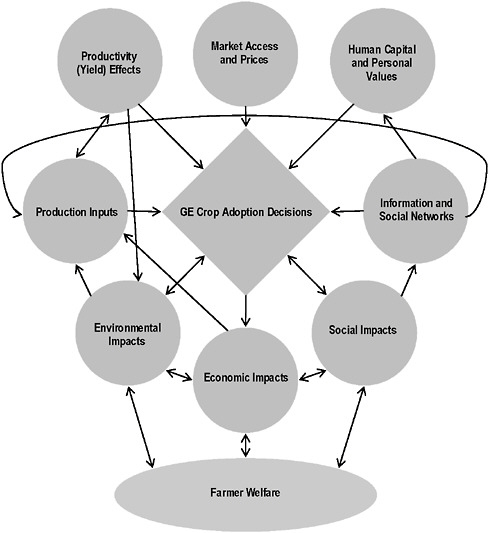
FIGURE 1-1 Genetically engineered crop adoption and impact framework.
GENETICALLY ENGINEERED TRAITS IN CROPS
For agricultural crops, the first generation of genetic engineering has targeted traits that increase the efficacy of pest control. Since the introduction of GE crops, new seeds have provided pest control in one or more of three forms:
-
Herbicide resistance.
-
Insect resistance.
-
Virus resistance.
The terms resistance and tolerance are often used interchangeably in the literature. Tolerance implies that a crop is affected by a pesticide but has a means to naturally survive the potential damage sustained. This report uses the more precise term resistance because altered genes either allow a plant to generate its own insecticide or prevent herbicides from damaging the plant (Roy, 2004).
GE herbicide-resistant (HR) crops contain transgenes that enable survival of exposure to particular herbicides. In the United States, crops are available with GE resistance to glufosinate and glyphosate, but most HR crops grown in the United States are resistant only to glyphosate, a nonselective chemical that has a low impact on the environment. Glyphosate inhibits the enzyme 5-enolpyruvyl-shikimate-3-phosphate synthase (EPSPS), which is part of the shikimate pathway in plants. The shikimate pathway helps produce aromatic amino acids; it is speculated that glyphosate kills a plant either by reducing aromatic amino acid production and adversely affecting protein synthesis or by increasing carbon flow to the glyphosate-inhibited shikimate pathway, causing carbon shortages in other pathways (Duke and Powles, 2008). The susceptibility of EPSPS to the chemical and the relative ease with which it is taken up by a plant make glyphosate an extremely effective herbicide. It presents a low threat of toxicity to animals in general because they do not have a shikimate pathway for protein synthesis (Cerdeira and Duke, 2006). Glyphosate also has low soil and water contamination potential because it binds readily to soil particles and has a relatively short half-life in soil (Duke and Powles, 2008).
Insect-resistant (IR) plants grown in the United States have genetic material from the soil-dwelling bacterium Bacillus thuringiensis (Bt) incorporated into their genome that provides protection against particular insects. Bt produces a family of endotoxins, some of which are lethal to particular species of moths, flies, and beetles. An insect’s digestive tract activates the ingested toxin, which binds to receptors in the midgut; this leads to the formation of pores, cell lysis, and death. Individual Bt toxins have a narrow taxonomic range of action because their binding to midgut receptors is specific; the toxicity of Bt crops to vertebrates and many non-target arthropods and other invertebrates in U.S. agricultural ecosystems is effectively absent. The first Bt crops that were introduced produced only one kind of Bt toxin. More recent varieties produce two or more Bt toxins; this enhances control of some key pests, allows control of a wider array of insects, and can contribute to delaying the evolution of resistance in target pests while reducing refuge size.
Gene sequences of pathogenic viruses have been inserted into crops to confer protection against related viruses—to make them virus-resistant (VR). Most transgenic VR plants resist viruses through gene silencing,
which occurs when transcription of a transgene induces degradation of the genome of an invading virus. Potential unwanted environmental effects of VR crops include exchanges between viral pathogens and transgene products that could increase the virulence of viral pathogens, food allergenicity, and transgene movement through pollen, which can create VR weeds. Adverse environmental effects of commercialized VR plants have not been found (Fuchs and Gonsalves, 2008).
HR and IR crops, having been the principal targets of most efforts to develop GE crop varieties, account for the bulk of acres planted in GE crops in the United States. Consequently, this report focuses on farmers’ experiences with these types of GE crops. HR varieties of soybean, corn, cotton, canola, and sugar beets and IR varieties of corn and cotton were grown commercially in 2009. Herbicide resistance and insect resistance are not mutually exclusive; a number of crop varieties that contain both types of resistance have been developed. GE corn and cotton may also express more than one type of Bt trait. Seeds with multiple GE characteristics are referred to as “stacked cultivars.”
Herbicide resistance and insect resistance were commercialized because of the relative simplicity in gene transfer and the utility for farmers. The expression of those traits requires manipulation of the genetic code at only one site, a relatively straightforward process compared with such traits as drought tolerance, which involve the action of many genes. Furthermore, because corn, soybean, and cotton production accounts for the bulk of pesticide expenditures in the United States (Figure 1-2), herbicide resistance and insect resistance provided important market opportunities. Those GE crops fit easily into the traditional pest-management approach of mainstream U.S. agriculture: reliance on the continual emergence of technological advances to address pest problems, particularly after development of resistance to an earlier innovation. Therefore, the familiarity of the chemicals involved, the size of the market for the seeds of and pesticides for GE crops, and the ease of manipulation of the genes for the traits contributed to HR and IR seeds’ being the first GE products to emerge in large-scale agriculture.
ADOPTION AND DISTRIBUTION OF GENETICALLY ENGINEERED CROPS
Crops with GE traits aimed primarily at pest control have been widely adopted in the United States by farmers of corn, cotton, soybean, canola, and sugar beet and have caused substantial changes in farm-management practices and inputs, such as changes in pesticide use. In 2009, almost half of U.S. cropland was planted with GE seed, even though the technology had been available to farmers only since the mid-1990s and only a few
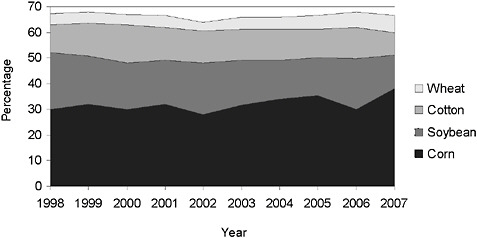
FIGURE 1-2 Share of major crops in total pesticide expenditures, 1998–2007.
NOTE: Includes expenditures in herbicides, insecticides, and fungicides. Genetically engineered trait technology fees are not included.
SOURCE: Fernandez-Cornejo et al., 2009.
crops have experienced commercial success (USDA-NASS, 2009b). U.S. farmers planted 158 million acres of GE crops in 2009—nearly half of all the GE-crop acres in the world (James, 2009). Rates of adoption have been influenced by the type of crop, the trait expressed in the crop, and the pest pressures occurring on the farm. For example, adoption of cultivars with Bt traits has been most rapid and widespread in areas prone to insect infestations that can be curbed by the endotoxins present in GE crops.
The committee chose to concentrate its study on the farm-level effects of GE soybean, corn, and cotton because these crops are grown on nearly half of U.S. cropland (USDA-NASS, 2009b) and because over 80 percent of these crops are genetically engineered (Figure 1-3). The high level of adoption and the large-scale planting of those crops mean they have a substantially greater cumulative impact on farm-level sustainability compared to other GE crops, which may be widely adopted but are planted on few acres or may be adopted by only a small percentage of growers. Additionally, there are GE crops that have been commercialized but were not sold in 2009 for business or legal reasons. Those crops are discussed in the report, but they are not its primary focus (Box 1-2).
Soybean
Soybean resistant to the herbicide glyphosate was first introduced in the United States in 1996. Just 4 years later, the GE cultivars accounted for
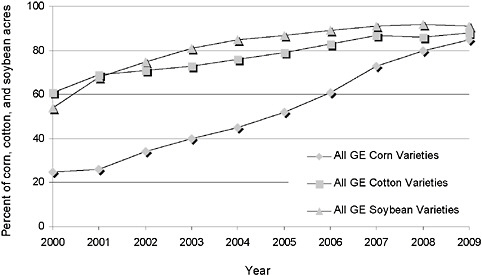
FIGURE 1-3 Nationwide acreage of genetically engineered soybean, corn, and cotton as a percentage of all acreage of these crops.
SOURCE: USDA-NASS, 2001, 2003, 2005, 2007, 2009b.
54 percent of all soybean acres planted (Table 1-1). A major factor in the rapid adoption was the superior control of a broad spectrum of weeds, including many problematic weeds, with a single timely application of glyphosate, especially in northern latitudes (Corrigan and Harvey, 2000; Mulugeta and Boerboom, 2000; Wiesbrook et al., 2001; Bradley et al., 2007). Other factors contributing to the rapid early adoption were the perceived simplicity and the relative safety of use (one application with a single herbicide compared with tank-mixed herbicides applied twice or more), lack of crop injury, lack of residual soil activity and potential injury to a succeeding crop, and the relatively low cost of glyphosate (Scursoni et al., 2006). Weeds resistant to glyphosate evolved in other instances, which required additional herbicides to be applied with glyphosate—roughly 25 percent of the acreage in some regions (Dill et al., 2008)—probably in an effort to prevent the evolution of such weeds. Despite that development in some regions, growers continued to adopt glyphosate-resistant varieties, as indicated by the fact that 91 percent of the acreage was planted to HR varieties in 2009 (Table 1-1). Adoption of HR soybean has been widespread in all regions since the early-adoption phase, and almost all soybean-producing states now hover around 90 percent adoption (Table 1-1, Figure 1-4).
|
BOX 1-2 Other Commercialized Genetically Engineered Crops GE varieties of crops other than corn, soybean, and cotton have been developed and produced in the United States. However, some are planted on relatively small acreage and often in specific locations (for example, papaya in Hawaii), and others are no longer available commercially (for example, GE potato). These are highlighted below, but they are not the focus of the report because those in production account for only a small percentage of U.S. agriculture in terms of land and revenue, and those not commercially available were only sold for a short time. The latter demonstrates commercial viability can depend on the willingness of farmers to adopt the product and the willingness of processors and consumers to accept it. Minor Crops Widely Planted in Genetically Engineered Varieties by U.S. Farmers Canola. Canola is widely grown in Canada but is a minor crop in the United States. HR canola was commercialized in the mid-1990s. Since 2005, HR canola has accounted for almost half the acres planted in North Dakota, which makes up more than 87 percent of U.S. canola (USDA-NASS, 2009b). GE glyphosate-resistant and glufosinate-resistant canola cultivars accounted for 65 percent and 32 percent of the canola acres planted in the United States in 2006 (Howatt, personal communication). Sugar beet. HR sugar beet was approved for commercial use in 1998, but concerns about marketplace acceptance precluded the commercial release of the transgenic cultivars (Duke, 2005). Transgenic glyphosate-resistant sugar beet was commercially grown in 2009 and reportedly was widely adopted (Stachler, personal communication). Economic studies suggested that the transgenic cultivars would improve profitability compared with conventional cultivars (Kniss et al., 2004; Gianessi, 2005). The potential for hybridization between HR sugar beet and weedy beet that occurs in the fields and nearby has led to concerns about future weed problems in Europe (where GE sugar beet is not commercialized), but hybridization is a minor problem in the United States (Stewart et al., 2003; Andersen et al., 2005). Indeed, spatial overlap between sugar beet production and weedy beet is limited to a few California counties (Calflora, 2009). Papaya. Papaya is a small tree grown throughout the tropics for its fruit. Researchers at Cornell University and the University of Hawaii developed VR papaya by transforming the coat protein gene of the |
|
papaya ringspot virus to confer resistance against this devastating pathogen (Fuchs and Gonsalves, 2008). Transgenic papaya was first planted in 1998 in Hawaii, where it has contributed to sustaining the culture of this fruit. About 80 percent of papaya production in Hawaii is from transgenic plants (Fuchs and Gonsalves, 2008; Stokstad, 2008). Minor Crops with Genetically Engineered Varieties Not Widely Adopted by U.S. Farmers Squash. Transgenic VR squash lines were transformed with the coat protein genes of the watermelon mosaic virus, zucchini yellow mosaic virus, and cucumber mosaic virus (Fuchs and Gonsalves, 2008). The ZW-20 squash line is resistant to the watermelon and zucchini yellow mosaic viruses, and CZW-3 resists the watermelon, zucchini yellow, and cucumber mosaic viruses. ZW-20 and CZW-3 were deregulated in 1994 and 1996, respectively, and commercially grown soon thereafter. Those lines were also crossed to other squash cultivars to produce new lines of VR squash. Transgenic squash accounted for about 12 percent of total U.S. squash production in 2005. Most acreage of transgenic squash is in New Jersey, Florida, Georgia, South Carolina, and Tennessee (Fuchs and Gonsalves, 2008). Sweet corn. Sweet corn was planted on 617,350 acres in 2008 (USDA-NASS, 2009a). A little less than half, or 246,600 acres, were planted for the fresh market; sweet corn from the remaining acres was for processing. Of the fresh market acres, about 20,000 were planted to GE varieties with high Bt protection against corn earworm and European corn borer and moderate protection against fall armyworm (see Table 1-2; Lynch et al., 1999; Mason, personal communication). Bt sweet corn varieties are typically marketed directly to the consumer; processors have been reluctant to purchase sweet corn with GE traits because possible consumer aversion to GE crops could negatively affect purchases of other products under their brand names (Bradford and Alston, 2004). Commercialized Bt sweet corn also has been engineered to resist glufosinate; however, glufosinate is not registered for use with Bt sweet corn because of concerns about consumer acceptance (Fennimore and Doohan, 2008). Commercialized Genetically Engineered Crops Not Presently Available Tomato.a The Flavr Savr tomato, developed by the company Calgene, was commercialized in 1994. The genetics of the tomato were engineered to slow the softening of the vegetable during ripening. The trait was developed in a tomato variety usually used for processing. However, a public opposition |
|
campaign against GE tomatoes caused some large processors to refuse to purchase the Flavr Savr variety for their products. In response, Calgene tried to sell the variety as a fresh-market tomato, but the vegetable bruised easily. That characteristic caused problems in production, transportation, and distribution. Furthermore, the Flavr Savr did not taste better than its cheaper competitors. Production of the variety was discontinued. Another GE tomato, developed for processing by the company Zeneca, was grown in California in the mid-1990s. Those tomatoes had a similar GE trait for delayed ripening and were processed into tomato paste for sale in the United Kingdom. However, consumer opposition to GE products caused Zeneca to discontinue the sale of the tomato paste in 1999. Potato. A Bt potato resistant to the Colorado potato beetle was commercialized in 1995. Three years later, the technology developer, Monsanto, introduced a stacked variety that combined the Bt trait with virus resistance. Researchers found the Bt trait protected the potato from insect damage at all stages of the beetle’s life (Perlak et al., 1993), and Monsanto scientists noted a large potential for reduction in the use of pesticides to treat insect and virus problems (Kaniewski and Thomas, 2004). However, Monsanto discontinued the sale of GE potatoes in 2001. The cultivars failed to capture more than 2–3 percent of the market for two reasons. First, a new insecticide that controlled the Colorado potato beetle and other pests came on the market at around the same time as GE potatoes; most farmers chose the insecticide over the GE trait (Nesbitt, 2005). Second, potato processors experienced a public-pressure campaign against the use of GE potatoes (Kilman, 2000; Kaniewski and Thomas, 2004). As food companies pledged to use non-GE potatoes in their products, farmers responded to processors’ contracts for conventional varieties. Thus, although GE potatoes were technologically successful, they did not survive in the marketplace. Alfalfa. Alfalfa is an important crop in the United States and is widely cultivated over a broad geographic range (USDA-NASS, 2009b). GE glyphosate-resistant alfalfa was commercialized in 2005, and about 198,000 acres was planted in 2006 (Weise, 2007). However, legal action over concerns about the risk of introgression of the transgene into nontransgenic alfalfa and the inability to mitigate this risk resulted in the termination of further seed sales and planting of glyphosate-resistant alfalfa (Charles, 2007) until USDA completed an environmental impact statement. That statement was released for public comment in December 2009. |
TABLE 1-1 Percentage of Soybean Acres in Genetically Engineered Soybean Varieties, by State and United States, 2000–2009
|
State |
Herbicide-Resistant Soybean |
|||||||||
|
2000 |
2001 |
2002 |
2003 |
2004 |
2005 |
2006 |
2007 |
2008 |
2009 |
|
|
Percent of all soybean planted |
||||||||||
|
Arkansas |
43 |
60 |
68 |
84 |
92 |
92 |
92 |
92 |
94 |
94 |
|
Illinois |
44 |
64 |
71 |
77 |
81 |
81 |
87 |
88 |
87 |
90 |
|
Indiana |
63 |
78 |
83 |
88 |
87 |
89 |
92 |
94 |
96 |
94 |
|
Iowa |
59 |
73 |
75 |
84 |
89 |
91 |
91 |
94 |
95 |
94 |
|
Kansas |
66 |
80 |
83 |
87 |
87 |
90 |
85 |
92 |
95 |
94 |
|
Michigan |
50 |
59 |
72 |
73 |
75 |
76 |
81 |
87 |
84 |
83 |
|
Minnesota |
46 |
63 |
71 |
79 |
82 |
83 |
88 |
92 |
91 |
92 |
|
Mississippi |
48 |
63 |
80 |
89 |
93 |
96 |
96 |
96 |
97 |
94 |
|
Missouri |
62 |
69 |
72 |
83 |
87 |
89 |
93 |
91 |
92 |
89 |
|
Nebraska |
72 |
76 |
85 |
86 |
92 |
91 |
90 |
96 |
97 |
96 |
|
North Dakota |
22 |
49 |
61 |
74 |
82 |
89 |
90 |
92 |
94 |
94 |
|
Ohio |
48 |
64 |
73 |
74 |
76 |
77 |
82 |
87 |
89 |
83 |
|
South Dakota |
68 |
80 |
89 |
91 |
95 |
95 |
93 |
97 |
97 |
98 |
|
Wisconsin |
51 |
63 |
78 |
84 |
82 |
84 |
85 |
88 |
90 |
85 |
|
Other statesa |
54 |
64 |
70 |
76 |
82 |
84 |
86 |
86 |
87 |
87 |
|
United States |
54 |
68 |
75 |
81 |
85 |
87 |
89 |
91 |
92 |
91 |
|
aIncludes all other states in soybean estimating program. SOURCE: USDA-NASS, 2001, 2003, 2005, 2007, 2009b. |
||||||||||
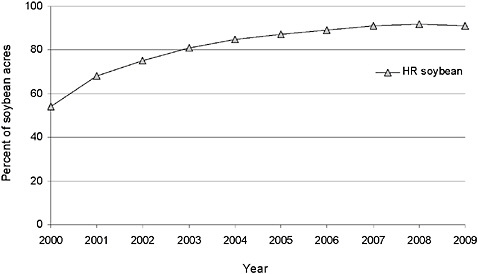
FIGURE 1-4 Herbicide-resistant soybean acreage trends nationwide.
SOURCE: USDA-NASS, 2001, 2003, 2005, 2007, 2009b.
Corn
The first GE variety of corn, which was commercialized in 1996, expressed a Bt toxin that targeted European corn borer, southwestern corn borer, and several other pests (see Table 1-2). GE corn with resistance to glyphosate was released in 1997, followed by a variety with resistance to glufosinate in the next year (Dill, 2005). An IR variety with a different Bt toxin to combat corn rootworm (Diabrotica spp.) was introduced in 2003.
Adoption of HR corn proved slower than that of soybean: Only 8 percent of the acreage was planted to HR corn in 2001 (Table 1-3, Figure 1-5). The low adoption rate of HR corn in 2001 was consistent among all U.S. regions. The narrow window of time for glyphosate application to be effective against early-season weed pressure in corn may have deterred farmer adoption (Tharp and Kells, 1999; Johnson et al., 2000; Gower et al., 2003; Kneževič et al., 2003; Dalley et al., 2004; Cox et al., 2005). Growers probably relied on traditional strategies for preemergence herbicide weed control rather than risk missing the glyphosate application window and ending up with weedier fields and reduced corn yields. Furthermore, lack of market access for HR corn to the European Union provided an added deterrent against early adoption of HR corn in the late 1990s and early 2000s.
TABLE 1-2 Insect Pests of Corn Targeted by Bt Varieties
TABLE 1-3 Percentage of Corn Acres in Genetically Engineered Corn Varieties, by State and United States, 2000–2009
|
State |
Insect-Resistant (Bt) Only |
|||||||||
|
2000 |
2001 |
2002 |
2003 |
2004 |
2005 |
2006 |
2007 |
2008 |
2009 |
|
|
Percent of all corn planted |
||||||||||
|
Illinois |
13 |
12 |
18 |
23 |
26 |
25 |
24 |
19 |
13 |
10 |
|
Indiana |
7 |
6 |
7 |
8 |
11 |
11 |
13 |
12 |
7 |
7 |
|
Iowa |
23 |
25 |
31 |
33 |
36 |
35 |
32 |
22 |
16 |
14 |
|
Kansas |
25 |
26 |
25 |
25 |
25 |
23 |
23 |
25 |
25 |
24 |
|
Michigan |
8 |
8 |
12 |
18 |
15 |
15 |
16 |
19 |
15 |
13 |
|
Minnesota |
28 |
25 |
29 |
31 |
35 |
33 |
28 |
26 |
19 |
23 |
|
Missouri |
20 |
23 |
27 |
32 |
32 |
37 |
38 |
30 |
27 |
23 |
|
Nebraska |
24 |
24 |
34 |
36 |
41 |
39 |
37 |
31 |
27 |
26 |
|
North Dakotaa |
|
|
|
|
|
21 |
29 |
29 |
24 |
22 |
|
Ohio |
6 |
7 |
6 |
6 |
8 |
9 |
8 |
9 |
12 |
15 |
|
South Dakota |
35 |
30 |
33 |
34 |
28 |
30 |
20 |
16 |
7 |
6 |
|
Texasa |
|
|
|
|
|
21 |
27 |
22 |
20 |
21 |
|
Wisconsin |
13 |
11 |
15 |
21 |
22 |
22 |
22 |
19 |
14 |
13 |
|
Other statesb |
10 |
11 |
14 |
17 |
19 |
19 |
20 |
20 |
20 |
20 |
|
United States |
18 |
18 |
22 |
25 |
27 |
26 |
25 |
21 |
17 |
17 |
|
State |
Stacked-Gene Varieties |
|||||||||
|
2000 |
2001 |
2002 |
2003 |
2004 |
2005 |
2006 |
2007 |
2008 |
2009 |
|
|
Percent of all corn planted |
||||||||||
|
Illinois |
1 |
1 |
1 |
1 |
2 |
5 |
19 |
40 |
52 |
59 |
|
Indiana |
1 |
2 |
4 |
12 |
30 |
55 |
55 |
|||
|
Iowa |
2 |
1 |
3 |
4 |
8 |
11 |
18 |
37 |
53 |
57 |
|
Kansas |
1 |
1 |
2 |
5 |
5 |
10 |
12 |
21 |
35 |
38 |
|
Michigan |
2 |
2 |
3 |
4 |
5 |
10 |
19 |
33 |
42 |
|
|
Minnesota |
2 |
4 |
4 |
7 |
11 |
11 |
16 |
28 |
40 |
41 |
|
Missouri |
2 |
1 |
2 |
1 |
4 |
6 |
7 |
13 |
22 |
37 |
|
Nebraska |
2 |
2 |
4 |
5 |
6 |
12 |
15 |
25 |
35 |
42 |
|
North Dakotaa |
|
|
|
|
|
15 |
20 |
22 |
31 |
41 |
|
Ohio |
1 |
2 |
5 |
20 |
37 |
35 |
||||
|
South Dakota |
2 |
3 |
10 |
17 |
21 |
22 |
34 |
43 |
58 |
65 |
|
Texasa |
|
|
|
|
|
9 |
13 |
20 |
27 |
33 |
|
Wisconsin |
1 |
1 |
2 |
2 |
2 |
6 |
10 |
22 |
35 |
37 |
|
Other statesb |
1 |
1 |
2 |
2 |
6 |
6 |
10 |
14 |
22 |
28 |
|
United States |
1 |
1 |
2 |
4 |
6 |
9 |
15 |
28 |
40 |
46 |
|
*Less than 1%. aEstimates published individually beginning in 2005. bIncludes all other states in corn estimating program. SOURCE: USDA-NASS, 2001, 2003, 2005, 2007, 2009b. |
||||||||||
|
Herbicide-Resistant Only |
|||||||||
|
2000 |
2001 |
2002 |
2003 |
2004 |
2005 |
2006 |
2007 |
2008 |
2009 |
|
Percent of all corn planted |
|||||||||
|
3 |
3 |
3 |
4 |
5 |
6 |
12 |
15 |
15 |
15 |
|
4 |
6 |
6 |
7 |
8 |
11 |
15 |
17 |
16 |
17 |
|
5 |
6 |
7 |
8 |
10 |
14 |
14 |
19 |
15 |
15 |
|
7 |
11 |
15 |
17 |
24 |
30 |
33 |
36 |
30 |
29 |
|
4 |
7 |
8 |
14 |
14 |
20 |
18 |
22 |
24 |
20 |
|
7 |
7 |
11 |
15 |
17 |
22 |
29 |
32 |
29 |
24 |
|
6 |
8 |
6 |
9 |
13 |
12 |
14 |
19 |
21 |
17 |
|
8 |
8 |
9 |
11 |
13 |
18 |
24 |
23 |
24 |
23 |
|
|
|
|
|
|
39 |
34 |
37 |
34 |
30 |
|
3 |
4 |
3 |
3 |
4 |
7 |
13 |
12 |
17 |
17 |
|
11 |
14 |
23 |
24 |
30 |
31 |
32 |
34 |
30 |
25 |
|
|
|
|
|
|
42 |
37 |
37 |
31 |
30 |
|
4 |
6 |
9 |
9 |
14 |
18 |
18 |
23 |
26 |
27 |
|
6 |
8 |
12 |
17 |
21 |
19 |
25 |
33 |
32 |
30 |
|
6 |
7 |
9 |
11 |
14 |
17 |
21 |
24 |
23 |
22 |
|
All GE Varieties |
|||||||||
|
2000 |
2001 |
2002 |
2003 |
2004 |
2005 |
2006 |
2007 |
2008 |
2009 |
|
Percent of all corn planted |
|||||||||
|
17 |
16 |
22 |
28 |
33 |
36 |
55 |
74 |
80 |
84 |
|
11 |
12 |
13 |
16 |
21 |
26 |
40 |
59 |
78 |
79 |
|
30 |
32 |
41 |
45 |
54 |
60 |
64 |
78 |
84 |
86 |
|
33 |
38 |
43 |
47 |
54 |
63 |
68 |
82 |
90 |
91 |
|
12 |
17 |
22 |
35 |
33 |
40 |
44 |
60 |
72 |
75 |
|
37 |
36 |
44 |
53 |
63 |
66 |
73 |
86 |
88 |
88 |
|
28 |
32 |
34 |
42 |
49 |
55 |
59 |
62 |
70 |
77 |
|
34 |
34 |
46 |
52 |
60 |
69 |
76 |
79 |
86 |
91 |
|
|
|
|
|
|
75 |
83 |
88 |
89 |
93 |
|
9 |
11 |
9 |
9 |
13 |
18 |
26 |
41 |
66 |
67 |
|
48 |
47 |
66 |
75 |
79 |
83 |
86 |
93 |
95 |
96 |
|
|
|
|
|
|
72 |
77 |
79 |
78 |
84 |
|
18 |
18 |
26 |
32 |
38 |
46 |
50 |
64 |
75 |
77 |
|
17 |
20 |
27 |
36 |
46 |
44 |
55 |
67 |
74 |
78 |
|
25 |
26 |
34 |
40 |
47 |
52 |
61 |
73 |
80 |
85 |
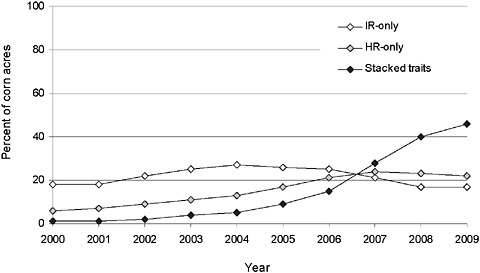
FIGURE 1-5 Genetically engineered corn acreage trends nationwide.
SOURCE: USDA-NASS, 2001, 2003, 2005, 2007, 2009b.
Variable insect pressure also delayed the adoption of IR corn, and this resulted in planting of only 19 percent of the acreage to IR corn in 2001 (Table 1-3, Figure 1-5). European corn borer is a key pest in the western Corn Belt region (Pilcher et al., 2002; Hyde et al., 2003; Mungai et al., 2005) but causes only a sporadic problem in the eastern Corn Belt region (Baute et al., 2002; Ma and Subedi, 2005; Cox et al., 2009). Consequently, IR corn acreage ranged from 23 to 30 percent in Iowa, Kansas, Minnesota, Missouri, Nebraska, and South Dakota but from 6 to 11 percent in Indiana, Michigan, Ohio, and Wisconsin in 2001 (Table 1-3). Farmers in regions without consistent corn borer infestations probably chose not to adopt IR corn.
In 2002, stacked hybrids were introduced, and this led to a further increase in acreage of GE corn. The increasing rate of adoption of stacked hybrids—2 percent in 2002 and 46 percent in 2009, with all major corn states above 30 percent (Table 1-3)—reflects the popularity of these traits and the lack of nonstacked GE traits in the seed marketplace. By 2009, 85 percent of U.S. corn acreage was planted with some type of GE seed; more than half these acres were in stacked varieties (Figure 1-5). In addition, by 2009, all major corn-growing states had GE acreage exceeding 70 percent except Ohio (67 percent); thus, adoption of IR corn is no longer region-specific (Table 1-3). Farmers’ preference for multiple traits explains in part the lower rates of adoption of HR-only and IR-only varieties of corn compared with the rates of adoption of HR soybean (Figure 1-4).
Corn rootworm is a destructive and consistent pest in all regions of the United States that have continuous corn fields (and in some regions where corn is planted in fields after soybean). Bt corn for control of corn rootworm, especially western corn rootworm, has contributed to increased acreage of GE corn since its introduction in 2003 because growers preferred IR corn to the use of soil-applied insecticides or the use of insecticide and fungicide applied to seed at 1.25 mg of active ingredient1 per seed. Bt corn hybrid seed for corn rootworm control is sold with only 0.25 mg of active ingredient per seed of insecticide and fungicide for control of secondary pests2 and soil-borne pathogens. Growers can choose to add this feature for an additional cost to non-GE or HR corn hybrid seed. Thus, GE corn with the Bt trait for corn rootworm control and lower levels of seed-applied insecticide and fungicide substituted for the control tactics in continuous corn in the 1980s and 1990s of soil-applied insecticides for rootworm control and seed-applied products with higher toxicity3 for secondary pest control, which growers had to manually apply to the seed. In-plant resistance for rootworm control with low levels of insecticide already applied to the seed by professional seed handlers for control of secondary corn pests is safer for the farmers who plant the crops and for the environment.
Cotton
Commercialized in 1996, IR cotton rapidly gained substantial market share because of its control of tobacco budworm, pink bollworm, and cotton bollworm (Table 1-4). GE glyphosate-resistant cotton, introduced in 1997, also proved popular with farmers because weed management has traditionally been more challenging in cotton than in many other field crops (Jost et al., 2008). The stacked Bt-glyphosate–resistant variety was introduced in 1997. By 2001, GE cotton had captured 69 percent of the acreage: 32 percent HR-only, 13 percent IR-only, and 24 percent stacked varieties (Table 1-5, Figure 1-6). Farmers in the southeast Cotton Belt adopted GE varieties more rapidly (78–91 percent in Arkansas, Georgia, Louisiana, Mississippi, and North Carolina) compared with those in Texas (49 percent) and California (40 percent), reflecting the lower insect pres-
TABLE 1-4 Insect Pests of Cotton Targeted by Bt Varieties
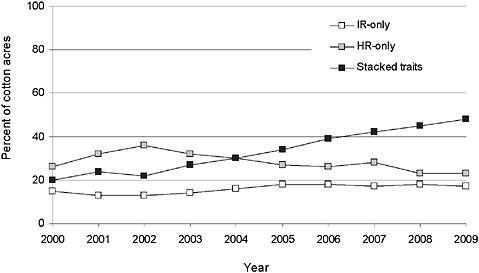
FIGURE 1-6 Genetically engineered cotton acreage trends nationwide.
SOURCE: USDA-NASS, 2001, 2003, 2005, 2007, 2009b.
sure in the latter two states, especially California (only 11 percent IR and 2 percent stacked varieties).
A new HR variety introduced in 2006 provided growers with a wider window for glyphosate application and the possibility of using higher glyphosate dosages (Mills et al., 2008). At around the same time, IR cotton with two Bt endotoxins was commercialized and offered improved control of cotton bollworm, increased protection against such secondary pests as beet armyworm and soybean looper, and advantages in resistance management (Mills et al., 2008; Siebert et al., 2008). The introduction of the improved traits alone or in stacked cultivars contributed to the increase in GE cotton to 88 percent in 2009: 23 percent HR-only, 17 percent IR-only, and 48 percent stacked (Table 1-5). As in 2001, farmers in the southeastern states had a higher adoption rate of GE cotton in 2009 (91 percent or greater) than Texas (81 percent) and California (73 percent). Pink boll-worm and cotton bollworm are not major insect pests in California, so adoption of IR cotton (8 percent) and stacked varieties (11 percent) are particularly low; HR cotton (54 percent) makes up most of GE cotton in California.
An Early Portrait of Farmers Who Adopt Genetically Engineered Crops
A study of cotton farmers’ planting decisions in four southeastern U.S. states in 1996 and 1997 provided early evidence on the various factors that influenced the choice to adopt transgenic cotton (Marra et al., 2001). The growers were asked about their human capital (stock of knowledge and ability), farm-specific characteristics, reasons for adopting or not adopting Bt cotton in 1996, and the pest-control regimens that they used on both their conventional and their Bt cotton acres (if applicable), including amounts and types of insecticides applied and their costs. Comparing the farmers’ actions on fields planted to Bt and non-Bt cotton on the same farm controlled for variation in management, land quality, and machinery complement.
The study found that one measure of human capital that was associated with a higher likelihood of adopting Bt cotton was experience (number of years of growing cotton). The age of the farmer was not significant. The propensity to adopt because of higher profit potential of genetic-engineering technology—related to higher yields, decreased costs, or both—was also affirmed by the responding farmers. They reported higher yields on their Bt acres than on their non-Bt acres (6.58 lb/acre more on fields with Bt cotton than those without in the Upper South and 16.43 lb/acre more in the Lower South) and large reductions in pesticide costs in both regions (about $6.00/acre less for fields with Bt cotton in the
TABLE 1-5 Percentage of Cotton Acres in Genetically Engineered Upland Cotton Varieties, by State and United States, 2000–2009
|
State |
Insect-Resistant (Bt) Only |
|||||||||
|
2000 |
2001 |
2002 |
2003 |
2004 |
2005 |
2006 |
2007 |
2008 |
2009 |
|
|
Percent of all upland cotton planted |
||||||||||
|
Alabamaa |
|
|
|
|
|
10 |
10 |
10 |
18 |
13 |
|
Arkansas |
33 |
21 |
27 |
24 |
34 |
42 |
28 |
32 |
30 |
28 |
|
California |
3 |
11 |
6 |
9 |
6 |
8 |
9 |
4 |
7 |
8 |
|
Georgia |
18 |
13 |
8 |
14 |
13 |
29 |
19 |
17 |
19 |
20 |
|
Louisiana |
37 |
30 |
27 |
30 |
26 |
21 |
13 |
17 |
19 |
20 |
|
Mississippi |
29 |
10 |
19 |
15 |
16 |
14 |
7 |
16 |
19 |
14 |
|
Missouria |
|
|
|
|
|
20 |
32 |
13 |
12 |
18 |
|
North Carolina |
11 |
9 |
14 |
16 |
18 |
17 |
19 |
13 |
19 |
15 |
|
Tennesseea |
|
|
|
|
|
13 |
16 |
10 |
10 |
7 |
|
Texas |
7 |
8 |
7 |
8 |
10 |
14 |
18 |
16 |
16 |
15 |
|
Other statesb |
17 |
18 |
19 |
18 |
22 |
18 |
21 |
27 |
22 |
24 |
|
United States |
15 |
13 |
13 |
14 |
16 |
18 |
18 |
17 |
18 |
17 |
|
State |
Stacked-Gene Varieties |
|||||||||
|
2000 |
2001 |
2002 |
2003 |
2004 |
2005 |
2006 |
2007 |
2008 |
2009 |
|
|
Percent of all upland cotton planted |
||||||||||
|
Alabamaa |
|
|
|
|
|
54 |
60 |
60 |
65 |
60 |
|
Arkansas |
14 |
28 |
26 |
46 |
45 |
42 |
45 |
47 |
64 |
64 |
|
California |
4 |
2 |
1 |
3 |
7 |
5 |
8 |
6 |
8 |
11 |
|
Georgia |
32 |
29 |
30 |
47 |
58 |
55 |
64 |
68 |
73 |
70 |
|
Louisiana |
30 |
47 |
49 |
46 |
60 |
64 |
68 |
68 |
73 |
63 |
|
Mississippi |
36 |
61 |
47 |
61 |
58 |
59 |
69 |
62 |
66 |
63 |
|
Missouria |
|
|
|
|
|
16 |
25 |
23 |
19 |
51 |
|
North Carolina |
36 |
38 |
45 |
48 |
46 |
54 |
60 |
64 |
62 |
68 |
|
Tennesseea |
|
|
|
|
|
75 |
67 |
71 |
73 |
80 |
|
Texas |
6 |
6 |
4 |
6 |
8 |
14 |
18 |
28 |
31 |
35 |
|
Other statesb |
36 |
33 |
32 |
38 |
45 |
46 |
45 |
42 |
48 |
49 |
|
United States |
20 |
24 |
22 |
27 |
30 |
34 |
39 |
42 |
45 |
48 |
|
aEstimates published individually beginning in 2005. bIncludes all other states in upland cotton estimating program. SOURCE: USDA-NASS, 2001, 2003, 2005, 2007, 2009b. |
||||||||||
Upper South and about $10.00/acre less in the Lower South). Similarly, farmers who had previously experienced a high degree of pest infestation or pest resistance to currently used pesticides were more inclined to grow Bt cotton. Adopters reported higher past boll damage (7 percent higher on average compared with nonadopters) and higher incidence of past pest resistance to conventional insecticides (31 percent reported pest resistance
|
Herbicide-Resistant Only |
|||||||||
|
2000 |
2001 |
2002 |
2003 |
2004 |
2005 |
2006 |
2007 |
2008 |
2009 |
|
Percent of all upland cotton planted |
|||||||||
|
|
|
|
|
|
28 |
25 |
25 |
15 |
18 |
|
23 |
29 |
37 |
25 |
15 |
12 |
21 |
16 |
4 |
5 |
|
17 |
27 |
26 |
27 |
39 |
40 |
40 |
51 |
45 |
54 |
|
32 |
43 |
55 |
32 |
23 |
11 |
13 |
10 |
5 |
7 |
|
13 |
14 |
9 |
15 |
7 |
10 |
13 |
11 |
6 |
10 |
|
13 |
15 |
22 |
16 |
23 |
23 |
22 |
19 |
13 |
16 |
|
|
|
|
|
|
59 |
40 |
63 |
68 |
29 |
|
29 |
37 |
27 |
29 |
27 |
24 |
19 |
16 |
14 |
13 |
|
|
|
|
|
|
8 |
10 |
17 |
14 |
10 |
|
33 |
35 |
40 |
39 |
40 |
35 |
34 |
36 |
31 |
31 |
|
21 |
33 |
35 |
32 |
24 |
24 |
24 |
20 |
20 |
17 |
|
26 |
32 |
36 |
32 |
30 |
27 |
26 |
28 |
23 |
23 |
|
All GE Varieties |
|||||||||
|
2000 |
2001 |
2002 |
2003 |
2004 |
2005 |
2006 |
2007 |
2008 |
2009 |
|
Percent of all upland cotton planted |
|||||||||
|
|
|
|
|
|
92 |
95 |
95 |
98 |
91 |
|
70 |
78 |
90 |
95 |
94 |
96 |
94 |
95 |
98 |
97 |
|
24 |
40 |
33 |
39 |
52 |
53 |
57 |
61 |
60 |
73 |
|
82 |
85 |
93 |
93 |
94 |
95 |
96 |
95 |
97 |
97 |
|
80 |
91 |
85 |
91 |
93 |
95 |
94 |
96 |
98 |
93 |
|
78 |
86 |
88 |
92 |
97 |
96 |
98 |
97 |
98 |
93 |
|
|
|
|
|
|
95 |
97 |
99 |
99 |
98 |
|
76 |
84 |
86 |
93 |
91 |
95 |
98 |
93 |
95 |
96 |
|
|
|
|
|
|
96 |
93 |
98 |
97 |
97 |
|
46 |
49 |
51 |
53 |
58 |
63 |
70 |
80 |
78 |
81 |
|
74 |
84 |
86 |
88 |
91 |
88 |
90 |
89 |
90 |
90 |
|
61 |
69 |
71 |
73 |
76 |
79 |
83 |
87 |
86 |
88 |
compared with 18 percent of nonadopters in the combined sample). Those findings on human capital, yields, and the influence of pest problems are in accord with the explanations for adoption put forth by the diffusion and threshold theories.
Farm characteristics can also play a role in the decision to adopt a new technology. If the technology requires a high initial investment (such as
for new machinery), farmers with more acres over which to spread the fixed costs might be more likely to adopt. Although the production technology itself is considered to be scale-neutral (i.e., the technology should not have differential impacts based on the size of the farm operation into which it is adopted), adopters in the study in both regions tended to have much larger farms and to farm more cotton acres than nonadopters; this supports the idea that the costs of learning may not be scale-neutral and thus that there is a possibility that differential farm-level social impacts have been associated with the adoption of GE crops (explained further in Chapter 4).
In 2001, farmers in Indiana, Illinois, Iowa, Minnesota, and Nebraska were surveyed to analyze the differences between adopters and non-adopters in farm and farmer characteristics (Wilson et al., 2005). The responses revealed that farmers growing corn on farms of less than 160 acres planted a greater percentage to GE corn for European corn borer control (54.5 percent) than farmers growing corn on farms of over 520 acres (39.2 percent). The same small–large differential held for aerial application of an insecticide (73.8 percent of farmers with less than 160 acres versus 57.3 percent with more than 520 acres); this suggests that smaller farmers place greater reliance on both chemical and GE controls of European corn borer than larger farmers. Just over one-fifth of the farmers (21.1 percent) reported a yield increase with the use of transgenic corn for European corn borer in all five states, from 11.2 percent in Indiana to 29.9 percent in Minnesota; 2.8 percent reported a yield decrease; and the rest reported no change in yield or that they did not know if there was a change or not. The surveyed farmers’ greatest concerns were the ability to sell GE grain (59.3 percent), a market-access factor, and the additional technology fee (57.3 percent), a production-input factor that affected profits. Finally, the responding farmers indicated that a reduction in exposure to chemical insecticide (69.9 percent of the farmers), a personal health concern, and a reduction in insecticides in the environment (68.5 percent), a personal value, were the primary benefits of transgenic corn.
A more recent study of GE-crop adoption pertains to soybean (Marra et al., 2004). Table 1-6 presents the average total number of operated acres, the proportion of operated acres owned, age, education, and income (by category) for the different classes of adopters with the results of pairwise t-test results. The t-test results show that adopters (both partial and full) in this survey tended to be younger and operated more acres than non-adopters. Income, education, and percentage of operated acres the farmer owned do not show statistically significant differences among classes of adopters (Marra et al., 2004).
The importance of social networks in influencing patterns of adoption of GE crops has been highlighted in another recent study of the
TABLE 1-6 National Soybean Survey Descriptive Statistics by Adoption Category
adoption of Bt corn in the Midwest. It described how farmers, whom the author of the study termed reflexive producers, negotiate between the advice and claims of experts, who do not farm, and local forms of knowledge that are conveyed by members of farmer networks. The study found that farmers’ determination of whether pest problems that require the use of Bt corn exist depended more on local than on expert knowledge (Kaup, 2008).
DETERRENTS TO GENETICALLY ENGINEERED TRAIT DEVELOPMENT IN OTHER CROPS
Soybean, corn, and cotton represent a substantial number of acres planted in the United States, but they do not reflect the diversity of American agriculture. GE varieties have not been developed by private firms for most U.S. crops, in part because the small markets for these crops will not generate sufficient returns on the necessary investment in research, technology commercialization, and marketing infrastructure. Furthermore, concern about selling food with GE-derived ingredients in some markets and the resistance of some grower organizations have limited the commercial application of genetic-engineering technology to just a few crops.
Market Conditions Influencing the Commercialization of Genetically Engineered Varieties
Most research in and development of GE crops are conducted by private firms. Private companies must produce profits for their shareholders, so the marketability of a crop plays a determining role in decisions as to which GE crops are brought to commercialization. Market size, trait value, regulatory costs, environmental concerns, and technology access influence biotechnology firms’ decisions to develop and sell GE seeds.
The market for seeds must be large enough to warrant the investment in commercialization. If markets are too small or are characterized by farmers with low ability to pay for the technology, the benefits to firms are too low to induce them to introduce GE varieties. That is one of the reasons that specialty crops have largely been overlooked in genetic engineering. The VR papaya, for example, was developed through public research. In addition, the number of researchers in these types of crops is considerably smaller and the marketing infrastructure less extensive than for soybean, corn, and cotton. That lack of resources, the diversity of species, the relatively short marketing season, and the small number of planted acres combine to deter private-sector investment in genetic-engineering technology for specialty crops (Bradford and Alston, 2004). To collect sufficient returns, firms instead invest in widely grown crops that have long storage life and that have year-round marketing potential. That generally means that farmers growing such crops have access to genetic-engineering technology, whereas the option is not available to farmers growing specialty crops or crops that are not widely grown in the United States.
The cost of regulatory compliance to ensure that GE crops do not pose unacceptable food safety and environmental risks has become an important component of the overall cost of new biotechnologies (Kalaitzandonakes et al., 2007). These costs may have contributed to limiting the development of GE minor crops, as was the case with pesticide development during the 1970–1990 period. As Ollinger and Fernandez-Cornejo (1995) found, “pesticide regulations have encouraged firms to focus their chemical pesticide research on pesticides for larger crop markets and abandon pesticide development for smaller crop markets.” Obtaining regulatory clearance of GE crops in the United States is a long process, and the cost per crop can be very high. Furthermore, for crops with wild, weedy relatives (e.g., wheat), the potential for gene flow raises their environmental risk and expense (see “Gene Flow and Genetically Engineered Crops” in Chapter 2). Large private firms have concluded that investment in less widely grown crops does not generate adequate returns to justify the development and regulatory cost of bringing them to market.
Research and development in genetic-engineering technology have been stimulated by the development of patent protection for GE organisms. Changes in intellectual-property rights (IPR) law in the 1970s and 1980s are largely responsible for creating a profitable environment for biotechnology research. However, that protection may also create constraints on the development of GE varieties of more crops. Companies that control the patents may be unwilling to provide licenses or offer licenses at affordable prices to public-sector researchers or other companies that would like to develop seeds for smaller markets. A similar restriction may occur when university scientists patent genetic material that becomes essential for development of GE crops by other university scientists. Thus, the mechanism that generated the incentives to develop and commercialize genetic engineering may limit its applicability to most crops (Alston, 2004). The influence of IPR on the commercialization of genetically engineered crops will be discussed further in Chapter 4.
Marketing decisions are also influenced by perceived consumer acceptance of GE products. If technology providers have reason to believe that a GE crop will not be purchased by consumers, the technology will not be commercialized regardless of the potential benefits of the technology to producers. Indeed, a product may even be decommercialized if consumer avoidance, or the fear of it, is high enough. For example, consumer concerns and competing pest-control products caused the GE potato to be discontinued (see Box 1-2). The perceived potential loss of markets has also postponed the commercialization of GE wheat (this is covered further in Chapter 4). Consumers appear to be more accepting of products that are further removed from direct consumption, although additional research is needed in this regard (Tenbült et al., 2008). Thus, companies have been more willing to invest in corn and soybean, which are used primarily for animal feed and processed products, and cotton, a fiber crop. Even though wheat and rice are grains (like corn), are widely planted, and have a considerable storage life, their proximity to the consumer in the food supply chain has contributed to additional pressures on the private sector, which may explain firms’ wariness to introduce genetic-engineering technology into them (Wisner, 2006).
Resistance to Genetic-Engineering Technology in Organic Agriculture
As outlined above, genetic-engineering technology is not available to farmers of most crops. However, some producers have chosen not to adopt the technology regardless of its accessibility. That attitude is typified by organic production in the United States.
As American agricultural practices incorporated greater use of synthetic chemicals in the 1950s and 1960s, organic production gained
popularity as an alternative farming system. By the 1980s, the organic movement was large enough to justify the establishment of national certification standards. The proliferation of standards, inconsistency in labeling, difficulty in marketing, and inability to police violators of standards prompted organic groups to push for passage of the Organic Foods Production Act (OFPA) of 1990 (Rowson, 1998). The OFPA authorized a National Organic Program (NOP) in the U.S. Department of Agriculture (USDA) to define organic farming practices and acceptable inputs. The act established an advisory group, the National Organic Standards Board (NOSB), to provide recommendations to USDA on the structure and guidelines of the NOP. The NOSB viewed GE organisms as inconsistent with the principles of organic agriculture and recommended their exclusion (Vos, 2000). Opponents of genetic-engineering technology in organic production raised concerns about food safety and environmental effects. They also argued that organic agriculture is based on a set of values that places a high priority on “naturalness” (Verhoog et al., 2003), a criterion that in their view genetic engineering did not meet.
The proposed rule that was issued in 1997 deemed GE seeds permissible in organic agriculture; subsequently, USDA received a record number of public comments, almost entirely in objection to the proposal (Rowson, 1998). In response to the opposition, USDA rewrote the standards. When the NOP final rule went into effect in 2001, GE plants were not considered to be compliant with standards of organic agriculture (Johnson, 2008).
FROM ADOPTION TO IMPACT
The assessment framework described earlier in this chapter spans all the qualitative dimensions necessary to evaluate the potential sustainability of genetic-engineering technology. Therefore, this report’s structure covers environmental, economic, and social changes, and the following chapters report progress and conclusions in these realms.
Environmental Effects
The landscape-level environmental effects of GE crops, both potential improvements and risks, did not receive extensive study when such crops were first planted widely (Wolfenbarger and Phifer, 2000; Ervin et al., 2000; Marvier, 2002). Since then, many studies on nontarget effects, including further studies requested by the U.S. Environmental Protection Agency, have accumulated. Other studies and analyses have related adoption of GE crops to changes in pesticide regimens and tillage practices. However, longitudinal data are still needed to better understand the effects of changes in farm management on environmental sustain-
ability, such as on water quality or on resistance to glyphosate in weeds. Comprehensive evidence on other environmental dimensions—such as some aspects of soil quality, biodiversity, water quality and quantity, and air-quality effects—is also sparse. The environmental effects of farmers’ adoption of genetic-engineering technology are discussed in Chapter 2.
Economic Effects
The economic effects of genetic-engineering technology in agriculture, which are addressed in Chapter 3, stem from effects on crop yields; the market returns received for the products; reductions or increases in production inputs and their prices, such as the costs of GE seeds and pesticides; and such other effects as labor savings that permit more off-farm work or that result in changes in yield risk. Those effects have received considerable study, particularly in the early stages of adoption of GE crops. However, recent information is sparse even though new GE varieties continue to be introduced. Less farm-level economic analysis has been conducted, perhaps because of the near dominance of the technologies in soybean, cotton, and corn production, because serious production or environmental problems have not surfaced, and because there is less interest for conducting additional research in a well-studied arena. More extensive studies of some economic effects, such as those on yield, have been conducted more recently in developing countries than in mature markets such as the United States.
Social Effects
The social effects of the adoption or nonadoption of genetic-engineering technology have not been studied as extensively as those attributed to previous waves of technological development in agriculture, even though earlier studies demonstrated that revolutionary agricultural technologies generally have substantial impacts at the farm or community level (Berardi, 1981; DuPuis and Geisler, 1988; Buttel et al., 1990) and that there was a high expectation that genetic-engineering technology would also have substantive and varied social impacts (Pimentel et al., 1989). It is thus surprising that there has been relatively little research on the ethical and socioeconomic effects of the adoption of agricultural biotechnology at the farm or community level (e.g., Buttel, 2005). A few studies have explored the economic effects of structural changes (integration and concentration) in the seed and agrichemical industries (Hayenga, 1998; Brennan et al., 1999; Fulton and Giannakas, 2001; Fernandez-Cornejo and Schimmelpfennig, 2004; Fernandez-Cornejo and Just, 2007). However, though the issue of how farmers might be socially impacted by the
increasing integration of seed and chemical companies was first raised more than 20 years ago (Hansen et al., 1986), the organizations responsible for conducting or sponsoring research on the effects of genetic-engineering technology have generally fallen short of promoting the comprehensive and rigorous assessment of the possible social and ethical effects of GE-crop adoption. That responsibility rests not only with federal agencies (Kinchy et al., 2008) but with state governments, universities, nongovernment organizations, and the private for-profit sector. The absence of such research reduces our ability to document what the effects of the adoption of genetic-engineering technology have been on farm numbers and structure, community socioeconomic development, and the health and well-being of farm managers, family members, and hired farm laborers. A particularly significant question that has not been adequately assessed is whether the adoption of GE crops has exacerbated, alleviated, or had a neutral effect on the steady decline of farm numbers and the vitality of rural communities often associated with the industrialization of U.S. agricultural production. Because of the comparative dearth of empirical research findings on the social impacts of GE-crop adoption in the United States, we offer in Chapter 4 a discussion of the potential effects of the introduction of genetic-engineering technologies on farming-system dynamics in the form of testable hypotheses and piece together the ancillary literature on documented social effects, such as legal disputes.
CONCLUSION
Genetic-engineering technology has been built on centuries of plant-breeding experiments, research, and technology development. Commercialized applications have focused on pest management, primarily through resistance to the herbicide glyphosate and the incorporation of endotoxins that are lethal to some insect pests. Those traits have provided farmers of soybean, corn, and cotton with additional tools for combating pests. The popularity of GE crops is evidenced by their widespread adoption by farmers. In the following three chapters, we examine how their adoption has changed or reinforced farming practices and what implications the changes have for environmental, economic, and social sustainability at the farm level. At the close, we identify remaining challenges and opportunities for GE crops in the United States and draw conclusions and recommendations for increasing their contributions to farm sustainability.
REFERENCES
Alston, J.M. 2004. Horticultural biotechnology faces significant economic and market barriers. California Agriculture 58(2):80–88.
Alston, J.M., J.A. Hyde, M.C. Marra, and P.D. Mitchell. 2002. An ex ante analysis of the benefits from the adoption of corn rootworm resistant transgenic corn technology. AgBioForum 5(3):71–84.
Andersen, N.S., H.R. Siegismund, V. Meyer, and R.B. Jørgensen. 2005. Low level of gene flow from cultivated beets (Beta vulgaris L. ssp. vulgaris) into Danish populations of sea beet (Beta vulgaris L. ssp. maritima (L.) Arcangeli). Molecular Ecology 14(5):1391–1405.
Arce, A., and T.K. Marsden. 1993. The social construction of international food: A new research agenda. Economic Geography 69(3):293–311.
Baute, T.S., M.K. Sears, and A.W. Schaafsma. 2002. Use of transgenic Bacillus thuringiensis Berliner corn hybrids to determine the direct economic impact of the European corn borer (Lepidoptera: Crambidae) on field corn in eastern Canada. Journal of Economic Entomology 95(1):57–64.
Berardi, G.M. 1981. Socio–economic consequences of agricultural mechanization in the United States: Needed redirections for mechanization research. Rural Sociology 46(3):483–504.
Bonanno, A. 1991. The restructuring of the agricultural and food system: Social and economic equity in the reshaping of the agrarian question and the food question. Agriculture and Human Values 8(4):72–82.
Boyd, W. 2003. Wonderful potencies? Deep structure and the problem of monopoly in agricultural biotechnology. In Engineering trouble: Biotechnology and its discontents. eds. R. Schurman and D.D. Kelso, pp. 24–62. Berkeley: University of California Press.
Bradford, K.J., and J.M. Alston. 2004. Sidebar: Diversity of horticultural biotech crops contributes to market hurdles. California Agriculture 58(2):84–85.
Bradley, K.W., N.H. Monnig, T.R. Legleiter, and J.D. Wait. 2007. Influence of glyphosate tank-mix combinations and application timings on weed control and yield in glyphosate-resistant soybean. Crop Management. Available online at http://www.plantmanagementnetwork.org/pub/cm/research/2007/tank/. Accessed April 7, 2009.
Brennan, M.F., C.E. Pray, and A. Courtmanche. 1999. Impact of industry concentration on innovation in the U.S. plant biotech industry. Paper presented at the Transitions in agbiotech: Economics of strategy and policy NE-165 conference (Washington, DC, June 24–25, 1999).
Brown, D.C.W., and T.A. Thorpe. 1995. Crop improvement through tissue culture. World Journal of Microbiology and Biotechnology 11(4):409–415.
Buccola, S., D. Ervin, and H. Yang. 2009. Research choice and finance in university bioscience. Southern Economic Journal 75(4): 1238–1255.
Busch, L., and A. Juska. 1997. Beyond political economy: Actor networks and the globalization of agriculture. Review of International Political Economy 4(4):688–708.
Buttel, F.H. 2005. The environmental and post–environmental politics of genetically modified crops and foods. Environmental Politics 14(3):309–323.
Buttel, F.H., O.F. Larson, and G.W. Gillespie Jr. 1990. The sociology of agriculture. New York: Greenwood Press.
Calflora. 2009. Information on California plants for education, research and conservation. The Calflora Database. Available online at http://www.calflora.org/cgi-bin/specieslist.cgi?orderby=taxon&where-genus=Beta&ttime=1251561416&ttime=1251561417. Accessed August 29, 2009.
Cerdeira, A.L., and S.O. Duke. 2006. The current status and environmental impacts of glyphosate–resistant crops: A review. Journal of Environmental Quality 35(5):1633–1658.
Charles, D. 2007. Environmental regulation. U.S. courts say transgenic crops need tighter scrutiny. Science 315(5815):1069.
Conway, G. 1998. The doubly green revolution: Food for all in the twenty–first century. Ithaca, NY: Comstock Pub. Associates.
Corrigan, K.A., and R.G. Harvey. 2000. Glyphosate with and without residual herbicides in no–till glyphosate–resistant soybean (Glycine max). Weed Technology 14(3):569–577.
Cox, W.J., J. Hanchar, and E. Shields. 2009. Stacked corn hybrids show inconsistent yield and economic responses in New York. Agronomy Journal 101(6):1530–1537.
Cox, W.J., R.R. Hahn, P.J. Stachowski, and J.H. Cherney. 2005. Weed interference and glyphosate timing affect corn forage yield and quality. Agronomy Journal 97(3):847–853.
Crosby, A.W. 2003. The Columbian exchange: Biological and cultural consequences of 1492. 30th anniversary ed. Westport, CT: Praeger.
Dalley, C.D., J.J. Kells, and K.A. Renner. 2004. Effect of glyphosate application timing and row spacing on weed growth in corn (Zea mays) and soybean (Glycine max). Weed Technology 18(1):177–182.
Dill, G.M. 2005. Glyphosate–resistant crops: History, status and future. Pest Management Science 61(3):219–224.
Dill, G.M., C.A. CaJacob, and S.R. Padgette. 2008. Glyphosate–resistant crops: Adoption, use and future considerations. Pest Management Science 64(4):326–331.
Duke, S.O. 2005. Taking stock of herbicide-resistant crops ten years after introduction. Pest Management Science 61(3):211–218.
Duke, S.O., and S.B. Powles. 2008. Glyphosate–resistant weeds and crops. Pest Management Science 64(4):317–318.
DuPuis, E.M., and C. Geisler. 1988. Biotechnology and the small farm. BioScience 38(6):406–411.
Ervin, D.E., S.S. Batie, R. Welsh, C.L. Carpenter, J.I. Fern, N.J. Richman, and M.A. Schulz. 2000. Transgenic crops: An environmental assessment. Arlington, VA: Winrock International. Available online at http://www.winrock.org/wallace/wallacecenter/documents/transgenic.pdf. Accessed August 1, 2009.
Feder, G., R.E. Just, and D. Zilberman. 1985. Adoption of agricultural innovations in developing countries: A survey. Economic Development and Cultural Change 33(2):255–298.
Fennimore, S.A., and D.J. Doohan. 2008. The challenges of specialty crop weed control, future directions. Weed Technology 22(2):364–372.
Fernandez-Cornejo, J. 2004. The seed industry in U.S. agriculture: An exploration of data and information on crop seed markets, regulation, industry structure, and research and development. Agriculture Information Bulletin No. 786. U.S. Department of Agriculture–Economic Research Service. Washington, DC. Available online at http://www.ers.usda.gov/publications/aib786/aib786.pdf. Accessed May 26, 2009.
Fernandez-Cornejo, J., and D. Schimmelpfennig. 2004. Have seed industry changes affected research effort? Amber Waves 2(1):14–19.
Fernandez-Cornejo, J., and R.E. Just. 2007. Researchability of modern agricultural input markets and growing concentration. American Journal of Agricultural Economics 89(5):1269–1275.
Fernandez-Cornejo, J., R. Nehring, E.N. Sinha, A. Grube, and A. Vialou. 2009. Assessing recent trends in pesticide use in U.S. agriculture. Paper presented at the 2009 Annual Meeting of the Agricultural and Applied Economics Association (Milwaukee, WI, July 26–28, 2009). Available online at http://ageconresearch.umn.edu/handle/49271. Accessed June 16, 2009.
Fischer, A.J., A.J. Arnold, and M. Gibbs. 1996. Information and speed of innovation adoption. American Journal of Agricultural Economics 78(4):1073–1081.
Food, Agriculture, Conservation, and Trade Act of 1990, 101 P.L. 624; 104 Stat. 3359; 16 U.S.C., Subtitle A, section 1603.
Foster, A.D., and M.R. Rosenzweig. 1995. Learning by doing and learning from others: Human capital and technical change in agriculture. Journal of Political Economy 103(6):1176–1209.
Friedland, W.H. 2002. Agriculture and rurality: Beginning the “final separation”? Rural Sociology 67(3):350–371.
Fuchs, M., and D. Gonsalves. 2008. Safety of virus–resistant transgenic plants two decades after their introduction: Lessons from realistic field risk assessment studies. Annual Review of Phytopathology 45:173–202.
Fulton, M., and K. Giannakas. 2001. Agricultural biotechnology and industry structure. AgBioForum 4(2):137–151.
Gianessi, L.P. 2005. Economic and herbicide use impacts of glyphosate-resistant crops. Pest Management Science 61(3):241–245.
Gower, S.A., M.M. Loux, J. Cardina, S.K. Harrison, P.L. Sprankle, N.J. Probst, T.T. Bauman, W. Bugg, W.S. Curran, R.S. Currie, R.G. Harvey, W.G. Johnson, J.J. Kells, M.D.K. Owen, D.L. Regehr, C.H. Slack, M. Spaur, C.L. Sprague, M. VanGessel, and B.G. Young. 2003. Effect of postemergence glyphosate application timing on weed control and grain yield in glyphosate-resistant corn: Results of a 2-yr multistate study. Weed Technology 17(4):821–828.
Hansen, M., L. Busch, J. Burkhardt, W.B. Lacy, and L.R. Lacy. 1986. Plant breeding and biotechnology: New technologies raise important social questions. BioScience 36(1):29–39.
Hayenga, M.L. 1998. Structural change in the biotech seed and chemical industrial complex. AgBioForum 1(2):43–55.
Hill, T. 2009. Personal communication to the Committee on the Impact of Biotechnology on Farm-Level Economics and Sustainability. February 26. Washington, DC.
Howatt, K.A. 2008. Personal communication to M.D.K. Owen.
Hubbell, B.J., M.C. Marra, and G.A. Carlson. 2000. Estimating the demand for a new technology: Bt cotton and insecticide policies. American Journal of Agricultural Economics 82(1):118–132.
Hyde, J.A., M.A. Martin, P.V. Preckel, L.L. Buschman, C.R. Edwards, P.E. Sloderbeck, and R.A. Higgins. 2003. The value of Bt corn in southwest Kansas: A Monte Carlo simulation approach. Journal of Agricultural and Resource Economics 28(1):15–33.
James, C. 2009. Global status of commercialized biotech/GM crops: 2009. ISAAA Brief No. 41 ed. The International Service for the Acquisition of Agri-biotech Applications. Ithaca, NY.
Johnson, R. 2008. Organic agriculture in the United States: Program and policy issues. RL31595. Congressional Research Service–Resources Science and Industry Division. Washington, DC. Available online at http://www.ncseonline.org/NLE/CRSreports/06Oct/RL31595.pdf. Accessed February 3, 2009.
Johnson, W.G., P.R. Bradley, S.E. Hart, M.L. Buesinger, and R.E. Massey. 2000. Efficacy and economics of weed management in glyphosate-resistant corn (Zea mays). Weed Technology 14(1):57–65.
Jost, P., D. Shurley, S. Culpepper, P. Roberts, R. Nichols, J. Reeves, and S. Anthony. 2008. Economic comparison of transgenic and nontransgenic cotton production systems in Georgia. Agronomy Journal 100(1):42–51.
Just, D.R., S.A. Wolf, S. Wu, and D. Zilberman. 2002. Consumption of economic information in agriculture. American Journal of Agricultural Economics 84(1):39–52.
Kalaitzandonakes, N., J.M. Alston, and K.J. Bradford. 2007. Compliance costs for regulatory approval of new biotech crops. Nature Biotechnology 25(5):509–511.
Kaniewski, W.K., and P.E. Thomas. 2004. The potato story. AgBioForum 7(1&2):41–46. Available online at http://www.agbioforum.missouri.edu/v7n12/v7n12a08-kaniewski.htm. Accessed May 21, 2009.
Kaup, B.Z. 2008. The reflexive producer: The influence of farmer knowledge upon the use of Bt corn. Rural Sociology 73(1):62–81.
Kilman, S. 2000. Companies feel pressure from worries over bio-crops; Monsanto’s potato losing appeal with fast-food firms. The San Diego Union-Tribune, April 29. p. C-1, Business section.
Kinchy, A.J., D.L. Kleinman, and R. Autry. 2008. Against free markets, against science? Regulating the socio-economic effects of biotechnology. Rural Sociology 73:147–179.
Kloppenburg, J.R. 2004. First the seed: The political economy of plant biotechnology, 1492–2000. 2nd ed. Madison, WI: University of Wisconsin Press.
Kneževič, S.Z., S.P. Evans, and M. Mainz. 2003. Yield penalty due to delayed weed control in corn and soybean. Crop Management. Available online at http://www.plantmanage-mentnetwork.org/pub/cm/research/2003/delay/. Accessed April 8, 2009.
Kniss, A.R., R.G. Wilson, A.R. Martin, P.A. Burgener, and D.M. Feuz. 2004. Economic evaluation of glyphosate-resistant and conventional sugar beet. Weed Technology 18:388–396.
Lewontin, R. 1990. The political economy of agricultural research: The case of hybrid corn. In Agroecology. eds. C.R. Carroll, J.H. Vandermeer, and P. Rosset, pp. 613–626. New York: McGraw-Hill.
Lichtenberg, E., and D. Zilberman. 1986a. The econometrics of damage control—why specification matters. American Journal of Agricultural Economics 68(2):261–273.
———. 1986b. The welfare economics of price supports in U.S. agriculture. American Economic Review 76(5):1135–1141.
Liu, W., and M. Tollenaar. 2009. Physiological mechanisms underlying heterosis for shade tolerance in maize. Crop Science 49(5):1817–1826.
Lynch, R.E., B.R. Wiseman, D. Plaisted, and D. Warnick. 1999. Evaluation of transgenic sweet corn hybrids expressing Cry1A(b) toxin for resistance to corn earworm and fall army-worm (Lepidoptera: Noctuidae). Journal of Economic Entomology 92:246–252.
Ma, B.L., and K.D. Subedi. 2005. Development, yield, grain moisture and nitrogen uptake of Bt corn hybrids and their conventional near-isolines. Field Crops Research 93(2-3):199–211.
Marra, M.C., B.J. Hubbell, and G.A. Carlson. 2001. Information quality, technology depreciation, and Bt cotton adoption in the Southeast. Journal of Agricultural and Resource Economics 26(1):158–175.
Marra, M.C., D.J. Pannell, and A. Abadi Ghadim. 2003. The economics of risk, uncertainty and learning in the adoption of new agricultural technologies: Where are we on the learning curve? Agricultural Systems 75(2-3):215–234.
Marra, M.C., N.E. Piggott, and G.A. Carlson. 2004. The net benefits, including convenience, of Roundup Ready® soybeans: Results from a national survey. Technical Bulletin No. 2004–3. NSF Center for Integrated Pest Management. Raleigh, NC. Available online at http://cipm.ncsu.edu/cipmpubs/marra_soybeans.pdf. Accessed April 8, 2009.
Marvier, M. 2002. Improving risk assessment for nontarget safety of transgenic crops. Ecological Applications 12(4):1119–1124.
Mason, M. 2009. Personal communication via email to K. Laney and the Committee on the Impact of Biotechnology on Farm-Level Economics and Sustainability. December 1. Washington, DC.
Mazoyer, M., and L. Roudart. 2006. A history of world agriculture: From the neolithic age to the current crisis. Translated by J.H. Membrez. London: Earthscan.
Mills, C.I., C.W. Bednarz, G.L. Ritchie, and J.R. Whitaker. 2008. Yield, quality, and fruit distribution in Bollgard/Roundup Ready and Bollgard II/Roundup Ready flex cottons. Agronomy Journal 100(1):35–41.
Morgan, K., T. Marsden, and J. Murdoch. 2006. Worlds of food: Place, power, and provenance in the food chain. New York: Oxford University Press.
Mouzelis, P.N. 1976. Capitalism and the development of agriculture. Journal of Peasant Studies 3:483–492.
Mulugeta, D., and C.M. Boerboom. 2000. Critical time of weed removal in glyphosate–resistant Glycine max. Weed Science 48(1):35–42.
Mungai, N.W., P.P. Motavalli, K.A. Nelson, and R.J. Kremer. 2005. Differences in yields, residue composition and N mineralization dynamics of Bt and non-Bt maize. Nutrient Cycling in Agroecosystems 73(1):101–109.
Nesbitt, T.C. 2005. GE foods in the market. Ithaca, NY: Cornell University Cooperative Extension.
Ollinger, M., and J. Fernandez-Cornejo. 1995. Regulation, innovation, and market structure in the U.S. pesticide industry. Agricultural Economic Report No. 719. U.S. Department of Agriculture–Economic Research Service. Washington, DC.
Perlak, F.J., T.B. Stone, Y.M. Muskopf, L.J. Petersen, G.B. Parker, S.A. McPherson, J. Wyman, S. Love, G. Reed, D. Biever, and D.A. Fischhoff. 1993. Genetically improved potatoes: Protection from damage by Colorado potato beetles. Plant Molecular Biology 22(2):313–321.
Piggott, N.E., and M.C. Marra. 2007. The net gain to cotton farmers of a natural refuge plan for Bollgard II® cotton. AgBioForum 10(1):1–10.
———. 2008. Biotechnology adoption over time in the presence of non-pecuniary characteristics that directly affect utility: A derived demand approach. AgBioForum 11(1):58–70.
Pilcher, C.D., M.E. Rice, R.A. Higgins, K.L. Steffey, R.L. Hellmich, J. Witkowski, D. Calvin, K.R. Ostlie, and M. Gray. 2002. Biotechnology and the European corn borer: Measuring historical farmer perceptions and adoption of transgenic Bt corn as a pest management strategy. Journal of Economic Entomology 95(5):878–892.
Pimentel, D., M.S. Hunter, J.A. Lagro, R.A. Efroymson, J.C. Landers, F.T. Mervis, C.A. McCarthy, and A.E. Boyd. 1989. Benefits and risks of genetic engineering in agriculture. BioScience 39(9):606–614.
Rogers, E.M. 2003. Diffusion of innovations. New York: Free Press.
Rowson, G. 1998. Organic foods and the proposed federal certification and labeling program. 98-264 ENR. Congressional Research Service–Environment and Natural Resources Division. Washington, DC.
Roy, B.A. 2004. Rounding up the costs and benefits of herbicide use. Proceedings of the National Academy of Sciences of the United States of America 101(39):13974–13975.
Scursoni, J., F. Forcella, J. Gunsolus, M. Owen, R. Oliver, R. Smeda, and R. Vidrine. 2006. Weed diversity and soybean yield with glyphosate management along a north-south transect in the United States. Weed Science 54(4):713–719.
Siebert, M.W., S. Nolting, B.R. Leonard, L.B. Braxton, J.N. All, J.W. Van Duyn, J.R. Bradley, J. Bacheler, and R.M. Huckaba. 2008. Efficacy of transgenic cotton expressing CrylAc and CrylF insecticidal protein against heliothines (Lepidoptera: Noctuidae). Journal of Economic Entomology 101(6):1950–1959.
Stachler, J.M. 2009. Personal communication to M.D.K. Owen.
Stewart, C.N., Jr., M.D. Halfhill, and S.I. Warwick. 2003. Transgene introgression from genetically modified crops to their wild relatives. Nature Reviews Genetics 4(10):806–817.
Stokstad, E. 2008. GM papaya takes on ringspot virus and wins. Science 320(5875):472.
Storstad, O., and H. Bjørkhaug. 2003. Foundations of production and consumption of organic food in Norway: Common attitudes among farmers and consumers? Agriculture and Human Values 20(2):151–163.
Sunding, D., and D. Zilberman. 2001. The agricultural innovation process: Research and technology adoption in a changing agricultural sector. In Handbook of agricultural economics, Vol. 1, Part 1. eds. B.L. Gardner and G.C. Raussers, pp. 207–261. Amsterdam: Elsevier.
Tenbült, P., N.K. De Vries, G. van Breukelen, E. Dreezens, and C. Martijn. 2008. Acceptance of genetically modified foods: The relation between technology and evaluation. Appetite 51(1):129–136.
Tharp, B.E., and J.J. Kells. 1999. Influence of herbicide application rate, timing, and interrow cultivation on weed control and corn (Zea mays) yield in glufosinate-resistant and glyphosate-resistant corn. Weed Technology 13(4):807–813.
US-EPA (U.S. Environmental Protection Agency). 2009. Pesticides. Washington, DC. Available online at http://www.epa.gov/pesticides/. Accessed January 8, 2010.
USDA-NASS (U.S. Department of Agriculture–National Agricultural Statistics Service). 2001. Acreage. June 29. Cr Pr 2-5 (6-01). Washington, DC. Available online at http://usda.mannlib.cornell.edu/usda/nass/Acre//2000s/2001/Acre-06-29-2001.pdf. Accessed April 14, 2009.
———. 2003. Acreage. June 30. Cr Pr 2-5 (6-03). Washington, DC. Available online at http://usda.mannlib.cornell.edu/usda/nass/Acre//2000s/2003/Acre-06-30-2003.pdf. Accessed April 14, 2009.
———. 2005. Acreage. June 30. Cr Pr 2-5 (6-05). Washington, DC. Available online at http://usda.mannlib.cornell.edu/usda/nass/Acre//2000s/2005/Acre-06-30-2005.pdf. Accessed April 14, 2009.
———. 2007. Acreage. June 29. Cr Pr 2-5 (6-07). Washington, DC. Available online at http://usda.mannlib.cornell.edu/usda/nass/Acre//2000s/2007/Acre-06-29-2007.pdf. Accessed April 14, 2009.
———. 2008. Acreage. June 30. Cr Pr 2-5 (6-08). Washington, DC. Available online at http://usda.mannlib.cornell.edu/usda/current/Acre/Acre-06-30-2009.pdf. Accessed April 14, 2009.
———. 2009a. Quick stats (agricultural statistics database). Washington, DC. Available online at www.nass.usda.gov/Data_and_Statistics/index.asp. Accessed September 14, 2009.
———. 2009b. Acreage. June 30. Cr Pr 2-5 (6-09). Washington, DC. Available online at http://usda.mannlib.cornell.edu/usda/current/Acre/Acre-06-30-2009.pdf. Accessed November 24, 2009.
Vasil, I.K. 2008. A short history of plant biotechnology. Phytochemistry Reviews 7(3):387–394.
Vavilov, N.I. 1951. The origins, varieties, immunity and breeding of cultivated plants. Chronica Botanica 13:1–366.
Verhoog, H., M. Matze, E.L. van Bueren, and T. Baars. 2003. The role of the concept of the natural (naturalness) in organic farming. Journal of Agricultural and Environmental Ethics .16(1):29–49.
Vogt, D.U., and M. Parish. 2001. Food biotechnology in the United States: Science, regulation, and issues. RL30198. Congressional Research Service. Washington, DC. Available online at http://ncseonline.org/NLE/CRSreports/science/st-41.pdf. Accessed October 21, 2009.
Vos, T. 2000. Visions of the middle landscape: Organic farming and the politics of nature. Agriculture and Human Values 17(3):245–256.
Weise, E. 2007. Effects of genetically engineered alfalfa cultivate a debate. USA Today, February 15. p. 10D, Life section. Available online at http://www.usatoday.com/news/health/2007-02-14-alfalfa_x.htm. Accessed June 4, 2009.
Wiesbrook, M.L., W.G. Johnson, S.E. Hart, P.R. Bradley, and L.M. Wax. 2001. Comparison of weed management systems in narrow-row, glyphosate- and glufosinate-resistant soybean (Glycine max). Weed Technology 15(1):122–128.
Wilson, T.A., M.E. Rice, J.J. Tollefson, and C.D. Pilcher. 2005. Transgenic corn for control of the European corn borer and corn rootworms: A survey of midwestern farmers’ practices and perceptions. Journal of Economic Entomology 98(2):237–247.
Wisner, R. 2006. Potential market impacts from commercializing Round-Up Ready® wheat. September. Western Organization of Resource Councils. Billings, MT. Available online at http://www.worc.org/userfiles/file/Wisner-Market%20Risks-Update-2006.pdf. Accessed July 5, 2009.
Wolf, S.A., D.R. Just, and D. Zilberman. 2001. Between data and decisions: The organization of agricultural economic information systems. Research Policy 30(1):121–141.
Wolfenbarger, L.L., and P.R. Phifer. 2000. The ecological risks and benefits of genetically engineered plants. Science 290(5499):2088–2093.


