
4
Implementing an International Scientific Program for Climate and Human Evolution Research
Although the exploration of human origins is inherently an international activity, the actual planning and execution of past and existing large research projects in the field have been largely conducted and funded along national lines. Although many projects involve a partnership between, for example, U.S. or European scientists and their counterparts in the African or Asian country where the field research occurs, broader partnerships and funding efforts are still relatively rare. This is an obvious impediment to future advances at the earth system/human origins research frontier, where truly international efforts have great potential to make significant progress.
Examples do exist at the earth system/human evolution research interface where successful collaborations have occurred, and the results of these research activities have been very exciting. A good example is the Stage Three Project1 (Van Andel and Davies, 2004), a research consortium involving more than 30 scientists from 10 countries designed to investigate paleoclimates and ecosystem responses in Europe and surrounding regions during Oxygen Isotope Stage 3 (OIS-3). This period, from about 60 ka to 24 ka, immediately preceded the Last Glacial Maximum and encompasses the time when Neanderthals existed in Europe as the only hominin species, and then were joined by migrating populations of modern Homo sapiens, followed by the eventual extinction of Neanderthals. A major objective of the Stage Three Project is to understand the effects of changing climates on the conditions, resources, and demography of hominins in Europe during this period. This involves not only investigating paleoclimate, fossil hominin, and archaeological records, but also understanding
the fossil plant and animal records of the region, integrated with extensive climate modeling efforts to provide a dynamic understanding of the findings. This type of collaboration is a useful model for us to consider, but it lacks a critical element—the significant funding that will be required to undertake the types of projects proposed here.
We envision a new scientific program for international climate and human evolution studies that involves both essential and supporting components:
Essential Components Three elements must be carefully integrated to comprise the core program of research:
-
A major exploration initiative to locate new fossil sites, and to broaden the geographic and temporal sampling of the fossil and archaeological record;
-
A comprehensive, integrated scientific drilling program in lakes, lake bed outcrops, and ocean basins surrounding the regions where hominins evolved, to vastly improve our understanding of the climate and environmental history of these regions;
-
A major investment in climate modeling experiments for the key time intervals and regions that are critical for understanding human evolution, focused on understanding the regional climate patterns and fundamental climate forcing mechanisms, and to model at a more local scale the interactions between climate, ecosystems, and species population dynamics.
Supporting Components In addition, there are a number of components that will be required to complement the core research effort:
-
A systematic analysis of fossil sites and collections, with application of new imaging and dating technologies, to better describe the nature and timing of the hominin evolutionary lineage;
-
An investigation of how population sizes have changed over the past 500,000 years, based on whole-genome samples of DNA from a number of species, including humans;
-
Selected investigations of ecosystem dynamics through the collection of modern climate and calibration data to more accurately quantify relationships between the environment and the proxy records of environment preserved in sediments and fossils;
-
Development of the informatics and data archiving tools needed to both provide permanent storage for the wide array of information collected by the activities listed above and to facilitate continued access to and the synthesis of this information.
Building an international community of scientists from such diverse fields as anthropology, climatology, Quaternary geology, paleolimnology, paleontology, paleoceanography, and archaeology will require a sustained effort. The primary goals of any such activity must include facilitating communication and making information easily accessible to participants. In this regard it is useful to consider possible models for an international consortium of climate, earth, and human evolution scientists. In addition to the Stage Three Project noted above, another highly successful and relevant model is the PAGES (Past Global Changes2) program, a core project of the International Geosphere-Biosphere Program (IGBP) dedicated to promoting past global change research. The PAGES program operates through a small secretariat and 23 national member contacts, with funding from the U.S. National Science Foundation, the Swiss National Science Foundation, and the National Oceanic and Atmospheric Administration. This program promotes research on past global climate change by identifying key research opportunities through a series of focal group meetings, through sponsored workshops, and with its publications. We envision a similar structure for an international climate and human evolution consortium.
INTERNATIONAL EXPLORATION INITIATIVE: ADDRESSING THE URGENT NEED FOR MORE FOSSILS
An urgent need exists for a major international initiative to recover significantly more hominin fossils, as well as the flora and fauna that are associated with these fossils. Exploration for new sites is required beyond the limited areas within continents that have been sampled so far. Such an initiative would greatly improve our understanding of
-
the geographic distribution and variation of hominins;
-
the phylogeny of the human lineage; and
-
the first and last appearances of species, and of important archaeological or fossil evidence of human behavior.
This in turn will permit a vastly improved correlation of the significant events in human evolution with proxies for climate and other aspects of the earth system. At present, this is not possible at the level of resolution necessary if hypotheses that would relate changes in human evolution to extrinsic factors are to be meaningfully tested.
The discovery of fossil hominins, and the associated flora and fauna, has often been a random process resulting from chance occurrences, although there have been a few more deliberate and systematic exploration efforts. For example, remote sensing techniques were used in Ethiopia to predict new fossiliferous out-
crops, to guide field logistics, and to formulate national research and conservation strategies (Asfaw et al., 1990). The ground surveys following this preparatory work led to the discovery of new sites and important new fossils.
There are a variety of satellite and aerial imagery techniques available that would aid in locating probable fossiliferous areas. These could be applied in a hierarchical sequence, with lower resolution but broader scale satellite analyses to identify promising areas (Figure 4.1A) being succeeded by progressively more focused and higher resolution satellite3 and aerial imagery. Ultimately, we envision very high resolution multispectral imagery, perhaps collected by Unmanned Aerial Vehicles (UAVs) configured for civilian scientific research (Figure 4.1B). Enhancing discovery at the other end of the spectrum—actually finding hominin fossils—requires trained eyes to scan the surface of fossiliferous sediments for suitable fossils (Figure 4.1C). This component of the process can be optimized by an increase in the number of skilled observers, who would ideally be trained people from the particular country of research.
As a consequence of various human impacts (e.g., settlement), hominin fossils are a severely diminishing resource. Existing sites are being depleted, and are largely nonrenewable because of the long time periods needed for material to weather out from the subsurface (e.g., White, 2004). It is crucially important that an enhanced exploration program be carried out soon, before vital information about our deep past history and its relation to climatic change vanishes completely. This program of work cannot be deferred, or the results will diminish significantly.
This proposed venture will inject into the process of discovery a major multidisciplinary initiative to finance extensive remote sensing operations for the detection of new fossiliferous areas and sites, and to promote a substantially enhanced program of ground exploration. One outcome will be to redress the narrow focus that has resulted from relatively small, individual research groups tending to return to well-known areas and regions where the potential for success is thought to be highest. In Africa, for example, it will extend the range of exploration well beyond the confines of the Rift Valley. The initiative proposed here will greatly increase the potential for the discovery of new fossiliferous regions, new sites, and new information about human ancestry. Integrating these data with
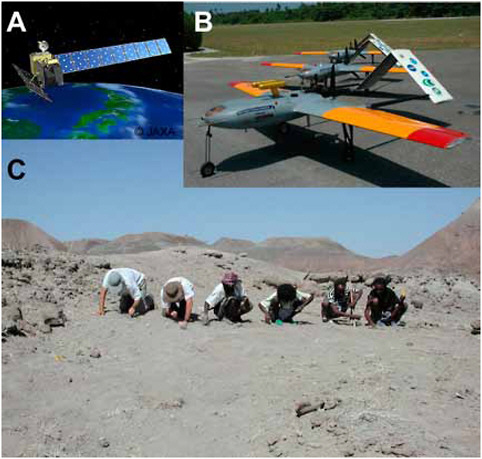
FIGURE 4.1 A vision for hominin fossil exploration in the future—initial reconnaissance and identification of potentially promising areas using (A) remote-sensing satellites and (B) Unmanned Aerial Vehicles (UAVs) with multispectral sensors, followed by (C) traditional detailed ground examination. SOURCES: (A) ALOS (Advanced Land Observation Satellite) image from JAXA (Japan Aerospace Exploration Agency); (B) UAVs shown are those that were used for the Cheju ABC Plume-Asian Monsoon Experiment (CAPMEX), courtesy of V. Ramanathan, http://www-ramanathan.ucsd.edu/capmex.html; (C) photograph from Afar Ledi Geraru, Ethiopia, courtesy of Kaye E. Reed.
high-resolution climatic information from linked drilling programs will result in a much more profound understanding of the forces that have contributed to the course of human evolution.
INTEGRATED MARINE, LAKE, AND TERRESTRIAL DRILLING PROGRAM
An integrated marine-lake-terrestrial scientific drilling program is an essential component of a research initiative to obtain a comprehensive paleoenviron-
mental history of human origins. Drill cores recover the continuous, fine structure of the environmental record needed to address questions about changes in the earth system at sufficiently high resolution to describe short-duration events and processes. Moreover, drill cores collected from below the Earth’s surface are less affected by the surface alteration and weathering processes that affect and degrade outcrop samples.
Sediment cores from lakes and oceans can be analyzed for an extraordinary array of sedimentological, geochemical, and paleoecological data that are frequently complementary, providing independent cross checks for the interpretation of past environmental conditions. New analyses of aquatic and terrestrial organic components in distal marine fan and lacustrine environments have permitted more refined reconstructions of African vegetation, temperature, and hydrologic changes than had been possible from pollen analyses alone. Riverborne terrestrial organic matter contains a broad spectrum of biomarkers that can be used to decipher basin-scale changes in climate, vegetation, and hydrology. New biochemical proxies are being measured in sediment cores that provide promise for quantifying past conditions. One such proxy is TEX86, an index that is based on compounds derived from prokaryotic Crenarchaeota that live among the picoplankton of lakes and oceans. The TEX86 index correlates well with surface water temperatures, and is well preserved in marine and lacustrine sediments up to millions of years in age (Schouten et al., 2003; Powers et al., 2005). Another highly promising method involves studies of clumped isotopes (isotopologues) in calcium carbonate minerals, which have also been shown to produce quantitative and accurate reconstructions of past temperature (Eiler and Schauble, 2004; Ghosh et al., 2006).
Marine Environments Among the most promising archives for reconstructing past changes in African climate are the sediment packages that accumulate on the upper slope near the mouths of rivers that drain large areas of continental Africa. Africa’s largest drainage basins—the Nile, Niger, Zambezi, and Congo—each drain several millions of square kilometers and thus constitutes large areal integrators of regional climate characteristics. Smaller drainage basins, such as the Ganane and Rufiji, drain areas that contain known hominin fossil localities.
Proximal fan successions are commonly complicated by intermittent sedimentation and sedimentary gravity flows, whereas distal fan successions tend to be more continuous, with high accumulation rates of marine pelagic components (microfossils and marine organic carbon) as well as terrestrial lithogenic (riverine clays and silts) and organic (terrestrial organic matter and biomarkers) material. Oxygen isotopic analyses of marine foraminifera can be used to provide a high-resolution chronology at orbital (104 years) scale. The terrestrial organic fraction can be exploited to yield an impressive diversity of proxies that monitor the paleoclimatic, paleohydrological, and paleovegetational history of the specific drainage basin.
Recently published studies of sediment cores from deep-sea fans off Africa highlight the promise of these sediments for reconstructing African continental paleoenvironmental changes (e.g., Weijers et al., 2007; Weldeab et al., 2007). Most of these studies are based on short cores (Figure 4.2), but drill sites targeted near these core locations (as well as additional new sites) would permit extension of these results to include the Pliocene-Pleistocene timeframe that encompasses major events in early human evolution.
Offshore Environments Most of the longer, Pliocene-Pleistocene records of North African paleoclimate change have been derived from drill sites in open-ocean depositional environments. When properly sited to monitor past variations in the supply and composition of windborne eolian detritus transported from North African source areas, these open-ocean sites have provided robust, detailed, multiple proxy records of regional climate changes (e.g., Tiedemann et al., 1994; deMenocal, 2004; Feakins et al., 2005). For sites closest to East Africa, distinct volcanic tephra layers can be extracted and geochemically correlated to tephra horizons in terrestrial fossil-bearing sequences throughout the late Neogene, providing direct time-equivalent links between terrestrial and marine sediment archives (Sarna-Wojcicki et al., 1985; Feakins et al., 2007).
Most existing ocean drilling sites off the African continent have been sited off northwest Africa (Ocean Drilling Program [ODP] Leg 108), off southwest Africa (ODP Leg 174), in the Mediterranean (ODP Leg 160), or on the distal fans of large river systems. Very few sites have been drilled off northeast Africa near hominin fossil localities. In 1974, Deep Sea Drilling Program Leg 24 drilled several sites in the Gulf of Aden, and these remain the most proximal marine sediments to hominin fossil sites in Ethiopia, Kenya, and Tanzania. These cores have been intensively studied, and the results of these studies have been integrated into the description of our existing understanding presented in Chapter 2. However, further progress is severely limited by the discontinuous coring and rotary coring disturbance in these cores typical of early scientific ocean drilling. New high-quality sediment drill cores from the Gulf of Aden remains a top drilling priority. A proposal to drill six new sites in the Gulf of Aden was recently ranked by an international science panel of the Integrated Ocean Drilling Program (IODP) as the top priority for Indian Ocean drilling by the JOID ES Resolution—ultimately, however, regional security issues will determine whether these sites can actually be drilled in the near future.
Lake Basins Among the most promising sites for high-resolution paleoclimate records within Africa are the large modern and ancient lake basins. Although deposition patterns are often complex in large lakes (Johnson, 1996), sites can be identified where sedimentation is nearly continuous, with few disturbances by sedimentary gravity flows or erosional events, and where sedimentation rates are relatively constant and fast. Under ideal circumstances, sediment cores from
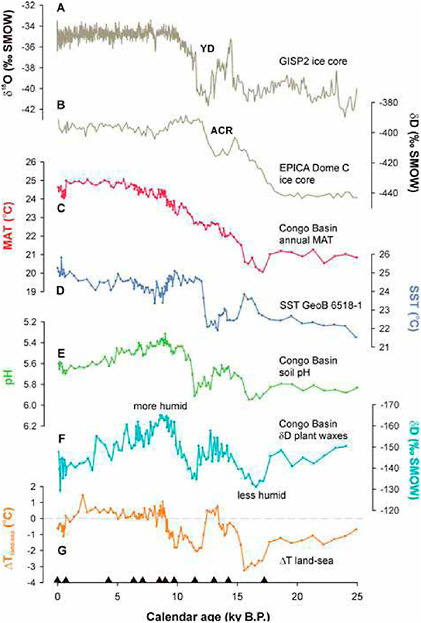
FIGURE 4.2 Results from a recent study of a sediment core off the Congo fan documented large changes in Congo Basin mean annual temperature over the past 25 ka, using terrestrial biomarkers that record soil temperatures (methylation index of branched tetraethers; MBT index; record C) as well as the δD composition of plant wax biomarker to document changes in regional humidity changes (record F) (from Weijers et al., 2007). Another related study from this same area used δ13C analyses of plant wax biomarkers to document large glacial/interglacial changes in the relative proportion of C3-C4 vegetation in the Congo Basin (Schefuß et al., 2005). YD and ACR indicate the Younger Dryas and Antarctic Cold Reversal episodes.
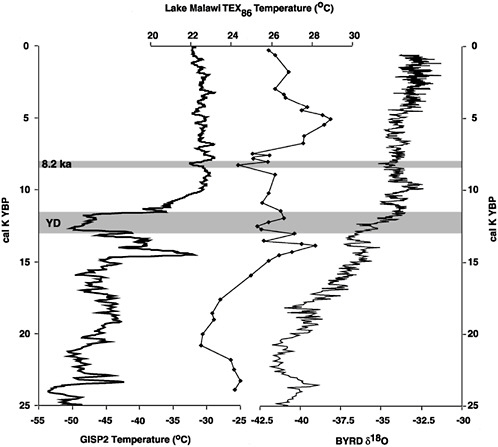
FIGURE 4.3 The first continuous temperature record from the African tropics extending back to the Last Glacial Maximum. Lake Malawi TEX86 temperature curve (center) plotted against the GISP2 temperature curve (left) and Byrd oxygen isotope record (right), on the GISP2 timescale. Two major events are highlighted, the Younger Dryas (YD), and the cooling at 8.2 ka. SOURCE: From Powers et al. (2005).
lakes can yield records with annual or even sub-annual resolution, as well as quantitative records of past temperature (Figure 4.3).
The recently completed Lake Malawi Scientific Drilling Project (Box 4.1) has demonstrated the exceptional potential of lake cores for generating new insights into African climate dynamics that are relevant to human origins. Cores collected by this project revealed the existence of a series of “megadroughts” during the early late Pleistocene (~135-70 ka), when lake levels dropped to an extraordinary degree as a result of extremely reduced precipitation (Scholz et al., 2007; Cohen et al., 2007) (Figure 4.5). The termination of these drought events closely corresponds with the timing proposed by molecular geneticists for the end of a previously unexplained “bottleneck” in Homo sapiens population size
in Africa, and the time when modern humans appear to have expanded out of the African continent on a large scale.
Application of new core scanning X-ray fluorescence technology has allowed rapid analysis of cores at high resolution, providing for the first time clear evidence for abrupt climate change on a century-millennial timescale during the last glacial period, identical to the Dansgaard-Oeschger events noted in Greenland ice cores (Brown et al., 2007). Such dramatic, short-lived environmental changes undoubtedly affected the livelihood of our ancestors at that time.
Drilling Targets
Ocean Drilling A series of scientific ocean drilling expeditions are envisioned, dedicated to constraining African paleoenvironmental changes during the late Neogene. These expeditions would focus on recovering sedimentary records that would specifically address the timing and signatures of African climate change. An implicit objective of this drilling would be to coordinate with the lake drilling and terrestrial communities to provide the geographical and temporal coverage needed to address the fundamental issues of climate variability in the region and over the time period when key events in hominin evolution occurred.
Two drilling programs have the potential to fundamentally reshape our understanding of the timing and causes of African climate changes over the period of major African faunal evolutionary changes—drilling in the Gulf of Aden, and drilling the distal fan deposits from the Jubba, Rufiji, and Zambezi rivers. The Gulf of Aden represents the single best opportunity to recover sediments that have recorded past changes in northeast African climate proximal to hominin fossil localities in Ethiopia, Kenya, and Tanzania. An Integrated Ocean Drilling Program (IODP) proposal to drill six sites in the Gulf of Aden (Figure 4.6; see deMenocal et al., 2007) is highly ranked and awaiting potential scheduling. An objective of drilling the Jubba, Rufiji, and Zambezi distal fan deposits would be to use terrestrial biomarker compounds and other proxies to reconstruct the climate and vegetation history of each drainage basin as regional climate integrators. Significantly, the Zambezi drainage basin also includes Lake Malawi, so that lacustrine sequences drilled in the lake may be directly compared to the offshore drilled sequences of the Zambezi distal fan.
Lake Drilling Some of the large East African lakes are known to have long, nearly continuous records in their deep basins that extend several million years back in time, with annual to decadal resolution. These are first-order targets for assembling regional, high-resolution records of past climate dynamics. Rift lakes are the most promising targets, with potential for additional records coming from non-rift lakes Chad, Victoria, the central Botswana pans, and some crater lakes in Cameroon (Figure 4.7). Two phases of lake drilling are envisioned:
Phase I–Since 500 ka An initial phase of drilling would target the more
|
BOX 4.1 Lake Malawi Scientific Drilling Project The Lake Malawi Scientific Drilling Project provides a model for modern lake drilling projects proposed in this report. In 2005, a transport barge on this tropical lake was reconfigured to serve as a drilling platform (Figure 4.4). A drill rig was constructed on the deck of the barge, with a “moonpool” through the deck allowing the drill string to be lowered to the lake floor (up to 600 meters be 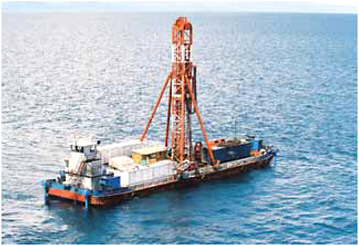 FIGURE 4.4 The drilling barge Viphya on Lake Malawi, East Africa in March 2005. Twenty-five scientists, drillers and mariners lived and worked aboard the vessel for 35 days, recovering long, continuous records from two sites in the lake–the longest a 385-m core from 600-m water depth (Scholz et al., 2006). SOURCE: Photograph courtesy of Jason Agnich. |
recent geological past, a program that would require smaller, less-expensive drill rigs and barges. The rationale for drilling a large number of lakes containing middle and late Pleistocene records would be to obtain sufficient spatial coverage to accurately define paleoclimate variability across broad expanses of the African continent, and thereby to constrain climate models. Possible targets for Phase I drilling include a number of lakes located mostly in East Africa—these would need to be prioritized after discussion by the scientific community. Lake records typically provide paleoenvironmental information for a limited region, but when coupled with records from the river distal fans offshore, these should provide insights into the environmental history of much of the African continent. Potential lake targets would include Lakes Shala and Abhe in the Afar, and Lake Abaya in the Southern Ethiopian Rift, all of which would contribute substantially to understanding the more spatially and temporally integrated records that would be derived from the Jubba River distal fan off Somalia. Lake Tana on the Ethio-
|
low the surface). Because of these substantial water depths, the barge’s position was maintained through the use of a “dynamic positioning” system consisting of four large hydraulic thrusting engines (visible as blue outboard engines at each corner of the barge), which were controlled by a computer system with position and motion data inputs from satellite GPS and a lake-floor transponder. Preliminary results show that the Last Glacial Maximum was relatively cool and dry, and that the lake basin experienced severe droughts at roughly precessional frequency prior to 60 ka (Figure 4.5). 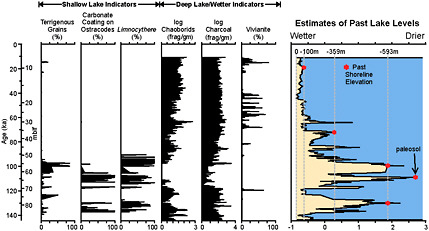 FIGURE 4.5 Preliminary results of Lake Malawi Drilling Project Site 1C, in 600-m water depth. Changes over the past 140+ ka in a range of variables provides a coherent history of paleoecological change, with the first axis (PC1) from a principal components analysis (plot on right) reflecting moisture availability and lake level. The probable paleosol at 108.5 ka indicates a minimum lake-level decline, and the lake may have dropped below the core site elevation. SOURCE: Modified after Cohen et al. (2007). |
pian Plateau and Lake Turkana, which derives its water primarily from the Omo River draining the southwestern Ethiopian Plateau, would offer high-resolution sediment records to be compared to the Nile distal fan. Drilling Lakes Albert, Edward, and Kivu in the western Rift Valley would provide important contrasts to the records from the Congo distal fan, while records from Lakes Victoria, Challa, and Tanganyika should prove to be particularly relevant to the results from the Zambezi River distal fan. Lake Chad is likely to yield discontinuous records, but might be expected to provide higher resolution information during some time intervals.
Phase II ––0.5–8 Ma A second phase of drilling would focus on obtaining a more limited number of “master” continental records in the longest-lived lake basins, where high-quality and long duration records are likely to be obtained. This phase would be restricted to the major ancient rift lakes, where the poten
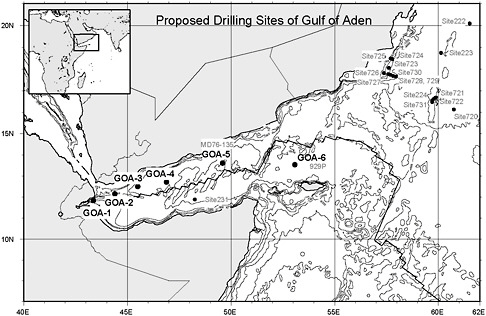
FIGURE 4.6 Sites (GOA-1 to GOA-6) proposed for Integrated Ocean Drilling Program (IODP) drilling in the Gulf of Aden. SOURCE: Unpublished IODP drilling proposal 724-FULL; deMenocal et al. (2007).
tial for obtaining such long records is highest. The primary targets for Phase II drilling would include Lakes Turkana, Edward, Albert, Tanganyika, and Malawi.
Terrestrial Drilling In parallel with efforts to drill the modern “extant” lakes, an effort should be made to obtain drill cores from paleolake deposits exposed on-land, located in key sedimentary basins where fossil hominins have been recovered. Many of these basins have been exposed through desiccation and/or uplift, and thus have the logistical advantage over lake drilling that they can be reached by truck-mounted drill rigs, avoiding many of the difficulties and substantial costs associated with lake drilling.
The objectives in targeting terrestrial sites would be to understand paleoclimate and paleoenvironmental conditions in close proximity to the fossils. Typically, these drill cores would record the dominantly organic-rich lacustrine deposits formed in or near the basin depocenters where sedimentation was most likely to be continuous and fast, providing a rich, high-resolution record of past environmental conditions. The targets of such studies could be of any age—there is no necessary requirement for drilling though the complete stratigraphic column of an extant lake to reach the target stratigraphic interval if the top of that interval currently lies at or near the surface. Possible targets and their ages for such drilling could include the Chad/Libyan basins (late Miocene), the Middle Ledi and Middle Awash in the Afar (mid-Pliocene), the Tugen Hills-Lake Baringo
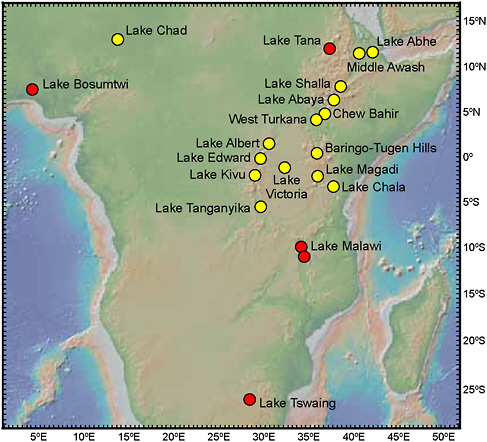
FIGURE 4.7 Map showing African lakes and paleolakes that have been drilled (red circles) or are the subject of drilling proposals or discussions (yellow circles).
area in Kenya (late Pliocene), the west Turkana area (early Pleistocene), and the Olorgesailie area (early to late Pleistocene).
INTEGRATED HIGH-RESOLUTION EARTH SYSTEM MODELING AND DETAILED ENVIRONMENTAL RECORDS
By combining analyses of observational data recording past environmental change with parallel earth system modeling studies at sufficiently high resolution, it will be possible to obtain a much more accurate and regionally based description of the evolution of paleoenvironments over the past 8 million years in Africa and Eurasia, as well as an improved understanding of the causes of the paleoenvironmental changes. Such an integrated approach would provide a tool for addressing specific questions regarding potential connections between environmental changes and hominin evolution and dispersal. Several key elements are required to realize this potential:
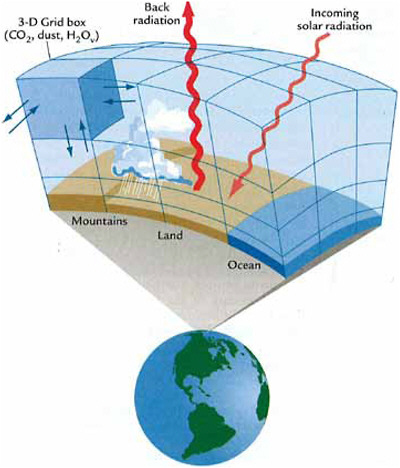
Climate Model Improvements At present, climate-focused models are transitioning to earth system models that include a broader range of parameters (Box 4.2; Figure 4.8). Some submodules have already been linked to climate models for studies of future and past climate (e.g., dynamic vegetation changes, fire ecology, ice sheet growth and decay, and hydrology of lakes and rivers). A focused effort is required to develop new submodels that are especially applicable to the kinds of past climate experimentation envisioned in this program. Examples would include simulating plant-animal interactions and community ecology; simulating isotope fractionation in evaporation/precipitation cycles; simulating the biogeochemistry of lakes and oceans, including sedimentation; and simulating the sources, transports, and sinks of dust. Simplified versions of such submodules are already being constructed and tested for some climate models, but much additional development, refinement, and testing are required. The addition of these new submodules will provide model output that would increasingly match the environmental signals recorded in sediments and other fossil records.
Computational Resources Requirements A major increase in computational resources will be required to simulate the range of specific time intervals over the past 8 Ma needed to address the relationship between paleoclimates and hominin evolution and dispersal. Multiple simulations will be required to test the sensitivity of the results to uncertainties in the forcing variables (e.g., CO2 levels, topographic characteristics). Simulations at high spatial resolution will be required to resolve the relatively fine-scale details of climate, vegetation, and hydrology that are contained in environmental records in regions of complex local topography, such as the East African Rift System.
Support Requirements No new physical facility is necessarily required—computer resources can be located at existing facilities, and then be made available to the community via virtual networks. A small support staff of scientists and technicians would be required to facilitate the research activities of the scientists from many disciplines that would be involved in these coordinated interdisciplinary studies, and capabilities for archiving and retrieving model output and observations and graphical and statistical tools for efficient model/data comparison would also be needed. The model/data storage facilities and the small support staff could be located at an existing facility. Although increased computational resources are urgently needed for U.S. scientists working in this field, possibilities may also exist for shared computational facilities with the European Union and other nations or groups of nations. It will also be important to broaden electronic access to computational resources and data/model archives so that scientists from Africa and Eurasia can collaborate with U.S. scientists.
PROGRAM SUPPORT COMPONENTS
In addition to the core research elements described in the preceding three sections, there are a several research activities that will complement the core elements:
Onsite High-Resolution Scanning
A program that places high-resolution microCT scanners, technicians, and computer systems in selected African museums would resolve many problems related to access to fossil data and provide the basis for a substantial improvement in analytical standards in this field. Specimens could be CT scanned at a resolution commensurate with their size and analytical needs, and slices stored for analysis. A pilot project has already been carried out at the National Museum of Kenya in Nairobi by the Max-Planck Institute for Evolutionary Anthropology in Leipzig, using a microCT scanner that was temporarily relocated to Nairobi in 2008, and which scanned hominids and a few other primates.
There are several major benefits from scanning as many fossils as possible in this way:
-
Technicians would no longer have to patiently remove matrix from fossils, they could be better employed scanning and curating specimens. African preparators would develop their skills from those of the 19th to the 21st century by learning scanning, computing, and analytical techniques.
-
Specimens would never be subjected to preparation damage, which is a relatively common occurrence. Note that there is usually no benefit in scanning after removing matrix. The fossils also would be protected by any overlying matrix so that no damage would be caused in the future by careless handling of fragile prepared specimens. A good example of this approach is provided by studies of Triassic archosaurs that have been scanned and analyzed rather than undergoing damaging preparation (Shipman, 2008).
-
The slice data, once stored, can be used by individual researchers both in the museum and overseas, obviating the need for expensive travel and giving the researcher time to study fossils at their home institution. Note that this saves airfares and hotel costs that are often a large part of the budget for an overseas museum trip.
-
Superb analytical programs already exist for extracting quantitative data from stacks of slices. Features such as enamel thickness, details of internal anatomy (e.g., tooth roots, semicircular canals, cochlea, brain case, nerve courses, turbinate bones) can be seen and measured with a mouse click (e.g., visualization and measurement of the cranial cavity of an Oligocene primate, see Simons et al., 2007).
-
Specimens that have suffered damage during fossilization may be recon-
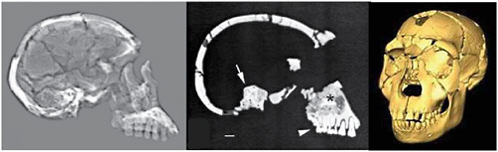
FIGURE 4.9 Images of the Homo erectus cranium KNM-WT 15000: lateral radiograph (left), parasagittal CT scan at the level of the right dental row and inner ear (middle), and 3D surface visualization extracted from a stack of CT scans (right). Unlike radiographs, CT scans have the ability to distinguish between fossil bone and the sedimentary matrix in the maxillary sinus (asterisk in center image), and to resolve details such as the root canals of the molars (arrowhead), and structures of the bony labyrinth (arrow). SOURCE: Left and middle images from Spoor et al. (2000); right image courtesy Fred Spoor, Department of Human Evolution, Max Planck Institute for Evolutionary Anthropology, Leipzig, Germany.
-
structed at or away from the museum site (e.g., Zollikofer et al., 2005). Note that sometimes it is not possible to assess distortion without x-raying a specimen.
-
In this way, vertebrate paleontologists, wherever they are on the globe, would have access to an ever-increasing sample of virtual specimens that were collected at remote field sites. They could also begin to analyze them quantitatively in ways never before possible (Figure 4.9).
-
Replicas with 600-dpi resolution can be made anywhere using such scans, at a fraction of the cost of a cast. In addition, they can be enlarged or scaled to nearly any size for comparison or exhibition.
This program would have to be augmented by similar scans taken on a large set of comparative vertebrates, so that researchers can study species variation. Several African museums have good comparative collections of modern animals that could form the basis of this dataset, but other modern datasets could be built up from European or North American osteological collections.
The time needed to scan a specimen depends on its size and the resolution required. Some large specimens can be scanned on medical CT scanners, and second-hand models of these should prove to be cost-effective because they are being replaced by newer versions all over the world, and the old versions still work well for this type of application. MicroCT and medical CT machines can run nearly 24 hours a day, depending on the local radiation regulations. Datasets of single specimens that are scanned on different machines at different resolutions can be merged relatively easily (e.g., Ryan et al., 2008).
New or Improved Geochronological Techniques
The development of new or more refined geochronological techniques is a critical requirement for an improved understanding of the climatic context of human evolution. Although the dating of terrestrial deposits has advanced enormously in the past two decades (e.g., cosmogenic isotopes are routinely used to date landscapes, with U-series dating of carbonates having a precision of less than 1 percent at 100 ka and 40Ar/39Ar dating having a precision of a few percent at 2 Ma) the improvements in accuracy and precision of dating that have occurred do not yet fully resolve the difficult questions related to determining time within a single locality, and in comparing ages between localities. An improved understanding of the relationship between geological events and the orbital cycles that provide the pacemaker for climate change over the past several million years requires that the precision and accuracy of dating be improved by an order of magnitude so that dates can be placed within individual orbital cycles (e.g., Deino et al., 2006).
Problems in chronology can be considered in two distinct and separate contexts; those concerning absolute chronology, where a high degree of accuracy and precision4 is needed, and those that are associated with “floating chronologies,” where the differential accuracy is high within a sequence but the absolute age is less important. Volcanic ash eruptions and other individual events require an absolute age, whereas the interpretation of repeating cycles (e.g., orbital, seasonal, and daily cycles) require a high differential accuracy.
Several important hurdles need to be overcome to establish improved absolute chronologies. Although analytical precision is high, deficiencies in absolute accuracy can cause acute problems when comparing chronologies that have been established using different methods—for example, the comparison of magnetic chronologies with orbitally-tuned chronologies led to revisions of the paleomagnetic timescale and the eventual recognition of an astronomically tuned polarity scale (Berggren et al., 1995). Perhaps some of the long-half-life isotope systems used for dating could be revised in a similar fashion—the current estimate of the age of the Fish Canyon Tuff is 28.20 Ma based on orbital tuning, whereas the age used in many dating studies is 28.02 Ma (Kuiper et al., 2008). A difference of ~0.5 percent is important when comparing volcanic ash dates from hominin-bearing terrestrial sequences with marine records of sapropel formation—a difference of 0.5 percent at 4 Ma equates to 20,000 years, and this corresponds to the periodicity of one of the major orbital cycles. Major improvements in the geomagnetic intensity timescale in recent years have been particularly exciting,
because they promise to allow regional correlations between records to an accuracy of hundreds of years, extending back perhaps 2 Ma.
Although 14C is the dating method that is most widely known, it is only useful for the past 50,000 years (~10 half-lives). Other cosmogenic nuclides used by geomorphologists include the radioisotopes 36Cl, 26Al, and 10Be, with half-lives of 0.3, 0.7, and 1.4 Ma, respectively, and the stable nuclides 3He and 21Ne. These isotopes offer opportunities to date events of archaeological interest, and may be able to date time of burial if the initial concentrations of the isotope can be established and, in some cases, if the decay constant can be refined.
Capturing the long-term orbital climate signals in continuous terrestrial deposits, such as in lakes and in cave speleothems, will greatly aid our understanding of the nature of these cycles in the less continuous deposits in which the hominin fossils are discovered. In the past few decades, several superb long-term continuous sequences from cave deposits have been dated in China (Cheng et al., 2006) and the Middle East (Burns et al., 1998), and these document climatic changes associated with orbital cycles over the past several hundred thousand years. Speleothems have the potential to resolve long continuous annual precipitation records (Burns et al., 2002). Because each site records essentially local climatic conditions, a number of such continuous records are needed to understand climate patterns for any particular region. Comparable descriptions of regional climate characteristics for Africa would greatly improve our understanding of the important climate changes associated with long-term monsoon and El Niño histories. Well-dated, detailed, continuous climatic records from speleothems over the past million years would provide an excellent context against which to compare continuous lake records; both of these will provide a basis for understanding the noncontinuous records where hominin fossils are found. At present the accurate dating of lake records lags that of speleothems.
Against this background of highly precise and accurate chronologies, it is equally important to understand the relationships of “floating” chronologies—for example, understanding seasonal cycles does not require knowing the dates accurately. In many cases, biological or geological information is overprinted in such a way that the seasonality is blurred. Methods are needed to interpret signals so that the true nature of the input signal can be determined from the output signal. This is very much related to chronology because of the need to understand seasonality. For example, Ethiopia has a single annual rainy season, whereas Kenya has two. What are the amplitudes of the seasonality of rainfall or temperature? Much depends on getting the chronology correct.
Genetic Record of Ecosystem Dynamics
Genetic data provide a record of population history that stretches back hundreds of thousands of years. This record exists for two reasons—first, genealogical distances reflect population size. For example, two random women from
China (population 1,325,639,982) are less likely to be sisters than two from Callao, Utah (population 35). Second, genetic distances reflect genealogical ones and so it is reasonable to expect less genetic variation in Callao than China. By working backwards along this causal chain, genetics can be used to study the history of population size.
A great deal of genetic data is already available for human populations. For example, the International HapMap Project5 is a database of over three million genetic polymorphisms typed in individuals from several human populations. The HapMap data will soon be supplemented by data from the 1000 Genomes Project,6 which will provide much better information about allele frequencies throughout the world.
Both projects will be immensely useful in the scientific program for international climate and human evolution research proposed here, but neither is sufficient. Both will study DNA from the same individuals in three large African populations, but there are no plans to include small populations such as the San (or !Kung), the Hadza, or the various groups of Pygmy. These populations descend from much larger populations that once occupied much of Africa, and the little that is known about their genetics indicates that they are distantly related to the larger groups that are well represented in the samples of the HapMap and 1000 Genomes projects. By excluding these small groups, these projects exclude much of the genetic record of African history.
A different approach is proposed here. Within about 5 years, it should be possible to sequence an entire mammalian genome with high resolution for about $1,000. It will then become feasible to collect large samples of high-resolution whole-genome sequences. This technology can be used to sample human populations from all parts of Africa, including the small populations mentioned above, as well as populations from species with differing ecologies. This will make it possible for the first time to reconstruct the dynamics of entire ecosystems.
Any such effort will involve ethical concerns. Care must be taken that neither the individual human subject nor the population from which he or she comes is stigmatized in any way. Ethicists should be involved in the project from the outset. The International HapMap Project provides a successful model for dealing with these and other ethical concerns.
Calibrating the Proxy Records
Many of the indicator records that have been used to infer past climates in tropical Africa are not well calibrated against the purported forcing by the suspected key climate parameter. For example, diatom abundance in sediments in northern Lake Malawi has been interpreted as an indicator of upwelling intensity
forced by northerly winds (Johnson et al., 2002). Although not an unreasonable conjecture, this relationship has not been demonstrated by actual measurements of wind velocity and lake circulation response, and the consequent diatom flux to the lake floor. As another example, the inference of regional aridity—based on relative abundance of C3 and C4 vegetation in a drainage area, derived from δ13C analyses of long-chain n-alkanes in marine or lacustrine sediment (e.g., Feakins et al., 2005; Castaneda et al., 2007)—has not been calibrated against actual hydrological, vegetation, and river-born n-alkane data. An integral part of this initiative would be direct measurements of such phenomena coupled with high-quality regional weather data and climate reanalysis data (e.g., National Centers for Environmental Prediction), accomplished through emplacement or support for regional weather stations, stream monitoring programs, deployment of time-series sediment traps in the appropriate lakes and marine environments, vegetation inventories, and other selected modern process investigations. Because such activities can become overwhelming in scope and expense, it would be essential for the science community to act judiciously in determining the extent of this particular avenue of research, to ensure that limited resources are focused on approaches that are most relevant to understanding the earth history-human evolution connection.
Data Access, Databases, and an Informatics Infrastructure
As research at the interface of earth systems and hominid evolution is accomplished, a major effort is needed to ensure that all research results are made available in an integrated, accessible, and searchable manner. Scientific research supported by NSF is subject to an overarching data access policy that emphasizes open and timely access to research results, and some divisions have instituted data access policies that specify more precisely how this policy should be applied (e.g., guidelines published by the Division of Earth Sciences7 or the Data and Sample Policy published by the Division of Ocean Sciences8). Despite NSF support for much paleoanthropology research, this disciplinary area has a history of contentious disputes regarding fossil access and the timeliness of publication (e.g., see Gibbons, 2002). The international scientific program for climate and human evolution research proposed here will need to establish data access protocols to ensure that research results—whether digital scans of hominin fossils, the fossils themselves, or climate proxy parameters from deep ocean cores—are provided to the broader scientific community in an open and timely manner. There are already examples where international consortia have established data access and availability protocols that adhere as closely as possible to NSF guidelines, but incorporate some degree of flexibility because of local or national
issues (e.g., International Continental Scientific Drilling Program [ICDP] and IODP), and some similar flexibility would be required for the research endeavor proposed here.
The application of modern informatics to the study of the potential link between human evolution and earth system parameters will require new information technology applications to solve research challenges across the disciplines of geology, paleoclimatology, paleoanthropology, and paleontology. Because a number of discrete disciplines contribute to this research endeavor, it is especially important that the acquired data from individual disciplines be integrated across time and space. The path from data collection and entry to information dissemination will require high-level computing and the use of visualization software. Geographic Information Systems (GIS) capabilities are a critical component, because most of the data associated with this research are place-based and/or require three-dimensional imaging (e.g., see Conroy et al., 2008). A corollary requirement is the need to ensure—to the greatest extent possible—that the locations of specimens collected during earlier, pre-GPS/GIS activities at remote field sites are geolocated and integrated into a modern geoinformatics structure. This has become increasingly important with the pending retirements of senior paleoanthropologists whose work is recorded in notebooks or other nonelectronic media.
At present, existing online databases and data management systems mostly address the needs of specific research groups concerned with human and mammalian evolution or related earth science topics, for example, RHOI (Revealing Hominid Origins Initiative) for Mio-Pliocene faunal specimens, NOW (Neogene Mammals of the Old World), the Smithsonian’s HOP (Human Origins Program Database), GEON (Geosciences Network), and the ICDP Data and Information Management System. The implementation and maintenance of relational databases for all published material in core disciplines has the potential to facilitate additional exciting research by encouraging cross-disciplinary collaboration. A data repository, either physical or virtual, is required to formalize the linkages between individual relational databases. The linked datasets should also be integrated with the mapping capabilities available in GIS systems to enable integrated visualization for particular localities, regions, or through time.
Coordination and Management
A Science Advisory Committee, composed of individuals representing the broader scientific community and with a broad vision of how these research components relate to each other, will be required to foster communication among disciplinary groups, coordinate the implementation elements, and convey the science community’s priorities to funding agencies. On the basis of community input, this committee would establish and periodically update plans for exploration, drilling, and modeling, and prioritize regions to be investigated. The committee would oversee:
-
a management team to deal with logistical issues associated with major initiatives, such as liaisons with foreign governments, permits, transport (including helicopter assistance to cover difficult terrain more efficiently during ground phases), and drilling operations;
-
a geophysical and remote sensing analysis team;
-
a database and data access management team; and
-
an outreach and education team.
The committee would require sufficient funding to sponsor a range of workshops and town meetings to obtain and distill community input. It would be important for such workshops and town meetings to span the full range of disciplines associated with this research enterprise.
PUBLIC OUTREACH OPPORTUNITIES
Research focused on the earth system context of human evolution unites two scientific fields that are among the most publicly visible—climate change and human origins. The study of human evolution represents one of the most compelling subjects in the natural sciences in that it deals with the long-term origin of our species; and climate change has become a focal point in communicating the meaningfulness of science and its relationship to the welfare of humans, all living things, and entire ecosystems. The intersection of these two broad areas of scientific research thus offers powerful opportunities for public outreach aimed at communicating the process and value of science. The subject matter itself, which deals with human survival and adaptation in the past, also offers avenues for inspiring the public’s curiosity about scientific findings relevant to society’s adaptation to climate change in the near and distant future.
A state-of-the-art program in public education and outreach creates opportunities for diverse audiences along several avenues, which include (1) development of dynamic and up-to-date public Internet sites; (2) dissemination of findings via print, radio, and television media; (3) organization of seminars, lectures, and dialogues in venues that are both visible and attractive to the public; (4) interaction with national science educators, who can translate scientific findings and data into the classroom; (5) museum-based and less formal exhibitions, which are attractions for family and school-group explorations of and learning about science; (6) engagement of adult learners in the excitement of research and discovery and encouragement of volunteerism (docents); and (7) graduate, undergraduate, and high-school training and research experiences, which offer a means of building the future generations of scientists and educators. As the items in this list illustrate, an effective program of public education and outreach requires skillful approaches to both formal and informal learning in which chil-
dren and adults decide whether to pursue (and for how long) any particular topic that interests them.
No curriculum currently exists to inspire teachers and students to explore the relationship between past climate change, human evolution, and the long-term influence of environment on species survival, adaptation, and mitigation strategies. The following recommendations represent components of a broad effort to redress this deficiency:
-
Develop opportunities that bring educators and scientists together, and that build new partnerships among research institutions, museums, science centers, and national scientific and education organizations, in order to further the development of national and state science standards. There is a critical need to substantially improve the set of tools teachers and students have that promote science education and to create real opportunities for overcoming roadblocks to learning about evolution (NRC, 1998, 2008). The interplay between climate and human evolution can form a new, prominent cornerstone in efforts to prepare educators to teach, and students to learn, the basic concepts of evolution and the nature of science. Conferences and workshops would offer an initial step toward stimulating an open dialogue with K-12 educators and scientists. The Smithsonian Institution’s National Museum of Natural History, for example, plans to convene a national conference of educators and scientists to discuss and define the issues that promote students’ and the general public’s understanding of science, focused especially on the processes of climate change and evolution. Such events would aim to create productive partnerships with education and scientific organizations such as the National Science Teachers Association (NSTA), the National Association of Biology Teachers (NABT), the American Institute for Biological Sciences (AIBS), the National Center for Science Education (NCSE), the National Science Education Leadership Association (NSELA), the National Academy of Sciences (NAS), and the American Association for the Advancement of Science (AAAS).
-
Establish a National/International Educator Institute as a long-term effort that employs climate–evolution research to enhance professional educator development. This idea, initiated as part of the Smithsonian’s Human Origins Initiative, is to offer a multiday institute for educators focused on human evolution and environmental change research and on strategies for improving the comprehension of science. The audience for this institute will include school-based educators, staff from informal science education institutions (e.g., museums, science centers), and outreach staff affiliated with science research organizations. The aim is for this institute to be a “trainer of trainers” model in which participants make a commitment to return to their institutions and communities to offer training, programs, and resources to their colleagues, local schools, and audiences.
-
Establish internships that connect students and teachers to the international scope and nature of scientific research on past climate change and human evolution. Internships offer opportunities for students and teachers to experience research firsthand (discovery-based education) in order to learn what scientists do—how they find out about past climate change, human evolution, and the potential impact of environment on human adaptation, and why science depends on the public’s understanding of the ways research is conducted and the meaning of new findings. Such internships would promote cross-national efforts in science education, and would allow students and teachers to participate in regular webcasts from field sites around the world that could be followed online by millions of people in formal and informal educational settings.
-
Engage adult learners who may be underserved and have ventured away from formal avenues of science education. For example, young adults, typically from about 18 to 34 years of age, are often a lost generation for natural history museums, science centers, and other informal educational institutions. People often visit museums and science centers as children with their families and their schools and then return when they have their own children. This is the demographic that will be the next group of professionals and policy makers. Based on the Web habits of this group, this is a logical target demographic for national science outreach via YouTube, Flickr, and online social networking (e.g., Facebook, Twitter). In addition to building Internet destinations that seek out users based on Web habits, a key activity for reaching general public audiences is through mass media. Collaborating with television production and broadcast organizations (e.g., PBS NOVA, National Geographic, Discovery Channel) requires significant investment of effort and money, but reaches a large audience. Additional ways of engagement involve writing for popular publications (e.g., newspapers, magazines, books) and hosting online and face-to-face meetings that offer the public an opportunity to interact with scientists. All of these efforts would highlight the relevance of research on the interplay between climate change and evolution to society’s overall scientific literacy.
-
Develop a concise and compelling education guide, curricula for teachers (available in print and online), and traveling exhibitions that introduce the rationale, perspectives, and basic findings concerning the earth system context of human evolution. These outlets would provide activities and identify resources that teachers and students can use and that the general public finds engaging and useful in learning about our planet’s climate, its deep past, and the emergence of human beings. Curriculum modules would aim for use in schools (grades 9-14, tailored to address specific state educational standards), informal science institutions, adult education classes, and other educational settings, and would serve as a resource for teacher training activities. The modules will promote active learning and inquiry, go well beyond the standard treatment of human evolution and climate change in textbooks, and will be disseminated and distributed for free through the Smithsonian and other science research/
-
education organizations. It will be important to link these efforts with partner organizations that have longstanding and successful experience in the development of science curricula, such as the NSRC (National Science Resource Center), TERC (Technical Education Research Centers), EDC (Education Development Center, Inc.), and BSCS (Biological Sciences Curriculum Study).
As a package, these recommendations reflect a fundamental commitment to outreach and education, working in partnership with educators and scientists nationwide and worldwide.


