
3
The Education Portfolio and Effective Practices
The National Oceanic and Atmospheric Administration (NOAA) released its education strategic plan for 2009-2029 during our review of the agency’s education programs. The related implementation plan was available only after our study concluded, so it is impossible for the committee to judge the impact or the implementation of the education strategic plan. We are able to critique the strengths and weaknesses of the plan and provide guidance on how to improve it. In general, the plan provides a very high-level description of how education programs are managed and their goals, topics to be addressed in reaching their goals, the outcomes related to the goals, and strategies for reaching the outcomes. In this chapter we describe how education is managed and funded at NOAA, critique the strategic plan, and summarize effective education practices that can guide the implementation of the strategic plan.
PORTFOLIO MANAGEMENT
NOAA is a decentralized organization, and each of its six line offices, incorporated at different times through separate mandates or internal initiatives, has a different mission (see Box 1.3). As an artifact of the agency’s decentralized nature, education programs have developed in a decentralized manner across five of the line offices and the recently created (in 2003) Office of Education.
Five of the line offices manage education efforts:
-
the Office of Oceanic and Atmospheric Research (OAR),
-
the National Ocean Service (NOS),
-
the National Marine Fisheries Service (NMFS),
-
the National Environmental Satellite, Data, and Information Service (NESDIS), and
-
the National Weather Service (NWS).
Education programs are also managed by the Office of Education, a corporate function in NOAA’s organizational structure.
The efforts of these offices are coordinated by the Education Council (EC), which was created in 2003 at the recommendation of the Subcommittee on Education of NOAA’s Scientific Advisory Board. The EC monitors and evaluates education programs across the agency and provides recommendations regarding their conduct and guidance for their future direction. It serves as an internal forum for the discussion of ideas and proposals for NOAA-wide education and outreach activities and priorities and for making recommendations to NOAA management on all aspects of educational activities.1 The EC guided the development of the education strategic plan, providing input on educational goals, outcomes, and strategies. It served a similar role in developing the education implementation plan.
All of NOAA’s education programs are represented on the EC, with the Office of Education having the greatest amount of responsibility. The EC chair is the director of the Office of Education, the vice chair is the deputy director, and the executive secretariat is the Office of Education. The principal members of the EC are as follows:
-
Director, Educational Partnership Program, Office of Education
-
National education coordinator, Office of the National Marine Sanctuaries, NOS
-
Education program leader, National Sea Grant Program, OAR
-
National education coordinator, National Estuarine Research Reserve Program, NOS
-
National education coordinator, Ocean Exploration Program, OAR
-
National education coordinator, NOAA Corals Protection and Conservation Program
-
Climate education coordinator, Climate Program Office, OAR
-
Education and Teacher at Sea program manager, NMFS
-
OAR (at large)
-
NOS (at large)
|
1 |
See http://www.oesd.noaa.gov/council/meetings.html for Education Council meeting agendas [accessed May 2010]. |
-
NMFS (at large)
-
NWS (at large)
-
NESDIS (at large)
Representatives from the NOAA Central Library, Office of Program Planning and Integration, Office of Program Analysis and Evaluation, Legislative Affairs, Office of Communications, Ecosystem Goal Team, and Weather and Water Goal Team serve as advisers to the EC.
Each principal member of the EC (but not the advisers) has a vote in its decisions. Although the group strives for consensus, the final decisions are made by the chair, who maintains 51 percent of the vote. It is unclear how the EC enforces decisions when consensus is not reached. Without the cooperation of the members from the 15 line and program offices, the EC, as a body, has no clear power to enforce its decisions.
Recently, NOAA created the Executive Council on Engagement (ECE). The ECE is comprised of the chair of the EC, the director of communications, the chair of the Regional Collaboration Executive Oversight Group, and the chair of the Extension and Training Services Committee. The ECE provides guidance and recommends actions to the NOAA Executive Panel (NEP) to promote a dialogue and a two-way relationship with the public to identify, develop, and improve products and services to meet society’s needs. The focus of this group is on extension, communication, regional collaborations, and education. The chair of the EC works with the ECE to ensure coordination across these efforts. The ECE was created as our study was being finalized, and thus very little information on its impact or functionality was available.
Individual offices have separate mandates, and some have local components with local control. Education programs are managed differently by the line and program offices and the Office of Education as a result of available resources for education (staff and funding) and mandating language. For example, the Office of Education has a small centralized staff in the Washington, DC, metropolitan area and does not carry out or fund scientific research, exploration, or stewardship activities, as the line offices do. Thus, the majority of the Office of Education’s programs are run by partners external to NOAA (although some grant recipients are internal). In contrast, the education coordinators from the line and program offices on the EC work with their education program staff across the country to implement education activities, which are based on the scientific, exploration, and stewardship activities of the line and program offices.
Each line and program office coordinates and oversees its education staff and programs in different ways, some of which can be quite complex. For example, the NWS staff respond to local requests for education activities, yet they must prioritize their research and warning coordina-
tion responsibilities ahead of their education responsibilities. This limits the managerial influence of the national NWS education coordinator. The management of education in the National Estuary Research Reserve System (NERRS) is particularly complex. Each NERRS site is a partnership between NOAA and the state government. Both NOAA and the state fund some of the education staff; in some cases, each funds a portion of individual staff members. This blending of support within reserves means that education staff answer not only to NOAA but also to the state. For example, at Elkhorn Slough National Estuary Research Reserve in California, the education coordinator is funded primarily by the California Department of Fish and Game, and the coordinator answers to the reserve manager, who is also funded by the Department of Fish and Game. Yet two of the three education staff under the coordinator are funded by NOAA.
BUDGET
The goals of NOAA education are formidable, yet the budget is small: $43 million for education in 2008. Within the federal government, NOAA’s portion of the funding for science education is also small. For example, the Department of Education, the National Science Foundation, and the Department of Health and Human Services account for over 80 percent of science education spending by the federal government (see Figure 3.1). These departments combined spend approximately $2.5 billion on science education per year on programs that include graduate fellowships, mathematics and science partnership grants, and undergraduate financial aid. The National Aeronautics and Space Administration, one of the largest education funders among federal science mission agencies, had an education budget of approximately $162 million in 2006 (U.S. Department of Education, 2007). In contrast, NOAA’s education budget in 2006 was less than a quarter of this (U.S. Department of Education, 2007).2
NOAA’s overall education budget has remained relatively consistent fiscal year (FY) 2005 to FY2008 (see Figure 3.2). NOAA’s education budget decisions are often influenced by congressionally mandated appropriations (known as earmarks) and mandates, putting added constraints on how education is managed. Figure 3.3 illustrates how the education budget breaks down across programs, providing a general sense of the size of the education budgets for all of NOAA’s education programs. Although only three programs focus on higher education (the Educational Partnership Program; Hollings and Foster Scholarship Programs), they account for about 33 per-
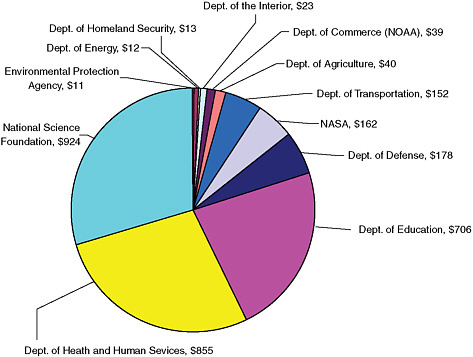
FIGURE 3.1 Federal 2006 education budget ($ in millions).
SOURCE: U.S. Department of Education (2007).
cent of the budget. In addition, much of the Sea Grant budget is for higher education, and the remainder supports various formal and informal K-12 and continuing education activities. Beyond this rough separation between higher education and environmental literacy programs, it is challenging to make any finer budget distinctions.
It is very difficult to get a complete picture of the full measure of NOAA’s engagement in education by analyzing the budget, because one cannot simply follow the money to find the education activities. During testimony and during informal site visits, we encountered scientists, extension personnel, and educators who indicated that they are engaged in the education mission but that it does not really show up in their job portfolios, program reviews, or budgets. In addition, some programs support education activities but do not report a separate education budget category (e.g., the cooperative institutes). This means that it is very difficult to discern the full footprint of NOAA’s education activities.
Even when it is possible to track the amount of education funding in a program (e.g., the Office of the National Marine Sanctuaries
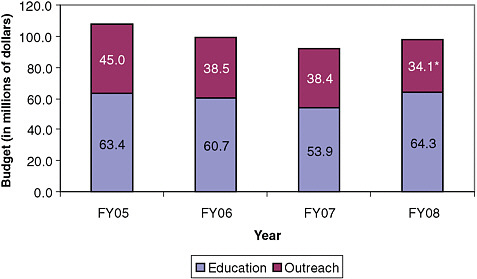
FIGURE 3.2 NOAA education and outreach budget, 2005-2008.
NOTE: *2008 information is based on the projected budget.
SOURCE: NOAA Education Council.
Program, Teacher at Sea, the National Estuarine Research Reserve System), it is difficult to track how much funding is provided to individual activities run at the local level, because we were not able to locate a document that breaks down the budget in this manner. For example, the National Sea Grant College Program’s $5.4 million for education and additional $16 million for outreach are allocated across the 32 universities and their partner institutions. Each institution has developed education and outreach activities with its funds, yet the education and outreach budgets of each of the Sea Grant colleges were not readily available. Furthermore, the cost share and matching funds that some NOAA education programs receive from other agencies, organizations, and institutions—including the Office of National Marine Sanctuaries, the National Estuarine Research Reserve System, and the Bay-Watershed Education and Training Program—make it difficult to decipher NOAA’s investment in the education programs it supports. Each of these factors makes it difficult to assess how much money is going toward teacher professional development, curricular support materials, informal education activities, or other education activities. What is clear is that NOAA will need to continue to develop and nurture partnerships if it is going to achieve its ambitious strategic plan.
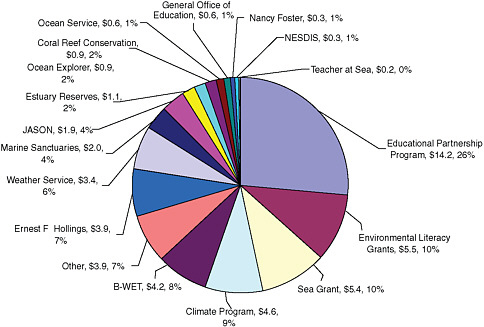
FIGURE 3.3 NOAA 2007 budgets for education ($53.9 million).
NOTE: The “Other” category was created by the committee for monies that we were unable to assign to one of the major programs. Budget items that fall into this category include the Coastal Services Center, the National Centers for Coastal Ocean Science, Habitat, the Satellite Acquisitions and Satellite Service, Geodesy, Aviation Weather, Coastal Estuaries and Oceans, Hydrology, Air Quality, Space Weather, and Science, Technology, and Infusion.
SOURCE: NOAA Education and Outreach spreadsheet.
EDUCATION STRATEGIC PLAN
The 2009-2029 education strategic plan, which updates the 2004 education strategic plan, was developed to create greater coherence and cohesion across the agency’s education portfolio.3
NOAA’s 2009-2029 education strategic plan updates the 2004 education strategic plan. Under the mandate of the America COMPETES Act, NOAA must revise its education plan every five years. The document reflects the collaborative efforts of the Education Council as well as input from the broader education and resource management community and other interested groups.
|
3 |
The education strategic plan is available at http://www.education.noaa.gov/plan/index.html [accessed May 2010]. |
Vision, Mission, and Goals
“An informed society that uses a comprehensive understanding of the role of the ocean, coasts, and atmosphere in the global ecosystem to make the best social and economic decisions” is the agency’s vision. Its education mission is “to advance environmental literacy and promote a diverse workforce in ocean, coastal, Great Lakes, weather, and climate sciences, encouraging stewardship and increasing informed decision making for the Nation.” The agency staff set two primary goals to accomplish this mission:
Goal 1: Environmental Literacy: An environmentally literate public supported by a continuum of lifelong formal and informal education and outreach opportunities in ocean, coastal, Great Lakes, weather, and climate sciences. Environmental literacy is defined in the plan as “a fundamental understanding of the systems of the natural world, the relationships and interactions between the living and non-living environment, and the ability to understand and utilize scientific evidence to make informed decisions regarding environmental issues.” NOAA believes that an environmentally literate public is critical to achieve its mission goals related to stewardship, resource management, and preparation for and response to severe weather.
Goal 2: Workforce Development: A future workforce, reflecting the diversity of the Nation, skilled in science, technology, engineering, mathematics, and other disciplines critical to NOAA’s mission. This goal benefits the agency and helps to build a workforce with the skills that are crucial to maintaining America’s competitiveness and ability to collaborate internationally.
The plan lists six outcomes related to Goal 1 (listed in Box 3.1), which are described as interdependent actions that NOAA will pursue to accomplish the environmental literacy goal. NOAA believes that the environmentally literate public supported through these actions will also provide a base for a continuous supply of the nation’s future workforce, which aligns with research that shows interest in science, technology, engineering, and mathematics (STEM) careers develops much earlier than college (Tai et al., 2006). Four topics are cited as integral to these outcomes: promoting environmental stewardship, facilitating change in education systems, connecting citizens to nature and community, and using emerging technologies.
The outcomes related to Goal 2 (also listed in Box 3.1) are framed in terms of needs within NOAA, yet the plan also states that it is “committed to developing the Nation’s workforce beyond the specific needs of NOAA.” This goal and supporting outcomes outline a strategy that the agency will employ to extend the current education and recruitment pipeline to meet the
|
BOX 3.1 Environmental Literacy and Workforce Development Outcomes Environmental Literacy Outcomes Evaluating Education—NOAA education programs are developed and refined using the best available research on the effectiveness of environmental and science education Literacy Principles—Educators understand and use environmental literacy principles Inquiry Based Learning—Educators, students and/or the public collect and use ocean, coastal, Great Lakes, weather, and climate data in inquiry and evidence-based activities Lifelong Learners—Lifelong learners are proved with informal science education opportunities focused on ocean, coastal, Great Lakes, weather, and climate topics Partnerships—NOAA works cooperatively to maximize the impact of federal investment in ocean, coastal, Great Lakes, weather and climate education Engaging Audiences—NOAA’s education community functions in a unified manner and is coordinated with agency extension, training, outreach and communications programs to fully engage NOAA audiences Workforce Development Outcomes Career Development—A diverse and qualified pool of applicants, particularly from underrepresented groups, pursues student and professional opportunities for career development in NOAA mission-critical disciplines Programs and Activities—NOAA’s employees support programs and activities for students and teachers to learn about and explore NOAA science and stewardship Career Paths—A diverse pool of students with degrees in STEM and other fields critical to NOAA’s mission connect to career paths at NOAA and in related organizations SOURCE: National Oceanic and Atmospheric Administration (2009). |
national workforce needs of tomorrow. Three topics are highlighted as integral to accomplishing these outcomes: workforce development for students, educators, researchers, and managers; support for NOAA mission-critical disciplines (not just science); and support for underrepresented populations in sciences related to NOAA’s mission.
The plan lists three or four strategies for reaching each of the outcomes under both goals. The strategies are short, concrete statements about how education initiatives can be designed and implemented to accomplish the
stated outcomes. However, more detailed guidance is expected in the coming implementation plan.
Critique of the Education Strategic Plan
The strategic plan is an important sign of progress and is especially valuable in helping to make education a coherent priority across the agency. The current plan provides more detailed description of the expected outcomes than previous ones, and it outlines strategies to bring about those outcomes.
The overarching goals set forth in the strategic plan align with NOAA’s strengths: involvement in marine, climate, and atmospheric scientific and engineering research and conservation/protection of the nation’s marine resources. The agency’s education programs bring its research findings and conservation work to the public and in the process also encourage individuals to pursue careers in these fields. The program goals are in line with the nation’s need for a scientifically literate populace, as well as its workforce needs. The awareness that activities should be based on effective practices in education research, as well as a commitment to contribute to education research, are excellent steps forward for NOAA education.
One positive and critical aspect of the 2009 plan is the brief summary of the agency’s desired role in the national landscape of ocean, coastal, Great Lakes, weather, and climate science education. In the partnership and collaboration section, NOAA states that it is the leading science and service agency in ocean and atmospheric science, and thus it has the responsibility to increase its role as a coordinator and collaborator in these areas of science education. The America COMPETES Act is cited as a mandate to serve as a “catalyst” to strengthen oceanic and atmospheric science. The strategic plan points to a broad array of potential partners, including other agencies, businesses, organizations, professional societies, education associations, and school systems. All partnerships will be developed in the interest of the agency using its resources to “advance the environmental literacy and scientific knowledge of our Nation and the global community.” Partnerships will be critical if NOAA is to reach the ambitious goals identified in the strategic plan, because the agency does not have the resources to achieve its goals on its own.
The strengths of the plan also include an emphasis on including more members of historically underrepresented groups in fields critical to NOAA’s mission, as well as an emphasis on the use of ocean, coastal, and other place-based resources as unique and valuable assets for learning. In addition, the place-based resources of the agency can be used to provide students and the public with hands-on, authentic education activities. The importance of these types of activities is described in the second half of this chapter.
The current education strategic plan is a significant improvement over the 2004 plan, yet it also has weaknesses. First, two issues concern the outcomes defined under the environmental literacy goal and the workforce goal (see Box 3.1). One is that only three of the six environmental literacy outcomes (literacy principles, inquiry-based learning, and lifelong learners), and two of the three workforce development outcomes (career development and career paths) are concrete, measureable constructs that would be expected as a result of efforts to reach either goal. The other outcomes are general statements of intent or strategies to be implemented. An example is the outcome of the literacy goal—the use of research on the effectiveness of environmental and science education to develop and refine education programs. The committee supports NOAA’s effort to develop and refine its programs based on effective practices; however, this is not an outcome of providing education programs to promote environmental literacy. Instead, it is more appropriate to frame this practice as an overarching principle that guides the development of educational materials. All outcomes should be concrete measureable constructs that would be expected as a result of efforts to reach either of the two goals.
The second issue is that some critical outcomes are not included. Diversity and broadening participation are central in the workforce development outcomes, but they are only tangentially mentioned as one aspect of the engaging audience’s outcome under the environmental literacy goal. An outcome focused on reaching out to underserved populations in the environmental literacy goal should be included to address the national need to expand understanding of and interest in the science and stewardship issues related to NOAA’s mission among K-12 students, adults, and the public.
Another weakness: although it states that promoting stewardship is an integral topic to be addressed in reaching its environmental literacy goal, the plan does not include an outcome related to stewardship. Many of NOAA’s place-based education activities were developed to promote stewardship behaviors. Thus, there seems to be a mismatch in the focus on stewardship in the plan and the focus on stewardship in NOAA’s education activities. Reframing stewardship as an outcome under the environmental literacy framework is one possible mechanism to address this mismatch.
The education strategic plan does not include critical details regarding how it will accomplish the two goals. For example, there is no clear articulation of the workforce development needs in the mission-critical disciplines listed in the plan. It is unclear how NOAA can accomplish its goal of supporting the creation of a “world-class” workforce without a clear understanding of its and the nation’s workforce needs in these areas. Although workforce needs are difficult to predict in general, it is particularly difficult to do so in interdisciplinary areas, such as those critical to NOAA’s mission.
The agency is nevertheless in need of a clearer estimate of workforce needs to guide the scope and direction of workforce-supporting programming.
The education plan does not discuss how it will use the education assets within and external to the agency. First, there is no mechanism to bring the local education staff from different programs together to share effective practices across education programs. The plan mentions the need for internal coordination to support education activities; however, the coordination being discussed is at the EC level. Promoting connections among local education staff can be just as valuable in creating internal coordination.
Second, although the plan highlights the use of technology to support science education, it does not mention the use of technology to support engineering education. Overall, there is very little mention of engineering education in the education plan, even though it is a critical aspect of the research, exploration, and stewardship work related to NOAA’s mission. NOAA and its partners have a wealth of engineering expertise that could be leveraged in the agency’s education activities. A recent report of the National Academy of Engineering and the National Research Council on engineering and K-12 education has explored the subject of the current status of incorporating engineering into K-12 education and what should be done to improve the situation (National Academy of Engineering and National Research Council, 2009).
The scientists, engineers, and other experts within and external to NOAA are another asset that the plan does not clearly provide a role for. Many of them are engaged in outreach and education work and have passion and knowledge that can contribute to educational activities. By clearly identifying responsibilities for these professionals, the plan could ensure that they have a role to play that they understand.
Two terms used in the education strategic plan are potentially confusing. The term “NOAA science,” used throughout the plan, is vague and should be reconsidered. The confusion with this term is expanded on in Box 3.2. The plan also includes a set of seven principles that should be characteristic of all of the agency’s programs. In the plan, NOAA calls these seven principles its “education standards.” This terminology can be confusing, given the common use of the term to refer to something entirely different. Also, two of the standards (basing programs on the best science available and continual evaluation and improvement) are redundant with the first outcome under the environmental literacy goal.
EFFECTIVE EDUCATION PRACTICES
There is a growing body of research related to aspects of education that are highlighted under the environmental literacy goal in the strategic education plan, including teaching and learning the sciences related to
|
BOX 3.2 “NOAA Science” in the Education Strategic Plan The committee identified at least three possible interpretations of the term “NOAA science,” which is used throughout the NOAA Education Strategic Plan 2009-2029: (1) the research, or the results of research, conducted by scientists employed by NOAA; (2) the research, or the results of research, funded by NOAA internally or externally; and (3) the body of knowledge and research in the fields related to NOAA’s mission, that is, research related to oceans, coastal areas, Great Lakes, the atmosphere, climate, and weather. In fact, the goals of a particular education activity and the participants served may lead to a focus on a particular interpretation. For example, if a program is designed to serve elementary school-age children and to address the goal of environmental literacy, it may be based on a broad and basic body of scientific knowledge drawn from one or more of the fields of science related to NOAA’s mission. However, it may be inappropriate to focus only on the knowledge generated by research funded by NOAA. In contrast, a postdoctoral program designed to attract scientists to positions at NOAA may be appropriately focused on cutting-edge research carried out by intramural researchers employed by the agency who act as postdoctoral fellow advisers. Also, one of the roles of NOAA is to inform the public about the research it funds and particularly about exciting breakthroughs. This should be accomplished both by public relations activities (not the subject of this review) and by selected education activities. The problem with the term “NOAA science” is that it does not distinguish among these interpretations and allows for misinterpretation. The committee is particularly concerned about narrow interpretations that could lead to an exclusive focus on the research funded by NOAA, thereby constraining education activities that should draw on a broader body of scientific knowledge. In addition, we are concerned that the term may encourage a blurred line between activities focused on education and activities that are more appropriately defined as communication or public relations for the agency. This is not to say that the committee observed such practices in existing education programs, but rather that use of the term could justify a move in this direction. Saying “NOAA science” seems to imply a priority for promoting the results of NOAA-funded research rather than on achieving the goals set out in the education strategic plan. |
NOAA’s mission, developing stewardship behaviors, structuring informal learning environments, supporting teacher professional development, and reaching underserved populations. There is also a body of literature related to aspects of workforce needs that are highlighted under the workforce goal in the strategic education plan, including developing accurate workforce needs assessments and factors in supporting workforce development that can inform future workforce development programs. Lessons learned, summarized below, from the existing research on these topics should be used
to inform the implementation of education programs to achieve both the environmental literacy goal and the workforce goal.
Environmental Literacy Programs
Learning and Teaching the Sciences Related to NOAA’s Mission
Several inherent attributes of oceanic, atmospheric, and climate sciences contribute to making these disciplines challenging to teach and learn in formal and informal settings. These attributes include but are not limited to the extreme (both large and small) spatial scale of important processes, the interrelated reliance on models and representations rather than actual target phenomena in hands-on activities, the centrality of systems thinking and emergent phenomena, and the importance of nonexperimental modes of inquiry. None of these difficulties is unique to these sciences and none is insurmountable, but NOAA’s education leadership needs to be mindful of these inherent challenges and plan for them in the design of programs, instructional materials, and evaluations.
We provide a thumbnail sketch of the findings from the robust literature base about the attributes of the relevant sciences that make them difficult to learn and then provide evidence-based practices for overcoming these difficulties (see Tran, 2009, for a detailed review).
The size of many important ocean and atmospheric phenomena, especially those too large for students to have experienced directly, may make it harder for them to form an accurate mental model. Both students’ and teachers’ grasp of structures, processes, and phenomena of varying scales is strongest for phenomena closest in size to the human body, and it weakens as the scale becomes large or small relative to the body (Jones et al., 2007b; Tretter et al., 2006). Thus, hands-on instructional activities on environmental topics often are built around models of the phenomena of interest, rather than the phenomena themselves. Both physical and virtual models support (elementary to undergraduate) students’ understanding (Klahr, Triona, and Siler, 2008; Klahr, Triona, and Williams, 2007; Zacharia and Constantinou, 2008). However, physical objects are more advantageous in domains requiring physical manipulation and tactile senses to make effective connections (Eberbach and Crowley, 2005; Leinhardt and Crowley, 2002).
The use of models can be enormously valuable in helping students understand a process, but connecting the processes observed in a model with the full-scale phenomenon is difficult (Gentner and Colhoun, 2008; Gentner and Toupin, 1986; Jones et al., 2007a). Valuing and allowing students to talk and collaborate with one another can help overcome difficulties inherent in transferring knowledge gained through the use of models
(Dickerson and Dawkins, 2004; Johnson, 1998; Mason and Santi, 1998; Tytler, 2000; Tytler and Peterson, 2000). Students’ use of words—both scientifically acceptable as well as everyday language—does not necessarily represent their understanding, and thus educators need to give students opportunities to explain, state, and clarify their thinking before drawing conclusions. Finally, a knowledgeable facilitator is critical; someone needs to be available to offer students’ intellectual support and guidance as they need it.
Systems thinking and understanding emergent properties are important parts of developing an understanding of the sciences related to NOAA’s mission as well as promoting stewardship of the resources that NOAA protects. Systems thinking includes being able to envision how individual components of an object or process work together to perform a function, as well as being able to simultaneously consider the effect of multiple causal factors. Emergent properties are the result of dynamic interactions among system components, and thus emergent phenomena have aggregate impacts on systems that are qualitatively distinct from the sum of the impact of individual components. Learning about complex systems can be supported by breaking ideas down into structures, behaviors, and functions (Hmelo-Silver, Marathe, and Liu 2007) and by using a multiyear learning progressions that span an entire school curriculum (Fortus et al., 2006).
In many sciences, including those that are critical to NOAA’s mission, most major insights are not accomplished only through classic laboratory experimentation that most teachers have been taught (Edwards, 1997; Uthe, 2000; Windschitl, Thomson, and Braaten, 2008). Other modes of inquiry often applied in fields related to NOAA’s mission include methodical observation of variations across space and changes through time and construction of computational and physical models (Kastens and Rivet, 2008; Kastens et al., 2009). Developing educational materials and programs that describe the full range of scientific modes of inquiry will support the accurate understanding of the processes of science, encouraging individuals to appropriately value scientific findings that result from a wide range of scientific practices (Kastens and Rivet, 2008; Windschitl, Thomson, and Braaten, 2008).
In summary, teaching scientific concepts related to NOAA’s mission requires tools, resources, and interventions that facilitate understanding of complex systems, allow students to manipulate (physical and virtual) models that make the system framework explicit, and give them extended experiences with, discussion of, and exposure to the complex system. As education programs are developed and revised, these lessons learned should be broadly disseminated and used when appropriate.
Behavior Change and Stewardship
Many of NOAA’s education efforts include stewardship goals that aim to change behaviors and attitudes. Changing behaviors and attitudes toward the environment is complex and difficult to accomplish. It is not simply the case that environmental knowledge and environmental awareness lead to changes in environmental behavior (Kollmuss and Agyeman, 2002). A review of decades of research on climate change found major psychological barriers to public engagement, including:
-
uncertainty, mistrust of, and disbelief in risk messages from scientists and government officials;
-
denial that climate change is occurring or that human activities have anything to do with it;
-
underestimation of risks resulting from climate change;
-
a sense that humans can’t affect changes in the future climate; and
-
ingrained behaviors and habits (Swim et al., 2009).
Lessons from environmental education and behavior change research can inform how efforts to change behaviors are developed, implemented, and evaluated. For example, responsible environmental behaviors are associated with
-
environmental sensitivity (i.e., feelings of comfort in and empathy toward natural areas);
-
knowledge of ecological concepts;
-
knowledge of environmental problems and issues;
-
skill in identifying, analyzing, investigating, and evaluating environmental problems and solutions;
-
beliefs and values regarding problems/issues and alternative solution/action strategies;
-
knowledge of environmental action strategies;
-
skill in using environmental action strategies; and
-
belief that an individual, by working alone or with others, can influence or bring about the desired outcomes (National Research Council, 2002).
The final factor, the belief that an individual can influence the desired outcomes, is possibly the most important in promoting stewardship behaviors.
NOAA’s environmental education programs need to promote these factors if they are going to lead to stewardship behaviors. Education activities
with stewardship goals need to promote more than a greater understanding of the natural world: they need to also address individuals’ beliefs and decision making. The environmental education guidelines of the North American Association for Environmental Education (see Box 3.3) can inform the programs with stewardship goals. NOAA can use these standards, in addition to education standards (e.g., the National Science Education Standards) and literacy principles they currently consider, to improve their current programs and develop new programs.
|
BOX 3.3 North American Association for Environmental Education Guidelines for Initial Preparation of Environmental Educators Theme 1: Environmental Literacy
Theme 2: Foundations of Environmental Education
Theme 3: Professional Responsibilities of the Environmental Educator
Theme 4: Planning and Implementing Environmental Education Programs
Theme 5: Fostering Learning
Theme 6: Assessment and Evaluation
SOURCE: North American Association for Environmental Education (2004). |
Informal Learning Environments
Many NOAA education initiatives for both adults and children occur in informal learning environments, such as after-school or summer programs, learning centers, museums, aquariums, watersheds, and over the Internet. These environments provide direct experiential learning venues for students, teachers, and the public, as well as opportunities for instructional interaction between participants and scientists and for engaging in real scientific research activities.
Informal learning environments are particularly suitable for developing and validating learners’ positive science-specific interests, skills, emotions, and identities. In fact, national surveys note that affective, emotional, and personal experiences with the ocean and climate have significant influences on adults’ knowledge, attitudes, behavior, perceptions of risk, and policy preferences (Bord et al., 2001; Leiserowitz, 2006; Steel, Lovrich, et al., 2005; Steel, Smith, et al., 2005). Outdoor informal learning environments that offer personal experiences and direct contact with nature contribute to the understanding of and commitment to environmental conservation and stewardship (Bogner, 1998; Dillon et al., 2006). The need for personal experiences is not surprising, as they have long been argued to be essential to learning (Dewey, 1938).
In general, learning science in informal environments involves developing positive science-related attitudes, emotions, and identities, learning science practices, appreciating the social and historical context of science, and cognition (National Research Council, 2009). Experiences in these environments often serve as an “on ramp” to help the learner build familiarity with the natural and designed world and to establish the experience base, motivation, and knowledge that fuel and inform later science learning experiences.
The informal nature of any learning environment can vary. Learning environments defined as informal most often include learner choice, low-consequence assessment, and structures that build on the learners’ motivations, culture, and competence. In designed settings (i.e., museums, science centers, aquariums, and environmental centers) experiences are typically less structured for family and peer groups than for student field trip groups. Experiences in after-school, summer, and adult programs are usually more structured than trips to designed settings with families and friends; however, they are not as structured as experiences in typical classroom settings. In general, all informal learning environments provide a safe, nonthreatening, open-ended environment for engaging with science (National Research Council, 2009).
A number of effective practices in developing informal environments for science learning can be employed by NOAA as it implements the strategic plan:
-
Design with specific learning goals in mind.
-
Be interactive.
-
Provide multiple ways for learners to engage with concepts, practices, and phenomena in a particular setting.
-
Facilitate science learning across multiple settings.
-
Prompt and support participants to interpret their learning experiences in light of relevant prior knowledge, experiences, and interests.
-
Support and encourage learners to extend their learning over time (National Research Council, 2009).
Teacher Professional Development
Some NOAA education programs provide time, support, and materials for teacher professional development. Teacher professional development is a continuous, lifelong process, and opportunities should connect to teachers’ work in the context of the school (National Research Council, 1996). Research on effective teacher professional development can inform the continual improvement and development of NOAA’s teacher professional development programs. We provide a brief overview of important lessons learned that NOAA could benefit from following.
Features of well-structured teacher development include a focus on a specific content area and teaching strategies, sustained support over time, clear connections to the classroom and the curriculum being taught, collective participation, active learning, and opportunities to practice and apply what is learned in real-world contexts (Ball and Cohen, 1999; Barnett, 1998; Garet et al., 2001; Mewborn, 2003; National Research Council, 2007; Schifter, 1996). In addition, effective professional development uses a continuous cycle of exploring new issues and problems, creating cognitive dissonance, engaging in collaborative discussions, constructing new understanding, and improving professional practice (Ball and Cohen, 1999). Professional development aimed merely at collaboration without a specific focus on topics, such as student thinking, content, or curriculum, is not as effective (Gerhart et al., 1999; Huffman, Thomas, and Lawrenz, 2003).
All teacher professional development does not have the same goals. The range of goals includes immersion, examining practice, curriculum implementation, curriculum development, and collaborative work (LoucksHorsley et al., 1998). Professional development with any of these goals can be designed in a variety of contexts, as well as over different periods of time.
Frameworks for developing and evaluating teacher professional development exist. One framework, focused specifically on the myriad of needs and concerns associated with science education design, has a sequence of
planning, input, iteration, and evaluation (Hewson, 2007; Loucks-Horsley et al., 2003). This sequence lends itself to a highly dynamic process as evaluation data are fed back into the planning loop for more effective and relevant professional development offerings. An additional framework for evaluating professional development suggests that it progresses through five levels: (1) participants’ reactions, (2) participants’ learning, (3) organization support and change, (4) participants’ use of new knowledge and skills, and (5) student learning outcomes (Guskey, 2000). Each level is important in its own right, and each must be achieved before the next can be accomplished. The effectiveness of the professional development at each level should be ascertained.
Broadening Participation
A stated goal of many of NOAA’s education initiatives is to serve a diverse set of audiences. The diverse skills and orientations that members of different cultural communities bring to formal and informal science-learning contexts are assets for NOAA to build on. For example, children reared in rural agricultural communities who have more intense and regular interactions with plants and animals develop more sophisticated understanding of ecology and biological species than urban and suburban children of the same age (Carey, 1985; Coley et al., 2005; Inagaki, 1990). In addition, there are connections between children’s culturally based storytelling and argumentation and science inquiry. Two promising insights into how to better support science learning among people from nondominant backgrounds are that learning environments should be developed and implemented with the interests and concerns of community and cultural groups in mind (e.g., project goals should be mutually determined by educators and the communities and cultural groups they serve) and in ways that expressly draw on participants’ cultural practices, including everyday language, linguistic practices, and common cultural experiences (National Research Council, 2009).
Community-based programs that involve diverse learners in locally defined science inquiry, such as identifying and studying local health and environmental concerns, show promise for developing sustained, meaningful engagement. Specific cultural resources can also be harnessed in programs designed to support the development of materials aligned to the needs, interests, and knowledge of the target audience. In addition, to serve the goal of broadening participation in science, front-line staff should have the disposition and repertoire of practices and tools at their disposal to help learners expand on their everyday knowledge and skill to learn science. In order to accomplish this, practitioners need professional development to support their efforts.
Partnerships between science-rich institutions such as NOAA and local
communities show great promise for fostering inclusive science learning (National Research Council, 2009). Developing productive partnerships requires considerable time and energy. Effective strategies for organizing partnerships include identifying shared goals; designing experiences around issues of local relevance; supporting participants’ patterns of participation (e.g., family structure, modes of discourse); and designing experiences that satisfy the values and norms and reflect the practices of all partners (National Research Council, 2009). More details on establishing a productive partnership are provided in Chapter 4.
Workforce Development Programs
Developing Accurate Workforce Needs Assessments
As a first step in addressing the workforce goals, NOAA needs a sense of the current and future workforce needs related to its mission. In general, the discussion of U.S. STEM workforce needs can be divided into two broad categories: higher level studies of the overall issue, such as Rising Above the Gathering Storm (National Academy of Sciences, National Academy of Engineering, and Institute of Medicine, 2006), and more focused industry or area-specific studies. For example, the Marine Advanced Technology Center is currently undertaking a study of the ocean science, technology, and operations workforce (Sullivan, Rosenfeld, and Murphree, 2007). To date the only workforce studies that focus on the fields related to NOAA’s mission are two congressionally mandated studies of the fishery stock assessment workforce (U.S. Department of Commerce and U.S. Department of Education, 2008) and a study of the geoscience workforce (American Geological Institute, 2009). The fishery stock workforce assessment is limited in its focus to only one job in the fishery workforce—fishery stock assessment. Some of the other areas in which fisheries also need experts are conservation biology, environmental conservation, fish ecology, and fishery operations and management. Also, the geoscience workforce report only summarizes the state of the current workforce, stopping short of estimating current or future workforce needs in any fields or estimating whether there are sufficient students in the workforce pipeline to fill future workforce needs. Without clear estimates of workforce need and workforce preparation, federal agencies will be unable to gauge how to focus workforce development initiatives.
The lack of workforce studies that focus on the specific industries and fields related to NOAA’s mission is not surprising given the complexity and cost of such efforts. First, data on employment demand are difficult to obtain, particularly broken down by relevant skill areas, and those data and projections that exist are often ambiguous if one looks beyond the
near-term future (National Research Council, 2006). In addition, workforce needs assessment is often misconstrued as a simple task of comparing graduation rates in particular fields with the occupational needs of a related field. Two factors lead to a disconnect between graduation trends and occupational trends. First, people with particular education specializations and skills can often use them in cross-fertilizing other fields. For example, in 2003 over 75 percent of individuals with a degree in aerospace engineering or space science were not employed as aerospace engineers or space scientists (National Research Council, 2006). Second, nearly all fields require a workforce with a wide range of educational backgrounds and expertise. For example, the ongoing study of the ocean-observing systems workforce will assess workforce needs across operation and maintenance of facilities positions; platforms and instrumentation positions; the data and information management positions; and education outreach and applications positions (Sullivan et al., 2007).
Critical Factors in Supporting Workforce Development
The majority of NOAA workforce development programs consist of support of undergraduate, graduate, and postdoctoral students. Important factors in higher education programs that NOAA can employ to address workforce needs are research experience, mentoring, career development, and funding. Research experiences that include laboratory and field experiences, research seminars and workshops, and opportunities to make research presentations and teach science have been cited as critical to undergraduate, graduate, and postdoctoral students (Gilligan et al., 2007; National Academy of Sciences, National Academy of Engineering, and Institute of Medicine, 2000; National Research Council, 2005). These opportunities are also important for postdoctoral students because they provide opportunity to choose a subspecialty and develop research independence and bring their knowledge and expertise to a range of careers.
Many of NOAA’s education programs that aim at broadening participation in the fields critical to the agency’s mission support students at minority-serving institutions. These institutions tend to focus on providing access to higher education for lower income and minority students, and tend to focus on teaching rather than research (National Research Council, 2005). These institutions tend not to have the kind of research infrastructure that a more research-intensive institution provides. Students at these institutions can benefit from partnerships with research-intensive institutions in various ways, including mentorship by research scientists, postdoctoral associates and graduate students from research-intensive universities, shipboard research experiences on the research-intensive universi-
ties’ research vessels, and increased opportunities to participate in research (Gilligan et al., 2007).
Another important factor in higher education programs is funding (National Research Council, 2005). Funding for undergraduate and graduate students can come from stipends, research positions, scholarships, tuition support, and grants. Providing funding to students creates “protected time” that allows them to focus on their research and classroom responsibilities. This is critical because undergraduate and graduate students often must take on additional outside work in order to make ends meet. This has been cited as a recipe for disaster for lower income students, because it constitutes a barrier against participation in research programs.
Mentoring has also been cited as a valuable feature of workforce development programs (National Research Council, 2005). Productive mentoring provides guidance in four key areas: (1) improving the trainee’s research skills, (2) providing motivation and personal growth, (3) providing career guidance, and (4) promoting the trainee for scholarships and other development opportunities. Negative mentoring experiences are associated with being given mundane administrative tasks to perform in lieu of experiments, being ignored by the mentor, and not receiving encouragement. Training in science fields historically assumes that if one is trained, one will therefore be a good trainer (mentor), but this is not necessarily so (National Research Council, 2005). Mentoring is a skill for which academic researchers rarely receive any formal training. Thus, workforce development programs that support higher education research laboratory and field experiences should include training for student mentors.
In addition, career development opportunities are an important aspect of undergraduate and graduate education programs (National Research Council, 2005). Programs should provide undergraduate and graduate trainees with opportunities to network and collaborate with other scientists. Making these connections influences decisions to pursue graduate education and the fields in which employment or postdoctoral experiences are sought.
At the postdoctoral level, three guiding principles for effective programs have been recommended (National Academy of Sciences, National Academy of Engineering, and Institute of Medicine, 2000). First, postdoctoral experience is first and foremost a period of apprenticeship for the purpose of gaining scientific, technical, and professional skills that advance one’s professional career. Second, postdoctoral students should receive appropriate recognition (including lead author credit) and compensation (including health insurance and other fringe benefits) for the contributions they make to the research enterprise. Third, to ensure that postdoctoral appointments are beneficial to all concerned, all parties to the appointments—the student, the adviser, the host institution,
and funding organizations—should have a clear and mutually agreed-on understanding with regard to the nature and purpose of the appointment. Actions recommended for creating effective postdoctoral programs by the National Academy of Sciences, National Academy of Engineering, and Institute of Medicine (2000) appear in Box 3.4.
|
BOX 3.4 Guidance for Developing Successful Postdoctoral Programs In order to enhance the postdoctoral experience, advisers, institutions, funding organizations, and disciplinary societies should
SOURCE: National Academy of Sciences, National Academy of Engineering, and Institute of Medicine (2000). |


