
2
Sampling Methodology Used in the Department of Defense Enhanced Particulate Matter Surveillance Program
METHODS OF SAMPLE COLLECTION
For the Department of Defense Enhanced Particulate Matter Surveillance Program (EPMSP), sampling sites were selected to represent areas of potential exposure of military personnel in the Middle East. At each location, military preventive-medicine or public-health personnel were stationed for the duration of the sampling and were responsible for collecting the samples. Fifteen sites were selected: one in Djibouti, two in Afghanistan (in Bagram and Khowst), one in Qatar, one in the United Arab Emirates, six in Iraq (in Balad, Baghdad, Tallil, Tikrit, Taji, and Al Asad), and four in Kuwait (in northern, central, coastal, and southern Kuwait). For reasons of confidentiality related to military security, the specific bases where the sampling was conducted were not named. In addition, specific information on the location of the sampler at each of the 15 sampling sites, including the geography of the immediate surrounding area, was not provided to the committee. At each site, samples were collected during a period of 12 months from about 2006 to 2007. Table 2-1 shows the sampling locations and sampling periods.
Total suspended particulates, PM10, and PM2.5 samples were collected at each of the 15 sites with a low-volume (5-L/min) Airmetrics MiniVol particle sampler. Three types of 47-mm-diameter particle filters were used: Teflon, quartz fiber, and Nuclepore. Each filter type was used for a different analytic method. The U.S. Army Center for Health Promotion and Preventive Medicine collected the samples in theater and sent them to RTI International for unloading and analysis. RTI International was responsible for x-ray fluorescence (XRF), ion chromatography (IC), inductively coupled plasma-optical emission spectroscopy (ICP-OES), inductively coupled plasma-mass spectrometry (ICP-MS), and
carbon analyses. The Desert Research Institute conducted x-ray diffraction (XRD), XRF, carbon, and ion analyses on 15 resuspended samples. R.J. Lee Group was responsible for individual particle analysis using computer-controlled scanning electron microscopy (CCSEM) and the secondary electron imaging by high magnification scanning electron microscopy (SEM).
A sampling schedule of 1 day in 6 was followed. Because of the limited availability of samplers and personnel to conduct the sampling, only one sample set (with Teflon filters, “Sample Set T”; with quartz-fiber filters, “Sample Set Q”; or with Nuclepore filters, Sample Set “N”) was collected on a given sampling day. During a period of 1 month, there were two sampling days each for Teflon and quartz-fiber filters, and one sampling day for Nuclepore filters. During the field campaign period, 40% of the samples were collected on Teflon filters, 40% on quartz-fiber filters, and 20% on Nuclepore filters. Thus, during the period of the sampling year, Teflon and quartz-fiber filters each were collected for a maximum of 7% of the days. The sampling time for Teflon and quartz-fiber filters was 24 hours. For the Nuclepore filters, the sampling period was only 2 hours because CCSEM analysis requires that filter samples be only lightly loaded.
TABLE 2-1 Sampling Sites and Sampling Periods
|
Sampling Location |
Sampling Period |
|
|
Beginning |
End |
|
|
Djibouti |
12-05-2005 |
06-09-2007 |
|
Bagram, Afghanistan |
12-07-2005 |
05-21-2007 |
|
Khowst, Afghanistan |
04-28-2006 |
06-22-2007 |
|
Qatar |
02-16-2006 |
02-06-2007 |
|
United Arab Emirates |
02-18-2006 |
02-07-2007 |
|
Balad, Iraq |
01-15-2006 |
03-24-2007 |
|
Baghdad, Iraq |
01-08-2006 |
01-11-2007 |
|
Tallil, Iraq |
01-15-2006 |
02-15-2007 |
|
Tikrit, Iraq |
01-12-2006 |
03-12-2007 |
|
Taji, Iraq |
02-05-2006 |
02-11-2007 |
|
Al Asad, Iraq |
01-08-2006 |
12-26-2007 |
|
Northern Kuwait |
01-28-2006 |
02-04-2007 |
|
Central Kuwait |
03-14-2006 |
03-19-2007 |
|
Coastal Kuwait |
01-20-2006 |
03-20-2007 |
|
Southern Kuwait |
01-21-2006 |
01-15-2007 |
|
Source: Adapted from Engelbrecht et al. 2008. |
||
For each of the 15 sites, bulk soil samples were collected from the top 10 mm of soil near the particle-sampling sites. The samples were air-dried, and subsamples were taken for soil analysis. Later, a portion of each soil sample was sieved to remove particles larger than 38 μm. The soil particles were aerosolized and then collected onto filters for chemical and mineralogic analyses. Specifically, the samples were analyzed for: soil chemistry (carbonate content and electric conductivity), elemental composition by XRF, and mineral content (including quartz, feldspars, calcite, dolomite, clay, and iron oxides in fine dust) by XRD.
Table 2-2 shows the number of samples collected for each filter type and the analytic methods used.
TABLE 2-2 Filter Media and Corresponding Analytic Methods
|
Type of Samples |
Number of Samples |
Analytic Method |
|
AMBIENT FILTER SAMPLES |
|
|
|
Teflon filters |
|
|
|
Mass |
1,224 |
Gravimetric |
|
Elemental analysis |
1,224 |
XRF |
|
Trace metal analysis |
1,224 |
ICP-MS |
|
Quartz-fiber filters |
|
|
|
Mass |
1,223 |
Gravimetric |
|
Soluble anions and ammonium |
1,223 |
IC |
|
Soluble cations |
1,223 |
ICP-OES |
|
Carbon and carbonate |
1,223 |
TOT |
|
Nuclepore filters |
|
|
|
Individual particle analysis 0.5-15 μm |
243 |
CCSEM |
|
Images and spectra |
84 |
SEM |
|
Ultrafines <0.5 m |
15 |
CCSEM |
|
RESUSPENDED DUST SAMPLES |
|
|
|
Teflon filters |
|
|
|
Mass |
30 |
Gravimetric |
|
Elemental analysis |
30 |
XRF |
|
Trace metal analysis |
30 |
ICP-MS |
|
Quartz-fiber filters |
|
|
|
Mass |
30 |
Gravimetric |
|
Soluble anions |
30 |
IC |
|
Soluble cations |
30 |
AA |
|
Carbon and carbonate |
30 |
TOR |
|
Ammonium |
30 |
AC |
|
Nuclepore filters |
|
|
|
Individual particle analysis |
15 |
CCSEM |
|
Type of Samples |
Number of Samples |
Analytic Method |
|
BULK DUST SAMPLES |
|
|
|
Soil chemistry |
|
|
|
Hydrogen-ion activity |
15 |
pH |
|
Carbonate content |
15 |
Acid Digestion |
|
Electrical conductivity |
15 |
EC |
|
Elemental and minerals analysis |
|
|
|
Elemental analysis |
15 |
XRF |
|
Minerals analysis |
15 |
XRD |
|
Particle-size analysis |
|
|
|
Particle-size distribution (sand, silt, clay) |
15 |
Laser Diffraction |
|
Abbreviations: AA, atomic absorption; AC, automated colorimetry; CCSEM, computer-controlled scanning electron microscopy; EC, electrical conductivity; IC, ion chromatography; ICP-MS, inductively coupled plasma-mass spectrometry; ICP-OES, inductively coupled plasma-optical emission spectrometry; SEM, scanning electron microscopy; TOR, thermal optical reflectance; TOT, thermal optical transmission; XRD, x-ray diffraction; XRF, x-ray fluorescence. Source: Adapted from Engelbrecht et al. 2008. |
||
STRENGTHS AND LIMITATIONS OF SAMPLING
Strengths
The EPMSP is one of the first large-scale attempts to characterize exposure of military personnel to air pollution in a combat setting in the Middle East. The program demonstrated the feasibility of conducting exposure monitoring in a war zone and, despite the challenging environment, achieved a data recovery of 88%. Strengths of the sampling approach include the use of multiple locations, with collection from 15 sites, over a 1-year period. The sampling sites were chosen to represent areas where military personnel would be exposed. The sampling design recognized the need to do field and shipping blanks for quality control. A blank is treated in the same manner as a standard sampling filter. The program also recognized the importance of distinguishing among particle sources, chemical compositions, and size distributions inasmuch as there is strong evidence that these characteristics affect particle toxicity (Laden et al. 2000; Lippmann et al. 2006; Bell et al. 2009; Peng et al. 2009). The sampling design called for use of continuous samplers, specifically the DustTrak, although the extreme temperatures and high dust concentrations prevented them from operating in the field (Sheehy 2009). The collection of soil samples from areas close to the particle-sampling sites will be helpful in investigating whether observed high soil particle concentrations originated from local activities, such as the movement of trucks over unpaved surfaces, or from other military activities.
Limitations
In designing an exposure monitoring study, it is important to develop well-defined study objectives before the start of the study. It is also important to tailor the sampling methods to the objectives and, if appropriate, to consider how the study design could complement a health-effects study. With those considerations in mind, the committee noted several limitations in the study design, particularly an absence of a rationale for the design and for the methods used. For example, why was the MiniVol sampler used, and why was a schedule of 1 day in 6 for collecting samples used? In the following paragraphs, the committee addresses several concerns about the study design, including the type of particle sampler and the precision and representativeness of the samples. In addition, although field blanks were collected, the blanks for organic and elemental carbon may not have provided an adequate basis for determining the blank given the results of Watson et al. (2009) and Chow et al. (2009).
Particle Sampler
The particle sampling device, MiniVol, may not be suitable for collecting particles when concentrations are excessively high, for example, during a dust storm. It uses an inertial impactor to remove particles above 2.5 or 10 μm in aerodynamic diameter (PM2.5 or PM10). Inertial impactors have been used extensively for particle collection and size classification (Marple et al. 1987, 1991; Hinds 1999).
A conventional impactor consists of a nozzle for the acceleration of particle-laden gas and a flat, rigid impaction surface (substrate). The basic mechanism for inertial deposition of particles is based on the momentum of the accelerated aerosol particles and thus their ability to cross the streamlines above the impaction zone. Particles that have aerodynamic diameters larger than the impactor’s size cutpoint have enough momentum to cross the streamlines and deposit onto the substrate, but smaller particles, which have insufficient momentum to cross the streamlines, remain suspended in the sample air and are not collected. Figure 2-1 shows the components of a MiniVol sampler, and Figure 2-2 shows an assembled MiniVol sampler.
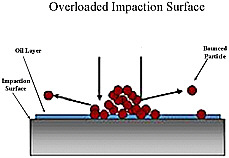
To minimize particle bounce-off and re-entrainment, impaction substrates are usually coated with adhesives, such as mineral oil or grease. However, those substances have a limited loading capacity (Sehmel 1980; Wall et al. 1990; John et al. 1991; Demokritou et al. 2001). (Box 2-1 describes how impactors may become overloaded and sampling artifacts can be introduced.) Some researchers have used a cyclone as the particle-separation device to increase loading capacity to as much as 6 mg (Kenny et al. 2000). The Well Impactor Ninety-Six Impactor, which is used as a U.S. Environmental Protection Agency Federal Reference Method sampler to collect PM2.5 particles, was found to have a loading
capacity of only about 1.5 mg (Kenny et al. 2000). Demokritou et al. (2004) has developed and used high-loading samplers for PM2.5 and PM10. These samplers use a polyurethane foam substrate to improve the performance of the inertial impactor by minimizing bounce-off and re-entrainment losses. The foam substrate also allows for a large collection of particles per unit surface area (Kavouras et al. 2000; Demokritou et al. 2002).1 Brown et al. (2008) used the high-loading samplers to collect high concentrations of crustal particles in Kuwait. Data from this study indicated excellent agreement between replicate measurements of PM2.5 and PM10 mass concentrations.
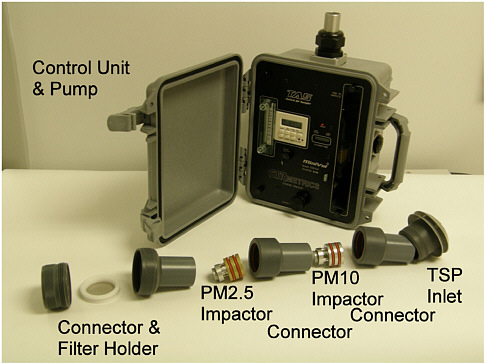
FIGURE 2-1 Disassembled MiniVol sampler. Photo courtesy of Philip Hopke, 2009.
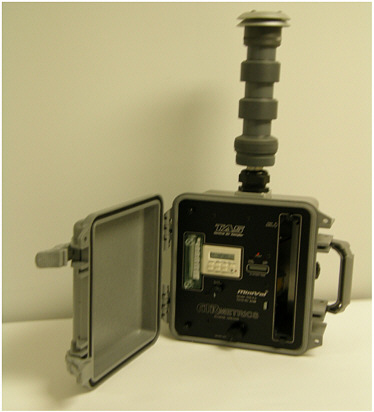
FIGURE 2-2 Assembled MiniVol sampler. Photo courtesy of Philip Hopke, 2009.
There is confidence in the precision and functionality of the MiniVol sampler under U.S. climatic conditions (Baldauf et al. 2001); however, such factors as the harsh environment of the Middle East may affect sampler results. Data from Baldauf et al. (2001), in addition to a study performed in Kuwait (Brown et al. 2008), found lower concentrations of PM than those reported by Engelbrecht et al. (2008). Although these two studies (Baldauf et al. 2001; Brown et al. 2008) do not provide a direct comparison to the sampling devices used in the EPMSP, the resulting data provide some evidence that the MiniVol sampler could overestimate concentrations in locations impacted by dust storms (see Box 2-1).
An indirect way to detect bounce-off problems is to examine the sampler precision at high concentrations. However, because no replicate samples were collected, it was not possible to examine the influence of sampling artifacts with these measurements. A reasonable agreement between replicates, especially when concentrations are high, would provide reassurance that sampling artifacts are low. However, as mentioned, the reported PM10 and PM2.5 concentrations in Engelbrecht et al. (2008) are considerably higher than those reported by other investigators who have used sampling devices that have greater capacity.
Sampling Precision
A major shortcoming of the EPMSP is the lack of replicate samples (that is, use of side-by-side samples) to assess precision in the environment where the sampling was conducted. The committee understands that that is due to the paucity of human resources and the difficult circumstances under which sampling was conducted. However, it is an important limitation of this program that repli-
cate measurements were not conducted at noncombat sites. Because of the lack of replicate samples, it is not possible to evaluate the performance of the MiniVol samplers, which operated at high temperatures and often collected large amounts of particles. It is also not possible to examine whether other factors—such as technician performance, transportation, and storage—had an effect on the quality of the data. The committee presumes that there should be less concern about sample analysis because specimens were analyzed by well-equipped and experienced laboratories; however, such quality-control information is not presented in the report.
Sample Representativeness
For a given pollutant, a small number of samples were collected per year. For example, only two PM2.5 Teflon filters were collected per month—corresponding to 24 samples for a year. Considering the high variability of concentrations, especially during dust storms, the calculated annual-average concentrations are unlikely to be adequately representative of actual exposures, and this would hinder health studies that rely on accurate assessments of chronic exposure. In addition, low sampling frequency may limit the utility of the data for health surveillance because of inadequate sample size. Less frequent measurements may lead to significant bias in reported exposures, especially in areas that are affected by transient spikes in atmospheric pollutants due to wind or other events.
CONCLUSIONS AND RECOMMENDATIONS
Conclusions
-
The investigators conducted an ambitious and challenging sampling campaign that produced an important dataset. In spite of the difficulties in implementing study protocols and operating samplers in a challenging environment with limited human resources, sample completeness was high at 88%. The committee applauds the effort to use a continuous monitor for mass measurement (DustTrak). Although it was not possible to use that monitor at high temperatures and with excessive particle loadings, other continuous samplers may be available for future studies.
-
The particle sampler was not adequately validated for its intended use. The MiniVol has not been evaluated in environments in which concentrations are excessively high, so there is a potential for sampling artifacts. The lack of replicate samples makes it difficult to assess the extent to which the measured particle concentrations accurately reflect the true concentrations at these sites.
-
The sampling approach yielded a small number of measurements for assessing particle mass and distinguishing chemical species. Sampling was conducted on a schedule of 1 day in 6, and one sample set (that is, TSP, PM10, and
-
PM2.5 samples collected on either Teflon, quartz fiber, or Nuclepore filters) was collected on a given day during a 30-day period. As a result, in a 30-day period, Teflon and quartz filters were each sampled twice, and Nuclepore filters once. During the sampling year, Teflon and quartz-fiber filters each were collected for a maximum of 7% of the days. The sampling frequency for Nuclepore filters was half that for Teflon and quartz-fiber filters. Because of the paucity of data, it is not possible to determine accurate annual-mean concentrations.
-
The samples collected with the three different filter media are not necessarily comparable since they introduce different artifacts and are used for different chemical analyses. Particle mass concentrations obtained with Teflon and quartz-fiber filters might not be comparable.2 In addition, particle mass and composition were not measured at the same time, so mass closure cannot be performed (that is, comparison of particle mass with the sum of the individual particle components).
Recommendations
-
A well-defined set of study objectives should be developed. In designing a comprehensive monitoring scheme, a set of study objectives that provides the rationale for the selection of samplers, filter media, sampling location, sampling frequency, and data-quality standards should be developed.
-
Sampling should be tailored to the questions being asked; for example, the sampling frequency would be different if one were interested in acute exposures instead of chronic exposures.
-
The number of Teflon filters should be increased. A move toward that goal could be accomplished by eliminating Nuclepore filter collection, which is feasible because the SEM studies do not need to be repeated.
-
-
Future studies should use particle samplers that can collect particles during sand storms, when concentrations exceed 200-400 μg/m3. The committee has suggested and described a new method that has been tested at three Kuwait sites (Demokritou et al. 2004; Brown et al. 2008). However, it is possible that other technologies are adequate and should be considered. A pilot study should be conducted at one of the sites—preferably a noncombat site—to validate the MiniVol and one or more alternative methods. That would make it possible to assess the quality of the previously collected data and to select an alternative sampling method if necessary. Finally, replicate samples should be collected to assess sampling performance during future sampling campaigns.
-
The report needs more details on the quality-assurance and data-validation procedures that were used to assess the adequacy of the data. Proce-
-
dures for quality assurance and quality control are important for both the sampling and handling of the filters and for the gravimetric and chemical analyses. That is mentioned in Chapter 3 in connection with the analytic procedures, but it is also relevant to sampling and handling. Discussions with the investigators indicated that there were quality-assurance procedures, but the committee is concerned that the procedures focused primarily on the analytic techniques and not the sampling procedures. In this type of study, a lack of quality-assurance procedures at the sampling stage might introduce more errors than problems with quality-assurance procedures during the analytic stage. In addition to validating the sampling devices for their intended use, robust quality-assurance procedures should be implemented to ensure the integrity of the collected samples.
REFERENCES
Baldauf, R.W., D.D. Lane, G.A. Marotz, and R.W. Wiener. 2001. Performance evaluation of the portable MiniVOL particulate matter sampler. Atmos. Environ. 35(35):6087-6091.
Bell, M.L., K. Ebisu, R.D. Peng, J.M. Samet, and F. Dominici. 2009. Hospital admissions and chemical composition of fine particle air pollution. Am. J. Respir. Crit. Care Med. 179(12):1115-1120.
Brown, K.W., W. Bouhamra, D.P. Lamoureux, J.S. Evans, and P. Koutrakis. 2008. Characterization of particulate matter for three sites in Kuwait. J. Air Waste Manag. Assoc. 58(8):994-1003.
Chow, J.C. 1995. Critical review: Measurement methods to determine compliance with ambient air quality standards for suspended particles. J. Air Waste Manage. Assoc., 45(5): 320-382.
Chow, J.C., J.G. Watson, L.W.A. Chen, J. Rice, and N.H. Frank. 2009. Quantification of organic carbon sampling artifacts in US non-urban and urban networks. Atmos.Chem. Phys. Discuss. 9(6):27359-27400.
Demokritou, P., I.G. Kavouras, S.T. Ferguson, and P. Koutrakis. 2001. Development and laboratory performance evaluation of a personal multipollutant sampler for simultaneous measurements of particulate and gaseous pollutants. Aerosol. Sci. Technol. 35(3):741-752.
Demokritou, P., I.G. Kavouras, S.T. Ferguson, and P. Koutrakis. 2002. Development of a high volume cascade impactor for toxicological and chemical characterization studies. Aerosol Sci. Technol. 36(9):925-933.
Demokritou, P., S.J. Lee, and P. Koutrakis. 2004. Development and evaluation of a high loading PM2.5 speciation sampler. Aerosol. Sci. Technol. 38(2):111-119.
Engelbrecht, J.P., E.V. McDonald, J.A. Gillies, and A.W. Gertler. 2008. Department of Defense Enhanced Particulate Matter Surveillance Program (EPMSP). Final report. Desert Research Institute, Reno, NV. February 2008 [online]. Available: http://chppm-www.apgea.army.mil/foia/DOCS/Final%20EPMSP%20Report%20without%20appx%20Feb08.pdf [accessed Feb. 1, 2010].
Hinds, W.C. 1999. Aerosol Technology: Properties, Behavior, and Measurement of Airborne Particles. New York: Wiley.
John, W., D.N. Fritter, and W. Winklmayr. 1991. Resuspension induced by impacting particles. J. Aerosol Sci. 22(6):723-736.
Kavouras, I.G., S.T. Ferguson, J.M. Wolfson, and P. Koutrakis. 2000. Development and validation of a High Volume Low Cut-Off Inertial Impactor (HVLI). Inhal. Toxicol. 12(Suppl. 2):35-50.
Kenny, L.C., R. Gussmann, and M. Meyer. 2000. Development of a sharp-cut cyclone for ambient aerosol monitoring applications. Aerosol. Sci.Technol. 32(4):338-358.
Laden, F., L.M. Neas, D.W. Dockery, and J. Schwartz. 2000. Association of fine particulate matter from different sources with daily mortality in six U.S. cities. Environ. Health Perspect. 108(10):941-947.
Lippmann, M., K. Ito, J.S. Hwang, P. Maciejczyk, and L.C. Chen. 2006. Cardiovascular effects of nickel in ambient air. Environ. Health Perspect. 114(11):1662-1669.
Marple, V.A., K.L. Rubow, W. Turner, and J.D. Spengler. 1987. Low flow rate sharp cut impactors for indoor air sampling: Design and calibration. J. Air Pollut. Control Assoc. 37(11):1303-1307.
Marple, V.A., K.L. Rubow, and S.M. Behm. 1991. A Microorifice Uniform Deposit Impactor (MOUDI): Description, calibration and use. Aerosol Sci. Technol. 14(4):434-446.
Peng, R.D., M.L. Bell, A.S. Geyh, A. McDermott, S.L. Zeger, J.M. Samet, and F. Dominici. 2009. Emergency admissions for cardiovascular and respiratory diseases and the chemical composition of fine particle air pollution. Environ. Health Perspect. 117(6):957-963.
Sehmel, G.A. 1980. Particle resuspension: A review. Environ. Int. 4(2):107-127.
Sheehy, J. 2009. Enhanced particulate matter surveillance in the U.S. Central Command theater of operations. Presentation at the First Meeting on Review of the DOD’s Enhanced Particulate Matter Surveillance Program Report, July 9, 2009, Washington, DC.
Wall, S., W. John, H.C. Wang, and S. Goren. 1990. Measurement of kinetic energy loss for particles impacting surfaces. Aerosol Sci. Technol. 12(4):926-946.
Watson, J.G., J.C. Chow, L.W. A. Chen, and N.H. Frank. 2009. Methods to assess carbonaceous aerosol sampling artifacts for IMPROVE and other long-term networks. J. Air Waste Manage. Assoc. 59(8): 898-911.


