
4
Allied Forces’ and Partners’ Issues
U.S. allies and their militaries will face climate-change-related issues similar to the challenges that the United States and its naval forces will face. Demands are expected to increase for humanitarian assistance/disaster relief (HA/DR) and maritime security missions. In some cases, potential Arctic engagement may be necessary, as climate change influences the geopolitical landscape. However, internal economic and political pressure, as well as geographic proximity to climate-change-influenced geopolitical “hot spots,” will lead to different responses from these allies and partners. Some allies will have an inherently greater capacity than others, and some may be required to deal with severe local climate-change-related issues internally or just across their borders. This chapter will examine these issues from the perspective of potential strategies for U.S. naval forces to form partnerships and develop cooperative approaches in planning for global climate-change-related issues beyond the U.S. borders.
This chapter begins with an overview of global climate change effects that have the potential to require U.S. naval responses. The chapter then focuses on how these geographic hot spots may affect U.S. allies, partners, and other nations, and it examines recent HA/DR efforts in Haiti as an illustrative case study. The chapter concludes with a discussion of regional vulnerabilities and specific findings and recommendations toward developing maritime partnerships as central to cooperative strategies for climate-change-related adaptation and planning, including suggested partnerships in the Arctic region.
The World Bank’s World Development Report 2010 states that all regions of the world are vulnerable to climate change.1 Some have more natural susceptibility
to climate effects, however, and many have a lower capability to adapt. Possible effects in these areas include drought, flood, mass migrations, conflict, and humanitarian disasters. The confluence of these factors will most likely present challenges for the United States and its allies. According to the National Intelligence Council (NIC), migrants fleeing natural disasters in North Africa, for example, may move in large numbers into NATO countries in southern Europe.2 Such mass migrations are likely to challenge the physical and social infrastructure in countries of origin and in recipient countries. While migration may or may not be seen as a security challenge, contending with such events is likely to place demands on the military and maritime resources of partner nations, as it has at times in the past.3
Taking natural and human-made vulnerability into account, the committee found that there were several global hot spots of particular concern to the United States and its allies. The “hot spot” concept has been cited by both the World Bank, in its development report, and the NIC and is expanded upon in this chapter.
IMMEDIATE CHALLENGES ASSESSMENT: ALLIED FORCES’ CLIMATE-CHANGE-RELATED ISSUES
Given the judgment that climate change will result in a range of effects for all nations, U.S. military forces, particularly naval forces, are likely to contend with climate-related contingencies around the world, as described in Chapter 2. This is both a reflection of U.S. global economic and security interests and the fact that U.S. maritime forces are forward-deployed around the world and likely to be “first responders” in contingencies requiring a U.S. response. The pervasive nature of these challenges has important implications for U.S. relations with allied and partner maritime forces.
First, climate change will affect U.S. allies in varying ways domestically and regionally. While these challenges are unlikely to trigger any treaty obligations (under NATO, ANZUS [the Australia, New Zealand, United States Security Treaty], or the U.S.-Japan Security Treaty, for example), it is very likely that allies may request U.S. assistance, particularly in dealing with humanitarian assistance, disaster relief, and mass migration. Traditionally, the posture of the United States has been to assist allies to the greatest extent possible.
Second, given the historical record of U.S. military support for global humanitarian and disaster relief operations, the President of the United States is likely to continue directing U.S. maritime forces to respond to climate change contingencies in hot spots around the globe. The capabilities and willingness of allies and partners to participate in these responses will be critical because the
|
2 |
See National Intelligence Council, 2008, 2025 Global Trends Report, November, p. 53; available at http://www.dni.gov/nic/PDF_2025/2025_Global _Trends_Final_Report.pdf. Accessed May 25, 2010. |
|
3 |
Examples include Operation Sea Signal in 1994 and Operations Safe Harbor and Able Manner in 1991-1992. |
committee judges that the United States will lack the resources and, in some instances, the strategic justification for responding alone to every request for assistance in dealing with climate-related contingencies, even when U.S. interests may be directly at stake.
The Haiti Earthquake Response
The response to the January 2010 earthquake disaster in Haiti provides some insights into the role that U.S. naval forces may be expected to play in future international HA/DR climate-related contingencies. Although the earthquake was not a climate-related event, there would very likely be operational similarities to climate-related disasters; therefore, this incident may be instructive for future naval missions. A hallmark of the January 2010 operation was the U.S. Navy’s cooperation not only with other U.S. military services but also with U.S. allies, the United Nations, nations with no formal military ties to the United States, and private organizations. A preliminary report of the lessons learned in Haiti includes the following concerns:4
-
Balance the Push Versus Pull of Forces:5 Quick initial deployment is critical. However, once local needs are determined, better coordination is needed to assure the proper balance between pushing troops and solutions onto local commands, versus the pull of forces as needed.
-
Coordination with Non-Governmental Organizations (NGOs) Is Critical: NGOs are critical partners in HA/DR operations, providing relief along with local government resources once naval personnel missions are complete. U.S. naval personnel should continue to build on its relationships and formal programs with NGOs.
-
Preplan for Strategic Communications Needs: Due to the interagency and international scope of the effort, strategic communications and coordinated post-mission withdrawal plans are needed, including preplanning and coordination with the Department of State.
-
Improve Inbound Cargo Coordination: To help avoid misrouting and improve efficiency, formal coordination with stakeholders should be established for handling of inbound cargo, including any special handling requirements.
-
Improve Medical Planning/Coordination: Early arrival of experienced medical personnel and medical planners is critical. Navy hospital ships are indispensable, but depending on location of the crisis, their arrival may take weeks.
The formal Department of Defense (DOD) lessons-learned report from Haiti is anticipated to elaborate on these and other items, and it can serve as a basis for future preplanning of international HA/DR activities between the United States, its allies, and other partners.
The Arctic
In addition to the HA/DR issues for the United States and its allies, the opening of the Arctic has the potential to be a new “great game” in geostrategic terms and thus serves as a challenge for U.S. and NATO forces.6 The potential challenges for alliances and other bilateral and multilateral relationships range from competition for Arctic resources, to navigation rights through the area, to which nation has responsibility and capability for search and rescue in the region. At the most extreme, conflicts or tensions over sovereign rights and jurisdiction in the Arctic may remain sensitive issues over the next 20 years. In addition to shifting the relationships of “frontline” Arctic nations (Canada, Denmark, Finland, Iceland, Norway, Russia, Sweden, and the United States), the opening of the area will affect global shipping routes, which in turn may affect U.S. bilateral and multilateral strategic and economic relationships around the world, with implications for maritime forces.
KEY GEOGRAPHIC “HOT SPOT” PROJECTIONS, MIGRATION PATTERNS, AND CLIMATE CHANGE IMPACT ASSUMPTIONS
National Intelligence Council Assessments
In follow-up analysis to its 2008 report National Security Implications of Global Climate Change to 2030,7 the NIC embarked on a research effort to explore in greater detail the national security implications of climate change in six countries/regions of the world: (1) Russia; (2) China; (3) Southeast Asia and the Pacific Islands states; (4) India; (5) Mexico, the Caribbean, and Central America; and (6) North Africa. The committee has reviewed the analysis provided
|
6 |
The “great game” is a term originally used to describe the strategic rivalry between the British Empire and the Russian Empire to control major portions of Eurasia in the 19th century. Some political historians have suggested that a contemporary version of the great game international rivalry has been played out in the Middle East and the Balkans since the fall of the former USSR and the end of the Cold War. The great game terminology has also been used by some writers and observers of the Arctic. For example, see Great Game in a Cold Climate: Canada’s Arctic Sovereignty in Question, Canada National Defence website; available at http://www.journal.forces.gc.ca/vo6/no4/north-nord-01-eng.asp. Accessed June 4, 2010. |
|
7 |
See House Permanent Select Committee on Intelligence and House Select Committee on Energy Independence and Global Warming, “Statement for the Record by Dr. Thomas Fingar, Deputy Director of National Intelligence for Analysis—National Intelligence Assessment on the National Security Implications of Global Climate Change to 2030,” June 25, 2008. |
in these reports.8 As of May 2010, only the first of three planned phases of data is available; the first phase assesses merely the physical impacts of climate change on these key countries, not the socioeconomic impacts or the national security impacts. The Phase I data are summarized in Table 4.1. In essence, the story that the Phase I data tell is that most areas of the world are likely to experience water stress (including floods) and a range of effects on coastal areas, with the potential for serious secondary effects (such as effects on availability of energy or agricultural productivity).
The countries and regions examined in Phase I are of particular strategic concern to the United States. According to the NIC, India and China are especially vulnerable to climate change, particularly given the size of their populations and existing development challenges. An important finding is that although Russian authorities may believe that Russia will have net gains from a warming climate (by gaining access to Arctic resources, for example), there is evidence that Russia will contend with serious challenges, particularly to its energy sector, as permafrost thaws earlier and deeper—impeding construction of new production areas. This could have a material negative impact on Russia’s oil and gas industry, the single greatest source of income to the Russian state. The Americas and North Africa are likely to see conditions that will continue or increase current migration patterns. The remaining phases of the NIC’s climate change work will assess state instability issues within the targeted region and security implications for the United States, including work to provide a more quantitative assessment (see Box 4.1).
World Bank Regional Climate Change Vulnerability Assessments
In work similar to the NIC Phase I assessments, the World Bank World Development Report 2010 presents a projection of global climate-change-related vulnerabilities.9 The report suggests specific vulnerabilities in six global regions that may be of importance for U.S. forces or their allies: (1) Sub-Saharan Africa, (2) East Asia and Pacific, (3) Europe and Central Asia, (4) Latin America and the Caribbean, (5) Middle East and North Africa, and (6) South Asia. These regional climate change vulnerabilities from the World Bank report are summarized below:
-
Sub-Saharan Africa. Sub-Saharan Africa is reported to suffer from natural fragility (two-thirds of its surface area is desert or dry land) and has high exposure to droughts and floods, which are forecast to increase with further climate change. The region’s economies are highly dependent on natural resources. Rain-
|
8 |
National Intelligence Council. 2008. The Impact of Climate Change to 2030, a series of commissioned research reports and conference reports. See http://www.dni.gov/nic/special_climate2030.html. Accessed April 8, 2011. |
|
9 |
The World Bank. 2009. World Development Report 2010: Development and Climate Change, November, The World Bank, Washington, D.C. |
TABLE 4.1 Summary of National Intelligence Council Projected High-Risk Impacts of Climate Change to the Year 2030, by Country or Region
|
Country or Region |
High-Risk Impacts |
|||||
|
Coastal Regions |
Water Resources |
Agriculture |
Energy |
Migration |
Socioeconomic/Political Stress |
|
|
Russia |
|
X |
X |
X |
X |
X |
|
China |
X |
X |
|
|
|
X |
|
Southeast Asia and Pacific Islands |
X |
X |
X |
|
|
|
|
India |
X |
X |
X |
X |
X |
X |
|
Mexico, the Caribbean, and Central America |
X |
X |
X |
X |
X |
|
|
North Africa |
X |
X |
X |
X |
||
|
SOURCE: Based on data in National Intelligence Council, 2008, The Impact of Climate Change to 2030, a series of commissioned research reports and conference reports. See http://www.dni.gov/nic/special_climate2030.html. Accessed April 8, 2011. |
||||||
-
fed agriculture contributes some 30 percent of gross domestic product (GDP) and employs about 70 percent of the population. Inadequate infrastructure could hamper adaptation efforts, with limited water storage despite abundant resources. Malaria, already the biggest killer in the region, is spreading to higher, previously safe, altitudes.
-
East Asia and Pacific. In East Asia and the Pacific, one major driver of climate change vulnerability is the large number of people living along the coast and on low-lying islands: more than 130 million people in China, and roughly 40 million, or more than half the entire population, in Vietnam. A second driver is the continued reliance, particularly among the poorer countries, on agriculture. As pressures on land, water, and forest resources increase—as a result of population growth, urbanization, and environmental degradation caused by rapid industrialization—greater variability and extremes will complicate their management. In the Mekong River Basin, for example, the rainy season will see more intense precipitation, while the dry season will lengthen by 2 months.
-
Europe and Central Asia. Vulnerability to climate change in Eastern Europe and Central Asia is driven by a lingering Soviet legacy of environmental mismanagement and the poor state of much of the region’s infrastructure. As an example: rising temperatures and reduced precipitation in Central Asia will exacerbate the already negative impact of the disappearing Southern Aral Sea (caused by the diversion of water to grow cotton in a desert climate), while sand and salt from the dried-up seabed are blowing onto Central Asia’s glaciers, accelerating the melting caused by higher temperatures. Poorly constructed, badly maintained, and aging infrastructure and housing are ill suited to withstand storms, heat waves, or floods.
-
Latin America and the Caribbean. Latin America and the Caribbean’s most critical ecosystems are under threat. First, the tropical glaciers of the Andes are expected to disappear, changing the timing and intensity of water available to several countries; this, in turn, will result in water stress for at least 77 million people as early as 2020 and will threaten hydropower, the source of more than half the electricity in many South American countries. Second, warming and acidifying oceans will result in more frequent bleaching and possible diebacks of coral reefs in the Caribbean, which host nurseries for an estimated 65 percent of all fish species in the basin, provide natural protection against storm surge, and are a critical tourism asset. Third, damage to the Gulf of Mexico’s wetlands will make the coast more vulnerable to more intense and more frequent hurricanes. Fourth, the most disastrous impact could be a dramatic dieback of the Amazon rain forest and a conversion of large areas to savannah, with severe consequences for the region’s climate.
-
Middle East and North Africa. Water is the major vulnerability in the Middle East and North Africa, the world’s driest region, where per capita water availability is predicted to halve by 2050 even without the effects of climate change. The region has few attractive options for increasing water storage, since
|
BOX 4.1 National Security and the Ranking of Global Climate Change Adaptive Capacity Researchers have recently taken on the challenge of assessing adaptive capacity in a comparative quantitative framework. In this work, a comparative study of country-specific resilience to climate change is provided based on the Vulnerability-Resilience Indicators Model (VRIM).a A representative preliminary VRIM comparison of a group of 10 countries (from a 160-country database) is indicated in Figure 4.1.1 for base year 2006. Additional detailed views of key components of adaptability are also available from the model. |
-
close to 90 percent of its freshwater resources are already stored in reservoirs. The increased water scarcity, combined with greater variability, will threaten agriculture, which accounts for some 85 percent of the region’s water use. Vulnerability is compounded by a heavy concentration of population and economic activity in flood-prone coastal zones and by social and political tensions that resource scarcity could heighten.
-
South Asia. South Asia suffers from an already stressed and largely degraded natural resource base resulting from geography coupled with high lev-
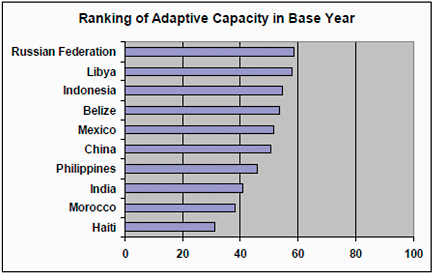 FIGURE 4.1.1 Results from VRIM models have been used in regional vulnerability analysis conducted by the National Intelligence Council. Additional details on VRIM and its application to adaptability studies in six regions of the world are found at http://www.dni.gov/nic/special_climate2030.html, accessed April 8, 2011. SOURCE: Elizabeth L. Malone, Joint Global Change Research Institute, “Scientific Knowledge About Climate Change for Consideration in National Security Planning,” presentation to the committee, February 4, 2010. |
-
els of poverty and population density. Water resources are likely to be affected by climate change through its effect on the monsoon, which provides 70 percent of annual precipitation in a 4-month period, and on the melting of Himalayan glaciers. Rising sea levels are a dire concern in the region, which has long and densely populated coastlines, agricultural plains threatened by saltwater intrusion, and many low-lying islands. In more severe climate change scenarios, rising seas would submerge much of the Maldives and inundate 18 percent of Bangladesh’s land.
Based on these analyses, no region of the world is immune to potential climate change impacts, and each region has the potential to generate climate-related missions for U.S. naval forces or U.S. allies and partners. Related to this, the committee also received briefings associated with issues surrounding water availability and conflict.10 There is growing regional competition for water due to rising populations and rising demands from many sectors around the globe. For example, several African countries are arguing over water rights to the Nile based on claims exerted by Egypt; Israel and Jordan have competing claims to the Jordan River; across the Himalayas, China’s dam on the Yarlung Tsangpo River is causing anxieties about water availability in India’s northeastern sector and in Bangladesh; and India’s own projects to build hydroelectric dams along the Indus River to trap Himalayan waters have caused increased tension with Pakistan.11 While this committee did not focus on water challenges directly, challenges to water systems and water availability exacerbated by climate change could add to global tensions and lead to potentially broader national security implications and implications for naval forces. Climate-change-related water tensions are a special subset of climate change and should remain on the radar for U.S. national security and naval leaders.12
PRELIMINARY STRATEGIES/OPPORTUNITIES TO LEVERAGE U.S. AND ALLIED FORCES AND CAPABILITIES
Given the scope and scale of potential climate change contingencies and vulnerabilities, the United States lacks the resources and capabilities to respond to all plausible scenarios that may directly or indirectly affect the homeland, allies, or general global catastrophic situations. The capabilities and cooperation of partners and allies will not only be important, they will be necessary.
The United States should place a high priority on cooperating with allies, non-allied partners, and private organizations in both anticipating and responding to global climate change and geographic hot spots. The committee agrees that these partnerships at this time are either not sufficiently robust or tailored for the quantity and type of missions that are most likely to occur.
|
10 |
Kathy Jacobs, Deputy Director, White House Office of Science and Technology Policy, “Perspectives from OSTP on Water, Adaptation, and the National Assessment,” presentation to the committee, February 5, 2010; see also Peter H. Gleick, President, The Pacific Institute, “Water, Climate, and International Security: Definitions, History, and Future Risks,” presentation to the committee, November 19, 2009. |
|
11 |
Lydia Polgreen and Sabrina Tavernise, “Water Dispute Increases India Pakistan Tension,” New York Times, July 20, 2010; available at http://www.nytimes.com/2010/07/21/world/asia/21kashmir.html?_r=1&adxnnl=1&ref=water&adxnnlx=1284742861-5IiKNw+K65TaQM6PEasqgQ. Accessed February 14, 2011. |
|
12 |
A map of projected change in regional water availability may be found at World Development Report 2010: Development and Climate Change, November 2009, The World Bank, Washington, D.C., p. 148. |
In a review associated with this study, the committee studied the 2008 National Research Council’s Naval Studies Board report entitled Maritime Security Partnerships.13 In the committee’s review, it became clear that many of that study’s rationales for and proposals concerning maritime security partnerships are pertinent for dealing with future climate-related contingencies, particularly in those requiring HA/DR missions. The committee recommends that the leaders of U.S. naval forces should pay particularly close attention to three of the recommendations (summarized below) from that study when considering climate change:
-
Continue bilateral and multilateral training and exercising of U.S. naval personnel with partner nation personnel in maritime security, search and rescue, and HA/DR exercises;
-
Explore the expansion of a robust foreign area officer (FAO) program within the Navy to meet the needs of staffing and expanding maritime security partnerships. In addition, the Commandant of the Coast Guard should establish an FAO program and the Commandant of the Marine Corps should expand its present limited FAO program for the development of bilateral and multilateral relationships; and
-
Direct the United States Coast Guard to forward deploy Coast Guard cutters to locations that offer opportunities for the joint enforcement of maritime security. These cutters would help to attain Navy and combatant commander engagement goals and would be the correct security assets to employ to meet theater cooperation goals.14
With stronger partnerships and more capable partners, the United States will be more likely to mount effective responses to the range of projected climate-related contingencies. Even with better partnerships, however, the United States will not be able to respond to every scenario. Moreover, many partner nations may be unable to commit resources to a catastrophic event because they are fully engaged in their own domestic or regional issues brought on by the same event.
The Department of the Navy, in cooperation with other military services, the Department of Homeland Security, the Department of State, and other relevant agencies, should therefore invest resources in understanding the human impacts of climate change in order to prepare for and prioritize the most plausible contingencies. The DOD’s 2010 Quadrennial Defense Review directs that the department pursue risk management strategies.15 In this committee’s opinion, it will be very important for the department to apply that recommendation to climate change.
The DOD should consider climate change to be comparable to other challenges to U.S. interests, focusing planning and strategy on the contingencies that are most threatening for U.S. security.
It is possible that such careful consideration of climate change challenges may result in a determination that elements of the U.S. government other than the naval forces will need to take the lead on climate change response. For example, making U.S. and global communities more resilient to projected changes may be a more appropriate mission for development, aid, or trade agencies rather than military organizations. Engagement and preplanning with leading nongovernmental organizations specializing in HA/DR at the planning table are also highly encouraged.
NATO could become a focal point for leading international military HA/DR efforts, but as of the writing of this report, NATO does not yet have a formal climate change policy.16 The committee’s discussions with senior military officials suggest that many NATO countries have strong national climate change policies, but they lack sufficient capabilities to prepare for or respond to projected climate changes at home and around the world. Although differences of opinion on climate change have at times been divisive in relations among NATO countries, a common effort to develop capabilities and capacity for climate response has the potential to strengthen the alliance.
FINDING 4.1: All regions of the world will experience the effects of projected climate change. Some climate change effects, such as changes in storm patterns and drought, will have direct impacts in the United States. Should regional storms and droughts intensify over time they may well drive mass migrations to the United States from neighboring countries, including Mexico, the Caribbean, and Central America. Projected climate change will also directly and indirectly affect most U.S. allies, including NATO countries, Australia, Japan, and all other major non-NATO allies, which in turn may request or require U.S. assistance.
RECOMMENDATION 4.1: Given that U.S. naval forces cannot be fully prepared for or respond to all plausible climate contingencies, the Chief of Naval Operations, working with the combatant commanders, the Commandant of the Coast Guard, and the Commandant of the Marine Corps, should develop or expand maritime partnerships with other nations. Projected climate change will affect all regions of the world, and so U.S. naval forces should seek to develop these partnerships with long-standing allies and nontraditional partners alike, including Russia, China, and nongovernmental organizations. In particular, developing
|
16 |
See “NATO Secretary General Debates Climate Change Security Threats in Copenhagen,” NATO News, December 15, 2009; updated April 14, 2010. Available at http://www.nato.int/cps/en/SID-614123F7-2989961A/natolive/news_60163.htm?selectedLocale=en. Accessed June 4, 2010. |
climate change response capabilities within the NATO alliance could strengthen global climate change response capabilities and the alliance itself.
THE NEW “GREAT GAME”
The Arctic region covers some 8,100,000 square miles, with volatile weather and very harsh, rapidly changing conditions. Operations in the area, as covered in earlier chapters, are expensive and difficult and require significant and unique resources and training. Changing Arctic conditions are already reshaping geostrategic relationships, including for non-Arctic nations. Indeed, a number of other nations possess Arctic capabilities that exceed those of the United States, and not all of these nations are allies or even frontline Arctic states.
There are eight “frontline” Arctic nations—Canada, Denmark, Finland, Iceland, Norway, Russia, Sweden, and the United States—many with unresolved claims in the region. In addition, Russia, Canada, Norway, and Denmark are all expanding their Arctic military capabilities.17 Earlier this year, the Russian Security Council posted on its website a paper describing the country’s Arctic strategy. The document calls for a new military force to be established by 2020 to protect Russian interests in the region. The Russian strategy also calls for building up military units to secure Arctic coastal borders.18 Likewise, Canada’s “Northern Strategy” documents, published in September 2009, emphasize border protection and the exercise of Canada’s sovereignty over its Arctic lands and waters. Norway, Sweden, and Finland have banded together in the Nordic Defense Cooperation Initiative, in part to share and coordinate military resources in the region.19
The United States has cooperated routinely with all of these nations on Arctic matters. This has been done on a bilateral basis and through NATO, as well as through the Arctic Council, scientific partnerships, and ad hoc arrangements. Thus far, disagreements on regional issues have been resolved without conflict.20 Related to this, the committee held discussions on anticipated Arctic issues and
|
17 |
Noel Brinkerhoff. 2009. “U.S. Navy Prepares for Militarization of the Arctic,” All Government, November 30. |
|
18 |
See Katarzyna Zysk, 2010, “Russia’s Arctic Strategy, Ambitions and Constraints,” Joint Forces Quarterly, Issue 57, 2nd Quarter. See also “New Russian Maritime Strategy Highlights Arctic”; available at http://www.barentsobserver.com/new-russian-maritime-strategy-highlights-arctic.4554994-116320.html. Accessed June 4, 2010. |
|
19 |
See Canada’s Northern Strategy documents at http://www.northernstrategy.gc.ca/index-eng.asp. Accessed February 14, 2011. The committee was also briefed by Ross Graham, Director General, Defence Research and Development Canada, Center for Operational Research and Analysis, February 4, 2010. Norway’s Arctic strategy was presented to the committee on March 22, 2010, by MajGen Tom H. Knutsen, Defense Attaché, Royal Norwegian Embassy, Washington, D.C. |
|
20 |
In discussions on March 5, 2010, with this committee, ADM James G. Stavridis, USN, Commander of the United States European Command and NATO’s Supreme Allied Commander Europe (SACEUR), stated that the United States and NATO, while aware of areas of disagreement with Russia, will seek a cooperative strategy with Russia in the Arctic region. |
strategies with government and military representatives of Norway, Canada, and the United States, and with the NATO Supreme Allied Commander. Each expressed concerns about sovereignty, access, and border protection; however, each suggested a strong preference for an Arctic strategy based on cooperation.
More recently, in April 2010, after 40 years of negotiations, Russia and Norway announced an agreement to end a long-standing undersea border dispute in the Barents Sea and Arctic Ocean. The agreement outlines the extent of each nation’s Arctic territory.21 While avoidance of military conflict cannot be assured, this committee’s findings on potential conflict in the Arctic further support the 2005 national intelligence assessments that major military conflict in the Arctic region is not likely over the next 20 years.
As the Arctic region becomes more navigable, there is strong potential for a dramatic effect on global trade routes well beyond the Arctic. Although estimates on when the Arctic will become “ice-free” for purposes of safe commercial navigation range from 2013 to 2075,22 two German commercial vessels did transit the Northern Sea route in the summer of 2009 with Russian icebreaker support.23 China currently operates an icebreaking research vessel and is building a second, providing further evidence of increasing interests in the Arctic.24 Very recently, Russia announced that it intends to send an oil tanker accompanied by an ice-breaker from the White Sea to Japan via the Arctic route in the summer of 2010. The effort is believed by many to be an attempt by the Russian state-owned shipping company to demonstrate mastery of Arctic navigation.25
U.S. maritime forces must be prepared to play a part in this continuum of relationships in the Arctic—competition, cooperation, and conflict—by helping build maritime partnerships in the region and developing the requisite operational capabilities, as noted in previous chapters. In particular, combined operations, training, and planning between U.S. and Canadian maritime forces are going to be critical to protecting and promoting U.S. regional interests. In this and in other partnerships, the Navy and Coast Guard will be able to draw on established bilateral relationships and multilateral partnerships, such as the NATO alliance and the Arctic Council, but there will also be a need for new arrangements and agreements for Arctic maritime operations. It may be difficult, if not impos-
|
21 |
See “Russia and Norway Reach Accord on Barents Sea,” New York Times, April 27, 2010. |
|
22 |
As discussed in Chapter 2, throughout this report the term “ice-free” is used to mean that multiyear ice has nearly (or completely) disappeared; however, to date, in what is termed “ice-free” conditions, sufficient ice is present to remain a hazard to ordinary ships and routine marine operations. This committee suggests that 2030 is the approximate timing for ice-free summer months in the Arctic Ocean. |
|
23 |
See Andrew E. Kramer and Andrew C. Revkin, “Arctic Shortcut Beckons Shippers as Ice Thaws,” New York Times, September 10, 2009. |
|
24 |
Linda Jacobson. 2010. “China Prepares for an Ice Free Arctic,” SIPRI Insights on Peace and Security, March 1. |
|
25 |
See “Oil Tanker Titan Plans to Break the Ice on Arctic Route,” Financial Times, April 13, 2010; available at http://www.ft.com/cms/s/0/7bcf96dc-4697-11df-9713-00144feab49a.html. Accessed June 4, 2010. |
sible, for U.S. forces to develop these new arrangements and agreements if the United States fails to ratify the United Nations Convention on the Law of the Sea (UNCLOS). As discussed elsewhere, U.S. naval leadership should support ratification of UNCLOS.
FINDING 4.2: Although the likelihood of conflict in the Arctic is low, it cannot be ruled out, and competition in the region is a given. However, cooperation in the region should not be considered a given, even with close allies. Although there are mechanisms for bilateral and multilateral cooperation in the area, including the Arctic Council, these relationships and mechanisms are largely untested for emerging conditions. Additionally, with the ratification of UNCLOS, U.S. naval forces will be better positioned to conduct future naval operations and protect national security interests, especially in the Arctic.
RECOMMENDATION 4.2: The Chief of Naval Operations, working with the combatant commanders, the Commandant of the Coast Guard, and the Commandant of the Marine Corps, should build maritime partnerships in the Arctic region and encourage the United States to continue to identify and adopt policies and relationships in the Arctic that will build cooperation for new circumstances and minimize the risks of confrontation. (For example, naval leaders should pursue bilateral and multilateral training and exercising of U.S. naval personnel with partner nation personnel in maritime security, search and rescue, and HA/DR, and continue strong support of the U.S. efforts in the Arctic Council.) There should be no assumption that the geostrategic situation will take care of itself or that U.S. interests in the region are currently protected and promoted.


