
CHAPTER FIVE
Environmental Effects of Coalbed Methane Development and Produced Water Management
An element of the committee’s charge includes identifying documented positive and negative effects of coalbed methane (CBM) produced water on the quality and quantity of surface water and groundwater resources, soil resources, and ecological communities. This chapter is weighted toward discussion about the Powder River Basin because large volumes of CBM produced water are discharged to surface waters or impoundments or are being put to beneficial use there, relative to other western CBM basins. Correspondingly, most of the scientific literature on the environmental effects of CBM produced water and most of the controversy that has precipitated litigation or media attention about CBM produced water management has originated from research conducted in this basin. With deep re-injection the primary method of CBM produced water management in the other western CBM basins, fewer perceived or documented effects on the surface environment or shallow groundwater have contributed to less litigation, less media attention, and fewer studies of environmental effects being completed in those basins. Data that characterize the quality of waters in the geologic formations used for reinjection are not readily available, but can be inferred from borehole logs.
Reports from private citizens on the effects of CBM produced water on the environment were also instrumental in focusing some committee attention to examining potential research or information gaps associated with CBM produced water management. This chapter contains a review of registered citizen complaint information from several official state websites and identifies several cases in which the complaints were brought to court.
GROUNDWATER
The primary substantiated effects of CBM produced water on groundwater resources include (1) drawdown of groundwater levels in coalbeds as a result of pumping water from coalbeds during CBM extraction and (2) changes in groundwater quality associated with
CBM produced water in surface impoundments. These effects and their potential causes are addressed below. Although adverse effects from hydraulic fracturing have not been documented in CBM fields, the issue is of concern to the public. A brief discussion of hydraulic fracturing is included at the end of this section.
Effects of Groundwater Withdrawal on Aquifers
Research demonstrates that a principal effect of CBM withdrawals on groundwater is reduction of water volume and hydrostatic head within coalbeds from which methane is being extracted. Typically, the CBM well is pumped to reduce the hydrostatic pressure in the coalbed to a pressure approximately equal to atmospheric. However, water is still retained within the coal and generally the head level of water in the coalbed is maintained relatively close to the uppermost physical surface of the coalbed. Any effects of water withdrawal from methane-bearing coalbeds on water levels in other aquifers are a function of the depth of the target coalbeds and the degree of hydraulic connection between CBM targets and the other local or regional aquifers (see Chapter 2 for discussion of hydraulic connectivity).
Pumping water during CBM extraction in basins with deep methane-bearing coals, such as the San Juan, Raton, Uinta, and Piceance basins, is unlikely to cause lowering of the water table of shallow alluvial aquifers because of lack of hydraulic connectivity between the deep coals and shallow aquifers coupled with the great vertical separation between the coalbeds and the shallow groundwater systems (upward of thousands of feet; see also Chapter 2). Typically, methane-bearing coalbeds in these basins are bounded above and below by either aquitards or aquicludes (see Chapter 2) that are responsible for both the positive hydrostatic pressure within the coalbeds and the lack of hydraulic connectivity or communication between the coalbeds and overlying and underlying aquifers. An exception to this circumstance is that reported by Riese et al. (2005) for the San Juan Basin, in which the authors documented movement of water from below the methane-bearing coalbeds upward and into the coalbeds (see Chapter 2).
In contrast, depths to methane-bearing coalbeds in the Powder River Basin are relatively shallow and less consolidated than those of the other western CBM basins (see Chapter 2). Consequently, the coalbeds generally consist of porous and permeable formations capable of releasing large amounts of water during methane production (see Table 2.1). Some of the coalbeds or fringes of coalbeds in the Powder River Basin are also sufficiently close to the land surface that they serve as sources of domestic, residential, wildlife, and livestock water supply (Frost et al., 2010; Wheaton et al., 2005; Campbell et al., 2008). These supplies often surface as flowing springs and wells. In some instances wells are drilled into the coalbeds and the water is used for stock watering or domestic supplies. However, direct physical connections between water-bearing coalbed aquifers from which CBM is being extracted and other alluvial groundwater that supplies water wells and springs in the basin are not widely
established; geochemical data suggest that coal aquifers and other alluvial groundwater aquifers do not interact to any great degree in studied parts of the Powder River Basin (see discussion in e.g., Frost et al., 2010; Bartos and Ogle, 2002; see also Chapter 2). Anecdotally, CBM production has been linked to some losses of drinking water or dry wells where the water wells were close to the CBM development and/or were completed in the coals which serve as a primary aquifer.
In addition to geochemical information that can help determine the degree of connectivity between CBM coalbeds and other groundwater aquifers, groundwater monitoring networks are being used to measure the degree to which CBM production may affect water levels in shallow aquifers. The Montana Bureau of Mines and Geology (MBMG) maintains and samples a regional network of groundwater monitoring wells that includes wells installed in the late 1970s and early 1980s to monitor the effects of coal mine dewatering, a separate activity from CBM operations, and more recent wells installed specifically to monitor CBM production. The MBMG receives funding from the Bureau of Land Management (BLM) in support of this monitoring program. In Wyoming, in response to concerns about potential effects to groundwater from CBM development in the Powder River Basin, BLM established a regional groundwater monitoring program that is outlined as part of the Wyodak CBM Final Environmental Impact Statement (BLM, 1999). The program was designed to collect information regarding hydraulic connectivity between producing coals and adjacent sandstone units and to measure the extent of groundwater drawdown in the CBM-producing coal zone on federally owned lands. Results from both the Montana and Wyoming groundwater well monitoring programs are briefly summarized below.
MONTANA
Many of the monitoring wells are completed in the Dietz (associated with the Anderson coalbeds) and Canyon coalbeds in the Powder River Basin (Wheaton and Metesh, 2002; see also Figure 2.4b). The monitoring network has been sampled for seven consecutive years (2003–2009), in addition to sporadic monitoring for nearly three decades before CBM development was initiated in the area, and the data are available in annual reports through the 2008 sampling event.1
Data from this network indicate that static water levels in the Dietz coalbeds, from which CBM is being extracted, have been lowered by as much as 150 feet. Static water levels in the Canyon coal, also a coalbed from which CBM is being extracted, have been lowered as much as 600 feet in limited areas (Meredith et al., 2008). CBM-related drawdown of 20 feet of the static water level in the Canyon and Dietz coalbeds currently extends to
roughly 1 to 1.5 miles outside the CBM fields. Although little change in the water levels of the monitored coalbeds in Montana has been observed since 2004, the areal extent of water drawdown in the coalbeds is predicted to increase in the future as CBM production increases (see also Chapter 1). Meredith et al. (2008) predicted the 20-foot drawdown contour to expand to 4 miles beyond the edges of the large production fields. Results from these studies apply specifically to drawdown in the Dietz and Canyon coalbeds, which are uniquely identifiable and distinguishable coal- and methane-bearing aquifers; however, as noted above and in Chapter 2, these coalbeds, while regionally pervasive, are not necessarily the same as shallow alluvial coalbed aquifers that may supply substantial domestic and livestock water or contribute to significant base flow of perennial water resources in this area.
Groundwater models and monitoring results have been interpreted to indicate that water levels in the Anderson-Dietz and Canyon coals will take decades to return to original levels (Wheaton and Meredith, 2009). The extent of water level drawdown in the coalbeds and the time to recovery depend on (1) proximity to CBM production, (2) site-specific aquifer characteristics, (3) proximity to recharge areas, and, potentially also, (4) connection or access in the coalbeds to water from deeper horizons (Meredith et al., 2008). On the edge of the basin, near recharge areas, 75 percent recovery occurred within five years of the monitoring period when pumping was discontinued in the Anderson coal formation. In the center of the area monitored, where pumping was most aggressive, groundwater levels in the Anderson coal have recovered 65 percent in 10 years (Wheaton and Meredith, 2009). An example of groundwater drawdown and recovery in several wells in the Anderson-Dietz coal aquifer in Montana is shown in Figure 5.1. Sufficient data have not been collected at this point to either (1) characterize the contributing sources to recharge or (2) determine through geochemistry comparisons whether the recharge water is the same as or uniquely different from water currently within the coalbeds. In the latter case, recharge could be attributed to redistribution of water due to pressure (or head) gradients resulting from several years of pumping.
WYOMING
In the Wyoming portion of the Powder River Basin, the Wyoming State Geological Survey, in collaboration with BLM, analyzed data from 111 wells in the BLM deep-well monitoring network, collected from 1993 to 2006 (Clarey, 2009). The data indicate that drawdown occurs within the coalbeds or coal aquifers (“confined coals”) and that the magnitude of drawdown is greater nearer to monitoring wells located in areas of CBM development than in areas peripheral to development, consistent with that reported by Meredith et al. (2008). The measured impacts include a maximum groundwater-level drawdown of up to 625 feet within the coals in Fort Union coal monitoring wells and maximum groundwater-level drawdowns of more than 260 feet in the overlying Wasatch sandstone.
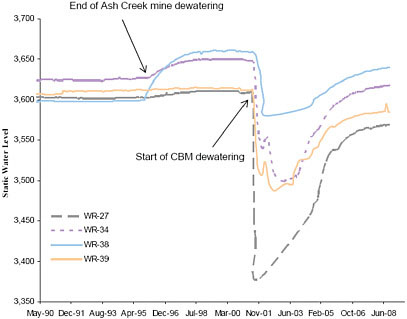
FIGURE 5.1 Measured groundwater elevations in Anderson-Dietz coal seams during and after coal mining dewatering and then following the initiation of CBM-related dewatering. The larger drawdown (80 to 233 feet, starting in 2001) is related to CBM production, and recoveries of 73 to 87 percent over a seven-year period are related to a gradual decrease in CBM production. Full recovery is predicted to take 20 to 30 years. These wells are located in the CX CBM field in the southwestern corner of the Montana portion of the Powder River Basin near the Wyoming border. The original drawdown (pre-1995) in Figure 5.1 was from coal mine dewatering, and water levels largely recovered before CBM production began. SOURCE: Meredith et al. (2008).
Since 1997, hydrological impacts in the Powder River Basin from CBM development have been regionally confined to some of the Tongue River Member coals of the Fort Union Formation and some of the sandstone beds in the overlying Wasatch Formation. The latter sandstones are deeper beds that are in physical contact with the coalbeds. Importantly, these drawdowns are being measured in coals that are the same as the coals being pumped for methane extraction.
Recent modeling studies have shown that CBM impacts to groundwater levels in the upper coal member of the Fort Union Formation are slightly less than the drawdowns modeled and predicted for the year 2006 (AHA and GEC, 2002; Clarey, 2009). The observed drawdowns in the Wasatch sandstone wells were also compared with modeled (predicted)
drawdowns (AHA and GEC, 2002). The different sandstone zones within the Wasatch did not show drawdown of Wasatch water levels except for a few limited areas, suggesting limited connectivity of the units. Thus, although pumping of water in Wyoming has been much more aggressive and local to the CBM wells compared to Montana, the conclusions of this analysis in Wyoming are consistent with those reported by Wheaton and Meredith (2009) and in various MBMG reports (see references above).
IMPORTANCE OF FOSSIL WATER
Determining the extent to which CBM produced water is actually fossil water (see Chapter 2) is also important to analyzing the effects on groundwater drawdown. Multiple lines of evidence suggest that CBM produced water in the San Juan Basin and potentially also in the Raton Basin is fossil water with an age of thousands to tens of millions of years. Prior to extraction, the water rested underground in aquifers in these basins over geological timescales, without interacting with or being affected by surface events such as rainfall. Recharge of the San Juan and Raton coalbed aquifers is low because of hydrogeological compartmentalization and the fact that evaporation usually exceeds precipitation in the dry western climate. Data from the Powder River Basin suggest that some of the CBM aquifer water there is also likely at least thousands of years old in aquifers with limited connectivity (see Chapter 2).
Long-term implications of mining fossil water have not been studied or included as part of the discussion of management approaches for CBM produced water. Similarly, basin-wide and comprehensive analyses of the degree of hydraulic connectivity between CBM aquifers and other groundwater aquifers are needed to understand the degree to which CBM waters may be considered “fossil.” Such studies have not been thoroughly completed for any basin except the San Juan.
HYDRAULIC FRACTURING
In CBM operations where hydraulic fracturing is regularly used, expressions of concern by the public prompted a study by the U.S. Environmental Protection Agency (EPA) to assess the potential for contamination of underground sources of drinking water (USDWs) as a result of the practice (see also Box 2.1). The study (EPA, 2004) found that, while fracturing fluids contain various chemicals, the identities of which are not generally a reporting requirement for operators, no conclusive evidence of drinking water contamination by hydraulic fracturing fluid injection was found to be associated with CBM wells. Lack of comprehensive datasets and studies, and continued development of domestic oil and gas fields since the release of that report, have continued to focus attention on hydraulic fracturing. The EPA has announced it is conducting a broader analysis of the potential effects
on water quality and public health from hydraulic fracturing throughout the entire oil and gas industry (EPA, 2010).
CBM Impoundments and Produced Water Quality
Surface impoundments hold produced water until it evaporates or infiltrates into the subsurface, or they store the water for future beneficial uses (see Chapter 4). In 2008, 64 percent of the CBM produced water in the Wyoming portion of the Powder River Basin was managed in surface impoundments (see Box 4.1). Surface impoundments are not used extensively in the other western CBM basins or in the Montana portion of the Powder River Basin (see Table 4.1 and Chapter 3), although some impoundments (lined and unlined) are used in the Raton Basin in Colorado. Impoundments strictly for storage or disposal (evaporation or infiltration) are no longer permissible in Montana. In the Raton Basin the Colorado Oil and Gas Conservation Commission (COGCC) has indicated some issues related to leaks or seepage from the impoundments either to the surface water or groundwater, but the committee was not able to identify specific data on the extent of any effects of seepage from the impoundments (Ash and Gintautas, 2009). Thus, the remaining discussion focuses specifically on impoundments in the Wyoming portion of the Powder River Basin.
As of 2005, about 2,500 of the approximately 3,000 CBM impoundments in the Powder River Basin were “on-channel” impoundments sited within a water feature (including perennial and ephemeral streams and rivers, dry washes, marshes, and lakes) or within the floodplain or alluvium of a water feature. Roughly 200 impoundments were “off-channel” and unlined, with the intent to recharge underlying groundwater. The remaining off-channel impoundments are lined to reduce, minimize, or prevent leakage and infiltration into underlying soils. According to Wyoming state policy, off-channel impoundments may not be sited within 500 feet of a designated water feature (and must be located at least 500 feet from the outermost floodplain or alluvium; Fischer, 2005a).
In Wyoming, impoundments were initially permitted for the purpose of storage of produced water, although the intent was to facilitate disposal by evaporation, enhanced by atomization, infiltration, or for storage for land spreading or irrigation. Under Wyoming DEQ permitting provisions, a limited number of impoundments were permitted for the purpose of infiltration. Wyoming DEQ presently permits some off-channel impoundments for the purpose of infiltration, but not necessarily with the intent of recharging underlying groundwater. Changes to the guidelines for construction and monitoring of unlined impoundments in Wyoming are outlined in Chapter 3.
Potential groundwater effects from off-channel CBM produced water impoundments relate to the leaching of salts, metals, or metalloids that occur naturally in soils in or under the impoundments and that may be dissolved and mobilized by CBM produced water infiltrating beneath the impoundments (McBeth et al., 2003; Jackson and Reddy, 2007;
Healy et al., 2008). The measured chemical elements of interest include sulfate, selenium, arsenic, manganese, barium, and total dissolved solids (TDS). Geochemical processes involving these constituents can also affect infiltration rates of water into soil over time. Healy et al. (2008) have indicated that high TDS and nitrate and chloride concentrations exist under some CBM water impoundments in the Powder River Basin. The researchers concluded that large amounts of chloride (12,300 kg) and nitrate (13,500 kg) were being leached from soil materials below impoundments into perched groundwater resulting from water infiltrating from the impoundments. Several additional studies in the Powder River Basin of different impoundments (including both on- and off-channel impoundments) and associated groundwater effects are described below to illustrate the various scales at which groundwater data related to impoundments may be analyzed and the effects of the results on management and monitoring requirements.
A preliminary study in 2005 by the Water Quality Division of the Wyoming DEQ on the potential effects on groundwater of CBM impoundments indicated high concentrations of TDS, selenium, and sulfate in groundwater beneath four on-channel impoundment facilities (Fischer, 2005a,b). These concentrations had increased as a result of the infiltration of CBM produced water below the impoundment and subsequent dissolution of minerals and other compounds in the underlying soils. The impact on groundwater quality beneath the impoundments caused the Class of Use of the groundwater to be changed from Class III2 (livestock use; 3,000 mg/L TDS) to Class IV (industrial use) because of TDS, selenium, and sulfate in excess of Class III standards (Fischer, 2005a,b). As a consequence of these results, the Wyoming DEQ implemented new compliance monitoring guidelines for new CBM impoundments in the state. Continued studies were recommended to determine the effects on groundwater over the entire basin. As mentioned previously, the new guidelines which were developed on the basis of the 2005 study have been updated again and were issued by Wyoming DEQ in April 2010 (see Chapter 3).
As part of its continuing investigation of the extent of groundwater and surface water impacts from impoundments (on- and off-channel) and the length of time these impacts may persist following closure, the Wyoming DEQ Water Quality Division recently completed a comprehensive review of five years of groundwater monitoring data associated with CBM produced water impoundments (on- and off-channel) and their effects on shallow groundwater in the Powder River Basin. Between August 2004 and May 2010, the Wyoming DEQ reviewed data for more than 2,000 CBM produced water impoundments
(Fischer, 2009a,b; see also ALL Consulting, 2008)3,4 which were drilled to investigate the presence or absence of groundwater. Approximately half of the sites lack groundwater resources to the required depth of investigation, which is either 150 feet or 200 feet below ground surface depending on the size of the impoundment. Those sites that encountered groundwater were sampled and the reports were submitted to DEQ (approximately 900 reports). The Wyoming DEQ has issued permits and associated compliance monitoring programs for approximately 296 impoundments. Many of the impoundments have either never been constructed, have not received discharge, or will not be used. The Wyoming DEQ has issued groundwater monitoring exemptions for approximately 1,485 impoundments because either groundwater was not encountered during the drilling program, or groundwater was Class IV (industrial) quality.
Relative to the 296 impoundments for which permits and associated compliance monitoring programs have been issued, permit-holders for 144 impoundments with 170 associated monitoring wells submitted monitoring reports as of May 2010. The monitoring wells are part of the state’s impoundment performance compliance monitoring process and are currently sampled on a scheduled basis (e.g., quarterly, semi-annually, or annually) as required in the monitoring well permit to construct. The impoundments overlie Class III (livestock) quality groundwater and the monitoring reports documented exceedance of groundwater standards beneath 17 impoundments since 2004. The primary constituents identified in groundwater were TDS, sulfate, and/or selenium, largely related to dissolution of soil-associated selenium and pre-existing gypsum (calcium sulfate) salts above the water table. In addition, some impoundments exceeded surface water standards for iron and barium. The state also found about 50 leaking reservoirs that required corrective action (e.g., pump-back systems or cessation of discharge).
In an assessment of the 170 monitoring wells associated with 144 impoundments,5 specific changes in groundwater level and chemistry of groundwater sampled from the wells were based on identification of four qualitative trends in water geochemistry: (1) stable (no upward or downward trend during the measurement period), (2) upward (increasing salinity and sulfate concentrations), (3) flushed (increasing concentrations followed by decreasing concentrations), or (4) improved (decreasing concentrations of salinity and sulfate). In the majority of instances (72 percent), the trend analyses indicated that CBM water from impoundments resulted in no apparent water quality trend (stable trend) as a result of interaction with the underlying soils. Eighteen percent showed increasing salinity
and sulfate concentrations at some point in their history (flushed or upward trend), and 6 percent showed improved groundwater quality (see Figure 5.2). Eight of the wells did not clearly fit into any category. Of the 170 wells, 12 exceeded Class III standards (changed from Class III to IV): seven of the monitored wells exceeded standards for sulfate or TDS and five exceeded standards for selenium only. Confined artesian aquifers6 generally had greater depths to groundwater and lower percentages of wells exhibiting a decrease in water quality. In analysis of some of the same data, the ALL Consulting (2008) study concluded that impacts of CBM produced water impoundments on shallow groundwater were site specific and influenced in large part by the shallow subsurface geology of the area (on-channel versus off-channel). Data gaps identified by the 2008 study included lack of knowledge of the volumes of water discharged into impoundments; absence of analysis of groundwater and CBM produced water for major cations and anions such as calcium, magnesium, sodium, sulfate, chloride, and bicarbonate; and need for evaluation of impoundment inflows to deeper groundwater in order to continue to monitor the effects of CBM produced water infiltration.
Summary of Groundwater Studies
Primary considerations with respect to CBM produced water and effects on groundwater are (1) drawdown of groundwater levels in coalbeds as a result of pumping water during CBM extraction and (2) changes in groundwater quality beneath surface impoundments associated with leakage of stored CBM produced water. Groundwater drawdown in any shallow groundwater aquifer as a result of water and methane extraction from CBM operations is a function of the depth to the target coalbeds and the degree of hydraulic connection between CBM targets and other local or regional aquifers. Due to the great distance between the deep coalbeds and shallow groundwater aquifers and to aquifer compartmentalization, pumping water during CBM extraction in basins with deep methane-bearing coals (e.g., the San Juan and Raton basins) is unlikely to cause lowering of the water table of shallow alluvial aquifers.
Groundwater monitoring networks established for coalbeds in the Powder River Basin in Montana and Wyoming have measured the degree to which CBM production has affected water levels in coalbed aquifers, either in proximity to areas of CBM development or near the fringes of the coalbed outcrops. Measured drawdowns ranged between 20 and 625 feet below prepumping levels. These coalbed aquifers are not necessarily the same as shallow alluvial aquifers used frequently as the principal source of water in the area. On the edge of
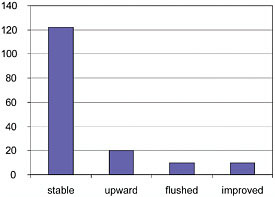
FIGURE 5.2 Graphical distribution of the classification of groundwater data from 162 compliance monitoring wells associated with 144 CBM produced water impoundments. The data showed stable, upward, flushed, or improved geochemical trends in shallow groundwater beneath impoundments. “Improved” indicates reductions in TDS and sulfate concentrations in groundwater over time. Importantly, qualitative classifications based on trend analyses do not imply magnitude or cause of changes to groundwater quality. Another eight wells did not fit clearly into any of the four categories. SOURCE: Adapted from C. Steinhorst, Wyoming DEQ Water Quality Bureau (WQB), personal communication, Dec. 22, 2009 and August 23, 2010.
the basin in Montana, near recharge areas, 75 percent recovery of the water levels in one of these coalbed aquifers occurred within five years when pumping was discontinued. In the center of the area monitored, where pumping was most aggressive, groundwater levels in the affected coalbed for which data were available have recovered 87 percent in 10 years.
Observed drawdowns were less than those predicted in modeling. Although model results predict that recovery to original water levels in the absence of pumping may take decades, the extent of water level drawdown in the coalbeds and the time to recovery depend on proximity to CBM production wells, site-specific aquifer characteristics, and proximity of drawdown monitoring sites to recharge areas. The water in coalbeds used for methane extraction in the San Juan and Raton basins, and in at least some portions of the Powder River Basin, has been documented to be nonrenewable fossil water (see Chapter 2). The long-term implications of mining fossil water, or the degree to which waters may be considered fossil, have not been thoroughly studied nor included as part of the discussion of management approaches for CBM produced water.
About 83 percent of the impoundments in the Powder River Basin of Wyoming are on-channel and about 6 percent are unlined and off-channel, with intent to recharge groundwater beneath impoundments. The remaining impoundments are lined and off-channel, with the aim to reduce or prevent leakage and infiltration of CBM produced water into underlying shallow alluvial groundwater. The natural and human-influenced differences between individual impoundments—including the substrate (e.g., soil or bedrock) on which
the impoundment is constructed, the volume of the impoundment and of volumes and balances7 of CBM produced water entering the impoundment over time, the means by which CBM produced water travels to the impoundment (whether through a pipe or over land), the length of time the water is in the impoundment, and the local climate—can influence the way in which produced water stored in the impoundment may affect the groundwater beneath the impoundment. A concern is the potential for impoundments, through infiltration and percolation of CBM water, to dissolve and/or mobilize naturally occurring constituents in the underlying soil, including sulfate, selenium, arsenic, manganese, barium, and TDS.
Several studies using monitoring wells beneath impoundments and groundwater near them indicated a wide range in the relationship between impounded water and underlying groundwater, including (1) an increase in TDS, selenium, sulfate, chloride, and nitrate in groundwater beneath some impoundment facilities; (2) no apparent impact or interaction with underlying shallow alluvial groundwater for a substantial majority of impoundments studied; and (3) improved water quality beneath a small fraction of impoundments. Ongoing groundwater investigations in Wyoming by the DEQ have included nearly 2,000 CBM produced water impoundments. Of these, 170 reports from groundwater monitoring wells have been submitted as a part of operator permit compliance and exceedances of TDS, sulfate, and/or selenium groundwater standards beneath 17 impoundments have been documented. These studies and their results have led to new compliance monitoring guidelines for CBM impoundments in the state and recommendations for further studies. These guidelines were put into place in April 2010 (see Chapter 3 for further details).
SURFACE WATER
Discharges of CBM produced water to surface water and/or impoundments can affect the receiving water quality, whether perennial streams or rivers, ephemeral drainages, or surface impoundments. The effects of discharges to perennial and ephemeral streams and rivers and impoundments in terms of water quality and water volume—whether enhancements or depletions—are discussed below. Because dewatering of aquifers as part of CBM production can also potentially affect streamflows, studies of stream depletion are addressed in this section.
Effects from Discharge of CBM Produced Water to Streams and Rivers, Ephemeral Drainages, and Impoundments
Substantial documented discharge of produced water to streams and rivers occurs in the Powder River Basin. Produced water management records of the COGCC also substantiate significant direct discharges of CBM produced water to ephemeral and perennial drainages of the Colorado portion of the Raton Basin.8 However, because of COGCC specifications regarding water management and discharge reporting, information is presently limited regarding quantitative effects of such discharges on surface water quality or quantity in the Raton Basin. Issues of concern in Colorado related to surface discharges include potential for erosion, soil damage, immersion of nonhydric vegetation, water and land discoloration, and development of algal mats. The Colorado Geological Survey is currently studying the interaction and effects of CBM production and produced water management on surface water and groundwater resources in the Purgatoire River Basin of Colorado (Ash and Gintautas, 2009).
PERENNIAL STREAMS AND RIVERS
The concentration of CBM operations in the Powder River Basin and differences in regulation between Wyoming and Montana have generated a number of studies that have examined the potential effects of CBM produced water discharges on the Powder River and Tongue River drainages in Wyoming and Montana. The studies have largely focused on inorganic constituents or parameters, including specific conductance, sodium-adsorption ration (SAR), nitrogen (as measured in ammonium, nitrate, and nitrite), pH, iron, potassium, sodium, chloride, fluoride, calcium, magnesium, sulfate, and bicarbonate. One set of studies has examined changes in the isotopic signature of surface waters as a means of examining the influence of CBM produced water on the Powder River. Specific measurement and analysis of organic constituents has been the subject of only one study to date. Although limited studies have examined the concentrations of organic constituents in produced water (e.g., Orem et al., 2007; see also Chapter 2), the effects of these organic compounds on surface water, groundwater, aquatic life, and riparian vegetation in the Powder River Basin have not been investigated.
Two studies by EPA Region 8 examined whether CBM production and produced water management caused significant changes in water quality in the Powder and Tongue rivers in Wyoming and Montana. Dawson (2007a) reported no statistically significant increases in specific conductance (measured by TDS) or SAR values associated with CBM develop-
ment for the Tongue River through water year 2005. The study also noted that none of the assessed tributaries of the river met water quality standards for specific conductance either before or after CBM development. Surface water measured at the two mainstem Tongue River stations in Montana met applicable SAR and specific conductance standards before and after CBM development.
Dawson (2007b) used specific conductance and SAR data to determine if water quality in the Powder River at Moorhead, Montana, had changed since CBM production began in the Powder River Basin. When Powder River water quality data were considered in aggregate, with adjustments for wet and dry periods, no statistically significant effects on SAR and specific conductance values from CBM operations were evident. The results of Dawson’s Powder River water quality analysis were influenced by variations in climatic conditions during the years of record that were available for comparison and the influence of the quality of produced water associated with historical conventional oil and gas operations prior to CBM development on Powder River water quality.
Another study by the U.S. Geological Survey (USGS) in conjunction with the Wyoming DEQ (Clark and Mason, 2007) compared long-term trends in water quality from 1975 to 1981 with those from 2001 to 2005. Concentrations were corrected for the influence of changes in flow. The researchers found statistically significant increases in SAR in the Powder River downstream of CBM produced water inputs and decreases in SAR values in the Powder River downstream of Clear Creek (due to diluting effects from a non-CBM-influenced tributary near the Montana border). However, the effects of CBM discharges on Powder River water quality were difficult to discern because of the effect of inputs from Salt Creek, a Power River tributary with traditional oil and gas operations.
A study by Wang et al. (2007) examined even longer-term water quality trends (1946– 2002) at four USGS gauging stations on the Powder River in Wyoming and Montana. The researchers used statistical methods to examine trends in flow-corrected water quality before and after 1990 (the beginning of CBM development in the Powder River Basin) and found little change in salinity but statistically significant increases in sodicity as measured by SAR. The study also found smaller differences in water quality among downstream stations after CBM development and increasing differences in water quality between downstream stations and the most upstream station after CBM development began.
ALL Consulting (2008) used specific conductance and SAR data to evaluate changes in water quality and streamflow for five watersheds in the Powder River Basin with CBM development and produced water discharge. Conclusions about the effects of CBM produced water discharge were complicated by the influence of drought and by limited data at certain stream stations that preceded or postdated CBM development in the area. The study interpreted any observed changes in surface water quality as being due to prolonged drought rather than CBM production or produced water discharges.
A comparison between the major ion chemistry for the Powder River and CBM pro-
duced water by Brinck et al. (2008) showed that Powder River water and CBM produced water have similar TDS and sodium contents, but that the Powder River has lower SAR values due to higher calcium and magnesium concentrations than CBM produced water. Because the natural salinity of the river is similar or higher than the salinity measured in the CBM produced water, TDS was suggested not to be an effective tracer of produced water contributions to the Powder River by the authors.
Smith et al. (2009) evaluated changes in nitrogen compounds (ammonium, nitrate, and nitrite) in streams and rivers receiving CBM produced water discharges in the Powder River Basin. Ammonium, at concentrations in the range of 1 to 3 mg/L, is frequently present in CBM produced water at the wellhead. In unimpaired surface waters, ammonium is seldom present in concentrations exceeding 0.1 mg/L. Ammonium concentrations decreased with distance from the discharge source while concentrations of nitrate and nitrite increased downstream of discharge points. The extent of these changes in concentration varied, depending on the ephemeral channel type. Collectively, the nitrogen introduced into the Powder River from CBM sources resulted in substantial increases in total dissolved inorganic nitrogen (DIN) loads downstream of the point of permitted discharge of CBM water directly into the Powder River or into the conducting channel.
Rapid development of the CBM industry and discharges of large volumes of produced water into ephemeral and perennial streams and rivers have stimulated much interest in capabilities to track or trace produced water from the point of discharge to downstream locations. A similar interest has been expressed with regard to tracking the fate of produced water discharged to impoundments. These interests have been particularly expressed in the Powder River Basin, and recent studies of isotopes of strontium and isotope ratios of carbon have identified unique isotope signatures in CBM produced waters of the basin. These signatures, much like fingerprints, have been used to uniquely identify CBM produced water, assess connectivity and comingling of waters produced from differing coal deposits, and determine the presence of CBM produced water in surface water in the Powder River Basin (Sharma and Frost, 2008; Brinck and Frost, 2009; Frost et al., 2010). During formation of biogenic methane, 12C is preferentially removed by methanogenic bacteria, leaving the dissolved inorganic carbon (DIC) of the formation water enriched in 13C. The resulting high (13C/12C) ratio of DIC for CBM produced water is distinct from the ratio of the same inorganic carbon ratio (13C/12C) of surface water or groundwater which does not contain CBM produced water. For ease of comparison and explanation, the carbon isotope ratios of water samples are compared to a defined international standard ratio. The difference between the carbon isotope ratio of the sample in question and the international standard is referred to as “delta 13,” with a notation of δ13CDIC (see Figure 5.3). Because of the relatively small differences that are measurable between the carbon isotope ratio of the sample in question and the international standard, the differences are expressed as tenths of percentages, with a notation of “per mil.”
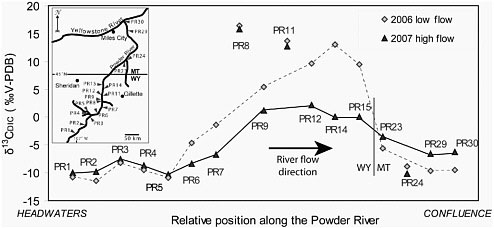
FIGURE 5.3 δ13CDIC values of DIC of water samples from along the Powder River and its tributaries, under low- and high-flow conditions (September 2006; June-July 2007). Locations: PR1 (farthest upstream sampling location, WY); PR30 (farthest downstream sampling location, confluence of Powder River with Yellowstone River, MT). PR8 (Beaver Creek), PR11 (Flying E), and PR24 (Little Powder River) are tributary locations. Sample sites PR1 through PR15 were located in Wyoming; all other sample sites were located in Montana. A single sample was collected at each location during the low-flow or high-flow sampling times. In total, 17 samples were collected each time—14 from the main stem and three from tributaries (samples PR8, PR11, and PR24). Note that carbon isotope signatures can only be used as a fingerprint in this way in locations where methane is produced biogenically (see Chapter 2). SOURCES: Sharma and Frost (2008), Frost et al. (2010).
Sharma and Frost (2008) found that the δ13CDIC for produced water samples collected from different coal zones and from different parts of the Powder River Basin were enriched in δ13CDIC, ranging from +12 per mil to +22 per mil as a result of the biogenic production of methane, which preferentially removes 12C. In contrast, water samples not influenced by CBM produced water typically have negative δ13CDIC values. Sharma and Frost subsequently collected water samples from the entire length of the Powder River for two different flow conditions (low and high). Values of δ13CDIC for all samples ranged from –11.4 per mil to +16.4 per mil, as shown in Figure 5.3. Sharma and Frost concluded that samples with significantly positive δ13CDIC values reflected inputs of CBM produced water.
The headwaters area of the Powder River in Wyoming, represented by sample sites PR1 through PR5, is considered upstream of CBM development. Samples from these locations had δ13CDIC values ranging from between –8.3 and –11.4 per mil, suggesting that the water in this section of the river was relatively uninfluenced by CBM produced water. Samples collected progressively downstream (PR6 and PR7) had δ13CDIC values that were
less negative (–4.7 per mil and –1.4 per mil, respectively). Sharma and Frost proposed that “these values may reflect incorporation of CBNG [CBM] water discharged from production in this area.” Downstream of this point (i.e., PR8 through PR15), water samples had significantly positive δ13CDIC values, reflecting “an area of more intense CBNG [CBM] development” and likely a predominance or relative abundance of CBM produced water in the river. The authors reported that “highly positive δ13CDIC of Powder River samples in Wyoming … from … (PR9 to 15) suggests the presence of CBNG [CBM]-produced water in the river related to local CBNG [CBM] production.”
Again referring to Figure 5.3, the authors report that samples collected in Montana all had negative δ13CDIC, further noting “that surface water in Montana is little to unaffected by CBNG [CBM] production during low-flow conditions.” Similar patterns were observed for samples collected during high-flow conditions.
In interpreting the data for the Powder River, it is important to recognize that δ13CDIC values can be changed or influenced by a number of processes, including dilution by addition of another source of water with a different 13C/12C ratio, such as at the confluence of a major tributary like Clear Creek. Clear Creek discharges to the Powder River between sampling points PR14 and PR15. Below the confluence of the tributary and the mainstem of the river, the 13C/12C ratio will be somewhere between the δ13CDIC values of the Powder River and the tributary inflow. Thus, the change in δ13CDIC value between PR14 and PR23 (i.e., in crossing between the Wyoming-Montana border) reflects the diluting effect of inflows from Clear Creek, a Wyoming-originated tributary that is relatively uninfluenced by CBM produced water discharges.
EPHEMERAL DRAINAGES AND IMPOUNDMENTS
Several studies have documented increases in concentrations of TDS, sodium, and trace elements and the pH of CBM produced water that is discharged to ephemeral drainages in the Powder River Basin. Recalling that the outfall which discharges CBM produced water into an impoundment usually represents a combination of CBM product water combined from several CBM wells (see Chapter 4), water in the impoundments reflects changes in the chemistry (1) between the end-of-pipe discharge and impoundment and (2) after the water has been sitting in the impoundments. McBeth et al. (2003) assessed changes in CBM produced water composition between discharge points and associated holding ponds within the Powder River Basin. Consistent with data reported by Rice et al. (2000), they reported that pH, specific conductance, SAR, and concentrations of TDS, alkalinity, sodium, calcium, magnesium, and potassium in CBM discharge water increased significantly as discharged water traveled downgradient in ephemeral stream channels. These findings were further substantiated by Jackson and Reddy (2007).
Sodium and alkalinity concentrations and pH also tended to increase between CBM produced water outfalls and impoundments, due primarily to evaporation, while calcium concentrations decreased between outfalls and associated discharge ponds (thus increasing SAR values), due to calcite precipitation (McBeth et al., 2003; Brinck et al., 2008). Stednick and Sanford (2005) reported that CBM produced water that was discharged to ephemeral channels dissolved soluble salts in the ephemeral channel. They noted that once CBM produced water discharge stopped, TDS concentrations in these same ephemeral streams and rivers were higher than before CBM produced water was discharged to the stream channel.
Patz et al. (2006) examined the chemistry of trace elements in CBM discharge water reacting with semiarid ephemeral stream channels in the Powder River Basin. The study showed that dissolved iron and manganese concentrations decreased and arsenic and selenium concentrations increased downgradient of discharge points.
A recent study of outfalls (discharge points) and their corresponding impoundments collected in five watersheds of the Powder River Basin (the Cheyenne, Belle Fourche, Little Powder, Powder, and Tongue rivers; Jackson and Reddy, 2007, 2010; see Table 2.3) showed general increase in concentrations of trace elements from outfalls to disposal impoundments. Table 5.1 compares mean values (overall means and ranges) for constituents in CBM impoundments in five watersheds to water quality standards or criteria for drinking water, aquatic life, irrigation, and livestock watering. The overall mean levels of most constituents were within most water quality standards; only aluminum exceeded federal drinking water standards, and only aluminum and copper exceeded the aquatic life criterion (Jackson and Reddy, 2010). The upper end of the range of mean aluminum, arsenic, chromium, copper, iron, manganese, and sulfate concentrations and SAR values exceeded one or more standards in some of the impoundments. Jackson and Reddy (2010) suggested that most CBM produced waters examined in their study were unsuitable for human drinking water and aquatic life, but were suitable for agricultural uses and livestock and wildlife drinking water. The range of mean values in Table 5.1 suggests variation among watersheds and impoundments within a watershed that cannot be quantified or described through examination of simple mean values (see also Jackson and Reddy, 2010).
Stream Depletion
The committee was unable to find any published data or reports documenting measurable stream depletions due to CBM water production in the basins studied. Modeling studies have been completed to predict the amount of stream depletion resulting from CBM groundwater withdrawals within the Piceance, Raton, Northern San Juan, and Sand Wash basins in Colorado (see Chapter 2). The studies were conducted to address concerns over potential reductions in spring flows and streamflows resulting from CBM removals from
“tributary” groundwater and to help identify “nontributary”9 groundwater of the basins (see Chapter 3). The Glover-Balmer analytical solution (see Chapter 2) was used to predict the total amount of shallow alluvial groundwater drawdown that might be attributable to CBM produced water withdrawals in the basins and what impact these predicted drawdowns would have on perennial streamflows in the basins. A schematic diagram showing conceptualized connections between coalbed seams, aquifers, and surface water is shown in Figure 5.4.
Although the models estimated varying degrees of stream depletion (ranging from <1 acre-foot per year in the Piceance Basin [S.S. Papadopulos & Associates, Inc., 2007a] to 2,500 acre feet per year in the Colorado portion of the Raton Basin [S.S. Papadopulos & Associates, Inc., 2007b]), a review by the committee of the modeling studies revealed that the models were not calibrated against actual stream measurements in areas of CBM production before being applied to the subject water bodies (discussion in Chapter 2). Similarly, the general assumption of “tributary” groundwater applied in the modeling efforts is not consistent with the data from the San Juan Basin that indicated discontinuous coalbeds, limited hydraulic connection, or in some cases long distances between the deep coalbed targets for methane production and the surface. A summary of assumptions and limitations of the Glover-Balmer model assessment is included in Chapter 2.
Summary of Surface Water Studies
Several studies have assessed the presence and effects of CBM produced water discharge on perennial and ephemeral stream quality in the western CBM basins. The majority of studies on perennial drainages (Powder and Tongue rivers) used inorganic constituents, especially SAR and TDS, to discern changes in surface water quality resulting from CBM inputs. One study showed a statistically significant increase in flow-adjusted SAR values in the Powder River after CBM development began around 1990, but all other studies of the Tongue and Powder rivers that the committee was able to access found that inputs from traditional oil and gas operations and the effects of droughts made the influence of CBM development on water quality difficult to discern. This difficulty persisted even when adjustments were made in the data analyses to account for wet and dry periods. Collectively, nitrogen compounds introduced into the Powder River from CBM discharges resulted in substantial increases in total DIN loads downstream of discharge points. Carbon isotopic “fingerprinting” studies showed higher concentrations of CBM sourced dissolved inorganic carbon in the Powder River near areas of CBM production than outside the areas of production along the river. Water samples collected in Montana yielded values similar to
TABLE 5.1 Comparison of Mean Concentrations of Constituents Measured in Water Samples from Multiple Impoundments Within Five Watersheds of the Powder River Basin, 2003–2005, with Relevant Water Quality Standards
|
Analyte |
Units |
Overall Mean for Samples from Surface Impoundments in 5 PRB Watershedsa |
Range in Mean Values Measured Within Impoundments in 5 PRB Watershedsa |
Federal Drinking Water Standardb |
Federal Chronic/Acute Clean Water Act Aquatic Life Criterionc |
Agriculture Standards (Wyoming Class II)d |
Livestock Standards (Wyoming Class III)d |
|
Trace/Minor Elements |
|||||||
|
Aluminum |
µg/L |
397 |
17.3–1,326 |
50–200 |
87/750 |
5,000 |
5,000 |
|
Arsenic |
µg/L |
4.84 |
0.75–23.2 |
10 |
150/340 |
100 |
200 |
|
Barium |
µg/L |
230 |
103–396 |
2,000 |
— |
— |
— |
|
Boron |
µg/L |
118 |
65.2–184 |
— |
— |
750 |
5,000 |
|
Cadmium |
µg/L |
<1.12 |
<1.12 |
5 |
0.25/2.0 |
10 |
50 |
|
Chromium |
µg/L |
8.32 |
5.20–11.4 |
100 |
74/570 (Cr III), 11/16 (Cr VI) |
100 |
50 |
|
Copper |
µg/L |
17.2 |
5.08–27.3 |
1,300/1,000 |
9.0/13 |
200.0 |
500 |
|
Iron |
µg/L |
271 |
145–462 |
300 |
1,000 |
5,000 |
— |
|
Lead |
µg/L |
<2.07 |
<2.07 |
15 |
2.5/65 |
5,000 |
100 |
|
Manganese |
µg/L |
19.6 |
3.30–65.4 |
50 |
— |
200 |
— |
|
Molybdenum |
µg/L |
2.27 |
0.96–6.72 |
— |
— |
— |
— |
|
Selenium |
µg/L |
1.26 |
0.79–2.37 |
50 |
5/12.82c |
20 |
50 |
|
Zinc |
µg/L |
11.5 |
8.50–18.3 |
5,000 |
120/120 |
2,000 |
25,000 |
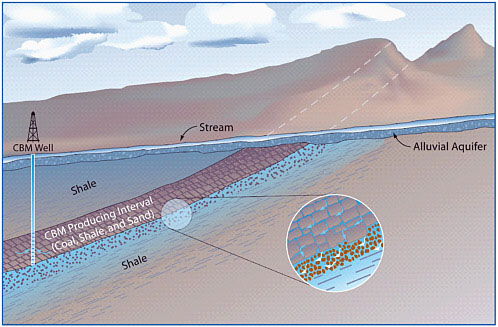
FIGURE 5.4 Conceptualized schematic showing potential hydrological connection between CBM well, water within CBM bearing aquifers, and surface water. SOURCE: Colorado Geological Survey, available at geosurvey.state.co.us/Portals/0/CBM-SJB-diagramweb2.jpg.

the expected value for uninfluenced native surface water or groundwater, suggesting dilution of CBM water within the Powder River in Wyoming by tributary inflows near the Montana-Wyoming border.
Two studies of water quality in ephemeral streams have demonstrated that pH, specific conductance, and SAR values and concentrations of TDS, alkalinity, sodium, calcium, magnesium, potassium, arsenic, and selenium in CBM discharge water increased as discharged water traveled downgradient in ephemeral stream channels, while iron and manganese concentrations decreased. Once CBM produced water discharge stopped, TDS concentrations in these same ephemeral streams were higher than before CBM produced water was discharged to the stream channel. A study of discharge water quality and the quality of water in receiving impoundments in five watersheds of the Powder River Basin showed a general increase in concentrations of trace elements from outfall to disposal impoundments.
Stream depletion studies have involved only theoretical modeling, conducted for the Piceance, Raton, Northern San Juan, and Sand Wash basins in Colorado. These modeling
efforts have not yet been calibrated against actual stream measurements in areas of CBM production. Similarly, the general assumption of “tributary” groundwater as a part of the conceptual model does not comport with the geochemical, geophysical, and geological data available from the San Juan Basin, which indicate discontinuous aquifers and long travel times between the deep coalbed targets of methane production and the surface.
SOIL QUALITY AND AGRICULTURAL PRODUCTION
Potential and realized adverse effects of salinity and sodicity of irrigation water on agricultural production and soil quality have been extensively documented for at least 60 years (Richards, 1954; Ayers and Westcot, 1994). Elevated sodicity has the potential to cause soil quality deterioration, or “soil dispersion,” which is the breakdown of aggregated soil clods into individual particles, and an associated loss of water- and gas-conducting pores and channels in the soil. Soil dispersion often leads to measurable reductions in water infiltration rates, which ultimately leads to salinization, or accumulation of the salt content of soil to above-normal levels.
Soil Quality
Potential effects of produced water on agricultural landscapes have been investigated extensively in the Powder River Basin. Browning et al. (2007) reported that soils repeatedly wetted with simulated Powder River Basin CBM produced water resulted in significant changes in chemical and physical properties over time, despite incidental simulated rainfall events. Irrigated soils, dominated by clay-sized particles, had consistent increases in water-holding capacity, leading to water-logged characteristics, while drought-prone soils (coarse-grained) lost their water-holding capacity, thereby rendering the soils even more prone to drought. Vance et al. (2008) reported that CBM produced water can cause modification of soil density and aeration, low plant-available water capacity, low hydraulic conductivity, increased swelling, and uneven soil wetting. Application of CBM produced water from the Powder River Basin over multiple years increased soil electrical conductivity (EC) and SAR to depths of 30 centimeters. Irrigation with CBM produced water also reduced surface infiltration rates and subsurface flow rates in the top 120 centimeters (Vance et al., 2008).
Bauder et al. (2008) observed soil solution salinities exceeding 3,000 µmhos/cm and SAR values of approximately 12 following simulated flood irrigation with CBM produced water, subsequently followed by simulated single rainfall events. They concluded that sodium-induced dispersion of fine-textured soils is likely to occur from application of CBM produced water to some agricultural fields in the Powder River Basin. Research by Ganjegunte et al. (2005) and Johnston et al. (2007) led the authors to conclude that CBM waters in the northwestern portion of the Powder River Basin, where salinities and SAR
values are higher than those studied by Bauder and Brock (2000), were generally not suitable for direct land application.
Numerous research efforts have focused on producing definitive characterization of the impact of waters of various SAR on soil quality. The principal soil characteristic which has been investigated has been either infiltration or soil hydraulic conductivity. Suarez et al. (2006) reported that for some soils (loam, a soil having relatively uniform proportions of sand, silt, and clay), adverse impacts of sodium on infiltration when applied water had a SAR greater than 2, while for a dispersive clay soil adverse impacts occurred above SAR of 4. In both soils the SAR behavior was similar for water having a TDS concentration of approximately 640 or 1280 mg/L, indicating that in this range TDS did not affect infiltration. Reductions in infiltration were evident during irrigation and rain events, with lower infiltration during the rain simulations. In an earlier and similar study, Mace and Amrhein (2001) reported that irrigation with water having SAR 5 and 8 resulted in irreversible plugging of soil pores by dispersed clay, as well as internal swelling.
Plant Growth and Survival
Vance et al. (2008) examined the effects of irrigation with CBM produced water on soils and plants of the Powder River Basin by comparing soil and plant conditions following various irrigation practices with those from nonirrigated sites. Irrigation with CBM produced water significantly increased the production and cover of native perennial grasses, but overall plant community diversity and uniformity of species across the landscape decreased. The researchers concluded that adverse changes in soil quality with CBM irrigation can restrict plant growth and cause plant water stress. Salinity has the potential to have significant impact on plant communities, plant community sustainability, and livestock and wildlife forage compatibility (Soil Improvement Committee, 1995). High salt content of soil pore water can also reduce the availability of water for plants and cause agricultural crops to expend more energy extracting water from the root zone than would be required in the absence of elevated salinity in the soil water (Arthur et al., 2008).
Prospects for Produced Water Irrigation
Many studies on the effects of using CBM produced water for irrigation demonstrate the challenges associated with directly putting CBM produced water to beneficial use in agricultural fields via surface irrigation or land application. Although the response of clay-rich soils to CBM produced water is not universal, the use of most CBM produced
waters for irrigation, especially in smectite10 clay-rich soils, could reduce infiltration and may require intensive management, including selection of crops to be irrigated, timing and amount of produced water applied, and the use of soil amendments. Use of CBM produced water for irrigation appears practical and sustainable, with various combinations of selective application to nondispersive soils, treatment, dilution or blending of CBM produced water with other water sources, amendment of produced water and soils to be irrigated, and appropriate timing of irrigation practices to take advantage of ameliorating effects of rainfall and snowmelt. After use of CBM produced water ceases, additional soil management, including soil amendments,11 may be required to restore soil agricultural resources to pre-CBM water application conditions.
Much of the actual practice of applying CBM produced water to landscapes is limited to industry’s efforts—largely on industry-owned land or land for which the industry has paid a rental or lease fee—and application of CBM produced water to landscapes or for irrigation is not a widespread practice at present. Nonetheless, challenges to WYDEQ-issued permits to manage CBM produced water through direct applications to land have been raised by several landowners, environmental groups, scientists, and the EPA. These issues are still being scientifically documented and analyzed (see also section later in this chapter on “Registered Citizen Complaints”) and speak toward the infancy of the CBM industry (see Chapter 1) and of the rules, regulations, and policies being applied to CBM produced water management, particularly in Wyoming, as they related to surface discharges.
ECOLOGICAL EFFECTS
In this section, potential and observed ecological effects of CBM produced water on aquatic life and riparian habitats are discussed. Few on-site, in situ, or real-time studies have been completed and published on this topic, specific to the study area of this report. Many of the studies involve laboratory experiments that have neither employed water with chemistry in concert with average CBM produced water chemistry nor been verified against field studies. The committee provides an overview of this topic and suggests areas for further examination.
Toxicological Effects on Aquatic Biota
CBM produced waters typically contain numerous chemical constituents (see Table 5.1), several of which are potentially toxic to fish, macroinvertebrates, and other aquatic organisms, when concentrations exceed toxicity threshold levels for these organisms. Stressors (whether described as constituents or contaminants that put stress on target species) of primary concern associated with CBM discharges include aluminum, arsenic, barium, beryllium, iron, manganese, and selenium, increased turbidity and TDS. Recent studies have also examined the toxicological effects of sodium bicarbonate, an ion of abundance in most CBM water. Most published research investigating these stressors indicates that increases in TDS have the greatest potential for direct toxicological impacts in receiving streams and rivers (Boelter et al., 1992; Confluence Consulting, 2004; Davis et al., 2006; Skaar et al., 2006; Farag et al., 2010). Recent studies have shown considerable variation in the toxicity of TDS due to the difference in relative concentrations of specific ions comprising TDS (Mount et al., 1997; Dwyer et al., 1992). Specific ionic composition will also change seasonally and among watersheds (Pillard et al., 1999). Details of existing laboratory studies on the effects of TDS, of interactions between elevated TDS and other stressors, of sodium bicarbonate on organisms, and of field studies on the effects of CBM produced water on organisms are outlined in subsequent sections.
TDS AS A MEASURE OF TOXICITY
Many freshwater organisms are highly sensitive to changes in salinity, and discharge of high TDS effluents into receiving systems may result in physiologically stressful conditions due to alterations in osmotic conditions. Most of the available research on sensitivity to TDS and salinity used laboratory toxicity tests to predict responses of fish and macroinvertebrates and focused on conventional test species. These studies are used to understand the potential significance of various constituent concentrations to organisms. In laboratory tests on standard test organisms, major ions such as chlorine, bicarbonate, sulfate, sodium, calcium, magnesium, and potassium in combination with elevated TDS have been found to be toxic to some aquatic species (e.g., Goodfellow et al., 2000; Goetsch and Palmer, 1997; Pillard et al., 1999; Dickerson and Vinyard, 1999; Chapman et al., 2000; Soucek, 2007).
Relatively few studies have been conducted with species relevant to the study areas in the western states and with a specific focus on CBM produced water. Among these studies, Chapman et al. (2000) measured toxic effects of TDS in the laboratory on benthic macroinvertebrates (chironomids) and rainbow trout at concentrations similar to those in CBM produced water. Although trout showed tolerance to TDS at concentrations 2,000 mg/L, benthic macroinvertebrates were significantly affected at TDS concentrations of
1,100 mg/L. Mayflies were found to be sensitive to sodium, with LC5012 values of approximately 900 mg/L TDS. Chapman et al. also reported that aquatic organisms with no history of high-TDS exposures could be able to tolerate TDS concentrations of at least 1,000 mg/L.
In a study predating CBM development in the Powder River Basin, Boelter et al. (1992) conducted laboratory toxicity tests with produced water collected downstream from the Salt Creek oil fields. Salt Creek is a headwaters tributary of the Powder River. Salt Creek was primarily impacted by traditional oil and gas development at the time of the study with produced water, therefore, of different composition than CBM produced water. This difference notwithstanding, results of this study have potential relevance to CBM produced water disposal in streams and rivers because the researchers isolated the toxicological effects of major ions that are present in oil, natural gas, and CBM produced waters. The data reported by Boelter were used to complete toxicity identification and evaluation analysis, an empirical procedure designed to identify specific sources of toxicity in complex effluents. The analysis revealed that toxicity, if it was to occur, would have been primarily a result of sodium, chlorine, bicarbonate, and carbonate concentrations in combination. In reality, the predictability of toxicity of CBM produced water to aquatic organisms is complicated by (1) variations in geochemical characteristics of CBM produced water among geographic regions and basins (see Chapter 2) and within a single watershed (Van Voast, 2003), (2) the timing of produced water discharges, (3) the receiving stream’s quality and flow conditions, (4) the degree of instream mixing and dilution, and (5) the diversity of biological agents among basins.
Exposure to one stressor (contaminant) may increase susceptibility of aquatic species to other stressors (Clements, 1999; Paine et al., 1998). Pertinent to CBM discharges, research has shown that some contaminants are more toxic under conditions of high TDS than when found in water having relatively low TDS concentrations (see e.g., Chapter 2, Table 2.2). Additionally, the converse has been reported in the scientific literature—that is, the presence of some specific contaminants may exacerbate toxicity associated with elevated TDS concentrations (Anderson et al., 1994; Hall et al., 1994; Dickerson and Vinyard, 1999). Pillard et al. (1999) recommended that potential interactions between high-TDS effluents and other stressors (contaminants) be closely considered during CBM exploration and development, because a variety of physical and chemical stressors may be introduced into watersheds during the development and production periods.
Additionally, long-term alterations in streamflow may influence the effects of discharges from CBM on aquatic ecosystems. Boelter et al. (1992) reported that toxic effects of discharges from oil fields in Salt Creek drainage were greater and extended much farther downstream in the Powder River during periods of low-flow conditions.
Mount et al. (1997) developed statistical models to predict water quality toxicity to fish and invertebrates using specific concentrations of major ions. Based on these models and assumptions of direct exposure of study species to undiluted CBM produced water, produced waters from many CBM sites within the study area in the Powder River Basin could be toxic to aquatic organisms. For example, employing the Mount et al. model and using data for water samples representing median (50th percentile) ionic characteristics of samples collected from the Wasatch and Fort Union aquifers in Wyoming (Bartos and Ogle, 2002; see Figure 5.5), the committee calculated that the mortality of fathead minnows exposed to undiluted CBM produced water of composition similar to that reported by Bartos and Ogle would be approximately 20 percent (see Table 5.2). Predicted mortality would increase to approximately 60 percent if organisms were directly exposed to undiluted CBM produced water representing the upper 75th percentile of the samples. These predicted values of mortality were based on mean concentrations of potassium, bicarbonate,
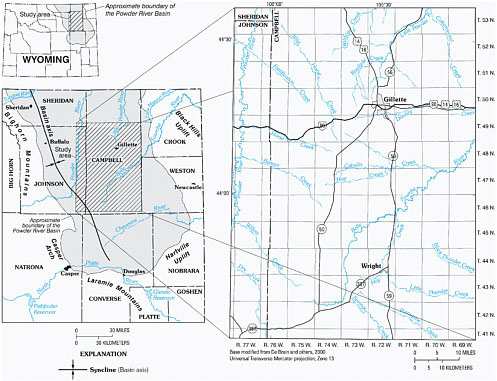
FIGURE 5.5 Map showing location of the study area in the Powder River Basin, Wyoming. SOURCE: Bartos and Ogle (2002).
TABLE 5.2 Predicted Mortality of Fathead Minnows (Pimephales promelas) Exposed to Water Quality Composed of Constituents and Concentrations Represented by Mean Concentrations from CBM Water Samples.
|
Parameter |
Constituent Concentrations (50th and 75th percentiles) of 13 Combined Water Quality Samples from Wasatch and Fort Union formations |
Constituent Concentrations of Water Quality (single samples collected from 3 CBM wells) |
|||
|
50th Percentile Concentration |
75th Percentile Concentration |
W5 |
W6 |
C11 |
|
|
Potassium (mg/L) |
12 |
13 |
14 |
13 |
48 |
|
Magnesium (mg/L) |
15 |
28 |
270 |
24 |
39 |
|
Chloride (mg/L) |
9 |
14 |
17 |
0.3 |
21 |
|
Sulfate (mg/L) |
0.5 |
1 |
2,700 |
10 |
0.3 |
|
Bicarbonate (mg/L) |
712 |
1,103 |
326 |
1,244 |
3,134 |
|
TDS (mg/L) |
644 |
959 |
4,020 |
1,010 |
2,720 |
|
Conductivity (µmhosm) |
1,070 |
1,610 |
4,330 |
1,850 |
4,180 |
|
Predicted mortality (percent) |
20.3 |
60.4 |
45.3 |
73.6 |
100 |
|
NOTE: Samples were collected from the Wasatch and Fort Union Formations, Eastern Powder River Basin, Wyoming. Samples W5 and W6 are wells located in the Wasatch aquifer. Sample C11 is from the Wyodak-Anderson coal zone (Fort Union formation). SOURCES: Analytical data from Bartos and Ogle (2002); predicted mortality based on model in Mount et al. (1997); toxicity test protocols followed EPA (2002); calculations completed as part of this study. |
|||||
magnesium, chlorine, and sulfate found in CBM produced water from the Wasatch and Fort Union formations from the eastern Powder River Basin in Wyoming.
Data from three specific water quality sampling sites (W5, W6, C11) are shown in Table 5.2 to illustrate the potential for variations in ionic composition, TDS, and predicted mortality among three sampling site conditions. The calculations for mortality results in the table are based on the assumption of direct and prolonged exposure to undiluted, untreated CBM produced water. The calculations did not include sodium and calcium concentrations because they were not available for use in the model. Data in Table 5.2 show that despite a fourfold greater TDS and a twofold greater conductivity at site W5 than at site W6, predicted toxicity associated with water at site W5 was considerably less than that for site W6. The predictability of toxicity of TDS is likely also complicated by unknown effects of interactions among individual ions. Because the estimated toxicity of these high TDS
effluents was based on laboratory results, the direct relevance of these findings to field conditions is somewhat uncertain. However, the results indicate that high TDS effluents have the potential to be highly toxic to standardized test organisms under controlled conditions.
Certain limitations to the application of these modeling and laboratory studies to examine the effects of CBM produced water include (1) the use of mean concentrations and discharges in a system with natural geochemical and hydrogeological variability; (2) the fact that permitted discharges of CBM produced water in many cases require treatment before discharge as well as a defined mixing zone (zone of mixing between CBM produced water and receiving water that dilutes the concentration of the CBM water; see Chapter 3 for details), leaving a small likelihood of direct exposure to undiluted CBM produced water; (3) ionic concentrations in surface water that vary with stream discharge and may increase during the beginning of storm and snowmelt events and during low-flow conditions (Sharma and Frost, 2008). CBM produced water may comprise a significant portion of total stream discharge during periods of low summer flow, and concentrations of major ions may vary during these low-flow periods. These temporal patterns of stream discharge and conductivity also depend on the source of water. For example, streams and rivers that originate in the mountains typically show a single peak in discharge during spring runoff (Clark et al., 2001). In contrast, streams and rivers originating in the plains are much more variable and may have little or no flow during late summer to early winter.
LABORATORY STUDIES ON TOXICITY OF SODIUM BICARBONATE
The USGS examined acute and chronic toxicity of sodium bicarbonate to fathead minnows (Pimephales promelas), a standardized test species used in aquatic toxicology studies (see Table 5.2; Skaar et al., 2006; Farag et al., 2010). Laboratory tests simulating water characteristics in the Powder and Tongue rivers implicated bicarbonate, rather than sodium, as a cause of significant acute toxicity to the minnows (Farag et al., 2010). The study additionally included assessment of responsiveness of other fish species, amphibians, and invertebrates (see Table 5.3). As shown in Table 5.2, the 50th and 75th percentile concentrations of bicarbonate from groundwater samples collected from the Powder River Basin were 712 mg/L and 1,103 mg/L, respectively. Minnow survival was significantly lower in all treatments having sodium bicarbonate concentrations exceeding 400 mg/L (291 mg/L bicarbonate) and was reduced from 89 percent survival in controls to 2.4 percent at sodium bicarbonate concentrations of 1,400 mg/L (1,017 mg/L bicarbonate). Researchers also reported that the incidence of gill lesions and kidney damage increased as sodium bicarbonate concentrations and exposure time increased.
Acute LC50 values for several fish species after 96 hours of exposure to treatment water ranged from 1,158 to 5,526 mg/L sodium bicarbonate (841 to 4,014 mg/L bicarbonate), with significantly greater effects on younger fish (Table 5.3). Results also showed that an
TABLE 5.3 Results of Acute and Chronic Toxicity Tests Showing Effects of Sodium Bicarbonate on Fish, Amphibians, and Invertebrates.
|
Species |
Acute Tests |
|||
|
Age of Test Species (posthatch) |
Endpoint Measured |
Mean LC50a for NaHCO3 (mg/L) |
||
|
Fathead minnow |
4 days |
Survival |
1,643 |
1,118 |
|
Pallid sturgeon |
4 days |
Survival |
1,158 |
788 |
|
Chironomus |
4 days |
Survival |
7,920 |
5,391 |
|
Fathead minnow |
2 days |
Survival |
1,793 |
1,220 |
|
Pallid sturgeon |
4 days |
Survival |
1,828 |
1,244 |
|
Hyallela azteca |
4 days |
Survival |
6,384 |
4,345 |
|
African clawed frog |
4 days |
Survival |
1,700 |
1,157 |
|
Species |
Chronic Tests |
|||
|
Length/Type of Test |
Endpoint Measured |
NaHCO3 LOECc (mg/L) |
Equivalent HCO3 – LOECb (mg/L) |
|
|
Fathead minnow |
60 days |
Survival |
500 |
340 |
|
White sucker |
53 days |
Growth |
450 |
306 |
|
Ceriodaphnia |
7 days |
Reproduction |
510 |
347 |
|
African clawed frog |
Modified FETAX embryos |
Malformations |
1,108 |
754 |
|
aLC50 is defined as the concentration that resulted in 50 percent mortality of test species. bLOEC is the lowest observed effects concentration (higher concentrations resulted in adverse effects noted in Endpoint Measured). cFor comparison to bicarbonate values in CBM produced water and the Powder River (Table 5.1). SOURCES: Skaar et al. (2006); Farag et al., 2010. |
||||
amphibian species (African clawed frog) was highly sensitive to sodium bicarbonate (LC50 = 1,700 mg/L or 1,235 mg/L bicarbonate). However, acute toxicity was much lower for two of the invertebrate species tested (Chironomus and Hyalella), with LC50 values ranging from 6,384 to 7,920 mg/L sodium bicarbonate (4,637 to 5,753 mg/L bicarbonate).
Chronic (longer-term) toxicity was observed for fish and invertebrates at much lower sodium bicarbonate concentrations, with lowest observed effect concentrations (LOECs) ranging from 450 to 510 mg/L sodium bicarbonate, or 327 to 370 mg/L bicarbonate. These laboratory findings are relevant to the Powder River Basin because the median concentration of bicarbonate in produced water from CBM wells is 712 mg/L and concentrations can exceed 3,000 mg/L (see Table 6 in Bartos and Ogle, 2002). In situ toxicity tests conducted in several tributaries of the Powder and Tongue rivers showed significant mortality when levels of sodium bicarbonate exceeded these laboratory thresholds. However, the commit-
tee notes that these values reflect effects under circumstances of direct exposure to 100 percent CBM produced water; this situation would be unlikely in perennial waters because of permitted discharge requirements.
FIELD ASSESSMENTS OF CBM PRODUCED WATER EFFECTS
A comprehensive assessment of the potential impacts of CBM discharges on aquatic communities is currently being conducted by the USGS and the Powder River Aquatic Task Group (ATG), a consortium of state, federal, and nongovernmental organizations (Peterson et al., 2009; Farag et al., 2010). The ATG is conducting aquatic and riparian habitat analyses and field surveys of algae, macroinvertebrates, fish, amphibians, and reptiles. Data were collected from 47 locations in the Powder River Basin in 2005 and 2006, with the primary goal of the study to establish current conditions for habitat and aquatic communities in the basin and to quantify the relative influences of stream habitat conditions and water quality characteristics on aquatic communities.
Electrical conductivity of collected water samples was determined to be an important predictor of ecological conditions. Conductivity levels at the points of sampling in the Tongue River were considerably lower than in the Powder River, and species richness showed little variation among sampling sites along the Tongue River. Preliminary results of macroinvertebrate studies showed that macroinvertebrate community composition was best described by a model that included drainage area, streamflow, site location, substrate embeddedness, and specific conductance. Peterson et al. (2009) concluded that the observed longitudinal variation in fish communities from upstream to downstream in the Powder River likely resulted from a complex interplay of habitat, water quality, streamflow, and migration patterns, while much of the spatial variation in aquatic communities among the study sites (e.g. Powder River versus Tongue River) was due to broad geographic factors (e.g., stream headwaters located in mountain versus plains areas) or longitudinal changes.
Collaborative field studies conducted by the BLM, the Montana Cooperative Fishery Unit, Montana State University, and USGS characterized the impacts of CBM on the distribution of fish communities in the Powder River Basin.13 Investigators assessed longitudinal distribution and temporal patterns of fish communities at 57 sites within the basin in 2005. A total of 24 fish species was collected, with zero to eight species collected from streams and rivers that received CBM produced water discharges and one to 12 species in streams and rivers that did not receive CBM produced water (“control” streams and rivers). Differences in the number of species and community composition in streams and rivers assessed were thus examined against the locations of CBM produced water discharges. Some
|
13 |
See “Task 7” at www.netl.doe.gov/technologies/oil-gas/Petroleum/projects/Environmental/Federal_Lands/15467Task2.html (accessed February 24, 2010). |
species were found only in streams and rivers receiving CBM produced water discharges, while other species were found exclusively in streams and rivers to which no CBM produced water had been discharged. Researchers noted considerable uncertainty regarding using the data to assess the direct effects of CBM discharges on fish assemblages.
Instream toxicity studies were conducted by researchers at the University of Wyoming to assess potential toxic effects of CBM produced water on fish (Heath and Meyer, 2008). Researchers concluded that, despite elevated concentrations of ammonia and bicarbonate, acute toxic effects were mitigated by mixing of produced water with instream flows and by biogeochemical interactions between CBM produced water and sediments in the stream (discussed previously).
EFFECTS ON RIPARIAN ENVIRONMENTS
Riparian areas are the interface between dry uplands and water bodies. These areas are generally vegetated by hydrophilic plant communities and potentially contribute substantially to the ecological and environmental functionality and stability of ephemeral and perennial water courses. Numerous studies have investigated the actual or potential effects of discharge of CBM produced water on riparian environments (e.g., Busch and Smith, 1995; Vandersande et al., 2001; Glenn and Nagler, 2005; and Smith et al., 2009).
Typically, the effects of CBM produced water discharge on riparian environments are a consequence of changes in the hydrology (frequency, duration, availability, or quantity of water) and the chemistry (mainly salinity) or soil substrates of the receiving stream (stream bottom, channel, and shoreline). The primary potential or observed adverse effects of CBM discharge to streams and rivers and riparian systems are (1) changes in the timing and amount of streamflow, (2) increased stream bank erosion and instability, (3) increased suspended sediment concentrations and/or turbidity, (4) downstream sediment deposition, (5) changes in riparian plant communities, and (6) increased stream water and sediment salinity. Studies of these effects are discussed in the following sections.
EPHEMERAL DRAINAGES
The lower and less frequent flows of ephemeral streams compared to perennial streams and rivers can result in greater expression of adverse effects of CBM discharges on the hydrology and water quality of the ephemeral drainages than perennial streams and rivers. As early as 2001 the Montana DEQ expressed concern about the potential effects of sustained discharges of CBM produced water to ephemeral streams. Regele and Stark (2001) proposed that CBM produced water discharges could destroy vegetation in stream channels, increase erosion and deposition of sediment in streams and reservoirs, and degrade water quality. Consequently, algae, aquatic invertebrates, fish, amphibians, and other biological
aspects of streams and rivers could be adversely affected. The study further proposed that ephemeral streams may become enlarged and potentially change into perennial streams and rivers while receiving CBM produced water discharge. Arthur et al. (2008) proposed that changes in hydrological regime could modify conditions for plants and animals living in the riparian corridor and could lead to adverse environmental impacts.
Although baseline information on flows in ephemeral drainages is generally not available, substantial evidence has shown that regulated, controlled, and managed or unmanaged and/or unregulated14 dynamic alteration in streamflow can result in bank scouring, bottom sedimentation, and increased erosion (Farag et al., 2010; Browning et al., 2005; Maxson and Campbell, 1935). The committee was not able to find published evidence of any widespread effects of this nature in ephemeral streams and gullies receiving CBM produced water discharges. However, at least two instances of land alteration downstream from CBM discharges in ephemeral channels have been documented and are discussed later in this chapter.
RIPARIAN VEGETATION
Studies have documented the adverse effects of increased salinity of riparian soils and changes in the natural hydrograph on native riparian vegetation in the southwestern United States. Changes in stream hydrology or salinity generally will result in gradual changes in riparian plant communities (Kirkpatrick et al., 2006). The more saline the soil in riparian areas, the more difficult for plants to extract nutrients and grow (Stearns et al., 2005). Increases in stream salinity or conditions of prolonged or sustained saturation of bank and floodplain sediments generally lead to plant communities dominated by salt-tolerant species. In many instances these species are nonnative.
Stearns et al. (2005) investigated effects of CBM discharge waters on native and introduced vegetation density and diversity in ephemeral drainages in the Juniper Draw Basin in Wyoming. Coulees and ephemeral channels receiving produced water in the Powder River Basin had greater percentages of nonnative plant species than did similar coulees and ephemeral channels not receiving produced water. Stearns et al. concluded that CBM produced water discharge could threaten established native vegetation by invasion of and competition by salt-tolerant species. The invasion of nonnative species, such as may occur in association with CBM produced water discharge, presents challenges for land managers (e.g., Bergquist et al., 2007). Native species provide cover and native wildlife habitat that
nonnative vegetation does not, and the invasion of nonnative species may include noxious weeks and can alter ecosystem function.
SUMMARY OF ECOLOGICAL EFFECTS
Stressors—constituents or contaminants that put stress on species—of primary interest with respect to CBM produced water discharges into perennial or ephemeral streams or impoundments include several trace elements, TDS, bicarbonate and other ions such as potassium and chloride, and increased turbidity in water due to changing flow with input of CBM water. Of these factors, studies have indicated that increased TDS appears to have potential for greatest direct toxicological impacts to organisms in receiving streams and rivers. Published laboratory studies of TDS and bicarbonate effects on organisms, studies in the field of the effects of CBM produced water on organisms, and interactions between elevated TDS and other stressors and their effects on organisms have all been examined. Because few discharges occur outside the Powder River Basin, most studies have focused on this area.
Laboratory studies regarding TDS and other major ions indicate that exposure to elevated concentrations of one or more constituents can be toxic to some freshwater organisms. The committee’s calculations using simple published models to predict water quality toxicity to fish and invertebrates using major ions also indicate that undiluted CBM produced water from many sites within the Powder River Basin could be toxic to many aquatic organisms. Importantly, these results are based on mean concentrations and discharges and on direct and prolonged exposure to undiluted, untreated CBM produced water or its constituents on conventional laboratory test species. In the field, permitted discharges of CBM produced water often require treatment and a defined mixing zone (mixing between CBM produced water and receiving water) within close instream proximity to discharge points. Testing most of the laboratory results against field studies and with species relevant to the study areas in the Powder River Basin has not yet been completed. To date, interactive effects relevant to CBM produced water—whereby exposure to one contaminant or stressor might increase susceptibility to others—also have not been studied.
Laboratory tests examining the acute and chronic toxicity of sodium bicarbonate implicated bicarbonate rather than sodium as a cause of acute toxicity to fathead minnows. Laboratory tests with bicarbonate on other species, including amphibians and invertebrates, exposed to undiluted CBM produced water also show acute to chronic toxicity for some of these organisms. In situ (field) tests conducted in the Tongue and Powder rivers showed mortality to some species when levels of bicarbonate exceeded laboratory toxicity thresholds. However, these results were the result of direct exposure to undiluted CBM produced water, a situation that would be unlikely for prolonged periods in perennial waters where fish are found because of: (1) permitted discharge requirements; (2) the use of the mixing
zone in the calculation of the discharge allowance; (3) the geographically limited extent of undiluted CBM produced water within a receiving stream once the produced water has entered the mixing zone; and (4) the relative mobility of fish and other aquatic organisms in perennial streams and rivers.
Few field assessments have investigated the effects of CBM produced water discharges on aquatic communities. Field assessments are difficult to conduct because of the lack of baseline information prior to CBM activity in the area; thus, observed changes to aquatic or riparian communities have been difficult to attribute directly to CBM related discharges. Studies of this nature are also complex to conduct and interpret because of the interactions and overlap between habitats, water quality, limited length of time to complete studies involving community transitions that might occur over extended periods of time, and species migration. A comprehensive assessment is currently being conducted by a consortium of state, federal, and nongovernmental organizations to establish current conditions for habitat and aquatic communities for the Powder River Basin. These data will be used to measure and monitor future changes. Another field study that examined differences in the number and composition of species in perennial streams and rivers across an entire watershed against numbers of CBM discharges in those streams and rivers noted difficulty in determining any direct effects of CBM discharges on fish assemblages. An instream toxicity study to assess potential toxic effects of CBM produced water on fish concluded that, despite elevated concentrations of ammonia and bicarbonate, acute toxic effects were mitigated by mixing of produced water with natural instream flows.
Various studies have proposed several primary adverse effects of CBM discharge to ephemeral drainages and their riparian systems. These potential effects include changes in the timing and amount of streamflow, bank erosion and instability, turbidity and increased sediment concentrations or deposition, and increased salinity of the soil, all of which may affect riparian plant communities. One study that directly examined the effects of CBM discharge waters on native and introduced vegetation in ephemeral drainages in Wyoming found greater percentages of nonnative plant species in channels receiving produced water than in those that did not receive CBM water. However, baseline data in ephemeral drainages are not widely available, so these potential and observed effects on riparian communities have not yet been substantiated with more rigorous studies.
REGISTERED CITIZEN COMPLAINTS, LITIGATION, AND PUBLIC CONCERNS HEARD BY THE COMMITTEE
Citizen complaints related to CBM activities are cataloged and investigated by several states with CBM production. In this section the general types of citizen complaints filed with state agencies are reviewed, using Colorado and Wyoming as examples. Also identified are instances of landowning citizens bringing complaints to court. In addition to the
review of citizen complaint information in Colorado and Wyoming, the committee heard concerns from citizens and citizen groups about the effects of CBM production at its Denver meeting in March 2009.15
The COGCC maintains an electronic database of complaints on the Colorado Oil and Gas Information System (COGIS).16 Some level of investigation is completed on all claims. The database contains over 10,000 entries and allows searches for notices of alleged violations, complaints, and spills or releases. The database does not provide summaries of available information. Additionally, it is not possible to search specifically for complaints regarding impacts from CBM wells because the system aggregates all complaints pertaining to oil and gas wells. However, searches can be narrowed by qualifiers such as locality or company name, where wells are involved. A cursory review of the complaints indicated numerous complaints related to water quantity and water quality impacts to private domestic water supply wells. These problems were generally attributed by the complainant to poor practices by the operator (e.g., improperly cased wells). Other types of complaints included requests for baseline sampling before drilling began and dewatered well claims, as well as complaints related to produced water pits. Many of the complaints expressed concerns about methane gas contamination of wells. Most of the COGCC investigations of water quality concerns (including methane, sediment, and occasional salinity concerns) concluded that alleged well water impairments were not associated with CBM wells or CBM production activity. However, some occurrences of CBM contamination (methane gas contamination) of water wells have been confirmed as well as at least one instance where drilling fluid leaked from a pit, contaminating a nearby well.
Citizen complaints in Wyoming are processed by the Oil and Gas Conservation Commission (WOGCC), and complaints about both water quality and quantity have been received. The commission responds to all complaints, sends an inspector to the home or site associated with the complaint, interviews the complainant, and conducts a records check to determine if the water well has been permitted with the state, as required by state law. If the subject well is not permitted in Wyoming, the owner has no legal standing regarding potential impacts to the nonpermitted well water supply. The WOGCC requests assistance from the Wyoming DEQ or the State Engineer’s Office (SEO), as appropriate, to investigate serious claims. Complaints exist only as paper records and are not available electronically. In Wyoming, complaints are often settled directly with the CBM companies, based on advance legal agreements between both parties, thus obviating state involvement.17 The Wyoming SEO advises CBM companies to collect baseline water level data before drilling
|
15 |
Papers submitted at the meeting are available through the National Academies Public Access Records Office. See Appendix C for the March 2009 meeting agenda. |
|
16 |
See cogcc.state.co.us/ (accessed April 7, 2010). |
|
17 |
J. Nelson, WOGCC, personal communication, April 2009. |
new wells, to protect themselves and nearby well owners. However, no legal requirement exists for collection of baseline water quality or water level data.18
One registered complaint from the Powder River Basin in Wyoming cited increased erosion from unmanaged CBM produced water discharge (see Figure 5.6). A sustained period of CBM produced water entering the headwaters of a seasonally ephemeral channel resulted in substantial channel scouring, bank erosion, and head cutting, with the eroded channel migrating progressively upgradient. In this particular case, the water entering the channel was the result of overflow discharges from an upslope-produced water impoundment. Through litigation the CBM operator responsible for the overflow and subsequent produced water management was ordered to bring impoundment overflows into control and to discontinue discharge to the ephemeral channel.
In another documented case in Wyoming, a private citizen’s complaint was filed against the state and a private CBM operator over CBM water discharges that were permitted and regulated. The private landowner charged that CBM waters released into ephemeral channels upstream from his property were altering portions of the land and preventing irrigation of hay meadows.19 The state and the CBM operator were charged with violating the Clean Water Act and the Wyoming Environmental Quality Act.
Other citizen complaints have reached the courtroom. As of 2007, at least 20 farmers and ranchers in Wyoming, Montana, and Colorado had sued CBM operators and state agencies for damages related to CBM water discharges (McGuire, 2007). In 2003 a district court in Wyoming ruled that CBM operations had damaged nearby land used for cattle grazing. The plaintiffs testified that the CBM crews drove across the rangeland, mixed topsoil with salt-laden subsoil, and let hillsides erode away.20 Landowners have also filed suit against permitting agencies and permitting procedures in some cases where the landowners have indicated adverse impacts on their land from produced water discharges. For example, in 2010 ranch owners in Wyoming contested before the Wyoming Environmental Quality Council (EQC) the terms of a discharge permit and the consequence of produced water discharges to private property under the terms of a Wyoming DEQ-issued discharge permit held by a nearby private CBM operator. The landowners claimed they lost productivity of agricultural land and trees due to salt buildup from CBM waters flowing across their Powder River Basin property. The Wyoming EQC sided with the plaintiffs. This complaint was presented before the Wyoming EQC following an EPA and private consultant finding of fault with the scientific basis of permitting being used by Wyoming DEQ.21 The state of
|
18 |
J. Harju, Wyoming SEO, personal communication, April 2009. |
|
19 |
See billingsgazette.com/news/state-and-regional/wyoming/article_5906e25d-058e-56fc-8b49-17ee4b5e012e.html (accessed April 29, 2010). |
|
20 |
See billingsgazette.com/news/state-and-regional/wyoming/article_1b83a02c-c303-504c-8365-068c5952a02d.html (accessed May 27, 2010). |
|
21 |
See billingsgazette.com/news/state-and-regional/wyoming/article_5f8ece00-2e57-11df-854d-001cc4c002e0.html (accessed April 29, 2010). |
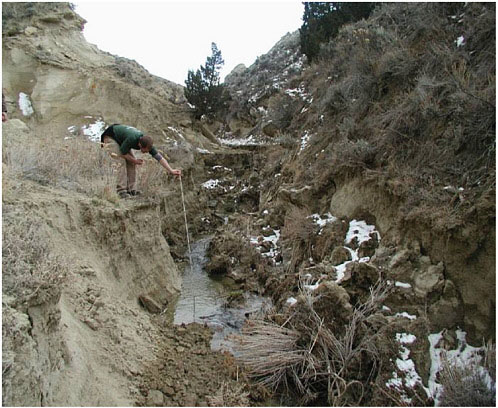
FIGURE 5.6 Stream bank erosion caused by headwater flows in ephemeral drainage of Barber Creek, Wyoming; water sourced from upgradient CBM storage impoundment releases, Powder River Basin. SOURCE: Used with permission from Gregory Wilkerson, Southern Illinois University Carbondale.
Wyoming ruled that the permit, which had been issued using rules since criticized by the EPA and state consultants, was no longer valid.
CHAPTER SUMMARY
Concerns about environmental effects associated with CBM production and produced water management are related to short- and long-term consequences associated with two general activities: (1) groundwater withdrawal associated with CBM extraction and (2) the disposal, management, and permitted discharge of produced water. Much of the information on effects derives from the Powder River Basin of Wyoming, where over 90 percent
of CBM produced waters are discharged to the land or surface water or are applied as irrigation water to soils.
Groundwater
The potential effects on groundwater quality and quantity are related to groundwater withdrawals and infiltration from surface disposal impoundments that store CBM produced water. The extent of groundwater drawdown depends on the density of wells, the rate of pumping water from the coalbed by CBM operators, and the length of time that pumping has been ongoing. The time for the CBM-bearing aquifer to return to its original water pressure or level is a function of the extent of drawdown; site-specific aquifer characteristics such as porosity, permeability, and depth to the coalbed aquifer; climatic and hydrogeological conditions; and proximity and connectivity to recharge sources. Due to the distance between the deep coalbeds and the shallow groundwater aquifers and to aquifer compartmentalization, CBM extraction in the San Juan, Raton, Uinta, and Piceance basins is unlikely to cause lowering of the water table in shallow alluvial aquifers. However, research in the Powder River Basin, which has relatively shallower coal seams, has shown that hydrostatic heads in the coalbeds have been lowered between 20 and 625 feet in CBM production areas. Estimated recovery of groundwater levels in areas of the Powder River Basin where CBM production has ceased in recent years varies from 65 percent in the center of the area near the locus of the CBM wells to 87 percent near the edge of the basin over 10 years. This drawdown has been measured only in the coalbeds from which CBM has been extracted and which are not necessarily the same as groundwater aquifers used extensively as water supplies. An important characteristic that has not yet been thoroughly substantiated is the degree of local hydraulic connection between coalbed aquifers from which CBM and water are withdrawn and other aquifers in the Powder River Basin. Although an EPA study found no conclusive evidence of drinking water contamination by hydraulic fracturing fluid injection associated with CBM wells in a 2004 study (see Box 2.1), lack of comprehensive datasets and studies, and continued development of domestic oil and gas fields, including CBM, since the release of that study have continued to focus attention on hydraulic fracturing. The EPA is conducting a broader analysis of the potential effects on groundwater quality and public health from hydraulic fracturing throughout the entire oil and gas industry.
A primary mode for disposal of CBM produced water, especially in the Powder River Basin of Wyoming and somewhat in the Colorado portion of the Raton Basin, is in surface impoundments. Infiltration and percolation of impounded water can dissolve and mobilize preexisting salts or naturally occurring constituents such as sulfate, selenium, arsenic, manganese, barium, chloride, nitrate and soil solution TDS below impoundments. Studies in
Wyoming indicated no apparent change in groundwater quality as a result of interaction with underlying shallow alluvial groundwater for a substantial majority of impoundments studied; an increase in TDS, selenium, and sulfate in groundwater beneath some impoundment facilities; and improved water quality beneath a small fraction of impoundments. A monitoring well network and a monitoring program are integral parts of CBM produced water management plans that include disposal in surface impoundments.
Surface Water
The potential effects of CBM production and produced water discharge to surface water include water quality effects to perennial and ephemeral drainages and stream depletion from dewatering of coalbed aquifers. Studies that have been conducted on the effects of CBM produced water discharge on perennial stream water quality have produced equivocal results. Background (historical) data prior to CBM development are limited, making assessing the influence of climatic influences on in-stream flows difficult. Specific conductance and SAR of water resources may not be the most meaningful diagnostic or representative measures of CBM produced water influence on receiving water bodies, particularly in the Powder River Basin. Isotope analyses may provide more representative characterization of the influence of CBM produced water on groundwater and surface water.
Carbon isotopic “fingerprinting” studies have distinguished the presence of CBM produced water in the Powder River near areas of CBM production. These carbon isotope fingerprints become less evident as downstream flows are influenced by tributaries that are not themselves influenced by CBM produced water discharges. Use of isotope ratios or other isotope signatures of CBM produced water presence and effects may be useful to monitor and assess the presence and effects of CBM produced water on surface water and groundwater resources.
The committee was unable to find any published data or reports documenting measurable stream depletions due to CBM water production in the basins studied. The reliability of results from stream depletion modeling studies for the Piceance, Raton, and Northern San Juan basins in Colorado has not yet been evaluated against actual stream measurements in areas of CBM production. Similarly, the general assumption of “tributary” groundwater as a primary model input does not comport with the data available from the San Juan Basin.
Soil Quality and Agricultural Production
Several site-specific research studies and natural resource inventories have documented that application of CBM produced water to some soils in of the Powder River Basin has altered plant ecology and resulted in adverse soil with ecological, chemical, and hydrologi-
cal consequences. The conclusions of these studies have not been extrapolated to wider geographic areas or watershed scales. The CBM produced water sourced from the Powder River Basin generally has lower TDS and constituent concentrations than that of the other western basins, and its utility for irrigation as a sole-source water supply is questionable under many conditions in the basin. Thus, CBM water sourced from other basins would have even less suitability for irrigation.
In cases where CBM produced water is used for irrigation, the practice will likely require intensive management, including selection of crops irrigated, timing and amount of produced water that is applied, and use of soil amendments. After use of CBM produced water ceases, additional soil management, including soil amendments, may be required to restore agricultural resources and impoundment sites to predevelopment crop production conditions.
Ecological Effects
Laboratory studies indicate that exposure to elevated concentrations of one or more of the chemical constituents TDS, bicarbonate, and other ions such as potassium and chloride can be toxic to some freshwater organisms. Most laboratory comparisons are based on mean concentrations and discharges of CBM produced waters and on direct and prolonged exposure of conventional laboratory test species to undiluted, untreated CBM produced water or its constituents. In the field, permitted discharges of CBM produced water often require treatment and a defined mixing zone (mixing between CBM produced water and receiving water) at the site of discharge. Testing these laboratory results against field studies and with species relevant to the study areas in the Powder River Basin has not yet been completed and would be a valuable contribution to determine the potential effects of CBM produced water on organisms.
Mean concentrations of sodium bicarbonate in many CBM produced waters are in the range of or exceed acute toxicity concentrations for some aquatic species tested in the laboratory. In situ (field) tests conducted in the Tongue and Powder rivers showed mortality to some species when levels of bicarbonate exceeded laboratory toxicity threshold concentrations for test species. However, these results were the result of direct exposure to undiluted CBM produced water, a situation that would be unlikely in perennial waters where fish are found because of permitted discharge requirements.
Most information on sensitivity of aquatic organisms to dissolved ions has been derived from short-term laboratory toxicity tests. While laboratory approaches may provide an approximation of potential effects, toxicity tests are limited in their ability to predict effects on natural populations and communities in the field. To date, few field assessments have investigated the effects of CBM produced water discharges on aquatic communities, partly due to the difficulties in conducting robust experiments that account for interacting
habitats, natural and human-induced differences in water quality, background (pre-CBM development) conditions, limited lengths of time to complete studies involving community transitions, and species migration. Two field studies conducted to date noted difficulty in identifying any direct effects of CBM discharges on fish assemblages in large-volume perennial flowing rivers (the Powder and Tongue rivers). A comprehensive assessment is currently being conducted to establish current conditions for habitat and aquatic communities for the Powder River Basin in order to measure and monitor future changes.
The potential adverse effects of CBM discharge to ephemeral streams and riparian systems are changes in the timing and amount of streamflow, increased stream bank erosion and instability, increased suspended sediment concentrations and turbidity and downstream sediment deposition, changes in riparian plant communities, and increased stream water and sediment salinity. Effects to algae, aquatic invertebrates, fish, amphibians, and other biological aspects of streams and rivers as a consequence of these discharges have not yet been rigorously documented. One study found greater percentages of nonnative plant species in channels receiving produced water than in those that did not receive CBM produced water.
Citizen Complaints
Although the committee was not able to find published evidence of any widespread effects of dynamic alteration in ephemeral stream channels due to regulated and managed CBM produced water discharges, increased erosion from unregulated and/or unmanaged CBM produced water discharge has been reported. Several cases are also documented in which private landowners brought their complaints against CBM operators and state authorities to court over permitted and regulated discharges to ephemeral channels and to the surface of private lands. Citizen complaints related to CBM activities that are cataloged and investigated by several states with CBM production, comprise primarily concerns about water quantity and quality impacts to private domestic water supply wells.
Baseline information on flows was generally not available for complaints related to ephemeral drainages. For drainages already receiving CBM discharges, hydrological and geochemical characteristics of flows in nearby drainages could be used as surrogate baseline conditions. Similarly, the Wyoming SEO advises CBM companies to collect baseline water level data before drilling new wells, to protect themselves and nearby well owners. However, no legal requirement exists for collection of baseline water quality or water level data.
REFERENCES
AHA and GEC (Applied Hydrology Associates, Inc., and Greystone Environmental Consultants, Inc.). 2002. Powder River Basin Oil and Gas Environmental Impact Statement: Groundwater Modeling of Impacts Associated with Mining Coal Bed Methane Development in the Powder River Basin. Technical report prepared for the U.S. Bureau of Land Management, Buffalo Field Office, Buffalo, WY. Available at www.blm.gov/pgdata/etc/medialib/blm/wy/information/NEPA/prb-feis/groundwatertech.Par.4136.File.dat/cover-toc.pdf (accessed February 26, 2010).
ALL Consulting. 2008. Anticipated and Observed Impacts to Groundwater Associated with the Construction Use of Infiltration Impoundments in the Powder River Basin. Final report prepared for the National Energy Technology Laboratory. Available at www.netl.doe.gov/technologies/oil-gas/publications/EP/NT02045_FinalReport.pdf (accessed February 26, 2010).
Anderson, R.D., L.W. Hall, and M.C. Ziegenfuss. 1994. The influence of salinity on the toxicity of contaminants in the estuarine environment. Abstracts of 15th Annual Meeting of the Society of Environmental Toxicology and Chemistry, Washington, DC.
Arthur, J.D., B.G. Langhus, and C. Vonfeldt. 2008. Current and evolving issues pertaining to produced water and the ongoing development of coal bed methane. Paper presented at 2009 International Coalbed and Shale Gas Symposium, Tuscaloosa, AL, May 18–22.
Ash, M.A., and P. Gintautas. 2009. Coal bed methane production: Raton Basin. Presentation to the Colorado Oil and Gas Conservation Commission Hearing, Trinidad, CO, August 18. Available at cogcc.state.co.us/Library/Presentations/Trinidad_HearingAug_2009/Raton_Basin_CBM_Production_COGCC.pdf (accessed March 10, 2010).
Ayers, R.S., and D.W. Westcot. 1994. Water quality for agriculture. FAO Drainage Paper, 29, Rev. 1. Rome, Italy: Food and Agriculture Organization.
Bartos, T.T., and K.M. Ogle. 2002. Water quality and environmental isotopic analyses of ground-water samples collected from the Wasatch and Fort Union formations in areas of coalbed methane development: Implications to recharge and ground-water flow, eastern Powder River Basin, Wyoming. U.S. Geological Survey Water-Resources Investigations Report 2002-4045. Available at pubs.usgs.gov/wri/wri024045/ (accessed March 26, 2010).
Bauder, J.W., and T.A. Brock. 2000. Irrigation water quality, soil amendment, and crop effects on sodium leaching. Arid Land Research and Management 15:101-113.
Bauder, J.W., K.R. Hershberger, and L.S. Browning. 2008. Soil solution and exchange complex response to repeated wetting-drying with modestly saline-sodic water. Irrigation Science 26:121-130.
Bergquist, E., P. Evangelista, T.J. Strohlgren, and N. Alley. 2007. Invasive species and coal bed methane development in the Powder River Basin, Wyoming. Environmental Monitoring and Assessment 128:381-394.
BLM (Bureau of Land Management). 1999. Wyodak Coal Bed Methane Project Final Environmental Impact Statement. Buffalo, WY: U.S. Department of the Interior.
Boelter, A.M., F.N. Lamming, A.M. Farag, and H. Bergman. 1992. Environmental effects of saline oil-field discharges on surface waters. Environmental Toxicology and Chemistry 11:1187-1195.
Brinck, E.L., J.I. Drever, and C.D. Frost. 2008. The geochemical evolution of water co-produced with coal bed natural gas in the Powder River Basin, Wyoming. Environmental Geosciences 15(4):153-171.
Brinck, E.L., and C.D. Frost. 2009. Evaluation of amendments used to prevent sodification of irrigated fields. Applied Geochemistry 24(11):2113-2122.
Browning, L.S., J.W. Bauder, K.E. Hershberger, and H.N. Sessoms. 2005. Irrigation return flow sourcing of sediment and flow augmentation in receiving streams: A case study. Journal of Soil and Water Conservation 60(3):134-141.
Browning, L.S., K.R. Hershberger, and J.W. Bauder. 2007. Soil water retention at varying matric potentials following repeated wetting with modestly saline-sodic water and subsequent air drying. Communications in Soil Science and Plant Analysis 38:2619-2634.
Busch, D.E., and S.D. Smith. 1995. Mechanisms Associated With Decline of Woody Species in Riparian Ecosystems of the Southwestern U.S. Ecological Monographs 65(3):347-370.
Campbell, C.E., B.N. Pearson, and C.D. Frost. 2008. Strontium isotopes as indicators of aquifer communication in an area of coal bed natural gas production, Powder River Basin, Wyoming and Montana. Rocky Mountain Geology 43(2):149-175.
Chapman, P.M., H. Bailey, and E. Canaria. 2000. Toxicity of total dissolved solids associated with two mine effluents to chironomid larvae and early life stages of rainbow trout. Environmental Toxicology and Chemistry 19:210-214.
Clarey, K.E. 2009. 1993-2006 Coalbed Natural Gas (CBNG) Regional Groundwater Monitoring Report: Powder River Basin, Wyoming. Open File Report 2009-01. Wyoming Water Development Office, Laramie. Available at www.wsgs.uwyo.edu/docs/OFR-PRB.pdf (accessed February 26, 2010).
Clark, M.L., K.A. Miller, and M.H. Brooks. 2001. U.S. Geological Survey Monitoring of Powder River Basin Stream Water Quantity and Quality. Water Resources Investigations Report 01-4279. Cheyenne, WY: U.S. Geological Survey.
Clark, M.L., and J.P. Mason. 2007. Water-Quality Characteristics for Sites in the Tongue, Powder, Cheyenne, and Belle Fourche River Drainage Basins, Wyoming and Montana, Water Years 2001-2005, with Temporal Patterns of Selected Long-Term Water-Quality Data. Prepared in cooperation with the Wyoming Department of Environmental Quality. U.S. Geological Survey Scientific Investigations Report 2007-5146. Available at pubs.usgs.gov/sir/2007/5146/ (accessed April 22, 2010).
Clements, W.H. 1999. Metal tolerance and predator-prey interactions in benthic macroinvertebrate stream communities. Journal of Applied Ecology 9:1073-1084.
Confluence Consulting. 2004. Annotated Bibliography of the Potential Impacts of Gas and Oil Exploration and Development on Coldwater Fisheries. Prepared for Trout Unlimited, June 17
Davis, W.N., R.G. Bramblett, and A. Zale. 2006. The Effects of Coalbed Natural Gas Activities on Fish Assemblages: A Review of the Literature. Montana Cooperative Fishery Research Unit, Department of Ecology, Montana State University, Bozeman. Report prepared for the Bureau of Land Management, Miles City, MT.
Dawson, H.E. 2007a. Pre- and Post-Coal Bed Natural Gas Development Surface Water Quality Characteristics of Agricultural Concern in the Upper Tongue River Watershed. Report prepared for U.S. EPA, Region 8, Denver, CO, July 11. Available at www.epa.gov/Region8/water/monitoring/TongueRiverReportDraftFinal11Jul2007.pdf (accessed February 26, 2010).
Dawson, H.E. 2007b. Powder River Watershed Stream Water Quality Pre- and Post-CBM Development. Prepared for U.S. EPA, Region 8, March 28. Available at www.epa.gov/Region8/water/monitoring/PowderRiverWatershedDataSummary28Mar07.pdf (accessed February 26, 2010).
Dickerson, B.R., and G.L. Vinyard. 1999. Effects of high levels of total dissolved solids in Walker Lake, Nevada, on survival and growth of Lahontan cutthroat trout. Transactions of the American Fisheries Society 128:507-515.
Dwyer, F.J. S.A. Burch, C.G. Ingersol, and J.B. Hunn. 1992. Toxicity of trace element and salinity mixtures to striped bass (Morone saxatilis) and Daphnia magna. Environmental Toxicology and Chemistry 11:513-520.
EPA (U.S. Environmental Protection Agency). 2002. Methods for Measuring the Acute Toxicity of Effluents and Receiving Waters to Freshwater and Marine Organisms. Fifth Edition. EPA-821-R-02-012. Washington, DC: Office of Water.
EPA. 2004. Evaluation of Impacts to Underground Sources of Drinking Water by Hydraulic Fracturing of Coalbed Methane Reservoirs. Washington, DC: EPA. EPA 816-R-04-003. Available at www.epa.gov/ogwdw000/uic/wells_coalbedmethanestudy.html (accessed March 10, 2010).
EPA. 2009a. Drinking Water Contaminants: List of Contaminants and Their MCLs. Available at www.epa.gov/safewater/contaminants/index.html (accessed Feb. 26, 2010).
EPA. 2009b. National Recommended Water Quality Criteria. Available at www.epa.gov/waterscience/criteria/wqctable/ (accessed February 26, 2010).
EPA. 2010. EPA Initiates Hydraulic Fracturing Study: Agency seeks input from Science Advisory Board. March 18. Available at yosemite.epa.gov/opa/admpress.nsf/d0cf6618525a9efb85257359003fb69d/ba591ee790c58d30852576ea004ee3ad!OpenDocument (accessed July 15, 2010).
Farag, A., D.D. Harper, A. Senecal, and W.A. Hubert. 2010. Potential effects of coalbed natural gas development on fish and aquatic resources. In Coalbed Natural Gas: Energy and Environment, ed. K.J. Reddy. New York: Nova Science Publishers, Inc. Pp. 227-242.
Fischer, D. 2005a. Potential groundwater impacts from coalbed methane impoundments. Presentation to the Wyoming Department of Environmental Quality, Water Quality Division, Third Watershed Stakeholders’ Meeting, Buffalo, WY, November 14. Available at deq.state.wy.us/wqd/wypdes_permitting/WYPDES_cbm/Pages/CBM_Watershed_Permitting/Clear_Creek/Clear%20Creek%20Downloads/Clear%20Creek%20Meeting%203/Clear%20Creek%20Don%20Fischer%20Presentation%2011-14-05.pdf (accessed February 24, 2010).
Fischer, D. 2005b. Potential groundwater impacts from Coalbed Methane Impoundments. Presentation to the Wyoming Department of Environmental Quality, Water Quality Division, Second Watershed Stakeholders’ Meeting, Buffalo, WY, September 29. Available at deq.state.wy.us/wqd/WYPDES_Permitting/WYPDES_cbm/Pages/CBM_Watershed_Permitting/Fence_Creek/Fence%20Creek%20Downloads/Fencecreek%20Meeting%202Groundwater%209-29-05.pdf (accessed February 24, 2010).
Fischer, D. 2009a. Potential groundwater impacts from coalbed methane impoundments. Presentation to the National Research Council Committee on Management and Effects of Coalbed Methane Development and Produced Water in the Western United States, Denver, CO, March 30.
Fischer, D. 2009b. 5 Year Groundwater Data Review CBM Impoundments: Preliminary Results. Submitted to the National Research Council Committee on Management and Effects of Coalbed Methane Development and Produced Water in the Western United States, Denver, CO, July 14, 2009.
Frost, C.D., E.L. Brinck, J. Mailloux, S. Sharma, C.E. Campbell, S.A. Carter, and B.N. Pearson. 2010. Innovative approaches for tracing water co-produced with coalbed natural gas: Applications of strontium and carbon isotopes of produced water in the Powder River Basin, Wyoming and Montana. In Coalbed Natural Gas: Energy and Environment, K.J. Reddy, ed. New York: Nova Science Publishers, Inc. Pp. 59-80.
Ganjegunte, G.K., G.F. Vance, and L.A. King. 2005. Soil chemical changes resulting from irrigation with water co-produced with coalbed natural gas. Journal of Environmental Quality 34:2217-2227.
Glenn, E.P., and P.L. Nagler. 2005. Comparative ecophysiology of Tamarix ramosissima and native trees in western U.S. riparian zones. Journal of Arid Environments 61:419-446.
Goetsch, P.A., and C.G. Palmer. 1997. Salinity tolerances of selected macroinvertebrates of the Sabie River, Kruger National Park, South Africa. Archives of Environmental Contamination and Toxicology 32:32-41.
Goodfellow, W.L., L.W. Ausley, D.T. Burton, D.L. Denton, P.B. Dorn, D.R. Grothe, M.A. Heber, T.J. Norberg-King, and J.H. Rodgers, Jr. 2000. Major ion toxicity in effluents: A review with permitting recommendations. Environmental Toxicology and Chemistry 19:175-182.
Hall, L.W., R.D. Anderson, A.C. Ziegenfuss, D.T. Tierney, and S. Ailstock. 1994. Influence of salinity on the toxicity of atrazine to Chesapeake Bay fish, invertebrates, and aquatic macrophytes. Abstracts of 16th Annual Meeting of the Society of Environmental Toxicology and Chemistry, Vancouver, Canada. pp. 133-134.
Healy, R.W., C.A. Rice, T.T. Bartos, and M.P. McKinley. 2008. Infiltration from an impoundment for coal-bed natural gas, Powder River Basin, Wyoming: Evolution of water and sediment chemistry. Water Resources Research 44, W06424.
Heath, L., and J.S. Meyer. 2008. Task 8—Longitudinal Changes in Toxicity of CBNG Produced Water Along Beaver Creek in the Powder River Basin, Wyoming. In Research and Development Concerning Coalbed Natural Gas. DOE Award DE-FC26-06NT15568. Available at www.netl.doe.gov/technologies/oil-gas/NaturalGas/Projects_n/EP/AdvDiagnostics/15568_CBNGPowderRiver.html (accessed February 26, 2010).
Jackson, R.E., and K.J. Reddy. 2007. Geochemistry of coalbed natural gas (CBNG) produced water in Powder River Basin, Wyoming: Salinity and sodicity. Water, Air, and Soil Pollution 184:49-61.Jackson, R.E., and K.J. Reddy. 2010. Coalbed natural gas product water: Geochemical transformations from outfalls to disposal ponds. In Coalbed Natural Gas: Energy and Environment, K.J. Reddy, ed. New York: Nova Science Publishers, Inc. Pp. 121-143.
Johnston, C.R., G.F. Vance, and G.K. Ganjegunte. 2007. Irrigation with coalbed natural gas co-produced water. Agricultural Water Management 95:1243-1252.
Kirkpatrick, A., H. Sessoms, and Q. Skinner. 2006. A Guide to Changing Plant Communities, with Emphasis on Salinizing Sites in the Arid and Semi-arid Northern Plains and Mountains Region. Montana State University Extension Water Quality Program, in cooperation with the University of Wyoming, Department of Rangeland Sciences and Watershed Management.
Mace, J.E., and C. Amrheim. 2001. Leaching and reclamation of a soil irrigated with moderate SAR waters. Soil Science Society of America Journal 65:199-204.
Maxson, J.H., and I. Campbell. 1935. Stream fluting and stream erosion. Journal of Geology 43(7):729-744.
McBeth, I.H., K.J. Reddy, and Q.D. Skinner. 2003. Coalbed methane product water chemistry in three Wyoming watersheds. Journal of the American Water Resources Association 39(3):575-585.
McGuire, K. 2007. “No one is neutral” in water fight. The Denver Post. Available at www.denverpost.com/search/ci_6603026 (accessed July 15, 2010).
Meredith, E., J. Wheaton, S. Kuzara, and T. Donato. 2008. 2008 Water Year Annual Coalbed Methane Regional GroundWater Monitoring Report: Powder River Basin, Montana. Montana Bureau of Mines and Geology Open File Report 578. Available at www.mbmg.mtech.edu/pdf-open-files/mbmg578-2008AnnuallReportFinal.pdf (accessed February 26, 2010).
Mount, D.R., D.D. Gulley, J.R. Hockett, T.D. Garrison, and J.M. Evans. 1997. Statistical models to predict the toxicity of major ions to Ceriodaphnia dubia, Daphnia magna and Pimephales promelas (fathead minnows). Environmental Toxicology and Chemistry 16: 2009-2019.
Orem, W.H., C.A. Tatu, H.E. Lerch, C.A. Rice, T.T. Bartos, A.L. Bates, S. Tewalt, and M.D. Corum. 2007. Organic compounds in produced waters from coalbed natural gas wells in the Powder River Basin, Wyoming. Applied Geochemistry 22(10):2240-2256.
Paine, R.T., M.J. Tegner, and E.A. Johnson. 1998. Compounded perturbations yield ecological surprises. Ecosystems 1:535-545.
Patz, M., K.J. Reddy, and Q.D. Skinner. 2006. Trace elements in coalbed methane produced water interacting with semi-arid ephemeral stream channels. Water, Air, and Soil Pollution 170:55-67.
Peterson, D.A., P.R. Wright, G.P. Edwards, Jr., E.G. Hargett, D.L. Feldman, J.R. Zumberge, and P. Dey. 2009. Ecological assessment of streams in the Powder River Structural Basin, Wyoming and Montana, 2005-06. U.S. Geological Survey Scientific Investigations Report 2009-5023.
Pillard, D.A., D.L. DuFresne, J.E. Tietge, and J.M. Evans. 1999. Response of mysid shrimp (Mysidopsis bahia), sheepshead minnow (Cyprinodon variegatus), and inland silverside minnow (Menidia beryllina) to changes in artificial seawater salinity. Environmental Toxicology and Chemistry 18:430-435.
Regele, S., and J. Stark. 2001. Coal-bed methane gas development in Montana: Some biological issues. Paper presented at the Interactive Forum on Surface Mining Reclamation Approaches to Bond Release: Cumulative Hydrologic Impacts Assessment and Hydrology Topics for the Arid and Semi-arid West, Coal-bed Methane Workshop. Sponsored by U.S. Department of the Interior Office of Surface Mining, Denver, CO; Montana Department of Environmental Quality, Helena; and Montana Bureau of Mines and Geology, Butte. September 1.
Rice, C.A., M.S. Ellis, and J.H. Bullock, Jr. 2000. Water Co-produced with Coalbed Methane in the Powder River Basin, Wyoming. Preliminary compositional data. U.S. Geological Survey Open-File Report 00-372. Washington, DC: U.S. Department of the Interior.
Richards, L.A. (ed.). 1954. Diagnosis and Improvement of Saline and Alkali Soils. USDA Handbook 60. Washington, DC: U.S. Government Printing Office.
Riese, W.C., W.L. Pelzmann, and G.T. Snyder. 2005. New insights on the hydrocarbon system of the Fruitland Formation coal beds, northern San Juan Basin, Colorado and New Mexico, USA. GSA Special Papers 387:73-111.
Sharma, S., and C.D. Frost. 2008. Tracing coal bed natural gas co-produced water using stable isotopes of carbon. Ground Water 46:329-334.
Skaar, D., A. Farag, and D. Harper. 2006. Toxicity of sodium bicarbonate to fish from coal-bed natural gas production in the Tongue and Powder River drainages. U.S. Department of the Interior, USGS Fact Sheet 2006-3092.
Smith, R.L., D.A. Repert, and C.P. Hart. 2009. Geochemistry of inorganic nitrogen in waters released from coal-bed natural gas production wells in the Powder River Basin, Wyoming. Environmental Science and Technology 43(7):2348-2354.
Soil Improvement Committee, California Fertilizer Association. 1995. Western Fertilizer Handbook. Danville, IL: Interstate Publishers.
Soucek, D.J. 2007. Bioenergetic effects of sodium sulfate on the freshwater crustacean, Ceriodaphnia dubia. Ecotoxicology 16(3):317-325.
S.S. Papadopulos & Associates, Inc. 2007a. Coalbed Methane Stream Depletion Assessment Study: Piceance Basin, Colorado. Prepared in conjunction with the Colorado Geological Survey for the State of Colorado Department of Natural Resources and the Colorado Oil and Gas Conservation Commission, Boulder. Available at water.state.co.us/groundwater/cbm/piceance/PICEANCE_DRAFT_FINAL.pdf (accessed February 26, 2010).
S.S. Papadopulos & Associates, Inc. 2007b. Coalbed Methane Stream Depletion Assessment Study: Raton Basin, Colorado. Prepared in conjunction with the Colorado Geological Survey for the State of Colorado Department of Natural Resources and the Colorado Oil and Gas Conservation Commission, Boulder. Available at water.state.co.us/groundwater/cbm/raton/RATON_DRAFT_FINAL.pdf (accessed February 26, 2010).
Stearns, M., J.A. Tindall, G. Cornin, M.J. Friedel, and E. Bergquist. 2005. Effects of coal-bed methane discharge waters on the vegetation and soil ecosystem in Powder River Basin, Wyoming. Water, Air, and Soil Pollution 168:33-57.
Stednick, J.D., and W.E. Sanford. 2005. Surface and groundwater interactions in coalbed methane waters in the Powder River Basin, Wyoming. Colorado Water: Newsletter of the Water Center at Colorado State University, June. Available at www.cwi.colostate.edu/newsletters/2005/ColoradoWater_22_3.pdf (accessed February 26, 2010).
Suarez, D.L., J.D. Wood, and S.M. Lesch. 2006. Effect of SAR on water infiltration under a sequential rain–irrigation management system. Agricultural Water Management 86:150-164
Van Voast, W.A. 2003. Geochemical signature of formation waters associated with coalbed methane. American Association of Petroleum Geologists 87(4):667-676.
Vance, G.F., L.A. King, and G.K. Ganjegunte. 2008. Soil and plant responses from land application of saline-sodic waters: Implications of management. Journal of Environmental Quality 37:S139-S148.
Vandersande, M.W., E.P. Glenn, and J.L. Walworth. 2001. Tolerance of five riparian plants from the lower Colorado River to salinity drought and inundation. Journal of Arid Environments 49:147-159.
Wang, X., A.M. Melesse, M.E. McClain, and W. Yang. 2007. Water quality changes as a result of coalbed methane development in a Rocky Mountain watershed. Journal of the American Water Resources Association 43(6):1383-1399.
Wheaton, J., and T.A. Donato. 2004. Ground-water monitoring program in prospective coalbed methane areas of southeastern Montana: Year One. Montana Bureau of Mines and Geology Open File Report 508.
Wheaton, J., and E. Meredith. 2009. Montana Regional Coalbed Methane Ground-Water Monitoring Program. Montana Bureau of Mines and Geology, Montana Tech of the University of Montana. Presentation to the National Research Council Committee on Management and Effects of Coalbed Methane Development and Produced Water in the Western United States, Denver, CO, March 30.
Wheaton, J., and J.M. Metesh. 2002. Potential ground-water drawdown and recovery from coalbed methane development in the Powder River Basin, Montana. Project completion report to the U.S. Bureau of Land Management. Montana Bureau of Mines and Geology Open File Report 458.
Wheaton, J., T.A. Donato, S.L. Reddish, and L. Hammer. 2005. 2004 Annual Coalbed Methane Regional Ground-water Monitoring Report: Montana Portion of the Powder River Basin. Montana Bureau of Mines and Geology Open File Report 528.
Wheaton, J., T.A. Donato, S.L. Reddish, and L. Hammer. 2006. 2005 Annual Coalbed Methane Regional Ground-water Monitoring Report: Northern Portion of the Powder River Basin. Montana Bureau of Mines and Geology Open File Report 538.
Wheaton, J., T.A. Donato, S.L. Reddish, and L. Hammer. 2007. 2006 Annual Coalbed Methane Regional Ground-water Monitoring Report: Northern Portion of the Powder River Basin. Montana Bureau of Mines and Geology Open File Report 556.
Wheaton, J., T.A. Donato, S.L. Reddish, and L. Hammer. 2008. 2007 Annual Coalbed Methane Regional Ground-water Monitoring Report: Northern Portion of the Powder River Basin. Montana Bureau of Mines and Geology Open File Report 576.
Wolfe, D.W., and G. Graham. 2002. Water Rights and Beneficial Use of Coal Bed Methane Produced Water in Colorado. Denver, CO: Colorado Division of Water Resources. Available at water.state.co.us/pubs/Rule_reg/coalbedmethane. pdf (accessed July 15, 2010).
Wyoming DEQ (Department of Environmental Quality). 2005. Chapter 8 in Quality Standards for Wyoming Groundwaters. Water Quality Rules and Regulations. Available at deq.state.wy.us/wqd/wqdrules/ (accessed February 26, 2010).


