
3
The Research Program Offices
The National Institute of Justice (NIJ) is still described as “the research, development and evaluation agency of the U.S. Department of Justice (DOJ),”1 as it was at its inception, yet its program looks a great deal different today. Two of the changes, mentioned in Chapter 2, are the shift from a broad program of research to research that is more heavily focused on criminal justice administration and short-term solutions to crime prevention and reduction. The second change is reduced resources for social science research and greater support for technology research and technology assistance.
This chapter is an overview of the research portfolios of the two main program offices in NIJ, the Office of Research and Evaluation (ORE) and the Office of Science and Technology (OST). We start by analyzing funding support for NIJ’s research activities overall and then move on to separate discussions of ORE and OST. For each office we review the major areas of research, the context in which these areas developed, and their current status. Chapter 1 details the sources of information the committee was able to gather. See Appendix A for a listing of requests that could not be met or were met only in part.
As mentioned in Chapter 1, obtaining information on NIJ’s research portfolio and presenting it in an organized way proved to be a difficult task. Although a great deal of information on NIJ research is presented on its website, research activities are not always easily differentiated from
|
1 |
See for example NIJ overview, http://www.ojp.usdoj.gov/ or http://www.ojp.usdoj.gov/nij/about/welcome.htm [accessed August 31, 2009]. |
technology assistance or capacity-building activities. The financial data provided to the committee were often not broken down by research area or were incomplete. For example, some data were available for only a limited number of years, and some data relating to the use of contracts or interagency agreements, known sources of funding for research in certain areas (e.g., body armor), often were not provided as part of the financial history submitted to the committee or available publicly. Although we were able to construct a broadly representative picture of NIJ’s funding history, we are aware that it is at best an approximate picture.
RESEARCH PORTFOLIO
NIJ undertakes numerous activities designed to carry out its science mission, and foremost among them is funding research studies. NIJ is authorized to make research grants and contracts with individuals, agencies, institutions of higher education, industry, and private organizations. The planning and monitoring of these awards are undertaken at the staff level through the two program offices and their respective divisions. ORE supports social science research to advance knowledge and shape best criminal justice practices. The research portfolio of OST can be broadly described as applied research aimed at developing technologies that serve criminal justice needs. Substantive areas for both offices are listed in Box 3-1.
Analysis of Awards
The committee’s programmatic and financial description of NIJ’s research portfolio is based on a database of NIJ awards for the period 1995-2008 that we assembled for this purpose. The database was created from an archive of awards available on the NIJ website.2 Nearly 5,000 awards are listed online, organized by topical areas and identified with award title, principal investigator (until 2004), institution, and award amount. The topics assigned by NIJ are relatively similar across the years, although some categories have shifted from those reflecting program goals to those describing criminal justice functions and issues. Also, NIJ modified its categories in years when it received allocated funds for specific work, such as violence against women and DNA backlogs and research. (For example, see Box 3-2 for a comparison of topics in 1995 and 2006.) Seeking a consistent set of topics for the 14-year period, the committee chose to organize the awards around the following four categories:
|
2 |
See http://www.ojp.usdoj.gov/nij/awards/welcome.htm [accessed December 10, 2009]. |
-
social science research—including research awards in the areas of law enforcement (policing), corrections, courts, crime and criminal behavior, crime prevention, drugs, juvenile justice, victimization, and violence against women, family violence, and violence against the elderly;
-
science and technology research and development (R&D)—including research awards in the areas of DNA analysis, forensic sciences, biometrics, communications and information technologies, policing technologies, counterterrorism technologies, less lethal technologies, and sensors and surveillance;
-
technology assistance and program support—including funds for the National Law Enforcement and Corrections Technology Center (NLECTC) system (described later in this chapter) as well as testing and evaluation and standards development and technology-related training and other awards to support or supplement staff, equipment, meeting, or dissemination costs for existing programs, such as criminal justice centers, institutes, or organizations; and
-
forensic capacity-building efforts—including awards to reduce the DNA backlogs and improve forensic laboratories as well as training and outreach efforts in forensic science.
To construct the research portfolio, the committee started with NIJ’s categorization of topics, reviewed the award titles and other available information, and attempted to separate the program support and technology assistance awards from the research awards. The awards to reduce the DNA backlog and improve forensic laboratories3 were identified as such and easily separated from the research awards. All duplicate entries (same award, same year, but categorized under multiple topics) were removed from the database, but continuation awards for subsequent years (to the extent they were available in the online archive) were left in.
Although we recognize that, for a number of reasons, the total figures from this database of awards may not be complete and accurate, we think they present as accurate a picture of trends in NIJ funding of research in different criminal justice areas as can be estimated given the available data. Figures 3-1 and 3-2 illustrate the amounts awarded and the number of awards, respectively, over the last 14 years in the four categories identified above.
The funding trends show that, over this period, NIJ allocated less to research (about $870 million) than to capacity-building efforts (about
|
BOX 3-1 ORE and OST Research Areas RESEARCH AREAS OF INTEREST MANAGED BY ORE Violence and Victimization Research Division
Crime Control and Prevention Division
Justice Systems Research Division
|
International Center*
TECHNOLOGY INVESTMENT PLATFORMS MANAGED BY OST Within OST, these investment portfolios are administered through three divisions: (1) Investigative and Forensic Sciences Division; (2) Information and Sensor Technologies Division; and (3) Operational Technologies Division.
SOURCE: Pulled from presentations by Thomas Feucht and John Morgan made to the committee at a meeting on December 20, 2007. |
$1190 million)4 and that funding for research, NIJ’s primary function, is currently on the decline compared with other functions. Funds available for social science research have been declining almost steadily since 1998 and now constitute the smallest funding category. OST funding for research
|
has undergone several increases and decreases and received the greatest support in fiscal year (FY) 2002, right before the legislative establishment of OST in the Homeland Security Act of 2002. But in 2008, OST funding for research also declined.
A similar picture emerges when one looks at the number of research grants each office funded during the same period. In general, a decline in funds allocated for research grants is reflected in a decline in actual grants awarded. But this decline has not occurred across the board in all catego-
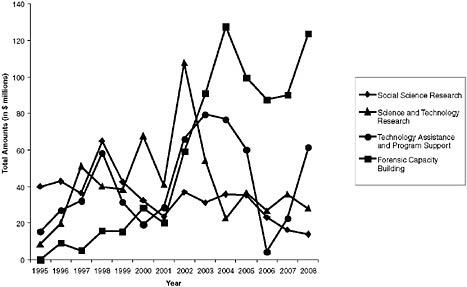
FIGURE 3-1 NIJ award funding history, 1995-2008 (in constant 2008 dollars).
SOURCE: Generated from information in NIJ’s online award archive (available http://www.ojp.usdoj.gov/nij/awards/welcome.htm [accessed May 26, 2010]).
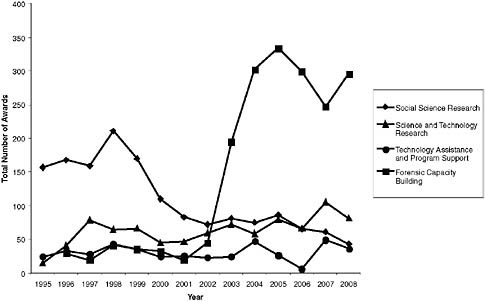
FIGURE 3-2 Number of awards by category, 1995-2008.
SOURCE: Generated from information in NIJ’s online award archive (available http://www.ojp.usdoj.gov/nij/awards/welcome.htm [accessed May 26, 2010]).
ries of funding. One can see the dramatic increase in funding and number of awards in the forensic capacity-building category. In fact, since 2002 the number of forensic capacity-building awards has exceeded every other category. In 2008 there were more than seven times the number of forensic capacity-building grants awarded than all social science research grants, and there were 2.5 times the number of forensic capacity-building grants compared with all NIJ research grants.
Analysis of Solicitations
NIJ funds proposals submitted in response to the research solicitations it issues each year. The solicitations issued between 1996 and the present reflect trends similar to those outlined above both in funding levels and in the shift away from research and toward other kinds of activities. This shift is particularly striking after 2005. Prior to this time, the number of solicitations is fairly consistent around 21 (except for a brief addition of 10 solicitations in 1999 and 2000).
The pre-2005 solicitations generally included 3-4 different fellowship programs, 2-3 open investigator-initiated solicitations for both social science research and technology-related proposals, forensic capacity-building solicitations that grew from 1 to 4 different programs, and numerous targeted social science and program evaluation solicitations. The latter category made up the largest share of solicitations.
In 2005 the number of annual solicitations issued by NIJ doubled from 21 to 40. The increase in solicitations reflects the growth of the OST program, in particular the increased emphasis on technology development5 as well as a doubling of the forensic capacity-building solicitations from 4 to 8. In addition, there are increases in solicitations for social science research and program evaluations of legislative initiatives, such as the solicitation for Social Science Research on Emerging Issues in Forensic Science, with ties to the President’s DNA Initiative.
Numbers of solicitations and their titles do not present an accurate picture of NIJ funding priorities. For example, in FY 2007 of the 43 solicitations, 18 involve social science research or program evaluation, 16 relate to technology development, and 6 promote forensic capacity-building programs. A review of the solicitations indicates an emphasis on research, development, and evaluation activities. However, actual awards and funding amounts for the period 2005-2008 paint a different picture.
|
5 |
In 2005, the open NIJ Science and Technology solicitation gave way to a number of solicitations targeting technology development in specific areas, such as communications, corrections, less lethal and pursuit management, electronic crime, personal protective equipment, and sensor, surveillance, and biometric technologies. |
The majority (75 percent) of solicitations for social science research, program evaluation, and technology development generated 3 awards or fewer a year, for a total average of 100 awards annually. However, the 6 forensic capacity-building solicitations, combined, generated a total of over 300 awards a year. The forensic capacity-building solicitations resulted in award funds totaling over $300 million for the period 2005-2008. In the same period, the research, development, and evaluation solicitations combined resulted in award funds totaling less than $110 million. The committee views these trends with concern and discusses them in greater detail as part of the description of the specific research portfolios of ORE and OST that follow.
OFFICE OF RESEARCH AND EVALUATION
Overview of the Total Budget
In the past 14 years, the total ORE budget has ranged from approximately $18 to $54 million. Figure 3-3 illustrates the considerable year-to-year fluctuation in funding levels as well as the decline in total funding after 2005. These funding fluctuations can be expected to contribute to difficulties in sustaining continuing programs of research.
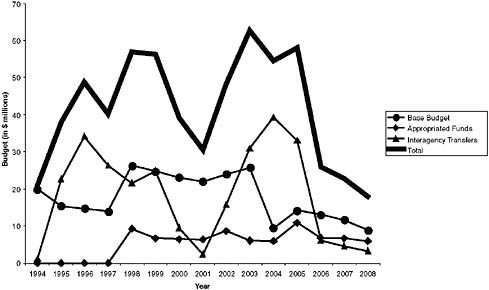
FIGURE 3-3 ORE funding history, 1994-2008 (in constant 2008 dollars).
SOURCE: Adapted from figures provided by Edwin Zedlewski during a presentation to the committee on July 10, 2008.
Even more challenging to ORE’s ability to plan and execute a systematic research agenda are the shifts in its discretion over how the funds could be used. The figure illustrates the changes in the three categories of ORE funding: (1) base budget, (2) appropriated funds, and (3) interagency transfers. The base budget—the funds Congress specifically appropriates to NIJ to carry out its mission—generally allows NIJ the most discretion in funding a broad range of research topics. These funds have sharply declined in recent years. In 2004, while overall program funds for ORE dropped from its 2003 budget of $63 million in constant 2008 dollars to $55 million, its base budget funds dropped from $26 to $9.5 million. The base budget funds increased slightly in 2005 to $14 million; however, in 2008 ORE was allocated only $9 million for its discretionary base budget.6
The second source of funds comes from other appropriations—funds that Congress appropriates to other agencies but designates them to be used by NIJ for a specific purpose. The funds are then transferred to NIJ to be used in designated research areas. One of the largest sources of transferred funds from separate appropriations is the funding from the Violence Against Women Act (VAWA) appropriation. These funds have been quite significant over time and have been heavily relied on by the Violence and Victimization Division of ORE to support its work.
The third category of funds includes monies transferred to NIJ from other units of the Office of Justice Programs (OJP), the Department of Justice, and occasionally other federal agencies for studies, usually evaluations, related to programs these agencies are sponsoring. Only rarely are these funds available for general research purposes. For example, the increase in transferred funds to NIJ between 2004 and 2006 in part reflects funds from the Office of Juvenile Justice and Delinquency Prevention (OJJDP) and the Bureau of Justice Assistance (BJA). These two OJP bureaus received approval to use a percentage of the funding designated for earmarked programs to support outcome evaluations. Other examples of large research efforts funded with transferred funds include multiyear evaluations of the Serious and Violent Offender Reentry Initiative, the Residential Substance Abuse Treatment program, and adult and juvenile drug courts.
The net effect of these trends has been to erode the discretion of ORE in allocating funds, to reduce the level of funding available for many research areas, and to change the type of studies funded.
|
6 |
It is important to note that the director of NIJ determines how much ORE will receive in NIJ base funds. Base funds are used to support other activities, such as dissemination and special projects, and ORE must advocate for its share of these funds. In FY 2003, congressional appropriators designated how much of the base funds should be allocated to OST; this practice was discontinued in 2006. |
Social Science Research Portfolio
The ORE research portfolio of the past 15 years is extremely diverse. NIJ research on policing includes not only the nature of policing (police administration, organizational structure, personnel practices) and policing activities (community policing, police behavior) but also the effectiveness of policies, activities, and technologies on specific kinds of crimes, on different populations, and places. Research on violence includes but is not limited to crime trends and rates; the effects of violent crime on children, women, and the elderly; research on specific crimes—homicide, sexual assault, aggravated assault, burglary, and robbery; and the impact of guns and other weapons. Research on drugs and crime includes not only the relationship between the two but also research on drug crime prevalence, drug treatment, and drug markets. The courts and corrections portfolios include pretrial, sentencing practices, special courts, boot camps, correctional populations, sexual assault in prisons, the impact of treatment, and recidivism. The portfolio also includes research on international crimes, such as terrorism and human trafficking, as well as emerging crimes, such as identity theft and computer crime.
The 1977 evaluation of NIJ by the National Research Council (NRC) noted the absence of a cumulative research program in important aspects of crime and justice. To determine whether NIJ has responded to this concern and because of the extreme diversity of its research portfolio, the committee decided to focus on selected research areas for our overview. Our selection started with areas NIJ specifically identifies either in its annual reports or on its website. We then narrowed these down to areas in which multiple projects were funded over a number of years: policing; drugs and crime; violence against women; firearms and violence; and crime mapping. We also picked a single study, the Program on Human Development in Chicago Neighborhoods, because it is the largest longitudinal study ever funded by NIJ, both in terms of dollar value and the length of time it was supported. Some large areas of research—courts, corrections, juvenile justice—are not included in our descriptions because work on particular topics in these areas was less sustained over time. Neither did we examine the broader category of victims and victimization but instead chose to focus on violence against women, a more easily identifiable area that has had considerable funding over time. The research areas we selected are those we determined, with some assistance from NIJ, offered the most promise for understanding the evolution of the ORE research portfolio and its current research endeavors. It is important to note that the areas of research described below do not represent formal programs of research that one might associate with systematic planning but rather collections of projects that have common subject matter.
For each individual portfolio, the committee did not conduct in-depth reviews of the studies, nor did it assess their methodological or policy value. Specific research studies are highlighted to give an overall sense of the work and their contributions to building a body of knowledge. The descriptions also indicate when lines of inquiry ceased or certain research topics were not carried forward or explored. These are offered as examples of opportunities NIJ either was unable to pursue or chose not to do so and do not reflect the committee’s recommendations of research activities to be pursued in the future.
Policing Research
The largest single category of research grants is in the policing area. For much of NIJ’s history, the policing research portfolio has been its strongest and most visible part of its program. For purposes of this discussion, policing research includes research aimed at improving law enforcement policies and operations. It includes research on community policing but not research on specific crime issues, such as firearms and drugs. These issues have been treated as distinct programs on the NIJ website and in its annual reports, both sources of information for the committee’s work. Research associated with the development and use of various law enforcement technologies is also treated separately by NIJ and is discussed separately in the section on the Office of Science and Technology.
Research History
A recent paper by Braga and Weisburd (2006) identified eight major innovations in American policing during the 1980s and 1990s, and NIJ has supported important work on each of them: community policing (Moore, Trojanozicz, and Kelling, 1988), problem-oriented policing (Goldstein, 1979), “broken windows” policing (Kelling and Wilson, 1982), “pulling levers” policing (Kennedy, 1997), third-party policing (Roehl, 1998; Maxson et al., 2005), “hot spots” policing (Sherman and Weisburd, 1995), evidence-based policing (Blumstein and Petersilia, 1994), and COMSTAT (Weisburd et al., 2003). See Box 3-3 for a brief description of these innovations.
NIJ’s research on traditional police practices, such as preventive patrol, police response time, and criminal investigations in the late 1970s helped lay the groundwork for the beginning of what has been described as a “quiet revolution in policing” (Kelling, 1988). This important body of research demonstrated that neither crime rates nor citizens’ perceptions of their safety were significantly affected by changes in preventive patrols (Kelling et al., 1974); that police response time was unrelated to the probability of making an arrest or locating a witness (Harris, 1978; Kansas City
|
BOX 3-3 Policing Innovations During the 1980s and 1990s
|
(Missouri) Police Department, 1980); and that it was the work of the patrol officer and not detective work alone that increased the probability of an arrest (Greenwood, Chaiken, and Petersilia, 1977).
Police departments changed their arrest practices in domestic violence calls in part as a result of NIJ-sponsored work with the Minneapolis Police Department (Sherman and Berk, 1984), and criminal justice practitioners gained greater understanding of the complexities of those kinds of interventions following seven replications of the original study that NIJ sponsored in 1986 (Blumstein and Petersilia, 1994).
Building on that early foundation, NIJ policing research has contributed to a body of knowledge around what has come to be known as the “focused model of policing.” In this model, police strategies are tailored to specific kinds of problems rather than across-the-board reliance on
|
random patrol, rapid response to calls for service, follow-up investigations by detectives, and unfocused enforcement efforts (National Research Council, 2004b, p. 5). Of particular importance has been research on hot spots, which examines the effectiveness of highly focused and well-managed policing efforts in a variety of environments in which crime is heavily concentrated (Eck, 1993; Sherman and Rogan, 1995; Sherman and Weisburd, 1995; Braga et al., 1999). NIJ research is largely credited for important conclusions emerging from this line of research, including the finding that directed patrols, proactive arrests, and problem solving at high-crime hot spots can be effective in preventing crime in both the hot spot and in the surrounding area (Sherman et al., 1997).
NIJ was able to greatly expand its policing research portfolio with the passage of the Crime Act of 1994. During 1995-1998, it awarded more
than 150 research policing grants, totaling approximately $41.2 million in Crime Act funds.7 Funds, however, did not come directly but were the result of negotiations between the NIJ director and other OJP and Justice Department agency heads who had received direct appropriations. The largest dollar investment ($12.6 million) received by NIJ went for evaluations of programs closely related to these agencies’ interests and initiatives.
In 2004, an NRC committee reviewed research on police policy and practices and concluded that, despite the large investment in research on community policing, the evidence as to its effectiveness was equivocal. Acknowledging the difficulties in conducting this kind of research, the report recommended that it should focus on the key elements of community policing and problem-oriented policing. It went on to conclude that there were many important subjects on which no scientific research had been done and pointed out the need for stable, long-term research funding to address the significant gaps in the research. The report recommended that NIJ support a research agenda that was balanced between questions of police lawfulness, legitimacy, and crime control effectiveness (National Research Council, 2004b).
Current Portfolio
According to NIJ, the theme of its current policing research is improved decision making by police with the goal of addressing the needs of law enforcement executives.8 To that end, ORE supports a mixed and limited number of policing studies, although its continued reliance on transferred funds makes long-term planning difficult. These studies include grants on police use of force, police fatigue and officer performance, performance measures for multijurisdictional task forces, evidence-based model programs for cold case units, an evaluation of multijurisdictional task forces, a randomized experiment of license plate recognition technology, and homicide clearance initiatives. According to NIJ, this mixed portfolio is a result of heavy reliance on the investigator-initiated Crime and Justice solicitation and the Research on Policing and Public Safety Interventions, the latter a targeted policing solicitation. Both provide wide discretion to researchers in topic selection. With the exception of the work on police use of force and homicide clearance rates, there is little evidence that there is much carryover of research topics from the Crime Act grants. In particular, the committee
|
7 |
Program review memorandum to Jeremy Travis, director, NIJ, January 15, 1999. For the period 1995-2001, “the COPS funded research allocation … totaled $46,639,165” (National Research Council, 2004b, p. 30). |
|
8 |
Briefing paper on policing portfolio prepared for the NRC Committee on Law and Justice by NIJ. |
notes the absence of research to shed light on the impact of policing activities on reducing crime.
Research on Drugs and Crime
Much of NIJ’s drug research has focused on identifying drug-using offenders, reducing their drug use, and controlling access to drugs. A guiding thesis behind this research has been that drug users are disproportionately likely to engage in criminal activity and that criminal justice agencies can reduce crime by identifying and treating drug abusers.
Identifying Drug-Using Offenders
Beginning in 1984, NIJ-sponsored urinalysis research on pretrial releasees in Washington, DC, showed high usage of drugs and high recidivism rates (Toborg and Bellassai, 1988; Toborg, Yezer, and Bellassai, 1988) and laid the groundwork for comprehensive pretrial drug-testing programs that sprang up nationwide. In 1987 NIJ launched its Drug Use Forecasting (DUF) system in 10 sites and quickly expanded to 23. DUF showed early on that the levels of drug use among persons arrested for felonies in cities were between 50 and 85 percent, much higher than previously thought (National Institute of Justice, 1990).
Hair analysis, introduced into DUF in 1990, proved to be simpler and relatively less invasive than urinalysis for detecting illegal drugs (Mieczkowski, 1995). It was also shown to have a wider window for detecting opiates and cocaine but to be ineffective for detecting recent cocaine use. NIJ replicated early studies showing that hair analysis detected cocaine more frequently than did urinalysis (Mieczkowski, Mumm, and Connick, 1995; Mieczkowski, 1997). DUF results in later years provided new insights into gun use by those arrested (National Institute of Justice, 1997) and new data on the extent of methamphetamine use in major cities (Feucht and Kyle, 1996).
In 1997, DUF was succeeded by the Arrestee Drug Abuse Monitoring (ADAM) system, and in 2000 numerous methodological improvements were made to it, including a scientific sampling strategy and a new data collection instrument. ADAM data provided useful information about the location of drug purchases (National Institute of Justice, 2000, 2003a) and identified very large variances from city to city in the use of particular drugs (Tonry and Wilson, 1990).
NIJ’s funding of ADAM ended in 2001 when Congress reduced its appropriation and it was unable to afford what had become an annual expenditure of $16 million. The Office of National Drug Control Policy
revived the program in 2007, and NIJ is consulting with that office on ADAM II.9
Reducing Drug Use
The drugs and crime portfolio reflects a heavy investment in activities to evaluate ways to reduce drug use among offenders, thereby reducing recidivism. NIJ research shows that treatment while under criminal justice supervision has been important because many of those receiving it were unlikely to seek treatment on their own (Lipton, 1995). Treatment supervised within the criminal justice system could reduce drug use and a reduction in drug use decreases criminality, even among chronic drug abusing offenders (Lipton, 1996). NIJ research on treatment also shed important light on the characteristics of successful drug treatment programs (Falkin, Strauss, and Bohen, 1999).
The largest investment in research in the drugs and crime area has been directed toward evaluating four major kinds of programs aimed at treating the drug behavior of offenders: (1) drug courts (National Institute of Justice, 2006a), (2) residential drug treatment corrections programs (Inciardi, 1996; Harrison and Martin, 2000; Guerin, 2002), (3) intensive probation supervision (Petersilia and Turner, 1993), and (4) a systemwide approach known as Breaking the Cycle (see Box 3-4). NIJ-sponsored studies have provided critical information on the positive impact of these programs on recidivism and substance abuse relapse (Bureau of Justice Assistance, 2010). NIJ’s process evaluation of the Breaking the Cycle demonstrations identified the difficulties of program implementation, while the impact evaluation confirmed that efforts to reduce drug use among all felony defendants under supervision did produce public safety benefits, even when imperfectly implemented (Harrell et al., 2003).
Controlling Drug Markets
A third important area of concentration in the drugs and crime portfolio has been research on the control of drug markets. In 1990, NIJ initiated the Drug Market Analysis (DMA) Program and conducted evaluations of five demonstration sites to determine whether innovative drug enforcement strategies were effective. One project in Jersey City, New Jersey, found consistent and strong effects of a strategy that used intensive crackdowns and coordinated efforts involving local government agencies to close down drug activity (Weisburd and Green, 1995). Another study of rental properties
|
BOX 3-4 Drug Treatment Programs
|
with drug dealing in San Diego concluded that improved onsite management resulting from targeted police action in the form of Drug Abatement Response Teams did affect drug and crime activity—even 30 months after the initial police intervention (Eck and Wartell, 1999).
NIJ research has also focused on understanding how drug use responds to changes in price in an effort to understand how enforcement affects drug consumption (Caulkins, 1995; Rhodes et al., 1995; Riley, 1997). Research on drug markets is continuing, with one study focusing on methamphetamine use in New York City and another on the impact of policing and community strategies on open air drug markets in three sites in North Carolina.
Current Portfolio
Much of NIJ’s research funding has come from congressionally mandated programs, particularly in the drug treatment and drug court areas. But ORE has also consistently supported drugs and crime research with its own base funds, either through a specific drugs and crime solicitation or through the investigator-initiated Crime and Justice solicitation. In FY 2008, the drug and crime portfolio consisted of 33 active grants covering 10 areas, including some new ones such as the Chinese drug trade, alcohol and drugs, sentencing, American Indian drug and crime issues, drug investigations, and drugs and rape.
NIJ research in this area has accomplished a great deal. But lack of stable funding has inhibited its ability to fund more long-term research in several important areas. The ADAM system had been intended for use as a research platform, and, with its demise, a rich source of data was eliminated. Research on drug market operations, which includes ethnographic studies and drug market research, has not been supported, nor has research on the life course of drug use careers, especially among arrestees (National Research Council, 2001b). The instability and inadequacy of NIJ funding, coupled with inadequate program direction, have precluded the kinds of longitudinal studies and research platforms that are needed for better understanding of the nexus between drugs and crime.
Research on Violence Against Women
NIJ research on violence against women preceded the passage of the Violence Against Women Act of 199410 by several decades. From the mid-1970s through early 1980s, NIJ funded research to analyze and interpret sexual assault evidence and the translation of this information into protocols for victim examination (Schram, 1978). The protocols in current use owe a debt to this work. In the 1980s, NIJ sponsored research on the difficulties faced by women who were victimized and showed that victim involvement often compounds the harm they received (Finn and Lee, 1987). These findings provided the rationale for victim assistance programs and guidelines for improving criminal justice policies related to treatment of rape victims (Blumstein and Petersilia, 1994).
The passage of the Crime Act of 1994, incorporating the Violence Against Women Act of 1994, provided a big boost to research on violence against women. In FY 1995, NIJ issued its first solicitation and awarded nearly $1 million to 6 projects selected from 61 proposals submitted. One
|
10 |
Title IV, Violent Crime Control Act of 1994, P.L. 103-322; 108 Stat. 1902; 42 U.S.C. § 13701, Sections 1206-1208, 1303-1304. This law called for reducing violence against women, which included sexual assault, stalking, and domestic violence. In FY 2005, teen dating became the fourth area of focus under the Violence Against Women Act. |
of them was a congressionally mandated national evaluation of the implementation of programs funded by the Violence Against Women Grants Office, now called the Office on Violence Against Women. This office was established to fund improvements in the response of police, prosecutors, and service providers to victims of domestic violence. Early research funding was limited to specific areas, with the objective of evaluating projects funded by the legislation. Other studies examined coordinated responses to domestic violence by prosecutors, courts, and other criminal justice agencies.
Funding for a full-fledged research program came after an NRC study panel proposed a long-range research agenda on causes, prevention, education, and legal strategies (National Research Council, 1996b). This report provided a focus and gave direction to the program, making useful recommendations on substantive issues, as well as to how best to conduct research and create a research infrastructure.11 In the Violence Against Women Act of 2000, NIJ was mandated by Congress to develop a research agenda in line with the NRC recommendations and to conduct studies on four specific topics: (1) insurance discrimination against victims of domestic violence, (2) workplace effects of violence against women, (3) unemployment compensation for women who are victims of violence, and (4) parental kidnapping (Laney, 2005).
A great deal of what is known today about violence against women is based on NIJ research. A subsequent NRC review of its research in the period 1995-2000 notes support of studies in many of the areas recommended by the 1996 NRC report (National Research Council, 2004a):
-
Studies to evaluate measurement instruments
-
Studies to examine the context of violence
-
Studies on service-seeking behavior
-
Evaluation studies of primary prevention programs
-
Studies of incidence and prevalence of perpetuation of violence
-
Studies that describe current services and evaluate their effectiveness
-
Studies that examine the discretionary processes in the criminal and civil justice systems
-
The Violence Against Women Survey
-
The Judicial Oversight Demonstration, a large demonstration program that tested the effectiveness of court-led coordinated community responses to violence against women. (This very expensive project, funded collaboratively with the Violence Against Women Office, had combined costs of over $25 million.)
The National Violence Against Women Survey deserves special mention. Beginning in 1998, NIJ collaborated with the Centers for Disease Control and Prevention (CDC) on a 5-year effort to understand why violence against women occurs, how to prevent it, and how to improve legal and health care interventions. The survey was the vehicle for carrying out this effort, and the results have been published in a series of reports on violence against women, intimate partner violence, stalking, and rape. CDC, with support from NIJ and the U.S. Department of Defense, is currently in the process of planning to launch a second national survey on violence against women.
NIJ research has produced a great deal of evidence on the dimensions and characteristics of violence against women, particularly intimate partner violence, a major focus. Research revealed the high percentage of murders of women by their husbands and intimate partners (Campbell et al., 2003; Brock, 2004; Fox and Zawitz, 2004) and the heavy role of alcohol and drugs (Sharps et al., 2003), prior abuse, and gun ownership (Campbell et al., 2003).
NIJ also supported groundbreaking research on the prevalence of stalking, showing it was a much larger problem than had been supposed (Tjaden and Thoennes, 1998, 2000, 2006). Research identified the limited responses of the nation’s colleges and universities to student allegations of rape or sexual assault (Fisher, Cullen, and Turner, 1999). NIJ’s evaluation of STOP, a major program to improve prosecutorial and police handling of violence against women, found that the funding was a successful way to improve criminal justice services to woman (Burt et al., 2001). The report raised important issues for college administrators, such as making victims’ needs a priority in the process.
Funding History
In the past 15 years, approximately $70 million has been expended on research on violence against women.12 Of this amount, approximately $50 million came from dedicated research funds from the Violence Against Women Act. NIJ base funds and transfers from other Justice Department agencies as well as CDC and the National Institutes of Health have made up the $20 million balance. Also, the Violence Against Women Office has from time to time transferred funds in addition to the appropriated monies to NIJ for special studies.
Of the $70 million expended, the largest amount of funding has gone
|
12 |
NIJ maintains an online compendium of all research on violence against women funded in the period 1993-2008. See http://www.ojp.usdoj.gov/nij/pubs-sum/vaw-compendium.htm [accessed December 10, 2009]. |
to research on criminal justice system processes as well as treatment and victim services ($20.4 million). Another $18.6 million has been expended on research on the social and cultural context in which violence against women occurs. This category of funding includes such subtopics as specific populations, violence against women and welfare, domestic violence and children, commercial sexual exploitation of children, drug and alcohol use and criminal histories, and context and life course. The third most highly funded category is program evaluations ($17.1 million).
Current Portfolio
The research portfolio demonstrates how a steady source of funding, coupled with a research roadmap in the form of two NRC reports, has enabled NIJ to conduct a sustained and coherent research program. However, the main focus of the research has been and continues to be short-term examinations of interventions and improved practices of immediate assistance by agencies dealing with women victims.
It is worth noting that the 2004 NRC report identified several important research areas that have not received attention. These include information on prevalence and incidence (rates of new cases) and longitudinal studies of U.S. populations to examine the causes and consequences of violence against and by women. It also pointed out the importance of including men and women in any surveys of violence against women (National Research Council, 2004a).
The committee realizes that this kind of data collection effort requires a sizeable investment of funds sustained over time. What is not known is the influence of these data on policy makers, from members of Congress to the Office of Justice Programs to local community agencies.
Research on Firearms and Crime
Strategies to develop and sponsor studies addressing firearms violence began in the late 1970s as part of NIJ’s program on research on violent crimes. Early studies on homicide, robbery, and robbery-murder pointed to the central role of firearms. Around 1980 NIJ convened a research symposium to discuss firearms issues and identify questions for future study.
Several important studies emerged from this initial symposium, including (1) a large-scale literature review and issue analysis, (2) a study of firearms acquisition and use by adult felons (Wright and Rossi, 1986), (3) a study of incarcerated juveniles and high-risk high school students regarding their gun-related attitudes and behavior (Sheley and Wright, 1998), and (4) an evaluation of a hot spot firearms seizure experiment conducted in Kansas City as part of a larger Weed and Seed Program (Sherman and
Rogan, 1995). In 1993, with increased federal interest in the study of gun violence arising out of the peak of the drug-violence-crime problems in the United States, NIJ was able to expand the size and scope of its firearms violence research and to use a more systematic and comprehensive set of investment strategies, which included partnering with other federal agencies.
Between the initial foray into firearms research (around 1980) and 2000, NIJ was involved in funding basic descriptive research on key issues regarding firearms. Most NIJ-funded research has delved deeply into the design and implementation of programs aimed at reducing firearm violence through enhanced enforcement strategies. For example, a program evaluation of the Boston Gun Experiment indicated some effectiveness toward reducing juvenile homicide following implementation of a multiagency supply and demand reduction program targeting illegal firearms markets to gangs (Kennedy, 1997; Braga et al., 1999; Tita et al., 2005). An experimental traffic stop and search gun program in Indianapolis, modeled after a similar one in Kansas City (Sherman and Rogan, 1995), was found to be effective in one experimental neighborhood but had no effect in another, probably because of differences in community characteristics and program implementation (McGarrell et al., 2009). Evaluation studies of the assault weapons ban showed that, in the short term, criminal use of the banned guns declined after the law went into effect and the gun murder rate and murders of police officers with assault weapons decreased (Roth and Koper, 1999). However, the long-term evaluation studies indicate that, given the grandfathered nature of the provisions of the ban, overall use of the banned weaponry had not yet declined and thus had no effect on the levels of gun injuries and death (Koper, Woods, and Roth, 2004).
NIJ has also funded other gun deterrence studies. One looked at the impact of an educational intervention that targets first-time offenders for carrying concealed weapons (Roth, 1998). Another conducted an analysis of secondary markets, finding that there are very different types of illegal markets and acquisition patterns in different cities, thus providing evidence that prevention and intervention efforts need to be locally based (Pierce et al., 2003). In addition, gun tracing data studies have been used proactively to map patterns of illegal gun acquisition; these have started to inform the design of intervention strategies by local law enforcement (Haile, 2006). Information gleaned from the Youth Crime Gun Interdiction Initiative indicated that 90 percent of traced guns used in crimes changed hands at least once before recovery by law enforcement and that many of the traced guns were recovered soon (within several years) after their initial purchase (Bureau of Alcohol, Tobacco and Firearms, 1997).
Between 1993 and 1999, NIJ sponsored 32 studies, totaling approximately $8 million, that addressed firearms and violence (bearing in mind
that weapons issues were also included as part of many broader violence research efforts). During this period, NIJ firearms research was closely coordinated with firearms initiatives and interests of other agencies including CDC, OJJDP, the Bureau of Justice Statistics (BJS), the Treasury Department/Bureau of Alcohol, Tobacco, Firearms and Explosives (ATF), the Office of Justice Programs, COPS, and the Executive Office for United States Attorneys.
Current Portfolio
Since 2000, amidst reduced funding for firearms-related research, NIJ has been involved in several collaborative efforts:
-
cofunding (with CDC and several private foundations) of an NRC panel on improving research and data on firearms (National Research Council, 2005b);
-
funding of a University of California, Davis, study on firearms markets and firearms violence (Wintemute, 1998);
-
cofunding (with ATF) of the 2001 Youth Crime Gun Interdiction Initiative demonstration and evaluation solicitation on gun tracing expansion and program implementation (Ridgeway et al., 2008);
-
contributions to a Brookings Institution Conference on Gun Violence and Gun Policy;
-
funding of projects (Cohen and Ludwig, 2003) that evaluate an intensive policing patrol program aimed at reducing illegal gun carrying in high-crime areas of Pittsburgh;
-
funding of a project evaluating the long-term impact of the federal assault weapons ban; and
-
a cooperative agreement to provide research-based training and technical assistance to the Justice Department–ATF Project Safe Neighborhoods initiative to reduce gun violence in all 93 U.S. attorney districts.
The current research portfolio on firearms has shifted somewhat from its earlier emphasis on evaluations of police interventions. Current firearms research is being carried out as part of the Project Safe Neighborhoods (PSN) initiative, and NIJ’s role is now advisory. PSN grew out of an earlier program, which was a multiagency, multidisciplinary effort targeted at homicide, youth violence, or firearms violence in nine sites and on reducing rape and sexual assault in one site (National Institute of Justice, 2008b).
Moving ahead, there are several challenges and obstacles that continue to plague this area of research as well as NIJ’s commitment to it. The retirement of a key staff person working on the firearms and violence portfolio
has created a vacuum that has yet to be addressed by NIJ. Financial resources are limited as funding and research priorities are shifted away from violence and toward terrorism. In the research field, there continues to be methodological difficulties of measuring the impact of national gun violence reduction programs, such as PSN, as well as inadequate data. In addition, the issue of firearms will probably always be surrounded by a challenging and difficult political and social context.
Crime Mapping
NIJ’s efforts to support R&D of crime mapping technologies began in 1995. The Crime Mapping Research Center, established in 1996, was replaced in 2002 by the Mapping and Analysis for Public Safety (MAPS) Program. Its intent, according to NIJ, is to “increase the integration of spatial statistics and traditional mapping analysis.”13
The program supports intramural projects and extramural grants as well as sponsoring visiting fellows. In 1996, NIJ published a case study of the Chicago Police Department’s Information Collection for Automated Mapping (ICAM) project. Described as user-friendly, it has been used to provide information about crime patterns to beat police officers, residents, businesses, and community groups. Also, Chicago Police Department dispatchers used it to link calls to the nearest available units. The intent of the case study was to promote such technologies to other departments. It is not known if this effort was successful, but the subsequent widespread consideration of hot spots policing, described earlier, suggests that the technology has become increasingly popular in law enforcement. The combination of this technology and hot spots policing is credited as an important driver of innovation in policing (National Research Council, 2004b).
NIJ has increased the number of extramural crime mapping projects that have been supported each year, from two in 2003 to seven in 2007. By far the largest of these grants is the result of an earmark ($3 million to Georgia State University to continue work to improve the collection and dissemination of criminal justice data across jurisdictions). Several funded projects are aimed at improving the performance of law enforcement via the use of crime mapping and data collection technologies. For example, a 2005 grant supported an analysis to determine the optimal search areas for a suspected serial criminal. Another was to the Police Department of Redlands, Calfornia, to develop the capacity to share data among regional
agencies. NIJ funded several grants for simulation studies as well as grants for technological development.
A striking feature of the portfolio is the limited support that has gone to universities where important spatial research is being conducted. NIJ’s efforts have run parallel to advances in spatial analyses by criminologists, geographers, sociologists, and other social scientists. However, it is not clear that NIJ has been a substantial direct supporter of many of those social science efforts, but its support of infrastructure, in particular by archiving data at the National Criminal Justice Data Archive at the University of Michigan and by developing the capacity of local police agencies to geocode data, does advance this work.
From its inception, a major objective has been to build an infrastructure to support the use of geographic information systems (GIS) software and mapping technologies. To accomplish this goal, MAPS has developed and distributed user-friendly software to police departments, provides technical training and assistance, holds a mapping conference every 18 months, publishes the Geography and Public Safety Bulletin in conjunction with the COPS office, and has developed an e-mail discussion list (listserv) for both researchers and practitioners to foster the sharing of good ideas. Departments have benefited from NIJ’s promotion of training in crime mapping, which has enabled them to more efficiently allocate resources to geographic locations where crime frequently occurs or where a small number of crime correlates are concentrated (e.g., youth activity, bars, and taverns).
NIJ has been a leader in developing and encouraging the dissemination and use of the CrimeStat program (now in its third generation). CrimeStat is being used by an increasing number of police departments and has been credited anecdotally for contributing to the crime drop. NIJ has facilitated linking police departments and producers that are creating succeeding generations of GIS software. Some of this software is used for geographic profiling. There is anecdotal evidence of the positive effect of geographic profiling, but so far no rigorous evaluation of the software has been completed.
Current Status
Although funding for the crime mapping program has diminished, NIJ is continuing to build on the previous work through its own program of intramural research, targeted publications, and training efforts. NIJ has done a good job of making GIS technologies available to criminal justice agencies, promoting their use through the crime mapping listserv, providing training (available training programs are regularly listed on the MAPS website), and encouraging user conversation. It has facilitated an expanding application of mapping technologies to an increasing number of crime
control and investigation problems. The efficacy of these applications has yet to be evaluated.
The impact of the crime mapping program on the research community is less clear. Spatial analyses are used in a number of disciplines, and they had been applied to the study of a number of research questions before NIJ’s efforts to promote crime mapping. In terms of criminology and criminal justice research, social environment and geography have long been important approaches to the study of crime. What has changed in the last decade or so has been the development of new GIS tools that have allowed the use of more detailed data measuring the spatial distribution of crime. These technologies have also allowed for wider use of geocoded data to address long-standing, important research questions.
NIJ’s crime mapping program has facilitated the use of new crime data tracking and new law enforcement possibilities for practitioners, and it has occurred as the research community has developed a renewed interest in social environmental and geographical patterns and causes of crime. Crime mapping research also has the potential to play a role in the growing field of ecological crime research, including crime in neighborhoods and spatial effects on crime. Crime mapping technologies can be used to combine observational data and administrative data, producing rich data sets for the study of neighborhood dynamics and their relationship to crime (Fagan, 2008).
Program on Human Development in Chicago Neighborhoods
NIJ’s largest investment in a single research project was to the Project on Human Development in Chicago Neighborhoods. Funded out of ORE base funds from 1990 to 2002, NIJ grants totaled $21.1 million. According to an informative 1999 memo by the project monitor, the total cost of the project exceeded $52 million.14 Given the size of the investment, the committee recognizes that this project probably resulted in opportunity costs for other parts of the NIJ research program.
A second major source of funds for the project was the MacArthur Foundation, whose total investment was $21.9 million, exclusive of subsequent grants to the Inter-university Consortium of Political and Social Research (ICPSR) to support the distribution and use of the data collected by the project. Other major contributors to the project were the National Institute of Mental Health and the U.S. Department of Education.
The origins of NIJ’s support for the project trace back to the early 1980s. A small group of researchers, mainly from outside criminology, argued that the origins of crime and delinquency could be traced back to psychosocial influences very early in life. Over the past 30 years, this perspective, which has come to be called developmental criminology, has evolved into a dominate paradigm in criminology. The design of the project was influenced by two reports from the Justice Study Group (Farrington, Ohlin, and Wilson, 1986; Tonry, Ohlin, and Farrington, 1991) and a report from the NRC Panel on Research on Criminal Careers (National Research Council, 1986). These reports suggested the collection of longitudinal data on the developmental course of cohorts of individuals from early in their lives. Such data, it was argued, would provide the basis for empirical investigations of the early life psychosocial predictors of career criminals. They also advocated for an experimental component in the longitudinal data collection in order to identify interventions that would be effective in deflecting developmental trajectories leading to high-rate offending. The NRC report proposed a “criminal career model” as a context for research on developmental origins of criminality.
The NIJ–MacArthur Foundation partnership that funded about 80 percent of the program formally began in 1990. Although no recorded documentation of the origins of this partnership exists, the accounts of several participants indicate that it was brokered by key figures in the Justice Study Group who convinced NIJ leadership and senior MacArthur Foundation officials of the merits of the effort. According to former NIJ staff, the project’s prospects for identifying early life predictors of high-rate offending and for providing timely and ongoing policy-relevant research on criminal careers were the basis for NIJ’s support. Because there is no record of the original proposal, it is not possible to get a full accounting of the aims of the project at its outset.15
The program had four components: (1) a longitudinal cohort study, (2) a community survey, (3) a systematic social observation of communities, and (4) interviews with community leaders. Detailed information about the study can be found in the literature (Tonry, Ohlin, and Farrington, 1991; Earls and Visher, 1997; Inter-university Consortium for Political and Social Research, 2010). The project came to have two principal foci: (1) developmental research on the causes and consequences of individual criminality, the project’s initial motivation, and (2) research on the influence of community factors on crime. Indeed, the community research came to
be the dominant legacy of the project, even though it reportedly accounted for only 15 of 207 pages of the original proposal.16
ICPSR maintains an inventory of the research products and subsequent analyses of the data. By its count, 94 journal articles, 29 book chapters, 7 conference proceedings, and 9 dissertations are products of the Project on Human Development in Chicago Neighborhoods. Far and away the most cited is a 1997 article that appeared in Science. In it Sampson and colleagues introduce and provide empirical support for the concept of collective efficacy, which relates to a community’s “linkage of mutual trust and the willingness [of its inhabitants] to intervene for the common good” (Sampson, Raudenbush, and Earls, 1997, p. 919). Two of the other five most-cited articles also concern collective efficacy, and all five involve the use of the community-related data sets assembled by the project.
Even though the initial motivation for NIJ’s investment in the Project on Human Development in Chicago Neighborhoods was to investigate the developmental origins of high-rate offending, its dominant legacy, at least so far, is community-related research. There are several explanations for this. One is the productivity and energy of the individuals involved in the planning, design, and management of the project from 1988 to its conclusion as well as the value they placed on community research on crime. Still another factor was the decision not to make the biological correlates and determinants of crime a major design component of the longitudinal data collection. Biology and genetics since have come to be important themes in research on the developmental origins of antisocial behaviors. In addition, there are only three waves of data in the longitudinal component of the project, far fewer than in most modern longitudinal studies. This combined with the overlapping cohort design has complicated the analysis of the data. Finally, the resources were not sufficient either for data collection in more than one site or to conduct studies using experimental designs.
Current Status
NIJ and MacArthur dual support for the project ended in 2001. Research efforts are continuing and are now focused on maximizing the benefits of the investment in data collection by making data and training on its use available to the research community. The MacArthur Foundation has supported a grant to the ICPSR to promote the distribution and use of the data assembled as part of the project. NIJ currently supports secondary
analysis of data collected through this project through its Data Resources Program (see Chapter 5 for more information).
Progress in Cumulative Knowledge Building
The preceding sections have described collections of grants across broad criminal justice categories. Our review demonstrates that NIJ has funded a number of long-term research efforts and research on very important topics. It continues to build on research in many of the areas reviewed, but research in others has ceased or has been sharply curtailed as sources of funds have dried up.
The development of cumulative knowledge requires both a data infrastructure to support studies and a stream of studies that elaborate on what is known from existing data. These collections show that often NIJ research focused on one or the other. The Project on Human Development in Chicago Neighborhoods and ADAM were efforts that produced large quantities of data, yet the use of these data has either been limited or (in the case of ADAM) eliminated. NIJ has sponsored a great deal of research on interventions, particularly in the areas of policing and violence against women. But critical longitudinal data on violence against women and data on crime trends that will help advance the field are not reflected in these collections.
The lack of stable funding has been a clear restraint on NIJ’s ability to develop cumulative research. The committee also notes that other factors have affected its efforts. In developing these descriptions, we were unable to rely on documentation that described the rationale for various research activities, how a particular area of research developed, or how research findings influenced the direction of future work. It was also difficult to identify and review the products of the research. We think this lack of planning and documentation has affected NIJ’s effectiveness in building knowledge and discuss these issues more fully in later chapters.
When the ORE research portfolio is viewed from the perspective of a 14-year period, the committee sees evidence of continuity of efforts that signal a significant improvement in cumulative work over what was observed in the earlier NRC review. But continuity of effort was achieved primarily in those areas in which funding was available either through congressionally mandated programs or the willingness of other OJP agencies to transfer monies to NIJ. As funds have declined, projects have been funded in an increasingly ad hoc manner and with great variety in subject matter, theory base, and intended target audience.
Program Evaluations
In our review of ORE’s research programs, the committee specifically examined program evaluation activities because they represent a unique kind of research geared to a specific audience. Typically these studies ask questions: What works for whom, when, and under what circumstances? Why does it work? How does it work? The products guide practitioners and policy makers and can, when sufficiently grounded in theory, inform the science of criminology. For many decades, ORE has invested heavily in evaluations of criminal justice programs and policies. These include studies of the impact and consequences of programs, specific interventions, or changes in policy (outcome evaluations) as well as evaluations of the process of program or policy implementation. As part of our study, we reviewed ORE outcome evaluations funded between 1992 and 2008. Although many of them include process evaluation components, we did not review projects that were limited to process evaluation of operations and factors that shape successful program implementation.
Compiling a list of NIJ evaluations was challenging. NIJ’s record-keeping practices have changed over the years, and no central repository of records on its funded projects exists. As a result, our analysis relies on a report by the U.S. Government Accountability Office (GAO) on all 96 social science evaluations identified by NIJ as outcome evaluations funded between 1992 and 2002 (U.S. General Accounting Office, 2003a) and a list of 91 outcome evaluations funded between 2003 and 2008. These outcome evaluations include field-initiated studies proposed by investigators in response to NIJ program solicitations, projects undertaken as part of a mandate to NIJ to evaluate the discretionary grant programs of other OJP divisions, and legislatively mandated evaluations.
The list of 96 outcome evaluations funded between 1992 and 2002, or funded in earlier years but completed between 1997 and 2002, was compiled by NIJ for GAO in 2002. According to GAO, these evaluations included 20 larger studies with total funding of $22.8 million, 51 medium-sized studies with total funding of $11.7 million, and 25 smaller studies with total funding of $2.1 million, together totaling $36.6 million. These evaluations measured program outcomes in a wide variety of areas, including domestic violence, law enforcement, drug abuse, and juvenile justice. The evaluated programs include large national discretionary grant programs, multisite demonstration programs, and local programs or innovations.
The list of 91 outcome evaluations funded by NIJ from 2003 through 2008 was compiled by reviewing the titles of funded projects and locating projects labeled “evaluation” on the NIJ website. NIJ staff screened the preliminary list developed by the committee and identified outcome evaluations based on their knowledge of project goals and grant abstracts. Projects
funded in multiple years were combined and treated as single evaluations. Evaluations that did not examine program outcomes were eliminated from the list. Available records did not permit accurate documentation of total funding of these projects, although they did indicate a range of projects, from small evaluations to large multiyear, multisite evaluations receiving large awards.
Between 2003 and 2008, programs related to youth, gangs, and violence against women or family violence were a major focus in nearly half of the outcome evaluations (44 of 91). At least four of these evaluations examined programs funded by discretionary grants from OJJDP and the Office for Violence Against Women, and funds were transferred from those offices for the evaluations. Transferred funds were heavily relied on by NIJ for other kinds of evaluation grants as well. Of the outcome evaluations we identified, more than half (52/91) were funded with transferred monies. Of the approximately $50 million NIJ awarded for outcome evaluations, only $14 million was drawn from its own base funds.
Programs of interest to specific criminal justice agencies, including police, corrections, and courts, were the major focus of two dozen outcome evaluations. A third of these evaluations looked at programs for using new technologies in criminal justice agencies. Multiple awards were also made for the evaluation of programs to combat illicit drug use and distribution, crime and violence prevention programs, programs designed to assist the reentry of prisoners, and programs to assist victims of crime. Most of the organizations conducting the evaluations were colleges and universities (just over a third) and not-for-profit research firms (over a third). Small businesses and practitioner organizations or interest groups conducted about 20 of the evaluations.
Efforts to Improve Outcome Evaluation Quality
Since 2002, NIJ has been the subject of numerous GAO reports that focus on program evaluation efforts (Ekstrand, 2002; U.S. General Accounting Office, 2002, 2003a). These reports are usually conducted at the request of Congress and reflect various members’ concerns with the way NIJ is conducting business.
The GAO reviews are sharply critical of evaluation designs and procedures initially proposed by applicants; implementation procedures for the programs and the evaluation that compromised results; selection criteria for programs to be evaluated, especially the lack of representativeness of the programs; and the lack of self-assessment by NIJ of its evaluation and development efforts. These recent criticisms echo those in a 1976 report on the management of the Equipment Improvement Program of NIJ’s predecessor (U.S. General Accounting Office, 1976). The GAO evaluations are dis-
cussed in more detail in the NRC report Improving Evaluation of Anticrime Programs (National Research Council, 2005c) and in Chapter 5.
Pressure to increase support for outcome evaluations with strong experimental or quasi-experimental designs has come from other reviews of NIJ evaluations (Sherman et al., 1997; Visher and Weisburd, 1997; Garner and Maxwell, 2000). Between 1990 and 2000, experimental evaluations comprised a small and declining portion of NIJ research (2.1 percent of all projects, 3.0 percent of all research dollars), despite a sharp rise in evaluation funds following passage of the Crime Act of 1994. The decline in support for experimentation, widely viewed as the most rigorous outcome evaluation design, was not related to funding availability, the nature of salient policy issues, implementation difficulties, average costs, or the availability of interested evaluators (Garner and Visher, 2003). It appears related to NIJ project choices.
NIJ responded to the GAO critiques and other pressures to improve their evaluation activities in several ways. The Evaluation Division was established in 2002 to provide oversight of the evaluation research portfolio. Initially freed from the task of monitoring ongoing evaluation projects, the division was charged with the task of strategic planning and development of strategies for improving evaluation research at NIJ. The Evaluation Division developed a matrix for a database classification of all evaluations. Using this database, the division initiated a semiannual review of all evaluation projects to identify projects in need of more intensive monitoring. Proactive steps to avoid funding problematic evaluations included new language in solicitations prioritizing experimental studies and funding support for preliminary studies, such as evaluability assessments, to help screen out programs that were not ready for evaluation. Many of their activities were endorsed in the report Improving Evaluation of Anticrime Programs (National Research Council, 2005c). Efforts to eliminate programs that were not good candidates for evaluation began immediately.
Faced with the mandate to evaluate the discretionary programs of BJP and OJJDP in FY 2002 and FY 2003, NIJ had contractors prepare evaluability assessments on 57 of the 461 BJA and OJJDP programs.17 Standardized criteria were used to determine whether a rigorous outcome evaluation appeared feasible, what kinds of evaluation design were most viable, and how much the evaluation should cost. Results were posted on the NIJ website to provide guidance to bidders responding to competitive NIJ evaluation solicitations. Results were also used to select evaluation programs.
As noted earlier, NIJ has been highly dependent on transferred funds for
much of its research and in particular for its evaluation research portfolio. Often it has limited control over the decisions of what programs to evaluate. Evaluability assessments have been a big step forward to identify likely candidates for evaluation and provide a rationale for not proceeding with one when there is every indication the result will not be successful. Part of improving NIJ evaluations will be to establish the kind of infrastructure in which NIJ staff take an active role in defining the types of evaluations that make sense. It will also be important to ensure that NIJ has the authority to decline the responsibility for producing definitive impact evaluation results when it is not scientifically or practically feasible to produce them.
Current Status of Efforts
The Evaluation Division activities ended in December 2005, when its director and two of its three staff left the division and no attempt was made to recruit additional staff. The division was formally dissolved in July 2007 when the evaluation function was transferred to the NIJ director’s office. Although NIJ advertised for two senior-level positions with evaluation expertise to advise on evaluation activities, only one of these was filled. A primary responsibility for that position was to assist ORE and OST to develop jointly offered solicitations that integrate social science research with technology implementation. NIJ has continued to fund evaluability assessments when appropriate, but these are now handled by the individual program offices. The other oversight and planning activities undertaken by the Evaluation Division were discontinued. The electronic database of evaluation activities used to track and monitor evaluation grants became inoperable and was not reinstated, and semiannual reviews of evaluation grants ceased. The result has been a decline in strategic planning around outcome evaluation and a lack of consistent record-keeping on evaluation projects. NIJ should restore its evaluation database and reinstate management practices that provide improved oversight. The committee is concerned that, without informed and continuous oversight, future ORE investments in program evaluation will experience problems that undermine the scientific quality of the studies.
Researcher-Practitioner Partnerships
ORE also sponsors evaluation research using an action research model. This is an important way ORE brings research knowledge to the practitioner. In this model, NIJ supports researchers who partner with local criminal justice agencies on issues of mutual interest. Action research is well suited for the complex world of policing. Decisions are made, then tested, and adjusted for a complex world. Such decisions cannot wait for experimental
designs and statistical analysis. Yet there is a need to learn from working in this environment. Action research is a cyclical process that involves identifying a problem, planning and implementing action steps, evaluating outcomes, and repeating (Elden and Chisholm, 1993). Typically, a researcher, with an agreement to work with a criminal justice agency, develops a proposal seeking research funding and applies to NIJ. The researcher controls all steps of the research process; the agency participates by providing access to records and staff and by allowing an experiment within its operations.
However, when NIJ introduced Locally Initiated Research Partnerships in 1995 (with support from the COPS office), it changed action research. In this model, the researchers and the criminal justice agency share responsibility and collaborate on all steps of the research process, from design to interpretation of findings (McEwen, 1999).
From 1995 to 1998, NIJ funded 41 locally initiated research partnerships. These partnerships were formed across the nation and among jurisdictions ranging in population size from 2,000 to over 7 million. The partnerships addressed several issues: the organizational development and implementation of community policing, the evaluation of community policing efforts, the implementation of computer mapping, and the management of domestic violence programs (McEwen, 1999). These partnerships varied in expense, with awards ranging from $33,000 to $392,000.
The unprecedented opportunity for these partnerships in policing had its roots in the 1994 Crime Act. This legislation provided a mandate for evaluation of how police departments were using Crime Act funds. The police-researcher partnerships were a mechanism for assessing the effects of adopted solutions as well as advancing continued improvements. NIJ also used available funds to sponsor an evaluation of the partnership program conducted by the Institute for Law and Justice (McEwen, 2003).
This evaluation examined the extent to which partnerships were successful and identified the factors responsible for success (McEwen, 1999). The criteria for success included whether (1) the police department changed policies or practices as a result of the research or collaboration, (2) information systems were developed or improved, and (3) the partnership continued beyond the initial research project. The evaluation found several examples of partnerships that satisfied each of these criteria.
Building on the success of these initial partnerships and the knowledge gained from an evaluation of this program, NIJ continued to use the action research model in other partnership programs examining gun violence, such as Project Safe Neighborhoods and its predecessor. It is also collaborating with the International Association of Chiefs of Police to identify research topics of relevance to police agencies and to encourage police-researcher partnerships. This funding was renewed as recently as FY 2009.
Although NIJ continues to encourage collaborations between research-
ers and practitioners in its solicitation language, the committee could not find documentation after 2001 that indicated whether recent research awards supported this action research model.
In FY 2009, NIJ released the solicitation Building and Enhancing Researcher-Practitioner Partnerships. Funding is to support preparation of articles that describe past and current partnerships, support for a junior faculty member to conduct research, and the placement of a researcher in a criminal justice organization. A total of $1 million is being made available for up to 3 years. As of this writing, the committee does not know what, if any, proposals were funded.
The committee thinks that researcher-practitioner partnerships can be used effectively by NIJ to develop strategies for responding to pressures to improve the administration of justice. They offer two advantages: a timely response to pressing issues and an experience-grounded method of developing and testing program feasibility. The disadvantages are also twofold: the strategies are not subjected to rigorous outcome evaluation, which means they need to be positioned in a continuum of R&D activities that ensures more rigorous testing will follow, and the expense is relatively large, given that it is not clear to what extent lessons learned can be generalized to other settings. These pros and cons should be carefully weighed by NIJ as part of a broader agenda-setting process.
OFFICE OF SCIENCE AND TECHNOLOGY
NIJ, through its OST and its predecessors, has a long history of seeking solutions to law enforcement technology problems. It has done this by funding grants in key areas of law enforcement technology development, pursuing cooperative research projects with other federal agencies, developing standards for law enforcement products, and working closely with state and local public safety agencies. It was recognized early that few technology devices were ever conceived and developed specifically for law enforcement applications. NIJ has therefore taken the role of fulfilling special technology needs for state and local law enforcement and fostering technology R&D when it otherwise will not occur.
A focus on the development of new or improved technologies was included as part of the original charge to the National Institute of Law Enforcement and Criminal Justice (NILECJ) (see Chapter 2). After its inception in 1968, NILECJ began making grants in key areas of law enforcement technology, such as automatic surveillance/alarm systems, communications, and nonlethal weapons. It also began holding discussions on specific cooperative research projects with other federal agencies, including the U.S. Department of Defense, on a personal transceiver for police, riot control agents, night vision equipment, and nonlethal bullets (Law Enforce-
ment Assistance Administration, 1969). As one might expect, given NIJ’s reorganization history, frequent changes in directors, and several legislative changes (described in Chapter 2), the early efforts in science and technology bounced among offices and divisions and were often split between offices as defined by the nature of the work.
In 1995, all of NIJ’s science and technology efforts were brought together with the creation of OST. OST was tasked with providing federal, state, and local law enforcement and corrections agencies with access to the best technologies available and supporting the development or adaptation of advanced technologies that will increase efficiency and effectiveness of the criminal justice system.
In November 2002, Congress mandated the establishment of OST in the Homeland Security Act of 2002. The act specified as its mission “to serve as the national focal point for work on law enforcement technology; and to carry out programs that, through the provision of equipment, training, and technical assistance, improve the safety and effectiveness of law enforcement technology and improve access to such technology by federal, state, and local law enforcement agencies.”18 The mission and duties codified in the Homeland Security Act were not unlike what OST had been carrying out previously.19 However, it established OST as its own entity and somewhat divorced it from the oversight of NIJ.
In the past 14 years, NIJ’s science and technology (S&T) research enterprise has greatly expanded. A process known as RDT&E (research, development, testing, and evaluation) undergirds OST activities, and a system of technology centers, known collectively as the National Law Enforcement and Corrections Technology Center (NLECTC) system, supports that process. The following sections, which include descriptions of the RDT&E process, the center system, and the funding and selected accomplishments of the research portfolio, aim to capture the research activities of OST. These activities can be viewed as the initial steps in the commercialization of new technologies appropriate for a federal research agency; i.e., efforts to identify technology needs and existing research gaps, to support R&D to fill those knowledge gaps, and to sponsor operational testing and demon-
|
18 |
The act defined the term “law enforcement technology” to include “investigative and forensic technologies, corrections technologies, and technologies that support the judicial process.” |
|
19 |
The act also specified OST’s duties to include the following, among others: (1) establishing and maintaining advisory groups to assess federal, state, and local technology needs; (2) establishing and maintaining performance standards, and testing, evaluating, certifying, validating, and marketing products that conform to those standards; (3) carrying out research, development, testing, evaluation, and cost-benefit analysis of certain technologies; and (4) developing and disseminating technical assistance and training materials (U.S. General Accounting Office, 2003b). |
stration of promising prototypes. Other activities which are less focused on building knowledge but more focused on disseminating knowledge and/or resources, are described in Chapter 5.
Research, Development, Testing, and Evaluation
The RDT&E process was created in response to the Homeland Security Act of 2002 and an external assessment of NLECTC system (Pymatuning Group, 1998).20 Both the legislation and the assessment draw attention to “the need for [NIJ and its] Center system to support technology R&D for the entire criminal justice community, not just those agencies benefiting from time to time from direct technology assistance” (National Institute of Justice, 2004b, p. 10). The RDT&E process consists of five phases:
|
Phase 1: |
Determine technology needs. |
|
Phase 2: |
Develop technology program plans to address those needs. |
|
Phase 3: |
Perform research and development to develop solutions. |
|
Phase 4: |
Demonstrate, test, and evaluate potential solutions for practice. |
|
Phase 5: |
Conduct outreach and dissemination to assist practitioners in the use of new technologies. |
The RDT&E process is highly touted by NIJ in its publications and by OST leadership in briefings as a way to align the S&T portfolio with the technology needs of the criminal justice community and to bring the work of the center system into a systematic process tied to strategic planning (National Institute of Justice, 2004b). In the remainder of this chapter, we examine Phases 2 and 3 through a review of OST’s research portfolio in order to understand how it supports R&D of technologies for law enforcement. First, however, we introduce NLECTC, which has primary involvement in Phases 1, 4, and 5.
National Law Enforcement and Corrections Technology Center System
The NLECTC system is viewed as “an integral part of NIJ’s Science and Technology program” (National Institute of Justice, 2009b). Its duties, spelled out in the Homeland Security Act of 2002, include (1) to support R&D of law enforcement technology, (2) to support the transfer and implementation of technology, (3) to assist in the development and dissemination of guidelines and technological standards, and (4) to provide technology
|
20 |
For a description, see http://www.ojp.usdoj.gov/nij/topics/technology/research-development-process.htm [accessed September 9, 2009]. |
assistance, information, and support for law enforcement, corrections, and criminal justice purposes.
NLECTC is highly involved in Phases 1, 4, and 5 of the RDT&E process outlined above. For Phase 1, the NLECTC centers split the administration of various Technical Working Groups and maintain other links to practitioners in order to identify their high-priority technology needs. This advisory capacity is discussed in Chapter 4. In Phase 5, NLECTC activities include technology assistance, curricula development, training, standards development, certification and compliance testing, publications, conferences, and other third-party guidance for the procurement of technology. Many of these activities are illustrated in Chapter 5. Later in this chapter, we describe the Phase 4 role in implementing demonstrations and performing technology evaluations.
Initial Growth
Established in 1994, the NLECTC system was preceded by NIJ’s Technology Assessment Program Information Center and to a lesser extent the Equipment Systems Improvement Program, both of which contained mechanisms for assessing the needs of the field and maintained a link to the Law Enforcement Standards Laboratory.
In 1994, Congress appropriated funds to develop a technology information exchange network and earmarked funds for the establishment of specific centers in the NLECTC system. Those centers became known as the regional centers and included NLECTC–Northeast in Rome, New York; NLECTC–Southeast in Charleston, South Carolina; NLECTC–Rocky Mountain in Denver, Colorado; and NLECTC–West in El Segundo, California. Each center was set up under the auspices of a larger institution, so it could draw on institutional resources. The existing National Center in Maryland, which administers the compliance testing program and dissemination efforts, and the existing law enforcement standards laboratory, which became known as the Office of Law Enforcement Standards, were subsumed under the umbrella of the NLECTC system. The Office of Law Enforcement Technology Commercialization, located at the National Technology Transfer Center in Wheeling, West Virginia, also became part of the NLECTC system in 1995. Additional centers were added to the system through subsequent appropriations and earmarks. These centers include NLECTC–Northwest in Anchorage, Alaska; the Border Research and Technology Center in San Diego, California, and Austin, Texas; and the Rural Law Enforcement Technology Center in Hazard, Kentucky.
The NLECTC system is not the result of top-down planning and design. It just grew. The creation and location of many of the centers were dictated by external pressure, and hence the areas of specialization and the
personnel, linked closely with the host institutions, were not the careful choice of the NIJ and OST leadership.
Further Evolution
The passage of the Homeland Security Act in 2002 allowed NIJ and OST to “establish new centers through a merit-based, competitive process.” In 2007, four centers of excellence (COEs) were added to the NLECTC system through a competitive proposal process, as legislatively authorized: (1) the Communications COE in Camden, New Jersey; (2) the Forensic Science COE in Largo, Florida; (3) the Sensors, Surveilance and Biometrics COE in New York City; and (4) the Weapons and Protective Equipment COE in State College, Pennsylvania. The addition of the COEs marked the first time NIJ had discretion over their number and specializations.
The NLECTC system is currently evolving. The recent addition of COEs is redefining the roles and functions of each center. Staff resources are changing, and funds are being shifted between centers. Whether or not the new COEs improve the overall function remains to be seen. Until FY 2009, funds were specifically appropriated by Congress to NLECTC; these appropriations ranged from $5-10 million in the late 1990s and rose to roughly $20 million a year for FY 2004 through FY 2008. Funding for the NLECTC system is generally much greater than the appropriations designated by Congress because the individual centers are assigned additional projects as appropriate to their expertise. The additional funding can stem from OST discretionary funds, transferred funds from other agencies, or additional earmarks.21
The centers existing prior to 2007 serve as the initial point of entry for technology information and generalized technology assistance. Their task is to focus on criminal justice agencies in their respective regions or domains (i.e., rural or border agencies) and to provide these agencies with access to information, both the relevant scientific and technology-related results of NIJ’s RDT&E activities and the resources available from NIJ. They also work with constituents to identify unique regional technology needs. Some of these centers now play a secondary role to that of the COEs in coordinating technology demonstration, test, and evaluation activities.
The new COEs currently serve as the authoritative resource in their respective technology focus areas and handle more complicated technical
|
21 |
For example, the NLECTC–Southeast was appropriated several million dollars over several years for the implementation of Project Seahawk, a pilot project to enhance coastal city security and law enforcement. This funding was provided for the acquisition of communications equipment, computer software and hardware technology, and R&D needed to execute the project. |
problems (National Institute of Justice, 2009b). For the most part, they do not provide any new services; they have inherited or reoperationalized services previously provided by other centers or NIJ-funded entities. They are, however, looking into doing things in different ways and leveraging different facilities and expertise for conducting demonstrations, testing, and evaluations. During our 2008 site visits, the committee observed that the relationship of the centers of excellence to the regional centers was not crisply defined and that the information and work flow between them, as well as between the centers and the programmatic divisions of OST, was not at all clear. The committee further noted that the COE staff varied considerably in their qualifications in the relevant fields, a variation that NIJ staff did not appear to recognize.
In a March 2008 hearing before the House Committee on Appropriations, Subcommittee on Commerce, Justice, Science, and Related Agencies, no funding was requested for NLECTC in FY 2009. This effectively returned the roughly $20 million earmarked for NLECTC to NIJ’s discretionary budget and released OST from the responsibility of managing specific centers previously mandated. For the first time in NLECTC’s history, NIJ has the authority to define the locations and specializations of the entire NLECTC system. On May 21, 2009, NIJ posted three solicitations with regard to NLECTC: (1) Criminal Justice Technology Regional Centers, (2) Criminal Justice Technology Center of Excellence for Information and Sensor Systems, and (3) Criminal Justice Electronic Crime Technology Center of Excellence. Under the first solicitation, NIJ sought applications for funding to conduct regional outreach activities in the NLECTC system. The other two solicitations sought applicants for two new COEs. Applicants could propose, in their respective technology area of information and sensor systems or electronic crime, a plan to conduct many of the center activities described. These solicitations indicate that the applicants “should expect that the majority of their work will be on projects specifically defined by NIJ in support of the specific technology investment portfolio areas” (National Institute of Justice, 2009b).
During the course of this study, we witnessed several changes to the center assignments. The Office of Law Enforcement Technology Commercialization was discontinued early on. At the writing of this report, the 2009 solicitations were awarded. With these awards, the NLECTC system was redefined into three regional centers that represent (1) Alaska, (2) small, rural, tribal, and border law enforcement, and (3) larger criminal justice agencies in states, major cities, and counties; five COEs; and the existing NLECTC–National and the Office of Law Enforcement Standards. It appears that only one award went to a new grantee; most of the awards went to grantees who had previously administered NLECTC centers. The new awards and continuations for NLECTC in FY 2009 totaled $39 mil-
lion. External assessments of the NLECTC system were conducted in the early 1990s (Pymatuning Group, 1998; Schwabe, Davis, and Jackson, 2001), and a report assessing the effectiveness of the existing center system was transmited to Congress by NIJ in 2005 (National Institute of Justice, 2004b). The new structure of centers aligned to OST’s RDT&E process and assigned through merit-based, competitive awards will require a formal assessment in the coming years to measure and document any improvements from the previously mandated and loosely defined system.
Research Portfolio
From technology needs funneled up from practitioner advisory groups22 through NLECTC, OST program managers develop multiyear program plans by considering whether technological solutions to meet those needs already exist or whether solutions need to be developed. Technology program plans are developed in collaboration with other agencies to aid in identifying existing solutions or determining if other development work can be leveraged to serve dual-use purposes.23 One such formal arrangement is the 1401 Technology Transfer Program (see Box 3-5).
OST benefits from participation in this program. In leveraging other agencies’ investment, OST is able to spend its limited money where it is needed most by law enforcement. For example, it invests less in explosive detection because there is already significant investment in it by the Department of Homeland Security and the Department of Defense; it invests more in remote weapons detection because there is not.
When critical gaps in technology development are identified, NIJ looks for ways to support such development. The committee observes that NIJ addresses practitioner-identified technology needs in four ways:
-
through research grants competitively awarded as a result of annual science and technology solicitations,
-
through research grants awarded in response to congressional earmarks,
-
through interagency agreements when R&D in other agencies can be extended to law enforcement applications, and
-
through operational testing and demonstrations primarily orchestrated by NLECTC.
|
22 |
See Chapter 4 for a discussion of the Technology Working Groups and the Law Enforcement and Corrections Technology Advisory Council. |
|
23 |
“Dual use” generally refers to technologies that were developed for military purposes and can be adapted for law enforcement purposes. |
|
BOX 3-5 1401 Technology Transfer Program On December 2, 2002, Congress enacted legislation (Section 1401 of P.L. 107-314, the Bob Stump National Defense Authorization Act of 2003) aimed at leveraging the Department of Defense’s (DOD’s) technology and logistics capabilities to assist first responders. What became known as the 1401 Technology Transfer Program formalized NIJ’s efforts to leverage military technology for criminal justice applications. The 1401 program is an agreement among DOD, the Department of Homeland Security (DHS), and the Department of Justice (DOJ) “to conduct a program to facilitate the transfer from the Department of Defense to the first responder community, including law enforcement responders, of technology items and equipment to enhance public safety and improve homeland security.”* DOD identifies available technologies and equipment. DHS and DOJ coordinate identifying and prioritizing first responder needs as well as communicating with first responders and facilitating awareness of available technology. The agency working groups communicate regularly to identify technology matches, to prioritize technology to be expedited, to develop plans of action, and to identify areas for collaboration in R&D and eliminate redundant and unnecessary research efforts. The goal of the 1401 program is to provide first responders with tools needed to protect the homeland. The program provides first responders with tools in four ways.
|
OST primarily supports applied research rather than basic research, since its goal is to bring affordable and effective equipment for law enforcement and corrections to market. Supported projects often entail improving or adapting existing technologies for criminal justice applications. OST specifically looks for projects that address issues of commercialization and wide adoption into law enforcement. The ultimate goal of its research portfolio is to get effective technologies into the hands of first responders. Substantive areas of its research portfolio are listed in Box 3-1.
In order to get a clear picture of what sort of projects and agreements constitute the R&D portfolio, the committee reviewed collective information, available only for the period 2004-2008, on solicitations, grant awards, earmarks, and interagency agreements as well as FY 2006 technology program plans.
Competitively Awarded Grants
During the period FY 2005 to FY 2008, solicitations were issued for research and technology development in the following areas: biometrics, body armor, communications, concealed weapons detection, crime scene tools, defeat of improvised explosive devices, electronic crime, forensic DNA research, forensic anthropology and odontology, forensic toxicology, geospatial, general forensics, information-led policing, corrections, less lethal weapons, modeling and simulation, personal protective equipment, pursuit management, school safety, and sensors and surveillance. In addition, there were a few calls for specified technology development, such as fast capture fingerprint/palm print technology (FY 2005); quantitative research on friction ridge patterns (FY 2005); and R&D on impression evidence (FY 2006, FY 2007).
With three exceptions for the period FY 2004 to FY 2007, each solicitation produced at least one award. An average of three grants was awarded in response to a particular solicitation for technology R&D. In FY 2008, however, six solicitations24 for technology R&D went unfunded. Total new funding for competitively awarded R&D awards amounted to $8.5 million (FY 2004); $17.4 million (FY 2005); $14.3 million (FY 2006); $19 million (FY 2007); and $13.3 million (FY 2008). Each fiscal year, there are always continuation awards to supplement or advance previously awarded research grants. With the information available, the committee was unable to separate funding amounts for continuing research grants from other OST
continuations. The funds for these awards are drawn primarily from the OST base budget, the Edward Byrne Memorial Justice Assistance Grant for development and demonstration of law enforcement technologies and tools, and monies available for DNA research and development in the Justice for All Act of 2004 (President’s DNA Initiative) and are supplemented by transfer funds from other federal agencies.
One example of a highly cooperative effort among federal agencies is the solicitation for fast capture fingerprint/palm print technology (FY 2005). Funds were transferred to NIJ from FBI/Criminal Justice Information Services division, the Justice Management Division, and the Department of Homeland Security to support three different technological approaches in separate grants. Each of these funded projects produced a working device suitable for testing. NIJ subsequently funded the National Institute of Standards and Technology, through an interagency agreement, to conduct an independent technology assessment using its own and FBI image and performance standards. According to one of the grantees (TBS North America), the product enabled by the $3.6 million award through NIJ is now in field tests and anticipated for production in 2010.25
Congressional Earmarks
OST was also tasked with managing a number of earmarks. Earmarks are designated by Congress for a specific purpose to a specific recipient.26 The total amount in earmarks assigned to OST was about $65 million in FY 2004, $52 million in FY 2005, $38 million in FY 2006, zero in FY 2007,27 and $16 million in FY 2008. The grants resulting from earmarks cover a broad range of activities, from academic research to knowledge applications:
-
Research projects, such as an award to Brown University to advance nanotechnologies in an effort to miniaturize DNA testing instruments.
|
25 |
See http://www.tbsinc.com/cms/front_content.php?idart=6 [accessed November 11, 2009]. |
|
26 |
OMB defines earmarks as “funds provided by the Congress for projects, programs, or grants where the purported congressional direction (whether in statutory text, report language, or other communication) circumvents otherwise applicable merit-based or competitive allocation processes, or specifies the location or recipient, or otherwise curtails the ability of the executive branch to manage its statutory and constitutional responsibilities pertaining to the funds allocation process.” See http://earmarks.omb.gov/earmarks_definition.html [accessed March 17, 2010]. |
|
27 |
OJP did not receive any earmarks in FY 2007 (Office of Justice Programs, 2007a). However, about $6 million was awarded through OST continuations to grantees and projects previously identified in FY 2005 and FY 2006 earmarks. |
-
Technology development and improvement, such as an award to the New Jersey Institute of Technology to improve its patented dynamic grip recognition technology and move child-safe handgun technology closer to commercialization and an award to the Worcester Polytechnic Institute to develop electronic systems as part of its Precision Personnel Locator Project.
-
Integration programs, such as the Consolidated Advanced Technologies for Law Enforcement assigned to the University of New Hampshire. In these generally collaborative efforts between researchers and law enforcement agencies, funds are provided to evaluate, demonstrate, develop, and finally deploy an advanced technology system.
-
R&D centers, such as the Southwest Public Safety Technology Center at the University of Houston and the Steganography Analysis and Research Center.
-
NLECTC activities, including funds specified for the administration and operation of specific centers.
-
Information clearinghouses, such as the funds to Stetson University to manage the National Clearinghouse for Science, Technology, and Law.
-
Academic and training programs, such as the Marshall University Forensic Science Center and the model technology-delivered training programs in DNA education tested and evaluated by the National Forensic Science Technology Center.
-
Upgraded operations, such as the Technology Improvement Project for the Middle Rio Grande Region of Texas, which replaced communications systems to facilitate information sharing among the small and rural agencies in this region.
Interagency Agreements
Another mechanism for funding R&D is interagency agreements. Information about funded awards identified as interagency agreements is available only for FY 2007 and FY 2008; the total amounts for these years are $8.9 million and $10.8 million, respectively. About half of these monies went to the National Institute of Standards and Technology, which has a long-standing relationship with NIJ in developing standards for law enforcement equipment and conducting evaluations of prototype technologies (discussed further in Chapter 5). Other examples include agreements with the Armed Forces Institute of Pathology/Armed Forces DNA Identification Laboratory for enhancing the size, sampling, and quality of forensic mitochondrial DNA databases; with the Air Force Research Laboratory to support the operations and activities of NLECTC–Northeast; and with the
Department of Defense to expand its Cyber Crime Institute cryptographic project.
Operational Testing and Demonstrations
Funds distributed for operational testing and demonstrations round out the rest of the technology portfolio. To adequately serve practitioners, NIJ invests in understanding the capabilities and limitations of technologies. NIJ supports, often in coordination with NLECTC, the operational testing of technologies in law enforcement and correctional settings in order to capture much needed information on how devices operate in practice and how people respond to the devices. NIJ is expected to publish the findings of these tests so that all potential manufacturers may benefit, not just the vendor that supplied the technology for the testing. The goal is to provide independent evidence about how effective a technology can be in an operational environment.
Operational testing and demonstrations are generally arranged by a memorandum of understanding with vendors and funded through interagency agreements with other federal agencies or through cooperative agreements with NLECTC centers. At times, the actual testing or demonstration is then subcontracted. There have also been a few awards for operational tests in response to solicitations, since R&D solicitations often allow for the testing and evaluation of technologies.
Through our site visits to some NLECTC centers and discussions with OST staff, the committee became aware that a number of operational tests and demonstrations take place each year. The efforts that were highlighted for us include evaluation of the Safeview MMW Portal, a remote weapons detection technology, at Graterford, Pennsylvania (Bulman, 2009); evaluation of the regional Voice Over Internet Protocol pilot (Bulman, 2008); evaluation of software-defined radio technology developed by the military for public safety application in Orangetown, New York (National Institute of Justice, 2007a); and the Segway® Human Transporter Loaner and Evaluation Program (National Institute of Justice, 2004a).
However, the total number and funding for operational testing and demonstrations are impossible to discern from the financial information available.
Overview of the Total Budget
The committee received financial data with OST expenditures summarized as discretionary versus nondiscretionary as well as split into four categories (R&D; testing, evaluation, and standards; technology assistance; and capacity building). Figure 3-4 plots how rapidly the overall budget, including the total R&D budget, grew from 1994 to 2001. After 2001,
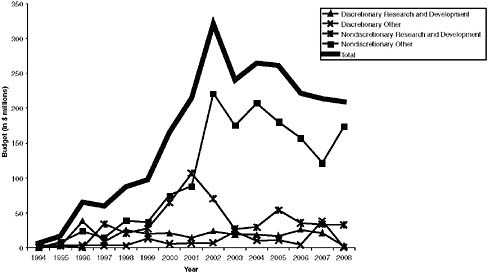
FIGURE 3-4 OST funding history, 1994-2008 (in constant 2008 dollars).
SOURCE: Adapted from figures supplied by OST.
nondiscretionary funds, primarily for capacity building, continued to rise; funds for R&D declined, then stabilized. From 1994 to 2001, the R&D budget represented roughly 50 percent of the overall budget; from 2002 to 2007, it fell to 25 percent. The figure illustrates that, as the OST budget increased, a significant portion of its funds was nondiscretionary, designated for specific programmatic uses or for specific research projects. As a result, OST had discretion for only 10-25 percent of its budget for the period 2003-2007. Although the R&D budget for developing technologies has increased greatly since 1994, OST has less control over that money and the direction of its research portfolio.
Contributions from R&D Investments
Through its investment in science and technology R&D, NIJ has made significant contributions to improving the safety as well as the efficiency of criminal justice operations. Here we highlight investments in the development of soft body armor, the advancement of DNA technology, and research on less lethal technologies. These areas were identified by NIJ leadership as among the technology programs in which NIJ has been influential. They also represent three different developments in the growth and decline of a research portfolio.
The body armor portfolio, a mainstay program for NIJ, is an example of an initiative that led to a long-term compliance testing role for the agency.
In the early 1970s, NIJ initiated R&D on body armor for law enforcement that was quickly adopted by industry. Although less involved in the R&D of body armor today, NIJ has remained active in the area through its well-regarded program for standard development and compliance testing.
The DNA technology portfolio illustrates how sustained funding over time can facilitate a long-term research agenda. Through its DNA technology portfolio, NIJ has been able to extend fruitful research in biology and medicine to forensic applications. With support from the President’s DNA Initiative and other legislative initiatives, NIJ has been able to sustain a long-term research agenda in this area, which is still thriving.
The portfolio on less lethal technologies is an example of a research agenda focused on short-term solutions due to limited discretionary funding. The portfolio of less lethal technologies is illustrative of several other technology portfolios, such as those of the development of communications, corrections, information-led policing, and school safety technologies. It grew out of national controversy, makes progress by leveraging other R&D work, has covered a broad range of efforts to fill immediate knowledge gaps, and is limited from addressing priority research needs because of low funding.
Body Armor
In the early 1970s, NIJ initiated a research program to investigate the development of lightweight body armor that police could wear. The program identified several new materials with excellent ballistics-resistant properties that could be woven into a lightweight fabric. NIJ then funded the production and field testing of 5,000 vests made from Kevlar®, a ballistic-resistant fabric (National Institute of Justice, 2003d). The laboratory and field research determined that producing body armor suitable for police use was achievable, and an industry was born.
At the same time, NIJ supported a parallel effort to develop performance standards for the body armor, which is described in Chapter 5. Today, much of the investment with regard to body armor goes to support the compliance testing program and standards revisions. However, it does still contribute to the R&D of body armor when it identifies gaps in industries’ R&D efforts. The research program in body armor aims to develop new testing methods that address environmental impacts, multihit capacity, and nondestructive evaluation; to advance ballistic materials towards lighter, flexible, and durable vests; and to improve the design, comfort, and coverage of vests.
Some of the recent awards include support to Cornell University and Lawrence Technical University to work on advanced body armor designs for size and gender variations and improved area coverage, respectively,
and to the Office of Law Enforcement Standards at the National Institute of Standards and Technology to develop a conditioning process to test performance of body armor after significant use and to assist in the revision of NIJ’s standard for ballistic resistance of body armor released July 2008 (Office of Law Enforcement Standards, 2008). Because advances in weapons and ammunition technology constantly pose new threats, the need for R&D of more effective personal body armor is ongoing.
DNA Technology
Support of DNA technology began in 1986 (National Institute of Justice, 1987, 1992; Sensabaugh, n.d.), as techniques for mapping and sequencing the human genome, developing in both basic biology and medicine, began to be seen as having applicability to forensic science. A 1987 criminal conviction in Florida based on DNA typing began the transfer of DNA analysis technologies from research laboratories to forensic laboratories and courts (U.S. Congress, Office of Technology Assessment, 1990). The quick adoption of DNA profiling, with significant consequences, created concerns about reliability and methodological standards among scientific and legal communities, as well as congressional interest. Several expert panels (U.S. Congress, Office of Technology Assessment, 1990; National Research Council, 1992a, 1996a) addressed questions regarding DNA profiling and made recommendations to Congress and federal agencies.
NIJ played a role in this national assessment of DNA profiling by providing support, in collaboration with other agencies, to several NRC studies; awarding a few research grants in new areas of DNA testing; and initiating a program to examine standards for DNA processing (U.S Congress, Office of Technology Assessment, 1990). This began what would become a significant investment in DNA technology for NIJ. As part of the 1994 Crime Act, the DNA Identification Act made monies available to NIJ to launch a research agenda as well as to assist state and local agencies more directly in building their forensic capacities (see Chapter 5 for forensic capacity-building efforts). In 1995, NIJ began a 5-year research agenda with $3-5 million a year to spend on DNA research.
In 1998, the National Commission on the Future of DNA Evidence was created at the request of Attorney General Janet Reno. The commission consisted of representatives from prosecutors, the defense bar, law enforcement, the scientific community, the medical examiner community, academia, and victims’ rights organizations. Its charge was to submit recommendations to the attorney general that would help ensure more effective use of DNA analysis. In addition to an R&D working group, there were also workgroups tasked with examining crime scene investigation and evidence collection, laboratory funding, and legal issues. The R&D working group
was asked to project the technical advances in the forthcoming decade and assess their expected impact on forensic DNA analysis (National Commission on the Future of DNA Evidence, 2000). These projections helped advance NIJ’s research agenda for another 5 years. NIJ’s support of DNA research for forensic applications continues today because of the President’s DNA Initiative,28 which has tripled its budget29 for DNA research.
Since 1999, NIJ has released an annual solicitation, Forensic DNA Research & Development, seeking applications for R&D that can enhance the forensic uses of DNA technology. Over the years, its forensic DNA R&D program has drawn on the research of molecular biology, genetics, and biotechnology to develop highly discriminating, reliable, cost-effective, and rapid forensic DNA testing methods. The portfolio has contained research that supports (1) developing tools and technologies to reduce the time, cost, and labor needed for DNA analysis; (2) improving the success rate of the analysis of DNA evidence that is old, scant, damaged, degraded, or otherwise compromised; (3) identifying and characterizing genetic markers that will reveal additional information about the victim, perpetrator, or the circumstances surrounding a crime; (4) increasing the discriminatory power of DNA analysis; and (5) improving the methods for separating mixtures of DNA, especially from sexual assault evidence.30
Funds from the President’s DNA Initiative also support a website (http://www.dna.gov [accessed March 17, 2010]) managed by NIJ. On the site, there is a database of DNA research supported by NIJ, sorted by research area, with links to the more than 100 peer-reviewed articles and reports resulting from this research. The DNA research portfolio is one of the few areas in which it would be relatively easy to track NIJ’s investment and assess its accomplishments externally.
Some of the accomplishments of this research portfolio, according to NIJ, include the following:
-
the development of a testing system that can generate a DNA profile from aged, degraded, or damaged samples, such as skeletal remains;
|
28 |
The President’s DNA Initiative is the cornerstone of the 2004 Justice for All Act. It provided over $1 billion over a 5-year period to improve the use of DNA in the criminal justice system and to ensure that this technology reaches its full potential. Under this initiative, the attorney general was asked to provide funds, training, and assistance to eliminate DNA backlogs, strengthen crime laboratory capacity, stimulate research and development, and provide training. See http://www.usdoj.gov/ag/dnapolicybooktoc.htm [accessed September 16, 2009]. |
|
29 |
For example, in FY 2006, NIJ spent over $13 million from the President’s DNA Initiative on DNA research and development (National Institute of Justice, 2008a). |
|
30 |
Briefing paper on DNA research and development prepared for the committee by NIJ, December 2008. |
-
tools to enhance the discriminatory power as well as the methods used in the analysis of mitochondrial DNA;
-
building on methods used in medicine, the development of novel tools to expedite the detection and separation of sperm cells in sexual assault evidence;
-
demonstration that male-specific DNA markers can be detected in sexual assault evidence collected 5 or more days after a sexual assault occurs;
-
development of a method that, in a single test, performs the simultaneous assessment of total human DNA, human male DNA, DNA degradation, and the presence of inhibitors in forensic samples; and
-
development of a prototype miniaturized DNA testing device that can function both in the forensic laboratory and at the crime scene.
Although NIJ research has contributed to advances in DNA technology, the recent NRC report (2009c) concluded that the level of support has fallen short of what is needed by the forensic science community. There are a number of open research questions, particularly for forensic techniques that receive less attention than DNA technologies (see National Research Council, 2009c, as well as a summary of that report’s research recommendations in Appendix E). According to the report, NIJ’s current awards in forensic science R&D do not appear to address these questions. The NRC report calls for the establishment of a new independent federal entity responsible for forensic science activities. Should the Congress adopt this recommendation, NIJ’s role in sponsoring forensic science R&D would need to be reconsidered (see Box 3-6).
Less Lethal Technologies
Like other research areas, NIJ’s research program on less lethal technologies grew out of national controversy. In the 1985 case Tennessee v. Garner (471 U.S. 1), the Supreme Court concluded that deadly force may not be used unless it is necessary to prevent suspect escape and an officer has probable cause to believe that the suspect poses a significant threat of death or serious physical injury to the officer or others. The decision sparked the search for weapons that would avoid injury and death but would aid in detaining fleeing suspects who posed little threat. After a 1986 national conference on less lethal weapons convened by the attorney general (Sweetman, 1987), NIJ’s research program was established.
The first research award under this program was made in 1987 to assess the feasibility of a dart that could deliver a safe but incapacitating chemical to a fleeing suspect (Hart, 2002a). In the past 20 years, the program has
|
BOX 3-6 Creation of a National Institute of Forensic Science The Committee on Identifying the Needs of the Forensic Sciences Community in its report, Strengthening Forensic Science in the United States: A Path Forward (National Research Council, 2009c), proposed the following recommendation: To promote the development of forensic science into a mature field of multidisciplinary research and practice, founded on the systematic collection and analysis of relevant data, Congress should establish and appropriate funds for an independent federal entity, the National Institute of Forensic Science (NIFS) … NIFS should focus on: (a) establishing and enforcing best practices for forensic science professionals and laboratories; (b) establishing standards for the mandatory accreditation of forensic science laboratories and the mandatory certification of forensic scientists and medical examiners/forensic pathologists—and identifying the entity/entities that will develop and implement accreditation and certification; (c) promoting scholarly, competitive peer-reviewed research and technical development in the forensic science disciplines and forensic medicine; (d) developing a strategy to improve forensic science research and educational programs, including forensic pathology; (e) establishing a strategy based on accurate data on the forensic science community, for the efficient allocation of available funds to give strong support to forensic methodologies and practices in addition to DNA analysis; (f) funding state and local forensic science agencies, independent research projects, and educational programs as recommended in this report, with conditions that aim to advance the credibility and reliability of the forensic science disciplines; (g) overseeing education standards and the accreditation of forensic science programs in colleges and universities; (h) developing programs to improve understanding of the forensic science disciplines and their limitations within legal systems; and (i) assessing the development and introduction of new technologies in forensic investigations, including a comparison of new technologies with former ones. |
expanded to include a broad class of less lethal weapons that address a wide range of possible applications. These types of weapons include chemicals, conducted energy devices, directed energy devices, light and noise distractions, physical barriers such as nets and foams, blunt-force controls, as well as vehicle-stopping technologies. These weapons are used not only to stop fleeing suspects but also to control crowds and other potentially violent situations while protecting bystanders and preventing unnecessary injury to offenders and officers. As part of this research program, NIJ not only supports the development of improved devices but also encourages better understanding of the health and safety risks. The agency solicits research to identify new psychological and physiological vulnerabilities that such devices might exploit.
As a result of its investments, NIJ has assisted in the development of less lethal devices, such as the Jaycor’s Pepperball System and Sticky Shocker, improved flash/bang grenades, and Capture Net.31 In making its investments, NIJ draws on past military, civilian, and international investments in research and development of less lethal technologies.
According to information from former NIJ director Sarah Hart (Hart, 2002a), NIJ invested an average of $1.5 million per year in the program from 1993 to 2002. From 2003 to 2007, according to information supplied from NIJ,32 the program supported awards totaling over $15 million. The projects from this later period cover a broad range of efforts.
The committee examined the list of projects provided and defined by NIJ as its less lethal technology portfolio as of July 2008 and categorized the 37 projects:
-
1 research effort on laser technology that could be potentially used in a less lethal weapon;
-
7 technology development projects that could result in prototypes (all of which were awarded in 2005 or before);
-
3 projects to develop models and simulation tools for testing;
-
7 studies on the effects that less lethal devices have on humans;
-
8 studies or reviews on the outcomes (e.g., injuries) of police use of force (some of these were funded through the ORE FY 2005 solicitation Outcomes of Police Use-of-Force and some were intended to assemble databases for future investigations);
-
3 projects regarding standards for less lethal devices;
-
3 field evaluations of existing less lethal devices;
-
1 demonstration;
-
1 pilot introductory course on less lethal weapons;
-
2 advisory groups to monitor the field and recommend ways to leverage efforts and avoid duplication; and
-
1 project with mixed purposes.
Despite the range of projects funded, in terms of technology development, the impact of this program on emerging weaponry is limited due to the low funding in comparison to military-sponsored R&D (Davison, 2007). With a modest budget, the less lethal technology portfolio can be characterized as leveraging past R&D of other agencies or modifying existing weapons to offer improved tools to law enforcement (National
Research Council, 2003a) as well as filling research gaps in examining the safety, effectiveness, and policy implications of existing weapons. In FY 2008, a Less-than-Lethal Technologies solicitation was posted, but no new awards were made for the program (only a few continuations were funded, totaling $1.2 million). There is no record that a Less-than-Lethal Technologies solicitation was posted for FY 2009.
We are surprised at the disappearance of this technology portfolio, since it is an area that is defined by law enforcement use. No one (e.g., military or public) uses less lethal weapons more widely than law enforcement. Department of Defense investments in less lethal technology still provide an opportunity to leverage NIJ resources; however, most of this technology is geared to military requirements and requires significant investment to adapt to law enforcement needs. The agency, in its current financial state, cannot contribute to the development of new technologies or the translation of military technologies; it lacks the discretionary funding necessary to implement the less lethal program needed by law enforcement.
Progress in Building Cumulative Knowledge in Technology R&D
Over the years, the technology program has grown to represent a broad range of technologies that are used or could be used by law enforcement. The program addresses R&D and testing and evaluation of such technologies; the development of equipment compliance standards; the effects on humans and the implications for policy as a result of introducing these technologies; as well as the distribution of knowledge for informed acquisition by law enforcement agencies. These are all very important efforts in the service of the nation’s law enforcement. However, OST does not have the discretionary budget to adequately carry out a research program of this range. Nor, as discussed in Chapter 4, does it have the staff with the expertise necessary to adequately develop its very broad research portfolio. As a result of external priorities (i.e., nondiscretionary funding) and limited discretionary funding, OST’s research portfolio has focused more on filling the voids in getting existing technologies into the hands of law enforcement and less on advancing knowledge toward effective, safer, affordable technologies for law enforcement in the future.
CONCLUSIONS
This chapter describes how NIJ has gone about fulfilling its research mission over the past 14 years. It focuses primarily on its research grant-making role and excludes other supporting activities, such as technology assistance, capacity building, and dissemination. As part of this review, the committee analyzed funding patterns and identified funding sources. We
described selected social science and technology R&D activities in which NIJ has made a considerable investment as well as other research-related activities, such as researcher-practitioner partnerships. We also examined the evaluation research portfolio that cuts across these other R&D activities separately, since this body of work has been the subject of assessment by the U.S. Government Accountability Office, and we were interested in learning the current status of efforts to improve the quality of evaluations. On the basis of this review, the committee draws several conclusions:
-
NIJ has developed research programs appropriate to its mission. It has succeeded in developing a body of knowledge in important areas that are critical to preventing and controlling crime and improving the administration of justice.
The committee considers both the social science research and the technology research and development described in this chapter appropriate to NIJ’s research mission and that both endeavors have the potential to result in useful knowledge for the criminal justice field. NIJ-sponsored research has often led the way and served as the foundation for researchers to build on and for practitioners to learn from. There is some evidence that NIJ research has influenced criminal justice practice and policy, particularly in the areas that have been sustained over time—such as hot spots policing, violence against women, drugs and crime, and crime mapping, on the social science side, and body armor, less lethal technologies, and DNA analysis, on the technology side. Cumulative knowledge has been achieved almost in spite of itself, given the inadequate or unstable resources and shifting priorities of NIJ’s leadership. However, the contributions it has made over a time span of 14 years do not compensate for what the committee observes to be the increasingly ad hoc nature of the topics from year to year and the lack of systematic planning (addressed in Chapter 4).
-
NIJ has failed to summarize its accomplishments and to maintain the kinds of records of what has been funded and what findings and products have been produced.
Several times in this chapter, we have indicated the difficulty we had in identifying NIJ’s priorities and bodies of related research. With records given to the committee and available publicly, it is difficult to discern research awards from other investments (many of which are detailed in Chapter 5). It is difficult to classify specific kinds of research supported, such as impact versus process evaluations and technology R&D versus operational testing.
-
Congressional support and stable funding have been key ingredients to sustaining a research program area over time, particularly in the case of more expensive scientific endeavors, such as longitudinal studies and complex evaluations. In particular, the evaluation research portfolio is heavily dependent on transferred funds and programs of specific interest to the Office of Justice Programs.
Once congressional support ceases, as it did for research on prison sexual assaults and drug use monitoring, or declines, as it has done for violence against women, NIJ is unable to fill the funding void with its own base funds. On the technology side, NIJ is unable to sustain research in such areas as safe school technologies, information-led policing, communications, and less lethal technologies because specific appropriations in the Crime Identification Technology Act and other inititiatives as well as targeted reimbursements from other agencies have declined or disappeared.
-
NIJ’s discretion to award research grants is also on the decline.
NIJ’s discretion is impacted by the decline in its base budget and by the increase in appropriated funds that are designated for specific programmatic uses or for specific research projects. Extensive earmarking does not allow NIJ to set its own priorities or steer its own course. This substantially diminishes its ability to select research it will support on the basis of the best current science using the peer review process characteristic of strong research agencies.
Later in this report (Chapter 7) we make the case for substantially more independence for NIJ, in part to ensure that like other respected federal research agencies it set its own research agenda consistent with its mission but unencumbered by earmarks.
-
The NIJ research function is greatly diminished.
The ORE budget, which primarily supports social science research and program evaluations, has been declining for the past 6 years. Research monies for many of the OST portfolio areas have also declined recently. Once amounting to 50-70 percent of its total budget, OST’s research expenditures are now less than 25 percent, and several technologies that have been traditionally studied, such as communications, less lethal technologies, and sensors and surveillance, are no longer the focus of solicitations. The number of research and evaluation awards, roughly 150 or fewer a year, stands in stark contrast to the 50 topics areas NIJ acknowledges as addressed in its research portfolios (see Box 3-1). As such, NIJ’s research program is
very broad without much depth, or conversely, some of the research topics receive sustained attention while others are neglected. In addition, NIJ supports three times as many awards for program support, technology assistance, and capacity building than it does for research and evaluation.
In the next two chapters we address other aspects of NIJ’s capacity to support research. In Chapter 4, the committee examines the agency’s operations and staff resources for managing its research portfolios and other activities. In Chapter 5, we look at its other functions and assess how they support or detract from its primary research mission.


