
1
Introduction
The human immunodeficiency virus (HIV) is a retrovirus that attacks the immune system, resulting in a progressive disruption of immune function. The most serious consequence of HIV infection is acquired immunodeficiency syndrome (AIDS). In the early days of the epidemic, HIV infection led to almost certain death. Additionally, the high incidence of mother-to-child transmission of HIV resulted in many infants acquiring HIV infection from their mothers during pregnancy or delivery, or postpartum through breastfeeding. Advances in therapy—particularly combination antiretroviral therapies—have dramatically changed the course of HIV infection to a chronic, manageable disease. These life-extending treatments require life-long daily medications that may have significant side effects. More recently, patients with HIV infection have been noted to have an increased incidence of a number of serious chronic conditions typically associated with aging. The combination of having a complex disease that requires an equally complex treatment regimen can be disabling, potentially leaving individuals unable to function and conduct daily activities.
Many people living with HIV/AIDS, especially those diagnosed at a late stage, are unable to work and need some level of public assistance. Early in the epidemic, the U.S. Social Security Administration (SSA) expanded its disability benefits program beginning in 1983 to help support people living with AIDS. It adopted disability criteria for HIV, loosely organized around the 1987 AIDS-defining illnesses identified by the Centers for Disease Control and Prevention, and in 1993 developed the HIV Infection Listings.
Although the course of HIV/AIDS and complications associated with treatment have changed dramatically since the beginning of the epidemic,
SSA’s HIV disability criteria (i.e., the HIV Infection Listings) have not been substantially updated to reflect these changes. In 2009, SSA asked the Institute of Medicine (IOM) to recommend revisions to the Listings, for which the IOM established the Committee on Social Security HIV Disability Criteria.
The severity of HIV infection and its disabling nature are why SSA originally added HIV to its disability listings. It is the history and progression of medical management that necessitates revision of how SSA considers HIV as an emerging disability, how the Listings reflect the current state of clinical practice, and how they address the specific needs of people living with HIV/AIDS.
SOCIAL SECURITY DISABILITY
SSA pays disability benefits through two programs: Social Security Disability Insurance (SSDI) and Supplemental Security Income (SSI).
In 2008, more than 12 million people received Social Security disability benefits, and SSA expected to process more than 3.3 million new disability applications claims in fiscal year 2010 (see Table 1-1) (SSA, 2010a).
THE DISABILITY EVALUATION DECISION PROCESS
Definition of Disability
To be eligible for disability benefits under SSDI, a person must be insured for benefits, be younger than full retirement age, have filed an application for benefits, and have a Social Security-defined disability. SSA defines disability as “an inability to engage in any substantial gainful activity1 by reason of any medically determinable physical or mental impairment(s)2 which can be expected to result in death or which has lasted or can be
TABLE 1-1 Number of 2007 Initial Allowances and Benefit Amounts
|
|
Number of Allowances |
Average Monthly Benefit |
|
|
|
HIV |
All SSA Disability |
|
|
Adults |
|
|
|
|
SSDI only |
1,429a |
361,496b |
$1,064c |
|
SSI only |
2,769a |
165,860c |
$596c |
|
SSDI and SSI |
3,524a |
272,446c |
$714c |
|
Children |
|
|
|
|
SSI only |
56a |
157,550c |
$555d |
|
Total |
7,778 |
957,352 |
|
|
NOTE: SSDI = Social Security Disability Insurance; SSI = Supplemental Security Insurance. SOURCES: aUnpublished data set provided by SSA; bSSA, 2008a; cSSA, 2008b; dSSA, 2007. |
|||
expected to last for a continuous period of not less than 12 months.” In addition, individuals under the age of 18 are considered disabled if they have a medically determinable physical or mental impairment, which results in marked and severe functional limitations, and which can be expected to result in death or which has lasted or can be expected to last for a continuous period of not less than 12 months.
Five-Step Sequential Evaluation Process
For adults applying for SSDI or SSI benefits, SSA uses a five-step sequential evaluation process to determine whether a claimant is disabled (see Figure 1-1).3 This process is different for children under age 18.
At Step 1, SSA determines whether the claimant is engaging in substantial gainful activity. If not, the claim progresses to Step 2 to determine whether the claimant has a severe impairment that significantly limits the claimant’s ability to perform basic work activities (e.g., standing and sitting). If the claimant is found to have a severe impairment, then SSA determines whether it satisfies the medical condition criteria found in the Listing of Impairments, also referred to as the Listings. This serves as an
|
dence consisting of signs, symptoms, and laboratory findings, not only by a person’s statement of symptoms. |
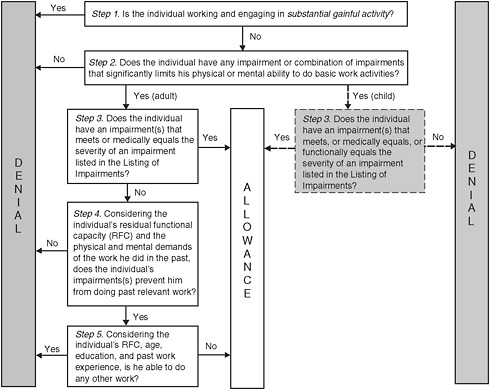
FIGURE 1-1 Social Security Administration five-step sequential evaluation process.
administrative expedient to quickly identify allowances for both SSDI and SSI. In determining whether a claimant is disabled, SSA decides whether the claimant’s impairment meets or medically equals a listing. Those terms are defined as follows:
-
Meets: If the evidence in a case establishes the presence of all the criteria required by one of the listings, then the claimant’s impairment meets that specific listing; and
-
Equals: If a claimant’s impairment is not found to meet the exact requirements of a specific listing, he can still be found disabled if the impairment is at least equal in severity and duration to the criteria of any listed impairment, as established by the relevant evidence in the claimant’s case record.
Claims may also be cross-referenced to other listings, a procedure that allows claims to be decided based on the specific requirements of an existing listing. It is important to note that a claimant whose impairment does not meet or medically equal a listing is not denied benefits at this step.
Adult claims not allowed at Step 3 (the Listings level) proceed to Step 4 and, if necessary, Step 5, which considers a claimant’s ability to perform past work and to do other work in the national economy, respectively. To do this, SSA assesses the claimant’s residual functional capacity (RFC) through a time- and resource-intensive process, based on all relevant medical and other evidence in the case record. At Step 4, SSA uses the RFC to help determine the claimant’s capacity to do past relevant work (defined as jobs held during the previous 15 years). If SSA determines the claimant is unable to perform past relevant work, the claim progresses to Step 5.
At Step 5, SSA evaluates the claimant’s capacity to adjust to any other kind of work. To make this final determination, SSA considers the claimant’s age, education, work experience, and the RFC. Generally, the greater the age, the lower the educational attainment, and/or the lower the skill level of previous jobs held by the claimant, the more likely SSA will be to allow the claim. If the claimant is found capable of performing other work, he is not considered disabled. If he cannot perform other work, he is considered disabled based on medical–vocational factors.
For children under age 18 applying for SSI benefits, Steps 1 and 2 are the same. At Step 3, the considerations are whether a child’s impairment meets or medically equals a listing. A child’s impairment that does not meet or medically equal the requirements of a specific listing may be found to functionally equal a listing. To make this determination, SSA assesses the interactive and cumulative effects of all of the child’s impairments in terms of six domains of functioning: (1) acquiring and using information; (2) attending and completing tasks; (3) interacting and relating with others; (4) moving about and manipulating objects; (5) caring for yourself; and (6) health and physical well-being. Domains are broad areas of functioning intended to capture all of what a child can or cannot do in activities at home, at school, and in the community, compared to other children of the same age who do not have impairments. For a child’s impairment to functionally equal the Listings, it must result in “marked” limitations4 in two domains of functioning or an “extreme” limitation in one domain.5 Step 3 is the final step in the process for children under age 18 applying for
SSI benefits. Steps 4 and 5 do not apply to children’s claims because these steps focus on a claimant’s ability to work.
THE LISTING OF IMPAIRMENTS
History and Purpose
When the SSDI program began in 1956, SSA was faced with quickly processing a large number of claims. To ease the administrative burden of determining the functional capacity of each claimant, SSA adopted a list of serious medical conditions (the Listings) and incorporated it as Step 3 of the sequential evaluation process. Most adult claims not allowed based on the Listings require the lengthy RFC assessment to determine whether a claimant can perform past relevant work. Thus, the Listings are an administrative expedient that allows SSA to process many cases more efficiently, saving time and resources. The percentage of initial allowances made at Step 3 based on the Listings has declined steadily, from more than 90 percent in the early years of the program to 70 percent in the 1980s to 49 percent in 2009 (SSA, 2010b).
In creating or revising the Listings, one of SSA’s concerns is that the criteria describe impairments that are severe enough to prevent a claimant from doing any gainful activity, regardless of his age, education, and work experience. By setting the severity standard of the Listings at a higher level (inability to engage in any gainful activity)—referred to as “listing-level severity”—than its disability standard (inability to engage in any substantial gainful activity), SSA is able to identify a significant number of allowances and to have confidence that these cases would be allowed if they were subject to a more comprehensive disability assessment at Steps 4 and 5. Further, SSA wants the criteria in the Listings to be clear and easy to apply so that adjudicators can allow claims quickly under the Listings.
Structure
The Listings consist of Part A (primarily for adults) and Part B (applies to children in cases where specific considerations are needed) and are organized into 14 and 15 body systems, respectively (e.g., musculoskeletal, respiratory, neurological; see Appendix A for the full Listings). Listings for each body system begin with a narrative introductory text that defines key concepts and terms used in that body system. Each body system and listing is identified by a number; for example, the immune system disorders body system for Part A is 14.00 and Part B is 114.00. The Part A HIV Infection Listing consists of 11 sublistings (14.08A to 14.08K) and the Part B HIV Infection Listing consists of 12 sublistings (114.08A to 114.08L).
DECISION PROCESS
Initial Decisions
Most Social Security disability claims are initially processed through a network of local SSA field offices and state agencies, usually called Disability Determination Services (DDSs). DDSs, which are fully funded by the federal government, are responsible for developing and evaluating medical evidence and making the initial disability determination.
SSA field office staff are responsible for verifying nonmedical eligibility requirements. If the nonmedical eligibility requirements are met, the field office then sends the case to the DDS for evaluation of disability. The DDS first attempts to obtain medical records from the claimant’s medical sources. If that evidence is unavailable or insufficient to make a determination, the DDS will arrange for a consultative examination to obtain the additional information needed. This information is preferred to be from the claimant’s treating source, but the DDS may also obtain it from an independent source.
Based on all the medical and other information, the DDS staff make the initial disability determination. Determinations are most often made by an adjudicative team composed of a medical consultant (e.g., a licensed physician) and a disability examiner. Reasonable efforts must be made to ensure that an appropriate specialist evaluates cases involving mental disorders or those involving children.
Appeals Process
After the initial decision, applicants have the opportunity to appeal the determination, following an administrative process that is the same for adult and child claims. There are four levels of appeal: reconsideration, administrative hearing by an administrative law judge (ALJ), review by the appeals council, and federal court review. If the claimant disagrees with the initial disability decision, he may request a reconsideration. A different adjudicative team in the DDS then reviews the initial decision.
If the claimant disagrees with the reconsideration decision, he may ask for a hearing before an ALJ. A claimant may appear before the ALJ in person with an attorney or other representative. The ALJ may ask for testimony from a “medical expert,” although usually the decision is usually based on the claimant’s RFC rather than the Listings. The ALJ may reverse the denial (thus allowing the claim), affirm the denial, or remand the case to the DDS for further development.
If the claimant disagrees with the hearing decision, he may ask for a review by the SSA’s appeals council. If the claimant disagrees with the appeals council’s decision, the claimant may file a civil lawsuit in a federal court.
MEDICAL EVIDENCE
The DDS is responsible for developing a claimant’s medical history for at least the previous 12 months in most claims. This includes statements or reports from the claimant or his treating source, and information about the impact of an impairment and its related symptoms on a claimant’s ability to work. Every reasonable effort is made to obtain medical reports from the claimant’s treating source or other medical sources. The DDS evaluates every medical opinion received regardless of source, but does not have to give every opinion equal weight. The treating source is given “controlling weight” if the opinion is well supported by medically acceptable clinical and laboratory diagnostic techniques and is not inconsistent with other substantial evidence in the case record.
If the treating source’s report contains a conflict or ambiguity that must be resolved, lacks necessary information, or does not appear to be based on medically acceptable clinical and laboratory diagnostic techniques, the DDS may recontact the treating source for additional evidence or clarification. If the treating source will not or cannot provide the information needed to decide the case, the DDS can order and pay for a consultative examination.
“Acceptable medical sources” are sources who can provide evidence to establish a medically determinable impairment (see Box 1-1). The term
|
BOX 1-1 Acceptable Medical Sources
|
“other medical sources” describes sources that may provide evidence to show the severity of a claimant’s impairment and how it affects his ability to work. Other sources include medical sources not listed in Box 1-1 (e.g., nurse practitioners, physicians assistants, naturopaths, chiropractors, audiologists, and therapists), educational personnel (e.g., school teachers, counselors, daycare center workers), and public and private social welfare agency personnel. Nonmedical sources such as spouses, parents and other caregivers, siblings, other relatives, friends, neighbors, and clergy may also be consulted.
If the treating source’s opinion is not given controlling weight, DDS personnel consider a number of factors in weighing evidence, whether from the treating source or others. For example, SSA may consider the existence of an examining relationship (i.e., evidence from a source who has examined the claimant has more weight than a source who has not), length of the treatment relationship, supportability, and other factors that support or contradict the opinion, when weighing evidence.
REVISING AND UPDATING THE LISTINGS
The Listings were first published as regulations in 1968. The first significant revision to the Listings regulations occurred in 1977, when SSA published a new set of listings criteria that would apply to children under age 18. In 1979, SSA comprehensively updated and revised all the adult listings. In 1984, Congress directed SSA to revise its mental disorders listing criteria, which it published in 1985. Later the same year, SSA updated listings for most of the other body systems. The 1985 regulations added expiration dates to all body systems. The law does not require SSA to periodically update the criteria in the Listings, but as SSA noted at the time, it would periodically review and update the Listings based on medical advancements in disability evaluation and treatment and program experience.
The 1985 updates were the last comprehensive revision to the Listings. Since then, SSA has focused on updates that are more targeted—addressing single body systems, or even individual listings. During the mid-1990s, SSA suspended listings revisions in anticipation of a fundamental redesign of the disability decision-making process; however, an internal reassessment of its disability initiatives led SSA to resume its efforts to update all body systems on a continuous basis.
Over time, SSA has added steps to the revision process to expand input from outside of the agency. Rather than beginning the revision process by issuing new draft rules in a Notice of Proposed Rulemaking (NPRM) in the Federal Register, SSA may begin by issuing an Advance Notice of Proposed Rulemaking (ANPRM), which announces its intention to update a specific body system and asks for suggestions from the public. SSA may
also hold one or more outreach meetings, at which researchers, clinicians, patients, and patient representatives discuss specific impairments, focusing on how existing listings could be revised or on adding new listings. After these additional steps, SSA drafts proposed rules and publishes an NPRM for public comment before being issued Final Rules. It is important to note that revisions to listings apply only to new claimants, and are not applied retroactively to those previously allowed.
Since the development of the HIV Infection Listings in 1993, three ANPRMs have been published (2003, 2006, and 2008). SSA received comments ranging from specific edits (e.g., expand HIV encephalopathy to include AIDS dementia complex) to broader suggestions about the types of evidence collected and the expertise of disability examiners. Commenters also suggested that SSA recognize advances in care such as new manifestations and identification of clinical markers in the HIV Infection Listings. The committee reviewed all the public comments submitted in response to these notices and considered them over the course of its deliberations.
THE HIV INFECTION LISTINGS6
In 2009, 7,816 allowances were made based on meeting or medically equaling the HIV Infection Listings (14.08 and 114.08). The total number of claims involving the HIV Infection Listings has decreased steadily from approximately 30,000 claims in 1999 to approximately 25,000 in 2009, in part due to the changing management of HIV. The total allowance rate for all adult HIV infection claims fell from 39 percent in 1999 to 30 percent in 2009. For child claims involving HIV infection, the allowance rate declined from 26 percent in 1999 to 12 percent in 2009.
For 14.08, the number of allowances per sublisting has stayed somewhat steady from 1999 to 2009 (Figure 1-2), with a few exceptions. Allowances made under sublisting 14.08C (protozoan or helminthic infections) decreased in 2008, while 14.08B (fungal infections) increased dramatically. These changes can be attributed largely to a reclassification of Pneumocystis pneumonia from a protozoan to a fungal infection. Also, the number of allowances for malignant neoplasms increased from 1999 to 2009. These patterns are likely to change over time in response to the evolving management of the disease. Patterns in Step 3 allowances for Part B (114.08) could not be determined because the total number of claims was low, limiting their significance (Figure 1-3). The three most and least used 14.08 sublistings in 2009 are listed in Table 1-2.
For adults, allowances can be made on the basis of meeting the List-
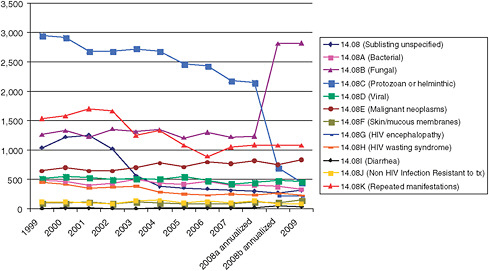
FIGURE 1-2 Allowances by sublisting, 14.08, 1999–2009.
NOTE: 2008 data were annualized to account for changes made to Listing 14.08 that took effect on June 16, 2008.
SOURCE: Unpublished data set provided by SSA.
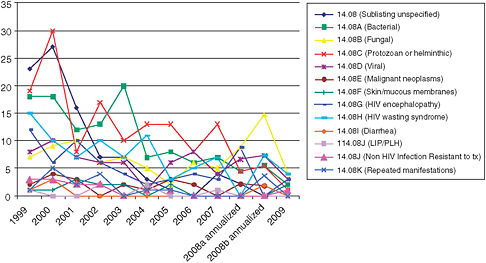
FIGURE 1-3 Allowances by sublisting, 114.08, 1999–2009.
NOTE: 2008 data were annualized to account for changes made to Listing 114.08 that took effect on June 16, 2008. LIP/PLH = Lymphoid interstitial pneumonitis/ pulmonary lymphoid hyperplasia complex.
SOURCE: Unpublished data set provided by SSA.
TABLE 1-2 Most and Least Used Sublistings of 14.08
ings (Step 3), equaling the Listings (Step 3), or medical–vocational factors (Step 5). Between 1999 and 2009, approximately 35 percent of all adult HIV claims were allowed (22 percent met the Listing, 7 percent medically equaled the Listing, and 6 percent were medical–vocational decisions). Of those adults denied disability status, 40 percent occurred at Step 5 (ability to perform other work) and 28 percent occurred at Step 4 (ability to perform past work). Over the same time period, an average of 22 percent of claims for children were allowed (14 percent met the Listing, 4 percent medically equaled the Listing, and 4 percent functionally equaled the Listing).
FUNCTIONAL ASSESSMENT OF THE PATIENT WITH HIV/AIDS
HIV/AIDS requires consideration of multiple domains, including medical and psychosocial factors. Work-related functional assessments to more precisely characterize the degree of impairment experienced by the patients living with HIV/AIDS are difficult to conduct, but are necessary as people are living longer with HIV/AIDS and its associated complications (see Appendix D). Many patients with HIV/AIDS show a decline in functional abilities after diagnosis and as their disease progresses (Braveman et al., 2006).
Categories of Functional Assessment
There are three primary domains of functional assessments: physical, mental, and neurocognitive. Measuring limitations in each of these domains
helps to create an overall assessment of the functional capacity of an individual. Domain descriptions are as follows:
-
Physical domain: Physical functioning is the ability to independently perform an activity, the lack of which can be a measure of physical disability, associated with medical conditions and treatment side effects, mental health, and/or lifestyle factors (Oursler et al., 2006). The physical domain generally includes objective criteria based on clinical assessments and biological markers. Measuring individuals’ ability to perform activities of daily living and instrumental activities of daily living are another way to measure functional capacity.
-
Mental domain: Mood and substance abuse disorders are common comorbidities among HIV-infected populations that can lead to functional impairment and potential disability. Significant mental disorders such as depression and anxiety are seen in 25 to 50 percent of individuals living with HIV infection (Pence et al., 2006). Alcoholism is a particularly challenging disease for the HIV/AIDS population, and can lead to increased immune suppression (Fama et al., 2007).
-
Neurocognitive domain: Neurocognitive impairments play a significant role in the function of HIV-infected individuals, even among antiretroviral-treated individuals (Ellis et al., 2009; Grant, 2008; Heaton et al., 2010). HIV causes neurocognitive disorder either as a primary, direct effect of HIV infection or as a consequence of an opportunistic infection (Ellis et al., 2009). Learning and retrieving new information is one of the most challenging issues facing HIV-infected individuals exhibiting neurocognitive limitation. Other problems include difficulty in maintaining attention, disturbances in executive function, and delayed word retrieval (Grant, 2008).
Tools to Measure Functional Capacity
An objective, clear, and specific test to assess how individuals with HIV/AIDS are affected by all three domains does not currently exist. However, measurement tools exist that separately assess activities of daily living in the physical domain, depression scores in the mental domain, and neurocognitive impairments. There are also assessments to qualitatively measure the patient experience through narrative. These assessments spanning multiple domains of functioning are considered valid and predictive in the literature.
Assessment of an individual’s ability to engage in activities of daily living and instrumental activities of daily living is usually determined based on
the extent to which he can independently initiate and maintain participation in an ongoing manner. Physical assessments may be as simple as testing an individual’s ability to lift objects and sit or stand for periods of time, or can be as complicated as testing the ability to independently manage a medication regimen or shop for groceries. Employment-related assessments may also be administered, such as asking the individual to take apart an object and reassemble it.
For example, the Occupational Performance History Interview (OPHI-II) is designed to provide information about a patient’s ability to perform and participate in activities of daily living (Levin et al., 2007). The instrument includes three scales of self-measurement (see Box 1-2) and a qualitative measure for the interviewer to record the patient’s life history (often described as “narrative”) and any patterns the patient may exhibit (described as the “narrative slope”).
Persons with HIV can also develop or have a preexisting mental health impairment. A wide range of impairments exists in people infected with HIV, including major depression, anxiety, bipolar disorder, HIV-associated mania, schizophrenia, apathy, and delirium. Structured psychiatric evaluations that lead to diagnoses and care regimens include the interchangeably used Diagnostic and Statistical Manual of the American Psychiatric Association (DSM-IV-TR) and the International Classification of Disorders (ICD-10). Standardized, validated, and widely used diagnostic protocols include self-report scales such as the Beck, Hamilton, or Zung Depression inventories. Clinician-administered protocols include the Composite International Diagnostic Interview and the Profile of Mood States, which are more comprehensive assessments of multiple emotional domains.
Specific tests are available to measure the impact of the neurocognitive challenges associated with HIV infection. These include the California Verbal Learning Test (verbal memory), Benton Visual Retention Test (visual memory), Finger Tapping Test (psychomotor skills), Halstead Category Test (concept learning), and the Wisconsin Card Sorting Test (executive func-
|
BOX 1-2 Three Scales of Self-Measurement
|
tion). These well-studied measurement tools are accepted for their ability to accurately capture patients’ abilities in the specified areas. These tests are also well received because they are not cost prohibitive (Grant, 2008).
Additional functional assessments may include an individual’s general abilities, as indicated by intelligence or memory tests. These tests may be useful to assess an individual’s capacity in the multiple domains because the final outcome of functional impairment may not be the result of impairments from a single domain.
Importance of Functional Assessment
Individuals infected with HIV continue to experience multiple effects from their condition. It is important to measure limitations of work-related function by assessing the ability of patients living with HIV/AIDS to effectively participate in social and employment activities in meaningful ways. Currently, a test or evaluation does not exist to measure the overall work-related functional capacity or functional limitation of an individual with HIV. However, tools are available to measure the effects of conditions that impair functioning in adults, including physical functioning, mental disorders, and neurocognitive deficits. Assessing an individual’s functional capacity based on these multiple domains is increasingly important, as co-morbid conditions often lead to a more disabling condition than would be predicted from the sum of their individual effects (Antinori et al., 2007). Evaluating the six domains of functioning in children as identified by SSA is also critical to determine the level of impairment for children, especially in the initial stages of development. The committee concludes that measures of functional capacity ought to continue to be important in the HIV Infection Listings.
IOM COMMITTEE
Methods
To address its statement of task of providing guidance to the SSA about how to increase the utility of the HIV Infection Listings, the committee assessed the evidence about HIV and clinical markers of functioning, disability, and return to work. This included a review of the literature and collection of data from SSA, the Centers for Disease Control and Prevention, and various cohorts, including EuroSIDA, the Multicenter AIDS Cohort Study, the North American AIDS Cohort Collaboration on Research and Design, the U.S. Military HIV Natural History Study, and the Veterans Aging Cohort Study. Over the course of the 12-month study, the committee met in person three times, engaged the public through two public
workshops, and received statements from various stakeholder organizations. Committee members also conducted site visits at nine DDSs across the country.
Considerations for Developing a Listing
SSA’s Listing of Impairments needs to be both highly valid and reliable to efficiently and effectively recognize disabled claimants. Striking a balance between sensitivity and specificity is difficult in any clinical diagnostic test, and also holds true for the Listings. SSA would prefer that the Listings have the greatest positive predictive value at the risk of identifying fewer individuals who actually meet the definition of disability (i.e., “false negatives”). The committee’s recommendations and conclusions are offered in an effort to support the construction of such a listing.
The committee developed the following principles on which new HIV Infection Listings ought to be based:
-
Reflect current medical practice;
-
Determine severity fairly;
-
Be based on objective evidence, to the extent possible;
-
Incorporate work-related functioning, to the extent possible;
-
Be simple and easy to implement; and
-
Use flexible language to account for changes in the disease and its treatment over time.
These principles were important in guiding the committee’s work and were formed to be consistent with the committee’s understanding of SSA’s internal processes.
Scope of the Report
The committee’s statement of work can be found in Box 1-3. Throughout its discussions, the committee acknowledged that the Listings cannot be viewed in a vacuum. Of particular importance are the issues of medication adherence and access to care. The committee recognized that improved HIV/AIDS outcomes are made possible by adhering to potent antiretroviral regimens, which require continuous access to medical care. Recognition of this connection is critical because Social Security benefits have a great impact on access to care for people living with HIV/AIDS. Qualifying for Social Security disability benefits in many states is seen as an entrée to other public programs, such as Medicare, Medicaid, and housing programs. The 2010 Patient Protection and Affordable Care Act undoubtedly will affect these social programs and others, such as those funded by the Ryan White
|
BOX 1-3 Statement of Work An ad hoc committee of medical experts will conduct a study to assist the Social Security Administration (SSA) on HIV disability issues. The committee will review the current medical criteria for disability resulting from HIV infection in SSA’s Listing of Impairments (“the Listings”) and identify areas in which the HIV Infection Listings should be revised and updated based on current medical knowledge and practice. Specifically, the committee will (1) conduct a comprehensive review of the relevant research literature and current professional practice guidelines; (2) assess the current HIV Infection Listings in light of current research knowledge and evidence-based medical practice; and (3) produce a short report with specific recommendations for revision of the HIV Infection Listings based on evidence (to the extent possible) and professional judgment (where evidence is lacking). |
Care Act, that provide many HIV-infected people with access to care and medication. However, it is too early to determine how the new law will specifically impact the Social Security disability program. Although the issues of adherence and access to care are critical in the discussion of Social Security disability benefits, in-depth discussion about the means by which people receive treatment and medications was deemed outside the committee’s scope.
REPORT STRUCTURE
This report consists of eight chapters, of which this introduction is the first. Chapter 2 reviews current concepts in HIV. Chapters 3 through 6 introduce and explain the committee’s recommendations with respect to the Part A HIV Infection Listing (14.08). Recommendations regarding Part B (114.08) are discussed in Chapter 7. Chapter 8 provides a discussion of other actions SSA could take to enhance implementation of the HIV Infection Listings, as well as how the introductory text should be revised.
SSA asked the committee to address a list of specific questions. Appendix B provides an index of the committee’s responses to each question throughout the report.
REFERENCES
Antinori, A., G. Arendt, J. Becker, B. Brew, D. Byrd, M. Cherner, D. Clifford, P. Cinque, L. Epstein, K. Goodkin, M. Gisslen, I. Grant, R. Heaton, J. Joseph, K. Marder, C. Marra, J. McArthur, M. Nunn, R. Price, L. Pulliam, K. Robertson, N. Sacktor, V. Valcour, and V. Wojna. 2007. Updated research nosology for HIV-associated neurocognitive disorders. Neurology 69(18):1789–1799.
Braveman, B., G. Kielhofner, G. Albrecht, and C. Helfrich. 2006. Occupational identity, occupational competence and occupational settings (environment): Influences on return to work in men living with HIV/AIDS. Work 27(3):267–276.
Ellis, R. J., P. Calero, and M. D. Stockin. 2009. HIV infection and the central nervous system: A primer. Neuropsychology Review 19(2):144–151.
Fama, R., J. C. Eisen, M. J. Rosenbloom, S. A. Sassoon, C. A. Kemper, S. Deresinski, A. Pfefferbaum, and E. V. Sullivan. 2007. Upper and lower limb motor impairments in alcoholism, HIV infection, and their comorbidity. Alcoholism: Clinical & Experimental Research 31(6):1038–1044.
Grant, I. 2008. Neurocognitive disturbances in HIV. International Review of Psychiatry 20(1):15.
Heaton, R., D. Clifford, D. Franklin Jr., S. Woods, C. Ake, F. Vaida, R. Ellis, S. Letendre, T. Marcotte, J. Atkinson, M. Rivera-Mindt, O. Vigil, M. Taylor, A. Collier, C. Marra, B. Gelman, J. McArthur, S. Morgello, D. Simpson, J. McCutchan, I. Abramson, A. Gamst, C. Fennema-Notestine, T. Jernigan, J. Wong, and I. Grant for The CHARTER Study Group. 2010 (in press). HIV-associated neurocognitive disorders persist in the era of potent antiretroviral therapy. Neurology.
Levin, M., G. Kielhofner, B. Braveman, and L. Fogg. 2007. Narrative slope as a predictor of work and other occupational participation. Scandinavian Journal of Occupational Therapy 14(4):258–264.
Oursler, K. K., J. L. Goulet, D. A. Leaf, A. Akingicil, L. I. Katzel, A. Justice, and S. Crystal. 2006. Association of comorbidity with physical disability in older HIV-infected adults. AIDS Patient Care and STDs 20(11):782–791.
Pence, B. W., W. C. Miller, K. Whetten, J. J. Eron, and B. N. Gaynes. 2006. Prevalence of DSM-IV–defined mood, anxiety, and substance use disorders in an HIV clinic in the Southeastern United States. Journal of Acquired Immune Deficiency Syndromes 42(3):298–306.
SSA (Social Security Administration). 2007. SSI annual statistical report. Washington, DC: SSA.
SSA. 2008a. Annual statistical report on the Social Security Disability Insurance Program. Washington, DC: SSA.
SSA. 2008b. SSI annual statistical report. Washington, DC: SSA.
SSA. 2010a. Social Security news release: Social Security helps states with mounting disability claims. http://www.ssa.gov/pressoffice/pr/est-pr.htm (accessed April 15, 2010).
SSA. 2010b. A historical look at initial adult disability determinations that meet or equal a medical listing(s). Paper presented at IOM Committee of Medical Experts to Assist Social Security on Disability Issues, Washington, DC, April 21.


