
4
Contribution of Smoking to International Differences in Life Expectancy
Samuel H. Preston, Dana A. Glei, and John R. Wilmoth
INTRODUCTION1
Cigarette smoking increases the risk of dying from many different causes of death. According to the criteria used by the U.S. surgeon general for establishing a causal relationship, these causes include lung cancer, many other forms of cancer, cerebrovascular disease, chronic obstructive pulmonary disease, and coronary heart disease (U.S. Surgeon General, 2004).
The most persuasive data identifying the mortality risks associated with smoking have been drawn from prospective cohort studies that compare the death rates of current smokers and former smokers with the death rates of those who never smoked regularly. The largest such study, the Cancer Prevention Study II (CPS-II), has tracked mortality among a cohort numbering 1.2 million individuals when the study began in 1982. Participants are volunteers recruited by the American Cancer Society and are more likely to be white, middle class, and college-educated than the U.S. population as a whole (Thun et al., 1997).
Although highly informative, the cohort studies are subject to several biases. Perhaps most important, imprecise classification of smoking status among participants reduces the measured impact of smoking on mortality. Smoking behavior often varies over time, whereas in cohort studies smoking status is typically identified at baseline and assumed constant thereafter. Movement of current smokers or nonsmokers out of their baseline category during the course of the study will downwardly bias the estimated hazard from smoking. Correction for this bias among a subsample of CPS-II par-
ticipants whose smoking behavior was followed up in 1994 substantially raised the estimated risk of smoking (Taylor et al., 2002). Furthermore, the smoking categories themselves impose a rigid frame on what can be blurry patterns of behavior. For example, CPS-II includes among “lifetime non-smokers” persons who had smoked but who had not reported themselves as smoking daily for at least a year (Leistikow et al., 2008).
Cohort studies have also been used to estimate the number of deaths in a population that are attributable to smoking. This calculation is conventionally made by comparing the actual number of deaths in a particular age-sex group in the population with the number that would have occurred if everyone had had the death rates of lifetime nonsmokers in that category. Based on CPS-II results, Mokdad et al. (2004) used this method to estimate that 435,000 deaths were attributable to smoking in the United States in 2000. There was no control for potentially confounding variables in smoker’s estimated risk. Using a nationally representative sample drawn from the National Health Interview Survey and controlling for many confounding factors, Rogers et al. (2005) estimated that 338,000 U.S. deaths were attributable to smoking in 2001. The wide range of existing estimates illustrates the inherent difficulty of this type of analysis and gives some indication of the uncertainty associated with all such estimates (including those presented here).
While the number of deaths attributable to smoking can be estimated directly from cohort studies, such studies are not available in many populations for which attributable risk estimates are sought. In 1992, Peto, Lopez, and colleagues developed an ingenious method for filling this gap (Peto et al., 1992). The method “borrows” the relative risks of cause-specific mortality for current smokers versus nonsmokers from CPS-II and applies them to the population of interest. Rather than applying them to the distribution of the population by smoking status, they instead used observed death rates from lung cancer as an indicator of the population’s cumulative smoking exposure, which may be a more reliable index of the cumulative damage from smoking than directly measured smoking behavior based on self-report.
Having selected lung cancer death rates as the indicator of the cumulative damage from smoking, Peto et al. then translated observed lung cancer death rates for a given population into an estimate of the smoking impact ratio by referring to the difference between lung cancer death rates for smokers and nonsmokers in CPS-II. This scalar is then used to adjust the cause-specific relative risks for smokers versus nonsmokers from CPS-II in order to derive a population-specific estimate of the risk attributable to smoking for other smoking-related causes of death. Clearly, their approach is heavily dependent on the assumption that CPS-II estimates of lung cancer death rates for smokers and nonsmokers and relative risks for other causes of death can be applied (with some adjustment) to other countries
and across time (Sterling, Rosenbaum, and Weinkam, 1993). Furthermore, because smokers are self-selected, some of the mortality differential between smokers and nonsmokers may be attributable to confounding with other risk factors. Thus, to avoid overstating the impact of smoking, Peto et al. rather arbitrarily halved the CPS-II relative excess risks for causes other than lung cancer. More recent applications of the method have lowered the reduction to 30 percent (Ezzati and Lopez, 2003). More recently still, researchers have adjusted directly for confounding factors (Ezzati et al., 2005; Danaei et al., 2009). Rostron and Wilmoth (forthcoming) modified the Peto-Lopez approach by using more refined age intervals and adjusting the baseline level of lung cancer mortality.
Staetsky (2009) has applied the Peto-Lopez method to trends in women’s mortality above age 65 between 1973-1975 and 1995-1997. She found that a substantial fraction of the slowdown in women’s mortality improvements in the United States, Denmark, and the Netherlands relative to France and Japan is attributable to smoking.
We have developed an alternative to the Peto-Lopez method for calculating deaths attributable to smoking in high-income countries (Preston, Glei, and Wilmoth, 2010). As they do, we use lung cancer mortality as the basic indicator of the damage caused by smoking in a particular population. However, we do not rely on the relative risks from CPS-II or any other study. Instead, we investigate the macro-level statistical association between lung cancer mortality and mortality from all other causes of death in a data set of 21 countries covering the period 1950 to 2007. This approach is motivated by the expectation that lung cancer mortality is a reliable indicator of the damage from smoking and that such damage has left a sufficiently vivid imprint on other causes of death that it is identifiable in country-level data. A related approach has been applied to subnational time-series data for various cancers (Leistikow and Tsodikov, 2005; Leistikow et al., 2008).
We apply this method to data from 21 high-income countries and estimate the proportion of deaths at ages 50+ that are attributable to smoking. We then estimate the impact of removing these deaths from a population’s mortality profile on life expectancy at age 50 and on international variation therein.
METHODS
Modeling Strategy2
The model that we use for estimating the impact of smoking on mortality is based on the assumption that lung cancer mortality is a good proxy
for the impact of smoking on mortality from other causes. Specifically, we assume that, after adjusting for sex and age, smoking is the only source of variation in lung cancer death rates in the populations under consideration. This assumption is also used in the Peto-Lopez model and is justified by evidence suggesting that changes in lung cancer rates result primarily from the history of smoking behavior (Brennan and Bray, 2002; Haldorsen and Grimsrud, 1999; Lopez, 1995; Preston and Wang, 2006). The assumption that smoking is the overwhelming factor accounting for variation in lung cancer mortality is further justified by estimates that, among men ages 30 and older in industrialized countries in 2000, 91-92 percent of lung cancer deaths are attributable to smoking; for women, the corresponding percentages are 70-72 percent (Ezzati and Lopez, 2003).
We use negative binomial regression to model mortality at ages 50-54, 55-59, … , 80-84 from causes other than lung cancer (MO) as a function of lung cancer mortality (ML) and other variables. Preliminary analyses indicated that variation in MO was greater than would be present in a Poisson process, thus justifying the choice of a negative binomial model. A log-linear relationship is assumed between mortality and its predictors (thus, a unit increase in ML is associated with a constant proportional increase in MO). Additional justification of the functional form is presented in Annex 4A. The outcome variable is the number of deaths from causes other than lung cancer for a given country-year-age group divided by the number of person-years of exposure.
Data are available to apply the same model at ages 85+. When Preston, Glei, and Wilmoth (2009) included data for ages 85+, results showed a sharp rise in coefficients at older ages, particularly for women. This set of coefficients produced what was later determined to be an implausible increase with age in the proportion of deaths attributable to smoking among women in such high-smoking countries as the United States (Ho and Preston, 2009). Data at ages 85+ are more vulnerable to age misreporting, which has led the U.S. National Center for Health Statistics to make corrections of estimates at ages 85+ in U.S. life tables for 2000-2005 (E. Arias, personal communication, 2009, National Center for Health Statistics). Furthermore, the open-ended age interval is wider than others, creating the possibility that variation in age distributions may affect the 85+ death rate in a manner that is extraneous to actual mortality levels. And the increase with age in the number of conditions present at death may render cause-of-death assignments less precise. Accordingly, in this chapter, we fit the model using only data up to age 84.
Because the effects of smoking may differ between the sexes and because of sex differences in age patterns of mortality, we model mortality separately for men and women. The model includes country fixed effects as well as dummy variables representing age (50-54, … , 80-84) and time
(individual calendar years from 1950 to 2003). In addition to a set of dummies representing calendar year, we also include interactions between country and year (treated as linear) to allow for intercountry differences in the pace of mortality decline. We include an interaction between ML and year of observation (treated as a linear variable), which may capture changes in the cause distribution of deaths, in the activity of confounding factors, or in the relative risks associated with smoking (e.g., Doll et al., 2004; Thun et al., 1997). Finally, we interact the smoking indicator with the set of age dummies to allow the association between ML and MO to vary across age. Previous studies have typically found that the relative risk of death for smokers versus nonsmokers declines with age (Thun et al., 1997).
Thus, we estimate the following model of ln MO (technically, the log of its expected value) for each sex separately:

(1)
where MO is the death rate from causes other than lung cancer classified by age, sex, year of death, and country (or population); Xa is a set of dummy variables for each age group; Xt is a set of dummy variables for each calendar year; Xc is a set of dummy variables for each country; (t × Xc) denotes a set of interactions between calendar year (linear) and each country dummy; ML is the death rate from lung cancer; (ML × t) is an interaction between ML and year; and finally, (ML × Xa) represents ML interacted with the age dummies.
Estimating the Attributable Fraction
To estimate the fraction of deaths attributable to smoking, we assume that in the absence of smoking, lung cancer rates (by sex and 5-year age group) would match those observed among individuals in the CPS-II study (1982-1988) who never smoked regularly (Thun et al., 1997). These rates are presented in Table 4-1. Lung cancer rates among other samples of nonsmokers in industrialized countries are generally similar (Doll et al., 1994; Enstrom, 1979). However, lung cancer mortality and incidence are substantially higher among nonsmokers in some parts of Asia, including China and Japan (Thun et al., 2008). No trend in lung cancer mortality among nonsmokers in the United States was observed over a 20-year period (Rosenbaum, Sterling, and Weinkam, 1998; U.S. Department of Health and Human Services, 1989). In some populations in which the prevalence of smoking is thought to have been very low, lung cancer rates were even lower than among nonsmokers in CPS-II. For example, rates of lung cancer among Spanish women ages 70 and older in 1951-1954 as estimated here
TABLE 4-1 Coefficients for Lung Cancer Death Rates in 2003 and Assumed Values of Lung Cancer Death Rates Among Nonsmokers
|
Age Group |
Model Coefficients for Lung Cancer Death Rate (per 1,000) in 2003a |
Assumed Lung Cancer Death Rates (per 1,000) Among Nonsmokersb |
||
|
Men |
Women |
Men |
Women |
|
|
50-54 |
0.320 |
0.745 |
0.06 |
0.06 |
|
55-59 |
0.170 |
0.482 |
0.05 |
0.07 |
|
60-64 |
0.104 |
0.297 |
0.12 |
0.12 |
|
65-69 |
0.069 |
0.162 |
0.22 |
0.17 |
|
70-74 |
0.048 |
0.087 |
0.35 |
0.31 |
|
75-79 |
0.038 |
0.057 |
0.52 |
0.33 |
|
80-84 |
0.040 |
0.094 |
0.89 |
0.58 |
|
85+ |
0.042 |
0.080 |
0.87 |
0.61 |
|
aBased on a negative binomial regression model predicting mortality from causes other than lung cancer. For ages 50-54 through 80-84, the coefficients shown here correspond to values of bBased on observed lung cancer rates among persons in the 1982-1988 CPS-II who never smoked regularly (Thun et al., 1997). SOURCES: The values are based on calculations by authors using data in the Human Mortality Database (accessed November 2009) and the World Health Organization Mortality Database (accessed December 2009). |
||||
 as defined in the description of equation (3). Thus, a 0.001 change in the lung cancer death rate implies that the death rate for other causes combined is higher by a factor of
  for the specified age-sex group in 2003, taking into account interactions with both age and calendar year. Each sex-specific model also includes dummy variables for country, calendar year, and age group as well as interactions between country and year (treated as linear). For ages 85+ (which were excluded when fitting the model), the coefficient is estimated as the mean of the coefficients for ages 70-74, 75-79, and 80-84.
(see below) are less than half the nonsmoker rates observed in the CPS-II. To the extent that we overestimate lung cancer death rates for nonsmokers, we will underestimate the fraction of deaths attributable to smoking and vice versa.
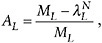
Our procedures lead to a particularly simple method of estimating the proportion of deaths attributable to smoking. For each country-year-sex-age group, we calculate the fraction of lung cancer deaths attributable to smoking as:
(2)
where ML is the observed lung cancer death rate and  is the expected rate among nonsmokers. In cases in which ML − is negative, the value of AL is set at 0. For mortality from other causes, we compare the number of deaths predicted by the negative binomial regression model under two
assumptions about the lung cancer death rate: that it equals the observed level for the population or that it equals the level assumed for nonsmokers in the corresponding sex-age group. The difference between these two predicted numbers of deaths, divided by the prediction based on the observed level of lung cancer mortality, provides an estimate of the fraction attributable to smoking. This procedure is equivalent to implementing the following formula:

(3)
where  . Thus, the coefficient in this expression,
  , includes the main coefficient of ML in equation (1) as well as any interactions between ML and time (since 1950) or age. If ML – is positive (as it is in the large majority of cases), then AO lies between 0 and 1.3 If ML – is negative, we set the value to zero before computing AO. Since ages 85+ were excluded when fitting the model, we estimate (85+) as the average of (70-74), 75-79), and (80-84).
Finally, the overall attributable fraction for deaths from all causes is a weighted average:
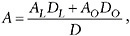
(4)
where DL, DO, and D represent the observed number of deaths from lung cancer, other causes, and all causes combined, respectively.
Validity and Robustness
In Preston, Glei, and Wilmoth (2010), we investigated the validity of this approach by applying it to specific causes of death in addition to the combination category, “all causes other than lung cancer.” We observe the expected relationships for both men and women: lung cancer mortality is powerfully related to mortality from respiratory diseases across populations, strongly related to smoking-related cancers, positively but more weakly related to other cancers, and unrelated (or even slightly negatively related) to mortality from external causes. Previous approaches (e.g., Peto-Lopez) often estimate smoking-attributable mortality separately by groups of causes. Consequently, variation in coding practice across time and country may
compromise the results.4 By combining all causes other than lung cancer into one large group, our method is less sensitive to misclassification errors.
We also investigated the robustness of results to two alternative specifications of equation (1). The two alternatives are (1) the use of a second-degree polynomial rather than a set of dummy variables to represent the interaction between age and lung cancer mortality and (2) deletion of the variable representing trends in the relation between lung cancer mortality and mortality from other causes. In addition, we examined the sensitivity of the results to the exclusion of Hungary and Japan when fitting the model. Hungary is the only Eastern European country in our data set and exhibits excess mortality in middle adulthood similar to that observed in post-Soviet countries. Japan is the sole Asian country in our data set and has a very low level of mortality combined with a rapid increase in smoking prevalence, while nonsmokers’ mortality from lung cancer in Japan may be higher than assumed in the present study. We determined that estimates of attributable risk produced by the method were robust to alternative specifications for men. They were less robust for women, the sex group on which smoking has left a lighter imprint (Preston, Glei, and Wilmoth, 2009). The sensitivity of results to alternative specifications among women was reduced by eliminating data for ages 85+.
Estimating the Effects of Smoking on e50
To estimate the impact of removing smoking-attributable deaths on life expectancy at age 50 (e50), we used period life table estimates from the Human Mortality Database (Human Mortality Database, 2009). These tables comprise national data on mortality rates by sex and age up to an open age interval of 110+. At very old ages (approximately 95+), the observed death rates have been smoothed, yielding more reliable estimates of underlying mortality conditions (Wilmoth et al., 2005, pp. 35-38). To estimate what e50 would be in the absence of smoking deaths, we multiplied each death rate (Msa) for sex s at age a by the factor (1 − Asa), where Asa is the proportion of deaths attributable to smoking in the age interval that includes age a. We assumed that the same attributable fraction applies to all ages in each 5-year age group (50-54, … , 80-84) and in the open age interval (85+). Finally,
|
4 |
For example, the proportion of deaths coded to ill-defined causes—which is often used as an indicator of coding reliability—ranged from 19 percent in France to 1.1 percent in the United States during 1955 (Glei, Meslé, and Vallin, Chapter 2, this volume). By 2004, this proportion had fallen to 6 percent in France compared with 1 percent in the United States. Given such variation in the level of ill-defined causes, the mixture of causes included in this category (and the extent to which smoking-related deaths are coded to this group) may have varied considerably across time and place. |
we recalculated the sex-specific life table using these new age-specific death rates and following standard methods (Wilmoth et al., 2005).
Next, we decomposed gains in e50 between 1950 and 2003 into the contributions due to changes in smoking-attributable mortality versus other factors. First, we disaggregated the all-cause death rates (by sex and age) for each country in 1950 and 2003 into the part attributable to smoking (Msa × Asa) and the part due to other factors (Msa × (1 − Asa)). Then, we decomposed the observed gains in e50 (1950-2003) into these two “causes” using the Pollard method (1988).
DATA
Death counts by cause of death are drawn from the World Health Organization Mortality Database (World Health Organization, 2009). All-cause death counts, exposure estimates, and death rates come from the HMD (2009). To estimate parameters of the statistical model, we used annual data by sex and 5-year age groups (50-54, … , 80-84) for 21 high-income countries since 1950. The data set used for this analysis contained 284.8 million deaths and 9.9 billion person-years of exposure. For each country-year-sex-age group, we apply the distribution of deaths by cause from the World Health Organization to the death counts and rates from the HMD to derive cause-specific death counts and rates.
RESULTS
Table 4-1 presents the estimated age- and sex-specific regression coefficients depicting the relationship between lung cancer death rates and mortality from other causes for 2003. As noted earlier, we estimate the coefficient for ages 85+ as the mean of coefficients for ages 70-74, 75-79, and 80-84. No clear age trend is evident for either sex in this set of three coefficients.
Each coefficient in the table indicates the proportionate effect of a 0.001 change in the lung cancer death rate on mortality from other causes of death. Since the model includes an interactive variable between lung cancer mortality and time and that variable has a significant (though small) positive coefficient, the relationship between lung cancer mortality and mortality from other causes of death has shifted from period to period. The coefficient for this interaction indicates a linear time trend (on a logarithmic scale) of 0.0003 for men and 0.0010 for women. Both coefficients, though very small, are statistically significant (p < .001). Thus, ceteris paribus, the predicted value of MO corresponding to a particular value of ML is estimated to increase by 1.5 percent for men and 5.1 percent for women over a 50-year period.
Attributable Risk Estimates
As described above, we estimate the number of lung cancer deaths that are attributable to smoking by comparing the actual number of deaths with the number that would have been observed if everyone had the lung cancer death rates of lifetime nonsmokers in CPS-II. To estimate the proportion of deaths from other causes attributable to smoking for a particular age-sex group, we use equation (3). Results of these calculations are shown in Table 4-2.
These estimates indicate that the attributable risk from smoking is much greater for men than for women. However, the risk for women, which was negligible in 1955, has been growing rapidly in most countries. France, Portugal, and Spain are exceptions where the imprint of smoking remains small for women; thus, more than a “Mediterranean diet” may be involved in the favorable mortality conditions among women in Spain and France
TABLE 4-2 Estimated Smoking-Attributable Fraction Among Deaths at Ages 50 and Older in 1955, 1980, 2003, by Sex and Country
|
Country |
Men |
Women |
||||
|
1955 |
1980 |
2003 |
1955 |
1980 |
2003 |
|
|
Australia |
0.07 |
0.22 |
0.17 |
0.00 |
0.04 |
0.10 |
|
Austria |
0.15 |
0.21 |
0.17 |
0.01 |
0.02 |
0.05 |
|
Belgium |
0.09 |
0.30 |
0.27a |
0.00 |
0.01 |
0.05a |
|
Canada |
0.07 |
0.22 |
0.24 |
0.01 |
0.06 |
0.19 |
|
Denmark |
0.07 |
0.22 |
0.20 |
0.01 |
0.06 |
0.16 |
|
Finland |
0.18 |
0.28 |
0.17 |
0.01 |
0.02 |
0.04 |
|
France |
0.05 |
0.17 |
0.19 |
0.00 |
0.00 |
0.02 |
|
Hungary |
0.07 |
0.22 |
0.30 |
0.01 |
0.05 |
0.13 |
|
Iceland |
0.03 |
0.06 |
0.16 |
0.00 |
0.11 |
0.18 |
|
Ireland |
0.04 |
0.17 |
0.19 |
0.02 |
0.07 |
0.14 |
|
Italy |
0.04 |
0.20 |
0.23 |
0.00 |
0.01 |
0.04 |
|
Japan |
0.01 |
0.11 |
0.20 |
0.00 |
0.03 |
0.09 |
|
Netherlands |
0.10 |
0.32 |
0.26 |
0.00 |
0.01 |
0.09 |
|
New Zealand |
0.08 |
0.21 |
0.17 |
0.00 |
0.06 |
0.12 |
|
Norway |
0.02 |
0.09 |
0.16 |
0.00 |
0.01 |
0.07 |
|
Portugal |
0.02 |
0.07 |
0.12 |
0.00 |
0.00 |
0.01 |
|
Spain |
0.04 |
0.14 |
0.22 |
0.00 |
0.00 |
0.00 |
|
Sweden |
0.03 |
0.10 |
0.09 |
0.00 |
0.02 |
0.06 |
|
Switzerland |
0.09 |
0.19 |
0.16 |
0.00 |
0.01 |
0.04 |
|
United Kingdom |
0.16 |
0.30 |
0.20 |
0.02 |
0.09 |
0.15 |
|
United States |
0.08 |
0.23 |
0.22 |
0.01 |
0.08 |
0.20 |
|
aEstimates based on data from 2004 for Belgium. SOURCES: Calculations by authors based on data in the Human Mortality Database (ac cessed November 2009) and the World Health Organization Mortality Database (accessed December 2009). |
||||||
(Knoops et al., 2004). For men, trends in the attributable fraction are more mixed: the risk declined between 1980 and 2003 in 10 countries and rose in 11. In every country except Iceland, the attributable risk fraction for 2003 is greater for men than for women. In 2003, the largest estimated proportion of deaths above age 50 that is attributable to smoking occurred in Hungary among men (0.30) and in the United States among women (0.20). Annex 4B breaks down our estimates of deaths attributable to smoking into those attributable to lung cancer and those attributable to other causes of death.
It is possible that we have overestimated the impact of smoking on Japanese mortality because nonsmokers’ death rates from lung cancer in Japan are higher than assumed here (Thun et al., 2008). In this regard, it is instructive to note that our results for Japanese men show lower attributable risk than that estimated from prospective studies. Katanoda et al. (2008) pool data from three Japanese prospective studies to estimate the smoking-attributable fraction. They estimate that 28 percent of deaths are attributable to smoking among men in a slightly younger age range, versus 20 percent for the present study. However, their estimate for women is 7 percent versus our estimate of 9 percent. Our high estimate for Japanese women is primarily attributable to very high lung cancer mortality above age 80, a phenomenon that seems likely to have an epidemiological source other than smoking (although passive smoke from coresidence with men and with a younger generation is a conceivable factor).5
Table 4-3 presents a comparison of the smoking-attributable fraction estimated by our model with the Peto-Lopez estimates for 2000, the latest year for which the Peto-Lopez method has been widely applied to data from developed countries (Peto et al., 2006). Peto-Lopez results pertain to ages 35+, whereas ours apply to ages 50+. Because deaths between ages 35 and 50 are few relative to deaths at ages 50+, the difference in age spans should have only a minor effect on the comparison (where such data exist, estimates of the attributable fraction for ages 35+ are typically no more than 1-2 percentage points higher than for ages 50+).
It is clear that the two methods produce very similar results for both men and women. This similarity pertains both to the level of attributable risk and to its international distribution. The correlation between the at-
TABLE 4-3 Comparison of Smoking-Attributable Fraction in 2000, by Sex and Country
|
Country |
Men |
Women |
||
|
Based on Modela (Ages 50+) |
Peto-Lopezb (Ages 35+) |
Based on Modela (Ages 50+) |
Peto-Lopezb (Ages 35+) |
|
|
Australia |
0.18 |
0.20 |
0.10 |
0.11 |
|
Austria |
0.17 |
0.19 |
0.06 |
0.06 |
|
Belgium |
0.29c |
0.31 |
0.04c |
0.05 |
|
Canada |
0.23 |
0.25 |
0.17 |
0.18 |
|
Denmark |
0.21 |
0.25 |
0.17 |
0.20 |
|
Finland |
0.18 |
0.18 |
0.04 |
0.04 |
|
France |
0.19 |
0.21 |
0.01 |
0.02 |
|
Hungary |
0.30 |
0.31 |
0.11 |
0.12 |
|
Iceland |
0.13 |
N/A |
0.18 |
N/A |
|
Ireland |
0.20 |
0.22 |
0.14 |
0.16 |
|
Italy |
0.24 |
0.25 |
0.04 |
0.05 |
|
Japan |
0.20 |
0.18 |
0.09 |
0.06 |
|
Netherlands |
0.27 |
0.28 |
0.07 |
0.10 |
|
New Zealand |
0.17 |
0.20 |
0.13 |
0.15 |
|
Norway |
0.14 |
0.17 |
0.06 |
0.10 |
|
Portugal |
0.11 |
0.15 |
0.01 |
0.01 |
|
Spain |
0.21 |
0.25 |
0.00 |
0.00 |
|
Sweden |
0.09 |
0.10 |
0.05 |
0.07 |
|
Switzerland |
0.17 |
0.19 |
0.04 |
0.06 |
|
United Kingdom |
0.22 |
0.23 |
0.14 |
0.16 |
|
United States |
0.23 |
0.24 |
0.19 |
0.20 |
|
NOTE: N/A = data are not available. aEstimates based on the model represent the fraction of all deaths at ages 50+. bEstimates based on Peto et al. (2006; http://www.ctsu.ox.ac.uk/~tobacco/SMK_P5_6.pdf, accessed June 6, 2010) represent the fraction of all deaths at ages 35+. cEstimates for Belgium are based on data for 1999. SOURCES: Model estimates are based on calculations by authors using data in the Human Mortality Database (accessed November 6, 2009) and the World Health Organization Mortality Database (accessed December 24, 2009). Peto-Lopez estimates were derived from http://www.ctsu.ox.ac.uk/~tobacco/SMK_P5_6.pdf (accessed January 23, 2009). [Weighted estimates for ages 35+ were derived by the authors using data for ages 35-69 and 70+ from this source.] |
||||
tributable risk fractions for the two methods is 0.96 for men and 0.97 for women. Although both approaches use lung cancer mortality as an indirect measure of smoking histories, the procedures diverge sharply at that point. The Peto-Lopez approach exports the estimated relative risks among smokers by cause of death from the CPS-II study to other populations, whereas our approach is based entirely on macro-level statistical relationships. Because of the very different methodologies used, the highly consistent results help to support the validity of both approaches.
Effects of Smoking on Life Expectancy at Age 50
Table 4-4 shows the impact on life expectancy at age 50 (e50) in 2003 of removing deaths attributed to smoking from age-specific death rates. In all cases e50 rises, by as little as 0.08 years among women in Spain and as much as 4.16 years among men in Hungary. Smoking has also substantially reduced e50 among men in Belgium (by 2.87 years), the Netherlands (2.58 years), the United States (2.52 years), and Canada (2.49 years). Among women, the greatest impact of smoking occurs in the United States (2.33 years), Denmark (2.12 years), and Canada (2.06 years). Relative to the average for women in other countries (shown at the foot of Table 4-4), the smoking histories of U.S. women have cost them an additional 1.31 years of life expectancy. U.S. women have a deficit of 1.08 years in observed life
TABLE 4-4 Life Expectancy at Age 50 (e50) in 2003 Before and After Removal of Deaths Attributable to Smoking
|
Country |
Men |
Women |
||||
|
With Smoking |
Without Smoking |
Difference |
With Smoking |
Without Smoking |
Difference |
|
|
Australia |
30.63 |
32.25 |
–1.63 |
34.59 |
35.61 |
–1.02 |
|
Austria |
28.49 |
30.29 |
–1.80 |
33.13 |
33.77 |
–0.65 |
|
Belgiuma |
28.53 |
31.40 |
–2.87 |
33.40 |
34.08 |
–0.68 |
|
Canada |
29.82 |
32.31 |
−2.49 |
33.85 |
35.91 |
–2.06 |
|
Denmark |
27.77 |
29.89 |
−2.13 |
31.66 |
33.78 |
−2.12 |
|
Finland |
27.98 |
29.68 |
−1.70 |
33.25 |
33.72 |
−0.47 |
|
France |
28.83 |
31.01 |
−2.18 |
34.59 |
34.92 |
−0.33 |
|
Hungary |
22.55 |
26.71 |
−4.16 |
29.15 |
30.79 |
−1.64 |
|
Iceland |
30.95 |
32.42 |
−1.46 |
33.61 |
35.53 |
−1.92 |
|
Ireland |
28.20 |
30.13 |
−1.92 |
32.04 |
33.51 |
−1.46 |
|
Italy |
29.46 |
31.88 |
−2.41 |
34.19 |
34.64 |
−0.45 |
|
Japan |
30.47 |
32.52 |
−2.05 |
36.66 |
37.41 |
−0.75 |
|
Netherlands |
28.34 |
30.92 |
−2.58 |
32.55 |
33.69 |
−1.15 |
|
New Zealand |
29.80 |
31.43 |
−1.63 |
33.26 |
34.65 |
−1.40 |
|
Norway |
29.40 |
30.99 |
−1.59 |
33.39 |
34.41 |
−1.02 |
|
Portugal |
27.69 |
29.04 |
−1.35 |
32.44 |
32.54 |
−0.09 |
|
Spain |
29.00 |
31.39 |
−2.39 |
34.44 |
34.52 |
−0.08 |
|
Sweden |
29.83 |
30.77 |
−0.95 |
33.66 |
34.51 |
−0.85 |
|
Switzerland |
30.14 |
31.74 |
−1.60 |
34.48 |
35.04 |
−0.56 |
|
United Kingdom |
28.62 |
30.67 |
−2.05 |
32.21 |
33.87 |
−1.66 |
|
United States |
28.46 |
30.98 |
−2.52 |
32.25 |
34.58 |
−2.33 |
|
Non-U.S. average |
28.83 |
30.87 |
−2.05 |
33.33 |
34.35 |
−1.02 |
|
aEstimates for Belgium based on 2004 data. SOURCES: Calculations by authors based on data in the Human Mortality Database (accessed November 2009) and the World Health Organization Mortality Database (accessed December 2009). |
||||||
expectancy compared with other countries. Thus, if we remove the effects of smoking, U.S. women hold a slight advantage (34.58 versus 34.35, a difference of 0.23 years). U.S. men’s deficit in life expectancy of 0.37 years also reverses if smoking is removed, yielding an advantage of 0.11 years. So in both cases, U.S. life expectancy exceeds the mean for other countries when the effects of smoking are erased.
Additional light is shed on the relative position of U.S. life expectancy in Table 4-5. With smoking deaths included, women in the United States rank 17th out of 21 countries. When deaths attributable to smoking are excluded, the rank of U.S. women jumps to 9th. Correspondingly, the position for U.S. men improves from 15th to 12th. Their histories of heavy smoking are thus clearly implicated in the poor international rankings in e50 of U.S. men and women. In view of the disadvantaged position on many health indicators of the United States relative to England (Banks et al., 2006), it is noteworthy
TABLE 4-5 Effect of Removal of Smoking-Attributable Deaths on Ranking of e50 in 2003
|
Country |
Men |
Women |
||
|
Rank Before Removal |
Rank After Removal |
Rank Before Removal |
Rank After Removal |
|
|
Australia |
2 |
4 |
3 |
3 |
|
Austria |
14 |
16 |
14 |
16 |
|
Belgiuma |
13 |
8 |
10 |
13 |
|
Canada |
6 |
3 |
7 |
2 |
|
Denmark |
19 |
18 |
20 |
15 |
|
Finland |
18 |
19 |
13 |
17 |
|
France |
11 |
10 |
2 |
6 |
|
Hungary |
21 |
21 |
21 |
21 |
|
Iceland |
1 |
2 |
9 |
4 |
|
Ireland |
17 |
17 |
19 |
19 |
|
Italy |
8 |
5 |
6 |
8 |
|
Japan |
3 |
1 |
1 |
1 |
|
Netherlands |
16 |
13 |
15 |
18 |
|
New Zealand |
7 |
7 |
12 |
7 |
|
Norway |
9 |
11 |
11 |
12 |
|
Portugal |
20 |
20 |
16 |
20 |
|
Spain |
10 |
9 |
5 |
10 |
|
Sweden |
5 |
14 |
8 |
11 |
|
Switzerland |
4 |
6 |
4 |
5 |
|
United Kingdom |
12 |
15 |
18 |
14 |
|
United States |
15 |
12 |
17 |
9 |
|
aEstimates for Belgium based on 2004 data. SOURCES: Calculations by authors based on data in the Human Mortality Database (accessed November 2009) and the World Health Organization Mortality Database (accessed December 2009). |
||||
that men and women in the United States share similar rank with their counterparts in the United Kingdom before smoking deaths are removed but rank well above them after smoking deaths are accounted for.
Is it possible that lung cancer is overrecorded as a cause of death in the United States relative to coding tendencies typical of other countries, thus accounting for the unusually high estimates of attributable risk in the United States? Such a pattern does not appear likely in view of an international study that asked countries to record the underlying cause of death, using the International Statistical Classification of Diseases (ICD-9), for an identical set of 1,243 U.S. death certificates that mentioned cancer. Among the seven countries considered in this chapter and in the coding study, the United States and Canada were tied with the lowest proportion of these deaths that were attributed to lung cancer (Percy and Muir, 1989).
Canadians have also suffered from their histories of heavy smoking. Canadian men jump to third in international rankings while their female counterparts move to second when smoking deaths are removed. In contrast, Swedish men and Spanish women owe much of their favorable international ranking (in each case, fifth) to their histories of light smoking: when smoking deaths are excluded for all countries, they drop below the median in terms of e50.
It is sometimes remarked that Japan is an anomaly because people in Japan smoke heavily yet the country enjoys an excellent ranking in life expectancy comparisons (Stellman et al., 2001). These results shed light on this issue. The removal of smoking deaths implies an increase in e50 among Japanese men (2.05 years) and women (0.75 years) that is similar to the average for all countries in Table 4-4. The increase for men actually improves Japan’s ranking in Table 4-5 from third to first. So, according to our estimates, heavy smoking among Japanese men has in fact negatively affected their international ranking. Japanese women rank first both before and after the removal of deaths from smoking. These results are, of course, subject to the uncertainties noted above regarding lung cancer mortality among Japanese nonsmokers (Thun et al., 2008).
Changes in smoking patterns have also affected mortality trends. To demonstrate the impact on trends, we have decomposed mortality changes between 1950 and 2003 using a method developed by Pollard (1988). The two causes of death considered in the decomposition are smoking-attributable deaths and all other deaths. Table 4-6 presents the total gains in e50 between 1950 and 2003 and shows the estimated contribution of smoking changes to those gains.
Among women, increases in the damage from smoking reduced the gains in life expectancy in all countries. The biggest reductions occurred in the United States (1.58 years), Denmark (1.48), Iceland (1.47), and Canada (1.39). The gain in U.S. women’s life expectancy trailed the mean gain of
TABLE 4-6 Gains in e50 During 1950-2003 and Amount of Gain Attributable to Changes in Smoking and Other Factors
other countries by 1.30 years. Our results suggest that most of this shortfall (0.90 of 1.30 years, or 69 percent) is attributable to the greater impact of smoking among U.S. women. Thus, these results reinforce those of Tables 4-4 and 4-5 in showing that smoking has had a major, adverse impact on the relative position of U.S. women’s mortality. In contrast, changes in smoking among women in Spain and Portugal have had very little effect on life expectancy to date—less than 0.10 years. Our results for women are thus broadly consistent with those of Staetsky (2009), who applied the Peto-Lopez method to a smaller set of countries over a shorter time period and age range.
The picture for men is less systematic. In four early-smoking countries including the United Kingdom, reductions in smoking-attributable mortality during the period actually served to increase male life expectancy. In the remainder, gains in life expectancy were reduced by changes in smoking, by as much as 2.83 years in Hungary.
It may appear odd that smoking reduced gains in life expectancy by slightly less for men than for women in Table 4-6. One reason is related to differences in the timing of the smoking epidemic. Among men, smoking already had made a substantial impact by 1955, whereas it had virtually no effect for women (Table 4-2). Since then, the effects of smoking grew among both sexes, but recently have begun to decline among men in many countries. In contrast, the impact of smoking grew rapidly throughout the period among women in every country. Thus, over this period, the trends for men capture the latter part of the smoking epidemic (including the waning), whereas the trends for women capture the escalating portion. Another part of the explanation is that male mortality from nonsmoking causes is much higher than female mortality. As a result, a death attributable to smoking at age 70, for example, has a much bigger impact on women’s life expectancy than on men’s. Thus, the rise in smoking among women is in a sense being weighted more heavily in its impact on life expectancy in Table 4-6 than if the same increase had occurred among men.
According to Table 4-6, gains in life expectancy among U.S. men outpaced those of other countries by an average of 0.51 years (5.82 minus 5.31) between 1950 and 2003. Without the changes in mortality induced by smoking, which include both increases and decreases, the U.S. gain would have been greater by 0.67 years (6.64 minus 5.97). Thus, consistent with Tables 4-4 and 4-5, Table 4-6 shows that smoking has produced a modest deterioration in the position of U.S. men in international comparisons of life expectancy.
A more detailed assessment of the impact of smoking on trends in U.S. life expectancy is possible by computing the effects of smoking annually. Figure 4-1 demonstrates the actual evolution of e50 in the United States since 1950 and presents our estimates of what the trend would have looked like without smoking-attributable deaths. The discrepancy between the two series for men widened steadily from 0.7 years in 1950 to 3.1 years in 1990 but has since begun a slow contraction (to 2.5 years in 2005). In contrast, the discrepancy between the two series for women began to widen rapidly after 1975 and has continued to grow, reaching 2.3 years by 2005.
The earlier impact of smoking on male mortality and the catch-up phase for women has produced a striking pattern of sex mortality differentials. Figure 4-2 shows the observed trend in the difference between female and male life expectancy at age 50. The hill-shaped pattern begins at a difference just under 4 years, rises to a peak of nearly 6 years, and then declines
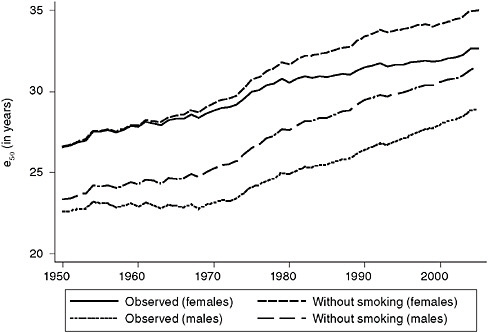
FIGURE 4-1 U.S. trends in observed e50 and estimated e50 without smoking by sex.
SOURCE: Calculations by authors based on data in the Human Mortality Database (accessed November 2009) and the World Health Organization Mortality Database (accessed December 2009).
to just below its starting value by 2005. This hill appears to be primarily attributable to smoking; we estimate that, without smoking deaths, the sex difference in e50 would have remained within the narrower range of 3.3-4.2 years.
The Future
If we are correct that smoking has played an important role in international levels and trends in mortality at ages 50+, then elements of the future come into clearer focus. The smoking epidemic among men has receded in nearly all industrialized countries (Forey et al., 2006; Glei, Meslé, and Vallin, Chapter 2, in this volume). According to Table 4-2, smoking-attributable mortality is already declining sharply among men in several countries (Australia, Finland, the Netherlands, United Kingdom), and it has stabilized in the United States. In view of the lag between smoking behavior and smoking-attributable mortality, it is reasonable to expect that men in nearly all the study countries will benefit from reductions in the smoking-attributable fraction of deaths, thereby boosting life expectancy. Among
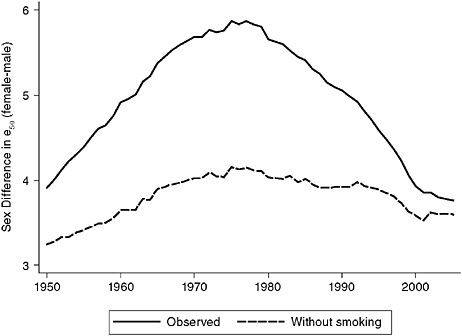
FIGURE 4-2 U.S. trends in the observed sex difference in e50 and the estimated sex difference without smoking.
SOURCE: Calculations by authors based on data in the Human Mortality Database (accessed November 2009) and the World Health Organization Mortality Database (accessed December 2009).
women, however, a later uptake of smoking has produced an upsurge in smoking-attributable deaths that is readily apparent in Table 4-2. In most countries in this study, the prevalence of smoking among women has begun to decline, albeit much later than for men. But the effects of earlier increases have been playing a more powerful role in women’s mortality profiles and are likely to continue doing so for some time to come. One set of mortality projections that takes explicit account of smoking patterns projects a very rapid reduction in men’s mortality at ages 50+ in the United States between now and 2034, while projected improvements among women remain much slower (Wang and Preston, 2009). The narrowing of sex differentials would continue a pattern that has been observed since 1980 and that is also heavily dependent on smoking differences between the sexes, as suggested in Figure 4-2.
For the past half-century, smoking has played a major role in mortality trends and differentials, both among nations and between the sexes. Welcome declines in smoking in most industrialized countries suggest that the imprint of smoking will recede over the next half-century, but the recession is likely to be slower for women than for men.
ACKNOWLEDGMENTS
We are grateful to the National Institute on Aging grants 1-R03-AG031310 and R01-AG11552 and to the Social Security Administration for support of this project.
REFERENCES
Banks, J., Marmot, M., Oldfield, Z., and Smith, J.P. (2006). Disease and disadvantage in the United States and in England. Journal of the American Medical Association, 295(17), 2037-2045.
Brennan, P., and Bray, I. (2002). Recent trends and future directions for lung cancer mortality in Europe. British Journal of Cancer, 87(1), 43-48.
Danaei, G., Ding, E.L., Mozaffarian, D., Taylor, B., Rehm, J., Murray, C.J., et al. (2009). The preventable causes of death in the United States: Comparative risk assessment of dietary, lifestyle, and metabolic risk factors. PLoS Medicine, 6(4), e1000058. [doi:10.1371/journal.pmed.1000058.]
Doll, R., Peto, R., Boreham, J., and Sutherland, I. (2004). Mortality in relation to smoking: 50 years’ observations on male British doctors. British Medical Journal (Clinical Research Ed.), 328(7455), 1519. [doi:10.1136/bmj.38142.554479.AE].
Doll, R., Peto, R., Wheatley, K., Gray, R., and Sutherland, I. (1994). Mortality in relation to smoking: 40 years’ observations on male British doctors. British Medical Journal (Clinical Research Ed.), 309(6959), 901-911.
Enstrom, J.E. (1979). Rising lung cancer mortality among nonsmokers. Journal of the National Cancer Institute, 62(4), 755-760.
Ezzati, M. (2004). How can cross-country research on health risks strengthen interventions? Lessons from INTERHEART. Lancet, 364(9438), 912-914.
Ezzati, M., and Lopez, A.D. (2003). Estimates of global mortality attributable to smoking in 2000. Lancet, 362(9387), 847-852.
Ezzati, M., Henley, S.J., Thun, M.J., and Lopez, A.D. (2005). Role of smoking in global and regional cardiovascular mortality. Circulation, 112(4), 489-497.
Forey, B., Hamling, J., Lee, P., and Wald, N. (Eds.). (2002). International Smoking Statistics: A Collection of Historical Data from 30 Economically Developed Countries. Oxford, England: Oxford University Press.
Haldorsen, T., and Grimsrud, T.K. (1999). Cohort analysis of cigarette smoking and lung cancer incidence among Norwegian women. International Journal of Epidemiology, 28(6), 1032-1036.
Ho, J., and Preston, S. (2009). U.S. Mortality in an International Context: Age Variations. Population Studies Center Working Paper 09-04. Philadelphia: University of Pennsylvania.
Human Mortality Database. (2009). HMD Main Menu. Available: http://www.mortality.org [accessed November 2009].
Jee, S.H., Suh, I., Kim, I.S., and Appel, L.J. (1999). Smoking and atherosclerotic cardiovascular disease in men with low levels of serum cholesterol: The Korea medical insurance corporation study. Journal of the American Medical Association, 282(22), 2149-2155.
Katanoda, K., Marugame, T., Saika, K., Satoh, H., Tajima, K., Suzuki, T., et al. (2008). Population attributable fraction of mortality associated with tobacco smoking in Japan: A pooled analysis of three large-scale cohort studies. Journal of Epidemiology/Japan Epidemiological Association, 18(6), 251-264.
Knoops, K.T., de Groot, L.C., Kromhout, D., Perrin, A.E., Moreiras-Varela, O., Menotti, A., et al. (2004). Mediterranean diet, lifestyle factors, and 10-year mortality in elderly European men and women: The HALE project. Journal of the American Medical Association, 292(12), 1433-1439.
Leistikow, B.N., and Tsodikov, A. (2005). Cancer death epidemics in U.S. black males: Evaluating courses, causation, and cures. Preventive Medicine, 41(2), 380-385.
Leistikow, B.N., Kabir, Z., Connolly, G.N., Clancy, L., and Alpert, H.R. (2008). Male tobacco smoke load and non-lung cancer mortality associations in Massachusetts. BMC Cancer, 8, 341.
Liu, B.Q., Peto, R., Chen, Z.M., Boreham, J., Wu, Y.P., Li, J.Y., et al. (1998). Emerging tobacco hazards in China: 1. Retrospective proportional mortality study of one million deaths. British Medical Journal (Clinical Research Ed.), 317(7170), 1411-1422.
Lopez, A.D. (1995). The lung cancer epidemic in developed countries. In A.D. Lopez, G. Caselli, and T. Valkonen (Eds.), Adult Mortality in Developed Countries: From Description to Explanation (pp. 111-134). Oxford, England: Clarendon Press.
McCullagh, P., and Nelder, J.A. (1989). Generalized Linear Models (2nd ed.). Boca Raton, FL: CRC Press.
Mokdad, A.H., Marks, J.S., Stroup, D.F., and Gerberding, J.L. (2004). Actual causes of death in the United States, 2000. Journal of the American Medical Association, 291(10), 1238-1245.
Percy, C., and Muir, C. (1989). The international comparability of cancer mortality data. Results of an international death certificate study. American Journal of Epidemiology, 129(5), 934-946.
Peto, R., Lopez, A.D., Boreham, J. and Thun, M. (2006). Mortality from Smoking in Developed Countries 1950-2000 (2nd ed.). Available http://www.ctsu.ox.ac.uk/~tobacco/ [accessed January 2009].
Peto, R., Lopez, A.D., Boreham, J., Thun, M., and Heath, C., Jr. (1992). Mortality from tobacco in developed countries: Indirect estimation from national vital statistics. Lancet, 339(8804), 1268-1278.
Pollard, J.H. (1988). On the decomposition of changes in expectation of life and differentials in life expectancy. Demography, 25(2), 265-276.
Preston, S.H., and Wang, H. (2006). Sex mortality differences in the United States: The role of cohort smoking patterns. Demography, 43(4), 631-646.
Preston, S.H., Glei, D.A., and Wilmoth, J.R. (2009). A new method for estimating smoking-attributable mortality in high-income countries. International Journal of Epidemiology, 39, 430-439.
Rogers, R.G., Hummer, R.A., Krueger, P.M., and Pampel, F.C. (2005). Mortality attributable to cigarette smoking in the United States. Population and Development Review, 31(2), 259-292.
Rosenbaum, W.L., Sterling, T.D., and Weinkam, J.J. (1998). Use of multiple surveys to estimate mortality among never, current, and former smokers: Changes over a 20-year interval. American Journal of Public Health, 88(11), 1664-1668.
Rostron, B., and Wilmoth, J.R. (forthcoming). Estimating the effect of smoking on slowdowns in mortality declines in developed countries. Submitted to Demography.
Staetsky, L. (2009). Diverging trends in female old-age mortality: A reappraisal. Demographic Research, 21(30), 885-914. [doi:10.4054/DemRes.2009.21.30].
Stellman, S.D., Takezaki, T., Wang, L., Chen, Y., Citron, M.L., Djordjevic, M.V., et al. (2001). Smoking and lung cancer risk in American and Japanese men: An international case-control study. Cancer Epidemiology, Biomarkers and Prevention: A Publication of the American Association for Cancer Research, cosponsored by the American Society of Preventive Oncology, 10(11), 1193-1199.
Sterling, T.D., Rosenbaum, W.L., and Weinkam, J.J. (1993). Risk attribution and tobacco-related deaths. American Journal of Epidemiology, 138(2), 128-139.
Taylor, D.H., Jr., Hasselblad, V., Henley, S.J., Thun, M.J., and Sloan, F.A. (2002). Benefits of smoking cessation for longevity. American Journal of Public Health, 92(6), 990-996.
Thun, M.J., Day-Lally, C., Myers, D.G., Calle, E.E., Flanders, W.D., Zhu, B., et al. (1997). Trends in tobacco smoking and mortality from cigarette use in cancer prevention studies I (1959 through 1965) and II (1982 through 1988). In D.M. Burns, L. Garfinkel, and J.M. Samet (Eds.), Changes in Cigarette-Related Disease Risks and Their Implications for Prevention and Control, Smoking and Tobacco Control (pp. 305-382). NIH publication 97-4213. Bethesda, MD: Cancer Control and Population Sciences, National Cancer Institute, U.S. National Institutes of Health.
Thun, M.J., Hannan, L.M., Adams-Campbell, L.L., Boffetta, P., Buring, J.E., Feskanich, D., et al. (2008). Lung cancer occurrence in never-smokers: An analysis of 13 cohorts and 22 cancer registry studies. PLoS Medicine, 5(9), e185. [doi:10.1371/journal. pmed.0050185.]
U.S. Department of Health and Human Services. (1989). Reducing the Health Consequences of Smoking: 25 Years of Progress. A Report of the Surgeon General. (DHHS Publication (CDC) 89-8411). Public Health Service, Centers for Disease Control, Center for Chronic Disease Prevention and Health Promotion, Office on Smoking and Health. Rockville, MD: Author.
U.S. Surgeon General. (2004). The Health Consequences of Smoking: A Report of the Surgeon General. Washington, DC: U.S. Department of Health and Human Services, Centers for Disease Control and Prevention, National Center for Chronic Disease Prevention and Health Promotion, Office on Smoking and Health.
Wang, H., and Preston, S.H. (2009). Forecasting United States mortality using cohort smoking histories. Proceedings of the National Academy of Sciences of the United States of America, 106(2), 393-398. [doi:10.1073/pnas.0811809106.]
Wilmoth, J.R., et al. (2005). Methods Protocol for the Human Mortality Database. Available: http://www.mortality.org/Public/Docs/MethodsProtocol.pdf [accessed December 2005].
World Health Organization. (2009). Detailed Data Files of the WHO Mortality Database. Available: http://www.who.int/whosis/mort/download/en/index.htm [accessed December 2009].
Yusuf, S., Hawken, S., Ounpuu, S., Dans, T., Avezum, A., Lanas, F., et al. (2004). Effect of potentially modifiable risk factors associated with myocardial infarction in 52 countries (the INTERHEART study): Case-control study. Lancet, 364(9438), 937-952.
ANNEX 4A
DEVELOPMENT OF THE STATISTICAL MODEL
Our approach begins with an assumption about how smoking affects mortality from lung cancer for persons in a particular age-sex group in a certain population:

(A1)
where ML is the observed death rate from lung cancer, N is the nonsmokers’ death rate from lung cancer, and 1 + θ is the proportionate factor by which mortality is raised in the group relative to what it would be if everyone were a lifetime nonsmoker. Thus, any departure of lung cancer mortality in the population from that of nonsmokers is assumed to be attributable to smoking. θ is used as a measure of the mortality damage caused by the prevalence, duration, and intensity of smoking. θ and N are assumed to vary by age and sex in any population. is assumed to be fixed across populations for a particular age-sex group, whereas θ is assumed to vary with the smoking behavior of the population.
In the case of mortality from causes other than lung cancer (MO), we assume that θ, the measure of damage from smoking in equation (A1), also captures the effect of smoking on other causes of death. However, that damage is only one of many factors that affect mortality, which we express as a standard hazards model. That is, the log of MO is assumed to be a linear function of the predictors, including the damage from smoking:

(A2)
where Xi represents the set of other predictors (which may be observed quantities or transformations thereof), βi denotes the set of corresponding coefficients, and βθ is the coefficient associated with θ. Evidence in support of the proportionality assumption embedded in the hazards model for smoking has been presented for cardiovascular diseases. In particular, Ezzati et al. (2005) cite several studies in support of the constancy across populations of smokers’ relative risk of cardiovascular death (Ezzati, 2004; Jee et al., 1999; Liu et al., 1998; Yusuf et al., 2004).
From (A1), we can solve for θ as follows:
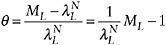
(A3)
Substituting (A3) into (A2), we obtain:
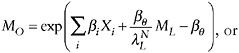
(A4)
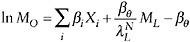
(A5)
With these assumptions, the log of MO will be a linear function of ML. The implied coefficient for ML,

goes up with βθ (the effect of θ on MO) and down with (because a larger value of N implies that less mortality damage is being done by smoking for a given value of ML). This analysis motivates our choice to use ML itself as the measure of the damage caused by smoking in a model of mortality due to causes other than lung cancer. Since θ is a linear function of ML (and vice versa), either quantity could be used for estimating the final model, with no difference for any of the results that interest us here.
Thus, within the framework of generalized linear models (McCullagh and Nelder, 1989), we assume a negative binomial probability distribution of observed death counts in order to estimate the following model of ln MO (or, technically, the log of its expected value) for each sex separately:

(A6)
where MO is the death rate from causes other than lung cancer classified by age, sex, year of death, and country (or population); Xa is a set of dummy variables for each age group; Xt is a set of dummy variables for each calendar year; Xc is a set of dummy variables for each country; (t × Xc) denotes a set of interactions between calendar year (linear) and each country dummy; ML is the death rate from lung cancer; (ML × t) is an interaction between ML and year (linear); and finally, (ML × Xa) represents ML interacted with the age dummies.
To estimate the fraction of deaths attributable to smoking, one may exponentiate both sides of equation (A6) to obtain a predicted value of MO given ML, the observed lung cancer death rate. We estimate what MO would have been in the absence of smoking by substituting , the assumed lung cancer death rate among nonsmokers, in place of ML. We then divide the difference between these two expressions by the model’s prediction of MO. This last expression can be simplified to yield equation (3) of the main text.
ANNEX 4B
Smoking-Attributable Deaths Due to Lung Cancer and Other Causes (in absolute numbers and as a percentage of deaths from all causes), by Sex and Country, Ages 50+, 2003
|
Smoking-Attributable Deaths due to: |
Men |
|||||
|
Lung Cancer |
Other Causes |
All Causes |
||||
|
Country |
N |
% of All Deaths |
N |
% of All Deaths |
N |
% of All Deaths |
|
Australia |
3,751 |
6.2 |
6,473 |
10.7 |
10,224 |
16.9 |
|
Austria |
1,963 |
6.1 |
3,540 |
11.0 |
5,503 |
17.1 |
|
Canada |
8,849 |
8.6 |
15,485 |
15.1 |
24,334 |
23.8 |
|
Denmark |
1,636 |
6.5 |
3,441 |
13.6 |
5,077 |
20.1 |
|
Finland |
1,194 |
5.6 |
2,465 |
11.5 |
3,659 |
17.1 |
|
France |
17,290 |
6.9 |
29,459 |
11.8 |
46,749 |
18.7 |
|
Hungary |
5,020 |
8.2 |
13,539 |
22.2 |
18,558 |
30.4 |
|
Iceland |
46 |
5.6 |
87 |
10.4 |
133 |
15.9 |
|
Ireland |
847 |
6.4 |
1,735 |
13.1 |
2,582 |
19.5 |
|
Italy |
22,635 |
8.4 |
40,032 |
14.9 |
62,667 |
23.3 |
|
Japan |
35,475 |
6.9 |
67,658 |
13.2 |
103,133 |
20.0 |
|
Netherlands |
5,451 |
8.6 |
11,027 |
17.4 |
16,478 |
25.9 |
|
New Zealand |
704 |
5.7 |
1,363 |
11.1 |
2,067 |
16.8 |
|
Norway |
1,012 |
5.4 |
1,945 |
10.3 |
2,958 |
15.6 |
|
Portugal |
2,013 |
4.0 |
3,934 |
7.9 |
5,947 |
12.0 |
|
Spain |
13,968 |
7.7 |
25,108 |
13.9 |
39,076 |
21.6 |
|
Sweden |
1,382 |
3.2 |
2,514 |
5.9 |
3,896 |
9.1 |
|
Switzerland |
1,641 |
5.9 |
2,701 |
9.7 |
4,343 |
15.6 |
|
United Kingdom |
17,162 |
6.4 |
37,421 |
14.1 |
54,583 |
20.5 |
|
United States |
77,286 |
7.6 |
148,216 |
14.5 |
225,502 |
22.1 |
|
SOURCES: Calculations by authors based on data in the Human Mortality Database (accessed November 2009) and the World Health Organization Mortality Database (accessed December 2009). |
||||||
|
Women |
|||||
|
Lung Cancer |
Other Causes |
All Causes |
|||
|
N |
% of All Deaths |
N |
% of All Deaths |
N |
% of All Deaths |
|
1,742 |
2.9 |
4,524 |
7.6 |
6,266 |
10.5 |
|
590 |
1.5 |
1,549 |
3.9 |
2,138 |
5.3 |
|
5,702 |
5.5 |
13,974 |
13.4 |
19,676 |
18.9 |
|
1,186 |
4.4 |
3,155 |
11.6 |
4,341 |
16.0 |
|
291 |
1.2 |
791 |
3.3 |
1,082 |
4.5 |
|
2,047 |
0.8 |
3,305 |
1.3 |
5,352 |
2.1 |
|
1,671 |
2.7 |
6,383 |
10.3 |
8,054 |
13.0 |
|
49 |
5.5 |
106 |
12.1 |
155 |
17.6 |
|
459 |
3.4 |
1,477 |
11.1 |
1,936 |
14.5 |
|
3,314 |
1.2 |
9,580 |
3.3 |
12,894 |
4.5 |
|
8,705 |
2.0 |
31,475 |
7.1 |
40,180 |
9.0 |
|
1,856 |
2.7 |
4,318 |
6.2 |
6,173 |
8.9 |
|
456 |
3.5 |
1,118 |
8.6 |
1,574 |
12.2 |
|
499 |
2.4 |
1,015 |
4.8 |
1,514 |
7.2 |
|
108 |
0.2 |
200 |
0.4 |
308 |
0.6 |
|
298 |
0.2 |
415 |
0.2 |
713 |
0.4 |
|
888 |
1.9 |
2,075 |
4.5 |
2,963 |
6.4 |
|
459 |
1.5 |
886 |
2.8 |
1,345 |
4.3 |
|
10,817 |
3.5 |
37,062 |
12.0 |
47,879 |
15.5 |
|
55,331 |
4.8 |
169,840 |
14.8 |
225,171 |
19.7 |


