
2
At-Risk Populations and Routes of Exposure
Effective surveillance systems require a basic understanding of exposure pathways, which includes identifying the contaminant source, available environmental media, exposure points, exposure routes, and the at-risk population, said Maureen Lichtveld. When developing a framework for surveillance, it is also important to understand why certain populations are at risk for developing particular short- and long-term adverse health effects.
Hazard assessment, including assessing chemical exposures and psychological impacts, is complex. The at-risk populations are defined by a wide range of characteristics that affect the types of hazards and the routes of exposure of greatest concern to different populations. As Edward Overton noted (see Chapter 1), oil comprises more than 2,000 chemicals that vary in amount and structure as oil weathers, and oil dispersants may expose individuals to additional chemicals. In addition to chemical exposures, occupational hazards related to clean-up activities may also pose significant risks of harm due to injury, intense heat and fatigue, and particulate matter from controlled burns. In the general population, the socioeconomic impacts stemming from the Gulf oil spill have psychological and physical ramifications that continue to affect a growing number of individuals.
To better identify the most salient hazards when developing a framework for surveillance and monitoring activities, this panel explored different exposures and conditions, routes of exposure, and at-risk populations. Panelists discussed not only how different populations (e.g., fishermen and -women, clean-up workers, and residents of the affected communities) are exposed to different hazards related to the oil spill, but also the particular population vulnerabilities and available preventive
steps that can affect the likelihood of experiencing adverse health effects. Linda Rosenstock moderated the panel discussion.
John Howard proposed a framework that used proximity to the oil spill source to define the risks of exposure and anxiety or concern for specific categories of at-risk populations. He stated that different sub-populations may be more likely to encounter specific hazards, which may affect overall risk calculations and public health responses aimed at injury, illness, and disability prevention. By tracking possible links between measured hazards and adverse health outcomes, a surveillance system may be able to predict future exposures, to mitigate the damage from past and ongoing exposures, and to ensure care for those affected.
Scott Barnhart discussed specific occupational hazards and risks to workers and volunteers, noting that certain other physical and psychological hazards may pose greater risk of harm than more distinct chemical exposures, especially if workers and volunteers are trained properly to use personal protective equipment. Paul Lioy described elements of an effective disaster response, including problem identification, strategic planning, and recognition of opportunities to minimize and prevent exposure.
Maureen Lichtveld explored the various characteristics of the populations in the Gulf States that may inform and improve surveillance system design and implementation. She recommended involving local experts and communities in the development of surveillance and communication activities to ensure that these activities are participatory in nature, include a holistic approach to individual and community health, and provide cultural competence and transparency. This chapter summarizes the workshop presentations and discussions on at-risk populations and routes of exposure.
POPULATIONS OF CONCERN: DIFFERENT EXPOSURES, DIFFERENT RISKS1
John Howard, National Institute for Occupational Safety and Health
Different subpopulations experience different types and levels of exposure, which affects risk calculations and preparations for public health responses aimed at preventing injury, illness, and disability. By develop-
|
1 |
This section summarizes the panel remarks of John Howard that pertained to at-risk populations. See Chapter 5 for a summary of Howard’s remarks on the federal response to the Gulf oil disaster. |
ing a system to monitor the oil spill’s effects, the federal government anticipates that it will be better able to predict future exposures, to mitigate the damage from past and ongoing exposures, and to ensure care for those affected, said John Howard. Using a proposed “bull’s-eye” model (see Figure 2-1), Howard categorized the types and levels of exposure by proximity to the oil source. The different subpopulations include workers at or near the plume, clean-up workers on the water, clean-up workers on the beach, affected communities, and the general public.
Exposure to oil freshly released into the environment poses more risks than exposure to oil closer to shore. Referencing Overton’s remarks (see Chapter 1), Howard explained that oil moving from the wellhead to the surface contains compounds such as volatile organic compounds (VOCs), explosive vapors, and methane. Dispersants are also more concentrated in the area where oil moves from the wellhead to the surface. As a result, workers nearer the point of origination are more likely to be exposed to higher levels of VOCs. For instance, clean-up workers on vessels drilling relief wells may be at higher risk for inhaling VOCs than workers on vessels laying boom or skimming oil-contaminated waters nearer to shore. And workers directly involved with burning oil will be exposed to higher concentrations of combustion products, heat, and rare flash fires.
Clean-up efforts on land are as varied as those on the water, leading to a wide variety of exposures, stated Howard. Workers charged with shoreline cleanup are exposed to weathered oil, contaminated beaches, and prolonged exposure to heat. Workers and volunteers involved with removing oil from contaminated vessels and personal protective equipment and cleaning and caring for oil-soiled birds, turtles, and other wildlife before relocation could also be exposed to weathered oil. Finally, response and remediation workers involved in the disposal and recycling of hazardous solid and liquid wastes could be exposed to the wastes that the other workers are managing.
Residents in the affected communities are also at risk for dermal exposure to either crude oil in the water or weathered oil on the beach; inhalational exposure to chemicals or compounds, such as those carried ashore by prevailing winds; or ingestion by eating potentially contaminated seafood, drinking contaminated water, or other forms of ingestion. Although oil and other related chemicals may be less concentrated in residential areas, affected communities are already wrestling with
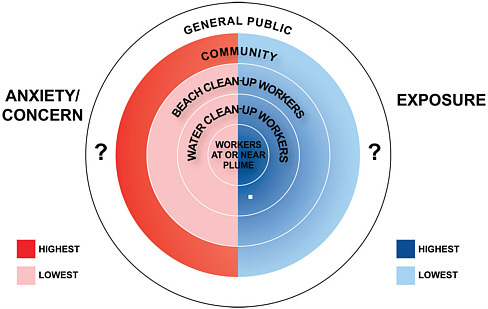
FIGURE 2-1 Levels of population exposures and anxiety or concern as defined by proximity to the oil leak.
uncertainties about their social and economic futures as a result of the Gulf oil spill, putting them at an elevated risk for poorer psychological health outcomes, stated Howard.
OCCUPATIONAL RISKS AND HEALTH HAZARDS: WORKERS AND VOLUNTEERS
Scott Barnhart, University of Washington
Accurate measures of occupational and environmental health exposures can help public health officials manage and mitigate the varied risks posed to workers and volunteers. These measures include making an accurate exposure assessment across a variety of exposures that are not limited to chemical toxins. According to Scott Barnhart, studies of previous oil spills indicate that response workers and volunteers are exposed to chemicals or conditions during response activities that cause adverse health effects (see Chapter 3). Thus, it is important to identify exactly what exposures led to which adverse health outcomes.
In addition to the oil itself, workers and volunteers responding to the Gulf oil spill may be exposed to a number of potentially hazardous substances or situations, stated Barnhart. Box 2-1 lists categories of hazards that could be considered when developing surveillance or monitoring systems that include clean-up workers or volunteers.
Beyond the type of exposure, the dose or duration of exposure is important when monitoring for possible adverse health effects, said Barnhart. Individuals exposed to higher concentrations of harmful chemicals may be more likely to suffer adverse health effects. For example, exposures to high levels of hydrocarbon solvents have been linked to adverse neurologic, renal, hepatic, dermatological, and hematopoietic effects. However, Barnhart opined that these health effects are unlikely to result from the current, lower levels of exposure that workers and volunteers are experiencing, especially when individuals comply with proper safety and hygiene guidelines.
Because response efforts to the Gulf oil spill bring diverse groups in direct contact with a variety of chemicals and conditions, workers and volunteers are uniquely vulnerable to certain adverse health effects. According to Barnhart, inhalation and dermal contact are the most likely routes of exposure to oil and other chemical substances because workers are exposed to VOCs evaporating from crude oil on the water and to substances carried on protective clothing.
Some notable differences between workers and volunteers will also complicate hazard assessment, including chemical exposures. Statutory
|
BOX 2-1 Potential Categories of Hazards Related to the Gulf Oil Spill and Its Response Efforts
|
requirements provide an additional level of protection for workers who are fully trained, monitored, and equipped with personal protective equipment. Volunteers do not necessarily have the same protections as official workers, which may increase volunteers’ likelihood of injury or chemical exposure, stated Barnhart. Additionally, much less is known about volunteers’ actual risks of exposure.
The Gulf of Mexico oil spill is different from previous oil spills, which adds a layer of uncertainty that must be explored. In addition to the ongoing nature of the oil spill, Barnhart explained that the underwater oil source; the use of dispersants, pressure washing, and controlled burns; and the sheer volume of the spill distinguishes the Gulf oil spill from other oil spills. Despite these differences, data from previous oil spills, coupled with a wealth of other occupational and environmental health data, can inform decisions related to the Gulf oil spill. For example, available evidence from past oil spills suggests that safety-related risks are generally of greater concern than chemical risks. Safety-related risks may include the removal of personal protective equipment in response to extreme heat. Additionally, past studies indicate that workers and volunteers are likely to suffer from post-traumatic stress disorder, anxiety, and depression as a result of exposures experienced during response activities.
To capitalize on what is known, it is important to collect data immediately, to account for confounding factors, and to reduce anticipated exposures, said Barnhart. Causation is multifactorial, and there is often a latent period between the time of exposure and the presentation of a disease or condition. To link possible exposures to adverse health effects, Barnhart proposed gathering data, maintaining registries, and banking samples to better determine causation. This would include continuous reassessment based on real-time monitoring of exposure data, particularly among volunteers. As part of the health monitoring, workers and volunteers should also receive psychological risk assessments that are culturally sensitive and accurately communicate the risks associated with specific behaviors and activities. To prevent injuries and adverse physical and psychological effects, Barnhart also suggested requiring adequate training, especially for volunteers.
ASSESSING AND PREVENTING EXPOSURE ACROSS POPULATIONS
Paul J. Lioy, Robert Wood Johnson Medical School, University of Medicine & Dentistry of New Jersey
The Gulf oil spill affects not only those in the Gulf region, but also people across the United States. In addition to the workers and volunteers, Paul Lioy described how the oil spill has also affected a number of commercial and industrial activities (including fishing), military personnel, visitors, and residents living near or along the Gulf Coast region. As the oil continues to rise from the seabed, Lioy suggested using a “64-back-64-forward approach”2 to assess past exposures with an eye to preventing future exposures. For “64 forward,” preventing exposure should be the primary goal. This requires a rapid response through coordinated data collection about exposures to determine whether different types of at-risk populations are appropriately protected. Furthermore, long-term surveillance activities could be designed to minimize known exposure and to prevent unnecessary illness.
To best avoid mistakes that may limit effectiveness in preventing and treating exposures that lead to adverse health outcomes, Lioy stated that effective disaster response required problem identification, strategic planning, and recognition of opportunities to minimize and prevent exposure. In this case, the problem was an ongoing oil leak, which made each day the first day of the disaster response. Based on his experience with the response to the 2001 World Trade Center disaster, Lioy stated that strategic planning for disasters should be divided into the “5 Rs”: rescue, reentry, recovery, restoration, and rehabilitation (Lioy, 2010). Each phase provides opportunities to minimize the impact of the disaster if each phase is strategically timed.
According to Lioy, at the time of the workshop, there had been some rescue, reentry, and recovery activities with the Gulf oil disaster, but restoration and rehabilitation were “years away.” As part of the recovery stage, 17,000 National Guardsmen were expected (at the time of the workshop) to assist with the clean-up effort. Lioy expressed concern that none of the guardsmen had professional training to handle hazardous waste.
Lioy stated that, during recovery, the public can be an important source of information about possible exposures. For example, affected
regions could report the smell or presence of oil-contaminated water at their homes. Additionally, affected communities may choose to use passive air monitors to measure VOCs in the air. Contaminated air, water, and food may also be a concern during the restoration and reconstruction phases of the Gulf oil disaster recovery. Long-term surveillance will be necessary to ensure that the most effective policies are selected to best protect the public as the Gulf region struggles to rebuild.
OF PEOPLE AND PELICANS: A LOCAL PERSPECTIVE ON THE GULF OF MEXICO OIL SPILL
Maureen Y. Lichtveld, Tulane School of Public Health and Tropical Medicine
The first step to developing an effective surveillance system requires a basic understanding of exposure pathways. This analysis, explained Maureen Lichtveld, includes identifying the contaminant source, contaminated environmental media, exposure points and routes, and the at-risk population. Although some agreement exists surrounding contaminated environmental media and the potential sources of contamination (as described earlier in this chapter and in Chapter 1), there is a great deal of uncertainty about the exposure point (where individuals are exposed) and exposure routes (how individuals are exposed). Compounding these uncertainties is the critical need to assess cumulative risk in the absence of data characterizing changes in the composition of the contaminant mixtures over time, said Lichtveld. Additionally, there are a number of at-risk populations in the affected regions that may be particularly vulnerable to adverse health effects. The lack of definitive answers to growing community concerns has created a sense of urgency that reverberates throughout the Gulf region.
The characteristics of an at-risk population can help define exposure points and routes. Like most areas across the United States, there are certain populations within the Gulf region that are considered at-risk groups because of well established vulnerabilities. Children may be more at risk due to their developmental stage. The oil spill may also disproportionately affect pregnant women, the elderly, and individuals with preexisting health conditions.
Gulf Coast residents also have unique characteristics that make their population more susceptible to adverse health effects than the general population, said Lichtveld. For example, fishermen and -women who
now serve as temporary clean-up workers are an integral part of their community, resulting in complex exposure scenarios. The Gulf Coast population also experiences high rates of health disparities exacerbated by poverty, access to culturally competent care, inadequate quality education, and self-perceived discrimination. Moreover, the health of the Gulf ecosystem and the survival of the community are inextricably linked. As a number of presenters explained throughout the workshop, Gulf residents boast an intimate relationship with the water as a source of their livelihood, culture, and history. At the core, the spill is threatening Gulf communities’ ways of life, including individual families and states’ economies.
The impact of frequent natural and human-caused disasters, such as Hurricane Katrina and now the oil spill, further strains populations that are already experiencing a great deal of stress. Gulf residents are still recovering from the aftermath of Hurricane Katrina.3 Coupled with community concerns about the lack of transparency and paucity of information from various sources, the vulnerabilities described above suggest that long-term psychological and social impacts may be as significant as the Gulf oil spill’s physical impacts, Lichtveld stated.
When formulating an action plan to help identify the greatest areas of concern for a surveillance system, there is no substitute for local knowledge and expertise, said Lichtveld. In a community that has been hit hard by a number of disasters within the past decade, numerous questions arise, including what role historic health disparities play. To answer these questions effectively, researchers must work hand in hand with the communities to develop, implement, and evaluate any action plan that attempts to link health outcomes and oil spill exposures. She then discussed components of a multipronged action plan, which is presented in Chapter 7 (see Box 7-1).
Lichtveld concluded by remarking that these actions should be carried out in a participatory way (with the affected communities), holistically (by, for instance, taking into account existing health disparities), with cultural competence and transparency. Stating that “the spill is a disaster experienced by the community,” she emphasized the importance of involving local communities in any planned or future surveillance and communication activities.
QUESTIONS AND COMMENTS FROM THE AUDIENCE
Data Collection
How do you differentiate between occupational exposures that occurred before the disaster and exposures that occurred after the onset of the disaster?
Barnhart replied, “Baseline exams.” Lioy remarked that one of the challenges during a disaster is that it may be difficult to obtain baseline information for many affected individuals. While some organizations already have worker baseline information on record, he stressed the importance of collecting new baseline information for new workers and other newly exposed individuals as soon as possible. Lichtveld noted the importance of collecting psycho-social baseline data in addition to physical health data.
Is biospecimen banking being done adequately?
While the panelists agreed that biospecimen banking is important, none of them had enough information to know if it was being done adequately at the time of the workshop.
What barriers exist to collecting good exposure data (e.g., legal, political, cultural, economic), and how can those barriers can be overcome?
The panelists identified the need for two-way dialogue rather than one-way communication, the need for better individual exposure data, and the need to consider whether an expanded legal authority could improve real-time access to data so that data can be used to mitigate some of the disaster’s impact. Specifically, Lichtveld replied that many barriers revolve around the need to be sensitive about how to communicate information.
Lioy stated that the barriers extend well beyond communicating good information and identified the need to collect information in the first place as a major barrier. Data collection is cumbersome and difficult. He explained that although there are rules and regulations for collecting occupational data, environmental data in particular is tough because it involves monitoring the personal environments of individuals. An air or
water monitoring system may be suitable for monitoring the general air or water quality of an area. However, there is a difference between general air or water quality and the exposure that individuals are actually experiencing. Monitoring individual environmental exposure involves a different sampling methodology. It is important to recognize that time changes the character of oil, and clearly there are chemicals that should or should not be measured in certain circumstances.
Finally, Barnhart raised the question: When considering a disaster like this in the context of public health law, what is the role for more expanded authority in terms of access to data and use of those data to manage the situation and to mitigate some of the impact? Rosenstock agreed that this was an excellent question and one that would hopefully be addressed later during the workshop.
The Need for Central Coordination
Given that multiple agencies are involved in worker retraining, how can injury risk be mitigated as workers are retrained to do new tasks?
Barnhart replied that injury is the one area of risk that ought to be mitigated because so much is known about it and because there are effective measures that can readily be implemented to mitigate injury risk. These include adequate training; use of the right equipment; and use of real-time feedback loops to detect injuries, characterize the nature of those injuries, and identify what needs to be done to prevent those injuries. The challenge with the Deepwater Horizon response is the need for some form of central coordination. Lioy stressed the importance of constant reinforcement and monitoring of the volunteers and workers being retrained to participate in clean-up activities (e.g., National Guardsmen).
Who is going to take responsibility for coordinating local studies to avoid redundancy and confusion?
Lichtveld replied that it is critical that a local coordinating center be in place so that investigators, affected communities, and workers can engage in dialogue with each other. She also suggested that the center should be clearly linked to a national advisory board to ensure that the science is high quality. She said, “What we don’t need, frankly, is a repeat after Hurricane Katrina, where everybody descended down on New
Orleans, did all sorts of studies, and the community was left without the very answers that we need.” She emphasized that, in addition to coordination, collecting meaningful data that will allow communities to take the actions that they need to take is very important. Lioy agreed that local control is very important. He stated, however, that it is also important to ensure that outside resources, including academic researchers and government agencies, are not construed as barriers. Otherwise, there will be duplication of efforts and confusion. He emphasized the importance of collaboration between local and federal/other efforts.
Communicating with At-Risk Populations
A separate session summarized in Chapter 3 focused in more detail on communication issues. Nonetheless, the panelists were asked: Based on lessons learned from past disasters, when is there enough certainty to begin communicating to the public about exposure?
Barnhart replied that enough has been learned from past oil spills that there is enough certainty now to provide information. Finding a balance between providing information and communicating uncertainties about that information requires engaging the community early on during the communication process, for example, through focus groups or advisory boards.
Lichtveld agreed that there is enough information available now to communicate and reminded the workshop of the many assets that communities have to deploy. She urged that communication not be delayed until “we have all the t’s crossed and i’s dotted.” Additionally, she remarked that a critical lesson learned after Katrina was that, although the message is critical, the messenger is even more critical. She stated that the use of faith-based organizations as messengers was critically important after Katrina. The channel of communication is also important. For example, during Katrina, the Internet provided a very good resource.
Another challenge is making information, particularly numerical information, understandable to the general public. Lioy agreed with both Barnhart and Lichtveld about the urgency of providing available information now. He referred to the bull’s-eye figure that Howard showed, with environmental concentrations of toxins decreasing as one moves away from the source, and commented on the importance of communicating that reality to the general public in order to alleviate fears. Com-
municating that level of understanding about exposure is crucial to moving forward. However, Lioy cautioned that numerical information posted on the Internet is often not very meaningful to the general public. For example, he pointed to posted occupational and environmental toxin levels being in parts per million versus parts per billion, respectively, and how that difference is meaningless to many people. For many people, he said, “a number is a number.” The problem is not just with numeracy. Rosenstock pointed to confusion around the use of terms such as “barrels” and “gallons.” While the public understands the massive scope of what is happening, variable use of terms can be very confusing.
Who is going to help communicate and navigate the information that already exists, and how will organizations be held responsible for presenting clear and concise risk-mitigating information in a health-literate way? Many other disasters have point persons assigned to deliver information (e.g., the 2001 anthrax episode). Does the ongoing and complex nature of the Deepwater Horizon oil disaster necessitate a point person, or are there other ways to coordinate and communicate useful information?
Lioy replied that a coordinated approach does not necessarily imply one voice. Rather, it means selecting people with the most knowledge about individual components of what needs to be communicated and using those people to determine if what is being communicated is going to be effective. He stated that the information that needs to be communicated is not just health information. It also includes engineering and mitigation information, such as information about how to prevent oil from reaching shore. Therefore, a variety of expertise is needed to help with the communications strategy. While health officers are very important, this is a very complex problem with multiple components. He opined that a coordinated group of people with expertise in a variety of areas would be a more effective tool for providing good information to the people than a single voice. Moreover, because there will likely be discontinuities in the information, a group may be able to express uncertainties more clearly and may be able to say “I don’t know” more effectively.
Lichtveld agreed that having a single point person is not the best approach to take at this time. She observed that there are existing statelevel health systems already responsible for communication and emphasized early collaboration with the health officers of the affected states
(Alabama, Florida, Louisiana, Mississippi, Texas) and other, trusted local authorities.
Barnhart stated the importance of staying away from managing information. Although a time comes when it is necessary to synthesize the data, transparency and having lines of data available from multiple sources is important.


