
6
Looking to the Future
The study of risk has generally been partitioned into separate research categories—divided both by subject (particular types of behaviors) and by academic discipline—committee chair Laurence Steinberg pointed out. Yet the fundamental question about adolescent risk-taking is whether certain processes and theoretical understanding cut across these different domains. This broader question raises more specific questions about how best to integrate ideas, technologies, and data that have emerged from these individual domains. This set of questions is of great importance for two reasons. First, there are strong reasons to think that there are reciprocal dynamics among the many processes that affect adolescents’ behavior and risk-taking, so focusing on any one by itself will not lead to full understanding and is less likely to yield effective interventions. Second, understanding of reciprocal dynamics can support prudent decisions about policy and programming investments in a climate of limited resources.
The information and perspectives presented at the three workshops covered a wide array of research and theoretical perspectives on adolescent risk-taking. Differences in approach were evident, for example between those who would focus on making sure young people come through adolescence alive, not pregnant, and not in jail, on one hand, and those who would focus on actively promoting positive outcomes, such as high school graduation and healthy emotional development, on the other. The workshop discussions were not designed as a means of resolving tensions or conclusively answering the many pressing questions about adolescent risk-taking. They did, however, reveal a number of important themes that can
be described as two distinct types. Presenters and discussants across the three workshops identified propositions with reasonably strong support (and associated questions), of which a number have important practical implications. The presentations and discussions were also replete with both broad and specific recommendations for further research hypothesis testing/development, data collection, and application of findings. This chapter summarizes these key themes and associated research questions.
MESSAGES AND QUESTIONS
Problem Behaviors Are Correlated
J. David Hawkins and Kathryn Monahan were asked to reflect on the covariance of problem behaviors in adolescence and to highlight its implications. They noted, for example, that delinquency is positively correlated with defiance, truancy, school misbehavior, problem sexual behavior, academic failure, high school dropout, teenage pregnancy, violence, and risky driving. And substance use is positively correlated with early initiation of sexual behavior, low contraceptive use, delinquency, academic failure, violence, and risky driving. Both delinquency and substance use are also correlated with problem health behaviors related to dieting (anorexia), exercise, and wearing a seat belt.
The covariance is stronger during adolescence than at earlier or later developmental stages, they explained. The developmental pattern of problem behavior is shown in Figure 6-1. Problem behaviors tend to
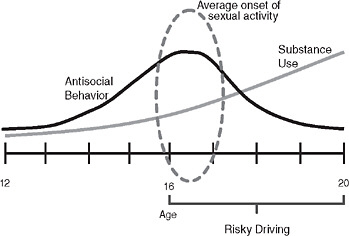
FIGURE 6-1 Developmental pattern of problem behavior across adolescence.
SOURCE: Hawkins and Monahan, 2009.
follow a developmental trajectory, for example when minor delinquency is followed by alcohol and cigarette use, which, in turn, is followed by marijuana use and serious delinquency and, ultimately, the use of other illicit drugs (Elliott, 1994).
Another link among problem behaviors is that an array of bot risk and protective factors influence many mental, emotional, and behavioral problems. Table 6-1 shows links between a number of risk factors and behaviors.
At the same time, individual characteristics, such as high intelligence, self-confidence, and social and other competencies, offer protection. Other
TABLE 6-1 Risk Factors for Adolescent Problem Behaviors
|
Risk Factors |
Substance Abuse |
Delinquency |
Teen Pregnancy |
School Dropout |
Violence |
Depression and Anxiety |
|
Community |
|
|
|
|
|
|
|
Availability of drugs |
|
|
|
|
|
|
|
Availability of firearms |
|
|
|
|
|
|
|
Community laws and norms favorable toward drug use, firearms, and crime |
|
|
|
|
|
|
|
Media portrayals of violence |
|
|
|
|
|
|
|
Transitions and mobility |
|
|
|
|
|
|
|
Low neighborhood attachment and community disorganization |
|
|
|
|
|
|
|
Extreme economic deprivation |
|
|
|
|
|
|
|
Family |
|
|
|
|
|
|
|
Family history of the problem behavior |
|
|
|
|
|
|

|
Risk Factors |
Substance Abuse |
Delinquency |
Teen Pregnancy |
School Dropout |
Violence |
Depression and Anxiety |
|
Family management problems |
|
|
|
|
|
|
|
Family conflict |
|
|
|
|
|
|
|
Favorable parental attitudes and involvement in the problem behavior |
|
|
|
|
|
|
|
School |
|
|
|
|
|
|
|
Academic failure beginning in late elementary school |
|
|
|
|
|
|
|
Lack of commitment to school |
|
|
|
|
|
|
|
Individual/Peer |
|
|
|
|
|
|
|
Early and persistent antisocial behavior |
|
|
|
|
|
|
|
Alienation and rebelliousness |
|
|
|
|
|
|
|
Friends who engage in the problem behavior |
|
|
|
|
|
|
|
Favorable attitude toward the problem behavior |
|
|
|
|
|
|
|
Early initiation of the problem behavior |
|
|
|
|
|
|
|
Constitutional factors |
|
|
|
|
||
|
SOURCE: Hawkins and Monahan presentation (data from Brooke-Weiss et al., 2008). |
||||||
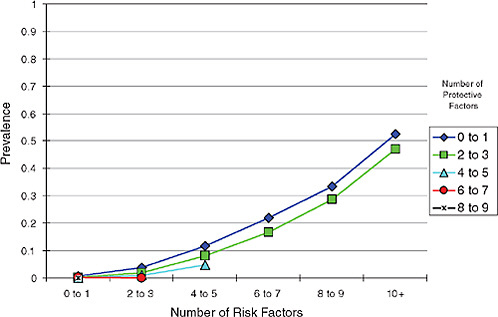
FIGURE 6-2 Developmental pattern of problem behavior across adolescence.
NOTE: Figure created by J. D. Hawkins and K. Monahan for paper presented at 2009 IOM workshop on social and environmental influences and adolescent risk behavior, Washington, DC.
SOURCE: Hawkins and Monahan, 2009. Data from Pollard et al., 1999.
protective factors include social and environmental opportunities, such as prosocial activities and influences; bonding with positive peers, adults, and institutions; and clear standards for healthy behavior. Both the risk and protective factors have been shown to have consistent effects across culture, race, and sex. However, both vary in the strength of their effect in the course of development. Peers, for example, have the greatest influence on antisocial or problem behaviors during adolescence, whereas other factors are influential earlier or later. Moreover, cumulative exposure to multiple risks intensifies their effects, and, as might be expected, in a climate of high levels of risk, protective factors seem to be less efficacious, as Figure 6-2 illustrates. Similarly, cumulative exposure to multiple resources may intensify their positive effects on healthy adolescent development (Newcomb and Felix-Ortiz, 1992; Oman et al., 2004; Ostaszewski and Zimmerman, 2006; Sameroff et al., 1998).
Hawkins and Monahan pointed out some of the primary implications of these findings:
-
Interventions should begin early—at the developmental point by which particular risk factors have been found to predict subsequent problem behaviors.
-
Interventions should focus on the risk and protective factors that have been shown to influence numerous problem behaviors.1
-
Interventions should focus on risk reduction and improved protection of the populations exposed to the greatest cumulative risk.
This picture of the correlation among risk behaviors also points to the importance of basic research on causal mechanisms. Participants highlighted the need for laboratory research, particularly continued progress in understanding brain development, and work that integrates findings from disparate fields. Integrating disparate research will also require theoretical examination of the quality of different sorts of evidence from a range of disciplines, as well as the means of connecting disparate evidence to theoretical models.
James J. Jaccard noted that meta-analyses of the correlations among adolescent problem behaviors have found that the average correlation between behaviors is typically .35. This suggests, he observed, that although some determinants are shared across problem behaviors, each also has unique determinants. This underscores the importance of intervention approaches that address both the unique determinants of the risk behavior being targeted and common determinants that operate across risk behaviors.
Common Mechanisms of Influence Underlie Certain Risk-Taking Behaviors
The workshop presenters described a number of phenomena that all adolescents share to a greater or lesser degree, including facets of brain development and biological processes, as well as social and developmental challenges, despite cultural variations. The interactions among these shared mechanisms and sources of individual variation in risk-taking are not yet fully understood, however. Moreover, because research indicates that there are unique determinants for many risk behaviors—despite covariance among them—questions about how best to target intervention resources are difficult to answer. A related issue is the consistent but not fully explained finding that, even among target populations of individuals with high levels of risk factors, only a subset typically encounters severe problems.
The evidence for common mechanisms poses a challenge for the design of interventions because it is very difficult to integrate very disparate kinds of thinking (e.g., about brain function, psychosocial processes, and community influences) into a single program. Yet, as one discussant observed, if one area is overlooked, the intervention may misfire for surprising reasons. Public service announcements that present a message grounded in sound research on the causes of a particular behavior, for example, may be ineffective because they trigger the wrong sort of reasoning or target the wrong age group.
Thus, in addition to the kinds of basic research mentioned above, participants cited the importance of further investigating the determinants of risk behaviors and how they might be altered. Similarly, work is needed to better translate improved understanding of biological processes into understanding of behavior.
A Range of Preventive Interventions Can Reduce Harm
Adolescence is a time of heightened risk-taking because of biological and other factors, so a key goal for this period is to reduce the harm of risk-taking. Many interventions have already proved to be relatively effective, although the magnitude of the effect can be improved. Discussant Laurie Chassin highlighted the fact that many of the presentations provided evidence that interventions can do that, in a cost-effective manner, across multiple outcomes. Although there can be a tension between a focus on universal, policy-based intervention and the goal of targeting particular risk factors and high-risk populations, she pointed out that these are not mutually exclusive or competing approaches intellectually, scientifically, or theoretically. They are simply approaches to different elements of the interactive systems that encourage or deter risk-taking. Indeed, she said, it is very important to address both community-level factors and individual factors because both are clearly very influential. The approaches are of several kinds, as discussed below.
Public Policy Approaches
Harold D. Holder was asked to discuss the public policy interventions that have proved to be effective at reducing harm. He identified the 1975 federal policy of linking state aid to minimum age requirements for drinking and the purchase of alcohol as the most significant public health policy of the last 40 years, noting that the National Highway and Transportation Safety Agency estimates that more than 25,000 deaths have been prevented since it was enacted (NHTSA, 2008). For him, this suggests that broad-based public policies, particularly those aimed at communities and
neighborhoods, which are designed to restrict access to a risk (another example would be an increased tax on beer) are particularly cost-effective and beneficial interventions. In part because they generally do not require annual funding for staff and program maintenance, they offer the possibility of long-term effects for less cost than other sorts of programs.
In general, he observed, adolescents’ problem behaviors are not simply the actions of troubled or high-risk individuals, but the product of complex social, cultural, and economic factors in a community. Thus, interventions designed primarily to educate individuals have not proven, on their own, to be as effective as other approaches. Such programs raise awareness and public support and may reinforce other strategies, but they are unlikely to be effective alone. Furthermore, the identification of risk factors is not enough to support the development of an effective intervention. Some risk factors, such as gender, ethnicity, or family income, cannot be altered by a program. Effective public health prevention or public policy, then, is not usually based on individual risk factors alone, but on an assessment of the overall system in which harm occurs.
As discussed earlier, public health interventions may be universal (community-wide), indicated (targeting high-risk groups), or targeted (for those with identified problems). The research literature is filled with solid evidence for the effectiveness of population-level or universal strategies, including a minimum age for drinking and tobacco purchase, increased retail prices for tobacco and alcohol, graduated driving license and zero-tolerance policies for driving infractions, and limitations on the density and location of alcohol and tobacco outlets and their hours and days of operation. Some evidence has supported the benefits of a number of policies in the indicated category, such as reducing handgun availability, reducing the social availability of tobacco and alcohol, placing restrictions on public drinking and smoking, and reducing the retail and social availability of illicit drugs—but further replication is needed. Other strategies, in the targeted category, have shown promise but have not been adequately examined, including housing vouchers to stimulate geographic upward mobility, access to condoms and sexual counseling, alcohol detection for auto ignition, and the use of genetics to identify a risk for alcohol or drug dependence. Current approaches based on threats or punishments, such as drug busts, have not proven to be effective at substantially reducing use of alcohol or tobacco.
In Holder’s view, the state of the evidence suggests that population-level strategies have the greatest potential to prevent a wide range of problems, but he cautioned that they should be supplemented with targeted approaches for the subgroup of the population with multiple, and more serious, problems.
Influencing Sexual Behavior
Douglas Kirby discussed research on ways of influencing adolescents’ sexual behavior. He reviewed results from a wide range of studies of risk and protective factors for sexual activity, as well as the outcomes for a number of interventions designed to decrease unintended pregnancies and sexually transmitted diseases (STDs). He reported that there is little evidence of positive effects for abstinence-only programs, and some are not effective. He noted that HIV education programs do not seem to increase sexual activity and some may delay first intercourse, reduce the number of sexual partners, or increase condom or contraception use. Some may accomplish all three of those goals, and, overall, they can reduce sexual risk by roughly one-third. These programs tend to be effective across gender and racial/ethnic groups and to be particularly effective with disadvantaged youth. A number of characteristics are important to their success, such as promoting overall knowledge about sexual issues, pregnancy, STDs, and HIV and encouraging communication with parents about sex, condoms, or contraception. A number of other features clearly did not work, such as not talking about sex directly, not giving a clear message about behavior, and focusing primarily on knowledge.
From this picture, participants and discussants indicated that research support is still needed for practical and policy decisions. For example, the discussion highlighted the importance of analyzing the degree of evidence needed to support policy decisions and benefit-cost analyses, including investigation of the comparative scope and costs of targeted versus universal interventions. Universal, indicated, and targeted interventions appear to have important roles to play, but their effects would be likely to be magnified if they were integrated to support one another, participants suggested. Translational research that can support the adaptation of promising ideas on larger scales and in different contexts and to be sustained over time will be an important way of refining understanding of the effects of different sorts of approaches.
The Environmental Context Is Very Important
The presentations demonstrated that family, peers, schools, communities, and the larger culture—specifically media—all influence adolescents in important ways. In general, it seems that the more specifically the context is defined, the more clearly the influences can be seen, in part because of the influences of individual factors. Thus, three different members of a deviant peer group in similarly disadvantaged circumstances may have three different reactions to the possibility of taking a particular risk. Discussants suggested that if interventions were more clearly mapped in
terms of precisely which activities were designed to promote which skills or development (e.g., literacy skills, attention, social and emotional skills), it would be easier to evaluate their results.
Among the issues that merit further investigation is the role of gender, including how the effects of puberty and social context may differ for boys and girls. Participants also saw high value in continuing to investigate issues related to contemporary media culture, including new media and technological changes and the implications of these media on interventions, as well as the ways adolescents use media to shape their own lives. Participants saw an urgent need to anticipate future technological developments and how they will affect adolescents, as well as means of communicating with them. Discussants also noted a need to reconsider current theoretical models of many aspects of adolescent behavior in light of the influences of new media.
There Is Support for Intervening Early in Adolescence or Even Before
Although adolescence is a distinct phase of life, in which young people are subject to many pressures and challenges both internal and external that they had not previously experienced, many of the factors that predispose them to problem behaviors are evident much earlier. Moreover, research findings suggest that it is easier to mitigate risks with younger children and that the effects can be lasting. Middle school appears to be a prime target for interventions, although the timing of hormonal and pubertal changes suggests that interventions related to sexuality may need to begin even earlier. Several speakers suggested that the optimal timing depends in part on the risk being targeted and the nature of the intervention. An intervention based on modifying teacher behavior and improving bonding with school, for example, might work better if it begins early and lasts longer. Interventions that specifically target driving or other behaviors that rarely affect younger adolescents may work better if they are applied closer to the initiation point.
Nevertheless, participants highlighted the importance of further work to understand the nature of, influences on, and prevention of risk-taking at different stages of development, particularly stages in the adolescent decade.
Protective Factors Are Also Important
Several discussants noted that adolescence is not a disease and that an important aspect of risk prevention is the building of scaffolding that can support young people as they navigate challenges in the home, the
school, and the community. The sensation-seeking and exploration that are typical of adolescents may lead them into risk, but they are also the source of many positive choices and behaviors. A variety of evidence seems to support the proposition that it is possible to alter parents’ behavior and that doing so affects outcomes for adolescents. Nevertheless, this is another area in which research is needed to support the development of effective interventions.
CONCLUDING THOUGHTS
The three workshops were designed to bring together a wide range of research and perspectives to understand the complexities and multiple influences of adolescent development. Sorting through this information clearly indicates that researchers have made very significant progress in identifying the factors that influence adolescent risk-taking, and it also highlights the powerful potential of pursuing the clearly apparent links among different sorts of influences. The indications of reciprocal dynamics among brain development, pubertal changes, psychological traits and development, and contextual factors are compelling. Researchers and others concerned with adolescent risk-taking and with promoting healthy development have reached a point of great potential. The integration across disciplines that is beginning can support clear decisions about how best to invest the funds available for prevention and health promotion intervention. At no time in the history of the study of adolescence and risk-taking has there been a better opportunity for scientists to collaborate across disciplines to uncover the causes of risk-taking as well as to develop innovative interventions. As noted in the discussions, each field has an array of facts to contribute to the understanding of the causes of risk-taking, but disciplines rarely integrate their knowledge to produce innovative new theoretical perspectives and preventive interventions. Emerging research holds significant promise for supporting the design, implementation, and evaluation of programs for adolescents—and further integration promises to amplify the value of work in each field.
In reviewing the presentations and discussions, the committee identified several themes that can organize thinking about the complex determinants of adolescent problem behavior as identified in the workshops. Specifically, three levels of explanatory constructs were consistently evoked across presentations. First, there were the immediate or proximal determinants of particular risk behaviors that are directly tied to the content of the behavior. For example, for sexual behavior, such variables included adolescents’ beliefs about the advantages and disadvantages of engaging in sexual intercourse, perceived norms about having sex, and attitudes toward having sex. Numerous theories addressing behavior-specific
determinants of risk behavior were identified across the workshops (e.g., Fishbein and Ajzen’s theory of planned behavior, Bandura’s social learning theory, the health belief model).
A second level of explanatory variables, mid-level determinants, are more general constructs that do not refer to a given risk behavior, but, as the workshop participants stressed, have been found to affect a host of risk behaviors. These include such variables as depression, sensation-seeking, impulsivity, goals, aptitudes, altruism, intelligence, and school performance, to name a few.
The third level of explanatory variables includes contextual and distal (e.g., demographic) determinants, such as the contexts of school, work, neighborhoods, religion, family, ethnicity, the media, and government policies. Although there is a tendency to view these classes of determinants as ranging from proximal to distal, the workshops clearly showed that they interact with one another in complex ways to shape adolescent behavior. Biological variables (e.g., brain development and other biological processes) have a unique role in this scheme in that, ultimately, almost all of them affect adolescent behavior. At the same time, the biological changes that adolescents experience (e.g., as a result of maturation) shape the kinds of beliefs and attitudes they hold, their goals and personalities, and how they navigate and select the contexts in which they interact. The workshops highlighted the complex ways in which these different levels of determinants and variables influence adolescent problem behaviors.
Another important theme that emerged from the workshops is that it is not enough to identify the determinants of adolescent behavior. Once these determinants are known, it is important to develop effective intervention strategies to either change the determinants or minimize or accentuate their influence. The vast majority of research discussed in the workshops focused on identifying the determinants of adolescent behavior, with much less attention to the extant scientific knowledge base for changing them. This reflects the state of the field more generally. The workshops did address relatively effective interventions that have reduced adolescent problem behaviors, as well as the determinants on which those interventions were based. However, much less attention was given to the scientific principles on which the designers of these interventions based their designs—the structures they believed would bring about change in the targeted determinants (mediators) of adolescent behavior. The presentations by Kirby, on the core ingredients of effective programs, and by Blair Johnson, on principles of persuasion that can be used in effective message design, are examples of applying the underlying science to program design.
In conclusion, the science of adolescence continues to progress in identifying the determinants of adolescent behavior; in mapping the complex
interplay between those determinants; and in clarifying the emergence and changes of these determinants through childhood, adolescence, and early adulthood. The field has made progress in integrating knowledge about the role of biology in all of these processes and in identifying core scientific principles on which to base the design of developmentally appropriate interventions for changing these determinants. Thus, it plays an important role in improving the lives of individual adolescents and their families, even as it continues to wrestle with challenging questions.


