
2
Role of Government Agencies in Conformity Assessment
|
1852 |
Congress passed a law requiring all commercial steamboats to carry a personal flotation device for every passenger on board and to set up a Board of Supervising Inspectors (Steamboat Act of 1852) |
|
1906 |
Meat Inspection Act U.S. Department of Agriculture became responsible for domestic meat inspection |
|
1910 |
Bureau of Mines was established; developed a program of respirator research, performance testing, and analysis (Public Law 61-179) |
|
1938 |
Federal Food, Drug, and Cosmetic Act (Public Law 75-717) Act required new drugs to be shown safe before marketing—starting a new system of drug regulation |
Many U.S. government agencies have been and continue to be active in ensuring the consistency and safety of products and services through a wide range of activities. This chapter explores the range of possible roles for federal agencies, provides examples of how these roles are implemented both for personal protective technologies (PPT) and for other consumer and industrial products, and highlights the committee’s thoughts on the strengths and limitations of these roles as specifically related to improving non-respirator PPT for worker safety and health.
For many products there is no federal role, or only a limited role, in conformity assessment. Many products go directly into the marketplace, where consumer preferences, pricing, product recalls, market compliance
surveys, and other market forces (e.g., liability, manufacturer reputation) help sort out the effective or consumer-preferred products. Products may be designed to meet specific voluntary consensus standards, but with limited or no testing to see if the product meets the standard. Other products may have little or no production testing or inspection to ensure that they continue to meet their design parameters. Products that have extensive conformity assessment processes often are those whose failure could significantly impact health or safety.
In keeping with the study task, this report focuses on the role of agencies at the federal level. However, it is important to note that state and local government agencies also often play a critical role in standards development and conformity assessment. For example, water quality testing is largely under state and local jurisdiction (Breitenburg, 1997b; EPA, 2010).
This chapter discusses each of the following conformity assessment functions (Figure 2-1) and potential roles for government agencies with the committee’s appraisal of the strengths and challenges of those roles as it relates to conformity assessment efforts for non-respirator PPT:
-
Standards development, a precursor to conformity assessment;
-
Product testing;
-
Accreditation of laboratories and certifying organizations;
-
Declaration of conformity and product certification;
-
Communication;
-
Incentives and enforcement;
-
Surveillance and post-marketing testing and evaluation; and
-
Other roles, including conducting research to inform standards and develop test methods, convening of stakeholders, and training.
STANDARDS DEVELOPMENT
The antecedent to a strong conformity assessment process is having rigorous standards in place. Once standards are available that set the criteria for product performance, testing, and test methods, then a conformity assessment process can be developed to assess the product’s ability to meet those criteria. Where possible, standards specify performance criteria rather than design criteria to allow for greater flexibility in developing
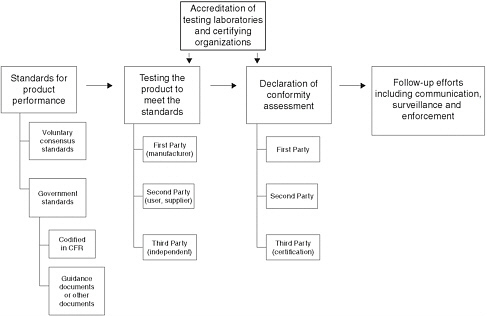
FIGURE 2-1 Overview of conformity assessment options.
NOTE: CFR = Code of Federal Regulations.
innovative products. In addition to setting the specifications for minimum requirements for acceptable products, standards also can provide a basis for comparing products, as well as outlining preferred approaches for selection, use, care, and maintenance. Testing methods are either referenced or included in the standards along with pass–fail criteria so that conformance can be assessed consistently among testing entities and determinations can be made regarding the product’s ability to meet the required specifications. Standards development organizations and government agencies are the two sources for PPT product standards.
Voluntary Consensus Standards
Voluntary consensus standards for the manufacturing, performance, and testing of products are developed by national and international standards development organizations. These organizations work through expert committees consisting of representatives from government agencies, manufacturers, employers, academia, and end users. In the United States,
standards for PPT are developed by ASTM International (formerly American Society for Testing and Materials), the Association for the Advancement of Medical Instrumentation, and the National Fire Protection Association (NFPA), as well as by many organizations under the auspices of the American National Standards Institute (ANSI), which sets the requirements for consensus and balance, oversees the standards development process, and approves standards that bear the ANSI name.1 Among the organizations developing ANSI standards for PPT are the American Industrial Hygiene Association, American Society of Safety Engineers, American Welding Society, and the International Safety Equipment Association. In Canada, PPT standards are developed by the Canadian Standards Association (CSA), which is also a third-party certification body. European standards for PPT are set by the European Committee for Standardization (CEN). For some types of PPT, efforts are underway to develop international standards through the International Organization for Standardization (ISO).
Each standards development organization has its own set of rules (e.g., frequency of updating standards, membership requirements), with a number of the standards organizations receiving ANSI accreditation. Some organizations develop test specifications while others develop standards that include a set of requirements for conformity assessment (e.g., NFPA’s PPT standards specify a requirement for third-party certification; see Chapter 3).
Voluntary consensus standards can be used as the basis for government conformity assessment programs, such as the Food and Drug Administration’s (FDA’s) use of ASTM and other voluntary consensus standards for medical devices. Additionally, voluntary consensus standards may be specified in government regulations, such as Occupational Safety and Health Administration (OSHA) requirements for protective helmets to meet ANSI Z89.1 standards (29 CFR §1910.135). Government agency staff members often participate in the development of voluntary consensus standards, and in some cases take leadership roles in moving these standards through the consensus process. National Personal Protective Technology Laboratory (NPPTL) staff members actively participate in voluntary standards development by serving on a number of standards committees for ASTM, ANSI, ISO, and NFPA (Box 2-1).
|
BOX 2-1 Examples of NPPTL Participation in Voluntary Standards and Guidelines Development AIHA committees on respiratory protection and protective clothing and equipment ANSI committee on eye and face protection ANSI Z88 committees on respiratory protection ASTM E54 committees on homeland security applications ASTM E56 committee on nanotechnology ASTM F23 committees on personal protective clothing and equipment IAB committees on equipment standardization for homeland security ISO committees on respiratory protection, human factors, and eye and face protection NFPA technical committees on fire-protective clothing, respiratory protection, and safety equipment NIJ Special Technical Committee on law enforcement CBRN protective ensembles NOTES: AIHA = American Industrial Hygiene Association; ANSI = American National Standards Institute; ASTM = ASTM International (formerly the American Society for Testing and Materials); IAB = InterAgency Board for Equipment Standardization and Interoperability; ISO = International Organization for Standardization; NFPA = National Fire Protection Association; NIJ = National Institute of Justice. |
In general, the voluntary standards organization has no vested interest or specific role to play in the testing of PPT. Some certified products will have the name of the standards organization on its label (e.g., NFPA), while others will use the certifying organization’s or accredited testing laboratory’s mark on their product label (e.g., the “UL” mark from Underwriters Laboratories).
Government Standards
For some products, state or federal government agencies have the responsibility for developing and revising design, performance, and testing standards. These are often the result of long-standing legislatively mandated commitments (e.g., personal flotation devices regulations, respirator regulations, hearing protection ratings) or are in areas where federal agencies have specific responsibilities often not filled by other organizations.
As will be discussed in Chapter 3, testing and certification requirements for respirators are detailed in the Code of Federal Regulations (CFR) in 42 CFR Part 84. The National Institute for Occupational Safety and Health’s (NIOSH’s) NPPTL is responsible for drafting and submitting changes to the regulations through the federal rulemaking processes. Respirator regulations are often specific for each class of respirators (e.g., air-purifying, self-contained breathing apparatus). NIOSH has adopted a modular approach to updating the respirator regulations and is involved in various stages of the rulemaking process on changes to specific sections. Other standards developed by government agencies include the military specifications and military standards developed and used by the U.S. Department of Defense (DoD); DoD continues to move toward increased use of voluntary consensus standards and commercial specifications where available (GAO, 1994).
Government’s involvement in conformity assessment often involves a combination of federal requirements and voluntary consensus standards. Environmental Protection Agency (EPA) regulations require that hearing protective devices be tested according to an ANSI standard, while the requirements regarding noise reduction ratings for hearing protective devices are detailed in federal regulations found in 40 CFR Part 211. The FDA’s process for approving medical devices incorporates voluntary consensus standards into FDA guidance documents. Similarly, the National Institute of Justice (NIJ) standards for ballistic-resistant body armor are detailed in NIJ standards documents.
Committee Comments
One of the challenges of using codified government standards or regulations is the amount of time and effort required to propose and implement changes. Changes to the CFR go through multiple cycles of comment, revision, and changes. The slow process can stifle innovation. Barriers to frequent revisions may also have an impact on available resources. For example, the CFR schedule that details financial fees charged to manufacturers for respirator testing has not changed since 1972 and is inadequate for meeting current costs of respirator testing and certification (IOM and NRC, 2008). Other parts of the NIOSH budget are therefore being used to address those costs.
Innovative technologies and products that are developed to mitigate new hazards or the same hazard in a different environment are often the
genesis of new voluntary consensus standards, which can provide performance criteria in a timely manner. For non-respirator PPT standards, development of voluntary consensus standards is the preferred avenue. Although these standards can also take time to develop and revise (e.g., NFPA standards are normally on a 5-year rotating revision plan), new standards can be added or revisions made to adapt to innovations in the marketplace. The National Technology Transfer and Advancement Act (Public Law 104-113) encourages federal government agencies to be involved in relevant voluntary consensus standards development. NPPTL is active in this area, and efforts to continue this involvement are encouraged.
The committee emphasizes the need for standards to be performance-based, to the extent possible, to allow for greater innovation than design-based requirements. Pass–fail criteria and detailed test methods are keys to ensuring consistent testing and reporting. Increased attention is being paid to issues of integrating the various types of PPT into wearable and effective PPT ensembles, as will be further discussed in Chapter 4.
The development of valid standards that have relevant application to PPT use in the workplace requires input from a wide range of stakeholders. Often voluntary standards organizations have difficulty achieving proper balance in their standards committees as parties other than manufacturers, particularly end users, may have financial constraints that do not allow them to attend meetings. ANSI accreditation of standards development organizations includes the requirement for balanced committees and stipulates that it is incumbent upon the standards development organizations to maintain this balance. Innovative methods need to be used that allow other groups such as end users to participate in standards development in order to achieve meaningful results. The committee is optimistic that, with new communication tools (e.g., remote/virtual meetings), voluntary standards will achieve such balance. Where NPPTL or other government agencies choose to directly participate in voluntary standards committees, committee balance and underrepresentation of key interest groups needs careful consideration.
PRODUCT TESTING
Testing to meet product standards is conducted either in-house, by the manufacturer or purchaser, or by an independent third-party laboratory, each of which may be an accredited laboratory. Some certifying or-
ganizations (e.g., UL) have accredited in-house testing facilities and others (e.g., Safety Equipment Institute [SEI]) use outside accredited third-party laboratories. Valid product testing follows specific testing methodologies outlined in the standards or in other approved documents. Independent testing laboratories can be private, public, nonprofit, or for-profit.
First-party testing is conducted by the product manufacturer. Many manufacturing companies have extensive testing facilities and test their own products and those of their competitors. In many cases, when product testing is performed through a first-party laboratory paradigm, it is done in situations where low risk is associated with noncompliance. If users are dissatisfied with the product, they can purchase another product or brand in the marketplace. Generally, the government is not involved in this type of testing or assessment. For example, a consumer product, such as cell phone batteries, may undergo internal testing only, or the manufacturer may decide to get input from an independent third-party testing and certification process to determine if the batteries conform to Institute of Electrical and Electronics Engineers (IEEE) standards (UL, 2010). The batteries pose low hazardous risk to the consumers and, if dissatisfied with the product, consumers can purchase other brands.
Second-party testing is conducted by the retailer or the purchaser. Although not as common as first- or third-party testing, some retailers put considerable resources into verifying that the product meets the requirements (e.g., lead levels in children’s toys) through second-party testing.
Third-party testing is conducted by an independent laboratory or certifying organization. In many cases third-party testing is done by private-sector laboratories, although this work is also conducted by government laboratories. For example, UL and SEI conduct or oversee third-party testing and offer voluntary third-party certification programs for protective helmets and eyewear (testing to meet ANSI and ASTM standards). For body armor, private-sector laboratories are approved by the National Law Enforcement and Corrections Technology Center to conduct testing. Government laboratory testing includes respirator testing at NPPTL.
For some non-PPT products and marketable goods, federal and state government agencies are also involved in inspections that involve assessments of product characteristics that do not need laboratory testing or are not easily tested in the lab (Gillerman, 2004). Federal responsibilities can involve both laboratory testing and onsite inspections. For example, federal and state meat inspection procedures involve on-site inspections
of slaughtering or processing facilities and live animal and carcass inspections as well as laboratory tests of tissue samples (USDA, 2008).
Committee Comments
Independent testing by accredited third-party laboratories and certifying organizations provides greater and more transparent assurance that the product meets the required criteria; this is especially important for PPT used to reduce moderate to high risk of worker injury or illness. One major reason for government agencies to do the testing is to provide an independent assessment of the product. However, for most products this role can also be filled by accredited third-party private-sector laboratories and certifying organizations. Issues such as fees for product testing are more easily handled and updated in private-sector organizations.
NPPTL devotes a significant portion of its resources to do rigorous testing and the associated conformity assessment efforts for respirators. As noted above, challenges in this process include updating the manufacturer fee schedules because the schedules are part of federal regulations. From the committee’s perspective, NPPTL can use its extensive expertise in PPT to effectively provide input on product testing processes including research on test methods.
ACCREDITATION OF LABORATORIES AND CERTIFYING ORGANIZATIONS
Accreditation organizations verify whether the testing laboratory or certifying organization is equipped and capable of performing the required test methods and evaluations and whether it meets other operational requirements that include independence, staff qualifications, strong quality assurance programs, and acceptable recordkeeping requirements (Breitenberg, 1991; Gillerman, 2004). International standards for accreditation are detailed in ISO standards, e.g., ISO 17025:2005 and ISO Guide 65 (ISO/IEC, 1996, 2005). In addition to laboratory accreditation, which is done by federal, state, local, and private-sector programs, there are also organizations that accredit the accrediting bodies and ensure a further level of adherence to quality testing and certification processes. NFPA standards require that the certifying organizations and the accrediting bodies be accredited to meet ISO standards, but do not specify
which organization is used to conduct the accreditations. NFPA standards state that the certifying organization shall be “accredited for personal protective equipment in accordance with ISO Guide 65, General Requirements for Bodies Operating Certification Systems. The accreditation shall be issued by an accreditation body operating in accordance with ISO 17011, General Requirements for Accreditation Bodies Accrediting Conformity Assessment Bodies” (NFPA 1994). In the private sector there are accreditation bodies, such as ANSI and the American Association for Laboratory Accreditation (A2LA), that accredit testing laboratories and certification bodies to ISO 17025 and ISO 65.
Several laboratory accreditation programs are operated by federal agencies (Breitenberg, 1991). OSHA’s Nationally Recognized Testing Laboratories (NRTL) program accredits third-party, private-sector laboratories that test (and often certify) electrical equipment and other workplace materials (OSHA, 2010b). Under this voluntary program, each NRTL-accredited laboratory must be reviewed at least once every 5 years. The NRTL program specifies the product standards used in testing and requires that the laboratories be independent of the product’s manufacturer, supplier, and vendor. Laboratories accredited in the NRTL program are required to perform inspections of factory production runs and conduct field inspections to ensure that the certifier’s identifying mark or label is present on the product. The NRTL program is available for laboratories in the United States as well as internationally if that foreign country accepts U.S. certification.
The National Institute of Standards and Technology (NIST) conducts the National Voluntary Laboratory Accreditation Program (NVLAP). This program accredits laboratories to conduct one or more of a wide range of testing or calibration protocols. Accreditation programs under NVLAP include those for chemical calibration, information technology security testing, personal body armor, energy-efficient light products, thermal insulation materials, and a wide variety of commercial products (NIST, 2010). The NVLAP accreditation program is available for participation by commercial laboratories, manufacturer’s in-house laboratories, university laboratories, and government laboratories. Each laboratory must renew its accreditation annually.
In addition to federal programs, there are a number of private-sector for-profit and not-for-profit laboratory accreditation programs. The Consumer Product Safety Commission (CPSC), for example, mandates that third-party testing laboratories must be accredited by an International Laboratory Accreditation Cooperation–Mutual Recognition Arrangement
signatory accrediting body and the accreditation must be registered with and accepted by the CPSC (CPSC, 2010a).
Committee Comments
The committee identified a number of organizations that accredit laboratories and certifying organizations to test and certify non-respirator PPT. For future new conformity assessment processes for these products, the committee believes the primary stipulation could be that accrediting laboratories and certifying organizations meet ANSI/ISO standards for quality assurance.
DECLARATION OF CONFORMITY AND CERTIFICATION
Who declares or attests that the product meets the requirements and standards? What data are used to attest to the conformity? These questions have many varied answers. Certain products pose little risk to the end user, and in those cases the consumer and the marketplace sort out the high-quality products from those of low quality. For some products it is easy for the consumer to determine if the product works consistently over time, but for other products the only way to know if a product will be effective is to test it. Consumers need verification that tests have been conducted, and that the product has met the expected criteria. The attestation or declaration of conformity can be done by the manufacturer (first party), by the purchaser (second party), or by an independent third party.
First-Party Declaration of Conformity
For many products sold in the United States, the manufacturer declares that the product conforms to relevant requirements and meets the industry standards. This declaration is based in some cases on data generated in the manufacturer’s laboratory and in other cases on data generated by a third-party testing laboratory. For example, manufacturers of hearing protective devices attest to the noise reduction level. Although a manufacturer’s declaration is often termed self-certification, as noted below, the term certification is more narrowly defined.
Second-Party Declaration of Conformity
Purchasers become involved in conformity assessment, particularly when they serve as a link between the manufacturer and the general public or end-user consumer. Wholesalers or retailers may verify that a product meets standards before putting the merchandise on store shelves. Second-party declarations may also be made by manufacturers who verify and attest that the component parts from other manufacturers meet the requisite standards and can thus enter the assembly process.
Third-Party Declaration of Conformity
Although the term certification is often used interchangeably and colloquially to encompass all forms of conformity assessment, the term has a much more specific definition that requires independent third-party involvement. ISO defines certification as “third-party attestation related to product, processes, systems, or persons,” with attestation defined as the “issue of a statement, based on a decision following review that fulfillment of specified requirements has been demonstrated” (ISO/IEC, 2004). Certification encompasses both a verification of testing data and follow-up product and manufacturing audits. Third-party attestation of conformity provides the verification by an organization that is not the seller or buyer and thus offers a more independent appraisal. Third-party declaration is based in some cases on testing or inspection data from the manufacturer, and in other cases on data generated by a third-party testing laboratory.
Examples of the range of approaches include the FDA’s drug approval process, which provides an assessment by FDA reviewers of data supplied by the pharmaceutical or medical device manufacturers or related entities (see Chapter 3). The NIOSH respirator certification process conducted by NPPTL follows a different model in which the testing is done by the government laboratory charged with verifying that the products meet the requisite standards. In both processes there are post-marketing testing and evaluation components, including product audits and manufacturing site audits. Requirements and timelines for recertification vary.
Committee Comments
The committee believes each conformity declaration approach has value. Each serves a purpose, depending on the type of product and the nature of the marketplace. Given that most PPT products are designed specifically to prevent worker illness, injury, or death, third-party certification (declaration of conformity) would be the preferred approach. Independent verification and attestation that the product meets the requisite standards gives increased assurance to the worker of product effectiveness. Currently, many approaches to conformity assessment for non-respirator PPT require only first-party declaration of conformity. For example, OSHA regulations for protective helmets used in the workplace require that the products meet a specific standard, but third-party certification is not required. Voluntary third-party certification is available from several private-sector testing and certifying organizations. For example, SEI and UL offer certification programs for protective helmets and fall protection harnesses. Manufacturers can have their products certified and thus meet employer and worker demands for certified fall prevention equipment. Further efforts are needed to explore whether third-party certification should be federally mandated for some non-respirator PPT products or what incentives could be put in place to encourage third-party testing and certification.
COMMUNICATION: CERTIFICATION MARKS AND LABELS
Because the entire conformity assessment process is focused on getting safe and effective products to the end users and consumers, informed purchasing decisions need to be made—and communication is critical. Purchasers need to know what products have been deemed to meet the relevant standards and what products have not. Communicating conformity assessment generally takes the form of either a certification mark or the inclusion of the product on a list of certified or approved products. Additionally, certificates of conformity are used to indicate that all essential characteristics of the product have been assessed and have met certain standards. The owner of the certification mark is responsible for the certification, including determining the requirements for certification. Certification marks are often, but not always, registered marks with the U.S. Patent and Trademark Office (Breitenberg, 1997a; USPTO, 2010).
Many private-sector organizations have a specific logo or mark; for example, the Woolmark issued by Australian Wool Innovation Limited attests to wool quality and performance criteria (AWI, 2010). Private-sector PPT-related certification marks include the UL, SEI, and CSA designations.
According to the U.S. Patent and Trademark Office, three types of certification marks are used: (1) those that certify goods or services originate from a certain region (e.g., Florida orange juice); (2) those that certify goods or services that meet certain quality, material, safety, or manufacturing standards; and (3) those that certify the maker of the product or service (e.g., work or labor performed by a member of a union) (USPTO, 2010). The certification mark does not need specific wording—in fact, a design can be used. The accompanying proof of conformity, however, should indicate: “the identity of the certification body (and any other testing body if applicable) and any relationship that the body(s) may have to the manufacturer; the lot, batch, or other production information to allow traceability to the production source and time of production; the date when the certificate was issued; and the officer of the company responsible for its issuance” (Breitenberg, 1997a). In addition, the supplier, type or model number, and all important safety and maintenance instructions should be included.
Government agencies can issue certification marks; for example, the Federal Communications Commission uses a mark for computers and other electronics (FCC, 2010). Detailed certification labels are used by NIJ and NIOSH to denote certified products. These agencies also use online lists of certified products as another way to communicate which products have met testing criteria. The NIOSH Certified Equipment List provides details on certified respirators, including the related components (NIOSH, 2010d); NIJ’s Body Armor Compliant Products List also provides product information (NIJ, 2010). The InterAgency Board for Equipment Standardization and Interoperability (IAB)2 provides a Standardized Equipment List through the Responder Knowledge Base on its website as a guideline for local, state, and federal responder units involved in preparing for and responding to hazardous events (IAB, 2010). Private-sector third-party certifying organizations, such as SEI, UL, and CSA, also maintain online certified product lists. Public listing is re-
quired as part of meeting the ISO requirements to receive accreditation as a certifying entity.
A major challenge in conformity assessment is enforcing the certification mark and identifying and policing fraudulent use. NIOSH has had several occasions in recent years in which respirators with labels that indicated NIOSH certification were determined not to be NIOSH-certified products. In those cases, NIOSH has contacted the manufacturers of mislabeled products and requested that the product be relabeled or recalled. NPPTL staff have also sent out user notices and posted the information identifying the fraudulent respirators on the NIOSH website (NIOSH, 2010c). Manufacturers of certified products are often vigilant in identifying non-certified products offered by their competitors.
Committee Comments
Communication about certified products is a valuable role for government agencies to fulfill because the agencies can provide websites or other tools that offer lists of certified products from multiple certifying organizations. No comprehensive list is currently available of non-respirator PPT products that meet the required standards or other regulations. In December 2009, NPPTL released its Respirator Trusted Source Information Page (NIOSH, 2010a). A similar effort with a central database website for other types of PPT would be a valuable resource. An information source would be especially important for small and large employers that may not be affiliated with a consolidated purchasing arrangement, for self-employed individuals, and for low-wage temporary workers so they can make informed decisions about quality PPT. Manufacturers also have responsibilities to provide product use instructions that can be readily understood.
INCENTIVES AND ENFORCEMENT
Investing in and adhering to conformity assessment processes can be driven by positive incentives or by legal mandates or penalties. Worker, union, and employer demand for certified products is one of the positive driving forces for fire protection PPT. Local fire departments often stipulate that contracts be awarded for PPT products that meet NFPA standards as evidenced by third-party testing and certification. Similarly,
financial incentives can include stipulations in federal contracts that only certified products can be purchased using federal grant funds (see Chapter 4). This is demonstrated by the success of the Bulletproof Vest Partnership Program with the Department of Justice (DOJ, 2010). Since 1999, more than 13,000 jurisdictions have participated in the Bulletproof Vest Partnership Program, which provides matching funds to law enforcement agencies if they purchase body armor from the NIJ Compliant Product List (NIJ, 2010). The Department of Homeland Security (DHS) also requires that all emergency response equipment purchased with grant funds must be on the IAB’s Authorized Equipment List.
Some government agencies have the jurisdiction to issue regulatory requirements, issue stop use alerts, or impose penalties for the use of noncompliant products. For example, OSHA requires workplaces to use NIOSH-certified respirators and U.S. Coast Guard-approved personal flotation devices, and can issue citations and penalties for noncompliance. Both the CPSC and the EPA have the authority to impose fines for noncompliance with safety standards.
Committee Comments
NIOSH does not have regulatory authority for nonrespirator PPT and cannot require or enforce requirements for conformity assessment processes. Current OSHA regulations specify the voluntary consensus standards that should be met for various types of non-respirator PPT (see, e.g., Table 3-8), but do not specify a requirement for conformity assessment processes to ensure that those standards are being met. If deemed appropriate for other types of PPT (particularly PPT used in medium-and high-risk work environments), OSHA and the Mine Safety and Health Administration could establish regulations requiring third-party declaration of conformity (certification).
SURVEILLANCE AND POST-MARKETING TESTING AND EVALUATION
Monitoring to ensure ongoing compliance is an integral part of third-party certification and is also built into other conformity assessment systems. Pre- and post-marketing testing and evaluation efforts include the manufacturing and product audits conducted on the products and manu-
facturing sites (Gillerman, 2004). Product assessments may include testing of products selected at random from retailers or from the production line. These ongoing efforts help ensure consistency in product quality and aim to avoid selection bias, that is, having manufacturers choose a “golden sample” for analysis.
In addition, health surveillance efforts are needed to assess the impact on the health and safety of the worker. Occupational health surveillance is defined as the systematic collection and analysis of occupational injuries, illnesses, hazards, and exposures (NIOSH, 2010e).
The FDA, for example, has several communication avenues for the reporting and communication of adverse events and conducts manufacturing and import inspections. The NIOSH respirator certification program involves both site and product audits in addition to several specific follow-up programs (see Chapter 3). New initiatives for body armor are requiring further efforts in post-market testing and evaluation. As discussed in Box 2-2, the CPSC is tasked with oversight of the safety of thousands of consumer products, including PPT for the general public. To conduct surveillance and post-marketing follow-up, CPSC has several data collection systems in place that allow consumers to report problems with unsafe products directly through an online reporting system (CPSC, 2010b) and that collect data on emergency room visits in which consumer products are involved through the National Electronic Injury Surveillance System (CPSC, 2010c). These systems serve as examples of the potential for comparable efforts in occupational health surveillance and/or may be areas of collaboration in collecting worker safety information relevant to PPT.
Committee Comments
Only limited data exist on the performance of PPT in the workplace. Data are needed so that problems with PPT performance or use can be identified and resolved. The committee believes that stronger and more comprehensive efforts to collect and analyze health surveillance data are needed, particularly on PPT use in the workplace and adverse outcomes associated with the non-use of PPT, defective PPT, whether the PPT was certified or not, any issues with PPT misbranding or adulteration, and/or end-user issues with PPT.
|
BOX 2-2 CPSC Product Safety Surveillance With an annual average of 23,000 deaths and more than 32.7 million injuries associated with consumer products, the Consumer Product Safety Commission (CPSC) is responsible for regulating 15,000 consumer products to protect Americans from unreasonable risk of injury (CPSC, 2003). The CPSC is tasked with identifying hazards; developing and monitoring safety standards; compliance and enforcement; public outreach; and intergovernmental coordination (CPSC, 2009). In late 2007, toy manufacturers were required to recall millions of toys due to hazardous lead levels and unsafe toy components (Merle, 2007). The extensive toy recalls and increasing public concern surrounding toy safety led Congress to pass the Consumer Product Safety Improvement Act (Public Law 110-314) in August 2008. It included a mandate for third-party testing for certain children’s products. The wide scope of products under the purview of the CPSC has necessitated the development of a number of surveillance mechanisms, including the National Electronic Injury Surveillance System, which is in place in many hospital emergency rooms to transmit incident information regarding product-related events. Incident information can be transmitted electronically, in some cases within 24 hours after an occurrence. The CPSC also reviews mortality data in the form of approximately 8,700 death certificates annually covering unintentional product-related deaths. Consumers, manufacturers, healthcare professionals, and others can also report product problems directly through the CPSC website (CPSC, 2010b). |
NPPTL is currently exploring health surveillance opportunities relevant to PPT use. Several ongoing surveillance or data collection efforts could possibly be expanded to allow for collection of information on PPT and PPT use in the workplace, including NIOSH surveillance activities such as the Fatality Assessment and Control Evaluation (FACE) program, health hazard evaluations, and the Sentinel Event Notification System for Occupational Risk (SENSOR). Health hazard evaluations conducted by NIOSH offer another opportunity for information on PPT use. For example, in 2008 a health hazard evaluation was conducted to evaluate potential hazards associated with repackaging of reflective glass beads; safety glasses were recommended to prevent eye injury (NIOSH, 2008). NIOSH also conducts follow-up investigations, including a recent evaluation of healthcare respirators in California (NIOSH, 2010b). More information on the extent and nature of PPT use in the workplace would inform improvements in both PPT products and their use.
Workplace injury and illness reporting systems may be another potential source of information. Currently, the OSHA Injury and Illness Recordkeeping Standard (29 CFR §1904) mandates that injuries and illnesses are recorded on the OSHA 300 form, which gathers one to two lines of information on the injury. The OSHA forms are employer-based systems, which could be modified to collect data about PPT use, misuse, or failure. Additionally, the Bureau of Labor Statistics conducts an annual Survey of Occupational Injuries and Illnesses that requests information from a stratified sample of employers on injuries and illnesses listed on the OSHA 300 log. This survey could be another source for PPT information if that data were required.
OTHER GOVERNMENT ROLES
Federal agencies are active in a number of other roles that facilitate and provide the foundation for conformity assessment efforts, including research, training, and convening roles. Additionally, as mentioned above, serving as an information clearinghouse to provide a reliable source of information on PPT selection, use, care, and maintenance is a critically important role.
Research
Federal agencies often play a vital role in conducting or funding research efforts that provide the foundation for test methodologies or that illuminate the criteria needed to assess a product’s effectiveness in real-world use. In part this may be research that is not of high interest to individual manufacturers, or the market niche may be so narrow for some types of PPT that federal agencies are best suited as funders. In addition to strengthening the conformity assessment process, these types of research are vital to protecting worker safety and health and are needed for reducing liability risk for purchasers and manufacturers.
NPPTL has been active in research on test methods in a number of areas, including chemical permeation through protective clothing materials. A partnership involving NPPTL, NIST, and North Carolina State University conducted interlaboratory testing and validation of the stored-energy test method; stored-energy testing is needed to avoid skin burns when wearing firefighter turnout gear. This ASTM standard will be con-
sidered for incorporation into the next edition of NFPA 1971, Standard on Protective Ensembles for Structural Fire Fighting and Proximity Fire Fighting.
As discussed in Chapter 4, research is needed on testing methods and standards criteria for protective ensembles and the interface among multiple types of PPT (e.g., respirator, hearing protection, eye protection, protective helmet).
Convening Role
Another role for federal agencies is in convening the range of stakeholders involved in specific issues and promoting discussion among the groups. Currently, NPPTL holds an annual stakeholder meeting as well as a number of other public meetings to receive input on specific issues. Discussions with stakeholders, including end users, regarding conformity assessment for non-respirator PPT would be valuable.
Training
PPT effectiveness is highly dependent on the consistent provision of PPT by the employer and the correct use of PPT; therefore end-user education and training is critical. Consistent and performance-based training can have a large impact on the selection, use, care, and maintenance of PPT. OSHA has extensive requirements for the training of employees who use respirator protection (29 CFR §1910.134); similar efforts for non-respirator PPT training and certification of training personnel could be explored.
REFERENCES
AWI (Australian Wool Innovation Limited). 2010. Australian Wool Innovation Limited. http://www.wool.com (accessed August 10, 2010).
Breitenberg, M. A. 1991. Laboratory accreditation activities in the United States, NISTIR 91-4576. http://gsi.nist.gov/global/docs/pubs/NISTIR_4576.4576.pdf (accessed October 7, 2010).
Breitenberg, M. A. 1997a. The ABCs of the U.S. conformity assessment system. NISTIR 6014. http://ts.nist.gov/Standards/Conformity/primer.cfm (accessed September 27, 2010).
Breitenburg, M. A. 1997b. The U.S. certification system from a governmental perspective. NISTIR 6077. Gaithersburg, MD: National Institute of Standards and Technology.
CPSC (Consumer Product Safety Commission). 2003. CPSC strategic plan. http://www.cpsc.gov/cpscpub/pubs/reports/2003strategic.pdf (accessed May 14, 2010).
CPSC. 2009. CPSC 2009 annual report. http://www.cpsc.gov/cpscpub/pubs/reports/2009rpt.pdf (accessed May 17, 2010).
CPSC. 2010a. CPSC registration for third-party testing laboratories user’s guide. http://www.cpsc.gov/about/cpsia/labreguserguide.pdf (accessed September 28, 2010).
CPSC. 2010b. Report unsafe products. http://www.cpsc.gov/talk.html (accessed October 1, 2010).
CPSC. 2010c. National Electronic Injury Surveillance System. http://www.cpsc.gov/library/neiss.html (accessed October 1, 2010).
DOJ (U.S. Department of Justice). 2010. Bulletproof vest partnership. http://www.ojp.usdoj.gov/bvpbasi/ (accessed May 4, 2010).
EPA (Environmental Protection Agency). 2010. Clean Water Act enforcement. http://www.epa.gov/oecaerth/civil/cwa/index.html (accessed September 28, 2010).
FCC (Federal Communications Commission). 2010. Equipment authorization. http://www.fcc.gov/oet/ea/procedures.html#sec2 (accessed October 4, 2010).
GAO (U.S. General Accounting Office). 1994. Acquisition reform: DoD begins program to reform specifications and standards. GAO/NSIAD-95-14. Washington, DC: GAO.
Gillerman, G. 2004. Making the confidence connection. ASTM International Standardization News. December. http://www.astm.org/SNEWS/DECEMBER_2004/gillerman_dec04.html (accessed August 9, 2010).
IAB (InterAgency Board for Equipment Standardization and Interoperability). 2010. Standardized equipment list. https://iab.gov/SEL.aspx (accessed July 30, 2010).
IOM and NRC (Institute of Medicine and National Research Council). 2008. The Personal Protective Technology Program at NIOSH. Washington, DC: The National Academies Press.
ISO/IEC (International Organization for Standardization/International Electrotechnical Commission). 1996. General requirements for bodies operating product certification systems. ISO/IEC Guide 65.
ISO/IEC. 2004. Conformity assessment: Vocabulary and general principles. ISO/IEC 17000:2004.
ISO/IEC. 2005. General requirements for the competence of testing and calibration laboratories. ISO/IEC 17025.
Merle, R. 2007. Mattel recalls more Chinese-made toys. The Washington Post, August 15.
NIJ (National Institute of Justice). 2010. Models that comply with the NIJ standard-0101.06 for ballistic-resistance of body armor. http://www.justnet.org/pages/BallisticCPL.aspx (accessed May 19, 2010).
NIOSH (National Institute for Occupational Safety and Health). 2008. Evaluation of employees’ chemical exposures while blending and repackaging glass beads for road markings. HETA 2008-0017-3095. http://www.cdc.gov/niosh/hhe/reports/pdfs/2008-0017-3095.pdf (accessed August 9, 2010).
NIOSH. 2010a. Respirator trusted-source information page. http://www.cdc.gov/niosh/npptl/topics/respirators/disp_part/RespSource.html (accessed July 30, 2010).
NIOSH. 2010b. NIOSH investigation of 3M Model 8000 filtering facepiece respirators as requested by the California Occupational Safety and Health Administration, Division of Occupational Safety and Health. HETA 2010-0044-3109. http://www.cdc.gov/niosh/hhe/reports/pdfs/2010-0044-3109.pdf (accessed July 30, 2010).
NIOSH. 2010c. NIOSH respirator user notices. http://www.cdc.gov/niosh/npptl/usernotices (accessed August 17, 2010).
NIOSH. 2010d. Certified equipment list. http://www.cdc.gov/niosh/npptl/topics/respirator (accessed August 9, 2010).
NIOSH. 2010e. Surveillance. http://www.cdc.gov/niosh/topics/surveillance (accessed October 5, 2010).
NIST (National Institute of Standards and Technology). 2010. National Voluntary Laboratory Accreditation Program. http://ts.nist.gov/standards/accreditation/index.cfm (accessed September 28, 2010).
OSHA (Occupational Safety and Health Administration). 2010a. OSHA forms for recording work-related injuries and illnesses. http://www.osha.gov/recordkeeping/new-osha300form1-1-04.pdf (accessed September 28, 2010).
OSHA. 2010b. Nationally recognized testing laboratories. http://www.osha.gov/dts/otpca/nrtl/index.html (accessed September 28, 2010).
UL (Underwriters Laboratories). 2010. CTIA Battery Certification Program. http://www.ul.com/global/eng/pages/offerings/industries/hightech/batteries/program/ (accessed August 4, 2010).
USDA (U.S. Department of Agriculture). 2008. http://www.fsis.usda.gov/Fact_Sheets/Slaughter_Inspection_101/index.asp (accessed August 10, 2010).
USPTO (U.S. Patent and Trademark Office). 2010. Trademark manual of examining procedure—6th ed., rev. 2: Service marks, collective marks, and certification marks. Washington, DC: USPTO. http://tess2.uspto.gov/tmdb/tmep/1300.htm (accessed August 17, 2010).


