
3
Basic Biomedical Sciences
INTRODUCTION
The goal of basic biomedical research is to provide comprehensive and detailed understanding of the mechanisms that underlie the development and normal function of humans and other living organisms and thereby gain insights into the pathological and pathophysiological mechanisms that cause disease. A detailed understanding of these mechanisms and pathways is essential for identifying potential targets for rational therapeutic interventions, and for disease prevention. The scope of basic biomedical research is, therefore, broad, ranging from the study of single atoms and molecules to the complex functions and behaviors of the whole organism.
Although distinct from clinical research, which is covered in Chapter 5, it is basic biomedical research is nonetheless an important component of clinical success. In particular, it provides the detailed understanding of disease processes that undergird the development of new diagnostic procedures, therapeutic interventions, and preventative strategies that can be tested in clinical studies. In turn, the encounters of astute clinicians with patients can stimulate clinical investigations that may suggest novel mechanisms of disease that can be further examined in basic studies that may involve model organisms. Observations that drive new understandings of human diseases and the development of new strategies for their prevention, diagnosis, and treatment, flow bidirectionally from patient to laboratory and back, often passing en route through various stages of experimentation and validation in lower and higher animal species. There can be no doubt that the frequency and intensity of interactions between basic and clinical scientists will continue to increase. However, the basic and clinical workforces are for the most part distinct and linked by a third genus of biomedical scientists dubbed “translational” researchers, who have been trained to be knowledgeable in both the basic and clinical biomedical sciences, as well as proficient in patient care.
With respect to behavioral research, covered in a later chapter, there is a similar continuum within the neurosciences from basic neurochemistry and molecular neurobiology through cognitive neuroscience to biological psychology and behavior. The overlaps among these areas will inevitably increase as genetic and environmental influences that affect the formation and function of the nervous system are better understood.
It is fair to say that the landscape of biomedical research has been revolutionized in the past 20 years by major advances in technology and in our understanding of fundamental aspects of cell and organ function as well as by the impact of this work on human health. Genomic biology is now a fundamental aspect of research strategies and is in the process of leading to the realization of “personalized medicine.” Concomitantly, quantitative biology has become an essential component of biomedical graduate education, and it is essential to know how to handle the prodigious influx of massive amounts of data generated by the new technologies. There have been astounding advances in our discovery and understanding of the roles of different populations of RNA molecules, such as RNAi, in cellular regulation and as research tools, and soon, as biologic interventions in disease. Cancer is being more effectively treated than ever before, the decreased incidence of cardiac mortality has been a major success story, and recently the first AIDS vaccine that may hold significant promise has been tested for the first time.
In order to apply scientific discoveries to the improvement of human health, a sufficiently large and diverse workforce trained in basic biomedical research is essential. That workforce must be able to conduct research in a wide variety of settings, including academic institutions, government laboratories, and a broad range of companies in pharmaceutics, biotechnology, bioengineering, and others.
BIOMEDICAL RESEACH WORKFORCE
For the descriptive material and the data presented in this report, researchers in the basic biomedical sciences are defined as individuals holding a Ph.D. in a field that deals
with the biological mechanisms that are ultimately related to human health. These fields are listed in Appendix C. In this report we have attempted to focus on these specific areas, but on occasion, the available data may refer to biological sciences in general because sometimes no grouping of specific biomedical disciplines is available, and in these cases we have emphasized this point in the discussion. The workforce discussion below includes individuals who may also hold other degrees, such as an M.D. through an M.D./Ph.D. program or other dual-degree programs, but it does not include individuals with an M.D. degree alone. This is a shortcoming of the analysis, because a significant number of M.D.s have conducted and continue to carry out basic research in the fields listed in Appendix C, and some have won Nobel Prizes for their contributions. However, pertinent demographic information on these degree holders is limited. The American Medical Association maintains a national database that tracks the careers of all practicing physicians, but there is no database that specifically tracks the academic careers of graduates from medical schools, except for the data collected by the Association of American Medical Colleges (AAMC) and published annually in its Directory of Medical School Faculty. However, this database does not identify research areas. The analysis of the clinical research workforce in Chapter 5 will address these biomedical researchers to the extent that they can be identified. It should also be acknowledged that the committee’s analysis does not include individuals with doctorates in other professions, such as nursing, dentistry, and public health, if they do not hold a Ph.D. in addition to their professional degree. There are important workforce issues in the first two of the three fields just cited, and they will be addressed in separate chapters in this report.
EDUCATIONAL PROGRESSION
Most researchers working in the United States in the biomedical sciences obtained their doctorate degrees from U.S. research universities, but a substantial number come from foreign institutions, either directly into a graduate research program, or more frequently via a postdoctoral position in the United States.1
For many in the biomedical sciences, interest in the field begins at an early age, in high school or even grade school. In this regard, over the past 20 years, the percentage of high school graduates who took a biology course has remained about the same at around 90 percent. This level is less than 99 percent of high school graduates who have taken mathematics course but greater than the percentage of any other type of science; only 60 percent of high school graduates have taken a chemistry course, for example.2 The characteristics of the students planning a postsecondary education can be examined by the percentage taking the biology AP examination. The number has increased from about 32,000 in 1985 to 150,000 in 2008 and is second to mathematics at 280,000.3 The interest in biology continues into college with 6.8 percent of the 2006 freshman science and engineering population declaring a major in biology. This is the second highest field preference in science and engineering (S&E), exceeded only by computer science. Overall, from 1980 to 2008 the fraction of the freshman college population who are biology majors increased from 4.9 to 9.3 percent. The number of bachelor’s degrees awarded in the biological sciences was fairly constant in the 1970s and 1980s at about 40 thousand, and increased to 60,000 in the mid-1990s. Since that time it has steadily increased to nearly 78,000 in 2008. These data are for all areas in the biological sciences and are presented to show the trend in the field in pre-graduate education.
The number of students entering graduate school possibly in order to prepare for advanced degrees (M.S. and Ph.D.) in the biological sciences was about 9,400 in the early 1990s and increased to a little less than 12,400 in 2008. Obviously, some of these first-year students are only pursuing a master’s degree, but the 32 percent increase in number of students does show the substantial overall growth of interest in the field. If we focus on students that enter into doctoral-granting biomedical sciences department, the entering student population was 8,800 in the early 1990s and has increased to 11,800 by 2008. The total full-time graduate enrollment in the biomedical sciences was fairly steady in the 1990s until the doubling of the NIH budget. The doubling began in 1998, and after a two-year lag, the number of biomedical graduate students increased steadily by a total of 22 percent over the period 2001-2006 (see Figure 3-1).
Such an increase should yield a proportionate increase in the number of Ph.D.s awarded from 2005 and succeeding years, an increase that has now been detected (see Figure 3-2). It should also be noted that about three-quarters of the Ph.D. graduates in biomedical programs also received their bachelor’s degree in the same field.4 In addition, since 1998 there have been more female than male graduate students enrolled in biomedical programs such that in 2008 females represented 56 percent of the graduate students. As a result of the increased participation of women in graduate school, the gender distribution of Ph.D.s in the biomedical sciences was almost equal in 2008 at 3,584 males and 3,511 females. The data on student enrollment do not accurately reflect the doctoral population and are presented to show the growth in the field over time. A more accurate assessment of total enrollment in Ph.D. programs comes from the research-doctorate study for one year, the fall of 2005, on Ph.D. enrollment (see Table 3-1).
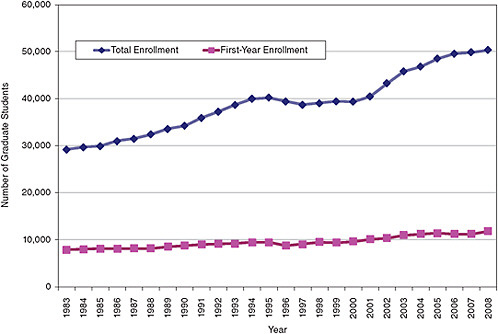
FIGURE 3-1 Full-time graduate enrollment in the biomedical sciences 1983-2008.
SOURCE: NSF. 2008. Survey of Graduate Students and Postdoctorates in Science and Engineering, 2008. Washington, DC: NSF.
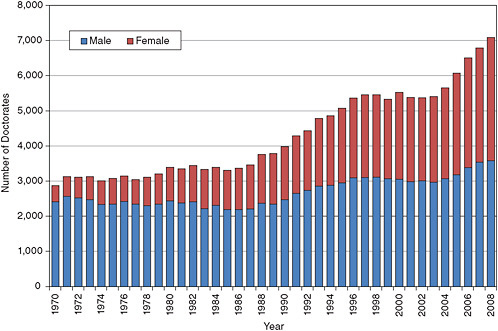
FIGURE 3-2 Biomedical Ph.D.s by year of degree and gender, 1970-2008.
SOURCE: NSF. 2008. Survey of Earned Doctorates. Available at http://www.nsf.gov/statistics/srvydoctorates/.
These data are reported by the institutions and represent almost all doctoral programs. In 2005, the reported total of Ph.D. students in the biomedical sciences was 41,115 or about 7,500 fewer students than the NSF data, which most likely reflects the inclusion of masters students. These data again show more female than male students, but only by a few hundred. Data from the research-doctorate study for the period from 2002 to 2006 on first-year enrollment mirrors the growth of the NSF data (see Table 3-2) and is generally about 1,500 less, accounting for master’s students. Projecting the research-doctorate data, using the change in the NSF data, shows an increase in 2008 to about 10,000 first-year enrollees in Ph.D. programs.
Data on citizenship and race/ethnicity of doctoral students in the biomedical sciences are also available from the research-doctorate study. The percentage of doctoral students on temporary visas is about 30 percent, although the percentage of doctorates conferred on such students is somewhat less (see Table 3-3 and Figure 3-3), likely reflecting a continuing increase in the number of international students admitted into graduate programs and the attendant delay of five years before graduation.
Similarily, the percentage of underrepresented minority doctoral students in biomedical graduate programs is 11 percent from the research-doctorate data, but in the same year these student make up 8 percent of graduates, again likely reflecting an expanding pipeline (see Table 3-4 and Figure 3-3). It is unclear why these percentages are greater, but these students might take longer to get their degree.
THE NUMBER AND DEMOGRAPHICS OF BIOMEDICAL SCIENCES PH.D. RECIPIENTS
The increase in funding and enrollments led to increases in doctoral degrees. The numbers of Ph.D.s in the biomedical sciences awarded by U.S. institutions have increased from roughly 3,000 during the 1970s to 6,895 in 2007. The increase presumably reflects increases in the Gross National Product (GNP) as well as increases in the NIH budget over this time period, although over the past decade the percentage increases in the NIH budget have substantially exceeded those of Ph.D. output (see Figure 3-2).
Most of the surge occurred in the early to mid-1990s and, more recently, from 2003 to 2007. The latter increase can
TABLE 3-1 Number of Ph.D. Students Enrolled in the Biomedical Sciences, Fall 2005
|
Field |
Male |
Female |
|
Biochemistry, Biophysics, and Structural Biology |
3515 |
3021 |
|
Biomedical Engineering and Bioengineering |
2842 |
1589 |
|
Cell and Developmental Biology |
2602 |
2989 |
|
Genetics and Genomics |
1230 |
1495 |
|
Immunology and Infectious Disease |
1155 |
1429 |
|
Integrated Biomedical Sciences |
3285 |
3664 |
|
Microbiology |
1200 |
1592 |
|
Neuroscience and Neurobiology |
2007 |
2019 |
|
Pharmacology, Toxicology, and Environmental Health |
1755 |
1989 |
|
Physiology |
784 |
953 |
|
Total |
20375 |
20740 |
|
SOURCE: NRC. 2010. A Data-Based Assessment of Research-Doctorate Programs. Washington, DC: The National Academies Press. |
||
TABLE 3-2 First-Year Enrollment in Biomedical Ph.D. Programs
|
Field |
2001-02 |
2002-03 |
2003-04 |
2004-05 |
2005-06 |
|
Biochemistry, Biophysics, and Structural Biology |
1334 |
1385 |
1556 |
1445 |
1437 |
|
Biomedical Engineering and Bioengineering |
716 |
784 |
921 |
938 |
924 |
|
Cell and Developmental Biology |
1365 |
1464 |
1558 |
1556 |
1610 |
|
Genetics and Genomics |
594 |
582 |
654 |
674 |
619 |
|
Immunology and Infectious Disease |
712 |
728 |
774 |
803 |
812 |
|
Integrated Biomedical Sciences |
1288 |
1367 |
1398 |
1497 |
1519 |
|
Microbiology |
669 |
672 |
731 |
728 |
688 |
|
Neuroscience and Neurobiology |
761 |
891 |
957 |
886 |
913 |
|
Pharmacology, Toxicology, and Environmental Health |
812 |
825 |
844 |
886 |
822 |
|
Physiology |
397 |
417 |
481 |
456 |
445 |
|
Total |
8648 |
9115 |
9874 |
9869 |
9789 |
|
SOURCE: NRC. 2010. A Data-Based Assessment of Research-Doctorate Programs. Washington, DC: The National Academies Press. |
|||||
TABLE 3-3 Citizenship of Doctoral Students in the Biomedical Sciences, Fall 2006
|
Field |
Percentage |
||
|
Citizens |
Permanent Residents |
Temporary Residents |
|
|
Biochemistry, Biophysics, and Structural Biology |
61 |
3 |
36 |
|
Biomedical Engineering and Bioengineering |
61 |
4 |
35 |
|
Cell and Developmental Biology |
65 |
4 |
30 |
|
Genetics and Genomics |
68 |
3 |
30 |
|
Immunology and Infectious Disease |
70 |
4 |
26 |
|
Integrated Biomedical Sciences |
69 |
3 |
28 |
|
Microbiology |
73 |
3 |
24 |
|
Neuroscience and Neurobiology |
75 |
3 |
22 |
|
Pharmacology, Toxicology, and Environmental Health |
59 |
4 |
37 |
|
Physiology |
64 |
3 |
33 |
|
Total |
66 |
3 |
31 |
|
SOURCE: NRC. 2010. A Data-Based Assessment of Research-Doctorate Programs. Washington, DC: The National Academies Press. |
|||
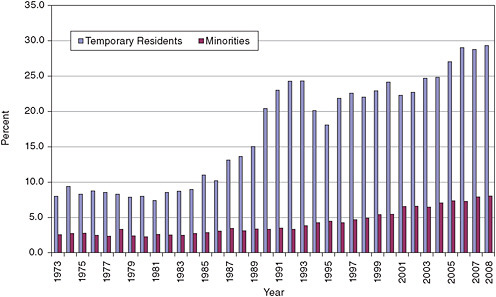
FIGURE 3-3 Biomedical Ph.D.s by citizenship and race/ethnicity, 1973-2008.
SOURCE: NSF. 2008. Survey of Earned Doctorates. Available at http://www.nsf.gov/statistics/srvydoctorates/.
TABLE 3-4 Race/Ethnicity by Percent of Doctoral Students in the Biomedical Sciences, Fall 2005
|
Field |
White |
Black |
Hispanic |
Asian |
American Indian |
Minoritya |
|
Biochemistry, Biophysics, and Structural Biology |
77 |
3 |
5 |
14 |
1 |
9 |
|
Biomedical Engineering and Bioengineering |
69 |
5 |
4 |
21 |
0 |
10 |
|
Cell and Developmental Biology |
75 |
4 |
7 |
14 |
1 |
11 |
|
Genetics and Genomics |
78 |
5 |
5 |
11 |
1 |
11 |
|
Immunology and Infectious Disease |
76 |
6 |
6 |
12 |
1 |
12 |
|
Integrated Biomedical Sciences |
79 |
5 |
5 |
10 |
1 |
11 |
|
Microbiology |
78 |
6 |
7 |
9 |
0 |
14 |
|
Neuroscience and Neurobiology |
76 |
4 |
7 |
12 |
1 |
12 |
|
Pharmacology, Toxicology, and Environmental Health |
72 |
7 |
6 |
14 |
1 |
14 |
|
Physiology |
77 |
7 |
5 |
11 |
1 |
12 |
|
Total |
76 |
5 |
6 |
13 |
1 |
11 |
|
aMinority refers to Underrepresented Minorities that include Blacks, Hispanics, and American Indians SOURCE: NRC. 2010. A Data-Based Assessment of Research-Doctorate Programs, Washington, DC: The National Academies Press. |
||||||
be linked to the elevated research expenditures during the doubling of the NIH budget. Interestingly, a substantially larger fraction of the increase in the number of doctorates has come from increased participation by women.
In a dramatic demographic shift, the fraction of Ph.D.s awarded to temporary residents has increased from about 10 percent in 1970 to more than 30 percent in 2007 (Figure 3-3).This fraction is still lower than that in many fields in the physical sciences and engineering, but this differential is closing. In analyzing the participation by foreign-born students, we note that the dramatic spike in Ph.D.s awarded to international students in 1991-1993, presumably a reflection of increased entry into U.S. schools post-Tiananmen Square. Since the peak in 1993, the proportion was steady until 2003, when students admitted in the early years of the NIH doubling began to graduate. In the most recent three years the percentage has been almost constant, and maybe an indication of a decrease in Ph.D.s to foreign students in the future.
The number of minorities earning a Ph.D. degree in biomedical research has doubled since the early 1990s. Minority citizen and permanent resident Ph.D. awardees in 2008 stood at 8.0 percent of all biomedical research graduates in the United States; if one corrects for the number of non-U.S. citizens in the graduating class this amounts to 12.6 percent of graduating U.S. citizens and permanent residents. The fraction of minorities in the biomedical sciences has increased more than is seen in other biological areas. Recent studies show that this increase has occurred substantially at institutions receiving NIH training grant support, almost certainly a reflection of the mandate the NIH has placed on these institutions to aggressively recruit a diverse student group.
EMPLOYMENT IMMEDIATELY AFTER RECEIVING THE PH.D. DEGREE
The percentage of newly minted doctoral recipients with definite plans to do postdoctorate training relatively soon after receiving their degree increased sharply during the 1970s from about 50 percent to 80 percent in the mid-1980s and remained at that level until the mid 1990s with only periodic decreases since then (see Figure 3-4). Over the same time period, the fraction of new Ph.D.s who go directly into regular employment decreased steadily until about 1997, but subsequently appears to have stabilized.
As the number of minorities gaining a Ph.D. has increased, it is useful to ask about their plans upon graduation. Figure 3-5 shows that minority and majority outcomes were quite different over the period from 1973 to 1993 when minority Ph.D.s were much less inclined to take a postdoctorate position and more inclined to go directly into industry. However, since 1993, although there is a great deal of scatter in the data points, it is clear that the career progression of minority graduates now closely reflects that of majority graduates. The number of unemployed Ph.D.s at this stage of their careers is very small.
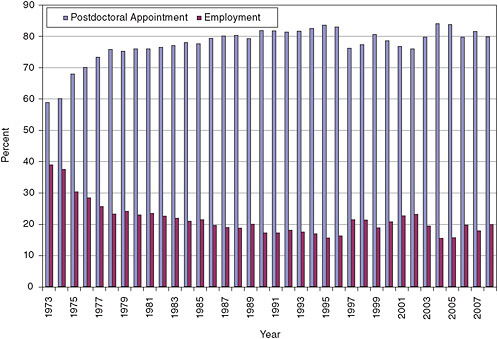
FIGURE 3-4 Postdoctoral plans at time of doctorate.
SOURCE: NSF. 2008. Survey of Earned Doctorates. Available at http://www.nsf.gov/statistics/srvydoctorates/.
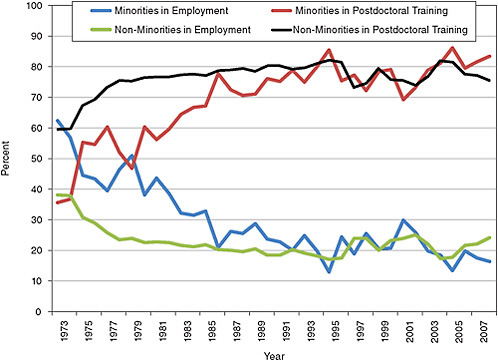
FIGURE 3-5 Postdoctoral plans of minorities and non-minorities in the biomedical sciences.
SOURCE: NSF. 2008. Survey of Earned Doctorates. Available at http://www.nsf.gov/statistics/srvydoctorates/.
The time to doctorate and age at time of receiving the degree have been cited as critical issues in terms of career progression of biomedical researchers and the increased length of training prior to reaching R01 research status.5 Data from NSF suggest that graduate students are spending longer periods of time in their programs, with the median registered time in a graduate degree program increasing from 6 years in 1970 to 7 years in 2002, although there was a modest shortening of the time to 6.58 years in 2008. These times to completion are not significantly different from those in other S&E fields. However, these data run counter to the experience of essentially everyone in the biomedical research field. This may be because these data reflect the time from entering a graduate program to receiving the doctoral degree, and because some graduate students work for a period while in graduate school (a phenomenon that has increased over the past 15 years) then this way of measuring time to degree is increasingly imprecise. A new and very valuable resource has come from the Assessment of Research Doctorate Programs, which collected data on the median time to degree from individual programs. Table 3-5 shows that the program reported time ranges from 4.9 to 5.7 years across the biomedical sciences and on average is 5.5 years, or about 1.5 years shorter than the data collected by NSF.
POSTDOCTORAL FELLOWS
With the growth of research funding driving a major expansion of the biomedical research enterprise, and with the remarkable advances that have taken place in the biomedical
TABLE 3-5 Average Time to Degree
|
Field |
Years |
|
Biochemistry, Biophysics, and Structural Biology |
5.61 |
|
Biomedical Engineering and Bioengineering |
4.92 |
|
Integrated Biomedical Sciences |
5.61 |
|
Cell and Developmental Biology |
5.65 |
|
Genetics and Genomics |
5.74 |
|
Immunology and Infectious Disease |
5.31 |
|
Microbiology |
5.56 |
|
Neuroscience and Neurobiology |
5.67 |
|
Pharmacology, Toxicology, and Environmental Health |
5.23 |
|
Physiology |
5.17 |
|
Average time to degree |
5.52 |
|
SOURCE: NRC. 2010. A Data-Based Assessment of Research-Doctorate Programs. Washington, DC: The National Academies Press. |
|
sciences in recent years, the postdoctoral appointment has now become a sine qua non for most subsequent career positions. From the 1980s to the late 1990s the number of postdoctoral appointments increased by about 60 percent for Ph.D. scientists at U.S. institutions (see Figure 3-6).
The rapid increase in the total U.S.-trained postdoctoral pool from 1993 to 1999 was probably the result of a number of factors. One was the increase in women graduates; another was the growth of international students attending U.S. schools.
Data on the length of the postdoctoral period show a steady increase in the 1990s, but this generated an outcry from postdoctoral organizations and, subsequently, several national university organizations. In response, the American Association of Universities issued a white paper in 2000 endorsing a limit of no more than 5 years for postdoctoral appointments. With some slight modifications to fit academic medicine, the Association of American Medical Colleges (AAMC) endorsed a companion white paper addressed to medical schools and teaching hospitals. Since then, many institutions instituted limits to the postdoctorate training period. These responses evidently yielded results, judging from data for the most recent period showing that the average postdoctoral training period has been significantly reduced. Whether term limits aided postdoctorates’ ability to find new permanent positions is debatable. Indeed, a perusal of the AAMC faculty database over this period indicates that the number of tenure-track faculty positions did not increase over the past decade (and in fact they have declined), but a 40 percent increase was seen in the number of non-tenure-track (research-track) faculty as well as “other faculty,” presumably senior research staff positions (see also Figure 3-7).
It is interesting to note that an increasing fraction of these non-tenure faculty positions are held by females. Twenty years ago the half-life in these non-tenure-track faculty positions was 7-8 years, but over the last decade this has dropped to 4-5 years, suggesting a more transient activity. Further, non-tenure-track positions may afford principal investigator privileges but they often lack oversight, and whether this is a viable next step on the employment ladder or whether those holding such appointments are merely “Postdoctorates by another name” remains to be seen. Finally, it should be mentioned that the AAMC databases do not give any information on citizenship of these individuals.
Data from the research-doctorate study show there are almost 24,000 postdoctoral appointments in biomedical programs (see Table 3-6). This is larger than the number reported on the NSF survey for academic postdoctorates by about 20 percent, and it may be a more accurate figure, since the NSF data are drawn from a sample of institutions. It should also be noted that females represented about 41 percent of the postdoctoral population, but they have represented more than 45 percent of the U.S.-trained doctorates since 2000. Also note that the percentage of minorities in postdoctoral positions is a little over 7 percent, which is consistent with the fact that minorities accounted for 6 to 7 percent minority U.S. doctorate degrees over the period from 2000 to 2006.
THE PARTICIPATION OF INTERNATIONAL POSTDOCTORATES IN BIOMEDICAL RESEARCH
U.S. citizens in postdoctoral positions in the biomedical sciences constitute only part of the postdoctoral training sector. There are also large numbers of doctoral recipients
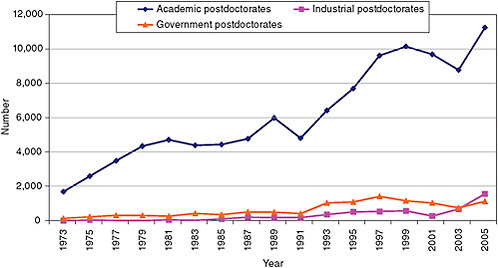
FIGURE 3-6 Postdoctoral appointments in the biomedical sciences.
SOURCE: NSF. Survey of Doctorate Recipients, 1973-2006. Washington, DC: NSF.
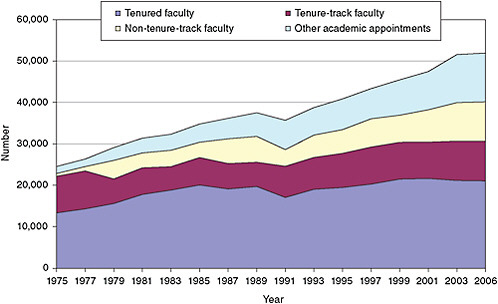
FIGURE 3-7 Academic positions of doctorates in the biomedical sciences, 1975-2006.
SOURCE: NSF. Survey of Doctorate Recipients, 1973-2006. Washington, DC: NSF.
TABLE 3-6 Postdoctoral Appointments in the Biomedical Sciences in Fall 2006
|
Field |
Number of Applications |
Male |
Female |
Minorities (%) |
|
Biochemistry, Biophysics, and Structural Biology |
3,625 |
2,087 |
1,242 |
5.1 |
|
Biomedical Engineering and Bioengineering |
944 |
675 |
280 |
5.6 |
|
Cell and Developmental Biology |
3,586 |
1,991 |
1,537 |
9.1 |
|
Genetics and Genomics |
1,664 |
956 |
705 |
7.5 |
|
Immunology and Infectious Disease |
1,688 |
875 |
746 |
9.1 |
|
Integrated Biomedical Sciences |
5,349 |
2,493 |
1,790 |
6.7 |
|
Microbiology |
1,413 |
739 |
624 |
7.2 |
|
Neuroscience and Neurobiology |
2,620 |
1,515 |
1,049 |
8.5 |
|
Pharmacology, Toxicology, and Environmental Health |
2,045 |
1,169 |
817 |
7.5 |
|
Physiology |
793 |
464 |
330 |
7.5 |
|
Total |
23,727 |
12,964 |
9,120 |
7.3 |
|
SOURCE: NRC. 2010. A Data-Based Assessment of Research-Doctorate Programs. Washington, DC: The National Academies Press. |
||||
with degrees from foreign institutions who are being trained in U.S. educational institutions and other employment sectors. Data are available on the number of postdoctoral appointments in academic institutions,6 but there is no comparable source for data from the industrial, governmental, and non-profit sectors. However, the NIH supports about 4,000 intramural postdoctorates, and just over 60 percent of them are temporary residents from countries around the world, with the largest numbers coming from the People’s Republic of China, India, Korea, Japan, and Europe. Almost all of them have foreign doctorates. Data from the NSF Survey of Graduate Students and Postdoctorates show that the number of temporary resident postdoctorates in academic institutions steadily increased through the 1980s and 1990s; by 2008 the number was almost 12,000 in the biomedical sciences. Currently temporary residents hold almost three-fifths of the postdoctoral positions in academic centsers (see Figure 3-8).
There has been little change in the number of U.S. citizen and permanent resident postdoctorates in academic institutions since the early 1990s, though there was a 20 percent increase in temporary resident postdoctorates between 1998 and 2003 coinciding with the NIH doubling. The leveling off in the number of foreign postdoctorates from 2003 to 2006 is most likely related to the plateau in NIH funding rather than to
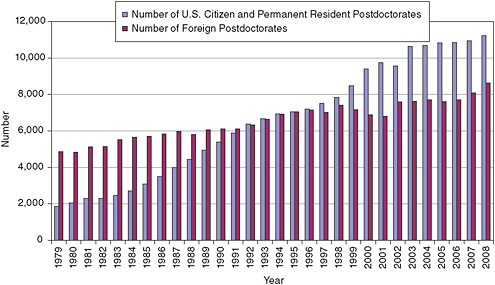
FIGURE 3-8 Postdoctorates in academic institutions.
SOURCE: NSF. Survey of Graduate Students and Postdoctorates in Science and Engineering, 2008. Washington, DC: NSF.
post-9/11 security issues. Almost certainly, the recent ARRA stimulus funding will generate a demand for additional postdoctorates, and since most of the U.S. graduates already enter this pool, the additional needs will be satisfied by an increase in international postdoctorates. It seems unlikely that the U.S.-trained postdoctorate pool would have been sufficient to produce the workforce for a response to the ARRA funding. Clearly, some of these international postdoctorates are well trained. However, a significant (and unknown) number have been trained as M.D.s, and their laboratory skills are hard to gauge; they may well receive much “on-the-job” training. Nonetheless, the international postdoctorate pool is highly elastic and responds quite rapidly to funding exigencies and opportunities driven by the NIH appropriation. Data indicate that 65 percent of these postdoctorates will probably stay in the United States and will thus contribute to the biomedical workforce over an extended period. However, exactly where these individuals will be employed has not been carefully measured. Nor has it been clearly defined how these international postdoctorates will handle the post-stimulus funding employment situation.
The Research-Doctorate Study collected data on programs with foreign postdoctorates and the country of origin for those postdoctorates. For the 983 biomedical programs in the study, 839 reported foreign postdoctorates in the program. For 430 of these programs, more foreign postdoctorates came from the Peoples Republic of China than any other country. India and Japan were the most populous for many fewer programs (see Table 3-7).
CAREER PROGRESSION
Traditionally, the career progression for biomedical scientists after graduate school and a postdoctoral appointment was to next take a position in an academic institution or in an industrial environment. However, individuals with a Ph.D. in the biomedical sciences now have a range of career opportunities, from academia and industry to science administration, policy, writing, and law, to name but a few of the options.
Until 1985, the first position to which Ph.D.s would aspire was generally in a university on the tenure track. However, after 1985 the bulk of the growth in academia has been in non-tenure-track appointments, with many in this latter category on “soft funding.” Figure 3-9 shows that the average annual growth in the academic population was about 5 percent from the 1970s to 1991, except for a slowdown in the late 1980s and early 1990s due to economic conditions. Since 1995, however, growth has slowed significantly, and what growth there is has been in the area of non-tenure-track faculty and other academic positions. From 1999 to 2003, the number of positions in these areas grew about 20 percent (roughly 4 percent each year). Note that these data are from the NSF Survey of Earned Doctorates, and as such they apply to all biomedical science postdoctorates including those in clinical departments, but they do not include foreign non-tenure-track faculty, who have contributed additionally to the growth of this category of employment.
This growth is almost certainly due to the efforts of institutions to accommodate term limits for postdoctorates, as discussed above, and it is likely that these are individuals
TABLE 3-7 Number of Programs with Foreign Postdoctorates and the Three Most Popular Countries of Origin in Fall 2006
|
Field |
Programs with Foreign Postdoctorates |
Countries of Origin |
||
|
China |
India |
Japan |
||
|
Biochemistry, Biophysics, and Structural Biology |
139 |
73 |
14 |
3 |
|
Biomedical Engineering and Bioengineering |
59 |
32 |
8 |
2 |
|
Cell and Developmental Biology |
113 |
56 |
8 |
5 |
|
Genetics and Genomics |
54 |
31 |
5 |
2 |
|
Immunology and Infectious Disease |
66 |
37 |
7 |
|
|
Integrated Biomedical Sciences |
106 |
44 |
13 |
5 |
|
Microbiology |
67 |
34 |
6 |
3 |
|
Neuroscience and Neurobiology |
72 |
40 |
4 |
3 |
|
Pharmacology, Toxicology, and Environmental Health |
107 |
58 |
15 |
3 |
|
Physiology |
56 |
25 |
4 |
3 |
|
Total |
839 |
430 |
84 |
29 |
|
SOURCE: NRC. 2010. A Data-Based Assessment of Research-Doctorate Programs. Washington, DC: The National Academies Press. |
||||
TABLE 3-8 Tenure Status of Basic Science Medical School Faculty, 2002, 2005, and 2009
|
Degree |
M.D. |
M.D./Ph.D. |
Other |
Ph.D. |
Unknown |
Total |
|
2002 |
|
|
|
|
|
|
|
Tenured |
821 |
642 |
17 |
7401 |
33 |
8914 |
|
Tenure Track |
329 |
261 |
22 |
2419 |
23 |
3054 |
|
Non-Tenure Track |
847 |
375 |
241 |
3269 |
162 |
4894 |
|
Tenure Not Available |
151 |
39 |
21 |
423 |
9 |
643 |
|
Total |
2148 |
1317 |
301 |
13512 |
227 |
17505 |
|
2005 |
|
|
|
|
|
|
|
Tenured |
764 |
679 |
18 |
7346 |
46 |
8853 |
|
Tenure Track |
330 |
319 |
23 |
2619 |
31 |
3322 |
|
Non-Tenure Track |
879 |
425 |
259 |
3857 |
108 |
5528 |
|
Tenure Not Available |
194 |
52 |
22 |
503 |
16 |
787 |
|
Total |
2167 |
1475 |
322 |
14325 |
201 |
18490 |
|
2009 |
|
|
|
|
|
|
|
Tenured |
600 |
684 |
16 |
6895 |
49 |
8244 |
|
Tenure Track |
377 |
320 |
28 |
2844 |
71 |
3640 |
|
Non-Tenure Track |
829 |
389 |
238 |
3561 |
122 |
5139 |
|
Tenure Not Available |
250 |
66 |
43 |
640 |
48 |
1047 |
|
Total |
2056 |
1459 |
325 |
13940 |
290 |
18070 |
|
SOURCE: AAMC. 2010. Association of American Medical Colleges Faculty Roster, 2009. Available at https://www.aamc.org/data/facultyroster/. |
||||||
whose appointment titles changed from postdoctoral trainee to research associate, research scientist, instructor, or some similar title but who continued to do the same kind of work.
The almost flat growth over the three-year period from 2003 to 2006 in all position categories is almost certainly a consequence of the flat NIH budget after the doubling years. While data on the current faculty are not available, one expects that the ratio of tenure track to non-tenure-track academic positions may well look very different in 2009 and beyond due to the severe economic downturn and the financial problems besetting many institutions. It is worth mentioning that the number of basic sciences tenured and tenure-track faculty at medical schools increased from 2002 to 2005 and has actually declined in number since 2005 (see Table 3-8). The faculty size in 2009 stands at the 2002 level, and during this period the number of non-tenure-track faculty has increased by 12 percent. The stasis in overall tenure-track faculty numbers, coupled with the dramatic decrease in the number of faculty taking retirement, means that new, tenure-track assistant professor positions are increasingly scarce.
The decreased retirement rate and the longer time to independent research status are seen in the changes in the age distribution of tenured faculty from 1993 to 2006 (see Figures 3-9 and 3-10).
These figures provide dramatic evidence that the academic workforce is aging. By 2006 about 25 percent of the tenured academic faculty were over the age of 60, and about half were 55 or older. At the same time, the proportion of younger tenured faculty has necessarily declined over time, which is, of course, ultimately reflected in the increased average age at award of first R01 grant. Given the current
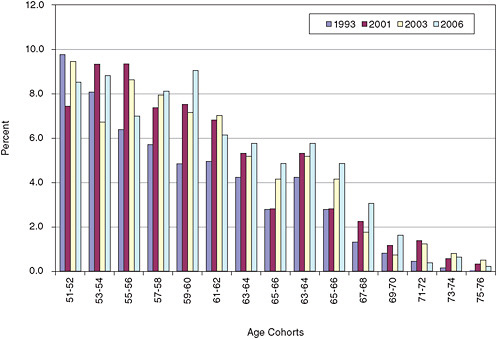
FIGURE 3-9 Age distribution of tenured faculty 1993, 2001, 2003, 2006.
SOURCE: NSF. Survey of Doctorate Recipients, 1973-2006. Washington, DC: NSF.
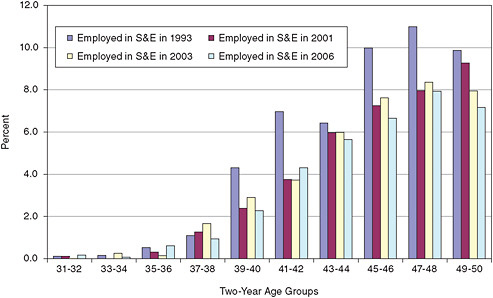
FIGURE 3-10 Percentage of tenured faculty in the biomedical sciences by 2-year cohort: Early career.
SOURCE: NSF. Survey of Doctorate Recipients, 1973-2006. Washington, DC: NSF.
economic downturn and its financial effect on retirement plans, it is highly likely that faculty members will delay retirement plans.
Thus in summary, the constraints of the biomedical academic workforce being rather young during the 1970s and 1980s, the prohibition of mandatory retirement in 1993, and the current (and understandable) reluctance of faculty to take voluntary retirement have combined to produce a progressively marked aging of faculties and a dearth of openings for new faculty researchers. It has been said about the tenure system that “where there’s death, there’s hope,” and presumably, opportunities for new faculty hires will dramatically improve over the next decade as aging imposes its mortal laws. During the past five years we have seen a dramatic increase in the number of new medical schools. Depending upon how much they emphasize basic biomedical research, this situation may also provide additional employment opportunities.
While a majority of the biomedical sciences workforce is employed in academic institutions, a little more than 40 percent is employed in other sectors (see Figures 3-11 and 3-12). The number of scientists working in industry, the largest of these other sectors, had been growing at a steady rate of close to 7 percent over the past 20 years, at least until 2008. There was a lull in employment in the early 1990s, possibly as a result of the economy or unfulfilled expectations of biotechnology, but growth since the mid-1990s has been strong. In contrast, government and non-profit sector employment has been fairly stable, though with a low growth respectively, over recent years. The most recent date for which we have information is 2006. How the current fiscal crisis and recession, with its profound impact on employment, will affect industrial employment of the biomedical workforce remains to be seen.
The demographics of the workforce are also changing. Women are becoming a greater part of the biomedical workforce. In the early 1970s they represented only 13 percent across all employment sectors, and by 2006 their participation had grown to 35 percent (see Figure 3-13).
In 2006, the percentage of females with faculty rank in academic institutions—31 percent—was slightly lower than the percentage of females in the over biomedical workforce. It might be argued that because the numbers of female faculty are starting from a low base in the early 1970s, it is not surprising that it has taken women time to obtain parity in this area. However, looking at the data from the perspective of the number of Ph.D.s per year and the year of Ph.D. among female faculty, a different outcome between males and females has persisted for some time (see Figure 3-14). In fact, since 1990 the number of Ph.D.s awarded to females has increased by over 20 percent, to the point women earned half of all Ph.D.s in 2008, but the representation in faculty ranks has stayed constant at close to 30 percent. While it will take time before women are represented in proportion to the degrees awarded, it is disconcerting to realize that their Ph.D. representation is not reflected in the percentage of non-tenure-tenure track faculty in medical schools. From 2002 to 2009 the percentage of tenure-track females has increased from only 30 percent to 33 percent (see Table 3-9), and in
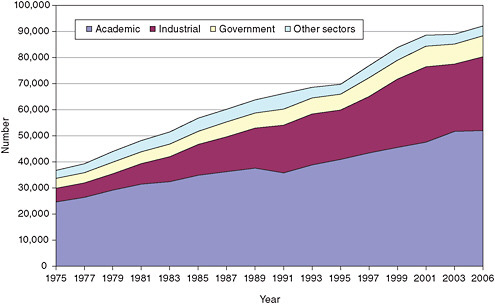
FIGURE 3-11 Biomedical employment by sector.
SOURCE: NSF. Survey of Doctorate Recipients, 1973-2006. Washington, DC: NSF.
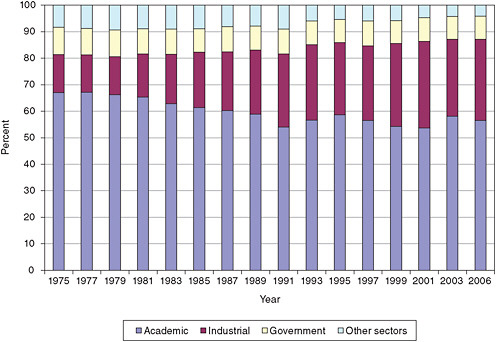
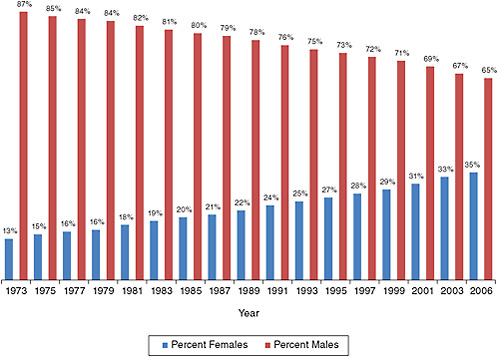
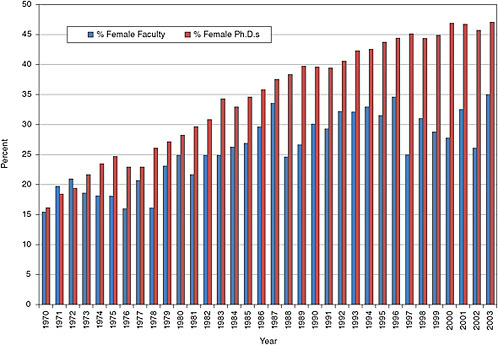
FIGURE 3-14 Percentage of female faculty in 2006 in the biomedical sciences by year of Ph.D. compared with the number of female Ph.D.s in the same year.
SOURCE: NRC. 2010. A Data-Based Assessment of Research-Doctorate Programs. Washington, DC: The National Academies Press.
TABLE 3-9 Distribution of Medical School Faculty by Track and Gender, 2002, 2005, and 2009
|
|
Percent |
|||||
|
2002 |
2005 |
2009 |
||||
|
Females |
Males |
Females |
Males |
Females |
Males |
|
|
Tenured |
18 |
82 |
20 |
80 |
21 |
79 |
|
Tenure Track |
30 |
70 |
32 |
68 |
33 |
67 |
|
Non-Tenure Track |
36 |
64 |
37 |
63 |
40 |
60 |
|
Total |
26 |
74 |
28 |
72 |
30 |
70 |
|
SOURCE: AAMC, 2010. Association of American Medical Colleges Faculty Roster, 2009. Available at https://www.aamc.org/data/facultyroster/. |
||||||
2009, 40 percent of women Ph.D.s were in non-tenure-track positions.
The data from the AAMC Roster are similar to the NSF data concerning the entire population of U.S. doctorates. In 2006 females occupied 31 percent of the faculty positions and represented 35 percent of the S&E workforce, and they held 45 percent of the non-tenure and non-faculty positions. The data on faculty appointments are consistent over time, with the percentage of female faculty appointment about 2 percentage points below their numbers in the overall population, but in the early 1980s when they represented about 20 percent of the workforce, they held about 40 percent of the non-tenure and non-faculty positions, and that percentage has varied between 40 and 45 percent over the past 25 years. Women are recruited into tenure-track assistant professor positions to a reasonable degree, but several studies have shown that the fraction of females in associate and in full-professor positions declines substantially, and these numbers
have not changed very much over the past 20 years or so. A detailed study of the reasons for these observations was published recently in a study of female academics in the California system.7
The Diversity of the Workforce
The number of underrepresented minorities in the basic biomedical workforce has increased significantly, from 2.5 percent of the workforce in 1973 to 6.2 percent in 2006.8 These numbers reflect the increasing numbers of minorities in postdoctoral positions, which have grown from 1.6 to 6.8 percent during the same period. Given that the number of minority biomedical Ph.D. recipients is also increasing, we may expect the workforce number to increase. Nonetheless, despite the growth in recent years, minorities still remain a small fraction of the overall workforce. At the current rate of increase of minorities obtaining the Ph.D. degree, it is conceivable that the production rate could reach 14 percent, but this may well become a “pipeline” ceiling, as this is the fraction of minorities presently earning the B.S. degree in biological sciences. Clearly, additional representation in the workforce will depend on the issues of attracting additional minority undergraduate students into science and reducing dropout rates. These are major challenges, but they are beyond the scope of this report. Although the data concerning diversity are encouraging, there continues to be a serious problem.
PHYSICIAN RESEARCHERS
To this point the discussion has addressed only individuals with a Ph.D. in one of the fields listed in Appendix C, and has not taken into consideration physicians who are conducting basic biomedical research. It is difficult to get a complete picture of this workforce, because there is no database that tracks physician-scientists who are actively involved in research in the same way as are Ph.D. scientists.
However, according to the American Medical Association (AMA), the number of physicians active in research rose throughout the late 1970s and early 1980s and reached 22,945 by 1985. Since then, however, the number of M.D.s (and M.D./Ph.D.s) identifying research as their primary professional activity has steadily declined, dropping to 14,434 in 1997. This figure remained about the same until 2008 at about 14,880 (12 percent) of the faculty engaged in research. However, these numbers have to be interpreted conservatively as the AMA’s “physicians active in research” may mean many things, including participation as workers, not leaders of clinical trials.
Although these data do not distinguish between physician-scientists holding an M.D. and those with M.D./Ph.D.s, it is highly likely that the proportion of these researchers who hold two degrees is increasing. Because the first formal M.D./Ph.D. training programs were introduced in 1964, opportunities for dual-degree training have steadily increased, and by 2009 some three-fourths of all medical schools offered their students an opportunity to earn both degrees; 40 of these programs currently receive funding as a Medical Scientist Training Program (MSTP) from the NIH. In 2009 M.D./Ph.D.s in medical schools represented 8.1 percent of the 18,957 faculty in basic sciences departments and 7.6 percent of the 118,559 faculty in clinical departments.
A recent study9 published by members of the M.D./Ph.D. Section of the AAMC Group on Graduate Research Education and Training discusses the success of the MSTP. It reports on career choices of trainees who had received both M.D. and Ph.D. degrees from 24 MSTPs enrolling 43 percent of current trainees and representing about 50 percent of the MSTPs. Of 2,383 alumni from these programs only 16 percent were in private practice, while 68 percent were in academic centers, 8 percent in industry, and 5 percent in research institutes. Of those with academic appointments, 82 percent were conducting research. This level of research activity is reflected in an estimated 73 percent with research funding. This is higher than the 58 percent of the faculty with Ph.D. degrees from the Research-Doctorate Study who reported research grant support. Because M.D./Ph.D. programs were envisioned as a means of fostering transitional or clinical research, the study of M.D./Ph.D. recipients found that 56 percent were conducting basic research, 41 percent were conducting transitional research and 43 percent were conducting clinical research (percents do not add to 100 percent because combination of areas could be selected).
In addition, Dickler et al.10 found that M.D./Ph.D. applicants for both first and second R01 grants had a higher success rate than applicants with either an M.D. or Ph.D. alone, and that the number of first-time M.D./Ph.D. applicants for NIH R01 grants has become almost equal to that of M.D.s only by 2006. The findings are consistent with those of an earlier study by the National Institute of General Medical Sciences (NIGMS) in 1998 of graduates from MSTPs, which found that by almost all measures the MSTP-trained graduates were better than the other control groups. They entered graduate training more quickly and took less time to complete the two degrees than comparable degrees for the other groups. In terms of research activity, the NIH data showed that the MSTP graduates applied for research grant support from the NIH at a greater rate, and they were more successful in receiving support. These outcomes provide a remarkable testimony to the success of M.D./Ph.D. programs in training physician-scientists, who after graduation continue to
|
7 |
See http://www.americanprogress.org/issues/2009/11/women_and_sciences.html. |
|
8 |
NSF. Survey of Doctorate Recipients, 1973-2006. Washington, DC: NSF. |
|
9 |
Brass, L. 2010. Are the M.D.-Ph.D. programs meeting their goals? Academic Medicine 85(4):692-701. |
|
10 |
Dickler, H.B., D. Fang, S.J. Heinig, E. Johnson, and D. Korn. New physician-investigators receiving national institutes health research projects grants. Journal of the American Medical Association 297(22): 2496-2501. |
participate successfully in a broad spectrum of research and research-related activities.
Over the past decade the MSTPs have also begun to make significant strides in terms of including minority students. The racial distribution for the cohort of students who matriculated into an M.D./Ph.D. program in 2009 is shown in Table 3-10.
The proportion of URM students in M.D./Ph.D. programs is considerably lower than that in the general population of the United States. However, it is perhaps more relevant to compare the compositions of these programs to the proportion of URMs among those who graduate with B.S. degrees in biology. Table 3-10 shows that in the group of M.D./Ph.D. programs the proportion of URMs is only slightly less than that of URMs in the pool of B.S. degree graduates in the biological sciences, a major pool from which the programs recruit their students. Nevertheless, these data show that the total number of URMs in M.D./Ph.D. programs represents only about 0.7 percent of the biological sciences B.S. pool and less than 0.1 percent of the total pool of B.S. graduates. Thus, there is clearly both an opportunity and the need for increased effort to attract URMs into M.D./Ph.D. programs (both MSTP and non-MSTP). Women accounted for 37 percent of the current trainees in the programs participating in this study, and they had the same attrition rate as men (approximately 10 percent). These successful women who hold both degrees serve as outstanding role models for female scientists in training and underscore the need for M.D./Ph.D. programs to continue aggressively to pursue the goal of gender equity in this area. Given the increases of the number of woman gaining Ph.D. degrees in the biomedical sciences, along with the fact that women earn the B.S. degree at a higher rate than men, we may expect that parity should be reached in these programs over the next decade.
On average, M.D./Ph.D. students take about 8 years to complete their degrees, during which time most receive tuition waivers and a stipend from a combination of public and private funding sources. As a consequence, on completion of their training, overall indebtedness levels reported by M.D./Ph.D.s are about half (or less) of those of their medical school classmates, and they enter the job market on better financial footing and with better job prospects than investigators with only one degree.
Moreover, unlike their counterparts with a Ph.D., who often have difficulty obtaining faculty positions, M.D./Ph.D.s are reportedly in great demand as medical school faculty members, particularly in clinical departments (Brass et al.), and they are very well represented among clinical division heads and department chairs. Graduates of M.D./Ph.D. programs are now a critical and very successful component of the clinical, translational, and basic research workforces in medical schools and major teaching hospitals. They are in demand as medical school faculty members and are well represented among clinical division heads and department chairs.
However, in spite of their success, the training in MSTPs has declined over the past few years from a maximum of 933 full-time trainee positions in 2002 to 911 positions in 2009. The current number of trainees is at the 2006 level. Since 2006 the program has been co-funded by other institutes, and the number of positions has ranged from 48 in 2006 to 71 in 2009. The total funding of M.D./Ph.D. programs by the NIGMS in NIH has not increased in 1990 dollars from 1990 to 1997 and increased during the doubling of the NIH budget by 38 percent, has declined in recent years (see Figure 3-15). From 2008 to 2009 it actually decreased in actual dollars and the result was a decrease in training positions from 923 to 911.
U.S. CAPACITY TO IDENTIFY OUTSTANDING APPLICANTS TO M.D./PH.D. PROGRAMS
Among the 16,127 students who graduated in 2007 from all medical schools, 494 (3.1 percent) received M.D./Ph.D.s. NIH estimates that only 350 of these graduated from NIH-supported MSTPs, while 150 future physician-scientists graduated with both degrees from M.D. and Ph.D. programs that do not receive NIH funding. To support programs currently training this non-NIH funded pool of future physician-scientists to the same degree as the NIH funded pool, the MSTP would have to increase by 40 percent. This raises the
TABLE 3-10 Compositions of M.D./Ph.D. Programs in United States by Racea
|
Program |
URMb |
% |
Asian |
% |
White |
% |
Totalc |
|
MSTPd |
52 |
14.4 |
93 |
25.7 |
217 |
59.9 |
362 |
|
Non-MSTPd |
20 |
10.7 |
52 |
27.8 |
115 |
61.5 |
187 |
|
All MD/PhDd |
72 |
13.1 |
142 |
25.9 |
332 |
60.4 |
549 |
|
B.S. Degrees (All Sciences) |
73,835 |
18.3 |
37,050 |
9.2 |
268,783 |
66.4 |
404,494 |
|
B.S. Degrees (Biological Sciences) |
11,841 |
15.4 |
11,572 |
15.0 |
49,771 |
64.6 |
77,015 |
|
USA Population 2008e |
86,878,906 |
28.6 |
13,549,064 |
4.5 |
199,491,458 |
65.6 |
304,059,724 |
|
a Percentage values are based on total values in column one. b URM values are the sum of Black African American + Hispanic + Native American and Alaskan Native + Hawaiian and Pacific Islander. c Total number of students minus foreign students and those who gave no response to race. d Data are from the Association of American Medical Colleges (AAMC) for classes entering 2009. e Data are from the U.S. Census Bureau for 2008. |
|||||||
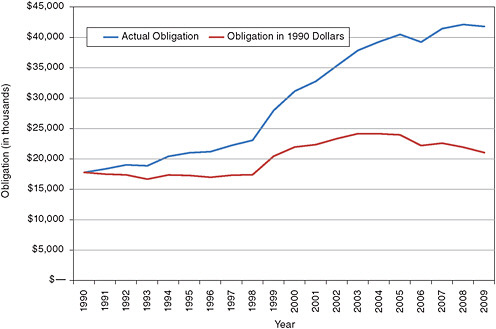
FIGURE 3-15 NIH funding of the Medical Sciences Training Program (dollars in thousands).
SOURCE: Data obtained from the National Institute of General Medical Sciences.
question of whether there are a sufficient number of highly qualified applicants to expand the MSTP by this amount.
For the class entering in 2009 there were 1,703 applications to M.D./Ph.D. programs, of which 601 matriculated into an M.D./Ph.D. program (397-MSTP; 204 non-MSTP supported M.D./Ph.D. program) leaving 1102 who did not join one of these programs. Several qualifications of applications are examined to identify those that have the highest probability of success in an M.D./Ph.D. program. Among these are prior research experience, undergraduate and graduate GPA, and evidence of sustained motivation toward a career as a physician-scientist. An additional important parameter is the MCAT score. Although on its own it is of limited predictive value for success, it does give a good estimate of a student’s performance in the United States Medical Licensing Examination Step 1. AAMC data for those students matriculating in 2009 are shown in Table 3-11.
In 2009, there were 258 applicants to M.D./Ph.D. programs who did not matriculate into an M.D./Ph.D. program even though they obtained an MCAT score of 34 or higher (which is within the range of students joining an MSTP). Recognizing that no MCAT score should be considered as a cutoff for acceptance into an M.D./Ph.D. program and that other factors are taken into account when students are selected, it does appear that there are about the same number of applicants with MCAT scores of 32 or higher to M.D./Ph.D. programs who did not join an M.D./Ph.D. program as joined an MSTP. To take this line of thought further, there were 607 applicants who applied to, but did not join an M.D./Ph.D. program, who obtained an MCAT score of 30 or higher, which is close to the average of all medical school matriculants. These data, together with the fact that there are presently 204 students in non-MSTP-funded programs, strongly indicate that there is a sufficiently deep applicant pool, and that the size of the MSTP could easily increase by 30 percent or more by accepting students whose acceptance did not demand a lowering of the program’s rigorous academic standards.
Moreover, the committee felt strongly that in today’s climate of changing strategies to provide more extensive health care coverage while simultaneously controlling the costs of medical care, it is vitally important to expand the M.D./Ph.D. program to include the behavioral and clinical research workforce. As a result of these considerations the current committee endorses the intent of the recommendation of the previous committee with the modification that MSTP funding be expanded by more than 20 percent. There is no intent to add extra support to extant programs, which might not lead to an increased number of trained individuals. Thus, we strongly recommend that there be assurance that this increase in funding will result in an increase in the total number of M.D./Ph.D. students trained, especially in excellent programs at institutions not currently supported by the MSTP. A significant portion of this increase in funding should be targeted at trainees in the social and behavioral sciences, as well as dual-degree programs in dentistry and
TABLE 3-11 MCAT Scores
|
|
Number |
Average |
Median |
|
All medical students who matriculated into medical school |
18,390 |
30.8 |
31 |
|
All medical students who matriculated into an M.D./Ph.D. program (MSTP plus non-MSTP) |
601 |
34.3 |
34 |
|
All students who matriculated into an MSTP program |
397 |
35.3 |
35 |
|
All students who matriculated into a non-MSTP-funded M.D./Ph.D. program |
204 |
32.3 |
32 |
|
SOURCE: Association of American Medical Colleges data. 2010. |
|||
nursing. Certainly, standards must remain high, and if there is an insufficient number of highly qualified applicants for this increased level of funding, NIGMS should redirect unused funds to support other categories of its sponsored research training programs. Also see the section “The Role of the National Research Service Award Program” in Chapter 5.
FINANCIAL SUPPORT OF BIOMEDICAL TRAINING AND THE NATIONAL RESEARCH SERVICE AWARD PROGRAM
Exciting advancements in biomedical research, together with a generally strong economy in the 1990s and again in the early part of this decade after 2002, were reflected in increased research and development support from the NIH. The NIH budget and its funding of extramural research and training doubled in nominal dollars from a little over $10 billion in 1998 to $20.2 billion in 2004, during which time total NIH expenditures grew from $13.0 billion to $27.2 billion. Measured in constant 1998 dollars, the extramural increase was 65 percent from $10.0 billion to $16.5 billion. The change in the budget for training during the period increased from $428 million to $604 million in 1998 dollars. Increases in the NIH extramural budget over the years following the doubling were exceedingly small and actually declined in constant 1998 dollars to $14.5 billion in 2009, with research grant funding at $14.0 billion and funding for training at $518 million. The decline in total training support was not reflected in the number of training position, which remained almost constant, but in the stipends that remained constant and declined when adjusted for inflation and in the capped tuition support. The President’s budget request for fiscal year (FY) 2011 is aimed at correcting the stipend problem with a 6 percent increase over FY 2010 in the NRSA funds that are directed at training stipends, and a decrease of about 1 percent in the number of awards. Corresponding changes are seen in the data for academic research and development (R&D) expenditure in the biological sciences. R&D expenditures in constant 1998 dollars increased slightly in the early 1990s from a little over $4 billion in 1990 to $5 billion in 1998, and then increased during the doubling of the NIH budget to almost $8 billion in 2005. Since 2005 there has been a decline to about $7.5 billion in 2008.
Essentially all graduate students in the biomedical sciences receive funding of one sort or another. There is no comprehensive data source for the funding of students in doctoral programs, but the Research-Doctorate Study collected data from the institutions that are heavily invested in biomedical research. Across the fields that correspond to the biomedical sciences in that study, almost all students are supported in their first year (see Table 3-12). This funding pattern continues during their doctoral studies with few students receiving partial or not support (see Table 3-13).
TABLE 3-12 First-Year Support for Doctoral Students in the Biomedical Sciences
|
Field |
Percent |
||
|
Full Support |
Partial Support |
No Support |
|
|
Biochemistry, Biophysics, and Structural Biology |
96 |
3 |
1 |
|
Biomedical Engineering and Bioengineering |
86 |
7 |
7 |
|
Cell and Developmental Biology |
97 |
1 |
2 |
|
Genetics and Genomics |
93 |
4 |
4 |
|
Immunology and Infectious Disease |
95 |
4 |
1 |
|
Integrated Biomedical Sciences |
97 |
1 |
2 |
|
Microbiology |
96 |
2 |
2 |
|
Neuroscience and Neurobiology |
96 |
3 |
1 |
|
Nutrition |
88 |
10 |
2 |
|
Pharmacology, Toxicology, and Environmental Health |
94 |
4 |
2 |
|
Physiology |
96 |
2 |
2 |
|
Total |
95 |
3 |
2 |
|
SOURCE: NRC. 2010. A Data-Based Assessment of Research-Doctorate Programs. Washington, DC: The National Academies Press. |
|||
TABLE 3-13 Funding Across Graduate Studies in the Biomedical Sciences, Fall 2005
|
Field |
Percent |
|||||
|
Fellow or Trainee |
Teaching Assistant |
Research Assistant |
Combination Funding |
Less than Full Funding |
Unfunded |
|
|
Biochemistry, Biophysics, and Structural Biology |
20.9 |
10.8 |
39.8 |
25.7 |
1.1 |
1.7 |
|
Biomedical Engineering and Bioengineering |
17.5 |
7.6 |
46.0 |
19.6 |
3.2 |
6.1 |
|
Cell and Developmental Biology |
21.7 |
8.3 |
40.4 |
27.0 |
1.0 |
1.6 |
|
Genetics and Genomics |
22.7 |
7.9 |
42.9 |
24.4 |
0.4 |
1.7 |
|
Immunology and Infectious Disease |
29.6 |
4.1 |
33.2 |
29.9 |
2.1 |
1.2 |
|
Integrated Biomedical Sciences |
18.3 |
26.3 |
30.4 |
20.7 |
1.1 |
3.2 |
|
Microbiology |
17.5 |
15.1 |
41.9 |
22.3 |
1.4 |
1.8 |
|
Neuroscience and Neurobiology |
28.8 |
6.6 |
31.1 |
30.8 |
1.3 |
1.3 |
|
Nutrition |
15.9 |
11.0 |
41.9 |
20.9 |
3.2 |
7.1 |
|
Pharmacology, Toxicology, and Environmental Health |
23.5 |
9.7 |
41.6 |
22.7 |
1.1 |
1.4 |
|
Physiology |
22.3 |
6.6 |
37.6 |
29.6 |
2.0 |
1.9 |
|
Total |
21.9 |
10.9 |
38.4 |
25.0 |
1.4 |
2.3 |
|
SOURCE: NRC. 2010. A Data-Based Assessment of Research-Doctorate Programs. Washington, DC: The National Academies Press. |
||||||
When the NRSA was established in the 1970s, the majority of the graduate student funding came from these fellowships and traineeships, with additional support from research grants (graduate research fellowships) and from institutional teaching assistantships. This began to change in the early 1980s when support of training from research grants became more common and quickly grew in share until in 2006 it represented the means of support for most graduate students in the biomedical sciences (see Table 3-14). Specifically, research grants funded about 40 percent of all students in the early 1980s and 70 percent by 2006. This increase mirrors increased overall NIH funding during this period and the corresponding increase in graduate student numbers overall (see Figure 3-16). The greatest growth in research assistantships, however, occurred from 2000 to 2004, during and toward the end of the NIH budget doubling. Given that the majority of graduate students are trained while being supported by R01 grants, it does not seem unreasonable to expect that the same high standards expected of T32 trainees should be applied to these students, and this reasoning is the basis of a recommendation outlined in Chapter 2. It is also worth noting that predoctoral fellowships amounted to only 2.7 percent of the NRSA support in 1974, but currently contributes 20 percent, and that since 2006 there has been a decline in the number of R01-supported graduate students.
FUNDING OF POSTDOCTORAL FELLOWS
Information on overall funding patterns for postdoctoral fellows in the basic biomedical sciences is not as complete as that for graduate students, because academic institutions are the only source of data, and their information almost certainly is an underestimate because of the varieties of appointment titles for postdoctoral trainees. Figure 3-17 shows the type of postdoctoral support in doctoral-granting institutions for both U.S. doctorates and doctorates with degrees from foreign institutions. As is the case for graduate student support, the fraction of postdoctoral support from federal funds derived from training grants and fellowships has actually diminished
TABLE 3-14 NRSA Trainees and Fellows by Broad Field (Basic Biomedical Sciences), 1975-2008
|
|
Predoctoral |
Postdoctoral |
|
||
|
Trainees |
Fellowship |
Trainees |
Fellowship |
Total |
|
|
1975 |
1,009 |
27 |
474 |
1,106 |
2,616 |
|
1980 |
4,184 |
21 |
2,200 |
1,982 |
8,387 |
|
1985 |
4,026 |
80 |
2,128 |
1,583 |
7,817 |
|
1990 |
4,701 |
123 |
2,232 |
1,483 |
8,539 |
|
1995 |
5,095 |
411 |
2,191 |
1,679 |
9,376 |
|
2000 |
4,628 |
400 |
2,310 |
1,598 |
8,936 |
|
2005 |
4,845 |
862 |
2,598 |
1,365 |
9,670 |
|
2006 |
4,516 |
962 |
2,463 |
1,374 |
9,315 |
|
2007 |
4,937 |
1,074 |
2,386 |
1,291 |
9,688 |
|
2008 |
5,390 |
1,154 |
2,475 |
1,284 |
10,303 |
|
SOURCE: NIH Database. |
|||||
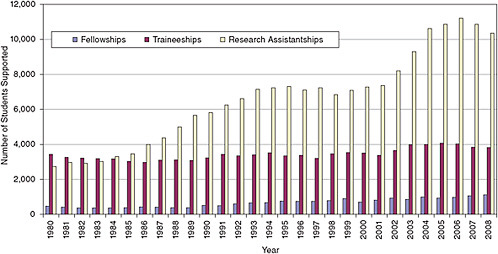
FIGURE 3-16 NIH support of graduate students.
SOURCE: NSF. 2008. Survey of Graduate Students and Postdoctorates in Science and Engineering. Washington, DC: NSF.
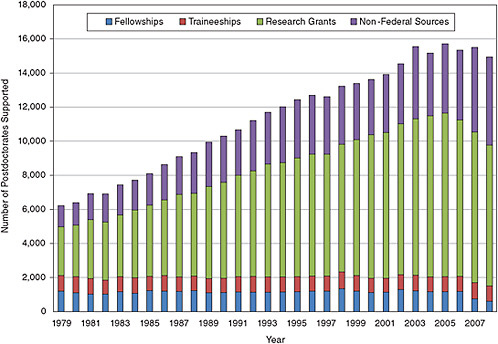
FIGURE 3-17 Postdoctoral support in the biomedical sciences.
SOURCE: NSF. 2008. Survey of Graduate Students and Postdoctorates in Science and Engineering. Washington, DC: NSF.
because of the dramatic increase of trainee funding from research grants. In 1979, 2,217 (or 31 percent) of the total 6,698 federally funded university-based postdoctoral fellows received their training on a fellowship or traineeship. Over time the trainee and fellowship support has remained fairly constant at around 2,000, but in 2007 and 2008 there was a decline, and in 2008 only 1,502 postdoctorates were supported on these mechanisms and represented 8 percent of the federal support. The remaining 96 percent came in the form of research grants. From 1979 to 2006 the share of non-federal funding for postdoctoral positions had been almost constant at about 25 percent but increased to 35 percent in 2008.
Over the past 25 years, research grants awarded by the NIH and other Health and Human Services agencies have more than doubled.11 With the increase in the amount of laboratory work required to meet the aims of these grants, principal investigators have come to depend increasingly on graduate students and postdoctoral fellows: the trainees have in essence become the academic research workforce. As a result, the number of universities awarding Ph.D.s in the basic biomedical sciences, and the number of Ph.D.s awarded by existing programs, has grown. Thus, federal funding policies provided universities an incentive to appoint students and postdoctoral fellows to research assistantships in addition to training grants or fellowships. Indeed, there is a cost-benefit to the university and to the federal sponsor to support students on research grants because the indirect cost rate for institutional training grants is capped arbitrarily at 8 percent, far below the significantly higher negotiated rates on research grants, and below the administrative and facilities costs incurred by the institutions that could justifiably be allocable to “training.” However, this is likely not the driver in this case.
Rather, as mentioned above, the growth in training support from research grants reflects the fact that graduate students and postdoctoral fellows are the backbone of the biomedical research workforce, and the increase in student trainees/workers simply reflected the additional research that can be performed with the additional federal support. The large increase in the fraction of the postdoctoral workforce that is supported by RPGs brings to the forefront the need to ensure that all postdoctorates, no matter how funded, should benefit from the expected enrichments offered to postdoctorates by the NRSA training programs.
As described in Chapter 1, the number of graduate students and postdoctoral fellows who have been provided research training through NRSA training grants and fellowships has been deliberately limited over most of the past 25 years with the (utterly unrealistic) goal of controlling the number of independent researchers entering the workforce. However, if that was really the goal, it has been singularly unsuccessful. As Massy and Goldman concluded in their 1995 analysis of science and engineering Ph.D. production (and as one might expect when the trainees are a major component of the academic workforce), the size of doctoral programs is driven primarily not by the labor market for Ph.D.s.12 but rather by individual faculty needs for research and (to a lesser extent) teaching assistants, and in the biomedical arena it is largely the former that is driving the size of graduate student and postdoctoral pools.
Despite this massive shift in relative federal support of training over the past 30 years, NRSA training grants to institutions are highly prized and competitively sought. They bring prestige to institutions that have them, and they add stability to graduate programs, because they are usually for 5 years and allow for future planning. In addition they have been immensely potent forces stimulating the development of creative approaches to graduate education and providing focus on the need to apply evaluations of post-graduation outcomes in assessing the success of the programs. In addition, they have been a strong motivator in the quest to diversify the biomedical workforce, and nowhere has this been more successful than in those schools aggressively competing for training grant support. On the other hand, only U.S. citizens and permanent residents now qualify for support under NRSA training grants and fellowships, and because a growing number of graduate students and fellows with temporary resident status make up the research workforce, these temporary residents have necessarily been supported by research grants.
Another factor in the shifting patterns of federal research training support is the type of education that students receive. From their inception, NRSA predoctoral training grants in the basic biomedical sciences have been multidisciplinary—emphasizing the importance of having students exposed to a wide range of fields and technologies in the biomedical sciences, and even to fields in other branches of science. At a time when many of the frontiers of science demand multidisciplinary and interdisciplinary research capabilities to produce significant advances, this requirement becomes ever more pressing. Although the amount and quality of multidisciplinary training may vary from program to program, students in programs supported by training grants might arguably have a better and more complete educational experience than those on a research assistantship.
Given the fact that more than half of the graduate student and postdoctoral fellow training is not funded by the NRSA mechanism, it is legitimate to ask if the training that these individuals receive is preparing them optimally for their future roles in the biomedical workforce. The majority of graduate students in the biomedical sciences who receive their funding support as RAs are situated within departments and as such are subject to the rules and expectations of their graduate schools and departmental programs. In
this sense, the expectations for their overall performance are not radically different from those of students supported by NRSAs. Although the training may be less interdisciplinary and may lack the same emphasis on exposure to Responsible Conduct of Research (RCR), career planning, and quantization in science, we may nonetheless expect that these programs should be comparable academically to the NIH-funded programs.
It is not so immediately apparent that these same conclusions necessarily apply to the postdoctorate workforce. Postdoctoral fellows are recruited to individual labs and are rarely involved in a highly structured program comparable to the graduate education model. For well-trained individuals, this is an opportunity to broaden their experience and develop their independence and can be a valuable component of their professional development. Nonetheless, as was indicated in Table 3-14, a significant number of U.S. national postdoctoral fellows are trained as fellows or on training grants, each with explicit NIH-mandated components (such as diversity and exposure to multidisciplinary research and RCR). However, the pool of postdoctoral fellows who are the most responsive to rapid deployment of recently received research funds is the international pool—a group that now makes up the majority of the postdoctorate component of the workforce. There is a need to ensure that the programs in which these trainees find themselves are adequately developed, indeed that there is a training component, and to ensure that the caliber of work is high, that the expectations of the NIH are met, and that the interests of the international postdoctoral fellows themselves for training in RCR, quantitation, and career planning are met.
POSTDOCTORAL REMUNERATION AND BENEFITS
A discussion of postdoctoral education would be incomplete without a discussion of the byzantine ways that universities have been compelled to categorize and appoint postdoctorates by the stipendiary nature of the NRSA. At any one time an institution will likely have the following types of postdoctorate, all of whom might be doing comparable research and being exposed to similar enrichment and other appropriate training activities. There are U.S. national postdoctorate trainees who are not supported by an NRSA and international postdoctorates on J-1 visas who cannot be supported by an NRSA, and both groups are treated (or should be) as postdoctorate employees in training. Finally, since 1990 there has been an increasing number of H1-B employees, who are usually also classified as postdoctorates. These international scientists are allowed into the United States in response to a defined shortage of workers in high-tech fields. As such they are admitted because institutions assure the Departments of Labor and Homeland Security that they are already trained and that they will fulfill a workforce need not satisfied by the current pool of U.S.-trained workers. However, the reality is that these international scientists really should not be in “training” programs as they were admitted on the assurance that they are fully trained!
Adding to the confusion in terms of pay and benefits for postdoctorates is the federal mandate that NRSA recipients are stipendiary, and because they are not categorized as employees, they do not pay the Federal Insurance Contributions Act (FICA) tax and do not receive employee benefits, such as health insurance and contributions to retirement funds. Many institutions have successfully attempted to address this situation by providing separately negotiated medical insurance, but the retirement benefits usually have to be secured independently by using the savings from not paying FICA to cover the cost of a personal investment mechanism. Postdoctorates who are not supported by NRSA are treated as employees, but, depending on the institution, they may be offered full or sometimes, restricted employee benefits. Following prompting by the NRC report Trends in the Early Careers of Life Scientists, many institutions have moved to provide employee postdoctorates with health benefits comparable to those provided to the rest of their employees. However, there remains the paradox of postdoctorates who perform similar tasks but who are remunerated in different fashions depending upon their NRSA status. Faced with the difficulty of turning NRSA trainees into employees, some institutions have paid such trainees an additional, nominal salary, which can give them access to employee health plans, while others have converted all the postdoctorates into a common classification as trainees. However, in order to satisfy IRS rules these fellows must receive a formal education component for which they pay tuition cost. Also, given the H1-B issue referred to above, this may be an increasingly complicated and perhaps even questionable strategy. Obviously, different institutions have attempted to develop individual strategies best fitted to their own cultures. Possibly the best solution is to combine an excellent health insurance scheme for all postdoctorates (which is eminently doable) with transparent explanations of the different financial circumstances which, while different for the different categories, ultimately end up with all the postdoctorates in a more or less similar financial position.
CAREER OUTCOMES FOR GRADUATE STUDENTS AND POSTDOCTORAL FELLOWS
As was mentioned earlier in the chapter, graduate students and postdoctoral fellows have traditionally tended to seek careers in academic or industrial research. This paradigm has been changing over the past decade, and the current turmoil in the economy will likely additionally affect career outcomes for our trainee workforce. The factors of concern are: (1) the economic distress has hit both industry and academia hard, and it is likely that these sectors will not increase their rates of hiring in the near term; indeed some downsizing seems almost unavoidable, and (2) the downturn in the world economy has had less severe impact on several Asian coun-
tries that are rapidly diversifying and making major purposeful investments in science and in new technologies as a high national priority. Indeed their investments in education and in research and technological infrastructure may soon exceed our own, and as the major recession continues, the difference in investment may only increase. It is thus not inconceivable that the influx of foreign postdoctorates may well slow, and the effect could be severe as we have come increasingly to depend on this source of fellows to “titrate” our research workforce needs in response to changes in R01 funding. In addition, because of the economic distress, faculty at the end of their careers are resisting retirement because their 401(k) funds were depleted at the same time that university capacity to create new faculty slots was sharply diminished. All of these factors add up to bleaker prospects for those of our trainee workforce who are ready to enter the traditional job market.
A crisis can oftentimes provide an opportunity for creative, new, and unexpected solutions. The review committee felt very strongly that postdoctorates must be provided opportunities to learn about other, less traditional career options. Prominent among these is K-12 science education, generally agreed to be in a sorry state in this country. Accordingly, the NIH and other federal agencies, including the Department of Education, should devise mechanisms that enable senior postdoctorates to meet requirements to gain accreditation in teaching and should develop incentives (e.g., educational loans forgiveness) to encourage these trainees to enter high school science teaching. These trainees are highly knowledgeable, well trained, and possess unusual capabilities unlikely to be found in individuals with B.S. or M.S. degrees. Not only might this provide an attractive option to some in the trainee workforce, but it could also begin to address a major problem in our educational system that threatens the future scientific prowess and economic competitiveness of our country.
RECOMMENDATIONS
In the light of this discussion we propose the following recommendations:
Recommendation 3–1: The total number of NRSA positions in the biomedical sciences should remain at least at the fiscal year 2008 level. Furthermore, we recommend that future adjustments be closely linked to the total extramural research funding in the biomedical, clinical, and behavioral sciences. In recommending this linkage, the committee realizes that a decline in extramural research would also call for a decline in training.
Recommendation 3–2: Peer reviewers in evaluating training grant applications, especially competing renewals, should be instructed to broaden their concept of “successful” training outcomes to recognize nontraditional outcomes that meet important national priorities and needs related to the biomedical, behavioral, and clinical sciences.
Recommendation 3–3: One highly needed and extremely valuable outcome would be for graduates of the biomedical training workforce to become involved in a career teaching K-12, and especially middle and high school science. The NIH and the Department of Education should work to provide incentives to attract trainees to careers in K-12 science and should lead a national effort to accelerate the processes of “teaching accreditation” that the committee recognizes is controlled by the individual states.
Recommendation 3–4: The size of the MSTPs should be expanded by at least 20 percent, and more if financially feasible.
Currently there are 911 MSTP slots at an average cost of $41,806 per slot. An increase by 20 percent to about 1,100 slots would increase the MSTP budget by about $7.6 million or 1 percent of the NRSA budget. If phased in over time, the impact would be less.
Recommendation 3–5: The M.D./Ph.D. MSTP should be encouraged to include basic behavioral and social sciences training relevant to biomedical research, including the neurosciences.
Recommendation 3–6: MSTPs should be encouraged to intensify their efforts to identify and recruit qualified nontraditional, underrepresented groups (women and minorities). These efforts should be documented, and they should be a factor in the evaluation of all requests for MSTP funding increases and be conditions for receipt of any MSTP funding increases. Success depends on having a critical mass (not isolated examples) of underrepresented trainees in any given MSTP.
Recommendation 3–7: All institutes are encouraged to make F30 fellowships accessible to qualified M.D./Ph.D. students.


