
6
Use of Science in Decision Making
A key tenet of the Everglades restoration effort is that reliable scientific information will guide critical engineering and ecosystem management decisions. This principle is written as background for the Programmatic Regulations, the legal document that guides the implementation of the Comprehensive Everglades Restoration Plan (CERP): “The definition of restoration recognizes implicitly that science will be the foundation of restoration, but it also assumes … that in all phases of implementation of the Plan both restoration and the other goals and purposes of the Plan should be achieved” (33 CFR §385). The Senate Committee on Environment and Public Works (Senate Report No. 106-362) also wrote: “The Committee expects that the agencies responsible for project implementation report formulation and Plan implementation will seek continuous improvement of the Plan based on new information, improved modeling, new technology and changed circumstances.” Given the enormous scope and complexity of the restoration effort, the success of the CERP depends on strategic, high-quality, responsive, and sustained science and an effective, adaptive management framework.
In this chapter, the committee reviews scientific support for Everglades restoration from several perspectives. This chapter builds upon prior reviews of this topic by the National Research Council (NRC, 2007, 2008). First, the progress on the implementation of an adaptive management program is discussed, and remaining challenges are identified. Next, recent progress in the monitoring and assessment program and related reports are reviewed. The role of research to help resolve critical uncertainties is then described, focusing on examples of climate change science and the role of flow to support essential characteristics of the ridge and slough system. The committee then evaluates the effectiveness of current modeling tools. Finally, recent tools for assessing ecosystem services are reviewed for their potential value to restoration decision making.
ADAPTIVE MANAGEMENT
Adaptive management is “a structured management approach that links science to decision-making in order to improve the probability of restoration success” (RECOVER, 2010a). In recognition of the many uncertainties inherent in restoring the Everglades, adaptive management has always been a fundamental premise of CERP planning and implementation. Use of an adaptive management approach was authorized by the Water Resources Development Act of 2000 (WRDA 2000), and development of a CERP Adaptive Management Program was required in the 2003 Programmatic Regulations.
Instituting CERP adaptive management has largely been the purview of the RECOVER Program (Box 2-3). As described in previous NRC reports (NRC, 2003c, 2007, 2008), development of an adaptive management framework has been an important CERP accomplishment comprising many interrelated activities. Products include programmatic documents describing the adaptive management process and all aspects of performance assessment, including a monitoring and assessment program (RECOVER, 2004, 2005a,b, 2006a,c,d, 2007b, 2009, 2010a); conceptual ecological models to support monitoring and assessment (e.g., Ogden et al., 2005); an information and data management system along with the Interagency Modeling Center to support assessment and planning aspects of decision making; and a system status reporting process that establishes a baseline for long-term perspective of restoration impacts and effectiveness (RECOVER, 2006b, 2007c, 2010b).
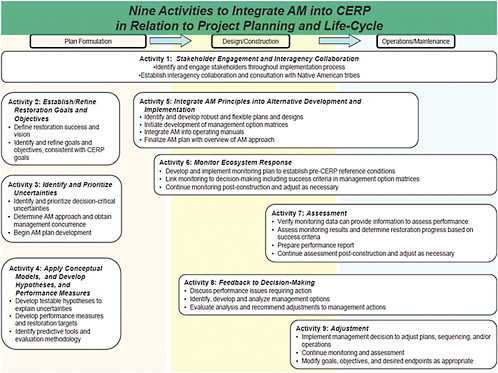
Now that the foundations of the CERP adaptive management framework are largely in place, RECOVER has focused on producing guidance to ensure effective functioning of the adaptive management process. A Draft Comprehensive Everglades Restoration Plan Adaptive Management Integration Guide (RECOVER, 2010a) has been through several iterations and was recently made available for public comment. As laid out in that document, the elements of adaptive management reside in a series of “activities” (Figure 6-1) that promote learning and adjustment as the ecosystem responds to restoration practices.
Previous NRC reports (NRC, 2007, 2008) provide detailed evaluations of adaptive management activities such as restoration goals (Activity 2), uncertainties (Activity 3), conceptual models and performance measures (Activity 4), and monitoring and assessment (Activities 6 and 7). In this section, the committee evaluates recent progress and challenges in implementing other CERP adaptive management activities, focusing in particular on stakeholder engagement and interagency collaboration, integration of adaptive management principles into alternative development and implementation, feedback to decision making, and adjustment (Activities 1, 5, 8, and 9 in Figure 6-1).
Activity 1:
Stakeholder Engagement and Interagency Collaboration.
Stakeholder processes are particularly challenging in a program of such broad scope and duration as the CERP; interested parties span the full range of jurisdictions from local to federal agencies and tribal governments, and social scales span local residents to national interest groups. As discussed in RECOVER (2010a), CERP engagement with stakeholders runs the gamut from simply providing information to consultation to collaboration. A successful stakeholder process should appropriately match the level of engagement to each interested party and provide adequate resources to maintain that process as long as needed.
The 66 signatories to the CERP conceptual plan and CERP authorization in WRDA 2000 are testimony to initial broad public and agency support for Everglades restoration. Since that time stakeholder conflicts and agency delays have led to repeated project delays and cost overruns that have threatened to bring meaningful restoration to a standstill (NRC, 2007, 2008). Although stakeholder conflicts are inevitable in a project with as many affected parties as the CERP, the pattern is symptomatic to some extent of inadequate or inappropriate engagement with tribal nations and public stakeholders. RECOVER staff have also identified non-agency stakeholder engagement and collaboration as a particular challenge in implementing adaptive management for the CERP (LoSchiavo, 2009).
In particular, the Federal Advisory Committee Act (FACA; 5 U.S.C. Appendix 2) restricts the ways in which CERP planners can interact with non-agency stakeholders. The U.S. Army Corps of Engineers (USACE) CERP staff have been advised by legal counsel that collaboration with non-agency stakeholders, defined as a two-way dialogue and working together to define and solve problems, is not permitted under FACA in CERP meetings convened by a federal entity. Instead, such collaboration is only permitted through meetings convened by non-federal entities or a group established under a FACA exemption, such as the South Florida Ecosystem Restoration Task Force (RECOVER, 2010a). Thus, it appears that strict interpretation of FACA, which was originally intended to ensure that advice delivered to the government is objective and accessible to the public, may be hindering a more inclusive planning processes and improved stakeholder involvement. A recent NRC report on public participation in environmental assessment and decision making concluded that when done well, public stakeholder participation can improve the quality and credibility of decisions and the capacity of all involved in the policy process; but the study also found that when poorly done, participatory processes can make matters worse (NRC, 2008). This report recommended a “best-process” regime that includes monitoring of stakeholder processes to gauge effectiveness and adoption of alternative tools and techniques as warranted.
Ironically, there is no learning component to the stakeholder engagement guidelines in the CERP Adaptive Management Implementation Guide and there is no evidence that the CERP Outreach Program responsible for stakeholder engagement has undertaken any formal self-assessment since publication of the CERP Outreach Management Plan in 2001. As a result, it is not possible to rigorously evaluate whether CERP public participation processes are making things better or worse, whether they are adequately resourced, or how they could be improved. The USACE and SFWMD should formally evaluate CERP public participation processes, compare them to other models (for example the USACE’s Shared Vision Planning process), strengthen public outreach and public participation efforts, and implement a process of effectiveness monitoring and iterative improvement.
Interagency coordination of CERP science and adaptive management occurs at many levels. RECOVER includes representatives from seven federal agencies, the Miccosukee and Seminole tribes, and three state agencies. The CERP monitoring and assessment program (MAP) comprises at least 36 monitoring components involving 25 different entities. The effectiveness of and continuing improvement to the MAP (discussed in more detail later in the chapter) is evidence that scientific research, monitoring, and assessment are being relatively well coordinated. However, as the CERP moves from planning to project construction, differences have become evident both within and among agencies in how they define and apply adaptive management (LoSchiavo, 2009). For example, some CERP scientists have expressed concern that USACE engineers may not adequately value learning when considering benefits and costs of alternative project designs. This is evident in the USACE Implementation Guidance Memorandum for Ecosystem Restoration (August 31, 2009), which equated an “Adaptive Management Plan” with a “Contingency Plan” and indicated that the sole purpose of monitoring is to inform whether a project is performing adequately or not and whether modifications are needed to attain project benefits. This would seem to exclude any consideration of learning benefits to future projects obtained through well-designed adaptive management. Given the differences in agency missions, technical strengths, and approaches to restoration, disagreements can emerge in how uncertainties are prioritized or the appropriate scope of adaptive management both at project and programmatic levels. Although not unexpected, these disagreements ultimately impact project design and monitoring and assessment activities. For this reason, the CERP Adaptive Management Integration Guidance document represents an important step toward developing more consistency in how adaptive management is defined and applied during CERP program and project implementation to achieve restoration and learning benefits.
Activity 5:
Integrating Adaptive Management Principles into Alternative Plan Design and Implementation
As represented in Figure 6-1, incorporating CERP adaptive management to alternative plan design and implementation continues even as other activities such as monitoring, assessment, feedback to decision making, and adjustment occur. In initial CERP projects, adaptive management has been integrated to varying degrees into evaluation of project alternatives and ultimate project design and operation. In the case of Picayune Strand, a monitoring and assessment program is in place to evaluate project effectiveness but only loosely linked to adaptive management in terms of stated uncertainties, hypotheses, or measures of restoration performance (USACE, 2004). The Indian River Lagoon Project includes an extensive Adaptive Assessment and Monitoring Program for monitoring ecological and water quality responses, but the documents imply that the intent is mainly to assess project effectiveness, and they make no mention of specific ecological uncertainties or hypotheses to be examined, nor how the information would inform adaptive management (USACE, 2004). The Draft Project Implementation Report (PIR) for the C-111 Spreader Canal, Western Project discusses adaptive management and incorporates elements of adaptive management into the monitoring plan and project operating manual, but it provides little guidance on which key scientific uncertainties should be addressed through monitoring and adaptive management (USACE and SFWMD, 2009a).
In contrast, the recently completed Biscayne Bay Coastal Wetlands Phase 1 Draft Integrated PIR/EIS includes a separate adaptive management plan that presents key uncertainties, management alternatives and associated costs, and hypothesis-based assessment protocols tied to specific performance measures (USACE and SFWMD, 2010a). Consistent with the notion of Incremental Adaptive Restoration (NRC, 2007), the document describes opportunities for knowledge gained in Phase 1 to be incorporated into the design of Phase 2. In the committee’s view this last example comes closest to the intent of Activity 5 as envisioned in the CERP Adaptive Management Guidance Manual. Whereas typical CERP project monitoring plans only include activities not under the auspices of the MAP, which can create challenges when integrating project-level and systemwide monitoring information (Heisler and Ehlinger, 2009), the ecological monitoring plan for Biscayne Bay has been more deliberately coordinated with the MAP and will use MAP performance measures, results, and protocols whenever possible. This has led to consideration of systemwide as well as project-level performance measures and stronger programmatic ties between RECOVER’s applied science efforts and project-level management (LoSchiavo, 2009).
Activities 8 and 9:
Feedback to Decision Making and Adjustment
During the past decade the baseline of information and scientific understanding has expanded significantly, although major uncertainties persist regarding how the ecosystem will respond to partially restored hydrologic regimes. As projects come online, effective feedback of knowledge gained though adaptive assessment is essential to inform management and policy decisions and ultimately guide necessary adjustments to restoration goals and objectives.
With the exception of the short-duration Decomp Physical Model and the C-111 Spreader Canal design test, the pre-CERP and CERP projects now being implemented are not active adaptive management experiments. Instead, CERP projects primarily apply passive adaptive management, where project outcomes are monitored and evaluated, and subsequent decisions regarding project operations or the design of subsequent projects are adjusted based on an improved understanding. A critical question then is whether feedback and adjustment are possible under the current governance structure.
The current structure for scientific feedback to decision making is shown in Figure 6-2. Scientists report assessment results to the Design Coordination Team (DCT), which includes representatives from the USACE, South Florida Water Management District (SFWMD), and Florida Department of Environmental Protection (FDEP). The DCT consults with ad hoc teams, tribal nations, and agency partners and recommends management options and actions to the Quality Review Board (QRB),1 a group of senior decision makers from participating CERP agencies, and to the Joint Project Review Board (JPRB), which comprises senior managers from the USACE and SFWMD. Following agency and public review, decisions and adjustments are made by senior leadership in the USACE and SFWMD.
In their critique of Everglades adaptive management and governance, Gunderson and Light (2006) argue that both scientists and decision makers have been unwilling or unable to practice adaptive management because they are caught in a management trap “maintained by considerable infusions of money, which are tied to the conventional bureaucratic system. This system is governed by rules and procedures that are no longer fitting and appropriate to accomplish a highly complex and multi-objective mission. The result is that for the sake of consistency, Everglades restoration remains in a policy straitjacket” (Gunderson and Light, 2006). They characterize Everglades governance as fundamentally a top-down, command-and-control structure that has never seriously confronted
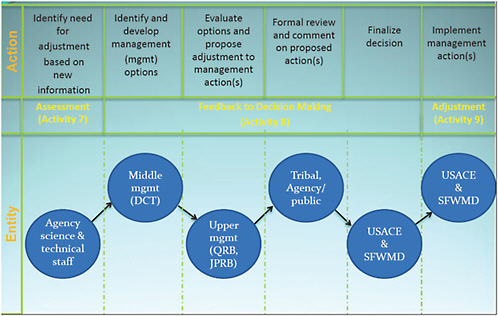
FIGURE 6-2 Simplified schematic of the current governance structure for scientific feedback to decision making in CERP.
SOURCE: USACE (2010a).
uncertainty or embraced learning through scientific management experiments. Such a governance regime, they argue, cannot be relied on to accept feedback and make appropriate course corrections. Therefore, the committee explored whether such statements hold true today.
This committee encountered strongly contrasting opinions regarding the capacity for scientific feedback to influence management and policy decisions in the current system. Some individuals complained that RECOVER has been marginalized in decision making and relegated to a passive reporting role rather than participating directly in programmatic review or decisions. Former Deputy Secretary of the Department of the Interior Lynn Scarlett observed adaptive management should be a joint enterprise between scientists and managers but that “there is no formal governance process or joint fact-finding process through which decision makers and scientists regularly collaborate and converse to shape the science agenda, discuss scientific results, and adapt and adjust practices based on those results” (Scarlett, 2010). On the other hand, senior managers
in the USACE, Department of Interior (DOI), and SFWMD maintained that CERP leadership has been receptive to new scientific guidance, pointing to examples like the collaboration between scientists and managers in developing an increased understanding of and accounting for the importance of sheet flow in restoring the ridge and slough system (discussed in detail later in this chapter) and the involvement of scientists in providing biweekly input to decision makers about ways to optimize operations of the water management system in Water Conservation Area (WCA)-3 (see also Chapter 4).
The committee has not tried to evaluate the degree to which recent management decisions have incorporated scientific information, but the effectiveness of the linkage between science and decision making is clearly an issue that should be examined by CERP leadership. Some restoration scientists suggested that the potential for scientific feedback would be increased by adding senior scientists to the Quality Review Board or by appointing senior scientists to the South Florida Ecosystem Restoration Task Force, either in voting or non-voting roles. Other alternative models proposed having independent (non-agency) scientific experts on RECOVER or perhaps an independent “chief scientist” as a way of increasing the credibility of scientists in policy and decision processes.
This committee does not have the resources or the expertise to systematically evaluate the current institutional structure or to recommend a preferred structure for ensuring effective feedback of scientific learning to management and policy decision making in the CERP. Instead, some effective strategies for incorporating science into decision making are discussed in the next section.
The predecessors of this committee have generally evaluated CERP science activities favorably, and as is discussed in more detail later in this chapter (see Advances in Research), this committee agrees. Predecessor committees also have emphasized the importance of linkages between science and assessment functions and decision making as a basis for adaptive management (e.g., NRC, 2003b, 2007). As discussed previously, some have suggested that these linkages could be improved by including scientists on key advisory or decision-making bodies. This is not without its drawbacks: there is some concern that scientists’ credibility can suffer if they take positions of advocacy or are involved in decision making (e.g., Policansky, 1998a; Lach et al., 2003). However, some have argued that times are different now and that scientists have to undertake new roles and activities to be effective (e.g., Boesch, 1999, 2006; Lach et al., 2003). Thus, the question arises as to how best to involve scientists in decisions without affecting their credibility as scientists.
The consensus of most of the above authors seems to be that mechanisms need to be developed that provide clear communication of the science (Lach et al., 2003; Boesch, 2006). First, scientists need to be willing and able to effectively communicate their decision-relevant findings to managers and decision
makers. Mechanisms are needed for involving scientists in management and policy decisions without compromising their scientific integrity and without trying to make scientists out of policy makers and managers or making policy makers out of scientists (Guston, 2001; Lach et al., 2003; Boesch, 2006; Boissin, 2009). Also, clearer expression of scientific judgments and policy goals as separate but critically important aspects of environmental decision making is needed (Policansky, 1998b).
As restoration projects begin to register effects on the ecosystem, the efficacy of scientific feedback to decision making will be tested with increasing frequency. Issues such as lines of reporting and communication, resolution of scientific disagreements, stakeholder engagement, and decision authority will need to be clarified. CERP personnel are currently considering these questions, as evidenced by the March 2010 workshop, “Incorporating New Information into Decision Making.” In doing so, the committee encourages the strong linkage of scientific information to policy and management considerations such that scientific judgments are clearly communicated and distinguished from identified policy goals. In other words, the committee is encouraging the development of scientific information that is relevant to policy and management considerations and the development of mechanisms to incorporate that information into policy and management decision making, while maintaining the distinction between scientific conclusions and policy and management decisions. The committee also recommends greater clarity and transparency on the part of the CERP in developing, identifying, strengthening, and describing mechanisms for integrating science into policy, management, and implementation decisions for CERP. In the committee’s judgment, such clarity would benefit the participants in the decision-making process as well as stakeholders and other interested parties.
MONITORING AND ASSESSMENT PLAN
The CERP Monitoring and Assessment Plan (MAP) is a critical component of adaptive management (see Activities 4, 6, and 7 in Figure 6-1). The MAP has as its goal the development of a single, integrated and systemwide plan to be used by RECOVER and CERP agencies for holistically determining the state of the Everglades ecosystem during the restoration. The plan provides guidance to establish pre-CERP reference conditions including metrics of natural variability, assess the systemwide response to CERP implementation, and detect unexpected responses of the system. This information forms the basis for adaptive management, by providing the necessary feedback to managers to allow additional CERP refinement as the ecosystem moves toward the desired goals. The committee’s last two reports (NRC, 2007, 2008) included detailed discussions on the major components of the MAP (RECOVER, 2004, 2005b, 2006d, 2007b, 2009), and
this section is focused on the MAP developments since NRC (2008) was released: MAP 2009 and the stoplight indicators. The 2010 System Status Report is also discussed briefly, although the report was released too late for a thorough review by the committee.
MAP 2009
The recent revision of the CERP MAP, Part I (RECOVER, 2009; also called MAP 2009) expands and updates RECOVER (2004; hereafter called MAP 2004) to respond to refinements in the hypotheses, allow better coordination with adaptive management, incorporate project-level monitoring, and address changing priorities. Figure 6-3 illustrates the many activities and reports that occurred after 2004 that influenced the changes seen in MAP 2009.
MAP 2009 reflects changes to the science strategy of CERP since 2004 and a much broader scope for the monitoring and assessment program. The conceptual ecosystem models (CEMs) have been further refined and combined into hypothesis clusters. These hypothesis clusters integrate stressor-response relationships and better reflect the complex functional relationships between the
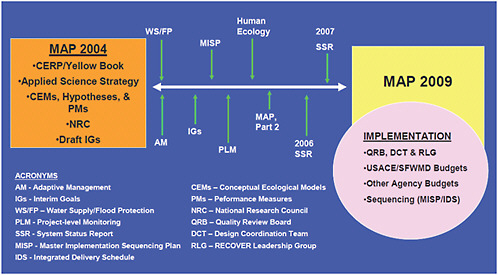
FIGURE 6-3 Factors influencing the development of MAP 2009.
SOURCE: RECOVER (2009).
performance measures, driving factors, stressors, and response variables. These revisions, and the plan in general, take into account lessons learned from the 2007 System Status Report (RECOVER, 2007c), which was the first large-scale test of the monitoring and assessment methodologies.
Another notable addition to this revision is an explicit consideration of global uncertainties, defined as “factors that have wide-ranging effects and cut across and affect the success of all restoration programs.” Included in the analysis of such global uncertainties are climate change and sea level rise, invasive exotic plants (now considered one of the high-priority issues facing the CERP), and the role of fire and changing fire regimes. While not offering in-depth analyses of each of these issues, the report does point to related and ongoing efforts to take these three critical issues into account in the overall planning for the CERP.
MAP 2009 specifically addresses the crucial role of monitoring, assessment, and communication as the basis of the adaptive management plan. The report correctly points out the fact that informed decision making is reliant on data collection and interpretation, and that hypothesis-based monitoring provides a robust basis for these activities. The plan discusses how each of the nine activities required to carry out adaptive management (see Figure 6-1) is incorporated into MAP implementation. The plan also calls for “open and inclusive” interactions with all stakeholders to ensure public and agency support for management decisions based on the monitoring and assessment results. MAP 2009 promotes the use of decision-support tools and decision frameworks to help managers apply monitoring results to management decisions.
MAP 2009 explicitly addresses the challenges of setting target and threshold levels for performance measures, particularly those used as indicators for Interim Goals (IGs). A scientifically defensible approach is taken, based on the calculation of confidence intervals around a selected measure of central tendency for each indicator variable, plus a “safety factor.” This approach takes into account a measure of the natural variability of each variable. Although the plan notes that thresholds may occur past which the system, or parts of the system, may undergo state changes that are hard to reverse, it also notes that such thresholds are very difficult to establish quantitatively. The current report simply notes this difficulty; in future versions RECOVER should develop explicit methods for specifying if and when quantitative values of thresholds can be established.
MAP 2009 carefully separates the scientific from nonscientific issues involved with implementation of the program. Nonscientific issues include the mechanisms and administrative issues for incorporating project-level monitoring data, the sustainability of the plan (in terms of financial resources), agency coordination, and the maintenance of public support through effective communication of results. The MAP explicitly recognizes and discusses the challenges of maintaining the monitoring effort. In MAP 2009, good communication of the
specific uses of monitoring information in decision making, the maintenance of strong relationships to stakeholders, and collaborative decision making are identified as crucial to the sustainability of the monitoring and assessment effort. The development of the stoplight indicator reports (see below) is a positive development that will likely enhance support for monitoring. In the previous section, the need for transparent mechanisms for incorporating science into decision making is discussed, and the MAP is an essential part of this process.
Finally, the report deals extensively with issues of data management, addressing issues of data incompatibility and data availability. While numerous platforms for storing, sharing, and documenting data are now in use, the overall program of data management is still described as “evolving.” RECOVER should address the remaining data management issues promptly to ensure that monitoring data, as they accumulate, can be effectively used in the systemwide context.
MAP 2004, which had been developed and improved with advice from NRC (2003b), was also reviewed in NRC (2007). Although NRC (2007) generally praised the approach being taken by RECOVER in designing a monitoring and assessment program, it offered specific suggestions for improvement and expressed concern about several issues. These included the development of whole-system performance measures, the development of adequate hydrologic monitoring networks and hydrologic measurements that were specifically linked to ecological components, the implementation of the MAP, and the sustainability of the MAP. These issues have been largely met in the current version of the MAP. Work on systemwide performance measures has been ongoing (e.g., Doren et al., 2009a). The U.S. Geological Survey (USGS) has extensively developed and validated the EDEN network of water depth monitoring data and its application to ecological indicators (Liu et al., 2009). NRC (2008) found that the 2007 System Status Report provided an excellent basis for further developing and applying the MAP, and the lessons learned from this exercise have been explicitly incorporated into the current plan. Finally, although RECOVER has not solved the problems of either ensuring the sustainability of the MAP or developing a seamless data management system, both topics are addressed explicitly and in depth in the current plan, indicating that progress is being made on both fronts.
The committee was impressed by the thoughtfulness and thoroughness of the MAP. The explicit description of mechanisms for incorporating MAP information into management and implementation decisions is a good feature of the report. However, a full evaluation of this aspect of the MAP cannot take place until the actual restoration progress has proceeded to a point at which it is possible to observe more completely how these monitoring and assessment mechanisms are put into practice. This committee reiterates the critical importance of the MAP for informing implementation and management decisions, as well as for providing assessments of restoration progress.
Stoplight Indicator Report
A crucial component of the MAP has been the development of indicators of restoration progress, called performance measures, which can be used to determine the effects of CERP implementation. The development and components of the set of performance measures were extensively reviewed in NRC (2008) and found to be, with some limitations noted, a well-justified, extensively documented, and comprehensive set of indicators of ecosystem status and restoration progress. However, the large number of performance measures does not lend itself to communicating ecosystem status to managers and the public. To meet this need, the Science Coordination Group, with input from RECOVER scientists, worked to develop a subset of systemwide indicators and a document that clearly communicates both the justification for the indicators and their current status (Doren et al., 2009b). This document is grounded in a series of papers published as a special issue of the peer-reviewed journal Ecological Indicators (Doren et al., 2009b). These papers describe both the criteria used to evaluate and select indicators and the indicators themselves (see Box 6-1). The indicators include both the desirable elements of the Everglades ecosystem and the major biotic undesirable element (invasive species). The set of selected indicators was also evaluated with respect to systems of indicators used in other large-scale restoration and environmental management programs around the United States. Explicit criteria were then developed for each indicator to assign a status level (i.e., red, yellow, or green) based on comparisons with the established target and threshold quantitative values (Figure 6-4).
The document prepared for dissemination to the public, including managers and decision makers (Doren et al., 2009b), does an excellent job of communicating the scientific underpinnings of the system and the status of each indicator. The authors give a “big picture” summary, which emphasizes the problems emanating from water quality and quantity challenges, regional issues (e.g., decline of the northern and southern estuaries), and the compounding effects of naturally occurring weather extremes. The brief reports on each systemwide indicator include maps to illustrate the status of particular indicators across the region, and individual red, yellow, or green status ratings for the component parts of each indicators (such as individual fish species for the “fish and macroinvertebrate” indicator; see also Figure 6-4). References to the scientific literature and websites are listed for access to more detailed information. Altogether, the stoplight report should greatly improve communication to both the general public and decision makers. However, rather than assuming this to be the case, the Science Coordination Group staff should systematically solicit feedback from these audiences, assess the effectiveness of the current stoplight indicators, and continue to refine and improve them.
|
BOX 6-1 Systemwide Indicators The systemwide indicators used in assessing Everglades restoration are
The explicit criteria used to select the above indicators are
SOURCE: Doren et al. (2009a). |
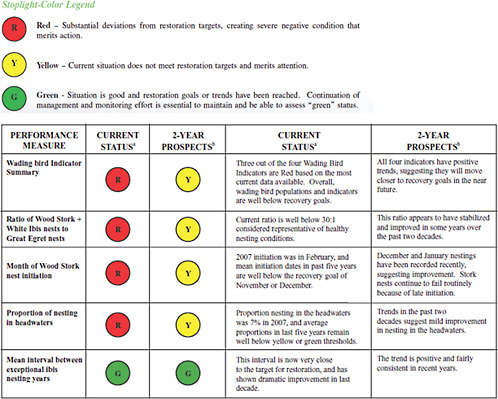
FIGURE 6-4 Example of application of the “stoplight” ratings to the wading birds (wood stork and white ibis) systemwide indicator.
SOURCE: Doren et al. (2009b).
System Status Report 2009
The RECOVER System Status Reports (SSRs) provide detailed assessments of the state of the Everglades ecosystem. Extensive monitoring data are compiled and analyzed to identify ecosystem trends and to provide pre-CERP reference conditions that will be used to assess CERP project-related ecosystem changes, once projects are implemented. The 2009 SSR (RECOVER, 2010b) builds upon previous system status reports by compiling and analyzing two additional years of monitoring data beyond that reported in the 2007 SSR (RECOVER, 2007c) and
by incorporating new data sources not previously used. The draft 2009 SSR was released to the public for scientific and technical review in April 2010, too late for the committee to provide an in-depth review. In addition, the systemwide synthesis chapter, perhaps the most important for the committee’s evaluation, will not be available until after the document has undergone scientific and technical review. Nevertheless, a brief discussion of the 2009 SSR is provided here.
The 2009 SSR builds on the 2007 SSR, which was discussed in considerable detail in the NRC’s second biennial review (NRC, 2008). As with prior system status reports, the 2009 SSR does not attempt to assess whether the CERP is meeting its goals or objectives because no CERP projects have yet been fully implemented. Also in the 2009 SSR, RECOVER not only analyzes the data within geographic modules, but also begins the process of integrating the data across geographic regions (RECOVER, 2010b). The committee did not have time for a thorough analysis of the data presented in each of the modules but it supports the conclusion in the 2009 SSR (and also echoed in NRC, 2008) that “the success of the MAP and CERP lies in the ability of this program to continue to maintain its long-term monitoring program in order to capture and account for this variability in its trend analysis so that it can effectively discriminate changes that are due to system variability from those resulting from CERP activities” (RECOVER, 2010b). Also, the committee encourages RECOVER to continue to develop and implement plans to assemble MAP-derived and other data across modules to allow for a systemwide assessment.
RESEARCH AND MODELING TOOLS TO SUPPORT RESTORATION
Substantial research progress has occurred since the CERP was launched in 1999 that has helped CERP planners understand the nature and function of the current and the historical South Florida ecosystem. In this section, the committee discusses advances in research, synthesis, and modeling that have contributed to an improved foundation for decision making. Recommendations are also presented to strengthen scientific and modeling support for restoration.
Advances in Research to Support Restoration Decision Making
Scientific support for Everglades restoration is a large and complex endeavor, carried out by agency and university scientists, with funding from CERP agencies and also the National Science Foundation. The committee did not attempt to analyze the full extent of research underway or to identify research gaps in this report, as this has been the focus of major planning efforts by both the Department of the Interior (DOI, 2005) and the Science Coordination Group (SFERTF, 2008). Instead, in this section examples of significant advances in research are
presented that have contributed to an improved foundation for decision making. Two areas that were less well understood 10 years ago—climate change and the role of flow—are discussed and recommendations are offered to strengthen the research that supports restoration.
Climate Change and the Everglades
Changing climate is a critical consideration for Everglades restoration, as discussed in detail in NRC (2008). Changing climate will likely be manifested through increases in temperature, changes in the quantity or temporal and spatial distribution of precipitation, and sea level rise, resulting in alterations in water supplies, impacts to commercial activities, perturbations to the Everglades landscape, changes in biogeochemical processes, and shifts in species distribution and biodiversity (see Box 6-2). As Everglades restoration involves large-scale
|
BOX 6-2 South Florida Climate Change Effects Climate change effects in South Florida can be subdivided into four impacts: (1) sea level rise; (2) increases in temperature and evapotranspiration; (3) changes in precipitation, flooding, and drought; and (4) tropical storms, hurricanes, and extreme events. Sea level rise Globally sea level has been increasing in recent years at an accelerating rate. The rate of sea level rise in Florida (estimated between 2.2 and 2.7 mm/yr; NOAA, 2010; SFWMD, 2009f) is somewhat greater than the global averages. If current rates continue, sea level will increase between 0.2 and 0.24 m in Key West by 2100. Increasing sea level will likely have adverse impacts on beaches, coastal infrastructure, and wetlands due to storm surges and high tides. Sea level rise will likely compromise flood control structures, which could increase flooding in low lying areas. With sea level rise, it is likely that there will be increased salt water intrusion into wellfields and the elimination of critical groundwater for water supplies. Depending on the rate of sea level rise, there could be marked changes in some of South Florida’s low elevation landscapes. Increases in temperature and evapotranspiration Climate scientists project increases in air temperature in South Florida, with summer temperatures predicted to increase by 1.7 to 3.9°C by 2100 (SFWMD, 2009e). Increases in temperature will likely increase rates of evapotranspiration, which will decrease the availability of water and increase competition for water among agriculture, development, and the Everglades. |
water and land management and projects that are planned for several decades into the future, NRC (2008) recommended that CERP planners more rigorously and systematically consider climate change impacts as part of planning activities. Two years later, CERP planners appear to be actively engaged in addressing the potential impacts of climate change on water management in South Florida (SFWMD, 2009e; Obeysekera et al., 2010). Some of the important science developments with implication for restoration management are discussed below.
Climate and Sea-Level Trends in South Florida. SFWMD researchers (Obeysekera et al., 2010) conducted time-series analysis of the temperature and precipitation records from 1892 to 2007 for 17 stations in South Florida. They found no clear significant continuous trends in temperature or precipitation, but they did observe an interesting pattern of increasing median temperature across all
|
Changes in precipitation, flooding, and drought There are no clear projections for changes in the quantity or distribution of precipitation in South Florida. Precipitation quantity could increase or decrease by as much as 20 percent. Increases in precipitation would likely compromise flood protection and could degrade wetland and coastal ecosystems. Decreases in water would increase competition for available water among agriculture, development and the Everglades, increase the threat to coastal groundwater supplies from salt water intrusion, accelerate the deterioration of the Everglades landscape, and likely increase the occurrence of fire. Tropical storms, hurricanes, and extreme events It is difficult to project future changes in tropical storms and hurricanes in response to changing climate. As the atmospheric temperature increases, ocean temperature and wind shear will also increase. These two factors will likely have opposing effects on tropical storms. Overall storm frequency may decrease, but the intensity of storms may increase. With decreases in the number of storms there could be changes in the quantity and distribution of rainfall. This change could affect water supplies and the South Florida ecosystem. If tropical storms and hurricanes become more intense, there is potential for damage to structures and flooding of urban coastal areas. Implications for the CERP In the face of these numerous challenges, NRC (2008) concluded that “Everglades restoration efforts are even more essential to improve the condition of the South Florida ecosystem and strengthen its resiliency as it faces additional stresses in the future. If ecological resilience is not restored, the possibility exists that environmental changes could precipitate rapid and deleterious state changes that might be very difficult or impossible to reverse.” SOURCE: SFWMD (2009f). |
17 stations until about 1940, followed by a decline until about 1980 and then increasing temperature until the present.
National Oceanic and Atmospheric Administration (NOAA) tidal gauge data were evaluated to assess long-term changes in sea level and changes in the occurrence in extreme tidal events at Key West (Obeysekera et al., 2010). Their analysis showed a linear increase in sea level of 2.9 and 2.7 mm/yr for the time periods 1913-1960 and 1961-2008, respectively. This rate is somewhat higher than the global average of 2.0 ± 0.3 mm/yr (White et al., 2005). The analysis also showed an increase in the probability of extreme water level events and a change in the extreme high water level of 15 cm for the recent interval.
General Circulation Model (GCM) predictions for South Florida. GCMs are used to make global, hemispherical, and continental-scale predictions of climate (e.g., temperature, precipitation, solar radiation), generally doing a better job predicting temperature than precipitation. Although GCMs may be effective tools for projection of future climate change, they have several limitations for local-scale water resource planners. Different GCMs produce different results, and there is no consensus on the “best” model. The grid size of GCMs is relatively large (~60 miles or 100 km) compared to the local scale of most watersheds. In fact, Central and South Florida is represented in many models with one or two grid cells, and these are generally depicted as mixed land-ocean cells. Some hydrologists and ecosystem scientists resort to downscaling to overcome these problems.
Obeysekera et al. (2010) evaluated the effectiveness of 16 GCMs in predicting seasonal temperature and precipitation patterns for South and Central Florida for 1961-1990. In general, the GCMs simulated the dry season precipitation fairly well, but they greatly under-predicted the wet season values and, as a result, under-predicted annual values. The GCMs did a better job predicting the measured temperature patterns; however, they generally under-predicted temperature by 2.5 to 3°C during the wet summer period.
Hydrologic Model Sensitivity Analysis of Changing Climate. Obeysekera et al. (2010) used the regional-scale South Florida Water Management Model (SFWMM) to conduct a sensitivity analysis of the response of the hydrologic system to changes in temperature, precipitation, and sea level rise. Precipitation was increased ±10 percent and temperature was increased by 1.5°C, changes thought to be a reasonable expectation of climate change that might occur in South Florida (Figure 6-5). The simulations suggest that decreases in precipitation coupled with increases in evapotranspiration would increase water shortages for urban areas by 27 percent, and the Minimum Flow Levels (MFLs) set to help protect environmentally sensitive areas would be violated more fre-
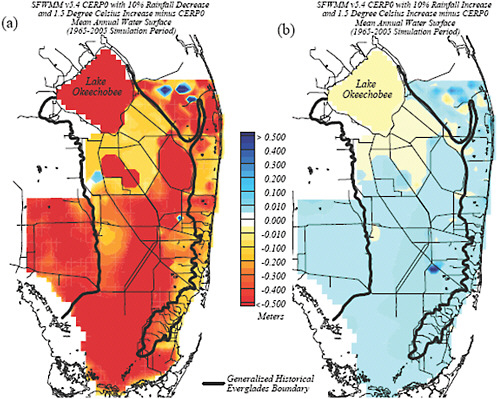
FIGURE 6-5 Simulation results using the South Florida Water Management Model showing average annual water surface elevation difference for the CERP project with modified rainfall and evapotranspiration: (a) –10 percent precipitation and +1.5°C and (b) +10 percent precipitation and +1.5°C, minus the CERP project base run (i.e., no change in precipitation and temperature).
SOURCE: Modified from Obeysekera et al. (2010).
quently. The analysis suggests that the system could accommodate a 10 percent increase in precipitation with an increase in temperature, which enhances loss by evapotranspiration.
Analysis of sensitivity to sea level rise suggests that the discharge capacity of control structures will be impaired under modest increases in sea level (Figure 6-6). Most of the control structures will lose half of their discharge capacity with increases in sea level as small as 12 cm. Fifty percent of the control structures
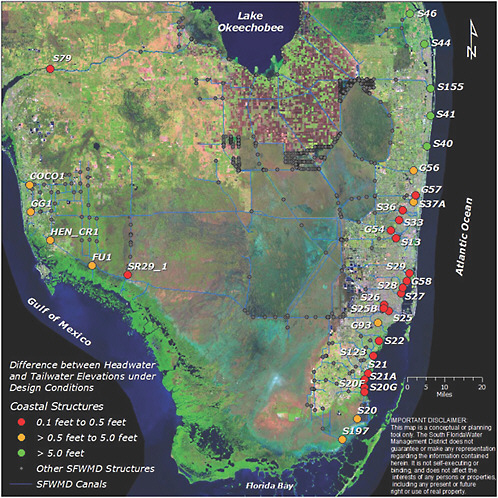
FIGURE 6-6 Vulnerability of coastal structures to potentially rising sea levels. High vulnerability structures are red, medium vulnerability are orange, and low vulnerability are green.
SOURCE: SFWMD (2009a).
will lose their capacity with mean increases in sea level of 0.2 m. To put this in perspective, at current rates of sea level rise, the mean sea level at Key West is expected to increase 0.3 to 0.4 m by 2100. In order to mitigate against salt water intrusion under a sea level rise scenario, the stage of coastal canals would
need to be raised. However, this change in operation would increase the risk of flooding in the urban coastal area (Obeysekera et al., 2010).
Incorporation of Climate Change in CERP Planning. CERP planners are also working to update the CERP Guidance Memorandum related to sea level rise (CGM 16; USACE and SFWMD, 2004b), considering new scientific information and new USACE national guidance on incorporating sea level rise into project planning (USACE, 2009d). The new guidance memorandum is anticipated to be finalized in Fall 2010. Meanwhile, the team is working with CERP project development teams to develop more up-to-date sea level change impact assessments, and the revised guidance memorandum will include case studies of sea level rise assessments in Biscayne Bay Coastal Wetlands and the C-111 Spreader Canal. CERP planners are also working on a report that will provide a preliminary impacts assessment based on sea level change, identify regional- and local-scale modeling needs, and help coordinate related interagency climate change research and data collection efforts. A subsequent effort, planned for completion around 2013, will synthesize available data and assess adaptation strategies (Glenn Landers, USACE, personal communications, 2010).
Assessment of Climate Change Research Progress for CERP. The committee commends the SFWMD researchers on their climate change analyses over the past two years that looked at historical data, identified issues with GCM predictions, and considered implications of regional model sensitivity analysis to operations. The committee also commends the CERP efforts to incorporate the most recent information on sea level rise projections into CERP planning. The committee encourages continued attention to these important issues and the evolving science. NRC (2008) offered several suggestions for research so that CERP planners could better adapt the program to future conditions, and although this section highlights some of the important progress that has been made since that report was released, more remains to be done. The CERP agencies should engage climate scientists with academic institutions and the NOAA to improve both global and regional circulation model predictions for South Florida at the temporal and spatial scales required for improved water resources planning and management. It is also critical that South Florida climate change and sea level rise research findings and analysis of the potential effects of these changes be integrated with relevant social science research and effectively communicated to restoration and water management decision makers. This is particularly urgent, as the scenario analysis discussed above suggests that increasing conflicts between urban water needs (water supply, flood control) and water needs for restoration may come with climate change. RECOVER or the Science Coordination Group could usefully assist this communication effort through workshops or synthesis papers.
Progress in Geomorphologic Research
The primary physical surface of the Everglades is a mosaic of linear sawgrass ridges separated by deeper water sloughs, together known as ridge and slough topography, with tear-drop shaped tree islands roughly aligned with the ridges and sloughs and scattered throughout the landscape (Figure 6-7; McPherson and Halley, 1996). Under pre-drainage conditions, these landscapes covered about 4,000 square miles of the Florida peninsula south of Lake Okeechobee (Lemark et al., 2006), although they have declined to about half of their former extent. The largest remnant of these landscapes is in Water Conservation Area (WCA)-3A. These physical surfaces provide the foundations for the biological components of the Everglades ecosystem, so that restoration of the Everglades ecosystem depends on understanding their physical components.
Only in the past few years have researchers begun to generate a clear understanding of how the distinctive Everglades landscape was formed and is maintained. Research on the maintenance of ridges, sloughs, and tree islands over the past 10 years has demonstrated a conclusive connection between the nature of the flow of water through the system and the morphology and distribution of the features.
An assessment of the state of scientific knowledge by the Science Coordination Team (SCT, 2003) and a review by the NRC (2003a) concluded that a successful restoration effort required an improvement in knowledge about tree
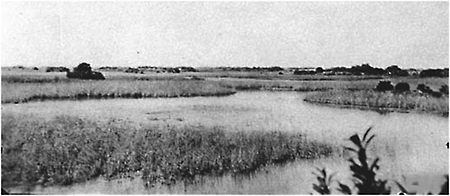
FIGURE 6-7 Ridge and slough topography in the upper reaches of Shark River Slough, about 1915.
SOURCE: SCT (2003).
island and ridge and slough topography, and the exploration of four high priority issues:
-
expand multi-disciplinary understanding of the paleo-environmental history of the Everglades geomorphology to identify drivers of change and to put the present landscape in context;
-
create new conceptual models for the formation and maintenance of the landscape features to assist managers of the restoration;
-
quantify the spatial and temporal movement of sediment in the system to understand change in the system; and
-
quantitatively describe water flow over small increments of time and large areas so that water management decisions can be connected to implications for geomorphic restoration.
Substantial progress has been made in three of the four priorities, as described in the following paragraphs.
Paleo-Environmental History. Researchers have developed paleo-environmental histories of the Everglades landscape and have determined some of the most important drivers for its maintenance. Using pollen data, Bernhardt and Willard (2009) showed that the ridge and slough topography formed primarily during dry climatic periods. The pollen data strongly suggest that the even when water levels varied, sloughs have been consistent in their locations, although they changed in size as the climate varied between wet and dry conditions. Long-term data show that the ridge and slough topography is a product of varying water levels, so that successful restoration efforts will also include variable water depths.
Formation and Maintenance of Landscape Features. Investigators are also creating new models to conceptualize how the tree islands and ridge and slough topography are maintained. The ridges do not appear to be connected with bed-rock highs; rather, they are features representing vertical relief in the peat layer alone (Ewe, 2009), although some tree islands occupy bedrock highs with thin peat layers, most commonly in Everglades National Park (Volin et al., 2009). The ridge-slough-tree island topographic pattern is increasingly seen as functionally similar to the patterned peatlands of the boreal regions and as part of a larger set of ecosystems in which the combination of particular plant communities, water depths, and flows and the development of the peat substrate interact in a series of complex feedback processes to create and maintain characteristic landscape patterning (van der Valk and Warner, 2009). Zweig and Kitchens (2008) showed that vegetation plays a role in the maintenance of these landscape features. Ridges, for example, are dominated by sawgrass, while the sloughs are
the locations for water and species such as rushes. When dry conditions occur, sawgrass coverage begins to encroach on slough areas. When wet conditions return, the sawgrass once again is more restricted to the ridges. The adjustment process is slow, with lag times of vegetation changes being as much as four years after the hydrologic adjustments. Drying of sloughs for three or more years is enough to allow invasions of sawgrass, and drowning of the landscape leads to the loss of ridges and islands that is not likely to be easily reversed (Zweig and Kitchens, 2009).
Understanding of the relationships of water depths to both flow regimes and tree species tolerance has benefitted from the development of the EDEN network (Liu et al., 2009), and a comprehensive tree island conceptual model has recently been developed linking water depths, water flows, and biotically driven feedback processes (Givnish et al., 2008). Although the relative importance of different mechanisms are still a matter of debate (Givnish et al., 2008; Wetzel et al., 2008, 2009; Troxler et al., n.d.), there is little doubt that some combination of groundwater flow, evapotranspiration, and bird-mediated guano deposition are involved in building and maintaining these landscape features. Tree islands accumulate and sequester large amounts of phosphorus and nitrogen in the soils that could be released into marsh waters upon degradation of these tree islands. Troxler et al. (n.d.) hypothesized that tree islands control the phosphorus content of the surrounding marsh water, which would have large potential ramifications to water management, if verified.
Sediment Transport Processes in Ridge and Slough Topography. At a finer resolution, sediment transport and storage are the key processes in the origin and maintenance of ridge and slough topography. The primary sediment of interest is floc, aggregations of organic particles that are carried downstream through the sloughs but that settle on the ridges under historical hydrologic conditions (Larsen et al., 2009b). The transport through sloughs is by a series of relatively high flow events that carry the material a short distance, deposit it, and then remobilize it again in a subsequent flow event. Flows that fluctuate to produce 1 to 3 feet variations in depth, for example, may help move sediment from sloughs to tree islands and ridges, while maintenance of dominant flow directions parallel to original alignments are likely to aid in preservation of landscape patterns (Larsen et al., 2009a).
Larsen et al. (2007) have postulated that ridge and slough topography and associated plant communities are generated and maintained via feedbacks between topography, spatial variation in peak flow velocities, and organic sediment production, transport, and deposition. Several field experiments have been conducted in the Everglades to test and refine this model. Harvey et al. (2009) monitored flow velocity, water depth, and wind velocity for three years (includ-
ing the passage of Hurricane Wilma) in a relatively intact area of ridge and slough features in WCA-3A. They found that 86 percent of the total discharge moved through sloughs and also demonstrated the primary importance of infrequent, extreme pulsed flows for sediment transport. Evidence from field and lab studies indicates that flow velocities in excess of 3-5 cm/sec are needed to entrain organic floc. By comparison, observed flows in degraded sections of the ridge and slough system are usually less than 1 cm/sec and only occasionally reach 2 cm/sec (USACE and SFWMD, 2009c). In the modern compartmentalized system, systematic changes in water depth and the lack of flow results in differential infilling of sloughs and degradation of ridges that promotes flattening of the system and increasingly disorganized flow. A quasi-three-dimensional simulation model (RASCAL) that represents the complex feedbacks between system hydrology and ecology suggests that effects of flow are manifested over much longer timescales than those of water depth, and that feedback between topography and flow patterns will make it difficult to restore degraded ridge and slough landscapes to historical conditions (Larsen and Harvey, 2010).
Quantitative Description of Flow over Large Scales. Although researchers have made substantial progress in understanding Everglades geomorphology related to paleo-environmental history, conceptual models, and sediment movements, knowledge about water movement on short timescales over large geographic areas remains limited. Field instrumentation to measure extraordinarily slow flows is now developing, but it has been used only in a few sites. As the Decomp Physical Model (see Chapter 3) proceeds, new understanding of flows and sediment transport at the field scale is likely to be helpful. The SFWMD is also conducting extensive research on the dynamics between flows and landscape pattern in its Loxahatchee Impounded Landscape Assessment (LILA) project.2 The project seeks to define hydrologic regimes that sustain an Everglades ridge and slough ecosystem using four 20-acre models simulating ridges, sloughs, and tree islands, each with controllable water levels and flows. This project is likely to produce informative results and will be helpful in connecting science to management because it will indicate useful performance measures.
Assessment of Landscape Research Progress for the CERP. Over the past decade, this research has fundamentally changed the conceptualization of the Everglades system from a set of separate plant communities to an interlinked peat-based system in which flow, very low phosphorus concentration in the surface water, and the different communities are functionally linked to each other in creating
the characteristic forms of the landscape. This is a laudable improvement in the scientific understanding of the region, as well as an excellent illustration of the application of basic research to inform management goals. With the River of Grass initiative, these research findings along with enhanced systemwide hydrologic modeling tools can be put to good use, as restoration planners consider the potential benefits and costs of diverting additional water flows to the south (see also Chapter 4).
Strengthening Science for Everglades Restoration
The CERP agencies have among their own personnel and their contractors many talented researchers whose work supports the restoration. The broad acceptance of the scientific products of these investigators depends on peer reviews that should be maintained. These peer reviews should extend beyond in-house reviews of research results to include presentation of results at scientific conferences. Recent budget concerns have limited these activities for state agency staff. Presentation and discussion of Everglades research at science conferences at the national and international levels ensures that Everglades researchers can receive supportive and reflective criticism prior to publication of their results. By attending and presenting research at these conferences, Everglades researchers can also learn lessons from other environmental systems that may be applicable in South Florida. At the more regional level, conferences such as the Greater Everglades Ecosystem Restoration (GEER) meeting on planning, policy, and science promote collaboration and information sharing across a large body of Everglades restoration researchers and decision makers. Thus, CERP agencies should support the attendance of their researchers at local, national, and international conferences.
Research Synthesis
Synthesis is “the process of accumulating, interpreting, and articulating scientific results, thereby converting them to knowledge or information” (NRC, 2003b). Synthesis can be motivated by a desire to understand the fundamental properties of natural systems or to generalize information for purposes of predicting system behavior (Boesch et al., 2000). There is a critical need for science synthesis to minimize technical and scientific disagreements that lead to scientific uncertainties that impede restoration decision making.
Two notable research synthesis efforts are now under way. First, RECOVER is leading a multi-agency effort to document recent developments in scientific understanding related to Everglades restoration through a collection of short white papers called the 2010 Shared Definition of Everglades Restoration. As
with all CERP planning efforts, FACA limits participation in this effort to staff or consultants of RECOVER agencies, except through the public comment process. The document was released in draft for public comment in the spring of 2010 and will continue to be revised during the remainder of the year, after a series of public workshops. The report was not released in time for in-depth review by the committee. RECOVER anticipates that the report will serve as a basis for addressing key dilemmas in Everglades restoration and for updating the restoration goals, targets, and performance measures. Second, the National Park Service’s Critical Ecosystem Studies Initiative (CESI; see also NRC, 2003b) is funding a synthesis of science on the freshwater Everglades ecosystem, focused on key restoration science questions with relevance to restoration management. The project, led primarily by academic researchers, will synthesize the recent science around these questions and will outline ecosystem consequences of various restoration options by late 2011. Although there may be some overlap between the two projects, the timing will likely allow the CESI project to build upon the RECOVER report. Both efforts represent important steps toward providing clear scientific guidance to restoration decision makers.
Status of Modeling Efforts in Support of Restoration
In both of its previous reports (NRC, 2007, 2008) the committee emphasized that integrated hydrologic, ecological, and biogeochemistry modeling tools are needed for science to play a fully developed role in CERP decision making and ecosystem management. Despite the considerable uncertainties associated with models of a system as large and complex as the Everglades, spatially explicit models are critically important for integrating available information and for examining implications of alternative restoration designs. Unfortunately, resource limitations have hampered progress in this area.
Hydrologic modeling continues to be the focus of CERP model development efforts and, therefore, the strongest among the array of modeling tools available. Progress on the Natural System Regional Simulation Model (NSRSM) has been steady. The NSRSM has been successfully peer reviewed and is now being used along with several versions of the Natural System Model (NSM) in the River of Grass regional planning efforts (Table 6-1; see also Box 4-1). Prior versions of the NSM, based on a 2-mile by 2-mile grid, have been criticized for failing to adequately simulate historic hydrologic characteristics determined from paleoecological data. However, both the NSRSM and the National Park Service-funded modifications to the NSM (called ENP mod1) suggest a much wetter system than previously simulated by the NSM and are more consistent with paleoecological data. The general agreement between the two different
TABLE 6-1 Representative Models Related to CERP Projects
|
Example Applications |
Scale (Spatial Extent; Resolution) |
Status |
Developers/Sources |
|
Evaluating effects of hydrologic scenarios on biota (habitat and populations of a suite of species) |
Regional; 500 × 500 m |
Primarily used for research purposes, not for planning or management activities within CERP |
|
|
Support in project planning and ecological research |
Regional; 100, 200, 500 m resolution |
Version 2.5 |
SFWMD Fitz and Trimble (2006) |
|
Planning tool for comparing management consequences |
Regional; 2 × 2 mile |
Version 4.6.2 |
SFWMD http://www.sfwmd.gov/portal/page/portal/pg_grp_sfwmd_hesm/pg_sfwmd_hesm_nsm?navpage=nsm |
|
Regional long-term (decades) simulation of complex hydrology with management (e.g., southwest Florida) |
Regional; Variable grid sizes ranging from 0.1-2 miles |
Still under development; Part 1 Peer Review is complete |
SFWMD (2005a) |
|
Planning tool for addressing the transport and transformations of chemicals at the regional and subregional scale |
Regional; Same as RSM |
Still under development |
SFWMD, Jawitz et al. (2008) |
|
Regional modeling for EAA Storage Reservoir CERP Project |
Regional; 2 × 2 miles square grid |
Version 5.5 |
SFWMD (2005b) |
|
Planning tool for comparing management consequences |
Regional; Variable grid sizes ranging from 0.1-2 miles |
Version 3.0 |
models has strengthened the degree of confidence in the most recent models among scientists and planners.
The South Florida Regional Simulation Model (RSM), still under development, is ultimately intended to replace the South Florida Water Management Model (SFWMM or the “2 × 2”). The RSM includes variable grid sizes ranging from 0.1 to 2 miles on a side, making the model more useful at scales relevant to many ecological parameters. The RSM incorporates two separate simulation engines—the Hydrologic Simulation Engine (HSE) for hydrology and the Management Simulation Engine (MSE) for water management features—which should simplify simulations of proposed operational changes (see NRC, 2008). The RSM has been used successfully on subregional scale projects (e.g., Decomp, C-111, the Biscayne Bay Coastal Wetlands projects), and a link-node version of the RSM, called RSM-Basins has been used in the northern Everglades and is being extended down to the Everglades Agricultural Area (EAA). South of the EAA, a full-mesh version of the RSM has been applied for the Everglades and the lower east coast service area (called the Glades-LECSA model). However, technical issues have prevented the RSM from being applied at the systemwide scale. These issues include problems with convergence between the HSE and MSE, issues with the diffusive wave formulation in steeper areas, and problems in areas where wetting and drying of the land surface occurs. Thus at this time the SFWMM remains the preferred model for regional simulations and is currently being recalibrated with precipitation data through 2005.
Although there remains a long-term goal of including biogeochemical processes within the RSM, little progress has been made toward integrating biogeochemical or sediment transport models with systemwide hydrologic models. A water quality engine for RSM (RSMWQ) was developed by a group from the University of Florida and applied to simulate phosphorus dynamics in WCA-2A. However, continued development of the RSMWQ has been put on hold because of the River of Grass initiative and other modeling priorities, and no integrated regional hydrologic-biogeochemical modeling is being attempted. To date the RSMWQ has not been used by CERP decision makers.
Of additional concern is the apparent step backwards that integrated hydrologic-ecological modeling has taken in CERP planning. The continued development and evaluation of both the Everglades Landscape Model (ELM) and Across Trophic Level System Simulation (ATLSS) model are now undertaken by scientists completely outside of the SFWMD, DOI, USACE, and Interagency Modeling Center (IMC). Both models are now used primarily for research purposes, not for planning or management activities within the CERP. Apparent difficulties in transferring a documented and operational version of ATLSS to the IMC has led to the proposed abandonment of ATLSS as a CERP modeling tool and the proposed development of a new ecological modeling platform by
Everglades National Park. This is a major set-back given the historical investment of resources in the development of ATLSS, the effort required to develop a new modeling platform, and the limited resources available to support the overall CERP modeling effort at the current time. There remains a long-term goal at the SFWMD of incorporating ecological monitoring into the RSM, but this effort is on hold, again due to other modeling priorities. As a result, major CERP efforts such as Decomp and Mod Waters are proceeding without the benefit of integrated hydrologic-water-quality-ecological modeling. As discussed in Chapter 4, improved species-specific modeling tools and multi-species decision analysis tools are also needed to provide more rigorous scientific support for multispecies management options and to understand water management tradeoffs.
In summary, it appears that little progress has been made toward integrated hydrologic, ecological, water quality, and socioeconomic modeling for the CERP in the past five years. SFWMD modelers have been focused on subregional and regional hydrologic modeling efforts, with relatively minor efforts underway to incorporate either water quality or ecologic processes into the RSM. Local-scale modeling of water quality improvement efforts such as stormwater treatment areas (STAs), agricultural best management practices (BMPs), and other ecosystem services provided by private landowners are being conducted by a number of groups, but there are as yet no plans to incorporate these models into regional-scale planning or management. Everglades National Park is undertaking a brand new ecological modeling effort, while independent researchers continue the development and application of ELM and ATLSS. Limited budgetary resources and competition from other modeling efforts (e.g., River of Grass and project-related modeling) appear to be hindering the pace of CERP model development and use in decision making. Lack of investment in the IMC and in model development in general by the federal CERP partners is also hindering progress. As a result near-term prospects of utilizing integrated regional hydrologic-ecological modeling efforts to support CERP design, planning, or management decisions are dim.
ECONOMIC VALUATION OF ECOSYSTEM SERVICES FOR EVERGLADES DECISION MAKING
The concept of ecosystem services3 (Daily, 1997) has been instrumental in ecology for the past decade or more, leading to recent growing interest in the
economic valuation of these services (e.g., Heal, 2000) and their application to decision making. Groups with interests in Everglades restoration increasingly lobby for inclusion of these values in restoration decisions with the intent of influencing the specific restoration activities to be undertaken. As a result, decision makers responsible for guiding Everglades restoration policy face growing pressure to account for economic values of ecosystem services.
A recent NRC report (2005) looked at how economic valuation of ecosystem services could help environmental decision making and concluded that, in general, economic valuation methods are mature and capable of providing useful information in support of improved environmental decision making. However, NRC (2005) also noted that those studies that have the most promise of delivering results that could inform policy decisions are those that focus on the valuation of a single ecosystem service. In more complex examples, knowledge and information may not yet be sufficient to estimate the value of ecosystem services with enough precision to answer policy-relevant questions (NRC, 2005). In this section, the committee provides some background on economic valuation of ecosystem services and then considers to what degree and under what circumstances an effort to estimate the economic value of the ecosystem services provided by the South Florida Ecosystem could inform CERP decision making.
Philosophical and Policy Contexts
Considerations of the role of “ecosystem values” in environmental policy making arise from two philosophical perspectives, intrinsic and anthropocentric. The intrinsic perspective states that nonhuman species have moral interests or rights unto themselves, and therefore, the values of ecosystems and their services are intrinsic and non-anthropocentric. Anthropocentric approaches, which include economic valuation, are based on the philosophical perspective that values arise from the benefits derived by humans. Note that intrinsic value, which underlies the non-anthropocentric perspective, cannot be captured by economic valuation methods. The Everglades’ status as a World Heritage Site and Biosphere Reserve would be consistent with an argument in support of the ecosystem having intrinsic value, but such a value cannot be monetized by traditional methods and thus cannot be captured in a benefit-cost calculation.
Clearly a major factor underlying society’s decision to restore the Everglades was recognition of the importance of the extensive, varied, and valuable ecosystem services provided by this unique ecosystem. In fact, one could argue that these services were so highly valued by society (or difficult to measure) that the decision to restore the Everglades was deemed to be in the public’s interest without typical USACE benefit-cost analyses. Instead, the legal, political, and operational context for Everglades restoration planning is one of cost-effectiveness,
and no formal cost-benefit calculations are required (WRDA 2000). The costs of various project alternatives and their associated improvements to ecological conditions are estimated during the CERP planning process to insure that a reasonable degree of restoration is achieved for the cost (i.e., cost-effectiveness).
Anthropocentric Approaches to Ecosystem Valuation
“The fundamental challenge of valuing ecosystem services lies in providing an explicit description and adequate assessment of the links between the structures and functions of natural systems, the benefits (i.e., goods and services) derived by humanity, and their subsequent values” (NRC, 2005). Economic valuation of ecosystem services relies on successful integration of ecology (i.e., quantification of the ecological structure and functioning) and economics (i.e., application of an economic valuation function). Both elements are complex and challenging in their own right, but the greatest challenge is to insure that the definitions of ecosystem goods and services match across the ecological and economic components (NRC, 2005).
Where an ecosystem’s goods and services can be specified, it is generally possible to assign a value. However, some ecosystem services cannot be valued either because they cannot be adequately measured or because existing valuation methods are inappropriate or unreliable. Numerous taxonomies can be applied to the types and sources of economic value and economic valuation methods. Economic values can arise from the use of an ecosystem service (use values) or from its existence even in the absence of use (non-use value). Use values in turn can be market (e.g., commercial uses such as timber) or non-market (non-commercial uses such as recreation). Most ecosystems will provide an array of ecosystem services, which will require a variety of valuation methods.
There are two fundamental approaches for valuing non-market services: revealed-preference methods and stated-preference methods. Revealed-preference methods4 are applicable to use values and are derived from observed human behavior associated with particular uses of the ecosystem (e.g., recreation). Stated-preference methods are survey-based and have wider potential application than do revealed-preference. Non-use values (i.e., ecological and cultural benefits that arise from the existence of the ecosystem rather than from the use of it), for example, can only be attained by stated-preference approaches. As a result of the Everglades’ status as a World Heritage Site and Biosphere Reserve, many people place great value on the existence of a restored ecosystem,
even though they may never visit or benefit directly from flood control or water supply (Polasky, 2008). Unfortunately stated-preference valuations generally have less credibility than revealed-preference approaches and have received considerable criticism, leading to a number of efforts to develop “good practice” guidelines including NOAA guidelines (NOAA, 1993).
Benefit transfers and replacement cost and cost of treatment methods have also been used in environmental valuation. Benefit transfer (Boyle and Bergstrom, 1992) is the process of taking an existing value estimate and transferring it to a new location or application that is different from the original one (e.g., applying a per-acre value of a wetland estimated for one site to a second location). Replacement cost and cost of treatment approaches use calculations of the cost of replacing the service or treating the damages arising from the loss of service as a valuation estimate. This approach in not preference-based and is not a measure of economic value.
NRC (2005) cautioned that “replacement cost and cost of treatment methods should be used with great caution if at all,” because the conditions for accurate valuation are rarely satisfied in practice. NRC (2005) specifically recommended against the use of benefit transfer approaches for ecosystem services valuation in most aquatic ecosystem applications. The report stated:
First, with the exception of a few types of applications (e.g., travel-cost and contingent valuation estimates of sportfishing values), there are not a lot of studies that have investigated values of aquatic ecosystem services. Second, most non-market valuation studies have been undertaken by economists in the abstract from specific information that links the resulting estimates of values to specific changes in aquatic ecosystem services and functions. Finally, studies that have investigated the validity of benefit transfers in valuing ecosystem services have demonstrated that this approach is not highly accurate.
Assessment of Economic Valuation of Ecosystem Services in the Everglades Context
The nature and complexity of the Everglades ecosystem poses daunting challenges to any comprehensive ecosystem service valuation effort. A decision to undertake the economic valuation of ecosystem services needs to recognize the critical importance of integrating the ecology (i.e., quantification of the ecological production function) and economics (i.e., application of economic valuation function) and allocate appropriate attention and resources to the valuation effort. NRC (2005) identified three major challenges facing ecosystem services valuation in the Everglades: (1) the hydrologic connectivity between many different ecosystems within the Everglades makes quantifying the restoration-based changes in ecosystem services an extremely complex issue; (2) many of the
important values are linked to existence of species or the existence of the ecosystem itself in something akin to its original condition; these existence values are particularly difficult to value accurately; and (3) aggregation issues can cause problems in comprehensive approaches to ecosystem service valuation, particularly when scaling up the valuation exercise over multiple ecosystems. NRC (2005) concludes that given the hydrologic, ecological, and economic complexities of South Florida, a complete accounting of economic values is unlikely any time in the near future.
Performing a thorough and credible economic valuation of the services of the South Florida ecosystem would be an enormous challenge, and would likely take years. And it would be critical to do it well; any such valuation would need to yield robust and defensible results to be politically persuasive. Prerequisites for such an analysis are integrated hydrologic, ecological, and biogeochemical models to predict ecosystem services likely to result from alternative restoration activities; even then, the analysis would require a large effort. NRC (2005) provides appropriate framework and guidance for any such efforts. CERP planners are specifically cautioned against the use of replacement cost and benefit transfer approaches given the complexities of the Everglades ecosystems.
In summary, credible economic valuation of ecosystem services for Everglades decision making is currently hindered by the complexity of the ecosystem; gaps in data, modeling tools, and valuation techniques; challenges in accounting for existence values; and the likely time required to overcome these concerns. Therefore, the committee concludes that a comprehensive evaluation of ecosystem services is probably not a high priority for CERP planning in the near or medium term. The committee does support the development of an improved understanding of the ecosystem services provided by the South Florida ecosystem, and restoration planners should look for opportunities where the economic valuation of ecosystem services could be useful and should improve the methods of economic valuation of ecosystem services that have the most promising application to the Everglades restoration.
CONCLUSIONS AND RECOMMENDATIONS
The CERP has laid the foundations for adaptive management of Everglades restoration and should now put theory into practice. To do so will require stronger institutional mechanisms for obtaining scientific feedback to planning, management, and implementation decisions. Project planning should explicitly provide for adaptive management in the context of both project-specific and systemwide performance monitoring and evaluation. To ensure stronger coupling of engineering design and operations with ecosystem assessment, project monitoring should be well integrated with systemwide monitoring and assessment.
The effectiveness of the linkages between science and decision making should be examined by CERP leadership. Linking science with policy and management decisions is critically important to achieving restoration goals, but the effectiveness of current mechanisms in providing such linkage has been questioned by some in the restoration community. The committee encourages CERP leadership to examine this issue and to consider mechanisms to improve the communication of relevant scientific findings to decision makers. The committee also recommends greater clarity and transparency in the integration of science into CERP policy and management decisions.
Constructive stakeholder engagement and interagency coordination are key elements of CERP adaptive management. To improve its stakeholder engagement, the USACE and SFWMD should formally evaluate and strengthen the CERP’s efforts at outreach and public engagement and implement a process to monitor the efforts’ effectiveness and ensure iterative improvement.
Progress continues on improving the Monitoring and Assessment Plan and on building a baseline of monitoring data by which restoration progress will be judged. MAP 2009 largely addressed the prior committee’s concerns about monitoring and assessment (NRC, 2008), although a full evaluation of the MAP cannot take place until additional on-the-ground restoration progress has taken place. RECOVER, however, should continue to make use of existing analytic tools (and develop new ones as needed) to establish critical thresholds for performance measure values to support assessment and evaluation. These thresholds should be used as indicators of impending changes in ecosystem components that are important or difficult to reverse, thus potentially allowing corrective measures to be initiated. The Science Coordination Group, working with RECOVER scientists, developed a stoplight indicator system that substantially improves the communication of ecosystem status to the public.
Research efforts are providing a sound basis for critical CERP decision making. Research during the past few years has led to notable advances in our understanding of climate trends in South Florida and the sensitivity of the regional water management system to changes in climate and sea level. Research has also improved understanding of the pre-drainage Everglades and has clarified the key parameters governing the formation and maintenance of landscape features in the ridge and slough ecosystem. For example, the LILA Project is providing critical fundamental understanding of the hydrologic regimes necessary to sustain the Everglades Landscape. Also under way are two major science synthesis efforts directed toward answering key restoration science questions relevant to restoration management.
Little recent progress has been made in developing integrated hydrologic, ecological, and biogeochemical models to inform restoration decision making and to provide input for adaptive management. Hydrologic modeling has been
the primary focus of CERP model development efforts, and substantial progress has been made on the NSRSM and in subregional applications of the RSM. In contrast, efforts to develop ecological models, linked ecological-hydrologic models, and biogeochemical or sediment transport models are notably minimal. As a result, project planning and decision making proceeds without complete information as to the ecological and water quality impacts at both a project and regional scale.
Although the concept of economic valuation of ecosystem services is a promising and important one, the committee does not see near-term benefits to its use in the CERP. Developing accurate and defensible estimates of the economic values of ecosystem services in the Everglades will require careful, deliberate, original research and analysis that integrates assessments of aquatic ecosystem functions, services, and individual value estimates. Prerequisites for such an analysis are integrated hydrologic, ecological, and biogeochemical models that can predict the ecosystem services that will likely result from alternative restoration activities; even with such models, the analysis would require a large effort. For this reason, economic valuation of ecosystem services is unlikely to assist near-term decision making. Everglades restoration planners should be alert to specific opportunities when the economic valuation of ecosystem services has the potential to be useful, and, especially, to improve the methods for economic valuation of ecosystem services and adapt them to the Everglades.


