
2
Needed: An Information Enterprise to Drive Knowledge and Population Health Improvement
The national preoccupation with the cost of clinical care is well founded, and changes in the system are essential and urgent. However, improving the clinical care delivery system’s efficiency and effectiveness is likely to have only a narrow effect on the overall health of the population. Other factors, or determinants of health—genes, behaviors, social and economic conditions, and environmental exposures—influence health outcomes. The national emphasis on clinical care (largely to the exclusion of other contributors to health) has not led to health outcomes that are commensurate with investments. A landmark 1974 Canadian government report provided one of the earliest acknowledgments that clinical care alone is neither responsible for poor health outcomes nor the sole solution to health problems (Lalonde, 1981). In the ensuing decades, the evidence supporting that thesis has grown (see Chapter 1 for further discussion).
In the present chapter, the committee discusses the information needs of the health system (broadly conceived) and the capacities and limitations of the nation’s population health statistics and information system, which consists of an array of public-sector and private-sector entities that collect, analyze, and study data and communicate information relevant to population health. The system’s familiar components include vital-records systems; surveillance systems (for example, for acute conditions); and such clinical care data sources as administrative claims databases, electronic health
records, and federal surveys that summarize population health outcomes (NCVHS, 2010).1
Helping communities to understand the local conditions for health and outcomes is a necessary (but not sufficient) precursor of the work of improving unfavorable socioeconomic and physical environments. Accurate, timely, locally relevant information is crucial for the implementation of population-focused interventions of established effectiveness and for implementing and evaluating promising new strategies. In the pages that follow, the committee discusses three sets of challenges, endeavors in which changes are warranted to strengthen the population health statistics and information system: adopting the determinants-of-health perspective at a fundamental level (to complement the health system’s predominantly biomedical orientation); enhancing responsiveness to the needs of end users; and coordination and cross-sector collaboration at the national level, beginning with the primary federal health-statistics agency—the National Center for Health Statistics (NCHS)—and with federal health data and statistics activities in general.2 An additional, overarching challenge, and one to which the committee intends to return in its later report on funding, is the extreme inadequacy of resources available for statistical and data-gathering activities of governmental public health agencies at all levels in general (Friedman and Parrish, 2009b; HHS et al., 2002) and NCHS in particular (NCHS, 2008, 2009; Population Association of America, 2010).
Several related terms are used to describe concepts in the field of health statistics and information. In common professional usage, the terms statistics and measures are often used interchangeably to refer to an aggregate data point (or set of data points) about a phenomenon, such as disease-specific mortality in a particular age group over a given period. (Statistic is also used in the field to indicate a type of measure, such as a mean, a median, or a proportion.) A specific statistic or measure is commonly called an indicator when it is widely acknowledged to be useful for monitoring something of concern to policy-makers or to the public. Examples include the monthly unemployment rate and the annual poverty rate as indicators of the health of the national economy. Such indicators can be simple statistics or can be quite complex; for example, many data sources go into the
|
BOX 2-1 On Scorecards The term scorecards is sometimes used to refer to health-indicator sets that provide a snapshot of an area’s health (for example, How is X County compared with a national standard, compared with Y County in a given state, or compared with last year?). However, the term’s specific meaning in the business, education, and clinical care settings—as a tool for internal performance evaluation (for example, balanced scorecards)—is different from the meaning and purpose of many health-indicator sets. The committee struggled with achieving clarity about the seemingly overlapping meanings of the terms used in measurement and recognized that the purposes of performance measurement, public reporting, and mobilization are not necessarily independent or neatly separate from one another. The lack of semantic exactness regarding health indicators has led to a conflation of two primary meanings: “measures of health” and “measures of performance on health.” Many public health or population health data sets (as opposed to data sets used in the clinical care context) called scorecards or report cards are not, in fact, intended for or capable of measuring the performance of public health agencies in a county or state, of other organizations, or of communities in general. The committee discusses this difficulty with use of the term scorecard further in Chapter 4, “Measurement and Accountability.” |
quarterly measure of gross domestic product. In this chapter and throughout much of the report, the committee will use the term indicators to denote components of data sets that convey information (comparative or ranked) about the health status of the country, states, and counties. Indicators will also refer to a variety of existing and potential metrics used to inform, mobilize, and advocate and in the context of a later discussion of measurement in accountability (in Chapter 4).3 The term scorecards is used to refer to some of these efforts and their indicator sets (see Box 2-1 and Chapter 4 for a discussion of this term).
THE NEED FOR A DETERMINANTS-OF-HEALTH PERSPECTIVE
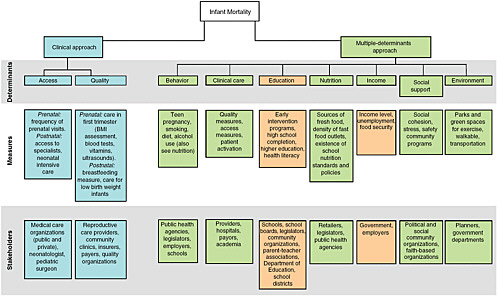
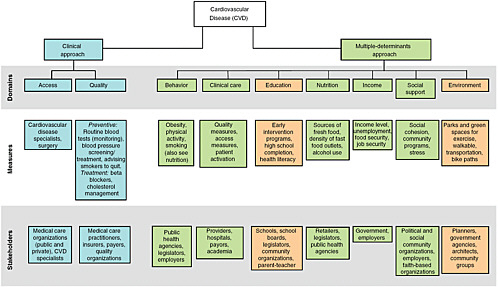
Strengthening the usefulness of the population health information system requires integrating the concept of social and environmental determinants of health (discussed in detail in Chapter 1) and adopting a population-based approach to improving health in all data-collection efforts and in the highest level of strategic planning for the statistics and information enterprise. Figures 2-1a and 2-1b illustrate the population health and clinical care approaches to the sample outcomes of infant mortality and cardiovascular disease (CVD). The figures depict how interventions and the stakeholders involved in two or more health outcomes may overlap and are intended to show a broader view of how population health is created (including but going well beyond clinical care). In the figures, clinical care delivery system interventions are depicted on the left (in blue) and interventions or actions rooted in the ecologic–multiple-determinants perspective on the right (in green). As examples of the capacity of ecologic, population-based approaches to influence multiple health outcomes, some domains or stakeholders with potential multiple (and overlapping) effects are highlighted (in orange).
Successful strategies for improving both infant and cardiovascular health require complementary interventions in multiple sectors to promote the desired change through the feedback loops that connect them. Of note are the synergies associated with combating the vastly different problems of infant mortality and CVD when the interventions are generated through a population health model. In moving from the left side of a figure toward the right side, one is reminded of the shift in the public health community’s perspective of the “actual causes of death,” traced in the work of McGinnis and Foege (1993) and later Mokdad and colleagues (2004), from a largely biomedical-model perspective (for example, with respect to heart disease, cancer, and stroke) to one that recognizes upstream causes, including unhealthy behaviors (for example, tobacco use, inadequate physical activity, poor nutrition, and alcohol abuse) and the environmental conditions that may precipitate them. Given the strong and compelling evidence of broad social and economic influences on health, contemporary researchers describe an even more upstream set of causes of death and poor health. It is highlighted in the work of the Robert Wood Johnson Commission to Build a Healthier America (2009) and the commission’s high-profile messages that place matters and that the influence of ZIP codes (and the socioeconomic environments they represent) outweighs that of genetic codes. The actual causes of death as understood today could be described as place of residence, socioeconomic status, income inequality, discrimination, and other policy and environmental factors (see, for example, Braveman and Egerter, 2008; Egerter et al., 2009).
Although the importance of the upstream factors is widely recognized
and is a subject of growing scientific research, local decision-makers who wish to assess these factors often find it difficult to do so because of lack of data. At the national and state levels, where more data are available on some determinants of health, such as income and poverty, the problem may be not a lack of data but the existence of “multiple data bases, multiple estimates, and uncertainty about which survey produces the best numbers” (O’Grady, 2006). The lack of accurate local data on social, environmental, and behavioral determinants of health not only impedes policy action but also obscures basic awareness of the issue and leaves the public uninformed about important trends. A common presumption is that health is defined by clinical care. How health really is improved and disease prevented or controlled remains largely invisible to most Americans, owing in large part to a failure to convey this information to the public. Although many organizations, individuals, and groups in communities all around the country are engaged in activities intended to target various aspects of the determinants of health—including employment, education, housing, access to healthy food, early childhood interventions, safe communities, livable (walkable and accessible) communities, and fair labor standards—the linkages among these activities and their influence on the broader health and well-being of communities are often not made. Inadequacies in public awareness of what creates good health and, in turn, the benefits of good health itself (such as greater potential for economic productivity and prosperity) can be addressed partially by the availability of reliable information about local health outcomes and their determinants and by an effective strategy to communicate the information to the public and decision-makers.
Multiple factors influence a population’s health heavily, but the United States, unlike its neighbor Canada, lacks a systematic national strategy to identify and address the set of social and environmental determinants of health that are most responsible for health outcomes. Several European countries have for many decades collected health data according to detailed socioeconomic categories—for example, from income rankings to occupational hierarchies (Braveman et al., 2010). Recent Canadian and British examples include the Canadian Senate Report on the Determinants of Health (Mikkonen and Raphael, 2010) and the report Fair Society, Healthy Lives: A Strategic Review of Health Inequalities in England Post-2010 (The Marmot Review, 2010). The Affordable Care Act of 2010 (ACA) includes components that pertain to population health and refers to the “social and primary determinants of health” (Public Law 111-148), but the national dialogue and federal activities that both preceded and have followed the act’s passage have not done enough to advance public understanding of the non-medical-care-related contributors to the health of Americans, such as housing, built and natural environments, income, education, occupation, culture, inequity, and discrimination. However, there are recent examples
of the federal government’s recognition of the importance of integrating a determinants-of-health perspective into the process of rethinking and exploring innovative changes in data collection. For example, “in 2009, the Centers for Disease Control and Prevention (CDC), through the Behavioral Risk Factor Surveillance System (BRFSS), introduced a ‘ social context’ module, which is being used by 12 states, the District of Columbia, and 20 communities and consists of eight questions intended to assess civic engagement and food, housing, and job security” (Friedman and Parrish, 2009b).
Despite a long history of efforts to prepare a national report on social (and cultural) indicators to measure progress and inform policy, the United States lacks such an accounting (GAO, 2004). In the 1960s, there were several attempts to prepare a national document on social indicators, beginning with the Social Indicators report prepared by the American Academy of Arts and Sciences (at the request of a federal agency) (GAO, 2004) and the 1969 publication from the Department of Health, Education, and Welfare (DHEW)4 titled Toward a Social Report (Department of Health, Education, and Welfare, 1969). According to a Government Accountability Office (GAO) report (2004), the DHEW document concluded that “indicators on social and cultural conditions were lacking, and recommended that the executive branch prepare a comprehensive social report for the nation with emphasis on indicators to measure social change that could be used in setting policy and goals.” In the 1970s and early 1980s, both federal and academic or nonprofit efforts in this subject continued, but no major centralized national or federal effort was established and sustained. (The new National Prevention, Health Promotion, and Public Health Council created by the ACA offers an opportunity for a “health in all” approach to population health improvement that potentially could involve interdepartmental attention to the underlying causes of poor health in the United States.5)
A report by the Department of Health and Human Services (HHS) and NCHS, Health, United States, 1998, had a special focus on socioeconomic status and health (NCHS, 1998). Although a small subset of socioeconomic factors have been addressed in its annual updates, HHS has not made an examination of an array of health-outcomes data by socioeconomic variables a major theme since 1998. Several other federal documents focus on subjects related to determinants of health, including the series of annual Agency for Healthcare Research and Quality (AHRQ) National Healthcare Disparities Reports and the National Health Interview Survey Series 10 reports (AHRQ, 2007; CDC, 2010). However, the former
focus on medical care, and the latter do not consider race and economic factors in combination (Braveman et al., 2010). Aside from those efforts, the United States does not have a federally led national-level annual report on the socioeconomic and environmental determinants of health.6 There have been several academic and nonprofit efforts to fill the gap in recent years. In 1999, sociologists Marc Miringoff and Marque-Luisa Miringoff published The Social Health of the Nation: How America Is Really Doing, which put forward an Index of Social Health, an effort that has not been sustained (Miringoff and Miringoff, 1999). More recently, the Social Science Research Council created the American Human Development Project, which publishes the annual report Measure of America (Burd-Sharpe et al., 2010), and the Virginia Commonwealth University established its Center on Human Needs, which gathers and communicates data on societal distress7 (Virginia Commonwealth University, 2009).
There is growing recognition of the importance of incorporating the determinants of health in the broadest strategies for health-data collection and for implementing effective policies to improve public health. What remains absent is a concerted and systematic effort to capture relevant data on the determinants and to make them easily accessible to policy-makers in ways that are useful for making decisions, especially at the state and local levels. The committee believes that this activity is most appropriately located within the federal government in an effort to gather and report data on health determinants, including disparities, which could serve as a compelling tool for informing Americans and mobilizing action.
RESPONSIVENESS TO THE NEEDS OF END USERS
Committee members heard about the data needs of communities and local decision-makers in its information-gathering sessions and at other meetings (IOM, 2010b), such as a launch meeting hosted by the Institute of Medicine (IOM) for HHS’s Community Health Data Initiative (CHDI), which has served as a platform for publicizing the HHS Data Warehouse operated by NCHS. Multiple participants asked about the availability of local (for example, county, ZIP code, and census-tract) data and learned that most of the federal population health data available currently lack that level of specificity.
From the perspective of end users, such as local decision-makers in general and public health officials in particular, efforts must be made to improve the characteristics of available data, particularly completeness,
usefulness, geographic relevance, and timeliness. The information needed by end users resides in different administrative structures, and the data are often not readily accessible. Federal activity, state and local contributions, and independent supplements to data collection could be enhanced by a more integrated approach overseen by a central body that more fully ascertains and addresses state and local needs (such as sample design, populations included, and health issues measured).
Since the middle 1990s, federal health-statistics programs, such as the CDC National Health Interview Survey (NHIS) and the AHRQ Medical Expenditure Panel Survey, have made great strides in increasing the timeliness of reporting of data collected and, through partnerships with nonprofit organizations, have improved their ability to provide state and local data (Academy Health, 2004). Although there has been a consistent trend toward timeliness and local usefulness of federal data, gaps remain because of resource limitations and other factors that are detailed below.
Data are partly or largely lacking on some indicators that are needed to inform decisions and action, including environmental monitoring data (Luck et al., 2006); chronic-disease prevalence and prevention or control (Goff et al., 2007a; Luck et al., 2006), with asthma as one example (Mendez-Luck et al., 2007) and diabetes another (Goff et al., 2007b); data on health behaviors, such as tobacco use; and data on aspects of the built environment, such as housing quality—for example, the Census Bureau’s American Housing Survey collects data every 6 years on housing quality in metropolitan areas, but few data are available on small areas or neighborhoods in some jurisdictions (Krieger and Higgins, 2002).
The existing sets of indicators generally were not designed to convey information that can identify loci for intervention to improve health. They are therefore unable to provide actionable insights on health that a local official can put to use. There are also critical gaps in information where the evidence base suggests a relationship between a given determinant and an intermediate or distal outcome, but the methods of capturing or representing that determinant validly and reliably are not yet developed. In such a case, use of multiple, disconnected health indicators may not provide the appropriate guidance for population-based strategies for which understanding of causal pathways between conditions and exposures and intermediate and distal health outcomes is critical.
Communities and decision-makers need data that provide useful information for judging the health of communities. It is crucial that the population health statistics and information system adopt as its core mission serving decision-makers, not simply compiling or analyzing statistics or serving national-level planning needs. The system, and especially its federal-government core, must determine what kinds of information are needed at the community level (through broad consultation); ensure that such data
are collected (both primary collection as items on population surveys and secondary aggregation from all relevant public and private sources into databases and warehouses), updated, vetted for quality, and made accessible to users in terms of both ease of access and localization to the community level; and elicit feedback on completeness, usefulness, timeliness, and geographic relevance of data in a feedback loop to the first step. One important need is for a generic measure of health status (for example, health-adjusted life expectancy or the equivalent) because disease-specific statistics are not sufficient. The population health statistics and information system is producing a surplus of data and indicators that are not all conducive to the assessment of health. Through its CHDI and its NCHS-managed HHS Health Indicators Warehouse, HHS has made great strides in making its data more useful to the public by beginning to develop interactive interfaces and front ends that serve the needs of users. This ambitious effort to make an array of federal health data widely available (HHS, 2010a) and integrate them with additional federal data sources on factors that influence health, such as the US Department of Agriculture Food Environment Atlas, is intended to inform the development of independent and potentially health-supporting applications by multiple private-sector and public-sector (local government) programmers and others (HHS, 2010b). However, more is needed—for example, to develop mechanisms for collecting systematic decision-maker and public input on the data and on current and projected user needs.
In general, the availability of statistical data decreases as one moves from the national level to the state level and then to the local level (see Figure 2-2 and description below for more detail). Some federal data provide only national-level information, and there are challenges to developing small-area estimates. Several changes could help, including additional methodologic research; the use of technologic innovations to facilitate rapid, inexpensive, and effective local data collection; and changes in national data-collection efforts to replace obsolete or less useful components with components of local relevance. Attention to the needs of federal statistical efforts in this endeavor is exemplified by the 2009 NCHS Board of Scientific Counselors programmatic review of the National Health and Nutrition Examination Survey (NHANES), which urged NCHS to explore “potential ways to improve the cost efficiency and screening efficiency for area probability sample recruitment by utilizing commercial data bases for household enumeration” and called for exploring the possibilities for integrating the design of NHIS and NHANES—a recommendation made by others (NCHS, 2009).
The US vital statistics system provides an example of several persisting challenges. It is a decentralized system: localities collect data that are then compiled by states and submitted to NCHS. However, in recent years, delays in the availability of data have been caused by the combination of aging collection systems (including inadequate automation) and a change
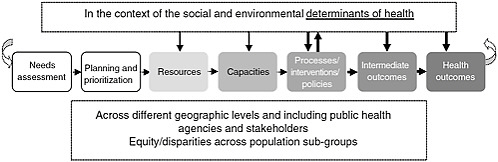
FIGURE 2-2 From inputs to outputs logic model.
NOTE: The thickness of some arrows denotes the present report’s focus on those interactions.
in standards (Rothwell et al., 2004). For example, state registrars reporting vital statistics to NCHS may have to wait up to 3 years to get analyzed and usable data back; this constitutes a persistent lag in federal-agency reporting (caused in large part by systemic challenges arising from the multiple state and county collection mechanisms involved). In the interim, state and local public health agencies may be constrained by federal statutes in their ability to use preliminary data (Starr and Starr, 1995; personal communication, S. Teutsch, October 2010). Some federal data-collection entities, such as the Census Bureau, have made strides in improving access to current data, and private sources (such as Google) often are able to make data available quickly.
To address the challenges of incompleteness and less than optimal usefulness (including geographic relevance and timeliness), end users would benefit from the establishment of more formalized processes that allow local and state high-priority needs to be identified and aligned with data capture at the national level. There is often a mismatch between federal health-statistical objectives and the needs of local jurisdictions, and little progress has been made to date in reconciling the different perspectives and ensuring that local and state public health officials can obtain sufficient information to guide priority-setting and other decisions. Each of the three major federally supported population health statistics efforts—BRFSS, NHIS, and NHANES—has its strengths and weaknesses (see discussion in Appendix B), but they do not, collectively, fully meet the information needs of local decision-makers and communities (for example, BRFSS generally does not allow sub-state-level estimates, and NHANES does not contain state-specific data). In addition, the federal and state efforts are not harmonized to maximize the use of resources and realize other efficiencies. In summary, the committee identifies two facts that present a serious challenge to coordination and integration across geographic levels:
-
“Top-down” federal data-collection efforts often rely on samples designed to produce national or regional estimates and therefore are not designed to collect geographically based samples large enough to support reliable estimates and comparisons at the community level.
-
“Bottom-up” state and local data-collection efforts often are not standardized and coordinated with each other and with federal efforts so as to support concatenation (“rollup”) and valid comparisons among communities.
The solution involves standardization and coordination. Two examples of bottom-up coordination and standardization that work are the AHRQ Healthcare Cost and Utilization Project, which standardizes and combines all-payer hospital-discharge data collected by 43 states and thereby allows local estimates and comparisons (Healthcare Cost and Utilization Project, 2010), and state cancer registries, which have improved standardization through accreditation certification (National Program of Cancer Registries, 2010).
Research, Modeling, and Other Capabilities Needed to “Translate” Data into Indicators That Can Inform Decision-Makers
The 2009 National Research Council report on principles and practices for federal statistical agencies outlines a broader potential role for such an agency as NCHS, including a more extensive role in research (NRC, 2009). A revitalized NCHS could provide leadership for the entire population health statistics and information enterprise (the diverse array of public and private producers, analyzers, and conveyors of population health data) by contributing to coordination and collaboration among government (and private-sector) entities to conduct or support extensive analyses and research, including indicator development and predictive and systems-based modeling to improve understanding of the relationships between the determinants of health and specific health outcomes, to inform cost-effectiveness advice for decision-makers, and to meet other needs.
Timely and authoritative review of the evidence base for the relationships between prominent indicators and population health outcomes is needed to ensure that indicators reflect contemporary understanding of determinants of health. For example, logic models, such as those in the Guide to Community Preventive Services, are needed to link indicators to actions or interventions and the evidence that supports them. Government and other data-collection efforts, such as population-based surveys, can be improved through regular review, methodologic improvements, and other changes. Although NCHS data-collection efforts are periodically reviewed, the
agency lacks the resources needed to implement necessary changes and to conduct more frequent and extensive reviews (for example, to seek broader input from local users and from people who have relevant methodologic expertise). In 2008 and 2009, the NCHS Board of Scientific Counselors conducted program reviews of NHIS and NHANES (NCHS, 2008, 2009). Both reviews identified severe resource and staff limitations, difficulties in meeting state and local health-information needs, and methodologic challenges and opportunities requiring more in-depth research.
The committee recognizes the extraordinary complexity of causal pathways in population health and the need to advance the science, through observational studies and such tools as modeling (discussed below and in Chapter 3), to understand the effects of determinants on each other (Lahelma et al., 2004), to elucidate the relationships between various inputs, intermediate outcomes, and distal (population health) outcomes, and to improve understanding of the potential effects of various options that may be considered by policy-makers.
Commonly used criteria to evaluate indicators include methodologic soundness (validity, reliability, and whether collected over a long period), feasibility (available or collectable), meaningfulness (Is the measure linked to an evidence-based intervention, and is it relevant and actionable?), and importance (Is it an important outcome, and is the outcome linked to evidence-based interventions?). As one example, studies of the food environment8 and individual access to healthy foods include a variety of indicators to measure community and individual access, but there is little agreement about which indicators are most useful on the basis of the criteria above. Indicators used include distance from one’s home to the nearest retailer of healthy and affordable foods, walkable distance to a grocery store (0.5 miles is used in urban areas), level of choice (for example, access to three chain supermarkets), ratio of fast-food outlets to supermarkets in a given area, and number of supermarkets (or fast-food restaurants or convenience stores) per resident. An example of the complexity that researchers encounter is found in attempts to use the distance from one’s residence to a store as a measure of access. However, assuming that people travel from home to the grocery store would lead to an underestimation of access in that people often incorporate food shopping in other trips, such as travel to work and school (Ver Ploeg et al., 2009).
The committee believes that the field could be advanced through the development of a research agenda on developing useful, high-quality indicators. For many kinds of measurement, including measurements in the
realm of the determinants of health (such as quality of housing, social cohesion, and access to healthy foods), there is much ambiguity about what indicators should be used and how they should be developed or selected for specific purposes. Some measures or indicators are more precise than others or have better validation, documentation, and evidence of performance characteristics. In educational attainment, for example, multiple indicators are available, but there is little evidence to help in differentiating among them and selecting the best ones. Indicators include highest level of schooling completed in adults 25 years old and older, percentage of high school graduates, proportion of 9th graders who complete high school, proportion of 25-year-olds with a high school diploma or an equivalent, and average grade attained. Measures of other critical educational characteristics, such as health literacy, are even less well developed. The creation of a repository or clearinghouse to hold and disseminate the best knowledge in health measurement could help to address the uncertainty about which measures are best for the various determinants of health.
NEED FOR IMPROVED COORDINATION AT THE NATIONAL LEVEL (INCLUDING FEDERAL AGENCIES)
NCHS and several other HHS agencies produce much of the population health data used by academic researchers, public-sector and nonprofit collaborations, and many others, including a variety of local jurisdictions, to develop or adapt indicator sets that they track and regularly report on to the public. Many data sets and information streams feed into the health system, but the committee asserts that the population health statistics and information enterprise has limitations in the content (for example, useful data and measures available for monitoring progress), processes, integration, and coordination necessary to maximize its usefulness to the promotion of public health and to inform the contributions of multiple stakeholders in the system. Data are required by decision-makers and other users so that they can understand the health of particular populations (by geographic level or sociodemographic community), make informed decisions on interventions to improve health outcomes, and assess whether the actions taken are having the desired effects.
Although HHS statistical tools, such as surveys, and relevant methods are reviewed and updated, existing processes are not sufficiently extensive, frequent, or forward-looking, in large part because of severe resource and staff constraints (for one example of resource constraints pertaining to NCHS, see NCHS, 2008, 2009). On a practical level, forms, rules, and unwieldy or non-user-friendly Web interfaces often make it difficult to access what government data are available. Although statutory and ethical requirements are essential, it is possible to streamline and rationalize the
data that are available, and efforts have been undertaken to address some of these challenges; the HHS Gateway to Data and Statistics provides an example (HHS, 2010d). The need for increased coordination is evident in the current state of health data; the proliferation of data sets in the absence of common, standardized health-outcome indicators (indicators of distal health outcomes, such as disease rates, and intermediate outcomes, such as hypertension) and indicators of community health (not aggregate measures of individual health outcomes, such as cause-specific mortality and morbidity, but true measures of a community’s intrinsic healthfulness and well-being); the multiple agencies and groups collecting data often in isolation of one another; the lack of processes for aligning local and state information needs with data collection by federal agencies; and the lack of processes for periodically reviewing and replacing obsolete data elements and meeting changing needs and circumstances.
Better coordination is needed to address a cluster of related issues, including operational inefficiencies; the lack of agreed-on standard indicators or indicator sets that can be used to inform population health efforts at all levels (and thus transcend the proliferation of indicator sets); the lack of optimal coordination and linkage among sectors (for example, data sources in the public and private sectors); inadequate strategic planning for the future (for example, future population health information needs); and the lack of research on the characteristics and purposes of measures (how they link to processes or outcomes) and of a current, readily available clearinghouse for indicators. (The challenges regarding standardization and connectivity resemble those faced by the vast national investment in electronic health records.)
The absence of a common framework or core set of indicators for a given domain makes it difficult for decision-makers and health-system collaborators at each level (local, state, and national) to have a comprehensive, coherent, consistent, and meaningful top-to-bottom view of the status of and change in health over time (Bilheimer, 2010).
In its discussion about existing indicators and the need for indicators, the committee used a schematic, or logic model, of the steps to population health improvement, from inputs to outputs (for example, distal health outcomes). Numerous logic models are available to depict population health efforts and public health practice (see, for example, BARHII and PHLP, 2010; County Health Ranking, 2010; Kindig et al., 2008; Parrish, 2010; Secretary’s Advisory Committee on National Health Promotion and Disease Prevention Objectives for 2020, 2010). The committee adapted a simple structure–process–outcome logic model (Donabedian, 1988) to illustrate
both the sequence of steps between inputs and outputs in population health and the multiple categories for measurement (see Figure 2-2).9
Although developed with awareness of the limitations of a simple, largely linear model, the committee’s figure is provided to help in thinking about the types of data and indicators available and needed at each step in the process. The steps in the figure extend from resources and capabilities to intermediate outcomes and indicators and distal outcomes. The increasingly dark shading of the boxes shows where more indicators are available in public health. Generally, more measures are available as one moves toward the right side of the figure (intermediate and health outcomes), and far fewer measures are available for resources, capacities, and processes (and from the national level to the local). A different way to illustrate this is to focus on the level of user (for example, national, state, and local). In Table 2-1—which gives sample measures of obesity, smoking, and infant mortality—the availability of useful data and information decreases as one moves from the national to the local level and from left to right (from measures of interventions, processes, and policies to health outcomes). The determinants-of-health box in Figure 2-2 is intended to refer largely to determinants that can be modified by the actions of various agencies and organization in the health system. Such determinants as genetic factors are less amenable to the influence of system actors. Arrows between the determinants of health and many of the boxes represent the feedback loops between determinants and system inputs or outputs. For example, broader societal values and priorities influence the availability of resources for population health activities. Population health interventions, such as policy changes, are often designed to influence particular determinants of health. After evaluation and research to assess the effectiveness of an intervention on a given determinant, the intervention may be modified or replaced.
Some indicators are available to show changes in some of the antecedents of health, but they are largely measures of behavioral risk (such as smoking rates). (However, even data of this kind are incomplete, because national surveys do not provide information on “awareness, detection, treatment, and control of physical inactivity, unhealthy diet, cigarette
TABLE 2-1 Measures Related to Obesity, Smoking, and Infant Mortality
smoking, and obesity” (Goff et al., 2007a). Few data are available on an array of determinants of health (exceptions include education and income data, for which robust national and state statistics are available), and even fewer are available at the most local level (for example, census-tract data on educational attainment, income, and clean air) that could inform decision-makers and communities and that may be influenced by population-level interventions (for example, to support high school completion, to ensure a living wage, and to reduce carbon emissions). Measures of performance (that capture the effectiveness of efforts of the health system broadly and of public health agencies specifically) are also less available; this is discussed in more detail in Chapter 4.
A Wealth of Indicators
Recent years have seen rapid development of a number of health-indicator sets that are based on data made available by federal agencies and other organizations. One of the higher-profile sets is found in the series of Healthy People initiatives from HHS. Healthy People 2010 (HP 2010) included a set of leading health indicators (it is pertinent to the above discussion that none of these was an indicator of social determinants of health) (HHS, 2010c).10 Despite the use of the availability of measures as one criterion for selecting the leading health indicators, the measures used to assess that progress are often inadequate representations. For example, the measures for environmental quality are exposure to secondhand smoke and air pollution as assessed on the basis of ozone concentration. The HP 2020 process began in 2009 (HHS, 2009); in fall 2010, a new IOM committee was formed to identify lead objectives and health indicators for HP 2020 (IOM, 2010a).
The indicator sets and calls to action are valuable tools, and careful thinking and effort have gone into the creation of parsimonious sets of indicators that draw from data currently collected through federal and state initiatives. They include the Community Health Status Indicators and the County Health Rankings (Mobilizing Action Toward Community Health) at the local level and America’s Health Rankings and the State of the USA (SUSA) measures at the state level (and for SUSA, the national and potentially the county level) (Community Health Status Indicators, 2009; SUSA, 2010; University of Wisconsin Population Health Institute, 2010).
The SUSA activity is noteworthy because its 20-indicator set was developed by an IOM committee after a long process of collaboration between the GAO and the National Academies, a process culminating in the ACA’s provisions for a system of key national indicators to be managed by the
National Academies (IOM, 2008). The implementation of the provision is still in the very early stage; final appointments and appropriations have not yet been made. However, if a set of key health indicators for the nation is adopted, either drawing on the existing IOM-developed health set of the SUSA key indicators or using a different standardized set, such an action could potentially facilitate a solution to the problem of too many disconnected sets. However, other kinds of standardization are also needed (for example, with respect to education and income) because other measures will be needed to capture the effects of all sectors on health and to reflect changes over time. Trust for America’s Health also develops regular ranking reports on state health issues, including expenditures and emergency preparedness (Trust for America’s Health, 2010). In the realm of medical care, the Commonwealth Fund issues annual national scorecards “on U.S. health system performance” (Commonwealth Fund, 2009). Various other sets of health-status indicators are available, and a wide array of organizations—including clinical care quality entities, local governments and local public health agencies, and private-sector groups—issue regular or sporadic reports on health and clinical care.11 Examples include the Take Care New York program, which reports on 10 select indicators (Summers et al., 2009), and Seattle–King County’s Communities Count (Seattle and King County Public Health Department, 2010).
Other current indicator efforts focus more generally on aspects of well-being (of which health is often a dimension) and involve nonprofit, academic, and government-based actors. A nonprofit example is the Urban Institute’s National Neighborhood Indicators Partnership (GAO, 2004; Luck et al., 2006). The Federal Interagency Forum on Child and Family Statistics produces an annual report on the well-being of American children—for example, America’s Children in Brief: Key National Indicators of Well-Being, 2010 (Federal Interagency Forum on Child and Family Statistics, 2010).12
Appendix B provides more detailed descriptions of the small array of health-indicator sets listed above. The committee did not attempt to prepare a comprehensive and systematic catalog or evaluation of all activities (national, state, and local) that put forth health indicators or indicators of well-being. However, the committee refers to two overviews of indicator efforts in the health field (Public Health Institute, 2010; Wold, 2008) and a
more general summary of key indicators (on multiple topics beyond health, including the economy, society, and the environment) in the GAO report Informing Our Nation: Improving How to Understand and Assess the USA’s Position and Progress (GAO, 2004).
Those many activities clearly are responsive to the need to capture and report information that can prompt understanding and action at local, state, and national levels and can serve as benchmarks or sentinel indicators to spur further investigation and knowledge development. Growth in the number of indicator sets (by one estimate, there are more than 100 indicator projects at the national, state, and local levels [Rudolph, 2009]) and of individual indicators within a set on similar subjects may cause confusion, is inefficient, and impairs valid comparisons. The proliferation and heterogeneity of indicator sets can overwhelm busy decision-makers; a consistent set is needed to provide information that can be used to guide population health actions in the health system. Measurement strategies that are consistent among communities are also central to advancing the health of the public. Currently, different communities use different information sources, and this limits the ability to compare communities, establish benchmarks, and understand reasons for differences.
Boufford and Lee (2001) outlined the HHS challenge of fragmentation and lack of coordination among 212 separate departmental data systems in existence at the beginning of the decade and emphasized that most of the data collection by the department focused on a small proportion of the determinants of health, specifically, on infectious agents and medical treatments. The 2002 document Shaping a Health Statistics Vision for the 21st Century, a major federal-government document on the “health-statistics enterprise,” also described multiple panels and activities and a lack of coordination within the department, pointing out that “multiple initiatives and forums themselves add to the perception of fragmentation and disorganization in the overall health statistics enterprise” (HHS et al., 2002). Other researchers have shown that there are numerous incentives for federal funders to support the creation of program-specific public health information systems and that this has led to the proliferation of multiple stand-alone information systems—for example, immunization registries and large-city National Electronic Disease Surveillance Systems separate from those developed by states (Friedman et al., 2005; Lumpkin and Richards, 2002; Safran et al., 2007). Similar reasons (such as the urgency of filling infrastructure gaps) explain the lack of coordination between county and state information systems and the fact that federal funders are not always able to provide incentives for greater coordination (Lumpkin and Richards, 2002).
Data-collection processes in federal agencies and at state and local levels have generally evolved in isolation from one another (Brownson et al., 2010); information on measurement of the upstream determinants of
health remains modest (Brownson et al., 2010); and even when there is a good understanding of measures of a particular risk factor or outcome, they are often not available at the requisite level of timeliness (Bilheimer, 2010), detail, or specificity: for example, measures of cardiovascular mortality and, in some cases, the prevalence of CVD and obesity are available locally, but the prevalence of hypertension and data on lipid concentrations are usually unavailable, as are measures of physical activity or nutritional status and habits (Goff et al., 2007a).
Linking to Other Sources of Data
In its 2010 concept paper, the National Committee on Vital and Health Statistics (NCVHS), a federal advisory committee to the secretary of HHS staffed by NCHS, observed that “new investments in electronic health records (EHRs) and health information exchanges are important contributors, especially for clinical care, but the benefits from these investments will be limited unless the synergies with other types of health information are recognized and used” (NCVHS, 2010). The report also asked for “inclusion not just of traditional health-related data, but also of data on the full array of determinants of health, including community attributes and cultural context” (NCVHS, 2010).
The 2002 HHS vision of the future of health statistics similarly noted that the “current health statistics enterprise lacks the ability to develop and articulate effective positions and to engage with the producers of non-health sources of data that is important to understanding health, and also lacks the ability to effectively pursue opportunities to use data that flow from these other producers” (HHS et al., 2002). In their review of implementation of the 2002 vision, Friedman and Parrish (2009a) found that expert key informants (including NCHS staff and former and current NCVHS members) believed that the health-information technology effort in medical care had had little or no effect on the population health statistics enterprise despite the 2002 recommendation urging exploration of ways to integrate personal clinical care data with other information streams. The limited interaction with the private sector may be due to the staff and resource limitations highlighted in NCHS program reviews and by others (see, for example, Population Association of America, 2010). However, EHRs and other data sources can both complement and be enriched by linkages to population health data.
In addition to the rich stores of data available in HHS and other government agencies—and efforts are under way to make them more accessible to the public, under the Open Government Directive (Executive Office of the President, 2009)—other data needed for population health assessment reside in the private sector, and in many cases there is no established mechanism for
sharing such data with the public sector, with communities, and with other stakeholders to yield novel and potentially useful insights. Other examples of domains of community-health measures and data sources include crime and safety (data could include injury surveys available from public health agencies and other data from law-enforcement agencies and private-sector neighborhood crime-tracking programs and could be used to assess the effect of state and local gun-control laws and community policing activities); healthy housing (a subdomain of the built environment, on which data could include results of lead screening by public health agencies and data from the Department of Housing and Urban Development and other agency housing surveys, information from developers and real-estate databases, and free online sources, all of which could be linked to census-tract pre-1970 housing and school test scores); and transportation (public health agency data on bicycle use, pedestrians, and injuries; data from the Department of Transportation; and private-sector data on commercial bus, rail, and other transit—all of which could be used to assess the effect of helmet-use laws).
The examples above show how data potentially available from the private sector could be used to augment information available from public agencies and, in some cases, be the exclusive basis of key information about factors that influence health in a community. Indeed, other sectors have often developed and validated useful indicators. For example, banking institutions and financial-service companies may use the local ratio of full-service banks to check-cashing facilities as a proxy measure of economic development or at least of financial access in neighborhoods (FDIC, 2009).13 Ease in accessing such data varies from case to case. Data from public agencies and some commercial sources are sometimes readily accessible in publications, public-domain websites, and interactive interfaces designed to help users to locate information. Other relevant public health data are more difficult, and sometimes impossible, for a public health official to retrieve. Some difficulties are bureaucratic, such as procedural barriers imposed by agencies or companies that require paperwork, data-use agreements, payment of fees, account enrollments, or other special provisions to permit access. Some difficulties are related to quality and privacy concerns, as when agencies censor data they consider invalid because of small samples, or to the potential to disclose confidential information or personal identities. Some companies consider the information proprietary and refuse to release it out of concern that it will disclose intellectual property or yield crucial data to competitors.
Although proprietary concerns are a potential challenge to the sharing of private-sector data, the public today can already access much of this information readily on smart telephones, GPS devices, and Web browsers.
|
BOX 2-2 Innovative Techniques and Queries for Intersectoral Data-Gathering
|
It is the government public health infrastructure that has not become “hard-wired” into the wide array of data repositories. The government public health infrastructure needs tools and resources to use this wide array of data repositories. Data that many marketing firms access and use could be used to improve health. Innovative data-gathering techniques (see Box 2-2) will include partnering with other sectors. Building connections between public health, private data sources, and modeling enterprises would allow an evidence base to be built that, over time, will inform and empower decision-makers in influencing local social and environmental factors that strongly affect the health of communities.
In many cases, data are unavailable because a source agency or business has never been asked, does not view the sharing of such data as its responsibility, and has not invested any effort in organizing the information in ways that make it easy for others, particularly local community leaders, to retrieve it. That circumstance offers a potential opportunity for public health agency or community-organization outreach and collaboration with business. Making available data that can be used to build the evidence base and supporting appropriate local action and policies can give rise to logistical, resource, and proprietary challenges. To ease burdens on a source agency or company, such as clinical care providers that already have exten-
sive administrative and reporting responsibilities, public health agencies and their partners must be thoughtful about the indicators requested. Requested data need to have a highly plausible relationship to health, and requests for more extensive or proprietary information should be avoided whenever possible. For example, local public health leaders may need to know only the number of fast-food restaurants in a community; industry sources may be glad to provide a regularly updated data set that includes the location of the restaurants but may oppose releasing data about ingredients and sales of individual products.
The HHS’s CHDI described earlier has made valuable information available to users through a common platform—the HHS Data Warehouse (HHS, 2010a). Although openness and accessibility are two worthy ends, the committee noted that the initiative includes no intention to provide scientific direction or harmony to the world of indicators, to develop standards or unified guidance for those who use the HHS data, or to incorporate a forward-looking dimension to the initiative—one that gathers input from users and other information initiatives to feed into the evolution and continuous improvement of government data sets and elements to meet both the needs of the present and those of the future. When asked about the idea of direction or strategy, HHS staff associated with CHDI have explained that government data should go to users without any interpretation or modification (Park and Bilheimer, 2010). Although the committee understood the intent of that perspective—to allow exploration and innovation from many sources—it asserts that there is a vast difference between interpreting data with an eye toward advocating for a specific cause or policy and a kind of “translational” role of providing guidance on the use of data (for example, on the development and selection of indicators), on evolving needs for data, and on standards and methods for developing measures that can inform public health agencies and stakeholders working to improve population health. As discussed earlier, NCHS already receives the advice of two federal advisory committees, but their membership could be expanded to include representatives of other key government agencies (such as those in education, environment, and housing), more representatives of data users (including more public health officials or other practitioners), and researchers (including methodologists); likewise, their channels of communication with users, including policy analysts and decision-makers, could be enhanced to ensure an optimal level of end-user feedback.
CONCLUDING OBSERVATIONS
One of the persistent challenges to measuring health outcomes and one of the obstacles to any attempt to nurture standardization in the field is that many phenomena may be measured, but the field is much more ad-
vanced with respect to distal health outcomes (such as mortality and cancer incidence) and intermediate outcomes (or individual-level and behavioral determinants of health, such as smoking and obesity) than with respect to developing a knowledge base and valid, useful indicators of more upstream determinants of health (such as social cohesion, social support, the quality of housing, green spaces, and stress).
Although the determinants-of-health model is not formally understood by most members of the general public, people everywhere know what kind of community they would want to live in: one that is safe, with good schools, decent and affordable housing, access to healthful food, essential retail services, high-quality clinical care, and social and policy conditions that facilitate the financial and physical means to access all of these. Showing that some of the things people want can also improve their health is an important message in furthering the health of communities. Describing the evidence that links healthy communities to better health outcomes—that is, referring not to communities with healthy people but to communities that have the ingredients to support good health—must become part of the national and local narrative about health. Measurement provides the critical information for that narrative.
Measuring health-improvement processes and determinants with fidelity, understanding their relationship to the nation’s well-being, and designing effective interventions all rest on harvesting information in a manner that is understandable, valid, timely, accurate, and integrated. The committee believes that measurement and reporting of information on health determinants and their associated outcomes can play an important role in galvanizing action by the myriad stakeholders that are in a position to influence population health.14 The committee recognizes that measurement is a necessary but not sufficient ingredient for advancing population health. Other ingredients include addressing conflicting values, resource constraints, and a lack of political will at various levels of government and among stakeholders. Achieving population health will require a fundamental reconceptualization of health by the public and, similarly challenging, by decision-makers informed by coherent, relevant measures that can be monitored and acted on at the national, state, and local levels.
The committee has found that improved coordination and enhanced (for example, modernized) and new capacities are needed to strengthen the nation’s population health statistics and information system. Federal statisti-
cal agencies, especially NCHS, have a central role to play, but collaboration and communication are needed among geographic levels and among sectors, given the wealth of information available in the private and nonprofit sectors that is often not integrated with government information to inform end users. The population health statistics and information system as a whole can play a more robust role in supporting the development of standardized indicator sets to demonstrate high-profile facts about the health of the nation, state, or community. However, the nation’s population health statistics and information system will need revitalized leadership, including leadership by the nation’s primary health statistics agency. That would require updating NCHS’s mission to broaden its activities (going beyond improvement in its ability to perform its statutory duties to conducting more research on and interacting with users about, and providing scientific guidance pertinent to, its statistical work and translating NCHS and other data into indicators), enhancing the agency’s capacities and ability to coordinate, as well as expanding its resources. Chapter 3 discusses in detail some solutions (including six recommendations) to the three sets of challenges just described.
REFERENCES
Academy Health. 2004. Improving Federal Health Data for Coverage and Access Policy Development Needs. Washington, DC: Academy Health.
AHRQ (Agency for Healthcare Research and Quality). 2007. National Healthcare Disparities Report. Rockville, MD: HHS.
BARHII (Bay Area Regional Health Inequities Initiative), and PHLP (Public Health Law & Policy). 2010. Partners for Public Health: Working with Local, State, and Federal Agencies to Create Healthier Communities. Oakland, CA: BARHII and PHLP.
Bilheimer, L. T. 2010. Evaluating metrics to improve population health. Preventing Chronic Disease Public Health Research, Practice and Policy 7(4). http://www.cdc.gov/pcd/issues/2010/jul/10_0016.htm (July 4, 2010).
Boufford, J. I., and P. R. Lee. 2001. Health Policies for the 21st Century: Challenges and Recomendations for the U.S. Department of Health and Human Services. New York: Milbank Memorial Fund.
Braveman, P., and S. Egerter. 2008. Overcoming Obstacles to Health: Report from the Robert Wood Johnson Foundation to the Commission to Build a Healthier America. Princeton, NJ: Robert Wood Johnson Foundation.
Braveman, P. A., C. Cubbin, S. Egerter, D. R. Williams, and E. Pamuk. 2010. Socioeconomic disparities in health in the United States: What the patterns tell us. American Journal of Public Health 100:S186-S196.
Brownson, R. C., R. Seiler, and A. A. Eyler. 2010. Measuring the impact of pulic helath policy. Preventing Chronic Disease Public Health Research, Practice and Policy 7(4). http://www.cdc.gov/pcd/issues/2010/jul/09_0249.htm (July 4, 2010).
Burd-Sharpe, S., K. Lewis, E. Borges Martins, A. Sen, and W. H. Draper. 2010. The Measure of America: American Human Development Report, 2008-2009. Brooklyn, NY: Columbia University Press.
CDC (Centers for Disease Control and Prevention). 2010. Series of Reports from the National Health Interview Survey. http://www.cdc.gov/nchs/nhis/nhis_series.htm (November 15, 2010).
Commonwealth Fund. 2009. The Path to a High Performance US Health System: A 2020 Vision and the Policies to Pave the Way. New York: Commonwealth Fund.
Community Health Status Indicators. 2009. Community Health Status Indicators Project Fact Sheet. Washington, DC: HHS.
County Health Rankings. 2010. Updated Model: Background. http://www.countyhealthrankings.org/print/about-project/background (February 17, 2010).
Department of Health, Education, and Welfare. 1969. Toward a Social Report. Washington, DC: Government Printing Office.
Donabedian, A. 1988. The quality of care: How can it be assessed? Journal of the American Medical Association 260(12):1743-1748.
Egerter, S., P. Braveman, T. Sadegh-Nobari, R. Grossman-Kahn, and M. Dekker. 2009. Eduation Matters for Health, Issue Brief 6: Education and Health. Princeton, NJ: Robert Wood Johnson Foundation.
Executive Office of the President. 2009. Transparency and Open Government. http://www.whitehouse.gov/the_press_office/TransparencyandOpenGovernment (October 25, 2010).
FDIC (Federal Deposit Insurance Corporation). 2009. Financial education and the future: The banking industry’s role in helping consumers manage money and build assets. Washington, DC: FDIC.
Federal Interagency Forum on Child and Family Statistics. 2010. America’s Children in Brief: Key National Indicators of Well-being, 2010. Washington, DC: Government Printing Office.
Friedman, D. J., and R. G. Parrish. 2009a. Is community health assessment worthwhile? Journal of Public Health Management & Practice 15(1):3-9.
Friedman, D. J., and R. G. Parrish. 2009b. Phase I: Report to the National Committee on Vital and Health Statistics, Reconsidering Shaping a Health Statistics Vision for the 21st Century. Washington, DC: HHS.
Friedman, D. J., E. L. Hunter, and G. R. Parrish II, eds. 2005. Health Statistics: Shaping Policy and Practice to Improve the Population’s Health. New York: Oxford University Press.
Gallup–Healthways. 2008. The U.S. Well-being Index. http://www.well-beingindex.com/methodology.asp (September 8, 2010).
GAO (Government Accountability Office). 2004. Informing Our Nation: Improving How to Understand and Access the USA’s Position and Progress—Report to the Chairman, Subcommittee on Science, Technology, and Space, Committee on Commerce, Science, and Transportation, U.S. Senate. Washington, DC: GAO.
Goff, D. C., Jr., L. Brass, L. T. Braun, J. B. Croft, J. D. Flesch, F. G. R. Fowkes, Y. Hong, V. Howard, S. Huston, S. F. Jencks, R. Luepker, T. Manolio, C. O’Donnell, R. Marie Robertson, W. Rosamond, J. Rumsfeld, S. Sidney, and Z. J. Zheng. 2007a. Essential features of a surveillance system to support the prevention and management of heart disease and stroke: A scientific statement from the American Heart Association councils on epidemiology and prevention, stroke, and cardiovascular nursing and the interdisciplinary working groups on quality of care and outcomes research and atherosclerotic peripheral vascular disease. Circulation 115(1):127-155.
Goff, D. C., Jr., H. C. Gerstein, H. N. Ginsberg, W. C. Cushman, K. L. Margolis, R. P. Byington, J. B. Buse, S. Genuth, J. L. Probstfield, and D. G. Simons-Morton. 2007b. Prevention of cardiovascular disease in persons with Type 2 Diabetes Mellitus: Current knowledge and rationale for the action to control cardiovascular risk in diabetes (ACCORD) trial. The American Journal of Cardiology 99(12, Suppl 1):S4-S20.
Google. 2009. Google: Flu Trends. http://www.google.org/flutrends/about/how.html (October 25, 2010).
Healthcare Cost and Utilization Project. 2010. HCUP Partners Healthcare Cost and Utilization Project. http://www.hcup-us.ahrq.gov/partners.jsp (September 28, 2010).
HHS (Department of Health and Human Services). 2009. Healthy People 2020: The Road Ahead. http://www.healthypeople.gov/hp2020 (October 2, 2009).
HHS. 2010a. Community Health Data Initiative. http://www.hhs.gov/open/plan/opengovernmentplan/initiatives/initiative.html (August 19, 2010).
HHS. 2010b. Community Health Data Initiative: Data Sets. http://www.hhs.gov/open/datasets/index.html (October 25, 2010).
HHS. 2010c. Healthy People 2010: What Are the Leading Health Indicators? http://www.healthypeople.gov/lhi/lhiwhat.htm (October 25, 2010).
HHS. 2010d. HHS Gateway to Data and Statistics. http://www.hhs-stat.net (November 15, 2010).
HHS, CDC, and NCVHS (National Committee on Vital and Health Statistics). 2002. Shaping a Health Statistics Vision for the 21st Century. Washington, DC: HHS.
IOM (Institute of Medicine). 2008. State of the USA Health Indicators: Letter Report. Washington, DC: The National Academies Press.
IOM. 2010a. Leading Health Indicators for Healthy People 2020. http://www8.nationalacademies.org/cp/committeeview.aspx?key=49269 (October 25, 2010).
IOM. 2010b. Transcript, Second Meeting of the IOM Committee on Public Health Strategies to Improve Health. Washington, DC: IOM.
Kindig, D. A., Y. Asada, and B. Booske. 2008. A population health framework for setting national and state health goals. Journal of the American Medical Association 299(17):2081-2083.
Krieger, J., and D. L. Higgins. 2002. Housing and health: Time again for public health action. American Journal of Public Health 92(5):758-768.
Lahelma, E., P. Martikainen, M. Laaksonen, and A. Aittomäki. 2004. Pathways between socioeconomic determinants of health. Journal of Epidemiology and Community Health 58(4):327-332.
Lalonde, M. 1981. A New Perspective on the Health of Canadians: A Working Document. Ottowa, Canada: Ministry of National Health and Welfare.
Luck, J., C. Chang, E. R. Brown, and J. Lumpkin. 2006. Using local health information to promote public health. Health Affairs 25(4):979-991.
Lumpkin, J. R., and M. S. Richards. 2002. Transforming the public health information infrastructure. Health Affairs 21(6):45-56.
The Marmot Review. 2010. Fair Society, Healthy Lives: Strategic Review of Health Inequalities in England Post 2010. London, England: The Marmot Review.
McGinnis, J. M., and W. H. Foege. 1993. Actual causes of death in the United States. Journal of the American Medical Association 270(18):2007-2012.
Mendez-Luck, C. A., H. Yu, Y. Y. Meng, M. Jhawar, and S. P. Wallace. 2007. Estimating health conditions for small areas: Asthma symptom prevalence for state legislative districts. Health Services Research 42(6 Pt 2):2389-2409.
Mikkonen, J., and D. Raphael. 2010. Social Determinants of Health: The Canadian Facts. Toronto, Canada: York University School of Health Policy and Management.
Miringoff, M., and M. L. Miringoff. 1999. The Social Health of the Nation: How America Is Really Doing. New York: Oxford University Press.
Mokdad, A. H., J. S. Marks, D. F. Stroup, and J. L. Gerberding. 2004. Actual causes of death in the United States, 2000. Journal of the American Medical Association 291(10):1238-1245.
National Program of Cancer Registries. 2010. NPCR: About the Program. http://www.cdc.gov/cancer/npcr/about.htm (September 28, 2010).
NCHS (National Center for Health Statistics). 1998. Health, United States, 1998: With Socioeconomic Status and Health Chartbook. Hyattsville, MD: HHS.
NCHS. 2008. Final Report of the National Health Interview Survey Review Panel to the NCHS Board of Scientific Counselors: Executive Summary. Atlanta, GA: CDC.
NCHS. 2009. Report of the NHANES Review Panel to the NCHS Board of Scientific Counselors. Atlanta, GA: CDC.
NCVHS (National Committee for Vital and Health Statistics). 2010. Toward Enhanced Information Capacities for Health: An NCVHS Concept Paper. Washington, DC: HHS.
NRC (National Research Council). 2009. Principles and Practices for a Federal Statistical Agency. 4th Edition. Washington, DC: The National Academies Press.
O’Grady. 2006. Commentary-improving federal health data: The essential partnership between researcher and policy maker. Health Services Research 41(3):984-989.
Park, T., and L. Bilheimer. 2010 (May 18). HHS Community Health Data Initiative. Presentation to the IOM Committee on Public Health Strategies to Improve Health. Washington, DC: IOM.
Parrish, R. G. 2010. Measuring population health outcomes. Preventing Chronic Disease Public Health Research, Practice and Policy 7(4). http://www.cdc.gov/pcd/issues/2010/jul/10_0005.htm (July 4, 2010).
Population Association of America. 2010. Population Association of America. http://www.populationassociation.org (September 8, 2010).
Public Health Institute. 2010. Data Sets, Data Platforms, Data Utility: Resource Compendium. Oakland, CA: Public Health Institute.
Robert Wood Johnson Foundation Commission to Build a Healthier America. 2009. Beyond Health Care: New Directions to a Healthier America: Recommendations from the Robert Wood Johnson Foundation Commission to Build a Healthier America. Princeton, NJ: Robert Wood Johnson Foundation.
Rothwell, C. J., E. J. Sondik, and B. Guyer. 2004. A delay in publication of the “annual summary of vital statistics” and the need for new vital registration and statistics systems for the United States. Pediatrics 114(6):1671-1672.
Rudolph, L. 2009 (December). Healthy Communities. Presented to UC Berkeley Policy Roundtable—Center for Cities and Schools. Berkeley, CA: UC Berkeley.
Safran, C., M. Bloomrosen, W. Hammond, S. Labkoff, S. Markel-Fox, P. C. Tang, D. E. Detmer, and with input from the expert panel. 2007. Toward a national framework for the secondary use of health data: An American Medical Informatics Association white paper. Journal of the American Medical Informatics Association 14(1):1-9.
Schwab, K., X. Sala-i-Martin, and R. Greenhill. 2010. The Global Competitiveness Report 2010-2011. Geneva, Switzerland: World Economic Forum.
Schwartz, S. 2008. The United States Vital Statistics System: The Role of State and Local Health Departments. New York, NY: United Nations.
Seattle and King County Public Health Department. 2010. King County Community Health Indicators. http://www.kingcounty.gov/healthservices/health/data/chi.aspx (January 6, 2010).
Secretary’s Advisory Committee on National Health Promotion and Disease Prevention Objectives for 2020. 2010. Healthy People 2020: An Opportunity to Address Societal Determinants of Health in the U.S. Washington, DC: HHS.
Starr, P., and S. Starr. 1995. Reinventing vital statistics. The impact of changes in information technology, welfare policy, and health care. Public Health Reports 110(5):534-544.
Summers, C., L. Cohen, A. Havusha, F. Sliger, and T. Farley. 2009. Take care New York 2012: A policy for a healthier New York City. New York, NY: New York City Department of Health and Mental Hygiene.
SUSA (State of the USA). 2010. The State of the USA. http://www.stateoftheusa.org (September 1, 2010).
Trust for America’s Health. 2010. State Data. http://healthyamericans.org/states (October 15, 2010).
University of Wisconsin Population Health Institute. 2010. Mobilizing Action Toward Community Health (MATCH): Population Health Metrics, Solid Partnerships, and Real Incentives. http://uwphi.pophealth.wisc.edu/pha/match.htm (June 10, 2010).
Ver Ploeg, M., V. Breneman, T. Farrigan, K. Hamrick, D. Hopkins, P. Kaufman, B. H. Lin, M. Nord, T. Smith, R. Williams, K. Kinnson, C. Olander, A. Singh, and E. Tuckermanty. 2009. Access to affordable nutritious food: Measuring and understanding food deserts and their consequences—report to congress. Washington, DC: Department of Agriculture.
Virginia Commonwealth University. 2009. Center on Human Needs. http://www.humanneeds.vcu.edu (August 5, 2010).
Wold, C. 2008. Health Indicators: A Review of Reports Currently in Use. Conducted for The State of the USA. Wold and Associates.


