
Fundamental Physical Sciences in Space
Understanding the universe is a daunting task, yet our curiosity and wonder over centuries and civilizations has led physical scientists to seek answers to some of the most compelling questions of all. How did the universe come to be? What is it made of? What forces rule its behavior? Is there life elsewhere? In seeking answers to these questions, scientists search for the simplest laws that not only explain the universe but also predict behavior within it. Within the fundamental physical sciences activity at NASA, the panel identified two overarching quests that characterize the goals and motivations behind this compelling research: (1) to discover and explore the laws governing matter, space, and time and (2) to discover and understand the organizing principles of complex systems from which structure and dynamics emerge. A robust physical sciences program pursuing these quests is essential to NASA’s effort to explore and develop space and promises societal benefits and technologies for improving life on Earth.
Discovery of fundamentally new knowledge and the subsequent development of engineered systems have advanced the human condition and supported the world’s economy. Fundamental research across a wide range of disciplines and settings is both enabled by this rapid technological progress and helps to enable that progress. As part of this broad enterprise, fundamental physical sciences are both a customer of and a supplier in NASA’s commitment to space exploration. For example, some of the most important questions in physics today can be answered only in the unique environment of space, and addressing them is enabled by NASA’s commitment to exploration. But the results of investigations in the fundamental physical sciences also enable NASA’s exploration mission by empowering the development of new materials and energy sources, time and frequency standards for navigation, and technologies that help humans adapt to the hostile conditions in space.
NASA-sponsored research in fundamental physical sciences must be far reaching. For example, discovery and exploration of physical laws can be pursued through efforts to detect and understand dark matter and dark energy, the search for gravitational waves (enabled by the long baselines available only in space for measuring small metric variations in space itself), and studies of the origins of the universe, mass, and time. In addition, NASA-sponsored research should address the complexity that is observed all around us, which emerges from simple physical laws of many particles acting cooperatively, and new organizing principles emerging as systems increase in size. We are just beginning to understand such complex systems, ranging from bacteria to galactic clusters, and to seize the great opportunity for profound discoveries and wide-ranging applications. The unique conditions of space, such as weightlessness and access to high vacuum, will also enable the development of powerful new technologies and scientific experiments—for example, space-based optical clocks for enhanced navigation on Earth and in space and
the transmission of phase information between advanced clocks (which require microgravity) over large distances through the vacuum of space, where the lack of dispersion through a medium enables highly accurate relative timing and frequency information to test Lorentz variation at unprecedented limits.
To pursue these quests, NASA should support a comprehensive program providing regular access to space, complemented by a robust ground-based program of supporting investigations, flight-definition studies, and education of the next generation of scientists. Such a balanced program will foster a broad scientific community to ensure that NASA pursues the best science, both enabled by and enabling exploration. We know that traditionally this fundamental science mission is best accomplished through peer-reviewed selection processes that are responsive to the most compelling scientific ideas of our time. Neither the overall mission program nor specific scientific projects should be dictated during peer review or at any other stage in the planning process. Instead, areas of scientific thrust are discussed below where, historically, shared facilities have either already been developed or are likely to be available in the future.
In this chapter, four scientific “thrusts” are described that define the frontier of space-based fundamental physical science. Each of these thrusts is discussed in its own section, which provides technical background as well as some typical investigations that might form the basis of an initial program. Other important areas of physical inquiry, including fluid physics, materials, and combustion, have a fundamental component as well, but because they are covered in Chapter 9 of this report, they will not be discussed here.* At the end of this chapter, the panel’s overall findings are discussed and recommendations for research in the fundamental physical sciences are provided, including statements about scientific content as well as platforms and facilities needed for success.
Thrust I: Soft-Condensed-Matter Physics and Complex Fluids
Complex fluids and soft condensed matter are materials with multiple levels of structure. That is, they are composed of objects that themselves contain many atoms or molecules. The field encompasses colloids, emulsions, foams, liquid crystals, dusty plasmas, and granular material. With large particles, slow dynamics, and controllable interactions, it is possible to use such systems as models for a wide variety of physical phenomena. Basic insights have been gained into diverse fields such as phase transitions, nucleation and growth of crystals, symmetry breaking, field theory, spinodal decomposition, and the development of the early universe,† ergodicity breaking and glass formation, turbulence, and chaos. The complexity of the basic building blocks and the variety of their interactions have led to the discovery of novel phases as well as interesting processes and dynamics.
Along with their utility for studying fundamental phenomena, complex fluids/soft materials are ubiquitous in the food, chemicals, petroleum, cosmetics, pharmaceutical, liquid-crystal display, and plastics industries. Granular and fluid flow and related processes are essential to present and emerging technologies. The direct contribution of these materials and processes amount to ~5 percent of the U.S. GDP and ~30 percent of the manufacturing output of the United States alone (>$1 trillion). They also play heavily in the construction, textile, printing, and electronics industries.1
The softness of the materials may be associated with the large size of the basic units. They are easily deformed and their statics and dynamics are governed by surface tension and entropic forces. On Earth these weak forces are typically dominated by gravity. Thus microgravity is required to probe the underlying properties of these
_____________
* Astronomy and astrophysics and fundamental physics overlap scientifically in many significant ways. This report has avoided duplication with those areas of fundamental physics (e.g., detection of gravitational waves using the Laser Interferometer Space Antenna) that have been carefully considered by the astronomy and astrophysics decadal survey in New Worlds, New Horizons in Astronomy and Astrophysics (National Research Council, The National Academies Press, Washington, D.C., 2010). Rather, this study has concentrated on experimental physics performed on small, self-contained space platforms that are typically designed and operated by small investigator teams, rather than the large observational observatories or experiments that are dealt with in New Worlds, New Horizons.
† The application of φ4 field theories to understand spontaneous symmetry breaking led to research into the use of condensed matter systems to model cosmology. This has been the topic of theoretical work by Wojciech Hubert Zurek and experimental work by W.D. McCormick and others in Manchester, England. The subdiscipline is summarized in the book The Universe in a Helium Droplet by Grigory E. Volovik, The International Series of Monographs on Physics, Oxford University Press, 2003.
materials and to use them as models to explore other phenomena. Experiments on Earth are frequently hampered by sedimentation, flows, and suppression of thermodynamic fluctuations.
NASA realized the important role of microgravity research when the field of complex fluids was in its infancy. Within the complex fluids community, NASA’s fostering of this developing area is well acknowledged. For almost two decades, important discoveries in the field were reported at the annual NASA complex fluids meeting. The broad support for ground-based research culminating in flight results led to important discoveries that bootstrapped the field and sparked major efforts in leading universities here and abroad. It also led to international collaboration on both ground-based and flight projects that inspired new initiatives together with the European Space Agency (ESA), and by ESA alone. For example, between 1998 and 2000, the research sponsored by the program produced several hundred papers that were published in internationally recognized journals. Of these papers, more than 120 were published in the Journal of Fluid Mechanics and Physics of Fluids, two prominent journals for fluid dynamics; 44 in Physical Review Letters, a leading physics journal; 8 in Nature; and 7 in Science, the last 2 of which are among the most prestigious scientific journals in the world.2 This new field has developed into an important research area of physics and materials science and is now found in the science departments of every major university in the world. Complex fluids and soft matter are a key component of the microgravity research of space agencies internationally.
Practitioners of the field have gained some important experience in the conduct of microgravity experiments. An interesting aspect has been the active participation of the astronauts in conducting the research. In several instances unexpected discoveries resulted—for example, surprisingly large correlations in phase separations with spinodal decomposition, in the microgravity crystallization of glasses, and in the growth of dendritic (treelike) structure of crystals. In each case the astronauts, in contact with the principal investigators, were able to modify the equipment or improvise a new apparatus from stuff on the spacecraft to successfully record the discovery and make quantitative measurements. As a result, at least one much-cited paper was coauthored with astronauts.3 There is, of course, the additional educational and motivational aspect of having graduate and postdoctoral students in live communication with their experiments and the astronauts during the flight.
Complex fluids and soft matter materials are excellent candidates for study in the microgravity laboratory. Colloids, polymer and colloidal gels, foams, emulsions, soap solutions, and the like are particularly susceptible to gravity because of the gradients that are formed in their properties under gravity. Hence, microgravity provides a unique opportunity to eliminate these gradients and to study the long-time dynamics of such systems free from such gravitational interference. Similar benefits accrue for colloids, gels, and dusty plasmas, whose density and morphology are height dependent under gravity. Similarly, in granular materials, stress chains and yield properties are height dependent and sensitive to the magnitude of gravity. While increased gravity can be effectively mimicked using a centrifuge, it is also important to explore under reduced gravity, which has been made available to researchers exclusively through NASA-sponsored microgravity research.
There are fundamental aspects of the issues discussed in Chapter 9 that should be supported by NASA. For example, the properties of granular materials are of ubiquitous concern in any mission to the Moon or Mars, crewed or robotic. (It is noteworthy in this connection that the Mars rover Spirit has been stuck in the martian soil since May 2010.) One highly relevant area of fundamental research is the development of robust constitutive equations that describe the strain-strain rate relationships for granular materials under reduced gravity. In fact the effect of reduced gravity on the properties of complex fluids in general provides a productive experimental environment to improve our fundamental understanding. Experiments in the range 0 to 1 g are most appropriately done on a microgravity platform.
As discussed in Chapter 9, there are also multiple issues surrounding spaceflight that need to be addressed, including processing, heating, and cooling of fluids. While applied NASA-sponsored research should be organized to have maximum impact on missions, targeted fundamental research would be beneficial as well, both for support of applied research and as possible opportunities for high-impact, space-based research projects.
Thrust II: Precision Measurements of Fundamental Forces and Symmetries
Space offers unique conditions to address important questions concerning the fundamental laws of nature and affords greater sensitivity than ground-based experiments in certain areas. In particular, high-precision mea-
surements in space can test relativistic gravity and fundamental particle physics in ways that are not practical on Earth. Promising theoretical approaches to quantum gravity and physics beyond the currently accepted standard model of fundamental physics typically predict new forces, violations of fundamental symmetries, or time-varying physical constants. Such novel effects provide distinct signatures for precision experimental searches that are often best carried out in space. Two examples are discussed in more detail below; however, there are also many other opportunities for space-based precision measurement, each offering a unique opportunity for a major discovery in fundamental physics.‡
First, note that Einstein’s theory of general relativity assumes an exact equivalence between gravitational mass and inertial mass. This equivalence principle (EP) states that all objects, no matter what they are made of, move under gravity in exactly the same way, depending only on their mass. Although both Newton’s and Einstein’s laws of physics assume that this principle holds exactly, the latest theories of modern physics usually predict that there should be small (less than one trillionth of a percent) violations of the EP at the fractional level of ~10−13 to 10−19. These predicted violations, while small, may be related to quantum gravity and to explanations of dark energy, which are among the most important topics of modern physics. Detecting these small but predicted violations of the EP would have a revolutionary impact on our understanding of basic physics. The EP is best tested in space, where (1) there is little or no friction, and no seismic or thermal activity or other sources of noise, and where (2) the dominant gravitational forces exerted by the sun, the planets, and other bodies of the solar system are easier to measure accurately. As a result, there are many promising space-based approaches to improved EP tests. There are two slightly different versions of the EP, known as the “weak” and “strong” versions, and both can be tested in space. Some, but not all, representative missions are briefly discussed here.
The MICROSCOPE (Micro Satellite à trainee Compensée pour l’Observation du Principe d’Equivalence) satellite mission under development by ESA and the French Centre National d’Etudes Spatiales is scheduled for launch in 2012. Its design goal is to achieve a differential acceleration accuracy to probe the weak EP at a sensitivity of 10−15. The proposed Satellite Test of Equivalence Principle (STEP) mission will test the weak EP using cryogenically controlled test masses on a spacecraft orbiting Earth. STEP will search for a violation of the weak EP with a fractional accuracy of 10−18, which is accurate enough to test some of the current leading theories that might go beyond Einstein’s general theory of relativity. For testing of the strong EP, lunar laser ranging experiments—that is, experiments reflecting laser beams off retroreflector arrays placed on the Moon by the Apollo astronauts and by an uncrewed Soviet lander—set limits of ~10−13 for any possible inequality in the ratios of the gravitational and inertial masses for Earth and the Moon. Although at present the Earth-Moon-Sun system is best for tests of the strong EP, over the next decade a major advance will come from interplanetary laser ranging, such as a retroreflector on a martian lander. Technology is available to conduct such measurements with a timing precision of a few picoseconds, which would lead to 100-fold improvements in tests of the strong EP.
Second, the standard model and general relativity, both of which are broad and powerful theories, are thought to be the effective low-energy limits of an underlying “ultimate theory” that unifies all of physics, including gravity and particle physics, at the so-called Planck scale. The Planck scale corresponds to enormous energies (~1019 GeV), which are not obtainable even in the most powerful particle supercollider that can be built. Recently it has been realized that the ultimate theory may well allow low-energy violations of a fundamental principle known as Lorentz symmetry (the symmetry of physics under rotations and boosts), as well as a related fundamental principle known as charge-parity-time (CPT) symmetry, which states that particle interactions should behave the same if one could simultaneously reverse the charge of the particles, their “parity” or handedness, and the direction of the flow of time. One could detect violations of Lorentz and CPT symmetry by finding, say, small variations in particle masses (Hughes-Drever effects), the speed of light (Michelson-Morley effects), and many other properties, as a function of orientation and boost in the universe, and as a function of the local gravitational potential. Precision searches for such Lorentz and CPT violations are undergoing intense experimental investigation across
_____________
‡ For a more extensive discussion of the scientific opportunities described in this thrust, the panel refers the reader to recent review articles such as S.G. Turyshev, U.E. Israelsson, M. Shao, N. Yu, A. Kusenko, E.L. Wright, C.W.F. Everitt, M. Kasevich, J.A. Lipa, J.C. Mester, R.D. Reasenberg, et al., International Journal of Modern Physics D 16:1879-1925, 2007, and S.G. Turyshev, European Physical Journal-Special Topics 163:227-253, 2008.
many physics subfields. In some cases the experiments are sensitive to energies at the Planck scale, although as yet no violation has been observed in any system. This suite of experimental efforts is proceeding in concert with theoretical work used to interpret and compare different experiments.
Over the next decade, space-based experiments could improve the sensitivity to possible violations of Lorentz and CPT symmetry by several orders of magnitude. One important class of such experiments consists of clock comparison experiments, in which two or more highly stable space-based clocks are simultaneously operated and their clock rates compared and correlated with position and velocity in a gravitational potential. Einstein’s general theory of relativity tells us that clock rates vary with velocity and gravitational potential but should not otherwise depend on position or orientation of the clock. The comparison of space-based clocks may improve Hughes-Drever tests by several orders of magnitude. Such major advances in sensitivity will arise from space-based operation because it offers (1) better stability and accuracy for clocks referenced to cold atoms and (2) access to a wider range of boosts, orientations, and gravity gradients in space than on Earth. In addition, the constancy and isotropy of the speed of light can also be tested by measuring the time it takes light to travel between a space-based clock and a ground clock. High-stability clocks orbiting Earth, combined with a sufficiently accurate time and frequency transfer link, could improve present sensitivity in this area by more than three orders of magnitude. The clocks might include microwave and optical clocks based on atomic transitions or stabilized cavities.
Space-based precision measurements may also enable NASA’s current Exploration mission in the form of improved navigation and communication. In recent years there have been great advances in precision measurement technologies for fundamental physical properties such as time, gravity, and optical wavelength. For example, atomic clock performance (stability, accuracy) has improved by two orders of magnitude over the past decade, driven primarily by breakthroughs in fundamental physics in areas such as cold atoms, ion traps, and laser frequency combs. NASA, through its earlier Code U Fundamental Physics Program, supported research in this area. Advances in this research have been recognized in recent years with the award of Nobel prizes in physics to Eric Cornell, Wolfgang Ketterle, and Carl Weiman in 2001 and to Steven Chu, William Phillips, and Claude Cohen-Tannoudji in 1997.
Many precision measurement technologies could be readily adapted for space operation to enable both human and scientific exploration. For example, microwave atomic clocks with fractional frequency stability and accuracy better than 10−15 have been space qualified and are being prepared for 1 to 3 years of operation on the International Space Station (ISS) as part of the European mission known as ACES (Atomic Clock Ensemble in Space). Optical clocks based on optical transitions in cold atoms and laser frequency combs to allow counting of optical frequencies have already demonstrated fractional frequency stability and accuracy of ~10−17 in ground-based labs. Operation in microgravity will allow the use of colder, denser atomic ensembles, with resulting advantages in clock stability and reduced systematic frequency shifts that could reach a stability and accuracy level of 10−18 to 10−19. A network of space-based optical clocks could provide a universal high-precision time reference for space- and ground-based navigation, communication, and geodesy. This universal positioning system (UPS) could greatly improve Global Positioning System (GPS) performance and bring state-of-the-art navigation capabilities to space exploration.
When the temperature of a gas is decreased, the quantum, wavelike properties of the constituent atoms or molecules become more apparent. The gas becomes a “quantum gas” when the size of the individual particle’s wavepacket becomes large compared to the length scale of interactions between the particles. In this limit, the wavelike properties of the particle motion and the indistinguishability of the particles become important, and collective quantum behavior begins to dominate the gas. On further cooling, the wavepacket size can become as large as or larger than the interparticle spacing, and the individual character of the particles is subsumed by a cooperative behavior, such that they become either a superconductor for a charged system or a superfluid for a neutral system.
One of the most dramatic developments in fundamental physics in the past two decades has been the realization of a superfluid Bose-Einstein condensate (BEC) in a dilute atomic gas.4–7 The physics of the BEC connects the field of atomic, molecular, and optical physics to the field of condensed-matter physics, linking together two fundamental themes recommended for inclusion in NASA’s Exploration Enterprise. The BEC has remarkable properties in common with the much denser phases discovered early in the 20th century—superfluidity in helium
and superconductivity in certain metals—as well as with the matter in the core of a neutron star. The key to creating a BEC is to go beyond the already low temperatures achievable using laser cooling alone. Further cooling is achieved by evaporating atoms from a trap, typically created using magnetic fields, cooling the cloud somewhat as the coffee remaining in a cup is cooled when the hotter molecules evaporate and escape. For terrestrial experiments, the evaporation initially occurs from the surface of a three-dimensional trap; as the evaporation proceeds, however, gravitational compression in the trap causes the trapped gas to become almost two-dimensional, and cooling is restricted to a narrow ring and ceases. Typically this cooling limitation sets in at a few nanokelvin, at which point the size of the atomic wavepacket is a few tens of microns, or about the diameter of a human hair. In the absence of gravity, temperatures on the order of a picokelvin or less should be achievable, corresponding to atomic wavepacket sizes of nearly a millimeter! This is an astonishingly large size, since the wavelike properties of ordinary matter are normally limited to distances comparable to atomic sizes. But at the ultralow temperatures that may be achieved in space, the BEC wavepackets exist at a length scale observable by the unaided human eye. The temperature limitations imposed on quantum gases is not the only impact of gravity. Gravity makes the precise observation of freely expanding condensates difficult or impossible in Earth-based laboratories because it induces density stratification, which blurs and masks the system’s underlying behavior. On Earth the trap that supports the BEC must be strong enough to provide a force to counter gravity, thus keeping the atoms or molecules within the trap. The strength of the trap perturbs the state of the particles and influences their collective behavior. In microgravity a trap that is 100,000 times weaker can contain the particles. This greatly reduces the experimental perturbations on the system, allowing its fundamental properties to be observed and systematically experimented with.
A remarkable range of physical phenomena can be investigated using BECs, but many of them only in space. Aspects of the formation of the BEC and its intrinsic quantum properties represent one rich class. For example, one fundamental excitation of a BEC is the quantum vortex (Figure 8.1). Research on vortex formation and relaxation can be used to probe phase-transition models of the early universe and can also give insight into the structure of neutron stars.
BECs can be contained in one-, two-, or three-dimensional lattices formed by precisely controllable optical standing waves. This configuration opens new windows onto the phases of quantum-dominated matter and can be used to simulate the properties of crystalline solids. In these systems, properties such as the shape and depth of the lattice potential can be varied continuously. Quantum phase transitions (one of which is the “superfluid-
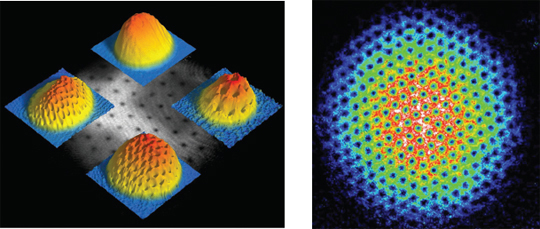
FIGURE 8.1 Data showing quantized vortices in a Bose-Einstein condensate, ranging from sparse to dense vortices in the left-hand figure. The right-hand figure shows a very dense, regular array of quantized vortices. SOURCE: Left: Courtesy of W. Ketterle, Massachusetts Institute of Technology. Right: Courtesy of E.A. Cornell, University of Colorado, Boulder.
to-Mott” insulator transition from a continuous quantum fluid to a discrete atomic lattice) can thereby be studied in a controlled, clear, and precise manner that is impossible in an ordinary solid where the chemical composition dictates the properties.8 Furthermore, exact theoretical models can be developed and tested, revealing the key strengths and weaknesses of our basic understanding of whether a material conducts electricity or impedes it. In essence, this represents the use of the BEC to realize the kind of quantum simulation foreseen by the visionary physicist and Nobel laureate Richard Feynman.
As picokelvin BECs are realized in a space-based laboratory, scientists will be able to create and understand the competing forms of order that often govern the complex structure observed in the world around us. One of the remarkable aspects of quantum gases, and the BEC in particular, is the exquisite sensitivity to interparticle interactions. Because of the low thermal energies and the great size of the quantum wavepackets, the system becomes sensitive to tiny but important long-range forces and interactions. When combined with optical lattices, this allows replication and investigation of the building blocks of complicated matter such as magnetic and electric materials.
All particles can be classified as either “bosons” or “fermions.” Unlike bosons, which tend to condense together, fermions tend to repel one another (more accurately, they cannot occupy the same quantum state). Fermionic matter is ubiquitous in the universe. It includes systems such as the electron gas that makes metals resilient, elastic, and conductive, and it is the source of forces that stabilize white dwarf stars against gravitational collapse. If the particles of a quantum gas are identical fermions, then another class of physics can be investigated. Fermions that interact via repulsive interactions are predicted to show a rich phase diagram when placed in an optical lattice, allowing us to test key theoretical models and amplify our understanding of a broad range of phenomena. Of practical importance is the unresolved mechanism of superconductivity in high-temperature superconductors. Of fundamental importance is the so-called color superfluidity of quarks in quantum chromodynamics, which describes nucleon and quark interactions at subnuclear length scales. (The term “color” here has nothing to do with color in the ordinary sense; it refers instead to quantum states of matter.) Analogs to both might be observable in cold Fermi gases in space.
The quest for the lowest energy quantum configuration of fermions in ultracold gases involves research on mixtures of ultracold bosons and fermions. On the practical side this is because the evaporative cooling used to achieve a BEC in a Bose gas does not work with fermions. The thermalization that allows the evaporating gas to cool relies on collisions between the atoms, which in turn are forbidden by the intrinsic exclusion exhibited by fermions for each other (the Pauli exclusion principle). To solve this, a Bose-Fermi mixture is used in which the bosons are evaporatively cooled and the fermions are “sympathetically” refrigerated by interaction with the bosons. One simple consequence is that the Fermi gas can only be made as cold as the companion BEC. However, heavier particles sink under the influence of gravity, so that as the gases become colder the species separate in space and cooling ceases. The solution to this problem is to remove gravity. Theoretical work on these mixtures has been prolific, and experimentation will yield exciting discoveries spanning the quantum-mechanical properties of extremely weakly interacting systems to strongly interacting ones.
Experiments with quantum gases in space will allow the study of matter in regimes not achievable on Earth. They will support new developments and applications of breakthrough technologies such as the atom laser, a bright source of coherent matter waves analogous to coherent light waves of the familiar laser. Another important impact of these systems will be in next-generation technologies and quantum sensors. Examples include ultraprecise atomic clocks and matter-wave interference devices with exquisite sensitivity to rotation and gravity. Space-based matter-wave interferometers can set new standards in inertial and gravitational sensing for basic research, navigation, geodesy, and geology.
An excellent example of a cold-atom quantum sensor is the cold-atom interferometer. As described above in connection with the Bose-Einstein condensate, when atoms are cooled, the length scale characterizing their quantum behavior increases. This allows the construction of “atom optical” devices in analogy with conventional optical devices.9 One of these devices, the cold-atom interferometer, much resembles its optical counterpart. An input beam consisting of atoms of equal velocity is split into two parts. The two beams are made to propagate through different paths in space and are then recombined. If the two paths differ in length, there can be either constructive or destructive interference of the matter waves, and matter-wave fringes are observed. Such devices have already been tested as rotation sensors and as detectors to measure fundamental quantities such as photon momentum and
the local force of gravity. Used for inertial navigation, these rotational sensors rival the best gyroscopes available and are potentially important for space navigation applications.
Thrust IV: Condensed Matter and Critical Phenomena
One of the great scientific successes enabled by the microgravity environment over the past two decades concerns better understanding of the behavior of materials under a special set of thermodynamic conditions known as a criticality.10 If one maintains a system at its critical density ρc, then the observable liquid-vapor phase boundary in the pressure-versus-temperature phase diagram will end abruptly at a critical pressure Pc and a critical temperature Tc. At this critical point, the distinction between liquid and vapor phases disappears, creating a foglike critical state dominated by large fluctuations between the liquid and vapor phases. More than 130 years ago Johannes van der Waals observed that all fluids, when compared at the same reduced temperature and reduced pressure, have approximately the same compressibility factor, and that they all deviate from ideal gas behavior to about the same degree. This principle of corresponding states initiated the study of critical phenomena.11 The 1982 Nobel prize in physics was awarded to Kenneth Wilson for his development of renormalization group techniques applied to critical phenomena. These techniques provide a powerful, systematic method of calculating the effect of critical fluctuations on the behaviors of many systems, leading to quantitative predictions of critical exponents and amplitude ratios and to the calculation of corrections to these predictions as the system is moved away from its critical point.12,13
Many other important materials, including superfluids, magnetic materials, and colloids, undergo transitions between ordered and disordered phases. Each of these systems has its own distinct physical property, called an “order parameter,” that is zero in the disordered phase; each exhibits large fluctuations about its zero mean as the critical point is approached, and increases from zero as the ordered phase is entered.
Important advances in our understanding of critical phenomena came from the Lambda Point Experiment (LPE) that flew within the cargo bay of the space shuttle in 1992. That experiment provided a stringent test of advanced theories of static critical phenomena by measuring the heat capacity of 4He near the superfluid critical point to within better than one part in 108 of the critical point temperature.14 This experiment extended the precision by three orders of magnitude compared to what had been possible without access to the weightless laboratory of space.
A similar experiment, the Confined Helium Experiment (CHeX), flew in 1998 to extend these measurements to systems in two-dimensional confinement, again approaching the critical temperature with the same unprecedented level of precision as the LPE experiment. Comparisons of the data from these measurements provided a stringent test of the theory of finite size-scaling.15
With NASA support, experiments have been designed to elucidate critical phenomena in other classes of universality, to explore fundamentally new effects that are observed when a system near its critical point is driven away from equilibrium, both in the bulk and near boundaries.16 These experiments, which have been promoted to the level of flight readiness, provide a near-term opportunity to obtain a well-defined science return from an available microgravity laboratory. The flight of these experiments would provide insight into the behavior of these critical systems that cannot be obtained on Earth. The Low-Temperature Microgravity Physics Facility (LTMPF) is a multiflight facility designed to attach to the Japanese Experiment Module/Exposed Facility of the ISS.17 LTMPF has been engineered to support these and other experiments that test fundamental symmetries, such as the Lorentz invariance, discussed in Thrust II above, for many months in a well-controlled cryogenic environment. This facility is approximately 70 percent complete; once completed, it will facilitate these and other experiments in a high state of readiness for flight on the ISS and, possibly, on other platforms. LTMPF is able to support experiments in many thrusts, including superconducting oscillators for tests of relativity; superconducting proof masses for gravitational tests; and cold condensed-matter systems for studies of critical phenomena; and for the study of new ordered phases at low temperatures, as discussed below.
The elucidation of critical phenomena at accuracies that can be obtained only in space, as described above, not only would represent a major scientific advance but also would create the opportunity to apply these scientific results and flight engineering systems to advance the search for new phases and organizing principles of matter.
These important advances will be enabled by NASA’s Exploration mission. These advances in turn promise to enable the Exploration mission through the development of new devices that use emerging measurement science that requires the microgravity laboratory.
Superfluid helium droplets (Figure 8.2) provide a convenient microscopic laboratory in which to study the structure and behavior of atoms and molecules, and to search for new phases of matter. Evidence of superfluidity has been observed in nanometer-sized small clusters of hydrogen in superfluid helium droplets using lasers as the experimental probe.18 The microgravity environment may provide a laboratory where these and other interesting effects can be explored in a droplet that is stable without continuous intervention by external fields, as are required on Earth. External fields are often used on Earth to stabilize and suspend bubbles and drops, and these forces can readily mask interesting new ordered phases of matter and collective phenomena that could be studied if there were no such fields. The weightless laboratory is an important platform on which to explore new structures, interactions, and phases of matter because the systematic effects of gravity are removed and other biasing experimental effects can be controlled. It is important to provide a microgravity laboratory for these studies, since the understanding that is gained will advance our fundamental knowledge of physics, which could be important for future engineered systems.
To understand the importance of this basic knowledge for the development of new engineered systems, consider how basic research on superfluidity has led to the development of new inertial devices, such as new superfluid gyroscopes that operate on the superfluid Josephson effects in 3He and in 4He.19 These devices may prove useful in future space exploration missions, and in some terrestrial applications. They use dynamical superfluid properties to detect rotations and may someday detect rotation rates that are far smaller than those that can be detected with conventional laser gyroscopes based on the Sagnac effect. Other devices, such as ultrastable blackbody devices that use the superfluid transition in 4He as a fixed-point reference, may be useful in long-duration space radiometry measurements of the cosmic microwave background.20 Finally, it may be possible to extend the technology developed to support the measurement of critical phenomena in space to enable many other space projects or missions. For example, charged-particle sensors and lightweight superconducting magnets may someday prove useful in detecting and deflecting the “prevailing wind” of dangerous cosmic radiation away from long-duration flight crews on the Moon or in transit to Mars or the outer planets. Such systems, if they can be engineered successfully, would effectively provide a substitute magnetosphere to protect flight crews from lethal charged particle flux once they are outside the protection of Earth’s magnetosphere. Our understanding of how to contain and control the low-temperature environment in microgravity enables an entirely new class of superconducting sensors and
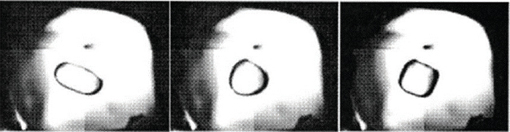
FIGURE 8.2 Levitated He droplet and a crystal boundary. Liquid helium is diamagnetic, so at sufficient values of the product of magnetic field and field gradient, BNB, the magnetostrictive force exceeds the force of gravity on the droplet, causing it to levitate. Once the droplet is levitated, phase change can be studied without the effects of the container, permitting the crystal boundaries between the body-centered cubic and hexagonal close-packed phases of solid helium, such as the boundary shown here, to be observed. SOURCE: With kind permission from Springer Science+Business Media: Journal of Low Temperature Physics, Oscillations of charged helium II drops, Volume 110(1/2), 1998, p. 177, D.L. Whitaker, M.A. Weilert, C.L. Vicente, H.J. Maris, and G.M. Seidel, Figure 5.3.
devices that may be used in many enabling applications. Cryogenic systems that operate at higher temperatures also provide methods for collection and preservation of samples from the planets and from the cosmic wind for planetary studies.
AVAILABLE AND NEEDED PLATFORMS
Fundamental physical science can benefit from experiments that are deployed on different platforms. In contrast to other subdisciplines of microgravity, where space-based research can be conducted on a particular platform, fundamental physics is so varied that all foreseeable platform modalities must be considered. For example, many energy-sensitive experiments will seek low Earth orbits on the ISS that record data only when the ISS is well outside the South Atlantic Anomaly. Other high-precision experiments will be ultrasensitive to vibration and other perturbations, requiring a free-flying platform. Still other experiments in complex fluids may benefit from reduced gravity but not zero gravity, making a lunar basing preferable. Yet other experiments that seek to test gravity theories through distant space ranging and tracking may be accommodated on future deep-space probes. Essentially all known space deployment platforms should remain on the table for fundamental physics experiments since their specific science-driven platform requirements cannot be reliably generalized.
Ground-based research can, at low cost, answer fundamental scientific questions and enable space research and applications. It does so by identifying new opportunities for transformative space-based physical science; by resolving measurement and system feasibility issues before larger investments are made on space-based experimental platforms; and by serving as an active core community of experimental and theoretical scientists who carry out and support space-based experiments and interpret the results. Ground-based fundamental physics research in heat, mass, and momentum transport; materials physics; combustion; and granular materials can also help in the design of human flight systems and launch capabilities. As an example, the development of constitutive models for granular flow may enhance the performance of robotic planetary explorers and make them more robust. Another example might be the development of methods of ceramic processing that would combine recycled materials from the spacecraft with lunar regolith to build lunar habitats.
Aircraft (parabolic zero-gravity flight) and drop towers, which provide a few seconds of microgravity conditions at a time, can test the feasibility and utility of microgravity and assess the prospects for experiments carried out under long-term microgravity or reduced gravity. Some experiments can be completed during a single drop or atmospheric flight. One example of experiments conducted in a transient microgravity environment is the “filament stretching” experiments that determine the behavior of polymeric fluids when they are rapidly stretched to fine filaments undisturbed by the effects of gravity. Another example is the use of the ZARM drop tower in Bremen, Germany, by ESA investigators to test BEC formation in a microgravity environment.
The International Space Station
The International Space Station and the space shuttle cargo bay have already enabled ground-breaking experiments on gelation and phase separation in colloidal suspensions and tests of critical phenomena in the Lambda Point Experiment and the CHeX described above. To make full use of the ISS and its delivery systems for fundamental physics studies, the LTMPF should be deployed. This would enable clock experiments, ultrasensitive measurements of gravitation, and critical point experiments to be carried out in microgravity. Certain aspects of fundamental physics experiments that have flown, or that have been prepared for spaceflight within the fundamental physical sciences programs, could be treated as facilities themselves, which guest investigators could use to multiply the science returns. This could also be done with the ongoing development of laser cooling and atomic physics experiments in space, as well as experiments that test gravity and fundamental symmetries. These user-based facilities
could be developed by the laboratory groups that possess the expertise, and the NASA flight centers could anchor the programs and provide limited engineering support and project management for these efforts. Most of the technical development for these and future flight facilities could be done in the university laboratories that developed the measurement science and prototype flight systems.
While the ISS provides a convenient, accessible laboratory for many microgravity experiments, the environment provided by free-flying spacecraft avoids the negative aspects of gravitational field perturbations from the movement of personnel, radio noise from a plethora of ISS electrical and electronic infrastructure, accelerations from orbital stabilization, conflicting requirements from concurrent experiments, and limitations on experimental parameters imposed by human safety requirements. Thus, free-flying spacecraft may be used when extremely low-noise and low-stray-acceleration environments are required, or when specific orbits are required to obtain the science return. An example of this is the Gravity Probe B spacecraft, which flew in a nearly polar orbit to perform high-resolution tests of Einstein’s theory of general relativity. Many of the highest priority experiments in Thrust II (precision measurements of fundamental forces and symmetries), such as the MICROSCOPE and STEP missions, will require dedicated free-flying spacecraft. Free-flying deep-space probes may also be required when it is necessary to locate the experiment far from the Sun, either on a trajectory that is set to leave the solar system or to a Lagrange point.
Lunar or martian bases would be used for fundamental seismographic studies of the Moon or Mars, yielding insight into the interiors of these bodies and their geological history. The compositions of their regoliths, their magnetic fields, and their atmospheric phenomena (in the case of Mars) could be studied from such bases. In the longer term, such bases might also be used as platforms for large telescopes. The lunar regolith might be combined with waste aluminum metal to create new materials on the Moon, as discussed in Chapter 9. In short, a lunar or martian base might someday function as a stable, long-term laboratory for reduced gravity experimentation.
PROGRAM RECOMMENDATIONS FOR EXPERIMENT-SPECIFIC SUPPORT FACILITIES ON VARIOUS PLATFORMS
Fundamental physical science in space is enabled both by dedicated, single-experiment, free-flying platforms, such as Gravity Probe B and STEP, and by specially designed pieces of space hardware that allows researchers to experiment on different systems. Such systems include static and dynamic light-scattering facilities for the study of complex fluids and soft-condensed-matter physics; atomic clock ensembles such as ACES; and future optical-magnetic systems that permit the creation of quantum gases and the study of new physical phenomena in them. Other shared facilities that are important in this research include photographic systems and microscopy facilities incorporating confocal and laser tweezer capabilities. In the past NASA organized teams of researchers to help in the development of special hardware for fundamental physical science in space. In addition to producing useful flight hardware, these teams can also advance the overall state of terrestrial technology in their fields. Collaborations with similar groups in Europe have resulted in highly sophisticated facilities and have motivated further agreements to develop and share future flight facilities. NASA has also enabled the formation of international networks that produce state-of-the-art materials, particularly colloids that would otherwise not have been available.
The panel recommends that a ground-based program be reinstated to support technology development and ground-based science that will enable future flights. The program must continue during the time between major flight platforms in order to maintain the technology base and the intellectual community that is essential to the advancement of programs within NASA and that has historically contributed to the technological strength of the United States.
Flight facilities that currently support studying the physics of complex fluids and soft condensed matter should be continued, and LTMPF should be completed. Experiments that have flown or that have been prepared
for spaceflight should be treated as facilities themselves, and guest investigators should be encouraged to use the same hardware, increasing the science return. This should also be done for the facilities being developed for laser cooling and atomic physics experiments in space as well as for testing gravity and fundamental symmetries. These user-based facilities should be developed by the laboratory groups that possess the expertise, and the NASA flight centers should anchor the programs and provide engineering support and project management for them. Most of the technical development efforts for these and future flight facilities should be done in the university laboratories where the measurement science and prototype flight systems were and are being developed.
Because of the close coupling between fundamental and applied aspects of fluids physics, NASA funding for applied and mission-enabling research, if restored, would be most fruitful if combined with well-targeted support for fundamental and mission-enabled research on fluids physics and complex fluids. The most important topics in complex fluids and fluids physics fundamental research are identical to those for which applied research is needed: multiphase flow, capillary-driven flow, and instabilities, especially in microgravity.
In general, NASA should support fundamental research that generates conceptual breakthroughs, that has a high impact on science, that can accelerate applied mission-enabling research, and that can increase public awareness of science generally and of NASA’s missions and objectives in particular. To develop a few highly appropriate space-based fundamental experiments, a much larger repertoire of ground-based experiments (perhaps 100 to 150 ongoing studies) should be supported. The panel recommends that fundamental studies be carefully targeted and should meet four criteria: (1) the science involved should support experiments for which microgravity is required, (2) it should be relevant to NASA’s missions, (3) it should encourage interactions with international partners, and (4) it should have an impact on education.
Finally, the fundamental physics program must remain agile enough that it can be pursued at low cost and be capable of generating interesting and unexpected new physical observations. Examples of such observations include the Pioneer anomaly and the continuing collection of tracking data from Voyager as it passes the heliopause and leaves the solar system, exploring and testing fundamental physical phenomena over a wide range of length scales. These particular efforts require only the resources of the Deep Space Network and a small effort within the ground-based program, and do not represent a major allocation of resources.
RESEARCH PROGRAM RECOMMENDATIONS
The panel found that the highest-priority areas of research in the area of fundamental physical sciences at NASA should be (1) soft-condensed-matter physics and complex fluids, (2) precision measurements of fundamental forces and symmetries, (3) quantum gases, and (4) critical phenomena. These areas embody important scientific objectives that can be studied only in the laboratory of space. NASA’s new program in fundamental physical (FP) sciences in space should include these four areas, which the panel also calls thrust areas. Other important areas of physical science in space, including fluids physics, materials, and combustion, are described in Chapter 9, which covers the applied physical sciences.
Recommended Program Element 1: Research on Complex Fluids and Soft Matter (FP1)
Complex fluids and soft condensed matter are excellent candidates for study in the microgravity laboratory. They are materials with multiple levels of structure and their softness typically results from the large size of the basic units. They are easily deformed, and their statics and dynamics are governed by surface tension and entropic forces. On Earth, these weak forces are easily overwhelmed by gravity. Colloids, polymer and colloidal gels, foams, emulsions, soap solutions, and the like are particularly susceptible to gravity owing to the gradients that are formed in their properties under gravity. Microgravity provides a unique opportunity to eliminate these gradients and permit studying the long-term dynamics of such systems free from such gravitational interference. Microgravity is required as well to probe the basic properties of these materials and to use the materials as models to explore other phenomena. Experiments on Earth are hampered by sedimentation, flows, and the suppression of thermodynamic fluctuations. Similar issues emerge for colloids, gels, and dusty plasmas, whose density and morphology under
gravity are height dependent. Similarly, the stress chains and yield properties of granular materials are dependent on height and sensitive to the magnitude of gravity.
Space offers unique conditions to address important questions about the fundamental laws of nature, with sensitivity beyond that of ground-based experiments in many areas. In particular, high-precision measurements in space can test relativistic gravity and fundamental particle physics and related symmetries in ways that are not practical on Earth. Atomic clocks in space, probably optical but potentially microwave too, are useful in the study of time variation of the fundamental constants and have many more applications. Promising theoretical approaches to quantum gravity and physics beyond the currently accepted standard model of fundamental physics typically predict new forces, violations of fundamental symmetries, or time-varying physical constants. Such novel effects provide distinct signatures for precision experimental searches that are often best carried out in space.
A remarkable range of different physical phenomena can be investigated using quantum gases such as BECs and degenerate Fermi gases; many of these investigations can be done only in space. Aspects of the formation of BECs and their intrinsic quantum properties represent one rich class. Research on vortex formation and relaxation can be used to probe phase-transition models of the early universe and can also give insight into the structure of neutron stars. As picokelvin BECs are realized in a space-based laboratory, scientists will be able to create and understand the competing forms of order that often govern the complex structure observed in the world around us. One of the remarkable aspects of quantum gases, and BECs in particular, is their exquisite sensitivity to interparticle interactions. Because of the low thermal energies and the large size of their quantum wavepackets, the system becomes sensitive to tiny but important long-range forces and interactions. When combined with optical lattices, this sensitivity allows replication and investigation of the building blocks of complicated matter such as magnetic and electric materials.
Recommended Program Element 4: Investigations of Matter in the Vicinity of Critical Points (FP4)
Over that past two decades the microgravity environment has given us a better understanding of the behavior of materials in the vicinity of thermodynamically determined critical points. With NASA support, experiments have been designed to elucidate critical phenomena in other universality classes and to explore fundamentally new effects that are observed when a system near its critical point is driven away from equilibrium, both in the bulk and near its boundaries. These experiments have been designed and brought to the level of advanced flight readiness; this should allow obtaining a well-defined science return from an available microgravity laboratory. The flight of these experiments would provide insight into the behavior of these critical systems that cannot be obtained on Earth.
These four recommended program areas, or thrusts, share four important strengths: (1) they have significant potential to address some of the grand scientific challenges of our time, (2) they are synergistic with other NASA needs, (3) they have a great need for access to space, and (4) they have significant potential to affect the terrestrial research enterprise.
PROGRAMMATIC CONCLUSIONS, FINDINGS, AND RECOMMENDATIONS
A healthy and sustainable program of fundamental physical sciences in space will require a mix of multi-user and single-experiment space-based facilities and human-tended and free-flyer platforms. It also will require a strong ground-based program that is community driven and that allocates resources based on peer review, including the resources for flight experiments. The ground-based program will serve three essential functions. First, it
will identify new opportunities for transformative, space-based physical science. Second, it will foster advances in instrumentation that are essential to accomplishing the ambitious objectives of future flight programs. Third, once the flight experiment is selected, the ground-based program will provide an active core community that can conduct competitive peer reviews to select the efforts, including the development of relevant theory, that might best support the flight experiment and ensure that fundamental understanding of physical sciences is advanced.
It is in the nature of fundamental research that its timescale is less well defined than the timescale for applied research. Nonetheless, achieving the program set out here will require that in the next 2 years NASA initiates and utilizes a peer-review system to select investigators for a ground-based research program encompassing each of the four fundamental physics thrusts identified in this chapter. In addition, experiments and facilities that could rapidly be made available for a possible return to flight program status need to be peer reviewed. NASA will need to continue to sponsor an international symposium series centered on the opportunities and viability of research missions within the fundamental physical sciences in space.
Looking ahead, a successful program 3 to 4 years from now will have NASA begin evaluating proposals for space-based fundamental physics—including those that use both free-flyer platforms and the ISS—to select compelling research that has demonstrated flight viability and a clear need for microgravity as demonstrated by the ground-based program. This effort will probably build on existing connections with space-research programs in other countries throughout the world and establish new ones. During the following 5 years it will be important to begin a process to reassess the direction of research, and to adjust the program priorities if necessary. This may be accomplished in an open and transparent manner through the international symposium series mentioned above.
Recommendation 1: A successful exploration program in the physical sciences necessitates first of all a ground-based fundamental physical sciences program. Such a ground-based program must also eventually support flight commitments in the fundamental physical sciences.
Recommendation 2: Flight experiments and facilities that could rapidly be made available for a return to flight should be peer reviewed. To justify this recommendation the panel points to the numerous existing experiments and supporting facilities that are at an advanced stage of flight readiness.
Recommendation 3: In funding projects, NASA should seek partnerships with other agencies and other nations. Research in fundamental physical science is supported by many federal agencies in the United States and is widely supported internationally.
Recommendation 4: NASA should build a program in fundamental physical sciences sufficiently large to attract prominent scientists, both flight- and ground-based, to create a vibrant ground-based program and to generate potential space-based missions.
Past experience in the NASA microgravity program suggests that a critical mass of 100 to 150 funded investigators would provide coverage of all the physical sciences of importance to NASA, engender synergy among investigators, and ensure spirited and regular meetings of the investigators. It would also provide a steady flow of projects for transitioning to flight. A program of this size is also consistent with that of other successful research programs in the physical sciences in the United States and other countries, where at least 100 to 150 investigators are needed to sustain a healthy and productive enterprise.
1. Chaikin, P., and Nagel, S. 2003. Report on the NASA Soft and Complex Condensed Matter Workshop, NASA/CR-2003-212618. NASA, Washington, D.C.
2. National Research Council. 2003. Assessment of Directions in Microgravity and Physical Sciences Research at NASA. The National Academies Press, Washington, D.C.
3. Zhu, J.X., Li, M., Rogers, R., Meyer, W., Ottewill, R.H., Russell, W.B., and Chaikin, P.M. 1997. Crystallization of hard-sphere colloids in microgravity. Nature 387:883-885.
4. Anderson, M.H., Ensher, J.R., Matthews, M.R., Wieman, C.E., and Cornell, E.A. 1995. Observation of Bose-Einstein condensation in a dilute atomic vapor. Science 269(5221):198-201.
5. Davis, K.B., Mewes, M.-O., Andrews, M.R., van Druten, N.J., Durfee, D.S., Kurn, D.M., and Ketterle, W. 1995. Bose-Einstein condensation in a gas of sodium atoms. Physical Review Letters 75(22):3969-3973.
6. Cornell, E.A., and Wieman, C.E. 1998. The Bose-Einstein condensate. Scientific American 278(3):40-45.
7. Pitaevskii, L.P., and Stringari, S. 2003. Bose-Einstein Condensation. Clarendon Press, Oxford.
8. Greiner, M., Mandel, O., Esslinger, T., Hänsch, T.W., and Bloch, I. 2002. Quantum phase transition from a superfluid to a Mott insulator in a gas of ultracold atoms. Nature 415(6867):39-44.
9. Meystre, P. 2001. Atom Optics. Springer-Verlag, New York, N.Y.
10. Barmatz, M., Hahn, I., Lipa, J.A., and Duncan, R.V. 2007. Critical phenomena in microgravity: Past, present, and future. Reviews of Modern Physics 79:1-52.
11. Stanley, H.E. 1971. Introduction to Phase Transitions and Critical Phenomena. Oxford University Press, Oxford, U.K., and New York, N.Y.
12. Wilson, K.G. 1971. Renormalization group and critical phenomena. I. Renormalization group and the Kadanoff scaling picture. Physical Review B 4:3174-3183.
13. Wilson, K.G. 1971. Renormalization group and critical phenomena. II. Phase-space cell analysis of critical behavior. Physical Review B 4:3184- 3205.
14. Lipa, J.A., Nissan, J.A., Stricker, D.A., Swanson, D.R., and Chui, T.C.P. 2003. Physical Review B 68:174518.
15. Lipa, J., Swanson, D.R., Nissen, J.A., Geng, Z.K., Williamson, P.R., Strieker, D.A., Chui, T.C.P., Israelsson, U., and Larson, M. 2000. Physical Review Letters 84:4894.
16. Lammerzahl, C., Ahlers, G., Ashby, N., Barmatz, M., Biermann, P. L., Dittus, H., Dohm, V., Duncan, R., Gibble, K., Lipa, J., Lockerbie, N., Mulders, N., and Salomon, C. 2004. Review: Experiments in fundamental physics scheduled and in development for the ISS. General Relativity and Gravitation 36:615-649.
17. Larson, M., Croonquist, A., Dick, G.J., and Liu, Y.M. 2003. The science capability of the Low Temperature Microgravity Physics Facility. Physica B: Physics of Condensed Matter 329:1588-1589.
18. Toennies, J.P., and Vilesov, A.F. 2004. Superfluid Helium Droplets: A Uniquely Cold Nanomatrix for Molecules and Molecular Complexes. Wiley-VCH Verlag GmbH and Co. KGaA, Weinheim.
19. Simmonds, R.W., Marchenkov, A., Hoskinson, E., Davis, J.C., and Packard, R.E. 2001. Quantum interference of superfluid 3He. Nature 412:55-58.
20. Green, C.J., Sergatskov, D.A., and Duncan, R.V. 2005. Demonstration of an ultra-stable temperature platform. Journal of Low Temperature Physics138:871-876.
This page intentionally left blank.


