
In previous chapters the survey committee describes challenges and opportunities for the field of solar and space physics and outlines goals for the upcoming decade and beyond. This chapter presents recommendations for accomplishing these goals, addressing both research and applications. Summarized in Tables 4.1 and 4.2, the recommendations are prioritized (and numbered as in the Summary) and, where appropriate, directed to a particular agency to form programs that satisfy fiscal and other constraints. Additional recommendations are offered throughout the chapter. The implementation and budget implications of the research recommendations are described for NSF in Chapter 5 and for NASA in Chapter 6. Chapter 7 expands further on the applications recommendations by presenting the survey committee’s vision for a new national program in space weather and space climatology.
TABLE 4.1 Summary of Top-Level Decadal Survey Research Recommendations
|
|
||||
| Priority | Recommendation | NASA | NSF | Other |
|
|
||||
| 0.0 | Complete the current program | X | X | |
| 1.0 |
Implement the DRIVE initiative Small satellites; midscale NSF projects; vigorous ATST and synoptic program support; science centers and grant programs; instrument development |
X | X | X |
| 2.0 |
Accelerate and expand the Heliophysics Explorer program Enable MIDEX line and Missions of Opportunity |
X | ||
| 3.0 | Restructure STP as a moderate-scale, PI-led line | X | ||
| 3.1 | Implement an IMAP-like mission | X | ||
| 3.2 | Implement a DYNAMIC-like mission | X | ||
| 3.3 | Implement a MEDICI-like mission | X | ||
| 4.0 | Implement a large LWS GDC-like mission | X | ||
|
|
||||
TABLE 4.2 Summary of Top-Level Decadal Survey Applications Recommendations
|
|
||||
| Priority | Recommendation | NASA | NSF | Other |
|
|
||||
| 1.0 | Recharter the National Space Weather Program | X | X | X |
| 2.0 | Work in a multiagency partnership to achieve continuity of solar and solar wind observations | X | X | X |
| 2.1 | Continue solar wind observations from L1 (DSCOVR, IMAP) | X | X | |
| 2.2 | Continue space-based coronagraph and solar magnetic field measurements | X | X | |
| 2.3 | Evaluate new observations, platforms, and locations | X | X | X |
| 2.4 | Establish a space weather research program at NOAA to effectively transition research to operations | X | ||
| 2.5 | Develop and maintain distinct funding lines for basic space physics research and for space weather specification and forecasting | X | X | X |
|
|
||||
Baseline Priority for NASA and NSF: Complete the Current Program
The survey committee’s recommended program for NSF and NASA assumes continued support in the near term for the key existing program elements that constitute the Heliophysics Systems Observatory (HSO) and successful implementation of programs in advanced stages of development.
NASA’s existing heliophysics flight missions and NSF’s ground-based facilities form a network of observing platforms that operate simultaneously to investigate the solar system. This array can be thought of as a single observatory—the Heliophysics Systems Observatory (HSO) (see Figure 1.2). The evolving HSO lies at the heart of the field of solar and space physics and provides a rich source of observations that can be used to address increasingly interdisciplinary and long-term scientific questions. Missions now under development will expand the HSO and drive scientific discovery. For NASA, these missions include the following:
• Radiation Belt Storm Probes (RBSP; Living With a Star (LWS); 2012 launch1) and the related Balloon Array for RBSP Relativistic Electron Losses (BARREL; first launch 2012). These missions will determine the mechanisms that control the energy, intensity, spatial distribution, and time variability of the radiation belts.
• The Interface Region Imaging Spectrograph (IRIS; Explorer program; 2013 launch). IRIS will deliver pioneering observations of chromospheric dynamics to help reveal their role in the origin of the fluxes of heat and mass into the corona and wind.
• The Magnetospheric Multiscale Mission (MMS; Solar-Terrestrial Probes (STP) program; 2014 launch). MMS will address the physics of magnetic reconnection at the previously inaccessible tiny scale where reconnection is triggered.
Missions that are less fully developed but that are part of the assumed baseline program2 include:
________________________
1 Following its launch on August 30, 2012, RBSP was renamed the Van Allen Probes.
2 In accordance with its charge, the committee did not reprioritize any NASA mission that was in formulation or advanced development. In June 2010, the committee’s charge was modified by NASA to include a request for it to present decision rules to guide the future development of the SPP mission.
• Solar Orbiter (a European Space Agency-NASA partnership, 2017 launch). Solar Orbiter will investigate links between the solar surface, corona, and inner heliosphere from as close as 62 solar radii (i.e., closer to the Sun than Mercury’s nearest approach).
• Solar Probe Plus (SPP; LWS program; 2018 launch). Solar Probe Plus will make mankind’s first visit to the solar corona to discover how the corona is heated, how the solar wind is accelerated, and how the Sun accelerates particles to high energy.
The powerful fleet of space missions that explore our local cosmos will be significantly strengthened with the addition of these missions. However, their implementation as well as the rest of the baseline program will consume nearly all of the resources anticipated to be available for new starts within NASA’s Heliophysics Division through the midpoint of the overall survey period, 2013-2022.
For NSF, the previous decade has seen the initial deployment of the Advanced Modular Incoherent Scatter Radar (AMISR) in Alaska, a modular, mobile radar facility that is being used for studies of the upper atmosphere and space weather events, and the initial development of the Advanced Technology Solar Telescope (ATST), a 4-meter-aperture optical solar telescope—by far the largest in the world—that will provide the most highly resolved measurements ever obtained of the Sun’s plasma and magnetic field. These new NSF facilities join a broad range of existing ground-based assets (see Figure 1.2) that provide an essential global synoptic perspective and complement space-based measurements of the solar and space physics system. With adequate science and operations support, they will enable frontier research, even as they add to the long-term record necessary for analyzing space climate over solar cycles.
The success of these activities at NASA and NSF is fundamentally important to long-term scientific progress in solar and space physics. The survey committee concluded that, with prudent management and careful cost-containment, support for and completion of the ongoing program constitute precisely the right first step for the next decadal interval and as such represent the baseline priority.
The survey committee recommends implementation of a new, integrated, multiagency initiative (DRIVE— Diversify, Realize, Integrate, Venture, Educate) that will develop more fully and employ more effectively the many experimental and theoretical assets at NASA, NSF, and other agencies.
Relatively low-cost activities that maximize the science return of ongoing projects and enable new ones are both essential and cost-effective. However, too often recommendations regarding such activities are relegated to background status or referred to in general terms that are difficult to implement. With this in mind, the survey committee raises as its highest new priority for both NASA and NSF the implementation of an integrated, multiagency initiative (DRIVE; see Figure 4.1) that strengthens existing programs and develops critical new capabilities to address the complex science issues that confront the field. DRIVE is an initiative unified not by a central management structure, but rather through a comprehensive set of multiagency recommendations that will facilitate scientific discovery.
This integrative approach is motivated by a sea-change in the way breakthrough science is done. Innovative science is often about breaking down disciplinary boundaries, and nowhere is this more evident than in solar and space physics where, increasingly, a deep understanding of multiply connected physical systems is required to make significant progress. Such system science requires new types and configurations of observations, as well as a new cadre of researchers who can cross disciplinary boundaries seamlessly
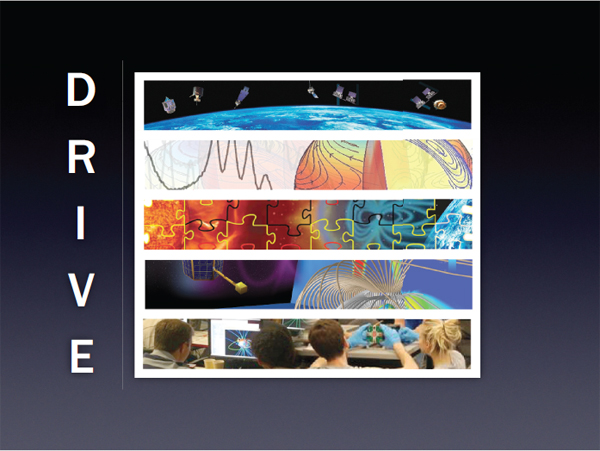
FIGURE 4.1 A relatively small, low-cost initiative, DRIVE provides high leverage to current and future space science research investments with a diverse set of science-enabling capabilities. The five DRIVE components are as follows:
- Diversify observing platforms with microsatellites and midscale ground-based assets.
- Realize scientific potential by sufficiently funding operations and data analysis.
- Integrate observing platforms and strengthen ties between agency disciplines.
- Venture forward with science centers and instrument and technology development.
- Educate, empower, and inspire the next generation of space researchers.
and develop theoretical and computational models that extract the essential physics from measurements made across multiple observing platforms.
The survey committee concluded that a successful solar and space physics scientific program over the next decade is one that balances spaceflight missions of various sizes with supporting programs and infrastructure investments. The goal for the next decade is to:
• Aggressively pursue innovative technological and theoretical advances,
• Build tools for the research community that enable new breakthroughs, and
• Implement an exciting program that addresses key science opportunities while being mindful of fiscal and other constraints.
The five DRIVE components are defined in Figure 4.1, and specific, actionable sub-recommendations for each of these components are presented below. In recommending the DRIVE initiative, the survey committee is cognizant that in a constrained budget environment funding for this program, while modest, will come at the expense of NASA missions. In the case of the NASA DRIVE sub-recommendations, the survey committee has therefore provided explicit costing to ensure that the initiative, along with the other program recommendations, fits within the projected NASA budget envelope (Chapter 6). For NSF, the survey committee provides a more general discussion of expected costs, here and in the NSF program implementation discussion in Chapter 5. The survey committee views the implementation of the DRIVE initiative as crucial to accomplishing the proposed program of research in solar and space physics over the next decade.
Diversify: Diversify Observing Platforms with Microsatellites and Midscale Ground-Based Assets
Exploration of the complex heliospheric system in the next decade requires the strategic use of diverse assets that range from large missions and facilities, through Explorers and mid-size projects, to small CubeSats and suborbital flights (Figure 4.2). The field is entering an era of opportunities for multipoint and multiscale3 measurements made with an increasingly diverse set of platforms and technologies (rockets, balloons, CubeSats, arrays, commercial and international launchers and satellites, and so on). For more information, see Appendix C, “Toward a Diversified, Distributed Sensor Deployment Strategy.” As part of the DRIVE initiative, the survey committee particularly urges that NASA and NSF develop ongoing small flight opportunities and midscale ground-based projects. Such platforms enable the direct engagement and training of a new generation of experimentalists who gain end-to-end experiences ranging from concept formation to project execution.
Midscale Projects
The current NSF equipment and facilities program supports investments in both small and very large facilities. NSF maintains a major research instrumentation program for instrument development projects (less than $4 million per year), and the Major Research Equipment and Facilities Construction (MREFC) program for large infrastructure projects (greater than ~$90 million per year for Atmospheric and Geospace Sciences Division-sponsored projects). However, this program does not cover midscale projects, many of which have been identified by the survey committee as cost-effective additions of high priority to the overall program. The addition of a midscale funding capability could enable solar and space physics projects with well-developed science and implementation plans. Examples include the proposed Frequency-Agile Solar Radio (FASR) and Coronal Solar Magnetism Observatory (COSMO) telescopes, as well as next-generation ATST instrumentation and other projects that are not yet well developed but are representative of the kind of creative approaches that will be necessary for filling gaps in observational capabilities and for moving the survey’s integrated science plan forward (see “Candidates for a Midscale Line” in Chapter 5). A mid-scale funding line would also have a major impact on existing ground-based facilities, because it would rejuvenate broadly utilized assets by taking advantage of new innovations and addressing modern science opportunities. Finally, it would include essential support for accompanying research—a key requirement for maximizing scientific benefit. This is consistent with the emphasis in the 2010 astronomy and astrophysics decadal survey, which recommended a midscale line as its second priority in large ground-based projects.4
________________________
3 Multiscale measurements involve the study of plasma dynamics, which involves the interaction of distinct domains with a large range of spatial scales.
4 National Research Council, New Worlds, New Horizons in Astronomy and Astrophysics, The National Academies Press, Washington, D.C., 2010.
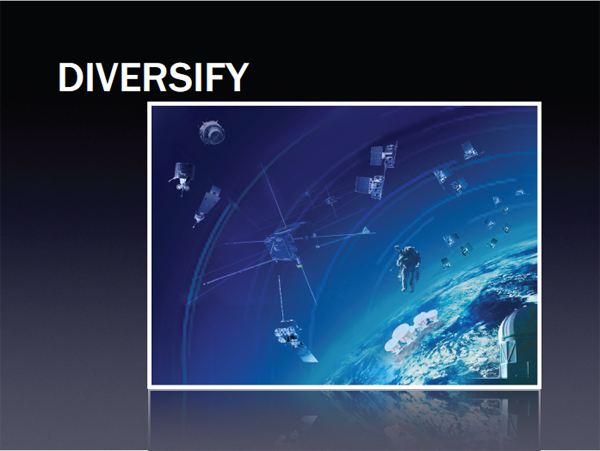
FIGURE 4.2 Diversify observing platforms with microsatellites and midscale ground-based assets. A broad range of assets of multiple sizes, both ground- and space-based, are needed to span the heliophysics system.
Recommendation: The National Science Foundation should create a new, competitively selected midscale project funding line in order to enable midscale projects and instrumentation for large projects.
Tiny Satellites
Since the 2003 solar and space physics decadal survey, a new experimental capability has emerged for very small spacecraft, which can act as stand-alone measurement platforms or be integrated into a greater whole. These platforms are enabled by innovations in miniature, low-power, highly integrated electronics and nanoscale manufacturing techniques, and they provide potentially revolutionary approaches to experimental space science. For example, small, low-cost satellites may be deployed into regions where satellite lifetimes are short but where important yet poorly characterized interactions take place. Operation of miniaturized avionics and instrumentation in high radiation environments both spurs technological development and provides valuable knowledge of space weather.
Experiments on very small spacecraft have an important educational impact, as well. A survey of solar and space physics graduate students at NSF’s GEM, SHINE, and CEDAR workshops indicated that
the opportunity to work on projects that could produce real results within the time frame of a graduate thesis was a great attraction to the field (see Appendix D, “Education and Workforce Issues in Solar and Space Physics”).
NSF’s CubeSat initiative5 promotes science done by very small satellites and provides prime educational opportunities for young experimenters and engineers. The education and training value of these programs has been strongly recognized by the university research community, an endorsement that is itself an argument for an increased launch cadence (more than one per year). As CubeSat grows, it is critical to develop best-in-class educational projects and track the impacts of investments in these potentially game-changing assets.
Recommendation: NSF’s CubeSat program should be augmented to enable at least two new starts per year. Detailed metrics should be maintained, documenting the accomplishments of the program in terms of training, research, technology development, and contributions to space weather forecasting.
NASA’s Low-Cost Access to Space (LCAS) program supports suborbital science missions, and it also provides a unique avenue for graduate-student training and technology development. An increase in the present cadence of sounding rocket investigations and an augmentation by a tiny satellites program, complementary to NSF’s CubeSats, will strengthen LCAS and capitalize on new capabilities.
Recommendation: A NASA tiny-satellite grants program should be implemented, augmenting the current Low-Cost Access to Space (LCAS) program, to enable a broadened set of observations, technology development, and student training. Sounding rocket, balloon, and tiny-satellite experiments should be managed and funded at a level to enable a combined new-start rate of at least six per year, requiring the addition of $9 million per year (plus an increase for inflation) to the current LCAS new-start budget of $4 million per year for all of solar and space physics.
Realize: Realize Scientific Potential by Sufficiently Funding Operations and Data Analysis
The value of a mission or ground-based investigation is fully realized, and science goals achieved, only if the right measurements are performed over the mission’s lifetime and new data are analyzed fully (Figure 4.3). Realizing the full scientific potential of solar and space physics assets therefore requires investment in their continuing operation and in effective exploitation of data (Box 4.1). Furthermore, a successful investigation should also include a focused data analysis program (Box 4.2) that supports science goals that might span platforms or might change throughout a mission. The following program augmentations expand the potential for new discoveries from data.
Advanced Technology Space Telescope (ATST) Operations
Starting in 2018, NSF’s ATST will provide the most highly resolved measurements of the Sun’s plasma and magnetic field ever obtained. The ATST is currently under construction, funded as a large project by NSF’s MREFC program. To fully realize this investment, funding for its operations and for data analysis has to be identified. In particular, ATST requires adequate, sustained funding from NSF for operation, data processing and analysis, development of advanced instrumentation, and research grant support for ATST users. The National Solar Observatory (NSO) FY 2001-2015 long-range budget estimate for annual ATST operations and data services is approximately $18 million. This amount, in addition to a required $4 mil-
________________________
5 Formally known as the CubeSat-based Science Missions for Space Weather and Atmospheric Research.
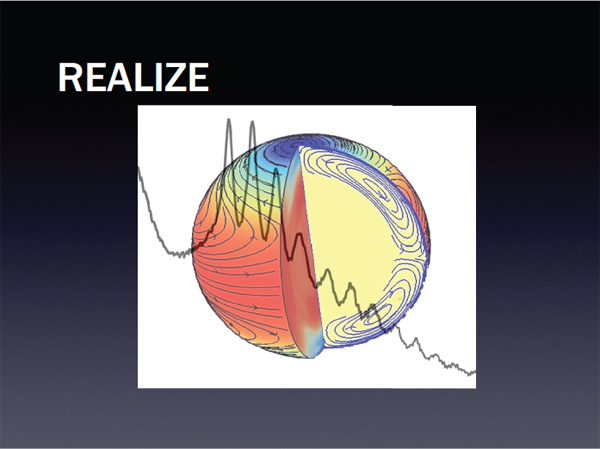
FIGURE 4.3 Realize scientific potential by sufficiently funding operations and data analysis. As an example of how extensive data analysis leads to physical understanding, this figure shows a power spectrum of solar surface oscillations (black line) that can be analyzed via sophisticated helioseismic inversion to determine the nature of plasma flows inside the Sun (two-dimensional color image).
lion per year for NSO synoptic programs, will require a budget augmentation of approximately $12 million above the current NSO operating budget. Research grants and advanced instrumentation development will require additional funds.
Recommendation: NSF should provide funding sufficient for essential synoptic observations and for efficient and scientifically productive operation of the Advanced Technology Solar Telescope (ATST), which provides a revolutionary new window on the solar magnetic atmosphere.
Mission Operations and Data Analysis (MO&DA)
The very successful Heliophysics Systems Observatory is fueled by NASA MO&DA mission extensions and guest investigator (GI) programs, which ensure that the full range of essential data are collected, maintained, and analyzed. The survey committee concluded that a higher level of MO&DA funding is
BOX 4.1 DATA EXPLOITATION
Significant progress has been made over the past decade in establishing the essential components of the solar and space physics data environment. However, to achieve key national research and applications goals requires a data environment that draws together new and archived satellite and ground-based solar and space physics data sets and computational results from the research and operations communities. As discussed in more detail in Appendix B, such an environment would include:
• Coordinated development of a data systems infrastructure that includes data systems software, data analysis tools, and training of personnel;
• Community oversight of emerging, integrated data systems and interagency coordination of data policies;
• Exploitation of emerging information technologies without investment in their initial development;
• Virtual observatories as a specific component of the solar and space physics research-supporting infrastructure, rather than as a direct competitor for research funds;
• Community-based development of software tools, including tools for data mining and assimilation; and
• Semantic technologies to enable cross-discipline data access.
required to exploit the opportunities created by the HSO, especially considering the importance of broad and extended data sets for exploring space weather and space climatology. Moreover, the survey committee concluded that annual competition for support via a stable general GI program is essential. The general GI program is the only funding source for research utilizing data from missions beyond their prime mission phase. Thus, for example, when the data-rich SDO mission finishes its prime phase in 2015, the enormous research potential of this mission should be supported by the general GI program.
Recommendation: NASA should permanently augment MO&DA support by $10 million per year plus annual increases for inflation, in order to take advantage of new opportunities yielded by the increasingly rich Heliophysics Systems Observatory assets and data.
BOX 4.2 NASA FUNDING FOR MISSION DATA ANALYSIS
The hard decisions that have to be made in response to budget limitations have too often resulted in cuts in the mission operations and data analysis (MO&DA) and guest investigator (GI) portions of missions, compromising the scientific potential of the mission. Example 1: The general GI program (supported from MO&DA funds) was completely cut in 2010, with impacts that cascaded through the other Research and Analysis (R&A) programs, causing the Solar and Heliospheric Supporting Research and Technology (SR&T) program to be oversubscribed by a factor of 6.7 (40 percent higher than the previous year). As a result, 36 percent of top-ranked (selectable) proposals were not funded. Example 2: Limited Phase-E funding for data analysis was included in the original mission funding profile of the Solar Dynamics Observatory (SDO). Even less was allocated to the instrument teams after the first 2 years because science funding was planned to come from a mission-specific GI program. The GI program was subsequently scaled back because of budget pressures and little was available in the first year for data analysis for the SDO, a mission that cost around $850 million to build and launch and that is producing unprecedented volumes of data.
Mission Guest Investigators
In addition to MO&DA, a vibrant NASA mission-specific GI program helps ensure mission success by broadening participation and facilitating new discoveries. Future funding should keep pace with new missions.
Recommendation: A directed guest investigator program, set at a percentage (~2 percent) of the total future NASA mission cost, should be established in order to maximize each mission’s science return. Further, just as an instrument descoping would require an evaluation of impact on mission science goals, so, too, should the consequences of a reduction in mission-specific guest investigator programs and Phase-E funding merit an equally stringent evaluation.
Integrate: Integrate Observing Platforms and Strengthen Ties Between Agency Disciplines
The frontiers of current solar and space physics research are at the interfaces between traditional disciplines (Figure 4.4). Moreover, increasingly complex observational requirements (multipoint and multiscale) are becoming tractable thanks to platform diversification and other technological advances (see Appendix C). In particular, recent efforts such as the Whole Heliosphere Interval have demonstrated the effectiveness of coordinating multiscale instruments and a multidisciplinary analysis approach to yield cutting-edge science at modest cost (Box 4.3). Similarly, solar and space physics can benefit science investigations in related fields, such as planetary science, Earth science, physics, and astrophysics, and can also benefit from novel experimental (e.g., laboratory) and theoretical tools that provide end-to-end integration.
Dedicated Laboratory Experiments
Laboratory studies probe fundamental plasma physical processes and produce chemical and spectroscopic measurements that support satellite measurements and atmospheric models. They provide benchmarks for integrating theory and modeling with observation in solar and space physics (Box 4.4). Such laboratory experiments should be funded in a multiagency fashion.
Recommendation: NASA should join with NSF and DOE in a multiagency program on laboratory plasma astrophysics and spectroscopy, with an expected NASA contribution ramping from $2 million per year (plus increases for inflation), in order to obtain unique insights into fundamental physical processes.
Multidisciplinary Science
Solar and space physics is a multidisciplinary science, in terms of both the range of topics within its sub-fields and its interfaces with physics, chemistry, astronomy, and planetary and Earth science. Understanding how solar structure, evolution, and dynamics relate to those of other stars, how the heliosphere relates to astrospheres, and how Earth’s magnetosphere compares to those of other planets illustrates why research in each of the subdisciplines of solar, planetary, stellar, galactic, and heliospheric physics benefits the others. Solar-irradiance variations and other indirect forcings of Earth, such as top-down coupling of solar ultraviolet heating and photochemistry in the stratosphere and the possible influence of galactic cosmic rays, affect global climate changes and also regional changes due to subtle shifts in the atmosphere, ocean circulation patterns, and cloud cover. Breakthrough science can arise at the interfaces of these disciplines.
The multidisciplinary nature of solar and space physics is reflected in its placement within multiple divisions and directorates at NSF. However, the survey committee concluded that this organizational structure may be limiting in particular for science lying at the interfaces between solar and space physics and research in Earth science and astrophysics. A key example of the consequences of the current NSF
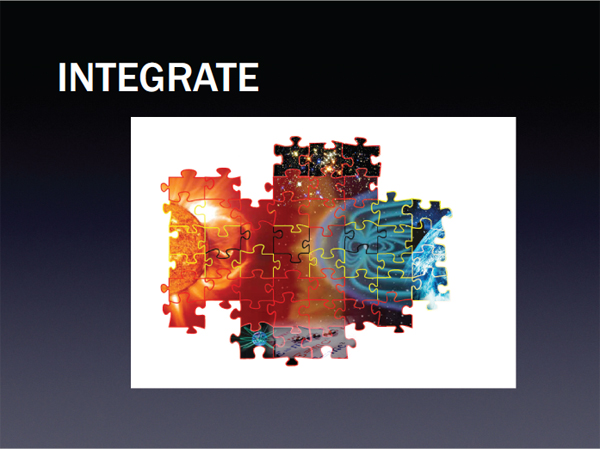
FIGURE 4.4 Integrate observing platforms and strengthen ties between agency disciplines. Diverse space- and ground-based assets have to be routinely combined to maximize their multiscale potential for understanding the solar and space physics system as a whole. Likewise, developing connections between field and related scientific disciplines strengthens insight into shared, fundamental physical processes.
arrangement concerns the ongoing exploration of the boundary regions of the heliosphere—currently one of the most fruitful and exciting areas of research, but one that has very little focus at NSF.
Recommendation: NSF should ensure that funding is available for basic research in subjects that fall between sections, divisions, and directorates, such as planetary magnetospheres and ionospheres, the Sun as a star, and the outer heliosphere. In particular, research on the outer heliosphere should be included explicitly in the scope of research supported by the Atmospheric and Geospace Sciences Division at NSF.
Solar and space physics has a clear home in NASA’s Heliophysics Division. However, there remain important scientific links between the Heliophysics Division and the Astrophysics, Planetary Sciences, and Earth Sciences divisions. The survey committee concluded that multidisciplinary collaborations between the solar, heliosphere, Earth science, and climate change communities are valuable, and it recognizes in
BOX 4.3 WHOLE HELIOSPHERE INTERVAL
The Whole Heliosphere Interval (WHI) was an international observing and modeling effort to characterize the three-dimensional, interconnected, heliophysical system, utilizing dozens of space- and ground-based solar, heliospheric, geospace, and upper-atmosphere observatories and instruments. WHI was the largest period of focus of the International Heliophysical Year (IHY) (2007-2008), which was inspired by the 50th anniversary of the International Geophysical Year (IGY) (in 1957-1958) and the subsequent 50 years of space exploration. The goal of studying the structure and dynamics originating from one solar rotation (March 20-April 16, 2008) was to describe a complete narrative from the Sun to Earth and beyond at solar minimum. A broad range of data analysis and modeling was achieved, with multidisciplinary and international collaborations aided by a central website (http://ihy2007.org/WHI) and WHI special sessions at international meetings. Many papers relating to the WHI period have been published to date, including 27 that made up a 2011 topical issue of Solar Physics: “The Sun–Earth Connection near Solar Minimum.”1
__________
1 M.M. Bisi, B.A. Emery, and B.J. Thompson, eds., “The Sun–Earth Connection near Solar Minimum,” Solar Physics, Volume 274, 2011.
particular the importance of collaborations between the NASA Heliophysics and Earth Science programs. Similarly, the survey committee endorses collaborations across the Heliophysics, Astrophysics, and Planetary Sciences divisions.
Coordinated Observations
Data from diverse space- and ground-based instruments need to be routinely combined in order to maximize their multiscale potential. In fact, such coordinated investigations are likely to be a crucial ele-
BOX 4.4 LABORATORY EXPERIMENTS RELEVANT TO HELIOPHYSICS
Some important problems in solar and space physics will always be difficult to solve from spacecraft observations alone, where remote sensing introduces observational biases and in situ measurements are limited to a small number of trajectories in a complex, time-variable environment. In contrast, dedicated laboratory experiments offer the advantage of a controlled environment where detailed reproducible measurements are possible.
An example of a problem on which laboratory experiments have had a significant science impact is magnetic reconnection. The transition between resistive magnetohydrodynamic and kinetic regimes is one of the most fundamental issues in the study of magnetic reconnection. This transition has important implications for the solar atmosphere and the magnetosphere, but it cannot be tested with direct satellite measurements because plasmas in the magnetosphere and solar wind are nearly collisionless. Laboratory experiments over the past decade have provided confirmation of the collisional-to-kinetic transition, allowing researchers to more confidently predict the reconnection dynamics in various regions of the solar atmosphere and magnetosphere.
Although most laboratory experiments are directed toward understanding basic plasma physics issues, there are also important experiments whose results are used directly to facilitate the interpretation of satellite observations, e.g., spectroscopy measurements of molecules and highly charged ions and modeling of solar wind interactions with airless bodies and dusty plasmas. The measurements of the cross sections associated with ionization, charge exchange, and direct and dielectronic recombination are ongoing and provide key input to the interpretation of satellite spectral measurements and the benchmarking of models.
ment of future breakthrough science and to provide new pathways for translating scientific knowledge into societal value. The idea of coordinating multiscale observations resonates both with the types of system-science questions identified by the survey’s disciplinary panels and with the heliophysics science centers described in the next section (“Venture”). Examples might include extending “World Day” coordination of NSF radars to other ground-based and mission data collections, combining data from CubeSat arrays and larger spacecraft, GPS receiver hosting, development of distributed arrays of ground-based instruments (potentially funded by an NSF midscale program), and ground-based and space mission solar observational support for the ATST (see Appendix C).
Recommendation: NASA, NSF, and other agencies should coordinate ground- and space-based solar-terrestrial observational and technology programs and expand efforts to take advantage of the synergy gained by multiscale observations.
Venture: Venture Forward with Science Centers and Instrument and Technology Development
The future of solar and space physics depends on the ability to venture into transformative technologies and capabilities (Figure 4.5). Development of new and innovative means of pursuing grand challenge science is also critical, taking full advantage of the progress that comes from collaborations between theorists, modelers, computer scientists, and observers (Box 4.5). In fact, new mechanisms are required to facilitate development at the frontiers of science and technology.
Grand Challenge Research
The survey committee concluded that a mechanism is needed for bringing together critically sized teams of observers, theorists, modelers, and computer scientists to address the most challenging problems in solar and space physics. The scope of theory and modeling investigations supported by the NSF CEDAR, GEM, and SHINE programs or the NASA Supporting Research and Technology (SR&T), Targeted Research and Technology (TR&T), and GI programs should be expanded so as to enable deep and transformative science. The survey committee’s proposed heliophysics science centers would bring scientists together for significant collaborations to address the most pressing scientific issues of heliophysics. Centers should consist of multidisciplinary teams with two to three primary institutions that include theorists, modelers, algorithm developers, and observers. Resources should be focused on the core institutions to avoid spreading the resources too broadly and to achieve a focused investigation of the topic. The centers should be designed to highlight the exciting science problems of the field, to bolster the interest of faculty at universities, and to attract top students into the field. Success would be measured according to the progress the centers make in addressing these science problems.
Recommendation: NASA and NSF together should create heliophysics science centers to tackle the key science problems of solar and space physics that require multidisciplinary teams of theorists, observers, modelers, and computer scientists, with annual funding in the range of $1 million to $3 million for each center for 6 years, requiring NASA funds ramping to $8 million per year (plus increases for inflation).
NASA’s Heliophysics Theory Program (HTP) nurtures the formation of small groups of theorists to collaborate intensively on larger targeted projects than are possible using SR&T and TR&T program funding. The survey committee concluded that the medium-size HTP provides an essential bridge between small grants and the heliophysics science center grand challenge investigations, which by their very nature will be limited to a small handful of topics at any given time. The survey committee endorses the continuation
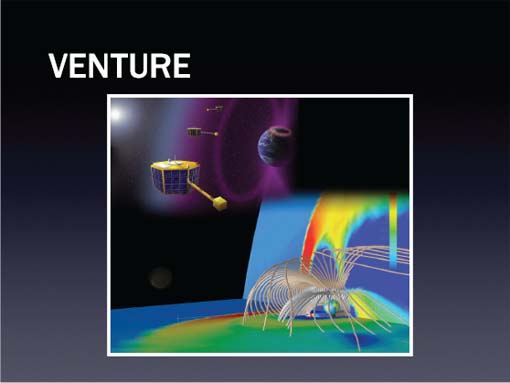
FIGURE 4.5 Venture forward with science centers and instrument and technology development. Transformation will come from innovation, both in theory and technology. Shown are examples of state-of-the-art models developed via a coordinated science center (CISM), and an artist’s conception of birthday-cake-size microsatellites (NASA).
of the HTP at current funding levels. The committee further concluded that, as the heliophysics science centers are implemented it may be more effective to reduce the total number of HTP awards but increase their average size to the range of ~$400,000 to $600,000 per year.
NASA Instrumentation and Technology
A 2010 National Research Council (NRC) study, An Enabling Foundation for NASA’s Earth and Space Science Missions,6 discussed the importance of advanced technology development in all of the science areas of NASA’s Science Mission Directorate, and it recommended that instrument and mission technology activities be managed strategically so as to maximize the opportunities to meet each division’s strategic
________________________
6 National Research Council, An Enabling Foundation for NASA’s Space and Earth Science Missions, The National Academies Press, Washington, D.C, 2010.
BOX 4.5 A NEW WAY OF DOING SCIENCE
In Chapter 2, the survey committee discusses the key science challenges for solar and space physics. Embedded in these “grand challenges” are complex questions whose full resolution has remained elusive. Work on the challenges has traditionally been informed by research groups that work mostly independently and employ either observational or theory and modeling-based approaches. Increasingly, major advances in the field are taking place as a result of the close interaction between observers, theorists, and modelers. Thus, a coherent attack on the most challenging problems requires the development of research and analysis (R&A) programs that bring together multidisciplinary teams with a broad range of skills. The heliophysics science centers will facilitate the formation of such diverse teams.
Over the past decade, the ongoing exponential increase in computing power had a significant impact on the process of science discovery—modeling of complex plasma phenomena is now carried out on massively parallel computers and can address physical phenomena on a broad range of spatial and temporal scales. To capitalize on advances in computational architectures and machines, it has become necessary to collaborate in critical-size groups with experts in computer science, algorithm development, and large-scale visualization and analysis tools. At the same time, observations establish ground truth for emerging models. Through these synergies, physical insight can be achieved beyond what is possible with paper-and-pencil models, stimulating new ideas to explore with analytic theory, influencing the interpretation of observations, and motivating the need for new missions.
The level funding of R&A over the past decade, and the subsequent loss of buying power due to inflation, have resulted in increasingly fragmented science, given that individual researchers must rely on multiple proposals to secure adequate funding. This trend toward piecemeal support is happening at a time when advancing the science requires collaboration—but when funding multiple scientists on a single grant at any meaningful level is almost impossible. The formation of several heliospheric science centers will reverse this trend.
goals. Such an approach would more readily enable highly desirable missions that have been deferred to a later decade owing to as-yet immature technology or high cost.
Technologies such as solar sails and constellations of satellites have tremendous potential (see Appendix B, “Instrumentation, Data Systems, and Technology”). Missions reliant on such technologies are not yet feasible, in part because of the constrained budget environment, but also because of a low level of technical readiness. Future progress in solar and space physics hinges on new observational capabilities in state-of-the-art instrumentation, access to unique locations in space, and affordable fabrication and operation of large satellite constellations.
Some of the DRIVE components already discussed for NSF would promote technology development, i.e., CubeSats and a midscale project line. At NASA, current technology development is funded by the SR&T program, Living With a Star (LWS), and LCAS. The survey committee concluded that technologies required for novel mission design and instrumentation need a more coherent and better-funded NASA program than is currently available, one that would emulate the Planetary Instrument and Development Program.
Recommendation: NASA should consolidate the technology funding now in the SR&T, LWS, and LCAS programs into a single heliophysics instrument and technology development program and increase current annual funding levels, ramping to $4 million per year (plus increases for inflation) in order to facilitate urgently needed innovations required for implementation of future heliophysics mission. Further, issues pertaining to implementation of constellation missions (e.g., communications, operations, propulsion, and launch mechanisms) should be explicitly addressed.
Educate: Educate, Empower, and Inspire the Next Generation of Space Researchers
Solar and space physics is a field with global consequences that are both intellectually stimulating and relevant to society. Heliophysics programs empower young scientists and engineers to perform analytical thinking on real science and technology problems, forging a multitalented, creative workforce for the future of the United States. Through education and public outreach, the general public is inspired by the sheer beauty of dynamic solar events and the response seen at Earth in visually stunning auroral forms. However, it is critical to ensure sufficient resources for education and training, and to develop the skills necessary for the next generation of space researchers and for technologically literate workers in many other fields (Figure 4.6).
An analysis conducted under the aegis of the decadal survey (see Appendix D) indicates that improvement can be made in several areas: employment opportunities, education and training, and recruitment and public outreach.
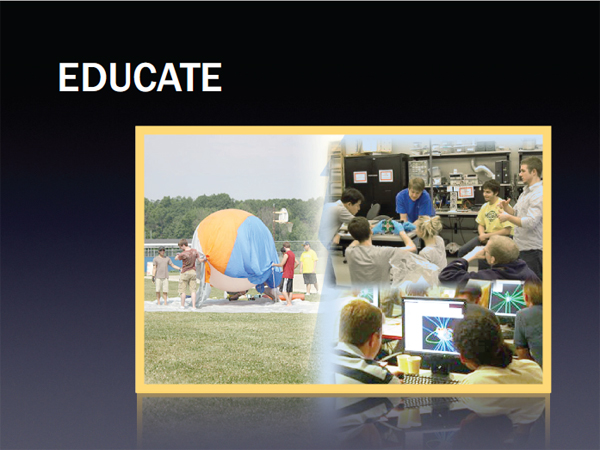
FIGURE 4.6 Educate, empower, and inspire the next generation of space researchers.
Employment Opportunities
Appendix D, “Education and Workforce Issues in Solar and Space Physics,” shows that while the Ph.D. production rate for solar and space physics has increased over the past decade, the number of advertised positions in the field, inside and outside academia, has decreased. Indeed, the number of advertised faculty positions reached a decadal low in the last year surveyed, 2010. Although historically many solar and space physics graduates find jobs in areas other than academic research, these oppositely directed trends, of increasing numbers of students being trained versus decreasing hires of faculty to train them, indicate the continued importance of the NSF Faculty Development in the Space Sciences (FDSS) program. This program grew out of a recommendation by the 2003 decadal survey and led to the creation of eight tenure-track faculty positions, most of the holders of which have already become tenured. It is widely viewed, along with NSF CAREER awards, as an exemplary means of sustaining space physics within universities and promoting the science and engineering workforce. To increase the reach of this program and the diversity of students exposed to opportunities in solar and space physics, eligibility for these awards could be expanded to include 4-year institutions, not just Ph.D.-granting research universities. Because many universities have only one faculty member in solar and space physics, curriculum and other educational resources need to be strengthened and shared throughout the United States.
The survey committee concluded that programs supporting solar and space physics faculty and curriculum development are required to maintain a healthy presence in universities and to provide community-wide educational resources. The survey committee endorses ongoing curriculum development efforts and those of NASA’s Heliophysics Education Forum. There is a need to further increase the diversity of the solar and space physics community through active encouragement and inclusion of educational institutions that can serve as conduits into underrepresented communities.
Recommendation: The NSF Faculty Development in the Space Sciences (FDSS) program should be continued and be considered open to applications from 4-year as well as Ph.D.-granting institutions as a means to broaden and diversify the field. NSF should also support a curriculum development program to complement the FDSS program and to support its faculty.
Education and Training
Hands-on experience for students is critical to developing a competent workforce (Box 4.6). Most spaceflight programs are far too risk-averse or their duration too long for a graduate student to be directly involved over the life cycle of the program. The LCAS and CubeSat programs, recommended in the “Diversify” section above, provide opportunities for graduate programs to attract and train students in the complete mission life cycle. Complementing hardware training, NASA- and NSF-supported summer schools (summarized in Appendix D) provide training and education in the field. The NSF-supported Center for Integrated Space Weather Modeling summer school, which is coming to an end, was an excellent forum for training young space scientists in modeling and data analysis with a unique, holistic, and integrative emphasis on the entire system from the Sun to Earth.
The committee concluded that the LCAS, CubeSat, and NASA- and NSF-supported summer schools provide important hands-on training for graduate students. The committee found, in addition, that skills needed for becoming a successful scientist go beyond such formal discipline training and include interpersonal and communication skills, awareness of career opportunities, and leadership and laboratory management ability. The community endorses NASA and NSF programs that support postdoctoral and graduate student mentoring. Finally, the survey committee endorses ongoing NASA funding for solar and space physics graduate student research. For 30 years this support was provided under the auspices of the NASA Graduate Student Research Program (GSRP), but, because that program ended in 2012, the survey
BOX 4.6 A TRAINED SOLAR AND SPACE PHYSICS WORKFORCE
A key to the success of the U.S. space program as a whole, and to solar and space physics in particular, is the availability of experimentally oriented scientists and engineers who have been trained with spaceflight hardware. Yet there has been a steady erosion of that workforce, not only at NASA but also across the entire country, and this fact has been decried from many quarters. Several recent National Research Council reports1 make this case most emphatically. Other technical industries have been able to compensate somewhat by tapping the pool of highly trained immigrants and foreign students, and they have often outsourced work abroad. But spacecraft are ITAR-sensitive items, and so this pool is not available to NASA or to its outside partners, even to universities, because of the constraints of the regulations. All of the space programs at NASA, DOE, NOAA, and DOD feel this shortage acutely. The situation is likely to deteriorate even further if no mitigating actions are implemented.
__________
1 National Research Council, Revitalizing NASA’s Suborbital Program: Advancing Science, Driving Innovation, and Developing a Workforce, 2010; National Research Council, An Enabling Foundation for NASA’s Space and Earth Science Missions, 2010; National Research Council, NASA Space Technology Roadmaps and Priorities: Restoring NASA’s Technological Edge and Paving the Way for a New Era in Space, 2012 (all published by the National Academies Press, Washington, D.C.).
committee concluded that its replacement, NASA’s Earth and Space Science Fellowship (NESSF) program, has an important role to play in maintaining solar and space physics graduate support at historic GSRP levels, and with a strong link between graduate students and NASA mission research.
Recommendation: A suitable replacement for the NSF Center for Integrated Space Weather Modeling summer school should be competitively selected, and NSF should enable opportunities for focused community workshops that directly address professional development skills for graduate students.
Recruitment and Public Outreach
Solar and space physics is for the most part taught at the graduate level, and opportunities to learn about the discipline are limited at the precollege and undergraduate level. One exception is NSF’s Research Experiences for Undergraduates (REU) program. As detailed in Appendix D, “Education and Workforce Issues in Solar and Space Physics,” approximately 50 percent of the graduate students surveyed at the NSF-supported summer 2011 GEM-CEDAR and SHINE meetings reported an undergraduate research experience in the solar and space physics field akin to the REU. Another successful program has been Los Alamos National Laboratory’s (LANL’s) post-baccalaureate program to provide recent college graduates the opportunity to explore research experiences in solar and space physics.
Recruitment starts even earlier, however. Appendix D notes that graduate students interviewed at GEM, CEDAR, and SHINE meetings often cited a childhood interest in space and astronomy that first grew through a high school physics course and subsequently into trying out astronomy research as an undergraduate. It is the goal of the community of NASA-supported, discipline-focused education and public outreach (EPO) professionals (e.g., the Heliophysics Education and Public Outreach Forum) to connect the scientists, missions, and results of the solar and space physics research community with active partners in the world of K-12 education, in order to raise the visibility of the field and to develop a diverse solar and space physics workforce.
In summary, a thriving field of solar and space physics requires continued outreach to the general public and in particular to students who will become the next generation of space scientists. The survey committee endorses the NASA requirement that 1 percent of heliophysics mission budgets be devoted to
focused EPO efforts that can be evaluated for their effectiveness in enhancing the visibility of the field and in stimulating students to choose solar and space physics as a career. The survey committee found that the Heliophysics Education and Public Outreach Forum plays an important role in ensuring the effectiveness of mission EPO efforts and in informal and formal science education at all levels. The survey committee endorses programs such as NSF’s REU and LANL’s post-baccalaureate program, which are important recruiting tools for the field. The committee also fully supports the efforts of EPO professionals and physics educators who collaborate with scientists to develop the solar and space physics workforce as well as promote public support and interest. The committee also recognizes the importance of participation in the development of the Common Core standards and the Next Generation Science Standards. The survey committee endorses programs that specifically target enhancing diversity within solar and space physics, akin to NSF’s Opportunities for Enhancing Diversity in the Geosciences (OEDG) program. The committee notes, as a final point on this topic, that solar and space physics is not currently listed as a dissertation research area in NSF’s annual Survey of Earned Doctorates,7 a report that influences other rankings, ratings, and demographic surveys such as those done by the National Research Council and the American Institute of Physics (AIP) and is, the survey committee concluded, a significant tool for recruiting students to the field.
Recommendation: To further enhance the visibility of the field, NSF should recognize solar and space physics as a specifically named subdiscipline of physics and astronomy by adding it to the list of dissertation research areas in NSF’s annual Survey of Earned Doctorates.
Conclusions Regarding the DRIVE Initiative
The DRIVE initiative capitalizes on the breadth of current programs in solar and space physics and will build capabilities for the future, starting with the current HSO as the foundation. DRIVE as proposed makes the most of these existing assets while enabling advances in science and technology that will fuel progress within realistic cost envelopes. Chapters 5 and 6 discuss implementation of the DRIVE initiative for NSF and NASA, respectively; an explicit, phased budget for the DRIVE recommendations addressed to NASA is included in Chapter 6. By implementing the recommended DRIVE components, NASA and NSF can ensure that the next decade will be rich in new observations made from diverse platforms, new science harvested from missions and projects, new synergies arising between disciplines and platforms, new technologies and theories to enable and inspire future missions and projects, and talented new students to power the future workforce.
Much progress will be made through the DRIVE initiative, but a properly scoped program with high science return requires new observations from spaceflight missions. Missions explore new frontiers and are rightly the main activity of NASA. Outlined below are the advantages of critical reassessment and creative re-imagination of the solar and space physics mission program, along with ranked recommended science targets for both the STP and the LWS lines.
________________________
7 See National Sciencen Foundation, “Survey of Earned Doctorates,” updated December 6, 201, available at http://www.nsf.gov/statistics/srvydoctorates/.
The medium-class (MIDEX) and small-class (SMEX) missions of the Explorer program are ideally suited to advancing heliophysics science and have a superb track record for cost-effectiveness. Since 2001, 15 Heliophysics Explorer mission proposals have received the highest category of ranking in competitive selection reviews, but only 5 have been selected for flight. Thus there is an extensive reservoir of excellent heliophysics science to be accomplished by Explorer missions.
The Explorer Program
As noted in a previous NRC report,8 the Explorer program’s strength lies in its ability to respond rapidly to new concepts and developments in science and to forge a synergistic relationship with ongoing, larger, strategic missions. The Explorer program (Box 4.7) creates a highly competitive environment in which teams led by a principal investigator (PI) rapidly capitalize on advances in technology, enabling cutting-edge science at moderate cost. Over the years, these missions have operated in different management modes, but the common feature is that a PI in partnership with the NASA Explorer Program Office is tasked to ensure the overall success of the mission and is given the authority to make critical decisions to control cost and schedule. New Explorer missions are able to pursue the cutting edge of heliophysics science, because they can make use of emerging technologies that are not available to large facility-class observatories that have longer development times and a more stringent risk posture. Since the 1990s, the decision as to which missions are selected is based on the findings of a competitive process that ensures that the science objectives and implementation approach reflect the frontiers of the field and achieve an appropriate balance between novel technical capabilities and programmatic risk.
Explorer missions provide outstanding science-per-dollar value and often are capable of achieving much more than their baseline science mission. For example, before the ACE mission, first the Interplanetary Monitoring Probes and then the International Sun-Earth Explorers provided crucial measurements of solar wind properties well beyond their design lifetimes. The IMAGE mission provided breakthrough science through 5 years of operations (3 years beyond THEMIS’s original design lifetime), including the first simultaneous conjugate observations of the aurora. Two of the five-spacecraft THEMIS magnetospheric Explorer satellites are now orbiting the Moon, enabling an outstanding expansion of mission science beyond its original plan. The TRACE solar Explorer was launched in 1998 and obtained unprecedented high-resolution coronal observations for 12 years. This pattern of Explorers outperforming their as-proposed objectives has tended to be the rule rather than the exception.
In the course of developing Explorer missions, NASA has built an amazing array of capabilities for visiting hostile and exotic environments in space and for making measurements of key properties of the gases and plasma that constitute Earth’s environment. These missions have become arguably more successful and visible to the public in the past decade than ever before. They are scientifically productive and often tell a story of space exploration that is pertinent to daily life. Their technical achievements and successful implementation come to fruition at costs not achievable with large flagship missions—and their findings are often true discoveries.
These achievements come from the competitive spirit that the Explorer program encourages, and the tight cost-capped implementations that are forced to carry adequate margins from the earliest phases of
________________________
8 National Research Council, Solar and Space Physics and Its Role in Space Exploration, The National Academies Press, Washington, D.C., 2003, p. 36.
BOX 4.7 A BRIEF HISTORY OF THE EXPLORER PROGRAM
The Explorer program is arguably the most storied scientific spaceflight program in NASA’s history. Since 1958, when the first U.S. satellite, Explorer I, discovered Earth’s radiation belts, the program has produced a wealth of information about the nature of Earth’s space environment and properties of the universe. UHURU, IMP, ISEE, DE, SAMPEX, ACE, TRACE, and COBE are some of the well-known missions that have yielded enormous science return for the investment, often operating for years beyond their expected lifetimes. Science from Explorer missions contributed to three of the Nobel Prizes awarded for NASA-directed space science. Many of these missions have provided critical scientific measurements beyond their design lifetime to become cornerstones of the Heliophysics Systems Observatory, indispensable to basic research as well as to space weather operations.
Examples of Explorers launched since 2000 that have made major contributions to scientific understanding pertinent to heliophysics are IMAGE, RHESSI, THEMIS, AIM, and IBEX. Each of these have made fundamental discoveries spanning the full range of the discipline, from the edge of the heliosphere (IBEX) to flare and reconnection physics on the Sun (RHESSI) to the explosive releases of energy taking place in Earth’s magnetosphere (THEMIS) to the enigmatic formation of ice clouds in Earth’s polar regions (AIM). In addition, the Explorer program is the home for Missions of Opportunity, including SNOE, CINDI, and TWINS, that produce science benefits far beyond their cost. The Explorer program is a cornerstone of heliophysics and has repeatedly proven to be one of the most cost-effective and best cost-controlled avenues for implementing space science missions.
concept studies to launch. This approach requires lean management teams, strong collaboration between institutions and NASA centers, and continuous attention of the PI to the balance of risk and scientific reward.
The survey committee recommends that NASA accelerate and expand the Heliophysics Explorer program, the most successful and impactful mission line in the Heliophysics program.
New Worlds, New Horizons in Astronomy and Astrophysics9 highly recommended an increase in the Astrophysics Explorer budget for many of the same reasons that the present survey committee does.
Augmentation of Explorer Line to Restore MIDEX
The rate of Explorer satellite development has slowed remarkably since the 2003 solar and space physics decadal survey.10 This decrease in selection rate is due to a major reduction in funding for the Explorer program that occurred in 2004 rather than to any drop in the number of compelling proposals for Explorer missions rated as selectable by NASA. The sharp funding cuts necessitated a reduction of Explorer competitions for the SMEX class in order to preserve even a minimal overall selection cadence. The MIDEX class historically has offered an opportunity to resolve the highest-level science questions (e.g., IMAGE addressed science that was originally identified for a larger solar-terrestrial probe), but this line of Explorer competition has not been possible under the current Explorer budget, particularly given the scarcity of medium-class launch vehicles and the cost of alternatives. A stable of competitively selected
________________________
9 National Research Council, New Worlds, New Horizons in Astronomy and Astrophysics, The National Academies Press, Washington, D.C., 2010.
10 National Research Council, The Sun to the Earth—and Beyond: A Decadal Research Strategy in Solar and Space Physics, The National Academies Press, Washington, D.C., 2003; and National Research Council, The Sun to the Earth—and Beyond: Panel Reports, The National Academies Press, Washington, D.C., 2003.
PI-led missions will let NASA’s Heliophysics Division continue the innovative and cost-effective scientific spaceflight missions that are the hallmark of the Explorer program.
The survey committee recommends that the current Heliophysics Explorer program budget be augmented by $70 million per year, in fiscal year 2012 dollars, restoring the option of Mid-size Explorer (MIDEX) missions and allowing them to be offered alternately with Small Explorer (SMEX) missions every 2 to 3 years.
NASA Missions of Opportunity
Fundamental science can be achieved at a fraction of the cost of stand-alone missions by hosting payloads through partnering with other agencies, nations, or commercial spaceflight providers. The Hinode (Solar-B), TWINS, CINDI, and SNOE missions all demonstrate the benefits of such collaborations. The Solar-C mission now confirmed by Japan is an example of a future opportunity for the United States to provide instrumentation to a major foreign mission and in so doing to obtain high science return for relatively low cost. (Solar-C is discussed in detail by the Panel on Solar and Heliospheric Physics in Chapter 10.)
NASA’s primary means of utilizing alternate platforms is via Missions of Opportunity and the current Stand Alone Missions of Opportunities Notices (SALMONs). However, the challenge of multi-organization coordination and the short time line for response to commercial opportunities call for a regular cadence and an expeditious mission proposal, review, and selection process. The survey committee concluded that a SALMON line needs to evolve in response to both community input and short-term opportunities more rapidly than the cadence of decadal surveys or even that of larger Explorers (MIDEX and SMEX). It needs to be flexible enough to allow proposal topics ranging from instruments on hosted payloads to a university-class Explorer satellite.
The survey committee recommends that, as part of the augmented Explorer program, NASA should support regular selections of Missions of Opportunity, which will allow the research community to quickly respond to opportunities and leverage limited resources with interagency, international, and commercial partners.
Initially conceived as a program to implement moderate-scale programs, the STP line has evolved into a large-mission program, dominated by NASA centers, with cost growth over the past decade that threatens its future viability. The survey committee concluded that restructuring the STP line is necessary if it is to address heliophysics science goals cost-effectively and offer flight opportunities at an acceptable cadence.
STP as a Moderate-Scale Mission Line
The NASA Planetary Science Division has demonstrated success in implementing larger missions as competed, cost-capped, PI-led investigations via the Discovery and New Frontiers programs. These are managed in a manner similar to Explorers, and they have superior cost-performance histories relative to those of flagship missions (see Appendix E, “Mission Development and Assessment Process”). Many of the most important heliophysics science objectives are too challenging to be addressed even by MIDEX Explorers but would fit within the cost profile of a moderate-scale mission.
The survey committee concluded that a successful moderate mission line has to include the following elements:
• The missions must be executed through a funding line with a fixed budget profile.
• The missions must be cost-capped, with a specified ceiling on full life-cycle costs.
• The missions must be PI-led, with the PI fully empowered and motivated to make scientific and mission trade-offs necessary to remain within the cost cap.
• The NASA center and/or other organization with management capabilities to which project management responsibility is assigned will be selected competitively. The goal is to assist the PI in the successful execution of the mission for minimum cost.
• Management of the STP program will be assigned by NASA Headquarters to a NASA center using a competitive process. The center must demonstrate ability to successfully execute the program for the minimum cost. Program management must also be reviewed periodically by Headquarters and be subject to reassignment in the event of unsatisfactory performance.
• Missions must be confirmed with reserves adequate for remaining within the cost cap and should have descope options in case the cost cap is breached. If there is cost growth beyond the control of the PI, the impacts have to be absorbed within the funding line, with no additional liens on other program elements in the Heliophysics Division.
• The missions will be selected competitively. However, each selection will be restricted to a specific science goal in order to achieve the prioritized strategic objectives described in this survey.
The survey committee recommends that NASA’s Solar-Terrestrial Probes program be restructured as a moderate-scale, competed, principal-investigator-led (PI-led) mission line that is cost-capped at $520 million per mission in fiscal year 2012 dollars including full life-cycle costs.
Recommended STP Science Targets [R3.1, R3.2, and R3.3]
Although the new STP program would involve moderate missions being chosen competitively, the survey committee recommends that their science targets be ordered as follows so as to systematically advance understanding of the full coupled solar-terrestrial system.
1. The first new STP science target is to understand the outer heliosphere and its interaction with the interstellar medium, as illustrated by the reference mission11Interstellar Mapping and Acceleration Probe (IMAP). Implementing IMAP as the first of the STP investigations will ensure coordination with NASA Voyager missions. The mission implementation also requires measurements of the critical solar wind inputs to the terrestrial system.
2. The second STP science target is to provide a comprehensive understanding of the variability in space weather driven by lower-atmosphere weather on Earth. This target is illustrated by the reference mission Dynamical Neutral Atmosphere-Ionosphere Coupling (DYNAMIC).
3. The third STP science target is to determine how the magnetosphere-ionosphere-thermosphere system is coupled and how it responds to solar and magnetospheric forcing. This target is illustrated by the reference mission Magnetosphere Energetics, Dynamics, and Ionospheric Coupling Investigation (MEDICI).
________________________
11 In this report, the committee uses the terms “reference mission” and “science target” interchangeably, given that the mission concepts were developed specifically to assess the cost of addressing particular high-priority science investigations. The concepts presented in this report underwent an independent cost and technical analysis by the Aerospace Corporation, and they have been given names for convenience; however, the actual recommendation from the committee is to address the science priorities enumerated in the reference mission concept.
IMAP
IMAP Overview
The past decade has seen breakthroughs in knowledge of the outer boundaries of the heliosphere and the interaction between the Sun and its local galactic neighborhood. These advances range from the crossing of the termination shock by the Voyager spacecraft to the images captured by IBEX of enhanced energetic neutral atom emission from a localized “ribbon” that encircles the heliosphere (Figure 4.7). The scientific motivation for a more advanced mission to image the heliospheric boundary and measure the key components of the interstellar gas is compelling but also urgent, because the Voyager spacecraft will operate only through this decade. The survey committee therefore recommends as a high priority the Interstellar Mapping and Acceleration Probe reference mission.
IMAP would orbit the inner Lagrangian point (L1) with comprehensive, highly sophisticated instruments to make the key observations that answer the following fundamental questions:
1. What is the spatio-temporal evolution of heliospheric boundary interactions?
2. What is the nature of the heliopause and of the interaction of the solar and interstellar magnetic fields?
3. What are the composition and physical properties of the surrounding interstellar medium?
4. How are particles injected into acceleration regions and what mechanisms energize them throughout the heliosphere and heliosheath?
The unique location of IMAP would also provide a platform from which to pursue the question of what are the time-varying physical inputs at L1 into the Earth system.
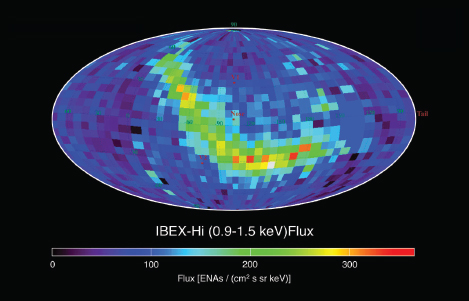
FIGURE 4.7 IBEX-Hi map of energetic neutral atoms in the energy range of 0.9-1.5 keV from the outer heliosphere.
SOURCE: Interstellar Boundary Explorer Mission Team.
The mission would focus on making ENA maps and sampling local cosmic-ray particles concurrently with in situ Voyager measurements of the heliospheric boundary region. IMAP enables the understanding of particle acceleration through:
• Measurements of energetic (suprathermal) ions that originate from the solar wind, interstellar medium, and inner heliosphere with unprecedented sensitivity and time resolution;
• Environmental monitoring of pickup ion12 (PUI) distributions that is critical for effective background evaluation and removal from ENA maps; and
• Comprehensive interplanetary particle and field monitoring in support of geospace interaction studies and space weather observations at the ideal location, L1.
IMAP Mission Concept
A notional spacecraft and instrument implementation for IMAP is based largely on ACE and IBEX. IMAP is a Sun-pointed spinner, with spin axis readjustment every few days to provide all-sky maps every 6 months. The L1 placement avoids magnetospheric ENA backgrounds and enables continuous interplanetary observations. Mission goals are achieved with a 2-year baseline, including transit to L1, with possible extension to longer operation (which would be particularly beneficial for long-term L1 monitoring). IMAP combines the measurement capabilities shown in Table 4.3, all of which are feasible based on extrapolations of current instrument technologies.
IMAP Contribution to the Heliophysics Systems Observatory
Observations from many spacecraft in the HSO contribute dramatically to understanding solar energetic particle events, the importance of suprathermal ions for efficient further energization, the sources and evolution of solar wind, solar-wind and energetic-particle inputs into geospace, and evolution of the solar-heliospheric magnetic field. These observables are controlled by a myriad of complex and poorly understood physical effects acting on distinct particle populations. IMAP combines highly sensitive PUI and suprathermal-ion sensors to provide the critical species, spectral coverage, and temporal resolution to address these physical processes. As an L1 monitor, IMAP also would fill a critical hole in Sun-Earth system observations by measuring the solar wind input, knowledge of which is essential to studying magnetospheric and upper atmospheric processes.
DYNAMIC (Dynamical Neutral Atmosphere-Ionosphere Coupling)
DYNAMIC Overview
DYNAMIC is designed to answer the question: How does lower-atmosphere variability affect geospace? To understand how lower-atmosphere variability drives neutral and plasma variability in the IT system, a mission must address wave coupling with the lower atmosphere. The representative mission developed and studied for this survey is designed to do two things. First, it will reveal the fundamental processes (e.g., wave dissipation, interactions between flow of different species) that underlie the transfer of energy and momentum into the IT system (especially within the critical 100- to 200-km height regime). Second, it will measure the resultant thermospheric and ionospheric variability that these waves incur at higher altitudes. It will do these on a global scale, with high-inclination satellites launched into orbits separated by 6 hours
________________________
12 Pickup ions are formed when interstellar neutral atoms interact with the solar wind plasma and become ionized. The now charged particles are carried (thus the origin of the term “pickup”) outward by the Sun’s magnetic field to the solar wind termination shock.
TABLE 4.3 IMAP Key Parameters to Be Measured from Space
|
|
||||
| Instrument | Key Parameters | Measurements Requirements | ||
|
|
||||
| ENA cameras, lower and higher energy ranges | Energetic neutral flux from heliospheric boundary | 0.3-20 keV, 3-200 keV, 2-day sampling period | ||
| ISM neutral atom camera | ISM flow of H, D, He, O, and Ne | 5-1000 eV, pointing knowledge of 0.05° | ||
| PUI sensor | Distributions of interstellar H+, 3He+, 4He+, N+, O+, 20Ne+, 22Ne+, and Ar+ and inner source C+, O+, Mg+, and Si+, also providing solar-wind heavy-ion composition | 100 eV to 100 keV/e | ||
| Suprathermal-ion sensor | Composition and charge state for H through ultraheavy ions | Composition (0.03-5 MeV/nucleon) and charge state (0.03-1 MeV/e) for H through ultraheavy ions, 1-min cadence for H and He | ||
| Solar-wind and interplanetary monitoring suite | Background for ENA observations and real-time solar wind and cosmic-ray monitoring | SW ions (0.1-20 keV/e) and electrons (0.005-2 keV) every 15 s; the IMF ≤ 1 nT and 16 Hz; and SEP, anomalous cosmic-ray, and galactic cosmic-ray electrons and ions (H-Fe) over 2-200 MeV/nucleon. | ||
NOTE: Parameters listed are those that must be measured to achieve the main objectives and answer the science questions defining the mission. These include two ENA cameras to produce observations of the heliospheric boundary over an extended energy range and with significantly improved sensitivity and spatial, energy, and time resolution compared with prior observations. An ISM neutral atom camera and the first dedicated pickup ion (PUI) sensor will take coordinated high-sensitivity observations of the interstellar gas flow through the inner solar system. Overlapping with the PUI sensor, a suprathermal-ion sensor will provide composition and charge state for H through ultraheavy ions. The solar-wind and interplanetary monitoring suite serves to mitigate backgrounds for high-sensitivity ENA observations and provide societally important real-time solar wind and cosmic-ray monitoring.
of local time, providing the coverage necessary to resolve critical atmospheric tidal components and the effects of wave-wave interaction. The name coined for this mission is DYNAMIC (Figure 4.8).
The DYNAMIC mission addresses the following fundamental science questions:
1. How does lower-atmosphere variability affect geospace?
2. How do neutrals and plasmas interact to produce multiscale structures in the AIM system?
3. How does the IT system respond over global, regional, and local scales to changes in magnetospheric inputs?
4. How is magnetospheric electromagnetic energy converted to heat and momentum drivers for the AIM system?
5. How is our planetary environment changing over multi-decadal scales, and what are the underlying causes?
It is important to note that while DYNAMIC’s primary focus is to address the question of meteorological driving of geospace, the orbital sampling and the instruments that are flown also address broader science questions. For instance, the composition, temperature, and wind measurements will enable researchers to understand the relative roles of upwelling, advection, and thermal expansion in determining latitude-time evolution of the O/N2 ratio during changing geomagnetic conditions, which affects total mass density and plasma density concentrations. Measurement of winds, plasma drifts, and plasma densities at high
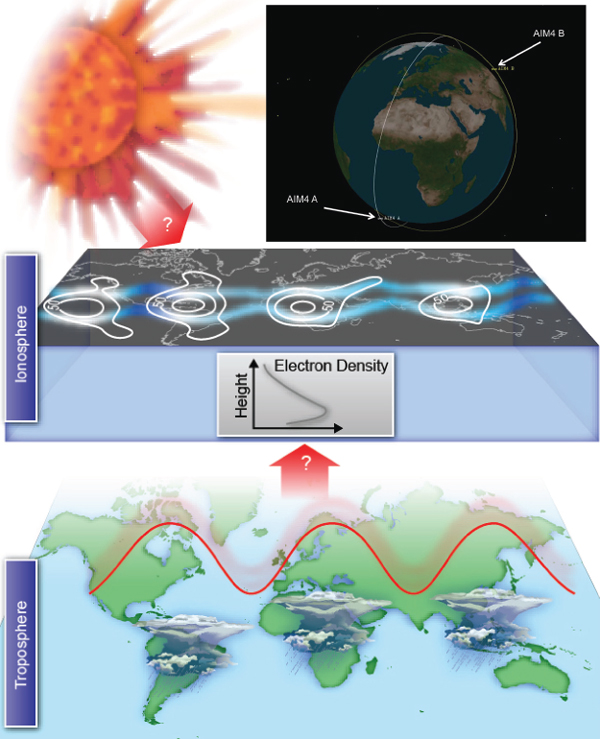
FIGURE 4.8 DYNAMIC targets the effects of lower atmospheric processes on conditions in space, characterizing how the energy and momentum carried into this region by atmospheric waves and tides interact and compete with solar and magnetospheric drivers. Full spatial and temporal resolution of the wave inputs is accomplished by using two identical, high-inclination, space-based platforms in similar orbits, offset by 6 hours of local time. SOURCE: Composite courtesy of Thomas Immel, Space Sciences Laboratory, University of California, Berkeley.
latitudes will lead to estimates of Joule heating, as well as a number of other plasma-neutral interactions at high and low latitudes. In addition, the simultaneous measurement of lower-altitude thermosphere winds and plasma drifts at higher altitudes will enable delineation of the disturbance dynamo in addition to the tidal-driven dynamo.
DYNAMIC Mission Concept
The above science focus translates to a mission involving instruments that remotely sense the lower and middle thermosphere while also collecting in situ data at higher altitudes. A key mission driver is the need to address atmospheric thermal tides, which demands measurements over all local times. Because satellite orbits generally take weeks to months to precess through 24 hours of local time, one must trade off latitude coverage against local time precession rate, or possibly consider multiple satellites. Since the research seeks to include important wave sources at high latitudes (e.g., weather systems and stratospheric warmings) and moreover to distinguish aurorally generated waves from those originating in the lower atmosphere, a high-inclination (75°-90°) orbit is required. However, for these orbital inclinations 24-hour local time precession occurs over a time period that exceeds that of important variability that has to be captured. Taking these factors into account, the recommended strategy is to employ two identical satellites in 80° inclination orbits at 600-km altitude, with their orbital planes spaced about 6 hours apart in local time. Assuming measurements are made at four local times over all longitudes in 1 day, all zonal (longitudinal) components of the diurnal (24-hour) tide would be fully characterized once per day, and semidiurnal (12 hour) tides as well as the diurnal mean would be acquired about once every 20 days. Gravity waves would be measured throughout each orbit, and planetary waves would easily be extracted with 1-day resolution. With the exception of semidiurnal tides, all wave-wave interactions could be explored, and on a 20-day timescale the interactions between the wave field and the mean state could be explored. In situ plasma and neutral responses at 600 km to these wave inputs would be measured over similar timescales (Table 4.4).
TABLE 4.4 DYNAMIC Key Parameters to Be Measured from Space
|
|
||
| Instrumenta | Key Parameters | Altitude Range |
|
|
||
| Limb Vector Wind and Temperature | Vn(z) – vector | 80-300 km |
| Measurement WIND (1 unit includes 2 | T(z) | 80-300 km |
| telescopes) | ||
| Far Ultraviolet Imager (FUV) | Altitude Profiles: O, N2, O2, H, O+ | 110-300 km |
| Maps: Q, Eo, O/N2, O+, Bubbles | 200-600 km | |
| Ion Velocity Meter (IVM)b | Vi | In situ |
| Neutral Wind Meter (NWM)b | Vn – vector | In situ |
| Ion Neutral Mass Spectrograph (INMS)b | O+, H+, He+, O, N2, O2, H, He | In situ |
NOTE: Parameters listed are those that must be measured to achieve the main objectives and answer science questions defining the mission. It includes an instrument to measure horizontal winds and temperatures from about 80 to 250 km, day and night, with horizontal and vertical resolutions of order 100 km and 2-10 km, depending on height. Instruments consisting of flight heritage components approaching this capability are thought to exist at the TRL 5 level, but flight test opportunities are required to establish their true capabilities. A flight-tested FUV imager already exists, and this would provide key measurements of neutral and ionized constituents in the lower and middle thermosphere regime. In situ instruments exist to make the required in situ measurements of neutral and ion composition, winds, and drifts, but further technology developments are underway to enhance performance and reduce size, power, and weight; it is important that these technology developments be supported, because these types of instruments are likely to be flown on almost any terrestrial or planetary ionosphere-thermosphere mission.
aAll instruments have extensive flight heritage. Technology investments will improve their performance and provide additional capabilities.
bThe IVM, NWM, and INMS are on the ram and anti-ram sides of the spacecraft. Only one operates at a time.
DYNAMIC Contribution to the Heliophysics Systems Observatory
By resolving the fundamental question of meteorological influences from below, DYNAMIC will firmly connect the ionosphere-thermosphere (IT) system to Earth’s lower atmosphere, capturing a critical, missing component of scientific understanding of geospace and providing a critical new capability to the HSO at an important boundary in near-Earth space. In establishing the relative importance of thermal expansion, upwelling, and advection in defining total mass density changes, DYNAMIC will also provide information fundamental to understanding the global IT response to forcing from above. This investigation of the contribution of the lower atmosphere to the mean structure and dynamics of the IT system reflects a scientific appreciation of the importance of these drivers gained since the 2003 solar and space physics decadal survey.
MEDICI (Magnetosphere Energetics, Dynamics, and Ionospheric Coupling Investigation)
MEDICI Overview
MEDICI (Figure 4.9) is a new, strategic, notional mission concept aimed at determining how the complex magnetosphere-ionosphere-thermosphere system is coupled and responds to external solar and internal magnetospheric forcing. Regions of geospace are intrinsically interconnected over diverse scales of space and time. Plasma and fields in the ionosphere and magnetosphere interact, and multiple processes compete simultaneously. Observation of the relationships among components is critical to understanding and characterizing the collective behavior of this complex system across a broad range of spatial scales.
By combining and improving crucial elements from several prior missions, MEDICI takes a major step forward in geospace imaging. The first multispectral, stereo geospace plasma imaging will reveal the three-dimensional structure of cardinal geospace plasmas and will provide conjugate views of the northern
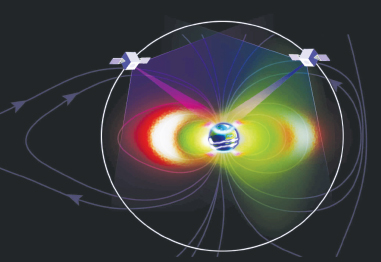
FIGURE 4.9 MEDICI targets complex, coupled, and interconnected multiscale behavior of the magnetosphere-ionosphere-thermosphere system by providing high-resolution, global, continuous three-dimensional images of the ring current (orange), plasmasphere (green), aurora, and ionospheric-thermospheric dynamics and flows, as well as multipoint in situ measurements. SOURCE: Courtesy of Jerry Goldstein, Southwest Research Institute.
and southern aurorae. Simultaneous two-point in situ measurements are closely coordinated with plasma imaging from state-of-the-art instruments to uncover transport and electrodynamic connections at different spatial scales throughout the magnetosphere-ionosphere-thermosphere system, enabling major new insights into cross-scale dynamics and complexity in geospace.
MEDICI will examine how the magnetosphere-ionosphere-thermosphere system is coupled and responds to solar and magnetospheric forcing. In particular, MEDICI would provide definitive, comprehensive answers to two overarching, fundamental science questions that have been outstanding for decades. Each question contains a set of subtopics:
1. How are magnetospheric and ionospheric plasma transported and accelerated by solar wind forcing and magnetosphere-ionosphere (MI) coupling?
a. How is the cross-scale, dynamic, three-dimensional plasma structure of the ring current, plasmasphere, and aurora reshaped by acceleration and transport?
b. What controls when and where ionospheric outflow occurs?
c. What are the cross-scale effects on the system?
2. How do magnetospheric and ionospheric plasma pressure and currents drive cross-scale electric and magnetic fields, and how do these fields in turn govern the plasma dynamics?
a. What are the cross-scale, interhemispheric structure and timing of currents and fields that mediate MI coupling?
b. How do these MI coupling electromagnetic fields feed back into the system to affect the plasmas that generated them?
Each of these two main questions and five subquestions focuses on a crucial aspect of the coupled dynamics of geospace. The first question set looks at plasma transport, and the second question set targets the electrodynamics of MI coupling. Previous missions such as IMAGE or TWINS have provided substantial steps toward addressing these problems; however, only MEDICI’s comprehensive instrumentation will supply the necessary complete set of measurements to answer these questions.
MEDICI Mission Concept
MEDICI is a cross-scale science mission concept that uses both high-resolution stereo imaging and multipoint in situ measurements. It also incorporates an array of contemporaneously existing ground-based and orbiting observatories. MEDICI employs two spacecraft that share a high circular orbit (see Figure 4.9), each hosting multispectral imagers, magnetometers, and particle instruments. Building on knowledge obtained from TWINS, the MEDICI science payload captures the dynamics of the ring current, plasmasphere, aurora, and ionospheric-thermospheric plasma redistribution through a comprehensive set of measurements. In combination with ground-based and low-Earth-orbit data that yield detailed information on field-aligned currents, ionospheric electron densities, temperatures, and flows, MEDICI’s imagers and onboard in situ instruments will provide the means to link the global-scale magnetospheric state with detailed ionospheric conditions, and will yield data for global-model validation. The MEDICI instrumentation is summarized in Table 4.5.
The MEDICI mission uses two nadir-viewing spacecraft, each with an identical spacecraft bus, in a shared 8-RE circular polar orbit with adjustable orbital phase separation (between 60° and 180° separation along track) to enable global stereo, multispectral imaging, and simultaneous in situ observations. Circular orbits that avoid the most intense radiation environments provide continuous imaging and in situ measurements and enable a long-duration (up to 10 years) lifetime well beyond the required 2-year mission.
TABLE 4.5 MEDICI Key Parameters to Be Measured from Space
|
|
||||
| Instrument | Key Parametersa | Measurement Requirements | ||
|
|
||||
| ENA imager | Three-dimensional ring current and near-Earth plasma sheet pressure-bearing ion densities | Temporal and spatial resolution: 1 minute, 0.5 RE | ||
| EUV imager | Evolution of plasmasphere density | 30.4 nm, temporal/spatial resolution: 1 minute, 0.05 RE | ||
| FUV cameras (1 spacecraft only) | Precipitating auroral particle flux, ionospheric electron density and conductivity, and thermospheric conditions | LBH long and short wavelengths; 5- to 10-km resolution | ||
| Ion and electron plasma sensors | In situ electron and ion plasma densities, temperatures, and velocities | Helium, oxygen, protons, electrons from a few electronvolts to 30 keV; ~1-minute resolution | ||
| Magnetometer | In situ magnetic fields | Vector B and delta-B (dc and ac); ~ 1-second resolution | ||
NOTE: Parameters listed are those that must be measured to achieve the most important objectives and to address the key science questions that motivate the selection of this reference mission. MEDICI requires no new technology development and all of the instruments have high heritage. Each of the mission’s three measurement goals contributes essential information about cross-scale geospace dynamics: the first is to continuously image the three-dimensional distribution of two critical inner magnetospheric plasmas; the second is to image and measure the ionosphere-thermosphere system at multiple wavelengths in the far ultraviolet (FUV); and the third is to measure, in situ, the critical near-Earth plasmas and magnetic field in the cusp and near-Earth plasma sheet plasma. The instrument configuration shown here illustrates one realization of MEDICI; alternative configurations are possible that would not impact cost significantly, for example, the addition, to an otherwise identical spacecraft, of a second set of FUV Lyman-Birge-Hopfield (LBH) long- and short-wavelength cameras (see Appendix E).
Complementing and augmenting the high-altitude observations, MEDICI includes funded participation for significant low-altitude components: measurements from a large range of resources including DMSP or its follow-on Defense Weather Satellite System, IRIDIUM/AMPERE current maps, radar arrays from high to midlatitudes (SuperDARN, Millstone Hill, AMISR), GPS TEC maps, and magnetometer and ground-based auroral all-sky camera arrays. The result will be global specification of the ionospheric electric field and electric current patterns in both hemispheres, essentially completing observational constraints on the electrodynamic system at low altitude.
MEDICI Contributions to the HSO
MEDICI will both benefit from and enhance the science return from almost any geospace mission that flies contemporaneously, such as upstream solar wind monitors, geostationary satellites, and low-Earth-orbit missions. In particular, by providing global context and quantitative estimates for magnetospheric-ionospheric plasma and energy exchange, MEDICI has significant value for missions investigating ionospheric conditions, outflow of ionospheric plasma into the magnetosphere, energy input from the magnetosphere into the ionosphere, and AIM coupling in general. Thus it will add value to a host of possible ionospheric strategic missions, Explorers, and rocket and balloon campaigns. Further, with continuous imaging and in situ observations from two separate platforms, it would provide indispensable validating observations of system-level interactions and processes that feed geospace predictive models. The likely long duration of the notional MEDICI mission will allow it to provide a transformative framework into which additional future science missions can naturally fit.
Fourth Research Recommendation [R4.0] for NASA—Implement a Large Living With a Star Mission
A very important distinction is made by the survey committee between the restructured STP program and the Living with a Star (LWS) mission. Certain scientific problems can be addressed only by missions that are relatively complex and costly. Solar Probe Plus, which will travel closer to the Sun than any previous spacecraft, is an example of this type of mission; future constellation missions that would utilize multiple spacecraft to provide simultaneous measurements from broad regions of space (so as to be able to separate spatial from temporal effects and reveal the couplings between adjacent regions of space) are another. As research evolves naturally from the discovery-based mode to one focused increasingly on quantification and prediction, missions benefit strongly from an integrative approach, whereby the knowledge obtained from prior research can be combined with new, innovative measurements for the development of understanding of the global machinery of the system. This effort may naturally require a larger mission, and it also accords with the societal-relevance theme of the LWS program. In the survey committee’s plan, major missions are thus appropriately undertaken via NASA’s LWS program and would continue to be executed by NASA centers, whereas the STP program should be considered a community program, like the Explorer program.
Besides the flight program, there are other integral thematic elements essential to the LWS science and technology program, such as the TR&T program that conducts relevant focused research, and strategic capabilities that establish essential underlying technical capabilities. Also included in LWS are heliophysics summer schools. The survey committee concluded that the unique LWS research, technology, and education programs remain of great value.
The survey committee’s recommended science target for the next major LWS mission, as demonstrated by the reference mission Geospace Dynamics Constellation, would provide crucial scientific measurements of the extremely variable conditions in near-Earth space.
Recommended LWS Science Target
The survey committee recommends that, following the launch of RBSP and SPP, the next LWS science target focus on how Earth’s atmosphere absorbs solar wind energy. The recommended reference mission is Geospace Dynamics Constellation (GDC).
Geospace Dynamics Constellation
GDC Overview
During geomagnetic storms, solar wind energy is deposited in Earth’s atmosphere, but only after being transformed and directed by a number of processes in geospace. The primary focus of the Geospace Dynamics Constellation reference mission is to reveal how the atmosphere, ionosphere, and magnetosphere are coupled together as a system and to understand how this system regulates the response of all geospace to external energy input. Using current and foreseeable technologies, GDC implements a systematic and robust observational approach to measure all the critical parameters of the system in optimally spaced orbital planes, thus providing unprecedented coverage in both local time and latitude. Moreover, spacecraft in the GDC constellation will orbit at relatively low altitudes where both neutral and ionized gases are strongly coupled through dynamical and chemical processes. The GDC reference mission brings a new focus to critical scientific questions:
1. How does solar wind/magnetospheric energy energize the ionosphere and thermosphere?
2. How does the IT system respond and ultimately modify how the magnetosphere transmits solar wind energy to Earth?
3. How is solar wind energy partitioned into dynamical and chemical effects in the IT system, and what temporal and spatial scales of interaction determine this partitioning?
4. How are these effects modified by the dynamical and energetic variability of the ionosphere-upper atmosphere introduced by atmospheric wave forcing from below?
The observational problem is such that global dynamics cannot be captured by any number of probes on a single satellite. When averaged over a sufficiently long period of time, data from a single satellite provide a useful climatology as a function of latitude and longitude. However, such data are static and do not show the physical coupling inherent in the continuously evolving density and velocity patterns (dynamics) as they respond at all local times to the many drivers of the AIM system.
For example, electromagnetic flux and energetic particle precipitation are highly structured and variable in latitude and local time. The dynamical response includes hydrodynamic atmospheric waves propagating from high to low latitudes, but differently during day and night due to the large difference in neutral-ion drag. During major storms, the large-scale upper atmospheric wind patterns are greatly disturbed and constantly altered by the penetrating and dynamo electric fields that exhibit strong local time variations. Further, the chemical mixing of the upper atmosphere by auroral heating expands to low latitudes and depletes the ionospheric plasma, reducing an important source of fuel for a geomagnetic storm, but again in a highly local-time-dependent manner. These phenomena exemplify why a new approach must be taken to advance understanding of the AIM system and how Earth’s upper atmosphere and ionosphere regulate the response of geospace to significant solar wind energy inputs.
GDC would be a constellation of identical satellites in low Earth orbit providing simultaneous, global observations of the AIM system over roughly the range of local times over which magnetospheric drivers (and thus AIM responses) are organized. The satellites would have high-inclination circular orbits in the 300- to 450-km altitude range. Table 8.1 in Chapter 8 summarizes the science objectives, science merit, and space weather relevance of GDC and how it relates to the overall decadal survey strategy.
GDC Mission Concept
The nominal plan for GDC is to have six identical satellites that will be spread individually into equally spaced orbital planes separated by 30° longitude, thus providing measurements at 12 local times, with a resolution of 2 hours local time, as shown in Figure 4.10. The satellites will nominally have an inclination of 80°, in order to use precession to help separate the local time planes, while maintaining adequate coverage of the high-latitude region.
GDC Contributions to the HSO
GDC will make measurements critical to understanding how the IT system regulates the response of geospace to external forcing (Table 4.6). The constellation of satellites will provide a complete picture of the dynamic exchange of energy and momentum that occurs between ionized and neutral gases at high latitudes, providing the HSO a critical capability for measuring the response and electrodynamic feedback of Earth’s IT system to drivers originating in the solar wind and magnetosphere. GDC will also determine the global response of the IT system to magnetic activity and storms and expose how changes in the system at different locations are related. Finally, it will determine the influence of forcing from below on the IT system, by measuring the global variability of thermospheric waves and tides on a day-to-day basis with the spatial resolution that only a constellation of satellites can provide.
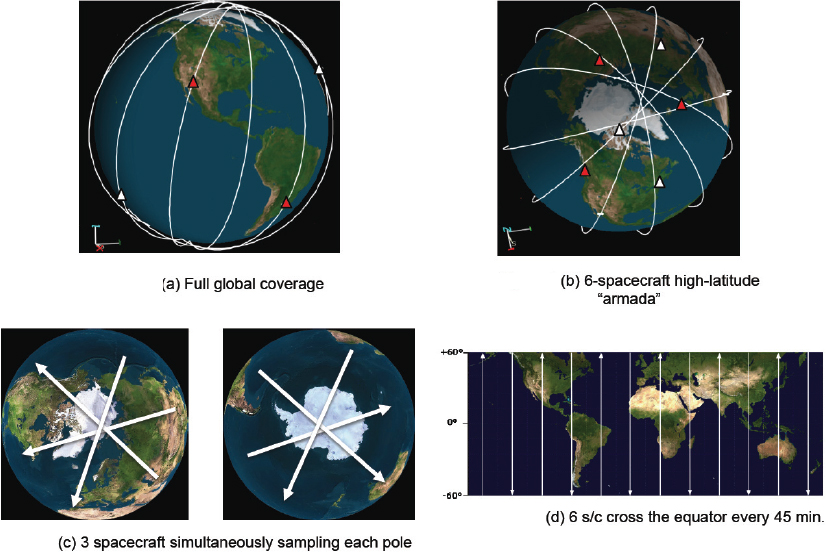
FIGURE 4.10 Potential orbital configurations for Geospace Dynamics Constellation. Three main orbital configurations have been considered thus far: (a) spacecraft fully spread out in latitude to provide continuous, global coverage; (b) spacecraft configured as a group with simultaneous, dense coverage at high latitudes alternating between polar cap regions every 45 minutes; and (c) satellites configured to orbit in tow, sreparated three-satellite armadas, such that three are in the Northern Hemisphere while three are in the Southern Hemisphere, providing simultaneous coverage of both polar regions every 45 minutes. Configurations (b) and (c) both gather consolidated measurements at the mid- and low latitudes, with simultaneous crossings of the equator by all six satellites every 45 minutes (d), while the entire globe is sampled every 90 minutes at 12 local times (as is the case for configuration (a). Minimal amounts of propellant relative to the baseline capacity are needed to alternate between these configurations, and the station-keeping time to change and maintain these configurations is on the order of hours.
The most cost-effective launch approach (given available launchers) would be to launch all six satellites with one vehicle. In this case, the satellites are first placed in a highly elliptical orbit plane (e.g., with perigee of 450 and apogee of 2,000 km) with an 80° inclination. As they then precess, these satellites will spread out in equally separated local time planes (requiring ~12 months). Note that propulsion can be used to decrease this deployment time. In this scenario, the apogee of one satellite is immediately lowered to provide an initial 450-km circular orbit, while the remaining five satellites precess in local time. After about 2.5 months, in which the satellites have precessed 30 degrees in local time, a second satellite orbit is changed to 450-km circular orbit. The process continues until all six are spread out equally and converted to 450-km circular orbits. During the time required to establish the final distribution in local time of the six satellites, this initial observing phase permits “pearls-on-a-string” observations by the satellites along highly elliptical orbits. SOURCE: (a-c) Orbital configurations courtesy of the Aerospace Corporation using Earth images provided by Living Earth, Inc.; (d) NASA Goddard Space Flight Center.
TABLE 4.6 GDC Key Parameters to Be Measured from Space
|
|
||||
| Notional Instrument | Key Parameters | Nominal Altitude | ||
|
|
||||
| Ion Velocity Meter (includes RPA) | Vi, Ti, Ni, broad ion composition | 300-400 km | ||
| Neutral Wind Meter (NWM) | Un, Tn, Nn, broad neutral composition | 300-400 km | ||
| Ionization Gauge | Neutral density | 300-400 km | ||
| Magnetometer | Vector B, Delta B, currents | 300-400 km | ||
| Electron Spectromenter | Electron distributions, pitch angle (0.05 eV to 20 keV) | 300-400 km | ||
NOTE: The measurements needed to achieve the main objectives of the mission and answer the science questions linked to them are itemized. Each satellite includes an identical suite of “notional” instruments, as listed here. Instruments to measure both neutral and ionized state parameters, including dynamics, are included. Also included are a magnetometer and an energetic particle detector for measuring energy and momentum forcing from the magnetosphere. All instruments have extensive flight heritage.
APPLICATIONS RECOMMENDATIONS: SPACE WEATHER AND SPACE CLIMATOLOGY
Space weather is receiving increased attention as the importance of its effects on society is more broadly recognized. Previous NRC reports13 and the National Space Weather Program (NSWP) Strategic Plan 201014 document the nation’s need for increased capability to specify and predict the weather and climate of the space environment. The past decade has seen the growth of new services and technologies, including GPS location and timing services, aircraft flights over polar regions, electric power transmission systems, and a growing space tourism industry, all of which increase the need to consider vulnerabilities that can result from space weather conditions. Space weather affects our lives directly and indirectly. In the extreme case of an event of historic proportion, space weather may even lead to catastrophic disruptions of society.
From economic and societal perspectives, reliable knowledge about and forecasting of conditions in the space environment are important on a range of timescales for multiple applications. Prominent among them are radio signal utilization (which enables increasingly precise navigation and communication) and mitigation of the drag on Earth-orbiting objects that alters the location of spacecraft, threatens their functionality as a result of collisions with debris, and impedes reliable determination of reentry. Energetic particles can damage assets and humans in space. Currents induced in ground systems can disrupt and damage power grids and pipelines.
All national space weather forecasting entities (Box 4.8) currently rely on potentially threatened operational space assets and critical data from limited-term research missions, and they require a better-supported and cost-effective research-to-operations pathway for models. As such, the future of even the status quo is threatened—at a time when national space weather requirements are continuously growing.
The U.S. and international space physics communities are poised to make significant advances in space weather and space climate science. There is already a vibrant, cooperative enterprise of study along with a strong culture of student development across the three major skill areas: instrument development, data analysis, and theory and modeling. The future is therefore highly promising. However, the key is long-term
________________________
13 See National Research Council, Severe Space Weather: Understanding Societal and Economic Impacts (2009), and National Research Council, Limiting Future Collision Risk to Spacecraft: NASA’s Meteoroid and Orbital Debris Programs (2011), both published by the National Academies Press, Washington, D.C.
14 Committee for Space Weather, Office of the Federal Coordinator for Meteorological Services and Supporting Research, “National Space Weather Program Strategic Plan,” FCM-P30-2010, August 17, 2010, available at http://www.ofcm.gov/nswp-sp/fcm-p30.htm.
BOX 4.8 SPACE WEATHER TODAY
As the nation’s official source of space weather alerts and warnings, NOAA’s Space Weather Prediction Center (SWPC) delivers space weather products and services that meet evolving national needs. Within NOAA, SWPC works especially closely with the National Environmental Satellite, Data, and Information Service (NESDIS), which provides satellite services and includes the National Geophysical Data Center (NGDC), which archives and disseminates NOAA’s data. As part of the National Weather Service, SWPC provides actionable alerts, forecasts, and data products to space weather customers and works closely with partner agencies, including NASA, the Department of Defense (DOD), the Department of Energy, the U.S. Geological Survey, the Department of Homeland Security, and the Federal Aviation Administration. In addition to these agencies, SWPC also works with commercial service providers and the international community to acquire and share data and information needed to carry out its role in serving the nation with space weather products and services.
The Air Force Weather Agency (AFWA) has the lead for providing space weather data, products, and services to DOD users worldwide. Missions supported range from ground- and sea-based users of HF and satellite communications and GPS navigation systems, to space surveillance and tracking radars, to on-orbit satellite operations. AFWA’s Space Weather Operations Center collects observations in real time, operates specification and forecast models, and disseminates mission-tailored information to users via Web services, Web pages, and dedicated communications. AFWA, in close collaboration with Air Force Space Command and the Air Force and Naval Research Laboratories, has been a strong proponent of transitioning research to operations, and it routinely leverages sensor data and models provided by NOAA, NASA, and DOD-funded research efforts. AFWA collaborates closely with the Air Force Research Laboratory Space Weather Center of Excellence and with NASA’s Space Weather Laboratory.
NASA is addressing its own space weather needs through a combination of two collaborating centers. The Space Radiation Analysis Group (SRAG) has as its focus the protection of humans in space, from low Earth orbit to destinations beyond. Combining data from NASA, NOAA, and partner sensors, SRAG provides state-of-the-art assessments tailored to the needs of NASA’s human spaceflight program. The Space Weather Laboratory (SWL) provides services to NASA’s robotic missions, based on execution of the largest set of space weather forecasting models in existence to date. Data from a large variety of sources and model output are gathered and disseminated by an innovative space weather analysis system that is accessible not only by NASA but also by interests worldwide. Both SRAG and SWL collaborate closely with each other, as well as with entities inside and outside the United States.
Recent years have seen the emergence of a vibrant commercial sector that is engaging in space weather operations and providing new services and products for customers ranging from agencies and commercial aerospace to consumers. University organizations have established operational centers that produce space weather data for commercial users (e.g., Utah State University’s Space Weather Center). An important focus of these commercial activities is the provision of derivative products to improve communications and navigation. The American Commercial Space Weather Association was formed in 2011 to represent private-sector commercial interests nationally and internationally; its formation represents a milestone at the end of the first decade of a maturing commercial space weather enterprise. Member companies also supply advisory services related to space weather to government agencies and commercial organizations.
space environment measurements and modeling, with many commonalities between space weather and space climate needs.
First Applications Recommendation [A1.0]—Recharter the National Space Weather Program
The survey committee concluded that, in addition to agency-appropriate activities by NASA, NSF, NOAA, and DOD to support space weather model research and development, validation, and transition to operations, a comprehensive plan for space weather and climatology is also needed to fulfill the requirements presented in the June 2010 U.S. National Space Policy15 and envisioned in the 2010 National Space Weather Program Strategic Plan.16 However, implementation of such a program would require funding well above what the survey committee assumes to be currently available; the committee advises that an initiative in space weather and climatology proceed only if its execution does not impinge on the development and timely completion of the other recommended activities that are described in this chapter and shown in Figure 6.1.
In Chapter 7, the survey committee presents a vision for a renewed national commitment to a comprehensive program in space weather and climatology that would provide long-term observations of the space weather environment and support the development and application of coupled space weather models to protect critical societal infrastructure, including communication, navigation, and terrestrial meteorological spacecraft. Realization of the committee’s plan, or a similar plan, will require action across a number of agencies and coordination at an appropriately higher level in government.
The charter for the NSWP dates to its inception in 1995. Rechartering the NSWP would provide an opportunity to review the program and to consider the issues raised here, especially those pertaining to program oversight and agency roles and responsibilities. This need informs the following recommendation:17
As part of a plan to develop and coordinate a comprehensive program in space weather and climatology, the survey committee recommends that the National Space Weather Program be rechartered under the auspices of the National Science and Technology Council. With the active participation of the Office of Science and Technology Policy and the Office of Management and Budget, the program should build on current agency efforts, leverage the new capabilities and knowledge that will arise from implementation of the programs recommended in this report, and develop additional capabilities, on the ground and in space, that are specifically tailored to space weather monitoring and prediction.
________________________
15National Space Policy of the United States of America, June 28, 2010, available at http://www.whitehouse.gov/sites/default/files/national_space_policy_6-28-10.pdf.
16 Committee for Space Weather, Office of the Federal Coordinator for Meteorological Services and Supporting Research (OFCM), National Space Weather Program Strategic Plan, FCM-P30-2010, August 17, 2010, available at http://www.ofcm.gov/nswp-sp/fcm-p30.htm.
17 A similar recommendation was made in a review of the NSWP program that was published in 2006. In that review, it is recommended that,
The NSWPC should review and update its now 10-year-old charter to describe clearly its oversight responsibilities. These should include, but not be limited to, the authority to: (1) address and resolve interagency issues, concerns, and questions; (2) reprioritize and leverage existing resources to meet changing needs and requirements; (3) approve priorities and new requirements as appropriate and take coordinated action to obtain the needed resources through each agency’s budgetary process; (4) identify resources needed to achieve established objectives; and (5) coordinate and leverage individual organizational efforts and resources and ensure the effective exchange of information.
See, Office of the Federal Coordinator for Meteorological Services and Supporting Research, Report of the Assessment Committee for the National Space Weather Program, FCM-R24-2006, June 2006, p. xiii, available at http://nswp.gov/nswp_acreport0706.pdf.
Benefits of Research-to-Operations and Operations-to-Research Interplay
An interplay between research and operations benefits both, as reflected by the operational community’s use of real-time data from research spacecraft and by use of operational ground and space assets for science. There are many examples of the value of operational assets to the research community and of research assets to the operational community. Examples include research data from GOES, POES, DMSP, and COSMIC, and operational use of data from ACE, SOHO, SDO, and STEREO. The routine provision of space weather data from science missions is invaluable. Nevertheless, although NOAA’s operational mission data are generally available, other data sets, e.g., from DOD’s LANL and GPS spacecraft, are not receiving the necessary support or being made available to the scientific community. The operational use of models, and their validation, help to identify model limitations and contribute to future model improvements. Research models and theory are becoming more accessible to operators and are contributing to improved forecasts (e.g., the Community Coordinated Modeling Center). By making output from research and operational models widely available to the research community, broad-based model development and supporting validation and verification are facilitated. Conducting space weather operations in a closely coupled fashion with related research efforts benefits from an infusion of the latest knowledge and technology. Including research personnel in the review of requirements for operational sensors and data maximizes the data’s value to both operations and science. Such efforts advance the pace of model development and transition to operations by all participants, ranging from the academic researcher to the SWPC, AFWA, and NASA operators. The SWL at NASA GSFC had many successes in transitioning models to NASA operations. The first major transition of a large-scale physics-based numerical model to SWPC operations, the WSA-Enlil model (developed as part of the NSF Center for Integrated Space Weather Modeling), was achieved in 2011, building on 20 years of scientific research funded by multiple agencies.
Solar, interplanetary, and near-Earth observations of the space environment are the mainstays of the space weather enterprise. Space observations are used for (1) space environment situational awareness; (2) inputs to models that provide spatial and temporal predictions; (3) assimilation into models to improve model accuracy; (4) validation of model performance, both in operations and during model development; (5) building of a historical database for climatology and empirical models; (6) specific tailored products such as, for example, satellite anomaly resolution; and (7) research to improve understanding of the space environment and the physical processes involved in solar-terrestrial interactions.
Most of these observations are needed in real time to be useful for operations. They come from NOAA or DOD operational missions, from NASA’s science missions, or from science activities at other agencies. Examples include NOAA’s Geostationary Operational Environmental Satellites (GOES), the Air Force’s Solar Observing Optical Network (SOON), and H-alpha monitoring via NSO’s Global Oscillation Network Group (GONG), or NASA missions such as SDO, SOHO, ACE, and STEREO. They also come from other agency programs, such as ground-based magnetometers operated by the U.S. Geological Survey, or from international collaborations, such as the proposed collaboration between the United States and Taiwan to jointly fund and operate the COSMIC-2 spacecraft constellation. For some uses—such as resolving satellite anomalies, validating operational model performance, and providing data for long-term climate purposes—data are not needed in real time.
The space environment from the Sun to Earth and other planets is vast, in terms not only of the volume that has to be monitored but also the parameters that have to be measured and the spectral ranges that need
to be covered. In the past decade, space weather needs have been served by improved observations from both operational and science missions, such as GOES, STEREO, and ACE. At the same time, there are deficiencies, for example, the likely absence of energetic-particle sensors on future NOAA low-altitude polar-orbiting satellites and uncertainty regarding their presence on future Air Force defense weather satellites.
Recently, there has been admirable progress as well as interagency cooperation among NASA, the U.S. Air Force, and NOAA to develop a long-sought and much-needed replacement for the aging ACE solar wind satellite, which was launched into a halo orbit around the L1 libration point in 1997. However, it now appears that the replacement spacecraft, DSCOVR, will not carry the coronagraph that is needed to replace observations from the SOHO spacecraft, which was launched in 1995. Moreover, instruments on DSCOVR, like those currently on ACE, have significant limitations in monitoring the highest-velocity events. IMAP, described above, provides an opportunity to apply to a next generation of solar wind instruments what has been learned over the past two solar cycles about solar wind variability.
In summary, the survey committee found that NOAA, DOD, and other agencies play an important role in maintaining and expanding the observational foundation of accurate and timely data used for space weather operations and space climatology. The survey committee also concluded that it is important that NASA continue to make science mission data available in cases in which those data contribute to timely space weather operations.
The survey committee recommends that NASA, NOAA, and the Department of Defense should work in partnership to plan for continuity of solar and solar wind observations beyond the lifetimes of ACE, SOHO, and STEREO. In particular,
• [A2.1] Solar wind measurements from L1 should be continued, because they are essential for space weather operations and research. The DSCOVR L1 monitor and IMAP STP mission are recommended for the near term, but plans should be made to ensure that measurements from L1 continue uninterrupted into the future.
• [A2.2] Space-based coronagraph and solar magnetic field measurements should likewise be continued.
• [A2.3] The space weather community should evaluate new observations, platforms, and locations that have the potential to provide improved space weather services. In addition, the utility of employing newly emerging information dissemination systems for space weather alerts should be assessed.
Models and the Transition of Research to Operations
Research, the foundation for future improvements in space weather services, is necessary for progress and improvement in models that are just beginning to reach a level of maturity such that they can benefit space weather customers. But just as the first Sun-to-Earth model (WSA-Enlil) is being implemented at the National Centers for Environmental Prediction (Figure 4.11), space weather specialists are witnessing a major decline in support for model improvement and new model development. Continued support is critical to developing models that are useful for operational forecasts, focused primarily on addressing operational needs and prepared with the goal of making the transition from the research environment to operational service. Further, model development aimed at improving operational forecasts requires a dedicated effort focused on validation and verification. Finally, the pursuit of models that are meant to be more than just science tools is most effective when the end purpose is usefulness in operations. This in turn requires a close working relationship between the end users of space weather forecasts and the research community.
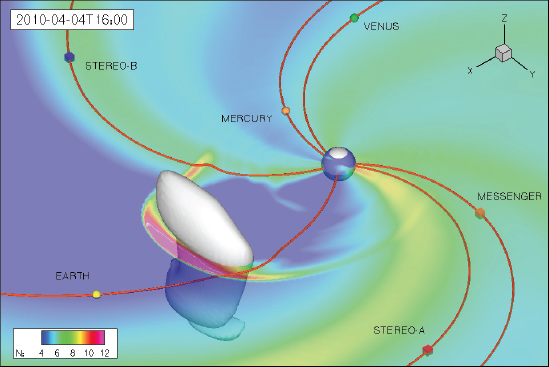
FIGURE 4.11 WSA-Enlil simulation of solar wind transient associated with Galaxy 15 failure in April 2010. Solar wind density is indicated by color in the heliospheric equatorial plane, and a coronal mass ejection approaching Earth is shown by the three-dimensional white structure. This ejecta drives a moderate interplanetary shock with a speed of >900 km/s. Interplanetary magnetic field lines are shown by red lines. SOURCE: Courtesy of Dusan Odstrcil, George Mason University.
From an operational perspective, it is clear that models are essential to predict the state of the system, to specify the current conditions, and to provide information at locations not served by sensors (see Figure 4.11). Recent results of “metric challenges”18 and validation efforts demonstrate that models must be improved in order to meet the demands of both now-casting and forecasting. Although substantial progress has been made over the past decade in understanding the fundamental physics of space weather, leading to better physics-based, integrated models of the dynamic space environment, users can benefit from this improved understanding only if it is incorporated in operationally useful forecast tools. Transitioning to
________________________
18 Acquiring quantitative metrics-based knowledge about the performance of various space physics modeling approaches is central for the space weather community. Quantification of the performance helps the users of the modeling products to better understand the capabilities of the models and to choose the approach that best suits their specific needs. See A. Pulkkinen, M. Kuznetsova, A. Ridley, J. Raeder, A. Vapirev, D. Weimer, R.S. Weigel, M. Wiltberger, G. Millward, L. Rastätter, M. Hesse, H.J. Singer, and A. Chulaki, Geospace Environment Modeling 2008-2009 Challenge: Ground magnetic field perturbations, Space Weather 9:S02004, doi:10.1029/2010SW000600, 2011.
operations requires time, resources, a dedicated effort, and a mind-set different from that brought to the problem by the science community.
The survey committee concluded that a national, multifaceted program is needed to transition research to operations more effectively by fully leveraging labor from different agencies, universities, and industry and by avoiding duplication of effort. Such a program could coordinate the development of models across agencies, including advance planning for developing and coupling large-scale models. The survey committee further concluded that each operations agency should develop the appropriate processes and funding opportunities to facilitate model transition to operations, which must include validation and establishment of metrics and skill scores that reflect operational needs. To a large extent, the value of research and operational codes can be gauged by whether end-user needs are being met. The survey committee concluded that further efforts are needed to better identify what these needs currently are and to anticipate what they will be in the future.
It is also important for NOAA to maintain a level of research expertise needed to work together with its partners, to provide professional forecasts and products, to define requirements, to understand possibilities for supporting customer needs, and to make wise and cost-effective choices about new models and data to support space weather customers.
On a broader level, the survey committee concluded that distinct funding lines for basic space physics research and for space weather specification and forecasting need to be identified and/or developed. This will require maintaining and growing the research programs at NSF, NASA, AFOSR, and ONR, and it will provide a more effective transition from basic research to space weather forecasting applications.
Accordingly, the survey committee recommends:
• [A2.4] NOAA should establish a space weather research program to effectively transition research to operations.
• [A2.5] Distinct funding lines for basic space physics research and for space weather specification and forecasting should be developed and maintained.


