
12
Workforce Effectiveness: Acquiring Human Resources and Developing Human Capital
Steve W. J. Kozlowski
Among the many important ingredients in the complex alchemy of organizational effectiveness is a capable, highly motivated, and adaptive workforce. To accomplish mission objectives, organizations must navigate the complexities, uncertainties, and dynamics of their external environments, outperforming and counteracting competitors and adversaries, by being better, faster, or more innovative. They must build a uniquely capable workforce, then leverage its special talents. This is accomplished by developing a strategy to meet mission objectives, and aligning the internal organization with respect to leadership, administrative structure, work processes (i.e., technology), and human resource management (HRM) practices to support strategy execution. In that sense, acquiring and building an effective workforce is predicated on providing the organization with unique capabilities, enabling it to meet strategic objectives, and simultaneously making it difficult for adversaries to be successful.
The purpose of this chapter is to describe behavioral science theory and research findings from organizational psychology and human resource management that underpin the acquisition of human resources and development of human capital, both of which are essential for creating a capable, innovative, and adaptive workforce. I will begin by providing a brief overview of the shifting strategic landscape faced by the intelligence community (IC) and implications of this shift for IC strategy and internal alignment. I will then discuss strategic HRM, which describes how the workforce can be aligned to help accomplish IC strategic objectives, and I will present a strategic HRM architecture for acquiring human resources and developing human capital. I will then describe in detail specific clusters of HRM
practices that implement strategic HRM: recruitment and selection, training and development, performance management and incentives, and work design and teamwork. Finally, I will close with research issues relevant to sustaining employee development, collaboration, and organizational learning for the long haul.
STRATEGIC ALIGNMENT
The IC as an Organization
Some readers are likely to assert that the IC is not like other organizations and that behavioral science knowledge about the effective functioning of business organizations is not relevant to the IC because it is so uniquely different. I will not make the claim that the IC is exactly like other organizations in all ways, but I will claim that it is quite similar to nearly any other organization in many important ways. With respect to differences, Zegart (this volume, Chapter 13) identifies some key factors that make public institutions and the IC less sensitive to the adaptive pressures that commercial firms face. That is, the benefits of competition for adaptation are limited because survival within the IC is less of an issue; IC agencies do not compete directly. Rather, they are aligned to serve unique customer needs (Fingar, this volume, Chapter 1) and, thus, the IC is arrayed more as a loosely coupled divisional structure than a set of centralized units competing in the same environmental niche (Galbraith, 1972). In that sense, the basic mechanisms of organizational alignment—external and internal—apply equally well or well enough to the IC so that theory and research findings from organizational science are relevant. This chapter is intended to summarize lessons from research on organizational effectiveness that can be applied to improving workforce development and organizational learning in the IC.
The Strategic Environment and IC Strategy
As described by Fingar (this volume, Chapter 1), the strategic environment of the IC has shifted dramatically in the post-Soviet Union era. Following the end of World War II, the IC had been arrayed to assess and counteract a large, militarily capable, state actor and its many coaligned proxy states. Although many uncertainties were inherent in the strategic balance between the United States and the Union of Soviet Socialist Republics, there was also a high degree of stability in the nature of the relationship, the intentions of key actors, and their likely means of action.
Stability calls for an organizational strategy that exploits what is known, with internal alignments relying on tight structural control.
The previous strategic environment of the IC has shifted dramatically. As described by the National Intelligence Strategy (NIS):
The United States faces a complex and rapidly changing national security environment in which nation-states, highly capable non-state actors, and other transnational forces will continue to compete with and challenge U.S. national interests. Adversaries are likely to use asymmetric means and technology (either new or applied in a novel way) to counter U.S. interests at home and abroad. (Office of the Director of National Intelligence, 2009a, p. 3)
Environmental turbulence calls for an organizational strategy based on exploration and innovation. This strategic shift requires an internal alignment that enables unique capabilities to be acquired, developed, and leveraged to promote flexibility, agility, and adaptability. Indeed, the NIS specifies two overarching “Enterprise Goals” focused on internal alignment that are designed to help it accomplish its “Mission Goals” (i.e., external alignment) (Office of the Director of National Intelligence, 2009a, p. 9):
-
Deliver balanced and improving capabilities that leverage the diversity of the community’s unique competencies and evolve to support new missions and operating concepts.
-
Operate as a single integrated team, employing collaborative teams that leverage the full range of IC capabilities to meet the requirements of our users, from the President to deployed military units.
With the NIS as a point of departure, I now turn to how the behavioral science literature on strategic HRM and HRM practices can be instrumental in achieving these IC strategic goals.
Implications for Strategic Alignment
The dominant conceptualization of organizations is that they are systems of interacting elements at multiple levels of analysis (i.e., individuals, teams, subsystems, and the organization); open to environmental inputs (e.g., resources and stakeholders; competitors and adversaries); and purposeful as they seek to accomplish goals, maintain balance between external environmental demands and internal structure, and adapt to their environmental niche (Katz and Kahn, 1966).
Macro-Level: The Environment–Organization Interface
Organizations seek alignment with their external environment. They pursue a mission that exploits an environmental niche—to accomplish goals by providing products or services that are supported by customers and stakeholders. Competitors seek to exploit the same niche and to gain advantage. For the IC, “competitors” are adversaries to U.S. national interests in the form of nations, nonstate actors, and their intelligence operations. Thus, senior leaders craft a strategy to accomplish mission goals, with the intent of being superior relative to competitors. In general, strategy is designed to exploit environmental stability through control and efficiency (defender), create environmental turbulence through flexibility and innovation (prospector), or achieve a balance of both strategic orientations (analyzer) (Miles et al., 1978).
From a contingency perspective, different strategic orientations need different internal alignments. A defender strategy requires routine, wellknown core technologies (i.e., product or service delivery systems) and tight bureaucratic structures to achieve control and efficiency. A prospector strategy needs reconfigurable technologies and a discretionary, organic structure to achieve flexibility and innovation. An analyzer strategy needs to manage and balance both forms of technology-structure fit. Looking at the IC with limited insight from the outside, the IC strategy appears to conform roughly to the analyzer archetype, although the exact balance of exploitation and exploration is difficult to characterize.
The reason this macro perspective is important is because strategic alignment has implications for HRM, meaning the types of human resources the firm seeks—the knowledge, skills, abilities, and other characteristics, or KSAOs (e.g., personality, interests, and values), of its people—and the management approach used to lead, develop, and motivate the workforce (Miles et al., 1978). In general, a defender strategy uses an authoritative management approach (i.e., directive), an analyzer strategy is more participative (i.e., seeks employee input, but maintains control), and a prospector strategy encourages employee empowerment (i.e., shifts discretion to employees and teams to fuel innovation). This is an early conceptualization and, as I will discuss later, it is evolving. However, it illustrates the important connections among organizational strategy, internal alignment, and the link to HRM.
Meso-Level: Workgroups and Teams
The macro-level is important for shaping the internal organization—that is, the way the workforce experiences the implications of technology systems, administrative structures, and leadership approaches. However,
employees do not experience such factors directly. Rather, it is the direct experience with their job, their connection to coworkers in a workflow (which may be tightly or only loosely coupled) and in social groups, and the relationship enacted with their leader that characterizes their primary experience of the organization. Thus, although the macro context is important for constraining and shaping the nature of the proximal context, the meso-level is what employees experience directly (Indik, 1968). The work unit, the workgroup, or the team is where people “live” in the organization. The meso-level sits at the juncture between the organization as a broad entity and the individual in isolation. It is “where the rubber meets the road” in organizational behavior (Kozlowski and Bell, 2003; Kozlowski and Ilgen, 2006).
In addition, over the past two decades, organizations worldwide have shifted the structure of work from individual jobs in a functional structure to team-based structures (Devine et al., 1999). This shift has many drivers, including increased problem complexity, demands for rapid decision making, and the need for adaptability in turbulent environments. The advantages of work teams is that they can bring diverse and specific expertise to bear on problems; team members can back each other up, catch errors, and correct them; and they can flexibly adapt to the emergent needs of the problem situation (Kozlowski et al., 1999; Marks et al., 2001; LePine et al., 2008). Teams enable collective, “macro cognition” to be applied to high-stakes, challenging, and critical problems (Fiore et al., 2010).
Micro-Level: Individuals and Their Capabilities
At the micro-level, we focus on the capabilities that individuals bring to the organization, including their knowledge, skills, abilities, and other characteristics (Ployhart, 2011). A simplistic but useful heuristic is to view human performance as resulting from a combination of ability and motivation (Campbell et al., 1993). KSAOs encompass both ability (“can do”) and motivational (“will do”) factors (Cronbach, 1970). Motivation is also shaped by meso-level factors (e.g., effective leadership, supportive peers, engaging work). Thus, at a fundamental level, the organizational design target is one of achieving external and internal alignment. Workforce effectiveness is a product of selecting the right mix of individuals, based on their KSAOs, to create a pool of human resources consistent with the organization’s strategic alignment, then to invest in human capital by developing and motivating the workforce so the organization can accomplish its mission more effectively than its competitors.
STRATEGIC HUMAN RESOURCE MANAGEMENT
Systemic Fit Perspective
Until the early 1980s, HRM was regarded as an important functional area in organizations, but not as a critical aspect of organizational strategy. The “strategic alignment and adaptation” perspective advanced by Miles et al. (1978), which I highlighted previously, began to bring HRM practices more directly into the strategic equation, with HRM as an integral support for organizational strategy. Snow and Snell (2011) characterize this early view as a systemic fit perspective that focused on aligning HRM policies and practices with strategy. Strategy was a deliberate effort to maintain organizational fit with a dynamic external environment and to align internal systems, including HRM, to execute the strategy well. In a systemic fit perspective, HRM is strategy driven. This orientation is a basic foundation for effective HRM design.
Strategic Capabilities Perspective
More recent work has begun to explore how HRM can create sustained competitive advantage by building organizational capabilities. The strategic capabilities perspective is future oriented and focused on fostering learning, motivation, and innovation. This shifts the view from one of just having the right pool of human resources to one of also being able to build human capital by investing in the development of the workforce to create unique capabilities. Key talent pools are identified and targeted for specific human capital investments (Boudreau and Ramstad, 2005, 2007). Human capital propels strategy formulation (Snow and Snell, 2011); it allows novel strategies to be developed based on the unique capabilities of organizational members. If such capabilities are difficult to imitate and hard for adversaries to replicate, and if they cannot be substituted by other resources, they provide a foundation for long-term competitive advantage (Barney and Wright, 1998; Ployhart, 2006, 2011). With respect to the IC, the lesson is to recruit and select the right people to acquire a pool of high-quality human resources and then to develop, motivate, and integrate that talent to create unique capabilities for the IC.
IC Workforce Strategy
Previously I described the strategic environment of the IC and highlighted its two internally oriented enterprise goals documented in the NIS (Office of the Director of National Intelligence, 2009a, Sec 1:16). Those two enterprise goals are intended to be implemented by six more specific
“enterprise objectives (EOs).” EO 6: Develop the Workforce is directly relevant to the current discussion. Actions specified to meet EO 6 include (1) build a diverse and balanced workforce, (2) enhance professional development, (3) cultivate relevant expertise, (4) support an entrepreneurial ethos, (5) deploy integrated agile teams, and (6) build a culture of leadership excellence. The material that follows describes research-based applications that can enable this HRM strategy for the IC workforce to be accomplished.
AN ARCHITECTURE FOR STRATEGIC HUMAN RESOURCE MANAGEMENT
Individual Differences
People differ from one another on a wide range of characteristics. Individuals differ on demographic features (e.g., age, sex, race), abilities (e.g., cognitive, physical), and preferences (e.g., personality, values). The focus from a human resources perspective is on differences in KSAOs (e.g., personality, interests, and values) that are linked to differences in, for example, educational attainment, vocational preferences, job performance, and career success. At the most basic level, KSAOs are individual differences that contribute to job performance. At the aggregate level, the collection of KSAOs across the workforce comprises an organization’s human resource pool.
Stable and Malleable Individual Differences
KSAOs can be divided into those that are stable and those that are malleable. Stable KSAOs include factors such as cognitive ability, personality, and values that are relatively enduring across the span of adult development. Malleable KSAOs include factors such as domain knowledge, job-specific skills, and motivational characteristics. For example, cognitive ability, which is a generalized predictor of learning and performance effectiveness and has a high genetic component, is very stable across a person’s career (Lyons et al., 2009), whereas domain knowledge and job-specific skills accrue over time through experience and training. Over lengthy periods of experience, very high levels of domain-specific expertise develop (Charness and Tuffiash, 2008). Importantly, stable KSAOs influence malleable KSAOs. In particular, individuals with higher cognitive ability gain more from experience than those with less cognitive ability. For example, researchers have shown that individuals with higher cognitive ability have steeper trajectories of career success, as indexed by salary growth, relative to those with lower cognitive ability. Factors that accounted for their increasingly greater success over time include: they sought more training,
gravitated to more complex jobs, and pursued higher status occupations (Judge et al., 2010). They invested in their human resource endowment, gained human capital, and were able to leverage it at an increasing rate over time.
Human Resources and Human Capital
This distinction between stable and malleable KSAOs is important because it underpins a way of conceptualizing the distinction and relationship between human resources and human capital. This conceptual distinction links back to the systemic fit and strategic capabilities perspectives and, thus, sketches a basic architecture for the mechanisms of achieving strategic HRM. This architecture is illustrated in Figure 12-1.
Stable KSAOs cannot be changed; they are human resource endowments. They are generic in that they are applicable to a wide range of jobs, situations, and organizations. In general, we know that individuals who have high cognitive ability (Schmidt and Hunter, 2004) and a conscientious personality profile (Barrick and Mount, 1991) perform at a higher level across a wide range of jobs. In that sense, those endowments are valuable in the broad labor market and allow individuals who possess them to seek the highest pay-off in organizational fit. Thus, organizations have to invest to recruit and select the best candidates with high-valued KSAOs. Those investments yield an aggregate pool of human resources. From a systemic fit perspective, strategic HRM should target selection of individuals with KSAO profiles that are consistent with the existing organizational strategy. The value of the resource pool for the organization is that positive effects manifest quickly in the form of performance effectiveness. Moreover, from a strategic capabilities perspective, efforts to maximize the quality of the resource pool have the potential, with additional investments, to develop human capital.
Malleable KSAOs are targets for human capital investments. Although they are influenced by stable individual differences, their value to the organization can be enhanced by targeted development. From an organizational perspective, the more job specific, unique, difficult to replicate, and nonsubstitutable the knowledge and skills are that are developed, the better the organization fares (Barney and Wright, 1998; Ployhart, 2006, 2011). Why? Because investments in general knowledge or skills are valuable in the broader labor market, whereas specific skills are not as easily marketed by the individual, poached by other organizations, or imitated. Thus, for example, investing in job-specific training makes more sense for an organization because it can be applied immediately and is difficult for an individual to market elsewhere, whereas an investment in, say, an advanced
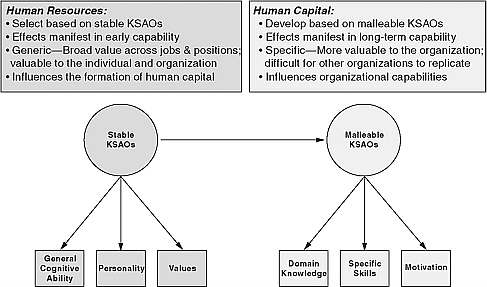
FIGURE 12-1 Knowledge, skills, abilities, and other characteristics (KSAOs): Human resources and human capital.
degree is valuable in many different jobs and organizations.1 More importantly, from a strategic capabilities perspective, the goal is to create human capital that is valuable, unique, and difficult for other organizations to replicate and that can be leveraged to create competitive advantage. With respect to the IC, application of this approach would create unique analytic capabilities, and mechanisms to link analysts collaboratively, to gain advantage over adversaries.
HUMAN RESOURCE MANAGEMENT PRACTICES
Translating Strategic HRM into Action
Human resources and human capital provide a basis for understanding the differences in resource endowments and capabilities that in aggregate distinguish organizations competing in a particular environmental niche. At the firm level, one can liken them to aggregate individual abilities or “can do” characteristics. They are necessary, but not sufficient. What is also needed is motivation among employees to engage in human capital
development and to collectively apply their KSAOs for the benefit of the organization. HRM practices are designed to enhance an organizational workforce’s ability to perform and/or their motivation to do so (Becker and Huselid, 1998; Delery and Shaw, 2001). Many of these practices—such as recruitment, selection, training, performance management, compensation, and work design—have been used for quite some time, but only within the past few decades have researchers engaged in concerted efforts to empirically link HRM practices to indicators of organizational effectiveness. This link provides the means to implement the strategic HRM architecture.
Early research in this area examined individual practices. For example, Holzer (1987) showed that investments in more extensive recruiting efforts were associated with organizational productivity. Terpstra and Rozell (1993) reported positive relations between specific selection practices and organizational performance. McEvoy and Cascio (1985) showed that job enrichment reduced employee turnover (which is associated with organizational productivity) (Brown and Medoff, 1978), and Gerhart and Milkovich (1992) reported that incentive compensation plans were positively related to productivity. An early meta-analysis reported that training, goal setting, and sociotechnical systems were positively associated with productivity (Guzzo et al., 1985). This early research provided recognition that HRM practices were linked to firm effectiveness. These HRM practices were labeled high-performance work practices by the U.S. Department of Labor (1993), and they use a variety of other names, including high-involvement, high-commitment, and high-performance work systems.
The next generation of research advances has been aimed at resolving two primary limitations. First, the early research efforts tended to examine single practices, whereas strategic HRM theory suggests that “bundles” of aligned practices (MacDuffie, 1995) or particular combinations of practices (Youndt et al., 1996) work in synergistic fashion. Second, the methodology of the early research was less than ideal because the designs were typically cross-sectional (i.e., all data collected simultaneously), thereby yielding causal ambiguity, and the data were often self-reported (i.e., a manager was the sole data source), yielding concerns about response biases that could artificially inflate the observed relations (Huselid, 1995). Subsequent research has sought to address these limitations, solidify the linkage between HRM practices and organizational effectiveness (Delery and Doty, 1996; Hatch and Dyer, 2004; Huselid, 1995; Koch and McGrath, 1996; MacDuffie, 1995), and resolve causal ambiguity (Ployhart et al., 2009; Wright et al., 2005; Van Iddekinge et al., 2009). For example, Delery and Doty (1996) showed that HRM practices were associated with profits for a sample of banks, and MacDuffie (1995) found positive associations between HRM practice bundles with
productivity and quality in a sample of automobile assembly plants. Although research by Wright et al. (2005) concluded that a causal linkage between HRM practices and organizational effectiveness is ambiguous, Van Iddekinge et al. (2009) showed that the implementation of selection and training at the unit level was positively predictive of future unit performance (see also Ployhart et al., 2009).
In the ensuing years, research has developed and several qualitative reviews have concluded that HRM practices positively influence organizational performance (Becker and Huselid, 1998; Lepak et al., 2006; Wright and Boswell, 2002). More recently, the empirical foundation became sufficient to enable a meta-analytic review of the relationship between HRM practices and organizational effectiveness.2 Combs et al. (2006) cumulated findings from 92 studies that examined HRM practice relationships across 19,319 organizations. They reported a corrected overall correlation between HRM practices and indicators of organizational effectiveness of .20, which was significantly stronger for bundles (rc = .28) than for individual practices (rc = .14). Although a relationship of .20 might not appear to be very large, it is statistically and practically significant; increasing HRM practices by one standard deviation increases firm performance by 20 percent of a standard deviation. As the authors note, “In this sample, a one standard deviation increase in the use of HRM practices translates, on average, to a 4.6 percentage-point increase in gross return on assets from 5.1 to 9.7 and a 4.4 percentage-point decrease in turnover from 18.4 to 14 percent. Thus, HRM practices’ impact on organizational performance is not only statistically significant, but managerially relevant” (Combs et al., 2006, p. 518). Moreover, a recent meta-analysis of 66 primary studies (68 samples with 12,163 observations) found that the positive relationship between human capital and firm performance was significantly stronger (rc = .14) when the measures of human capital were form specific rather than general (Crook et al., in press), a key point made in this chapter. Although there is a need to improve methodological rigor and to refine understanding of the mechanisms that account for these relations (Becker and Huselid, 2006; Ostroff and Bowen, 2000), there is a sufficient basis to conclude that HRM practices are a viable means to implement strategic HRM, develop the workforce, and enhance organizational effectiveness.
TABLE 12-1 Core Human Resource Management Practices for Developing an Effective Workforce
|
Human Resources |
Human Capital Investments |
||
|
Acquire stable KSAOs |
Build malleable KSAOs |
Motivate the workforce |
Foster organizational learning |
|
↓ |
↓ |
↓ |
↓ |
|
Recruitment and selection |
Training and development |
Performance management and compensation |
Work design and teamwork |
Developing an Effective Workforce
Although many different HRM practices are used, I will provide a discussion focused on four clusters of core practices (Table 12-1): (1) recruitment and selection, (2) training and development, (3) performance management and incentives, and (4) work design and teamwork. I focus on these four core activities because they are consistent with the strategic HRM architecture illustrated in Figure 12-1 and because they are based on well-developed methodologies and practices and/or they have an extensive literature and research foundation. Each separate practice is represented by a relatively independent literature and area of practice. However, there are conceptual and operational overlaps, so I have categorized the practices into coherent clusters of related activities. I have also ordered them in logical progression. The purpose is to provide a concise overview of key issues and the approach for each cluster.
Recruitment and Selection
Recruitment and selection practices are critical to the quality of an organization’s human resource pool. Recruitment is directed toward identifying, reaching, and attracting job applicants (Barber, 1998). Selection is the use of psychometric assessment techniques to measure applicant KSAOs and then to select those applicants with the highest predicted job performance.3 Recruitment and selection must work in concert. Extensive recruiting enhances the degree to which an organization can exercise selec-
tivity during hiring. The larger and more diverse the applicant pool is on KSAOs, the more that can be gained via scientific selection (Cascio, 2000). For example, IC-wide recruitment events (job fairs) with multiple agencies represented likely allow each agency access to a wider pool of candidates than they could attract on their own; however, the selection process also becomes more critical because more general candidates may attend who do not possess the specific qualities needed by a particular agency. Recruitment and selection are costly activities, but the costs have to be viewed in perspective. If the organization fails to recruit a sufficiently large and diverse pool of applicants, then even the best selection practices cannot be optimally effective. Similarly, if recruitment yields a large and diverse applicant pool, but the organization fails to use appropriate selection practices, it cannot gain maximum utility from its hiring decisions. Both aspects have to work in concert.
A considerable amount of recruitment research has focused on recruiter characteristics, recruitment sources, and recruitment policies and practices (Rynes, 1991). Research on recruiter characteristics suggests that recruiters who are job incumbents (relative to personnel recruiters), personable, and knowledgeable about the job have more positive effects on job choice, although the effects are quite small (Rynes, 1991). Thus, although involving current analysts in the recruitment and hiring process may have some benefit, this research suggests it is unnecessary for successful hiring as long as recruitment officers have a full understanding of the relevant KSAOs necessary for the position. With respect to sources, research suggests that recruitment via employee referral has more positive effects on job outcomes (e.g., low turnover, low absenteeism, positive job attitudes) relative to those recruited directly or through advertisements or employment agencies (Yu and Cable, 2011). Research on recruitment practices has focused largely on the provision of realistic information through actual job previews intended to sensitize applicants at risk for turnover to self-select out of the hiring process. Although there is some support for realistic job previews in the literature, meta-analytic evidence indicates that the effects are weak (Phillips, 1998). Thus, the IC should not be overly concerned about the challenges of providing unclassified realistic job previews for a classified job because they have a limited effect on turnover. However, more recent research on recruiting has shifted toward the “signaling” that the recruitment process conveys to applicants about the organization, its culture, and the “fit” for the applicant. This work indicates that organizational image and reputation are more important factors than job characteristics such as pay and location and thus are key factors for attracting high-quality applicants (Cable and Turban, 2001; Cable and Yu, 2006; Yu and Cable, 2011). Therefore, the IC should be concerned with the image it presents to potential applicants through signals such as inefficient security clearance processing.
Scientific selection is a well-developed and proven methodology and set of practices that have been in general, though by no means universal, use for a century. The essence of selection is to assess applicant KSAOs that are predictive of future job performance and then to hire the best applicants. The development of a selection system has several key steps. Job analysis is the bedrock of selection system development. It is a systematic process to identify the important and critical task behaviors that comprise a job and the underlying KSAOs required for effective job performance. Many techniques can be used to generate job analysis data, which typically involves observing, interviewing, or surveying subject matter experts or job incumbents. Task-oriented job analyses focus on compiling task behaviors and then inferring underlying KSAOs. Worker-oriented job analyses assess KSAOs directly. Other approaches target job competencies—clusters of capabilities—that are at a higher level of specificity. Although competencies are easier to communicate to lay audiences, their link to underlying KSAOs is often imprecise, making them more difficult to assess with rigor. For example, the IC has developed a set of qualification and performance standards (i.e., competencies) for four hierarchical levels of analyst position (Homeyer and Madsen, 2009), although the precise KSAOs linked to these competencies that would guide selection design are not specified.
Job analysis provides the data needed to define the criterion—job performance that is to be predicted—and to identify potential predictor constructs and measures of the KSAOs underlying job performance. A validation study is then conducted whereby job applicants (predictive validity design) or job incumbents (concurrent validity design) are assessed on the predictor measures, and then job performance data are correlated with the predictors. Significant correlations provide evidence for validity, and the validation process provides data that can be used to develop a selection decision system to be applied to future applicants.
Predictor domains include general cognitive ability (GCA), psychomotor and physical abilities, job- or domain-relevant knowledge, personality, and interests and values. GCA is a robust predictor. Meta-analytic evidence indicates that it is an effective predictor of performance for virtually all jobs (Schmidt and Hunter, 1998) and that it is also an effective predictor of training success (Ree and Earles, 1991). Research also suggests that GCA is a good predictor of performance adaptability (Kozlowski and Rench, 2009). In addition, to the extent that cognitive ability is a more important aspect of job performance, its validity increases (Hunter and Hunter, 1984). Thus, GCA should be a particularly effective predictor of intelligence analyst effectiveness. A disadvantage of GCA is large racial–ethnic score differences. As a result, an effort is often made to supplement GCA assessment with other predictors in selection system design (Drasgow, 2003; Ployhart, 2011). Psychomotor and physical abilities are important for some jobs (e.g.,
firefighters, analysts deployed to combat zones), but they are generally not useful for knowledge work. The use of personality for selection was out of favor for decades, primarily because the mass proliferation of personality facets made validation difficult. However, simplification of normal personality assessment around the Five Factor Model—conscientiousness, openness to experience, being agreeable, extroversion, and low neuroticism—allowed personality to emerge as a viable predictor over the past two decades. In general, meta-analytic evidence indicates that high conscientiousness and low neuroticism are predictive of strong job performance, whereas the usefulness of other factors is job dependent (e.g., extroversion for sales jobs) (Barrick and Mount, 1991). Moreover, aggregate, firm-level personality is associated with firm performance (Ployhart et al., 2006). Finally, values and interests represent general preferences. Although they are not very effective predictors of job performance, they are useful predictors of person–job fit and are used to aid career choice.
In summary, recruitment and selection work in tandem. By recruiting a large and diverse pool of applicants, assessing them with validated predictors, and then selecting the most qualified applicants, an organization can ensure that it is acquiring a high-quality pool of human resources. This HRM strategy has immediate and long-term pay-offs in terms of performance effectiveness. Moreover, the output of this strategy—the quality of the aggregate resource pool—is a direct input to the next strategy, which is designed to further enhance capabilities.
Training and Development
These HRM strategies target malleable KSAOs, which can be tailored to enhance individual competencies and organizational capabilities. Training is the systematic acquisition (i.e., learning) of KSAOs that are designed to improve performance on the job (i.e., transfer). In that sense, training is a formal activity directed by the organization and backed by a well-developed methodology and tool set. Development is more informal and encompasses a mix of activities (Salas et al., 2011) including socialization and informal learning (Chao, 1997) during organizational entry (Chao, 2011), mentoring during early career development (Eby, 2011), and a variety of activities associated with development across the career span (London, 2011). Unlike recruitment and selection, which are in essence one-shot strategies, training and development can be viewed as a series of organization-directed interventions and self-directed activities to meet just-in-time job demands, plans for career progression, and capabilities configuration for sustained competitive advantage. They are flexible strategies.
Training effectiveness presents two critical issues. First, employees have to learn the knowledge and skills conveyed during training. Second, the
trained KSAOs have to transfer to yield improved performance on the job, which means they have to be job relevant, acquired, and exhibited. The instructional systems design model is a systematic methodology for the design, delivery, evaluation, and improvement of training programs that consists of three critical phases: (1) needs assessment, (2) training design and delivery, and (3) evaluation and feedback (Goldstein and Ford, 2002).
Needs assessment is the means by which targeted KSAOs, the objectives of training, are identified and specified. An organizational analysis addresses whether training is the solution to the problem (i.e., the problem may have other root causes), whether organizational resources are sufficient to support training and transfer (i.e., training takes time, money, and managerial commitment), and whether system support is adequate so trainees will be receptive (i.e., the organization has policies, practices, and climate that are supportive of training). Task analysis identifies and operationally defines the desired KSAOs—the training objectives—that need to be delivered by the training experience. For knowledge workers, a traditional task analysis may be supplemented or replaced by a cognitive task analysis that traces cognitive operations, decision skills, and capabilities needed to perform the task effectively (Schraagen et al., 2000). Given that the tasks of intelligence analysis are largely “in the head,” cognitive task analysis should be an important tool for mapping knowledge and skills needed for IC analyst jobs. Finally, person analysis identifies who needs what kind of training. The same training may be delivered to everyone; training may be targeted to those with specific skill needs (e.g., predeployment training or specialist training for analysts working with a single intelligence collection discipline or “INT”); or training may be tailored to the patterns of individual needs. Uniform delivery is most common, as is the case in the IC, which requires that all new employees below a certain pay grade (or pay band) or military rank attend IC and agency-specific 101 courses. The needs assessment process yields a set of training objectives that specify training goals and desired competencies.
The training design and delivery phase is concerned with determining the training setting and delivery medium (e.g., classroom, on the job, web based), developing training content, and creating experiences that provide a vehicle for learning and engaging trainee motivation. Training design has a well-documented tendency to be faddish (Goldstein and Ford, 2002), often driven by the newest technology. Technology is not training. Training design has to be aligned with instructional goals (Kozlowski and Bell, 2007). Instructional goals vary in complexity from basic facts (i.e., declarative knowledge) to procedures (i.e., procedural knowledge or concept application) to strategies (i.e., underlying principles) and adaptability (i.e., performance modifications to meet contingencies), with higher levels encompassing lower order ones. As targeted competencies become more advanced, more complex learning processes are implicated. These, in turn,
drive necessary features of the instructional design. If you need people to acquire declarative knowledge, reading (rereading and memorizing) a book or manual may be sufficient. But if you need deeper comprehension of decision-making strategies and the capability to adapt those strategies, then you need to engage active, mindful, effortful learning. These higher level competencies may require systematic, guided hands-on experience in the work context or a “synthetic world” simulation (Bell and Kozlowski, 2007; Cannon-Bowers and Bowers, 2009). Indeed, one of the key challenges for improving analytic skills in the IC is that timely feedback and evaluation of the accuracy of a forecast is typically lacking (e.g., the time frame is too long, the forecast influenced events, etc.). Because simulation incorporates “ground truth” or an objective solution, it could be used effectively to provide analysts with wide-ranging synthetic experience, exposure to low-frequency events, and opportunities to calibrate forecasts with the provision of timely, accurate, and constructive feedback and evaluation. For example, the Defense Intelligence Agency has recently begun using analytic simulation to enhance analysis and decision skills (Peck, 2008). These initial efforts could be augmented substantially by incorporating explicit instructional models in simulation design (Bell et al., 2008).
Evaluation and feedback are critical to training effectiveness. Kirkpatrick (1976) proposed a classic typology for training evaluation. Each additional evaluative criterion as one proceeds from reactions to results adds rigor to the evaluative process. Reactions refer to an assessment of trainees’ affective response to the training: Did they like it and think it was useful? This question should be familiar to anyone who has taken a professional development course because it is often asked in end-of-course surveys. Although satisfaction with training is not in and of itself an indication of training effectiveness, a lack of satisfaction is a sign of motivational problems. If trainees did not like the training or did not see it as relevant, they are unlikely to have been motivated to learn the material and are unlikely to transfer it to the job. Learning refers to knowledge and skill acquisition relevant to the training objectives. If the material is not learned effectively, it cannot enhance job performance. Reactions and learning criteria are internal to training. Behavior addresses whether the training yielded performance improvement in the job setting; did training transfer to performance? Results link to more macro organizational outcomes that were the original driver of training. It is possible for training to yield transfer but fail to solve the original problem. Behavior and results are external criteria. Finally, evaluation loops feedback to the needs assessment phase in a continuing process of improvement. If training yields learning and transfer, roll it out. If not, it means the objectives need to be reconsidered (back to needs assessment) or delivery needs redesign.
The design of effective training is a science, not an art (Kozlowski and
Salas, 2009). Transfer, however, tends to be more challenging (Salas et al., 2011). Training does not occur in a vacuum; it is embedded in the broader organizational context that can influence pretraining expectations, motivation during training, and motivation to transfer. Trainees have expectations about training before it occurs, which can have a substantial impact on whether they are motivated to gain from the experience. Expectations are influenced by how training is framed and used in the organization. If it is used as a Band-Aid—slapped onto a problem to signal concern, but not supported by policies, practices, and rewards—then it is likely that employees will view required training with skepticism.
Motivation and learning during training are a matter of training design and delivery. If they are based on the latest fad, they are less likely to yield learning, whereas when training design is scientifically based, it will yield learning of targeted knowledge and skills. A key challenge for training design is to create experiences that impart targeted KSAOs. Stimulating trainees’ motivation so they learn is an integral aspect of effective training design. However, an organizational context that supports development and skill application is important for prompting trainee motivation during the training phase. In other words, this is where pretraining expectations, positive or negative, impact motivation to learn (Colquitt et al., 2000).
Although training will typically yield learning, it is of little direct value to the organization unless it also yields improvements in job performance or other relevant behavior changes (i.e., desirable behavior changes aligned with the targeted KSAOs). This highlights the importance of the issue of training transfer (Baldwin and Ford, 1988). Motivation again plays a central role in trainee willingness to try things in a different way and apply their newly acquired knowledge and skills. In that sense, transfer is largely a matter of support in the job setting, which can either directly prompt transfer or interfere with the link between learning and transfer. If the organization is indifferent to the use of trained skills or if supervisors and peers disparage training concepts (“we don’t do things that way here”), transfer is unlikely. Thus, a supporting organizational climate for transfer, peers who encourage change, and leadership that facilitates application of the new knowledge and skills are critical for transfer to occur (Kozlowski and Salas, 1997); training must be aligned with the organizational system (Kozlowski et al., 2000). When organizational leadership, culture, and practices are aligned with training, transfer is supported and enhanced. Thus, for example, specific questions included in the annual IC Employee Climate Survey could be designed to assess leadership, climate, and peer supports for training and to determine the longer term benefits of job-related training provided to analysts. Moreover, employees also need an opportunity to practice or apply the skills. Research shows that without such opportunities, trained skills decay (Ford et al., 1992).
The topic of development is quite broad, so here I focus on those informal development activities that are important (1) during initial entry into the organization as the newcomer is socialized, assimilated, and enculturated; (2) during the early career stage where the individual may have the opportunity to be mentored; and (3) over the long-term career trajectory in terms of lifelong learning. Each topic represents substantial empirical literatures, so this section is designed to summarize some of the more pertinent highlights.4
Socialization is the informal process by which newcomers learn about, adjust to, and assimilate the norms, values, and perspectives of other organizational members (Bauer et al., 1998). Early research on socialization tended to view it as a one-way process with the organization exerting forces to assimilate the newcomer. Recent research more often views the process as bidirectional, with the organization exerting forces for assimilation and the newcomer, as a proactive agent, also seeking to tailor the role to best fit them. Indeed, March (1991) suggests it is not desirable for organizations to assimilate newcomers too quickly. Rapid socialization prevents newcomers from bringing in new ideas that can enrich the existing knowledge base; there is a fine balance between socialization and organizational learning. Learning during socialization has positive effects on long-term career success (Chao et al., 1994). Socialization is an informal process whereby newcomers learn about their job, role, workgroup, and the organization by communicating with coworkers and supervisors, from observation and experimentation, and from manuals and other objective sources of information (Ostroff and Kozlowski, 1992; Morrison, 1993). In general, research shows that the development of a good relationship with the newcomer’s immediate supervisor is important for learning and adjustment (Liden et al., 1993; Ostroff and Kozlowski, 1992; Major et al., 1995).
Research indicates that newcomers are especially open to influence during entry. Some researchers have suggested that this is an opportune time for an organization to exert leverage to influence this informal process (Ostroff and Kozlowski, 1992) because it has long-term implications for performance effectiveness (Chao et al., 1994). Interestingly, organizations do little, if anything, to shape this process deliberately; it is a major lost opportunity.
“Mentoring refers to a developmentally oriented interpersonal relationship between two individuals: a more senior or experienced organizational insider (the mentor) and a more junior or less experienced organizational member (the protégé)…. ” (Eby, 2011, p. 3). Kram (1985) conceptualized the relationship as providing two types of developmental support: (1) career support (e.g., coaching, sponsorship, etc.), and
(2) psychosocial support (e.g., enhancing the protégé’s identity and sense of competence). Protégés have the potential to gain many benefits from mentoring (Eby et al., 2008). Indeed, meta-analytic evidence indicates that protégés have more positive work and career attitudes and better career outcomes, including higher salary, salary growth, and promotion rates (Allen et al., 2004). Mentors also benefit (Allen, 2007). Although mentoring relationships are generally viewed as positive, some evidence shows that like any other close interpersonal connection, there can also be negative outcomes, ranging from minor hassles to major drama, for the protégé and the mentor (Eby, 2007). Much of the research in this area focuses on protégé and mentor characteristics that lead to the formation of this informal relationship and to the outcomes received by both the protégé and mentor.
Because mentoring is valued for its many benefits, organizations including IC agencies have fostered formal mentoring programs by providing structure, guidance, and assistance to initiate and maintain such relationships. Evidence on the effectiveness of formal mentoring programs relative to naturally occurring informal mentoring is mixed (Finkelstein and Poteet, 2007), although many studies find that formal programs are not as effective as informal mentoring (Chao et al., 1992; Noe, 1988; Wanberg et al., 2003). Some authors suggest that the informal–formal distinction is too imprecise and that inspection of the specific aspects of formal mentoring programs may help to identify features needed for success. Finkelstein and Poteet (2007) identify “best practices” for formal mentoring programs, which could benefit existing agency mentoring programs and provide insight for potential designs of an IC-wide mentoring program.
Development over the long term is characterized as lifelong learning; combinations of informal and formal learning activities; activities that are job and career focused; and experiences that relate to off-work interests. Lifelong learning involves development and continuity (London, 2011). To keep this discussion manageable, I will focus on learning that is directly relevant to the workplace. “Workplace learning is task focused, collaborative, often stems from problem-solving experiences, and occurs in a political and economic environment of behavior expectations and consequences,” London wrote (2011, p. 5). A wide range of activities are relevant, such as taking job-specific courses to aid current or future performance, seeking challenging assignments to stretch skills, rotating jobs or cross-training on different positions to broaden skills, taking continuing education courses to maintain professional accreditation, attending work conferences, and writing or presenting a professional paper, among many other examples (Kozlowski and Farr, 1988; Maurer et al., 2003; Noe and Wilk, 1993).
A primary focus of research in this area has been identifying the factors
that facilitate employee participation in continuous development activities. Job challenge is one important factor because it forces the individual to stretch skills and to seek expanded capabilities. Jobs with well-established routine procedures are less likely to prompt development activities (Kozlowski and Farr, 1988). Another key factor is a general individual tendency to have the motivation to learn (Birdi et al., 1997; Hurtz and Williams, 2009; Maurer and Turulli, 1994; Maurer et al., 2003; Noe and Wilk, 1993). Finally, management and peer support are important facilitators for participation in developmental activities (Birdi et al., 1997; Hurtz and Williams, 2009; Kozlowski and Farr, 1988; Kozlowski and Hults, 1987; Noe and Wilk, 1993). For example, research has shown that an organizational climate supportive of development predicted higher participation rates in development activities and better supervisor ratings of job performance, with performance increasing over time (Kozlowski and Farr, 1988; Kozlowski and Hults, 1987).
In summary, training and development are important practices for building human capital; that is, improving and shaping KSAOs to build unique capabilities for the organization. Training has a strong empirical foundation, a well-developed methodology and tool set, and robust theories to guide instructional design. Development includes a more diverse set of primarily informal activities, but the general conclusion is that developmental activities have important positive outcomes for employees and organizations. The key is for organizations to craft cultures that prompt and facilitate development by supporting managerial policies and leveraging appropriate informal processes. Aligning informal development with formal training processes can leverage and shape organizational learning (Kozlowski et al., 2009). In other words, the value of development activities is in their contribution to current and future organizational capabilities; that is, to their fit with strategic HRM. In this regard, one can view informal developmental activities as part of an organizational learning process in which formal training and informal developmental activities are aligned across levels of the system and with organizational strategy. I will return to this point in the discussion.
Performance Management and Incentives
These high-performance work practices target the process of continual improvement of employee job performance and the linkage of incentives to motivate the achievement of work outcomes that contribute to organizational objectives. Aguinis defines performance management as “ … a continuous process of identifying, measuring, and developing the performance of individuals and teams and aligning performance with the strategic goals of the organization” (Aguinis, 2007, p. 2). Incentives are rewards, generally
monetary, that are used to make targeted work outcomes salient and motivating to employees (Bartol and Locke, 2000). Incentives, of course, are one aspect of a broader organizational compensation policy that is also important for recruiting and retaining talent; that broader discussion is beyond the scope of my treatment here.5
Performance management has emerged from decades of prior research on performance evaluation that was primarily measurement oriented (i.e., the challenges of measuring performance via rater judgment) and represents a paradigm shift (Smither, 2011). Performance evaluation is generally an annual review of employee performance conducted by the immediate supervisor. Sometimes it is developmental (i.e., feedback for areas of needed improvement), sometimes motivationally oriented (i.e., there is a process of setting goals; management by objectives), and sometimes linked to rewards (i.e., it is used to determine pay raises, bonuses, and promotions). These multiple purposes create a clash of competing motives for raters who have been known to distort evaluations to achieve specific outcomes for employees (Kozlowski et al., 1998). By contrast, performance management is an integrated approach designed to influence employee attention, motivate action, reward success, and develop capabilities.
Core elements of performance management include goal setting, feedback, coaching and development, performance evaluation, and rewards (Smither, 2011). I will briefly highlight each element, but I must note that each has an extensive underlying literature. Goal setting is a work motivation approach that has amassed considerable support and has a high efficacy, as shown by meta-analytic evidence at the individual (Mento et al., 1987) and team levels (O’Leary-Kelly et al., 1994). The central tenant of goal setting is that goals should be specific and difficult to achieve. Goals have an orienting property, and specificity is important for setting a standard so that progress toward goal accomplishment can be monitored. Individuals accepting or committing to accomplishing goals is often important; operationally this is often implemented by having supervisors and employees mutually negotiate the goals to be accomplished (Smither, 2011). This is the case in at least some IC agencies, where supervisors and employees agree to annual job expectations and supervisors conduct mid-term reviews.
Aguinis (2007) asserts that performance standards should be position specific, concrete, practical to measure, meaningful, achievable, and reviewed regularly. An employee needs feedback to monitor progress toward goal accomplishment. Some tasks provide direct feedback. For example, sales positions often have monthly, quarterly, and yearly revenue goals that are easy
to monitor. However, managerial and technical positions rarely provide such clearly tangible outputs and must be augmented by regular supervisory review. An evaluation of goal progress gives one a sense of confidence in one’s capability (i.e., self-efficacy). The nature of feedback and how it is provided can either help to build or to undermine self-confidence and motivation (Kluger and DeNisi, 1996). Feedback is specific and process oriented so that performance information is given. Coaching is provided to support self-confidence and develop capabilities. Finally, incentives are linked to goal accomplishment.
Performance management systems can also be devised that link to team goals and beyond.6 In particular, Pritchard and his colleagues (1988) developed an approach described as The Productivity Measurement and Enhancement System (ProMES) that is targeted at the group or team level. ProMES implements a system of goals, feedback, and incentives defined in terms meaningful to group members. The initial validation effort reported substantial productivity improvements, relative to baseline, as each element was implemented. Feedback was first (50 percent improvement), followed by goal setting (75 percent improvement) and incentives (76 percent improvement). A recent meta-analysis summarizing 83 implementations of ProMES (Pritchard et al., 2008) concluded that the overall effects on productivity improvement across a variety of organizations and team tasks were substantial (i.e., a large effect size) and the improvements were robust, persisting over years.
The use of incentives is more of a set of practices than a well-developed research domain. Aguinis (2007), for example, highlights incentives typically used in organizations, including base pay (which is most useful for recruitment and retention) and contingent pay increases for merit. Merit increases can go into the base or they can be one-time bonuses; many IC agencies already offer both kinds of merit incentives. Firms may also provide short- (e.g., bonus pay or a merit day off) or long-term (e.g., pay step increase or promotion) incentives to motivate employee effort. Bartol and Locke (2000) provide guidelines for the use of monetary incentives, recommending that pay policy should be (1) clearly specified and communicated, (2) fair and objective, (3) aligned with challenging goals and building confidence, (4) contingent on high performance, (5) substantial enough to be highly valued, (6) focused on upside potential, and (7) aligned with team, unit, and organizational objectives. Promised incentives must be consistently delivered. Not unusually, incentives may be limited by economic factors or policy shifts, which undermine subsequent trust and, thus, the motivating potential of incentives in the future.
Incentives are most useful when integrated into a well-developed performance management system. The implementation problems of moving the
Department of Defense and IC into new civilian compensation programs, “designed to reward superior performance and boost the recruitment and retention of civilian employees” (Office of the Director of National Intelligence, 2009b, p. 2), may have effects on employee trust and motivation that will not be fully realized for several years (see National Academy of Public Administration, 2010, for a detailed discussion of the Defense Civilian Intelligence Personnel System).
Highlighting some concerns about the use of incentives is also important. A close, clear coupling is needed between the measures of performance used to provide incentives and desired employee behaviors; financial incentives will increase the behaviors measured and rewarded. For example, Lawler and Rhode (1976) described the dysfunctional effects of measurement in terms of rigid bureaucratic behavior (i.e., behave in ways that influence the measures, but are misaligned with organizational goals), strategic behavior (i.e., more time-focused efforts to influence measurement), and invalid data reporting (i.e., deliberately distorting information). This is a classic conundrum (Kerr, 1975) because performance measures are often deficient (i.e., they do not fully capture performance) and contaminated (i.e., they may assess other factors that do not represent performance). The 2008 IC Employee Climate Survey indicates that 88 percent of employees believe their work is important. However, only 29 percent believe pay raises depend on how well an employee performs, and only 30 percent believe steps are taken to deal with poor performers who either cannot or will not improve (Office of the Director of National Intelligence, 2008). The adage is: Be careful what you reward, because you will get it!
In summary, performance management and incentives are potent practices designed to motivate employee performance by directing attention to important objectives, enhancing the commitment of effort, promoting persistence in the face of difficulties and obstacles, and rewarding effectiveness. The foundation elements of performance management, including goal setting, feedback, and developmental coaching, have good support in the literature. Specific implementations, such as ProMES, have solid evidence of effectiveness. Incentives can be useful adjuncts to a well-developed performance management system, although the linkage between measurement and incentives must be carefully considered and monitored.
Work Design and Teamwork
Work design and teamwork are HRM practices intended to enhance employee involvement, stimulate motivation, and leverage distributed expertise. Work design comprises “ … the content, structure and organization of tasks and activities that are performed by an individual on a day-to-day basis in order to generate work products” (Cordery and Parker, 2011, p.
6). It focuses on the structural properties of jobs that engage employee interest and motivation, which then influence employee commitment, job satisfaction, and performance. Although much of the research on work design has focused on individual jobs, a focus is emerging on work teams emanating from early work on sociotechnical systems (Trist and Bamforth, 1951). The ongoing evolution of work, which is shifting from a focus on individual jobs to team work systems (Devine et al., 1999), is also energizing this expanded interest. Researchers have studied small-group and team effectiveness for well over half a century, creating a substantial body of knowledge on team effectiveness independent of the work design literature. I will briefly highlight key findings from this research foundation.7
Work design has a long history. Early efforts at the turn of the 20th century applied an industrial engineering approach with the intent of simplifying, standardizing, and routinizing work processes to simplify selection and training, create predictable work outputs, and enable easy replacement of personnel. Although the approach yields efficient work systems, it also yields boredom, alienation, and counterproductive behavior (e.g., sabotage) that are well documented. Since the mid-20th century, research on work design has shifted to the enrichment of job content to make the work more meaningful, challenging, and motivating. For example, Herzberg (1968) proposed that work needed to entail challenge and meaning to motivate employees. Early research on sociotechnical systems focused on designs that provided work groups with sufficient autonomy to control (e.g., control over who and how) task accomplishment. A theory of job design developed by Hackman and Oldham (1976) had a strong influence on the field for the rest of the century. They postulated a set of structural characteristics that can be designed into jobs—skill variety, task identity, task significance, autonomy, and feedback—that stimulated psychological states of meaningfulness, responsibility, and knowledge of results. These characteristics, in turn, enhanced internal motivation, job satisfaction, and high-quality performance and lessened withdrawal (i.e., absenteeism, turnover). Although the theory has more precise details, these core aspects are generally supported by meta-analytic evidence (Fried, 1991; Humphrey et al., 2007; Johns et al., 1992). More recent developments have elaborated on the framework, in particular expanding job characteristics to include cognitive and emotional demands, social contact, and opportunities to develop skills (Parker et al., 2001).
Moreover, the scope of work design research has expanded to encompass work teams (Cordery and Parker, 2011). In the past two decades, organizations worldwide have engaged in a major shift in the structure of work moving from functional clusters of individual jobs to team-based work systems. The reasons for this restructuring are many, but primary advantages
are to push decisions closer to the origins of problems, capitalize on diverse expertise, encourage innovation, and enhance adaptability. Psychologists have researched small groups, work team processes, and team effectiveness for more than 50 years, and recent reviews have summarized that substantial research foundation (Ilgen et al., 2005; Kozlowski and Bell, 2003; Kozlowski and Ilgen, 2006; Mathieu et al., 2008). In particular, research has identified several key cognitive, motivational, and behavioral team processes associated with team effectiveness. For example, meta-analytic support and solid research results highlight the importance of team cognitive processes—a shared team climate (i.e., common understanding of strategic imperatives), team mental models (i.e., shared model of the task, team, equipment, and system), and team learning (i.e., seeking feedback, backing up, correcting errors); motivational team processes—collective efficacy (i.e., shared sense of competence and capability), and team cohesion (i.e., member attraction and task commitment); and behavioral team processes—team regulation (i.e., goal selection, effort, feedback, and adaptation), coordination, and back-up/error correction—for team effectiveness (Kozlowski and Ilgen, 2006).
Acknowledging the rise of virtual and ad hoc networked teams is also important, particularly for “knowledge work” that entails information processing, problem solving, and flexible responses (Kirkman et al., 2011). Technology increasingly enables “communities of practice” to emerge around important topics so that knowledge workers can share information, collaborate on problem solving, and generate innovative solutions (e.g., A-Space and Intellipedia). These emergent and self-organizing processes at the intersection of work design and teamwork are motivating and empowering, and contribute to the development of a learning organization.
In summary, work design and teamwork provide a set of techniques for enriching the structure of jobs; creating a sense of capability, energy, and engagement; and linking employees in meaningful ways to others to leverage their knowledge and diverse capabilities. The practices arise from distinct literatures, but have complementary effects in terms of designing jobs that motivate and engage, and providing a means for distributed expertise to be applied flexibly to solve challenging problems. They are useful for workforce development and for developing effective ways for the organization to leverage its human resources and human capital.
CONCLUSION
Review Approach and Objectives
The purpose of this chapter is to provide a concise summary of the scientific literature on developing an effective workforce. Workforce
development is not an art; it is a science. I structured the review to place workforce development in the broader context of organizational mission and strategy, and their alignment with strategic human resource management focused on acquiring valuable human resource endowments, building targeted human capital capabilities, and sustaining human capability development and performance over the long haul.
The specific HRM practices examined are those considered core activities—recruitment and selection, training and development, performance management and incentives, and work design and teamwork—with respect to acquiring, building, and sustaining an effective workforce. Many other topics relevant to organizational effectiveness—including leadership (Day, 2011) and organizational climate and culture (Zohar and Hofmann, 2011)—could, and perhaps should, be considered, but are beyond my charge for this chapter. I have tried to keep the discussion focused on those HRM practices with well-supported evidentiary foundations focused on workforce development.
Strengths, Weaknesses, and Focal Research Targets
This chapter focused on HRM practices that are well developed and supported in the literature. On balance I would say that the literature evidences several strengths, which I have highlighted, and relatively few weaknesses. However, I wish to emphasize a few areas worthy of special attention and areas where the literature needs more development.
First, although the HRM practices each represent specific literatures, I have presented them in a conceptual framework that treats them as an integrated set of activities. This is consistent with contemporary theory, but not much direct empirical evidence exists to support the integration argument. Obviously, this is a target for future research. However, even without direct evidence, integration just plain makes sense.
Second, the presumption is that HRM practices are causally linked to organizational performance; however, rigorous empirical data supporting this causality are sparse (see Ployhart et al., 2009; Van Iddekinge et al., 2009), and some studies suggest caution (Wright et al., 2005). The causal link makes sense, but the jury is still out; more definitive research is needed. On the other hand, many of these techniques have been used successfully for decades and supporting evidence is considerable. We knew that smoking and cancer were highly connected long before we could prove the causal link. In the meantime, it makes sense to go with what you know.
Third, with respect to the specific HRM practices, there are some important points of intersection. Selection is a well-developed methodology, and we know it improves the quality of the human resources pool. It cannot work to optimal effectiveness without a large and diverse applicant
pool. Recruitment is not a methodology, but a set of practices. Sometimes the practices are “traditional” (e.g., there are pathways for new hires from prior institutions—such as the military or candidates who already possess a security clearance—that yield good candidates for the IC). Although the use of current employees to target potential recruits can help identify specialized talent, it can also yield restrictions on the diversity of the applicant pool. Such practices merit scrutiny and should be supplemented by more pathways to improve diversity in the pool of applicant KSAOs.
Training is a well-developed methodology. The primary challenges are at the intersection with the work context: Will the skills transfer? Will they be supported? Will they influence organizational performance? Ensuring that the context is aligned to support training is critical. Moreover, alignment will also prompt development. Kozlowski et al. (2009) describe this alignment between formal and informal learning, across levels of the organizational system, and consistent with organizational strategy as an “infrastructure” to promote a learning organization.
Performance management comprises a set of well-supported techniques for developing skills and improving performance. Its effectiveness is in the implementation, and a critical element is how well performance is measured. If performance measurement does not capture desired behaviors, the system will be seriously flawed. This is the linchpin. The importance of the measurement issue is compounded by the use of financial incentives. For example, if rewards place an emphasis on the quantity of analytic products produced (because it is easy to count), quality may suffer. You will get what you pay for, so make sure it is exactly what you want.
Finally, work design is well supported, and tools are available to analyze and implement work design changes. We know a lot about team effectiveness. Teams are not a panacea, and the general advice is not to form teams to perform jobs that an individual can perform alone (Steiner, 1972). On the other hand, for problem-solving tasks in which performance is enhanced by diverse expertise, multiple perspectives, and collaboration, teams are a viable HRM practice. On the horizon, virtual teams, network-centric problem solving, and self-organizing communities of practice represent a peek at exciting, technology-fueled, and team-enabled learning organizations of the future. These forms of work and organizational design are emergent, with little systematic research, and this is an obvious and important research target. The key is to make all these elements work in concert.
A Broader Research Question: The IC as a Learning Organization
The systems character of organizations, their multilevel structures, and their need to adapt to dynamic, often unpredictable, environmental
shifts has placed the concept of organizational learning central to understanding organizational behavior and effectiveness (Cyert and March, 1963; Fiol and Lyles, 1985; March and Simon, 1958). The problem is that in organizational behavior—a domain with more than its fair share of fuzzy concepts—organizational learning is among the fuzziest because it encompasses nearly everything, including formal and informal mechanisms; processes and outcomes; and a wide range of phenomena at multiple levels, including learning, development, leadership, and culture (Fiol and Lyles, 1985).
Recent theoretical work intended to make the concept more tractable for research and application developed an infrastructure for organizational learning based on three primary features: (1) alignment of informal and formal learning mechanisms, (2) specification of different developmental targets and outcomes at different levels of the system, and (3) alignment of the multilevel system around strategic imperatives (Kozlowski et al., 2009). One key assumption in this approach is that learning is inherently a psychological phenomenon at the individual level. Thus, the theory is built around the construction of an aligned system that fosters learning at the individual level and promotes its emergence as a collective phenomenon. It conceptualizes organizational learning as a bottom-up process. Organizational change, a challenging endeavor fraught with failure (Zegart, this volume, Chapter 13), is a management initiated, top-down process. From a complexity theory perspective, long-term, lasting change in multilevel systems occurs via bottom-up emergent processes (Kozlowski and Klein, 2000).
What I sketch above is theoretical. Simulated data support some basic mechanisms of emergence, but no empirical foundation has been well developed. There are case-based exemplars as organizations implement tools designed to promote learning as an emergent process of change. Interestingly, the IC has already embarked on analyses and initial interventions consistent with a bottom-up approach to foster organizational learning. The IC is a set of units with divisions under the umbrella of the U.S. government. The units are “analytic boutiques” (Fingar, this volume, Chapter 1) attached to the unique sensibilities and needs of different customers. This arrangement provides much more flexibility than a centralized structure (Galbraith, 1972), but it also promotes information silos (Zegart, this volume, Chapter 13).
The big challenge is to retain the flexibility of this distributed architecture, while breaking down barriers that impede collaboration. That means capitalizing on the HRM practices reviewed previously and building an infrastructure to promote organizational learning. So, for example, the IC has developed performance standards (i.e., competencies) and qualification standards for positions across agencies. It has systematically identified the content of expertise across IC units, providing a map of the distribution
and location of key knowledge (Fingar, this volume, Chapter 1). It has inventoried intelligence analyst skills in the Analytic Resources Catalog, which represents the KSAO capability pool (Fingar, this volume, Chapter 1). These acts provide some basic actions needed to target desired human resources, locate key talent, and identify human capital to be developed. This is a good start. Moreover, it has implemented Intellipedia, a secure wiki site to share information and catalog intelligence (Andrus, 2005), and A-Space, a web-enabled networking tool to promote collaborative problem solving (Dixon, 2009). These tools enable bottom-up, self-organizing forms of learning, dynamic team networks, adaptation, and system evolution. Good tools will survive and thrive.8 Poor ones will die from disuse.
The IC has shown a willingness to try new approaches, experiment, and see what works. Improving intelligence analysis will require more than the use of mathematically based decision-making tools and techniques. Such tools will help improve and reduce variance in some aspects of individual decision effectiveness. That is a good start, but it is not enough. Improving intelligence analysis requires harnessing the workforce as a collective. It requires integration and networking mechanisms to link disparate expertise spread across the IC architecture, foster collaborative learning and information amplification, and provide process feedback and peer input to advance critical thinking. It requires crafting the IC into a learning organization. This is an extraordinary opportunity to research the emergence of collaborative networks, to map them, and to develop a living model of organizational learning in the IC.
REFERENCES
Aguinis, H. 2007. Performance management. Upper Saddle River, NJ: Pearson Prentice Hall.
Allen, T. D. 2007. Mentoring relationships from the perspective of the mentor. In B. R. Ragins and K. E. Kram, eds., The handbook of mentoring: Theory, research and practice (pp. 123–147). Thousand Oaks, CA: Sage.
Allen, T. D., L. T. Eby, M. L. Poteet, E. Lentz, and L. Lima. 2004. Career benefits associated with mentoring protégés: A meta-analysis. Journal of Applied Psychology 89(1):127–136.
Andrus, D. C. 2005. The wiki and the blog: Toward a complex adaptive intelligence community. Studies in Intelligence 49(3). Available: http://papers.ssrn.com/sol3/papers.cfm?abstract_id=755904 [accessed June 2010].
Baldwin, T. T., and J. K. Ford. 1988. Transfer of training: A review and directions for future research. Personnel Psychology 41(1):63–105.
Barber, A. E. 1998. Recruitment employees. Thousand Oaks, CA: Sage.
Barney, J. B., and P. W. Wright. 1998. On becoming a strategic partner: The role of human resources in gaining competitive advantage. Human Resource Management 37(1):31–46.
Barrick, M. R., and M. K. Mount. 1991. The big five personality dimensions and job performance: A meta-analysis. Personnel Psychology 44:1–26.
Bartol, K. M., and E. A. Locke. 2000. Incentives and motivation. In S. L. Rynes and B. Gerhart, eds., Compensation in organizations: Current research and practice. (pp. 104–147). San Francisco, CA: Jossey-Bass.
Bauer, T. N., E. W. Morrison, and R. R. Callister. 1998. Organizational socialization: A review and directions for future research. In G. R. Ferris, ed., Research in personnel and human resources management, vol. 16 (pp. 149–214). Stamford, CT: JAI Press.
Becker, B. E., and M. A. Huselid. 1998. High performance work systems and firm performance: A synthesis of research and managerial implications. In G. R. Ferris, ed., Research in personnel and human resources management, vol. 16 (pp. 53-101). Stamford, CT: JAI Press.
Becker, B. E., and M. A. Huselid. 2006. Strategic human resource management: Where do we go from here? Journal of Management 32(6):898–925.
Bell, B. S., and S. W. J. Kozlowski. 2007. Advances in technology-based training. In S. Werner, ed., Managing human resources in North America (pp. 27–42). Oxon, UK: Routledge.
Bell, B. S., A. M. Kanar, and S. W. J. Kozlowski. 2008. Current issues and future directions in simulation-based training in North America. International Journal of Human Resource Management 19(8):1,416–1,434.
Birdi, K., C. Allan, and P. Warr. 1997. Correlates and perceived outcomes of four types of employee development activity. Journal of Applied Psychology 82(6):845–857.
Boudreau, J. W., and P. M. Ramstad. 2005. Talentship and the evolution of human resource management: From “professional practices” to “strategic talent decision science.” Human Resource Planning Journal 28:17–26.
Boudreau, J. W., and P. M. Ramstad. 2007. Beyond HR: The new science of human capital. Boston, MA: Harvard Business School.
Brown, C., and J. Medoff. 1978. Trade unions in the production process. Journal of Political Economy 86(3):355–378.
Cable, D. M., and D. Turban. 2001. Recruitment image equity: Establishing the dimensions, sources and value of job seekers’ employer knowledge during recruitment. In G. R. Ferris, ed., Research in personnel and human resources management, vol. 20 (pp. 115–163). Stamford, CT: JAI Press.
Cable, D. M., and K. Y. T. Yu. 2006. Managing job seekers’ organizational image beliefs: The role of media richness and media credibility. Journal of Applied Psychology 91(4):828–840.
Campbell, J. P., R. A. McCloy, S. H. Oppler, and C. E. Sager. 1993. A theory of performance. In N. Schmitt and W. C. Borman, eds., Personnel selection in organizations (pp. 35–70). San Francisco, CA: Jossey-Bass.
Cannon-Bowers, J., and C. Bowers. 2009. Synthetic learning environments: On developing a science of simulation, games, and virtual worlds for training. In S. W. J. Kozlowski and E. Salas, eds., Learning, training, and development in organizations (pp. 229–260). New York: Routledge.
Cascio, W. F. 2000. Costing human resources: The financial impact of behavior in organizations. Cincinnati, OH: Southwestern.
Chao, G. T. 1997. Unstructured training and development: The role of organizational socialization. In J. K. Ford, S. W. J. Kozlowski, K. Kraiger, E. Salas, and M. Teachout, eds., Improving training effectiveness in work organizations (pp. 129–151). Mahwah, NJ: Erlbaum.
Chao, G. T. 2011. Socialization in organizations. In S. W. J. Kozlowski, ed., Oxford handbook of industrial-organizational psychology. New York: Oxford University Press.
Chao, G. T., P. M. Walz, and P. D. Gardner. 1992. Formal and informal mentorships: A comparison on mentoring functions and contract with nonmentored counterparts. Personnel Psychology 45(3):619–636.
Chao, G. T., A. M. O’Leary-Kelly, S. Wolf, H. J. Klein, and P. D. Gardner. 1994. Organizational socialization: Its content and consequences. Journal of Applied Psychology 79(5):730–743.
Charness, N., and M. Tuffiash. 2008. The role of expertise research and human factors in capturing, explaining, and producing superior performance. Human Factors 50(3):427–432.
Colquitt, J. A., J. A. LePine, and R. A. Noe. 2000. Toward an integrative theory of training motivation: A meta-analytic path analysis of 20 years of research. Journal of Applied Psychology 85(5):678–707.
Combs, J., Y. Liu, A. Hall, and D. Ketchen. 2006. How much do high-performance work practices matter? A meta-analysis of their effects on organizational performance. Personnel Psychology 59(3):501–528.
Cordery, J., and S. Parker. 2011. Work design: Creating jobs and roles that promote individual effectiveness. In S. W. J. Kozlowski, ed., Oxford handbook of industrial-organizational psychology. New York: Oxford University Press.
Cronbach, L. J. 1970. Essentials of psychological testing, 3rd ed. New York: Harper and Row.
Crook, R. T., S. Y. Todd, J. G. Combs, D. J. Woehr, and D. J. Ketchen. in press. Does human capital matter? A meta-analysis of the relationship between human capital and firm performance. Submitted to Journal of Applied Psychology.
Cyert, R. M., and J. G. March. 1963. A behavioral theory of the firm. Oxford, UK: Blackwell.
Day, D. V. 2011. Leadership. In S. W. J. Kozlowski, ed., Oxford handbook of industrial-organizational psychology. New York: Oxford University Press.
Delery, J. E., and D. H. Doty. 1996. Modes of theorizing in strategic human resource management: Tests of universalistic, contingency and configurational performance predictions. Academy of Management Journal 39(4):802–835.
Delery, J. E., and J. Shaw. 2001. The strategic management of people in work organizations: Review, synthesis, and extension. In G. R. Ferris, ed., Research in personnel and human resources management, vol. 20 (pp. 167–197). Stamford, CT: JAI Press.
Devine, D. J., L. D. Clayton, J. L. Phillips, B. B. Dunford, and S. B. Melner. 1999. Teams in organizations: Prevalence, characteristics, and effectiveness. Small Group Research 30(6):678–711.
Dixon, N. M. 2009. How A-Space is shaping analysts’ work. Washington, DC: Defense Intelligence Agency.
Drasgow, F. 2003. Intelligence in the workplace. In W. C. Borman, D. R. Ilgen, and R. J. Klimoski, eds., Handbook of psychology: Industrial and organizational psychology, vol. 12 (pp. 107–130). Hoboken, NJ: Wiley.
Eby, L. T. 2007. Understanding problems in mentoring: A review and proposed investment model. In B. R. Ragins and K. E. Kram, eds., Handbook of mentoring (pp. 323–344). Thousand Oaks, CA: Sage.
Eby, L. T. 2011. Workplace mentoring: Past, present and future perspectives. In S. W. J. Kozlowski, ed., Oxford handbook of industrial-organizational psychology. New York: Oxford University Press.
Eby, L. T., T. D. Allen, S. C. Evans, T. Ng, and D. L. DuBois. 2008. Does mentoring matter? A multidisciplinary meta-analysis comparing mentored and non-mentored individuals. Journal of Vocational Behavior 72(2):254–267.
Finkelstein, L. M., and M. L. Poteet. 2007. Best practices in workplace formal mentoring programs. In T. D. Allen and L. T. Eby, eds., The Blackwell handbook of mentoring (pp. 345–367). Malden, MA: Blackwell.
Fiol, C. M., and M. A. Lyles. 1985. Organizational learning. Academy of Management Review 10(4):803–813.
Fiore, S. M., M. A. Rosen, K. A. Smith-Jentsch, E. Salas, M. Letsky, and N. Warner. 2010. Toward an understanding of macrocognition in teams: Predicting processes in complex collaborative contexts. Human Factors 52(2):203–224.
Ford, J. K., M. A. Quiñones, D. J. Sego, and J. S. Sorra. 1992. Factors affecting the opportunity to perform trained tasks on the job. Personnel Psychology 45(3):511–527.
Fried, Y. 1991. Meta-analytic comparison of the job diagnostic survey and job characteristics inventory as correlates of work satisfaction and performance. Journal of Applied Psychology 76(5):690–697.
Galbraith, J. 1972. Organization design: An information processing view. In J. Lorsch and P. Lawrence, eds., Organizational planning: Cases and concepts (pp.530–548). Homewood, IL: Irwin-Dorsey.
Gerhart, B., and G. T. Milkovich. 1992. Employee compensation: Research and practice. In M. D. Dunnette and L. M. Hough, eds., Handbook of industrial and organizational psychology, vol. 3 (pp. 481–569). Palo Alto, CA: Consulting Psychologists Press.
Goldstein, I. L., and J. K. Ford. 2002. Training in organizations: Needs assessment, development, and evaluation, 4th ed. Belmont, CA: Wadsworth.
Guzzo, R. A., R. D. Jette, and R. A. Katzell. 1985. The effect of psychologically based intervention programs in worker productivity: A meta-analysis. Personnel Psychology 38(2):275–291.
Hackman, J. R., and G. R. Oldham. 1976. Motivation through design of work: Test of a theory. Organisational Behaviour and Human Performance 16(2):250–279.
Hatch, N. W., and J. H. Dyer. 2004. Human capital and learning as a source of sustainable competitive advantage. Strategic Management Journal 25(12):1,155–1,178.
Herzberg, F. 1968. One more time: How do you motivate employees? Harvard Business Review 46(1):53–62.
Holzer, H. J. 1987. Hiring procedures in the firm: Their economic determinants and outcomes. NBER Working Paper Series (No. 2185). Cambridge, MA: National Bureau of Economic Research.
Homeyer, J., and A. R. Madsen. 2009. IC analyst qualification standards. PowerPoint slides presented at National Research Council meeting of the Committee on Behavioral and Social Science Research to Improve Intelligence Analysis for National Security, Washington, DC, May 14.
Humphrey, S. E., J. D. Nahrgang, and F. P. Morgeson. 2007. Integrating motivational, social, and contextual work design features: A meta-analytic summary and theoretical extension of the work design literature. Journal of Applied Psychology 92(5):1,332–1,356.
Hunter, J. E., and R. F. Hunter. 1984. Validity and utility of alternative predictors of job performance. Psychological Bulletin 96(1):72–98.
Hurtz, G. M., and K. J. Williams. 2009. Attitudinal and motivational antecedents of participation in voluntary employment development activities. Journal of Applied Psychology 94(3):635–653.
Huselid, M. A. 1995. The impact of human resource management practices on turnover, productivity, and corporate financial performance. Academy of Management Journal 38(3):635–672.
Ilgen, D. R., J. R. Hollenbeck, M. Johnson, and D. Jundt. 2005. Teams in organizations: From input-process-output models to IMOI models. Annual Review of Psychology 56:517–543.
Indik, B. P. 1968. The scope of the problem and some suggestions toward a solution. In B. P. Indik and F. K. Berren, eds., People, groups, and organizations (pp. 3–30). New York: Teachers College Press.
Johns, G., J. L. Xie, and Y. Fang. 1992. Mediating and moderating effects in job design. Journal of Management 18(4):657–676.
Judge, T. A., R. Klinger, and L. Simon. 2010. Time is on my side: Time, general mental ability, human capital, and extrinsic career success. Journal of Applied Psychology 95(1):92–107.
Katz, D., and R. L. Kahn. 1966. The social psychology of organizations. New York: Wiley.
Kerr, S. 1975. On the folly of rewarding A, while hoping for B. Academy of Management Journal 18(4):769–783. Republished in 1995 in Academy of Management Executive 9(1):7–14.
Kirkman, B. L., C. B. Gibson, and K. Kim. 2011. Across borders and technologies: Advancements in virtual teams research. In S. W. J. Kozlowski, ed., Oxford handbook of industrial-organizational psychology. New York: Oxford University Press.
Kirkpatrick, D. L. 1976. Evaluation of training. In R. L. Craig, ed., Training and development handbook. New York: McGraw-Hill.
Kluger, A. N., and A. DeNisis. 1996. The effects of feedback interventions on performance: A historical review, a meta-analysis, and a preliminary feedback intervention theory. Psychological Bulletin 119(2):254–284.
Koch, M. J., and R. G. McGrath. 1996. Improving labor productivity: Human resource management policies do matter. Strategic Management Journal 17(5):335–354.
Kozlowski, S. W. J., and B. S. Bell. 2003. Work groups and teams in organizations. In C. Borman, D. R. Ilgen, and R. J. Klimoski, eds., Handbook of psychology: Industrial and organizational psychology, vol. 12 (pp. 333–375). London, UK: Wiley.
Kozlowski, S. W. J., and B. S. Bell. 2007. A theory-based approach for designing distributed learning systems. In S. M. Fiore and E. Salas, eds., Where is the learning in distance learning? Toward a science of distributed learning and training (pp. 15–39). Washington, DC: APA Books.
Kozlowski, S. W. J., and J. L. Farr. 1988. An integrative model of updating and performance. Human Performance 1:5–29.
Kozlowski, S. W. J., and B. M. Hults. 1987. An exploration of climates for technical updating and performance. Personnel Psychology 40(3):539–563.
Kozlowski, S. W. J., and D. R. Ilgen. 2006. Enhancing the effectiveness of work groups and teams. Psychological Science Supplemental:77–124.
Kozlowski, S. W. J., and K. J. Klein. 2000. A multilevel approach to theory and research in organizations: Contextual, temporal, and emergent processes. In K. J. Klein and S. W. J. Kozlowski, eds., Multilevel theory, research and methods in organizations: Foundations, extensions, and new directions (pp. 3–90). San Francisco, CA: Jossey-Bass.
Kozlowski, S. W. J., and T. Rench. 2009. Individual differences, adaptability, and adaptive performance: A conceptual analysis and research summary. Final Report; Contract No. W911NF-07-D-0001, TCN: 08146. Research Triangle Park, NC: Battelle Scientific Services.
Kozlowski, S. W. J., and E. Salas. 1997. An organizational systems approach for the implementation and transfer of training. In J. K. Ford, S. W. J. Kozlowski, K. Kraiger, E. Salas, and M. Teachout, eds., Improving training effectiveness in work organizations (pp. 247–287). Mahwah, NJ: Erlbaum.
Kozlowski, S. W. J., and E. Salas, eds. 2009. Learning, training, and development in organizations. New York: Routledge Academic.
Kozlowski, S. W. J., G. T. Chao, and R. F. Morrison. 1998. Games raters play: Politics, strategies, and impression management in performance appraisal. In J. W. Smither, ed., Performance appraisal: State of the art methods for performance appraisal (pp. 163–205). San Francisco, CA: Jossey-Bass.
Kozlowski, S. W. J., S. M. Gully, E. R. Nason, and E. M. Smith. 1999. Developing adaptive teams: A theory of compilation and performance across levels and time. In D. R. Ilgen and E. D. Pulakos, eds., The changing nature of work performance: Implications for staffing, personnel actions, and development (pp. 240–292). San Francisco, CA: Jossey-Bass.
Kozlowski, S. W. J., K. G. Brown, D. Weissbein, J. A. Cannon-Bowers, and E. Salas. 2000. A multilevel approach to training effectiveness: Enhancing horizontal and vertical transfer. In K. J. Klein and S. W. J. Kozlowski, eds., Multilevel theory, research and methods in organizations: Foundations, extensions, and new directions (pp. 157–210). San Francisco, CA: Jossey-Bass.
Kozlowski, S. W. J., G. T. Chao, and J. M. Jensen. 2009. Building an infrastructure for organizational learning: A multilevel approach. In S. W. J. Kozlowski and E. Salas, eds., Learning, training, and development in organizations (pp. 361–400). New York: Routledge Academic.
Kram, K. E. 1985. Mentoring at work. Glenview, IL: Scott, Foresman and Company.
Lawler, E. E., and J. G. Rhode. 1976. Information and control in organizations. Pacific Palisades, CA: Goodyear.
Lepak, D. P., H. Liao, Y. Chung, and E. E. Harden. 2006. A conceptual review of human resource management systems in strategic human resource management research. In J. J. Martocchio, ed., Research in personnel and human resources management, vol. 25 (pp. 217–271). Stamford, CT: JAI Press.
LePine, J. A., R. F. Piccolo, C. L. Jackson, J. E. Mathieu, and J. R. Saul. 2008. A meta-analysis of teamwork processes: Tests of a multidimensional model and relationships with team effectiveness criteria. Personnel Psychology 61(2):273–307.
Liden, R. C., S. J. Wayne, and D. Stilwell. 1993. A longitudinal study on the early development of leader–member exchanges. Journal of Applied Psychology 78(4):662–674.
London, M. 2011. Lifelong learning. In S. W. J. Kozlowski, ed., Oxford handbook of industrial-organizational psychology. New York: Oxford University Press.
Lyons, M. J., T. P. York, C. E. Franz, M. D. Grant, L. J. Eaves, K. C. Jacobson, K. W. Schaie, M. S. Panizzon, C. Boake, H. Xian, R. Toomey, S. A. Eisen, and W. S. Kremen. 2009. Genes determine stability and the environment determines change in cognitive ability during 35 years of adulthood. Psychological Science 20(9):1,146–1,152.
MacDuffie, J. P. 1995. Human-resource bundles and manufacturing performance: Organizational logic and flexible production systems in the world auto industry. Industrial and Labor Relations Review 48(2):197–221.
Major, D. A., S. W. J. Kozlowski, G. T. Chao, and P. D. Gardner. 1995. A longitudinal investigation of newcomer expectations, early socialization outcomes, and the moderating effects of role development factors. Journal of Applied Psychology 80(3):418–431.
March, J. G. 1991. Exploration and exploitation in organizational learning. Organization Science 2(1):71–87.
March, J. G., and H. A. Simon. 1958. Organizations. New York: John Wiley.
Marks, M. A., J. E. Mathieu, and S. J. Zaccaro. 2001. A temporally based framework and taxonomy of team processes. Academy of Management Review 26(3):356–376.
Mathieu, J., M. T. Maynard, T. Rapp, and L. Gilson. 2008. Team effectiveness 1997–2007: A review of recent advancements and a glimpse into the future. Journal of Management 34(3):410–476.
Maurer, T. J., and B. A. Tarulli. 1994. Investigation of perceived environment, perceived outcome and person variables in relationship to voluntary development activity by employees. Journal of Applied Psychology 79(1):3–14.
Maurer, T. J., E. M. Weiss, and F. G. Barbeite. 2003. A model of involvement in work-related learning and development activity: The effects of individual, situational, motivational, and age variables. Journal of Applied Psychology 88(4):707–724.
McEvoy, G. M., and W. F. Cascio. 1985. Strategies for reducing employee turnover: A meta-analysis. Journal of Applied Psychology 70(2):342–353.
Mento, A. J., R. P. Steel, and R. J. Karren. 1987. A meta-analytic study of the effects of goal-setting on task performance—1966–1984. Organizational Behavior and Human Decision Processes 39(1):52–83.
Miles, R. E., C. C. Snow, A. D. Meyer, and H. J. Coleman. 1978. Organizational strategy, structure and process. Academy of Management Review 3(3):546–562.
Morrison, E. W. 1993. Longitudinal study of the effects of information seeking on newcomer socialization. Journal of Applied Psychology 78(2):173–183.
National Academy of Public Administration. 2010. The Defense Civilian Intelligence Personnel System: An independent assessment of design, implementation, and impact. Washington, DC: National Academy of Public Administration. Available: http://www.napawash.org/dcips/DCIP_2158/FINAL%20DCIPS%20REPORT%20June%202010.pdf [accessed June 2010].
Noe, R. A. 1988. An investigation of the determinants of successful assigned mentoring relationships. Personnel Psychology 41(3):457–479.
Noe, R. A., and S. L. Wilk. 1993. Investigation of the factors that influence employee participation in development activities. Journal of Applied Psychology 78(2):291–302.
Office of the Director of National Intelligence. 2008. IC 2008 Employee Climate Survey: Summary of results. Available: http://www.dni.gov/reports/IC-Survey_2008.pdf [accessed June 2010].
Office of the Director of National Intelligence. 2009a. National intelligence strategy of the United States of America. Available: http://www.dni.gov/reports/2009_NIS.pdf [accessed June 2010].
Office of the Director of National Intelligence. 2009b. Intelligence community workers give their employers high marks for job satisfaction and identify remaining challenges, 2008 survey shows. ODNI News Release No. 13-09. Available: http://www.dni.gov/press_releases/20090409_release.pdf [accessed June 2010].
O’Leary-Kelly, A. M., J. J. Martocchio, and D. D. Frink. 1994. A review of the influence of group goals on group-performance. Academy of Management Journal 37(5):1,285–1,301.
Ostroff, C., and D. E. Bowen. 2000. Moving HR to a higher level: HR practices and organizational effectiveness. In K. J. Klein and S. W. J. Kozlowski, eds., Multilevel theory, research and methods in organizations: Foundations, extensions, and new directions (pp. 211–266). San Francisco, CA: Jossey-Bass.
Ostroff, C., and S. W. J. Kozlowski. 1992. Organizational socialization as a learning process: The role of information acquisition. Personnel Psychology 45(4):849–874.
Parker, S. K., T. D. Wall, and J. L. Cordery. 2001. Future work design and practice: Towards an elaborated model of work design. Journal of Occupational and Organizational Psychology 74:413–440.
Peck, M. 2008. U.S. spies use custom videogames to learn how to think. Wired. April 24. Available: http://www.wired.com/politics/security/news/2008/04/spy_games?currentPage=all# [accessed June 2010].
Phillips, J. M. 1998. Effects of realistic job previews on multiple organizational outcomes: A meta-analysis. Academy of Management Journal 41(6):673–690.
Ployhart, R. E. 2006. Staffing in the 21st century: New challenges and strategic opportunities. Journal of Management 32(6):868–897.
Ployhart, R. E. 2011. Personnel selection: Ensuring sustainable organizational effectiveness through the acquisition of human capital. In S. W. J. Kozlowski, ed., Oxford handbook of industrial-organizational psychology. New York: Oxford University Press.
Ployhart, R. E., J. A. Weekley, and K. Baughman. 2006. The structure and function of human capital emergence: A multilevel examination of the ASA model. Academy of Management Journal 49(4):661–677.
Ployhart, R. E., J. A. Weekley, and J. Ramsey. 2009. The consequences of human resource stocks and flows: A longitudinal examination of unit service orientation and unit effectiveness. Academy of Management Journal 52(5):996–1,015.
Pritchard, R. D., S. D. Jones, P. L. Roth, K. K. Stuebing, and S. E. Ekeberg. 1988. The effects of feedback, goal setting, and incentives on organizational productivity. Journal of Applied Psychology Monograph Series 73(2):337–358.
Pritchard, R. D., M. M. Harrell, D. DiazGranados, and M. J. Guzman. 2008. The productivity measurement and enhancement system: A meta-analysis. Journal of Applied Psychology 93(3):540–567.
Ree, M. J., and J. A. Earles. 1991. Predicting training success: Not much more than g. Personnel Psychology 44(2):321–332.
Rynes, S. L. 1991. Recruitment, job choice, and post-hire consequences: A call for new research directions. In M. D. Dunnette and L. M. Hough, eds., Handbook of industrial and organizational psychology, 2nd ed. vol. 2 (pp. 399–444). Palo Alto, CA: Consulting Psychologists Press.
Rynes, S. L., and D. M. Cable. 2003. Recruitment research in the twenty-first century. In W. C. Borman and D. R. Ilgen, eds., Handbook of psychology: industrial and organizational psychology, vol. 12 (pp. 55–76). New York: John Wiley and Sons.
Rynes, S. L., and B. Gerhart, eds. 2000. Compensation in organizations: Current research and practice, vol. 1. San Francisco, CA: Jossey-Bass.
Salas, E., S. J. Weaver, and M. S. Porter. 2011. Learning, training, and development in organizations. In S. W. J. Kozlowski, ed., Oxford handbook of industrial-organizational psychology. New York: Oxford University Press.
Schmidt, F. L., and J. E. Hunter. 1998. The validity and utility of selection methods in personnel psychology: Practical and theoretical implications of 85 years of research findings. Psychological Bulletin 124(2):262–274.
Schmidt, F. L., and J. Hunter. 2004. General mental ability in the world of work: Occupational attainment and job performance: General intelligence, objectively defined and measured. Journal of Personality and Social Psychology 86(1):162–173.
Schraagen, J. M., S. F. Chipman, and V. L. Shalin, eds. 2000. Cognitive task analysis. Mahwah, NJ: Erlbaum.
Smither, J. W. 2011. Performance management. In S. W. J. Kozlowski, ed., Oxford handbook of industrial-organizational psychology. New York: Oxford University Press.
Snow, C. C., and S. A. Snell. 2011. Strategic human resource management. In S. W. J. Kozlowski, ed., Oxford handbook of industrial-organizational psychology. New York: Oxford University Press.
Steiner, I. D. 1972. Group process and productivity. New York: Academic Press.
Terpstra, D. E., and E. J. Rozell. 1993. The relationship of staffing practices to organizational level measures of performance. Personnel Psychology 46(1):27–48.
Trist, E. L., and K. M. Bamforth. 1951. Some social and psychological consequences of the longwall method of coal-getting. Human Relations 4:3–38.
U.S. Department of Labor. 1993. High performance work practices and firm performance. Washington, DC: U.S. Government Printing Office.
Van Iddekinge, C., G. R. Ferris, P. L. Perrewe, A. Z. Perryman, F. R. Blass, and T. D. Heetderks. 2009. Effects of selection and training on unit-level performance over time: A latent growth modeling approach. Journal of Applied Psychology 94(4):829–843.
Wanberg, C. R., E. T. Welsh, and S. A. Hezlett. 2003. Mentoring research: A review and dynamic process model. In J. J. Martocchio and G. R. Ferris, eds., Research in personnel and human resources management, vol. 22 (pp. 39–124). Stamford, CT: JAI Press.
Wright, P. M., and W. Boswell. 2002. Desegregating HRM: A review and synthesis of micro and macro human resource management research. Journal of Management 28(3):247–276.
Wright, P. M., B. D. Dunford, and S. A. Snell. 2001. Human resources and the resource based view of the firm. Journal of Management 27(6):701–721.
Wright, P. M., T. M. Gardner, L. M. Moynihan, and M. R. Allen. 2005. The relationship between HR practices and firm performance: Examining causal order. Personnel Psychology 58(2):409–446.
Youndt, M. A., S. A. Snell, J. W. Dean, and D. P. Lepak. 1996. Human resource management, manufacturing strategy, and firm performance. Academy of Management Journal 39(4):836–866.
Yu, T. K. Y., and D. M. Cable. 2011. Recruitment and competitive advantage: A brand equity perspective. In S. W. J. Kozlowski, ed., Oxford handbook of industrial-organizational psychology. New York: Oxford University Press.
Zohar, D., and D. A. Hofmann. 2011. Organizational culture and climate. In S. W. J. Kozlowski, ed., Oxford handbook of industrial-organizational psychology. New York: Oxford University Press.


