
1
Introduction
This chapter opens with a description of the uneven quality of students’ science achievement and of current science education in America. The second section describes the committee’s charge to explore the potential of computer simulations and gaming to improve science learning, its approach, and the organization of this report. In the third section, the committee defines simulations and games, with examples. The fourth section highlights the potential of simulation and games to support science learning, and the gaps in the research on this potential. The chapter ends with conclusions.
SCIENCE EDUCATION CHALLENGES
The science achievement of U.S. elementary and secondary students is uneven. The “nation’s report card” from the National Assessment of Educational Progress, shows that student science scores were stagnant between 1996 and 2005, and disparities in the performance of students of different races and socioeconomic status persisted (Grigg, Lauko, and Brockway, 2006). On the 2006 science test of the Program for International Student Assessment (PISA), U.S. 15-year-olds scored below the average among 30 industrialized nations (Organisation for Economic Co-operation and Development, 2007).
These trends are worrisome for two reasons. First, some of today’s science students will become the next generation of scientists, engineers, and technical workers, creating the innovations that fuel economic growth and international competitiveness (National Academy of Sciences, National Academy of Engineering, and Institute of Medicine, 2007; U.S. President, 2009). A lack of high-achieving science students today could constrain the future scientific and technical workforce. Second, today’s science students will become tomorrow’s citizens, who will require understanding of science
and technology to make informed decisions about critical social scientific issues, ranging from global warming to personal medical treatments. Adults in the United States have a naïve understanding of science concepts and the nature of science (National Research Council, 2007; Pew Research Center and American Association for the Advancement of Science, 2009), and the uneven science achievement of current K-12 students threatens to perpetuate this problem.
U.S. students’ limited science knowledge results partly from a lack of interest in science and motivation to persist in mastering difficult science concepts, and this lack of interest in, in turn, is related to current approaches to science education (National Research Council, 2005b, 2007). Although young children come to school with innate curiosity and intuitive ideas about the world around them, science classes rarely tap this potential. In elementary and secondary science classrooms, students often spend time memorizing discrete science facts, rather than developing deep conceptual understanding. Partly because of a focus on improving student performance on high-stakes accountability tests, science classes typically provide students with few opportunities to conduct investigations, directly observe natural phenomena, or work to formulate scientific explanations for these phenomena (Banilower et al., 2008; National Research Council, 2005b).
Over time, students no longer see science as connected to the real world and lose interest in the subject, especially as they move from elementary to middle school (Cavallo and Laubach, 2001; Cohen-Scali, 2003; Gibson and Chase, 2002; Ma and Wilkins, 2002). Within this overall pattern, girls, minorities, students from single-parent homes, and students living in poor socioeconomic conditions generally have more negative perceptions of science than do boys, whites, students from two-parent families, and students with high socioeconomic status (Barman, 1999; Blosser, 1990; Ma and Ma, 2004; Ma and Wilkins, 2002). Among middle and high school students responding to a recent national survey, only half viewed science as important for success in high school and college, and only about 20 percent expressed interest in a science career (Project Tomorrow and PASCO Scientific, 2008).
COMMITTEE CHARGE AND APPROACH
To explore the potential of computer simulations and games to address these critical science education challenges, the National Science Foundation and the William and Flora Hewlett Foundation charged the National Research Council as follows (see Box 1-1).
To carry out the charge, the board convened the Committee on Science Learning: Computer Games, Simulations, and Education, with representation from science education and learning in science, pedagogy, the design of games and simulations, the design of online learning environments, the
|
BOX 1-1 Study Charge An ad hoc committee will plan and conduct a two-day workshop to explore the connections between what is known about science learning and computer gaming and simulations, the role computer gaming and simulations could play in assessing learning, and the pathways by which they could be used on a large scale. Following the workshop, the committee will meet to discuss the existing evidence, drawing on the presentations and materials shared at the workshop, and come to consensus about priorities for a future research agenda. It will write a report that summarizes the workshop and provides the committee’s conclusions and recommendations about a future research agenda in this area. The workshop agenda will address the three critical topics highlighted above and provide the basis for the development of a research agenda. The workshop will feature invited presentations and discussions of available research evidence and discuss possible research pathways for obtaining answers to three core questions:
|
assessment and applications of technology to assessment, cognitive science, educational technology, and the use of gaming and simulations for training. The committee addressed the charge through an interactive process of deliberation, information gathering, and writing and revising this report.
Committee discussions and preliminary writing informed the design of a two-day workshop held in October 2009. In preparation for the workshop, the committee commissioned 11 papers to review the research related to the study charge (see Appendix A). To explore each topic from multiple perspec-
tives, the committee asked a primary author (or authors) to synthesize the available research, a second author to draft a short response paper, and a panel of experts to further elaborate on the topic. The papers and responses were presented at the workshop; they are available online at http://www7.nationalacademies.org/bose/Gaming_Sims_Homepage.html.
Although the commissioned papers served as a primary information source for this report, the committee interpreted the papers in light of other information and its own expert judgment, selecting what portions to include. These deliberations inform the committee’s conclusions and recommendations for future research. Because of limits on time and resources, this report focuses primarily on the use of games and simulations in K-12 science learning, with less attention to their use in higher education.
Organization of the Report
Following this introductory chapter, the next chapter examines the available evidence on the effectiveness of simulations and games for science learning. Chapter 3 considers the use of simulations and games in formal instructional contexts, including schools and undergraduate classrooms, and Chapter 4 examines what is known about them in informal contexts, such as homes, after-school programs, and science centers. Chapter 5 explores the growing use of games and simulations as tools for assessment of student science learning, and Chapter 6 considers issues related to bringing them into use on a wider scale. Each chapter ends with conclusions, and Chapter 7 presents the committee’s recommended agenda to guide future research and development of games and simulations for science learning.
DEFINING SIMULATIONS AND GAMES
An important step in carrying out the committee charge was to establish shared definitions of computer simulations and games to provide a clear focus for the study.
Simulations and games lie along a continuum, sharing several important characteristics. Both are based on computer models that simulate natural, engineered, or invented phenomena. Most games are built on simulations, incorporating them as part of their basic architecture. Because of this close relationship, the recent rapid advances in computer hardware and software that have led to improvements in computer modeling and in the fidelity of simulations have enhanced games as well as simulations (National Research Council, 2010). Both simulations and games allow the user to interact with them, and they also provide at least some degree of user control. These similarities were noted by a separate National Academies committee, which recently observed, “The technical and cultural boundaries between model-
ing, simulation, and games are increasingly blurring” (National Research Council, 2010, p. 1).
Simulations and games also differ in several important respects, as discussed below.
Simulations
Simulations are computational models of real or hypothesized situations or natural phenomena that allow users to explore the implications of manipulating or modifying parameters within them (Clark et al., 2009). Plass, Homer, and Hayward (2009) propose that a simulation differs from a static visualization (e.g., a diagram in a textbook) because it is dynamic, and differs from a dynamic visualization (an animation) because it allows user interaction. Other experts, however, use the term “visualization” to refer to a simulation that allows interactivity. For example, Linn and colleagues (2010) define visualizations as “interactive, computer-based animations (such as models, simulations, and virtual experiments) of scientific phenomena.” Reflecting this variation, this report will use the terms “simulation” and “interactive visualization” interchangeably.
Simulations allow users to observe and interact with representations of processes that would otherwise be invisible. These features make simulations valuable for understanding and predicting the behavior of a variety of phenomena, ranging from financial markets to population growth and food production. Scientists routinely develop and apply simulations to model and understand natural phenomena across a wide range of scales, from subatomic to planetary.
This report focuses on simulations that are designed specifically to support science learning among students of all ages.
Games
Computer games differ from simulations in several ways. Perhaps most importantly, games are played spontaneously in informal contexts for fun and enjoyment, whereas users typically interact with a simulation in a formal context, such as a science class or workplace. In addition, games generally incorporate explicit goals and rules. These two features of games are shared by both computer and traditional games, including board games such as Chess or Monopoly and outdoor games such as Capture the Flag. Computer games also differ from computer simulations in two other ways: (1) they provide feedback to measure the player’s progress toward goals, and (2) the player’s actions and overall game play strategies influence the state of the game—the overall digital “world” and the player’s further interactions with it (Clark et al., 2009; Hays, 2005). Although many games include an element of com-
petition, and this increases enjoyment for some individuals, not all games are competitive.
Commercial computer games, designed for entertainment, have grown increasingly popular over the past two decades. Gaming hardware and software have evolved, and individuals today access and play games from a variety of platforms, including video consoles, personal computers, and cell phones. Game play is increasingly incorporated within online social networking (Hight, 2009). Domestic sales of computer and video game software reached $11.7 billion in 2008 (Entertainment Software Association, 2010), comparable to domestic motion picture box office sales that year of $10 billion (Motion Picture Association of America, 2010). A recent national survey of young Americans aged 8 to 18 found that their use of video games grew 24 percent over the past five years, reaching a daily average of 1 hour, 13 minutes (Rideout, Foehr, and Roberts, 2010). Young people’s use of computers grew 27 percent over the same time period, including an average of 17 minutes daily playing computer games and 22 minutes spent on social networking. Adult gaming is also growing rapidly (see Chapter 6).
While games designed purely for entertainment dominate the world of computer gaming, serious games are also emerging. In 2003, the Woodrow Wilson Center for International Scholars hosted a conference on serious games in Washington, DC, to explore how game-based simulation and learning technologies might enhance the performance of hospitals, high schools, and parks (see http://www.wilsoncenter.org/index.cfm?fuseaction=news.item&news_id=20313). More recently, a National Research Council committee (2010) observed that a game may be defined as “serious” by the player, a third party, or the game developer. For example, an overweight individual may use Wii for the serious purpose of losing weight, while another individual may play it simply for fun. A third party, such as a teacher, may use a commercial game about history as part of a class for the serious purpose of learning. Alternatively, a developer may create a game with a serious goal in mind while also seeking to retain enjoyable aspects of game play.
This report focuses primarily1 on a particular type of serious game—games designed specifically to support science learning. As such, these games are designed to accurately model science or simulate scientific processes, and interactions within the virtual world of the game are governed by established scientific principles.
To more fully define and describe games and simulations, the committee presents several examples below.
Examples of Simulations and Games
Over the past three decades, developers have created a wide variety of simulations and games focused on science learning goals. To clarify this variety, the committee commissioned Clark and colleagues (2009) to categorize the major types of simulations and games, based on dimensions that may influence science learning.
Dimensions of Simulations
Clark et al. (2009) suggest that simulations used in science education can be classified along four primary dimensions: (1) the degree of user control, (2) the extent and nature of the surrounding guiding framework in which the simulations are embedded, (3) how information is represented, and (4) the nature of what is being modeled. These dimensions are illustrated in the following examples.
Degree of User Control. Although all simulations, in the committee’s definition, allow user interaction, the degree of interaction varies. Some simulations focus the user, allowing him or her to control only a few specified variables, others allow greater control, and a few allow the user to fully control and program the underlying computer model or models.
One group of simulations can be described as “targeted,” because they limit user choices to focus attention on key dynamics of interest. An example is the Physics Education Technology suite of simulations (PhET, see Box 1-2 and Figure 1-1). Other examples include small standalone simulations for physics learning, known as Physlets, and simulations embedded in larger online science learning environments.
Other simulations provide an intermediate level of user control. Because they allow more open-ended exploration, they are sometimes referred to as “sandbox” simulations (Clark et al., 2009).
Another type of simulation allows a high degree of user control. In these simulations, the typical user would modify variables to change outcomes in the simulation, while another user might access the underlying computer model and program it to change the basic rules underlying the simulation. For example, simulations developed using NetLogo (Wilensky, 1999)—a system of software and online modeling tools based on the easy-to-use Logo programming language—allow users to access and program the underlying computer model.
Representing yet another variation along the dimension of user control are networked participatory simulations controlled by multiple users. Each student (or small group of students) has a separate device, and data are exchanged among the devices; the student decisions and the information
|
BOX 1-2 Examples of Targeted Simulations in PhET PhET (http://phet.colorado.edu), a large online library of simulations, includes suites of targeted simulations in the domains of physics, chemistry, biology, earth science, and mathematics. These simulations, which can be downloaded at no cost, are designed to allow teachers or students to use them with minimal prior training and to either supplement existing curricula or use them as the core of new inquiry projects. Research on the role of PhET simulations in student understanding of physics topics is discussed in Chapter 2. Each simulation targets a specific science concept or set of concepts. For example, in the simulation shown in Figure 1-1, the learner can compare the pH of different virtual liquids to learn about acidity, alkalinity, and the concentration of solutes. When the learner makes a selection from a drop-down menu of solutions ranging from very alkaline (e.g., drain cleaner) to very acidic (e.g., battery acid), the simulation displays an image of the solution being poured into a beaker from a virtual tap. It also presents a graphical display of the amount of H3O+, OH−, and H2O in the solution (either in terms of concentration or in terms of the number of moles) and the pH of the solution on the pH scale. The learner can also add water to the beaker, increasing the volume of liquid and changing the pH of the solution, leading to changes in the graphical displays. |
exchanged then reveal a pattern (Roschelle, 2003). Although each individual learner has limited control (similar to targeted simulations), the overall control is spread across the group. Some research suggests that participatory simulations motivate learners and enhance science learning (see Chapter 2).
Surrounding Framework. A second dimension of variation in simulations designed for science learning is whether, and to what extent, they are embedded in a larger framework. Some simulations, such as the PhET simulations described above, stand alone, allowing learners to access them with minimal curricular support or constraint. An instructor may freely integrate these simulations into the curriculum at whatever point or points he or she thinks would be most appropriate.
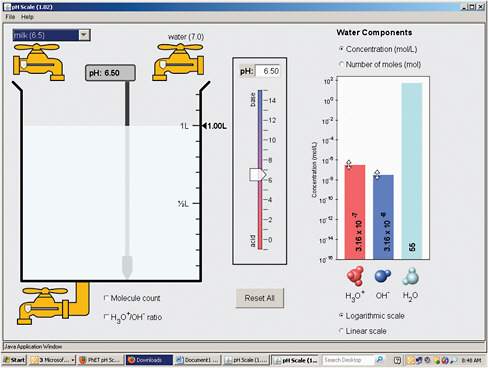
FIGURE 1-1 Example of a targeted simulation in PhET.
SOURCE: PhET Interactive Simulations, University of Colorado (http://phet.colorado. edu). Reprinted with permission.
Often, however, simulations are situated within a larger sequence of science instruction, referred to here as a curriculum unit. Although they provide the learner with more instructional support, curriculum units cannot be integrated as readily into existing curricula as standalone simulations can. They generally include multiple individual simulations that are integrated with other science teaching and learning activities, either online or in the classroom or the field. For example, in the ThinkerTools and Model-Enhanced ThinkerTools curriculum units, learners engage in an inquiry cycle that begins with a question about force and motion and includes developing a hypothesis, carrying out both real-world and simulated experiments to gather data, and using the data to evaluate their hypotheses and formulate a written law consistent with their data (see Chapter 2). Another example, the Interactive Multimedia Exercises (IMMEX), is an online library of simulated problem-solving activities that incorporates ongoing assessment of learner performance (see Chapter 5).
Representation of Information. Simulations also vary in the way they represent information. The learner may experience important variables or elements of the simulation in the form of alphanumeric text, graphs, symbols, or abstract icons. Although simulations of scientific phenomena typically include more than one of these different types of representations, they often rely heavily on only one or two types. Research on how different types of representations may influence science learning is ongoing (see Chapter 2).
Nature of What Is Modeled. A final dimension of simulations is what they model and how. Clark et al. (2009) propose that simulations can be classified into four subtypes along this dimension: (1) behavior-based models, (2) emergent models, (3) aggregate models, and (4) composite models of skills and processes.
Behavior-based models typically involve the user in manipulating the behavior of objects. For example, learners using the Interactive Physics simulation environment create objects of their choice, add behaviors (e.g., movement) and constraints (e.g., gravity and other forces), and observe the results. Emergent model simulations, such as those created with NetLogo, typically model complex systems. In these simulations, the learner controls simple decentralized interactions between many individual agents, leading to the emergence of a model of a complex scientific phenomenon. For example, in the NetLogo Investigations in Electromagnetism (NIELS) learning environment, the learner controls electrons and atoms (the agents) in a wire current to learn about electricity and resistance (see Chapter 2).
An aggregate model simulation allows the user to manipulate various objects or the computer code underlying them to model the aggregate-level behavior of a complex system. STELLA, an example of this type of simulation, has been used to model a variety of dynamic systems, including the relationships between predators and prey in an ecosystem, plant succession in a forest ecosystem, and carbon dioxide inflow and outflow into the atmosphere.
Composite models of processes and skills are simulated environments in which learners train for complex tasks. Originally developed for military training, such simulations are now used in medical and general education and training, allowing learners to simulate activities ranging from conducting a NASA mission to conducting a chemistry experiment (ChemLab) or dissecting a frog (e.g., Froguts).
Dimensions of Games
Clark et al. (2009) propose that games designed for science learning can be classified along four dimensions: (1) the science learning goal or goals targeted by the game, (2) the duration of the game, (3) the nature of participation in the game, and (4) the primary purpose of the game.
Science Learning Goals
Games and simulations have potential to advance multiple science learning goals, including motivation to learn science, conceptual understanding of science topics, science process skills, understanding of the nature of science, scientific discourse, and identification with science and science learning (these goals are discussed more fully in Chapter 2). Clark et al. (2009) propose that an important dimension of games is the science learning goal or goals they target. For example, the Minnesota Zoo and a small educational gaming company collaborated to create WolfQuest Episode 1: Amethyst Mountain. As a game intended for informal settings, one important goal is to be enjoyable, motivating interest in the game and attracting players. Underlying this goal is the goal of motivating players to learn about a specific scientific phenomenon—wolves and their ecosystems.2 There is suggestive evidence that the game advances both goals.
In WolfQuest, the player takes on the role of a wolf to explore a swath of Yellowstone National Park. The game is designed as the educational equivalent of a multiplayer, first-person shooter3 game. Players enter the game as wolf avatars, using their senses to track elk, pick out a weaker elk, and then hunt it down. They may have to defend a carcass against grizzly bears and other competitors. Players can go it alone or join a pack with their friends—but if they do that, they have to learn how to cooperate with other members of the pack.
Players’ responses to the game have exceeded the developers’ expectations (Schaller et al., 2009). About 4,000 people downloaded the game in the first hour after it was launched in 2007; since then, over 400,000 people in 200 countries have downloaded the game. A moderated online forum supports discussion about wolves, their ecosystems, and places to go for more information.
When Goldman, Koepfler, and Yocco (2009) conducted a web-based survey of players, most respondents indicated that they had sought out more information about wolves and their environments, suggesting that the game motivates interest in science learning. Analysis of players’ self-reported knowledge of wolves, their behaviors, and habitats before and after playing WolfQuest suggests that the game has a positive impact on conceptual understanding of wolves. In addition, a slight majority of respondents reported that they had engaged in science processes—such as model-based reason-
|
2 |
Chapter 2 provides a much more extensive discussion of the research on the effectiveness of various games and simulations in advancing science learning goals. The extended example here illustrates one dimension of games. |
|
3 |
In a first-person shooter game, the player experiences simulated combat through the eyes of a protagonist armed with a gun or projectile weapon. |
ing, testing and prediction, and collecting and using data—to respond to challenges in the game.
Duration of Participation. The second dimension categorizes the duration of game participation, mirroring a distinction in the commercial gaming world between short-term “casual games” and longer, often narrative-based, experiences, like those in WolfQuest. In this dimension, Clark et al. (2009) classified games into three types: (1) short-duration games, (2) fixed-duration games organized with specific start and stop times, and (3) ongoing participation games in which players become members of a persistent ongoing community in or around the game.
Short-duration games are designed to be played in only a few minutes, but players may play such games—or variations of them—repeatedly. These casual games are typically accessed from the Internet and may be played on handheld devices, such as cell phones, as well as on computers.
For three decades, many casual video games have organized their play around core physics concepts, allowing players to develop tacit, intuitive understandings of physics. Researchers developed the short-duration game SURGE with the goal of supporting players not only to develop these intuitive concepts, but also to connect them with more formal understandings of the motion of objects and Newton’s laws. SURGE incorporates formal physics ideas into the narrative, which revolves around navigating a player-controlled spaceship through a series of two-dimensional challenge levels. Learners use the arrow keys to apply impulses to the spaceship, thereby modifying its motion. They must apply one or more physics principles to achieve the objectives of the game, thinking carefully about navigation decisions to manage their limited fuel resources, avoid collisions, and minimize travel time (see Chapter 2 for discussion of the game’s effectiveness for learning). Similar short-duration, casual games designed for science learning include Supercharged, London Museum’s Launchball, ImmuneAttack, and Weatherlings.
River City is an example of a fixed-duration game integrated with other forms of science instruction in a middle school curriculum unit (see Box 1-3).
Along the dimension of duration, a third group of games is persistent. One example is Whyville, a multiplayer online game for preteens and teens with a predominately female player base of about 5 million (Mayo, 2009a). Players leave and return to the game at will over long durations of time (months or years), creating a persistent, virtual community.
The Whyville player enters a web-based cartoonlike two-dimensional world and is free to choose games and activities designed for both entertainment and learning. As in many other games, the player creates an avatar to represent her in the game (see Figure 1-2). The avatar chats with other players (text appears in balloons above the avatars), earns clams by completing
|
BOX 1-3 River City River City is structured around visits to the virtual world of River City that can be completed within a typical science class period of 45 minutes. For example, in one study, students spent approximately 12 science class periods using the curriculum unit, including 2 periods devoted to presurveys, 6 class periods visiting River City, and 4 days devoted to team design work and interpretation and whole-class discussion led by the teacher (Ketelhut, 2007). In River City, students travel back in time to help the mayor of River City figure out why the residents have fallen ill. The virtual 19th century industrial city is concentrated around a river that runs from the mountains downstream to a dump and a bog. Students’ avatars can interact with computer-based agents who are residents of the city, digital objects (e.g., historical photographs), and the avatars of other students. They encounter various stimuli, such as mosquitoes buzzing and people coughing, that provide clues as to possible causes of illness, and they can use objects in the world. For example, they can click on the virtual microscope and use it to visually examine water samples. Students work in teams of three or four to develop and test hypotheses about why residents are ill. However, each student sits individually at a computer, communicating with teammates through chat. Three different illnesses (water-borne, air-borne, and insect-borne) are integrated with historical, social, and geographic content, allowing students to develop and practice the inquiry skills involved in disentangling multicausal problems embedded in a complex environment (see Chapter 2 for discussion of research on the game’s effectiveness for science learning). River City’s approach of engaging the player in science inquiry projects in three-dimensional immersive worlds is shared by a number of other single and multiplayer science games, including WolfQuest, Quest Atlantis (described in Chapter 2), and Resilient Planet (described in Chapter 4). |
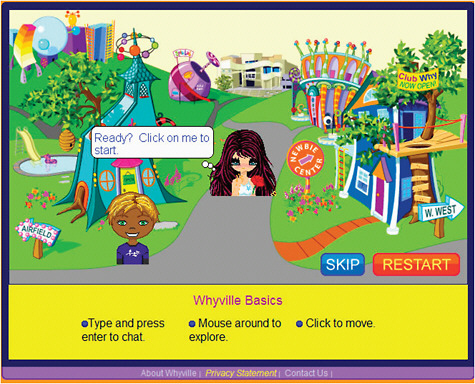
FIGURE 1-2 Example of an avatar in Whyville.
SOURCE: Numedeon, Inc. Reprinted with permission.
activities, and may spend the clams to refine and enhance her appearance and her personal space. Researchers have studied how the introduction of an epidemic of “Whypox” into this persistent game influenced learning about how disease is transmitted (see Chapters 2 and 3).
Nature of Participation. Players participate in most of the games described thus far through a virtual world, which may range from Yellowstone National Park (WolfQuest) to a historic American city (River City) to outer space (SURGE). A different group of games engages the player in the real world, supplementing action in this world with digital information. Clark et al. (2009) refer to these as augmented reality games.
In MIT-augmented reality (MITAR) games, multiple players use location-aware handheld computers that add a digital layer of information to the game that happens in the real world, frequently outdoors. Players navigate the physical space and work collaboratively to explore and solve complex problems during the game. MITAR games include Savannah, in which players
become lions who prowl in real space, and TimeLab 2100, in which players merge observations of the real world made outdoors with information about climate change from their handheld computers (Massachusetts Institute of Technology, 2010).
Purpose of the Game. Clark et al.’s (2009) fourth dimension of variation in games is the intended purpose of the game. They propose that games can be classified as (1) fully recreational games that are designed for entertainment purposes (e.g., World of Warcraft); (2) serious games that maintain many design elements of recreational games but have a more purposeful curricular focus, such as Resilient Planet; (3) serious games designed for use in classroom settings, such as SURGE; and (4) assessment games that are designed primarily as a vehicle for assessing existing knowledge and understanding, rather than as a learning platform. This report focuses primarily on categories 2 and 3—serious games designed for science learning.
Clark et al. (2009) note that these dimensions are not mutually exclusive, nor are they exhaustive. Any given game may contain elements from multiple dimensions while weighting toward one in particular.
The Potential of Simulations and Games for Learning
Simulations and games appear to have great potential to address the science education challenges identified at the beginning of this chapter. A growing body of research is beginning to illuminate how people learn science and how best to support that learning (National Research Council, 2005b, 2007a). This research indicates that developing proficiency in science is much more than knowing facts. Students need to learn how facts and ideas are related to each other within conceptual frameworks. Although good teaching can facilitate this process, developing conceptual understanding of science is difficult and takes time. Engaging students in the processes of science—including talk and argument, modeling and representation, and learning from investigations—aids development of proficiency. These science processes (often called science inquiry) motivate students by fostering their natural curiosity about the world around them, encouraging them to persist through difficulty to master complex science concepts. New science teaching approaches that carefully integrate science processes with other forms of instruction and target clear learning goals have been shown to increase interest in science, enhance scientific reasoning, and increase mastery of the targeted concepts (National Research Council, 2005b).
However, students have difficulty with all aspects of inquiry, from posing a research question to designing an investigation to building and revising scientific models (National Research Council, 2005b). They often become
confused when allowed to engage in open-ended investigations and require guidance to make meaning from these activities (Mayer, 2004). Students’ difficulties, in turn, place new demands on science teachers for deep content knowledge and effective teaching strategies. States and school districts have been slow to adopt inquiry approaches to science instruction because of these challenges and because current state science standards and assessments emphasizing coverage of many science content topics may leave little time for science process activities.4 Practical and logistical constraints, such as a lack of laboratory facilities and supplies or a long distance from outdoor learning sites or science museums, can also slow movement toward this promising new approach.
Computer simulations and games can support the new, inquiry-based approaches to science instruction, providing virtual laboratories or field learning experiences that overcome practical and logistical constraints to student investigations. They can allow learners to visualize, explore, and formulate scientific explanations for scientific phenomena that would otherwise be impossible to observe and manipulate. They can help learners mentally link abstract representations of a scientific phenomenon (for example, equations) with the invisible processes5 underlying the phenomenon and the learner’s own observations (Linn et al., 2010). Simulations and games provide intermediate models that students may be able to understand more readily than more detailed but more complex models. For example, Hmelo-Silver et al. (2008) propose that use of a simulation allowed middle school science students who were studying an aquatic ecosystem to look beyond the surface structures and functions they could see when an aquarium served as a physical model. They suggest that interacting with the simulation allowed students to mentally create connections between the macro-level fish reproduction and the micro-level nutrification processes in the aquatic ecosystem.
As digital technologies, both simulations and games appeal to young people who are increasingly immersed in all forms of digital media (Rideout, Foehr, and Roberts, 2010). K-12 students responding to national surveys indicate that they would like to learn science and mathematics through simulations and video games (Partnership for Reform in Science and Mathematics, 2005; Project Tomorrow and PASCO Scientific, 2008).
Games that successfully integrate fun and learning may have especially great potential to motivate young people for science learning, supporting inquiry approaches in the context of the popular activity of computer gaming. Games can spark high levels of engagement, encourage repetition and
practice, and motivate learners with challenges and rapid feedback (Clark et al., 2009). Games that embed ongoing assessment and feedback offer the possibility of individualizing instruction to match the progress and learning needs of the individual learner (see Chapter 5). Such games can motivate learning at various times and places, blurring the boundaries between learning in and out of school (see Chapters 3 and 4). Increasing learning time, focusing instruction toward individual learning needs and opportunities, and providing ongoing formative feedback have been shown to support learning generally and science learning specifically (National Research Council, 2000, 2004). Recognizing this potential, blue-ribbon panels have recently called for increased use of games to boost U.S. students’ science learning (Federation of American Scientists, 2007; Thai et al., 2009).
Limits of the Research
Research that could help achieve the potential of simulations and games to improve science achievement is limited. When compared with subject areas such as reading and mathematics, there is relatively little research evidence on the effectiveness of simulations and games for learning. As in any newly-emerging field, there is a tension between development and research. Creative game designers unfamiliar with education research focus on developing new games and rarely study the effectiveness of their products, whereas cognitive scientists may create a game or simulation for the specific purpose of investigating its effects on learning.6
To date, the majority of research on learning through interaction with games and simulations has been at a proof of concept stage, meaning that researchers have sought to prove that a functioning game or simulation can engage students in inquiry, enhance motivation, or advance another science learning goal (Clark et al., 2009). Only a few studies clearly articulate the learning goal of the simulation or game; the theory of action about how the goal will be advanced; and the measures, analyses, and data used to assess learners’ progress toward the goal. Most studies lack control groups, making it difficult to conclude that the game or simulation caused any learning gains observed among the study participants. In addition, researchers often develop and test curriculum units that integrate simulations and games with other science learning activities, but do not distinguish the unique effects of the game or simulation from the overall effects of the curriculum unit.
Another challenge is that researchers from different disciplines have
|
6 |
Although they are less knowledgeable about research than cognitive scientists or other academic developers of simulations or games, commercial game publishers have expertise in marketing and distributing their products that academic developers often lack (see Chapter 6). |
used various methods to study the effectiveness of games and simulations in advancing science learning goals. Common definitions and terminology are lacking, not only because of the variety of disciplinary perspectives and science learning goals, but also because of rapid evolution in the design and technology of games and simulations. All of these factors make it difficult to integrate findings across studies and build a coherent base of evidence (see Chapter 2 for further discussion).
CONCLUSIONS
The science achievement of U.S. elementary and secondary students is uneven and has not improved greatly over the past decade. This trend is worrisome, because solving pressing societal issues will require both a scientifically informed citizenry and a robust scientific and technical workforce. Students’ uneven achievement is caused partly by current science education approaches, which often fail to motivate students for science learning.
A growing body of research indicates that engaging students in science processes (inquiry) can motivate and support science learning. However, because inquiry approaches can be difficult for students, teachers, and schools, they are rarely implemented. Computer simulations and games have great potential to catalyze and support inquiry-based approaches to science instruction, overcoming curricular and logistical barriers. Computer simulations and games appeal to young people who enjoy interacting with computers and playing digital games outside of school.
Conclusion: Computer simulations and games have great potential to catalyze and support inquiry-based approaches to science instruction, overcoming current barriers to widespread use of these approaches. As digital technologies, computer simulations and games appeal to young people who are increasingly immersed in digital media throughout the day.
Simulations and games share several important characteristics. Both are both based on computer models that simulate natural, engineered, or invented phenomena and most games incorporate simulations as part of their basic architecture. At the same time, each technology has unique features.
Conclusion: Games and simulations lie along a continuum. Both are based on computer models and allow user interactions, yet each also has unique features. Simulations are dynamic computer models that allow users to explore the implications of manipulating or modifying parameters within them. Games are played in informal contexts for fun, incorporate explicit goals and rules, and provide feedback on the player’s progress. In a game, the player’s actions affect the state of play.
For over 30 years, developers have created a variety of simulations for the purpose of supporting science learning. More recently, researchers and game designers have begun to create games that aim to integrate science learning with enjoyment.
Conclusion: Developers and researchers have created a wide variety of simulations and games that vary along a number of dimensions, such as the degree of user control they provide, how information is represented, the science learning goals targeted, duration, and intended purpose.
In this chapter, the committee used the dimensions of simulations and games identified by Clark et al. (2009) to elaborate upon its definition of simulations and games and illustrate the variety of simulations and games. However, the committee has questions about the relationship of some of these dimensions to science learning. For example, the committee agrees with Clark et al. (2009) that the degree of user control in a simulation may influence its capacity to support learning, but notes that the degree of user control may be an important dimension influencing science learning in a game as well. In addition, the committee questions whether the duration of a game strongly influences its effectiveness for science learning. Research indicates that the short-duration game SURGE can help students learn physics concepts (Clark et al., 2010), and the amount of time students spend playing the fixed-duration game River City may vary, as students have requested and been given access to play the game after school and during lunch hours, increasing play time (see Chapter 3). This extended time is elicited by another attribute of the game—its narrative, or story, and its related capacity to immerse the player in the simulated environment.
The question of which attributes of simulations and games are important for student learning can be addressed only by reviewing the available research. The following chapter provides such a review, along with a preliminary list of design features of simulations and games that appear to influence learning.


