
4
Simulations and Games in Informal Learning Contexts
This chapter begins by defining the informal contexts in which individuals interact with simulations and games. The second section discusses opportunities for learning with simulations and games that are offered by informal contexts, and the third section describes constraints that limit the use of simulations and games in these contexts. The fourth section focuses on approaches to overcoming these constraints, so that simulations and games can serve as a bridge, linking science learning across and between informal and formal contexts. The chapter ends with conclusions.
INFORMAL LEARNING CONTEXTS
Science learning in informal contexts differs from learning in formal contexts, such as classrooms or laboratories, in many respects (National Research Council, 2009). Squire and Patterson (2009) compared some of the key differences related to the use of games for learning in the two different contexts (see Table 4-1). The authors caution that comparing these differences along particular dimensions (such as how time is structured) is not intended to put informal contexts “in response” to formal contexts; informal contexts may be as important as formal settings in people’s attitudes toward and experience of science (Barron, 2006; Crowley and Jacobs, 2002; National Research Council, 2009). They also note that formal educational contexts may vary considerably. Nevertheless, in general, informal science educators have more freedom than formal science educators in the science learning goals they pursue, how they pursue them, and the extent to which they need to appeal to audiences that can choose how to spend their time.
Informal contexts for science learning with simulations and games are diverse, varying along a number of dimensions, including the physical setting
TABLE 4-1 Comparison of Informal and Formal Contexts for Learning with Games
|
|
Informal Contexts |
Formal Contexts |
|
Time Structure |
Flexible |
Rigid |
|
Participation |
Voluntary |
Compulsory |
|
Educational Goals |
Emergent |
Largely defined |
|
Age Grouping |
Flexible |
Largely age divided |
|
Degree of Authenticity |
Potentially high |
Generally low |
|
Uniformity of Outcomes |
Little |
High |
|
Disciplinary Boundaries |
Flexible |
Fixed |
|
SOURCE: Squire and Patterson (2009). Reprinted with permission. |
||
(e.g., a home, a school classroom hosting an after-school club, the outdoors), the social and cultural influences, and the technology supporting the simulation or game. Another dimension is the degree to which an individual’s interaction with a simulation or game is structured, ranging from completely unstructured game-playing at home to highly structured workshops (Squire and Patterson, 2009).
OPPORTUNITIES PROVIDED BY INFORMAL SETTINGS
Squire and Patterson (2009) observe that informal science educators are largely free to pursue a variety of science learning goals, from increasing ethnic diversity among scientists, to increasing interest in science careers, to increasing the scientific literacy of the general population. This diversity in goals, together with the diversity of informal learning contexts, presents both an opportunity and a challenge. The opportunity is that educational game designers are free to create experiences that appeal to individual students’ interests or span home, school, and after-school contexts. At the same time, however, this diversity of goals, contexts, and methods for reaching those goals makes for a fragmented field.
Freedom to Pursue Diverse Learning Goals
As an example of the opportunities for games in informal settings, DeVane, Durga, and Squire (2009) describe their attempts to build systemic ecological-economic thinking among Civilization game players in an after-school gaming club.1 This curriculum linked ecological, economic, and
political concerns around a gaming series based on global sustainability (Brown, 1992). Such a curriculum might have been difficult to implement in schools that teach biology but not ecology, or that do not link either biology or ecology to economics and political science. DeVane, Durga, and Squire (2009) adapted Civilization to connect these topics, addressing food shortages, agricultural policy, trade relations, and environmental concerns. They reported that participants developed a type of systemic thinking about these topics across geopolitical systems (see Squire and Durga, in press). Pursuing this kind of broad educational goal may be much more feasible in informal settings than in classrooms focusing on individual academic disciplines.
As a voluntary after-school option, participants chose to take part in the gaming club over playing basketball, cooking, or scouting. Reflecting its voluntary nature, many students resisted taking pretests or posttests, making assessment difficult. As a result of this voluntary nature, informal educators are much more concerned with building and sustaining student interest than most formal educators (National Research Council, 2009). In fact, informal science educators have the unique opportunity to pursue goals that would be difficult to achieve in formalized settings.
Individualized Learning
When used in informal settings, games and simulations offer students opportunities to develop highly individualized interests and pursuits. Researchers have found that many students who participate in informal educational programs using information technology develop deep interest and expertise in areas ranging from computer programming to historical modeling (Bruckman, Jensen, and DeBonte, 2002; Resnick, Rusk, and Cooke, 1998; Squire, 2008a, 2008b). Such students develop learning communities that—like games culture in general—are built on a valuing of expertise (Squire, 2008b). In these learning communities, one’s background or formal educational credentials are less important than one’s ability to meet (and at times push the boundaries of) community norms. To illustrate this potential to individualize learning, Figure 4-1 depicts the trajectory of game players as they move from being competent players to becoming expert designers in Apolyton University. Apolyton University is an online informal learning environment that uses the narrative of a university and offers Civilization players various courses leading to credentials (“master’s degrees” in the story line). Players participating in courses that require extended game-playing (upward of 100 hours) develop personalized and idiosyncratic skills that arise from an intersection among their interests, the affordances of the game, and the pathways made available in the game-playing community (Bruckman, Jensen, and DeBonte, 2002; DeVane, Durga, and Squire, 2009; Resnick, Rusk, and Cooke, 1998).
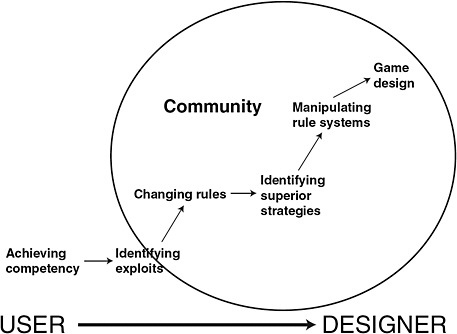
FIGURE 4-1 Learning trajectories from user to designer among gamers.
SOURCE: Squire and Patterson (2009). Reprinted with permission.
Generating Interest
The opportunity games provide to support individualized learning cannot be realized without grappling with the related opportunity and challenge of building and sustaining the learner’s interest. Informal learning environments—like games themselves—ultimately are fueled by interest- or passion-driven learning. Like informal science educators generally, designers of games for learning have the task of designing enticing learning experiences that compel learners to learn more. For example, Klopfer (2008) described scientific mystery games at museums in which pairs of parents and students paid money to attend game-based learning workshops during their free time. Because individual learning is driven by individual interests, Squire and Patterson (2009) propose that the development of student interests and identities is a primary goal for informal science educators.
Event-Driven Learning
Games provide an opportunity for players to learn through virtual experiences, including particular virtual events. Kafai et al. (in press) show how
the shared experience of the Whypox outbreak in Whyville provided a basis for shared community membership, engagement, and learning. Although other informal science learning activities, such as robotics or computer programming competitions, are also event driven, Whypox was unique in mobilizing hundreds of youth in authentic inquiry in real time to identify the cause and to minimize the impact of a disease that was personally meaningful to them. Educators might want to further develop the potential of this kind of event-driven learning. The multiple forms of participation enabled by informal learning communities around games could advance various learning goals, ranging from the development of deep expertise through long-term sustained participation to simply raising interest through short-term experiences.
Distributed Mentorship
In classrooms, the teacher may serve as a mentor and guide to support student learning. Educational games provide opportunities to distribute mentoring roles more widely to other adults, peers, or family members—in both formal and informal learning contexts. For example, Nulty and Shaffer (2008) found, in a study of fourth- and fifth-grade students who played Digital Zoo in a school classroom, that adults other than the teacher mentored students and enhanced their learning. The game engaged students in designing digital characters for an animated film. Students worked in teams with adult “design advisers,” and the game concluded with each team of players presenting their design recommendations to other adults, who played the role of clients. Pre- and post-interviews with each player focused on the set of skills, knowledge, identity, values, and epistemology that engineers develop in their professional training. Players who reported that the adult mentors (design advisers and clients) helped them to think about their designs or themselves and their job differently were significantly more likely to demonstrate an increased understanding of the engineering frame. The authors concluded that adult mentors played a key role in helping the players understand engineering. Similarly, Kafai et al. (in press) noted the importance of mentors in their study of Whypox.
Opportunities for distributed mentorship are especially great when games are played in informal contexts. Researchers studying informal gaming have noted the development of learning communities and the importance of mentorship in these communities (Kafai et al., in press; Klopfer, 2008; Squire, 2008b; Squire and Patterson, 2009). As noted above, learners in these communities value expertise more than players’ background or formal educational credentials. Games designed for science learning could potentially distribute teaching across the community, so that there are no teachers per se, but rather a network of peers and mentors who coach one another. Such a distribution of teaching and mentoring roles has been documented in studies of children
playing commercial games for fun at home (Ito et al., 2009; Stevens, Satwicz, and McCarthy, 2008). For example, Stevens, Satwicz, and McCarthy (2008) document siblings teaching each other as they play games, including situations in which a younger sibling serves as a key resource to help an older sibling pursue her goals in the game. Steinkuehler (2008) found that the ways in which massively multiplayer video games structure participation appears to foster the collaborative problem solving that is critical to learning in these games. To date, however, the design features that support these kinds of participation have not been sufficiently explored (Steinkuehler, 2005).
Differentiation of Roles and Expertise
A key opportunity for informal science education is to create contexts for collective participation without identical learning outcomes for each student (Collins and Halverson, 2009). Informal science learning contexts can support the co-construction of learning goals between learners and designers. Learners can—and should—have significant opportunities to pursue interests and develop unique identities as consumers and producers of information and as “professionals” in domains.
Research suggests that role-playing games are a good tool and context for creating such learning experiences. Shaffer (2006), for example, emphasizes the active nature of role play in extended games as players integrate knowledge, skills, attitudes, and identity under an “epistemic frame.” In Schaffer’s view, epistemic frames are the ways of knowing, of deciding what is worth knowing, and of adding to the collective body of knowledge and understanding in the virtual community of the game. As players confront increasingly challenging situations, they embark on trajectories from novices to experts. Notably, there is frequently no single model “expert” in a given game community but multiple ways that one can perform “being an expert” (Steinkuehler, 2006). In their most advanced forms, games frequently include opportunities for players to write about and within the game and support learning trajectories that lead toward legitimate participation in social relations beyond the game context itself.
Developing Science Literacy
Squire and Patterson (2009) propose that the use of games for informal science learning provides an important opportunity to improve the general scientific literacy of the population. They argue that understanding and responding to current social and scientific challenges (e.g., climate change, pandemics) requires ongoing attention to and understanding of scientific discoveries. It is no longer possible for citizens to learn all they need to know about science in school or in higher education. However, the rate of “scientific
civic literacy” in the United States is barely 20 percent (Miller, Pardo, and Niwa, 1997). The definition of scientific civic literacy developed by Miller (1998) may be particularly useful for informal science educators seeking to design games around key problems (like pandemics) that mobilize a citizenry toward action. In this definition, scientific civic literacy requires
-
an understanding of critical scientific concepts and constructs, such as ecosystems, the molecule, DNA;
-
an understanding of the nature and process of scientific inquiry;
-
a pattern of regular information consumption; and
-
a disposition toward taking action to make change in one’s lifestyle as necessary.
The weak state of current scientific civic literacy may suggest that the field of science education should increase its attention to the goal of developing citizens who are disposed toward actively engaging in civic affairs. There is reason to hope that digital games and simulations can help to advance this goal. In a recent survey of scientific civic literacy, the consumption of informal science materials (science magazines, television programs, books, science websites, museums) trailed only the completion of an undergraduate science course as a predictor of scientific civic literacy (Miller, 2001, 2002). The participatory nature of games, which is hypothesized to create dispositions toward taking action in the world (see Thomas and Brown, 2007), may be particularly well suited to fostering this disposition.
CONSTRAINTS OF INFORMAL SETTINGS
Social, Cultural, and Technical Constraints
Ito (2009) observes that gaming is predominantly a social and recreational activity and that any effort to introduce games designed for learning must consider the informal contexts that structure game play. As discussed below, these contexts influence children’s and adolescents’ access to games, the extent to which they play them, and the potential of games to support science learning.
One important context is everyday social play among local peers and siblings. Recent studies document that gaming is practically ubiquitous among U.S. children and teens and is associated more with social integration than isolation (Ito and Bittanti, 2009; Kahne, Middaugh, and Evans, 2009; Kutner and Olson, 2008). The research also shows that young people choose to play games that are popular among their peers and that recreational gaming is increasingly popular across genders and ages (Ito and Bittanti, 2009; Stevens, Satwicz, and McCarthy, 2008). Another context consists of
intentional gaming clubs and communities, both online and local. Participants in intentional gaming constitute a minority of the larger universe of game players. They are usually boys and often distinguish themselves from more casual and recreational gamers as gamers or geeks. As noted above, these contexts support informal learning. Researchers have observed highly focused, interest-driven learning and creative production among these communities of intentional gamers (Ito and Bittanti, 2009).
For most children and youth, the context of family and home is the way in which they obtain access to gaming consoles, games, and the time and space to play them. Research on media access indicates that, while game consoles and entertainment titles are widely available, even in lower income homes, personal computers and learning software are not as widespread (Buckingham and Scanlon, 2002; Giacquinta, Bauer, and Levin, 1993; Roberts and Foehr, 2008). The presence of educational games or other types of learning software in their homes does not enhance the social standing of children and youth in their peer networks.
Although siblings and parents sometimes play together, they also compete for access to home entertainment resources, and most parents have established various rules and limits surrounding game play. Generally, both parents and children view gaming as an activity in opposition to academic learning (Buckingham, 2007; Horst, 2009; Ito and Bittanti, 2009; Stevens, Satwicz, and McCarthy, 2008). Such views, as well as the family’s ability to pay for gaming technology and game titles, could constrain the potential of games to support shared learning within the family.
Finally, the commercial gaming industry is an important influence on recreational gaming that may constrain the potential of games to support science learning. Any effort to introduce games designed for informal science learning will have to compete with the production and marketing of commercial games for young people’s attention. History has demonstrated the challenges of inserting learning software and educational agendas into practices already saturated with commercial media culture (Buckingham, 2007; Buckingham and Scanlon, 2002; Giacquinta, Bauer, and Levin, 1993; Ito, 2009; Seiter, 2005). While independent, educational, and civic games have been a marginal but persistent feature of the commercial games landscape, there is not yet a robust market for public interest games that is comparable to the market for television or radio.
Games as Enrichment Activities
Home and family contexts may encourage and/or constrain access to games and the use of games for science learning. Many parents support their children’s informal science learning by bringing them to visit museums, zoos, aquariums or science centers, some of which charge admission. Such
informal learning centers tally millions of visitors annually (National Research Council, 2009). Historically, parents have also viewed certain forms of gaming—such as Chess and Scrabble—as valuable enrichment activities. Such games are purchased by adults, are culturally validated as learning games, and supported though clubs and competitions. In the 1980s, many parents purchased—and encouraged their children to play—electronic learning games, under the rubric of “edutainment” that they similarly viewed as enrichment activities. Games such as Civilization or those under The Sims and Lucas Learning labels were entertainment-oriented but had a stamp of approval from parents and educators and often crossed over to the school and enrichment space (Ito, 2009).
Young children and some teens are open to adult guidance in such informal learning activities, and welcome parents’ game purchases and encouragement in game play. For example, Klopfer (2008) describes the shared enthusiasm of parent-child pairs who participated in a mystery game workshop at the Boston Museum of Science. The activity included children of late elementary school age and young adolescents. However, parental involvement can have mixed effects on young people’s interest in and use of games. Researchers have found that many children, as they enter their late elementary and teen years, become more resistant to adults dictating their media choices (Ito and Bittanti, 2009). This is why the edutainment market is largely targeted toward early childhood and why games with an explicit learning agenda have a hard time sustaining interest among older children and adolescents playing at home.2 Furthermore, unlike mainstream recreational games, these enrichment-oriented games suffer from certain class associations and are culturally marked as more highbrow media forms. This means that any attempt to use this genre of games to support science learning must carefully consider issues of class distinction, accessibility, and status in childrens’ peer cultures.
Studies of home and family dynamics have demonstrated that parental cultivation of enrichment activities is associated with middle-class parenting styles (Lareau, 2003; Seiter, 2007). As a result of these cultural stereotypes, games designed for science learning could potentially alienate certain populations of children and adolescents. In private homes, these kinds of socioeconomic and cultural distinctions are in full force, in contrast to the equalizing efforts made in public schools. After-school spaces and computer clubs can function as mediating contexts in broadening access to these enrichment-oriented genres of gaming.
|
2 |
There are a few examples of educational games targeted to adolescents that have sold successfully (see Chapter 6). |
Research Constraints
Squire and Patterson (2009) identified several constraints on research and development of simulations and games to support informal science learning. The unique qualities of informal science education, even in its most structured settings, frequently run counter to the assumptions of modern statistical methods used in education research. These qualities—including diverse, participant-driven learning goals, emphasis on developing participants’ interest, and models of flexible participation—contrast sharply with education research methods focusing on uniform learning outcomes that are specified in advance, fidelity in implementing an educational intervention, and isolation of variables. A lack of assessment methods aligned with these unique features of informal learning environments also constrains research. For example, as noted above, some adolescents who voluntarily joined in several sessions of gaming using a modified version of Civilization resisted taking pretests and posttests (DeVane, Durga, and Squire, 2009). This problem has also been reported by other researchers investigating the use of games for learning (Hayes and King, 2009; Steinkuehler and King, 2009).
In response to these constraints, researchers studying the effectiveness of games for learning in informal settings have frequently preferred case studies or other methods that enable them to gain longitudinal data, understand the role of the participant in defining the learning experience, and examine how participants’ identities are shaped beyond the learning experience. Although experiments are possible in informal learning environments, the importance of user choice in activities still creates challenges. It is difficult, for example, to administer a uniform task to multiple participants and expect meaningful results. However, the underlying logical problems of user-defined learning goals or uniformity of treatment still need to be addressed.
Development Constraints
One type of constraint on development of games for informal science learning arises from the constraints of formal classroom environments. This reflects the reality that most games focused on science learning have been developed for—and tested in—classrooms. Squire and Patterson (2009) illustrate this constraint through the example of the game Resilient Planet (see Box 4-1).
Resilient Planet appears capable of advancing many of the science learning goals outlined in Chapter 2, including the goal of motivation that is so critical in informal learning environments. It may generate excitement, interest, and motivation by leveraging the allure of underwater exploration. It may increase conceptual understanding, because players are required to construct arguments about the causes of various phenomena, such as declines
|
BOX 4-1 Operation: Resilient Planet In Resilient Planet, a single player pilots a remote-operated vehicle through a three-dimensional underwater world (see Figure 4-2) to carry out a mission to protect endangered turtles. The player steers the vehicle to retrieve underwater cameras that provide information about the behavior of the turtles, including their proximity to an oil-drilling platform at different times. The information obtained is used to remove the platform, using explosives, at a time when the turtles will not be nearby. While carrying out the mission, the player gathers information about marine phenomena, conducts scientific experiments, collects animal observational data, and watches video from real National Geographic researchers. The game was developed by the JASON Project, a not-for-profit science education subsidiary of National Geographic and Filament Games. It is integrated into the JASON ecology curriculum (Operation: Resilient Planet) for grades 5-8. In another mission, the goal is to understand the causes for dramatic shifts in shark and monk seal populations in Hawaii. The player first chooses whether to study sharks or seals at the Papahānaumokuākea Marine Sanctuary and then collects data for inclusion in a scientific argument. The data are chronologically displayed in a cartoon box. After several data items have been collected, the player organizes the information to make an argument and presents the argument to a virtual researcher. A cartoon scenario of the player interacting with the researcher transpires as a storyboard sequence that influences what happens next in the game. The player also listens to and reads information provided by other virtual researchers, who provide assistance in completing the mission. |
in the population of monk seals. However, this game, like many educational games, was designed for use in schools. Reflecting the constraints of school settings, the game is relatively linear and lasts only a few hours (for example, the mission focusing on shark and monk seal populations lasts one hour). Although the designers included a “Free Dive” mode that allows learners to freely explore the underwater world, most players focus on carrying out the short missions. If it were designed specifically for informal environments,
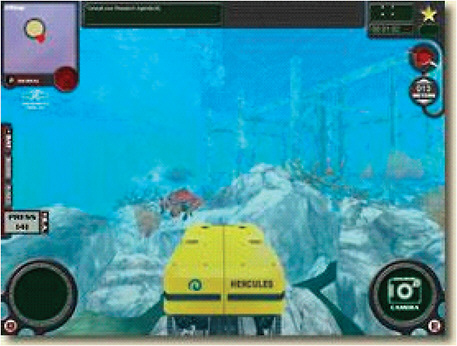
FIGURE 4-2 A remote-operated underwater vehicle in Operation: Resilient Planet.
SOURCE: The JASON Project. Reprinted with permission.
Resilient Planet might include more open-ended game play, more collaborative problems, and enhanced ties outward from the game experience toward scientific communities of practice.
The Challenge of Integrating Interest and Learning
Perhaps the greatest potential constraint to development of games for informal science learning is the difficulty of integrating participants’ interest and learning. Squire and Patterson (2009) suggest that the major challenge for game designers is to create learning experiences that leverage learners’ interests and goals while also advancing science learning goals. Studies in the late 1990s of play with such games as The Magic School Bus Explores the Human Body, DinoPark Tycoon, and The Island of Dr. Brain, found that players rarely oriented to the scientific content of the game without the explicit intervention of an educationally minded adult. When played on their own, these games were absorbed into the dynamics of children’s and adolescents’ peer culture, and players were more focused on “beating” the game and
playing with the special effects than engaging with the scientific content (Ito, 2009). The popular science focus of these games appeared more important for legitimizing the games in the eyes of parents, who then provided them to their children, than as a focus of interest for the children. Unlike more traditional media, games are highly responsive to player intentionality and context, and children can easily circumvent engagement with content when playing with an entertaining simulation or multimedia adventure.
ALTERNATIVE APPROACHES TO BRIDGING LEARNING ACROSS CONTEXTS
A Variety of Approaches
Researchers, game developers, and community leaders are developing and testing several approaches to addressing the constraints described above so that games can support learning across formal and informal contexts. For example, the development of games that can be easily accessed from the web using cell phones or other mobile devices may reduce the current technical, social, and cultural constraints on educational gaming in homes while also reducing technical constraints on classroom use (see Chapter 3). The number of web-based educational games is growing rapidly, opening the possibility of students using their cell phones to follow their particular science learning interests at any time or place (Osterweil, 2009; see Chapter 6).
At the same time, some games designed for formal environments are supporting learning outside the usual time and space of the science classroom. For example, Dede (2009b) reports that students using River City were eager to spend extra time playing the game during lunch hour or before or after school. He notes several challenges to assigning or allowing voluntary access to games or simulations introduced in school for use at home. First, as noted above, not all students have ready access to the technology infrastructure needed to access and play the game. In addition, if the game or simulation has multiple users, then the possibility exists of students engaging in inappropriate behavior when unsupervised (e.g., online bullying, swearing).
To address these problems, the developers restricted use of the River City curriculum to in-school settings (class, lunch period, before or after school) in which an adult was present as monitor. They also created an automated “swear checker” that would respond to the use of bad words in student chat, reminding them to watch their language. They provided teachers each morning with chat logs of their students from the previous day so that the teachers could closely monitor student activities to encourage appropriate, on-task behaviors (Clarke and Dede, 2009). Students quickly realized that they were more closely monitored in the multi-user virtual environment than in
other types of project-based learning, in which the teacher could not closely supervise every group’s work simultaneously.
Implementation of the Taiga Park curriculum in Quest Atlantis offers another approach to overcoming the constraints outlined above. Barab (2009) reports that all teachers using the curriculum are required to participate in online professional development to familiarize them with the technology, the range of learning opportunities in the curriculum, and the inquiry-based teaching approaches that are most likely to support successful implementation of the curriculum. Continued learning is supported through an online forum in which teachers can share experiences. Participating teachers register each child who interacts with the curriculum and obtains parental consent for the child’s participation in the research associated with the curriculum. The registration process allows students to log on to a secure website and interact with the curriculum in the classroom (grades 4-8), at home, or in another informal setting. The curriculum has been successfully implemented in Boys and Girls Clubs and other after-school centers, as well as in classrooms.
In addition to the core learning activities, the curriculum includes a teacher toolkit and voluntary activities, such as architecture, capturing fish, and making music, designed to allow students to pursue individual interests. To date, the curriculum has over 45,000 registered users in the United States, Australia, Canada, Singapore, Uganda, and other countries.
Barab (2009) emphasized that learning gains demonstrated among young people who play Taiga Park are not realized because the game is fun to play. Instead, players are motivated to learn because they recognize that their actions have a significant impact on the virtual world and that what they know is directly related to what they are able to do and ultimately who they will become. They experience feelings of identity with their avatars and the larger virtual world. Many features of the game are designed to build identity and motivate knowledge-seeking. For example, a player “owns” pieces of evidence, such as a crumpled-up piece of paper with a picture illustrating why fish are dying, and players are required to take on the views of the different competing groups in the game (loggers, indigenous farmers) as they question characters in the game.
The Importance of Middle Space
Research to date suggests that “middle spaces,” such as recreation centers and after-school programs, can play an important role in supporting the use of games for learning. These spaces are less rigid than formal classroom environments, avoiding some of the constraints identified in Table 4-1, but they provide more structure and support for learning than may be available in the home or another unstructured setting. As noted above, researchers have observed highly focused, interest-driven learning and creative production
among intentional gaming communities (Ito and Bittanti, 2009). An after-school gaming club was the setting that DeVane, Durga, and Squire (2009) used to test a modified version of Civilization, finding that the game supported development of systemic thinking about ecology and economics.
Dede (2009c) also observes that school clubs offer fertile ground for science games and simulations. As discussed in the previous chapter, he notes that science games and simulations can motivate students by allowing them to modify the game and the learning experience, referred to as modding (Annetta et al., 2009).
Middle spaces can help to overcome the social, cultural, and technical constraints outlined above, engaging students from low-income families, in which parents are less likely to introduce enrichment activities at home (Ito, 2009). For example, the Digital Youth Network in Chicago is a hybrid digital literacy program that creates opportunities for urban youth to engage in learning environments that span both school and out-of-school contexts. The project provides access and training in the use of new media literacy tools, activities that require media literacy to accomplish goals, and a continuum of mentors (high school through professionals). At the middle school level, the program includes mandatory in-school media arts classes and optional after-school pods in which students may build on what they learn in school and identify skills of their choice to explore in depth. The high school component allows youth to focus their development on an individual medium; youth who excelled in the middle school program are given internship opportunities while serving as mentors for middle school students (Digital Youth Network, 2010).
Created as a design experiment, the Digital Youth Network includes an extensive program of research using a variety of qualitative and quantitative methods. Survey responses indicate that participants, by the end of sixth grade, report a greater diversity of technological fluency-building activities than a sample of middle school (grades 6-8) students in Silicon Valley who had high access to computing tools at school and at home. In addition, participants reported an increase from the beginning of sixth grade to the end of seventh grade in the number of software tools for which they felt they possessed an expertise and competency to teach others. After-school participation in the pods, defined as participating in one or two years of the after-school sessions, correlated with an increase in depth of knowledge. Among students who attended these sessions, increased pod participation resulted in much higher reported rates of completing media literacy activities (e.g., participating in an online forum) (Digital Youth Network, 2010).
An example of an online middle space is the learning community formed around the web-based programming environment Scratch (Resnick et al., 2009). Like the Digital Youth Network, the environment aims to actively engage young people in producing, not merely consuming, digital media.
It is designed to introduce young people to programming in a fun and engaging way by supporting many different types of projects (stories, games, animations), making it easy for players to personalize their projects (e.g., by importing photos), and encouraging online communication. The easy-to-use programming language allows participants to support, collaborate, and critique one another and build on one another’s work. Since its May 2007 launch, the learning environment has attracted 632,877 registered users, and participants have uploaded over 1.3 million projects. The core game audience is between the ages of 8 and 16, including high concentrations of 13- and 14-year-olds (see http://stats.scratch.mit.edu/community).
CONCLUSIONS
Although there is considerable variation within formal and informal contexts for science learning, informal learning contexts overall differ from formal learning contexts overall in several respects.
Conclusion: Informal science learning environments have a number of unique characteristics when compared with formal learning environments, including the freedom to pursue a wider variety of learning goals, a greater focus on increasing the learner’s interest and excitement, opportunities for individualized learning, and more flexible time structures.
Informal contexts for science learning with simulations and games are diverse, varying in terms of the physical setting, the social and cultural environment, the technology, and the degree to which interaction with a simulation or game is structured.
Conclusion: Informal environments vary along a number of dimensions that influence their potential to support science learning, including the degree of structure, the setting, and the social and cultural relationships among participants, peers, and teachers or mentors. The evidence on how the unique features of informal environments—and the different dimensions in these environments—align with different science learning outcomes is underdeveloped.
Researchers studying informal gaming have noted the development of learning communities, in which experienced players mentor novices. Learners in these communities value expertise more than players’ background or formal educational credentials. Games designed for science learning could potentially distribute teaching across communities of learners in a similar way.
Conclusion: Teachers, other mentors, and knowledgeable peers have crucial roles to support learners to appropriately engage with games and simulations. Games, particularly those that are multi-user, can shift the conventional definition of the role of the teacher. Players can learn from one another, seeking out advice, guidance, and tips from others engaged in game play. However, there has been limited research on the impact these kinds of interactions have on advancing the five science learning goals discussed in this report.
Bridging formal and informal learning environments through game play provides a significant opportunity that can remove traditional barriers between school and out-of-school contexts. In the future, access to games via mobile devices will allow students to engage in science games in school, at home, and every place in between. Games and simulations have the potential to:
-
Significantly increase the “time on task” aspect of learning.
-
Provide new forms of engaging with science.
-
Help show learners how science is relevant to their daily lives.
-
Increase the transfer of learning by exposing the learner to knowledge in a different context.
-
Provide opportunities for children to explore and develop “passion topics” that might serve as gateways to further science study.
The teacher or other mentor plays a critical role in helping students formalize the knowledge they develop through game play in informal settings.
Conclusion: Games and simulations potentially can bridge multiple spaces—at home, on mobile devices, in informal learning environments, and in schools—and therefore have the potential to develop durable, transferable learning. However, much more research is needed to understand this potential and to develop coherent connections between these spaces.


