
4
Adaptive Management
Since 2008, Chesapeake Bay Program (CBP) partners have embraced adaptive management as a way to enhance overall management of the program (EPA, 2008a) and to strengthen scientific support for decision making (EPA, 2008a; DOI and DOC, 2009c). The Strategy for Protecting and Restoring the Chesapeake Bay Watershed (FLC, 2010b) promotes adaptive management to coordinate science and decision-support activities. This emphasis on adaptive management crosses all facets of the CBP and federal and state initiatives for protecting and restoring the Chesapeake Bay. This chapter provides an overview of how the CBP and federal partners have framed adaptive management generally and then turns to the application of adaptive management to nutrient and sediment reduction programs to meet water quality goals. In subsequent sections the committee reviews CBP partner efforts to implement adaptive management and discusses potential barriers to and possible successful applications of adaptive management for nutrient and sediment reduction in the Bay watershed.
THE CHESAPEAKE BAY PROGRAM FOCUS
ON ADAPTIVE MANAGEMENT
In a 2005 report, the Government Accounting Office (GAO) recommended that the Chesapeake Bay Program Office (CBPO) develop a coordinated implementation strategy and establish a means to better target its limited resources to ensure program effectiveness. In the Chesapeake Action Plan (CAP; EPA, 2008a), a report to Congress demonstrating implementation of the GAO recommendations, the U.S. Environmental Protection
Agency (EPA) presented the intent to institute adaptive management as a way to enhance overall management of the CBP. The EPA concluded that the CBP possessed many essential components of adaptive management but “lacked a single set of strategies for achieving program goals, a comprehensive activity plan, and a framework to organize these parts into a cohesive whole.” In the CAP, the EPA proposed to fill these gaps by adopting a “five stage model of adaptive management” based on adaptation of the Kaplan and Norton (2008) closed-loop management system (Figure 4-1). This approach is intended to establish “strong relationships between strategy and operations” (EPA, 2008a) and foster “continual improvement of both Bay implementation activities and CBP’s organizational performance” (EPA, 2008a). “The cycle of active strategy development, planning, implementation, and evaluation is being applied to all areas of CBP activity, so that the organization itself, not only individual partners or partners engaged in on-the-ground implementation, will learn and change based on the outputs of the adaptive management process” (EPA, 2008a).
Adaptive management in the CBP is further emphasized in documents responding to President Obama’s 2009 Executive Order 13508. Specifically,
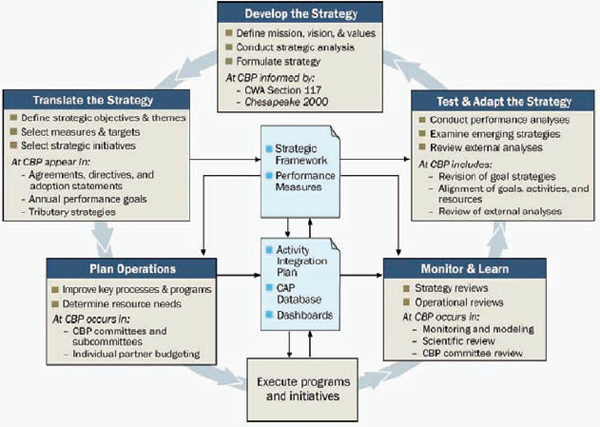
FIGURE 4-1 The Chesapeake Bay Program adaptation of the Kaplan and Norton closed loop management system.
SOURCE: EPA (2008a).
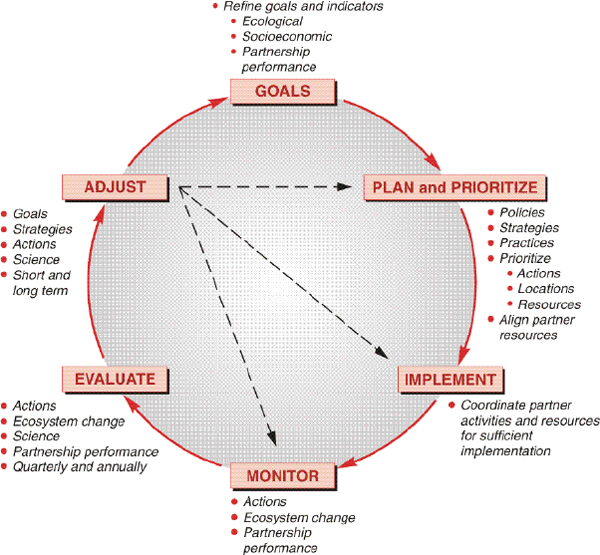
FIGURE 4-2 Proposed adaptive ecosystem management framework.
SOURCE: DOI and DOC (2009c).
Section 202(f) of the Executive Order required specific agencies to submit reports that make recommendations for “strengthen[ing] scientific support for decision making to restore the Chesapeake Bay and its watershed, including expanded environmental research and monitoring and observing systems.”
In response, the Section 202(f) report proposed that the CBP further employ adaptive ecosystem management to complement the adaptive management process described in the CAP (DOI and DOC, 2009c). The Section 202(f) report recommends an adaptive ecosystem management framework (Figure 4-2) based on approaches presented by Williams et al. (2009) and Levin et al. (2009). Section 203 of the Executive Order calls upon federal agencies to develop a strategy for protecting and restoring the Chesapeake Bay, including a process for implementing adaptive management principles with periodic evaluation of protection and restoration activities. The final
strategy, called the Strategy for Protecting and Restoring the Chesapeake Bay Watershed (FLC, 2010b), promoted “ecosystem-based, adaptive management through enhanced coordination of science and decision-support activities” and presented the adaptive management framework depicted in Figure 4-2.
These two adaptive management frameworks apply to all Chesapeake Bay protection and restoration goals: restoring clean water, recovering habitat, sustaining fish and wildlife, conserving land, and increasing public access. However, for the purposes of this report, discussion of adaptive management is bounded by the committee’s task, that is, to evaluate whether each of the Bay jurisdictions (i.e., the six states in the Bay watershed and the District of Columbia) and the federal agencies developed appropriate adaptive management strategies to ensure that CBP nutrient and sediment reduction goals will be met.
OVERVIEW OF ADAPTIVE MANAGEMENT
Definitions of adaptive management and descriptions of adaptive management efforts abound in the literature. Excellent overviews can be found in NRC (2004) and Stankey et al. (2005). The term “adaptive management” surfaced from research on improving environmental assessment and management described by Holling (1978). Gregory et al. (2006) describe the general goal of adaptive management as improving “managers’ knowledge about a set of well-defined ecological objectives through the implementation of carefully designed, quasi-experimental management interventions and monitoring programs.” This focus on improving knowledge, which may slow ecosystem improvements in the short run in an effort to make them more effective in the long run, sets adaptive management apart from other environmental management efforts.
Adaptive management arose from the recognition that uncertainty is inherent in natural systems, yet management actions generally cannot be delayed until knowledge is complete and uncertainties resolved. At its heart, adaptive management reflects the understanding that many ecosystem management decisions must be made in scenarios that are characterized by uncertainty. Additionally, adaptive management acknowledges that “managed resources will always change as a result of human intervention, that surprises are inevitable, and that new uncertainties will emerge” (Gunderson, 1999) and embraces the notion that, if management decisions are framed as experiments, learning can occur when the results are carefully monitored and evaluated.
Adaptive management’s experimental, learning-focused approach is offered as an effective strategy for reducing uncertainties. Sometimes referred to as “learning while doing,” adaptive management learning
derives from deliberate formal processes of inquiry (Stankey et al., 2005), replacing evolutionary learning by trial and error with learning by careful tests (Walters, 1997; Box 4-1). What does this mean in practice? In his discussion of the use of adaptive management in Coastal Louisiana and the Chesapeake Bay, Boesch (2006) lays out the charge:
Under adaptive management, practitioners must be explicit about what they expect and they must collect and analyze information so that expectations can be compared with actuality. They must periodically correct errors, improve their imperfect understanding, and change actions and plans. The coupling among explicit expectations (from modeling), comparisons with actuality (through monitoring), and changed actions and plans is the essence of adaptive management.
There is no recipe of steps or building blocks that will immediately constitute an adaptive management program (NRC, 2004), but discussions of adaptive management expansively describe various procedural components (see Box 4-2). Consider the stylized adaptive management process
BOX 4-1
Trial and Error, Passive Adaptive Management, and
Active Adaptive Management
Management can be structured as an adaptive process in three ways: evolutionary (or trial and error), passive adaptive, and active adaptive. With an evolutionary process, early management choices are essentially haphazard, and experience illustrates which subset of choices gives better results. This information is used to frame subsequent decisions that, it is hoped, lead to improved results. In contrast, passive and active adaptive management incorporate definition of management objectives, deliberate monitoring, effective evaluation and reflection, appropriate communication among all project participants, and formal mechanisms for incorporating learning into planning and management. Passive adaptive management uses available historical data to construct a single best hypothesis and implements a single policy or practice to test it. Active adaptive management uses available data to structure a range of alternative hypotheses and designs management experiments to test them that reflect an acceptable balance between expected short-term ecosystem response and long-term learning about which alternative (if any) is correct.
SOURCES: Walters and Holling (1990); Schreiber et al. (2004); Allan and Curtis (2005); Gregory et al. (2006).
BOX 4-2
Key Elements of Adaptive Management
Identified in Theory and Practice
1. Management objectives that are regularly revisited and accordingly revised.
a. Agreement among scientists, managers, and stakeholders on goals and modes of progress.
b. Agreement on key research questions or lines of inquiry to be pursued.
c. Iterative process to review (and revise if appropriate) key questions, paths of inquiry, and programmatic objectives.
2. A model(s) of the system being managed.
a. Clear understanding of model assumptions and limits so that model results are not equated with reality.
3. A range of management choices.
a. Evaluation, at the outset, of the likelihood that each alternative will achieve management objective, generate new information, or foreclose future choices.
b. Exploration of potential for implementing two or more actions simultaneously to help discriminate among competing models.
4. Monitoring and evaluation of outcomes.
a. A monitoring and evaluation plan developed as part of initial program design and not added ad hoc after implementation.
Collectively, scientists, managers, and stakeholders select one or more management options to be tested through carefully designed experiments
b. A mechanism for comparing outcomes of management decisions.
c. Focus on significant and detectable indicators of progress toward management objectives.
d. A mechanism to help distinguish between natural changes and changes caused by management actions.
5. A mechanism(s) for incorporating learning into future decisions.
a. A plan for how new information will be incorporated as part of the initial program design.
b. Political will to act upon new information.
c. Flexibility to adjust operations in light of new information or shifting conditions and preferences.
6. A collaborative structure for stakeholder participation and learning.
a. Stakeholder involvement in initial decision to apply adaptive management.
b. Formal process for involving stakeholders in setting objectives.
c. Formal process for incorporating stakeholder knowledge into process and for stakeholder learning from new information.
d. Stakeholder flexibility and willingness to compromise.
SOURCE: NRC (2004).
(Step 2 in Figure 4-3), using either active or passive adaptive management (see Box 4-1). The experiments involve the formulation of hypotheses about the outcomes of particular management strategies. Testing the hypotheses requires that management actions be purposefully implemented in such a way that their effects can be measured (Schreiber et al., 2004). Rather than trying all management alternatives, sequentially or simultaneously, adaptive management focuses on one or a few alternatives, implements them, and deliberately monitors outcomes in a way that enables evaluation of the alternatives tested. The choice of alternative(s) to be tested is based on the likelihood of reducing key uncertainties, model results and other sources of knowledge, stakeholder input and response, resource constraints, and temporal considerations.
Monitoring starts with the development of a monitoring plan that
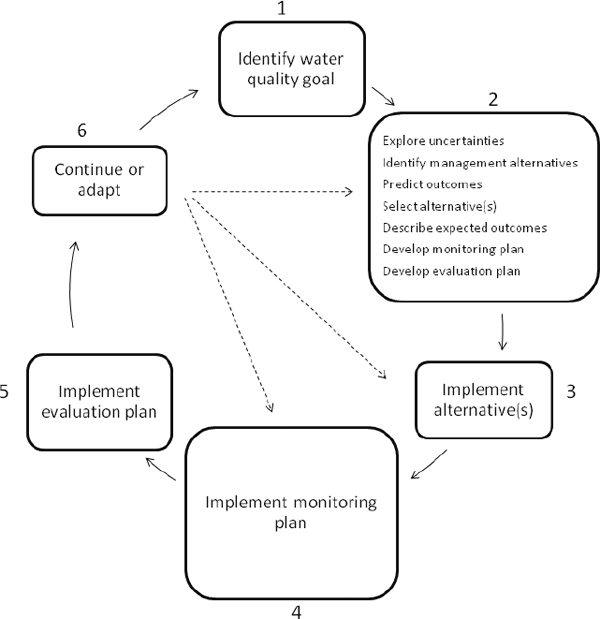
FIGURE 4-3 Stylized adaptive management strategy, with the size of the box proportional to the amount of effort required. Steps 2 (planning) and 4 (monitoring) typically require the greatest attention for successful adaptive management.
describes how the assumptions and hypotheses embodied in the experiments will be tested (Figure 4-3, Step 2). Monitoring requires more than assessing status and, as asserted by Lee (1999), information gathering alone is not monitoring. A monitoring plan should be designed not only to test whether expected outcomes are realized but also to understand why or why not (Halbert, 1993). Monitoring and evaluation processes should enable scientists and managers to answer questions such as:
• How and when will expected outcomes be identified?
• If the expected outcome is observed, then how can we be sure it was because of the management implemented?
• If the expected outcome is observed, then what should be done next?
• If the expected outcome is not observed, then why not? What should be done next?
The monitoring process typically requires an assessment of baseline conditions in addition to monitoring responses to the management action over time (Williams et al., 2009). The monitoring design must be scaled to the questions at hand and account for the impacts of routine variability (e.g., precipitation, stream flow). Box 4-3 presents an example of monitoring and evaluation in Tampa Bay and how the results are used to refine management efforts in an adaptive management context.
Implementation of the management practices is undertaken only after extensive attention has been paid to the experiments’ design, monitoring, and evaluation. This is represented in Figure 4-3, which illustrates where emphasis in adaptive management differs from traditional evolutionary (trial and error) learning through the relatively larger boxes for Steps 2, 4, and 5. Often, adaptive management efforts are stymied by traditional funding approaches and programmatic cultures that focus on implementation rather than on monitoring. In addition, progress evaluations often emphasize reports on implementation activity, rather than on the value of new knowledge and how it has been used to improve decision making (Allan and Curtis, 2005).
EVALUATION OF ADAPTIVE MANAGEMENT
STRATEGIES IN THE CHESAPEAKE BAY PROGRAM
The committee is charged with evaluating whether the CBP partners have developed appropriate adaptive management strategies to ensure that the program’s nutrient and sediment reduction goals will be met. Challenges in addressing this question arise from the fact that there are many definitions and descriptions of adaptive management in the literature. The National Research Council report Adaptive Management for Water Resources Project Planning (NRC, 2004) describes the problem:
There are many dimensions of adaptive management, and the ambiguities inherent in adaptive management can result in policymakers, managers, and stakeholders developing unique definitions and expectations. The term is complex and multidisciplinary… adaptive management is an evolving theory and practice….
BOX 4-3
Adaptive Management in Tampa Bay
The Tampa Bay water quality management program is a collaborative, flexible, multi-disciplinary effort that has evolved in response to changes in technology, data availability, and scientific understanding. To address the inherent uncertainties and complexities of Bay responses to changing pollutant loads and other environmental conditions, the program has adopted an adaptive management (Holling, 1978; Lee, 1993) approach. The adaptive nutrient management strategy used in Tampa Bay incorporates periodic evaluations of water quality and seagrass management goals and annual evaluations of water quality monitoring data to redirect management actions on an as-needed basis (Greening and Elfring, 2002).
Because of the importance of seagrass as a biological resource in Tampa Bay, the Tampa Bay Estuary Program (TBEP) and its partners have adopted numerical targets for water clarity levels (expressed as annual mean Secchi depth), chlorophyll a concentrations, and nitrogen loading to help meet seagrass acreage restoration goals for the Bay (Greening and Janicki, 2006). To ensure consistency with the adaptive management approach, the effectiveness of the adopted nitrogen management strategy is assessed annually by evaluating chlorophyll a concentrations and water clarity levels measured in each Bay segment during the previous calendar year and comparing those values to the segment-specific targets (Greening and Janicki, 2006). A decision matrix approach (Janicki et. al., 2000; Sherwood, 2009) is used to determine the level of management response that is appropriate in years when water quality targets are not met.
The continual monitoring of water quality and seagrass in Tampa Bay allows managers to assess progress toward meeting established goals. An important component of this effort is the routine comparison
Kai Lee has been quoted as saying, “Adaptive management has proven difficult to understand because it’s so easy to understand approximately” (Halbert, 1993). Definitional problems appear to be a challenge for the CBP. A review of the federal 2011 Action Plan (FLC, 2010a) for implementing the Strategy for Protecting and Restoring the Chesapeake Bay Watershed (FLC, 2010b), the Chesapeake Bay total maximum daily load (TMDL; EPA, 2010a), and the Bay jurisdictions’ watershed implementation plans (WIPs) indicates that the Bay partners have not established a clear understanding of what adaptive management means.
The 2011 Action Plan for protecting and restoring the Bay watershed suggests that using adaptive management “will provide science to improve
of mean annual chlorophyll a concentrations and light attenuation to desired targets. TBEP has developed a tracking process to determine if water quality targets are being achieved. The process to track status of chlorophyll a concentration and light attenuation involves two steps. The first step uses a decision framework to evaluate differences in mean annual ambient conditions from established targets. The second step incorporates results of the decision framework into a decision matrix, leading to possible outcomes dependent upon magnitude and duration of events in excess of the established target (Janicki et al., 2000, Greening and Janicki, 2006). When outcomes for both chlorophyll a concentration and light attenuation are good (i.e., when both targets are being met), no management response is required. When differences from the targets exist for either chlorophyll a concentration or light attenuation or both, conditions are intermediate and may result in some type of management response. When conditions are problematic, such that there are relatively large, longer-term differences from either or both targets, stronger management responses may be warranted. The recommended management actions resulting from the decision matrix are classified by color into three categories for presentation to the Tampa Bay resource management community (see Sherwood, 2009).
Addressing uncertainty is a necessary component in any management strategy. The use of the decision matrix for adaptive management has proven to be an effective and easily communicated tool to address management actions in a timely way and has provided a mechanism for detecting and responding to uncertainty, if it arises. For example, if seagrass cover stopped expanding before reaching the target acreage, although nutrient loading and water clarity targets continued to be met, then a new round of technical investigations would be initiated.
the efficiency and accountability of federal actions to restore water quality, habitat, fish and wildlife, and conserve lands” (FLC, 2010a). The 2011 Action Plan also commits the Federal Leadership Committee of the Chesapeake Bay (FLC) to institute adaptive management in support of implementation and accountability by establishing “a regular cycle for reviewing activities, progress against goals and timelines outlined in the strategy” (FLC, 2010a). Unfortunately, merely reviewing activities and progress regularly will not provide the learning offered by adaptive management and is unlikely to improve the efficiency or accountability of federal actions to restore water quality or achieve other goals. Adaptive management is not
mentioned at all in the 2011 Action Plan section on restoring clean water (FLC, 2010a).
Section 10 of the Chesapeake Bay TMDL (EPA, 2010a), which addresses implementation and adaptive management, highlights several eventualities that might result in modifications of the TMDL, including changes in legal and regulatory authorities, updates to the model, and updates of Bay jurisdictions’ WIPs. Adaptive management is specifically mentioned only in the context of climate change: “EPA has committed to take an adaptive management approach to the Bay TMDL and incorporate new scientific understanding of the effects of climate change into the Bay TMDL” during the 2017 mid-course assessment (EPA, 2010a). However, modification of the TMDL mid-course is not, by itself, adaptive management.
Several Bay jurisdictions refer to adaptive management in their WIPs, and some of the jurisdictions refer to what could be gained from implementing adaptive management. However, the WIPs do not provide descriptions of adaptive management strategies. In a few cases, jurisdictions refer to the two-year milestones and listed contingencies as an adaptive management strategy. The milestones and contingencies could be an important part of an adaptive management strategy but, as is explored in the next sections of this chapter, they do not themselves constitute adaptive management. In a few cases, plans to implement practices or programs, monitor results, and modify activities are described (e.g., Pennsylvania’s targeted watershed approach [PA DEP, 2010]), which are key elements of adaptive management. Whether management implementation is designed with learning in mind and whether the monitoring and evaluation plans provide learning to support management changes is unclear from the WIPs.
In sum, although many of the CBP partners think they are implementing adaptive management, the committee did not find evidence of any formal adaptive management efforts for nutrient and sediment reduction. In the following sections, the committee analyzes federal agency and Bay jurisdiction documents to evaluate whether the CBP partners have key elements in place that would support the development of effective adaptive management strategies (i.e., identification of goals, exploration of uncertainties, development of management experiments, and monitoring and evaluation). Potential barriers to and opportunities for adaptive management are also discussed.
Identification of Goals
Clear goals have been set for the water quality programs in the Chesapeake Bay. The overarching and ecological goal shown at the top of Figure 1-15 and detailed in Table 1-4 is to restore biological integrity in the Bay. The second goal, which contributes to the capacity to accomplish the eco-
logical goal, is to meet water quality criteria in the Bay and its tidal tributaries (FLC, 2010b). An interim goal is to meet water quality criteria in 60 percent of Bay segments by 2025, but the CBP does not dictate which Bay segments should be addressed first.
The CBP has also set in the TMDL a load reduction goal of achieving annual load targets under average hydrologic conditions of 185.9 million pounds per year nitrogen, 12.5 million pounds per year phosphorus, and 6.45 billion pounds per year sediment (EPA, 2010a). The load reduction goal is to be met by implementation of wastewater treatment plant upgrades and best management practices (BMPs), outlined in the WIPs, that will reduce the discharge of nitrogen, phosphorus, and sediment to the Bay and tidal tributaries. The WIPs describe the BMP implementation goals of each Bay jurisdiction and will soon be expanded to provide detail at the county scale. The fourth goal (Figure 1-15), then, is to have in place by 2025 all practices needed to meet the load targets, with 60 percent of practices in place by 2017 (FLC, 2010b). Finally, short-term goals are set for the BMPs that are to be implemented during each two-year milestone period, reflecting an incremental process toward meeting the BMP implementation goals.
Exploration of Uncertainties
CBP partners have not undertaken sufficient analysis of the uncertainties inherent in water quality management. In federal documents, issues of uncertainty largely are minimized or passed off to nonfederal partners to address as part of their WIPs and program design and implementation. For example, in section 5 of the Chesapeake Bay TMDL, modeling uncertainties are minimized: “Although models have some inherent uncertainty, the amount of data and resources taken to develop, calibrate, and verify the accuracy of each of the Bay models, minimized the uncertainty of the suite of Bay models” (EPA, 2010a). Section 6 of the TMDL describes the use of margins of safety to account for any uncertainties in the supporting data and models. Again, however, especially for nitrogen and phosphorus, those uncertainties are minimized; the TMDL describes “state-of-the-science models, with several key models in their fourth or fifth generation of management applications” (EPA, 2010a) and concludes that “use of those sophisticated models to develop the Bay TMDL, combined with application of specific conservative assumptions, significantly increases EPA’s confidence that the model’s predictions of standards attainment are correct” (EPA, 2010a). In Appendix S of the TMDL, the EPA presses the Bay jurisdictions to deal with uncertainties about BMP effectiveness, monitoring, reporting, and accounting for unregulated nonpoint sources when calculating credits in offset programs for new or increased loads.
Some WIPs refer to uncertainties about funding, effectiveness of specific management practices, incompatible datasets, future land-use changes, and the quality of the EPA’s models. However, the WIPs do not describe whether, or how, the Bay jurisdictions would seek to reduce these uncertainties through adaptive management. In a few instances, WIPs propose actions that should reveal new information, that is, opportunities to reduce uncertainty. However, the WIPs do not describe the Bay jurisdictions’ expectations for what could be learned and how water quality management could be improved as a result of the new information.
The 2001 NRC report Assessing the TMDL Approach to Water Quality Management describes two significant sources of uncertainty in water quality management: epistemic and aleatory uncertainty. Epistemic uncertainty results from insufficient information to estimate probabilities of responses to management actions. NRC (2001) states:
Epistemic uncertainty…is a by-product of our reliance on models that relate sources of pollution to human health and biological responses. We are limited by incomplete conceptual understanding of the systems under study, by models that are necessarily simplified representations of the complexity of the natural and socioeconomic systems, as well as by limited data for testing hypotheses and/or simulating the systems. …For example, at present there is scientific uncertainty about the parameters that can represent the fate and transfer of pollutants through watersheds and waterbodies. It is plausible to argue that more complete data and more work on model development can reduce epistemic uncertainty [emphasis added].
Aleatory uncertainty results from the inherent variability in natural processes and, by definition, cannot be reduced (Pielke, 2007). NRC describes the aleatory uncertainty affecting water quality programs: “Not only are waterbodies, watersheds, and their inhabitants characterized by randomness, but they are also open systems in which we cannot know in advance what the boundaries of possible biological outcomes will be…” (NRC, 2001).
The committee identified specific sources of uncertainty that challenge management strategies to reduce nutrient and sediment loads and improve water quality in the Bay. Epistemic uncertainties arise from incomplete knowledge about:
• The CBP models. Even after years of application, testing, and validation, questions remain about uncertainty in the modeled loading estimates, which are influenced by multiple factors, including the models’ assumptions, equations, parameters, and initial and boundary conditions (Box 4-4).
BOX 4-4
Estimation of Prediction Uncertainty for the
Chesapeake Bay Model
An estimate of error in the predictions from the Chesapeake Bay Model quantifies the confidence that scientists have in their forecasts of Bay response to nutrient load reductions. This, in turn, is likely to influence stakeholder opinions of nutrient control strategies, as well as support the need for adaptive management. Unfortunately, the complexity of the Chesapeake Bay Model prevents a thorough assessment of model prediction uncertainty.
An alternative that partially captures prediction error for the model is to use a summary measure of the difference between model predictions and actual observations. This approach generally is not used, in part because the number of prediction-observation comparisons tends to be limited (because of datasets of limited size). Because most of the observations are used in the model calibration exercise, this comparison may be strongly biased toward a lower error estimate. However, because there are many historic water quality observations for the Chesapeake Bay, it may be possible to run a calibrated model to predict key water quality variables (e.g., chlorophyll a and dissolved oxygen) and compare these against observations for noncalibration years. This comparison can yield an approximation of model prediction error.
• Ecological processes in the Bay and tributaries. Designated uses reflected in water quality standards are based upon “a combination of natural factors, historical records, physical features, hydrology, bathymetry, and other scientific considerations” (EPA, 2010a). However, expectations about desired endpoints in coastal ecosystem restoration efforts may be frustrated by the occurrence of baseline shifts and regime shifts in ecosystems (Duarte et al., 2009). The trajectory that the Bay and its tributaries will follow in recovery is uncertain.
• Water quality impacts of reduced nutrient and sediment loads. Bay responses to nutrient enrichment are complicated by a range of ecological feedback mechanisms. Questions about interactions among organisms and biogeochemical processes and their effects on ecological and water quality responses to nutrients are unresolved (Kemp et al., 2005).
• Realization of anticipated nutrient and sediment load reductions. Extensive, comprehensive efforts have produced estimates of effectiveness for BMPs to be used in planning and implementation. Yet, variability in
site-specific conditions, BMP designs, implementation and maintenance of practices, scale of implementation, combined practices, and lag times between implementation and full performance are recognized as factors that introduce uncertainty into effectiveness estimates (Simpson and Weammert, 2009; see also Chapter 2).
• Willingness and ability to implement nutrient and sediment controls. The responses of individuals, firms, communities, and governmental bodies to initiatives intended to increase the use of point and nonpoint source controls depend upon the incentives and opportunity sets that drive and constrain decisions. Considerable research has been undertaken to explain, for example, why and when farmers adopt conservation practices. However, the absence of any clear universally significant factors affecting conservation behavior across locations and practice types suggests that the effectiveness of policy tools such as financial or technical assistance will depend upon particulars of location, farmers, and farm operations (Knowler and Bradshaw, 2007).
• Political will and multijurisdictional cooperation. Several Bay jurisdictions have balked at the requirement to develop and seek EPA approval of a WIP. Bay jurisdictions have expressed concerns about the costs of plan implementation, the EPA’s reliance on model results as the basis for major policy decisions, and the distribution of costs and benefits of water quality improvements. Additionally, the distribution of responsibilities among federal, state, and local governments will make reaching agreements about sharing costs challenging. Adoption of the two-year milestone approach was intended to overcome uncertainties associated with electoral cycles and leadership changes, but elections will continue to introduce new questions about commitment to Bay priorities.
Climate change and its impacts introduce aleatory uncertainty, especially over the long run. Unanticipated droughts or flooding can make nutrient and sediment reduction practices appear more effective or can undermine practice implementation.
Even though the CBP partners face many uncertainties, programmatic structures, program timeframes, regulatory requirements, and available budgets likely prevent experimentation to respond to them all. As a result, the CBP will benefit from careful consideration of what uncertainties can be most effectively and usefully addressed through adaptive management. If uncertainty is very low or nonexistent, then adaptive management is simply not needed, because the outcomes can be projected with confidence. If uncertainty is high, then adaptive management may be inappropriate because of difficulties with separating the effects of management actions from external influences (Gregory et al., 2006). In addition, there may be significant uncertainties that currently prevent identification of appropriate
management interventions, called “decision-critical uncertainties” in NRC (2007). The committee has not identified any decision-critical uncertainties that suggest that ongoing nutrient and sediment reduction strategies are inappropriate. Instead, there are numerous uncertainties that are relevant to decision making, as listed above, for which the dimensions of uncertainty are understood and for which experiments can be designed to better inform future water quality management decisions.
Designing Management Experiments
Uncertainties are reduced through learning about what works, what doesn’t, and why. This learning comes from carefully designed management experiments and deliberate monitoring and evaluation. Some example initiatives described in the WIPs can be used to illustrate how specific management actions could be framed as management experiments in the context of adaptive management.
Testing the Effectiveness of New BMPs
In its WIP (DDOE, 2010), the District of Columbia proposes to incorporate low impact development (LID) techniques into any new or reconstructed Water and Sewer Authority facilities as demonstrations. Monitoring at those sites would indicate the effectiveness of the LID techniques at reducing runoff that reaches combined sewer overflows (CSOs) or surface water. What if this proposal were framed as a management experiment with specific plans for what is to be learned and how the new knowledge is to be used? Uncertainties about the effectiveness of LID techniques would be explored. Specific predicted runoff reductions could be articulated and a plan designed to monitor for those outcomes. A plan for how to respond to a different outcome from what is expected, that is, to adapt, would also be needed. To enhance learning and further reduce uncertainty through an adaptive approach, a series of locations could be identified where different LID techniques could be tested and the different outcomes compared to evaluate which techniques are preferred in what types of situations.
Testing the Effectiveness of Incentive Programs
As another example, West Virginia describes the addition of soil nitrogen testing and cornstalk nitrate testing to the components supported by cover crop incentive payments (WV WIPDT, 2010). Even with the nitrogen availability benefits observed with cover crops, farmers will often add additional nitrogen to insure crop yields. Covering the costs of these additional BMP components allows farmers to test for whether additional nitrogen is
needed, which reduces the risks of purchasing and over applying unneeded nitrogen fertilizer. Framing this change in incentive programs as a management experiment could address a series of questions: Does the modification of the cover crop incentive program change farmers’ willingness to adopt cover crops? Do supplemental nitrogen applications differ depending upon whether farmers plant cover crops independently or because of the incentive program? What can be learned from the monitored nitrogen balances about nitrogen retained in the corn and cover crop and nitrogen lost (to air or water) in fields where the additional components are used and fields where they are not? Framing specific questions about adoption rates and/or BMP efficiency, designing a monitoring and evaluation program to answer those questions, and modifying the BMP design or the incentive program, if indicated, in response to what is learned represent elements of adaptive management.
Testing the Effectiveness of Watershed Overlay Permits
Pennsylvania describes the potential use of a Municipal Stormwater Separate Storm Sewer System (MS4) watershed overlay permit in Lancaster County that would establish a protocol with specific tools to assist municipalities in meeting MS4 permit requirements. Described as an iterative and adaptive approach, the protocol would assist municipalities with meeting MS4 permit responsibilities and would identify other opportunities for BMP installation and load reductions, and other prospects for nutrient, sediment, and stormwater credits. The WIP (PA DEP, 2010) asserts that this approach will allow the Department of Environmental Protection to gather data, monitor effectiveness, and evaluate implementation and load reduction successes. The WIP does not indicate exactly how the overlay permit would work and how areas included under the overlay permit would differ from those that are not. However, such a management alternative could be a component of an adaptive management strategy. In an experimental context, the opportunity exists to compare outcomes in overlay permit areas with outcomes in similar but non-overlay areas to evaluate the effectiveness of the approach for increasing implementation of practices.
Monitoring and Evaluation
When management decisions are framed as tests under adaptive management, monitoring provides the results of the tests. In this section the committee discusses aspects of monitoring and evaluation needed to support adaptive management in the CBP.
In most cases, the WIPs address monitoring in terms of assessing compliance with permits, checking for practice implementation progress, and
BOX 4-5
Long-term Monitoring to Assess Response to BMPs in the
Lake Erie Watershed
The importance of long-term monitoring for assessing watershed response to conservation management is demonstrated by the Lake Erie Agricultural Systems for Environmental Quality (LEASEQ) Project (Richards et al., 2002b, 2009). Phosphorus loads in two Ohio watersheds (Maumee and Sandusky River Watersheds) with major tributaries to Lake Erie have been monitored since 1975 to determine the effect of BMPs (e.g., conservation tillage and nutrient management planning in predominantly row-crop agriculture) on water quality. Monitoring showed an 8 percent average increase in flow since 1975, while mean annual flow-weighted concentrations of suspended sediment, total phosphorus, and dissolved phosphorus decreased 23, 44, and 86 percent, respectively (Richards et al., 2002a). Since 1995, annual flow-weighted concentrations of dissolved phosphorus have increased, while particulate (and total phosphorus) have continued to decline (Baker and Richards, 2009). The trend of increasing dissolved phosphorus and decreasing total phosphorus may be attributed to a combination of several factors: a change in rainfall distribution pattern; a buildup of phosphorus at the soil surface with no-till cropping; and increased applications of fertilizer and manure, without incorporation in the fall and winter. An adaptive process in the LEASEQ might have avoided recent dissolved phosphorus increases through quicker response to perceived impacts of soil phosphorus build-up at the surface.
This project showed water quality changes (both positive and negative) in response to management changes at a watershed scale, and it may offer lessons for the Chesapeake Bay Watershed. Specifically, BMPs such as incorporation of applied phosphorus in no-till crops, use of winter cover crops on conventionally tilled fields, and a transition from fall to spring application of phosphorus could potentially reduce phosphorus loss from agricultural land in the watershed. However, consistent monitoring, evaluation of data collected, and changes in management are necessary to avoid unexpected negative impacts of practices.
collecting ambient water quality samples. These kinds of activities do not, in and of themselves, provide evidence that the technology upgrades or implemented BMPs are having the intended effects (Box 4-5). In the agricultural BMP implementation context, external financial or weather-related pressures on farmers may complicate efforts to gauge the effectiveness of BMP incentive programs.
Similarly, as noted by the CBP’s Science and Technical Advisory Committee (STAC) in its report on small watershed monitoring designs:
To interpret the effects of the conservation practices on nutrient discharges, watershed monitoring alone is not sufficient. It will be necessary to collect detailed data on the practices and other agricultural activities that affect nutrient discharges, including: areas, spatial distribution, and types of agricultural lands (croplands, pastures, etc.); fertilizer application rates; livestock populations; and the locations of riparian buffers and wetlands. (Weller et al., 2010)
Weller et al. (2010) provided extensive recommendations for appropriate monitoring strategies. These included focusing on smaller watersheds (4-15 mi2 or 10-40 km2) within larger areas of high nutrient and sediment discharges for the greatest impacts and making long-term commitments (5 to more than 10 years) to maintain conservation practices and assemble spatially explicit data on conservation practices and watershed monitoring. The report also offered suggestions for improving the cost-effectiveness of monitoring efforts.
Monitoring is costly, and prioritization of monitoring efforts is essential. The STAC conducted a review of the CBP monitoring program objectives and priorities and how well monitoring provides information to assess progress toward goals and to improve decision making in the CBP (STAC, 2009). The report noted that the CBP has a long and rich history of monitoring which has served some objectives quite well. However, the STAC also noted that the monitoring program has evolved reactively, is spread across many fronts, and lacks clear prioritization or reassessment. Although no monitoring program could effectively address the enormous range of management endpoints represented in the CBP goals, the STAC concluded that “continuing operation of the monitoring effort in a status quo condition is unacceptable” (STAC, 2010). As a result of its review (and the associated series of workshops held in 2008), the STAC recommended that the CBP focus monitoring efforts toward two objectives—the delisting of tidal segments of the Bay and determining the effectiveness of management actions—and concluded that appropriate monitoring information needed to address these issues could be obtained (STAC, 2010). However, the STAC also noted that balance between the monitoring efforts related to each objective would be required, as resources dedicated to monitoring for progress toward one objective would not be available for use for the other. Senior managers participating in the workshops identified their priorities for new monitoring as follows:
1. What is the effectiveness of management actions, most specifically those implemented in the upper portions of the watershed,
2. Where can we demonstrate early signals of trajectories, and
3. If we can’t demonstrate success, then how do we determine the reasons for failure?
With expected outcomes of management actions made explicit and monitoring focused on these questions, the CBP would be better prepared to undertake adaptive management and to address at least some uncertainties, although additional focused monitoring programs would undoubtedly be needed. Adaptive management in the CBP will also require better integration of monitoring and modeling activities so that new information obtained about the effectiveness of management actions is reflected in modeled projections of broader nutrient load reductions. Two STAC reports (STAC, 1997, 2005) provide detailed discussion on and suggested approaches for improving the integration of modeling and monitoring.
Potential Barriers to and Opportunities for
Adaptive Management in the CBP
Adaptive management has been applied to a range of ecosystem management problems with varying degrees of success, and many reasons have been suggested for why some applications of adaptive management have been more successful than others (Halbert, 1993; Lee, 1993; McLain and Lee, 1996; Walters, 1997; Gregory and Failing, 2002). Several barriers to successful adaptive management in the Chesapeake Bay exist, but opportunities to overcome the barriers also exist in some cases.
Time and Resource Intensity
Adaptive management requires considerable time and effort in advance of actual practice implementation for planning the management experiment and monitoring and evaluating outcomes. These intense resource needs are problematic for the use of adaptive management in the Chesapeake Bay watershed because resources are limited and stakeholders (and taxpayers) are anxious for evidence of improvement. Bay jurisdictions wrote their WIPs within a short time window with the objective of describing how load reduction goals will be met. Not surprisingly, Bay jurisdictions are likely to focus their efforts in the two-year milestones on meeting implementation goals and to pass on the chance to learn why particular BMPs were or were not implemented or whether the implemented BMPs are having the desired effect. Bay jurisdictions are most likely to experience successful adaptive management if they focus on a very limited number of
management initiatives, rather than on their full programs, because not all initiatives warrant the type and level of planning and monitoring involved in adaptive management.
Regulatory Inflexibility
Absent sufficient flexibility in institutional structures, successful adaptive management is unlikely (Gunderson, 1999). Political and legal rigidities and narrow interpretations of management agencies’ legal mandates are among examples of inflexibilities that limit opportunities for adaptive management (NRC, 2004; Stankey et al., 2005). Potential inflexibilities introduced by language in the Clean Water Act (CWA) and in regulations directing the TMDL implementation process may constrain adaptive management in the CBP. For example, Shabman et al. (2007) noted that obstacles to adaptive management can be found in how the current National Pollutant Discharge Elimination System (NPDES) process is applied under a TMDL. Once waste load allocations (WLAs) are incorporated into NPDES permits, anti-backsliding requirements generally prevent changes to the permits, even if new learning suggests that the initial TMDL or the WLAs should be changed. Anti-backsliding refers to the CWA requirement that NPDES permits not be reissued, renewed, or modified to contain less stringent effluent limitations than the previous permit (Thorme, 2001).
On the other hand, philosophical foundations for adaptive approaches in the CWA may make adaptive approaches to TMDL implementation feasible (Freedman et al., 2004). Shabman et al. (2007) examined opportunities for the use of adaptive management (or adaptive implementation, AI) within a TMDL framework.
AI begins with installation of certain controls to move the watershed in the direction of reducing pollutant loads, while also providing information on their effectiveness in improving water quality at different geographic and time scales. With new knowledge, the original watershed analysis, water quality analyses, and models can be revised to update the estimates of current and future pollutant loads and the resulting water quality in the impaired water body. The new information is used to revise and modify the implementation plan of the original TMDL. If a [water quality standard] WQS assessment is added to this mix, then AI expands the concept of “learning while doing” to the assignment of appropriate WQS to the waterbody. This reassessment of the implementation strategy distinguishes AI from SI (standard or current implementation). (Shabman et al. 2007)
However, Shabman et al. (2007) noted that accommodations for adaptive implementation in the NPDES permitting process may be needed because AI could involve modification of the TMDL or the WLA over time. Suc-
cessful application of adaptive management in the CBP will require greater regulatory flexibility. Freedman et al. (2004) explored opportunities for greater flexibility and suggested approaching a TMDL as a process, not an endpoint.
The EPA has defined adaptive implementation of TMDLs as “an iterative implementation process that makes progress toward achieving water quality goals while using any new data and information to reduce uncertainty and adjust implementation activities” (EPA, 2006). However, in its guidance on adaptive implementation, the EPA only goes so far in embracing adaptation: “In most cases adaptive implementation is not anticipated to lead to the re-opening of a TMDL. Instead, it is a tool used to improve implementation strategies” (EPA, 2006). The EPA does suggest, however, that new scientific understanding of the effects of climate change might be incorporated into the TMDL during the mid-course assessment (EPA, 2010a).
Embracing Uncertainty
Framing programs in terms of adaptive management requires explicit admission that the management effort is experimental. The Bay jurisdictions are likely hesitant to report planned experiments to the EPA and indeed have little or no experience with designing such experiments. Further, federal requirements of reasonable assurance that Bay jurisdictions will meet nutrient and sediment load reductions remove any impetus for learning from experiments. Bay jurisdictions are forced to present WIPs that minimize uncertainty and offer assurances in ways that rule out learning with adaptive management.
Acceptability of Failure
The EPA has adopted an accountability framework as part of the renewed efforts reflected in the Executive Order and accompanying strategy (FLC, 2010b), with expected actions (e.g., Phase I, II, and III WIPs; two-year milestones; BMP implementation to meet the TMDL) and potential consequences for the failure to meet expectations. This accountability framework poses challenges for the development of adaptive management strategies by the Bay jurisdictions. The regulatory structure and threat of consequences makes admitting to uncertainties and the possibility of failure, undertaking management experiments, and proposing plans for adapting based on new information gained difficult propositions. Figure 4-4 depicts EPA’s accountability framework and, with a dead-end at the consequences box, illustrates the way in which the framework makes adaptive management unlikely.
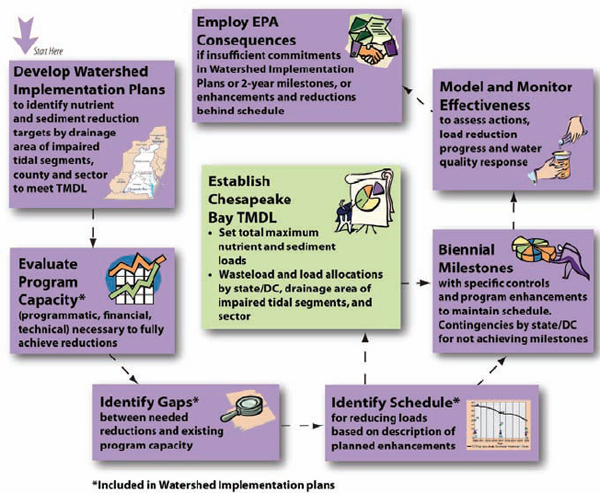
FIGURE 4-4 EPA’s state accountability framework.
SOURCE: EPA (2009).
An alternative way to frame the EPA’s accountability initiative that is more compatible with adaptive management is to base the threat of consequences on the failure of the Bay jurisdictions to propose management alternatives based on sound expectations, to adequately monitor and evaluate outcomes to understand the effectiveness of alternatives, and to adapt management strategies according to the results of the evaluation. Yet another way to frame the EPA’s accountability initiative that is less prejudicial against adaptive management is to base the threat of consequences on the failure of Bay jurisdictions to authorize and appropriate sufficient resources for management agencies to undertake planned management activities, including adaptive management, and the failure of management agencies to allocate those resources effectively. For the EPA, the levying of consequences could be viewed as a part of an evaluative process such as that described in Figure 4-5. The consequences are viewed as an incentive to continue water quality improvement efforts. Ongoing monitoring of water
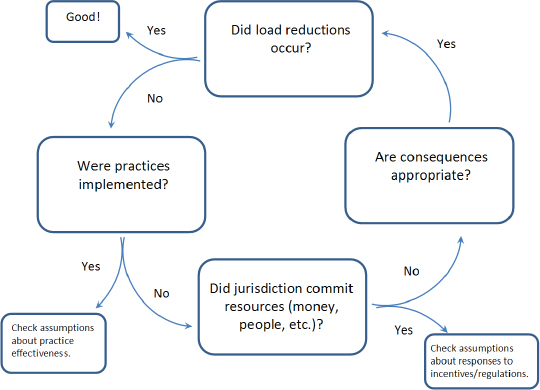
FIGURE 4-5 A process that could be used by the EPA to evaluate the need for consequences that is more compatible with adaptive management.
quality and Bay jurisdictions’ programmatic components provides feedback on the effectiveness of the consequences levied.
CONCLUSIONS AND RECOMMENDATIONS
Neither the EPA nor the Bay jurisdictions exhibit a clear understanding of adaptive management and how it might be applied in pursuit of water quality goals. Reviewing activities, assessing progress toward goals, and adopting contingencies were cited as examples of adaptive management. However, effective adaptive management involves deliberate management experiments, a carefully planned monitoring program, assessment of the results, and a process by which management decisions are modified based on new knowledge. Learning is an explicit benefit of adaptive management that is used to improve future decision making. The committee did not find convincing evidence that the CBP partners had incorporated adaptive management principles into their nutrient and sediment reduction programs. Instead, the current two-year milestone strategy approach is best characterized as an evolutionary (or trial and error) process of adaptation in which
learning is serendipitous rather than an explicit objective. In the trial and error process, when failures occur, jurisdictions have limited capacity to understand why, and contingencies represent the next thing to try rather than a deliberate adaptation.
Successful application of adaptive management in the CBP requires careful assessment of uncertainties relevant to decision making, but the EPA and Bay jurisdictions have not fully analyzed uncertainties inherent in nutrient and sediment reduction efforts and water quality outcomes. Each CBP goal brings with it uncertainties, not all of which can or should be addressed through adaptive management. Therefore, the EPA and Bay jurisdictions should carefully and realistically analyze uncertainties associated with potential actions to determine which are candidates for adaptive management. Bay jurisdictions may be more successful using adaptive management for a limited number of components or for programs in smaller basins, where effects of management actions can be isolated and well-designed monitoring and evaluation can be undertaken to clearly quantify outcomes.
Targeted monitoring efforts by the states and the CBP will be required to support adaptive management. Monitoring plans need to be tailored to the specific adaptive management strategies being implemented. Presently, CBP and jurisdictional monitoring programs have not been designed to effectively support adaptive management. In addition, adaptive management will require better integration of monitoring and modeling activities. Excessive reliance on models in lieu of monitoring can magnify rather than reduce uncertainties.
Additional federal actions are needed to fully support adaptive management in the CBP. The federal accountability framework being promoted through the TMDL and the threatened consequences for failure will dampen the Bay jurisdictions’ enthusiasm for adaptive management. To support adaptive management, the EPA should modify its accountability framework and offer explicit language indicating that carefully designed management experiments with appropriate monitoring, evaluation, and adaptive actions are acceptable, and that failures resulting from genuine adaptive management efforts will not be penalized. If the Bay jurisdictions perceive that the costs of failure are too high, then they may not be willing to pursue the benefits that adaptive management can offer. Additionally, federal guidance and training to the states on effective adaptive management strategies at the local or state level are needed. One or more examples of adaptive management designed and implemented at the federal level, perhaps on federal land, would be helpful to the states as they seek acceptable and effective management options.
Without sufficient flexibility of the regulatory and organizational structure within which CBP nutrient and sediment reduction efforts are under-
taken, adaptive management may be problematic. Depending upon how CWA language and TMDL rules are interpreted, opportunities for certain types of adaptations may be limited. Truly embracing adaptive management requires recognition that the TMDL, load allocations, and possibly even water quality standards might need to be modified based on what is learned through adaptive management. However, the jurisdictions may find that the formal processes required under the CWA to modify load allocations, TMDLs, or water quality standards constrain or even preclude using adaptive management. Successful application of adaptive management in the CBP will require greater regulatory flexibility. Approaching the TMDL as a process, not an endpoint, and facilitating adaptive implementation of the TMDL is one way to provide that flexibility (Freedman et al., 2004).
This page intentionally left blank


