
1
Introduction
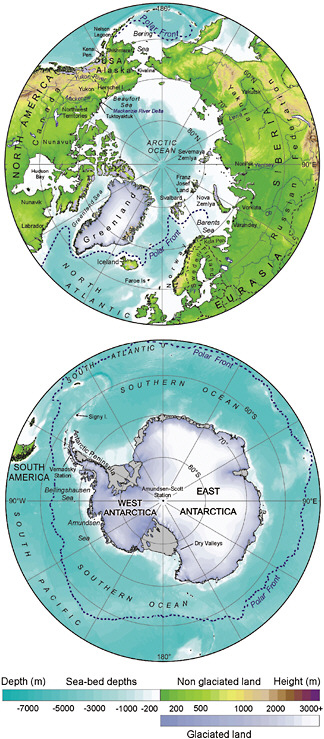
The Earth’s polar regions (see Figure 1.1) are ecologically, economically, and, increasingly, geopolitically important; they are particularly vulnerable to the speed and magnitude of climate change and have significant potential to influence the global climate system (Oreskes, 2004; IPCC, 2007a; Anderegg et al., 2010). Climate models and observational data have shown that polar regions have warmed at substantially higher rates than the global mean (IPCC, 2007c). A key mechanism driving increased warming in the polar regions is the albedo feedback effect caused by variations in sea-ice cover, snow cover, and in the Arctic (broadly defined herein to include northern treeline boreal vegetation), forest cover. In addition, changing atmospheric and oceanographic circulation patterns also lead to increased regional warming in the Arctic and Antarctic (Vaughan et al., 2003; Maslowski et al., 2007; Deser and Teng, 2008; Steig et al., 2009).
Recent evidence has revealed that climate change is having significant impacts on terrestrial, freshwater, and marine ecosystems in both polar regions (e.g., Juday et al., 2005; Lyons et al., 2006; Montes-Hugo et al., 2007; Grebmeier et al., 2010; Screen and Simmonds, 2010). Impacts in these ecosystems have been predicted to continue and exceed those forecast for lower latitudes, altering biological resources and socio-economic systems and providing important feedbacks to global climate. The complexity of ecological and human systems, and the fact that these systems are subject to multiple stressors, makes future environmental impacts very difficult to predict. Quantifying feedbacks, understanding the implications of sea
ice loss to adjacent marine and land areas as well as society, and resolving future predictions of ecosystem alteration or population dynamics all require consideration of complex interactions and interdependent linkages among system components.
The National Research Council, through its Polar Research Board, organized a workshop “Frontiers in Understanding Climate Change and Polar Ecosystems” in what is intended to be the first in a series of periodic workshops addressing “frontiers in polar science.” The workshop, held on August 24-25, 2010, in Cambridge, Maryland, consisted of two components: a series of presentations in plenary sessions that introduced examples to highlight known and anticipated impacts of climate change on ecosystems in polar regions and an interactive portion designed to elicit an exchange of information on evolving capabilities to study ecological systems and highlight the next questions or frontiers that stand to be addressed (Chapter 2).
During the workshop, scientists from academic institutions, federal agencies, and other organizations explored emerging interdisciplinary questions and topics with the goal of understanding polar systems in a changing world and identifying new capabilities to study marine and terrestrial ecosystems that might help answer these questions (Chapter 3). Participants were asked to identify (but not prioritize) areas of research and technology advances needed to better understand the changes occurring in polar ecosystems. Participants were invited from a broad range of disciplines across the Arctic and the Antarctic including (but not limited to) expertise in marine and terrestrial ecology and oceanography, geology, human and social sciences, as well as atmospheric, geochemical, and biological sciences. Four plenary speakers (two with an Arctic focus and two with an Antarctic focus) were selected to highlight terrestrial, marine, cryosphere, and paleoclimate perspectives. These talks were intended to set the stage and to provide necessary background information. The topics covered were not intended to be exhaustive and some issues related to adaptation and the social components of climate change were not discussed in great detail. The planning committee is responsible for the overall quality and accuracy of the report as a record of what transpired, and this report summarizes the views expressed by workshop participants.
In accordance with the statement of task, the workshop:
-
explored a selected field of science with special polar relevance: climate change and polar ecosystems,
-
considered accomplishments in that field to date,
-
identified emerging or important new questions,
-
identified important unknowns or gaps in understanding, and
-
allowed participants to identify what they see as the anticipated
|
BOX 1.1 Workshop Definitions Based in part on workshop discussions, the workshop planning committee developed the following definitions of terms used in the three themes and workshop presentations. Ecosystem connectivity: The distribution of material, energy, and information within and among spatial units of an ecosystem. The structure and function of ecosystems is the result of connectivity and local environmental heterogeneity. Ecosystem services: The multiple benefits provided by ecosystems to humans. These include supporting, provisioning, regulating, and cultural services (IPCC, 2007c). Polar amplification: Greater temperature increase at the poles, compared to the rest of Earth, as a result of the collective effect of a multitude of physical drivers and feedbacks. Regime shift: “A relatively rapid change (occurring within a year or two) from one decadal-scale period of a persistent state (regime) to another decadal-scale period of a persistent state (regime)” (King, 2005). Resilience: The capacity of an ecosystem to absorb disturbance without shifting to an alternate state and losing function and services. Threshold (in an ecosystem): A point where environmental forcing results in a sudden, often nonlinear, change in system properties, but the system does not change state qualitatively. For example, high wind may cause large waves on a lake that causes a boat to rock violently, yet the boat remains upright and continues to function as designed. Tipping element: “Subsystems of the Earth system that are at least subcontinental in scale and can be switched—under certain circumstances—into a qualitatively different state by small perturbations” (Lenton et al., 2008). Tipping point: An environmental threshold that, when crossed, causes a change between two equilibrium states of an ecosystem, which may be more rapid than the forcing that triggered it. Once under way, the change will proceed at the speed given by the internal ecosystem dynamics, even if the forcing is removed (implies a loss of control). Getting out of the new state may be irreversible. For example, the wind in the example above reaches a point where the boat capsizes and the boat now loses its original function, although potentially functioning subsequently in another capacity. Vulnerability in an ecosystem: Susceptibility caused by exposure to contingencies and stress, and the difficulty in coping with them. It is “a function of the character, magnitude, and rate of climate variation to which a system is exposed, its sensitivity, and its adaptive capacity” (NRC, 2007). |
-
frontiers for future research in the field, including challenges and opportunities.
WORKSHOP THEMES
The workshop planning committee (Appendix D) proposed three working themes to the participants in advance of the workshop. They were selected to help guide and focus the workshop discussions and to provide context to the participants as they considered frontiers in climate change and polar ecosystems. The three organizing themes were:
Polar Amplification
Polar regions are warming faster than any other part of the Earth system (Holland and Bitz, 2003; Bekryaev et al., 2010). The effects are manifested as atmospheric warming, decreasing extent and duration of sea ice cover, glacier retreat, permafrost thawing, increasing river discharge, loss of snow cover, and shifting ecosystem structure and function. Some of this polar amplification is caused by the well-studied albedo effect, but other drivers and feedbacks are less well understood. For example, how is the loss of coastal glacial ice mass in Antarctica linked to ozone depletion, changes in the Southern Annular Mode, sea ice feedbacks, or is it responding to an integration of all these? How can the scientific community address uncertainty in assessing the individual roles of snow and ice cover, atmospheric and oceanic circulation, and cloud cover and water vapor in recent observations of warming near-surface air temperatures? What are the contributions of these potential drivers to both Arctic and Antarctic temperature amplifications, and how will they change over the next few decades?
Thresholds and Tipping Points
The identification and prediction of thresholds and tipping points (see Box 1.1) in natural systems likely presents one of the greatest challenges facing those scientists investigating climatic and environmental change since the intrinsic properties can be nonlinear and abrupt. In the polar regions, there is considerable risk of passing thresholds and tipping points caused by the rapid response of the cryosphere system (including the atmosphere, ocean, and biosphere) to increased anthropogenic forcing. This issue is a potential frontier that warrants investigation to identify current and future early warning signals that will allow the world to prepare for future conditions and allow societies the opportunity to adapt.
Ecosystem Connectivity, Vulnerability, and Resilience including Human Dimensions
Polar ecosystems are intimately connected to sea ice extent in the marine realm, and snow levels and the production of liquid water in the terrestrial realm. These parameters are directly related to seawater and land temperatures that influence food sources, organismal growth, reproduction, and biogeochemical cycles. The connectivity between fine and broad-scale properties is increasingly recognized as key to understanding ecosystem dynamics, particularly as global temperatures increase over time. Recent environmental changes are having broad-scale ecosystem impacts at lower trophic levels that have the capability to cascade to higher trophic organisms and the effects of changes in the cryosphere will likely cascade throughout the entire ecosystem (Wassmann, 2008). Therefore, evaluating status and trends in the biological components of key polar ecosystems is necessary to identify vulnerable trophic components and important linkages.
Climate change in polar ecosystems has the potential to amplify connectivity among landscape units (Schofield et al., 2010) leading to enhanced coupling of nutrient cycles across landscapes, and altered biodiversity and productivity within the ecosystem. To understand current and future ecosystem responses to variable climate forcing, it is critical to understand both the vulnerability and resilience of the ecosystem components including local communities and populations, particularly in the Arctic where life is largely subsistence-based and linked inherently to these ecological issues. The ability to predict ecosystem responses to polar climate change will require the development of ecological, hydrological, climatological, and sociological models that are tightly integrated with one another.
The workshop addressed the three themes in the context of climate change and ecosystem interactions that unfold through diverse processes with nonlinearities across a range of time and space scales (see Figure 1.2). Workshop participants emphasized that while there exists some understanding of a variety of the mechanisms involved, many uncertainties remain. The uncertainties became particularly clear during discussions of biome shifts occurring in the boreal region, where impacts accumulate and expand in scope, extent, and intensity. One impact can lead to a cascade of thresholds that may eventually reach a tipping point, which can play a role in mass extinction (e.g., Hoegh-Guldberg and Bruno, 2010).
Participants stressed that the earth, oceans, atmosphere, and human actions be considered as a single, interconnected system in order to achieve a more complete understanding of climate and ecosystem responses as illustrated in Figure 1.3. In this system, responses are often nonlinear and
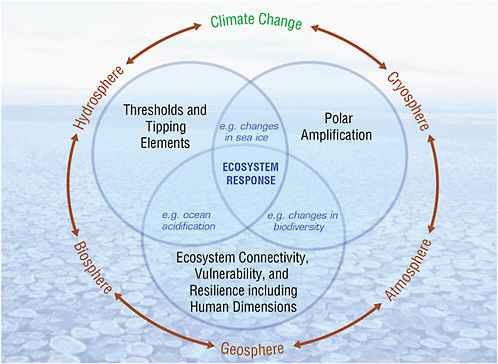
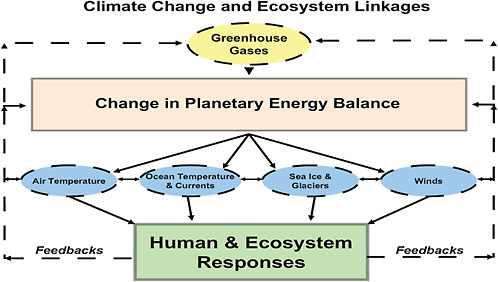
FIGURE 1.3 This diagram represents the connections between climate change and human and ecosystems responses. It illustrates how changes in greenhouse gases lead to changes in the planetary energy balance (changing latitudinal gradients and heat retained near the surface), which has further impacts on air temperature, ocean temperature and currents, sea ice and glaciers, and winds. These impacts will affect humans and ecosystems and, in turn, the human and ecosystem responses will feed back into the components of the system.
can have different threshold and tipping point characteristics. Understanding these thresholds and tipping points, and the mechanisms controlling them, is among the most important challenges in Earth system science (NRC, 2007).
There is a great deal of complexity in Earth system science. The principal components of the Earth system may be defined and bounded differently, depending on the object of study (e.g., the climate system, biogeochemical cycles, ecosystems, and local to global-scale economies). Some Earth system components are defined more clearly than others; for example, ocean and atmospheric circulation is a relatively well-known system, whereas the climate system is a less-well-understood example. Additionally, system components interact according to rules that may or may not be able to be defined adequately. A principal property of systems is feedback, in which reciprocal interaction of components may be self-limiting (negative feedback) or reinforcing (positive feedback).
A principal tool for studying systems in general and the Earth system in particular is numerical simulation modeling. Models may focus on any particular subcomponent, for example, a polar coastal system including subsistence-based human communities, the Northern or Southern Annular Modes, and the Greenland or West Antarctic Ice Sheets. At higher levels of organization, a reduced-complexity model might include simplified parameterizations of each of these subcomponents in a model of the “full” Polar System. There are many different approaches to simulation modeling involving different strategies for defining parameters and interactions, but in general they all follow the systems concept, concentrating on defined systems of interacting components.
PLENARY PRESENTATIONS: INSIGHTS IN POLAR ECOSYSTEM SCIENCE
The following sections summarize plenary presentations from the workshop; these presentations were designed to set the stage for what is already known about climate change and polar ecosystems (see Appendix A for the agenda and Appendix B for plenary speakers and abstracts). Illustrative examples from both the Arctic and Antarctic terrestrial and marine ecosystems highlight climate change impacts currently observed in these regions. This is not intended to be an exhaustive list of impacts in the polar regions, but it is representative of the issues and climate-related changes discussed by workshop participants and speakers.
During the opening presentation of the workshop, Dr. Jeffrey Severinghaus addressed some of the differences between Arctic and Antarctic ecosystems based on current evidence of polar climate changes and atmospheric composition from ice core records. These records reveal that
ecosystems in the Arctic have been subjected to numerous abrupt climate changes in the past, whereas Antarctic ecosystems have not experienced these abrupt changes. Antarctic records are characterized by gradual and relatively small changes and the rapid warming currently observed is atypical for that environment. Because of this long-term stability, Antarctic biota may be less resilient to warming than Arctic biota that can potentially adapt to environmental change and the anticipated warming of the next few centuries. Following these initial remarks, additional plenary speakers discussed terrestrial and marine ecosystems as well as the feedbacks and sensitivities in regions of rapid sea ice decline.
Observed Changes in Polar Terrestrial Ecosystems
In the past two decades, Arctic ambient temperatures have increased at twice the rate of the rest of the world (Parkinson and Butler, 2005). Higher than usual temperatures are becoming more common in autumn and winter and daily temperature fluctuations have become more extreme (ACIA, 2005). The Arctic is experiencing thawing permafrost, changes in precipitation, storm surges, flooding, erosion, and increased weather variability (ACIA, 2004; Warren et al., 2005). The effects of these changes include the northward range expansion of flora and fauna, introduction of non-native species, decreases and changes in traditional food sources, disappearance of permafrost food storage in Arctic villages, and wide-scale coastal erosion.
The Antarctic region is an important regulator of global climate and the Southern Ocean is a significant sink for both heat and carbon dioxide, acting as a buffer against human-induced climate change. Terrestrially-based environmental change is most apparent in the Antarctic Peninsula, where climate change has been the most dramatic. Variations in ice cover, glacier retreat, and the collapse of ice shelves are examples of the changes that have occurred, resulting in further shifts to the physical environment of the region.
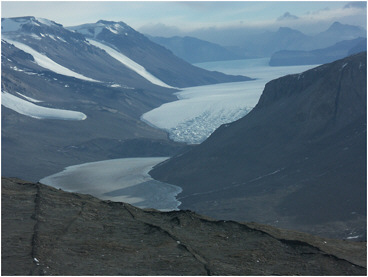
The examples below offer illustrations of the changes in both the Arctic (the biome shift in the boreal region and subsistence impacts) and the Antarctic (climate change in the McMurdo Dry Valleys ecosystem) terrestrial ecosystems.
Arctic Example: The Biome Shift Occurring in the Boreal Region
During a plenary session of the workshop, Dr. Glenn Juday addressed the shifts occurring in the boreal forests of Alaska. The pronounced and rapid climatic shift in the Arctic, resulting in large part from anthropogenic forcing as well as polar amplification, is already having profound
impacts there (Barber et al., 2009). Recent investigations have revealed that most populations of Alaska’s interior boreal forests, including the dominant tree species white spruce (Picea glauca), Alaska birch (Betula neoalaskana), and black spruce (Picea mariana), are now experiencing severe drought stress and accelerated disturbance (e.g., fires, insect-caused tree death) associated with climate change (Juday et al., 2005).
Combined temperature and precipitation conditions in interior Alaska (as measured by the ~100 year instrument-based climate record for the Fairbanks station) appear to have now approached or exceeded the lethal limit for white spruce and other major tree species. Trees at many high elevations and formerly cold sites in the interior, as well as other regions of Alaska, are suffering adverse effects of temperature increases and this has major implications for the generation of dendroclimatic reconstructions and potentially for the global carbon cycle. In addition, outbreaks of spruce budworm have developed in Alaska as well as some northern Canadian forests. Alaskan birch have been stressed to near lethal levels across lowland interior regions twice in the last decade from acute drought injury and aspen leaf miner is causing widespread tree death and dieback.
The current wildland fire and insect outbreak regimes, both directly temperature related, are disturbing the forest at a rate that will not allow the recent age structure of forests to appear again as long as the new disturbance rate is maintained. Landscape-scale tundra fire is a reality on the Alaska North Slope, initiating the process of mobilizing one of the Earth’s great pools of sequestered carbon into the atmosphere (see Figure 1.4). The accelerated disturbance is significantly reducing available habitat for a set of specialized older forest organisms. Conversely, the length of the growing season for Fairbanks has increased by 50 percent over the past century and doubled at other locations, and recent temperature increases have improved climate suitability for black and white spruce in far western Alaska (where moisture stress is less acute), and possibly in the far northern tundra as well. However, these latter areas generally have sparse tree populations, which may or may not represent the best-adapted genotypes to these new conditions, and practical challenges to migration may require a significant amount of time to be overcome by exclusively natural processes. The boreal forests are a sizeable component of the globe’s carbon sink. Estimates indicate that boreal forests store nearly twice as much carbon as tropical forests per hectare. The Canadian Boreal Initiative report, for example, cites that the boreal forests store 22 percent of all carbon on the earth’s land surface (Carlson et al., 2009), and thus the changes in growth currently under way may potentially feed back into further climatic change. This synoptic picture is consistent with a biome shift, in which the interior boreal forest is being severely altered
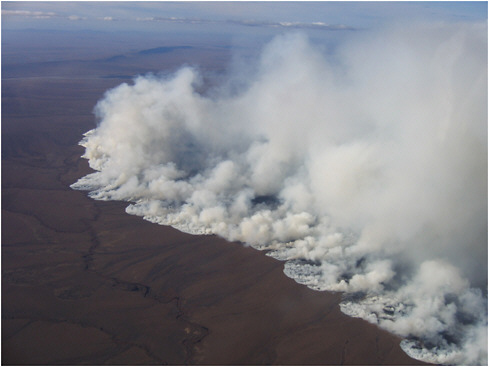
FIGURE 1.4 This is an image of a fire caused by lightning in the summer of 2007 on the North Slope of Alaska. Tundra fires release sequestered carbon into the atmosphere. SOURCE: Bureau of Land Management.
and eliminated from many landscape positions, and opportunities for migration upward in mountains or coastward represent the best survival prospect for elements of the boreal forest.
Arctic Example: Subsistence Impacts
In Arctic subsistence communities, a host of changes related to climate have been noted over the last decade. For example, higher than usual air temperatures and extreme weather events are becoming more common. Weather conditions that might be seen as negative in urban communities are often seen as favorable in subsistence communities. These conditions include, for example, rains that enhance land-based food production and freezing temperatures that result in improved conditions for winter travel. Conversely, these weather events can also erode coastlines, wash out roads, and make travel difficult in certain areas. A 2004 Government Accountability Office report (GAO, 2004) found that almost 90 percent of Alaska’s 213 predominantly Native villages in every region of the state
are affected negatively by floods or erosion. Communities are increasingly vulnerable as winter freeze-up occurs later in the season. The lack of early autumn sea ice places many villages in great danger of storm impacts as the ice helps to control wave action along the coastlines. Storm impacts can endanger human life, damage infrastructure, and result in erosion.
Hunting on ice is dangerous or impossible when early breakup and late freeze-up create poor ice conditions. Access can be restricted to subsistence resources and there is increased risk and reduced efficiency to hunting. Many traditional hunters have also had difficulty gaining access to land mammals (e.g., caribou) because lack of sufficient snow prevents effective use of snow machines (Callaway et al., 1999). At the same time, the composition, distribution, and density of subsistence species are changing and these changes directly affect the subsistence species available for harvest.
Thawing of permafrost results in habitat changes, sinking buildings, and melting ice cellars, making long term storage of traditional foods more difficult especially in areas of discontinuous permafrost (see Figure 1.5). It also sets up the land for greater impacts from storm surges along
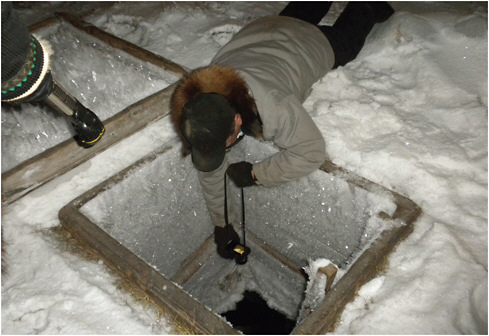
FIGURE 1.5 This photograph is of a cellar in Barrow, Alaska during January 2010. Thawing permafrost can cause damage to infrastructure including ice cellars, which are used in long term storage of traditional foods. Melting can occur during the winter months as well as summer. SOURCE: Michael Brubaker, Alaska Native Tribal Health Consortium.
the coast. In addition to all of these physical impacts, there are potential social implications to climate change. One example involves the sharing of local and traditional knowledge, which is generally passed from elders to younger generations. This critical information, such as ice thickness or the timing or sites of marine mammal haulouts, may become less reliable as climate change impacts result in increased local environmental variability, potentially destabilizing these important social relationships.
Antarctic Example: Climate Change in the McMurdo Dry Valleys Ecosystem
On the Antarctic continent, warming is also occurring faster than expected in certain areas; the Antarctic Peninsula has warmed five times faster than the global average, and the warming of the southern ocean and associated loss of sea ice has resulted in a shift in penguin species and their food sources (McClintock et al., 2008; Montes-Hugo et al., 2009). In contrast to the changes in the Antarctic Peninsula, temperatures in the vast interior of the Antarctic continent have remained stable or cooled over the past few decades (see Box 1.2).
The underlying cause of warming in the peninsula region versus cooling elsewhere, particularly in the McMurdo Dry Valleys and western Ross Sea regions, has been attributed to intensification of the Southern Annular Mode (SAM) caused by human-induced ozone depletion over the continent (Kindem and Christiansen, 2001; Thompson and Solomon, 2002) and greenhouse gas increases (e.g., Mayewski et al., 2009). As the ozone hole diminishes, temperatures have been predicted to increase gradually throughout the continental interior and in the McMurdo Dry Valleys (Chapman and Walsh, 2007; Walsh, 2009), though it is unclear how increasing greenhouse gases may, or may not, affect ozone hole recovery or the current regional warming and cooling trends.
Based on recent data obtained by the McMurdo Long Term Ecological Research (LTER) project, the lakes in this continental ecosystem have started to gain heat over the past four to five years (John Priscu, personal communication, March 10, 20111), indicating that the predicted warming trend may have begun. This warming trend may be responsible for the recent increased summer pulses of liquid water to the ecosystem, which are amplifying connectivity among landscape units, leading to enhanced coupling of nutrient cycles and increased biological functioning within and between trophic levels. There is an immediate and definite need to better understand the role of greenhouse gases in continent-wide temperature change if scientists are to understand related ecosystem changes.
|
1 |
For raw data, see McMurdo Dry Valleys LTER, Website: http://www.mcmlter.org (accessed March 28, 2011). |
Observed Changes in Polar Marine Ecosystems
Polar marine ecosystems are also experiencing significant climate-related changes. Arctic and Antarctic marine ecosystems are characterized by microbial, plant, and animal populations with life cycles and physiological requirements closely tied to the annual cycle of ice advance, duration, and retreat and available sunlight. Notable examples include sea ice microbial communities that support overwintering zooplankton. The early ice edge bloom of algae is critical to support underlying benthic communities often initiating reproductive processes in the spring. Sea ice also provides an important habitat for birds and mammals (e.g., penguins, polar bears, walrus, and seals) that use the ice as a foraging platform or breeding habitat.
Arctic and Antarctic polar marine ecosystems are vulnerable to climate warming and sea ice reduction at all trophic levels from microorganisms to top predators. Many workshop participants indicated that a major research and forecasting challenge is to understand the ecological, biogeochemical, and socioeconomic implications and impacts of these changes and predict their future courses as warming and sea ice loss proceed over the next few decades.
The well-studied examples below reveal the extent of changes that have already occurred, the direction of future changes, and mechanisms driving ecosystem alterations in both the Arctic (northern Bering and Chukchi Seas) and the Antarctic (western Antarctic peninsula).
Arctic Example: Northern Bering and Chukchi Seas
During a plenary session of the workshop, Dr. Patricia Yager discussed productivity, food web dynamics, and benthic-pelagic coupling. The shallow northern Bering and southern Chukchi Sea shelf ecosystem is characterized by high, diatom-based primary production in the water column and efficient export from the surface layer to the shallow sediments, feeding a large and diverse benthic community that is critical for benthic-feeding marine mammals and seabirds. Seasonal ice coverage and cold waters have typically limited pelagic fish predation, allowing diving seabirds, bearded seals, walrus, and gray whales to harvest the high benthic production. With recent warming and sea ice loss, declines in clam populations coincident with dramatic declines in diving sea ducks have occurred, large vertebrate predators, such as walrus and gray whales, have migrated farther north, and pelagic fish are expanding their ranges northwards (see citations in Moore and Huntington, 2008; Grebmeier et al., 2010). In recent years the rapid loss of sea ice has resulted in the relocation of thousands of walruses from ice to land in both Russia and Alaska (see Box 1.3).
|
BOX 1.3 Case Study: Arctic Sea Ice Retreat and Walrus Relocation Marine walrus (Odobenus rosmarus divergens) populations are responding to reduced seasonal sea ice coverage in the Chukchi continental shelf off Alaska and Russia (Douglas, 2010). The majority of walruses use floating sea ice as habitat over the continental shelf waters between the United States and the Russian Far East where, in the summer, a vast majority of female walruses and young forage on the high biomass of animals living in the underlying sediments. However, recent studies by the United States Geological Survey (USGS) and Russian scientists have observed tens of thousands of Pacific walruses coming ashore in Alaska (Fischbach et al., 2009) and Russia in response to significant sea ice retreat in the Chukchi Sea. These USGS studies suggest that Pacific walruses will have a progressively harder time finding sea ice as a resting platform for access to offshore benthic prey fields (clams and worms in the sediments). Reduced summer sea ice is anticipated to negatively impact their populations, although outright extinction is not projected.a 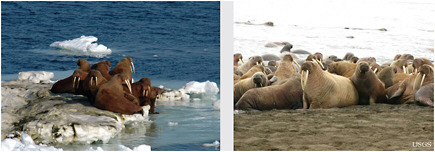 Most walruses use floating sea ice as habitat (left; taken in 2006); however, scientists have recently observed many coming ashore in Alaska and Russia due to sea ice retreat (right; taken in 2010). SOURCE: Karen Frey (left) and USGS (right).
|
The ecosystem structure changes are influencing food web dynamics as well as affecting traditional native subsistence hunting communities that must now travel longer distances in open water to hunt. For example, model projections reveal that phytoplankton primary production will increase in response to greater light availability caused by reduction in sea ice cover (Arrigo et al., 2008), although nutrient limitation could ultimately limit the magnitude of this increase (Grebmeier et al., 2010). A shift
to smaller algal species sizes has already occurred due to freshening in the western Arctic Ocean (Li et al., 2009), providing another example of potential changes in food web structure and carbon cycling with continued warming. In addition, increases in ocean acidification and sea ice melt contribute to undersaturation of calcium carbonate with serious impacts for biota in the Arctic Ocean as well as the Arctic ecosystem in general (Yamamoto-Kawai et al., 2009).
Antarctic Example: Changes in the Western Antarctic Peninsula
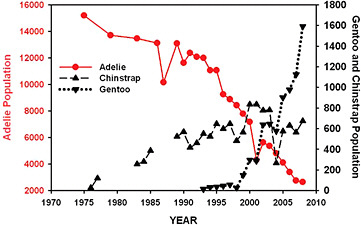
Dr. Sharon Stammerjohn addressed many of the seasonal sensitivities and changes in regions of rapid sea ice decline, including changes occurring in the Western Antarctic Peninsula, during a plenary session at the workshop. The Western Antarctic Peninsula region has warmed in winter by +6°C since 1950 (Vaughan et al., 2003), and sea ice duration has declined by about 80 days since satellite detection started in 1978 (Stammerjohn et al., 2008). In addition to these changes, the continental shelves, extending from about 120° west latitude to the western peninsular region, are the only areas where the Antarctic Circumpolar Current impinges directly on the continental shelf system (Orsi et al., 1995; Martinson et al., 2008) and thus delivers warm Circumpolar Deep Water to these shelves systems. Increases in the latter have been implicated in the accelerated ice mass losses from the West Antarctic Ice Sheet at its coastal margins (Rignot et al., 2008). As in the Arctic, water column warming and increased freshwater input from melting glaciers are forcing changes throughout the ecosystem (e.g., McClintock et al., 2008). Phytoplankton stocks, as detected by satellite ocean color sensors since 1978, have declined by over 80 percent in the northern region of the Peninsula, as sea ice loss has reduced the meltwater-induced water column stratification that fosters plant growth (Montes-Hugo et al., 2008). Farther south, phytoplankton are increasing as new ice-free areas open up. Antarctic krill stocks have declined by an order of magnitude in the Atlantic sector since 1950. In response to sea ice loss, reduction in krill availability, and increases in late spring snowfalls, populations of Adélie penguins have declined by 80 percent in the Palmer Station region (see Box 1.4). Local populations of Crabeater seals are also in decline and ice-avoiding or ice-tolerant populations of Gentoo penguins and fur seals are migrating into the region and establishing new breeding colonies.
Increased primary production at higher latitudes is likely, as loss of sea ice leads to an open water column year-round, limited only by nutrient supply and perhaps light if the mixed layer depth is depressed too deep in the water column seasonally. Phytoplankton species may also shift to forms less palatable to crustacean herbivores that serve as
preferred prey for the familiar polar faunas; and ice-avoiding gelatinous zooplankton may replace krill. Ocean acidification will reach a threshold where it will impact carbonate-forming phytoplankton, zooplankton, and benthic species in both polar regions (Fabry et al., 2009), further complicating the effects of warming and ice loss on marine ecosystem structure.


