
G
Getting to Net-Zero Energy: NREL’s Research Support Facility
Jeffrey M. Baker, Office of Energy Efficiency and Renewable Energy, U.S. Department of Energy
Creating net-zero-energy buildings is a very challenging goal. However, getting to net-zero energy responsibly and affordably requires that projects achieve ultra-high energy efficiency first. By focusing on energy efficiency and taking advantage of what nature offers, ultra-high energy-efficient projects can be developed today using available technologies and acquisition techniques. The Department of Energy’s (DOE’s) Research Support Facility (RSF), located at the National Renewable Energy Laboratory (NREL), demonstrates what can be achieved with an unwavering focus on energy efficiency: a design that exceeds the benchmark ASHRAE 90.1–2004 energy performance standard by 50 percent. Indeed, my colleagues and I believe the RSF establishes a new energy performance standard that, if widely adopted, will help transform the energy performance of the nation’s commercial building sector.
NATIONAL RENEWABLE ENERGY LABORATORY
The National Renewable Energy Laboratory is one of 17 national laboratories and major science capabilities operated by DOE. DOE is the single largest funder of physical sciences, with work performed not only in its national laboratories, but at more than 300 universities across the nation. Not surprisingly, DOE research and development funding has resulted in more than 80 Nobel Prizes—more than any other single research and development funding source in the world.
NREL is unique among national laboratories. While many of DOE’s national laboratories have their genesis in the Cold War, NREL is the nation’s only national laboratory to be created by public law. Originally named the Solar Energy Research Institute, NREL was created by Public Law 93-473, the Solar Energy Research Development and Demonstration Act of 1974, following the oil embargos. NREL’s mission is to improve the nation’s energy security, economic competitiveness, and environmental quality through research, development, demonstration, and deployment of energy efficiency and renewable energy technologies. NREL is located in Golden, Colorado, at the crossroads of the nation’s energy industry (Figure G.1). NREL currently employs 2,300 scientists, engineers, and support staff and has an annual operating budget in excess of $350 million. DOE has designated NREL a federally
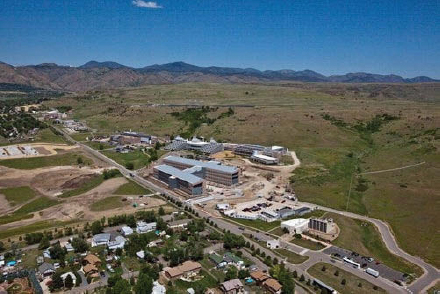
FIGURE G.1 Department of Energy’s National Renewable Energy Laboratory campus in Golden Colorado. SOURCE: Courtesy of Pat Corkery.
funded research and development center and, as such, NREL supports DOE on a host of energy policy, technology, and market matters.
While NREL’s beginnings were humble—its first buildings were mobile homes that were declared excess by the Bureau of Prisons—DOE’s Office of Energy Efficiency and Renewable Energy (EERE) has since invested hundreds of millions of dollars developing its research infrastructure at NREL. EERE used this opportunity to develop NREL as an innovator in the field of energy-efficient commercial building design and construction. Starting in the 1990s DOE-sponsored capital construction has pushed the boundaries of energy efficiency in commercial buildings. The Solar Energy Research Facility, a 114,000 gross square feet (GSF) laboratory building completed in 1994, won numerous awards for its innovative and highly successful use of daylighting in office and laboratory space. The Science and Technology Facility, a 71,000 GSF laboratory building housing a highly complex research and development infrastructure for photovoltaic and related technologies, was the nation’s first Leadership in Energy and Environmental Design (LEED) Platinum building. This focus on energy-efficient design of buildings at NREL, as well as NREL’s site infrastructure, enabled the addition of almost 8 megawatts of renewable power generated from on-site wind and photovoltaic sources to provide power to the complex. Today approximately 32 percent of all of NREL’s electricity needs are provided by on-site renewable production.
RESEARCH SUPPORT FACILITY
The Research Support Facility is a commercial office building and EERE’s new corporate headquarters for NREL. The RSF was designed to be the most energy-efficient office building in the world and, as such, it redefines what is possible today in energy-efficient commercial building design. The RSF was designed to exceed the best energy performance standard available, the ASHRAE 90.1–2004 standard, by 50 percent at a cost that is comparable to similarly sized but less energy-efficient projects. In a testament to its energy efficiency, the RSF increases the square footage under roof at NREL by 60 percent but only increases site energy use by 6 percent. The RSF was completed in June 2010 and will house 825 employees in 222,000 square feet.
The shape of the RSF speaks to its function. The building is divided into two large wings to maximize the exposure to daylight, the heart of this highly energy-efficient design. Windows are plentiful, and the roof, which is covered with photovoltaic modules, is sloped to maximize sunlight exposure through the seasons. Combined with power-producing photovoltaic modules on surrounding structures, renewable electricity will provide the balance of electrical power required to operate the building. The completed RSF is shown in Figure G.2.
Achieving ultra-high energy efficiency did not require us to sacrifice building capabilities or comfort for energy performance. In fact, the integrated delivery, whole-building design approach, supported by extensive energy modeling, produced a largely passive design that met all of our mission requirements by using free environmental benefits such as ample daylight and cool, dry nighttime air. We estimate that the cost to achieve this level of energy efficiency is only 1 to 2 percent more than the total cost to design and construct a conventional office building on a square foot basis, with much of the additional cost attributable to the more intense and interactive design process. While not the best way to compare projects due the difficulty in obtaining “apples to apples” information, the cost per square foot of the RSF is $259. Based on a data set of 34 roughly similar projects captured by the Design-Build Institute of America’s Design-Build database (www.dbia.org) and other publicly available sources ranging from LEED Certified to LEED Platinum performers, as well as projects with no LEED rating, 75 percent of these projects were more expensive than the RSF. This clearly demonstrates that highly energy efficient projects can be designed and delivered today at marketable costs.
The RSF’s design was driven by a determined and continuous focus on energy performance and taking advantage of free energy provided by nature. The design standard for the project was set at 25,000 Btu per square foot—including plug loads. The final design, with allowance for a new corporate data center servicing the entire NREL site (not just the RSF), was about 33,000 Btu per square foot.
Avoiding any kind of lighting load was key to achieving energy efficiency, because lighting loads drive mechanical and other systems. Workspaces in this building are 100 percent day lit—by means of free energy and free light. To achieve that, the floor plate had to be fairly narrow, in this case, about 60 feet. Typically, to achieve this level of daylighting, the floor plate would be even narrower, at about
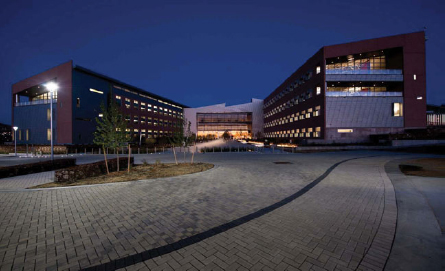
FIGURE G.2 The Department of Energy’s Research Support Facility. SOURCE: Courtesy of the Department of Energy, National Renewable Energy Laboratory.
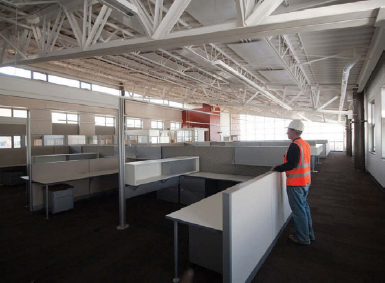
FIGURE G.3 Day lit interior spaces in the Research Support Facility. SOURCE: Courtesy of the Department of Energy, National Renewable Energy Laboratory.
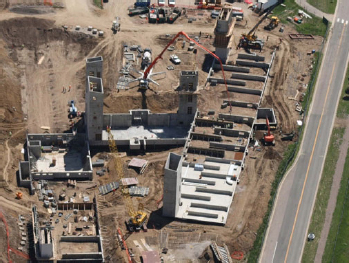
FIGURE G.4 Labyrinth thermal storage at the Research Support Facility. SOURCE: Courtesy of Pat Corkery.
45 feet. The designer found a way to reflect light back into the building and make it day lit in a much wider floor plate, which was also much more efficient. On a typical day, even on an overcast day, there is virtually no need for anything but task lights (Figure G.3).
Reducing the lighting load through daylighting reduces, or in the case of the RSF, eliminates the need for traditional mechanical cooling. First-cost savings achieved through such an approach can be reinvested in other energy efficiency features such as the building facades, high-performing windows, and so forth. As the RSF demonstrates, this approach makes it possible to achieve ultra-high energy efficiency at a marketable cost per square foot.
The RSF walls are foot-thick concrete with an embedded layer of insulation. The walls not only keep the environment out, they serve as a giant thermal battery regulating heat gain or loss, allowing the building to operate at constant temperature, even in extreme weather. Building air supply is conditioned using stored thermal energy provided by an EERE-funded invention called a transpired solar collector in a concrete labyrinth in the RSF’s basement (Figure G.4). Highly efficient radiant heating and cooling
moving through 42 miles of tubing embedded in the concrete ceilings are used to heat or cool the building. Hot water is provided through a combination of renewable fuels and natural gas boilers, and chilled water is provided through evaporative cooling. The temperature outdoors was 100 degrees a couple of weeks ago, and I happened to be in the building and noticed someone walking by and shivering.
As I mentioned earlier, the energy budget for the building includes the site-wide data center and the computer system. To achieve this performance we realized that power management in an office building is absolutely critical. We replaced virtually all of our office equipment, including lights, phones, copiers, and so on, with more energy-efficient ones. Desktop computers were replaced with laptops, and we are working toward a thin-client solution that is even more efficient. Standard telephones were replaced with Voice-over-Internet. While most of our equipment was at the end of its service life and needed to be replaced anyway, the costs of doing so are not included in our cost per square foot for the RSF. All office equipment is monitored for activity, and if no activity is detected it is automatically shut off to save energy.
The windows are triple glazed and operable. We learned a lot about windows in this process and would do some things differently if we had it to do over, particularly in thermal breaks in the windows. About 60 percent of the windows open manually, with the balance opened automatically through the RSF’s control system. During the nighttime, which is very cool and dry in Colorado, the windows are opened to purge the air in the building.
One of our obligations is to monitor how this building operates. The RSF is extensively metered, which allows us to show how energy use changes as operating conditions change and building components are modified. We are making it up a little bit as we go along, but we realize that we have to change things out, and people have to be able to test different components, such as windows. In this sense, it is a “living laboratory” that should generate data for many years.
Acquisition Strategy
Attention to the acquisition strategy was essential for the RSF’s design and level of energy efficiency. The acquisition strategy was shaped by several factors.
First, we recognized that ultra-high energy efficiency required that the building’s form and systems, occupants, and the environment needed to interact seamlessly. This recognition was important in setting design performance goals, that is, what was truly possible. Second was a determined and continuous focus on energy. Nothing was done in designing the building without first checking the energy models. Going back and checking every design decision against the energy model was critical, particularly when it was necessary to make trade-offs. Third was the fixed budget of $64 million, which had to include design, furniture costs, and everything else. Finally, as a national leader in the energy efficiency and renewable energy arena, it was EERE’s obligation to push the boundaries.
Combining these factors led us to an integrated project delivery acquisition strategy, called a performance-based design-build, requiring the use of a whole-building design process. Although such an approach entailed a great deal of work, especially early on in the design process, it also created a great deal of value.
Our acquisition strategy focused on performance goals instead of the more traditional approach of providing technical specifications such as building size, construction materials to be used, and so on. We developed four overall performance goals: (1) an energy performance level of 25,000 Btu per square foot per year (exceed ASHRAE 90.1–2004 by 50 percent); (2) space to accommodate a staff of 800; (3) a design that would achieve a LEED Platinum rating; and (4) the fixed $64 million budget. That
is essentially where we stopped with the specifications. This approach allowed the design team wide latitude to develop creative solutions to meet our needs.
Performance-Based Request for Proposals
The request for proposals (RFP) for this project was about 500 pages. It included three tiers of goals: “mission critical” goals that must be met in the first tier, “highly desirable” goals in the second tier, and “if possible” goals in the third tier (Box G.1). The only thing that we told the bidding contractors about these goals was that they were in rank order. We asked them to develop solutions that achieved as many goals as possible. This allowed them the freedom to work out the trade-offs themselves. (By the way,
BOX G.1
Request for Proposals Performance Goals for the Research Support Facility
Tier 1: Mission Critical Goals
• Attain safe work/design
• LEED Platinum
• Energy Star “Plus”
Tier 2: Highly Desirable Goals
• 800 staff capacity
• 25,000 Btu per square foot per year
• Architectural integrity
• Honor future staff needs
• Measurable ASHRAE 90.1–2004
• Support culture and amenities
• Expandable building
• Ergonomics
• Flexible workspace
• Support future technologies
• Documentation to produce “how to” manual
• Allow secure collaboration with visitors
• Completion by 2010
Tier 3: If Possible Goals
• Net-zero energy
• Most energy-efficient building in the world
• LEED Platinum Plus
• 50 percent better than ASHRAE 90.1–2004
• Visual displays of current energy efficiency
• Support public tours
• Achieve national and global recognition and awards
• Support personnel turnover
the RFP was modified eight times through collaboration between the design-build competitors in a bid to improve the end product and reduce risk to all parties.)
People ask, “Why didn’t you just design it yourself?” After all, NREL has recognized experts in energy efficiency. The answer simply is: We do not design buildings. That is not our job. There are specialists out there that do that. Our responsibility was to define the goals clearly enough that the specialists could really develop a creative solution, which they did. It is very inexpensive to do all this, as long as it’s planned and implemented up front.
National Design Competition
Ten groups submitted proposals and then we narrowed it down to three. We gave the draft RFP to the three final competitors because we did not know if we had hit the mark exactly. We used the draft RFP as a way to build trust and understanding with the design community. In the end, NREL was able to use a firm fixed-price contract because the contractors knew exactly what we wanted, which reduced their risk.
Design-Build Project Delivery Approach
The design-build project delivery approach, as opposed to the more traditional design-bid-build approach, creates a good deal of apprehension in some parts of the organization, such as the acquisition and project management organizations, as we used performance goals rather than technical specifications. Keys to making the design-build acquisition strategy work are up front and continuous owner commitment and involvement, clearly defined performance goals, substantiation criteria for these goals, and a firm fixed-price contract that shifts the performance and financial risk to the contractor.
Unlike the more traditional design-bid-build approach, a successful design-build project requires an extraordinary commitment by the owner to work with the design team early and continuously in the design process. If you cannot make that level of commitment, design-build will not work and we advise that the strategy not be used for project delivery
Tools
Many tools are now available to help in designing energy-efficient buildings. Energy modeling is very sophisticated, but it is not yet perfect. In fact, we had to improve our energy models for this particular building to give us the support that we needed to make the best energy decisions. Design charrettes are a great way to help define and fuel performance requirements. Bringing people from academia and industry and users of the building together to help define performance goals is critically important. It helps you understand the state of the industry so that you can then take advantage of that knowledge to develop the RFP.
The Design-Build Institute of America conducts a great training session. We brought them in for a week to teach our staff how to use a design-build approach effectively.
Finally, there is a significant role for and value in owner’s representatives. Typically, owner’s representatives have been used in the latter phases of a project to help ensure that the owner is getting what they need. The cultural shift from design-bid-build to design-build can be a challenge, and sometimes we slip back into our old cultural ways. Having an owner’s representative in the front end of the process, however, can help ease this cultural shift.
Other Factors
To create an energy-efficient design, you have to take advantage of nature. In Colorado, we are blessed with dry air and lots of sunshine. The original design for the building had a two-wall system, but that evolved to a single-wall concrete system. The designers were trying to determine how to move energy around using the airspace available in the two-wall system. It was prohibitively expensive and was not going to work. The designers went back to search the Web for products that would meet the objectives using a different design. Lo and behold, they found transpired solar collectors, developed through EERE-sponsored research at NREL. These collectors are sheet metal panels with precisely designed and placed holes through which air is drawn. The pre-heated air is used to store heat in the RSF’s labyrinth, which ultimately pre-heats the air used in the building’s ventilation system at virtually no cost. It is an example of how the national laboratories had an impact on things. Twenty years after the transpired solar collectors were patented, they came back in a somewhat happenstance way to be an important element of the building (Figure G.5).
Other technologies and tools used in the RSF were developed or improved through EERE research at NREL, including a photovoltaic module for the production of electricity from sunlight, photochromic glass that darkens when heated, and photoelectric glass that darkens when a small electric current is applied, in order to shield occupants from direct sunlight, and, of course, the energy models that were critical to the RSF’s design. All of these technologies are available today and, in a project that has been designed to be highly energy efficient, can be deployed affordably.
About 30 percent of a building’s performance is attributable to the occupants and how they use the building. Occupants really make the building work or not work. In this particular building, the occupants cannot bring in coffee pots or space heaters. They have to make sure that they are conscious about how to use energy all of the time. To make sure that the building operates well, occupants need to be good citizens.
One of the biggest cultural challenges was furniture. The existing offices were set up in leased spaces with a lot of hard walls and private offices. To optimize the daylighting in this building, we knew we would have to use lower walls and cubicles. To overcome the cultural hurdles, we set up a test office and actually put people in it for a year and a half to make sure that things worked well. Through that process, we worked with the furniture manufacturers to improve the layout (Figure G.6).
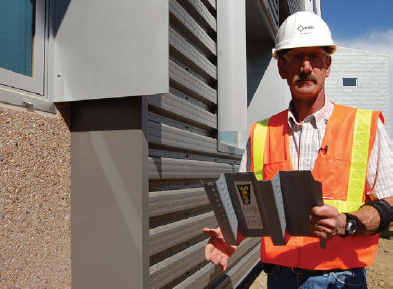
FIGURE G.5 Transpired solar collector. SOURCE: Courtesy of the Department of Energy, National Renewable Energy Laboratory.
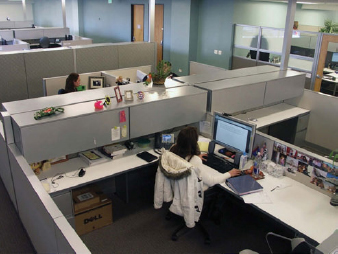
FIGURE G.6 Interior space layout in the Research Support Facility. SOURCE: Courtesy of the Department of Energy, National Renewable Energy Laboratory.
To maximize our LEED points we used locally available materials. In Colorado and Wyoming, lodgepole pines are being killed off by a pine bark beetle. The designers used the wood from the beetle kill as architectural accents in the building: The wood has a beautiful blue-grey tingeing caused by the fungus that the beetles carry and is now prized for cabinetmaking and the like.
About 78 percent of the construction waste was recycled. The aggregate material in the foundations and the slab all came from the old Stapleton Airport. Stapleton was decommissioned about 10 years ago, and the runways—high-quality concrete—were ground up for use. There were massive piles of this concrete available, and we used a lot of it to create the walls in the foundation and building.
To sum up, what we wanted, going back to the performance goals, was a building that would house 800 employees, be certified LEED Platinum, and use 50 percent less energy than ASHRAE at 90.1-2004, and stay within budget. What we got, through our performance-based design-build integrated project delivery approach and our commitment to working with the private sector to lower the project risk through superior project definition, was every “mission critical,” “highly desirable,” and “if possible” performance goal contained in the RFP. In doing so, the RSF demonstrates that, through superior energy performance based on an ultra-high energy efficient design, getting to net-zero energy responsibly and affordably is possible today.
Additional information about the Research Support Facility building, including the contractual documents, is available at two Web sites, http://www1.eere.energy.gov/buildings, and at http://www.nrel.gov/sustainable_nrel/rsf.html.
This page intentionally left blank.


