
H
Sustainable Asset Management: The Case of Los Angeles Community College District
Thomas L. Hall, Facilities Program Manager Los Angeles Community College District
The Los Angeles Community College District (LACCD) is made up of nine colleges (Figure H.1) located throughout Los Angeles County, an area of 882 square miles, which includes 36 cities. The total student enrollment is about 250,000; most attend part time. Students are typically attending evening classes that are in session around 7:00 p.m., which offers a unique challenge in terms of using solar power as a source of renewable energy.
Eighty-two percent of the student population are from minority groups, 68 percent are immigrants or children of immigrants, 60 percent are female, 54 percent are the first generation in their family to attend college, and 40 percent are from households with incomes below the poverty line.
The rates charged by the colleges are relatively low, and the funds for sustainability efforts are limited. The district’s operational funds are used to pay teachers and utility bills. So, a major challenge for the facilities management program is to leverage available resources and save money that can then be put back into teaching and the classrooms.
In 1978, California passed Proposition 13, which effectively shut off funding for school construction for more than 20 years. In 2000, Proposition 39 was passed, which permitted approval of school district bonds by a majority of 55 percent. Several bond measures were subsequently approved, and, along with some additional state and grant funding, brought the total school construction funding level to $6.2 billion.
When it was established, LACCD was part of a K-14 system in California, which means that community colleges were at one point treated as an extension of the secondary education system. Many of the structures used by the community colleges were bungalows or modular buildings. A decision was made to use the bond funding to construct buildings that would look like institutions of higher learning (bricks and mortar).
The first bond measure for $1.2 billion was passed in 2001. As the district board was discussing how the funds should be spent, some environmental groups came to the board and asked, “Now that you have all of this money, why don’t you build in a sustainable way?” The board agreed that it was a good idea and adopted a sustainability policy in 2002. Shortly thereafter, it decided that all new buildings would be designed and constructed to meet Leadership in Energy and Environmental Design (LEED)
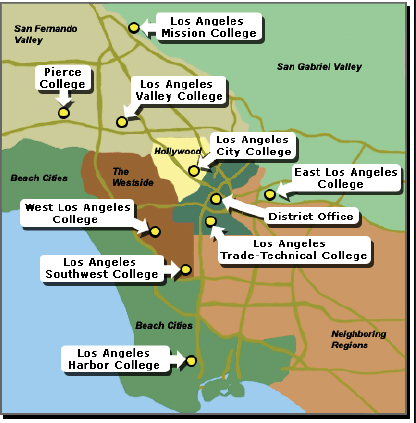
FIGURE H.1 Los Angeles Community College District. SOURCE: Courtesy of the Los Angeles Community College District.
certification standards1 and that all new buildings would have a minimum of 10 percent on-site generation of renewable energy with 15 percent to 25 percent of the building’s energy being produced from renewable sources. As the program has been implemented, the LACCD is exceeding those standards.
The $6.2 billion in funding will pay for a total of 87 new major buildings and many retrofits (such as those at Mission College and Southwest College; Figure H.2). Thus far, 6 buildings have been constructed and have been LEED certified (2 Gold, 3 Silver, and 1 Certified). Six additional buildings are currently in the certification process. Twenty-five buildings are under construction, 8 are in design, and there are more to go. Of the 87 new buildings, we anticipate that 25 will be certified as LEED Platinum.
Because buildings account for 39 percent of total energy usage for LACCD, there is a huge opportunity to save money through efficiency measures. Only 15 to 20 percent of the total cost of a building is for programming, design, and construction, while 80 to 85 percent is for operations over the life cycle. In a community college district where we have capital funds but limited operational funds, we want to ensure that we design and construct buildings that can be efficiently operated and maintained for many years.
As we started on the total construction program for all nine colleges, we began developing guidelines to provide some consistency and efficiency for the colleges and for the architects and engineers hired by the colleges. The guidelines focused on design that included water efficiency features, sustainable furniture, and carpets; cradle-to-cradle products; building information modeling (BIM); building site management (orientation); and an energy plan. The guidelines are posted on our Web site (http://www.build-laccd.org).
___________________________
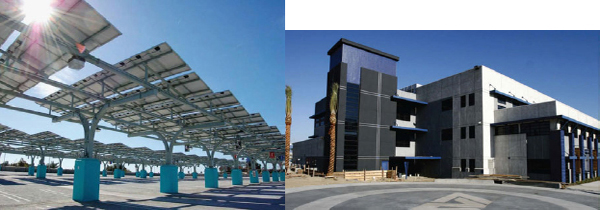
FIGURE H.2 Mission College parking garage (left) and Southwest College’s maintenance and operations building (right). SOURCE: Courtesy of the Los Angeles Community College District.
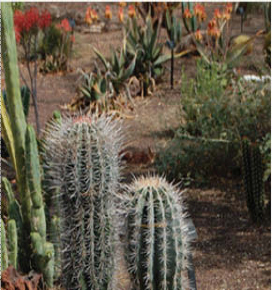
FIGURE H.3 Pierce College botanic garden, reflecting Southern California’s environment and the need for water efficiency. SOURCE: Courtesy of the Los Angeles Community College District.
LACCD has been working on water efficiency because Southern California is very dry (Figure H.3). We are considering many different elements and strategies, including low-flow irrigation, no irrigation and the use of native plants, cisterns for water capture, grey water systems, zero storm-water runoff, waterless urinals, and dual flush toilets.
One example of the measures that LACCD is taking in relation to design, materials and resources, and cradle-to-cradle products is related to sustainable carpet. The LACCD buys large volumes of carpet, and that creates enough of a market that it was able to specify the characteristics of the carpet and challenge the industry to produce it. LAACD hired an expert in carpets to help write the specifications, which were the following: carpet with a 30-year warranty, 100 percent recycled backing, 40 percent recycled yarn content, a wide range of colors and patterns, and a cost of $15 per yard. (Federal agencies also have this kind of buying power and could probably collaborate on specifications for sustainable products and challenge manufacturers to produce them.) The carpet mills actually changed the way they were manufacturing carpet in order to meet LACCD’s specifications. The warranty is for 30 years as long
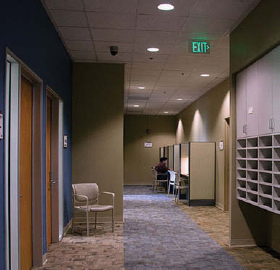
FIGURE H.4 Sustainable carpeting installed at Mission College. SOURCE: Courtesy of the Los Angeles Community College District.
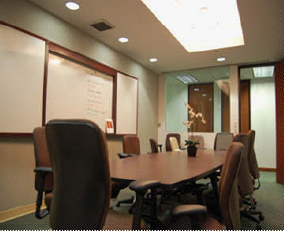
FIGURE H.5 Conference room furniture available at Los Angeles Community College District’s furniture procurement showroom. SOURCE: Courtesy of the Los Angeles Community College District.
as the carpet is maintained according to the manufacturer’s specifications. At the end of 30 years, the carpet mills will take the carpet back and recycle it. In addition, the LACCD cut its carpet costs from $30 per yard to $15 per yard, leveraging both capital and operational funds (Figure H.4).
LACCD has also used master agreements to leverage its purchasing power and to provide consistency and efficiency for its colleges. For example, LACCD wanted to include the use of recycled material in its furniture. One challenge for public agencies is a lengthy bidding process. For LACCD, however, once a master agreement is in place, all of its colleges can use it, which saves time and money. In the centralized furniture procurement operation, LACCD has been able to specify furniture that contains 100 percent recyclable material, end-of-life return to the manufacturer, no use of chrome, a 15-year fully unlimited warranty, and below-market prices for design, delivery, and installation (Figure H.5).
LACCD has shifted its project delivery approach from the traditional design-bid-build, low-bid approach (which results in a lot of change orders, and one ends up spending 10 percent more than planned) to a design-build approach. Design-build project delivery requires that the owner become involved up front in the design process. LACCD is considering using integrated project delivery in con-
junction with design-build. LACCD is also starting to talk about a design-build-operate approach that will focus on the entire life cycle of a building, not just on design and construction.
Design-build traditionally combines the design and the construction process, but it does not go quite far enough. LACCD has been talking to companies such as AutoCAD about their BIM systems, which we believe need to continue from design and construction into the operations stage, so that we can continue to use such systems.
Being in California, we are also using animation software in the design process. Many of our students go to work for Disney and similar companies, so we are using students to create a lot of the animation. They develop a flythrough view of the project as the modeling is taking place so that users and others can see what the building will look like before it is constructed.
We are just starting to explore BIM Storm, which is cloud computing for architecture. It brings together different types of software, which allows us to design, model, and construct a building in less time than is typical.
LACCD is also using several approaches to building commissioning. Commissioning to comply with the LEED rating system focuses on the heating, ventilation, and air conditioning (HVAC) system. In LACCD’s last bond measures, funding for whole-building commissioning was included. LACCD has now moved to whole-building commissioning and is looking at everything throughout the building. Retro-commissioning is being used to ensure that mechanical systems in existing buildings are operating as designed. We are currently exploring the idea of ongoing commissioning, whereby LACCD staff would continually “tweak” a building’s operating systems.
After the construction program started, LACCD realized it needed an energy plan. We understood that we needed to centralize the energy distribution, reduce the energy demand, and determine what sources of renewable energy could be put in place. We also knew that the long-term budget was a consideration in developing the implementation strategy. As a community college district, we also wanted to be able to transfer such knowledge to the students so that they can go out and replicate some of these approaches.
With regard to centralized distribution, LACCD is building a number of central plants, with differing characteristics. For example, the Valley College central plant incorporates solar thermal, which takes care of the heat and the cooling load of the campus by using an absorption chiller for cooling and stored hot water for heating (Figure H.6). To support centralized energy systems, we had to install extensive infrastructure for energy distribution (Figure H.7), and these costs had to be figured into LACCD’s total budget and expenditures.
With regard to energy demand management, LACCD used a traditional energy-saving contract—ESCO (energy service company)—approach. Using ESCOs, we were able to retrofit lights, fans, pumps, and other energy-consuming components; install insulation, low-E glass, white and green roofs, and other conservation features; install state-of-the-art technologies, including occupancy sensors; and install metering and monitoring systems. The advantage of an ESCO is that the vendor pays for the energy-saving features up front and then the owner can pay back those costs over time through energy savings. Once the owner has paid back the amount of funding stipulated in the contract, the energy is free.
The renewable energy solutions considered by LACCD included solar, wind, and geothermal. Solar is probably the best answer for LACCD, given the Southern California location, but there is also potential for the use of wind and geothermal. Currently eight of the nine colleges have new solar arrays, including some thin film arrays (Figure H.8). The use of a solar concentrator is being evaluated for a couple of areas, but this technology has not yet been installed.
Regarding wind generation in urban areas, people do not want to see the big windmills in the middle
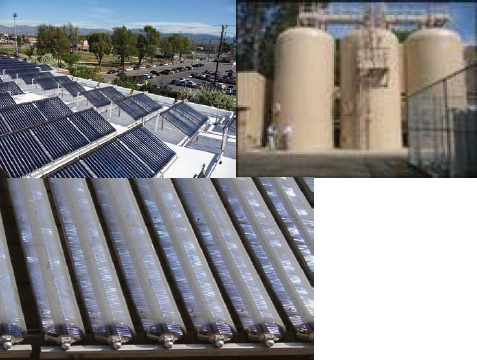
FIGURE H.6 Valley College central plant components: solar array (top left), hot water storage (top right), and vacuum tube heat-pipe collectors (bottom). SOURCE: Courtesy of the Los Angeles Community College District.
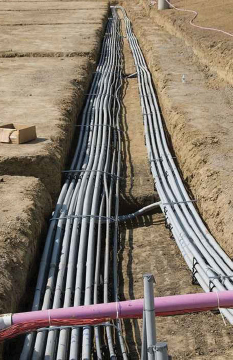
FIGURE H.7 New infrastructure for centralized energy distribution at Pierce College. SOURCE: Courtesy of the Los Angeles Community College District.
of town. Thus we are looking at devices that can be installed on a building’s parapet and will probably install such devices on the parapets of some of our parking garages (Figure H.9).
Geothermal systems may come into play in reducing LACCD water usage. Our cooling towers use a lot of water. We may be able to use geothermal energy for cooling the water that comes back from the chill loop. We would install a number of wells on a campus. As one well gets saturated, we would move to another well.
Financing is also a component of the energy plan for LACCD. We have looked at a number of options, including the use of the federal energy tax credits, depreciation through third-party financing,
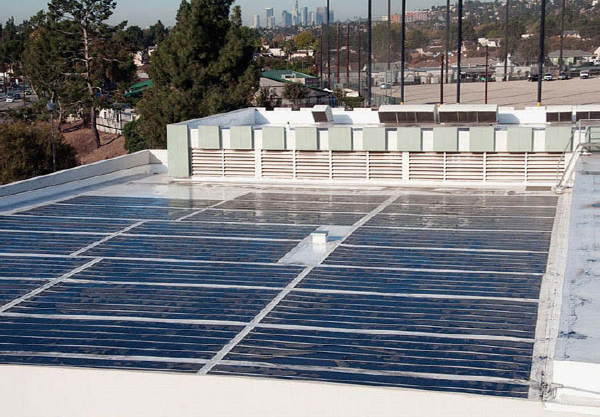
FIGURE H.8 Thin film solar array at East Los Angeles College. SOURCE: Courtesy of the Los Angeles Community College District.
utility incentives, renewable energy credits, carbon trading, bulk procurement, power purchase agreements, and lease agreements.
In order to take advantage of all the different incentive programs, like tax incentives, we have to get a third party involved that can capitalize the these programs and offer a discounted system. One of the biggest challenges with power purchase agreements is working with utility companies. Three of the colleges are in Southern California Edison territory, a public-owned utility territory where we have been able to purchase power from a third party. In a municipal-owned utility territory, however, this has been more challenging. Six of our colleges are in municipal-owned utility Los Angeles Department of Water and Power territory where the municipality has a city charter that says no one can sell energy in its district. A creative solution to this problem was a lease agreement whereby the LACCD’s leases the solar equipment, and receives the benefit of the power that is generated. By using a lease agreement, LACCD still can take advantage of all of the different incentives.
I mentioned previously that most of LACCD’s students are taking classes at 7:00 p.m. but electricity is generated during the daytime when the sun is shining, and so the issue of storage is an important one. LACCD needs to be able to shift its energy production to match its energy usage. To do this we are using thermal energy storage in the form of both ice storage (Figure H.10) and hot water storage.
We are also considering the use of lithium ion batteries for storage and will likely install a test system at the Trade Technical College within the next year. Other technologies under consideration include zinc-bromine batteries (hybrid flow batteries), vanadium redox batteries (flow batteries), and hydrogen storage (metal hydride).
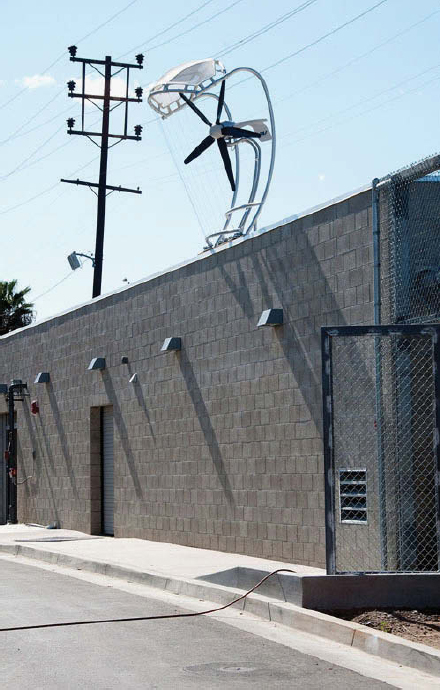
FIGURE H.9 Wind turbine installation on the Van de Kamp Innovation Center. SOURCE: Courtesy of the Los Angeles Community College District.
As we look at LACCD’s energy use, it is important to understand its utility bills. With regard to energy use, we are looking at lowering demand charges and changing time-of-day use. At one point we were looking at going off the utility grid, but it became apparent that we could use the utility grid to our advantage. Using the grid for energy storage is not out of the question, but we need to work out the details with the utility companies. There are several different scenarios. The first scenario is net metering—staying connected to the grid and running the utility meter back to zero. In this case, any extra
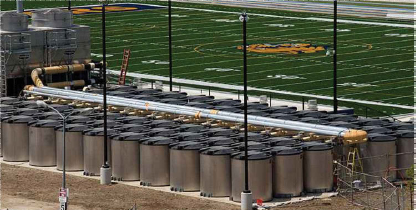
FIGURE H.10 Ice storage system at Southwest College. SOURCE: Courtesy of the Los Angeles Community College District.
energy produced is given to the utility, and you receive nothing from the utility company. The second scenario is virtual net metering—staying connected to the grid and running the meter back to zero. In this case, you get the same amount of energy from the utility company that you send to the utility. The third scenario is the feed-in-tariff—whereby the utility pays you for the energy you put on the grid at the time-of-day rate or a pre-negotiated rate, and you buy back whatever energy you need at the time of day that you need the energy. The feed-in-tariff offers the greatest potential for making renewable energies very affordable.
It is important to understand that LACCD is not in the utility business; we are in the business of educating tomorrow’s workforce. For our situation, a key element is jobs, green jobs in particular, for our students. LACCD is using its campuses to develop curriculums covering all aspects of sustainability: technologies (solar, wind, geothermal); economics (business plans, life-cycle assessment); and operations and maintenance. The colleges are training for “green collar” jobs and for climate solutions today by offering courses, certificates, licenses, and degrees in sustainable areas of study.
LACCD has faced a number of challenges in developing sustainable campuses. One of the biggest is overcoming conventional thinking. People do not believe that you can do this. Another challenge is related to innovative versus proven technologies. We have found that banks are not as willing to finance innovative technologies. Further complicating the financing package is the use of third parties. In addition, in designing buildings to obtain LEED certification, people perceive “Platinum certified” to be very expensive.
Being an early innovator means that you run up against a lot of naysayers. You have to talk to a lot of people to convince them that a sustainable approach is possible and cost-effective, and you have to back up your arguments with facts. That takes a lot of time.
Another big challenge for LACCD has been that there are so many different user groups that we must interface with on an ongoing basis. Each one of our colleges and each one of our projects has a different user group. In order to deal with these circumstances, we had to develop some mechanisms to get many different people and groups to understand what we were doing. Constant communications and the development of sustainable standards and guidelines for design have helped us overcome some of these concerns. We have developed a motto of sorts, which is “Building a Green Tomorrow Today.” Much more detailed information about the LACCD effort may be found at http://www.laccdbuildsgreen.org.
This page intentionally left blank.


