
4
Sustainability Assessment and Management: Process, Tools, and Indicators
ELEMENTS OF SUSTAINABILITY ASSESSMENT AND MANAGEMENT
Embedded in the general Sustainability Framework recommended by the Committee on Incorporating Sustainability in the U.S. EPA is an approach to incorporating sustainability to inform decision making. It is called “Sustainability Assessment and Management” and is illustrated as Level 2 in Figure 4-1. This chapter describes the steps involved in this approach, beginning with a screening evaluation to determine whether to conduct the Sustainability Assessment and Management process and to determine the appropriate level of effort or depth of such an assessment. This step is followed by problem definition and scoping, which includes identification of options, preliminary scoping of the analysis, stakeholder involvement, and opportunities for collaboration. The next section describes a set of analytic tools that can be used in the Sustainability Assessment and Management process. The set of potential tools include risk assessment, life-cycle assessment, benefit-cost analysis, ecosystem-services valuation, integrated assessment models, sustainable impact assessment, environmental justice, and present and future scenario tools. This list is not meant to be comprehensive, nor will all of the tools be useful in all cases. The tools, however, are the types of tools that should be in EPA’s sustainability toolbox and are likely to be useful in some instances. Following the discussion of tools, the next topic is how to integrate the Sustainability Assessment and Management process into management and policy decisions. Integration into decision making involves summarizing the major results of the assessment in terms of a trade-off and synergy analysis that highlights impacts on important social, environmental, and economic objectives (Box 4-1). This step is followed by presentation of results to the decision makers.
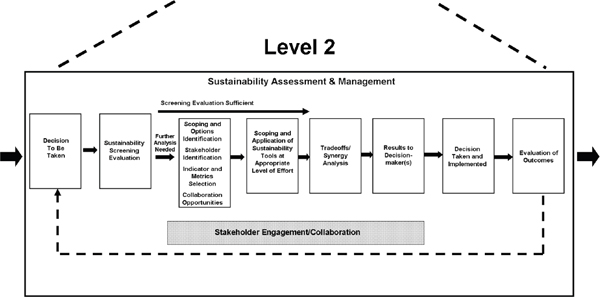
FIGURE 4-1 A framework for EPA sustainability decisions (level 2).
Adopting a sustainability framework could help address the social, economic and environmental impacts of biofuel expansion and guide policy decisions toward more sustainable energy supplies. Concerns over energy security, environmental impacts, cost, and availability led to the passage of the Energy Independence and Security Act of 2007 establishing an ambitious goal of producing 36 billion gallons of biofuels annually by 2022. Biofuels are a renewable energy source that can be produced domestically with potentially reduced environmental impacts compared with fossil-fuels. However, the push for biofuels preceded careful sustainability analysis, and the rapid expansion of biofuels production raised its own set of social, economic, and environmental concerns.
The law also requires EPA to report to Congress every three years on the impact of biofuel production on the air, water, and soil quality; ecosystem health and biodiversity, and invasive and noxious plants. The reports are required to include a quantitative assessment of significant environmental changes associated with biofuels production. To date, EPA has not been able to complete a quantitative risk assessment of biofuel production because of a number of factors, including the significant data limitations, substantial uncertainties associated with the production and conversion of biomass feedstocks to biofuels, and a lack of consistency in biofuel production by region.
Impact on food prices: In 2010, 38% of the U.S. corn harvest went to ethanol production. In 2010, total U.S. ethanol production was 13.23 billion gallons (RFA 2011) while U.S. corn production was 12.45 billion bushels (USDA 2011). To produce 13.23 billion gallons, assuming 2.8 gallons of ethanol per bushel of corn, requires 4.725 billion bushels, or 37.95% of total corn production. Some
Finally, once decisions are taken and implemented there should be follow-up evaluation of outcomes on important dimensions of sustainability.
The Sustainability Assessment and Management process should incorporate certain key features:
- Comprehensive and systems-based: Analysis of alternative options should include an integrated evaluation of the social, environmental, and economic consequences.
- Intergenerational: The long-term consequences of alternatives should be evaluated in addition to the more immediate consequences.
- Stakeholder involvement and collaboration: Stakeholders should be involved throughout the process.
The committee recognizes that the formal Sustainability Assessment and Management process can be quite involved and may require EPA to devote
analysts blame recent high prices for corn and other crops, at least in part, on biofuel demand (Runge and Senauer 2007; Mitchell 2008). It is difficult, however, to separate out the impact of others factors on food prices, such as the impact of production costs, including high energy prices, weather-related poor harvests, and commodity speculation.
Commercial viability: Biofuel production has been assisted by generous tax credits to refiners, currently $0.45 per gallon for corn ethanol and $1.01 per gallon for cellulosic ethanol, to make it commercially viable (PEW 2009).
Environmental impact: A potential benefit of biofuels is lower life-cycle greenhouse gas emissions (Farrell et al. 2006; Hill et al. 2006; Wang et al. 2007). Yet, if biofuel expansion causes conversion of forests, wetlands, or native grasslands to croplands, the carbon debt from land-use change can take decades to centuries to repay (Fargione et al. 2008). Increased biofuel production can put pressure on local water supplies and may lead to declines in regional water quality (NRC 2008a). Also, concerns about impacts of changes in land use include the potential negative impacts associated with the expansion of biofuel production on marginal lands and withdrawal of the land from the Conservation Reserve Program (NRC 2010). Biofuel production can also cause an increase in air pollution (Hill et al. 2009).
A 2008 NRC workshop summary on this topic noted that future efforts in this area could include “creating a framework for assessing bioenergy production and biorefineries in the context of sustainability” (NRC 2008b, p.33). Both the United States (EPA 2010) and the European Union (CEU 2010) have requirements to conduct life-cycle assessments of biofuels, but this requirement has to date focused primarily on greenhouse-gas emissions and land-use change rather than the full suite of social, environmental, and economic impacts.
significant staff time and resources to the task. A formal sustainability analysis could also take an extended time period to complete. Therefore, it is important that EPA carefully match the level and depth of the analysis with the scale and magnitude of consequences of the decision at hand. The Sustainability Assessment and Management process should be undertaken for major decisions that could have large impacts on multiple pillars of sustainability. Such an in-depth analysis should not be undertaken for routine or minor decisions, but a systematic approach for addressing sustainability for such decisions could be desirable. The challenge is to match the intensity, detail, and scope of the assessment and management process to the decision needs. This point is discussed further in the screening evaluation section below.
Screening Evaluation
EPA has the discretion to decide what kinds of activities or actions to address in the Sustainability Assessment and Management process. Application of sustainability assessment tools, such as the risk assessment, life-cycle assessment, benefit-cost analysis, ecosystem services valuation, integrated assessment models, sustainability impact assessment, and environmental justice tools described in this chapter, can be applied to programs, policies, and projects; however, not all of them will necessarily require the application of these tools. The agency may wish to focus on major new rules, on complex and important emerging issues, or on making changes to relatively routine decision-making processes. The committee explicitly recommends that EPA develop a sustainability screening approach. There are examples of screening tools used by other governments and the private sector, but EPA will probably need to develop its own set of screening tools.
The screening approach would first determine whether to undertake the Sustainability Assessment and Management approach for any particular program, policy, or project. If it is determined that this process should be undertaken, the screening tool could also provide some guidance on the appropriate analytical tools to apply and on the appropriate degree of depth and detail of analysis needed.
The screening tool should help EPA managers determine whether the full Sustainability Assessment and Management approach is needed. At the one extreme, narrow routine decisions may affect small geographic areas, such as the tens of thousands of permitting decisions on water effluent and air emissions that the agency makes or facilitates annually. For these types of decisions, routine processes have been established. It would be impractical and unworkable to make each of these types of decisions using the formalized Sustainability Assessment and Management approach. Instead, practices and guidelines could be changed so that over time the outcomes are more in line with agency sustainability goals. At the other extreme, the decision-making case may be fairly unique and have wide impact, such as whether to embark on a particular fuel strategy. Such policy
decisions will have high impact for all three pillars—social, environmental, and economic—and involve a variety of statutes. Such decisions would probably benefit from the Sustainability Assessment and Management process, either led by EPA or other agencies where EPA has input. EPA may not be the lead federal agency but may be a collaborator, perhaps having an important role in articulating the health and environmental impacts. EPA may have a limited ability to affect the overall decision-making process but may be able to contribute adequately to consideration and analysis of the social/health and environmental dimensions, and potentially voice ways to approach consideration of trade-offs. Finally, other cases may involve repeated but wide-impact decisions (NRC 1996), such as a major expansion of a large refinery, the siting of a power plant, the re-registration of a major use pesticide, actions to address environmental justice issues in a heavily affected community, or a major new rule under the Clean Air Act. These types of high-stakes decisions have potentially large impacts on each of the pillars. They can pose a challenge for the analysis and process. Although any particular new problem may be similar to a previously addressed one, the new problem will likely be sufficiently different to require tailoring of the analysis or process to the specifics of the new problem. In addition, high-stakes decisions typically involve a varied group of interested parties with unequal impacts in terms of those that bear the burden versus those that benefit.
Not all applications of the sustainability assessment tools need to be done at the same level of depth and detail. The distinctions made in administration of the environmental review process under the National Environmental Policy Act (NEPA) provide an example of adjusting the depth of the analysis to the scale of the problem. In addition to providing for categorical exclusions, the NEPA process provides for environmental assessments resulting in a finding of no significant impact (FONSI) or an environmental impact statement (EIS), requiring a much more elaborate analysis and review process (Council on Environmental Quality [CEQ]). (NEPA Regulations, 40 CFR Pt. 1501 [1978]). Varying assessments in the scope and depth of analysis according to the action being considered has long been practiced in the field of risk assessment. A matching of the assessment process to meet the needs of the decision is often recommended as a way to improve the decision-making process (NRC 1996, 2007; IOM 2009). EPA’s task is to incorporate sustainability factors and tools—at an appropriately selected level of detail—into existing or new decision-making frameworks so that a multidisciplinary, systematic, and long-term look at the three pillars of sustainability is assured.
Screening is particularly important to avoid undue delays in taking action in the face of environmental problems. A quick scan process can be applied to determine the need for sustainability assessment tools. The quick scan process can determine whether the project is sufficiently large to establish a presumption of possible impacts on one or more pillars of sustainability, to determine the range and magnitude of potential impacts, and to identify which pillars will have large
potential impacts. When impacts are likely to be small and the Sustainability Assessment and Management process is not needed, then a library of best-practice techniques and technologies should be consulted and compared with the proposal.
Check lists or impact matrices are often used for screening purposes. The program or project initiative can be broken down into a number of components that can be assessed against social, environmental, and economic criteria of sustainability. For example, in the Swiss assessment process, screening is based on a number of preset social, environmental, and economic criteria (OECD 2010). A rough judgment is made about the causal relationships between the project and the various dimensions of the criteria, and then relevance scores ranging from 0 to 3 are assigned without regard to whether they are positive or negative. A judgment is made on whether there are moderate impacts and potential conflicts between at least two of the pillars (OECD 2010). If both of those conditions are met, then further analysis is needed. How to integrate results from the sustainability screening is discussed further below.
Problem Definition and Planning and Scoping
EPA is engaged in a wide variety of activities as part of its statutory mandates and its initiatives to protect human health and the environment. Specific problems outside EPA’s usual activities can also arise, for example, through congressional action, requests for assistance from state or local governments, acts of nature, or terrorism. At the early planning and scoping stage, project managers and analysts diagnose the issue or problem to be addressed. Upfront review of the nature of the problem, credibility of the science, and the decision and legal context helps in considering the nature of the assessment and decision process (Goldstein 1993; NRC 1996, 2007) and whether to embark on a formal or semiformal Sustainability Assessment and Management approach.
An important early step in the process is to identify alternative decisions that could be made (options identification) and to scope the important social (including health), environmental, and economic pillars that could be potentially affected by the decision.
Once attention has been applied to problem definition and identification of alternative options, managers and analysts can begin to develop provisional approaches for the assessment process and the analysis. The Sustainability Assessment and Management approach should begin to develop provisional plans about the level and depth of analysis; the level, extent, and timing of stakeholder engagement; indicators by which they will judge the decision outcomes and process; and collaborative opportunities to explore the range of potential solutions and approaches. To be successful, the overall sustainability process will probably involve a high degree of collaboration, including federal partners, state and local governments, as well as the private sector, nongovernmental organizations, and other stakeholders (NRC 1996, IOM 2009). The levels of information gathering,
analysis, and stakeholder involvement for actions that are made subject to the Sustainability Assessment and Management approach will vary depending on the significance of the action and the needs of the decision process (NRC 1996), as discussed in the screening section above.
Another component of the problem definition and scoping process is to select indicators and associated metrics by which to judge success. These metrics can focus on accountability at varying levels of detail and can be directed toward different organizational levels, for example, (1) individual management units within the agency (metrics to show progress toward sustainability goals for program or regional offices), (2) Office of Research and Development (ORD) (a focus on metrics to assess whether the research funded portfolio for ORD is leading to more sustainable solutions to environmental problems), (3) EPA in general, and (4) multiagency collaborations or the United States as a whole (metrics of sustainability regarding overall “performance” of the United States or even the world).
Application of Sustainability Tools
To incorporate sustainability effectively within EPA and to achieve external adoption in various sectors, EPA will have to make use of a variety of assessment tools. EPA will need to develop a set of tools or models that can be used to quantify impacts on important, social, environmental, and economic indicators that might be affected by the program, policy, or project under evaluation. Such tools can provide a uniform and transparent basis on which to evaluate alternatives. The broadening of the analysis from environment and human health to sustainability means that instead of or in addition to risk assessment, additional economic and social factors will need to be considered. This process also means that EPA will need to adopt, develop, or modify a set of tools to conduct such analyses that go beyond traditional risk assessment.
A large number of tools can be applied to address component parts of an analysis. Typically a comprehensive analysis will require the application of a suite of tools. Several principles are important in applying this suite of tools:
- No single tool is likely to be comprehensive; a comprehensive analysis will probably require application of a suite of tools to analyze impacts on social, environmental, and economic pillars of sustainability.
- The suite of tools should include dynamic analysis that analyzes the consequences of alternative options through time (intergenerational component).
- Tools should be capable of delivering quantitative assessments of impacts to the greatest extent feasible.
- It is desirable to have relatively transparent methods that can be easily explained and where the results of the analysis can be effectively communicated to decision makers.
- Data availability will, in part, determine the necessary tool.
- Uncertainty and sensitivity analysis will be required.
Overview of Selected Sustainability Tools
A large number of existing tools can be usefully applied in the Sustainability Assessment and Management process. A small subset of the most appropriate tools, including risk assessment, life-cycle assessment, benefit-cost analysis, ecosystem services valuation, integrated assessment models, sustainability impact assessment, environmental justice tools, and present and future scenario tools are described below. This list is not intended to be a comprehensive list of potential tools but rather a brief review of some important assessment tools.
Risk Assessment
Risk assessment is a tool widely used for characterizing the adverse human health and ecologic effects of exposures. Classically, risk assessments for human health endpoints involves four major steps: a hazard identification, dose-response assessment, exposures assessment and risk characterization (NRC 1983, 1994, 2009; EPA 2005). In the hazard identification step a determination is made about the type of effects potentially caused by the environmental exposure. In the dose response step, the level of exposure such as dose or air concentration is related to the level of adverse effect, such as the incidence of a health effect from an environmental exposure. The exposure assessment characterizes elements of the exposure, for example its intensity, frequency, and timing. The risk characterization combines the dose response and exposure assessments to produce descriptions of the risk for the variety of adverse effects determined in the hazard identification step. In this last step, the uncertainty in the description is also characterized along with variability of the effects in those exposed. For example, a risk assessment may include predictions of the increased incidence of cancer from an environmental chemical exposure in the general population or highly exposed groups or of the margin between the environmental exposure and that causing a noncancer effect seen in the laboratory or in human studies. Ecologic risk assessments evaluate the likelihood that ecologic effects result from environmental exposures to chemicals and other stressors (EPA 1998a). EPA has numerous documents that provide guidance, explain practice, and give operational approaches for specific programs to conduct human health and ecologic risk assessments (EPA 1991, 1996, 1998a, 2000, 2005).
A wide variety of analytic approaches and tools are used in conducting a risk assessment. Risk assessments are important inputs into the process of establishing environmental regulations, cleanup levels, and permitting industrial facilities. An important consideration in any sustainability action is whether environmental or human health will be better or worse off if an action is taken, both near term and
in future generations. It is also important to understand not just the direction but also the magnitude. However, it is not always possible to approach these questions quantitatively. Complexity or lack of knowledge may limit the reliability and usefulness of quantitative risk descriptions, but systematic approaches can produce useful qualitative descriptions that can inform decisions. Early on, the NRC (1983) recognized that risk assessments could not always be quantitative, and most recently, the NRC (2009) emphasized the need for tools for fuller characterizations of cumulative risks, including qualitative ones, that adequately account for the full range of chemical and other stressors, particularly for environmental justice contexts. Such risk descriptions could be useful inputs for sustainability decision making. In addition, risk assessment tools for facilitating green chemistry evaluations are needed as green chemistry will continue to be an important component of mitigating human health and environmental risks (NRC 2005a, b). Chapter 5 contains a more detailed discussion of risk assessment.
Life-Cycle Assessment
Life-cycle assessment is a “cradle-to-grave” analysis (or “cradle-to-cradle” ([McDonough and Braungart 2002]) of environmental impacts from production, use, and eventual disposal of a product. Life-cycle assessments are used to analyze the major environmental impacts of various products, to determine how changes in processes could lower the environmental impact, and to compare the environmental impacts of different products (Blackburn 2007). Life-cycle assessments are already used by EPA and have been used to compare the environmental impacts of transportation fuels and specifically to judge whether biofuels meet requirements for carbon-emissions reductions relative to fossil fuels (EPA 2009). Life-cycle assessments take a systems perspective to include the whole production process, from production of raw materials to eventual disposal and is therefore consistent with, and often an essential component of, sustainability analysis. Life-cycle assessments require a large amount of data on necessary inputs, outputs, and various types of environmental emissions of processes. The availability of standardized economy-wide input-output coefficients for ready use simplifies this challenge. Other challenges with applying life-cycle analysis in a sustainability context involve decisions on where to set system boundaries and what to assume about future technologies.
Benefit-Cost Analysis
Benefit-cost analysis is a widely used tool from economics to evaluate the net benefits of alternative decisions. Benefit-cost analysis seeks to assess the change in welfare for each individual affected by a policy choice, measured in a common monetary metric, under a set of alternatives. Most benefit-cost analyses then aggregate the measure of individual net benefits to find a social net benefit and
then rank the alternatives. There have been concerns that benefit-cost analysis as commonly applied to environmental issues places too much emphasis on the economic costs and too little on benefits and their distribution (OECD 2006). Recent developments in benefit-cost analysis as applied to environmental issues can be used in an attempt to ensure that the full range of benefits and costs can be taken into account better. These developments include, for example, integrating life-cycle analysis into benefit-cost analysis, having improved methods of estimating the value of ecosystem services, and paying close attention to distribution of benefit and costs across different groups in society to address environmental justice concerns (Pearce et al. 2006).
Of particular concern for sustainability analysis is the weighting (discounting) of benefits and costs that accrue to future generations compared with those that accrue to the current generation (intergenerational equity). Although discounting will account for the costs to present generations of providing protections, opponents of benefit-cost analysis perceive discounting as inconsistent with an environmental law’s forward-looking premise because the standard technique of constant exponential discounting can have a potentially large adverse effect on the perceived benefits—such as protecting against long-latency diseases like cancer—that aim to prevent future harm (Harrington et al. 2009). For further discussions on alternative discounting methods, see Pearce (2006); with specific reference to the use of discounting in climate policy, see Nordhaus (2007) and Stern and Taylor (2007). Such issues will need to be addressed in sustainability analyses that use benefit-cost analyses.
Ecosystem Services Valuation
Ecosystem services are goods and services that contribute to human well-being and are generated by ecosystem processes. For example, ecosystems can filter contaminants to provide clean water for human use and modulate water flow, reducing the probabilities of flooding and providing higher flows during drier periods. Ecosystem-service valuation is an attempt to measure the relative benefits of ecosystem services in a common metric (usually a monetary metric). Ecosystem-services valuation requires integration of ecological and other natural sciences (EPA SAB 2009). It is used to better understand the provision of services as a consequence of the state of the ecosystem (“ecologic production functions”) along with economics and other social sciences to gain an understanding of how nature contributes to human well-being (“valuation”).
Ecosystem-service valuation measured in money terms can be used in benefit-cost analysis to capture a more complete picture of the net benefits of alternative actions. Economic valuation methods for ecosystem-service valuation are well described in both NRC (2005a,b) and EPA SAB (2009). EPA SAB (2009) also reviewed a number of other noneconomic approaches to valuation. For sustainability analysis, what is of most interest is how the value of ecosystem
services will probably change through time. Notions of sustainability can be assessed through an evaluation of the value of natural capital and other forms of capital assets (including manufactured capital, human capital, and social capital). The value of natural capital is the contribution of an attribute of an ecosystem to present value of the flow of services through time. de Groot et al. (2002) also provided a conceptual framework and typology for the classification, description, and valuation of ecosystem goods, functions, and services.
Integrated Assessment Models
Integrated assessments cross disciplinary lines to merge theory and data from multiple disciplines to address complex environmental issues. Modeling is the standard tool used for conducting an integrated assessment. Integrated assessment models, such as the Global Change Assessment Model (GCAM), arose in the study of climate change, bringing together global circulation models and economic models to assess the probable benefits and costs of alternative energy- and climate-policy choices (Hannam et al. 2009). Although typically not called integrated assessment models, models used for ecosystem-services valuation are also examples that integrate models from multiple disciplines to assess the benefits and costs of alternative policy choices. The strength of integrated assessments is that they combine knowledge from multiple disciplines needed to understand how human actions might affect the system in important ways (e.g., greenhouse gas emissions and the climate system). Integrated assessments often take an expansive and long-term view, which is suitable for sustainability analysis. Integrated assessment models are often complex, tending to make them nontransparent to nonexperts. Furthermore, outcomes can be sensitive to modeling assumptions for that might have inadequate factual bases for clearly determining the right assumption to use. Still, integrated assessment models will often be needed to understand the relationships among the social, environmental, and economic pillars of sustainability in the context of a particular decision.
Sustainability Impact Assessment
Sustainability impact assessment is used to analyze the probable effects of a particular project or proposal on the social, environmental, and economic pillars of sustainability. This assessment is also used to develop integrated policies that “take full account of the three sustainable development dimensions” and include the “cross-cutting, intangible and long-term considerations” of those policies (OECD 2010). Sustainability impact assessment is used in many European countries and in Canada but has not been used to any great extent in the United States (Zerbe and Dedeurwaerdere 2003). Sustainability impact assessment is modeled on, but different from, environmental impact assessment, which was pioneered in the United States through the National Environmental Policy Act of 1969 and
is now widely used around the world. Environmental impact assessment tends to focus primarily on the projected environmental effects of a particular action and alternatives to that action. The purpose of environmental assessment is to ensure full consideration of environmental impacts and alternatives, with the understanding that such consideration will ordinarily (but not necessarily) reduce the environmental impact of the decision. The objective of the sustainability impact assessment, in contrast, is not only to minimize the environmental impact but also to optimize a particular decision’s contribution to sustainability (Gibson 2005).
Environmental Justice Tools
Environmental justice tools are analytic methods for judging whether communities are experiencing inordinately high environmental and health burdens and for evaluating the sustainability of communities. The tools include quantitative and semiquantitative methods for screening communities of concern, for conducting specific community evaluations of cumulative environmental impacts or risks, and for looking at cumulative exposures and impacts in planning for land use (OEHHA 2010). An approach for assessing inequalities in environmental exposures has also been developed similar to one used to assess income distribution inequities (Su et al. 2009).
Environmental justice tools include guidance documents for working with communities to engage in problem-solving efforts (EPA 2008) and evaluating whether environmental justice concerns have been adequately addressed in an assessment (e.g., EPA 1998b). The goal of a cumulative risk assessment in a community setting is to fully account for the combined effects of multiple exposures—chemical, biologic, psychosocial, and physical—on a community, a goal that cannot be achieved using standard risk assessment methodology (IOM 2009). This goal has resulted in a call for simple tools to adequately address community concerns in evaluating community status with respect to environmental justice. Environmental justice and cumulative impact analyses can be used in priority-setting processes to direct resources to address the most heavily affected communities, to evaluate equity and fairness issues in siting and permitting decisions, and to facilitate community considerations of resource use (Morello-Frosh et al. 2011). In sustainability decision making, environmental justice tools may be similarly used.
Present Conditions and Future Scenario Tools
The Sustainability Assessment and Management approach requires an evaluation of present and future conditions to show that present decisions and actions are not compromising future human and ecologic health and well-being. A requirement of these elements, therefore, is to be able to forecast potential future conditions as a function of the decision option chosen. The forecast should take into account both the decision options and the underlying biophysical, social, and economic forces that will influence system dynamics.
Forecasting conditions relevant to sustainability poses a paradox. There is no standardized universally accepted way to forecast the future and, in fact, most forecasts are wrong to a greater or lesser degree. On the other hand, almost all policy actions are premised on assumptions about future conditions. Forecasting is unavoidable when dealing with sustainability, but our ability to do forecasting is limited. At a minimum, this means that the forecasted premises needs to be made explicit and the uncertainty of the forecast also needs to be explicit because the robustness of the sustainability assessment will depend on the degree of uncertainty of the forecast.
One standard approach to specifying future conditions is to use scenario analysis (Schwartz 1991). A scenario is a plausible story about how the future might unfold from current conditions given assumptions about biophysical processes, human behavior, policy, and institutions. Major global assessments, the “Global Environmental Outlook” (UNEP 2002), the “Special Report on Emissions Scenarios” (SRES) of the IPCC (Nakicenovic et al. 2000), the “Millennium Ecosystem Assessment” (MEA 2005), and the OECD Environmental Outlook to 2030 (OECD 2008) have each generated scenarios of future conditions. Scenarios are useful in situations of great complexity and uncertainty, as is the case in global assessment of complex systems. Creative thinking about a set of scenarios can highlight the potential range of plausible future outcomes. Scenarios, such as a range of scenarios about land-use change, can be used at local or regional levels. See Box 4-2 for an example of such a scenario for global biodiversity.
BOX 4-2
Scenarios for Global Biodiversity
Quantitative scenarios used to evaluate the impact of future socioeconomic development pathways and ecosystems services have indicated that biodiversity will continue to decline over the twenty-first century (Pereira et al. 2010). However, Pereira et al. (2010) noted that the “range of projected changes is much broader than most studies suggest partly because there are significant opportunities to intervene through better policies” (p. 1496). In this model, scenarios of socioeconomic development pathways modeled include population growth, fossil fuel use, and food demand. The projections of direct drivers for this include climate change, land-use change, water extraction, and fish harvesting pressure. The projections of impacts on biodiversity are twofold: habitat or functional group-level changes and species-level changes. Finally, the projections of impacts on ecosystem services include impacts on provisions, regulation, support, and cultural services. The authors noted that to better inform policy, “scenarios must move beyond illustrating the potential impacts of global change on biodiversity toward more integrated approaches that account for the feedbacks that link environmental drivers, biodiversity, ecosystems services, and socioeconomic dynamics” (Pereira et al. 2010, p. 1501).
EPA needs to improve its forecasting ability both in the context of the Sustainability Assessment and Management approach and, more generally, needs to be better able to anticipate and deal with future environmental problems. As stated in a previous NRC report (2005a, p.8), “Federal environmental agencies should undertake an assortment of research initiatives to collect, appraise, develop, and extend analytical activities related to forecasting in order to improve environmental understanding and decision making.”
Trade-off and Synergy Analysis
Trade-off and synergy analysis is a fundamental component of the Sustainability Assessment and Management approach. The objective is to maximize synergies (social, environmental, and economic benefits of a decision) and to minimize the adverse effects of conflicts among the three pillars. Because conflicts lead to trade-offs among the three pillars and because improperly managed trade-offs can compromise environmental protection, public health, or other key aspects of sustainability, clear trade-off rules are required. Most basically, “tradeoff decisions must not compromise the fundamental objective of net sustainability gain” (Gibson 2006, p.175). OECD recommends,
“Preference should be given to those scenarios in which none of the three sustainability dimensions is too strongly impaired. The proposed options should all meet the following minimum requirements: (i) environmental standards established to protect human and environmental health; and (ii) living standards in keeping with social well-being or to safeguard human rights. The aim is to develop “win-win” situations where mutually-reinforcing gains can strengthen the economic base, ensure equitable living conditions, and protect and enhance the environment. Where this is impossible, the trade-offs should be clearly indicated to guide decision makers” (OECD 2010).
It will be important for EPA to establish a systematic way to analyze and quantify alternatives. One approach to analyzing conservation and management alternatives was used in the application of spatially explicit models of multiple ecosystem services and biodiversity conservation (Polasky et al. 2011). These models illustrated how predictions could be used to analyze alternative conservation and management strategies, and by comparing maps of ecosystem services and biodiversity, decision makers could identify areas that provide high levels of both. Outcomes compared across different management alternatives give insight into which alternatives are best. The analysis can be used to identify new strategies that may improve results for key ecosystem services or biodiversity conservation objectives. Gibson (2006) provides guidelines for approaching trade-off analysis:
Maximum net gains: Any acceptable trade-off or set of trade-offs must deliver net progress towards meeting the requirements for sustainability; it must seek
mutually reinforcing, cumulative and lasting contributions and must favor achievement of the most positive feasible overall result while avoiding significant adverse effects.
Burden of argument on trade-off proponent: Trade-off compromises that involve acceptance of adverse effects in sustainability-related areas are undesirable unless proven (or reasonably established) otherwise; the burden of justification falls on the proponent of the trade-off.
Avoidance of significant adverse effects: No trade-off that involves a significant adverse effect on any sustainability requirement area (for example, any effect that might undermine the integrity of a viable socio-ecological system) can be justified unless the alternative is acceptance of an even more significant adverse effect.
Protection of the future: No displacement of a significant adverse effect from the present to the future can be justified unless the alternative is displacement of an even more significant negative effect from the present to the future.
Explicit justification: All trade-offs must be accompanied by an explicit justification based on openly identified, context-specific priorities as well as the sustainability decision criteria and the general trade-off rules.
Open process: Proposed compromises and trade-offs must be addressed and justified through processes that include open and effective involvement of all stakeholders.
The above examples of evaluating trade-offs are illustrative of the type of analysis EPA will need to undertake. The committee expects that EPA will adopt trade-off rules that are consistent with its existing legal authority and that are based on consideration of trade-off rules used elsewhere. The committee also expects that these trade-off rules may change over time as EPA gains greater experience with their use.
Communication of Results to Decision Makers
Following scoping and options identification, screening evaluation, application of tools, and trade-off and synergy analysis, communication of results will need to be integrated into the decision-making process at a point when the information can be considered in formulating the policy or program or taking a major action subject to sustainability review. Results should be available as early as is practicable; an assessment may show the need for further information or action on particular issues. The roles of the decision makers and the offices contributing expertise will need to be defined and accountability measures should be in place to ensure that the decision maker gives due consideration to the results of the assessment in acting on the subject.
Decisions Taken and Implemented
A series of briefing documents at a depth appropriate to the decision would probably be prepared to inform the decision making. The range of options and the associated social (including health), environmental, and economic impacts for each option would be presented along with any trade-off analyses that may have been undertaken. As is the case with alternatives analysis under NEPA, options in a sustainability assessment allow the decision maker to understand different ways of taking a particular action and thus provide the decision maker with more choices to reduce adverse impacts. In addition, options in a sustainability assessment allow the decision maker to find better ways of improving social well-being, economic development, and environmental protection at the same time. Options also make clearer the causes of any trade-offs among the three pillars and help the decision maker to reduce the adverse effects of any trade-offs. Questions could arise that would require some additional analysis as well as follow-up with various stakeholders and collaborators.
Evaluation of Outcomes
An important component in communicating the potential benefits of adopting sustainability and justifying further efforts directed toward sustainability is demonstrating the effectiveness of prior actions and providing the information to be used in the feedback loop to modify goals. Such work goes by such names as project evaluation, post facto evaluation, or accountability analysis (NRC 2005b). Evaluation is useful in identifying best practices, reducing uncertainties, and identifying additional linkages. Evaluation, like tools and indicators, is founded on having the appropriate data. There is a significant literature on program evaluation, including methods for measuring program performance, including but not limited to Cronbach 1980, Chelimsky 1997, Vedung 1997, Stufflebeam 2001, and Posner 2004.
At the first level, evaluation should compare the observed response of the indicator (or associated metric) to the project goals. Discrepancies should be evaluated to identify weaknesses in the assessment process, including the tools and data used. This evaluation can be assisted by identifying additional data to better characterize system linkages and responses in indicators other than those that are used to assess goals. An important question to address is whether the response was within the range of uncertainty estimated during the alternative options analysis.
Planning for evaluation includes identifying additional data and tools that are critical in understanding the system at a level that the predictability of future similar projects or policies is improved. Given the transgenerational nature of many sustainability indicators and goals, the evaluation may need to be based on indicators that are longer term than those directly used in assessing how well a project or policy meets the stated goals.
Identifying the most appropriate indicators can be driven by models; for example, sensitivity analysis can be used to quantify how system indicators will respond to perturbations (e.g., policies and projects). The dual role of sustainability indicators is to both measure and communicate the range of factors that are involved in the decision-making process. Indicators, generally, are measures of the system of interest and can be either directly observed or derived quantities.
Sustainability Indicators
Substantial work has been done on the subject of sustainability indicators internationally (see Hak et al. [2007] for a review of the state of the art in sustainability indicators), much of which EPA has been involved in. The corporate sector has also developed indicators and metrics for sustainable performance (Székely and Knirsch 2005). EPA’s new 5 year strategic plan calls for the development of additional indicators that will improve understanding of the integrated and complex relationships involved in maintaining human health and environmental well-being (EPA 2010). The plan envisions that the development of additional indicators will be useful in tracking changes in environmental justice, children’s health, and regional ecosystems, such as the Great Lakes. The plan also foresees development and use of indicators to advance the sustainable communities program. In preparation for EPA’s next report on the environment, a task force has begun work to identify indicators of sustainability and associated metrics.
In general, the work on sustainability indicators has tended to rely on work already done to gather social, environmental, and economic data. Most sustainability indicators are transformations of these data, and the experts involved in the sustainability-indicator efforts have been guided by a need, not only for relevance, but also for practicality. The committee recognizes the need for EPA to identify indicators and indicator sets that can help it to take the opportunities that a sustainability approach presents both locally and globally (Box 4-3). In serving both a measurement and a communication role, indicators can be used to promote beneficial change and also identify potential threats to sustainability. Sustainability indicators differ from those developed to measure a specific outcome of a program, such as an air quality parameter, as they must be able to capture information across multiple factors. Sustainability indicators would synthesize and report on various complex areas, including social, environmental, and economic aspects. For example, a well-known indicator for assessing health and well-being in developing countries is infant mortality, as this indicator can be used singularly to infer information about maternal health, behaviors, and economic conditions in a particular country. A sustainability indicator would also be actionable in that the agency can take practical steps to address factors contributing to an indicator to attain sustainability goals. Although some sustainability challenges addressed in one region may overlap to some degree in another, there will also be distinct challenges in that region and, to that end
- Actionable—practical steps taken to address factors contributing to an indicator to attain sustainability goals
- Transferable and scalable—adaptable at regional, state, or local levels
- Intergenerational—The fair distribution of costs and benefits among different generations
- Definable—simple to understand and easily communicated
- Relevant—be relevant to actual or anticipated policies
- Important—reflect an important aspect of the social, environmental, or economic pillars
- Measureable—measure something of obvious value to the public and decision makers
- Durable—long-term relevance
sustainability indicators would be transferable and scalable and be adaptable at a regional, state, or local level.
Because some sustainability goals may require long-term solutions, sustainability indicators would be applicable in the short-term but also intergenerational and usable in a long-term time frame. Inherent in sustainability is concern about intergenerational impacts, thus differentiating sustainability indicators from many commonly used environmental indicators that reflect the current state of the environment. One approach that can be used to address intergenerational dimensions is the use of “stock-and-flow indicators.” Stock-and-flow indicators address the availability of a resource and the rate of depletion or growth, and are thus more intergenerational; policy indicators are more applicable to assessing change over short periods of time (intragenerational) that can be attributed to policies. Use of stock-and-flow indicators will require multiagency cooperation. An issue with the stock-and-flow indicators is their complexity, and as such, their development is more difficult (NRC 1999). Assessing impacts across generations can complicate the quantification of an indicator and introduce additional uncertainty. Thus, one component of quantifying an indicator will also be assessing the related uncertainty. Further discussion of indicators can be found in Appendix E.
Reporting
EPA would benefit from systematically conducting and publishing results of sustainability evaluations of major decisions, projects, activities, and programs by using indicators that provide accurate, comprehensive, and reliable information. Stakeholders could be further engaged by publicizing the results of these evaluations, including not only successes but also lessons learned and areas where data are insufficient to draw a conclusion. Decision makers need to assure that proper
stakeholder engagement has occurred and is part of final decisions. Following implementation, the effectiveness of the decision/action as well as verification of the impacts will need to be pursued.
Some states (e.g., Michigan) require analysis and periodic reporting on emerging environmental and sustainability issues.1 Such reporting can serve as a kind of early warning system and enable public and private decision makers to address issues at an earlier stage than might be possible otherwise. EPA would benefit from this kind of analysis and reporting as part of future reports on the environment. EPA could also benefit from the practice of systematically documenting and providing public information about the sustainability co-benefits of its actions and decisions, including not only environmental benefits but also economic and social benefits. The object of this practice would be to educate the public about the links between environmental protection and human well-being, and to help the public understand the role that EPA has played and will continue to play in fostering sustainability. When quantitative description of such benefits is not possible or feasible, qualitative description of these benefits would be appropriate.
The agency may wish to consider, at the regional and headquarters levels, regularly producing a sustainability report utilizing widely recognized indicators (such as the “Global Reporting Initiative”2). Consistent with Executive Order 13514,3 EPA would benefit from implementing an internal agency program to identify key sustainability indicators, implementing a tracking and reporting system to demonstrate progress toward the goals of more sustainable operational practices and benchmark performances against other federal or government agencies and private sector organizations. The agency is already required to report on the seven metrics of sustainability and energy performance described in the Executive Order and recently produced a FY2010 OMB Scorecard on Sustainability/ Energy to document its performance (EPA 2011).
Stakeholder Engagement and Collaboration
Stakeholder engagement is generally cited as one of the essential elements of a sustainability approach (Feldman 2002). The Sustainability Framework outlined in this report contemplates that EPA will involve stakeholders at appropriate times throughout the process. The Sustainability Assessment and Management
____________
1 The Michigan Environmental Indicators Act (P.A. 1999, No. 195); Codified at Mich. Comp. Laws Ann. 324.2521.
2 The GRI is a “network-based organization that pioneered the world’s most widely used sustainability reporting framework. The Reporting Framework sets out the principles and Performance Indicators that organizations can use to measure and report their economic, environmental, and social performance” (GRI 2011).
3 Executive Order 13514, titled Federal Leadership in Environmental, Energy, and Economic Performance, sets sustainability goals for Federal agencies, including the need for improvements in environmental, energy and economic performance.
approach has as a component the identification of stakeholders interested in a particular program or action during the scoping process after a decision has been made to perform some level of sustainability assessment. EPA has extensive experience with public participation activities, many of which are legal mandates, in its regulatory work. The sustainability assessments suggested here are not regulatory requirements, and their implementation presents a new opportunity to advance the state of practice of involving people in governmental decision making.
FINDINGS AND RECOMMENDATIONS
4.1. Key Finding: The Sustainability Assessment and Management approach requires application of a suite of tools capable of analyzing the full set of current and future social, environmental, and economic consequences of alternative options. Many tools already exist, and much activity is under way in the United States and globally to develop such tools. Some tools will need modification or expansion to be appropriate and some new tools will need to be developed (p.60-65).
4.1. Key Recommendation: EPA should develop a “sustainability toolbox” that includes a suite of tools for use in the Sustainability Assessment and Management approach. Collectively, the suite of tools should have the ability to analyze present and future consequences of alternative decision options on the full range of social, environmental, and economic indicators. Application of these tools, ranging from simple to complex, should have the capability for showing distributional impacts of alternative options with particular reference to vulnerable or disadvantaged groups and ecosystems.
4.2. Finding: An important step in the Sustainability Assessment and Management approach is an evaluation of present and future conditions to show that present decisions and actions are not compromising future human and ecologic health and well-being. Therefore, a requirement is to be able to forecast potential future conditions as a function of the decision option chosen, although there will always be some degree of uncertainty attached to the forecast (p.64-65).
4.2. Recommendation: EPA should identify potential future environmental problems, consider a range of options to address problems, and develop alternative projections of environmental conditions and problems.
4.3. Finding: The culture change being proposed here will require EPA to conduct an expanding number of assessments. Although EPA has been
involved in state-of-the-environment and environmental assessments, it currently does not have a formalized approach to conducting or participating in the analyses required in the Sustainability Assessment and Management approach. Thus, such assessments could readily miss sustainability concerns not typically considered in past environmental assessments, including social and economic issues and environmental justice (p.58-59).
4.3. Recommendation: The agency should develop a tiered formalized process, with guidelines, for undertaking the Sustainability Assessment and Management approach to maximize benefits across the three pillars and to ensure further intergenerational social, environmental, and economic benefits that address environmental justice.
4.4. Finding: Screening is often used in other OECD countries prior to undertaking full sustainability assessments; criteria examined include the magnitude of the activity and potential short-term and long-term conflicts between at least two dimensions of sustainability (p.56).
4.4. Recommendation: EPA should formalize a screening procedure for implementing the Sustainability Framework recommended by the committee.
4.5. Finding: Economic benefit-cost analysis as commonly applied to environmental issues often does not adequately account for the full range of ecosystem benefits, take intergenerational considerations into account sufficiently, or take into account the distribution of benefits and costs among population groups (p.61).
4.5. Recommendation: EPA should continue to adapt its current method of cost benefit analysis for sustainability by, among other things, improving its estimates of the value of ecosystem services, extending its boundaries by incorporating life-cycle analysis, and better addressing intergenerational and environmental justice considerations.
4.6. Finding: Risk analysis as commonly applied to environmental issues often does not adequately account for the full range of human health and ecosystem risks, including cumulative risks, intergenerational considerations, and the distribution of risks among population groups. In addition, better methods are needed to support consideration of health and environmental effects for the green chemistry goal of safer products and more sustainable chemical usage (p.60).
4.6. Recommendation: EPA should develop a range of risk assessment methods to better address cumulative risk and intergenerational and envi-
ronmental justice considerations and to support comparisons of chemicals as part of an alternatives analysis for green chemistry applications.
4.7. Finding: EPA and other organizations have developed and continue to develop environmental indicators; however, appropriately addressing sustainability in the decision-making process will require additional attention to economic and social issues, including environmental justice (p.69).
4.7. Recommendation: EPA should expand its environmental indicators to address economic and social issues in collaboration with other federal agencies to address economic and social issues, and consider adopting them and developing appropriate metrics to inform sustainability considerations for state and local actors. Where relevant, these indicators should allow for international comparisons and the rapid adoption and adaptation of best practices from other countries responding to the challenges of sustainability.
REFERENCES
Blackburn, W.R. 2007. The Sustainability Handbook: The Complete Management Guide to Achieving Social, Economic, and Environmental Responsibility. Sterling, VA: Earthscan.
CEU (Council of the European Union). 2010. Communication from the Commission on the practical implementation of the EU biofuels and bioliquids sustainability scheme and on counting rules for biofuels. O. J. EU. C160:8-16 [online]. Available: http://eur-lex.europa.eu/LexUriServ/LexUriServ.do?uri=OJ:C:2010:160:0008:0016:EN:PDF [accessed Apr. 19, 2011].
Chelimsky, E. 1997. The coming transformations in evaluation. Pp. 1-26 in Evaluation for the 21st Century: A Handbook, E. Chelimsky, and W.R. Shadish, eds. Thousand Oaks, CA: Sage.
Cronbach, L.J. 1980. Toward Reform of Program Evaluation: Aims, Methods and Institutional Arrangements. San Francisco, CA: Jossey-Bass.
de Groot, R.S., M.A. Wilson, and R.M.J. Boumans. 2002. A typology for the classification, description and valuation of ecosystem functions, goods and services. Ecol. Econ. 41(3): 393-408.
EPA (U.S. Environmental Protection Agency). 1991. Guidelines for Developmental Toxicity Risk Assessment. EPA/600/FR-91/001. Risk Assessment Forum, U.S. Environmental Protection Agency, Washington, DC. December 1991 [online]. Available: http://www.epa.gov/raf/publications/pdfs/DEVTOX.PDF [accessed May 2, 2011].
EPA. 1996. Guidelines for Reproductive Toxicity Risk Assessment. EPA/630/R-96/009. Risk Assessment Forum, U.S. Environmental Protection Agency, Washington, DC. October 1996 [online]. Available: http://www.epa.gov/raf/publications/pdfs/REPRO51.PDF [accessed May 2, 2011].
EPA. 1998a. Guidelines for Ecological Risk Assessment. EPA/630/R-95/002F. Risk Assessment Forum, U.S. Environmental Protection Agency, Washington, DC. April 1998. [online]. Available: http://www.epa.gov/raf/publications/pdfs/ECOTXTBX.PDF [accessed July 13, 2011].
EPA. 1998b. Final Guidance for Incorporating Environmental Justice Concerns in EPA’s NEPA Compliance Analyses. U.S. Environmental Protection Agency. April 1998 [online]. Available: http://www.epa.gov/compliance/ej/resources/policy/ej_guidance_nepa_epa0498.pdf [accessed May 2, 2011].
EPA. 2000. Supplementary Guidance for Conducting Health Risk Assessment of Chemical Mixtures. EPA/630/R-00/002. Risk Assessment Forum, U.S. Environmental Protection Agency, Washington, DC [online]. Available: http://cfpub.epa.gov/ncea/cfm/recordisplay.cfm?deid=20533#Download [accessed May 2, 2011].
EPA. 2005. Guidelines for Carcinogen Risk Assessment. EPA/630/P-03/001F. Risk Assessment Forum., U.S. Environmental Protection Agency, Washington, DC [online]. Available: http://www.epa.gov/cancerguidelines/ [accessed May 2, 2011].
EPA. 2008. EPA’s Environmental Justice Collaborative Problem-Solving Model. EPA-300-R-06-002. U.S. Environmental Protection Agency, Washington, DC. June 2008 [online]. Available: http://www.epa.gov/compliance/ej/resources/publications/grants/cps-manual-12-27-06.pdf [accessed May 2, 2011].
EPA. 2009. EPA Lifecycle Analysis of Greenhouse Gas Emissions from Renewable Fuels. EPA-420-F-09-024. Office of Transportation and Air Quality, U.S. Environmental Protection Agency. May 2009 [online]. Available: http://www.epa.gov/oms/renewablefuels/420f09024.pdf [accessed May 2, 2011].
EPA. 2010. Fiscal Year 2011-2015 EPA Strategic Vision: Achieving Our Vision. U.S. Environmental Protection Agency, Washington, DC [online]. Available: http://www.epa.gov/planandbudget/strategicplan.html [accessed Apr. 18, 2011].
EPA. 2011. FY2010 OMB Scorecard on Sustainability/Energy. U.S. Environmental Protection Agency [online.] Available: http://www.epa.gov/aboutepa/FY2010OMBScorecard.pdf [accessed Apr. 25, 2011].
EPA SAB (U.S. Environmental Protection Agency Science Advisory Board). 2009. Valuing the Protection of Ecological Systems and Services. EPA-SAB-09-012. Science Advisory Board, U.S. Environmental Protection Agency, Washington, DC. May 2009 [online]. Available: http://yosemite.epa.gov/sab/sabproduct.nsf/WebBOARD/SAB-09-012/$File/SAB%20Advisory%20Report%20full%20web.pdf [accessed June 8, 2011].
Fargione, J., J. Hill, D. Tilman, S. Polasky, and P. Hawthorne. 2008. Land clearing and the biofuel carbon debt. Science 319(5867):1235-1238.
Farrell, A.E., R.J. Plevin, B.T. Turner, A.D. Jones, M. O’Hare, and D.M. Kammen. 2006. Ethanol can contribute to energy and environmental goals. Science 311(5760):506-508.
Feldman, I. 2002. The stakeholder convergence: Public participation and sustainable business practices. Pp. 53- 58 in The New “Public”: The Globalization of Public Participation, C. Bruch, ed. Washington, DC: Environmental Law Institute [online]. Available: http://www.eli.org/pdf/PPP/part1chap3.pdf [accessed July 13, 2011].
Gibson, R. 2005. Sustainability Assessment: Criteria and Process. Sterling, VA: Earthscan.
Gibson, R. 2006. Sustainability assessment: Basic components of a practical approach. IAPA 24(3):170-182.
Goldstein, B.D. 1993. Science and an EPA mission statement. Environ. Health Perspect. 101(6):466-467.
GRI (Global Reporting Initiative). 2011. What is GRI? [online]. Available: http://www.globalreporting.org/AboutGRI/WhatIsGRI/ [accessed June 1, 2011.]
Hak, T., B. Moldan, and A.L. Dahl, eds. 2007. Sustainability Indicators: A Scientific Assessment. Washington, DC: Island Press.
Hannam, P., G. Kyle, and S.J. Smith. 2009. Global Deployment of Geothermal Energy Using a New Characterization in GCAM 1.0. PNNL-19231. Pacific Northwest National Laboratory, Richland, WA. September 2009 [online]. Available: http://www.pnl.gov/main/publications/external/technical_reports/PNNL-19231.pdf [accessed June 8, 2011].
Harrington, W., L. Heinzerling, and R. Morgenstern, eds. 2009. Reforming Regulatory Impact Analysis. Washington, DC: Resources for the Future [online]. Available: http://www.rff.org/RFF/Documents/RFF.RIA.V4.low_res.pdf [accessed Apr. 19, 2011].
Hill, J., E. Nelson, D. Tilman, S. Polasky, and D. Tiffany. 2006. Environmental, economic, and energetic costs and benefits of biodiesel and thanol biofuels. Proc. Natl. Acad. Sci. 103(30):11206-11210.
Hill, J., S. Polasky, E. Nelson, D. Tilman, H. Huo, L. Ludwig, J. Neumann, H. Zheng, and D. Bonta. 2009. Climate change and health costs of air emissions from biofuels and gasoline. Proc. Natl. Acad. Sci. 106(6):2077-2082.
IOM (Institute of Medicine). 2009. Environmental Health Sciences Decision Making: Risk Management, Evidence, and Ethics: Workshop Summary. Washington, DC: National Academies Press.
McDonough, W., and M. Braungart. 2002. Cradle to Cradle: Remaking the Way We Make Things. New York: North Point Press.
MEA (Millennium Ecosystem Assessment). 2005. Ecosystems and Human Well-Being: Synthesis. Washington, DC: Island Press.
Mitchell, D. 2008. A Note on Rising Food Prices: Policy Research Working Paper 4682. World Bank, Washington, DC [online]. Available: http://econ.tu.ac.th/class/archan/RANGSUN/EC%20460/EC%20460%20Readings/Global%20Issues/Food%20Crisis/Food%20Price/A%20Note%20on%20Rising%20Food%20Price.pdf [accessed Apr. 19, 2011].
Morello-Frosch, R., M. Zuk, M. Jerrett, B. Shamasunder, and A.D. Kyle. 2011. Understanding the cumulative impacts of inequities in environmental health: Implications for policy. Health Aff. 30(5):879-887.
Nakicenovic, N., J. Alcamo, G. Davis, B. de Vries, J. Fenhann, S. Gaffin, K. Gregory, A. Grübler, T.Y. Jung, T. Kram, E.L. La Rovere, L. Michaelis, S. Mori, T. Morita, W. Pepper, H. Pitcher, L. Price, K. Riahi, A. Roehrl, H.H. Rogner, A. Sankovski, M. Schlesinger, P. Shukla, S. Smith, R. Swart, S. van Rooijen, N. Victor, and Z. Dadi. 2000. Special Report on Emissions Scenarios. A Special Report of Working Group III of the Intergovernmental Panel on Climate Change. Cambridge: Cambridge University Press [online]. Available: http://www.grida.no/publications/other/ipcc_sr/?src=/climate/ipcc/emission/ [accessed Apr. 19, 2011].
Nordhaus, W. 2007. Critical assumptions in the Stern Review on climate change. Science 317(5835):201-202.
NRC (National Research Council). 1983. Risk Assessment in the Federal Government: Managing the Process. Washington, DC: National Academy Press.
NRC. 1994. Science and Judgment in Risk Assessment. Washington, DC: National Academy Press.
NRC. 1996. Understanding Risk: Informing Decisions in a Democratic Society. Washington, DC: National Academy Press.
NRC. 1999. Nature’s Numbers: Expanding the National Economic Accounts to Include the Environment. Washington, DC: National Academy Press.
NRC. 2005a. Decision Making for the Environment: Social and Behavioral Science Research Priorities. Washington, DC: The National Academies Press.
NRC. 2005b. Valuing Ecosystem Services: Towards Better Environmental Decision-Making. Washington, DC: The National Academies Press.
NRC. 2007. Understanding Multiple Environmental Stresses: Report of a Workshop. Washington, DC: The National Academies Press.
NRC. 2008a. Water Implications of Biofuels Production in the United States. Washington, DC: The National Academies Press.
NRC. 2008b. Transitioning to Sustainability through Research and Development on Ecosystems Services and Biofuels: Workshop Summary. Washington, DC: The National Academies Press.
NRC. 2009. Science and Decisions: Advancing Risk Assessment. Washington, DC: The National Academies Press.
NRC. 2010. Expanding Biofuel Production: Sustainability and the Transition to Advanced Biofuels: Summary of a Workshop. Washington, DC: The National Academies Press.
OECD (Organisation for Economic Co-operation and Development). 2006. Cost-Benefit Analysis and the Environment: Recent Developments. Paris: OECD.
OECD. 2008. OECD Environmental Outlook to 2030. Paris: OECD.
OECD. 2010. Guidance on Sustainability Impact Assessment. Paris: OECD.
OEHHA (Office of Environmental Health Hazard Assessment). 2010. Cumulative Impacts: Building a Scientific Foundation. Office of Environmental Health Hazard Assessment, California Environmental Protection Agency, Sacramento, CA [online]. Available: http://oehha.ca.gov/ej/pdf/CIReport123110.pdf [accessed May 2, 2011].
Pearce, D. 2006. The political economy of an energy tax: The United Kingdom’s Climate Change Levy. Energ. Econ. 28(2):149-158.
Pearce, D., G. Atkinson, and S. Mourato. 2006. Cost-Benefit Analysis and the Environment: Recent Developments. Paris: OECD [online]. Available: http://www.lne.be/themas/beleid/milieueconomie/downloadbare-bestanden/ME11_cost-benefit%20analysis%20and%20the%20environment%20oeso.pdf [accessed June 8, 2011].
Pereira, H.M., P.W. Leadley, V. Proença, R Alkemade, J.P. W. Scharlemann, J.F. Fernandez-Manjarrés, M.B. Araújo, P. Balvanera, R. Biggs, W.W.L. Cheung, L. Chini, H.D. Cooper, E.L. Gilman, S. Guénette, G.C. Hurtt, H.P. Huntington, G.M. Mace, T. Oberdorff, C. Revenga, P. Rodrigues, R.J. Scholes, U.R. Sumaila, and M. Walpole. 2010. Scenarios for global biodiversity in the 21st century. Science 330(6010):1496-1501.
PEW (PEW Center on Global Climate Change). 2009. Cellulosic Ethanol. Climate TechBook. PEW Center on Global Climate Change, Arlington, VA. November 2009 [online]. Available: http://www.pewclimate.org/docUploads/Cellulosic-ethanol-11-09.pdf [accessed May 2, 2011].
Polasky, S., E. Nelson, D. Pennington, and K.A. Johnson. 2011. The impact of land-use change on ecosystem services, biodiversity and returns to landowners: A case study in the State of Minnesota. Environ. Resour. Econ. 48(2):219-242.
Posner, P.L. 2004. Performance Budgeting: OMB’s Performance Rating Tool Presents Opportunities and Challenges for Evaluating Program Performance: Testimony before the Subcommittee on Environment, Technology, and Standards, Committee on Science, House of Representatives, March 11, 2004. GAO-04-550T. Washington, DC: U.S. General Accounting Office [online]. Available: http://www.gao.gov/new.items/d04550t.pdf [accessed Apr. 27, 2011].
RFA (Renewable Fuels Association). 2011. Statistics. Renewable Fuels Association, Washington, DC [online]. Available: http://www.ethanolrfa.org/pages/statistics [accessed May 2, 2011].
Runge, C.F., and B. Senauer. 2007. How biofuels could starve the poor. Foreign Aff. 86(3):41-53 [online]. Available: http://www.depauw.edu/discourse/documents/How%20Biofuels%20Could%20Starve%20the%20Poor.pdf [accessed May 2, 2011].
Schwartz, P. 1991. The Art of the Long View. New York: Doubleday.
Stern, N. and C. Taylor. 2007. Climate change: Risk, ethics, and the Stern Review. Science 317(5835):203-204.
Stufflebeam, D.L. 2001. Evaluation Models. New Directions for Evaluation, No. 89. San Francisco: Jossey-Bass.
Su, J.G, R. Morello-Frosch, B.M. Jesdale, A.D. Kyle, B. Shamasunder, and M. Jerrett. 2009. An index for assessing demographic inequalities in cumulative environmental hazards with application to Los Angeles, California. Environ. Sci. Technol. 43(20):7626-7634.
Székely, F., and M. Knirsch. 2005. Responsible leadership and corporate social responsibility: Metrics for sustainable performance. Eur. Manage. J. 23(6):628-647.
UNEP (United Nations Environment Programme). 2002. Global Environmental Outlook 3. London: Earthscan.
USDA (U.S. Department of Agriculture). 2011. National Statistics for Corn. U.S. Department of Agriculture, National Agricultural Statistics Service [online]. Available: http://www.nass.usda.gov/Statistics_by_Subject/result.php?2A34ECC7-2E42-3883-BF819AEFA12F396E§or=CROPS&group=FIELD%20CROPS&comm=CORN [accessed May 2, 2011].
Vedung, E. 1997. Public Policy and Program Evaluation. London: Transaction Publishers.
Wang, M., M. Wu, and H. Huo. 2007. Life-cycle energy and greenhouse gas emission impacts of different corn ethanol plant types. Environ. Res. Lett. 2(2):024001.
Zerbe, N., and T. Dedeurwaerdere. 2003. Trade, Societies and Sustainable Development SUSTRA Network: Sustainability Impact Assessment. Policy Brief Paper based on the Conclusion of the SUTRA Seminar on Sustainability Impact Assessment, March 26-27, 2003, Louvain-la-Neuve, Belgium [online]. Available: http://www.agro-montpellier.fr/sustra/publications/policy_briefs/policy-brief-sia-eng.pdf [accessed June 9, 2011].


