
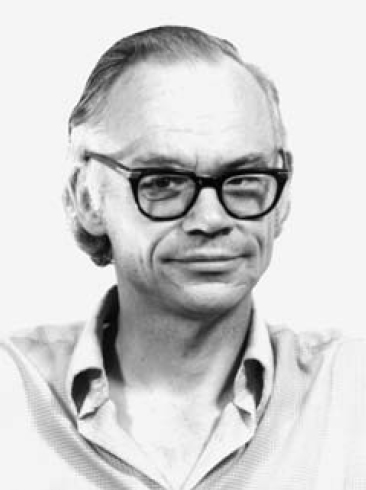
1918–2001
Elected in 1975
“For contributions to the basic understanding of transonic and supersonic flow, and the Hayes equivalence principle for hypersonic similitude.”
BY RONALD F. PROBSTEIN
WALLACE DEAN HAYES, an emeritus professor at Princeton University and one of the world’s leading theoretical aerodynamicists, whose numerous and fundamental contributions to the theories of supersonic and hypersonic flow and wave motion strongly influenced the design of aircraft at supersonic speeds and missiles at hypersonic speeds, died on March 2, 2001, at the age of 82.
Wally was born on September 4, 1918, in Beijing, China, where his father worked as a civil engineer. He came to the United States at the age of 10, settling in California. He received all of his higher education at the California Institute of Technology, from which he was awarded a B.S. in physics, with honor, in 1941, the professional degree Ae.E. in 1943, and a Ph.D. in aeronautics, magna cum laude, in 1947.
His early professional career began as a stress analyst in 1939 with Consolidated Aircraft and continued during World War II as an aerodynamicist with North American Aviation. He joined the Division of Applied Mathematics at Brown University in 1948, which he left in 1952 to become science liaison officer at the U.S. Office of Naval Research in London. Returning to the states in 1954, he became a professor at Princeton University in the Department of Aeronautical
Engineering, where he remained until his retirement in 1989. He also taught for periods at other universities he visited, including Delft Technical University in Holland. What was important about his teaching in Holland was that he learned Dutch and gave his lectures in Dutch. A number of Wally’s friends who lectured at Delft after he did were upset with him because they were all asked why they could not give their lectures in Dutch like Wally did.
In a series of papers beginning with his Ph.D. thesis, “Linearized Supersonic Flow,” submitted to the California Institute of Technology and defended on New Year’s Day 1947, he developed the concepts of transonic and supersonic area rules. Although the world-famous aerodynamicist Theodore von Karman was Wally’s thesis supervisor, he had never seen his work until Wally turned in his thesis, at which point he discussed the results with him. The rules define how an airplane’s cross section should be designed to minimize the drag that results from shock waves that develop locally when a plane flies at speeds below but close to the speed of sound and the shock waves that develop about the airplane above the speed of sound. Credit for the transonic area rule was not accorded Wally but rather given to Richard Whitcomb, who independently but some five years after Wally’s presentation of it discovered it while working at the National Advisory Committee for Aeronautics, which later became the National Aeronautics and Space Administration. This work resulted in the “Coke-bottle” aircraft design in which the airplane’s fuselage was indented from the wings inward by an amount related to the area occupied by the wings from the fuselage to the wingtips.
Wally has been given full credit for the related supersonic area rule. The design concepts of his theoretical work were applied to the Convair B-58 bomber, the world’s first operational supersonic jet bomber, which went into production in 1959, and to the Concorde airliner, which went into service about 10 years later along with other supersonic aircraft of the period. All supersonic aircraft incorporate the area rule considerations in their design.
The contributions of Wally to hypersonic flow theory can be traced to a series of about five basic papers, beginning with the now classic pioneering note “On Hypersonic Similitude” 1 (published in 1947) and peaking with the books (written with this author) Hypersonic Flow Theory2 (published in 1959) and Hypersonic Flow Theory, Second Edition: Volume I: Inviscid Flows3 (published in 1966). These works have, among other things, included the “Hayes equivalence principle,” which has led to hypersonic similitudes that enable one to take the results of one series of theoretical calculations or tests and apply them to the analysis of an entire family of similar configurations. The Hayes principle now includes generalizations to a broad class of viscous and nonviscous (inviscid) flows.
Wally’s development of Newtonian flow theory provides the starting point for almost all quantitative hypersonic flow theories. This theory employs the fact that at hypersonic speeds the shock wave enveloping the body lays close to the body surface, and in this thin layer the gas density is very high compared to the density in front of the shock. The shock wave has about the same inclination as the body, there is no friction between the thin shock layer and the surface, and the fluid density is essentially constant. This theory served as the starting point of almost all calculations in the hypersonic speed range, where experiment and detailed theory are often limited. Without the theoretical concepts of Hayes, the problems of design in the hypersonic speed range would have been enormous because of the difficulties involved in directly reproducing flow conditions in the laboratory.
No presentation of Wally Hayes’s contributions would be complete without noting his brilliant studies on wave motion. The first of these is his book Gasdynamic Discontinuities4
1 W. D. Hayes, 1947, “On hypersonic similitude,” Quarterly Applied Mathematics 5:105-106.
2 W. D. Hayes and R. F. Probstein, Hypersonic Flow Theory (New York: Academic Press, 1959).
3 W. D. Hayes and R. F. Probstein, Hypersonic Flow Theory, Second Edition: Volume I: Inviscid Flows (New York: Academic Press, 1966). Reprinted as Hypersonic Inviscid Flow (Mineola, NY: Dover, 2004).
4 W. D. Hayes, Gasdynamic Discontinuities (Princeton, N.J.: Princeton University Press, 1960).
(published in 1960). In this study Wally clearly laid out the subject of the physics of shock waves in a manner that is as relevant today as when it was first published. Through visits to the Soviet Union in the early 1960s, Wally and this writer became aware of the important Russian book Physics of Shock Waves and High-Temperature Hydrodynamic Phenomena5 by Ya. B. Zel’dovich and Yu. P. Raizer. We thought that this work should be made available to American scientists, and our translation and editing were done from a manuscript provided by the authors of the then-forthcoming second edition. It was published in 1966 in English at about the same time as the second Russian edition, which had incorporated many of the edits and corrections of the English edition.
Somewhat after publication of the Zel’dovich-Raizer book, Wally’s attention was drawn to the problem of sonic boom resulting from the motion of an aircraft at supersonic speeds through the atmosphere. His theory for the calculation of sonic boom propagation in a stratified atmosphere has become the model for all such calculations and the basis for minimizing its effect. His general theory on the conservation of wave action applies to the broad range of studies of progressive waves and can be called foundational in the subject of wave studies.
Among his honors Wally was elected to the National Academy of Engineering in 1975. He was also elected a fellow of the American Academy of Arts and Sciences, the American Physical Society, and the American Institute of Aeronautics and Astronautics, which honored him in 1965 with its Research Award. It is this writer’s view that these honors alone cannot represent the depth and brilliance of Wally’s contributions, which profoundly shaped our understanding of high-speed flight that is now taken for granted but for which he laid the trail.
Wally had many friends throughout the world, for he was a very easy person to have as a friend. He had a wonderful
5 Ya. B. Zel’dovich and Yu. P. Raizer, Physics of Shock Waves and High-Temperature Hydrodynamic Phenomena, edited by W. D. Hayes and R. F. Probstein (New York: Academic Press, vol. I, 1966; vol. II, 1967; corrected and reprinted by Dover Publications, Mineola, NY, 2002).
sense of humor, he almost always had a smile on his face, and he was interested in people. He was a glider pilot and small-airplane flight instructor, and he had a love for the outdoors and extreme sports, including mountaineering, ice climbing, hiking, water sports, and skiing. Unfortunately, I did not share his love for the outdoors and sports, although I did fly and ski with him. However, I fall into the cautious category when compared with Wally’s daunting approaches. I recall one time when my wife Irène and I were skiing with him in Switzerland, and he suggested we ski down from the top of Piz Neir, the highest and steepest mountain in St. Moritz. When we got off at the top of the lift, not a soul was to be seen except the attendant whom Wally asked in German what the skiing was like. After he answered, Wally turned to both of us and said, “He says it’s not so bad.” For a moment he had forgotten that Irène understood German, and she whispered in my ear that the attendant had responded that it was “very dangerous.” Our downhill speed that day exceeded anything I had ever done before or since, and as I look back on it I have never been certain just how we made it down. But that was Wally; he savored the thrills and excitement of activities that brought him to his limit, while at the same time his scientific work was the product not just of his deep insights but also of a caution that ensured every result could be justified or seen from different approaches. There was no challenge either physical or intellectual from which he would ever turn away. His curiosity was unbounded and the depth to which he would plumb an intellectual problem unlimited.
His daughter Judith wrote:
“My sisters and I remember our dad as an unusually un-self-conscious, fun-loving person who enjoyed camping, hiking, rock-climbing, snorkeling, canoeing, both downhill and cross-country skiing, dancing, traveling, and eating really fine or interesting food. We are grateful that he shared these proclivities with us. He was very loving, capable of truly unconditional love for his kids. He was also a pretty bad procrastinator
and absent-minded professor. But when he worked, he focused like no one else we have ever met—we used to have to shake him to get his attention away from his work. Having been raised in California, he loved fruit and made his own jams and jellies. His sense of wry, dry and sometimes bawdy humor was almost always in gear. We all feel fortunate to have had this playful, adventurous, loving, and quirky man for a father.”
Surviving family members are his three daughters, Carolyn G. Hayes, Judith L. Hayes, and Barbara D. Hayes; six grandchildren; and his stepbrother, retired Air Force General Peter D. Hayes. His former wife, Laura Hayes Horbatt, survived him for about a year and a half.


