Dimension 3
DISCIPLINARY CORE IDEAS—EARTH AND SPACE SCIENCES
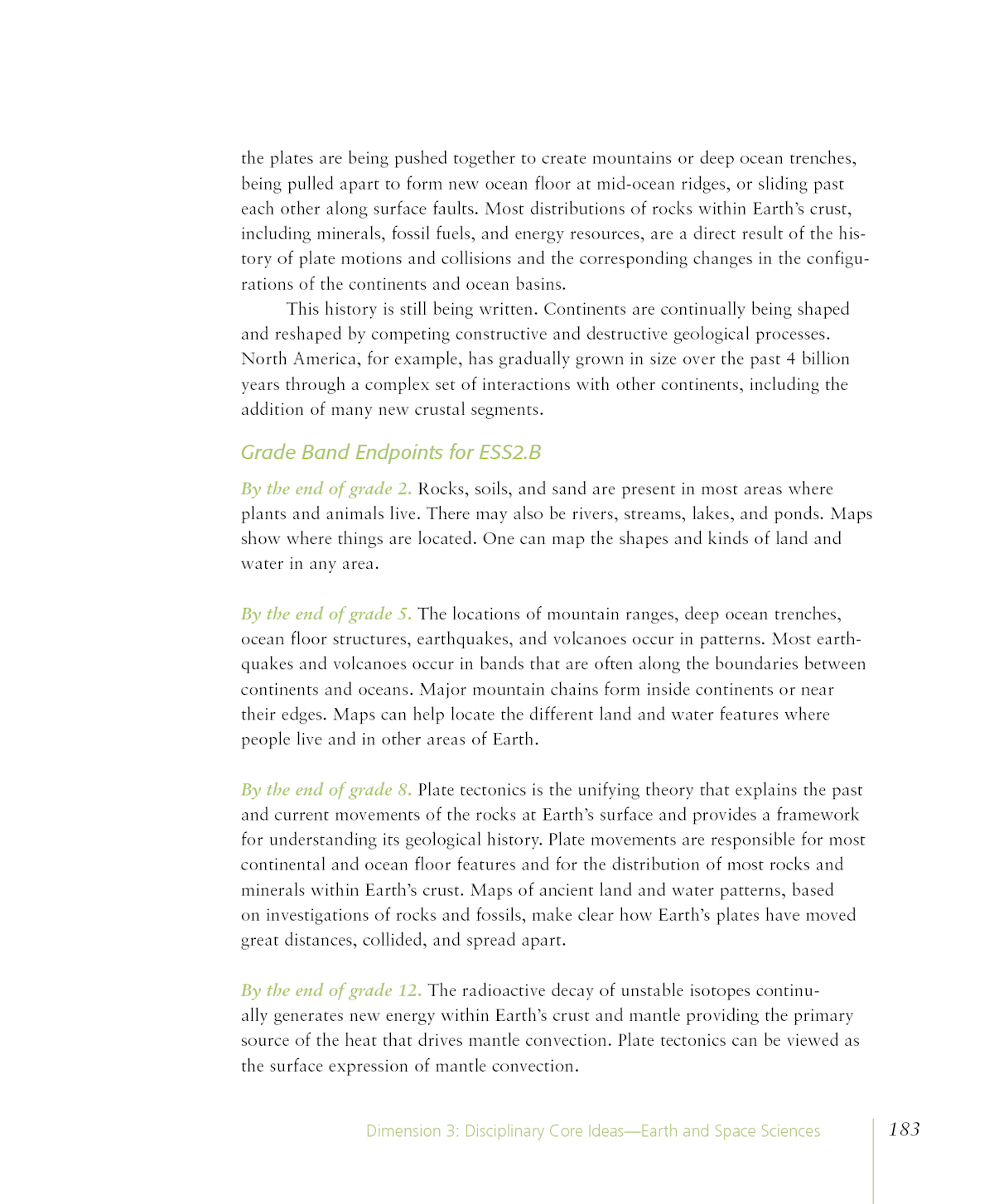
Earth and space sciences (ESS) investigate processes that operate on Earth and also address its place in the solar system and the galaxy. Thus ESS involve phenomena that range in scale from the unimaginably large to the invisibly small.
Earth and space sciences have much in common with the other branches of science, but they also include a unique set of scientific pursuits. Inquiries into the physical sciences (e.g., forces, energy, gravity, magnetism) were pursued in part as a means of understanding the size, age, structure, composition, and behavior of Earth, the sun, and the moon; physics and chemistry later developed as separate disciplines. The life sciences likewise are partially rooted in earth science, as Earth remains the only example of a biologically active planet, and the fossils found in the geological record of rocks are of interest to both life scientists and earth scientists. As a result, the majority of research in ESS is interdisciplinary in nature and falls under the categories of astrophysics, geophysics, geochemistry, and geobiology. However, the underlying traditional discipline of geology, involving the identification, analysis, and mapping of rocks, remains a cornerstone of ESS.
Earth consists of a set of systems—atmosphere, hydrosphere, geosphere, and biosphere—that are intricately interconnected. These systems have differing sources of energy, and matter cycles within and among them in multiple ways and on various time scales. Small changes in one part of one system can have large and sudden consequences in parts of other systems, or they can have no effect at all. Understanding the different processes that cause Earth to change over time (in a sense, how it “works”) therefore requires knowledge of the
multiple systems’ interconnections and feedbacks. In addition, Earth is part of a broader system—the solar system—which is itself a small part of one of the many galaxies in the universe.
Because organizing ESS content is complex, given its broad scope and interdisciplinary nature, past efforts to promote earth sciences literacy have presented this content in a wide variety of ways. In this chapter, we begin at the largest spatial scales of the universe and move toward increasingly smaller scales and a more anthropocentric focus. Thus, the first core idea, ESS1: Earth’s Place in the Universe, describes the universe as a whole and addresses its grand scale in both space and time. This idea includes the overall structure, composition, and history of the universe, the forces and processes by which the solar system operates, and Earth’s planetary history.
The second core idea, ESS2: Earth’s Systems, encompasses the processes that drive Earth’s conditions and its continual evolution (i.e., change over time). It addresses the planet’s large-scale structure and composition, describes its individual systems, and explains how they are interrelated. It also focuses on the mechanisms driving Earth’s internal motions and on the vital role that water plays in all of the planet’s systems and surface processes.
The third core idea, ESS3: Earth and Human Activity, addresses society’s interactions with the planet. Connecting the ESS to the intimate scale of human life, this idea explains how Earth’s processes affect people through natural resources and natural hazards, and it describes as well some of the ways in which humanity in turn affects Earth’s processes. See Box 7-1 for a summary of the core and component ideas.
The committee’s efforts have been strongly influenced by several recent efforts in the ESS community that have codified the essential sets of information in several fields. These projects include the Earth Science Literacy Principles: The Big Ideas and Supporting Concepts of Earth Science [1], Ocean Literacy: The Essential Principles of Ocean Science K-12 [2], Atmospheric Science Literacy:
 Vast amounts of new data, especially from satellites, together with modern computational models, are revealing the complexity of the interacting systems that control Earth’s ever-changing surface. And many of the conclusions drawn from this science, along with some of the evidence from which they are drawn, are accessible to today’s students.
BOX 7-1
CORE AND COMPONENT IDEAS IN EARTH AND SPACE SCIENCES
Core Idea ESS1: Earth’s Place in the Universe
ESS1.A: The Universe and Its Stars
ESS1.B: Earth and the Solar System
ESS1.C: The History of Planet Earth
Core Idea ESS2: Earth’s Systems
ESS2.A: Earth Materials and Systems
ESS2.B: Plate Tectonics and Large-Scale System Interactions
ESS2.C: The Roles of Water in Earth’s Surface Processes
ESS2.D: Weather and Climate
ESS2.E: Biogeology
Core Idea ESS3: Earth and Human Activity
ESS3.A: Natural Resources
ESS3.B: Natural Hazards
ESS3.C: Human Impacts on Earth Systems
ESS3.D: Global Climate Change
Essential Principles and Fundamental Concepts of Atmospheric Science [3], and Climate Literacy: The Essential Principles of Climate Sciences [4]. The selection of much of the framework’s content was informed by these documents, thereby ensuring that the ESS core ideas we present are not only current and accurate but also relevant; they express content that the science research communities themselves recognize as being most important.
The framework includes a broader range of ideas in ESS than previous efforts related to science education standards, largely because of pertinent recent developments in ESS and the increasing societal importance of Earth-related issues. Astronomy and space exploration have prompted new ideas about how the universe works and of humans’ place in it. Advances in imaging the interior of Earth have revised conceptions of how the planet formed and continues to evolve. Vast amounts of new data, especially from satellites, together with modern computational models, are revealing the complexity of the interacting systems that control Earth’s ever-changing surface. And many of the conclusions drawn from this science, along with some of the evidence from which they are drawn, are accessible to today’s students. Consequently, the story of Earth and the evolution of its systems, as it can be understood at the K-12 level, is much richer than what has been taught at this level in the past. Thus some of the framework’s essential elements differ considerably from previous standards for K-12 science and engineering education.
The most important justification for the framework’s increased emphasis on ESS is the rapidly increasing relevance of earth science to so many aspects of human society. It may seem as if natural hazards, such as earthquakes and hurricanes, have been more active in recent years, but this is primarily because the growing population of cities has heightened their impacts. The rapidly rising number of humans on the planet—doubling in number roughly every 40 years—combined with increased global industrialization, has also stressed limited planetary
resources of water, arable land, plants and animals, minerals, and hydrocarbons. Only in the relatively recent past have people begun to recognize the dramatic role humans play as an essentially geological force on the surface of Earth, affecting large-scale conditions and processes.
Core Idea ESS1
Earth’s Place in the Universe
What is the universe, and what is Earth’s place in it?
The planet Earth is a tiny part of a vast universe that has developed over a huge expanse of time. The history of the universe, and of the structures and objects within it, can be deciphered using observations of their present condition together with knowledge of physics and chemistry. Similarly, the patterns of motion of the objects in the solar system can be described and predicted on the basis of observations and an understanding of gravity. Comprehension of these patterns can be used to explain many Earth phenomena, such as day and night, seasons, tides, and phases of the moon. Observations of other solar system objects and of Earth itself can be used to determine Earth’s age and the history of large-scale changes in its surface.
ESS1.A: THE UNIVERSE AND ITS STARS
What is the universe, and what goes on in stars?
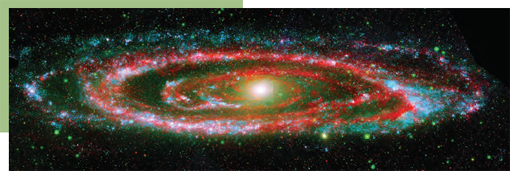
The sun is but one of a vast number of stars in the Milky Way galaxy, which is one of a vast number of galaxies in the universe.
The universe began with a period of extreme and rapid expansion known as the Big Bang, which occurred about 13.7 billion years ago. This theory is supported by the fact that it provides explanation of observations of distant galaxies receding from our own, of the measured composition of stars and nonstellar gases, and of the maps and spectra of the primordial radiation (cosmic microwave background) that still fills the universe.
Nearly all observable matter in the universe is hydrogen or helium, which formed in the first minutes after the Big Bang. Elements other than these remnants of the Big Bang continue to form within the cores of stars. Nuclear fusion within stars produces all atomic nuclei lighter than and including iron, and the process releases the energy seen as starlight. Heavier elements are produced when certain massive stars achieve a supernova stage and explode.
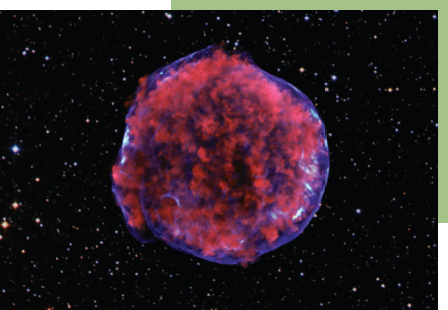
Stars’ radiation of visible light and other forms of energy can be measured and studied to develop explanations about the formation, age, and composition of the universe. Stars go through a sequence of developmental stages—they are formed; evolve in size, mass, and brightness; and eventually burn out. Material from earlier stars that exploded as supernovas is recycled to form younger stars and their planetary systems. The sun is a medium-sized star about halfway through its predicted life span of about 10 billion years.
Grade Band Endpoints for ESS1.A
By the end of grade 2. Patterns of the motion of the sun, moon, and stars in the sky can be observed, described, and predicted. At night one can see the light coming from many stars with the naked eye, but telescopes make it possible to see many more and to observe them and the moon and planets in greater detail.
By the end of grade 5. The sun is a star that appears larger and brighter than other stars because it is closer. Stars range greatly in their size and distance from Earth.
By the end of grade 8. Patterns of the apparent motion of the sun, the moon, and stars in the sky can be observed, described, predicted, and explained with models. The universe began with a period of extreme and rapid expansion known as the Big Bang. Earth and its solar system are part of the Milky Way galaxy, which is one of many galaxies in the universe.
By the end of grade 12. The star called the sun is changing and will burn out over a life span of approximately 10 billion years. The sun is just one of more than 200 billion stars in the Milky Way galaxy, and the Milky Way is just one of hundreds of billions of galaxies in the universe. The study of stars’ light spectra and brightness is used to identify compositional elements of stars, their movements, and their distances from Earth.
ESS1.B: EARTH AND THE SOLAR SYSTEM
What are the predictable patterns caused by Earth’s movement in the solar system?
The solar system consists of the sun and a collection of objects of varying sizes and conditions—including planets and their moons—that are held in orbit around the sun by its gravitational pull on them. This system appears to have formed from a disk of dust and gas, drawn together by gravity.
Earth and the moon, sun, and planets have predictable patterns of movement. These patterns, which are explainable by gravitational forces and conservation laws, in turn explain many large-scale phenomena observed on Earth. Planetary motions around the sun can be predicted using Kepler’s three empirical laws, which can be explained based on Newton’s theory of gravity. These orbits may also change somewhat due to the gravitational effects from, or collisions with, other bodies. Gradual changes in the shape of Earth’s orbit around the sun (over hundreds of thousands of years), together with the tilt of the planet’s spin axis (or axis of rotation), have altered the intensity and distribution of sunlight falling on Earth. These phenomena cause cycles of climate change, including the relatively recent cycles of ice ages.
Gravity holds Earth in orbit around the sun, and it holds the moon in orbit around Earth. The pulls of gravity from the sun and the moon cause the patterns of ocean tides. The moon’s and sun’s positions relative to Earth cause lunar and solar eclipses to occur. The moon’s monthly orbit around Earth, the relative positions of the sun, the moon, and the observer and the fact that it shines by reflected sunlight explain the observed phases of the moon.
Even though Earth’s orbit is very nearly circular, the intensity of sunlight falling on a given location on the planet’s surface changes as it orbits around the sun. Earth’s spin axis is tilted relative to the plane of its orbit, and the seasons are
Earth and the moon, sun, and planets have predictable patterns of movement. These patterns, which are explainable by gravitational forces and conservation laws, in turn explain many large-scale phenomena observed on Earth.
a result of that tilt. The intensity of sunlight striking Earth’s surface is greatest at the equator. Seasonal variations in that intensity are greatest at the poles.
Grade Band Endpoints for ESS1.B
By the end of grade 2. Seasonal patterns of sunrise and sunset can be observed, described, and predicted.
By the end of grade 5. The orbits of Earth around the sun and of the moon around Earth, together with the rotation of Earth about an axis between its North and South poles, cause observable patterns. These include day and night; daily and seasonal changes in the length and direction of shadows; phases of the moon; and different positions of the sun, moon, and stars at different times of the day, month, and year.
Some objects in the solar system can be seen with the naked eye. Planets in the night sky change positions and are not always visible from Earth as they orbit the sun. Stars appear in patterns called constellations, which can be used for navigation and appear to move together across the sky because of Earth’s rotation.
By the end of grade 8. The solar system consists of the sun and a collection of objects, including planets, their moons, and asteroids that are held in orbit around the sun by its gravitational pull on them. This model of the solar system can explain tides, eclipses of the sun and the moon, and the motion of the planets in the sky relative to the stars. Earth’s spin axis is fixed in direction over the short term but tilted relative to its orbit around the sun. The seasons are a result of that tilt and are caused by the differential intensity of sunlight on different areas of Earth across the year.
By the end of grade 12. Kepler’s laws describe common features of the motions of orbiting objects, including their elliptical paths around the sun. Orbits may change due to the gravitational effects from, or collisions with, other objects in the solar system. Cyclical changes in the shape of Earth’s orbit around the sun, together with changes in the orientation of the planet’s axis of rotation, both occurring over tens to hundreds of thousands of years, have altered the intensity and distribution of sunlight falling on Earth. These phenomena cause cycles of ice ages and other gradual climate changes.
ESS1.C: THE HISTORY OF PLANET EARTH
How do people reconstruct and date events in Earth’s planetary history?
Earth scientists use the structure, sequence, and properties of rocks, sediments, and fossils, as well as the locations of current and past ocean basins, lakes, and rivers, to reconstruct events in Earth’s planetary history. For example, rock layers show the sequence of geological events, and the presence and amount of radioactive elements in rocks make it possible to determine their ages.
Analyses of rock formations and the fossil record are used to establish relative ages. In an undisturbed column of rock, the youngest rocks are at the top, and the oldest are at the bottom. Rock layers have sometimes been rearranged by tectonic forces; rearrangements can be seen or inferred, such as from inverted sequences of fossil types. Core samples obtained from drilling reveal that the continents’ rocks (some as old as 4 billion years or more) are much older than rocks on the ocean floor (less than 200 million years), where tectonic processes continually generate new rocks and destroy old ones. The rock record reveals that events on Earth can be catastrophic, occurring over hours to years, or gradual, occurring over thousands to millions of years. Records of fossils and other rocks also show past periods of massive extinctions and extensive volcanic activity. Although active geological processes, such as plate tectonics (link to ESS2.B) and erosion, have destroyed or altered most of the very early rock record on Earth, some other objects in the solar system, such as asteroids and meteorites, have changed little over billions of years. Studying these objects can help scientists deduce the solar system’s age and history, including the formation of planet Earth. Study of other planets and their moons, many of which exhibit such features as volcanism and meteor impacts similar to those found on Earth, also help illuminate aspects of Earth’s history and changes.
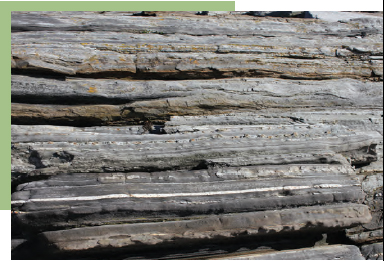
The geological time scale organizes Earth’s history into the increasingly long time intervals of eras, periods, and epochs. Major historical events include the formation of mountain chains and ocean basins, volcanic activity, the evolution and extinction of living organisms, periods of massive glaciation, and development of watersheds and rivers. Because many individual plant and animal species existed during known time periods (e.g., dinosaurs), the location of certain types of fossils in the rock record can reveal the age of the rocks and help geologists decipher the history of landforms.
Grade Band Endpoints for ESS1.C
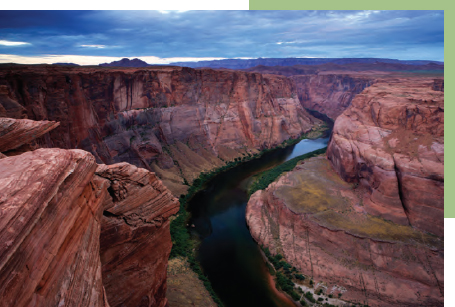
By the end of grade 2. Some events on Earth occur in cycles, like day and night, and others have a beginning and an end, like a volcanic eruption. Some events, like an earthquake, happen very quickly; others, such as the formation of the Grand Canyon, occur very slowly, over a time period much longer than one can observe.
By the end of grade 5. Earth has changed over time. Understanding how landforms develop, are weathered (broken down into smaller pieces), and erode (get transported elsewhere) can help infer the history of the current landscape. Local, regional, and global patterns of rock formations reveal changes over time due to Earth forces, such as earthquakes. The presence and location of certain fossil types indicate the order in which rock layers were formed. Patterns of tree rings and ice cores from glaciers can help reconstruct Earth’s recent climate history.
By the end of grade 8. The geological time scale interpreted from rock strata provides a way to organize Earth’s history. Major historical events include the formation of mountain chains and ocean basins, the evolution and extinction of particular living organisms, volcanic eruptions, periods of massive glaciation, and development of watersheds and rivers through glaciation and water erosion. Analyses of rock strata and the fossil record provide only relative dates, not an absolute scale.
By the end of grade 12. Radioactive decay lifetimes and isotopic content in rocks provide a way of dating rock formations and thereby fixing the scale of geological time. Continental rocks, which can be older than 4 billion years, are generally much older than rocks on the ocean floor, which are less than 200 million years old. Tectonic processes continually generate new ocean seafloor at ridges and destroy old seafloor at trenches. Although active geological processes,
such as plate tectonics (link to ESS2.B) and erosion, have destroyed or altered most of the very early rock record on Earth, other objects in the solar system, such as lunar rocks, asteroids, and meteorites, have changed little over billions of years. Studying these objects can provide information about Earth’s formation and early history.
Core Idea ESS2
Earth’s Systems
How and why is Earth constantly changing?
Earth’s surface is a complex and dynamic set of interconnected systems—principally the geosphere, hydrosphere, atmosphere, and biosphere—that interact over a wide range of temporal and spatial scales. All of Earth’s processes are the result of energy flowing and matter cycling within and among these systems. For example, the motion of tectonic plates is part of the cycles of convection in Earth’s mantle, driven by outflowing heat and the downward pull of gravity, which result in the formation and changes of many features of Earth’s land and undersea surface. Weather and climate are shaped by complex interactions involving sunlight, the ocean, the atmosphere, clouds, ice, land, and life forms. Earth’s biosphere has changed the makeup of the geosphere, hydrosphere, and atmosphere over geological time; conversely, geological events and conditions have influenced the evolution of life on the planet. Water is essential to the dynamics of most earth systems, and it plays a significant role in shaping Earth’s landscape.
ESS2.A: EARTH MATERIALS AND SYSTEMS
How do Earth’s major systems interact?
Earth is a complex system of interacting subsystems: the geosphere, hydrosphere, atmosphere, and biosphere. The geosphere includes a hot and mostly metallic inner core; a mantle of hot, soft, solid rock; and a crust of rock, soil, and sediments. The atmosphere is the envelope of gas surrounding the planet. The hydrosphere is the ice, water vapor, and liquid water in the atmosphere, ocean, lakes, streams, soils, and groundwater. The presence of living organisms of any type defines the biosphere; life can be found in many parts of the geosphere, hydrosphere, and atmosphere. Humans are of course part of the biosphere, and human activities have important impacts on all of Earth’s systems.
All Earth processes are the result of energy flowing and matter cycling within and among Earth’s systems. This energy originates from the sun and from
Earth’s interior. Transfers of energy and the movements of matter can cause chemical and physical changes among Earth’s materials and living organisms.
Solid rocks, for example, can be formed by the cooling of molten rock, the accumulation and consolidation of sediments, or the alteration of older rocks by heat, pressure, and fluids. These processes occur under different circumstances and produce different types of rock. Physical and chemical interactions among rocks, sediments, water, air, and plants and animals produce soil. In the carbon, water, and nitrogen cycles, materials cycle between living and nonliving forms and among the atmosphere, soil, rocks, and ocean.
Weather and climate are driven by interactions of the geosphere, hydrosphere, and atmosphere, with inputs of energy from the sun. The tectonic and volcanic processes that create and build mountains and plateaus, for example, as well as the weathering and erosion processes that break down these structures and transport the products, all involve interactions among the geosphere, hydrosphere, and atmosphere. The resulting landforms and the habitats they provide affect the biosphere, which in turn modifies these habitats and affects the atmosphere, particularly through imbalances between the carbon capture and oxygen release that occur in photosynthesis, and the carbon release and oxygen capture that occur in respiration and in the burning of fossil fuels to support human activities.
Earth exchanges mass and energy with the rest of the solar system. It gains or loses energy through incoming solar radiation, thermal radiation to space, and gravitational forces exerted by the sun, moon, and planets. Earth gains mass from the impacts of meteoroids and comets and loses mass from the escape of gases into space.
Earth’s systems are dynamic; they interact over a wide range of temporal and spatial scales and continually react to changing influences, including human activities. Components of Earth’s systems may appear stable, change slowly over long periods of time, or change abruptly, with significant consequences for living organisms. Changes in part of one system can cause further changes to that system or to other systems, often in surprising and complex ways.
Grade Band Endpoints for ESS2.A
By the end of grade 2. Wind and water can change the shape of the land. The resulting landforms, together with the materials on the land, provide homes for living things.
By the end of grade 5. Earth’s major systems are the geosphere (solid and molten rock, soil, and sediments), the hydrosphere (water and ice), the atmosphere (air), and the biosphere (living things, including humans). These systems interact in multiple ways to affect Earth’s surface materials and processes. The ocean supports a variety of ecosystems and organisms, shapes landforms, and influences climate. Winds and clouds in the atmosphere interact with the landforms to determine patterns of weather. Rainfall helps shape the land and affects the types of living things found in a region. Water, ice, wind, living organisms, and gravity break rocks, soils, and sediments into smaller particles and move them around. Human activities affect Earth’s systems and their interactions at its surface.
By the end of grade 8. All Earth processes are the result of energy flowing and matter cycling within and among the planet’s systems. This energy is derived from the sun and Earth’s hot interior. The energy that flows and matter that cycles produce chemical and physical changes in Earth’s materials and living organisms. The planet’s systems interact over scales that range from microscopic to global in size, and they operate over fractions of a second to billions of years. These interactions have shaped Earth’s history and will determine its future.
By the end of grade 12. Earth’s systems, being dynamic and interacting, cause feedback effects that can increase or decrease the original changes. A deep knowledge of how feedbacks work within and among Earth’s systems is still lacking, thus limiting scientists’ ability to predict some changes and their impacts.
Evidence from deep probes and seismic waves, reconstructions of historical changes in Earth’s surface and its magnetic field, and an understanding of physical and chemical processes lead to a model of Earth with a hot but solid inner core, a liquid outer core, a solid mantle and crust. The top part of the mantle, along with the crust, forms structures known as tectonic plates (link to ESS2.B). Motions of the mantle and its plates occur primarily through thermal convection, which involves the cycling of matter due to the outward flow of energy from Earth’s interior and the gravitational movement of denser materials
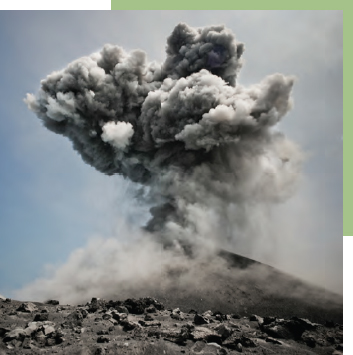
toward the interior. The geological record shows that changes to global and regional climate can be caused by interactions among changes in the sun’s energy output or Earth’s orbit, tectonic events, ocean circulation, volcanic activity, glaciers, vegetation, and human activities. These changes can occur on a variety of time scales from sudden (e.g., volcanic ash clouds) to intermediate (ice ages) to very long-term tectonic cycles.
ESS2.B: PLATE TECTONICS AND LARGE-SCALE SYSTEM INTERACTIONS
Why do the continents move, and what causes earthquakes and volcanoes?
Plate tectonics is the unifying theory that explains the past and current movements of the rocks at Earth’s surface and provides a coherent account of its geological history. This theory is supported by multiple evidence streams—for example, the consistent patterns of earthquake locations, evidence of ocean floor spreading over time given by tracking magnetic patterns in undersea rocks and coordinating them with changes to Earth’s magnetic axis data, the warping of the land under loads (such as lakes and ice sheets), which show that the solid mantle’s rocks can bend and even flow.
The lighter and less dense continents are embedded in heavier and denser upper-mantle rocks, and together they make up the moving tectonic plates of the lithosphere (Earth’s solid outer layer, i.e., the crust and upper mantle). Tectonic plates are the top parts of giant convection cells that bring matter from the hot inner mantle up to the cool surface. These movements are driven by the release of energy (from radioactive decay of unstable isotopes within Earth’s interior) and by the cooling and gravitational downward motion of the dense material of the plates after subduction (one plate being drawn under another). The plates move across Earth’s surface, carrying the continents, creating and destroying ocean basins, producing earthquakes and volcanoes, and forming mountain ranges and plateaus.
Most continental and ocean floor features are the result of geological activity and earthquakes along plate boundaries. The exact patterns depend on whether
Plate tectonics is the unifying theory that explains the past and current movements of the rocks at Earth’s surface and provides a coherent account of its geological history.
the plates are being pushed together to create mountains or deep ocean trenches, being pulled apart to form new ocean floor at mid-ocean ridges, or sliding past each other along surface faults. Most distributions of rocks within Earth’s crust, including minerals, fossil fuels, and energy resources, are a direct result of the history of plate motions and collisions and the corresponding changes in the configurations of the continents and ocean basins.
This history is still being written. Continents are continually being shaped and reshaped by competing constructive and destructive geological processes. North America, for example, has gradually grown in size over the past 4 billion years through a complex set of interactions with other continents, including the addition of many new crustal segments.
Grade Band Endpoints for ESS2.B
By the end of grade 2. Rocks, soils, and sand are present in most areas where plants and animals live. There may also be rivers, streams, lakes, and ponds. Maps show where things are located. One can map the shapes and kinds of land and water in any area.
By the end of grade 5. The locations of mountain ranges, deep ocean trenches, ocean floor structures, earthquakes, and volcanoes occur in patterns. Most earthquakes and volcanoes occur in bands that are often along the boundaries between continents and oceans. Major mountain chains form inside continents or near their edges. Maps can help locate the different land and water features where people live and in other areas of Earth.
By the end of grade 8. Plate tectonics is the unifying theory that explains the past and current movements of the rocks at Earth’s surface and provides a framework for understanding its geological history. Plate movements are responsible for most continental and ocean floor features and for the distribution of most rocks and minerals within Earth’s crust. Maps of ancient land and water patterns, based on investigations of rocks and fossils, make clear how Earth’s plates have moved great distances, collided, and spread apart.
By the end of grade 12. The radioactive decay of unstable isotopes continually generates new energy within Earth’s crust and mantle providing the primary source of the heat that drives mantle convection. Plate tectonics can be viewed as the surface expression of mantle convection.
ESS2.C: THE ROLES OF WATER IN EARTH’S SURFACE PROCESSES
How do the properties and movements of water shape Earth’s surface and affect its systems?
Earth is often called the water planet because of the abundance of liquid water on its surface and because water’s unique combination of physical and chemical properties is central to Earth’s dynamics. These properties include water’s exceptional capacity to absorb, store, and release large amounts of energy as it changes state; to transmit sunlight; to expand upon freezing; to dissolve and transport many materials; and to lower the viscosities and freezing points of the material when mixed with fluid rocks in the mantle. Each of these properties plays a role in how water affects other Earth systems (e.g., ice expansion contributes to rock erosion, ocean thermal capacity contributes to moderating temperature variations).
Water is found almost everywhere on Earth, from high in the atmosphere (as water vapor and ice crystals) to low in the atmosphere (precipitation, droplets in clouds) to mountain snowcaps and glaciers (solid) to running liquid water on the land, ocean, and underground. Energy from the sun and the force of gravity drive the continual cycling of water among these reservoirs. Sunlight causes evaporation and propels oceanic and atmospheric circulation, which transports water around the globe. Gravity causes precipitation to fall from clouds and water to flow downward on the land through watersheds.
About 97 percent of Earth’s water is in the ocean, and most fresh water is contained in glaciers or underground aquifers; only a tiny fraction of Earth’s water is found in streams, lakes, and rivers. The relative availability of water is a major factor in distinguishing habitats for different living organisms.
Water participates both in the dissolution and formation of Earth’s materials. The downward flow of water, both in liquid and solid form, shapes landscapes through the erosion, transport, and deposition of sediment. Shoreline waves in the ocean and lakes are powerful agents of erosion. Over millions of years, coastlines have moved back and forth over continents by hundreds of kilometers, largely due to the rise and fall of sea level as the climate changed (e.g., ice ages).
Grade Band Endpoints for ESS2.C
By the end of grade 2. Water is found in the ocean, rivers, lakes, and ponds. Water exists as solid ice and in liquid form. It carries soil and rocks from one place to another and determines the variety of life forms that can live in a particular location.
Earth is often called the water planet because of the abundance of liquid water on its surface and because water’s unique combination of physical and chemical properties is central to Earth’s dynamics.
By the end of grade 5. Water is found almost everywhere on Earth: as vapor; as fog or clouds in the atmosphere; as rain or snow falling from clouds; as ice, snow, and running water on land and in the ocean; and as groundwater beneath the surface. The downhill movement of water as it flows to the ocean shapes the appearance of the land. Nearly all of Earth’s available water is in the ocean. Most fresh water is in glaciers or underground; only a tiny fraction is in streams, lakes, wetlands, and the atmosphere.
By the end of grade 8. Water continually cycles among land, ocean, and atmosphere via transpiration, evaporation, condensation and crystallization, and precipitation as well as downhill flows on land. The complex patterns of the changes and the movement of water in the atmosphere, determined by winds, landforms, and ocean temperatures and currents, are major determinants of local weather patterns. Global movements of water and its changes in form are propelled by sunlight and gravity. Variations in density due to variations in temperature and salinity drive a global pattern of interconnected ocean currents. Water’s movements—both on the land and underground—cause weathering and erosion, which change the land’s surface features and create underground formations.
By the end of grade 12. The abundance of liquid water on Earth’s surface and its unique combination of physical and chemical properties are central to the planet’s dynamics. These properties include water’s exceptional capacity to
absorb, store, and release large amounts of energy; transmit sunlight; expand upon freezing; dissolve and transport materials; and lower the viscosities and melting points of rocks.
ESS2.D: WEATHER AND CLIMATE
What regulates weather and climate?
Weather, which varies from day to day and seasonally throughout the year, is the condition of the atmosphere at a given place and time. Climate is longer term and location sensitive; it is the range of a region’s weather over 1 year or many years, and, because it depends on latitude and geography, it varies from place to place. Weather and climate are shaped by complex interactions involving sunlight, the ocean, the atmosphere, ice, landforms, and living things. These interactions can drive changes that occur over multiple time scales—from days, weeks, and months for weather to years, decades, centuries, and beyond—for climate.
The ocean exerts a major influence on weather and climate. It absorbs and stores large amounts of energy from the sun and releases it very slowly; in that way, the ocean moderates and stabilizes global climates. Energy is redistributed globally through ocean currents (e.g., the Gulf Stream) and also through atmospheric circulation (winds). Sunlight heats Earth’s surface, which in turn heats the atmosphere. The resulting temperature patterns, together with Earth’s rotation and the configuration of continents and oceans, control the large-scale patterns of atmospheric circulation. Winds gain energy and water vapor content as they cross hot ocean regions, which can lead to tropical storms.
The “greenhouse effect” keeps Earth’s surface warmer than it would be otherwise. To maintain any average temperature over time, energy inputs from the sun and from radioactive decay in Earth’s interior must be balanced by energy loss due to radiation from the upper atmosphere. However, what determines the temperature at which this balance occurs is a complex set of absorption, reflection, transmission, and redistribution processes in the atmosphere and oceans that determine how long energy stays trapped in these systems before being radiated away. Certain gases in the atmosphere (water vapor, carbon dioxide, methane, and nitrous oxides), which absorb and retain energy that radiates from Earth’s surface, essentially insulate the planet. Without this phenomenon, Earth’s surface would be too cold to be habitable. However, changes in the atmosphere, such as increases in carbon dioxide, can make regions of Earth too hot to be habitable by many species.
Climate changes, which are defined as significant and persistent changes in an area’s average or extreme weather conditions, can occur if any of Earth’s systems change (e.g., composition of the atmosphere, reflectivity of Earth’s surface). Positive feedback loops can amplify the impacts of these effects and trigger relatively abrupt changes in the climate system; negative feedback loops tend to maintain stable climate conditions.
Some climate changes in Earth’s history were rapid shifts (caused by events, such as volcanic eruptions and meteoric impacts, that suddenly put a large amount of particulate matter into the atmosphere or by abrupt changes in ocean currents); other climate changes were gradual and longer term—due, for example, to solar output variations, shifts in the tilt of Earth’s axis, or atmospheric change due to the rise of plants and other life forms that modified the atmosphere via photosynthesis. Scientists can infer these changes from geological evidence.
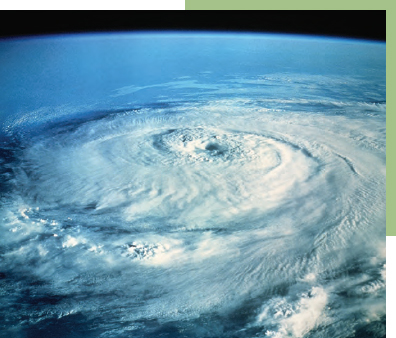
Natural factors that cause climate changes over human time scales (tens or hundreds of years) include variations in the sun’s energy output, ocean circulation patterns, atmospheric composition, and volcanic activity. (See ESS3.D for a detailed discussion of human activities and global climate change.) When ocean currents change their flow patterns, such as during El Niño Southern Oscillation conditions, some global regions become warmer or wetter and others become colder or drier. Cumulative increases in the atmospheric concentration of carbon dioxide and other greenhouse gases, whether arising from natural sources or human industrial activity (see ESS3.D), increase the capacity of Earth to retain energy. Changes in surface or atmospheric reflectivity change the amount of energy from the sun that enters the planetary system. Icy surfaces, clouds, aerosols, and larger particles in the atmosphere, such as from volcanic ash, reflect sunlight and thereby decrease the amount of solar energy that can enter the weather/climate system. Conversely, dark surfaces (e.g., roads, most buildings) absorb sunlight and thus increase the energy entering the system.
Grade Band Endpoints for ESS2.D
By the end of grade 2. Weather is the combination of sunlight, wind, snow or rain, and temperature in a particular region at a particular time. People measure these conditions to describe and record the weather and to notice patterns over time.
By the end of grade 5. Weather is the minute-by-minute to day-by-day variation of the atmosphere’s condition on a local scale. Scientists record the patterns of the weather across different times and areas so that they can make predictions about what kind of weather might happen next. Climate describes the ranges of an area’s typical weather conditions and the extent to which those conditions vary over years to centuries.
By the end of grade 8. Weather and climate are influenced by interactions involving sunlight, the ocean, the atmosphere, ice, landforms, and living things. These interactions vary with latitude, altitude, and local and regional geography, all of which can affect oceanic and atmospheric flow patterns. Because these patterns are so complex, weather can be predicted only probabilistically.
The ocean exerts a major influence on weather and climate by absorbing energy from the sun, releasing it over time, and globally redistributing it through ocean currents. Greenhouse gases in the atmosphere absorb and retain the energy radiated from land and ocean surfaces, thereby regulating Earth’s average surface temperature and keeping it habitable.
By the end of grade 12. The foundation for Earth’s global climate system is the electromagnetic radiation from the sun as well as its reflection, absorption, storage, and redistribution among the atmosphere, ocean, and land systems and this energy’s reradiation into space. Climate change can occur when certain parts of Earth’s systems are altered. Geological evidence indicates that past climate changes were either sudden changes caused by alterations in the atmosphere; longer term changes (e.g., ice ages) due to variations in solar output, Earth’s orbit, or the orientation of its axis; or even more gradual atmospheric changes due to plants and other organisms that captured carbon dioxide and released oxygen. The time scales of these changes varied from a few to millions of years. Changes in the atmosphere due to human activity have increased carbon dioxide concentrations and thus affect climate (link to ESS3.D).
Global climate models incorporate scientists’ best knowledge of physical and chemical processes and of the interactions of relevant systems. They are tested by their ability to fit past climate variations. Current models predict that, although future regional climate changes will be complex and varied, average global temperatures will continue to rise. The outcomes predicted by global climate models strongly depend on the amounts of human-generated greenhouse gases added to the atmosphere each year and by the ways in which these gases are absorbed by the ocean and the biosphere. Hence the outcomes depend on human behaviors (link to ESS3.D) as well as on natural factors that involve complex feedbacks among Earth’s systems (link to ESS2.A).
ESS2.E: BIOGEOLOGY
How do living organisms alter Earth’s processes and structures?
Evolution, including the emergence and extinction of species, is a natural and ongoing process that is shaped by Earth’s dynamic processes. The properties and conditions of Earth and its atmosphere affect the environments and conditions within which life emerged and evolved—for example, the range of frequencies of light that penetrate the atmosphere to Earth’s surface. Organisms continually evolve to new and often more complex forms as they adapt to new environments. The evolution and proliferation of living things have changed the makeup of Earth’s geosphere, hydrosphere, and atmosphere over geological time. Plants, algae, and microorganisms produced most of the oxygen (i.e., the O2) in the atmosphere through photosynthesis, and they enabled the formation of fossil fuels and types of sedimentary rocks. Microbes also changed the chemistry of Earth’s surface, and they continue to play a critical role in nutrient cycling (e.g., of nitrogen) in most ecosystems.
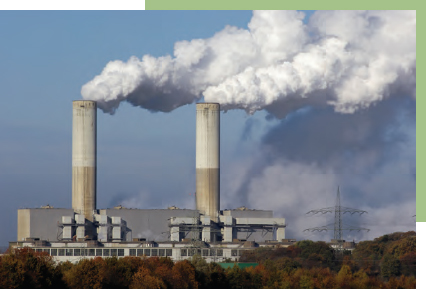
Organisms ranging from bacteria to human beings are a major driver of the global carbon cycle, and they influence global climate by modifying the chemical makeup of the atmosphere. Greenhouse gases in particular are continually moved
through the reservoirs represented by the ocean, land, life, and atmosphere. The abundance of carbon in the atmosphere is reduced through the ocean floor accumulation of marine sediments and the accumulation of plant biomass; atmospheric carbon is increased through such processes as deforestation and the burning of fossil fuels.
As Earth changes, life on Earth adapts and evolves to those changes, so just as life influences other Earth systems, other Earth systems influence life. Life and the planet’s nonliving systems can be said to co-evolve.
Grade Band Endpoints for ESS2.E
By the end of grade 2. Plants and animals (including humans) depend on the land, water, and air to live and grow. They in turn can change their environment (e.g., the shape of land, the flow of water).
By the end of grade 5. Living things affect the physical characteristics of their regions (e.g., plants’ roots hold soil in place, beaver shelters and human-built dams alter the flow of water, plants’ respiration affects the air). Many types of rocks and minerals are formed from the remains of organisms or are altered by their activities.
By the end of grade 8. Evolution is shaped by Earth’s varying geological conditions. Sudden changes in conditions (e.g., meteor impacts, major volcanic eruptions) have caused mass extinctions, but these changes, as well as more gradual ones, have ultimately allowed other life forms to flourish. The evolution and proliferation of living things over geological time have in turn changed the rates of weathering and erosion of land surfaces, altered the composition of Earth’s soils and atmosphere, and affected the distribution of water in the hydrosphere.
By the end of grade 12. The many dynamic and delicate feedbacks between the biosphere and other Earth systems cause a continual co-evolution of Earth’s surface and the life that exists on it.
Core Idea ESS3
Earth and Human Activity
How do Earth’s surface processes and human activities affect each other?
Earth’s surface processes affect and are affected by human activities. Humans depend on all of the planet’s systems for a variety of resources, some of which
are renewable or replaceable and some of which are not. Natural hazards and other geological events can significantly alter human populations and activities. Human activities, in turn, can contribute to the frequency and intensity of some natural hazards. Indeed, humans have become one of the most significant agents of change in Earth’s surface systems. In particular, it has been shown that climate change—which could have large consequences for all of Earth’s surface systems, including the biosphere—is driven not only by natural effects but also by human activities. Sustaining the biosphere will require detailed knowledge and modeling of the factors that affect climate, coupled with the responsible management of natural resources.
ESS3.A: NATURAL RESOURCES
How do humans depend on Earth’s resources?
Humans depend on Earth’s land, ocean, atmosphere, and biosphere for many different resources, including air, water, soil, minerals, metals, energy, plants, and animals. Some of these resources are renewable over human lifetimes, and some are nonrenewable (mineral resources and fossil fuels) or irreplaceable if lost (extinct species).
Materials important to modern technological societies are not uniformly distributed across the planet (e.g., oil in the Middle East, gold in California). Most elements exist in Earth’s crust at concentrations too low to be extracted, but in some locations—where geological processes have concentrated them—extraction is economically viable. Historically, humans have populated regions that are climatically, hydrologically, and geologically advantageous for fresh water availability, food production via agriculture, commerce, and other aspects of civilization. Resource availability affects geopolitical relationships and can limit development. As the global human population increases and people’s demands for better living conditions increase, resources considered readily available in the past, such as land for agriculture or drinkable water, are becoming scarcer and more valued.
All forms of resource extraction and land use have associated economic, social, environmental, and geopolitical costs and risks, as well as benefits. New technologies and regulations can change the balance of these factors—for example, scientific modeling of the long-term environmental impacts of resource use can help identify potential problems and suggest desirable changes in the patterns of use. Much energy production today comes from nonrenewable sources, such as coal and oil. However, advances in related science and technology are reducing the
cost of energy from renewable resources, such as sunlight, and some regulations are favoring their use. As a result, future energy supplies are likely to come from a much wider range of sources.
Grade Band Endpoints for ESS3.A
By the end of grade 2. Living things need water, air, and resources from the land, and they try to live in places that have the things they need. Humans use natural resources for everything they do: for example, they use soil and water to grow food, wood to burn to provide heat or to build shelters, and materials such as iron or copper extracted from Earth to make cooking pans.
By the end of grade 5. All materials, energy, and fuels that humans use are derived from natural sources, and their use affects the environment in multiple ways. Some resources are renewable over time, and others are not.
By the end of grade 8. Humans depend on Earth’s land, ocean, atmosphere, and biosphere for many different resources. Minerals, fresh water, and biosphere resources are limited, and many are not renewable or replaceable over human lifetimes. These resources are distributed unevenly around the planet as a result of past geological processes (link to ESS2.B). Renewable energy resources, and the technologies to exploit them, are being rapidly developed.
By the end of grade 12. Resource availability has guided the development of human society. All forms of energy production and other resource extraction have associated economic, social, environmental, and geopolitical costs and risks, as well as benefits. New technologies and regulations can change the balance of these factors.
ESS3.B: NATURAL HAZARDS
How do natural hazards affect individuals and societies?
Natural processes can cause sudden or gradual changes to Earth’s systems, some of which may adversely affect humans. Through observations and knowledge of historical events, people know where certain of these hazards—such as earthquakes, tsunamis, volcanic eruptions, severe weather, floods, and coastal erosion—are likely to occur. Understanding these kinds of hazards helps us prepare for and respond to them.
Natural hazards and other geological events have shaped the course of human history, sometimes significantly altering the size of human populations or driving human migrations.
While humans cannot eliminate natural hazards, they can take steps to reduce their impacts. For example, loss of life and economic costs have been greatly reduced by improving construction, developing warning systems, identifying and avoiding high-risk locations, and increasing community preparedness and response capability.
Some natural hazards are preceded by geological activities that allow for reliable predictions; others occur suddenly, with no notice, and are not yet predictable. By tracking the upward movement of magma, for example, volcanic eruptions can often be predicted with enough advance warning to allow neighboring regions to be evacuated. Earthquakes, in contrast, occur suddenly; the specific time, day, or year cannot be predicted. However, the history of earthquakes in a region and the mapping of fault lines can help forecast the likelihood of future events. Finally, satellite monitoring of weather patterns, along with measurements from land, sea, and air, usually can identify developing severe weather and lead to its reliable forecast.
Natural hazards and other geological events have shaped the course of human history, sometimes significantly altering the size of human populations or driving human migrations. Natural hazards can be local, regional, or global in origin, and even local events can have distant impacts because of the interconnectedness of human societies and Earth’s systems. Human activities can contribute to the frequency and intensity of some natural hazards (e.g., flooding, forest fires), and risks from natural hazards increase as populations—and population densities—increase in vulnerable locations.
Grade Band Endpoints for ESS3.B
By the end of grade 2. Some kinds of severe weather are more likely than others in a given region. Weather scientists forecast severe weather so that communities can prepare for and respond to these events.
By the end of grade 5. A variety of hazards result from natural processes (e.g., earthquakes, tsunamis, volcanic eruptions, severe weather, floods, coastal erosion). Humans cannot eliminate natural hazards but can take steps to reduce their impacts.
By the end of grade 8. Some natural hazards, such as volcanic eruptions and severe weather, are preceded by phenomena that allow for reliable predictions. Others, such as earthquakes, occur suddenly and with no notice, and thus they are not yet predictable. However, mapping the history of natural hazards in a region, combined with an understanding of related geological forces can help forecast the locations and likelihoods of future events.
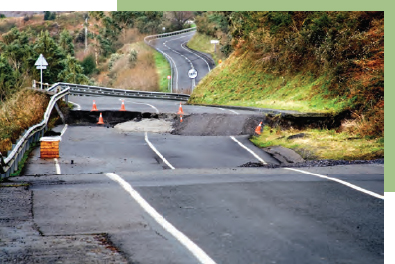
By the end of grade 12. Natural hazards and other geological events have shaped the course of human history by destroying buildings and cities, eroding land, changing the course of rivers, and reducing the amount of arable land. These events have significantly altered the sizes of human populations and have driven human migrations. Natural hazards can be local, regional, or global in origin, and their risks increase as populations grow. Human activities can contribute to the frequency and intensity of some natural hazards.
ESS3.C: HUMAN IMPACTS ON EARTH SYSTEMS
How do humans change the planet?
Recorded history, as well as chemical and geological evidence, indicates that human activities in agriculture, industry, and everyday life have had major impacts on the land, rivers, ocean, and air. Humans affect the quality, availability, and distribution of Earth’s water through the modification of streams, lakes, and groundwater. Large areas of land, including such delicate ecosystems as wetlands, forests, and grasslands, are being transformed by human agriculture, mining, and the expansion of settlements and roads. Human activities now cause land erosion and soil movement annually that exceed all natural processes. Air and water pollution caused by human activities affect the condition of the atmosphere and of rivers and lakes, with damaging effects on other species and on human health. The activities of humans have significantly altered the biosphere, changing or destroying natural habitats and causing the extinction of many living species. These changes
also affect the viability of agriculture or fisheries to support human populations. Land use patterns for agriculture and ocean use patterns for fishing are affected not only by changes in population and needs but also by changes in climate or local conditions (such as desertification due to overuse or depletion of fish populations by overextraction).
Thus humans have become one of the most significant agents of change in the near-surface Earth system. And because all of Earth’s subsystems are interconnected, changes in one system can produce unforeseen changes in others.
The activities and advanced technologies that have built and maintained human civilizations clearly have large consequences for the sustainability of these civilizations and the ecosystems with which they interact. As the human population grows and per-capita consumption of natural resources increases to provide a greater percentage of people with more developed lifestyles and greater longevity, so do the human impacts on the planet.
Some negative effects of human activities are reversible with informed and responsible management. For example, communities are doing many things to help protect Earth’s resources and environments. They are treating sewage, reducing the amount of materials they use, and reusing and recycling materials. Regulations regarding water and air pollution have greatly reduced acid rain and stream pollution, and international treaties on the use of certain refrigerant gases have halted the growth of the annual ozone hole over Antarctica. Regulation of fishing and the development of marine preserves can help restore and maintain fish populations. In addition, the development of alternative energy sources can reduce the environmental impacts otherwise caused by the use of fossil fuels.
The sustainability of human societies and of the biodiversity that supports them requires responsible management of natural resources not only to reduce existing adverse impacts but also to prevent such impacts to the extent possible. Scientists and engineers can make major contributions by developing technologies that produce less pollution and waste and that preclude ecosystem degradation.
Grade Band Endpoints for ESS3.C
By the end of grade 2. Things that people do to live comfortably can affect the world around them. But they can make choices that reduce their impacts on the land, water, air, and other living things—for example, by reducing trash through reuse and recycling.
Recorded history, as well as chemical and geological evidence, indicates that human activities in agriculture, industry, and everyday life have had major impacts on the land, rivers, ocean, and air.
By the end of grade 5. Human activities in agriculture, industry, and everyday life have had major effects on the land, vegetation, streams, ocean, air, and even outer space. But individuals and communities are doing things to help protect Earth’s resources and environments. For example, they are treating sewage, reducing the amounts of materials they use, and regulating sources of pollution such as emissions from factories and power plants or the runoff from agricultural activities.
By the end of grade 8. Human activities have significantly altered the biosphere, sometimes damaging or destroying natural habitats and causing the extinction of many other species. But changes to Earth’s environments can have different impacts (negative and positive) for different living things. Typically, as human populations and per-capita consumption of natural resources increase, so do the negative impacts on Earth unless the activities and technologies involved are engineered otherwise.
By the end of grade 12. The sustainability of human societies and the biodiversity that supports them requires responsible management of natural resources. Scientists and engineers can make major contributions—for example, by developing technologies that produce less pollution and waste and that preclude ecosystem degradation. When the source of an environmental problem is understood and international agreement can be reached, human activities can be regulated to mitigate global impacts (e.g., acid rain and the ozone hole near Antarctica).
ESS3.D: GLOBAL CLIMATE CHANGE
How do people model and predict the effects of human activities on Earth’s climate?
Global climate change, shown to be driven by both natural phenomena and by human activities, could have large consequences for all of Earth’s surface systems, including the biosphere (see ESS3.C for a general discussion of climate). Humans are now so numerous and resource dependent that their activities affect every part of the environment, from outer space and the stratosphere to the deepest ocean.
However, by using science-based predictive models, humans can anticipate long-term change more effectively than ever before and plan accordingly.
Global changes usually happen too slowly for individuals to recognize, but accumulated human knowledge, together with further scientific research, can help people learn more about these challenges and guide their responses. For example, there are historical records of weather conditions and of the times when plants bloom, animals give birth or migrate, and lakes and rivers freeze and thaw. And scientists can deduce long-past climate conditions from such sources as fossils, pollen grains found in sediments, and isotope ratios in samples of ancient materials.
Scientists build mathematical climate models that simulate the underlying physics and chemistry of the many Earth systems and their complex interactions with each other. These computational models summarize the existing evidence, are tested for their ability to match past patterns, and are then used (together with other kinds of computer models) to forecast how the future may be affected by human activities. The impacts of climate change are uneven and may affect some regions, species, or human populations more severely than others.
Climate models are important tools for predicting, for example, when and where new water supplies will be needed, when and which natural resources will become scarce, how weather patterns may change and with what consequences, whether proposed technological concepts for controlling greenhouse gases will work, and how soon people will have to leave low-lying coastal areas if sea levels continue to rise. Meanwhile, important discoveries are being made—for example, about how the biosphere is responding to the climate changes that have already occurred, how the atmosphere is responding to changes in anthropogenic greenhouse gas emissions, and how greenhouse gases move between the ocean and the atmosphere over long periods. Such information, from models and other scientific and engineering efforts, will continue to be essential to planning for humanity’s—and the global climate’s—future.
It is important to note that although forecasting the consequences of environmental change is crucial to society, it involves so many complex phenomena and uncertainties that predictions, particularly long-term predictions, always have uncertainties. These arise not only from uncertainties in the underlying science but also from uncertainties about behavioral, economic, and political factors that affect human activity and changes in activity in response to recognition of the problem. However, it is clear not only that human activities play a major role in climate change but also that impacts of climate change—for example, increased frequency of severe storms due to ocean warming—have begun to influence
human activities. The prospect of future impacts of climate change due to further increases in atmospheric carbon is prompting consideration of how to avoid or restrict such increases.
Grade Band Endpoints for ESS3.D
By the end of grade 2. [Intentionally left blank.]
By the end of grade 5. If Earth’s global mean temperature continues to rise, the lives of humans and other organisms will be affected in many different ways.
By the end of grade 8. Human activities, such as the release of greenhouse gases from burning fossil fuels, are major factors in the current rise in Earth’s mean surface temperature (global warming). Reducing human vulnerability to whatever climate changes do occur depend on the understanding of climate science, engineering capabilities, and other kinds of knowledge, such as understanding of human behavior and on applying that knowledge wisely in decisions and activities.
By the end of grade 12. Global climate models are often used to understand the process of climate change because these changes are complex and can occur slowly over Earth’s history. Though the magnitudes of humans’ impacts are greater than they have ever been, so too are humans’ abilities to model, predict, and manage current and future impacts. Through computer simulations and other studies, important discoveries are still being made about how the ocean, the atmosphere, and the biosphere interact and are modified in response to human activities, as well as to changes in human activities. Thus science and engineering will be essential both to understanding the possible impacts of global climate change and to informing decisions about how to slow its rate and consequences—for humanity as well as for the rest of the planet.
REFERENCES
1. Earth Science Literacy Initiative. (2010). Earth Science Literacy Principles: The Big Ideas and Supporting Concepts of Earth Science. Arlington, VA: National Science Foundation. Available: http://www.earthscienceliteracy.org/es_literacy_6may10_.pdf [June 2011].
2. National Geographic Society. (2006). Ocean Literacy: The Essential Principles of Ocean Science K-12. Washington, DC: Author. Available: http://www.coexploration.org/oceanliteracy/documents/OceanLitChart.pdf [June 2011].
3. University Corporation for Atmospheric Research. (2008). Atmospheric Science Literacy: Essential Principles and Fundamental Concepts of Atmospheric Science. Boulder, CO: Author. Available: http://eo.ucar.edu/asl/pdfs/ASLbrochureFINAL.pdf [June 2011].
4. U.S. Global Change Research Program/Climate Change Science Program. (2009). Climate Literacy: The Essential Principles of Climate Sciences. Washington, DC: Author. Available: http://downloads.climatescience.gov/Literacy/Climate%20Literacy%20Booklet%20Low-Res.pdf [June 2011].
This page intentionally left blank.