
Dimension 1
SCIENTIFIC AND ENGINEERING PRACTICES
From its inception, one of the principal goals of science education has been to cultivate students’ scientific habits of mind, develop their capability to engage in scientific inquiry, and teach them how to reason in a scientific context [1, 2]. There has always been a tension, however, between the emphasis that should be placed on developing knowledge of the content of science and the emphasis placed on scientific practices. A narrow focus on content alone has the unfortunate consequence of leaving students with naive conceptions of the nature of scientific inquiry [3] and the impression that science is simply a body of isolated facts [4].
This chapter stresses the importance of developing students’ knowledge of how science and engineering achieve their ends while also strengthening their competency with related practices. As previously noted, we use the term “practices,” instead of a term such as “skills,” to stress that engaging in scientific inquiry requires coordination both of knowledge and skill simultaneously.
In the chapter’s three major sections, we first articulate why the learning of science and engineering practices is important for K-12 students and why these practices should reflect those of professional scientists and engineers. Second, we describe in detail eight practices we consider essential for learning science and engineering in grades K-12 (see Box 3-1). Finally, we conclude that acquiring skills in these practices supports a better understanding of how scientific knowledge is produced and how engineering solutions are developed. Such understanding will help students become more critical consumers of scientific information.
BOX 3-1
PRACTICES FOR K-12 SCIENCE CLASSROOMS
1. Asking questions (for science) and defining problems (for engineering)
2. Developing and using models
3. Planning and carrying out investigations
4. Analyzing and interpreting data
5. Using mathematics and computational thinking
6. Constructing explanations (for science) and designing solutions (for engineering)
7. Engaging in argument from evidence
8. Obtaining, evaluating, and communicating information
Throughout the discussion, we consider practices both of science and engineering. In many cases, the practices in the two fields are similar enough that they can be discussed together. In other cases, however, they are considered separately.
WHY PRACTICES?
Engaging in the practices of science helps students understand how scientific knowledge develops; such direct involvement gives them an appreciation of the wide range of approaches that are used to investigate, model, and explain the world. Engaging in the practices of engineering likewise helps students understand the work of engineers, as well as the links between engineering and science. Participation in these practices also helps students form an understanding of the crosscutting concepts and disciplinary ideas of science and engineering; moreover, it makes students’ knowledge more meaningful and embeds it more deeply into their worldview.
The actual doing of science or engineering can also pique students’ curiosity, capture their interest, and motivate their continued study; the insights thus gained help them recognize that the work of scientists and engineers is a creative
 The actual doing of science or engineering can pique students’ curiosity, capture their interest, and motivate their continued study.
endeavor [5, 6]—one that has deeply affected the world they live in. Students may then recognize that science and engineering can contribute to meeting many of the major challenges that confront society today, such as generating sufficient energy, preventing and treating disease, maintaining supplies of fresh water and food, and addressing climate change. Any education that focuses predominantly on the detailed products of scientific labor—the facts of science—without developing an understanding of how those facts were established or that ignores the many important applications of science in the world misrepresents science and marginalizes the importance of engineering.
Understanding How Scientists Work
The idea of science as a set of practices has emerged from the work of historians, philosophers, psychologists, and sociologists over the past 60 years. This work illuminates how science is actually done, both in the short term (e.g., studies of activity in a particular laboratory or program) and historically (studies of laboratory notebooks, published texts, eyewitness accounts) [7-9]. Seeing science as a set of practices shows that theory development, reasoning, and testing are components of a larger ensemble of activities that includes networks of participants and institutions [10, 11], specialized ways of talking and writing [12], the development of models to represent systems or phenomena [13-15], the making of predictive inferences, construction of appropriate instrumentation, and testing of hypotheses by experiment or observation [16].
Our view is that this perspective is an improvement over previous approaches in several ways. First, it minimizes the tendency to reduce scientific practice to a single set of procedures, such as identifying and controlling variables, classifying entities, and identifying sources of error. This tendency overemphasizes experimental investigation at the expense of other practices, such as modeling, critique, and communication. In addition, when such procedures are taught in isolation from science content, they become the aims of instruction in and of themselves rather than a means of developing a deeper understanding of the concepts and purposes of science [17].
Second, a focus on practices (in the plural) avoids the mistaken impression that there is one distinctive approach common to all science—a single “scientific method”—or that uncertainty is a universal attribute of science. In reality, practicing scientists employ a broad spectrum of methods, and although science involves many areas of uncertainty as knowledge is developed, there are now many aspects of scientific knowledge that are so well established as to be unquestioned foundations of the culture and its technologies. It is only through engagement in the practices that students can recognize how such knowledge comes about and why some parts of scientific theory are more firmly established than others.
Third, attempts to develop the idea that science should be taught through a process of inquiry have been hampered by the lack of a commonly accepted definition of its constituent elements. Such ambiguity results in widely divergent pedagogic objectives [18]—an outcome that is counterproductive to the goal of common standards.
The focus here is on important practices, such as modeling, developing explanations, and engaging in critique and evaluation (argumentation), that have too often been underemphasized in the context of science education. In particular, we stress that critique is an essential element both for building new knowledge in general and for the learning of science in particular [19, 20]. Traditionally, K-12 science education has paid little attention to the role of critique in science. However, as all ideas in science are evaluated against alternative explanations and compared with evidence, acceptance of an explanation is ultimately an assessment of what data are reliable and relevant and a decision about which explanation is the most satisfactory. Thus knowing why the wrong answer is wrong can help secure a deeper and stronger understanding of why the right answer is right. Engaging in argumentation from evidence about an explanation supports students’ understanding of the reasons and empirical evidence for that explanation, demonstrating that science is a body of knowledge rooted in evidence.
How the Practices Are Integrated into Both Inquiry and Design
One helpful way of understanding the practices of scientists and engineers is to frame them as work that is done in three spheres of activity, as shown in Figure 3-1. In one sphere, the dominant activity is investigation and empirical inquiry. In the second, the essence of work is the construction of explanations or designs using reasoning, creative thinking, and models. And in the third sphere, the ideas, such as the fit of models and explanations to evidence or the appropriateness of product designs, are analyzed, debated, and evaluated [21-23]. In all three spheres
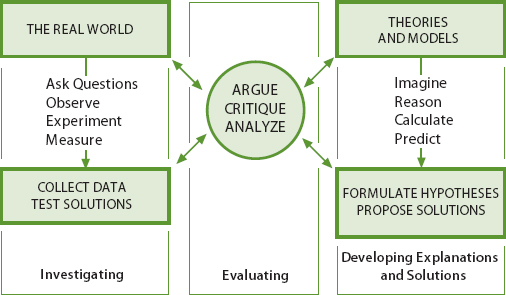
FIGURE 3-1 The three spheres of activity for scientists and engineers.
of activity, scientists and engineers try to use the best available tools to support the task at hand, which today means that modern computational technology is integral to virtually all aspects of their work.
At the left of the figure are activities related to empirical investigation. In this sphere of activity, scientists determine what needs to be measured; observe phenomena; plan experiments, programs of observation, and methods of data collection; build instruments; engage in disciplined fieldwork; and identify sources of uncertainty. For their part, engineers engage in testing that will contribute data for informing proposed designs. A civil engineer, for example, cannot design a new highway without measuring the terrain and collecting data about the nature of the soil and water flows.
The activities related to developing explanations and solutions are shown at the right of the figure. For scientists, their work in this sphere of activity is to draw from established theories and models and to propose extensions to theory or create new models. Often, they develop a model or hypothesis that leads to new questions to investigate or alternative explanations to consider. For engineers, the major practice is the production of designs. Design development also involves constructing models, for example, computer simulations of new structures or processes that may be used to test a design under a range of simulated conditions or,
at a later stage, to test a physical prototype. Both scientists and engineers use their models—including sketches, diagrams, mathematical relationships, simulations, and physical models—to make predictions about the likely behavior of a system, and they then collect data to evaluate the predictions and possibly revise the models as a result.
Between and within these two spheres of activity is the practice of evaluation, represented by the middle space. Here is an iterative process that repeats at every step of the work. Critical thinking is required, whether in developing and refining an idea (an explanation or a design) or in conducting an investigation. The dominant activities in this sphere are argumentation and critique, which often lead to further experiments and observations or to changes in proposed models, explanations, or designs. Scientists and engineers use evidence-based argumentation to make the case for their ideas, whether involving new theories or designs, novel ways of collecting data, or interpretations of evidence. They and their peers then attempt to identify weaknesses and limitations in the argument, with the ultimate goal of refining and improving the explanation or design.
In reality, scientists and engineers move, fluidly and iteratively, back and forth among these three spheres of activity, and they conduct activities that might involve two or even all three of the modes at once. The function of Figure 3-1 is therefore solely to offer a scheme that helps identify the function, significance, range, and diversity of practices embedded in the work of scientists and engineers. Although admittedly a simplification, the figure does identify three overarching categories of practices and shows how they interact.
How Engineering and Science Differ
Engineering and science are similar in that both involve creative processes, and neither uses just one method. And just as scientific investigation has been defined in different ways, engineering design has been described in various ways. However, there is widespread agreement on the broad outlines of the engineering design process [24, 25].
Like scientific investigations, engineering design is both iterative and systematic. It is iterative in that each new version of the design is tested and then modified, based on what has been learned up to that point. It is systematic in that a number of characteristic steps must be undertaken. One step is identifying the problem and defining specifications and constraints. Another step is generating ideas for how to solve the problem; engineers often use research and group

sessions (e.g., “brainstorming”) to come up with a range of solutions and design alternatives for further development. Yet another step is the testing of potential solutions through the building and testing of physical or mathematical models and prototypes, all of which provide valuable data that cannot be obtained in any other way. With data in hand, the engineer can analyze how well the various solutions meet the given specifications and constraints and then evaluate what is needed to improve the leading design or devise a better one.
In contrast, scientific studies may or may not be driven by any immediate practical application. On one hand, certain kinds of scientific research, such as that which led to Pasteur’s fundamental contributions to the germ theory of disease, were undertaken for practical purposes and resulted in important new technologies, including vaccination for anthrax and rabies and the pasteurization of milk to prevent spoilage. On the other hand, many scientific studies, such as the search for the planets orbiting distant stars, are driven by curiosity and undertaken with the aim of answering a question about the world or understanding an
Students’ opportunities to immerse themselves in these practices and to explore why they are central to science and engineering are critical to appreciating the skill of the expert and the nature of his or her enterprise.
observed pattern. For science, developing such an explanation constitutes success in and of itself, regardless of whether it has an immediate practical application; the goal of science is to develop a set of coherent and mutually consistent theoretical descriptions of the world that can provide explanations over a wide range of phenomena, For engineering, however, success is measured by the extent to which a human need or want has been addressed.
Both scientists and engineers engage in argumentation, but they do so with different goals. In engineering, the goal of argumentation is to evaluate prospective designs and then produce the most effective design for meeting the specifications and constraints. This optimization process typically involves trade-offs between competing goals, with the consequence that there is never just one “correct” solution to a design challenge. Instead, there are a number of possible solutions, and choosing among them inevitably involves personal as well as technical and cost considerations. Moreover, the continual arrival of new technologies enables new solutions.
In contrast, theories in science must meet a very different set of criteria, such as parsimony (a preference for simpler solutions) and explanatory coherence (essentially how well any new theory provides explanations of phenomena that fit with observations and allow predictions or inferences about the past to be made). Moreover, the aim of science is to find a single coherent and comprehensive theory for a range of related phenomena. Multiple competing explanations are regarded as unsatisfactory and, if possible, the contradictions they contain must be resolved through more data, which enable either the selection of the best available explanation or the development of a new and more comprehensive theory for the phenomena in question.
Although we do not expect K-12 students to be able to develop new scientific theories, we do expect that they can develop theory-based models and argue using them, in conjunction with evidence from observations, to develop explanations. Indeed, developing evidence-based models, arguments, and explanations is key to both developing and demonstrating understanding of an accepted scientific viewpoint.
A focus on practices (in the plural) avoids the mistaken impression that there is one distinctive approach common to all science—a single “scientific method.”
PRACTICES FOR K-12 CLASSROOMS
The K-12 practices described in this chapter are derived from those that scientists and engineers actually engage in as part of their work. We recognize that students cannot reach the level of competence of professional scientists and engineers, any more than a novice violinist is expected to attain the abilities of a virtuoso. Yet students’ opportunities to immerse themselves in these practices and to explore why they are central to science and engineering are critical to appreciating the skill of the expert and the nature of his or her enterprise.
We consider eight practices to be essential elements of the K-12 science and engineering curriculum:
1. Asking questions (for science) and defining problems (for engineering)
2. Developing and using models
3. Planning and carrying out investigations
4. Analyzing and interpreting data
5. Using mathematics and computational thinking
6. Constructing explanations (for science) and designing solutions (for engineering)
7. Engaging in argument from evidence
8. Obtaining, evaluating, and communicating information
In the eight subsections that follow, we address in turn each of these eight practices in some depth. Each discussion describes the practice, articulates the major competencies that students should have by the end of 12th grade (“Goals”), and sketches how their competence levels might progress across the preceding grades (“Progression”). These sketches are based on the committee’s judgment, as there is very little research evidence as yet on the developmental trajectory of each of these practices. The overall objective is that students develop both the facility and the inclination to call on these practices, separately or in combination, as needed to support their learning and to demonstrate their understanding of science and engineering. Box 3-2 briefly contrasts the role of each practice’s manifestation in science with its counterpart in engineering. In doing science or engineering, the practices are used iteratively and in combination; they should not be seen as a linear sequence of steps to be taken in the order presented.
BOX 3-2
DISTINGUISHING PRACTICES IN SCIENCE FROM THOSE IN ENGINEERING
1. Asking Questions and Defining Problems
| Science begins with a question about a phenomenon, such as “Why is the sky blue?” or “What causes cancer?,” and seeks to develop theories that can provide explanatory answers to such questions. A basic practice of the scientist is formulating empirically answerable questions about phenomena, establishing what is already known, and determining what questions have yet to be satisfactorily answered. | Engineering begins with a problem, need, or desire that suggests an engineering problem that needs to be solved. A societal problem such as reducing the nation’s dependence on fossil fuels may engender a variety of engineering problems, such as designing more efficient transportation systems, or alternative power generation devices such as improved solar cells. Engineers ask questions to define the engineering problem, determine criteria for a successful solution, and identify constraints. |

2. Developing and Using Models
| Science often involves the construction and use of a wide variety of models and simulations to help develop explanations about natural phenomena. Models make it possible to go beyond observables and imagine a world not yet seen. Models enable predictions of the form “if … then … therefore” to be made in order to test hypothetical explanations. | Engineering makes use of models and simulations to analyze existing systems so as to see where flaws might occur or to test possible solutions to a new problem. Engineers also call on models of various sorts to test proposed systems and to recognize the strengths and limitations of their designs. |
3. Planning and Carrying Out Investigations
| Scientific investigation may be conducted in the field or the laboratory. A major practice of scientists is planning and carrying out a systematic investigation, which requires the identification of what is to be recorded and, if applicable, what are to be treated as the dependent and independent variables (control of variables). Observations and data collected from such work are used to test existing theories and explanations or to revise and develop new ones. | Engineers use investigation both to gain data essential for specifying design criteria or parameters and to test their designs. Like scientists, engineers must identify relevant variables, decide how they will be measured, and collect data for analysis. Their investigations help them to identify how effective, efficient, and durable their designs may be under a range of conditions. |
4. Analyzing and Interpreting Data
| Scientific investigations produce data that must be analyzed in order to derive meaning. Because data usually do not speak for themselves, scientists use a range of tools—including tabulation, graphical interpretation, visualization, and statistical analysis—to identify the significant features and patterns in the data. Sources of error are identified and the degree of certainty calculated. Modern technology makes the collection of large data sets much easier, thus providing many secondary sources for analysis. | Engineers analyze data collected in the tests of their designs and investigations; this allows them to compare different solutions and determine how well each one meets specific design criteria—that is, which design best solves the problem within the given constraints. Like scientists, engineers require a range of tools to identify the major patterns and interpret the results. |
5. Using Mathematics and Computational Thinking
| In science, mathematics and computation are fundamental tools for representing physical variables and their relationships. They are used for a range of tasks, such as constructing simulations, statistically analyzing data, and recognizing, expressing, and applying quantitative relationships. Mathematical and computational approaches enable predictions of the behavior of physical systems, along with the testing of such predictions. Moreover, statistical techniques are invaluable for assessing the significance of patterns or correlations. | In engineering, mathematical and computational representations of established relationships and principles are an integral part of design. For example, structural engineers create mathematically based analyses of designs to calculate whether they can stand up to the expected stresses of use and if they can be completed within acceptable budgets. Moreover, simulations of designs provide an effective test bed for the development of designs and their improvement. |
6. Constructing Explanations and Designing Solutions
| The goal of science is the construction of theories that can provide explanatory accounts of features of the world. A theory becomes accepted when it has been shown to be superior to other explanations in the breadth of phenomena it accounts for and in its explanatory coherence and parsimony. Scientific explanations are explicit applications of theory to a specific situation or phenomenon, perhaps with the intermediary of a theory-based model for the system under study. The goal for students is to construct logically coherent explanations of phenomena that incorporate their current understanding of science, or a model that represents it, and are consistent with the available evidence. | Engineering design, a systematic process for solving engineering problems, is based on scientific knowledge and models of the material world. Each proposed solution results from a process of balancing competing criteria of desired functions, technological feasibility, cost, safety, esthetics, and compliance with legal requirements. There is usually no single best solution but rather a range of solutions. Which one is the optimal choice depends on the criteria used for making evaluations. |
7. Engaging in Argument from Evidence
| In science, reasoning and argument are essential for identifying the strengths and weaknesses of a line of reasoning and for finding the best explanation for a natural phenomenon. Scientists must defend their explanations, formulate evidence based on a solid foundation of data, examine their own understanding in light of the evidence and comments offered by others, and collaborate with peers in searching for the best explanation for the phenomenon being investigated. | In engineering, reasoning and argument are essential for finding the best possible solution to a problem. Engineers collaborate with their peers throughout the design process, with a critical stage being the selection of the most promising solution among a field of competing ideas. Engineers use systematic methods to compare alternatives, formulate evidence based on test data, make arguments from evidence to defend their conclusions, evaluate critically the ideas of others, and revise their designs in order to achieve the best solution to the problem at hand. |
8. Obtaining, Evaluating, and Communicating Information
| Science cannot advance if scientists are unable to communicate their findings clearly and persuasively or to learn about the findings of others. A major practice of science is thus the communication of ideas and the results of inquiry—orally, in writing, with the use of tables, diagrams, graphs, and equations, and by engaging in extended discussions with scientific peers. Science requires the ability to derive meaning from scientific texts (such as papers, the Internet, symposia, and lectures), to evaluate the scientific validity of the information thus acquired, and to integrate that information. | Engineers cannot produce new or improved technologies if the advantages of their designs are not communicated clearly and persuasively. Engineers need to be able to express their ideas, orally and in writing, with the use of tables, graphs, drawings, or models and by engaging in extended discussions with peers. Moreover, as with scientists, they need to be able to derive meaning from colleagues’ texts, evaluate the information, and apply it usefully. In engineering and science alike, new technologies are now routinely available that extend the possibilities for collaboration and communication. |
Practice 1
Asking Questions and Defining Problems
Questions are the engine that drive science and engineering.
Science asks
• What exists and what happens?
• Why does it happen?
• How does one know?
Engineering asks
• What can be done to address a particular human need or want?
• How can the need be better specified?
• What tools and technologies are available, or could be developed, for addressing this need?
Both science and engineering ask
• How does one communicate about phenomena, evidence, explanations, and design solutions?
Asking questions is essential to developing scientific habits of mind. Even for individuals who do not become scientists or engineers, the ability to ask well-defined questions is an important component of science literacy, helping to make them critical consumers of scientific knowledge.
Scientific questions arise in a variety of ways. They can be driven by curiosity about the world (e.g., Why is the sky blue?). They can be inspired by a model’s or theory’s predictions or by attempts to extend or refine a model or theory (e.g., How does the particle model of matter explain the incompressibility of liquids?). Or they can result from the need to provide better solutions to a problem. For example, the question of why it is impossible to siphon water above a height of 32 feet led Evangelista Torricelli (17th-century inventor of the barometer) to his discoveries about the atmosphere and the identification of a vacuum.
Questions are also important in engineering. Engineers must be able to ask probing questions in order to define an engineering problem. For example, they may ask: What is the need or desire that underlies the problem? What are the criteria (specifications) for a successful solution? What are the constraints? Other questions arise when generating possible solutions: Will this solution meet the design criteria? Can two or more ideas be combined to produce a better solution?
Students at any grade level should be able to ask questions of each other about the texts they read, the features of the phenomena they observe, and the conclusions they draw from their models or scientific investigations.
What are the possible trade-offs? And more questions arise when testing solutions: Which ideas should be tested? What evidence is needed to show which idea is optimal under the given constraints?
The experience of learning science and engineering should therefore develop students’ ability to ask—and indeed, encourage them to ask—well-formulated questions that can be investigated empirically. Students also need to recognize the distinction between questions that can be answered empirically and those that are answerable only in other domains of knowledge or human experience.
GOALS
By grade 12, students should be able to
• Ask questions about the natural and human-built worlds—for example: Why are there seasons? What do bees do? Why did that structure collapse? How is electric power generated?
• Distinguish a scientific question (e.g., Why do helium balloons rise?) from a nonscientific question (Which of these colored balloons is the prettiest?).
• Formulate and refine questions that can be answered empirically in a science classroom and use them to design an inquiry or construct a pragmatic solution.
• Ask probing questions that seek to identify the premises of an argument, request further elaboration, refine a research question or engineering problem, or challenge the interpretation of a data set—for example: How do you know? What evidence supports that argument?
• Note features, patterns, or contradictions in observations and ask questions about them.
• For engineering, ask questions about the need or desire to be met in order to define constraints and specifications for a solution.
PROGRESSION
Students at any grade level should be able to ask questions of each other about the texts they read, the features of the phenomena they observe, and the conclusions they draw from their models or scientific investigations. For engineering, they should ask questions to define the problem to be solved and to elicit ideas that lead to the constraints and specifications for its solution. As they progress across the grades, their questions should become more relevant, focused, and sophisticated. Facilitating such evolution will require a classroom culture that respects and values good questions, that offers students opportunities to refine their questions and questioning strategies, and that incorporates the teaching of effective questioning strategies across all grade levels. As a result, students will become increasingly proficient at posing questions that request relevant empirical evidence; that seek to refine a model, an explanation, or an engineering problem; or that challenge the premise of an argument or the suitability of a design.
Practice 2
Developing and Using Models
Scientists construct mental and conceptual models of phenomena. Mental models are internal, personal, idiosyncratic, incomplete, unstable, and essentially functional. They serve the purpose of being a tool for thinking with, making predictions, and making sense of experience. Conceptual models, the focus of this section, are, in contrast, explicit representations that are in some ways analogous to the phenomena they represent. Conceptual models allow scientists and engineers to better visualize and understand a phenomenon under investigation or develop a possible solution to a design problem. Used in science and engineering as either structural, functional, or behavioral analogs, albeit simplified, conceptual models include diagrams, physical replicas, mathematical representations, analogies, and computer simulations. Although they do not correspond exactly to the more complicated entity being modeled, they do bring certain features into focus while minimizing or obscuring others. Because all models contain approximations and assumptions that limit the range of validity of their application and the precision of their predictive power, it is important to recognize their limitations.
Conceptual models are in some senses the external articulation of the mental models that scientists hold and are strongly interrelated with mental models. Building an understanding of models and their role in science helps students to construct and revise mental models of phenomena. Better mental models, in turn, lead to a deeper understanding of science and enhanced scientific reasoning.
Scientists use models (from here on, for the sake of simplicity, we use the term “models” to refer to conceptual models rather than mental models) to represent their current understanding of a system (or parts of a system) under study, to aid in the development of questions and explanations, and to communicate ideas to others [13]. Some of the models used by scientists are mathematical; for example, the ideal gas law is an equation derived from the model of a gas as a set of point masses engaged in perfectly elastic collisions with each other and the walls of the container—which is a simplified model based on the atomic theory of matter. For more complex systems, mathematical representations of physical systems are used to create computer simulations, which enable scientists to predict the behavior of otherwise intractable systems—for example, the effects of increasing atmospheric levels of carbon dioxide on agriculture in different regions of the world. Models can be evaluated and refined through an iterative cycle of comparing their predictions with the real world and then adjusting them, thereby potentially yielding insights into the phenomenon being modeled.
Engineering makes use of models to analyze existing systems; this allows engineers to see where or under what conditions flaws might develop or to test possible solutions to a new problem. Engineers also use models to visualize a design and take it to a higher level of refinement, to communicate a design’s features to others, and as prototypes for testing design performance. Models, particularly modern computer simulations that encode relevant physical laws and properties of materials, can be especially helpful both in realizing and testing designs for structures, such as buildings, bridges, or aircraft, that are expensive to construct and that must survive extreme conditions that occur only on rare occasions. Other types of engineering problems also benefit from use of specialized computer-based simulations in their design and testing phases. But as in science, engineers who use
models must be aware of their intrinsic limitations and test them against known situations to ensure that they are reliable.
GOALS
By grade 12, students should be able to
• Construct drawings or diagrams as representations of events or systems—for example, draw a picture of an insect with labeled features, represent what happens to the water in a puddle as it is warmed by the sun, or represent a simple physical model of a real-world object and use it as the basis of an explanation or to make predictions about how the system will behave in specified circumstances.
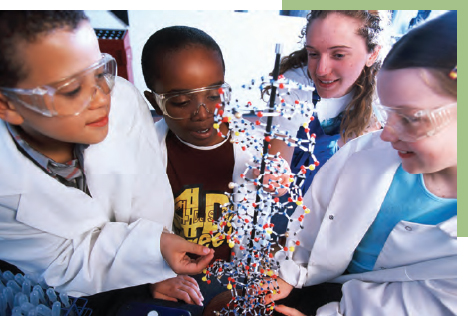
• Represent and explain phenomena with multiple types of models—for example, represent molecules with 3-D models or with bond diagrams—and move flexibly between model types when different ones are most useful for different purposes.
• Discuss the limitations and precision of a model as the representation of a system, process, or design and suggest ways in which the model might be improved to better fit available evidence or better reflect a design’s specifications. Refine a model in light of empirical evidence or criticism to improve its quality and explanatory power.
• Use (provided) computer simulations or simulations developed with simple simulation tools as a tool for understanding and investigating aspects of a system, particularly those not readily visible to the naked eye.
• Make and use a model to test a design, or aspects of a design, and to compare the effectiveness of different design solutions.
PROGRESSION
Modeling can begin in the earliest grades, with students’ models progressing from concrete “pictures” and/or physical scale models (e.g., a toy car) to more abstract representations of relevant relationships in later grades, such as a diagram representing forces on a particular object in a system. Students should be asked to use diagrams, maps, and other abstract models as tools that enable them to elaborate on their own ideas or findings and present them to others [15]. Young students should be encouraged to devise pictorial and simple graphical representations of the findings of their investigations and to use these models in developing their explanations of what occurred.
More sophisticated types of models should increasingly be used across the grades, both in instruction and curriculum materials, as students progress through their science education. The quality of a student-developed model will be highly dependent on prior knowledge and skill and also on the student’s understanding of the system being modeled, so students should be expected to refine their models as their understanding develops. Curricula will need to stress the role of models explicitly and provide students with modeling tools (e.g., Model-It, agent-based modeling such as NetLogo, spreadsheet models), so that students come to value this core practice and develop a level of facility in constructing and applying appropriate models.
Practice 3
Planning and Carrying Out Investigations
Scientists and engineers investigate and observe the world with essentially two goals: (1) to systematically describe the world and (2) to develop and test theories and explanations of how the world works. In the first, careful observation and description often lead to identification of features that need to be explained or questions that need to be explored.
The second goal requires investigations to test explanatory models of the world and their predictions and whether the inferences suggested by these models are supported by data. Planning and designing such investigations require the ability to design experimental or observational inquiries that are appropriate to answering the question being asked or testing a hypothesis that has been formed. This process begins by identifying the relevant variables and considering how they might be observed, measured, and controlled (constrained by the experimental design to take particular values).
Planning for controls is an important part of the design of an investigation. In laboratory experiments, it is critical to decide which variables are to be treated as results or outputs and thus left to vary at will and which are to be treated as input conditions and hence controlled. In many cases, particularly in the case of field observations, such planning involves deciding what can be controlled and how to collect different samples of data under different conditions, even though not all conditions are under the direct control of the investigator.
Decisions must also be made about what measurements should be taken, the level of accuracy required, and the kinds of instrumentation best suited to making such measurements. As in other forms of inquiry, the key issue is one of precision—the goal is to measure the variable as accurately as possible and reduce sources of error. The investigator must therefore decide what constitutes
a sufficient level of precision and what techniques can be used to reduce both random and systematic error.
GOALS
By grade 12, students should be able to
• Formulate a question that can be investigated within the scope of the classroom, school laboratory, or field with available resources and, when appropriate, frame a hypothesis (that is, a possible explanation that predicts a particular and stable outcome) based on a model or theory.
• Decide what data are to be gathered, what tools are needed to do the gathering, and how measurements will be recorded.
• Decide how much data are needed to produce reliable measurements and consider any limitations on the precision of the data.
• Plan experimental or field-research procedures, identifying relevant independent and dependent variables and, when appropriate, the need for controls.
• Consider possible confounding variables or effects and ensure that the investigation’s design has controlled for them.
PROGRESSION
Students need opportunities to design investigations so that they can learn the importance of such decisions as what to measure, what to keep constant, and how to select or construct data collection instruments that are appropriate to the needs of an inquiry. They also need experiences that help them recognize that the laboratory is not the sole domain for legitimate scientific inquiry and that, for many scientists (e.g., earth scientists, ethologists, ecologists), the “laboratory” is the natural world where experiments are conducted and data are collected in the field.
In the elementary years, students’ experiences should be structured to help them learn to define the features to be investigated, such as patterns that suggest causal relationships (e.g., What features of a ramp affect the speed of a given ball as it leaves the ramp?). The plan of the investigation, what trials to make and how to record information about them, then needs to be refined iteratively as students recognize from their experiences the limitations of their original plan. These investigations can be enriched and extended by linking them to engineering design projects—for example, how can students apply what they have learned about ramps to design a track that makes a ball travel a given distance, go around a loop, or stop on an uphill slope. From the earliest grades, students should have
opportunities to carry out careful and systematic investigations, with appropriately supported prior experiences that develop their ability to observe and measure and to record data using appropriate tools and instruments.
Students should have opportunities to plan and carry out several different kinds of investigations during their K-12 years. At all levels, they should engage in investigations that range from those structured by the teacher—in order to expose an issue or question that they would be unlikely to explore on their own (e.g., measuring specific properties of materials)—to those that emerge from students’ own questions. As they become more sophisticated, students also should have opportunities not only to identify questions to be researched but also to decide what data are to be gathered, what variables should be controlled, what tools or instruments are needed to gather and record data in an appropriate format, and eventually to consider how to incorporate measurement error in analyzing data.
Older students should be asked to develop a hypothesis that predicts a particular and stable outcome and to explain their reasoning and justify their choice. By high school, any hypothesis should be based on a well-developed model or theory. In addition, students should be able to recognize that it is not always possible to control variables and that other methods can be used in such cases—for example, looking for correlations (with the understanding that correlations do not necessarily imply causality).
Practice 4
Analyzing and Interpreting Data
Once collected, data must be presented in a form that can reveal any patterns and relationships and that allows results to be communicated to others. Because raw data as such have little meaning, a major practice of scientists is to organize and interpret data through tabulating, graphing, or statistical analysis. Such analysis can bring out the meaning of data—and their relevance—so that they may be used as evidence.
Once collected, data must be presented in a form that can reveal any patterns and relationships and that allows results to be communicated to others.
Engineers, too, make decisions based on evidence that a given design will work; they rarely rely on trial and error. Engineers often analyze a design by creating a model or prototype and collecting extensive data on how it performs, including under extreme conditions. Analysis of this kind of data not only informs design decisions and enables the prediction or assessment of performance but also helps define or clarify problems, determine economic feasibility, evaluate alternatives, and investigate failures.
Spreadsheets and databases provide useful ways of organizing data, especially large data sets. The identification of relationships in data is aided by a range of tools, including tables, graphs, and mathematics. Tables permit major features of a large body of data to be summarized in a conveniently accessible form, graphs offer a means of visually summarizing data, and mathematics is essential for expressing relationships between different variables in the data set (see Practice 5 for further discussion of mathematics). Modern computer-based visualization tools often allow data to be displayed in varied forms and thus for learners to engage interactively with data in their analyses. In addition, standard statistical techniques can help to reduce the effect of error in relating one variable to another.
Students need opportunities to analyze large data sets and identify correlations. Increasingly, such data sets—involving temperature, pollution levels, and other scientific measurements—are available on the Internet. Moreover, information technology enables the capture of data beyond the classroom at all hours of the day. Such data sets extend the range of students’ experiences and help to illuminate this important practice of analyzing and interpreting data.
GOALS
By grade 12, students should be able to
• Analyze data systematically, either to look for salient patterns or to test whether data are consistent with an initial hypothesis.
• Recognize when data are in conflict with expectations and consider what revisions in the initial model are needed.
• Use spreadsheets, databases, tables, charts, graphs, statistics, mathematics, and information and computer technology to collate, summarize, and display data and to explore relationships between variables, especially those representing input and output.
• Evaluate the strength of a conclusion that can be inferred from any data set, using appropriate grade-level mathematical and statistical techniques.
• Recognize patterns in data that suggest relationships worth investigating further. Distinguish between causal and correlational relationships.
• Collect data from physical models and analyze the performance of a design under a range of conditions.
PROGRESSION
At the elementary level, students need support to recognize the need to record observations—whether in drawings, words, or numbers—and to share them with others. As they engage in scientific inquiry more deeply, they should begin to collect categorical or numerical data for presentation in forms that facilitate interpretation, such as tables and graphs. When feasible, computers and other digital tools should be introduced as a means of enabling this practice.
In middle school, students should have opportunities to learn standard techniques for displaying, analyzing, and interpreting data; such techniques include different types of graphs, the identification of outliers in the data set, and averaging to reduce the effects of measurement error. Students should also be asked to explain why these techniques are needed.
As students progress through various science classes in high school and their investigations become more complex, they need to develop skill in additional techniques for displaying and analyzing data, such as x-y scatterplots or cross-tabulations to express the relationship between two variables. Students should be helped to recognize that they may need to explore more than one way to display their data in order to identify and present significant features. They also need opportunities to use mathematics and statistics to analyze features of data such as covariation. Also at the high school level, students should have the opportunity to use a greater diversity of samples of scientific data and to use computers or other digital tools to support this kind of analysis.
Students should be expected to use some of these same techniques in engineering as well. When they do so, it is important that they are made cognizant of the purpose of the exercise—that any data they collect and analyze are intended to help validate or improve a design or decide on an optimal solution.
Practice 5
Using Mathematics and Computational Thinking
Mathematics and computational tools are central to science and engineering. Mathematics enables the numerical representation of variables, the symbolic representation of relationships between physical entities, and the prediction of outcomes. Mathematics provides powerful models for describing and predicting such phenomena as atomic structure, gravitational forces, and quantum mechanics.
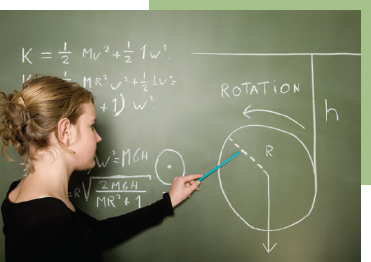
Since the mid-20th century, computational theories, information and computer technologies, and algorithms have revolutionized virtually all scientific and engineering fields. These tools and strategies allow scientists and engineers to collect and analyze large data sets, search for distinctive patterns, and identify relationships and significant features in ways that were previously impossible. They also provide powerful new techniques for employing mathematics to model complex phenomena—for example, the circulation of carbon dioxide in the atmosphere and ocean.
Mathematics and computation can be powerful tools when brought to bear in a scientific investigation. Mathematics serves pragmatic functions as a tool—both a communicative function, as one of the languages of science, and a structural function, which allows for logical deduction. Mathematics enables ideas to be expressed in a precise form and enables the identification of new ideas about the physical world. For example, the concept of the equivalence of mass and energy emerged from the mathematical analysis conducted by Einstein, based on the premises of special relativity. The contemporary understanding of electromagnetic waves emerged from Maxwell’s mathematical analysis of the behavior of electric and magnetic fields. Modern theoretical physics is so heavily imbued with mathematics that it would make no sense to try to divide it into mathematical and nonmathematical parts. In much of modern science, predictions and inferences have a probabilistic nature, so understanding the mathematics of probability and of statistically derived inferences is an important part of understanding science.
Computational tools enhance the power of mathematics by enabling calculations that cannot be carried out analytically. For example, they allow the development of simulations, which combine mathematical representations of
Increasing students’ familiarity with the role of mathematics in science is central to developing a deeper understanding of how science works.
multiple underlying phenomena to model the dynamics of a complex system. Computational methods are also potent tools for visually representing data, and they can show the results of calculations or simulations in ways that allow the exploration of patterns.
Engineering, too, involves mathematical and computational skills. For example, structural engineers create mathematical models of bridge and building designs, based on physical laws, to test their performance, probe their structural limits, and assess whether they can be completed within acceptable budgets. Virtually any engineering design raises issues that require computation for their resolution.
Although there are differences in how mathematics and computational thinking are applied in science and in engineering, mathematics often brings these two fields together by enabling engineers to apply the mathematical form of scientific theories and by enabling scientists to use powerful information technologies designed by engineers. Both kinds of professionals can thereby accomplish investigations and analyses and build complex models, which might otherwise be out of the question.
Mathematics (including statistics) and computational tools are essential for data analysis, especially for large data sets. The abilities to view data from different perspectives and with different graphical representations, to test relationships between variables, and to explore the interplay of diverse external conditions all require mathematical skills that are enhanced and extended with computational skills.
GOALS
By grade 12, students should be able to
• Recognize dimensional quantities and use appropriate units in scientific applications of mathematical formulas and graphs.
• Express relationships and quantities in appropriate mathematical or algorithmic forms for scientific modeling and investigations.
• Recognize that computer simulations are built on mathematical models that incorporate underlying assumptions about the phenomena or systems being studied.
• Use simple test cases of mathematical expressions, computer programs, or simulations—that is, compare their outcomes with what is known about the real world—to see if they “make sense.”
• Use grade-level-appropriate understanding of mathematics and statistics in analyzing data.
PROGRESSION
Increasing students’ familiarity with the role of mathematics in science is central to developing a deeper understanding of how science works. As soon as students learn to count, they can begin using numbers to find or describe patterns in nature. At appropriate grade levels, they should learn to use such instruments as rulers, protractors, and thermometers for the measurement of variables that are best represented by a continuous numerical scale, to apply mathematics to interpolate values, and to identify features—such as maximum, minimum, range, average, and median—of simple data sets.
A significant advance comes when relationships are expressed using equalities first in words and then in algebraic symbols—for example, shifting from distance traveled equals velocity multiplied by time elapsed to s = vt. Students should have opportunities to explore how such symbolic representations can be used to represent data, to predict outcomes, and eventually to derive further relationships using mathematics. Students should gain experience in using computers to record measurements taken with computer-connected probes or instruments, thereby recognizing how this process allows multiple measurements to be made rapidly and recurrently. Likewise, students should gain experience in using computer programs to transform their data between various tabular and graphical forms, thereby aiding in the identification of patterns.
Students should thus be encouraged to explore the use of computers for data analysis, using simple data sets, at an early age. For example, they could use spreadsheets to record data and then perform simple and recurring calculations from those data, such as the calculation of average speed from measurements of positions at multiple times. Later work should introduce them to the use of mathematical relationships to build simple computer models, using appropriate supporting programs or information and computer technology tools. As students progress in their understanding of mathematics and computation, at
every level the science classroom should be a place where these tools are progressively exploited.
Practice 6
Constructing Explanations and Designing Solutions
Because science seeks to enhance human understanding of the world, scientific theories are developed to provide explanations aimed at illuminating the nature of particular phenomena, predicting future events, or making inferences about past events. Science has developed explanatory theories, such as the germ theory of disease, the Big Bang theory of the origin of the universe, and Darwin’s theory of the evolution of species. Although their role is often misunderstood—the informal use of the word “theory,” after all, can mean a guess—scientific theories are constructs based on significant bodies of knowledge and evidence, are revised in light of new evidence, and must withstand significant scrutiny by the scientific community before they are widely accepted and applied. Theories are not mere guesses, and they are especially valued because they provide explanations for multiple instances.
In science, the term “hypothesis” is also used differently than it is in everyday language. A scientific hypothesis is neither a scientific theory nor a guess; it is a plausible explanation for an observed phenomenon that can predict what will happen in a given situation. A hypothesis is made based on existing theoretical understanding relevant to the situation and often also on a specific model for the system in question.
Scientific explanations are accounts that link scientific theory with specific observations or phenomena—for example, they explain observed relationships between variables and describe the mechanisms that support cause and effect inferences about them. Very often the theory is first represented by a specific model for the situation in question, and then a model-based explanation is developed. For example, if one understands the theory of how oxygen is obtained, transported, and utilized in the body, then a model of the circulatory system can be developed and used to explain why heart rate and breathing rate increase with exercise.
Scientific theories are developed to provide explanations aimed at illuminating the nature of particular phenomena, predicting future events, or making inferences about past events.
Engaging students with standard scientific explanations of the world—helping them to gain an understanding of the major ideas that science has developed—is a central aspect of science education. Asking students to demonstrate their own understanding of the implications of a scientific idea by developing their own explanations of phenomena, whether based on observations they have made or models they have developed, engages them in an essential part of the process by which conceptual change can occur. Explanations in science are a natural for such pedagogical uses, given their inherent appeals to simplicity, analogy, and empirical data (which may even be in the form of a thought experiment) [26, 27]. And explanations are especially valuable for the classroom because of, rather than in spite of, the fact that there often are competing explanations offered for the same phenomenon—for example, the recent gradual rise in the mean surface temperature on Earth. Deciding on the best explanation is a matter of argument that is resolved by how well any given explanation fits with all available data, how much it simplifies what would seem to be complex, and whether it produces a sense of understanding.
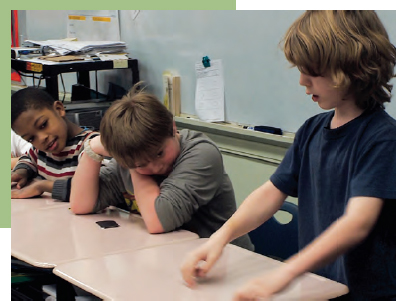
Because scientists achieve their own understanding by building theories and theory-based explanations with the aid of models and representations and by drawing on data and evidence, students should also develop some facility in constructing model- or evidence-based explanations. This is an essential step in building their own understanding of phenomena, in gaining greater appreciation of the explanatory power of the scientific theories that they are learning about in class, and in acquiring greater insight into how scientists operate.
In engineering, the goal is a design rather than an explanation. The process of developing a design is iterative and systematic, as is the process of developing an explanation or a theory in science. Engineers’ activities, however, have elements
that are distinct from those of scientists. These elements include specifying constraints and criteria for desired qualities of the solution, developing a design plan, producing and testing models or prototypes, selecting among alternative design features to optimize the achievement of design criteria, and refining design ideas based on the performance of a prototype or simulation.
GOALS
By grade 12, students should be able to
• Construct their own explanations of phenomena using their knowledge of accepted scientific theory and linking it to models and evidence.
• Use primary or secondary scientific evidence and models to support or refute an explanatory account of a phenomenon.
• Offer causal explanations appropriate to their level of scientific knowledge.
• Identify gaps or weaknesses in explanatory accounts (their own or those of others).
In their experience of engineering, students should have the opportunity to
• Solve design problems by appropriately applying their scientific knowledge.
• Undertake design projects, engaging in all steps of the design cycle and producing a plan that meets specific design criteria.
• Construct a device or implement a design solution.
• Evaluate and critique competing design solutions based on jointly developed and agreed-on design criteria.
PROGRESSION FOR EXPLANATION
Early in their science education, students need opportunities to engage in constructing and critiquing explanations. They should be encouraged to develop explanations of what they observe when conducting their own investigations and to evaluate their own and others’ explanations for consistency with the evidence. For example, observations of the owl pellets they dissect should lead them to produce an explanation of owls’ eating habits based on inferences made from what they find.
As students’ knowledge develops, they can begin to identify and isolate variables and incorporate the resulting observations into their explanations of phenomena. Using their measurements of how one factor does or does not affect
another, they can develop causal accounts to explain what they observe. For example, in investigating the conditions under which plants grow fastest, they may notice that the plants die when kept in the dark and seek to develop an explanation for this finding. Although the explanation at this level may be as simple as “plants die in the dark because they need light in order to live and grow,” it provides a basis for further questions and deeper understanding of how plants utilize light that can be developed in later grades. On the basis of comparison of their explanation with their observations, students can appreciate that an explanation such as “plants need light to grow” fails to explain why they die when no water is provided. They should be encouraged to revisit their initial ideas and produce more complete explanations that account for more of their observations.
By the middle grades, students recognize that many of the explanations of science rely on models or representations of entities that are too small to see or too large to visualize. For example, explaining why the temperature of water does not increase beyond 100°C when heated requires students to envisage water as consisting of microscopic particles and that the energy provided by heating can allow fast-moving particles to escape despite the force of attraction holding the particles together. In the later stages of their education, students should also progress to using mathematics or simulations to construct an explanation for a phenomenon.
PROGRESSION FOR DESIGN
In some ways, children are natural engineers. They spontaneously build sand castles, dollhouses, and hamster enclosures, and they use a variety of tools and materials for their own playful purposes. Thus a common elementary school activity is to challenge children to use tools and materials provided in class to solve a specific challenge, such as constructing a bridge from paper and tape and testing it until failure occurs. Children’s capabilities to design structures can then be enhanced by having them pay attention to points of failure and asking them to create and test redesigns of the bridge so that it is stronger. Furthermore, design activities should not be limited just to structural engineering but should also include projects that reflect other areas of engineering, such as the need to design a traffic pattern for the school parking lot or a layout for planting a school garden box.
In middle school, it is especially beneficial to engage students in engineering design projects in which they are expected to apply what they have recently learned in science—for example, using their now-familiar concepts of ecology to solve problems related to a school garden. Middle school students should also
have opportunities to plan and carry out full engineering design projects in which they define problems in terms of criteria and constraints, research the problem to deepen their relevant knowledge, generate and test possible solutions, and refine their solutions through redesign.
At the high school level, students can undertake more complex engineering design projects related to major local, national or global issues. Increased emphasis should be placed on researching the nature of the given problems, on reviewing others’ proposed solutions, on weighing the strengths and weaknesses of various alternatives, and on discerning possibly unanticipated effects.
Practice 7
Engaging in Argument from Evidence
Whether they concern new theories, proposed explanations of phenomena, novel solutions to technological problems, or fresh interpretations of old data, scientists and engineers use reasoning and argumentation to make their case. In science, the production of knowledge is dependent on a process of reasoning that requires a scientist to make a justified claim about the world. In response, other scientists attempt to identify the claim’s weaknesses and limitations. Their arguments can be based on deductions from premises, on inductive generalizations of existing patterns, or on inferences about the best possible explanation. Argumentation is also needed to resolve questions involving, for example, the best experimental design, the most appropriate techniques of data analysis, or the best interpretation of a given data set.
In short, science is replete with arguments that take place both informally, in lab meetings and symposia, and formally, in peer review. Historical case studies of the origin and development of a scientific idea show how a new idea is often difficult to accept and has to be argued for—archetypal examples are the Copernican idea that Earth travels around the sun and Darwin’s ideas about the origin of species. Over time, ideas that survive critical examination even in the light of new data attain consensual acceptance in the community, and by this process of discourse and argument science maintains its objectivity and progress [28].
The knowledge and ability to detect “bad science” [29, 30] are requirements both for the scientist and the citizen. Scientists must make critical judgments about their own work and that of their peers, and the scientist and the citizen alike must make evaluative judgments about the validity of science-related media reports and their implications for people’s own lives and society [30]. Becoming a critical consumer of science is fostered by opportunities to use critique and evaluation to judge the merits of any scientifically based argument.
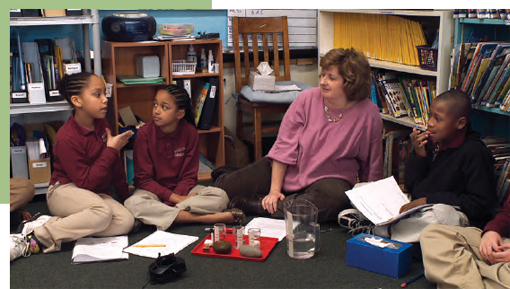
In engineering, reasoning and argument are essential to finding the best possible solution to a problem. At an early design stage, competing ideas must be compared (and possibly combined) to achieve an initial design, and the choices are made through argumentation about the merits of the various ideas pertinent to the design goals. At a later stage in the design process, engineers test their potential solution, collect data, and modify their design in an iterative manner. The results of such efforts are often presented as evidence to argue about the strengths and weaknesses of a particular design. Although the forms of argumentation are similar, the criteria employed in engineering are often quite different from those of science. For example, engineers might use cost-benefit analysis, an analysis of risk, an appeal to aesthetics, or predictions about market reception to justify why one design is better than another—or why an entirely different course of action should be followed.
GOALS
By grade 12, students should be able to
• Construct a scientific argument showing how data support a claim.
• Identify possible weaknesses in scientific arguments, appropriate to the students’ level of knowledge, and discuss them using reasoning and evidence.
• Identify flaws in their own arguments and modify and improve them in response to criticism.
• Recognize that the major features of scientific arguments are claims, data, and reasons and distinguish these elements in examples.
• Explain the nature of the controversy in the development of a given scientific idea, describe the debate that surrounded its inception, and indicate why one particular theory succeeded.
• Explain how claims to knowledge are judged by the scientific community today and articulate the merits and limitations of peer review and the need for independent replication of critical investigations.
• Read media reports of science or technology in a critical manner so as to identify their strengths and weaknesses.
PROGRESSION
The study of science and engineering should produce a sense of the process of argument necessary for advancing and defending a new idea or an explanation of a phenomenon and the norms for conducting such arguments. In that spirit, students should argue for the explanations they construct, defend their interpretations of the associated data, and advocate for the designs they propose. Meanwhile, they should learn how to evaluate critically the scientific arguments of others and present counterarguments. Learning to argue scientifically offers students not only an opportunity to use their scientific knowledge in justifying an explanation and in identifying the weaknesses in others’ arguments but also to build their own knowledge and understanding. Constructing and critiquing arguments are both a core process of science and one that supports science education, as research suggests that interaction with others is the most cognitively effective way of learning [31-33].
Young students can begin by constructing an argument for their own interpretation of the phenomena they observe and of any data they collect. They need instructional support to go beyond simply making claims—that is, to include reasons or references to evidence and to begin to distinguish evidence from opinion. As they grow in their ability to construct scientific arguments, students can draw on a wider range of reasons or evidence, so that their arguments become more sophisticated. In addition, they should be expected to discern what aspects of the evidence are potentially significant for supporting or refuting a particular argument.
Students should begin learning to critique by asking questions about their own findings and those of others. Later, they should be expected to identify possible weaknesses in either data or an argument and explain why their criticism is justified. As they become more adept at arguing and critiquing, they should be introduced to the language needed to talk about argument, such as claim, reason, data, etc. Exploration of historical episodes in science can provide opportunities for students to identify the ideas, evidence, and arguments of professional scientists. In so doing, they should be encouraged to recognize the criteria used to judge claims for new knowledge and the formal means by which scientific ideas are evaluated today. In particular, they should see how the practice of peer review and independent verification of claimed experimental results help to maintain objectivity and trust in science.
Practice 8
Obtaining, Evaluating, and Communicating Information
Being literate in science and engineering requires the ability to read and understand their literatures [34]. Science and engineering are ways of knowing that are represented and communicated by words, diagrams, charts, graphs, images, symbols, and mathematics [35]. Reading, interpreting, and producing text* are fundamental practices of science in particular, and they constitute at least half of engineers’ and scientists’ total working time [36].
Even when students have developed grade-level-appropriate reading skills, reading in science is often challenging to students for three reasons. First, the jargon of science texts is essentially unfamiliar; together with their often extensive use of, for example, the passive voice and complex sentence structure, many find these texts inaccessible [37]. Second, science texts must be read so as to extract information accurately. Because the precise meaning of each word or clause may be important, such texts require a mode of reading that is quite different from reading a novel or even a newspaper. Third, science texts are multimodal [38], using a mix of words, diagrams, charts, symbols, and mathematics to communicate. Thus understanding science texts requires much more than simply knowing the meanings of technical terms.
Communicating in written or spoken form is another fundamental practice of science; it requires scientists to describe observations precisely, clarify their thinking, and justify their arguments. Because writing is one of the primary means of communicating*

*The term “text” is used here to refer to any form of communication, from printed text to video productions.
in the scientific community, learning how to produce scientific texts is as essential to developing an understanding of science as learning how to draw is to appreciating the skill of the visual artist. Indeed, the new Common Core State Standards for English Language Arts & Literacy in History/Social Studies, Science, and Technical Subjects [39] recognize that reading and writing skills are essential to science; the formal inclusion in this framework of this science practice reinforces and expands on that view. Science simply cannot advance if scientists are unable to communicate their findings clearly and persuasively. Communication occurs in a variety of formal venues, including peer-reviewed journals, books, conference presentations, and carefully constructed websites; it occurs as well through informal means, such as discussions, email messages, phone calls, and blogs. New technologies have extended communicative practices, enabling multidisciplinary collaborations across the globe that place even more emphasis on reading and writing. Increasingly, too, scientists are required to engage in dialogues with lay audiences about their work, which requires especially good communication skills.
Being a critical consumer of science and the products of engineering, whether as a lay citizen or a practicing scientist or an engineer, also requires the ability to read or view reports about science in the press or on the Internet and to recognize the salient science, identify sources of error and methodological flaws, and distinguish observations from inferences, arguments from explanations, and claims from evidence. All of these are constructs learned from engaging in a critical discourse around texts.
Engineering proceeds in a similar manner because engineers need to communicate ideas and find and exchange information—for example, about new techniques or new uses of existing tools and materials. As in science, engineering communication involves not just written and spoken language; many engineering ideas are best communicated through sketches, diagrams, graphs, models, and products. Also in wide use are handbooks, specific to particular engineering fields, that provide detailed information, often in tabular form, on how best to formulate design solutions to commonly encountered engineering tasks. Knowing how to seek and use such informational resources is an important part of the engineer’s skill set.
GOALS
By grade 12, students should be able to
• Use words, tables, diagrams, and graphs (whether in hard copy or electronically), as well as mathematical expressions, to communicate their understanding or to ask questions about a system under study.
• Read scientific and engineering text, including tables, diagrams, and graphs, commensurate with their scientific knowledge and explain the key ideas being communicated.
• Recognize the major features of scientific and engineering writing and speaking and be able to produce written and illustrated text or oral presentations that communicate their own ideas and accomplishments.
• Engage in a critical reading of primary scientific literature (adapted for classroom use) or of media reports of science and discuss the validity and reliability of the data, hypotheses, and conclusions.
PROGRESSION
Any education in science and engineering needs to develop students’ ability to read and produce domain-specific text. As such, every science or engineering lesson is in part a language lesson, particularly reading and producing the genres of texts that are intrinsic to science and engineering.
Students need sustained practice and support to develop the ability to extract the meaning of scientific text from books, media reports, and other forms of scientific communication because the form of this text is initially unfamiliar—expository rather than narrative, often linguistically dense, and reliant on precise logical flows. Students should be able to interpret meaning from text, to produce text in which written language and diagrams are used to express scientific ideas, and to engage in extended discussion about those ideas.
From the very start of their science education, students should be asked to engage in the communication of science, especially regarding the investigations they are conducting and the observations they are making. Careful description of observations and clear statement of ideas, with the ability to both refine a statement in response to questions and to ask questions of others to achieve clarification of what is being said begin at the earliest grades. Beginning in upper elementary and middle school, the ability to interpret written materials becomes more important. Early work on reading science texts should also include explicit instruction and practice in interpreting tables, diagrams, and charts and coordinating information conveyed by them with information in written text. Throughout their science education, students are continually introduced to new terms, and the meanings of those terms can be learned only through opportunities to use and apply them in their specific contexts. Not only must students learn technical terms but also more general academic language, such as “analyze” or “correlation,” which are not part of most students’ everyday vocabulary and thus need specific elaboration if they are to make sense of
From the very start of their science education, students should be asked to engage in the communication of science, especially regarding the investigations they are conducting and the observations they are making.
scientific text. It follows that to master the reading of scientific material, students need opportunities to engage with such text and to identify its major features; they cannot be expected simply to apply reading skills learned elsewhere to master this unfamiliar genre effectively.
Students should write accounts of their work, using journals to record observations, thoughts, ideas, and models. They should be encouraged to create diagrams and to represent data and observations with plots and tables, as well as with written text, in these journals. They should also begin to produce reports or posters that present their work to others. As students begin to read and write more texts, the particular genres of scientific text—a report of an investigation, an explanation with supporting argumentation, an experimental procedure—will need to be introduced and their purpose explored. Furthermore, students should have opportunities to engage in discussion about observations and explanations and to make oral presentations of their results and conclusions as well as to engage in appropriate discourse with other students by asking questions and discussing issues raised in such presentations. Because the spoken language of such discussions and presentations is as far from their everyday language as scientific text is from a novel, the development both of written and spoken scientific explanation/argumentation needs to proceed in parallel.
In high school, these practices should be further developed by providing students with more complex texts and a wider range of text materials, such as technical reports or scientific literature on the Internet. Moreover, students need opportunities to read and discuss general media reports with a critical eye and to read appropriate samples of adapted primary literature [40] to begin seeing how science is communicated by science practitioners.
In engineering, students likewise need opportunities to communicate ideas using appropriate combinations of sketches, models, and language. They should also create drawings to test concepts and communicate detailed plans; explain and critique models of various sorts, including scale models and prototypes; and present the results of simulations, not only regarding the planning and development stages but also to make compelling presentations of their ultimate solutions.
REFLECTING ON THE PRACTICES
Science has been enormously successful in extending humanity’s knowledge of the world and, indeed transforming it. Understanding how science has achieved this success and the techniques that it uses is an essential part of any science education. Although there is no universal agreement about teaching the nature of science, there is a strong consensus about characteristics of the scientific enterprise that should be understood by an educated citizen [41-43]. For example, the notion that there is a single scientific method of observation, hypothesis, deduction, and conclusion—a myth perpetuated to this day by many textbooks—is fundamentally wrong [44]. Scientists do use deductive reasoning, but they also search for patterns, classify different objects, make generalizations from repeated observations, and engage in a process of making inferences as to what might be the best explanation. Thus the picture of scientific reasoning is richer, more complex, and more diverse than the image of a linear and unitary scientific method would suggest [45].
What engages all scientists, however, is a process of critique and argumentation. Because they examine each other’s ideas and look for flaws, controversy and debate among scientists are normal occurrences, neither exceptional nor extraordinary. Moreover, science has established a formal mechanism of peer review for establishing the credibility of any individual scientist’s work. The ideas that survive this process of review and criticism are the ones that become well established in the scientific community.
Our view is that the opportunity for students to learn the basic set of practices outlined in this chapter is also an opportunity to have them stand back and reflect on how these practices contribute to the accumulation of scientific knowledge. For example, students need to see that the construction of models is a major means of acquiring new understanding; that these models identify key features and are akin to a map, rather than a literal representation of reality [13]; and that the great achievement of science is a core set of explanatory theories that have wide application [46].
Understanding how science functions requires a synthesis of content knowledge, procedural knowledge, and epistemic knowledge. Procedural knowledge refers to the methods that scientists use to ensure that their findings are valid and reliable. It includes an understanding of the importance and appropriate use of controls, double-blind trials, and other procedures (such as methods to reduce error) used by science. As such, much of it is specific to the domain
and can only be learned within science. Procedural knowledge has also been called “concepts of evidence” [47].
Epistemic knowledge is knowledge of the constructs and values that are intrinsic to science. Students need to understand what is meant, for example, by an observation, a hypothesis, an inference, a model, a theory, or a claim and be able to readily distinguish between them. An education in science should show that new scientific ideas are acts of imagination, commonly created these days through collaborative efforts of groups of scientists whose critiques and arguments are fundamental to establishing which ideas are worthy of pursuing further. Ideas often survive because they are coherent with what is already known, and they either explain the unexplained, explain more observations, or explain in a simpler and more elegant manner.
Science is replete with ideas that once seemed promising but have not withstood the test of time, such as the concept of the “ether” or the vis vitalis (the “vital force” of life). Thus any new idea is initially tentative, but over time, as it survives repeated testing, it can acquire the status of a fact—a piece of knowledge that is unquestioned and uncontested, such as the existence of atoms. Scientists use the resulting theories and the models that represent them to explain and predict causal relationships. When the theory is well tested, its predictions are reliable, permitting the application of science to technologies and a wide variety of policy decisions. In other words, science is not a miscellany of facts but a coherent body of knowledge that has been hard won and that serves as a powerful tool.
Engagement in modeling and in critical and evidence-based argumentation invites and encourages students to reflect on the status of their own knowledge and their understanding of how science works. And as they involve themselves in the practices of science and come to appreciate its basic nature, their level of sophistication in understanding how any given practice contributes to the scientific enterprise can continue to develop across all grade levels.
REFERENCES
1. Layton, D. (1973). Science for the People: The Origins of the School Science Curriculum in England. London, England: Allen & Unwin.
2. DeBoer, G.E. (1991). A History of Ideas in Science Education: Implications for Practice. New York: Teachers College Press.
3. Driver, R., Leach, J., Millar, R., and Scott, P. (1996). Young People’s Images of Science. Buckingham, England: Open University Press.
4. Schwab, J.J. (1962). The Teaching of Science as Enquiry. Cambridge, MA: Harvard University Press.
5. Florman, S.C. (1976). The Existential Pleasures of Engineering. New York: St. Martin’s Press.
6. Petroski, H. (1996). Engineering by Design: How Engineers Get from Thought to Thing. Cambridge, MA: Harvard University Press.
7. Collins, H., and Pinch, T. (1993). The Golem: What Everyone Should Know About Science. Cambridge, England: Cambridge University Press.
8. Pickering, A. (1995). The Mangle of Practice: Time, Agency, and Science. Chicago: University of Chicago Press.
9. Latour, B., and Woolgar, S. (1986). Laboratory Life: The Construction of Scientific Facts. Princeton, NJ: Princeton University Press.
10. Latour, B. (1999). Pandora’s Hope: Essays on the Reality of Science Studies. Cambridge, MA: Harvard University Press.
11. Longino, H.E. (2002). The Fate of Knowledge. Princeton, NJ: Princeton University Press.
12. Bazerman, C. (1988). Shaping Written Knowledge. Madison: University of Wisconsin Press.
13. Nercessian, N. (2008). Model-based reasoning in scientific practice. In R.A. Duschl and R.E. Grandy (Eds.), Teaching Scientific Inquiry: Recommendations for Research and Implementation (pp. 57-79). Rotterdam, the Netherlands: Sense.
14. Latour, B. (1990). Visualization and cognition: Drawing things together. In M. Lynch and S. Woolgar (Eds.), Representation in Scientific Activity (pp. 19-68). Cambridge, MA: MIT Press.
15. Lehrer, R., and Schauble, L. (2006). Cultivating model-based reasoning in science education. In R.K. Sawyer (Ed.), The Cambridge Handbook of the Learning Sciences (pp. 371-187). Cambridge, England: Cambridge University Press.
16. Giere, R., Bickle, J., and Maudlin, R.F. (2006). Understanding Scientific Reasoning. Belmont, CA: Thomson Wadsworth.
17. Millar, R., and Driver, R. (1987). Beyond processes. Studies in Science Education, 14, 33-62.
18. Abd-El-Khalick, F., BouJaoude, S., Duschl, R., Lederman, N.G., Mamlok-Naaman, R., Hofstein, A., Niaz, M., Treagust, D., and Tuan, H. (2004). Inquiry in science education: International perspectives. Science Education, 88(3), 397-419.
19. Ford, M. (2008). Disciplinary authority and accountability in scientific practice and learning. Science Education, 92(3), 404-423.
20. Berland, L.K., and Reiser, B. (2008). Making sense of argumentation and explanation. Science Education, 93(1), 26-55.
21. Klahr, D., and Dunbar, K. (1988). Dual space search during scientific reasoning. Cognitive Science, 12(1), 1-48.
22. Kind, P., Osborne, J.F., and Szu, E. (in preparation). A Model for Scientific Reasoning. Stanford University.
23. Schwarz, C.V., Reiser, B.J., Davis, E.A., Kenyon, L., Achér, A., Fortus, D., Shwartz, Y., Hug, B., and Krajcik, J. (2009). Developing a learning progression for scientific modeling: Making scientific modeling accessible and meaningful for learners. Journal of Research in Science Teaching, 46(6), 632-654.
24. National Academy of Engineering and National Research Council. (2009). Engineering in K-12 Education: Understanding the Status and Improving the Prospects. Committee on K-12 Engineering Education. L. Katehi, G. Pearson, and M. Feder (Eds.). Board on Science Education, Center for Education, Division of Behavioral and Social Sciences and Education. Washington, DC: The National Academies Press.
25. National Academy of Engineering. (2010). Standards for K-12 Engineering Education? Committee on Standards for K-12 Engineering Education. Washington, DC: The National Academies Press.
26. Ogborn, J., Kress, G., Martins, I., and Mcgillicuddy, K. (1996). Explaining Science in the Classroom. Buckingham, England: Open University Press.
27. Duit, R. (1991). On the role of analogies and metaphors in learning science. Science Education, 75(6), 649-672.
28. Longino, H. (1990). Science as Social Knowledge. Princeton, NJ: Princeton University Press.
29. Goldacre, B. (2008). Bad Science. London, England: HarperCollins.
30. Zimmerman, C., Bisanz, G.L., Bisanz, J., Klein, J.S., and Klein, P. (2001). Science at the supermarket: A comparison of what appears in the popular press, experts’ advice to readers, and what students want to know. Public Understanding of Science, 10(1), 37-58.
31. Alexander, R.J. (2005). Towards Dialogic Teaching: Rethinking Classroom Talk. York, England: Dialogos.
32. Chi, M. (2009). Active-constructive-interactive: A conceptual framework for differentiating learning activities. Topics in Cognitive Science, 1, 73-105.
33. Resnick, L., Michaels, S., and O’Connor, C. (2010). How (well-structured) talk builds the mind. In R. Sternberg and D. Preiss (Eds.), From Genes to Context: New Discoveries about Learning from Educational Research and Their Applications (pp. 163-194). New York: Springer.
34. Norris, S., and Phillips, L. (2003). How literacy in its fundamental sense is central to scientific literacy. Science Education, 87, 224-240.
35. Lemke, J. (1998). Multiplying meaning. In J.R. Martin and R. Veel (Eds.), Reading Science (pp. 87-113). London, England: Routledge.
36. Tenopir, C., and King, D.W. (2004). Communication Patterns of Engineers. Hoboken, NJ: Wiley.
37. Martin, J.R., and Veel, R. (1998). Reading Science. London, England: Routledge.
38. Kress, G.R., and Van Leeuwen, T. (2001). Multimodal Discourse: The Modes and Media of Contemporary Communication. London, England: Hodder Arnold.
39. Council of Chief State School Officers and National Governors Association. (2010). Common Core State Standards for English Language Arts & Literacy in History/Social Studies, Science, and Technical Subjects. Available: http://www.corestandards.org/assets/CCSSI_ELA%20Standards.pdf [June 2011].
40. Yarden, A. (2009). Reading scientific texts: Adapting primary literature for promoting scientific literacy. Research in Science Education, 39(3), 307-311.
41. Osborne, J.F., Collins, S., Ratcliffe, M., Millar, R., and Duschl, R. (2003). What “ideas about science” should be taught in school science?: A Delphi study of the “expert” community. Journal of Research in Science Teaching, 40(7), 692-720.
42. Mccomas, W.F., and Olson, J.K. (1998). The nature of science in international science education standards documents. In W.F. McComas (Ed.), The Nature of Science in Science Education: Rationales and Strategies (pp. 41-52). Dordrecht, the Netherlands: Kluwer.
43. National Research Council. (2007). Taking Science to School: Learning and Teaching Science in Grades K-8. Committee on Science Learning, Kindergarten Through Eighth Grade. R.A. Duschl, H.A. Schweingruber, and A.W. Shouse (Eds.). Board on Science Education, Center for Education. Division of Behavioral and Social Sciences and Education. Washington, DC: The National Academies Press.
44. Bauer, H.H. (1992). Scientific Literacy and the Myth of the Scientific Method. Chicago: University of Illinois Press.
45. Duschl, R.A., and Grandy, R.E. (2008). Teaching Scientific Inquiry: Recommendations for Research and Implementation. Rotterdam, the Netherlands: Sense.
46. Harré, R. (1984). The Philosophies of Science: An Introductory Survey. Oxford, England: Oxford University Press.
47. Gott, R., Duggan, S., and Roberts, R. (2008). Concepts of Evidence and Their Role in Open-Ended Practical Investigations and Scientific Literacy. Durham, England: Durham University.


