
5
Pilot Commuting and Fatigue Risk
In this chapter we relate the scientific evidence presented in Chapter 4 to the manner in which pilot commuting could contribute to these factors and therefore to fatigue as an operational risk.1 We repeat the caution to readers not to assume that the distance pilots live from the airport reflects their likely commute times. As discussed above, there are very little data to evaluate that assumption.
INADEQUATE SLEEP PRIOR TO FLIGHT DUTY
Consistent with the scientific literature from laboratory experiments (reviewed in Chapter 4), field studies of pilots have found that sleep duration in the 24 hours prior to a flight duty period can contribute to pilot fatigue in flight. In a recent report by Thomas and Ferguson (2010), sleep and performance data from captains and first officers were collected by trained expert observers during 302 normal flight operations of a commercial airline flying short-haul jet operations that primarily occurred between 6:00 a.m. and 10:00 p.m. Crew members provided estimates of their total sleep in the prior 24 hours, their total sleep in the prior 48 hours, and the total time they were awake since their last sleep period at the commence-
___________________
1We did not consider transportation while crews are laying over during long-haul operations, as these typically involve arranged times, hotels for sleep, and conveyances to and from the airport, and they fall within the flight and duty time regulations. We are also not considering in-flight sleep during long-haul operations with augmented crews, as these also fall within the flight and duty time regulations.
ment of cruise (i.e., early in flight). Observers assessed the crew during normal flight operations using the “threat and error management model” (Helmreich, 2000; International Civil Aviation Organization, 2002; Klinect, 2002). In this model, safety was defined as the active process of crews’ effective management of operational threats, which included aspects of normal flight operations that have the potential to negatively affect safety, such as adverse weather or an aircraft system malfunction, and management of the inevitable errors that occur as part of normal human performance. The study found that restricted sleep in both the 24-hour and 48-hour periods prior to each sector was associated with changes in crews’ threat and error management performance. Restriction to less than 6 hours of sleep in the prior 24 hours was associated with degraded operational performance and increased error rates (Thomas and Ferguson, 2010). The authors concluded that their findings support prior sleep as a critical fatigue-related variable.
A study of 19 long-haul pilots also found that sleep in the prior 24 hours was a significant predictor of self-rated fatigue and the measured mean response speed of the psychomotor vigilance task after international flight sectors (Petrilli et al., 2006). These investigators concluded that in order to minimize the risk of fatigue, the sleep obtained by pilots should be taken into account in the development of flight and duty time regulations. This provocative suggestion may or may not be considered relative to flight and duty time regulations, but the scientific evidence on how commuting may contribute to fatigue because of inadequate sleep and prolonged wakefulness may suggest that there is a shared responsibility for mitigating fatigue between pilots and carriers.
Sleep is a physiological phenomenon that is defined by measuring brain waves, eye movements, muscle activity, and other physiological processes. As noted in Chapter 4, in order to acquire 6 hours physiological sleep time, an average healthy adult must spend approximately 7 hours in bed, as physiological sleep occurs for 85-95 percent of time in bed for healthy sleepers. Thus, when it is necessary to obtain at least 6 hours of physiological sleep, the time in bed would have to be approximately 7 hours. Moreover, although some people can function at normal levels for a night or two with 6 hours of physiological sleep, repeated days of 6 hours of sleep can result in cumulative fatigue and its attendant cognitive performance deficits in a significant portion of the population (Van Dongen et al., 2003a; Mollicone et al., 2007). Therefore, a requirement of 6 hours of physiological sleep (i.e., 7 hours of time in bed) prior to duty should be considered a bare minimum for alert functioning, and its adequacy for pilot alertness should be periodically evaluated.
EXAMPLES OF “FAVORABLE” AND “UNFAVORABLE” COMMUTES
In order to illustrate how the various dimensions of a pilot’s commute may be affected by sources of fatigue, the committee presents illustrations of commute patterns for four different combinations of home-to-domicile distances, timing, and circadian shifts. These commute patterns are drawn from the committee’s direct conversations with various stakeholders (including pilots, airlines, unions, and the FAA), in the course of hearings and testimony, during this study. These examples reflect the norms of the industry based on conversations with industry officials, the committee’s experience, and the committee’s analysis of home-to-domicile distances calculated from zip code data (see Chapter 3). These selections may not reflect the true distribution of commutes but were rather chosen to highlight different patterns. These illustrations are accompanied by examples of “favorable” and “unfavorable” commuting patterns based on the findings from sleep science. Four primary sources of fatigue—time awake, sleep time, sleep quality, and circadian phase—are the dependent variables for determining whether a commute is favorable or unfavorable. These examples begin with place of residence for the pilot and end with the completion of the pilot’s first day’s duty assignment.2 The committee had no way to determine how much more risk an unfavorable commute would present as compared to a favorable one.
Example 1: Home, Portland, Oregon; Domicile, San Francisco International Airport (SFO)
Description: Early morning awakening following short sleep
Factors: Time since awakening, with 13 hours duty
Unfavorable: Example 1a
The pilot, on the evening preceding the assignment, goes to bed earlier than usual at 9:00 p.m., but, unaccustomed to the early bedtime, falls asleep at 10:00 p.m. The pilot wakes at 3:00 a.m. at home in Portland after 5 hours of sleep. The pilot departs his home at 3:30 a.m. and arrives at the Portland International Airport (PDX) at 4:00 a.m. The pilot departs PDX at 5:00 a.m. on a 1-hour commuting flight as a passenger to SFO. The pilot reports for duty at 8:00 a.m. for the first assigned flight, which departs at 9:00 a.m. The pilot flies three legs, with the last one landing at
___________________
2All time references refer to the time associated with the pilot’s place of residence (residence time), not time at location of flight legs or aircraft landing.
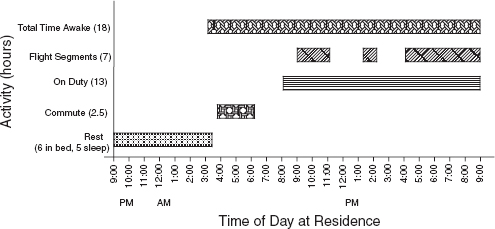
FIGURE 5-1 Example 1a: Unfavorable commuting pattern.
SOURCE: Based on a submission by a pilot to the Aviation System Reporting Systems (ASRS) database. ASRS collects, processes, and analyzes voluntarily submitted aviation safety incident reports of unsafe occurrences and hazardous situations from pilots, air traffic controllers, dispatchers, flight attendants, maintenance technicians, and others. For details, see http://asrs.arc.nasa.gov/overview/summary.html [May 2011].
Bradley International Airport (BDL) in Hartford, Connecticut, at 9:00 p.m. (Oregon time). At this time, the pilot has been awake for 18 hours, including 13 hours of duty, following a short sleep (5 hours). For the graphical representation of this example, see Figure 5-1.
Favorable: Example 1b
The pilot commutes from home to SFO the day before the duty assignment begins. The pilot arrives in San Francisco by 9:30 p.m., sleeps at a hotel near the airport, going to sleep by 11:00 p.m. and awakens at 6:30 a.m. (with 7.5 hours of sleep). Following the same pattern above, ending the duty at BDL, the pilot’s time since awakening is 14.5 hours, following a night of 7.5 hours of sleep. For a graphical representation of this example, see Figure 5-2.
Example 2: Home, Alexandria, Virginia; Domicile: John F.
Kennedy International Airport (JFK), New York City
Description: Emergent, unplanned circumstance in commute
Factors: Long total awake time without nap, operations during circadian low
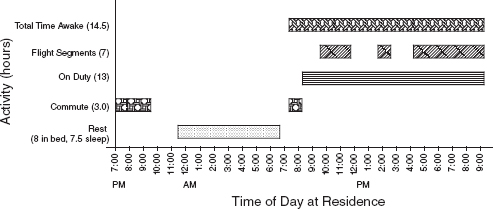
FIGURE 5-2 Example 1b: Favorable commuting pattern.
Unfavorable: Example 2a
The pilot obtains a full night’s sleep (7 hours) in the evening prior to duty and awakens at his normal time of 6:00 a.m. After spending the morning and early afternoon at home engaged in normal activities, the pilot leaves at 2:00 p.m., arriving at Ronald Reagan Washington National Airport (DCA) at 2:30 p.m. for a 3:30 p.m. departure to JFK. The flight is late and departs at 4:30 p.m., arriving at JFK at 6:00 p.m. The pilot reports for duty at 7:00 p.m. The pilot begins the single-leg assignment at 8:00 p.m. to Phoenix, Arizona, arriving at 1:00 a.m. (Virginia time). Although the pilot had adequate sleep the night before, the pilot’s time awake by the end of the duty day is 19 hours.
Even if the pilot attempted to sleep or nap prior to leaving home for the commute to JFK, the pilot is unlikely to have obtained restful sleep so soon after awakening and during the circadian peak. Moreover, the pilot is waiting for a delayed flight and then taking a short commuting flight during the afternoon circadian low, when a nap attempt may be more successful. Thus, with the commute occupying the best portion of the preduty period for sleep, although several hours are potentially available for sleep prior to duty, it is quite possible that this pilot will be landing the aircraft in Phoenix fatigued, with the length of time since awakening likely to affect individual performance adversely. For the graphical representation of this example, see Figure 5-3.
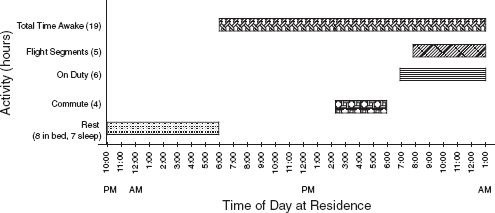
FIGURE 5-3 Example 2a: Unfavorable commuting pattern.
SOURCE: Based on personal testimony from stakeholders at open session meetings.
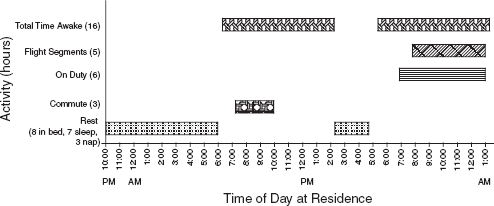
FIGURE 5-4 Example 2b: Favorable commuting pattern.
Favorable: Example 2b
The pilot leaves home earlier, finds a rest facility, and naps in an environment conducive to quality rest during this circadian phase for napping, 2:00 p.m. to 5:00 p.m. For the graphical representation of this example, see Figure 5-4.
Example 3: Home, Concord, California; Domicile, Charlotte/Douglas International Airport (CLT), Charlotte, North Carolina
Description: Transcontinental commute, cargo airline
Factors: Nocturnal sleep loss and work during circadian low; unrestful sleep environment; early morning awakening; inadequate sleep in 24 hours prior to end of duty; difficulty of sleeping during circadian high; questionable sleep quantity/quality during night-time commuting flight.
Unfavorable: Example 3a
The pilot leaves home in Concord, California, at 9:00 p.m., arriving at SFO at 10:00 p.m. The pilot departs SFO at 11:00 p.m. to commute to CLT, arriving Charlotte at 4:00 a.m. (California time). The pilot checks in for duty at 5:00 a.m. and begins the duty assignment at 6:00 a.m. for a 3-hour flight to Dallas/Fort Worth International Airport (DFW), arriving at 9:00 a.m. (California time).
If the pilot had slept from noon to 8:00 p.m. at home, before departing at 9:00 p.m., the pilot would have obtained adequate sleep. However, by sleeping on the normal pattern, from 11:00 p.m. to 7:00 a.m., and then napping during the afternoon circadian low from 2:00 p.m. to 5:00 p.m. (with actual sleep time 2.5 hours), the amount of time slept within the past 24 hours preceding the projected time of landing in Dallas would be inadequate.
The pilot could then consider the sleep that she might obtain during the 5-hour commuting flight from the West Coast to the East Coast. In favor of obtaining restful sleep during this commute, the all-night timing of the flight spans not only the window of circadian low, but also the pilot’s entire habituated sleep period. The duration and quality of sleep actually obtained, though, will depend on factors beyond the immediate control of the pilot, such as whether the available accommodation is in a first-class lie-flat sleeper seat or in an upright coach seat next to a crying baby. On arrival at CLT, the pilot may well be faced with a decision of whether to advise the airline that of being unfit to operate the assigned flight to DFW due to fatigue. For the graphical representation of this example, see Figure 5-5.
Favorable: Example 3b
The pilot commutes in to Charlotte on the day before the assigned flight, and sleeps near the domicile in a hotel or local accommodation, with plenty of time for a complete sleep period before awakening at 3:30 a.m. (in time to report to the domicile, CLT, for duty at 5:00 a.m., including local travel). Although the possibility of obtaining high-quality sleep is likely bet-
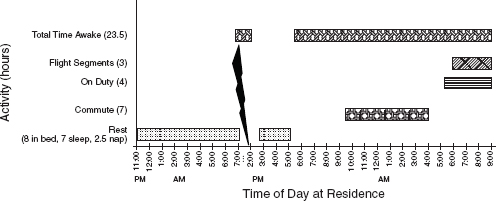
FIGURE 5-5 Example 3a: Unfavorable commuting pattern.
SOURCE: Based on personal testimony from stakeholders at open session meetings.
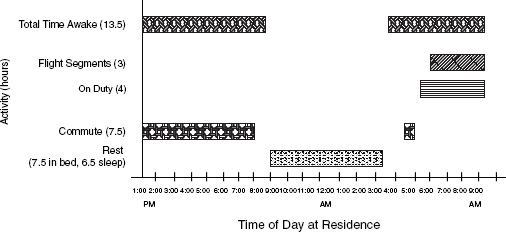
FIGURE 5-6 Example 3b: Favorable commuting pattern.
ter in a bed than on the airplane, it is important to note that the very early wake-up call for the West Coast habituated pilot may make it difficult to obtain a full night’s rest due to the interruption of the habitual sleep period. For the graphical representation of this example, see Figure 5-6.
Example 4: Home, Baltimore, Maryland; Domicile: Washington Dulles International Airport (IAD), Chantilly, Virginia
Description: Same 1-day schedule for 3 consecutive days
Factors: Time awake, sleep loss (cumulative), and sleep quality
Unfavorable: Example 4a
A pilot has the same 1-day schedule for 3 consecutive days. On the first night preceding the assignment, the pilot goes to bed at 10:00 p.m. and wakes at 4:00 a.m. for 5 hours of sleep (6 hours in bed). The pilot departs home (her residence in Baltimore) at 5:00 a.m. for the 2-hour commute to her domicile, IAD. The pilot checks in for duty at 7:00 a.m. and begins the first of four flight legs for the day at 8:00 a.m. The pilot concludes the duty day and leaves for the commute home at 8:00 p.m. The pilot repeats this pattern for the next 2 days. However, on the evenings of the first and second days, due to the commute home, the amount of sleep each night decreases by 1 hour to 4 hours (5 hours of time in bed). For the graphical representations of these 1-day and 3-day patterns, see Figures 5-7 and 5-8.
Favorable
Given current scheduling practices, there is no obvious favorable alternative to the commuting pattern for this flight schedule, and it is therefore reflective of shared responsibility between the pilot and the airline. One possible mitigation of fatigue might be for the pilot to take a nap between the hours of 3:00 p.m. and 4:00 p.m. on each afternoon. The value of the nap would be contingent on sleep quality. However, airlines also might be able to effectively limit the negative effects of fatigue on pilots’ performance by using both their bidding procedures and their trip pairings (including computerized preference bidding systems) to refrain from assigning mul-
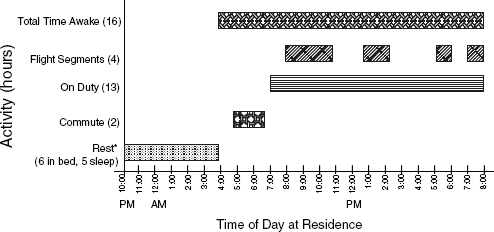
FIGURE 5-7 Example 4a: Unfavorable commuting pattern—day 1 of 3 consecutive days. On second and third days, rest time reduced by 1 hour.
SOURCE: Based on communication with FAA officials.
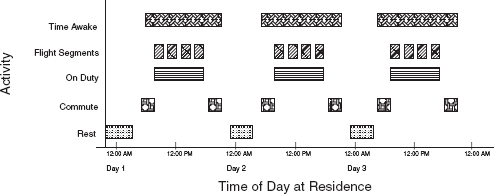
FIGURE 5-8 Example 4a: Unfavorable commuting pattern—overview of 3 consecutive days.
SOURCE: Based on communication with FAA officials.
tiday trip assignments like this one to pilots who are commuting to their domicile, even if the commute is a driving commute of less than 2 hours.
Discussion
Commute time cannot be viewed singularly without considering such factors as the time of the start of the duty day, the length of the duty day, and what the pilot was doing that would add to the overall time awake at the end of the duty day. The end result is a product of the interaction of those factors. Pilots need to consider these several factors when thinking about commuting in a way to minimize fatigue. What is noteworthy about all of these examples is that the favorable commutes all cut into the pilot’s time at home; it appears there is often a tradeoff between time at home and beginning the duty cycle adequately rested.
Extensive scientific evidence exists on the negative effects of fatigue on performance of many cognitive tasks (see Chapter 4), including those essential for safely operating a commercial aircraft. The adverse effects of fatigue induced by sleep loss include maintaining wakefulness and alertness, vigilance and selective attention, psychomotor and cognitive speed, accuracy of performing a wide range of cognitive tasks, working and executive memory, and on higher cognitive functions such as decision making, detection of safety threats, and problem solving, as well as communication and mood. Fatigue is not, however, a binary condition where one is either rested with no negative effects on performance or fatigued with severe negative
effects on performance. There are degrees of fatigue and degrees of the negative effects of fatigue on performance. Similarly, the effects of fatigue on performance can vary substantially from one pilot to the next without any untoward effects on the safety of flight.
The scientific literature shows fatigue as a risk to performance can result from three factors: (1) being awake continuously for more than approximately 16 hours, or (2) sleeping too little (especially less than 6 hours on the day prior to work), or (3) when undertaking work at a time when the body is biologically programmed to be asleep (i.e., an individual’s habitual nocturnal sleep period), which for most people is between 10:00 p.m. and 7:00 a.m. The evidence that cognitive performance is adversely affected when the amount of sleep in 24 hours is cumulatively less than approximately 6 hours suggests that pilots should seek to obtain sufficient bed time to ensure they are fit for duty. The detrimental effects of fatigue on performance may be exacerbated by a tendency for individuals to have reduced awareness of the cognitive performance deficits that result from fatigue.
Pilots are currently required to report fit for duty. Judging whether a pilot is fit for duty is an individual pilot decision that should take into account the amount of sleep received prior to duty.
RECOMMENDATION 1: Pilots should avoid planning commutes or other preduty activities that result in being awake beyond approximately 16 hours before the scheduled end of duty, endeavor to sleep at least 6 hours3 prior to reporting for duty, and obtain more than 6 hours of sleep per day whenever possible to prevent cumulative fatigue from chronic sleep restriction Pilots should also consider the amount of sleep and time awake in their decision making relative to when to inform their supervisors that they should not fly due to fatigue.
Although there are currently no agreed-on objective standards in the aviation industry to determine whether a pilot is reporting to duty fatigued, there are provisions in the proposed Notice of Proposed Rulemaking for assessment by others of whether a pilot is fatigued. The validity and reliability of such assessments are unknown, as is the likelihood that they can result in either false positives or false negatives. Consequently it is uncertain whether they can result in effective prevention of fatigue. The proposed regulation is discussed in the next chapter.
___________________
3This refers to at least 6 hours of physiological sleep. Since physiological sleep is typically 85 to 95 percent of total bed time in healthy adults, time in bed for sleep will have to be 6.5 to 7 hours to ensure at least 6 hours of physiological sleep are acquired.


