
4
Conditions That Promote STEM Success in Schools
Whatever approach teachers take in the classroom, their work is affected by numerous factors beyond their direct control. Particularly important are factors that affect teachers’ knowledge and skills—their preparation, support for new teachers, and ongoing professional development—and the climate and organization of the schools in which they teach. Suzanne Wilson and Elaine Allensworth addressed these two topics with a focus on teachers and schools, respectively. The final section covers a panel discussion on partnerships between schools and other organizations.
There is a significant body of work on questions about teacher preparation, induction into the profession, and continued development for STEM teachers, Suzanne Wilson noted. However, much of it is grounded in a vision of a particular kind of teaching (Wilson, 2011). “That is, practitioners and scholars are interested in teacher support systems that lead teachers to teach in the ways that research and policy suggest they ‘should’ teach” (Wilson, 2011, p. 2). Wilson reviewed the literature that pertains to STEM teachers, but she noted that researchers have not focused much on subject-specific preparation, induction, or professional development.
Often the developers of a preparation or induction program have a broad goal for changing what is happening in schools. Research about programs with that sort of purpose might have the goal of establishing
cause-and-effect relationships or the research might be intended to identify ways to “move the system forward,” she observed. Fewer studies examine whether a program prepares teachers who can enhance student learning and engagement.
Research papers in this area also often use teacher preparation or induction as a platform for exploring other issues of interest, she added. For example, because there is considerable interest in the issue of teacher identity in science teacher preparation, the results of many studies focus on claims about teacher identity (Wilson, 2011). Fewer studies directly address questions about what makes particular teacher supports effective.
Nevertheless, as several summaries of the literature on teacher preparation have indicated, a few features are associated with relatively more effective teacher preparation:
• requiring teacher candidates to take more courses in their chosen content area;
• requiring a capstone project (e.g., a portfolio of work done in classrooms or a research paper);
• providing teacher candidates with practical coursework to learn specific practices;
• providing teacher candidates with sufficient opportunities to learn about the curriculum in their local district; and
• providing student teaching experience, carefully overseeing that experience, and ensuring that there is congruence between that experience and later teaching assignments.
The issue of what curriculum teachers are prepared to teach is very significant, Wilson added. Among the approximately 1,200 traditional and more than 140 alternative teacher preparation programs currently in operation, she explained, “most do not know what … curriculum … their teacher candidates will be teaching.”1 Thus, new teachers must spend time learning what to do with a curriculum they have never seen.
In light of the lack of a core curriculum for teacher preparation, Wilson noted that “some teacher education researchers have begun focusing on core practices” that are key to effective teaching (see Wilson, 2011, p. 5). In particular, she noted, Windschitl et al. (2010) have identified core practices as those that are used frequently with all students, focus on topics that
________________
1The characterization of teacher preparation programs as traditional and alternative does not reflect a meaningful distinction, Wilson noted, because these categories overlap markedly in practice. However, research on the differences has been helpful in identifying some of the elements that make teacher preparation effective; see National Research Council (2010) on this point.
are central to the discipline or subject being taught but can apply to different topics and teaching approaches, and can be articulated and taught. These practices can be used by beginning teachers, but they can also be used in increasingly sophisticated ways as teachers gain experience. Core practices should also “play a recognizable role in a larger, coherent system of instruction,” Wilson said, that would encompass the content students will learn and the assessments that will be used to track their learning.
The majority of new teachers receive some sort of induction program or support, but there is very little empirical evidence about what aspects of induction make a difference for teachers’ effectiveness because very few studies have explored the specific features of these programs. There is some evidence that teachers who participate in an induction program are more likely to stay in the field and to be satisfied with their jobs. This outcome is important because the research shows that the students of teachers who have been in the field for 3-5 years have higher achievement scores than students of newer teachers have, Wilson noted. Some evidence also suggests that coaching is useful and that a match between the coach and the subject matter being taught makes a difference.
The literature on professional development, in Wilson’s view, “still consists largely of a nominated list of best practices,” though there is some promising research under way. The best practices include the following:
• focusing on developing teachers’ knowledge and capacity to teach specific subject matter;
• addressing problems and issues that teachers experience in their classrooms;
• structuring the program around concrete tasks in which teachers teach, assess their students, observe them, and reflect on their practice; and
• allowing sufficient time for teachers to engage in a teacher development program.
Wilson characterized the current state of teacher preparation, induction, and professional development as “a carnival.” She chose this metaphor to capture a reality in which there are excellent programs, terrible programs, and many in between, and in which there are many vendors and many sorts of goals. The system is both incoherent and flat, she suggested, in the sense that, for example, “hardly ever is there an opportunity for a teacher to build on what she has learned from a teacher induction program during a professional development program.” The system “isn’t even loosely coupled,” so teachers and teacher candidates must make do with the programs and supports that are available, however haphazard they may be.
Wilson suggested a few reasons why this nonsystem exists. Many different institutions—universities, school districts, vendors, cultural institutions, and funders—play a part in and influence these programs. They answer to different constituencies and have different purposes. They also serve teacher candidates and teachers who vary across many dimensions. “Participants in various teacher development programs enter with a wildly different array of experiences, knowledge, and skill” (Wilson, 2011, p. 15), making it difficult for those who develop and run professional development programs to plan coherent programs.
Moreover, there is no centralization of structure, requirements, goals, or funding—which could be tools for coordinating policies, practices, and resources to support a sustained focus on professional development. Instead, as Wilson noted, “one program will come in with a textbook. Another will come in with collaboration between a school and university researchers on some sort of curriculum or assessment that they have developed.” At the same time, states and districts frequently introduce new mandates that require those who develop and run induction and professional development programs to incorporate new information or material. What is missing, Wilson observed, is the coherence and alignment that would allow the system as a whole to pursue clear-cut goals. In this regard, she noted, “We just add things on … we do not collectively say ‘this is what we are working on.’”
There are levers for influencing the system, however. For example, state policies can address the structure and content of and funding for teacher preparation and supports, as well as the characteristics of students who enter teacher education programs. District policies may affect teacher assignments and the curricula and texts teachers will use. Universities’ policies influence the nature and content of their teacher preparation programs, as well as the potential for cross-university attention to content preparation for teachers. Principals may promote a collaborative culture among teachers and also influence the resources (such as models and mentors) available for teachers.
Wilson also noted that there is currently quite a lot of innovation in terms of teacher preparation (less in induction), but that there is not enough good research. She said she concurred with Jere Confrey, who suggested looking at the kinds of variables that might make a difference. She noted that using measures of the value a teacher adds—such as by using student scores at the end of a teacher support program—provides some data, “but what you have to actually do is design studies that look at all these mediating variables” in order to understand what is really effective. A participant also addressed this point, noting that a U.S. Department of Education innovations and improvement program has required evidence of effectiveness before anything can be funded at scale, but
that “most of the innovations that were funded were 20 or 30 years old because it took that long to have the kind of evidence of an effectiveness that would be expected.”
The fact that the curriculum for teachers is “flat” is perhaps the most fundamental problem, Wilson said, because “there is no way for a teacher to develop her knowledge of the content and content-based teaching practice over time in increasingly sophisticated ways.” As a research base grows that illuminates best practices in a richer way, it should provide a stronger basis for policies that bring coherence to the system. Lists of “best practices” at present are easily misinterpreted. For example, an empirically based finding that professional development is most effective when a significant amount of time is allocated to it is often translated simply into a minimum number of hours, regardless of program quality. Additional research on the particular features that make extensive programs effective could provide insights that might allow others to improve the quality of their programs.
A lot of hope has been invested in two strategies for improving student achievement, Elaine Allensworth commented. At a time when the pressure is on public schools to prepare all students for college, despite never before having successfully prepared more than about 30 percent, the hope is that improving the teacher workforce and making curricula more rigorous will provide the change that is needed. However, Allensworth stressed, evidence from research on the organizational structure of Chicago’s public schools suggests that “even if you get these things perfect, if you don’t consider the context and you focus on these strategies narrowly, you are not going to do a single thing to improve student achievement in our underperforming schools and you may actually make it worse.”
One study (Bryk et al., 2009) examined 200 Chicago schools, all of which were performing very poorly in the early 1990s: the researchers wanted to know why half of them improved dramatically and half stayed the same or got worse. They were able to use a wealth of data—including longitudinal survey results, student records and test results, and community and crime data—to compare the two groups of schools. All of the schools were in low-income neighborhoods and served student populations that were 90 percent minority. Figure 4-1 depicts the sharp divergence in the performance of the two groups.
Based on their analysis, the researchers concluded that five organizational supports were crucial for school improvement—and made the difference for the 100 schools that improved so dramatically. They presented these supports in a framework because the supports do not have
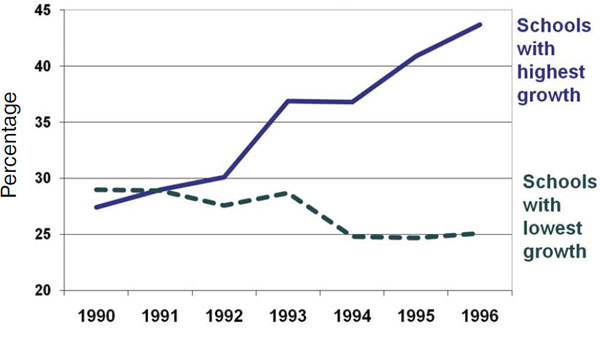
FIGURE 4-1 Mathematics performance of students in Chicago schools with highest and lowest growth, 1990-1996.
SOURCE: Allensworth (2011). Adapted from Bryk et al. (2009).
the same potential benefit in isolation that they have when they function together: see Figure 4-2. For example, principal leadership is necessary, but it must be strategically focused on developing the other four supports, Allensworth explained. The teachers’ qualifications were less important than the way in which teachers worked together to take collective responsibility for the school. Similarly, the parents needed not just to participate in school activities, but also to be brought in as partners in their children’s education, and community organizations needed to be involved in a way that was aligned with the school’s instructional programming. Two other critical elements are a climate that is safe and orderly and supportive to students and an aligned curriculum (that is closely linked to standards) with engaging, student-centered pedagogy.
More specifically, the researchers found that among schools with a well-aligned curriculum and a strong professional community of teachers, 48-57 percent improved substantially in both reading and mathematics. Among schools in which the adults failed to work cooperatively, none improved, and 41-59 percent were stagnant. The real value of these elements, Allensworth explained, lay in their combined strength. Schools that were strong in at least three of the areas were 10 times more likely to improve in reading and mathematics than schools that were weak in
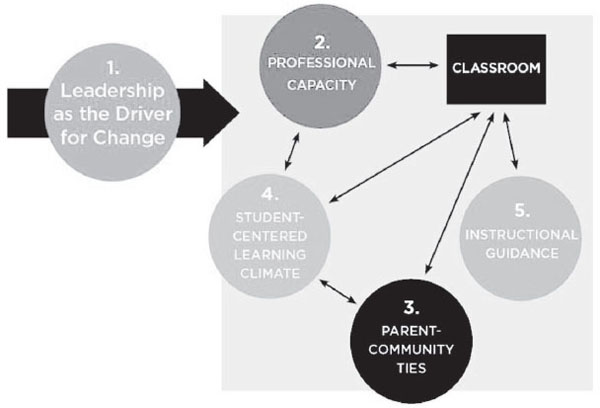
FIGURE 4-2 Five essential supports for school improvement.
SOURCE: Allensworth (2011). Data from Bryk et al. (2009).
three or more. Sustained weakness over time in even one of the elements also appeared to undermine a school’s improvement.
The researchers wondered whether these elements are equally important in all types of schools. They divided Chicago’s schools into groups on the basis of their racial composition and the economic backgrounds of their students (in Chicago, racial and economic segregation are closely tied). The researchers found that schools serving disadvantaged communities are less likely to show improvements over time: see Figure 4-3. They also found that the most disadvantaged schools are least likely to have the five critical supports. However, if those schools had strong internal supports in all five areas, they were just as likely to improve as advantaged schools that had the supports. The more advantaged schools could better afford to have weaknesses in a few of the elements, but, in general, the essential supports were also more likely to develop in schools in areas where there was strong community cohesion—where people participated in local organizations such as churches and community groups—and where there were lower crime rates.
It may seem obvious that these five elements are important, Allensworth observed, but most improvement strategies are generally much narrower: “Just get the right curriculum. Let’s fire all the bad teachers and then hire new ones.” Such strategies do not focus on building the organizational capacity of schools. Other studies Allensworth reviewed highlight this point. For example, DeAngelis and Presley (2011) used a
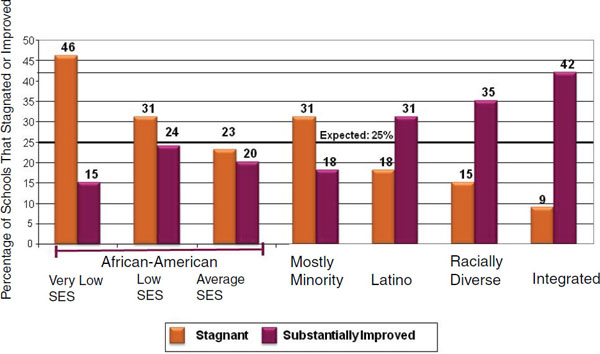
FIGURE 4-3 Comparisons of schools’ improvement by characteristics of student populations.
SOURCE: Allensworth (2011). Adapted from Bryk et al. (2009).
wealth of data on Illinois teachers to examine the relationship between their characteristics and student learning. They found that while teacher qualifications were associated with value-added scores in reading and mathematics, organizational structures in the schools actually mattered more. More specifically, schools with highly qualified teachers had much higher learning gains than schools with weaker teachers, but schools that had weak climates—defined by the level of order and safety—did not make gains, even if they had highly qualified teachers. In schools with weak climates, teacher qualifications “made absolutely no difference,” Allensworth emphasized. These results suggest that good teachers cannot be effective in schools that lack a supportive climate, and other research shows that teachers leave if they do not believe they can be effective in a school (Allensworth, Ponnisciak, and Mazzeo, 2009).
Allensworth noted that Chicago has also worked hard to reform its curriculum, with the goal of ensuring that all students will take more rigorous classes and there will be more equity among them. She observed that “de-tracking” students was identified by a number of other presenters as a critical improvement tool. In Chicago, however, the result has been a decline in achievement.
Chicago began in 1997 to require all of its students to take a college preparatory curriculum and eliminated all of its remedial classes. There
was no concomitant rise in test scores. Instead, attendance and graduation rates declined, more students failed courses, and fewer students went on to 4-year colleges (Allensworth et al., 2009; Montgomery and Allensworth, 2010). Thinking that the curriculum had not been implemented well, the district intensified its focus on aligning the curriculum with professional development and providing teachers with coaching. But increased time on mathematics and improved, interactive pedagogy also brought no improvements in test scores or students’ grades (Sporte, Correa, and Hart, 2009).
Follow-up research showed that increased rigor does little to increase learning if schools and classrooms are disorderly—indeed, order is a prerequisite to success. However, maintaining order becomes more difficult when demands on students increase because students tend to withdraw when work gets harder, unless support for them increases as well. When order declines, the learning climate for all students is affected. In addition, schools may not have the professional capacity to teach demanding classes to all students.
Two decades of research in Chicago schools show that there are no “magic bullets,” Allensworth concluded. Narrow interventions are tools for making improvements, but they should not be ends in themselves, she argued. “School improvement requires systemic work on multiple fronts” to build the five essential supports: school leadership, parent-community ties, strong professional capacity, a student-centered learning climate, and instructional guidance.
Respondent Milbrey McLaughlin highlighted the importance of themes evident in Allensworth’s presentation that were also part of other workshop discussions. The descriptions of individual schools and the discussion of practices that support STEM education provided many examples of what teachers and students gain when schools are sites of collaboration and communal learning. For example, Confrey called attention to the value of collaborations among researchers and practitioners to develop improvements for particular educational contexts. Wilson and Schmidt both called attention to the opportunities that are lost when there is insufficient coordination among the elements that influence STEM education, including curriculum for students and for teacher candidates, textbooks, and professional development. At present, McLaughlin noted, Americans not only disagree about what students should be taught, but also lack both a common framework to determine what success means and a common vocabulary with which to investigate and address problems.
Policy makers have a funny way of responding to such ideas, McLaughlin suggested. She noted that a few years ago, when there was a flurry of attention to the importance of teacher communities, one district responded by issuing lists to teachers of colleagues with whom they were
assigned to collaborate. This may seem silly, but there are few clear guides as to how to create teacher communities, she added. At the same time, accountability structures exert an opposing force, often seeming to pit teachers against one another in a competitive sense, rather than encouraging them to share data, collaborate about the approaches they have found to be effective, and speak candidly about the challenges they face.
For McLaughlin, these ideas highlight the need for both micro- and macrolevel policies. As an analogy, she cited the Gates Foundation’s investment in vaccines. This is a macro strategy she observed, to target diseases on a large scale. But to be effective it has to be implemented on a micro scale: it only works if every individual in a target population is vaccinated, which requires persistent efforts to reach and educate people community by community.
PARTNERSHIPS TO ENHANCE STEM EDUCATION
In a panel discussion of partnerships between schools and external organizations to enhance their capacity to offer quality STEM education and learning experiences, Martin Gartzman, Vanessa Lujan, and Linda Rosen discussed aspects of the education system that can be positively influenced by different sorts of partnerships.
Seeking a Marriage of Interests
Martin Gartzman discussed multidistrict collaborations that provide support for teachers and administrators. He observed that a number of the presentations at the workshop had demonstrated how easily even very well-intentioned and long-standing reforms (such as that at Railside School) can be undermined by changes in policy, personnel, or direction. Partnerships between schools and outside groups are particularly fragile, and in his view what determines their success is not what they tackle (e.g., professional development, curriculum, or afterschool programs), but whether there is confluence between the needs of the district and the interests of the partner. He believes the primary driver should be the needs of the district, although in many cases external partners have preconceived ideas or research goals and are seeking a partner school in which to implement those ideas. Collaborating and managing the partnership requires considerable time and energy from both parties and works best when the interests of both are served.
Gartzman also agreed that innovations that do not address the core instructional program tend to become “feel-good initiatives.” As an example, he described a curriculum partnership between Chicago schools and local museums, in which the museums developed curriculum guides for
school field trips. However, the district had not articulated a clear vision of its mathematics and science goals for these trips, and the guides consequently did not address core instructional topics. In response, district staff worked with the museums to replace independent activities structured around their exhibits with activities that drew on museum resources in service of curricular objectives.
Using Partnerships to Build Capacity
Vanessa Lujan emphasized that partnerships can influence district and state policy (from the top down) and teacher and district capacity (from the bottom up). Foundation-supported and community-based partnerships (including informal science institutions such as museums), she suggested, that are focused on afterschool programs, curriculum implementation, and professional development can be designed in part to build networks of leaders—superintendents, science coordinators, curriculum leaders, and lead science teachers and out-of-school-educators—who can bring new skills to their work. Districts and schools may encounter policy barriers, however. For example, schools that have been placed in program improvement status because of inadequate test scores may opt out of such opportunities, she explained. Schools move in and out of this status, which makes it difficult for informal science instititutions to build and sustain partnerships within a district. Teacher turnover and layoffs resulting from severe budget problems also undermine team-building and engagement.
Drawing on Different Kinds of Expertise
Linda Rosen described the contribution of Change the Equation, a network of more than 110 CEOs (chief executive officers, of corporations) who “pledge to connect and align their work to transform STEM learning in the United States.” The very existence of the organization, she suggested, sends an important message. The participating companies have been interested in and supported STEM education for a long time, but they recognized that their investments “have not brought the return they might have hoped for.” Together, the companies are investing more than half a billion dollars annually, as well as allowing release time for their employees to volunteer for STEM programs during working hours.
The organization partners are increasingly aware of the importance of third-party evidence of effectiveness, however, and they have focused on evaluation, Rosen said. They are looking for programs that are not “dependent on a charismatic visionary,” but have been demonstrated to be replicable, she explained. Many of their investments are in nonprofit
organizations that develop STEM education programs with a track record for effectiveness. They are willing to invest in formal programs that support teachers and students in schools but are particularly drawn to informal education, in part because schools and districts can be very challenging for them to understand and navigate, while they can work with out-of-school partners more easily and see the impact of their work more immediately. When working with schools and districts, they often seek a commitment from the district so that there is a reasonable expectation that the program can be sustained after the partnership ends.
Overview
All three panelists agreed that it is important to find programs that can be scaled up to benefit not just one or two schools but hundreds, but they also noted how difficult that can be in practice. Gartzman reminded the group of earlier discussions of the importance of school context to outcomes. He suggested that the business community may underestimate what is required to achieve the desired outcomes. A participant noted that the focus on informal partnerships and working around district policies was a cause for concern and wondered what it takes to develop successful partnerships within formal K-12 STEM education.
Lujan agreed with Gartzman that listening carefully to districts to understand the challenges that impede their progress is critical. In the context of the Lawrence Hall of Science’s BaySci project, she noted, teachers worried that they could not teach science effectively, given the constraints on classroom time because of testing requirements for mathematics and English language arts. BaySci staff worked with the districts and school leaders to help them convey to teachers that they had “permission” to spend time on science and help them reconcile competing demands from the district, the school, and the classroom.
Rosen added that the CEOs had found success in focusing on formal professional development, and Gartzman cited as just one example the Chicago algebra initiative, which was designed to increase the number of students taking algebra by 8th grade. They worked with Chicago-area universities to help increase the number of teachers who had the preparation and credentials to teach algebra: the universities created a 1-year course, which they taught jointly, as well as a credentialing exam.


