
Presenters in this session, which was moderated by Gail Harrison, a professor in the Department of Community Health Sciences at the University of California, Los Angeles School of Public Health, reviewed changes in the WIC program and society that have occurred since the Loving Support campaign was launched over a decade ago.
Georgia Galanoudis began by focusing on mothers, highlighting salient characteristics about “Millennial Moms” (women born between 1977 and 1994), such as how they use technology, interact with peers and family members, and perceive their own wants and needs. Kiran Saluja looked at changes in the WIC program environment, drawing from an informal survey of state and local WIC programs. She noted that the programs expressed strong support for breastfeeding, but she also commented on the need to involve the whole community in order to have an impact, especially in order to achieve exclusive breastfeeding. Joseph Robare summarized recent and current studies that will provide data related to changes in WIC participation, hospital practices, the WIC program, and other relevant subjects. Marsha Walker highlighted programs, policies, and laws at the federal and state levels that have created a more supportive environment for breastfeeding than when the Loving Support campaign was first launched. A question-and-answer period followed the panelists’ presentations.
CHANGES IN COMMUNICATIONS PATTERNS: COMMUNICATING WITH TODAY’S MOM
Presenter: Georgia Galanoudis
Georgia Galanoudis, executive director of the Meredith Corporation Parents Custom Network Solutions Group, described the characteristics of “millennial moms,” the 37 million women born in the United States between 1977 and 1994. Except where noted, her findings are based on the Moms & Media: Always On survey (The Meredith Parents Network MomTrak®, 2011).
Changes in Demographics and Technology
More than 14 million of the U.S. women born between 1977 and 1994 are already mothers, and by 2030 more than 30 million of them will be mothers, making them a large and powerful group. Fertility rates are the highest that they have been in the last 15 years. In 2009 the millennial moms gave birth to 63 percent of all babies born in the United States and 76 percent of first births, according to National Center for Health Statistics figures (CDC/NCHS, 2010). They are also a more diverse group than earlier generations. Two in five millennial moms belong to a racial or ethnic group other than non-Hispanic White, and one in nine, or 11 percent, were born in the United States of an immigrant parent. Hispanic mothers account for the largest percentage of the population boom (Pew Research Center, 2010).
Galanoudis noted that these women grew up with home computers and the Internet. A woman born in 1985 was in first grade when the Internet came into widespread existence, and she considers a computer to be a normal household item. These mothers are tech-savvy, Galanoudis said, and they expect to find information online, especially because many do not have their parents living nearby to help them with various issues. They turn instead to their peers, to blogs, and to Web communities. As one mother said, “It isn’t technology for the sake of technology. It’s about making connections and staying connected.” WIC mothers’ use of technology is similar to that of others in their peer group. Virtually all (99 percent) of WIC mothers use electronic resources, 89 percent of them use parenthood advice and information websites, and 72 percent visit retailer websites. When an e-newsletter was offered to expectant and new mothers, 54 percent of all WIC mothers signed up, which was only slightly behind the percentage of all mothers who signed up (63 percent) (The Meredith Parents Network MomTrak®, 2011).
Implications
The millennial moms place a high importance on feeling connected with their peers, Galanoudis said. Eighty-two percent use social networks, such as Facebook, leading Galanoudis to conclude that marketing to this group will require using those networks to participate in the conversations millennial moms are having with their peers, friends, and family members. They look to friendships with other women for perspective and nonjudgmental support, for adult interaction and socialization, and for advice and honest assessments.
Referring to findings from The Meredith Parents Network MomTrak® survey (2011) as well as from the Pew Internet & American Life Project (Horrigan, 2008), Galanoudis said that millennial mothers view mobile technology as “a functional tool that they cannot live without.” Sixty-two percent say that, of all forms of communication, their cell phones would hardest to give up, more so than the Internet, television, landline telephones, or e-mail. According to Galanoudis, 90 percent of WIC mothers have a mobile device and 26 percent had a smart phone at the time of the Meredith survey, but, Galanoudis noted, that figure is steadily rising.
Galanoudis described WIC mothers as “media omnivores.” Expectant and new mothers reported that they get information from 11 different sources each month—magazines, books, websites, and other resources—with Hispanic mothers reporting that they use 17 different sources monthly. They do not find this amount of information overwhelming; rather they say that they optimize and filter the information to fit their own needs. When asked about the information sources that influence their decisions to purchase foods and beverages for their children, they ranked in-store product displays first, followed by television, retailer/company websites, non-parenthood websites, healthcare professionals, catalogues, health/medical websites, and parenthood magazines.
People marketing to this group should, Galanoudis recommended, keep five characteristics about them in mind:
- Instant gratification: They are pressed for time, and convenience is key. They grew up accustomed to the speed of the Internet, and they demand quick access and immediate action. As noted earlier, mobile technology plays an increasingly important role in their lives, providing them with multifunctional information devices.
- Personalization: Technology also provides the ability to customize information, such as tailored Web page content. Many of these mothers have custom Web pages, iPods tailored to their musical tastes, and the ability to watch their favorite television shows on
their own schedule. They expect messages to be personalized and interactive in order to catch their attention.
- Diversification: These women represent more cultures and ethnicities than ever before in U.S. history, and they are also quick to embrace different cultures. Messages and images must reflect this diversity.
- Recognition as a multi-dimensional person: Millennial mothers do not want to give up their “non-mom” identity. Connecting with them means appealing to all aspects of their identities. As an example, when postpartum women were asked what they would choose to do if they had a “magic wand” that could magically fix something for them, one common response was that they wanted to lose their baby weight. Galanoudis suggested finding ways to use that information to promote breastfeeding.
- A voice: They do not want to be talked at but rather to be involved in a two-way conversation. Start a dialogue with these women, Galanoudis suggested. Get them involved.
Recognizing these characteristics, Galanoudis concluded, will lead to a successful campaign.
CHANGES IN THE WIC PROGRAM ENVIRONMENT
Presenter: Kiran Saluja
Just as the WIC participants’ demographics and use of technology have changed since 1997, so too have WIC and the environment in which it operates, said Kiran Saluja, chair-elect of the executive committee of the National WIC Association and deputy director of the Public Health Foundation WIC Program, which serves more than 300,000 participants in and around Los Angeles, California. She began her presentation with a comment received on the agency’s website, in which a mother expressed her appreciation for and willingness to publicly promote WIC breastfeeding support. She noted that this comment, as well as many similar ones heard throughout the Los Angeles area, reflects Galanoudis’s observations that mothers today are using technology and want to be involved.
In what Saluja termed “the new WIC world,” breastfeeding is a cornerstone activity. Breastfeeding is the most discussed topic in WIC and is a part of everything that people involved with WIC do, from the food package to training. Many changes have occurred since Loving Support began in 1997. Some of these changes, Saluja said, are that many states have enacted breastfeeding legislation; lactation accommodation was included as part of health care reform (Patient Protection and Affordable
Care Act, P.L. 111-148, Sec. 4207 [2010]); exclusive breastfeeding goals were set forth in Healthy People 2020 (HHS/ODPHP, 2010), the Surgeon General’s Call to Action to Support Breastfeeding (HHS, 2011); the number of Baby-Friendly Hospitals nationwide has increased (Baby-Friendly USA, 2011); and the Centers for Disease Control and Prevention (CDC) collected data on breastfeeding and maternity practices to produce the Breastfeeding Report Card, which provides perspectives on state and national trends in breastfeeding (CDC, 2011). In addition, the evidence base for the benefits of exclusive breastfeeding—such as its protective effect against obesity—is growing. In light of these changes, the WIC program has stepped up to become the face of breastfeeding support in the community––active in coalitions and task forces, providing peer counseling and staff training, working with the National WIC Association to develop a summit and strategic plan, and making funds available to support breastfeeding.
Informal Survey Results
To assess where different states are in the continuum of change in providing breastfeeding promotion and support, Saluja sent an informal survey to state breastfeeding coordinators via the National WIC Association. She received more than 20 responses which came from all USDA regions of the country.
All of the states that responded except for one Southeastern state reported that they provide staff training on breastfeeding and provide breast pumps to mothers. Those same states reported making mothers feel welcome to breastfeed while at WIC clinics, and none reported displaying images of formula feeding. All respondents indicated that they provide prenatal breastfeeding education, with a range and variety of programs offered. About two-thirds of the 20 respondents offer breastfeeding support groups, and 14 states either had or would soon have International Board Certified Lactation Consultants (IBCLCs) on staff. About two-thirds of the respondents said they offer home visits to support breastfeeding, and all have peer counselors. Two-thirds of the states do not routinely issue formula in the first month, but some states do provide a can of formula at that time. Saluja called the new food packages “manna from heaven” and noted that all states promote them to encourage breastfeeding.
Moving Forward
Saluja’s general conclusion was that the trend of responses indicates a WIC environment that has evolved over the last 14 years. Despite varying levels of breastfeeding support reported by WIC sites, survey responses
indicate that sites are committed to providing support and improving the ways in which they approach breastfeeding.
She noted some people have suggested implementing breastfeeding service standards similar to those set for nutrition services. A dilemma arises, however, in that WIC strongly supports breastfeeding while simultaneously providing free formula, which is a fierce competitor to breastfeeding because of its perceived monetary value, direct marketing, and other incentives. The new food package, Saluja said, offers a more viable alternative to the issuance of formula than existed previously.
While not suggesting that mothers who do not breastfeed should be penalized, Saluja urged that increasing exclusive breastfeeding should be the focus of future efforts. She highlighted the regional disparities that exist in the numbers of infants being exclusively breastfed. That is, the percentage of infants exclusively breastfed in the southeast region of the United States is much lower than the percentage in the northwest region (see Figure 2-1). As one state coordinator said in the survey, “It takes the efforts of the full community of partners and agencies [for] breastfeeding promotion and support.” Saluja said that increasing the number of babies exclusively breastfed
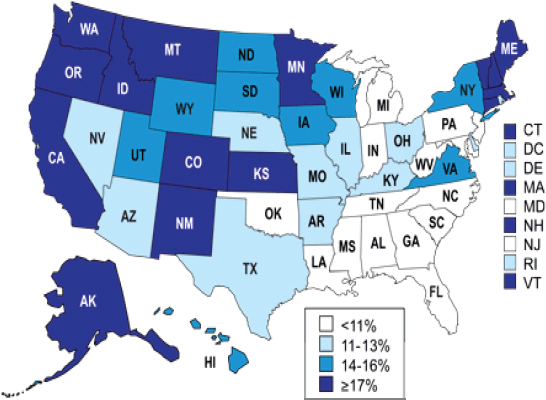
FIGURE 2-1 Percentage of all U.S. children exclusively breastfed through six months of age among children born in 2007.
SOURCE: CDC, 2010a.
to 6 months of age will involve not just making sure that the mothers know what to do but also teaching mothers how to accomplish this with the help of everyone around them. Just as immunization and the use of car seats have has become norms, so too should breastfeeding, Saluja urged.
FNS WIC BREASTFEEDING RESEARCH UPDATE
Presenter: Joseph Robare
Joseph Robare, an epidemiologist and research analyst in the FNS Special Nutrition Evaluation Branch, presented data from recent studies and described several ongoing studies that should contribute useful insights as the Loving Support campaign is updated. Specifically, the studies he discussed were the WIC Participant and Program Characteristic Study from 2008 (the 2010 data had not been not published at the time of the workshop), the CDC National Immunization Survey data related to breastfeeding, the WIC Birth Month Study, the WIC Breastfeeding Peer Counseling Study, and the proposed WIC Infant and Toddler Feeding Practices Study II.
WIC Participant and Program Characteristics, 2008
The WIC Participant and Program Characteristic Study, published in January 2010, is a huge dataset (9.5 million records) that offers a broad view of WIC and its participants over a 10-year period. Robare shared some of the findings and pointed participants to the final report (http://www.fns.usda/ora).
Of note, the percentage of non-Hispanic White and African American infants in the WIC program has declined since 1998, while Hispanic infants and those from other ethnic groups have increased in proportion (see Figure 2-2). Therefore, Robare noted, as it redevelops the Loving Support campaign, FNS should take a look at the ethnic distribution of both the infants and mothers and make the appropriate changes where necessary.
CDC National Immunization Study
The CDC National Immunization Study includes information about breastfeeding. Robare shared data from that study concerning exclusive breastfeeding of infants at 3 and 6 months of age and noted that WIC mothers lag behind national averages. At 3 months of age, about 33 percent of mothers overall breastfeed their infants, compared with about 25.5 percent of WIC mothers. Both percentages drop at 6 months of age, and, again, WIC mothers lag. At 6 months of age, 13.3 percent of mothers overall exclusively breastfeed their infants, compared to only 9.2 percent
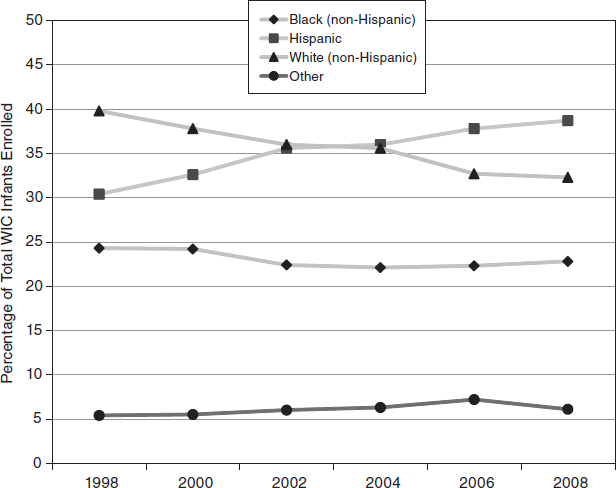
FIGURE 2-2 Racial and ethnic distribution for WIC infants, 1998–2008.
SOURCE: Adapted from USDA/FNS, 2010.
of WIC mothers (Figure 2-3). However, Robare offered two caveats about the data: The study was done without taking into account the new food package, since it only included data through 2007, and it does not represent data coming out in the WIC Birth Month Study (see below).
WIC Birth Month Study
The design of the WIC Birth Month Study was based on a recommendation in the IOM report, WIC Food Packages: Time for a Change (IOM, 2006). The study, which was conducted by Abt Associates, examined the impact that the interim rule on food packages had on breastfeeding initiation, duration, and intensity in the month after birth. Intensity is a dichotomous variable that measures exclusive breastfeeding and partial breastfeeding rates. The study also analyzed how site characteristics affected the food package choices before and after the interim rule. Methods included interviews with WIC staff and recipients and data collection at
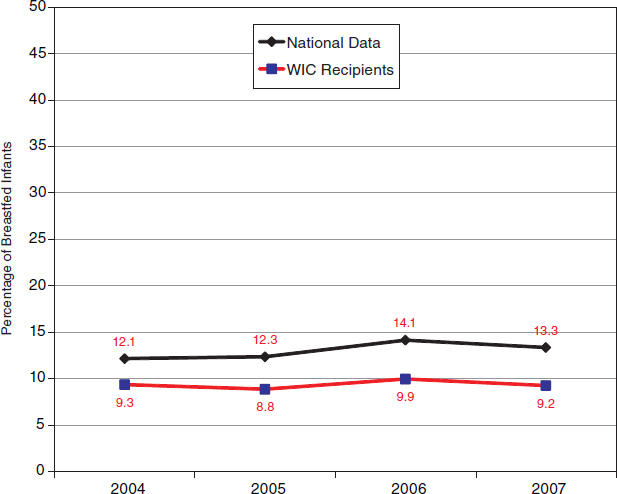
FIGURE 2-3 Percentages of infants exclusively breastfeeding at 6 months of age: National figures compared to WIC recipients.
SOURCE: Adapted from data from CDC, 2010b.
17 local WIC agencies in 10 states with about 1,600 individuals. The final report is scheduled for release in September 2011.
WIC Breastfeeding Peer Counseling Study
The WIC Breastfeeding Peer Counseling Study, Phase I, which was also conducted by Abt Associates and is scheduled to be released shortly, provides a comprehensive and systematic picture of the implementation of the Loving Support peer-counseling program. Phase II will examine specific variations in how implementing peer counseling affects the exclusivity and intensity of breastfeeding. Between the two phases, Congress appropriated $80 million to support peer counseling. Although the main goals of Phase II will remain the same, the study is being reexamined to determine if, given that expansion of peer counseling, changes in the study are warranted. The study will be carried out at about eight of the largest local WIC agencies involving more than 1,000 expectant mothers in total. At the time of the
workshop, FNS was close to submitting its data collection package to the Office of Management and Budget for clearance.
WIC Infant and Toddler Feeding Practices Study II
The final study that Robare highlighted, the WIC Infant and Toddler Feeding Practices Study II, is contained in the fiscal year 2010 Research and Evaluation Plan. As an update to the Infant and Childhood Feeding Practices Study, the upcoming study will be longitudinal in design in order to provide updated information on the feeding patterns of WIC infants, with expanded information on infant and toddler feeding behaviors. It will review nutrition education and breastfeeding promotion and support by WIC and other sources to determine the relative effectiveness of different approaches. One objective will be to identify aspects of WIC nutrition education that could influence feeding practices in order to address the problem of high body weight among young children in WIC.
Robare closed by thanking the WIC division and the IOM planning committee, and he invited participants to contact FNS with questions or to alert his office to other relevant studies.
CHANGES IN FEDERAL AND STATE PROGRAMS, LAWS, AND POLICIES
Presenter: Marsha Walker
Marsha Walker, executive director of the National Alliance for Breastfeeding Advocacy: Research, Education and Legal Branch, presented a timeline of significant breastfeeding actions since 1996. An unprecedented number of changes have occurred, she said, and she identified what she saw as high points.
Chronology, 1996–2011
1996
Walker began by highlighting a piece of legislation that was enacted shortly before the Loving Support campaign began: the 1996 Personal Responsibility and Work Opportunity Reconciliation Act. According to one study (Haider et al., 2003), this act coincided with a decline in breastfeeding by 22 percent in WIC mothers, so, as Walker phrased it, “We almost started from behind the eight ball when Loving Support began.” In 1996 the Loving Support campaign was designed (officially launched in 1997), and the country’s first Baby-Friendly Hospital was designated in Washing
ton. (There are currently 107 Baby-Friendly Hospitals nationwide and an additional 256 in various stages of becoming designated as Baby-Friendly.) Walker said that a supportive hospital environment is critical not only to initiate but to continue breastfeeding.
1997
A key event in 1997 was the release by the American Academy of Pediatrics (AAP) of its influential policy statement “Breastfeeding and the Use of Human Milk.” Walker said that this statement, since updated, is almost always cited in breastfeeding research articles. It underscores the value of not only initiation, she said, but also duration and exclusivity.
1998
In 1998 the U.S. Breastfeeding Committee (USBC) was formed with financial support from the CDC, the Department of Health and Human Services’ Maternal and Child Health Bureau (HHS/MCHB), the HHS Office on Women’s Health, and the USDA. The USBC assists the state breastfeeding coalitions that now exist in every state, and many WIC state breastfeeding programs belong to these coalitions. Much of the grassroots effort that is needed to change legislation and policy comes through the state breastfeeding coalitions.
1999
Walker highlighted a piece of legislation passed in 1999, the Right to Breastfeed Act (H.R. 1848), which was spearheaded by Rep. Carolyn Maloney (D-NY). It ensures a woman’s right to breastfeed on all federal property. By the time the federal legislation passed, 16 states had already enacted their own breastfeeding laws, but, to Walker’s knowledge, the Right to Breastfeed Act was the first piece of federal legislation specifically related to breastfeeding.
2000
In 2000 Healthy People 2010 was released. It included various breastfeeding objectives, and of particular significance, Walker said, was its 2005 midcourse review that added exclusive breastfeeding targets. In that same year HHS issued the Blueprint for Action on Breastfeeding, which positioned breastfeeding as a public health issue, not just a positive individual choice.
2003
The National Breastfeeding Awareness Campaign was launched in 2003, aimed at promoting breastfeeding among all first-time parents. (See the next chapter of this report for a summary of a presentation on this campaign.)
2007
In 2007 the CDC conducted the Maternity Practices in Infant Nutrition and Care (mPINC) study, which highlighted hospital practices related to breastfeeding. Walker said that the findings demonstrated to hospitals how poorly they were supporting breastfeeding mothers and that they have led many hospitals to improve their practices (Bartick et al., 2010; CDC, 2008; Edwards and Philipp, 2010).
2008
With the publication in 2008 of the information package, Business Case for Breastfeeding (HHS/Office of Women’s Health, 2010), MCHB and the Health Resources and Services Administration involved employers by providing a series of materials designed to create breastfeeding-friendly work environments. Throughout the workshop Walker and others pointed out that lack of employer support often makes breastfeeding difficult for WIC mothers who return to work, and this publication laid out the economic case for workplace accommodations.
2010
Walker described four significant events that took place in 2010. First, the Joint Commission Perinatal Core Measure Set was established, which measures (among other things) the number of infants exclusively fed breast milk at hospital discharge. As with the mPINC mentioned above, this measure shines a light on hospital practices (Joint Commission, 2011).
The Patient Protection and Affordable Care Act of 2010 (P.L. 111-148, Sec. 4207 [2010]) introduced specific worksite protections for many breastfeeding mothers. In addition, a presidential memorandum ordered the creation of appropriate workplace accommodations for nursing mothers who are federal civilian employees (White House, 2010). The Healthy People 2020 objectives, announced by HHS in 2010, set three breastfeeding-related objectives: (1) increase the proportion of employers that have worksite lactation support programs, (2) reduce the proportion of breastfed newborns who receive formula supplementation within the first two days of life, and
(3) increase the proportion of live births that occur in facilities that provide recommended care for lactating mothers and their babies (HHS/ODPHP, 2010).
The Healthy, Hunger-Free Kids Act, described earlier in the morning by Debra Whitford, contains provisions to recognize exemplary breastfeeding practices at local agencies. In addition, the act provides bonuses to states to reward various breastfeeding accomplishments, and it appropriates $80 million for peer-counseling programs.
2011
In 2011 several important policy-related events have already taken place, such as the Surgeon General’s issuance of a Call to Action to Support Breastfeeding. In addition, as an example of how broader policies can be used to support breastfeeding, the Internal Revenue Service began to allow breastfeeding equipment to be reimbursed by flexible health spending accounts.
Other Policy Changes
The past few years have also seen an increase in the number of states with laws protecting breastfeeding in public. Forty-four states now have laws protecting the right to breastfeed in public, and 28 specifically exempt breastfeeding from public indecency laws. Twenty-four states have laws related to worksite protection for breastfeeding mothers; only West Virginia has no breastfeeding laws on its books.
The number of International Board Certified Lactation Consultants (ICBLCs) has doubled from 5,513 in 1999 to 11,064 in 2010, although many mothers still lack convenient access to the level of care they need. Walker also pointed to an explosion of articles (some 30,000) related to breastfeeding on PubMed.
The federal government supports breastfeeding through other agencies and programs, such as the USDA Child and Adult Care Feeding Program, the CDC Communities Putting Prevention to Work grants, and the White House’s Let’s Move campaign.
Mothers, advocates, and health professionals are now much more vocal and politically savvy regarding breastfeeding and a woman’s right to feed her child in a public place. In the past, women would not have been vocal about breastfeeding, Walker observed, and now they are holding “nurse-ins” to advocate for their rights. In addition, more than 400 hospitals have eliminated formula discharge bags. Breastfeeding coalitions provide mothers with printed cards that spell out their right to breastfeed in public if they
are challenged. Applications on mobile phones also help women manage their breastfeeding.
GROUP DISCUSSION
Moderator: Gail Harrison
In keeping with the format of the workshop, moderator Gail Harrison took written questions from the audience that she then directed to the speakers. The topics included the following:
- Reaching women with special needs (such as those who are homeless, in detention, or have medical conditions): Whitford said WIC provides breastfeeding education to all women participants, unless contraindicated. On the local level, Saluja said, the initial assessment with a mother is very thorough to determine what issues the mother may be experiencing that discourage breastfeeding her infant. This enables the WIC staff to provide appropriate support for the mother to continue breastfeeding. This support could involve putting pumps in schools, referrals to other agencies, or providing translators to understand the nutrition education materials.
- Existence of data about ongoing breastfeeding mothers versus discontinuers: Robare offered to check to see if the data exist. Harrison suggested that, if not, this might indicate the need for a new line of research for FNS going forward.
- Broadening the campaign to reach all mothers: In answer to a question about whether USDA is considering a program analogous to the National School Lunch Program, which targets all children, Whitford said that posters and other media will be visible to all, not just WIC participants.
- Knowledge gaps at the local level that prevent implementation: Saluja said that although she could not speak for the 3,200 local agencies nationwide, she could identify one gap as a more general one—how to provide effective counseling, such as asking open-ended questions and listening to participants closely, given the time constraints. Galanoudis noted that information about breastfeeding is abundant but that how the information is packaged or how accessible it is on the local level can affect its usefulness. Whitford said that WIC has various resources and training materials available; one way they are available is online through WIC Works Resources. The material has to be kept fresh for the more experienced staff members, but it also needs to contain basic information for new staff members coming in.
- Percentage of eligible women who are WIC participants: This information was not readily available, but Robare said he would obtain it. Saluja queried whether some eligible women who breastfeed choose not to participate in WIC because of their perception that women only participate in WIC to get formula, and she suggested this as a potential area of formative research.
- Use of social media: The panel agreed that using social media to promote breastfeeding is a must. However, there was not support among the panel members for WIC getting involved in nurse-ins or other actions organized through social media. Galanoudis suggested utilizing lactation consultants to get more involved in social media, since many are already very savvy about using Facebook and other social media and, with the right tools, would be great advocates. Saluja warned that, even though there is rapidly increasing usage of social media, not all mothers have access to these tools. She reported that data from her agency show that only 45 percent of English speakers and 17 percent of Spanish speakers use social media (PHFE WIC Program, 2011 Survey of Los Angeles County WIC Parents, unpublished data, March 2011). Those who have access use social media extensively, but Saluja said that they represent only a small percentage of overall WIC participants, at least in Los Angeles. She went on to say social media has a niche, but she would not advise using it in WIC.
- Food sharing: WIC does not employ “food police,” Whitford said, but the intention of the food package is to improve the nursing mother’s nutritional health to assist her and her infant. The foods in the package are designed to meet specific nutritional needs, and women are counseled about these issues.
- Barriers to breastfeeding today: Panelists noted that the barriers identified prior to the 1997 launch—embarrassment, time, social constraints, and social support—persist today. Galanoudis said although the barriers cannot be eliminated, coping mechanisms can help women overcome them—by, for example, empowering mothers to make sure they know their rights and are aware of support mechanisms. Saluja said that having more Baby-Friendly hospitals would provide support to more mothers in the crucial first 48 hours. Walker said that mothers need support so they continue breastfeeding successfully, beyond initiation. Peer counselors need to be able to refer more complex cases, such as diabetic mothers or a late pre-term baby, to a lactation consultant or other expert. Robare noted that Phase II of the Peer Counseling study will look at what works in peer counseling in order to inform planning for the future.
REFERENCES
Baby-Friendly USA. 2011. Baby-Friendly Hospitals and Birth Centers. http://www.babyfriendlyusa.org/eng/03.html (accessed August 16, 2011).
Bartick M., R. A. Edwards, M. Walker, and L. Jenkins. 2010. The Massachusetts Baby-Friendly collaborative: Lessons learned from an innovation to foster implementation of best practices. Journal of Human Lactation 26(4):405–411.
CDC (Centers for Disease Control and Prevention). 2008. Breastfeeding-related maternity practices at hospitals and birth centers––United States, 2007. Morbidity and Mortality Weekly Report 57(23):621–625. http://www.cdc.gov/mmwr/preview/mmwrhtml/mm5723a1.htm (accessed August 9, 2011).
CDC. 2010a. Map 5: Percent of Children Exclusively Breastfed Through 6 Months of Age among Children Born in 2007 (provisional). http://www.cdc.gov/breastfeeding/data/NIS_data/2007/map_5.htm (accessed June 14, 2011)
CDC. 2010b. Breastfeeding Among U.S. Children Born 1999–2007, CDC National Immunization Survey. http://www.cdc.gov/breastfeeding/data/NIS_data/index.htm (accessed June 27, 2011).
CDC. 2011. Breastfeeding Report Card—United States, 2011. http://www.cdc.gov/breastfeeding/data/reportcard.htm (accessed August 10, 2011).
CDC/NCHS (National Center for Health Statistics). 2010. Births: Preliminary Data for 2009. National Vital Statistics Reports 59(3):1–19. http://www.cdc.gov/nchs/data/nvsr/nvsr59/nvsr59_03.pdf (accessed August 30, 2011).
Edwards R. A., and B. L. Philipp. 2010. Using Maternity Practices in Infant Nutrition and Care (mPINC) survey results as a catalyst for change. Journal of Human Lactation 26(4):399–404.
Haider, S. J., A. Jacknowitz, and R. F. Schoeni. 2003. Welfare work requirements and child well-being: Evidence from the effects on breast-feeding. Demography 40(3):479–497.
HHS (U.S. Department of Health and Human Services). 2011. The Surgeon General’s Call to Action to Support Breastfeeding. Washington, DC: U.S. Department of Health and Human Services, Office of the Surgeon General.
HHS/ODPHP (Office of Disease Prevention and Health Promotion). 2010. Healthy People 2020. Washington, DC. http://www.healthypeople.gov/2020/topicsobjectives2020/objectiveslist.aspx?topicId=26 (accessed August 10, 2011).
HHS/Office of Women’s Health. 2010. Business Case for Breastfeeding. http://www.womenshealth.gov/breastfeeding/government-in-action/business-case-for-breastfeeding/index.cfm (accessed July 18, 2011).
Horrigan, J. 2008. Mobile Access to Data and Information: Pew Internet & American Life Project. http://www.pewinternet.org/~/media//Files/Reports/2008/PIP_Mobile.Data.Access.pdf.pdf (accessed June 27, 2011).
IOM (Institute of Medicine). 2006. WIC Food Packages: Time for a Change. Washington, DC: The National Academies Press.
Joint Commission. 2011. Perinatal Care. http://www.jointcommission.org/perinatal_care/ (accessed August 18, 2011).
The Meredith Parents Network MomTrak®. 2011. MomTrak®, Moms & Media: Always On, January 2011.
Pew Research Center. 2010. Millenials: A Portrait of Generation Next. Washington, DC: Pew Research Center. http://pewsocialtrends.org/files/2010/10/millennials-confidentconnected-open-to-change.pdf (accessed July 18, 2011).
USDA/FNS (U.S. Department of Agriculture/Food and Nutrition Service). 2010. WIC Participant and Program Characteristics 2008. Alexandria, VA: USDA/FNS. http://www.fns.usda.gov/ora/menu/published/wic/FILES/pc2008.pdf (accessed June 14, 2011).
White House. 2010. Presidential Memorandum—Delegation of Certain Functions and Authorities. http://www.whitehouse.gov/the-press-office/2010/12/20/presidential-memorandum-delegation-certain-functions-and-authorities (accessed August 18, 2011).


