
2
Defining and Describing the Workforce
Understanding the characteristics and roles of the early childhood care and education (ECCE) workforce is not a straightforward task. Even counting the number of workers engaged in the care and education of young children raises questions—about whom to include and how to categorize the nature of their work, for example.
The committee was charged to plan a workshop that would yield a description of the early childhood workforce and outline the parameters that define it. However, the field currently lacks a clear conceptual definition and comprehensive data on the ECCE workforce on which presentations of existing data could be based. Thus, Richard Brandon, principal at RNB Consulting, in collaboration with several colleagues,1 developed an initial conceptual definition as a starting point for discussion of key issues in defining and describing the ECCE workforce (see Appendix B). In addition, the planning committee commissioned Michelle Maroto at the University of Washington to work with Brandon to review existing federal data sources and published research studies and to compile currently available descriptive data on the ECCE workforce. Brandon presented both the conceptual definition and descriptive data on the ECCE workforce at the workshop. Additional presentations focused on the nature of federal workforce data systems, an innovative state model for improving ECCE workforce data systems, and lessons learned from K–12 federal data systems.

1 David Blau, Sharon Lynn Kagan, Dixie Sommers, and Marcy Whitebook.
DEFINING THE WORKFORCE—A FRESH LOOK
The ECCE workforce is exceptionally varied, a fact that reflects the varying purposes for which care and education are provided and the varying expectations of those who fund and oversee it. The workforce is composed of individuals with little or no training who provide mainly custodial care without attention to educational goals at one end of the spectrum, to individuals with specialized postgraduate degrees providing carefully planned educational experiences at the other, with many others in between. At its most basic level, caregiving can involve caring or providing for a child’s safety, meeting basic needs around feeding, diapering, or toileting, and assisting with dressing, bathing, and sleep routines. At its most complex, teaching can involve carefully implementing research-based curriculums, individualizing care and instruction, and addressing the full range of developmental domains (e.g., cognitive, language, social–emotional, fine and gross motor, executive functioning) in groups and one-on-one activities.
Terminology can be problematic with such a wide spectrum of work represented, even among the members of the workforce themselves. For example, those working in settings whose primary purpose is educational are often referred to as teachers. The terms “caregiver,” “child care worker,” or “child care provider” are more often associated with settings whose primary purpose is enabling parents to work. Those who provide child care, particularly through informal friend, family, or neighbor relationships, may not see themselves as having any particular job title as either caregivers or teachers. This makes selecting an appropriate term for the full range of members of the ECCE workforce challenging. This report uses the terms, “ECCE workforce” or “caregivers and teachers” as a means for being inclusive. The terms “workforce” or “workers” refer to anyone who works for pay. Using these definitions, the planning committee focused the workshop primarily on those who are paid for providing early care and education.
The full range of care and education can be offered in a variety of settings (e.g., private homes, centers, elementary schools, workplaces, or houses of worship), funded by numerous sources (e.g., parent tuition, child care subsidies, state funds, and federal dollars), and licensed or unlicensed. Many children are cared for by family, friends, and neighbors, both paid and unpaid. Despite these differences in location, funding, or licensed status, the primary purpose of the setting (i.e., providing education or enabling a parent to work) may be the most important dimension on which settings differ, along with how well that purpose is implemented (Pianta et al., 2009). Settings established for these differing purposes may be governed by differing sets of rules and expectations, which can affect variation in workforce characteristics. The teachers and caregivers within
these settings are nearly all women receiving low pay for their work, but they are also diverse in many respects (e.g., demographic characteristics qualifications, knowledge, beliefs, and attitudes). Whatever their characteristics and qualifications, these teachers and caregivers have a profound impact on the lives of children and families (see Chapter 4). Therefore, clearly defining, describing, and monitoring this workforce over time is important.
Brandon presented selection criteria that could be used to develop shared definitions of terms and categories, which might then support efforts to achieve greater consistency and improve research and policy making. The conceptual definition Brandon presented focused on children from birth to age 5, and used criteria consistent with the distinctions applied by the Bureau of Labor Statistics (BLS) between occupations (roles and functions) and sectors of the economy or industries (the organizations or establishments that provided particular services). (These are discussed further below.) These distinctions are important, he explained, because consistent definitions will allow researchers to build on the considerable investment that has already been made in federal data systems, rather than developing new, separate definitions for the early childhood sector. Consistency will also support comparisons of the ECCE workforce to workers in other economic sectors, as well as analyses of their key features. Moreover, Brandon pointed out, distinguishing and cross-tabulating occupations by sectors provides opportunities for analyses that can lead to improvements in recruitment, training, and professional development.
Despite the potential benefits of consistency, Brandon enumerated a number of concerns with the existing federal definitions of the early childhood workforce. For example, the existing federal data system groups together those who work with young children and those who work with school-aged children (with some exceptions described later in this chapter). This is a problem because “the duties are very different for dealing with young children and school-aged children,” Brandon observed. Thus, he hoped to provide points to be considered in future revisions to the federal definitions that would make them more accurate and useful. Brandon and his colleagues developed a definition that includes three primary components: occupation, sector, and enterprise. Figure 2-1 provides a visual representation of these components.
A first step was to define the occupation clearly. All federal agencies, including the BLS and the Census Bureau, use the Standard Occupational Classification (SOC) to identify distinct occupations based on the nature of the work performed. According to the Classification Principles and Coding Guidelines of the 2010 Standard Occupational Classification Manual (SOC Manual), “the SOC covers all occupations in which work is performed for pay or profit” (OMB, 2010, p. 1). Thus, in the case of early

FIGURE 2-1 Components of the early childhood care and education (ECCE) workforce.
SOURCE: Brandon, 2011.
childhood workers, Brandon and his colleagues identified two criteria for inclusion: (1) the work involves direct care for or education of infants and children from birth through age 5,2 and (2) the worker is paid for this work. These criteria were designed to distinguish early childhood workers from others who work with children, such as social workers, family counselors, or nurses and pediatricians. Teachers and child care workers would be included, as would proprietors or directors of child care centers, specialists, and family support workers or home visitors, as long as they work directly with children, rather than only with adults.
This definition includes family members, friends, and neighbors who provide care, as long as they are paid. Brandon expressed the view that this definition is “radically broader than anything in [the current] federal data systems.” Individuals who provide unpaid care or instruction would not be included. Brandon acknowledged that these unpaid caregivers are a sizeable and important group and pose a challenge for the field to consider. He suggested that this group should be the subject of future analyses. He noted that the Census Bureau defines a worker who is paid for at least 1 hour of work during the week in which data were collected as a member of an occupation, and that “we have to think both about what makes sense within the field and what makes it possible to compare early care and education workers to other workers.”
To define the ECCE sector, Brandon and his colleagues considered the employers of individuals in the occupation. The North American Industry Classification System (NAICS) maintained by the Office of Management and Budget (OMB) classifies businesses by the type of product produced or service provided. They applied this approach to the ECCE workforce. Thus, the ECCE sector includes those people in the occupation whose paid work involves direct instruction or care of young children, as well as others who work for establishments that provide such care, such as non-
2 During discussion, Brandon clarified that he selected “care or education to be maximally inclusive of all paid ECCE workers.” A number of participants indicated that they preferred the term “care and education.”
teaching directors or supervisors, trainers, or those involved in administrative, transportation, food service, or janitorial services.
Brandon also described a broader category, the enterprise, which includes all individuals involved in the ECCE sector as well as others whose paid work has a direct effect on caregiving or educational practice, such as professional development providers, mentors, and coaches employed by entities outside of the sector; those employed by states or local jurisdictions to provide referrals or resources or run licensure programs; and university faculty who teach prospective teachers. The enterprise does not have a defined counterpart within the federal classification systems, but Brandon and his colleagues considered it important to represent the contributions of this broader group. This category would also include family support workers or home visitors who work primarily with parents and not with children because their work may influence children or child care workers, Brandon noted. It would not include advocates or policy makers who may nevertheless have an influence on the nature of early childhood programs.
Workshop participants had many comments and questions about these conceptual definitions. Some cautioned that the definition of the occupation might be too exclusive, for example, because it excludes home visitors or special educators, whose primary functions may be working with parents or other teachers as a means of affecting child development. One noted that professional societies have “worked hard to make sure that … everybody in the building … understands that they contribute to the growth and development of children.” Participants also reinforced the point that lack of data on the contribution of unpaid workers is a significant challenge to policy makers.
Another cautioned against being too inclusive, however, arguing that overly broad classification criteria will make it difficult to evaluate the impact of the workforce on the quality of care and education, as well as on child development. Although it is important to recognize the range of individual contributions, one participant suggested that more rigor is necessary to achieve consistency in measurement. Another participant agreed, noting that including speech–language pathologists or others who belong to another well-defined profession may add an unnecessary complication. More than one participant raised the challenges of crafting a definition that fit the roles of those working with children with special needs. For example, teachers, caregivers, and specialists may share similar responsibilities for working directly with these children. This blurring of roles can make distinguishing one occupation from another difficult.
Several participants raised concerns regarding the terminology used in the definitions, noting, for example, that it is important to view the work as a combination of care and instruction, rather than care or instruction.
All providers should be expected to offer “direct support for development and learning,” one observed. Yet others questioned the word “instruction,” suggesting that “education” or “intentionality” may be more appropriate terms for work with very young children and infants. Participants’ comments indicated that the conceptual definition of the ECCE workforce has practical implications for data collecting and reporting, as well as policy implications for how the field itself and others view it. Several participants noted that a desire for consistency with federal data systems could be difficult to reconcile with the need to capture unique aspects of ECCE, including the diverse work settings, team-based approaches, and progressive roles. Committee members encouraged participants to continue sharing their ideas for further honing a workable conceptual definition of the ECCE workforce that would serve both data and policy goals.
THE FEDERAL STATISTICAL SYSTEM
Data collected by the federal government is the source of most of the current national information about the ECCE workforce. Understanding these federal data systems is needed as ECCE considers how to define its occupational borders in ways that promote accuracy and comparability with other occupations. Dixie Sommers, assistant commissioner, BLS, U.S. Department of Labor, provided an overview of the type of information that is collected and how the system is structured.
The three primary sources of federal data on the ECCE workforce are: (1) the BLS, (2) the Census Bureau (within the U.S. Department of Commerce), and (3) the National Center for Education Statistics (NCES) (within the U.S. Department of Education). The federal statistical system is decentralized, Sommers explained, with individual federal statistical agencies responsible for data collection that pertains to their missions. The OMB oversees data collection standards through its Office of Information and Regulatory Affairs. This office sets policies—for example, to protect the privacy of respondents or standardize classifications of information—and also coordinates data collection to prevent redundancy across agencies.
The purpose of standardizing classifications is to ensure that data collected across agencies can be compared, Sommers explained. Interagency committees made up of federal experts in statistics and in the relevant fields or occupational areas make recommendations about data collection based on research and public comment, and the OMB establishes and revises the standards in response to these recommendations. The classification systems cover four broad areas: industries, occupations, metropolitan areas, and race/ethnicity categories. As noted above, NAICS classifies businesses by type of product produced or service provided,
and includes child care or instructional providers. However, it does not distinguish providers by the ages of the children served or identify those who are part of an establishment that has another primary purpose (e.g., a child care center in an elementary school because the child care center is not a stand-alone business). Table 2-1 illustrates how the NAICS defines the three industries that are most relevant to ECCE: elementary and secondary schools, child day-care services, and private households (in which paid child care is provided).
The SOC classifies jobs and workers according to the nature of the tasks and functions performed, and sometimes the qualifications associated with them. Classification principles and coding guidelines are used to guide decisions to add new occupations or change existing ones, Sommers explained. For example, principles guide the classification of managers and supervisors and how to determine whether a particular type of work constitutes a new occupation. Box 2-1 presents the definitions of two ECCE occupations from the SOC Manual (OMB, 2010). The 2010 edition of the SOC Manual included a few changes in the early childhood context, such as distinguishing special education preschool teachers from special education kindergarten teachers.
Sommers noted a few problems with the existing federal definitions in comparison with the conceptual definition of the ECCE workforce pre-
TABLE 2-1 Definitions Used in the North American Industry Classification System
| Code and Title | Definition |
| 611110 Elementary and Secondary Schools | Establishments primarily engaged in furnishing academic courses and associated course work that comprise a basic preparatory education. A basic preparatory education ordinarily constitutes kindergarten through 12th grade. This industry includes school boards and school districts. |
| 624410 Child Day Care Services | Establishments primarily engaged in providing day care of infants or children. These establishments generally care for preschool children, but may care for older children when they are not in school and may also offer prekindergarten educational programs. |
| 814110 Private Households | Private households primarily engaged in employing workers on or about the premises in activities primarily concerned with the operation of the household. These private households may employ individuals, such as cooks, maids, nannies, butlers, and outside workers, such as gardeners, caretakers, and other maintenance workers. |
SOURCE: Sommers, 2011. Based on OMB, 2007.
BOX 2-1
Definitions from the 2010 Standard Occupational Classification Manual (OMB, 2010)
Preschool Teachers, Except Special Education (code 25-2011)
Instruct preschool children in activities designed to promote social, physical, and intellectual growth needed for primary school in preschool, day care center, or other child development facility. Substitute teachers are included in “Teachers and Instructors, All Other” (25-3099). May be required to hold state certification. Excludes “Childcare Workers” (39-9011) and “Special Education Teachers” (25-2050).
Childcare Workers (code 39-9011)
Attend to children at schools, businesses, private households, and child care institutions. Perform a variety of tasks, such as dressing, feeding, bathing, and overseeing play. Excludes “Preschool Teachers, Except Special Education” (25-2011) and “Teacher Assistants” (25-9041).
SOURCE: OMB, 2010.
sented earlier. They do not consistently distinguish workers who care for or educate children from birth through age 5 from those who work with school-aged children. Furthermore, researchers in the field indicate that the definitions of child care workers and preschool teachers do not reflect the reality of their work, especially the overlap in their respective roles.
Sommers provided a list of federal data sources that provide information relevant to the early childhood sector. Table 2-2 includes only the data sources produced by the BLS and the Census Bureau. She pointed out different methods of collecting information, each of which has strengths and weaknesses, in terms of the type of information collected, the level of detail possible, and other factors. For example, household surveys such as the Current Population Survey and the American Community Survey provide a broad look at the entire paid labor force, including those who are self-employed and those who are “unpaid family workers,” but they may not provide the desired level of detail about particular occupations or industries. The BLS’ business establishment survey, the Occupational Employment Statistics (OES) survey, yields more detail about occupations than the household surveys do. In addition, this survey’s large sample size yields considerable detail by industry and geographic region. These establishments are sampled from a business list that is based on administrative data (mainly unemployment insurance tax reports). The survey does not collect demographic information, however.
Further information on these federal data systems may be found in a
TABLE 2-2 Standard Federal Data Sources
| Source | Employment by Industry | Employment by Occupation | Includes Self-Employed | Geographic Detail | Demographic Characteristics |
|
Census Bureau, Household Surveys |
|||||
| Current Population Survey (CPS) |
Less than full detail |
Less than full detail |
Yes | State, MSA | Yes |
| American Community Survey (CPS) |
Less than full detail |
Less than full detail |
Yes | Small area detail | Yes |
|
Bureau of Labor Statistics, Establishment Surveys |
|||||
| Current Employment Statistics (CES) |
Significant detail | No | No | State, MSA | No |
| Occupational Employment Statistics (OES) |
4-digit NAICS | Nearly full detail | No | State, MSA, non-metro areas |
No |
|
Bureau of Labor Statistics, Administrative Data |
|||||
| Quarterly Census of Employment and Wages (QCEW) |
Full NAICS detail | No | No | State, county | No |
NOTE: MSA: Metropolitan Statistical Area; NAICS: North American Industry Classification System.
SOURCE: Sommers, 2011.
paper Sommers prepared for this workshop that is included in Appendix B. This detailed report: (1) describes the SOC and the NAICS in detail; (2) discusses issues specific to ECCE related to these systems; and (3) profiles relevant BLS and Census data sources, including key meta-data and the advantages and limitations of each source for understanding the ECCE workforce.
DESCRIBING THE WORKFORCE
In planning the workshop, the planning committee noted both that the federal data sources do not correspond completely to the reality of the jobs early childhood workers do, and that these data systems are not designed to capture all of the types of information that would be useful to have about this workforce. Therefore, they commissioned Michelle Maroto, who collaborated with Richard Brandon to review available descriptive data and to compile a portrait of the ECCE workforce (see Appendix B for the complete review). Also included in Appendix B with this descriptive summary of findings is a complete list and bulleted description of each study reviewed, including the study title, researching organization, purpose, design, sample, methods, limitations, and associated references for each study reviewed. In addition, spreadsheets of the data gathered to compile the description of the workforce were prepared and will be made available on the Institute of Medicine (IOM) project website.
The authors selected 50 studies for review, assigning greater weight to those that were nationally representative and included the most different types of child care settings. The studies they included covered all types of teachers and caregivers who work with children from birth to age 5 (except those who are unpaid friends, family members, or neighbors). In many cases, preschool teacher data also included data about kindergarten teachers because data from the Census Bureau do not distinguish between these two types of teachers.3 Brandon summarized their findings at the workshop.
To complement the review of federal data sources and existing research studies, Brandon reported on his recent work to identify the number of ECCE workers in the workforce (Brandon et al., 2011). This estimate of the size of the workforce was based on data from the National Household Education Survey Early Childhood Supplement, 2005, which includes parent reports about where their children spend time and the ratio of children to adults in child care settings. From these data and some
3 Tabulations of previously unpublished data from Census and BLS sources regarding worker characteristics and benefits are provided in the accompanying background paper, Appendix B.
statistical adjustments, the authors calculated the number of individuals required to provide the care. This method made it possible to break the numbers down by the ages of the children: approximately one-fourth of the paid workers are caring for infants, one-third for toddlers, and nearly half for children ages 3 to 5 (see Appendix B for further details; the full analysis is published in Brandon et al., 2011). Using these methods, Brandon reported an estimate of approximately 2.2 million individuals who are paid members of the ECCE workforce. These workers make up a significant proportion (approximately 30 percent) of the overall instructional workforce in the United States, which includes those engaged in teaching at the early education, elementary, secondary, and postsecondary levels (Brandon et al., 2011). An additional 3.2 million individuals provide non-parental care without being paid. Figure 2-2 shows how these workers are distributed among different types of settings.
Using the review that he and Maroto completed, Brandon described the demographic characteristics of the paid ECCE workforce. He noted that the Census Bureau provides the most current nationally representative data on the workforce, but does not distinguish among those who work in different types of settings (child care, preschool, or elementary school settings; licensed versus unlicensed), or between preschool from kindergarten teachers. One of the primary concerns about these data, he noted, is that they include public school kindergarten teachers. Teachers in K–12 schools often have to meet minimum qualifications that most workers in other early childhood settings are not required to meet. There-
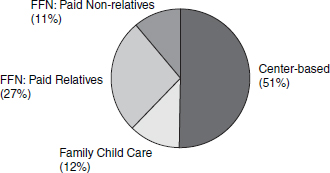
FIGURE 2-2 The paid early childhood care and education (ECCE) workforce by type of worker, 2005.
NOTE: FFN = Friends, Family, and Neighbors.
SOURCE: Brandon et al., 2011.
fore, Brandon focused on characteristics “where there is no particular reason to assume that characteristics of people caring for young children are substantially different from those who include school-aged children” for his presentation.
These data indicate that the median age for these workers is 39 to 47, that 90 to 98 percent of them are female, and that 75 to 80 percent of teachers and 81 to 85 percent of directors are non-Hispanic whites. Of the total population, 48 percent are married, 33 percent never married, and 18 percent were formerly married. Sixty-eight percent have children living at home.
Brandon described a serious wage penalty for those who work in the early childhood sector: women working in early child care (other than preschool) earn 31 percent less than women with similar qualifications working in other occupations4 (Brandon et al., 2011). These workers’ annual earnings range from approximately $31,000 for preschool and kindergarten teachers, $21,000 for assistant teachers, to approximately $18,000 for other child care workers. Paid family child care workers earn an average of about $14,000 per year. Four to 5 percent of teachers have a second job, and 3 percent of family child care workers do. Annual median household incomes (in 2010 dollars) are about $40,000 for child care workers (based on data from the Cost, Quality and Child Outcomes Study; Helburn, 1995) and about $68,000 for prekindergarten teachers (National Prekindergarten Study; Gilliam and Marchesseault, 2005), as compared with the current approximate $60,000 median for all households.5
Brandon described the qualifications of this workforce, noting that, “we see across the different categories of workers a very great range of educational background.” He reported that among child care workers, 7 to 12 percent have an associate’s degree (A.A.), 13 to 21 percent have a bachelor’s degree (B.A.), and 2 to 4 percent have a master’s degree (M.A.) or professional degree. Twenty-four to 25 percent of preschool teachers have gone beyond the B.A., and just 2 to 4 percent of family child care workers have done so. Estimates of how many preschool teachers with a Child Development Associate (CDA) credential range from 23 to 76 percent. Twenty-nine to 57 percent of preschool teachers have state certification, and 34 to 39 percent have a teaching certificate or license. Estimates of average years of experience in the field for all child care workers vary by study. One estimate is 4 to 5 years (based on data from
4 This comparison is based on a regression model of wage prediction, consistent with the economics literature, in which education was the dominant factor followed by child care versus other occupations.
5 This comparison does not include adjustments for the number of working people per household or the average age, education, and work experience of the workers.
the National Institute of Child Health and Human Development [NICHD] Study of Early Child Care and Youth Development); while another is 7 to 12 years (based on data from the National Center for Early Development and Learning Survey and the Head Start Family and Child Experiences Survey). (Brandon emphasized that these figures are for the years of experience gained up to the point at which the survey was given, so the average number of years workers stay in the field would be longer.) Fifty-three to 62 percent of Head Start teachers belong to a professional association (ACF, 2006; FACES, 1997, 2000). Citing data from the 2010 Current Population Survey and 2009 American Community Survey, Brandon reported that approximately 4 to 6 percent of child care workers, and less than 1 percent of family child care workers, belong to a union. Approximately 21 percent of preschool and kindergarten teachers belong to a union.
IMPROVING DATA COLLECTION
The challenge of describing the ECCE workforce makes clear that existing national-level data are inadequate to thoroughly and accurately describe the ECCE workforce, Brandon explained. In particular, no comprehensive and reliable data correspond to the conceptual definition of the workforce he presented. The workshop focused next on what would be required to improve the availability of data, and Brandon described some relevant factors.
A logic model that Brandon (2010) developed for the National Survey of Early Care and Education (NSECE) informed the development of a list of ECCE workforce data elements. The model includes both distal and proximal influences on the quality of early childhood care and education, and their complex interrelationships. For example, distal characteristics, such as demographic characteristics, may affect the professional development a teacher or caregiver attains, which can in turn affect the attitudes and beliefs that shape the quality of caregiving and instruction. Those elements interact with compensation levels. Brandon noted that most of the nationally representative data relate to demographic characteristics of workers and general characteristics of the labor force, factors that may have only distant and indirect relationships to important outcomes. Brandon observed that the factors with the greatest influence on outcomes for children include the more proximal teacher and caregiver characteristics, such as their attitudes, engagement, and skills, as well as the stability of the staff. He added that state and federal policies can affect these characteristics in various ways.
Informed by the logic model, as well as the process of attempting to use existing data to describe the ECCE workforce, Brandon and his col-
leagues developed a list of potential types and sources of information that would facilitate future efforts by researchers and policy makers. Brandon presented this list of seven broad categories of information:
-
Numbers of individuals in the ECCE workforce;
-
Distribution of these workers across different child care and educational settings (e.g., center- or home-based, private or public, etc.), ages of children served, and occupational roles (e.g., directors, lead teachers, teaching assistants, aides, specialists);
-
Characteristics of the teachers and caregivers (e.g., demographics, qualifications, conditions of employment, compensation and benefits, tenure on the job and in the field);
-
Attitudes, attributes, and activities of the teachers and caregivers (e.g., attitudes toward children and parents, job stress and satisfaction, nature of caregiving activities);
-
Characteristics of the workplaces (e.g., distribution of staff, supports and professional development offered, turnover, finances, working conditions);
-
Distribution of the ECCE workforce and characteristics (e.g., state/county, rural/urban/suburban location, demographic characteristics of children served, prices); and
-
Quality of early instruction and caregiving.
A broad range of data sources is needed to be able to answer important policy questions about the ECCE workforce and the ways that it affects child outcomes, Brandon observed. Some information can be found in existing data or planned data collection, such as the NSECE.6 However, he stressed the need to use multiple sources.
Brandon explained how a federal–state partnership for collecting various types of data might evolve. He described the frequency of data collection, the jurisdictions that might most easily collect each type of data, and the appropriate collection instrument that would be best for each type. “We need to be able to get down to a small geographic level,” he observed. “We need to have geographic units that are relevant to policy.” One “uber-survey,” he explained, could not collect all the kinds of information needed. The Early Childhood Longitudinal Study and the NICHD studies provide useful information, he noted, but more ongoing data collection at the state and community levels is needed as well.7
6 The NSECE is a national data collection effort that will update a 1990 study. For more information see http://www.researchconnections.org/childcare/resources/19778.
7 For more information on these studies, see http://nces.ed.gov/ecls/ and http://www.nichd.nih.gov/, respectively.
With these issues as a context, discussion turned to lessons to be learned from existing data collection efforts.
Learning from National Education Data Systems
The data available about people employed in elementary and secondary education are more complete than what is currently available regarding the ECCE workforce, so K–12 education provides a useful example. As Jerry West, senior fellow at Mathematica Policy Research and former director of the Early Childhood and Household Studies Program at the U.S. Department of Education’s NCES, explained, most of the K–12 data are collected by NCES or by states in collaboration with NCES. These studies include federal–state and public–private sector collaborative efforts, which collectively provide a fairly comprehensive picture of education in the United States, as well as information about education in other countries.
The data collection systems cover preschool through postsecondary education and include methods that are designed for different purposes. One broad category is universe surveys, in which data are collected about all of the units within a particular population. The Common Core of Data (CCD), which collects information about all K–12 public schools in the United States, is perhaps the best known of these. The Private School Universe Survey (PSS) is the CCD’s counterpart for private schools.8 These surveys provide basic information about the characteristics of the schools, such as descriptive and demographic information about students and staff, and fiscal data. They also provide the sampling frames (i.e., the enumeration of the populations from which samples should be drawn for analysis of more in-depth questions) for other studies that collect more detailed information about schools, staff, and students.
The sampling studies include cross-sectional surveys (which examine a particular characteristic at a particular time), longitudinal studies (which track changes in a population over time), and hybrids. For example, one component of the Early Childhood Longitudinal Study-Kindergarten Class of 1998–1999 (ECLS-K) focuses on the class of children who were in kindergarten during the 1998–1999 school year.9 The study collected a variety of information about this population’s kindergarten experience and has also followed the children’s progress in subsequent years. As a baseline, the ECLS-K sample provides one-time estimates of the characteristics of kindergarten programs and kindergarten teachers nationally.
8 See http://nces.ed.gov/ccd/ for details about the CCD. For details on the PSS, see http://nces.ed.gov/pss/.
9 See http://nces.ed.gov/ecls/kindergarten.asp for details about the ECLS-K.
TABLE 2-3 National Center for Education Statistics Studies by Reporting Level and Topic
| Reporting Level | ||||
| Topic | School | School District | State | National |
| Student enrollment | CCD | CCD | CCD | CCD, PSS, |
| and characteristics | PSS | ECLS-K, NHES, CPS, FRSS | ||
| Teacher/staff | CCD | CCD | CCD, PSS, | CCD, PSS, SASS, |
| PSS | SASS | ECLS-K, FRSS | ||
| Public school | CCD | CCD | CCD | CCD, SASS, |
| characteristics | SASS | ECLS-K, FRSS | ||
| Private school | PSS | __ | PSS | PSS, SASS, |
| characteristics | ECLS-K, FRSS | |||
| Student outcomes | __ | __ | NAEP | NAEP, ECLS-K, T1MSS |
NOTE: CCD: Common Core of Data; CPS: Current Population Survey; ECLS-K: Early Childhood Longitudinal Study, Kindergarten Class of 1998–1999; FRSS: Fast Response Survey System; NAEP: National Assessment of Educational Progress; NHES: National Household Education Surveys Program; PSS: Private School Universe Survey; SASS: Schools and Staffing Survey; TIMSS: Trends in International Mathematics and Science Study.
SOURCE: West, 2011. Adapted from U.S. Department of Education, National Center for Education Statistics. (2005). Programs and Plans of the National Center for Education Statistics, 2005 Edition (NCES 2005113). Washington, DC: National Center for Education Statistics.
Another way to classify the NCES studies is by whether they produce data at the school, district, state, or national level. Table 2-3 arranges key NCES studies by level of reporting and topic. West noted that while all NCES data collection efforts provide some national-level data, only the CCD and its private school counterpart provide school-level data. However, even those studies provide only limited information about teachers, such as the number in each school. The Schools and Staffing Survey (SASS) is a hybrid that uses questionnaires to examine selected topics related to school personnel, and provides more detailed information about teachers.10
In thinking about changes or additions to the current system, West noted, one might begin with the type of information that is needed, such as basic information about the size and composition of the ECCE work-
10 See http://nces.ed.gov/surveys/sass/ for details about the SASS.
force, or details about recent trends and changes. Universe surveys can provide such information as the number of teachers or caregivers, the number or percentage of teachers with a B.A., or the number of full- or part-time teachers. “But they don’t do a really good job of providing information that allows you to look at the interaction of those characteristics,” he added. “If you have a question about what percentage of full-time teachers with a B.A. are teaching or caring for 3-year-olds or the percentage of first-time teachers who are engaged in professional development activities—those types of characteristics are not really well collected through the universe surveys which typically report aggregated data.” Answers to these more complex questions often require individual-level data.
The universe surveys are also not very useful for studying emerging issues, so NCES has used the Fast Response Survey System to collect information about issues that cannot be incorporated quickly into ongoing data collection efforts. Fast Response efforts have looked at questions such as how many public schools have a prekindergarten program and the nature of kindergarten teachers’ beliefs about children’s skills and school readiness. Many questions—such as whether levels of teacher attrition or mobility are changing—require longitudinal data not usually collected in universe surveys.
West noted that the existing system is a collaborative and cooperative one, which is essential because the participant responses are voluntary. Showing how respondents may benefit from the availability of the information is important, he noted. Collaboration is also important because of the need to address discrepancies that may exist between state-level data reporting requirements and those at the federal level. The CCD identifies a data coordinator in each state to coordinate data issues, and a Federal Forum is convened annually that includes representatives from each state to review issues of comparability, changes in data collected, and other data topics. According to West, the PSS requires “buy-in” from “private school organizations to help everyone reach a consensus that there [is] actually value in private school organization as being a part of a federal education data system.” NCES nurtures that relationship through an annual meeting with the private school community to address data issues.
Because no one study can answer every important question, West stressed the importance of having a coordinated system. He proposed a system for collecting data on the ECCE workforce, modeled on the NCES approach, as shown in Table 2-4. This table presents a method for selecting an appropriate NCES model on which to base an ECCE data system. This chart shows: (1) type of data collection and purpose for ECCE; (2) NCES model for that type of data; (3) type of data source; (4) sampling unit; and (5) level of data desired (individual versus aggregate). As explained by
TABLE 2-4 A Potential Approach to Data Collection
| Data System | |||||
| Public Program Universe | Private Program Universe | Workforce Survey-Center-Based Programs | Workforce Survey-Home-Based Care | One-Time Surveys-New or Emerging Topics | |
| NCES model | Common Core of Data | Private School Universe Survey | Schools and Staffing Survey | NHES, CPS | Fast Response Survey System |
| Data source | Administrative records | Survey | Survey | Survey | Survey |
| Sampling unit | All programs | All programs | Program and teacher samples | Household sample | Varies by topic/issue |
| Level of data | Aggregate | Aggregate | Individual and aggregate | Individual and aggregate | Varies by topic/issue |
NOTE: CPS: Current Population Survey; NCES: National Center for Education Statistics.
SOURCE: West, 2011.
West, “for example … if you’re interested in describing a publicly funded program and you want to have a universe of publicly funded programs … the model would be the Common Core of Data,” which use data from administrative records. West recommended a Schools and Staffing model for center-based ECCE because it provides data both at the program and individual levels. However, he suggested a household survey approach, such as that used in the Current Population Survey, to reach home-based programs. He acknowledged that family child care centers are challenging to categorize in that they could potentially fit either center- or home-based approaches.
This model builds on the work of NCES by including both universe studies that require significant investment and ongoing support as well as sampling studies or fast track or other models for answering different questions. These efforts would require ongoing coordination and collaboration with participants who will take on the burden of responding to regular data collection. He recommended taking the time to learn from existing educational data systems, noting that their history provides many useful lessons and resources.
Learning from a State Example
States vary in how they collect their own data, but Pennsylvania has been at the forefront in the development of a state data system for early childhood care and education. Harriet Dichter, national director of the First Five Years Fund and former secretary of the Pennsylvania Department of Public Welfare, described Pennsylvania’s Early Childhood Data System, which the state created to coordinate all of the early childhood programs through the Pennsylvania Office of Child Development and Early Learning (OCDEL). A key element of this task was the development of an integrated data system. This office, the mission of which is to “ensure access to high-quality child and family services,” is jointly governed by two state agencies, the Departments of Education and Public Welfare. The four primary responsibilities of OCDEL are:
-
Certification—licensing and inspection of child care facilities;
-
Early intervention services—including technical assistance and early interventions with infants, toddlers, and preschool students;
-
Subsidy services—including parent counseling and referral and Child Care Works (a subsidized child care program); and
-
Early learning services—including public prekindergarten for at-risk preschoolers, full-day kindergarten, Head Start, family support programs, and other programs.
OCDEL staff recognized the need to create an integrated data system that would allow them to monitor their progress and improve quality and outcomes for children. Pennsylvania’s Enterprise to Link Information for Children Across Networks (PELICAN) is the information management system developed to meet this goal. It links data from all agencies and programs that serve young children. The Early Learning Network (ELN), one element of PELICAN, is a web-based network for the collection of information about children and the programs that serve them. The data sources are drawn from the many programs serving children and families that are part of PELICAN.
Dichter explained that assessment and accountability were already a part of Pennsylvania’s practice: tools used include regular program monitoring and site visits, environmental rating scales and independent third-party review, and performance measures and targets. ELN, a comprehensive data system designed to integrate data about finances, programs, teachers, families, and children, brought standardization across all OCDEL programs. Specifically, the information includes child outcomes, child and family demographics, teacher qualifications and experience, program quality (environmental rating scores), and program demographics, including salaries and benefits for staff. ELN also allows for connections with other data systems, such as those of the Pennsylvania departments of education, child welfare, health, and juvenile justice. Children and teachers are assigned unique secure identification numbers so information can be exchanged without compromising their privacy. The system also integrates professional development data, which helps improve technical assistance to programs and teachers.
ELN has brought a number of other benefits, Dichter explained. It provides feedback to parents about their children’s progress, without subjecting the children to multiple assessments. It provides a pool of data that can be used to identify which programs best meet particular kinds of needs, and also provides a basis for evaluating the effectiveness of Pennsylvania’s services to young children.
Dichter noted that both PELICAN and ELN were developed in phases over several years, which required creativity, a sustained commitment, and political will from all involved. The developers relied on support from foundations and federal grants, as well as the input of an advisory committee that solicited ideas from all stakeholders. She noted that the existing models and sources of support for the development of these programs were limited. Furthermore, national efforts are sorely needed to develop funding for state-level efforts that can promote consistent definitions and other constructive kinds of standardization.
Looking forward, she observed that the integrated management and data collection system is the foundation for further research on important
questions. A comprehensive data system provides a base for addressing critical policy and efficacy questions. For example, data can answer questions regarding:
-
Interactions among the learning environment, teacher characteristics, and child development and outcomes;
-
The ways in which children’s peers and other aspects of the classroom context affect their development;
-
The effects of children’s and teachers’ mobility on the continuity of service and on outcomes for children;
-
The effects of receiving multiple services from multiple providers over time;
-
The effects of multiple risks for children; and
-
Variations in access to high-quality child care by region.
SUMMARY
Brandon summarized key messages from these presentations and discussions, observing that a large, complex, and well-coordinated federal structure provides comparable data across all occupations and industries in the United States. The ECCE field needs to decide the extent to which the benefits of participating in this structure outweigh the difficulties associated with fitting complex and overlapping occupational roles within it. The possibility of comparing data across multiple contexts is an important consideration, he stressed. At the same time, the coordination of federal education and state data at the K–12 level provides a useful model for the ECCE field to examine. Data collection efforts in education have demonstrated the importance of cooperation among federal and state agencies as well as public and private enterprises. The Pennsylvania example illustrated the extremely valuable role that integrated data collection can play in supporting sound policy and improvements in quality in ECCE. All three multicomponent systems demonstrate several key points, he noted:
-
No one specific data collection effort can meet all needs;
-
All require collaboration; and
-
All must develop over time.
However, he added, much work is needed both to capitalize on existing systems and to develop new ones at the state and federal levels that can provide the comprehensive data the ECCE field needs. At present, a participant noted, the registries and workforce data systems developed by states as part of their professional development and quality improvement
efforts are the main sources of workforce data for program developers and policy makers. As participants also noted, although capitalizing on existing systems is important, so is capturing the reality of ECCE as it is practiced. Most existing data systems focus on describing and measuring the activities of individuals, while the field often emphasizes serving the needs of children through team-based and collaborative efforts. The best way to reconcile these two goals will require further discussion of the merits of different data models and measurement approaches.


