
The Global Challenge and the
Opportunity for Hawaii
Moderator:
Tyrone Taylor
Capital Advisors on Technology
Mr. Taylor complimented the Innovation Council for its work on the report, which he said would “raise the bar for Hawaii’s innovation activities,” and introduced the speakers for the first panel.
THE INNOVATION IMPERATIVE AND GLOBAL PRACTICES
Charles Wessner
The National Academies
Dr. Wessner, Director of the STEP Board’s Program on Technology, Innovation, and Entrepreneurship at the National Academies, praised Dr. Greenwood for her efforts in advancing the innovation dialogue in Hawaii between academic and policy perspectives, and in organizing the current symposium. He introduced the topic of innovation by saying it is “basically about new ideas. I like the definition that says research converts money into knowledge, and innovation converts knowledge back into money.” He addressed the common question of why we must focus so sharply on innovation and answered, “We have to. We have to grow our economies. We have to remain competitive, and we have to do that so our children can have a decent future and be secure. Also, the world is not an entirely safe place, and we want our soldiers and airmen to have an unbeatable competitive advantage in their technology.”
He said that to meet global challenges, the strongest strategy is to find new technologies and new ways of addressing them. He suggested that this strategy can be visualized in three parts.
The first, he said, is a focus on innovation, which “is how we compete, how we thrive, and ultimately how we win.” A new and significant aspect of innovation, he said, is the central role of collaboration. He praised the contributions of Gordon Moore, co-founder of Intel, in leading the work of STEP in the direction of partnerships of government, industry, and university. “He showed us the value of bringing large industries, small industries, universities, and the government together. Those partnerships are what we need to encourage innovation, and they have to reinvent themselves constantly.” He cited the work of Dr. Walshok in San Diego as an example.
He said he would talk about global examples of collaboration, some programs in the other states, and “several myths” that have a direct impact on entrepreneurship. The key message, he said, was simple: the rest of the world is more focused on innovation than ever before, and at a high level. He noted with gratification that both senators from Hawaii understood the need for sustained support for innovation. “There’s enormous focus here on how you help small and medium enterprises.”
Tilting the Playing Field
He added that many economists view the global marketplace as “a place of open competition” and believe that as long as American workers have a level economic playing field, they can out-compete “anyone on the planet.” In fact, he said, the playing field is not level. At a fundamental level, he said, the United States begins at an educational disadvantage, as indicated by its low ranking on the PISA studies. In addition, he said, other countries are not interested in a level field; they are interested in winning. “The goal of their policies,” he said, “is to tilt the playing field to their advantage.”
One way they do this is through strong public support of innovation. He noted that in 1999, China accounted for roughly 6 percent of global R&D expenditures. In 2007, that proportion had risen to 15 percent, and more recent figures show a continued increase. In comparison, he said, the United States makes impressive investments in health research and in defense research. But the amount dedicated to defense research, he said, is misleading, in that much of it—over 90 percent—goes to applied research, including necessary but expensive weapons testing. “These projects are making things work today,” he said, “and we need them, but they should not count as research investments for the future. For the warfighter, that means less of a technological edge in the future.”
He suggested that the competitive focus of the United States should not be restricted to China, because “the rest of the world is moving as well.” He called attention to the success of Brazil’s Embraer Company, which manufactures many of the regional jets flown by Americans, of the European partnership Airbus, and the high-speed train network of France, powered by nuclear power plants.
In the case of Brazil, he said, one model to study is its strategy of helping small startup companies to work with larger companies to develop ideas coming out of the universities. The government invests $2 billion a year on this technology transfer, compared with the U.S. Technology Innovation Program at NIST, which has been funded at about $80 million and is perennially threatened with cutbacks.
He also singled out Singapore, with a population of only 4.5 million. “It is not very big,” he said, “but it is very determined. They have an incredible focus on innovation, and they’re hiring people from all over the world, including Nobel laureates as well as young professors. They have two of the best science and technology parks in the world, Fusionopolis and Biopolis. There is virtually no free land in Singapore, so the determined people build them vertically.”
Sustained and Focused Programs
In Europe, he said, countries have sustained and focused programs, many of them drawn from the U.S. experience. “They think some of our programs, like SBIR, work well,” he said, “while we have trouble getting them renewed by the Congress.” Germany is a high-wage, highly regulated country, like the United States, but nonetheless competes successfully with low-wage economies. It does this through targeted interventions, especially investments in job training, worker retention, and support for small manufacturers. “They understand why manufacturing matters,” he said. “They understand, unlike many orthodox economists, that a purely service economy is not equipped to defend itself militarily or employ all the people who need jobs.” Germany has focused on green technologies, becoming one of the largest producers of solar technologies in the world, despite receiving no more sunshine than Alaska.5
In the United States, he said, the greatest needs are for more speed, critical mass, innovation, and early-stage investments in young, innovative companies. He stressed speed in particular, and the advantages of collaboration between industry and academia. “A 21st-century university is one that partners with industry,” he said. As one initiative that had benefited from moving quickly, he cited the success of New York State in deciding boldly and rapidly to build a new nanotechnology center and college. By investing about $2 billion in a single project near Albany, the state attracted more than $10 billion in private investments and succeeded in establishing a world-class center in nanotechnology, including the participation of the SEMATECH program formerly based in Austin, Texas.
He also mentioned a similar success in Michigan, where the economy had suffered severely from the troubles of the automotive industry. To help ensure that the state’s auto industry remains competitive in the coming era of electrified vehicles, the state, with active assistance from U.S. Senator Carl Levin, had invested more than $1 billion in grants and tax credits to manufacturers of lithium-ion
__________
battery cells and packs. As of mid-2010, some 16 battery-related factories were being built in Michigan, projected to create 62,000 jobs in 5 years.
Universities as Engines of Economic Growth
In Hawaii, he continued, the state had recognized the need to foster, attract, and retain a young and skilled workforce and to support entrepreneurial talent. It had also demonstrated its understanding that “a university is not just a citadel on a hill,” but an engine for economic growth. He noted that as a native of Pittsburgh, he had grown up in an era when steel mills were the largest employers in the region. Today, he said, the largest employer is the University of Pittsburgh, which employs not only professors and staff, but also the technicians, gardeners, maintenance people, and many others who are “part of this prospering dynamo that attracts federal dollars.” Investments by the university have led to much larger investments by the National Institutes of Health, he said, and those investments in turn “are now resulting in a virtuous cycle where new companies spawned by the research activities are themselves generating new growth.”
He said that an important message for the states is that they do not need to “go at it alone.” Building innovation success is difficult, he said, but it can be eased by state-federal and state-industry partnerships. He recalled the commitment of President Obama to science and innovation, which he outlined in a major speech at the National Academies soon after taking office.6 Part of that commitment, he said, is to create the investments and regulatory environment that support innovation. Just as investments in farm crops rise and fall with the level of R&D tax credit and other subsidies, investments in wind, solar, and other renewable energies also depend on the financial environment. “Investments in solar are simply not going to happen by themselves,” he said. He recalled the commitment of Congressman Giffords of Arizona to solar technologies, and her understanding that they could not compete against fossil energy sources as long as the level of federal subsidies to the fossil fuels industry remained high. If we don’t readjust the policy mix, he said, the countries that have done this, notably China, Brazil, and the European Union (EU) countries, will come to dominate renewables industries. “You don’t make these investments without having the resources to make them,” he said. “And that applies at the state level as well as the national level.”
He emphasized that Hawaii had unique opportunities in energy security, given its natural wind, solar, and geothermal resources. “But you need the collective will and to use your political leverage to initiate the right projects as fast as you can,” he said. The key steps, he added, were to arrange partnerships with
__________
6<http://www.whitehouse.gov/the_press_office/president-obama-lays-out-strategy-for-american-innovation/>.
the federal government and to gather support for innovation mechanisms such as S&T parks, research consortia, and innovation awards.
The Myth of Efficient Markets
He returned to the topic of high-tech companies. These are sources of jobs, ideas, and growth, he said, but they face challenges. The most daunting of these is to raise the early funding needed to prove the technical promise and commercial value of a new technology. Another is the “very strong myth” that the commercial markets work efficiently and naturally to meet this need, selecting good new ideas and providing the funding they need as if by an invisible hand. This does not always happen, he said, citing Google as an example of a company that had trouble raising early money. Our federal government invests a lot of money in research, Dr. Wessner noted, but we don’t invest enough in the transition from research to commercialization.
Another popular myth, especially among legislators, is that venture capital (VC) companies provide sufficient support for worthy high-tech companies. While the VC markets are broad and deep, he said, and generally considered the strongest in the world, they are seldom a good fit for small companies. VC firms prefer to invest in companies that already have revenues, and preferably profits, and some experience in the marketplace. Moreover, they prefer to invest as late as possible in a company’s development, and then to exit as soon as possible—having earned a return on their investment. The total pool of venture funding is only about $1.7 billion for the whole U.S. economy, he said—enough for only 312 deals in 2010. “That is really not a large number,” he said. “So while venture is important, it is not the panacea.”
So how can small companies get across the “valley of death”? Dr. Wessner urged more strong candidates to take advantage of the federal Small Business Innovation Research (SBIR) program which, along with its smaller cousin the Small Business Technology Transfer (STTR) program, invest nearly $3 billion annually in small firms emerging from university research—nearly double the amount invested by the venture industry. “SBIR gives small awards to begin with,” he said, “but that is a strength of the program; $150,000 can attract the attention of a university researcher.” For the second stage, the awards rise to as much as $1 million—an amount that had recently been increased by Congress at the recommendation of the STEP Board. “That’s an amount that is significant not only to faculty, but to the university leadership.”
He added that a further strength of the program is its rigorous and competitive selection process. The National Academies had completed a study under Dr. Jacques Gansler, a former under-secretary for technology at the Department of Defense, which concluded that the SBIR program was “sound in concept and effective in operation.” One reason for its effectiveness, said Dr. Wessner, is that
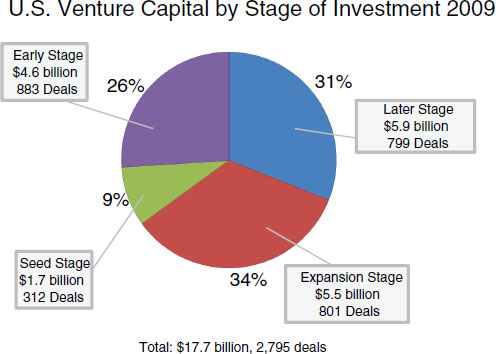
Total: $17.7 billion, 2,795 deals
FIGURE 2 Large U.S. venture capital market is not focused on seed/early-stage firms: U.S. venture investments down 37 percent in 2009.
SOURCE: Charles W. Wessner, Presentation at January 13-14, 2011, National Academies Symposium on “E Kamakani Noi’i (Wind that seeks knowledge).”
it provides “that hardest of all money, the first money, which is needed to get a company started.”
He concluded that the report of the UH Innovation Council represented an important first step in accelerating the state’s economic growth. He also observed that Hawaii has “a new governor who understands the importance of innovation,”7 along with a strong and experienced congressional delegation. “Now you need both federal and state investments to help leverage the private investments you need. State investments can be the first critical catalysts in demonstrating the commitment of local institutions, especially your foundations and other investors.”
In closing, he encouraged the state to adapt an expression used to powerful effect by a former resident of Hawaii, Barack Obama. “In the case of innovation for Hawaii’s growth,” concluded Dr. Wessner, “the proper version of President Obama’s saying would be ‘Yes you can.’ I do believe that is true.”
__________
7During his campaign, Governor Neil Abercrombie prepared a roadmap for Hawaii called a “New Day in Hawaii.” See <http://www.neilabercrombie.com/images/uploads/AFG_ANewDayinHawaii.pdf>.
DISCUSSION
Mr. Weinman reiterated that some of the difficulty experienced by small companies was related to larger issues of private financing. In Europe, he said, the venture capital industry had performed rather poorly because countries lacked strong public markets for private companies. The only growth strategy for a small firm was to be acquired by a larger company, and without the competitiveness of a public market, large companies could acquire smaller companies for lower prices. The United States had been successful in maintaining a strong public market for private companies, he said, until about 10 years ago, when the bursting of the speculative bubble in Internet stocks had led to the passage of the Sarbanes-Oxley bill and other regulations that had depressed this market.8 Now many small companies have to look abroad for investors, he said, raising the question of how to reduce the regulations imposed in this country.
Dr. Wessner noted that the bursting of the Internet stock bubble and the causes of the recent recession had indeed raised animosity toward parts of the financial sector in the United States. He said that in his personal opinion, the passage of time would mitigate some of those feelings. He also suggested that other factors were weighing on investors. One was a diversion of money from the venture system toward alternative investments that seemed to be more attractive. Another was the challenge of earning sufficient return by investing in small companies during times of economic pressure.
Dr. Lew noted that the Dodd-Frank bill did provide some relief for small companies9 from certain requirements of Sarbanes-Oxley. She also suggested that there might be an opportunity for some of the larger players, especially the New York Stock Exchange and NASDAQ, to think about establishing alternative exchanges for small-cap companies.
A questioner asked Dr. Wessner what kinds of investments the state might make in support of small businesses. He said that one model for Hawaii would be the strategy of New York State in developing a new nanotechnology educational center with a direct link to industry. He suggested that Hawaii continue to capitalize on some of the unique biological characteristics of its population, including support for the cancer research institute. Another appropriate investment would be a regulatory and perhaps a tax-incentive approach in support of electric vehicles. “A concern about batteries for many states,” he said, “is whether
__________
8The Sarbanes-Oxley Act of 2002 was enacted as a reaction to a number of major corporate and accounting scandals, including those affecting Enron, WorldCom, Tyco, and other companies. These scandals cost investors billions of dollars when share prices collapsed and shook public confidence. While the Act is praised for improving transparency and internal controls, it is criticized for its costs, especially for smaller firms.
9The Dodd-Frank Wall Street Reform and Consumer Protection Act was passed in 2010, in the wake of the late-2000s recession. In enacting Dodd-Frank, the Securities and Exchange Commission (SEC) exempted small companies from some of its reporting requirements.
they let you drive 400 or 500 miles. That doesn’t seem to be an issue here on the islands. I think you could be seen as an innovation state drawing students, capital, and entrepreneurs from all over the Pacific. You have wonderful assets here, and the task is to make those investments, strengthen the university system, and build more clusters of economic activity that are associated with the university.”
Dr. Lew returned to the earlier discussion on investing, stressing the importance of “investing in yourselves.” She repeated the observation that major institutions in Hawaii are not making investments in their own economy. She emphasized that she was not calling for giveaways or grants, but investments seeking market-rate returns. As precedent, she cited the cases of Michigan, New York, and California, whose state pension funds are all required to allocate a certain proportion of their investments to in-state companies. Similarly, the New Economy Initiative for Southeast Michigan, a collaborative effort among 20 foundations, has committed itself to revitalizing Detroit by investing $100 million dollars in innovative companies that pledge to remain in Michigan and create high-paying jobs. “These are the types of partnerships and collaborations,” she said, “that you might think about.”
STATE AND REGIONAL ECONOMIC CONTEXT
Carl Bonham
University of Hawaii Economy Research Organization (UHERO)
University of Hawaii at Manoa
Dr. Bonham, executive director of the University of Hawaii Economic Research Organization (UHERO) and associate professor of economics at UH, said he would offer his perspective on Hawaii’s current prospects as a regional economy.
He began by noting that Hawaii had always been a one- or two-industry state, led until recently by exported natural products.10 He showed the rise and fall of the economy’s major industries, beginning with sandalwood, which ruled from 1806 until 1836, and followed by whaling, which dominated until 1881. This was followed by the “king of agriculture,” sugar, which remained the number one export much longer than the others, and shared its leadership toward the end with pineapple. Each lead industry went through a similar cycle of dramatic growth, followed by a peak and fairly rapid decline.
The military security sector quickly rose and just as quickly peaked during World War II, when more than 500,000 U.S. troops were stationed in Hawaii. This number declined slowly over the decades until a federal program of base closures in the 1990s resulted in a loss of 10,000 to 15,000 thousand military personnel. Today about 40,000 troops are stationed in Hawaii, but even at this level
__________
10Dr. Bonham acknowledged the contributions of Chris Grandy and Bob Shore.
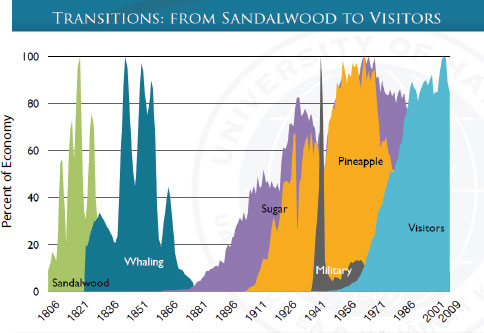
FIGURE 3 Hawaii’s predominant industries 1806-2009.
SOURCE: Carl Bonham, Presentation at January 13-14, 2011, National Academies Symposium on “E Kamakani Noi’i (Wind that seeks knowledge).”
the military still accounts for a significant portion of economic support. Federal spending on both military and civilian employment in Hawaii represents more than 12 percent of the economy.
Tourism, which has grown steadily since World War II, has long since taken the lead as the dominant sector, accounting for roughly 15 to 20 percent of the overall economy. It remains highly vulnerable to economic conditions, however, and in the recent recession it declined sharply.
Job Growth in Health Care and Tourism
Overall, said Dr. Bonham, the share of jobs in manufacturing, construction, and agriculture had all declined significantly from 1972 to 2007, “so we’re not making much of anything in Hawaii anymore.” There has also been an apparent decline in federal government civilian jobs, he said, but in fact the federal employment had remained stable while the overall job numbers have grown. Much of the real growth had taken place in health care and in the service sectors related to tourism. He noted that public and private education were important sources of jobs, but that there were no data for this sector before the 1980s, so its growth was not well documented.
With regard to the standard of living of the people in Hawaii, he showed a graph that compared U.S. real GDP per capita with Hawaii real GDP per capita, indicating that the state had not kept up with the national average. “The long-term trend for productivity growth in Hawaii,” he said, “has been roughly 1 percent, while the growth for the United States is close to 2 percent.”
Hawaii’s uneven growth has been influenced by several exogenous factors. For example, the 1980s showed rising economic growth, but it was caused primarily by three forces: (1) the visitor boom, including many Japanese tourists, (2) a Japanese investment bubble, when capital flowed in to build hotels and buy houses, and (3) state investment in roads and other infrastructure. These forces had the cumulative effect of a boom. “But then we lost a decade,” Dr. Bonham said, “that coincided roughly with the ‘lost decade’ of Japan.” This slump was followed by another boom, but today the more important concern is on generating productivity growth that is not dependent on outside forces. “One of the most important ways that we can do that is by insuring that we are essentially creating demand for occupations that are highly productive.”
For the period 2000-2009, 27 percent of the occupations in Hawaii were in a category he called “high human capital,” in which more than 50 percent of the occupations in the category require at least a bachelor’s degree. In most of the
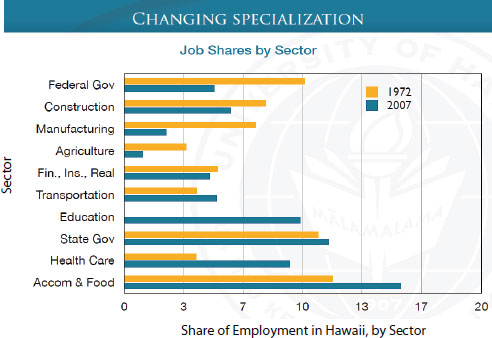
FIGURE 4 Employment share by sector: 1972 and 2007.
SOURCE: Carl Bonham, Presentation at January 13-14, 2011, National Academies Symposium on “E Kamakani Noi’i (Wind that seeks knowledge).”
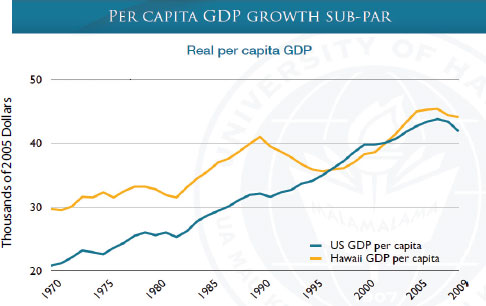
FIGURE 5 Comparing U.S. and Hawaii GDP per capita growth.
SOURCE: Carl Bonham, Presentation at January 13-14, 2011, National Academies Symposium on “E Kamakani Noi’i (Wind that seeks knowledge).”
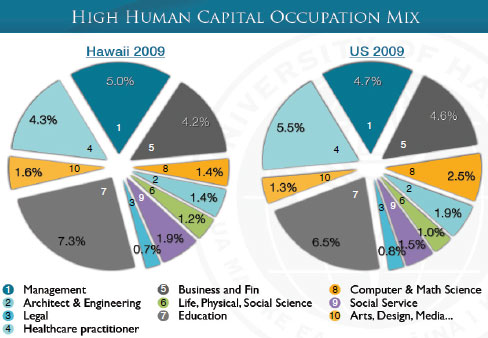
FIGURE 6 Comparing U.S. and Hawaii’s human capital mix (2009).
SOURCE: Carl Bonham, Presentation at January 13-14, 2011, National Academies Symposium on “E Kamakani Noi’i (Wind that seeks knowledge).”
tourism-related occupations, however, only about 20 percent of the jobs required a bachelor’s degree. In other categories, the percentage requiring a college degree was even smaller: for example, 5 percent in construction, near zero in building and grounds cleaning and agriculture. While the latter categories may require high skills, they are not the kinds of skills that raise productivity or generate spillovers to other areas.
A Need for Spillovers and Entrepreneurial Activity
He broke down the “high human capital” category and compared it to the United States as a whole. In Hawaii, some 1.4 percent of jobs were in architectural engineering; in the United States as a whole, 1.9 percent of jobs were in that category. Some 1.4 percent of jobs were in the computers and mathematics sector, vs. 2.5 percent in the United States as a whole; in some places, such as New York, 10 percent of jobs were in computers and mathematics. “We need to raise those figures—by ensuring that we create demand for occupations that are the most productive and create spillovers. These are the productive, high-wage jobs, directly tied to university R&D. Recent research on economic development has shown a very strong connection between growing R&D dollars at a university and raising high human capital jobs in the region. An active, engaged research university is a necessity, but it still is not sufficient. We also need many people who are working at the university to go beyond research and help create spillovers and entrepreneurial activity in the community.”
Dr. Bonham returned to current conditions in the visitor economy and the near-term recovery of Hawaii’s economy that seemed to be under way. Before the economic collapse of 2007, he said, visitors were spending about $1 billion a month in Hawaii. This figure fell by about 25 percent. As of August 2010, the state had recovered almost all of that, but costs had gone up, so the recovery was not yet complete. “But tourism is the big mover and the shaker,” he said, “and that’s what’s going to allow the state to invest in the university and move things forward over the next several years.”
He offered a brief breakdown of tourist origins, which was changing rapidly. Since 2000 the number of U.S. visitors had increased by about 20 percent, but Japanese visitors had dropped substantially to only about 30 percent of the level of 2000. The number of Canadian visitors is increasing rapidly, as are visitors from Korea, who have increased more than 70 percent in the past year. The prospects for growth from the rest of Asia and from Europe are very strong.
Essentially, he said, Hawaii today is experiencing a continued decline in state and local government jobs, with a forecast growth of total jobs for 2011 at a little over 1 percent. This growth was likely to occur exclusively in the tourism sector, which is UHERO’s near-term focus.
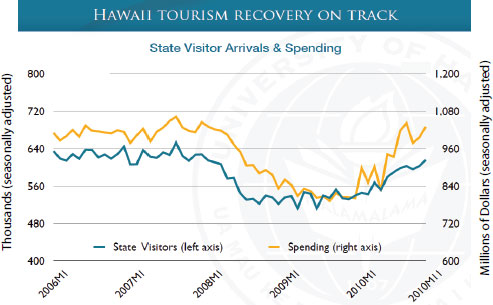
FIGURE 7 Hawaii visitor arrivals and spending 2006-2010.
SOURCE: Carl Bonham, Presentation at January 13-14, 2011, National Academies Symposium on “E Kamakani Noi’i (Wind that seeks knowledge).”
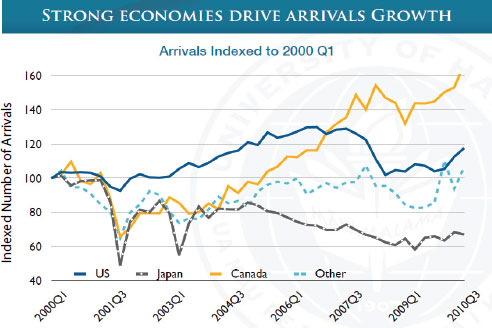
FIGURE 8 Change in composition of international tourism in Hawaii.
SOURCE: Carl Bonham, Presentation at January 13-14, 2011, National Academies Symposium on “E Kamakani Noi’i (Wind that seeks knowledge).”
Investing More in Energy Research
Dr. Bonham asked, how can we move that long-term average of 1 percent closer to the national average? A strategy for doing this, which was essential to raise living standards, begins with the Asia Pacific Economic Community (APEC), he said, and in making connections with other countries and showcasing Hawaii more widely. In addition, Hawaii planned to invest in physical capital, especially in infrastructure that can change and demonstrate how we can produce and deliver energy. “Initially, we’re talking about bringing money in from the rest of the world. But the research and development, the focus on this unique place for studying energy, is more important longer term to raise our overall productivity growth. It’s the research side much more than laying fiber optic cable or building a solar farm.”
He closed by returning to the high human capital group, which was now growing more rapidly. Hawaii actually out-paced the national average growth rate of this sector in the last decade. From 1999 to 2007, this high human capital group expanded by about 20 percent in Hawaii, while the rate for the United States as a whole was 8 to 9 percent.
“That shouldn’t be surprising,” Dr. Bonham concluded, “because research tells us that when you increase the university’s research dollars by 50 percent, as the University has done and is recommended in this report, you are able to bring in the best scientists in the world in areas where we have a competitive advantage, such as astronomy, vulcanology, and renewable energy engineering. When the university grows its research dollars in that manner, it has a direct impact on creating a demand for these occupations. This in turn raises the productivity of the economy and raises the standard of living for all of its citizens.”11
DISCUSSION
Mr. Goldin commented that of Hawaii’s advantages in renewable energy sources, he had not heard geothermal energy discussed, or cooling from deep ocean currents. He suggested that those two resources could meet the enormous power and cooling needs of new cloud computing facilities, now planned for sites on the mainland that lack these natural assets. The Hawaiian coast, he added, could become the centroid for optical fiber cables. “All of a sudden this could spark an information technology revolution for the state. Everyone would want to be here.”
Dr. Bonham agreed that such a connection could be very important, as long as uninterrupted, high-quality energy were available. He said that several
__________
11Dr. Bonham noted that full datasets on the Hawaiian economy are freely available at UHERO’s Web site, <http://uhero.prognoz.com/>.
colleagues at UHERO were working on sea-water air conditioning and on the energy mix, particularly on the Big Island, where geo-thermal energy can be tapped.
A questioner asked Dr. Bonham about the potential for integrating localized, poly-culture agriculture for both the economic development of Hawaii and to provide additional food security for the islands.
Dr. Bonham agreed that food security was a pressing issue that had not received the attention it merits. He cited a state policy that required identification of important agricultural lands, and UHERO was working on a project on Kaua’i to do that. “But a serious problem for agriculture in Hawaii,” he said, “is that if you step back from quality of food and some measure of food security, the highest and best use for land is to build a resort. If you’re a large land owner, even if you are farming the land, you’re unlikely to invest in improving or conserving it when you can try to get it rezoned and put in a hotel or time shares. As a state, we haven’t yet made the commitment to preserve important agricultural lands.”
William Harris followed up on Mr. Goldin’s comments about capitalizing on local areas of strength, but he questioned the growth potential of astronomy, given the large number of observatories already present. “Despite its excellence,” he said, “you may miss opportunities if you don’t look to where you need to be rather than to where you are.” Dr. Bonham replied that some new growth would come to astronomy as the new telescopes were built and that the university hoped to attract new scientists who want to focus on issues where the state has a comparative advantage. He also agreed that it was essential to move to new opportunities and that the university’s objective was not to grow any one science in particular, but to grow the entire research effort.
FOCUSING FEDERAL RESOURCES:
THE OBAMA ADMINISTRATION INNOVATION INITIATIVES
Ginger Lew
White House National Economic Council
Dr. Lew began by thanking the symposium organizers who she praised as “champions of bringing leading researchers and practitioners together to push the innovation agenda.” She said she would highlight some of the Obama Administration’s policies that promote entrepreneurship and commercialization, especially the efforts to advance regional innovation clusters and improve the commercialization of federally funded research. The two efforts are interrelated, she said, and integral parts of creating durable jobs in the United States.
Dr. Lew turned to regional innovation clusters, which she defined as “geographic concentrations of firms and industries that do business with each other and have common needs for talent, technology, and infrastructure.” She went on
to note, “Clusters make use of a region’s unique assets from academic institutions to workforce to available capital to increased collaboration.” Their objective is to create a climate in which businesses can grow and thrive. She said the Obama administration believes that clusters have the potential to create more favorable economic outcomes than conventional models of economic development, including higher wages, increased numbers of business spin-offs, labor jobs that are likely to stay in America, increased regional GDP, a more educated workforce, businesses that are more competitive at home and abroad, and enhanced exports and global trade.
Some Benefits of Innovation Clusters
Dr. Lew emphasized that regional innovation clusters were, however, not a new concept. The United States already had more than 150 recognized clusters, she said, underpinned by a considerable body of research that shows their link to dynamic economic activity. She described one of these in the state of Kansas, which she said is not widely known as a center for innovation or high technology “but makes more than 50 percent of all private aviation technology products and services offered in the United States.” Workers employed by the aviation cluster in Kansas earn, on average, incomes more than 50 percent higher than workers not employed in that cluster. She cited a recent study by Michael Porter at Harvard University showing that industries participating in clusters benefit from higher rates of employment and wage growth, more jobs and businesses established, and more patents issued.
During the past year, the Obama administration had made more than 40 awards to support and promote regional innovation clusters. For example, an interagency group had awarded a $129 million award for energy R&D to the Greater Philadelphia Innovation Cluster. This is a consortium of more than 90 public and private organizations, including academic institutions, federal laboratories, industry partners, and federal and regional economic development agencies. This energy research and innovation cluster, or E-RIC, is focused on “developing, expanding, and commercializing energy-efficient building technologies and best practices for national and international deployment.”12
Working from a Region’s Core Assets
But the E-RIC, Dr. Lew said, was only one approach. Her office had now heard from several clusters around the country that were part of emerging or existing cluster initiatives in such diverse industries as alternative energy, health IT, carpet manufacturing, cheese production, and water purification. All of these,
__________
12For a description of the E-RIC program, see U.S. Department of Energy Web site at <http://www.energy.gov>.
she said, were beginning to think more strategically about the core assets in their regions and taking steps to build relationships with each other. In Hawaii, she praised the innovation report commissioned by President Greenwood, which she called a critical first step in bringing together strategic thinkers who could create and catalyze a long-term innovation strategy in this state.
Dr. Lew also mentioned awards made by the administration in other sectors. One was the i-6 Challenge, a competitive, $12 million innovation competition sponsored by the Economic Development Administration in the Department of Commerce, along with the National Science Foundation and the National Institutes of Health. The i-6 Challenge had made six awards in different regions of the United States to promote technology commercialization and new-venture formation. Another program, the Small Business Administration’s Regional Cluster Initiative (RIC), had made 12 awards to programs focused on advanced technologies, including advanced defense technologies. Their particular focus was technical assistance, business training, counseling, mentoring, and other services that support job growth and competitiveness in small businesses. The U.S. Department of Agriculture had issued more than 29 awards to different parts of rural America to improve and promote regional economic clusters, particularly in integrated food systems. Finally, the administration has recently created a Task Force for Advancement of Regional Innovation Clusters.
An important feature of this strategy, she said, was that the RIC initiative had broad bi-partisan support in the Congress. At the end of the most recent session, lawmakers from both sides of the aisle institutionalized the RIC as a policy priority in passing the second phase of the America Competes Act. This Act authorized the Secretary of Commerce to establish an RIC program “to encourage and support development of regional innovation strategies,” including E-RICs. Through these provisions, the federal government will offer competitive grants and information to stimulate collaborative interactions with firms and other institutions. The government will award competitive grants to the best bottom-up proposals for advancing cluster activities.13 The legislation encourages regions such as Hawaii to self-organize and also includes incentives for regions to engage the local workforce investment boards and specifically to engage workers displaced by trade. It encourages regions to partner with the private, state, and local groups in both financial and administrative ways. Finally, the Act provides incentives for regional applicants to show how clusters are likely to stimulate innovation and promote economic growth and development.
__________
13See Section 603 of the America Competes Reauthorization Act of 2010, which establishes a Regional Innovation Program. See <http://www.gpo.gov/fdsys/pkg/BILLS-111hr5116enr/pdf/BILLS-111hr5116enr.pdf>.
Stronger University-Industry Connections
Dr. Lew then turned to commercialization of federally funded research. At the heart of many clusters, she said, is federally funded research conducted at universities and federal labs. These research hubs are integral to a successful innovation ecosystem in enabling researchers and private-sector participants to translate basic research into commercially viable products. A recent study at Harvard University confirmed the essential contribution of universities to innovation, she said, emphasizing the role of the 1980 Bayh-Dole Act in increasing university connections to industry. The study showcased university research, patenting of ideas, and transferred technology. It also documented the economic benefits of research transfer to the local economies through growing employment, higher payrolls, and demand for services that support the university.
Despite this evidence, she cited some recent studies that suggest that America is not doing enough to spur commercialization of its research results. “We spend more on the R side than we do on the D side when it comes to deploying federal dollars,” she said. The World Economic Forum had recently issued a Global Competitiveness Report, using 12 key indicators that showed cause for concern: The United States had slipped from first to fourth in commercializing effectiveness. Another recent report by an information technology and innovation foundation called the Atlantic Century showed that the knowledge-based industries of Singapore, Sweden, Luxemburg, Denmark, and South Korea were ahead of the United States in overall competitiveness.
The Obama administration, Dr. Lew said, recognized that commercialization of new technologies is a matter of paramount public interest. The government can exercise tremendous influence over the direction of technology deployment through the $151 billion a year that it invests in research and development, as well as the $76 billion it spends annually on hardware and software. “In an era of limited resources,” she said, “we’ve got to be targeted and strategic in how we deploy our funds. At our national laboratories, we are starting to reevaluate the basic metrics by which we measure success and evaluate how we can accelerate commercialization from our laboratories to the marketplace.” At the U.S. Department of Agriculture (USDA), the Agricultural Technology Innovation Partnership (ATIP) programs amplify the work of federal labs by providing proactive, focused, and sustained marketing of laboratory technologies to companies. This can give companies valuable insights into navigating federal processes and accessing resources, such as the SBIR program. Finally, such partnerships enable greater market research to reach the laboratories, thus creating a stronger pull from industry and a better focus for the laboratories wishing to partner with the private sector.
Fostering an Entrepreneurial Mindset
Dr. Lew noted that the Department of Commerce had conducted five regional forums in different parts of the United States with university and business leaders to discuss issues affecting commercialization. In addition, she said that her office and the Office of Science and Technology Policy (OSTP) had issued a request for information that drew more than 200 responses from universities, the private sector, and small businesses, many of them “very thoughtful and rich in commentary.” Respondents were asked to focus on several key questions:14
• How do universities using federal R&D dollars balance the sometimes competing interests in pursuing knowledge for its own sake and focusing on discoveries that have strong commercial potential?
• What is the best way to integrate universities into broader economic strategies that promote regional economic development?
• How can we foster a more entrepreneurial mindset in universities?
• How can we make it easier to connect entrepreneurs and other “business builders” with ideas generated by university research labs?
In the coming weeks, she said, her office would host several roundtables with private-sector participants from different industry sectors to understand the challenges they face in dealing with universities and research laboratories, especially in licensing and manufacturing products from these facilities. “We recognize that it’s not appropriate or feasible to commercialize all federally funded research,” she said. “And we also know that different industry sectors have different timelines for commercialization.” At the same time, she cited the comment by Dr. Shirley Ann Jackson, president of Rensselaer Polytechnic Institute, that the United States is building today’s economy on 20- to 30-year-old technology. “We need to compress that cycle and to accelerate the transfer of our research from the labs to the market. The challenge we face in Hawaii and in many regions of the country is how best to connect innovative entrepreneurs to the research institutions and other key partners.”
Dr. Lew praised the plan for developing an intermediary institution in Hawaii and commended other models around the United States. The University of Miami, for example, had placed an entrepreneurship program in its career counseling center. They used this strategy because all undergraduate and graduate students are encouraged to visit that career center, where they could see entrepreneurship identified as a valid career choice. “That means that a music major or science major or business major will all receive the same type of outreach and support through
__________
14These questions were raised by U.S. Secretary of Commerce Gary Locke in his address to the National Academies R&D Commercialization Forum on February 25, 2010. Access at <http://www.commerce.gov/news/secretary-speeches/2010/02/24/remarks-rd-commercialization-forum-national-academy-sciences>.
the career counseling center.” Another need, she said, is to provide better access to federal resources for local communities and regions. “We as the federal government need to break through our own silos so that you, the state or the regional community, are not sent around to 35 different agencies to promote one specific objective.”
She closed by applauding the “vigorous leadership” she had seen in Hawaii on the part of President Greenwood, Governor Abercrombie, the university, and the “very committed congressional delegation.” The symposium itself, Dr. Lew concluded, was clear evidence that “you’re starting to think not only about what can you do now, but what you can do in the long term. This is critical. I’d like to commend all of you for your foresight, and I appreciate the privilege to be a part of this important conference.”
DISCUSSION
Dr. Harris said he appreciated Dr. Lew’s reference to possible new metrics for measuring innovation success. He said that simple measures such as publication counts, patents, and companies were insufficient. “I think we went off track during the post-World War II period when we didn’t really compete, because we didn’t have any competition. We have to compete now, and we’re not doing a very good job at it. I hope you’ll begin to think about how you nudge a state such as yours to do things differently.” He suggested a pilot program or a federal and state partnership where states, as well as the federal government, each put money on the table. Historically the states have depended on the federal government for research, and “that means the legislators have not paid attention to the workforce,” he said, “or to what R&D really means. A few states have made progress, but by and large we have failed to engage local leaders and we have failed to get them the information. So I think you have a huge opportunity.”
Dr. Lew said that she agreed with this comment because it emphasizes how many elements there are in the innovation infrastructure, which includes not only roads and bridges, but also education, which “needs tremendous revitalization. I don’t think most people realize that almost 30 percent of all Americans do not graduate from high school. Of our population, 18 percent are illiterate, and more than 60 percent can read at only a 7th-grade level. This makes it hard to develop an innovation economy and knowledge-based industries.” Investment in education can not be made just from the top down, she said, but has to engage the states and communities “where folks know what the problems are, and where the most innovative solutions can come from.”


