
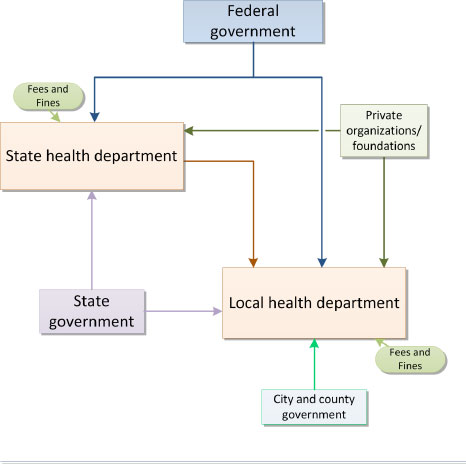
This figure illustrates the complexity of the current systems of funding of public health. The left diagram represents a traditional, relatively parsimonious view of funding. In it, the federal government gives block and categorical grants (often originating in Congress) to state health departments and gives direct support to local health departments. The state government gives the state health departments discretionary funds, categorical or programmatic funds, and dedicated revenue. Some of the funding is passed on to local health departments, which also receive funding from city and county government. Both the state and local health departments receive some funding from private groups and receive fees, fines, and, in some cases, Medicaid and Medicare dollars. The left diagram does not communicate the expansive, complicated, and intertwining nature of the delivery of public health, as the right diagram begins to illustrate.
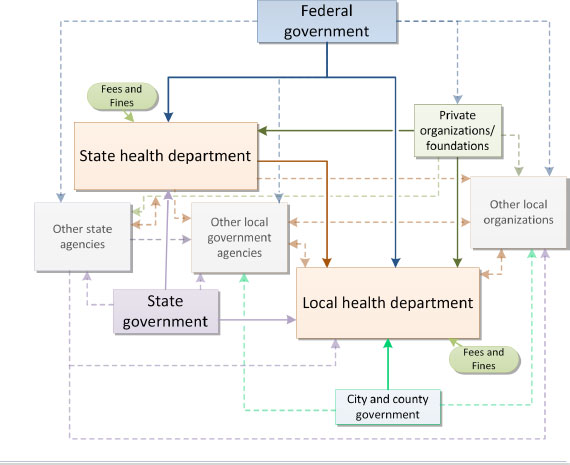
In addition to the main organizations identified in the left diagram, other groups—such as other state agencies, local agencies, and local organizations—create policies and deliver programs and services that affect the public’s health. Consider Medicaid, behavioral health, and environmental health and protection as examples. These other organizations pay local health departments, other local government agencies, and other local organizations (nongovernment organizations and community-based organizations) to provide valuable public health services. Those interrelationships greatly affect the public’s health but are difficult to track and quantify. Even among traditional government public health, tracking revenue and expenditures is extremely difficult, given the variety of funders, services, and billing systems involved (discussed in more detail in Chapter 3).


