
4
Effective Practices for Investment in Maintenance and Repair
In 2002, the National Research Council appointed the Committee on Business Strategies for Public Capital Investment (NRC, 2004a, p. x) to
develop guidelines for making improved public investment decisions about facilities and supporting infrastructure, their maintenance, renewal, replacement, and decommissioning. As part of this task, the committee was asked to review and appraise current practices used to support facilities decision-making in both the private and public sectors and identify objectives, practices, and performance measures to help determine appropriate levels of investment.
The resulting report, Investments in Federal Facilities: Asset Management Strategies for the 21st Century, identifed 10 principles/policies used by best-practice organizations in matters of facilities investment and management (NRC, 2004a). The report noted that despite the inherent differences between public and private-sector organizations regarding goals, missions, and operating procedures, some aspects of all the principles/policies could be adapted to the federal operating environment.
To gather information for the present report, the committee identifed private-sector companies and professional organizations that it believed to be industry leaders in effective maintenance and repair practices, and it heard directly from four: IBM, General Motors (GM), General Dynamics, and the Association of Higher Education Facilities Offcers-APPA. Information was also obtained from three major providers of facility assessment consulting services—Parsons, W hitestone Research, and VFA Inc.—and from numerous federal agencies, as noted in Chapter 1.
The 2004 National Research Council report found that best-practice organizations all did the following (NRC, 2004a, p. 2):
• Establish a framework of procedures, required information, and valuation criteria that aligns the goals, objectives, and values of their individual decision-making and operating groups to achieve the organization’s overall mission; create an effective decision-making environment; and provide a basis for measuring and improving the outcomes of facilities investments. The components of the framework are understood and used by all leadership and management levels.
• Implement a systematic facilities asset management approach that allows for a broad-based understanding of the condition and functionality of their facilities portfolios—as distinct from their individual projects—in relation to their organizational missions. Best-practice organizations ensure that their facilities and infrastructure managers possess both the technical expertise and the fnancial analysis skills to implement a portfolio-based approach.
• Integrate facilities investment decisions into their organizational strategic planning processes. Best-practice organizations evaluate facilities investment proposals as mission enablers rather than solely as costs.
General Dynamics, IBM, and GM all follow those practices for managing their facilities. They also reported that they had been successful in obtaining adequate funding for their maintenance and repair programs. They attributed their success, in part, to a combination of strategies as follows:
• Facilities are closely aligned with the organization’s mission—excess or underutilized facilities are disposed of and space is proactively managed to minimize the total square footage in use.
• Maintenance and repair investments are linked to the organization’s product delivery or bottom line because failure to invest can result in fnancial harm to the organization and real or perceived harm to its capacity to perform.
• Investments are made to ensure compliance with regulatory or statutory requirements because failure to do so can result in legal and fnancial penalties.
• The work undertaken results in effcient operations, which result in lower operating costs that can be documented.
The private-sector representatives identifed a number of practices that are used by their organizations to ensure that maintenance and repair investments result in outcomes that are benefcial to the entire organization:
• Dispose of excess and underutilized facilities (buildings, structures, and infrastructure).
• Pursue a proactive strategy to minimize the total facilities “footprint.”
• Correlate the effects of failure with the organization’s mission.
• Correlate repair delay with sustainment cost.
• Remove “must-fund” projects and those supported by acceptable fnancial payback from the maintenance and repair account and fund them with other discretionary sources.
• Use consistent standards to strategically assess the condition of facilities that require maintenance and repair.
• Conduct a year-end budget review to evaluate investment performance.
The committee acknowledges that the choice of those practices is not based on an industrywide survey of best-practice organizations or on a scientifc or random sampling of organizations. Nonetheless, it believes that if such practices were implemented in federal agencies, they could result in more cost-effective practices that would yield improved long-term results, as described below.
DISPOSE OF EXCESS AND UNDERUTILIZED FACILITIES
Effective portfolio-based facilities management looks holistically at the entire inventory of buildings and structures and aligns them with the organization’s overall mission and operating objectives. Continual monitoring is required to identify facilities that become excess or underutilized because of changes in requirements or in the operating environment.
Private-sector organizations “have a direct incentive to dispose of unneeded facilities because they are a drain on organizational resources and are readily identifable on their balance sheets” (NRC, 2004a, p. 97). Excess or underutilized facilities are disposed of through sales, demolition, or nonrenewal or termination of leases to free resources for other organizational requirements. In that way, private-sector organizations manage the risk of fscal exposure related to the owner ship of facilities, reduce their maintenance and repair requirements, and reduce facilities-related expenses, such as property taxes, energy and water, insurance, and security. They also manage the risk to their public image posed by abandoned and poorly maintained facilities, which could affect the public’s willingness to buy their products (NRC, 2004a).
Actual disposal of excess facilities can be diffcult even for private-sector organizations. Obstacles to disposal include a lack of resources for the upfront planning or the investment necessary to sell or demolish excess facilities, organizational culture, the desire to retain space “insurance” at a local location (sometimes used for storage of underused equipment), or a belief that what is excess capacity today may be needed in the future.
Representatives of IBM and GM emphasized that their organizations were unable to dispose of excess facilities effectively until the effort was managed by a central organization charged with that responsibility. The central corporate-level organization was responsible for identifying excess facilities, identifying the
best method for disposition (such as sale or demolition) and preparing an implementation plan. The plan was reviewed with local management before obtaining corporate-level approval for disposal or demolition and approval of the funding needed to execute the plan.1
As noted in Chapter 1, federal agencies own thousands of excess and underutilized facilities and this poses a risk of fscal exposure to the federal government as a whole. To date, the Base Realignment and Closure (BRAC) process that began in 1988 and continues today has been the most far-reaching and ambitious effort to address this issue.
In June 2010, a presidential memorandum titled Disposing of Unneeded Federal Real Estate was issued to address excess properties in civilian agencies.2 The memorandum states the following:
For decades, the Federal Government, the largest property owner and energy user in the United States, has managed more real estate than necessary to effec tively support its programs and missions. Both taxpayer dollars and energy resources are being wasted to maintain these excess assets. In addition, many of the properties necessary for the Government’s work are not operated effciently, resulting in wasted funds and excessive greenhouse gas pollution. . . . Past attempts at reducing the Federal Government’s civilian real property assets produced small savings and had a minor impact on the condition and performance of mission-critical properties. These efforts were not suffciently comprehensive in disposing of excess real estate and did not emphasize making more effcient use of existing assets.
That presidential memorandum states that federal agency actions, as permitted by law, should include reducing cycle times for identifying excess assets and disposing of them; eliminating lease arrangements that are not cost effective; pursuing consolidation opportunities within and among agencies in common asset types (such as data centers, offce space, warehouses, and laboratories); increasing occupancy rates in current facilities through innovative approaches to space management and alternative workplace arrangements, such as telework; and identifying offsetting reductions in inventory when new space is acquired. Federal agencies are also directed to take immediate steps to make better use of remaining real property assets as measured by utilization and occupancy rates, annual operating cost, energy effciency, and sustainability.
Those actions are intended to result in at least $3 billion in cost savings by the end of FY 2012. An additional $9.8 billion in savings is expected to be realized through the Department of Defense’s BRAC efforts from FY 2010 to FY 2012,

1GM has several examples in which the salvage revenue from demolition exceeded the cost of demolition. In at least one instance, the salvage cost of the structural steel alone exceeded the total cost of demolition.
2The full text of the memorandum is available at http://www.whitehouse.gov/the-press-offce/presidential-memorandum-disposing-unneeded-federal-real-estate .
of which $5 billion is a direct result of reducing operating and maintenance costs by disposing of excess facilities or other consolidation efforts.
Three previous National Research Council reports have addressed various aspects of the disposition of federal facilities. Stewardship of Federal Facilities: A Proactive Strategy for Managing the Nation’s Public Assets made the following recommendation (NRC, 1998, p. 7):
Long-term requirements for maintenance and repair expenditures should be managed by reducing the size of the federal facilities portfolio. New construction should be limited, existing buildings should be adapted to new uses, and the ownership of unneeded buildings should be transferred to other public or private organizations. Facilities that are functionally obsolete, are not needed to support an agency’s mission, are not historically signifcant, and are not suitable for transfer or adaptive reuse should be demolished whenever it is cost effective to do so.
Investments in Federal Facilities: Asset Management Strategies for the 21st Century made two additional recommendations on this topic as follows (NRC, 2004a, p. 5):
Recommendation 2(c). To facilitate the alignment of each department’s and agency’s existing facilities portfolios with its missions, Congress and the administration should jointly lead an effort to consolidate and streamline government-wide policies, regulations, and processes related to facilities disposal, which would encourage routine disposal of excess facilities in a timely manner.
Recommendation 2(d). For departments and agencies with many more facilities than are needed for their mission . . . Congress and the administration should jointly consider implementing extraordinary measures like the process used for military base realignment and closure (BRAC), modifed as required to refect actual experience with BRAC.
A third study, Intelligent Sustainment and Renewal of Department of Energy Facilities and Infrastructure (NRC, 2004b), outlined a decision-making process that could be used by the Department of Energy to determine whether to repair, renovate, or replace facilities and to determine whether a facility should be retained or disposed of (Figure 4.1). The process outlined may be of use to other federal agencies.
If the disposal of excess and underutilized properties by civilian agencies can be successfully implemented, the federal government would reduce its risk of fs-cal exposure related to the ownership of buildings, reduce its total operating costs, and reduce its long-term maintenance and repair requirements and costs. Disposal of excess and underutilized facilities would also help to meet other public policy objectives related to reductions in the use of energy and water and in greenhouse gas emissions. To realize those long-term savings and benefts, a coordinated, sustained, and funded effort will be required.
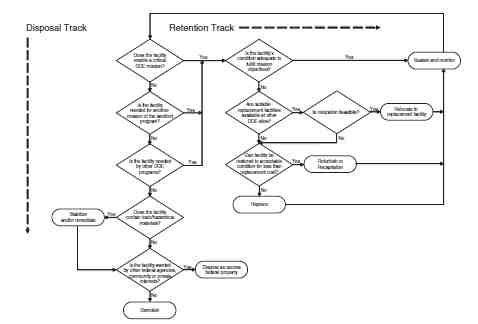
FIGURE 4.1 Process for decision-making to repair, renovate, or replace. SOURCE: NRC, 2004b.
PURSUE A PROACTIVE STRATEGY TO MINIMIZE THE TOTAL FACILITIES “FOOTPRINT”
In addition to disposing of excess and underutilized facilities, private-sector and other high-performance organizations proactively initiate strategies to minimize their total facilities footprint and the associated costs (such as those for equipment, furniture, and landscaping). As long as a facility is occupied or otherwise in use, even if it is underutilized, electrical, mechanical, life-safety, and other systems must be kept in safe operating condition. Providing services to unneeded space is not cost-effective.
As noted in Chapter 1, advances in technology are changing the concept of workplace. Alternative work strategies, such as telecommuting, offer the potential for both public and private-sector organizations to reduce their required amounts of offce or administrative space substantially. Doing so can also reduce their overall maintenance and repair requirements.
IBM was described as a company that had nearly gone out of business in 1992 and had chosen to rebuild itself. Recognizing that the nature of work had changed over the past 5 years, IBM has instituted a strategy to reduce its facilities requirements. Four out of fve IBM consultants now work at client sites, at
home, or only occasionally at IBM facilities, primarily for group meetings. Almost half its employees involved in support functions (for example, human resources, procurement, administration, or fnance) work primarily from home. Because IBM depends on rapid communication among its staff and to ensure continued productivity, the company has invested heavily in monitoring and surveillance technologies to track the work that is being performed off-site. Performance-based contracts between IBM and its employees drive variable pay components each year (St. Thomas, 2010).
As leases expire, IBM reduces its total amount of leased space. It is also changing the type of space that it leases from dedicated offces to meeting spaces, team rooms, and conference rooms. In one of its locations, that strategy resulted in a 50 percent reduction in total leased space.
Some federal agencies, such as the U.S. Patent and Trademark Offce ( USPTO) have been using alternative work arrangements for more than 5 years. The USPTO has been able to measure the results in productivity (for example, sick days taken and number of patent applications examined) and employee reten tion (USPTO, 2010; Campbell, 2011). In a recent presentation to the Federal Facilities Council, representatives of the USPTO reported that the agency has been able to reduce its total amount of leased space and has avoided leasing costs of almost $20 million (Campbell, 2011). Other agencies, such as the General Services Administration, are implementing alternative work arrangements to reduce their demand for offce space and to reduce operating, energy, water, maintenance, and repair costs.
The Telework Enhancement Act of 2010 (PL 111-292) grants federal employees eligibility to telework and requires all federal agencies to establish telework policies. As these policies are implemented, there will be opportunities to reduce the federal facilities footprint further. If successful, such strategies could result in substantial reductions in long-term maintenance and repair requirements and a more sustainable portfolio of federal facilities.
CORRELATE THE EFFECTS OF FAILURE WITH THE ORGANIZATION’S MISSION
The primary objective of portfolio-based facilities management is to ensure that facilities-related investments enable the organization’s mission. Private-sector companies, such as GM and IBM, which produce vehicles and computers, respectively, have been able to correlate the failure to invest in maintenance and repair with their organizations’ mission, which is to make a proft for their owners and shareholders.
In the automotive industry, proft is realized by producing and selling vehicles at a sales volume that minimizes such overhead costs as engineering and design and increases proft per unit. At a manufacturing plant, overhead per vehicle is reduced by maintaining the design throughput of the plant, which is about 60 to
75 vehicles per hour, or one vehicle per minute or better. At that level of production, an 8-minute system failure (downtime) caused by lack of maintenance of electrical systems or equipment can reduce a plant’s output by 8 to 10 vehicles, which can be easily quantifed in terms of lost sales and in turn, lost proft. For the facility manager, the goal is to ensure that the facility components and equipment that are critical to production are kept in such a condition as to ensure reliable performance. Similarly, at IBM, a relatively short failure (outage) on the production line caused by unreliable equipment or infrastructure systems can result in production of fewer computers and cost the company millions of dollars in lost sales.
When a failure does occur, companies like GM conduct a root-cause analysis to determine why it happened, determine the appropriate solution, and share the lesson learned with other plants that may be at risk from similar failures. For a component failure that puts the organization’s mission at risk, the issue and the solution are rolled up to the corporate level, where a budget line item is submitted to fx or replace the component across the organization. The credibility of such requests is supported by evidence generated through the root-cause analysis.
Root-cause analysis is a key component of reliability-centered maintenance (RCM), the real-time monitoring of the performance and condition of facility systems and equipment. RCM has been used extensively in the aircraft, space, defense, and nuclear industries, in which functional failures can result in loss of life, can have national security implications, or can have extreme environmental effects (NASA, 1996; NRC, 1998). A rigorous analysis of failure modes and effects is used to determine the appropriate type and timing of maintenance of systems and equipment (for example, preventive maintenance, predictive testing and inspection) (NRC, 1998). The overall objectives are to ensure that the performance and service lives of systems, equipment, and components are optimized and to ensure that critical elements are replaced before they fail because of wear and tear.
Because the products and programs of federal agencies are typically related to protecting the public’s health, safety, and welfare, not to making a proft, the links between the failure of a system or component, maintenance and repair investments, and organizational missions are more diffcult to convey to decision-makers and others. Nonetheless, several agencies have developed or are developing approaches for doing so. Those approaches include the use of RCM, the development of a mission dependency index (MDI), and the development of a risk-based process for maintenance and repair investment decision support. They are described below.
• Reliability-Centered Maintenance (RCM). The National Aeronautics and Space Administration (NASA) began applying a version of RCM to some of its facilities systems and equipment in the 1990s. In NASA, the RCM approach integrates reactive maintenance (run-to-failure or breakdown maintenance), preventive (interval-based) maintenance, predictive testing and inspection (condition-based) and proactive maintenance. Those four maintenance strategies are applied to sys-
tems and equipment on the basis of the consequences of equipment failure and the potential effects on mission, safety, environment, and life-cycle cost (NRC, 1998).
The Smithsonian Institution has more recently implemented a version of RCM. The Smithsonian’s RCM approach is to perform the right maintenance on the right equipment at the right time. “Right” entails a balance of resources and maintenance techniques developed from industry best practices. To institute its RCM program, the Smithsonian hired an expert consultant and set out immediately to deploy the most relevant RCM technologies to conduct condition-based tasks. An analysis looked at the following:
• The functions and performance standards of the equipment that will be maintained,
• The failure modes of that equipment,
• The causes of each failure,
• The effects of failure,
• The tasks that could predict or prevent failure, and
• Workarounds if there are no proactive tasks to mitigate failure.
Templates were developed for systems and equipment with similar failure modes. Decisions about the type of maintenance to be performed on specifc types of equipment were based in part on whether designed bypasses or other redundancies were built into the system and whether spare parts were on hand or readily available and economical to purchase.
A number of nondestructive technologies are used for predictive testing and inspection (PT&I) of equipment. PT&I minimizes downtime by allowing the Smithsonian staff to conduct investigations when the systems are operating. Data are analyzed to identify measurements that exceed known threshold values and to identify changes in condition. The analysis is used to plan and schedule repair or replacement of equipment or components before they fail. All PT&I data and fndings are entered into the Smithsonian’s computerized maintenance management system to build an equipment and system history, which helps further to detect problems before they become serious.
• Mission-Dependency Index. The mission-dependency index (MDI) was developed jointly by the U.S. Navy, the U.S. Coast Guard, and NASA as a process for incorporating operational risk management into facilities asset management (Antelman et al., 2008). The MDI is a severity metric (on a scale of 1 to 100) for risk that considers the ability to relocate a mission to another facility and the ability to withstand mission interruption. That is, if a facility or component is deemed not usable for mission accomplishment, how long will the mission be interrupted (minutes or days?) and can the mission be moved elsewhere (Is it impossible or easy?). The MDI model considers both facility intradependency (facilities are controlled by the mission stakeholder) and facility interdependency (facilities are needed, but not controlled by the mission stakeholder). To develop an index,
an agency must frst survey the various stakeholders to collect the relocation and interruption data that are specifc to the agency. Through weights established for both data elements, an algorithm derived from a regression analysis is used to compute the MDI. The index identifes which facilities or components are mission-critical, mission-supportive, or otherwise categorized. Once the analysis is completed for an agency, the MDI can be used to help set priorities among proposed maintenance and repair activities and to assess vulnerability, which could be a mission loss predictor.
• U.S. Army Corps of Engineers. The U.S. Army Corps of Engineers (USACE) is developing a portfolio-based, risk-related approach for maintenance and repair investments in its inland navigation program and other civil-works programs. The approach is an integrative one that considers all facilities-related investments, including capital, operations, and maintenance and repair.
The goal of the inland navigation program is to provide safe, reliable, effcient, effective, and environmentally sustainable waterborne transportation systems for commerce, national security needs, and recreation. The infrastructure and components required to achieve those objectives include locks, dams, channels, and canals, gates, valves, operating mechanisms, controls, and machinery. Failure of one of those components due to lack of maintenance and repair can result in substantial disruption of traffc and commerce on major waterways, such as the Mississippi River, which can result in economic losses to private-sector companies and communities.
The USACE has established a set of investment objectives and performance measures for the navigation program that are related to the civil-works strategic plan (Table 4.1). It has also developed a set of budget strategies and ranking criteria that are designed to link investments to the mission of the inland navigation program (Table 4.2) and established consequence categories and consequence-rating criteria (Table 4.3).
CORRELATE REPAIR DELAY WITH SUSTAINMENT COST
As noted in Chapter 2 and shown in Figure 2.2, timely investment in maintenance and repair can ensure that facilities systems and components operate eff ciently throughout their service lives. Conversely, delaying repairs of facilities can shorten service life and result in an increase in sustainment cost, which is defned as the sum of maintenance cost and renewal cost. The service-life models and the IMPACT model described in Chapter 3 can be used to quantify the costs of delaying repairs.
For agencies that are not using such models, it may still be possible to estimate the costs of delaying repairs with an approach described by representatives of GM. GM centralized the facility-support team for specifc groups of facility components (Table 4.4) so that the expert on a given component could build the fnancial arguments needed to identify the cost of delaying repairs.
TABLE 4.1 Navigation Objectives and Performance Measures
|
|
||
| Program Objectives | Performance Measures | |
|
|
||
| Invest in navigation infrastructure when the benefits exceed the costs | Benefit-cost ratio (a project specific measure) Annual net benefits | |
| Enhance life-cycle infrastructure management. Improve the reliability of water resources infrastructure by using a risk-informed asset management strategy | Percentage of navigation asset inventory with recent structural or operational risk assessments. including SPRA assessments | |
| Percentage of navigation asset inventory risk assessments that reveal a significant level of risk | ||
| Number of funded actions under way that address assets regarding which there is a significant level of risk | ||
| Operate and manage the navigation infrastructure to maintain justified levels of service in terms of the availability of high-use navigation infrastructure (waterways, harbors. and channels) to commercial traffic | Risk and reliability: facility condition assessment and efforts | |
|
|
||
SOURCE: USACE, 2010.
TABLE 4.2 Navigation Budget Performance Measures
|
|
||
| Budget Strategy | Ranking Criteria | |
|
|
||
| Initiate and complete replacements and rehabilitations | Inland Waterways Users Board priority | |
| Relative risk of failure designed (O&M) | ||
| Operations-ensure that projects perform as | Cumulative benefits | |
| Cumulative O&M costs for above benefits (over set period) | ||
| Maintenance-ensure that projects are safe to operate (managing risk) (O&M) | Navigation channel availability | |
| Lock closures exceeding 24 hours and one week in duration because of mechanical failure- scheduled and unscheduled | ||
| Condition assessment and consequences or impact | ||
| Cumulative benefits | ||
| Cumulative O&M costs for above benefits (over set period) | ||
|
|
||
SOURCE: USACE, 2010.
TABLE 4.3 Inland Navigation Consequence Categories and Consequence Rating Criteria
|
|
||
| Consequence Category | Consequence Rating Criteria | |
|
|
||
| 1 |
Maximum risk to mission Highest economic loss: more than 5 billion ton-miles Probable life-safety effect Minimum acceptable operations service level Court-mandated action Shutdown of energy generation or distribution facilities (such as powerplants and oil distribution facilities) for national public use with noalternative modes of transportation |
|
| 2 |
High risk to mission No life-safety effect High economic loss: 2.5 billion to 5 billion ton-miles Diminished cost efficiency of energy generation or distribution facilities(such as power plants and oil distribution facilities! for nationalpublic use with higher-cost alternative modes of transportation |
|
| 3 |
Moderate risk to mission No life-safety effect Moderate economic loss: 1 billion to 2.5 billion ton-miles |
|
| 4 |
Low risk to mission No life-safety effect Low economic loss: 500 million to 1 billion ton-miles |
|
| 5 |
Negligible risk to mission No life-safety effect Least economic loss: less than 500 million ton-miles |
|
|
|
||
SOURCE: USACE, 2010.
TABLE 4.4 Categories of Facilities Components Used by General Motors
|
|
||
|
CORPORATE PROGRAMS |
GENERAL FUNDS |
|
|
Roofing |
General lighting |
|
|
Paving |
Parking lot lighting |
|
|
HVAC |
Sewers |
|
|
Fire proleclion |
Water supply |
|
|
Fork truck batteries |
Piping distribution |
|
|
Electrical substations |
Floors |
|
|
Wastewater treatment plants |
Sash and glass |
|
|
Truck docks and doors |
Elevators |
|
|
Powerhouse, including compressed air, chillers, and cooling |
Cafe |
|
|
Computer rooms |
Restrooms |
|
|
Scrap conveyors and cranes |
Plant administration buildings |
|
|
Railroad tracks |
Underground and aboveground storage tanks |
|
|
Externally driven environmental and regulations |
Signs |
|
|
Decommissioning or legacy costs |
landscaping |
|
|
|
||
SOURCE: McNabb, 2010.
For example, the cost to repair or replace heating, ventilation, and air-conditioning (HVAC) units is X. If the decision to replace or overhaul them is deferred for another year, the cost will be X + I + O where I is the added cost created by infation for 1 year converted to net present value and O is the additional operational cost incurred because the equipment was not operating as effciently as it was designed to do (for example, additional energy was consumed because of improperly fring burners, bad dampers, ineffective controls, or excessive pressure drop on flter banks). If I + O exceeds X, repairs should proceed imme diately to avoid an increase in sustainment cost. When presenting the results of such an analysis to senior decision-makers, facilities program managers also identify other outcomes from the proposed investment, such as employee comfort or improved safety.
Each of the private-sector organizations interviewed for this study identi-fed projects that must be funded to manage risk to the organization and funded them through sources other than the maintenance and repair account. They also seek out opportunities to use “must-fund” projects to realize long-term operating effciencies.
For instance, projects that are required for an organization to be in compliance with government regulations (such as worker health and safety and air and water-quality regulations) are considered must-fund projects. That is because the risks associated with noncompliance—large fnes or legal action—are much greater than the costs of the projects themselves. Similarly, activities to fx conditions that present a hazard to workers or others are viewed as must-fund projects to manage the risks associated with insurance claims and lawsuits. Must-fund projects are taken out of the maintenance and repair account and funded from other discretionary sources, such as the operating account.
At the same time that must-fund projects are identifed, facilities managers look for opportunities to support operational effciencies and to reduce long-term costs. For example, if the regulatory standards for the treatment of effuent water are no longer achievable with existing, worn-out or technologically obsolete equipment, there may be an opportunity to replace it with more technologically advanced equipment. Even if the organization does not have to comply with new regulations immediately, it frequently makes good business sense to replace the equipment sooner rather than later with equipment that will allow the organization to meet the expected regulations instead of spending additional funds to maintain and repair obsolete equipment.
Private-sector frms also indicated that maintenance and repair projects that have a short payback time (such as 1 to 3 years) are funded on their own
merit from sources other than the maintenance and repair account. For example, energy-saving projects, such as relamping lighting fxtures with more effcient components, can quickly pay back the original investment and continue to generate benefts for additional years. Because such projects are justifable on their merit, they do not compete with other projects for maintenance and repair funds.
In the federal government, maintenance and repair funds for most agencies are part of the general operations account and are not earmarked specifcally for maintenance and repair projects (NRC, 1998). “Structuring the account in this way accommodates overlaps between work, operations and alterations. For example, equipment operators often do routine equipment maintenance and alteration projects, including work that could be considered repairs” (NRC, 1998, p. 28). Federal agencies could also identify must-fund projects and fund them from the operations side of the account rather than from the maintenance and repair side.
Public-private partnerships (PPPs) can also be used to secure third-party fnancing to accomplish some types of maintenance and repair projects or activities. PPPs are contractual agreements between public-sector and private-sector organizations wherein the private-sector organization, in exchange for compensation, agrees to deliver services or even facilities that could be provided by a public-sector organization (Keston Institute, 2011). Through the use of PPPs, federal agencies can implement necessary capital or maintenance and repair requirements through third-party fnancing and can gain access to private-sector expertise. PPPs, however, are not without risks and the risks need to be accounted for.
Energy-savings performance contracts (ESPCs) are one type of PPP that many federal agencies are already using to leverage available funding. Under such contracts, an energy service company (ESCO) typically conducts a comprehensive energy audit for groups or types of facilities and identifes improvements that could save energy. In consultation with the owner agency, the ESCO designs and constructs a project that meets the owner’s needs and arranges the necessary fnancing. The ESCO guarantees that the improvements will generate energy-cost savings suffcient to pay for the project over the term of the contract. After the contract ends, all additional cost savings accrue to the owner organization.3 The key feature of this model is that the private sector provides front-end funding for the project in return for the ability to receive benefts from future savings. In this way, the risk associated with nonperformance is shifted to the private-sector partner. The general concept is similar to the paid-from-savings approach promoted by the U.S. Green Building Council.4
About $2.3 billion has been invested in federal facilities through ESPCs. The ESPC projects contain guarantees that will result in $6 billion in avoided energy
3See Federal Energy Management Program Web site http://www1.eere.energy.gov/femp/fnancing/espcs.html .
4Additional information on this approach is available at http://www.usgbc.org/DisplayPage.aspx?CMSPageID=2204.
costs over the life of the contracts. The contracts have also resulted in savings of 18 trillion British thermal units—roughly equivalent to the energy used by a city of 500,000 people (Kidd, 2010).5
Performance-based maintenance contracts (PBMCs) are another type of public-private partnership. Like ESPCs, PBMCs engage private-sector frms to provide long-term maintenance, repair, and replacement work.
When contractors perform maintenance and repair activities for federal agencies, the contracts typically specify the procedures and materials to be used. As long as the contractor meets the specifcations, the risks associated with the contract are fully retained by the agency. In contrast, in a PMBC, the agency speci-fes performance goals. The contractor is free to select the methods, mate rials, and timing of maintenance actions to meet those goals, but also assumes the risks associated with failure to meet those goals.
The benefts of PBMCs include the ability to obtain fnancing from the private sector for expensive repair and reconstruction work, the fexibility with which contractors can exploit advances in methods and materials without the need to renegotiate contract terms, and the potential for transferring knowledge of innovative practices from the contractors to the agencies. However, to achieve those benefts, federal agencies must clearly and carefully identify the performance goals that are to be met, provide appropriate incentives so that contractors will take appropriate measures before systems or components fail, and regularly monitor implementation of the contract. Failing to do those things can result in a failure to realize the expected benefts. Agencies also take on a long-term liability (performance payments) that can become rather large in the case of a portfolio of facilities and can create the risk of fscal exposure (TRB, 2010).
Other types of public-private partnerships potentially could be used to lower the costs and risks associated with facility ownership. For example, in a design-build-fnance-operate contract the private-sector partner fnances, designs, constructs, and operates a facility under a long-term lease and the public organization takes ownership of the property at the end of the lease. The private-sector partner assumes the fnancial risks related to project delivery, maintenance, and revenue; and the public-sector partner assumes all the risks related to facilities ownership, once it takes over the facility.
A private fnance initiative (PFI) is a PPP-based arrangement used in the United Kingdom. In PFI contracts, the private-sector partner provides funding and delivers the public facilities and infrastructure based on the “output” (performance) specifcations. The public sector does not own the facility, but reimburses the private-sector partner with a stream of committed payments for the use of the facility over the period specifed in the contract (Allen, 2001). However, the payments are conditional on the ability of the private-sector partner to meet the performance
5Additional information on ESPCs is available at http://www1.eere.energy.gov/femp/fnancing/espcs.html .
specifcations (standards); the specifcations address the strategic needs of the facility owner and occupants.
Chapter 5 of the report Investments in Federal Facilities: Asset Management Strategies for the 21st Century (NRC, 2004a), describes and evaluates various funding approaches for acquiring federal facilities. It offers the following recommendation (NRC, 2004a, p. 10):
Recommendation 11: In order to leverage funding, Congress and the administration should encourage and allow more widespread use of alternative approaches for acquiring facilities, such as public-private partnerships and capital acquisition funds.
STRATEGICALLY ASSESS THE CONDITION OF FACILITIES
Private-sector companies and government organizations conduct or contract for some facility condition assessments to provide the information necessary to develop a credible maintenance and repair request. As noted in Chapter 3, technology can also be used to monitor the condition of systems and equipment in real time.
To realize other operational effciencies in conducting condition assessments, such organizations as Marriott and GM perform most of their facility assessment at a corporate level according to type of component (such as roofs, HVAC systems, and electricity distribution). For example, an expert in roofng-condition analysis will visit all plants in a region within a short period to minimize travel expenses. The assessment may be spread over a 4-year cycle so that about 25 percent of the facilities are assessed each year. At the completion of assessment, an analysis is conducted to determine whether the average life of roofs is improving or deteriorating. The resulting information is used to set priorities for roof repairs throughout the organization, ensuring that facilities whose roofs are in the worst condition are addressed frst. The corporate roofng expert also trains local staff during the assessment visits, advising them of potential changes in roof-maintenance practices, of the latest trends in roofng technology, and of which roofng type is most cost-effective for their climate and particular plant conditions.
The National Nuclear Security Administration (NNSA) has implemented a similar process for the inspection, management, and maintenance of its 16 million square feet of roofs as an element of its facilities and infrastructure revitalization program. In a presentation to the Federal Facilities Council, it was reported that the program has resulted in improved condition of the NNSA’s roofng portfolio; in increased average remaining service life; in the replacement of 3 million square feet of roofs with more energy-effcient, sustainable roofs, including 2 million square feet of cool roofs; in $17 million of savings in overhead costs; and in other benefts (Moran, 2010).
CONDUCT A YEAR-END BUDGET REVIEW TO EVALUATE INVESTMENT PERFORMANCE
Investments in Federal Facilities: Asset Management Strategies for the 21st Century stated that (NRC, 2004a, p. 69):
Continuous evaluation and feedback on processes and investments are essential to controlling and improving them. Feedback can be positive or negative, take many forms, and be used over various timescales. . . . In best-practice organizations, the performance of projects, processes, people, business units, physical assets, investments, and the organization as a whole are continuously monitored and evaluated over both the short and long term using performance measures and a variety of feedback processes.
In addition to a variety of feedback processes described in Chapter 4 of the 2004 report, the conduct of a year-end evaluation of budget performance was identifed during the course of the present study. This concept was used by at least one of the facility organizations at GM. The evaluation compared the “submitted budget” the “approved budget” and the “actual funding spent” by line item. Where there was a substantial variance (greater than 10 percent), the root cause was analyzed by using the same basic process as would be used for analyzing an equipment failure. The root cause of the deviation was shared with senior decision-makers throughout the organization. GM facilities managers found that this type of analysis improved their future budget submissions and increased their credibility with other decision-makers including those who approved the budget.


