
Precision Agriculture: Opportunities and Challenges
MICHAEL O’CONNOR
O’C and Associates
INTRODUCTION TO PRECISION AGRICULTURE
Precision Agriculture (or Precision Farming) is a term used to describe the use of technology to better measure and control crop production on a site-specific basis to improve efficiency. Such improvements include:
- More efficient application of inputs (seed, fertilizer)
- More effective utilization of tillage equipment
- Improved crop and field measurements
- Better farm management decisions
While computers and electronics have been used in crop production since the 1970s, GNSS has been a key enabling technology for Precision Agriculture beginning in the mid-1990s.
THE PRECISION FARMING FEEDBACK LOOP
Historically, the process of crop production has been an “open loop” process, with only qualitative or imprecise feedback methods available to growers. This process is illustrated in Figure 1.
Growers generally use the best information available to them, including the crop history on their farm (e.g., for crop rotation); information about available seed types; the current costs of inputs such as fertilizer, seed, fuel, and labor; climate history for their area; and the recent weather for their area. This information
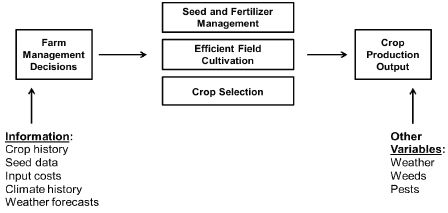
FIGURE 1 “Open loop” crop production.
is used to make fundamental farm management decisions such as which crop to plant in each field, which seeds to use, when to plant, how much fertilizer to use, how to till the ground, and what planting pattern and spacing to use in the field. These decisions are made with the goal of optimizing the farm’s operation and maximizing crop production output for the farm. Unfortunately, there are also several dominant external factors that affect crop production—in particular the weather and weed and pest infestations.
With the introduction of Precision Agriculture, including advancements in electronics, computers, software, and sensors, growers now have better tools to manage their crop production. These tools are shown in blue in Figure 2 and are described in more detail below.
Yield Measurements
The practice of using moisture and grain flow sensors in combine harvesters to measure yield was the first precision agriculture practice to become widely adopted. While the practice of measuring yield on-the-go was introduced in the 1980s, the integration of yield measurements with GNSS in 1994 was a revolution. GNSS-based yield monitors gave farmers a tool to collect site-specific information about their crop production and to generate maps showing in-field yield variability on their farms. Today nearly every combine harvester manufactured and sold in North America includes a yield monitor.
Soil Nutrient Measurements
Nitrogen, phosphorous, potassium, and other soil nutrients are critical to plant health. For thousands of years growers have been aware of the importance of soil
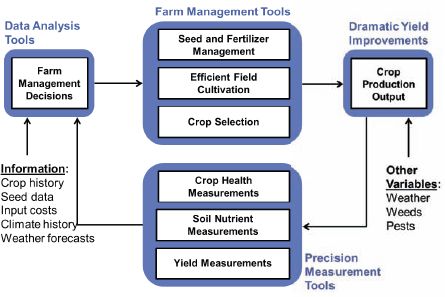
FIGURE 2 “Closed loop” crop production using Precision Agriculture practices.
nutrients and have used organic fertilizers to amend their soils before planting. In more recent times, scientists and agronomists have learned more about the specific chemical needs of crops and have developed specialized fertilizers to directly target those needs.
Today, growers have access to services that will collect soil samples from their fields, mail those samples to a chemistry lab, and provide a map showing the site-specific nutrient levels within the growers’ fields. Unfortunately, this process is slow, highly seasonal, and labor intensive.
Crop Health Measurements
Growers are now able to better measure the health of their crops during the season. Field scouting techniques using GNSS are becoming popular in North America, and growers are beginning to utilize remote imagery from satellites or aircraft with multispectral imaging cameras. Near-real-time sensing of crop health can drive in-season management decisions such as pesticide application and in-season nutrient management (Figure 3).
Crop Selection
While not directly related to computers, electronics, or sensors, crop selection is becoming one of the most important variables for a grower to manage. Seed selection has a dramatic impact on input costs as well as yield. Because they are
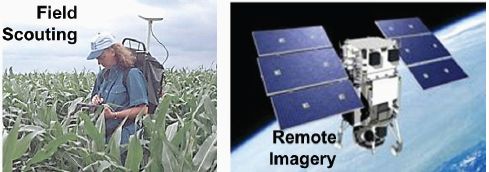
FIGURE 3 Crop health measurement techniques.
so effective, genetically modified seeds have become widely adopted in the United States. These seeds are engineered for characteristics such as higher yields, pest resistance, and herbicide resistance. These results are highly visible to the grower, and the economic value is compelling.
Efficient Field Cultivation
In addition to allowing for site-specific measurements within a field, GNSS has also enabled robotic automation of farm equipment. Products introduced to the market in the year 2000 enable tractors, sprayers, and harvesters to steer through a field, hands-free, with sub-inch accuracy.
Automated steering provides clear benefits to growers (Figure 4). It allows equipment to run around the clock—regardless of visibility—in the daytime, nighttime, or in the fog. Precision-steered vehicles experience 8 to 10 percent less overlap between passes than human-steered vehicles, which leads to lower fuel, labor, and input costs. Also, less overlap results in more rows in the field, which leads to greater yields. The results of hands-free steering are visible, and the economic value is compelling.
Seed and Fertilizer Management
In addition to controlling the steering of farm vehicles, GNSS enables solutions that can control the application of field inputs on a site-specific basis. Powerful tools are now available to growers that allow real-time adjustment of seed and fertilizer rates. These rates are established by software “prescriptions,” which are created based on a variety of data, including the yield monitoring and soil nutrient data described above.
Adoption of these techniques has been relatively slow compared to genetically modified seeds and automated steering, primarily because the soil nutrient
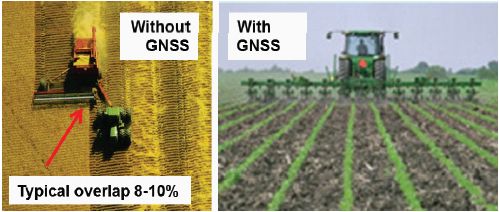
FIGURE 4 Example of the benefits of hand-free precision steering.
measurement process is slow and tedious, and the results of performing these variable rate application techniques are difficult to measure because of the influence of so many other variables on crop output (such as weather).
TODAY’S LEADING CHALLENGES FOR PRECISION AGRICULTURE
Adoption rates of seed genetics and precision steering have exceeded 50 percent in several geographic markets because of their visible and compelling value. However, grower adoption of seed and fertilizer management continues to lag.
More efficient use of field inputs—particularly nitrogen fertilizer—is essential for several reasons. For one, fertilizer costs are rising. Fertilizer sales now exceed $18 billion annually in the United States and represent between 30–50 percent of the cost of production for wheat and corn on most farms. In addition, worldwide fertilizer use is on the rise. Globally, the rate of nitrogen use is outpacing increases in population and in arable land. Oxygen depletion triggered by excessive nitrogen and phosphorous levels, primarily caused by fertilizer runoff, is becoming a serious problem in several major waterways. The U.S. National Academy of Engineering has listed “Managing the Nitrogen Cycle” as one of its 14 grand engineering challenges for the 21st century.
It is the author’s belief that adoption of Precision Agriculture for seed and fertilizer management will improve when three key challenges have been overcome:
- Improving GNSS signal availability
- Improving the efficiency of soil measurements
- Analyzing data across multiple farms
Improving GNSS Signal Availability
GPS alone does not provide sufficient field coverage in many farm environments. Hilly or mountainous terrain is rare, but tree lines are a common issue, as shown in Figure 5. Reliability of the signal has been a barrier to adoption in areas such as the southwestern United States. The majority of growers in the United States 10 years ago were unfamiliar with GPS. Today many growers are educated enough in GNSS to ask about signal availability and reacquisition.
Most high-precision systems sold in North America now offer GLONASS capability to augment GPS for signal availability. As more satellite signals-in-space become available, availability will continue to improve in these difficult environments, and more growers will view GNSS as a reliable solution for their needs.
Improving the Efficiency of Soil Measurements
As described above, current soil nutrient measurement techniques are slow, expensive, and inaccurate. To reduce costs, many growers employ “zone” sampling techniques, in which one to five samples are collected across an entire field (typically 80 to 160 acres) based on soil texture zones. More progressive growers who practice “high density” sampling typically collect samples on a grid at one sample per 2.5 acres. Studies show that, given the spatial decorrelation of soil nutrients, sampling to at least one sample per acre is required to accurately interpolate nutrient levels across a field.
Unfortunately, the financial cost of applying extra fertilizer in a field is significantly lower than the potential yield reduction caused by an under-application of fertilizer. Until growers can measure nutrients affordably and at higher density in near-real-time (particularly nitrogen, which is water soluble and highly time-dependent), they will continue to over-apply fertilizers to ensure high yields.
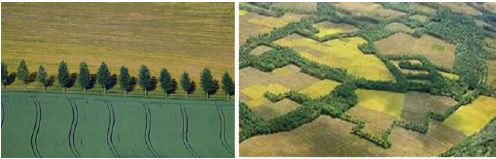
FIGURE 5 Farm fields lined with GNSS-barriers.
Data Analysis Across Multiple Farms
As described above, many variables affect crop yield. These include rainfall, temperature, humidity, wind, soil type, and tillage practices, just to name a few.
Unfortunately, today, farms are “islands” of information. For a single farm to collect enough information to measure the value created by a new farming practice or a particular seed hybrid would take many years. A single farm cannot produce enough data to provide meaningful statistical significance.
Dramatic improvement in data analysis will be possible when information can be correlated across many farms. The wireless data connections and software tools to enable such analysis are just coming into practice now on farms. Once these practices become more widespread, the value of Precision Farming will become clearer to growers and adoption of these practices will increase.
SUMMARY
Precision Agriculture is enabling more efficient application of inputs (seed, fertilizer), more effective utilization of tillage equipment, improved crop and field measurements, and better farm management decisions. With advancements in electronics, computers, software, and sensors, growers now have better tools to manage their crop production.
In the United States, adoption rates have been very fast for some of these technologies, such as seed genetics and precision steering, because of their high visibility and compelling value. However, grower adoption of seed and fertilizer management continues to lag. This is a serious problem because improper use of fertilizer is economically wasteful for growers and is also causing harm to waterways and underground water sources.
It is the author’s belief that adoption of Precision Agriculture for seed and fertilizer management will improve when three key challenges have been overcome: (1) improving GNSS signal availability, (2) improving the efficiency of soil measurements, and (3) when growers take advantage of the ability to perform data analysis across multiple farms.
This page intentionally left blank.


