
Hydrologic Sciences: A Path Forward
The previous chapters demonstrated that the opportunities in hydrologic sciences have never been greater and that the challenges that lie ahead have never been more compelling. In order to respond to these opportunities and meet the challenges of 21st-century hydrologic science, the next decade will require transformative new ways of conducting basic hydrologic research, educating the next generation of leaders, and working in new ways to ensure that the knowledge generated proves useful for solving practical problems. Many intriguing puzzles in the Earth sciences will continue to engage the community of hydrologic scientists and engineers and will attract new talent to the hydrologic sciences in the years to come. Furthermore, a changing climate, an increasingly populated planet, and competition for scarce freshwater resources demand that the hydrologic sciences deliver integrated, basic scientific knowledge in service to society. Hydrologic science extends well beyond “hydrologic science” per se, and should embrace work in other geosciences (e.g., ecology, limnology, geology, biogeochemistry), water resources, and environmental engineering. Interdisciplinary effort is a prerequisite for predicting the co-evolution of water, Earth, and life in a changing environment and for moving humanity toward a sustainable water future.
Fundamental new drivers of hydrologic sciences in the 21st century rest on the realization that (a) humans are a dominant influence on water sustainability both at the global and local scale, (b) the world is becom-
ing exceedingly “flat,”1 with respect to not only rapid dissemination of scientific knowledge but also learning from distant environments currently undergoing rapid change (e.g., deforestation, drought, agricultural expansion, etc.) and predicting future water scenarios in other parts of the world, and (c) the natural world is a highly nonlinear system of interacting parts at multiple scales prone to abrupt changes, tipping points, and surprises (Alley et al., 2003; Taleb, 2007) more often than previously thought possible. What do these realizations mean for the future of hydrologic science?
The committee identified three major areas that define the key scientific challenges for the hydrologic sciences in the coming decade: The Water Cycle: An Agent of Change; Water and Life; and Clean Water for People and Ecosystems and provided major findings in these areas in Chapters 2, 3, and 4. Within each major area the committee enumerates some of the most challenging concepts and identifies research opportunities for attaining progress in the field; the main message of each is represented in bold, below. The challenges in these areas are the purview of the various subdisciplines within the hydrologic sciences but also related disciplines and subdisciplines. They span physical-hydrologic sciences, including physical hydrology, geomorphology, paleohydrology, and climate science; biological-hydrologic sciences, including ecohydrology, aquatic ecology, biogeochemistry, soil science, and limnology; and chemical-hydrologic sciences, including chemical hydrology, and aquatic geochemistry. These three major areas reflect both an assessment of intriguing open questions in the field and an assessment of the potential for making significant progress by virtue of previous progress coupled with new ideas, techniques, and instrumentation. Although the committee identifies the three areas separately, it is clear that there are overlaps; many of the specific research questions that will be addressed under the umbrella of these areas will bridge across the three major areas.
Water Cycle: An Agent of Change
Water is a dynamic agent whose influence is central to processes that produced the world as we know it and that will affect its evolution into the future. Many critical questions in this priority area are ripe for study both
____________
1 The term “flat,” coined by the author Thomas Friedman in his books The World is Flat (2005) and Hot, Flat, and Crowded: Why We Need a Green Revolution—and How It Can Renew America (2008), is used to a describe new era of globalization that allows people and entities around the world to compete, connect, and collaborate.
from the standpoints of scientific curiosity and societal need. At the most fundamental level, critical gaps remain in the knowledge about hydrologic fluxes. Evaporation, transpiration, and groundwater fluxes interconnect the water, energy, and biogeochemical cycles yet adequate measurements and estimates of these fluxes are elusive, even for relatively pristine natural systems. The perturbations to the hydrologic cycle from “replumbing” through human activities add a dimension of complexity, and urgency, to this research area. A challenge for the hydrologic community is to understand replumbing; for example, the downstream consequences of urban growth or changes in the severity, duration, and occurrence of floods and droughts as a result of climate change, and to apply this understanding to making predictions for the future. Furthering understanding of the processes that link components of the water cycle is no less important than understanding the human impacts on the water cycle.
The processes that define water fluxes occur at many time and space scales, for example, the first drops of water that initiate streams to the complex systems of rivers that define drainage basins. Research questions are continually raised regarding the quantitative relationships among variables and across scales. Because interactions at overlapping scales change hydrologic patterns in subtle ways, disentangling the causality of subtle shifts and regime changes in streamflow and understanding their environmental impact is a challenge. The climate system can vary at long time scales as well as shift rapidly into new modes of behavior that are radically different from the historical experience. Understanding the hydrologic response to abrupt climate change over short time scales and to slowly varying natural climate change is far from complete. Exploration of how the water cycle has affected the evolution of other planets may provide important insight into Earth’s water cycle and its dynamics as an agent of change and determinant of life. The study of hydrologic processes on other planets defines the new field of “exohydrology,” and research in this area is only just beginning.
Water and Life
Water is essential for all living organisms, and, on land, the magnitude of the water supply and the timing of water delivery structures biological systems at all spatial and temporal scales. Recently ecologists, geomorphologists, climate scientists, and hydrologic scientists have found a common frontier lies at the nexus of life and water because water plays a critical role in driving the environmental patterns that exist and evolve on Earth. The past, with radically different biota, topography, and atmospheric and ocean chemistry, presents an opportunity for hydrologists to explore how key processes in the hydrologic cycle differed, and how these processes contributed to Earth’s evolution. Hydrologic flow regimes, river channel
dynamics, and aquatic ecosystems are linked, resulting in a co-evolution of rivers, wetlands, and aquatic ecosystems. Many challenging research questions arise when exploring how topography, vegetation (and their animal ecosystems), and the hydrologic processes that connect them may co-organize over geomorphic time scales. Subsurface ecosystems form their own environments, create and direct hydrologic pathways, release gases to the atmosphere, and control access to moisture and nutrients to aboveground ecosystems. How subsurface biota are controlled by and yet also influence hydrologic processes is a frontier area of research.
Earth’s ecosystems are in a state of transition as a result of global warming and changing land use. The processes that determine transitions in ecosystems are not well characterized or understood; yet the viability of ecosystems as localized communities and as part of the global co-evolution of water and life depends critically on these transitions. Needed are theory and mechanistic field studies to guide the protection, redesign, and restoration of ecohydrologic functions on landscapes. The loss of wetlands and tributaries with high sediment-water contact is disproportionately important in driving whole watershed solute exports. However, scientists are as yet unable to understand how their continued loss (in time or in space) or altered patterns in their connectivity to downstream rivers is likely to affect patterns of solute export into the future. An important challenge for the hydrologic and ecological communities is to understand the complex ways in which flow regimes impact critical ecological processes and the maintenance and dispersal of aquatic taxa in aquatic ecosystems. Scientists currently lack both sufficient understanding from field studies and quantitative models to make reliable predictions about desired outcomes from water management decisions in many applications. Interdisciplinary approaches and perspectives will be needed to gain enough understanding of the interactions between water and life to predict the future states of the Earth system.
Clean Water for People and Ecosystems
Ensuring clean water for the future requires an ability to understand, predict, and manage changes in water quality. Research opportunities related to water quality stem largely from a need to know the processes that control the evolution of water quality in both relatively pristine and heavily impacted environments. Fundamental research on weathering of rocks and soils, chemical reactions in aquatic systems, and transport of materials in natural systems has yielded a solid basis for studies of water quality and will continue to build upon this base in the future. A key issue of extreme societal relevance relates to contaminants. Discharge of contaminants from a variety of activities has disturbed the planet’s water chemical composition. A research challenge exists in promoting the understanding of how
contaminants interact with hydrologic processes and, in turn, impact stream ecosystems. The impact on water quality of growing food and providing energy for the growing global population has not been exhaustively studied, but this knowledge is critical to ensuring a sustainable future. Increasing demands for food and energy will occur against the backdrop of a changing climate, providing yet another challenge to maintaining adequate water quality for humans and ecosystems. The hydrologic research community has an obligation to tackle the water quality issues embedded within large-scale drivers of water quality. Geological materials are enormously complex, and many important chemical hydrologic processes are candidates for productive research exploration. A challenge exists in developing basic hydrologic principles and tools to further understand the movement of contaminants through an irregular and interconnected world.
The scientific areas summarized above are, in the committee’s view, “the promising new opportunities to advance hydrologic sciences for better understanding of the water cycle that can be used to improve human welfare and the health of the environment” as requested in the statement of task. Some fall squarely within the purview of hydrologic science, for example, furthering the understanding of evapotranspiration and groundwater fluxes. Some require interdisciplinary efforts, such as understanding the impact of growing food on water quality. Some are “curiosity-driven,” and some are “problem-driven,” which the committee considers to be equally important. All reflect the complexity of the issues facing hydrologic scientists in a broad range of disciplines.
Execution of the ambitious research agenda implied by the scientific challenges above requires the ingenuity of individuals and interdisciplinary teams from numerous universities, research laboratories, and government agencies. The technological and scientific advances of today and tomorrow will continue to play a critical role. Collaborative field studies, when feasible and appropriate, are also important. In particular, ecosystem processes (especially in the case of aquatic ecosystems) can vary significantly on relatively longer time scales than do hydrologic processes, which underscores the need for collaborative fields studies in pursuit of hydrologic research.
Education of both graduate and undergraduate students in hydrologic science has gained ground in the past 20 years with the formation of new hydrologic science related programs, degrees, and other educational efforts.2
____________
2 Recently, the National Research Council (NRC) assessed the health of doctoral institutions, programs, faculty, and students in the United States in a report titled A Data-Based Assessment of Research-Doctorate Programs in the United States. Since 1995, the overall number of
Along with this increase in degree-granting programs has been an evolution of the educational experience in the hydrologic sciences that is linked to the development of new capabilities and technologies (Chapter 1). Advances in technology have influenced both the skill sets imparted to students and the teaching methods employed. Students now emerge from universities technologically literate. For example, students in the hydrologic sciences may gain exposure to numerical simulations, emerging remote sensing products, new analytical chemistry methods, and many other technologies.
An emerging new forum for graduate education is “Summer Institutes,” which are very popular in Europe as a means to bring together experts in the field who can teach courses that are absent from many Ph.D. programs and to expose young researchers to new ideas. In the United States, the Summer Institute on Earth-Surface Dynamics, established in 2009, focuses each year on a different but specific topic at the intersection of hydrologic and ecosystem processes in diverse environments (uplands to river deltas). Drawing on the National Center for Earth-Surface Dynamics’ “approach of integrating theory, laboratory experiments, numerical modeling, and fieldwork, this two-week institute combines lectures with practical experiences in the laboratory and the field,”3 hands-on modeling experience, as well as exposure to the broader impacts of research. Such institutes provide a “stimulating environment for learning, bonding, mentoring and life-long academic partnerships” that strengthens the research community in innovative and cost-effective ways.
Many of the challenges mentioned in previous chapters relate to transforming hydrologic research by taking advantage of new technologies, which often originate in neighbor disciplines. For example, advances in analytical chemistry led to the Synchrotron, which in turn contributed to further understanding of water-rock interactions. Educational opportunities for students in the hydrologic sciences should include exposure to new and emerging technologies, through summer programs and extended field campaigns that promote graduate student involvement. For example, students trained in the use of computational fluid dynamics simulators or analytical instruments will gain a skill set that crosses many disciplinary boundaries and will establish linkages with practitioners in other disciplines.
Fostering interdisciplinary graduate education can be challenging because often academic departments are organized along traditional disciplinary lines. However, successful models exist that demonstrate how to
____________
Ph.D.’s produced by doctoral programs in the United States has increased by 11 percent including an increasing number of international students pursuing doctoral programs in the United States. The number of students enrolled in physical and mathematical science programs, which includes hydrologic science programs, has increased by 9 percent (NRC, 2010a).
3 See http://www.nced.umn.edu/content/summer-institute-earth-surface-dynamics.
implement an interdisciplinary educational experience that complements programs of single-discipline academic departments. Needed in the future are broader graduate level educational experiences that cross disciplinary boundaries in pursuit of the opportunities presented in this report.
Opportunities also exist at the undergraduate level. Hydrologic sciences can respond to a young generation interested in solving sustainability problems by introducing innovative education experiences early in educational programs, for example, incorporating service into a degree program. Service could include water-related aid work in developing countries, for example, a “Water Corps.” Student organizations in other disciplines could serve as models for channeling student enthusiasm into experiences that are educational and contribute to the broader community. Examples include Engineers Without Borders, informal geology or environmental clubs at many universities, and student chapters of professional societies such as the American Meteorological Society, the American Water Resources Association, and the American Institute of Hydrology, all of which have records of achievement in community outreach.
All of these service-minded activities are in the spirit of “hydrophilanthropy.” Furthermore, a short period of practical experience as part of hydrologic science undergraduate and entry-graduate education could attract motivated and focused students to the discipline and provide them with an understanding of the social and technical complexities of water problems. Such novel programs might be an effective for recruiting a new generation of researchers and providing them with a holistic and motivating perspective. Indeed, the University of New Mexico introduced hydrophilanthropy to students by offering a series of trips to Honduras, where participants helped villages build rural water systems. These trips attracted dedicated students who sought the program out of a desire to work in developing countries. (For additional information about hydrophilanthropy, see the Journal of Contemporary Water Research and Education, Issue 145, August, 2010.)
Hydrophilanthropy is a term used to describe altruistic efforts of colleagues to provide sustainable, clean water for people and ecosystems worldwide.
David K. Kreamer (2010)
The opportunities and challenges presented in this report can be met by educating scientists and engineers in both traditional and nontraditional
ways. The committee notes the importance of developing T-graduates4 who can perform antedisciplinary science5 and other graduates who function well in interdisciplinary teams. To tackle the complex issues outlined in the report, those who guide young hydrologic scientists and engineers should consider how to best prepare them for a scientific arena that differs from the norm. In this regard, tailored educational experiences that develop intellectual breadth and enrich communication skills will supplement traditional activities that train students to be independent researchers.
IMPORTANCE OF VARIOUS MODALITIES
OF RESEARCH SUPPORT
This report is a result of a study funded by the National Science Foundation (NSF). The broad charge to identify promising new research opportunities is not specific to NSF. In other respects, the committee interpreted its charge to comment on current research modalities,6 education opportunities, and strengthening observational systems, data management, modeling capacity, and collaborations, including interfaces with mission agencies, to be a request from NSF for specific advice. Much of this advice may apply in varying degrees to other agencies, but the committee uses examples from NSF programs in the following discussion.
A primary aim of NSF programs is to conduct discovery-driven research to create basic knowledge in service to society. The broad sweep of the entire report is relevant to this aim with respect to the hydrologic sciences. Other agencies and organizations are involved in hydrologic science research and have interests in various modalities of research support. In this light, the critical elements of the committee’s advice relate to (1) investing in hydrologic science by collaborating across programs, divisions, and directorates and by establishing a balanced portfolio of single-principal investigator (PI), multi-PI, and community-driven interdisciplinary research and education to advance the scientific frontier and to develop “the T graduate” capable of both disciplinary depth and intellectual breadth; (2) fostering collaboration among agencies and nations in hydrologic science
____________
4 A “T-shaped” person is a revolutionary-type who drives innovation. Often used to describe those in the workforce or in job recruitment, they have both depth and breadth of knowledge and interest. They are able to work in an interdisciplinary fashion and see how ideas, sectors, disciplines, and people intersect and connect. For more information see http://www.kauffman.org/advancing-innovation/innovation-that-matters.aspx.
5 Eddy defines antedisciplinary science as the science that precedes the organization of new disciplines.
6 The committee interprets the term “modalities” in the statement of task as referring to capabilities within the NSF and other federal agencies used to advance hydrologic research including contracts and research grants, instrumentation and facilities, and so forth.
research, facilities, data and model sharing, as well as educational experiences; (3) creating innovative new ways of communicating research results to policy and decision makers; and (4) creating new modes of interaction among physical and socioeconomic sciences relevant to water sustainability.
Taking Stock and Looking Ahead
To successfully solve today’s complex water problems within the three major areas (Water Cycle: An Agent of Change, Water and Life, and Clean Water for the Future), scientists, engineers, and water managers need both a disciplinary depth and intellectual breadth to bridge disciplines and to effectively communicate science to policy makers. As technology to probe Earth’s mysteries advances, computer models become more sophisticated, research relies on ever more extensive data for modeling and analysis, and no single discipline provides the entire knowledge base, building mechanisms to share knowledge, equipment, models, data, and science requires a fostering platform and relevant resources. In light of these needs, entities that support hydrologic science research could include investing in single PI research, larger interdisciplinary groups, and community capacity building in their future approaches. Efforts to work in harmony rather than in competition foster a culture of sharing and growth within an environment of curiosity-driven research for the benefit of society. The necessary research would be performed by not only interdisciplinary individuals who may provide truly exciting breakthroughs (e.g., Eddy, 2005) through the standard research grant mode, but also individuals who do their most creative work as partners in interdisciplinary research funded by larger research initiatives. Consequently, NSF would be well positioned to meet future programs needs by maintaining an appropriate balance among its funding modalities.
Standard Research Grants
Research grants or contracts to individual PIs come from a variety of federal, state, and local agencies and from private sources as well. An important part of this broad package is the NSF’s Hydrologic Sciences (HS) program in the Earth Sciences Division (EAR) of the Geosciences Directorate (GEO). Sixty-three percent of total federal funding to universities for basic geosciences research originates from NSF’s GEO (NSF, 2010). Support for research performed by individual investigators and small groups of researchers is awarded by core programs through grants and continues to be the backbone of EAR efforts. Approximately 90 percent of the HS program budget supports this program element.
The extent and breadth of the hydrologic science research that has been initiated and expanded since the launch of the HS program 20 years ago
confirms the community’s valuation of curiosity-driven research, articulated in the “Blue Book” (NRC, 1991), whose authors recommended creation of the HS program. One measure of the success of the HS program is the high proposal submission rate, which reflects an expanding and vibrant talent pool ready to address the challenges of the future (Figure 5-1). At the same time, the low funding success rate of proposals submitted through the standard grants competition (declining from 30 percent in 1999 to less than 20 percent in 2007, Figure 5-2) indicates the limited capacity of the program to support the research proposed by the hydrologic sciences community. Hydrologic science is well served by the HS program’s support of standard grants. This core research capability will continue to be important as NSF addresses the opportunities and challenges described in this report. As other agencies and organizations approach the challenges described in this report, their support of individual PIs also will be important.
An opportunity exists to capitalize on the success of the PI driven program element through collaborative work by groups of PIs. One example is campaigns of field expeditions to collect data from multiple sources over extended time periods and over fairly large areas. The benefit of this type of activity has been demonstrated by other communities, such as in the FIFE
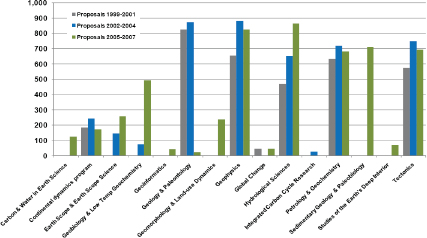
Figure 5-1 Number of proposals submitted to the National Science Foundation for selected topics illustrating an increase in the number of proposals on hydrologic sciences. SOURCE: Modified, with permission, from American Geological Institute (2009). © 2009 by the American Geological Institute.
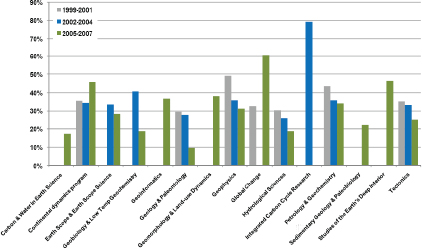
Figure 5-2 Funding proposal rate at the National Science Foundation for selected topics illustrating a decline in the funded proposals for hydrologic sciences from 1999 to 2007. SOURCE: Modified, with permission, from American Geological Institute (2009). © 2009 by the American Geological Institute.
experiment of the 1980s and 1990s7 to elucidate land-atmosphere exchange of carbon and water at multiple scales. Other types of collaborative efforts could include development of community models as has been successfully done by the atmospheric science community,8 and sponsorship of synthesis activities as has been done by the ecology community (National Center for
____________
7 The FIFE projects or experiments of the late 1980s and early 1990s were central to NASA’s International Satellite Land Surface Climatology Program. The first experiment was conducted on the Konza Prairie in Kansas, a 15  15 km area of grassland, and a follow-up experiment at the same location a few years later. The objective of the FIFE experiment was to “understand the biophysical processes controlling the fluxes of exchanges of radiation, moisture, and carbon dioxide between the land surface and the atmosphere; develop and test remote-sensing methodologies for observing these processes at a pixel level; and understand how to scale the pixel-level information to regional scales commensurate with modeling of global processes.” This was achieved through coordinated data acquisition (satellite, airborne, and ground measurements) and a scaling-up analysis by roughly 100 science investigators and support staff. SOURCE: http://daac.ornl.gov/FIFE/FIFE_About.html. For more information see http://daac.ornl.gov/FIFE/fife_campaign.html.
8 An activity of the National Center for Atmospheric Research located in Boulder, Colorado. For more information see http://ncar.ucar.edu/community-resources/models.
Ecological Analysis and Synthesis).9 The committee encourages the research community to explore such collaborative efforts. Collaborative, community building efforts will continue to be relevant for the multiple agencies and organizations that support hydrologic science, including NSF in general and the HS program in particular, in responding effectively to many of the opportunities and challenges presented in this report.
Facilitation of Community Engagement
Following extensive discussion and recognition by the water science community of the need to engage in thinking about future challenges for research and education in the field, NSF’s HS program is supporting facilitation of community growth via the Consortium of Universities for the Advancement of Hydrologic Science, Inc. (CUAHSI). Founded in 2001, CUAHSI is an organization of 126 universities, affiliate member universities, and a smaller number of international affiliate members, and its mission is to enable “the university water science community to advance understanding of the central role of water to life, Earth, and society” (CUAHSI, 2010).
Many researchers from the community believe that CUAHSI has fostered a spirit of cooperation by determining how groups can better work together to enhance the field in terms of knowledge generation and sharing. In particular, smaller universities with limited resources now have opportunities that were previously unavailable to them. The committee anticipates that the community will continue to value and to derive benefit from efforts to facilitate collaborative research and the NSF portfolio will continue to include program elements that support this kind of community effort. Having a “community voice” will cultivate exchanges with similar, international, community-wide entities and thus advance efforts in building shared research infrastructures (physical and computational) that will enable and facilitate a global water science research and education perspective.
Instruments and Facilities
A critical avenue for research support in the hydrologic sciences is facilities. Several federal agencies and some private foundations provide support for facilities. One major source of such funds for universities is the NSF. Currently, EAR devotes about 35 percent of its budget to Instrumentation
____________
9 The National Center for Ecological Analysis and Synthesis, located in Santa Barbara, California, supports cross-disciplinary research in ecology and allied fields. For more information see http://www.nceas.ucsb.edu/.
and Facilities and Major Research Initiatives.10 An example of a facility that directly impacts hydrologic science is the NSF-supported research center, the National Center for Airborne Laser Mapping, to enable the use of airborne laser mapping technology in the scientific community.11 EAR also now directly supports hydrologic instrumentation user facilities in distributed fiber-optic sensing12 and mobile radar facilities for hydrologic observatories. Development of community-based NSF instrumentation facilities represents a relatively new mode of operation for the hydrologic sciences. These facilities are designed to provide major, state-of-the-art equipment to researchers in hydrologic and related sciences and have already proven very successful in training scientists and in deploying instrumentation.
The “sensor revolution” mentioned in 13 and PASSCAL.14 The development of Critical Zone Observatories (CZOs) also can continue to serve as a driver to test and incorporate sensors that provide highly granular data. Similarly, the availability of new instruments supported through programs of, for example, the Department of Energy and NASA, will be important.
The sensor revolution brings with it several significant but exciting challenges. Incorporating sensor data with high resolution into models that operate at coarser spatial resolutions and using these data effectively will be a theoretical and computational upscaling challenge. If the sensor
____________
10 The budget for NSF’s EAR is available online at http://www.nsf.gov/about/budget/fy2011/pdf/08-GEO_fy2011.pdf.
11 See http://www.ncalm.cive.uh.edu/index.html.
12 The Center for Transformative Environmental Monitoring Programs (CTEMPs) provides “field-deployable high-precision fiber optic temperature measurement systems and wireless self-organizing multi-parameter sensor stations” to the Earth science community in the interest of discovery and education. For more information see www.ctemps.org.
13 UNAVCO is a nonprofit, university-governed consortium that facilitates geoscience research and education by providing support to PIs engaged in NSF-supported research. Most of the organization’s activities are centered in the UNAVCO facility in Boulder, Colorado. For more information see http://www.unavco.org/aboutus/aboutus.html.
14 The Incorporated Research Institutions for Seismology (IRIS) Program for Array Seismic Studies of the Continental Lithosphere (PASSCAL) Instrumentation Center at New Mexico Tech is a facility dedicated to research into Earth’s geologic structure and processes. For more information see http://www.iris.edu/hq/programs/passcal.
revolution is to be sustained, the next generation of hydrologic scientists will need to be able to communicate and work in a wider range of science and engineering, with specific focus on physics, electrical engineering, and computer science. Finally, the management and dissemination of hydrologic data sets much larger than those of the past will require the field to learn and use information technology from other data-intensive disciplines.
Support for facilities and instrumentation will continue to be an important resource for the hydrologic sciences community now and in the future. The sensor revolution implies that new development of measurement systems and instruments will be rapid and will need to be disseminated to the hydrologic sciences community. Support for instrumentation and facilities by the various entities that make such support available, including the EAR Instrumentation and Facilities (IF) program, will continue to be important to encourage novel instrument development for the wide range of measurement facilities, sensors, sensing platforms, and sensing support facilities that are critical to the advancement of hydrologic sciences within the broader geosciences perspective.
Broader NSF Research Initiatives
NSF has a number of program elements that promote interdisciplinary research in hydrologic sciences and fall outside of the standard grants process. Two examples are provided here to highlight the importance of such elements to meeting some of the research challenges presented in the previous chapters.
In recognition of the need for sustainability to address a host of critical problems facing the nation, NSF started a foundation-wide initiative on Science, Engineering, and Education for Sustainability (SEES). Much of the research within this general initiative will involve hydrologic science. Other cross foundation initiatives, such as one on Sustainable Energy Pathways and Critical Zone Observatories have clear links with hydrologic science and can take on some of the critical research opportunities outlined in this report.
NSF also provides support by its funding of Science and Technology Centers (STCs), through the STC program of its Office of Integrative Activities. This program provides long-term, large-scale awards for innovative, complex research and education projects within any discipline or at the interface of any discipline(s) that NSF supports by a “center mode,” where awards initiate and correspond to the life of a Science and Technology
Center.15 NSF has supported two STCs with strong links to hydrologic sciences over the past decade—the National Center for Earth Surface Dynamics and the Center for Sustainability of Semi-Arid Hydrology and Riparian Areas (SAHRA). A recent assessment of STCs indicates that they are quite important in shaping how faculty and students undertake research on complex and often very interdisciplinary topics:
Perhaps the most striking aspect of faculty responses to these questions is the extent to which faculty in both survey cohorts indicate that the research that they engage in as members of an STC involve higher degrees of risk-taking and have greater potential to be transformative than the research they engage in outside of the STC (Chubin et al., 2010).
Engineering Research Centers (ERCs)16 are another group of multidisciplinary centers sponsored by NSF, including a new center (as of 2011) on developing sustainable ways to manage urban water. Although its emphasis is on engineering, the Urban Water ERC will address topics related to Earth and hydrologic science sciences. Because of the growing need for interdisciplinary research, the committee anticipates that efforts such as the Urban Water ERC will continue to be important to hydrologic sciences. The committee encourages the hydrologic community to vigorously pursue such opportunities, which add both intellect and resources to the core HS program.
Educational Program Elements
Along with all other areas of science, hydrologic science has benefited from many programs that support graduate students, the most obvious being support of graduate research assistantships on competitively funded NSF grants (see earlier section, Standard Research Grants). The NSF Graduate Research Fellowship Program (GRFP) is designed to support basic research and graduate degrees in all program areas that NSF funds. The program was founded in 1951 and is the oldest fellowship program in the United States, supporting graduate students in various science, technology, engineering, and mathematics fields. The fellowship is available and routinely awarded to students in the geosciences, including young hydrologic scientists. The fellowship has been offered to several graduate students citing “Geosciences-Hydrologic Sciences” as their primary field of study in recent years (Table 5-1). However, the number of fellowships for such
____________
15 The STCs use the “center mode” to support investigations, with five new centers started and the “graduation” of the five centers (initiated in 2000) in the fall of 2010. As of the spring of 2011, there were 17 current awards. For more information see http://www.nsf.gov/funding/pgm_summ.jsp?pims_id=5541.
|
TABLE 5-1 Number of Graduate Fellowships Offered over the Past 6 Years Through NSF’s Graduate Research Fellowship Program (GRFP) to Students Who Cited Hydrologic Sciences as Their Primary Field of Study |
||
| Year | NSF GRFP Offered in Hydrologic Sciencesa | Total NSF GRFP Offered |
| 2005 | 2 | 1024 |
| 2006 | 4 | 909 |
| 2007 | 0 | 920 |
| 2008 | 1 | 913 |
| 2009 | 6 | 1248 |
| 2010 | 5 | 2051 |
| 2011 | 5 | 2000 |
|
aCurrently, the GRFP offers more than 150 choices for primary field of study, 17 of which are in geosciences. These choices include hydrologic science and fields closely related to hydrologic science such as geochemistry, geology, and paleoclimate. |
||
|
SOURCE: NSF Fastlane database. Available online at https://www.fastlane.nsf.gov/grfp/AwardeeList.do?method=loadAwardeeList [accessed August 6, 2012]. |
||
study did not increase appreciably between 2009 and 2011 when the total number of graduate fellowships awarded by NSF nearly doubled. Graduate fellowships also are part of other programs, including the U.S. Environmental Protection Agency’s Science to Achieve Results (STAR) fellowship,17 the Department of Defense fellowship (the National Defense Science and Engineering Graduate Fellowship),18 the National Oceanic and Atmospheric Administration’s graduate research fellowships,19 as well as fellowships from foundations.
Looking ahead, the committee envisions that the relevant agencies and organizations will appropriately extend support for interdisciplinary graduate education. As an example, the CUAHSI Pathfinder Graduate Student Fellowships to Support Multi-site Research in Hydrology provides travel support for graduate students to collaborate with researchers beyond their own field site. Young hydrologic scientists and engineers also can participate in the Integrative Graduate Education and Research Traineeship (IGERT) program, an NSF-wide endeavor to foster collaborative research across traditional boundaries through new models for graduate training. Active IGERT programs are classified by “themes” reflecting the interdis-
____________
17 See http://epa.gov/ncer/.
18 See http://ndseg.asee.org/.
ciplinary nature of each; 14 current IGERTs list water as one dimension of their theme.20
Undergraduate students also are demanding greater access to interdisciplinary research opportunities. Within NSF, Research Experiences for Undergraduates (REU) programs are an opportunity to promote cross-disciplinary research experiences, both domestically and internationally.21 REU programs provide a means to engage researchers from a variety of disciplines and therefore can promote cross-disciplinary interaction among mentoring scientists as well as students.
Increasing the participation of underrepresented groups in the geosciences is an important goal of the NSF GEO. The hydrologic sciences can contribute substantially to this effort by not only increasing the representation of underrepresented groups in the field, but also providing leadership to build scientific capacity within underrepresented communities. An example of this type of activity is the development of the first Hydrology and Water Resources degree program in a tribal college, the Salish Kootenai College in Montana, which will foster the development of local capacity for managing tribal lands. This program is unique to Tribal Colleges and can provide impetus for increasing the exceptionally low numbers of Native American graduates in the geosciences in general and in hydrologic science in particular.
NSF has well-established programs that can support education modalities mentioned above. Continued NSF support of various educational modalities will enable beneficiaries to fulfill the research goals described in this report.
Collaboration with Other Federal Agencies and with International Organizations
Numerous U.S. federal agencies have varying degrees of responsibility in water science or water management, including NSF (Figure 5-3). These agencies fund research related to their missions, although only a fraction would be considered to be in “hydrologic sciences.” The nature of many of the challenges facing the hydrologic sciences is such that coordination and collaboration between research supported by NSF research supported by these other agencies will be essential. A few examples of how such efforts can be mutually beneficial are noted below.
NOAA’s Community Hydrologic Prediction System22 is an example where NSF research can be leveraged to improve a critical forecast service
____________
20 See http://www.nsf.gov/crssprgm/igert/intro.jsp.
21 See http://www.nsf.gov/funding/pgm_summ.jsp?pims_id=5517&org=NSF.
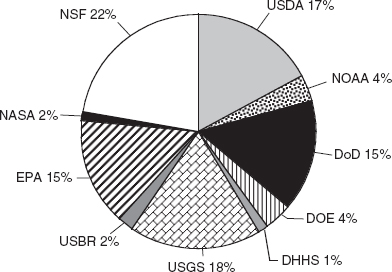
Figure 5-3 Funding for U.S. research in water resources in 2000. The data in the figure are from a survey of federal agencies in which data collection activities (such as satellites and their instruments) were specifically excluded. SOURCE: NRC, 2004.
and deliver the basic science required for improving hydrologic predictions (NRC, 2010b). Key remote sensing products provided by NASA will drive many of the advances in land surface-atmosphere hydrologic science that are described in 23 supported researchers. Synthesis of existing knowledge across many disciplines is another challenge that stems from the broad interdisciplinary nature of some of the research questions posed in this report. The NSF may be able to collaborate with the U.S. Geological Survey’s recently established Powell Center.24 The recent collaboration with U.S. Department of Agriculture on the Water, Sustainability, and Climate initiative is another example of a leveraging opportunity that will benefit both agencies. The committee views such extended program elements to have been very successful to date, and likely to be even more so in the near future. As other federal agencies continue to develop strong research programs, national centers, and collaborative projects in water and water resources, such extended program elements will continue to be successful. Expansion
____________
23 See http://neptune.gsfc.nasa.gov/hsb/.
24 See http://www.fort.usgs.gov/news/news_story.asp?WebID=100727.
of cross-agency programs and exploration of novel mechanisms of cross-agency partnerships, including opportunities to make use of observational programs and facilities, are likely prerequisites for effective response to the research goals suggested in this report.
The hydrologic sciences community has always embraced an international perspective in its research but primarily in an informal manner. Formal ways of fostering international collaboration within NSF’s portfolio of activities in environmental sciences and engineering will be needed in the future. The U.S. CZOs are collaborating with a parallel program in the European Union (Soil Transformations in European Catchments or SoilTrEC25) to extend data and infrastructure availability broadly across nations. This effort is part of the EU-U.S. collaboration on “common data policies and standards relevant to global research infrastructures in the environment field” and the “e-infrastructures” program that are beginning to develop a common framework for sharing data, science, and models in environmental sciences.
The hydrologic science community can achieve substantial benefits by promoting common standards for data sets and their compatibility with hydrologic modeling platforms. For example, the climate modeling community through the Coupled Model Intercomparison Program (CMIP)26 has established standards for data structure, formatting and metadata, primarily by requiring that all model output submitted to the CMIP archive use NetCDF formatting following climate and forecasting standards for metadata. An outcome of this common structure has been an explosion in the number of multimodel analyses applied to a wide variety of simulated fields from global climate models. In addition, the common structure has encouraged software development and sharing, because scientists do not have to rewrite software for each new model or field analyzed. The software sharing has promoted more sophisticated analyses and the movement of multimodel archives into a distributed computing (“cloud”) environment. Such standards are starting to spread through the climate modeling community to other types of climate models, such as regional models, and to observational data sets. The hydrologic community could achieve comparable benefits through standardization of model output and observational records.
____________
TRANSLATIONAL HYDROLOGIC SCIENCE:
THE KEY TO SUCCESS THROUGH BROADER IMPACT
The lack of access to safe drinking water for nearly 3 billion people on Earth is an urgent humanitarian crisis. Reducing this number is a primary goal of the United Nations Millennium Development Goals on Environmental Sustainability.27 Human consumption now constitutes a significant fraction of the net biological productivity of the planet, and anthropogenic impacts on freshwater quality and availability are notable in most places in the world, especially in densely populated developing countries. Furthermore, the United Nations Millennium Development Goals to End Poverty and Hunger propose a large increase in food production, with only a limited acknowledgment that this will require dramatic changes in the way freshwater is currently used. Solutions to global water resources problems are only achievable through action at local and regional levels. The research needed to inform sound water management and policy decisions cannot be done without engagement of stakeholders throughout the entire length of the project. That is, by engaging in joint discussions, scientists, engineers, and decision makers will gain a perspective on what judgments must be made and what potential impacts may occur. The general approach has been called the analytic-deliberative process (Box 5-1).
The research proposed in this report focuses on the physical, chemical, and biological processes that operate within a suite of global cycles and that affect the supply and quality of the planet’s water resources. However, improved knowledge of these processes does not necessarily translate into improved management. In order to better connect science and decision making, sustained interactions are needed among scientists, engineers, water managers, and decision makers. Science conducted in this fashion is called translational science, and it has most notably been applied to medical science. In this application, “translational” refers to both the communication of science to decision makers and the communication of users’ needs to scientists and engineers so they can better understand their research. These groups can work together to determine what scientific research is needed and how the results from the work decision making.
Water challenges include insufficient and degraded water supplies for both humans and ecosystems. Hydrologic science, broadly defined, is critical to meeting these challenges. However, solutions require translational hydrologic research—“translational hydrologic science”—that considers social, institutional, economic, legal, and political constraints. This clearly
____________
27 Goal 7 of the United Nation’s Millennium Goals is to “Ensure Environmental Stability.” Within this goal are several targets, one of which is to “halve, by 2015, the proportion of the population without sustainable access to safe drinking water and basic sanitation.” For more information see http://www.un.org/millenniumgoals/.
BOX 5-1
The Analytic-Deliberative Process
The analytic-deliberative process integrates scientific analysis with deliberation to guide situations where judgment by decision makers is necessary. Within this framework, science illuminates how policy options will impact, for example, water resources as well as characterizing and reducing uncertainties and disagreements by providing new scientific information. In the process, the relationship between scientists and decision makers relies on shared responsibility for making judgments that are guided by broadly based deliberation involving stakeholders rather than scientific analysis alone to inform policy.
SOURCE: Dietz and Stern (1998).
necessitates broad, interdisciplinary projects that are place based and that include physical, chemical, biological, and social scientists as well as local stakeholders. Research agendas are collaboratively produced by scientists, engineers, decision makers, and stakeholders. Engagements are interactive (multiway), sustained, with feedbacks and iterations, and involving a time commitment from all parties. An evaluation process, independent of the parties involved, is critical for successfully proposing, evaluating, and executing translational research. Was the science ultimately useful in addressing the stakeholder needs or concerns?
How the SAHRA participated in translational research in the San Pedro Basin, which straddles southeastern Arizona and northern Mexico, provides an example of such research through NSF STCs (Box 5-2). Other agencies have recognized the need for translational science as well. NOAA has funded Regional Sciences and Assessments programs, some of which have been in existence for more than a decade, demonstrating the challenges and successes that come from problem-driven science. These regional programs focus on climate information and products that would benefit management and decision making. Research has addressed climate and health issues (e.g., West Nile disease), long-term water resource planning using paleohydrologic data, drought planning and monitoring in tribal lands, and seasonal forecasts for agriculture.
The NSF does not have a long record of supporting research that truly meets the goals of translational hydrologic science. The broad initiative on Water Sustainability and Climate (WSC) appears to be one activity where innovative basic research within the analytic-deliberative framework might break with this tradition. In undertaking such research efforts it is acknowl-
BOX 5-2
Integration of Science with Elected Officials and Resource Managers in the San Pedro: Time, Trust, and Lessons Learned
NSF sponsored research in the Upper San Pedro Basin (USPB) provides an example of long-term integration of science with policy and decision making focused on water sustainability. This semi-arid basin originates in northern Sonora, Mexico, and flows north into southeastern Arizona. It is one of the most ecologically diverse areas in the Western Hemisphere and contains some of the last perennial streams in the region. In 1988, Congress established the San Pedro Riparian National Conservation Area (SPRNCA), the first of its kind in the nation, to protect this area’s riparian resources. The aquifer that sustains perennial flows in the San Pedro is virtually the sole source of water for two major, and growing, economic drivers in the basin—the Cananea mine in Mexico, which produces 2 to 3 percent of the world’s copper when in operation, and the Fort Huachuca Army base, the largest employer in southern Arizona and integral to global military communications. This aquifer has experienced severe drawdown and continues to be pumped at excessive rates.
In 1998, the Upper San Pedro Partnership (USPP),a consisting of 21 agencies and organizations was formed to facilitate and implement sound water management and conservation strategies in the Sierra Vista subwatershed of the USPB. The Partnership’s mission is to work together to achieve sustainable yield of the regional aquifer to preserve the SPRNCA and ensure the long-term viability of Fort Huachuca. The USPP consists of multiple stakeholders including research scientists from the U.S. Department of Agriculture’s Agricultural Research Service and the U.S. Geological Survey. These scientists have met with resource managers and election officials roughly three times per month within various committees since USPP’s inception. This extended interaction has laid the groundwork for a strong foundation of trust between scientists and decision makers and has paved
edged that their purpose is to inform policy and provide a scientific basis upon which policies themselves can be fashioned. The actual making of public policy needs to be in the hands of the policy makers. The proposition that underlies the need for scientific input to policy-making processes is that policies that are well informed by science are more effective and useful than those that have not considered, simply ignored, or rejected science. The committee encourages agencies and organizations to support an interpretation of solicitations on interdisciplinary hydrologic science that allows fair consideration of the new research directions in translational hydrologic science that are needed to solve societal problems.
Underpinning success in translational hydrologic science is successful communication between involved groups, which includes interactions between scientists and engineers from different disciplines; scientists, engi-
the way for interdisciplinary research conducted by the Sustainability of semi-Arid Hydrology and Riparian Areas (SAHRA), the first NSF Science and Technology Center that focused on water resources.b
As a key objective, SAHRA, in concert with the USPP, identified stakeholder-relevant questions and initiated the design of research and monitoring to address these questions. This research produced a number of key science products ranging from quantification “of the temporal and spatial water needs of riparian vegetation in the SPRNCA” to “an assessment of how groundwater pumping from different zones within the basin affects the river” (Saliba and Jacobs, 2008). The collaborative science also contributed directly to addressing key partnership goals (e.g., a two-thirds reduction in the annual pumping deficit) and was instrumental in new policy initiatives (e.g., local zoning laws to encourage growth and pumping away from the river as well as two new landmark state water statutes).
This research collaboration offered several clear lessons. Ongoing and regular face-to-face communications between senior scientists and decision makers enables the two groups to learn each other’s “language,” builds trust, and fosters mutual learning. Scientists learn the social, economic, and political agenda and constraints. Decision makers gain a better understanding of the natural system as well as an appreciation of the uncertainties. Such collaboration is essential to adaptive management, which enables decision makers to rapidly implement low-risk management strategies while additional science and monitoring are conducted for high-risk projects. Active engagement of stakeholders and the general public from the beginning of the project greatly improves the likelihood that recommendations will be implemented (Richter, 2010).
____________
neers, and decision makers; and scientists, engineers, and the informed public. Yet communication can often be challenging because of, for example, the lack of a common vocabulary or a common understanding of terms (NRC, 2011). Given the interdisciplinary perspective needed to address future challenges in water sciences, the importance of strong communication skills will only increase. The educational experiences for young hydrologic scientists should include experiences that enhance communication skills.
This report challenges scholars in the hydrologic sciences to engage in research that is both relevant and exciting, continues to promote education to ensure a new generation of hydrologic scientists and engineers equipped
to face future water resource challenges is born, and continues the high standard of quality research supported by NSF. This includes a call for disciplinary and interdisciplinary research to shed light on the wonderfully complex scientific puzzles that present themselves to hydrologic scientists and engineers as well as research to meet the increasingly complex water-related challenges facing the United States and the globe. Some broad approaches will facilitate the hydrologic community’s ability to answer this challenge:
• Interdisciplinarity: There is a need for interdisciplinary hydrologic research that takes advantage of cutting-edge technologies to grapple with the complex water-related challenges of today and tomorrow. As technology to probe Earth’s mysteries advances, computer models become more and more sophisticated, research relies on ever more extensive data for modeling and analysis, and no single discipline provides the entire knowledge base; building mechanisms to share knowledge, equipment, models, data, and science requires a fostering platform and relevant resources.
• Range of Modalities: A range of modalities plays a critical role in hydrologic sciences that is key to tackling the challenges and opportunities in this report.
• Education: To successfully solve today’s complex water problems, scientists, engineers, and water managers need disciplinary depth and intellectual breadth to bridge disciplines and the ability to effectively communicate science to policy makers.
• Translational Science: Multiway interactions among scientists, engineers, water managers, and decision makers (termed “translational hydrologic science”) are needed to more closely connect science and decision making in order to address increasingly urgent water policy issues.
All of the research challenges described in this report invite a large number of focused questions within the disciplines represented by the hydrologic sciences. Equally important, the research challenges clearly point to the need for cross-disciplinary efforts to augment and supplement the more traditional activities within disciplines. Consequently, hydrologic science should partner with associated disciplines in ever more varied ways. Success in preparing proposals, evaluating proposals, and conducting the research effectively will require creativity within the research community and within the federal agencies that support research in the hydrologic sciences.
This committee was asked specifically to comment on challenges and opportunities within hydrologic science and associated Earth and biological sciences. Nevertheless, the committee is compelled to point out that, while such research is definitely necessary, it is not sufficient. As water problems
become more complex and as global water scarcity continues to manifest itself in different ways, the need for science-based public policies to guide water management will continue to intensify, presenting challenges that have not heretofore been addressed in any consistent way. The results of hydrologic studies are frequently unavailable to policy makers who may be unfamiliar with the terminology and have no technical training that would allow them to understand and interpret the results. Sometimes it is unclear whether and how the implications of findings in the hydrologic sciences will have relevance for public policy. The water management challenges of the future will be even more difficult to address if the significant findings in hydrologic sciences are left to find their way into policy-making processes by serendipity.
The challenges of the future, therefore, will require more systematic attention to the importance of hydrologic sciences in the public policy process. In turn, researchers in the hydrologic sciences will be required to collaborate and communicate with colleagues in the social sciences, including economics, political science, psychology and sociology to a far greater extent than has been the case in the past. Collaborative work with the social sciences will be helpful in identifying appropriate specific contexts for hydrologic sciences in the policy-making process, interpreting hydrologic sciences in terms of both economic and social implications and, ultimately, in identifying how hydrologic sciences can contribute as fully as possible to the advancement of human and societal well-being.
Alley, R. B., J. Marotzke, W. D. Nordhaus, J. T. Overpeck, D. M. Peteet, R. A. Pielke, Jr., R. T. Pierrehumbert, P. B. Rhines, T. F. Stocker, L. D.Talley, and J. M. Wallace. 2003. Abrupt climate change. Science 299(5615):2005-2010. doi: 10.1126/science.1081056.
American Geological Institute. 2009. Status of the Geoscience Workforce, Chapter 2: Four-Year Colleges and Universities. Available online at http://www.agiweb.org/workforce/reports/2009-FourYearInstitutions.pdf [accessed November 1, 2011].
Chubin, D. E., E. Derrick, I. Feller, and P. Phartiyal. 2010. AAAS Review of the NSF Science and Technology Centers Integrative Partnerships (STC) Program, 2000-2009. Washington, DC: American Association for the Advancement of Science. Available online at http://php.aaas.org/programs/centers/capacity/documents/stc_aaas_full_report.pdf [accessed September 6, 2011].
CUAHSI (Consortium of Universities for the Advancement of Hydrologic Sciences, Inc.). 2010. Water in a Dynamic Planet: A Five-Year Strategic Plan for Water Science. Available online at http://www.cuahsi.org/docs/stratplan/CUAHSI-StrategicPlan-2010Dec.pdf [accessed January 9, 2012].
Dietz, T., and P. C. Stern. 1998. Science, values, and biodiversity. BioScience 48(6):441-444.
Eddy, S. R. 2005. “Antedisciplinary” science. PLoS Computational Biology 1:e6. doi: 10.1371/journal.pcbi.0010006.
Friedman, T. L. 2005. The World is Flat. London, England: Penguin Books.
Friedman, T. L. 2008. Hot, Flat, and Crowded: Why We Need a Green Revolution—and How It Can Renew America. New York: Farrar, Straus, and Giroux.
Kreamer, D. K. 2010. Hydrophilanthropy and education. Journal of Contemporary Water Research & Education 145(1):1-4. doi: 10.1111/j.1936-704X.2010.00077.x.
NRC (National Research Council). 1991. Opportunities in the Hydrologic Sciences. Washington, DC: National Academy Press.
NRC. 2004. Confronting the Nation’s Water Problems: The Role of Research. Washington, DC: The National Academies Press.
NRC. 2010a. A Data-Based Assessment of Research-Doctoral Programs in the United States. Washington, DC: The National Academies Press.
NRC. 2010b. When Weather Matters: Science and Service to Meet Critical Societal Needs. Washington, DC: The National Academies Press.
NRC. 2011. Global Change and Extreme Hydrology: Testing Conventional Wisdom. Washington, DC: The National Academies Press.
NSF (National Science Foundation). 2010. Geoscience. Pp. GEO1-GEO14 in FY 2011 Budget Request to Congress. Available online at http://www.nsf.gov/about/budget/fy2011/pdf/08-GEO_fy2011.pdf [accessed November 1, 2011].
Richter, B. D. 2010. Re-thinking environmental flows: From allocations and reserves to sustainability boundaries. River Research and Applications 26(8):1052-1063. doi: 10.1002/rra.1320.
Saliba, G., and K. L. Jacobs. 2008. Saving the San Pedro River: Science, collaboration, and water sustainability in Arizona. Environment 50(6):30-43.
Taleb, N. N. 2007. The Black Swan: The Impact of the Highly Improbable. New York: Random House.
Campana, M. E. 2010. Hydrophilanthropy, WASH, and experiential learning in developing countries. Journal of Contemporary Water Research and Education 145(1):36-44. doi: 10.1111/j.1936-704X.2010.00080.x.
Oki, T., C. Valeo, and K. Heal (eds). 2006. Hydrology 2020: An integrating science to meet world water challenges. International Association of Hydrological Sciences Publication 300. Wallingford, UK: IAHS Press, 193 pp.
Schlesinger, W. H. 2010. Translational ecology. Science 329(5992):609. doi: 10.1126/science.1195624.
Thoms, M. C., and M. Parsons. 2002. Eco-geomorphology: An interdisciplinary approach to river science. Pp. 113-120 in The Structure, Function and Management Implications of Fluvial Sedimentary Systems. Wallingford, UK: IAHS Press.
Wilson, J. S., C. Hermans, M. Sivapalan, and C. J. Vörösmarty. 2010. Blazing new paths for interdisciplinary hydrology. Eos, Transactions of American Geophyscial Union 9(6):53. doi:10.1029/2010EO060001.


