
IPY 2007-2008 occurred during a period of change in the U.S. research enterprise, as evidenced by an increase in and funding for two-way connections between knowledge and action—knowledge informing action, and action influencing the pursuit of knowledge. Thus scientists have been integrated as advisors in policymaking processes, and policymakers, local agencies and communities, and other stakeholders have been included in the initial design of problem-oriented research.
One factor fostering connections between knowledge and action was the 2002 National Science Foundation (NSF) requirement that all proposals address the “broader impacts criterion” (Box 5.1).
In keeping with this new imperative, the IPY Vision Report (NRC, 2004) called for “improv[ing] predictions” and improving understanding of social processes, in particular those “that shape the resilience and sustainability of circumpolar human societies.” In addition, the IPY Joint Committee (JC) and International Programme Office (IPO) required that all JC-endorsed international projects describe plans “for addressing the education, outreach, and communication issues outlined in the Framework document” (Rapley and Bell, 2004). As noted in that Framework document, “IPY 2007-2008 aims to inform both governmental and scientific decision-makers, including funding and resource managers, on the roles and importance of polar regions.”
The inclusion of social and human sciences in the IPY program and its increased focus on polar residents, including indigenous peoples, was a first in the 125-year history of IPY/IGY and a critical factor in shaping the IPY agenda toward more “applied” (knowledge-toaction) outcomes. Another reason for the focus on polar communities was the extent of recent environmental change in the polar regions—they are experiencing climate forcing, climate effects, and climate change response more significantly than elsewhere. These changes, many of which exceed the range of historical measurements, have underscored the very present reality of climate change and driven home the need for adaptation planning and mitigation of environmental impacts.
In recognition of the rapid changes in the Arctic environment, residents, state and federal land managers, and industry representatives have called on the scientific community to help inform decisions about adapting to a rapidly changing environment.1 Infrastructure planners in coastal communities, for example, need reliable projections of polar influences such as the impacts of glacier and ice sheet mass loss on sea level rise and of the warming Arctic on continental winter weather patterns.
The Arctic receives greater attention because of the significance of its changes for the people who live and work in the region, and the pace of change in most of Antarctica differs in important respects from that in the Arctic. But in both cases endeavors that entail multiple-decade planning must factor in the challenges of a changing baseline, and changes in both places can have important impacts on the entire globe.
______________________
1 See, for example, http://ine.uaf.edu/accap/research/cross_region_ dialogue.htm; ACCAP (2010); and Lovecraft and Eicken (2011).
BOX 5.1
NSF Broader Impacts Criterion
In every proposal seeking research funding from NSF, the principal investigator must spell out the research questions, intended methods, and proposed budget for the project. Starting in 2002, researchers were challenged to think more broadly about the societal impacts of their proposed activity, guided by the following questions:
• How well does the activity advance discovery and understanding while promoting teaching, training, and learning?
• How well does the proposed activity broaden the participation of under re presented groups (e.g., based on gender, ethnicity, disability, geography)?
• To what extent will it enhance the infrastructure for research and education, such as facilities, instrumentation, networks, and partnerships?
• Will the results be disseminated broadly to enhance scientific and technological understanding?
• What may be the benefits ol the proposed activity to society?
______________________
SOURCE: NSF, 2007.
Recent and ongoing studies of the stability of the West Antarctic ice sheet and grounding line (e.g., Jenkins et al., 2010; Velicogna, 2009)—otherwise highlighted in Chapter 3—show that large changes to global sea level rise are possible in response to global warming. Information about polar changes is thus relevant to decisions that affect the lives of millions of nonpolar residents.
IPY addressed the growing concerns about polar changes by organizing public and educational forums, and IPY outreach efforts led policymakers to turn to polar scientists to help inform decisions. In turn, through their experience preparing presentations for and answering questions from general audiences, many polar scientists learned about the concerns of the public, educators, and stakeholders, and in some cases adapted their research based on this new knowledge. The result was an increase during IPY in basic research that considered possible applications and stakeholder guidance (e.g., Stokes, 1997).
The committee notes that “action” was not defined as a major goal by the IPY Planning Group (2003-2004), the JC, or the National Research Council specifically. For example, the 2004 NRC Vision Report does not refer to the creation of adaptation plans or mitigation policy. The interest in connecting knowledge with action emerged as a logical extension of research projects or in response to information needs associated with expanding human activities, particularly in the Arctic.
The applications and observations described below are presented as examples and are not a comprehensive review of the portfolio of IPY knowledge-to-action activities.
KNOWLEDGE-TO-ACTION EXAMPLES
IPY gave impetus for increased interaction and discussions between scientists and practitioners, including community planning groups, as the practitioners sought relevant, science-based information as a basis for their planning. Because of the larger environmental changes and greater populations in the North, most of the applications noted below are from the Arctic region.
Predictions, Projections, Forecasts, and Scenarios
IPY had a strong focus on observations and modeling to improve predictive capability, in part due to the need to understand and project the forcing and implications of cryospheric changes. The foundation for this focus was laid years earlier under the scientificcommunity-inspired “Study of Environmental Arctic Change” (SEARCH).2 SEARCH eventually became in interagency initiative with an international legacy through the International Study of Arctic Change (ISAC), which was established in 2003. The SEARCH tripartite charge “Observing Change, Understanding Change, and Responding to Change” is explicit about informing action.
The record sea ice minimum in 2007, the first year of IPY, stimulated concerted efforts to understand its cause, project plausible future trajectories, and consider systemwide implications. Cooperative oceanographic cruises and remote sensing imagery provided by many nations in concert with sophisticated modeling studies provided a comprehensive picture of its shrinking extent and thickness.
With the rate of change in the Arctic outpacing traditional modes of scientific communication, the
______________________
international sea ice research community has also made progress in exploring innovative approaches of synthesizing observations of the ice cover and model simulations to track and project the evolution of the ice cover on the seasonal scale. Advances were made in the area of seasonal predictions of sea ice conditions, particularly through the use of ensemble approaches with coupled ice-ocean models (e.g., Zhang et al., 2008). The recognized importance of improved seasonal predictions led to development of the Sea Ice Outlook3 in 2008 by the SEARCH community. It has brought together a diverse international group of leaders in the field of sea ice modeling and forecasting to share and discuss yearly predictions of the summer sea ice minimum beginning in early summer each year. The Sea Ice Outlook is widely viewed as one of IPY’s key legacies (Calder et al., 2011; Box 5.2).
Just as sea ice loss resulted in mobilizations of the sea ice science community, melting glaciers also mobilized the glacier science community to understand processes and make better projections of future sea level rise. One of the most significant outcomes of IPY ice sheet research is the multisensory documentation of a net loss of ice from both the Greenland ice sheet and Antarctica with a corresponding increase in sea level. Investigators have tracked the melt areas on the Greenland ice sheet through a distinct melt signature in the passive microwave satellite data (SMMR and SSM/I), showing a significant increase in the melt of the ice sheet over the last 29 years with 2007 having the highest melt extent on record. This increase in melt is important directly to shrinkage of the Greenland ice sheet and sea level rise but also contributes indirectly by providing more melt water to lubricate the interface between the ice and bedrock on which it rests, causing the ice to flow faster toward the sea. The increase in glacial melt has clear and very significant implications for a variety of social, economic, and ecological management considerations. Sea level rise projections for this century are now 0.62 to 1.8 m (NRC, 2010a). This is a significant increase over the IPCC (2007b) estimates of 0.18 to 0.59 m, which did not include dynamic aspect of glaciers. Extensive civil actions are required to prepare for this reshaping of the world’s coastlines.
IPY-related predictive modeling has and will continue to play a role in helping companies, individuals, and governments assess various risks associated with changing ice conditions, sea level rise, permafrost degradation, and other effects of polar warming. Such assessments help inform a wide variety of decisions involving siting and insurance of property and infrastructure, community planning and zoning, construction of ice roads, emergency preparedness and disaster response, and long-term planning for moving military, industrial, and public infrastructure (and in some cases whole villages) to higher ground. See Box 5.3. Overall, the ability of ecosystems and human communities to adapt to the rapid changes under way at both poles related to global warming depends in large measure on how “healthy” those human and natural communities are at the outset. In natural ecosystems, resilience and adaptive capacity are related to species and trophic diversity. For human communities, resilience appears strongly related to the strength of human social networks and institutions.
Information for Subsistence Communities in the Arctic
In part, groundwork for two-way communication was laid through the process of preparing the Arctic Climate Impact Assessment (ACIA, 2005). Led by the United States, this report detailed the myriad and wide-ranging impacts of climate change and gave governments of many nations justification to initiate programs to detect and document a changing climate. The voices of polar residents recorded prior to and during IPY expressed the message of urgency and the call for action. Several IPY studies undertaken in human health, community vulnerability, food security, and local observations of change, were intrinsically aimed at practical applications to be shared with polar communities, local agencies, and grassroots organizations.
IPY promoted the practice of returning usable data to communities to encourage and solidify the involvement of local people in research, long-term environmental monitoring, and heritage preservation. Specific examples include:
• New data sets were created by indigenous IPY participants and managed by a special IPY project, ELOKA (Exchange of Local Knowledge in the Arctic);
______________________
BOX 5.2
The Sea Ice Outlook
The Sea Ice Outlook—begun during IPY—is an international effort to provide annual Arctic sea ice forecasts. This effort has continued beyond the period of IPY and has promoted advances in sea ice prediction, integration, and coordination of ground-based observations, as well as provided a more complete picture of the predictability of the Arctic ice cover on different scales. The outlook has been able to draw in different stakeholder communities, including Arctic residents, federal agencies, nongovernmental organizations, and industry. It has thus fostered a community of practice that can take the next steps in operationalizing different ice prediction approaches. Sea ice predictions are necessary to plan, prioritize, and map out activities and requisite infrastructure in newly opened waters. The United States and other governments rely on sea ice predictions (Figure) to evaluate future needs for services (e.g., port facilities, search and rescue capability, oil spill response facilities), regulation (e.g., discharge controls, requirements for ice-capable ships, limits on fishing), and information (e.g., new mapping and charting, communications capability, research priorities, etc.). According to a survey of Sea Ice Outlook users.a it provides a bigger picture for looking at the data, planning for shoreline changes, projecting impacts on marine mammals, and understanding where the uncertainties lie in the forecasts.
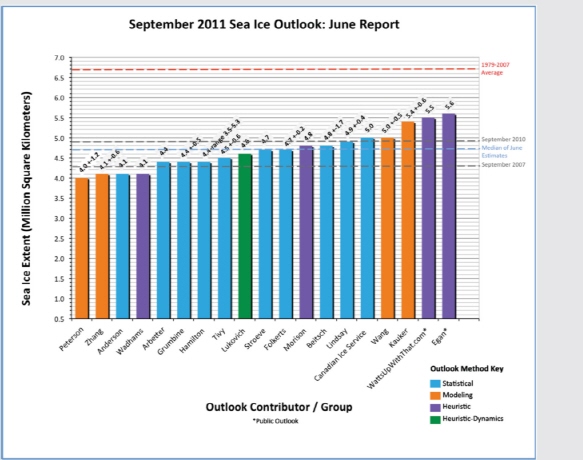
Predictions of the annual minimum arctic sea ice areal extent, compiled from numerous sources, are provided monthly (June through October) as a forum to facilitate communication among sea ice researchers and provide information to stakeholders, including Arctic residents, federal agencies, nongovernmental organizations, and industry. SOURCE: Study of Environmental Arctic Change/Arctic Research Consortium of the United States.
BOX 5.3
Climate Change Adaptation
Climate change is already having measureable effects on the polar regions. Whether beneficial or detrimental, those effects will require ecosystems and human communities to adapt to the changes. Global climate models are advancing our ability to understand what changes are coming and beginning to help inform decision about how to adapt to potential impacts. Important examples are the models included in the Intergovernmental Panel on Climate Change (IPCC) assessment process. IPY came at an important time when the IPCC models were being developed in preparation for the Fifth Assessment Report (AR5). IPY produced a wealth of information that will be featured prominently in several chapters of AR5 (in preparation), in particular in a chapter on “Polar Regions” in the volume on Impacts, Adaptation, and Vulnerability (Working Group II). Other modeling work has shown the influence of climate forcings at various latitudes, emphasizing that influence Arctic temperatures (Shindell et al., 2010).
• A new Web-based monitoring and data-sharing network in the Bering Strait region, Sea Ice for Walrus Outlook SIWO4 (Eicken et al., 2011), was developed by ice scientists in partnership with the Eskimo Walrus Commission and several local village monitors; SIWO uses high-resolution satellite images, analysis of weather and ice patterns, and observations from local scientists and indigenous experts to provide forecasts for the spring ice breakup and the walrus migration in the northern Bering Sea region in a format that is helpful to local users, as well as regional 10-day weather forecasts;
• A long-term study of ice trails built by indigenous whalers across spring shore-fast ice off Barrow and other Alaskan communities shared digital maps of trails with the community (SIZONeT project); and
• Various effort to share computer Web- based maps and satellite imagery of subsistence sea ice use, hunters’ and herders’ traveling, local impact of oil and gas development, marine mammal distribution, and other information were part of IPY.
Risk assessments done during IPY have also played an important role in predicting coastal erosion, loss of permafrost, and other changes faced by subsistence communities around the Arctic. For example, a valuable product of the IPY period was an international assessment of Arctic coastal erosion (IASC, 2011). This collaborative research advanced the understanding of the processes responsible for the recent increase in erosion rates throughout the circumpolar Arctic, but more importantly, it provided scientific insight needed to evaluate areas of stability and areas of vulnerability. Throughout the Arctic, many small villages and towns are located adjacent to the coast or on rivers. With accelerated permafrost thawing, loss of sea ice armor, and increase in summer storms, many coastal communities now face imminent threat of erosion and possible destruction. In Alaska, the villages of Shishmaref, Kivalina, and Newtok have already begun relocation plans. Since 2003, federal, state, and village officials have identified 31 villages that face imminent threats from flooding and erosion. The U.S. Army Corps of Engineers has identified over 160 additional rural communities threatened by erosion (GAO, 2009).
The Arctic Human Health Initiative (AHHI) was the U.S.-led IPY coordinating project introduced via the Arctic Council with the overall goal to increase awareness and visibility of human health concerns of Arctic peoples, foster human health research, and promote health strategies to improve health and wellbeing of Arctic residents. It was a broad circumpolar effort with multinational participation that included almost 30 individual projects in several thematic fields: health network expansion, infectious disease research, environmental health, and behavioral and mental health (Parkinson, 2010). Among many U.S. contributions, the Center for Alaska Native Health Research (CANHR) at the University of Alaska, Fairbanks used the IPY momentum to build a collaborative research presence in Alaska Native communities, focusing on prevention and reduction of health disparities—particularly in the areas of behavioral, dietary, and genetic risks—and protective factors related to obesity, diabetes, and cardiovascular disease risk in Alaska Natives. All CANHR studies, particularly those related to substance abuse and suicide prevention, the development of novel dietary biomarkers, contaminants, and the safety of subsistence foods, employed communitybased participatory research approaches. Also, during IPY, opportunities were created for cross-border
______________________
partnerships to explore needs related to service delivery. Together, the NSF and Alaska Federal Health Care Access Network (AFHCAN) facilitated cooperation in telemedicine technology expertise between Alaska and the Sakha Republic and the Khanty-Mansiysk region in Russia. The goal of this partnership was to promote a mutually beneficial collaboration in telemedicine, telehealth, mobile medicine, and distance learning in remote areas of Alaska and the Russian north.
The IPY project entitled Arctic Change: An Interdisciplinary Dialog Between the Academy, Northern Peoples and Policy Makers led to several diverse workshops to capture talking points important for informing policymakers on issues of Arctic security and climate change, Arctic health, Arctic Ocean shipping, and human security in a changing Arctic. The Arctic Institute for Applied Circumpolar Policy (IACP 5) was founded as an outgrowth of this framework. IACP is a joint effort of Dartmouth College, the University of Alaska, and the University of the Arctic and brings together representatives of governments, the academy, nongovernmental groups, and indigenous peoples to discuss Arctic and polar issues, identify and prioritize the policy-related research requirements, and help develop the agendas for governments to address pressing policy issues facing the northern and polar regions.
The inclusion of social and human-focused research in the IPY program is broadly viewed as one of its key features as well as major achievements. It transformed into a massive flow of new knowledge that produced tangible benefits to many stakeholders beyond participating scientists. It included research efforts supported by a broad spectrum of governmental agencies, such as NSF, the National Park Service (NPS), National Oceanic and Atmospheric Administration (NOAA), U.S. Department of Health and Human Services (HHS), and the Smithsonian Institution, as well as the University of Alaska, North Pacific Research Board, and other public and private players. The overall U.S. IPY input in social and human fields was unprecedented in its scope and funding (more than $20M in the United States alone over 3 years) and resulted in the largest and the most diverse effort of its kind.
Information for Shipping
Decline of sea ice during the summer months will create increased access to large and small ships from subarctic as well as Arctic nations; for example, the Arctic Ocean will become the shortest shipping route between Hong Kong and New York. The Arctic marine and terrestrial environments are fragile, and oil spills or other environmental disruptions will be more difficult and take longer to remediate than those in the lower latitudes. Sea ice loss projections related to IPY inform many different decisions regarding shipping routes, port siting, emergency response (see below), ship construction, and others.
The Arctic Marine Shipping Assessment (Arctic Council, 2009), prepared during IPY, concluded that the most significant threat from ships to the Arctic marine environment is the release of oil through accidental or illegal discharge. That potential problem is compounded by the lack in the Arctic of emergency response capability for saving lives and mitigating pollution. This assessment spurred an agreement to negotiate a new mandatory Polar Shipping Code.
In the Antarctic, growing awareness of polar ecosystems and biodiversity, along with burgeoning commercial activities in the region, sparked new interest in tighter controls on shipping and fishing vessel operations and upgrading emergency response capability in the region. Tourist and fishing vessels gravitate toward areas of high diversity or productivity, and their activities can be inconsistent with maintaining both. This was highlighted when the MV Explorer was sunk by ice in November 2007 (Figure 5.1). Since that time, the International Maritime Organization has extended the Polar Shipping Code to waters at both poles.
Information for Emergency Preparedness
As shipping, energy development, tourism, and other human activities expand throughout the Arctic, awareness of the need for effective emergency planning has grown. For example, increasing interest in the polar regions as tourist destinations reveals the risks inherent in traveling in remote and sometimes dangerous locations. For example, when the tourist ship Explorer capsized near the Antarctic Peninsula in 2007 (Figure 5.1, top), passengers had to rely on other nearby
______________________
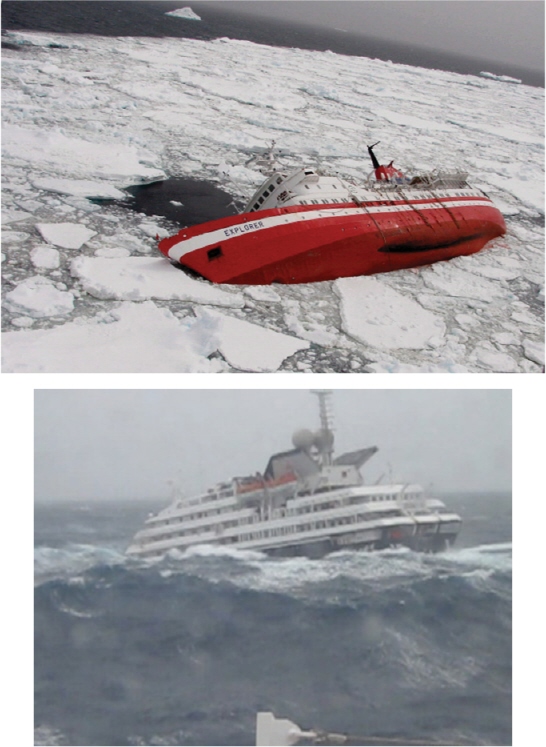
FIGURE 5.1 Top: The tourist ship Explorer capsized near the Antarctic Peninsula in November 2007. SOURCE: Fuerza Aerea de Chile via European Pressphoto Agency; Bottom: The Antarctic tourist ship Clelia II without power and making slow headway north of the South Shetland Islands in rough seas during December 2010. SOURCE: Copyright Stewart/McIntosh
cruise ships. More recently, the tourist ship Clelia II lost power and communications during particularly rough seas in the Drake Passage (Figure 5.1, bottom). Projections of sea ice changes during IPY have propelled and informed emergency preparedness and response mechanismsnd will continue to do so. Effective emergency preparedness and response will have to draw on data from both research and operational observing systems developed during IPY, with high demands placed on data availability and spatiotemporal resolution during an emergency. Hence, such information needs may turn into a powerful driver outside of the research community towards collaborative, internationally coordinated activities governed by open data/access practices as promoted during IPY.
As part of the Arctic Marine Shipping Assessment, the Coast Guard, the U.S. Arctic Research Commission, and the Coastal Response Research Center (a partnership between the University of New Hampshire and NOAA) organized a workshop of international experts to anticipate responses to environmental and safety incidents in the Arctic (Coastal Response Research Center, 2009). The workshop identified gaps in current response capabilities, assessed future response needs, and recommended improvements in the ability of Arctic nations and indigenous communities to prepare for and respond to marine incidents.
In response to the growing recognition of the need for more effective disaster planning, discussions were initiated during IPY that led to an agreement on search and rescue coordination that was signed in May 2011 by the foreign ministers of the eight Arctic states that constitute the Arctic Council.
Information for Ecosystem Management
IPY identified new marine and terrestrial species, habitats, and ranges, which greatly expanded understanding and awareness of polar biodiversity. Better understanding of polar ecosystem dynamics has in turn spurred a number of new initiatives aimed at managing human activities in the oceans, with an eye toward protecting biodiversity and maintaining ecosystem functions as these ecosystems undergo profound change due to global warming, including ocean acidification (Box 5.4). For example, the Arctic and ecosystem-based management are among nine strategic priorities identified under the United States’ newly adopted U.S. National Oceans Policy. Since the July 2010 Executive Order establishing the Policy, the Administration has moved forward with a number of initiatives to advance ecosystem-based management in the Arctic Ocean. In May 2010 the foreign ministers of the eight Arctic Council states agreed to establish an expert working group on ecosystem-based management. Ecosystem and species mapping and predictive modeling is helping to identify ecologically important and vulnerable areas, and will help inform new processes initiated within the United States and at the Arctic Council to promote ecosystem-based marine resource management.
BOX 5.4
Ocean Acidification
The increase in seawater acidity (decrease in pH) due to the uptake of anthropogenic carbon dioxide has been termed "ocean acidification." Given the scenarios ior pH changes in the Arctic Ocean and adjacent Arctic shelves seas, there will likely be an increasing impact by ocean acidification, with potentially negative implications for shelled benthic organisms as well as those animals that rely on the shelf seafloor ecosystem with consequent impacts to the fishing industry such as crab fishing. (Also see section in Chapter 2 on “Marine Carbon Cycling and Ocean Acidification”.)
After extensive debate and analysis of the consequences of the loss of sea ice on polar bear habitat, the U.S. Fish and Wildlife Service determined that a viable threat exists and will continue to threaten the polar bear species. A ruling was published in the Federal Register (U.S. Department of the Interior, 2008) on May 15, 2008, listing the polar bear as a threatened species under the Endangered Species Act (ESA). The ruling found that changes in the abundance, distribution, or existence of sea ice will have effects on the number and behavior of these animals and their prey.
Information for Fisheries
Documentation of the northward movement of commercial fish populations that occurred during IPY has opened the possibility of new commercial fisheries that will need management (at present, there is no international management mechanism in place to
manage fisheries in most of the Arctic Ocean). This possibility led the United States to proactively prohibit most commercial fishing in its waters north of the Bering Strait until better scientific information is available on the ecology of the region and the impacts of new commercial fishing on both subsistence users and the marine environment. As one online questionnaire respondent stated as part of the input to this report, “gathered biological data are providing the first pan-Arctic baseline to assess changes in Arctic marine biodiversity.” Informal international discussions are also under way regarding the establishment of some mechanism to manage commercial fisheries in the area of the Arctic Ocean where such mechanisms are lacking.
In the Antarctic, IPY-related scientific data are being generated for use in policy-relevant conservation and management efforts related to fisheries and tourism. The Conservation of Antarctic Marine Living Resources (CCAMLR) is an organization that was established in 1982 as part of the Antarctic Treaty system. CCAMLR manages and sets fishing limits in the Southern Ocean, identifies needed research, and is involved in monitoring environmental impact. The Southern Ocean Global Ocean Ecosystems Dynamics Program (SO GLOBEC; described in Chapter 4), was an international multidisciplinary effort during IPY, designed to examine the growth, reproduction, recruitment, and overwintering survival of Antarctic krill (Euphausia superba). The rising recognition of krill as a key element of Antarctic ecosystem function during IPY led CCAMLR to spatially allocate the fishery to prevent the catch from being concentrated in a small area, and to mandate scientific observers on at least half the ships harvesting krill.
Information for Offshore Oil and Gas Development
In 2008, the U.S. Geological Survey (USGS) completed the Circum-Arctic Resource Appraisal, an assessment of undiscovered conventional oil and gas resources in all areas north of the Arctic Circle (Figure 5.2). The USGS estimated that the Arctic accounts for about 13 percent of the undiscovered oil, 30 percent of the undiscovered natural gas, and 20 percent of the undiscovered natural gas liquids in the world, about 84 percent of which are expected to occur offshore. It is estimated that these resources may account for about 22 percent of the undiscovered, technically recoverable resources in the world.
Planning for Arctic offshore oil and gas development requires projections of sea ice as well as other marine ecosystem information, from subsea permafrost status and trends to the projected distribution of marine wildlife in and around drilling sites. Information generated during and after IPY will play an essential role in permitting and other decisions (National Commission on the BP Deepwater Horizon Oil Spill and Offshore Drilling, 2011).
Information for Onshore Development
Arctic and subarctic wildfire frequency and severity have increased markedly in the past decade (Kasischke et al., 2011) with important impacts to natural ecosystems and the social network dependent upon them (Chapin and Lovecraft, 2011). Insurance companies are revisiting their procedures for coverage of structures in fire-prone areas, including prescribing techniques of fire protection to home owners. State, federal, and local land managers need to strategically position equipment and manpower and to consider long-term effects of fire and the changing trajectories of ecosystem recovery (Payne, 2010).
Construction and new development in a period of warming present unprecedented challenges for design engineers. In the past, design protocols were based upon compilations of measurements of actual field conditions (for example, Hartman and Johnson, 1978). However, documentation of circumpolar warming has forced engineers to realize that future environmental conditions will fall outside the domain of historical observations; therefore it is necessary to include projections of warming and potential thawing in design of roads, buildings, and other infrastructure (McGregor, 2010).
Projects such as the IPY Thermal State of Permafrost (Romanovsky et al., 2008) demonstrated to the engineering community that warming is nearly ubiquitous throughout the high northern latitudes and that new approaches are required for construction in ice-rich environments. “Warming rates are much smaller for permafrost already at temperatures close to 0°C compared with colder permafrost, especially for
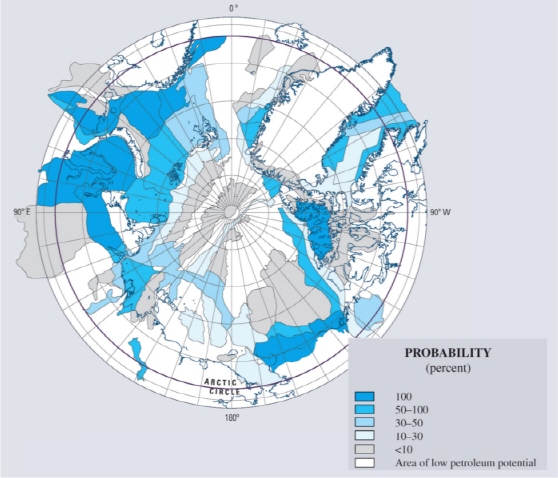
FIGURE 5.2 Potential oil and natural gas reservoirs in the Arctic account for a significant percentage of the world’s energy resources. Map shows assessment units (AUs)—mappable volumes of rock with common geologic traits—in the Circum-Arctic Resource Appraisal (CARA) color-coded by assessed probability of the presence of at least one undiscovered oil and/or gas field with recoverable resources greater than 50 million barrels of oil equivalent (MMBOE). Probabilities for AUs are based on the entire area of the AU, including any parts south of the Arctic Circle. SOURCE: Bird et al., 2008.
ice-rich permafrost where latent heat effects dominate the ground thermal regime. Colder permafrost sites are warming more rapidly.”6 New construction techniques are being developed to passively cool roadbeds in icerich permafrost terrain to maintain thermal stability and structural integrity (Xu and Goering, 2008).
Continued warming will limit use of ice roads, which are now commonly used in Northern Canada, Alaska, and Siberia. By 2050, inland regions of the Arctic, now accessible through seasonally constructed ice roads, may become inaccessible (Stephenson et al., 2011). Presently, seasonal transportation and construction in winter allows access to vast roadless regions, minimizing environmental impacts and construction costs. Most of the communities connected by the roads
______________________
6Vladimir Romanovsky, University of Alaska, Fairbanks, personal communication, 2011.
are small, remote villages, so it will not be economical to replace the ice roads with all-weather roads.
Issues of Sovereignty and Security
Rapid environmental changes establish conditions that create more favorable local climates in some regions of the Earth but that in other regions may threaten societies and the environment. Even in the midlatitudes, climate change will exacerbate drought in some regions and flooding in others, enough to make human habitation difficult in some areas where cities currently flourish (IPCC, 2011). The U.S. Army has realized the potential of this to cause international conflict, and this has been an increasing topic of concern and activity in U.S. Army future scenario planning.7
Seabed mapping and sampling associated with IPY has been important to inform the development of the U.S. submission to the Commission on the Limits of the Continental Shelf regarding territorial claims on the outer continental shelf. Understanding of the continental shelf and its relationship to the surrounding seas is required under the Law of the Sea Treaty, which allows the Arctic rim countries, including the United States, Canada, Denmark, Norway, and Russia to make claims for undersea resources on, above, and underneath the seabed up to 200 miles from their natural coasts.8
In the summer of 2007, just as IPY was getting under way, a Russian expedition sent a submarine to the seabed on the Lomonosov Ridge to plant the Russian flag, claiming that it was an extension of their continental shelf. This action did not trigger any response or reaction from the U.S. military. As reported by a think tank of international representatives from government, military, and economic sectors, there is no perceived military threat in the Arctic. Rather, the greatest security threat in the Arctic arises from environmental or natural disasters, and an urgent need remains to establish regional and international coordination and cooperation in preventing and mitigating such events (Carnegie Foundation, 2008).
The U.S. Navy Postgraduate School in Monterey, California, was active in sea ice modeling and monitoring, though in contrast to the IGY, the operational Navy was not an active participant in IPY 2007-2008. 9 However, as the importance and urgency of the Arctic ice retreat became evident during the IPY years, the Navy, U.S. Coast Guard, NOAA, ONR, National Ice Center, and NSF cosponsored three symposia on the “Impact of the Ice-Diminishing Arctic on the Naval and Maritime Operations.”10 Also, in 2011, ONR reestablished targeted research efforts in polar regions through the Arctic and Global Prediction Program. ONR will expand upon the extensive understanding of sea ice dynamics that was gained during IPY.
Polar Policy
In response to the information generated in part during IPY, governments have undertaken significant revisions of their policies. While the United Nations Law of the Sea still remains unsigned by the U.S. government, there were assertive actions by U.S. governmental agencies during IPY. During IPY years, the projections for ice-free Arctic summers, rising sea level, and increased need for disaster response in the Arctic led to U.S. Navy and Coast Guard planning for Arctic conditions that are unlike those of past decades (Arctic Council, 2009). In January 2009, President George W. Bush signed the National Security Presidential Directive 66 and Homeland Security Presidential Directive 25 on Arctic Regional Policy. These directives establish policies aimed at meeting national and homeland security needs in the Arctic, protect the Arctic environment and conserve its biological resources, strengthen institutions for international cooperation, involve the Arctic’s indigenous communities in decisions that affect them, and enhance scientific monitoring and research in local, regional, and global environmental issues.
IPY also coincided with a general recognition that Arctic geopolitics have entered into a new era of strengthened indigenous rights, increased attention
______________________
7www.armyscienceconference.com.
8http://oceanservice.noaa.gov/facts/eez.html.
9 In 1948, the US Navy, Office of Naval Research (ONR) established the Naval Arctic Research Laboratory (NARL) in Barrow, Alaska. With the end of the Cold War and no broad acceptance that climate change was a serious problem, this facility was closed 1980 and ORN focused on research in more temperate regions. In 2000, the US Navy began to consider the actions needed to prepare for Naval Operations in an Ice-free Arctic.
10 In 2007, www.star.nesdis.noaa.gov/star/IceSymposium.php; 2009, www.star.nesdis.noaa.gov/star/IceSymposium2009.php; 2011, www.star.nesdis.noaa.gov/star/Ice2011.php.
to Arctic matters by non-Arctic Asian and European nations, and an emerging role of the Arctic Council and other international frameworks. These trends were manifested through increasingly active role of the Arctic Council and its six Permanent Participants representing polar indigenous peoples in promoting new science initiatives during the IPY years and in promoting IPY itself. Several IPY projects and resulting publications addressed the sociopolitical and policy aspects of the changing status of the polar regions (i.e., Berkman et al., 2011; Launius et al., 2010; Shadian and Tennberg, 2009).
The Inuit Circumpolar Council (ICC) is an international indigenous peoples’ organization representing approximately 160,000 Inuit living in the Arctic regions of Alaska, Canada, Greenland, and Chukotka (Russia). The ICC had U.S. partners at universities and agencies within the United States during IPY, both for actions on joint IPY projects and also for discussions on international issues. In 2007, the ICC was successful in moving forward a new United Nations declaration on the Rights of Indigenous Peoples Act.11 UN Resolution 61/295 adopted in September 2007 identifies the declaration as an international standard of achievement to be pursued in a spirit of partnership and mutual respect, with 46 articles spanning a large range of rights, including self-determination, rights not to be subjected to forced assimilation or destruction of culture, rights to participation in decision-making matters that would affect their rights, and rights to redress for lands and traditional resources that have been used or damaged without their consent. As perhaps the first people to be severely affected by a climate change caused primarily by industrialized nations, the Inuit moved to action during the IPY years.
In 2008, ICC convened an IPY climate change policy workshop aboard the vessel CCGS Amundsen, which brought together climate change scientists and Inuit leaders to address the effects of climate change in the Arctic region. Based on insights from these leaders, the ICC released the “Amundsen Statement: 2012 Climate Change Roadmap,”12 which highlighted their strategy for addressing the potential impacts of global climate change. Building upon the Amundsen statement and in response to rising greenhouse gas emissions and the devastating effects of warming in the Arctic, the ICC issued a Call to Action during the COP15 meetings that addressed many issues, including calling on global leaders at COP15 to help sustain Inuit lands and territories by ratifying a post-2012 agreement to help stabilize greenhouse gas concentrations at 350 ppm in order to maintain long-term global temperature increases well below 2°C.
While the Arctic had the Arctic Climate Impact Assessment (ACIA, 2005) as a foundation coming into IPY, an analogous report was developed and released for the Antarctic during IPY. Called the Antarctic Climate Change and the Environment (ACCE; Turner et al., 2009), the report was sponsored by the Scientific Committee on Antarctic Research (SCAR). Like ACIA, it is a seminal synthesis of scientific findings that provides a comprehensive and authoritative analysis useful for informing policy decisions.
The Antarctic Treaty (Secretariat of the Antarctic Treaty, 2009), a major international document that followed on the heels of the IGY years, has been periodically updated, and a variety of new initiatives that link policy with the environment were advanced at several Antarctic Treaty Consultative Meetings during the IPY time frame, specifically the ATCM XXXII in Baltimore, Maryland (April 2009), which was the first-ever joint meeting of the Arctic Council with the Antarctic Treaty Consultative Meeting, and the Antarctic Treaty “Summit” dedicated to the 50th anniversary of the Antarctic Treaty in December 2009 (Berkman, 1960).
These initiatives were informed by the ACCE report and other findings and included a number of sciencebased conservation and protection initiatives put forth by the Committee on Environmental Protection on a broad spectrum of topics, including climate impacts on the environment, biological indicators of human impact, disturbance on wildlife, and introduction of nonnative species. The ACCE had multiple U.S. coauthors, and the report has had wide visibility in Antarctic Treaty meetings, in IPCC discussions, and the United Nations Framework Conventions on Climate Change (UNFCCC) meetings.
______________________
Decision Making Beyond the Poles
Global Sea Level Rise
The current rapid climate change that is most evident in the polar regions will affect all of humanity, either directly or indirectly. The ongoing demise of glaciers and ice sheets is contributing to global sea level rise that affects coastal communities and cities worldwide, but due to gravitational effects, it will cause the most marked rise in North America and the Arctic (Raymo et al., 2011). Research conducted during IPY helped quantify how the ice sheets are changing, advanced our understanding of the driving mechanisms, and furthered our knowledge of the rheology of the ice sheets. Flooding of cities and increased coastal storm damage is projected to cause billions of dollars of damage within the timespan of a human lifetime (IPCC, 2007a; Nicholls et al., 2007).
Public awareness of the role of ice sheets and glaciers in the climate system and their direct effect on sea level grew during IPY. For example, the California Coastal Commission met with scientists in 2009 with the aim of using scientific results on sea level rise to inform their decisions on infrastructure planning along the California coast.13 The state of Delaware has developed a sea level rise action plan that rests upon estimates of future sea level rise from scientific studies (Valencik, 2010). New York City’s “Responding to Climate Change in New York State” assessment running from 2008-2010 (Rosenzweig et al., 2011) used “rapid ice melt scenario based on accelerated melting of the Greenland and West Antarctic Ice Sheets” in its projection of potential sea level rise.
Sub-Arctic Weather
The “Warm Arctic-Cold Continent” weather pattern can influence sub-Arctic weather and is thus important for midlatitude forecasts.14 Characterizing and quantifying teleconnections among polar processes and subpolar or temperate region responses is difficult. Record warm weather in the Arctic over the past 5 years may have played some role in affecting the weather in lower latitudes, including colder winter temperatures. The character of extreme winter events is influenced by many factors, including both climate oscillations such as El Niño, as well as longer-term trends such as changes in the Arctic stratosphere and snow cover.
Changing weather patterns in the midlatitudes, in some cases precipitated by changing conditions in the polar regions, will affect agriculture, forestry, and lifestyles in many places on Earth. These teleconnections of the Warm Arctic-Cold Continent require further research through observational and modeling studies (this is also described in Chapter 2 in the section on “Sea Ice Vulnerability and Teleconnections to Society”).
Levers and Hurdles
In making connections between knowledge and action, there are many hurdles that need to be overcome, with some interesting levers (opportunities to encourage action) identified through IPY activities.
The IPY framework served several important functions in connecting knowledge with action. IPY was seen as a neutral space where the goal was the pursuit and dissemination of knowledge. Academics and researchers were largely viewed as honest brokers who would represent their findings without bias. For example, the Extreme Ice Survey15 documentary on the National Geographic Channel during IPY generated great interest and public engagement. This translation of climate information into public action is new and growing, and it was greatly facilitated by the publicity generated by IPY. Thus IPY contributed to a knowledge base that could then be used by others to suit their needs.
A new aspect of the “knowledge to action” function of science research during this IPY is that it helped engage local stakeholders and was instrumental in generating the capacity-building momentum in the U.S. polar regions. In earlier IPYs/IGY, there was little if any local research infrastructure in Alaska besides the fledging university campus in Fairbanks (then called “College”). During the IPY 2007-2008 era, numerous local players in the State of Alaska were among the key beneficiaries of the U.S. engagement in IPY. The University of Alaska system of three urban and several rural campuses ran its own IPY program that was one of the
______________________
13http://institute.lanl.gov/igpp/_docs/Final_SLR_workshop5-11.
pdf.
14www.arctic.noaa.gov/future/warm_arctic_cold_continent.html.
largest in the nation; this included active IPY research programs in a wide variety of scientific disciplines and the initiation of 11 postdoctoral fellowships for research that embraced the IPY philosophy and criteria.
The newly expanded Barrow Arctic Science Consortium facility in Barrow acted as a major hub for several IPY projects, ensuring the flow of resources, knowledge, and practices to the Barrow community and local institutions. State offices of many federal agencies, including NOAA, USGS, NPS, HHS, Fish and Wildlife Service, Environmental Protection Agency, and U.S. Coast Guard were actively engaged in IPY research. IPY produced tangible practical outcomes to local stakeholders, such as improved services, flow of data, improved data management, and monitoring capacities, as well as active outreach programs.
A special “knowledge to action” impact of IPY was the engagement of northern residents and indigenous organizations.
The inclusion of “human dimensions” in IPY 2007-2008 program took it to the next level, but the vision of the IPY organizers eventually expanded the notion of inclusiveness to the range never experienced in the previous “polar years.” Arctic residents, especially indigenous peoples, were recognized as important stakeholders, collaborators and drivers of new research, and, for the first time, were explicitly called upon to participate in IPY science. (IPCC, 2007a)
Other indigenous organizations in the State of Alaska (Eskimo Walrus Commission, Nanuq/Polar Bear Commission) as well as dozens of local communities, from Barrow to tiny Shaktoolik (population 160) took part in the impressive spectrum of IPY research, from sea ice and weather observations to language documentation, human health, and community heritage programs. New technologies, improved data management, and knowledge sharing (Gearheard et al., 2011), better forecasting and health services, trained local personnel, and science-inspired indigenous youth were the obvious benefits of the unprecedented local engagement in IPY research. Nothing of this kind had been achieved in any previous national polar program, including IGY 1957-1958 or the earlier IPY-1 and IPY-2.
As polar scientists were drawn during IPY into working with stakeholders, scientists faced several challenges. First, most polar scientists are not trained to provide actionable advice; they are trained to conduct and interpret scientific analyses. Second, through their experience with IPY, many participants became increasingly aware of the value of communication through education and outreach, but they also came to recognize that different audiences require different communication approaches. This has challenged the polar community to learn how to express themselves in ways that are scientifically accurate but also meaningful to a variety of audiences. Several IPY-supported activities invested in training scientists to be better communicators.
Third, anthropogenic contributions to the warming and acidification trends observed in polar regions have led many polar scientists to see the need to reduce future impacts through decreasing the emissions of greenhouse gases. As researchers seek, or are called on, to integrate their research with decision making, they find that they encounter a complex set of issues in connecting knowledge with action. Who makes decisions? What information do they need for their decision making? Who implements changes? What structures incentivize change?
Interactions have become increasingly difficult with the polarization of the political and cultural landscape (Overland and Wang, 2009). This has further complicated the task many scientists faced in navigating the line between conducting polar research to inform action, and conducting research to promote action. While the community survey run by this committee revealed concerns when there is a “mixing of advocacy with science” (Sur-vey Response #157392819), there is a growing sense in the polar research and education community that “IPY has made ’knowledge to action’ a proper domain for scientists—in the past it was often disregarded as ’activism" (Survey Response #158556187).
Lastly, with respect to scientific data, decision makers, educators, and the general public are increasingly accessing data directly in order to tailor their own analyses and interpretations. The fundamental concept of the Arctic Observing Network (AON) was rapid access to all data. Specifically, NSF, as a core supporter of AON, reflected decision maker and scientific community interests in stipulating that data from AON cannot be embargoed and needs to be made available immediately after collection. With more than 50 active AON projects, this open-access policy ensures that long-term Arctic observations collected through a research network can also help serve increasingly importrant operational needs.
BOX 5.5
Perspectives on “Knowledge to Action” During IPY
In the course of conducting this study, the Committee gathered perspectives on the importance of converting knowledge to action during IPY from those inside and outside of the polar research community. Some examples include:
“The U.S. has huge geopolitical interests in the Arctic region, and we need to understand the changes that are taking place there. Many other countries have direct economic interests in the Arctic, and all are served by joining forces in IPY research. Additionally the rapidly diminishing ice in the Arctic is creating new opportunities for transport and marine resource development.”
—John H. Marburger III, U.S. Science Adviser under President
George W. Bush (Revkin, 2007)
“I would think a strong take-away from this IPY would be a decision to include effective communications plans, and resources for them, in every aspect of the effort.”
—Roger Launius, Smithsonian Institution
“Significantly, IPY has made impressive progress with the last goal—educating the public and decision-makers. As a variety of high profile events and publications shared some of the program’s early scientific results, it became increasingly obvious that national and international policy-makers and the public are beginning to recognize the Arctic’s scientific and strategic importance. From international diplomatic events to presidential policy changes and increased science budgets, the events of the past few months show that arctic science no longer operates in obscurity. In this new era of arctic awareness, it is incumbent on the members of the research community to be prepared—both to maximize the many opportunities the new era brings and to think through the policy implications of their work.”
—Mead Treadwell, Lt. Governor of Alaska (Treadwell, 2009)
“Key challenges in the post-IPY phase are how to sustain this engagement, which will require an investment of some sort to help institutionalize the hubs that allow much of these activities to occur. Here, a concerted effort across different federal, state and local agencies is needed.”
—Hajo Eicken. University of Alaska, Fairbanks
“Many elements of the IPY networks and initiatives can provide the seeds for further development of a comprehensive polar observing system. At present, these initiatives are acting separately, and their integration, ensuring data delivery and optimization should turn them into the first functioning polar observing system, which is able to provide data for scientific research and practical applications. Cooperation of the IPYborn observing systems mostly driven so far by scientific and academic institutions with agencies having operational responsibilities should be encouraged to sustain the achieved and required IPY legacy in terms of polar observations.”
— Vladimir Romanovsky, University of Alaska, Fairbanks
“Over the past decade, including the IPY, the awareness of the scientific community has been heightened with respect to stakeholder needs. We are now paying much more attention to stakeholder needs and we are integrating these needs into our research planning.”
— Peter Schlosser, Columbia University
“We are encouraged by discoveries made during the International Polar Year. Look at what’s been accomplished: scientists produced detailed maps of the last unexplored mountain range on Earth, sent robot submarines under the Antarctic Ice Shelf to map the sea beds, drilled deep beneath the sea floor to learn more about the effects of carbon dioxide on the West Antarctic Ice Sheet, and shed light on how climate change affects the microscopic life at the base of our ecosystem. Together, these discoveries will advance our understanding and hopefully inspire us to work more closely together to limit the impacts on our lives.”
—Hillary Clinton, U.S. Secretary of State (Clinton. 2009)
For example, in development of their “Arctic Roadmap,” the U.S. Navy includes the Arctic Observing Network among the important assets and describes the need to increase operations of unmanned systems for Arctic data collection, monitoring, and research (U.S. Navy, 2009). Compared to the data sharing that occurs within academic research groups, there is comparatively modest engagement by the private sector. “In particular the resource industries are making major investments in the Arctic, yet, there is comparatively little coordination and data exchange between industry and academia.”16 There may be a role for regulatory agencies to promote free data access along with leasing requirements.
CONCLUSIONS
The polar science community gained a wealth of experience during IPY in learning to understand and
______________________
16 Hajo Eicken, University of Alaska Fairbanks, personal communication, 2011.
manage change in a time of change (Box 5.5). IPY showed that training and continued exposure of scientists to addressing real and present issues increases their effectiveness in connecting knowledge with action, by improving communication skills, influencing research agendas, and by direct experience of navigating the line between communication and advocacy. This sets a stage of readiness within the polar community that is important for tackling future research endeavors. Looking ahead, further development of two-way communication, observing systems, and predictive capability is needed to maintain and extend connecting knowledge with action. At the time of this report-writing, the concluding IPY Conference is scheduled to take place in April 2012, and will highlight this theme of “knowledge to action.”


