
5
Causes and Consequences of Child
Maltreatment
Key Points Raised by Individual Speakers
• Neighborhoods exert influences on child maltreatment through multiple pathways, which in turn are influenced by the characteristics of the families and children in a neighborhood.
• Contextual factors are important in understanding the etiology, prevention, and treatment of child maltreatment.
• Childhood neglect produces demonstrable changes in brain structures and function that can be at least partially reversed by interventions.
• Similarly, childhood physical and sexual abuse produces changes in the brain that are linked to a wide range of psychiatric disorders.
• Multiple brain structures and functions may be affected by early childhood trauma, which has attracted great interest, but research in these areas is still in an early stage of development.
Child maltreatment has many causes and many consequences, some of which function in both roles. Three speakers at the workshop examined particular aspects of these causal relationships and their feedback loops on each other. One looked at the influence of neighborhoods on child maltreatment. The other two examined how neglect, early trauma, and stress influence the brain; the expansion of the neuroscience research on the impact of child maltreatment on neurobiology represents one of the research areas that has shown the most growth in recent years. While a single workshop session could not address the broad range of causes and consequences of child maltreatment, together the three presentations exemplified many of the issues involved in studying the causes and consequences of child maltreatment.
INFLUENCE OF NEIGHBORHOOD ON CHILD
MALTREATMENT BEHAVIORS AND REPORTS
One contextual factor that can contribute to both child maltreatment behaviors and reports is the neighborhood in which a family lives, observed Jill Korbin, associate dean, professor of anthropology, director of the Schubert Center for Child Studies, and codirector of the Childhood Studies Program in the College of Arts and Sciences at Case Western Reserve University. Korbin was also on the panel that produced the 1993 NRC report. Neighborhoods exert their influence on families in multiple ways, but these influences are measurable, Korbin said. Getting a full measure of these influences requires mixed-methods research, multiple perspectives, and sophisticated statistical techniques. Nevertheless, this research bears considerable promise in revealing the impact of social environments on child maltreatment behaviors and reports.
Models of Neighborhood Influences
The 1993 NRC report used an ecologically integrative model drawn from the work of Belsky (1980; NRC, 1993). This model envisions the ontogenetic development of an individual within the frame of the family microsystem, which in turn is framed by the community exosystem and the cultural macrosystem (Figure 4). Since the 1993 NRC report, research has explored the workings of each of these systems, yet some of the research needs identified 20 years ago remain significant needs today.
Some theoretical approaches to child maltreatment stem from social organization and human development theory that predate the 1993 NRC report, said Korbin. But a review of more recent research that Korbin and her colleagues conducted identified three newer theoretical approaches. One looks at the association between structural characteristics of a neighborhood and child maltreatment behaviors and reports. These structural characteristics include socioeconomic measures, but they also include factors such as demographics, the number of children compared with adults, and what is sometimes called the child care burden. A second theoretical approach has examined the effect of neighborhood processes on child maltreatment, though the associations between these processes and child maltreatment are weaker and less well understood. A third approach considers the differences in dynamics among different neighborhoods.
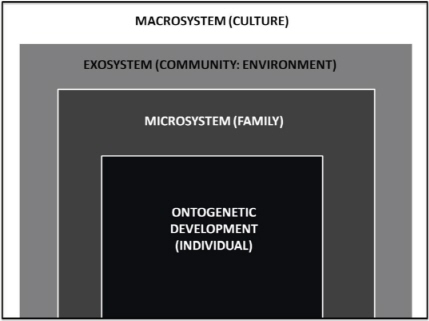
FIGURE 4 Diagram of Belsky’s (1980) ecologically integrative model of child abuse.
SOURCE: NRC, 1993, p. 110.
Pathways of Influence
Korbin and colleagues’ review identified three potential pathways through which neighborhoods influence maltreatment (Figure 5). One is through neighborhood influences on behavior. A second is through neighborhood influences on the definition, recognition, and reporting of maltreatment. A third is through family and child characteristics. The three are not independent, said Korbin, but each has implications for research, policy, and practice.
Research has demonstrated that child maltreatment reports are concentrated in neighborhoods that have high levels of disadvantage, such as more poor parents and more young parents. However, research has devoted less attention to the neighborhood processes that affect maltreatment behaviors and reports. These processes can exert their effects through transactional processes, exemplified by the balance between environmental stressors and social support, as well as through processes
involving definition, recognition, and reporting. For example, ethnographic research has looked at neighborhoods where impoverishment has a weaker effect on families and children because of stronger social supports.
Studies that have examined how child maltreatment is defined, recognized, and reported have always been controversial. However, these research questions remain important, said Korbin. For example, are changes in reports of abuse and neglect because of greater scrutiny of poor neighborhoods, the increased use of public services, or stress from living in poor neighborhoods? Such questions are also factors in looking at disproportionalities in the rate at which segments of the population are represented in abuse and neglect reports.
As another example of the research questions raised by this analytic framework, Korbin mentioned the impacts of selection bias and residential mobility on neighborhood characteristics. Researchers do not fully understand how people sort themselves into neighborhoods. It can be especially difficult to separate a neighborhood characteristic from the characteristics of the children and families who live there.
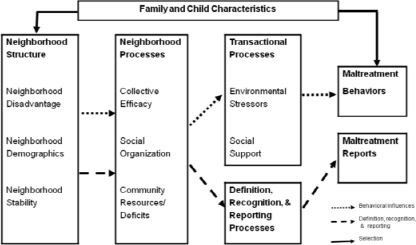
FIGURE 5 Neighborhoods’ influence on child maltreatment through alternative pathways.
SOURCE: Coulton et al., 2007, reprinted with permission from Elsevier.
Understanding Neighborhoods
Complexities arise in understanding how neighborhoods impact child maltreatment. First, how do people define a neighborhood? Possibilities include residents’ perceptions, Census tracts, block groups, or ZIP codes. Census definitions have considerable appeal, said Korbin, but Census blocks are not necessarily how residents define their boundaries. Neighborhood boundaries also vary between children and adults. “There are ways to deal with this by looking at common areas or centroids, but we need to be very conscious of what we mean by neighborhoods,” said Korbin.
Neighborhoods also are not independent units. For example, research has shown that contact with nearby neighborhoods that are not as disadvantaged may improve outcomes for children and families.
Finally, neighborhoods differ in their relationship to factors demonstrated by research to influence child maltreatment, such as social isolation or collective efficacy.
A full understanding of neighborhoods requires mixed methods research and multiple perspectives, said Korbin. This entails aggregate and structural measures, surveys, ethnography, structured observations, and interviews. “We can’t hope to understand the neighborhood impact without talking to people who live there,” she said.
Korbin also noted the importance of wider contextual factors, including culture.
Future Research Based on Neighborhood Influence
Korbin identified several research priorities suggested by her and her colleagues’ framework for understanding pathways of potential neighborhood influences. Regarding behavioral influences, research is needed to better understand neighborhood conditions, with implications specifically for prevention and interventions to improve neighborhood context. With regard to definitions, recognition, and reporting, research is needed to better understand the factors involved, with implications specifically for improving recognition and reporting practices and policies. In the area of family and child characteristics, research should seek a better understanding of residential selection and efforts to improve housing and neighborhood conditions.
Discussion
During the discussion period, Putnam, from Cincinnati Children’s Hospital Medical Center and the University of North Carolina School of Medicine, described some work that he and a colleague have done in which they were able to predict the geographic locations of a large portion of child maltreatment cases using just five Census tract variables. Similar studies have shown fairly strong correlations between macroeconomic variables like employment changes and child maltreatment rates, he added, raising the question of whether macroeconomic indexes and Census tract data could identify child maltreatment hotspots faster than national data systems. In response, Korbin noted that in their research neighborhood, structural factors also predicted things like low birthweight and teen pregnancy. But she added that it is also important to look at how people regard their neighborhoods as places to live. For example, impoverishment has very different effects depending on the level of perceived social support in the neighborhood.
Jessie Watrous with the Annie E. Casey Foundation asked whether the increased cohesion and social protection provided by some communities might increase reports of child maltreatment, which might distort measures of the incidence of maltreatment. Korbin said that this is an important point and a challenge that should be welcomed. “Do you have wider community norms about what is good or bad for children?” Multiple trends can occur in any given neighborhood, she said. People living in urban neighborhoods are very hesitant to intervene in the behavior of other people’s children. At the same time, neighborhoods contain people who are eager to protect children. These countervailing trends should be examined in more depth, she said. Following Korbin’s presentation, the focus of this workshop session turned from the influence of neighborhood on child maltreatment to the neurobiological consequences of neglect, trauma, and stress.
Humans are an altricial species, which means that throughout early development the young child is very dependent on input from the caregiver. Infants depend on caregivers for temperature regulation, neuroendocrine regulation, protection from infection—“just about everything,” said Mary Dozier, Amy E. du Pont Chair of Child Development and professor of psychology at the University of Delaware. When infants or
children do not receive sufficient input, they can die, or serious behavioral and neurobiological consequences can ensue.
Consequences of Neglect
Neglect can take many different forms, said Dozier. For example, in some institutional settings, infants and children have relatively few interactions with caregivers. In other cases, birth families neglect children who later come to the attention of CPS agencies. This range of neglect provides many opportunities for research into the consequences of neglect.
Children from institutional care often show very stunted growth, though that growth can recover quickly when care improves. Children in foster care also show somewhat stunted growth on average, and children with adverse early experiences can have compromised immune system function. Effects of neglect on behavior include changes in executive functioning, attention disorders, and affective disorders such as depression and anxiety.
Effects on behavior have a bidirectional relationship with changes in the brain, Dozier observed. Early experiences have effects on newly formed connections within the developing brain as well as on the pruning of connections. In turn, these connections modify physiological functioning and behavior. In this way, early experiences can become “biologically embedded” within the developing brain.
Vulnerable Brain Systems
Dozier focused on three developing brain systems that are especially dependent on environmental input—the hypothalamus-pituitary-adrenal (HPA) axis, the amygdala, and the prefrontal cortex.
The HPA axis both produces the steroid hormone cortisol and is affected by cortisol. This system is highly sensitive to the effects of early experience, and the rest of the body is sensitive to this system. It influences short-term physiological systems such as the stress response and long-term systems such as brain development.
Cortisol levels exhibit a diurnal pattern that is essentially independent of the stress response, with higher levels in the morning and lower levels in the evening. However, foster children exhibit flatter diurnal patterns, while neglected children show little change over the course of the day (Bernard et al., 2010). This suggests that there is a basic disruption to a biological system as the result of experiencing neglect, which certainly
has implications for growth and immune system functioning, and plausibly for the developing brain, Dozier said.
The amygdala, which is the center for processing emotional information in the brain, develops alongside the HPA axis, has a more protracted period of development, and is affected by the developing HPA axis. Early adversity leads to a sensitized amygdala, said Dozier, and a sensitized amygdala is seen among children and adults with greater anxiety. A magnetic resonance imaging study has shown that children who have been institutionalized tend to have a larger amygdala than children who have not been institutionalized (Tottenham et al., 2010). Children who have been neglected have a greater activation of the left amygdala on average when viewing fearful faces than other children.
Finally, the frontal systems, which are responsible for a variety of executive functions in the brain, are very sensitive to early experience. For example, children who have been institutionalized are more likely to show brain wave patterns associated with attention-deficit/hyperactivity disorder (ADHD) (McLaughlin et al., 2010).
Future Opportunities: The Promise of Brain Plasticity
In all of the cases Dozier mentioned, interventions can at least partially reverse the effects of early adverse experiences. For example, parenting interventions can resume the diurnal pattern of cortisol levels seen in low-risk children. Children with deficits in their regulation of emotions or behavior can improve through interventions to counter the neglect they have experienced. “An enriched environment [or] adoption of kids who have been institutionalized, along with other interventions, can enhance regulatory abilities and also change brain functioning,” said Dozier.
Abuse has gotten more attention in the neurobiology research literature than has neglect, but it is becoming increasingly possible to examine the consequences of neglect and possible interventions. All of these possibilities can now be investigated neurobiologically, which has created great excitement in the research community, said Dozier.
NEUROBIOLOGY OF TRAUMA AND STRESS
ASSOCIATED WITH ADVERSE EARLY EXPERIENCE
Childhood abuse is associated with a wide range of psychiatric disorders, including impulse-control disorders like ADHD, drug and alcohol
abuse, antisocial personality disorder, generalized anxiety and phobias, major depression, bipolar disorder, posttraumatic stress disorder (PTSD), borderline personality disorder, dissociative identity disorders, and even psychotic disorders. Childhood abuse “is a huge risk factor,” said Martin Teicher, director of the Developmental Biopsychiatry Research Program and Laboratory of Developmental Psychopharmacology at McLean Hospital and associate professor of psychiatry at Harvard Medical School.
Furthermore, the more adverse experiences a child has undergone, the greater the risk for depression, drug use, and attempted suicide. If all of these experiences could be eliminated, drug abuse would drop by an estimated 50 percent, current depression by 54 percent, alcoholism by 65 percent, suicide attempts by 67 percent, and intravenous drug use by 78 percent (Chapman et al., 2004; Dube et al., 2003).
Child abuse affects both the gray matter and the white matter in the brain, Teicher noted. However, brain regions differ in susceptibility. The key targets appear to be in the corticolimbic system, which is involved in emotion, behavior, and long-term memory. Also, sensor systems and pathways that convey the adverse sensory input appear to be affected. These effects depend on the timing of exposure. Some brain regions are particularly sensitive during particular parts of the lifespan, and some neurological and clinical consequences may be delayed from the time that brain changes occur.
Susceptible Brain Regions
Teicher focused on three brain regions: the corpus callosum, the prefrontal cortex, and the hippocampus.
The corpus callosum, which is the largest white matter fiber track in the brain, is the information super-highway between the left and right hemisphere. Myelinated regions like the corpus callosum are potentially vulnerable to the impacts of early exposure to excessive levels of stress hormones, which suppress the glial cell division that is critical for myelination. Studies show that children with a history of abuse or abuse and neglect have reduced volume of particular portions of the corpus callosum. Even verbal abuse can diminish the integrity of portions of the corpus callosum (Teicher et al., 2010).
The hippocampus, which plays a critical role in memory consolidation and retrieval, is also a key stress-sensitive structure in the brain. Abused children have reduced hippocampal volumes on average. Volume reduction in the left side of the hippocampus has been associated with maltreated subjects exhibiting PTSD or depression, while bilateral
volume reductions are associated with patients having borderline personality disorder or dissociative identity disorder.
Animal studies have shown that two portions of the hippocampus are particularly vulnerable to the effects of stress, the dentate gyrus and the CA3 portion of the cornu ammonis. More recently, studies in young adults who had been maltreated as children have revealed similar reductions (Teicher et al., 2012). These studies also have found changes in the sibiculum, which is a part of the hippocampus that suppresses HPA axis response to psychogenetic, but not physical, stimuli. The sibiculum also may play a role in substance abuse and psychosis (Grace, 2010).
The frontal lobes of the brain are important for attention, executive function, working memory, motivation, and behavioral inhibition. The prefrontal cortex is important in planning and anticipating outcomes as well as self-monitoring and self-awareness, which is necessary for the regulation of behavior. Studies have demonstrated a wide variety of effects of childhood abuse on these portions of the brain, said Teicher.
Sensitive Periods
The brain is molded by experiences that occur throughout the lifespan. However, experiences can exert a particularly powerful effect at selective stages of development.
For example, in a study of women who had experienced childhood sexual abuse at different ages, abuse occurring at 3 to 5 years of age had maximal effects on hippocampal volume, abuse occurring at 9 to 10 had greater effects on the corpus callosum, and abuse from 14 to 16 years of age had a particular effect on the prefrontal cortex (Andersen et al., 2008).
If stress exposure targets different brain regions based on the age of exposure, then exposure at different ages may lead to different clinical outcomes. This was found in a study of depressed patients who reported more abuse around age 6, which overlaps with a critical period in the development of the left hippocampus, and around age 16, which overlaps with a similar period in the development of the prefrontal cortex.
Evidence also points toward delays or silent periods in the consequences of abuse. For example, depression does not emerge at the onset of sexual abuse in childhood, but later in adult life. Teicher at al. (2009) found an average delay of about 9 years between the onset of abuse and the first episode of major depression. Similar results appear for drug abuse and binge drinking, where peaks in early adulthood are related to the degree of exposure to maltreatment. Studies in rats have indicated
that early stress affects hippocampal volume not at the time of the stress, but between the onset of puberty and early adulthood. “Time is of the essence in terms of when the brain is exposed to maltreatment and also when the manifestations emerge of adversity,” said Teicher.
The promising aspect of this research is that delayed effects may provide time to preempt the consequences of abuse, Teicher added.
The Nature of the Maltreatment
One hypothesis is that sexual abuse, physical abuse, and other forms of maltreatment such as witnessing domestic violence or verbal abuse have similar effects on the developing brain. Another possibility is that different types of maltreatment have unique effects related to the sensory systems activated and the ways in which specific events are processed.
Support for the second hypothesis comes from a study showing that repeated exposure to childhood sexual abuse reduces gray matter volume by 14 percent in the left primary and secondary visual cortex (Tomoda et al., 2009). In particular, the portion of the visual cortex involved in facial recognition is most strongly affected by exposure to childhood sexual abuse.
With verbal abuse, three fiber pathways in the brain are particularly affected: the arcuate fasciculus, which is associated with verbal IQ; the cingulum bundle, which connects the neocortex to the limbic system; and the fornix, which is another pathway involving the hippocampus associated with symptoms of anxiety and somatization (Choi et al., 2009). Parental verbal abuse and witnessing domestic violence are also associated with changes in the portions of the brain involved in listening and determining the emotional and memory responses to things that are seen.
Compared with abuse, neglect has a more consistent effect on the volume of the amygdala than the volume of the hippocampus. Both abuse and neglect cause increased amygdala activation in response to emotional faces, though the two tend to affect different sides of the amygdala.
These many different pathways and interrelations are complex. But the bottom line, said Teicher, is that abuse and neglect wire the brain to be more sensitized. Further exploration of these effects will have many implications for psychopathology, he concluded.
Discussion
In response to a question about whether enriched environments have been shown to produce changes in the brain, Teicher said that not much research has been done to investigate this effect in humans. Funding agencies are more likely to support research on disorders than wellbeing. “That may not be a good priority, but that is the way things go currently.”
Leventhal asked about the neurobiological effects of children who experience abuse at very young ages. Teicher said his research excluded any research subject who had injuries above the shoulder, but abuse below the head produces volumetric changes in prefrontal regions and alterations in the dopamine system, which is related to drug abuse, along with changes in the cerebellum and cortical pain pathways. “There is a whole panoply of things that go with physical abuse,” he said.


