
7
Propane1
Acute Exposure Guideline Levels
PREFACE
Under the authority of the Federal Advisory Committee Act (FACA) P.L. 92-463 of 1972, the National Advisory Committee for Acute Exposure Guideline Levels for Hazardous Substances (NAC/AEGL Committee) has been established to identify, review, and interpret relevant toxicologic and other scientific data and develop AEGLs for high-priority, acutely toxic chemicals.
AEGLs represent threshold exposure limits for the general public and are applicable to emergency exposure periods ranging from 10 minutes (min) to 8 hours (h). Three levels—AEGL-1, AEGL-2, and AEGL-3—are developed for each of five exposure periods (10 and 30 min and 1, 4, and 8 h) and are distinguished by varying degrees of severity of toxic effects. The three AEGLs are defined as follows:
AEGL-1 is the airborne concentration (expressed as parts per million or milligrams per cubic meter [ppm or mg/m3]) of a substance above which it is predicted that the general population, including susceptible individuals, could experience notable discomfort, irritation, or certain asymptomatic, nonsensory

1 This document was prepared by the AEGL Development Team composed of Peter Bos (RIVM, The Dutch National Institute of Public Health and the Environment), Julie M. Klotzbach (Syracuse Research Corporation), Chemical Managers Steven Barbee and Larry Gephart (National Advisory Committee [NAC] on Acute Exposure Guideline Levels for Hazardous Substances), and Ernest V. Falke (U.S. Environmental Protection Agency). The NAC reviewed and revised the document and AEGLs as deemed necessary. Both the document and the AEGL values were then reviewed by the National Research Council (NRC) Committee on Acute Exposure Guideline Levels. The NRC committee has concluded that the AEGLs developed in this document are scientifically valid conclusions based on the data reviewed by the NRC and are consistent with the NRC guidelines reports (NRC 1993, 2001).
effects. However, the effects are not disabling and are transient and reversible upon cessation of exposure.
AEGL-2 is the airborne concentration (expressed as ppm or mg/m3) of a substance above which it is predicted that the general population, including susceptible individuals, could experience irreversible or other serious, long-lasting adverse health effects or an impaired ability to escape.
AEGL-3 is the airborne concentration (expressed as ppm or mg/m3) of a substance above which it is predicted that the general population, including susceptible individuals, could experience life-threatening health effects or death.
Airborne concentrations below the AEGL-1 represent exposure concentrations that could produce mild and progressively increasing but transient and nondisabling odor, taste, and sensory irritation or certain asymptomatic, nonsensory effects. With increasing airborne concentrations above each AEGL, there is a progressive increase in the likelihood of occurrence and the severity of effects described for each corresponding AEGL. Although the AEGL values represent threshold levels for the general public, including susceptible subpopulations, such as infants, children, the elderly, persons with asthma, and those with other illnesses, it is recognized that individuals, subject to idiosyncratic responses, could experience the effects described at concentrations below the corresponding AEGL.
SUMMARY
Propane is a colorless and odorless gas. It is poorly soluble in water. The lower explosive limit is 2.3%. Propane is an important constituent of liquefied petroleum gas and sometimes the main compound in liquefied petroleum gas used as (bus) fuel. It is a byproduct from various refinery processes. Its main use is in the synthesis of chemicals, such as ethylene and propylene. It is also used as an aerosol propellant and as a refrigerant. Because it is easily accessible, propane is often used in inhalant abuse and in suicide attempts.
The toxicity of propane is low, so very high concentrations can be assumed in propane abuse. The predominant effects observed in such cases are effects on the upper and lower airways of the respiratory tract and on the brain. Quantitative human data include an old study on the warning properties of propane and a study involving propane at low concentrations.
Toxicity and mortality data are sparse. Cardiac sensitization has been studied mainly in dogs and one study provides good quantitative data. Only an old study with guinea pigs focused on CNS depression. Propane was negative in the bacterial reverse mutation assay (Ames test). Carcinogenicity and reproductive toxicity studies are lacking.
The AEGL-1 values are based on a study of the warning properties of propane (Patty and Yant 1929). No effects were noted during a 10-min exposure to propane at 10,000 ppm, but distinct vertigo was reported by volunteers exposed at 100,000 ppm for 2 min. An intraspecies uncertainty factor of 1 was considered
adequate because the concentration-response curve for CNS effects appears to be steep and, thus, interindividual variability will be relatively small. Further, 10,000 ppm appears to be a conservative starting point considering the effects reported at 100,000 ppm. The anesthetic potency of propane is estimated to be lower than that of butane (Drummond 1993). The AEGL-1 values for propane, therefore, should not be lower than those for butane, which are based on the same study by Patty and Yant (1929). For consistency, the AEGL-1 values for propane are derived similarly to those for butane, including the approach for time scaling. Data on butane suggest a relatively high value for n (Stoughton and Lamson 1936), so time extrapolation was performed with n = 3. Data on butane (Gill et al. 1991) and propane (Stewart et al. 1977) indicate that steady-state plasma concentrations for propane are reached within 30 min. By analogy with other substances that depress the CNS, the effects are assumed to be solely concentration dependent. Therefore, time extrapolation was performed from 10 min to 30-min and 60-min exposures. The calculated values for AEGL-1 are presented in Table 7-1. These values are considered protective of the irregular breathing observed in guinea pigs when exposed to propane at 20,000-29,000 ppm for up to 2 h (Nuckolls 1933). All of the AEGL-1 values are more than 10% of the lower explosive limit.
The AEGL-2 values are based on cardiac sensitization. In a wellperformed cardiac sensitization test, beagle dogs were exposed to propane at 50,000, 100,000, or 200,000 ppm (Reinhardt et al. 1971). No cardiac sensitization occurred in six dogs exposed at 50,000 ppm, whereas it was observed in two of 12 dogs at 100,000 ppm. These findings were supported by a second study using the same protocol in which a median effective concentration (EC50) of 180,000 ppm was reported (Clark and Tinston 1982). Cardiac sensitization in beagle dogs is relevant to human exposures because humans exposed at high concentrations to several substances might develop cardiac arrhythmia. The noeffect concentration of 50,000 ppm was chosen as the basis for the AEGL-2 values. The cardiac sensitization model with the dog is considered an appropriate model for humans and is highly sensitive because the response is optimized by the exogenous administration of epinephrine (Brock et al. 2003; ECETOC 2009). This protocol is designed conservatively with built-in safety factors and, thus, no additional safety factors are needed (ECETOC 2009). Accordingly, an interspecies uncertainty factor of 1 was applied. The information available indicates that cardiac sensitization is a concentration-related threshold effect and concentrations that do not produce a positive response in a short-term test also will not produce the effect when exposures are continued for longer durations. Although these considerations are mainly based on experiments with halocarbons (e.g., HFC-134a) reaching a steady-state plasma concentration in a very short timeframe, it also is considered to be true for a compound like propane because a steady-state plasma concentration is nearly reached within 30 min. Applying a total uncertainty factor of 3 to 50,000 ppm yields a (rounded) value of 17,000 ppm, which was assigned to all AEGL-2 durations. This concentration is greater than 50% of the lower explosive limit.
The same study used to derive the AEGL-2 values also was used as starting point for AEGL-3 values. Although a marked cardiac response occurred in two of 12 beagle dogs exposed to propane at 100,000 ppm, no deaths were occurred. One case of ventricular fibrillation and cardiac arrest occurred at 200,000 ppm. The concentration of 100,000 ppm was used as the basis for the AEGL-3 values. After applying a total uncertainty factor of 3, a (rounded) value of 33,000 ppm was assigned to all AEGL-3 time periods.
The AEGL values for propane are summarized below in Table 7-1.
1. INTRODUCTION
Propane is a byproduct of various refinery processes. It is often used to produce liquefied petroleum gas. Liquefied petroleum gas is generally a mixture of predominantly butane and propane in varying proportions, but sometimes propane is the main component liquefied petroleum gas used as (bus) fuel. Propane is also used in the manufacture of ethylene and propylene, as a basic material in chemical synthesis in a number of processes, as an aerosol propellant to replace the chlorofluorocarbons, as a refrigerant in chemical refining and gas processing operations, as a fuel in welding and cutting operations, and as a solvent and extractant in deasphalting and degreasing of crude oils (Low et al. 1987). Propane also has been reported to be used in cosmetic products like shaving creams (Moore 1982). Ethyl mercaptan is often added to propane to give it a pungent odor. Additional chemical and physical properties of propane are presented in Table 7-2.
2. HUMAN TOXICITY DATA
2.1. Acute Lethality
2.1.1. Case Reports
Several fatalities from propane have been reported. Most case reports deal with suicide attempts (Püschel 1979; Avis and Archibald 1994; Graefe et al. 1999; Fonseca et al. 2002) or inhalant abuse (Haq and Hameli 1980; Tsoukali et al. 1998). Also some autoerotic fatalities, considered to be accidental deaths involving inhalation or propane, have been reported (Püschel 1979; Rauschke and Harzer 1983; Pragst et al. 1991; McLennan et al. 1998). One accidental death from propane exposure in open space has been reported (Püschel 1979). There were 39 deaths in Virginia between 1987and 1996 likely as a direct consequence of exposure to an abused inhalant; five of the cases were associated with propane (Bowen et al. 1999). These reports do not provide quantitative dose-response data, so are not further described. In cases of propane abuse and with autoerotic fatalities, repeated exposure and regular abuse of other volatile organic solvents cannot be excluded. Data on intoxication by liquefied petroleum gas (mixture of predominantly propane and butane in varying proportions) are not considered.
TABLE 7-1 Summary of AEGL Values for Propane
|
|
||||||
| Classification | 10 min | 30 min | 1h | 4h | 8h | End Point (Reference) |
|
|
||||||
| AEGL-1 (nondisabling) | 10,000 ppma (18,000 mg/m3) | 6,900 ppma(12,000 mg/m3) | 5,500 ppma(9,900 mg/m3) | 5,500 ppma(9.900 mg/m3) | 5,500 ppma(9,900 mg/m3) | CNS depression (Patty and Yant l929) |
| AEGL-2 (disabling) | See belowb | See belowb | See belowb | See belowb | See belowb | Cardiac sensitization (Reinhardt et al. 1971) |
| AEGL-3 (lethal) | See belowc | See belowc | See belowc | See belowc | See belowc | Cardiac sensitization (Reinhardt et al. 1971) |
|
|
||||||
aThe AEGL-1 value is greater than 10% of the lower explosive limit for propane in air of 23,000 ppm. Therefore, safety considerations against the hazard of explosion must be taken into account.
bThe AEGL-2 values for all time periods is 17,000 ppm (31,000 mg/m3), which is greater than 50% of the lower explosive limit for propane in air of 23,000 ppm. Therefore, extreme safety considerations against the hazard of explosion must be taken into account.
cThe AEGL-3 values for all time periods is 33,000 ppm (59,000 mg/m3), which is greater than the lower explosive limit for propane in air of 23,000 ppm. Therefore, extreme safety considerations against the hazard of explosion must be taken into account.
TABLE 7-2 Chemical and Physical Properties of Propane
|
|
||
| Parameter | Value | Reference |
|
|
||
| Synonyms | Dimethylmethane, propylhydride | Lewis 1999 |
| CAS registry no. | 74-98-6 | |
| Chemical formula | C3H8 | |
| Molecular weight | 44.11 | Lide 1999 |
| Physical state | Gas | Lewis 1999 |
| Color | Colorless | Lewis 1999 |
| Odor | Odorless when pure a | Lewis 1999 |
| Melting point | -187.6°C | Lide 1999; |
| -189.7°C | Lowetal. 1987 | |
| Boiling point | -42.1 °C | Lide 1999 |
| Solubility | 65 mg/L in water | Lowetal. 1987 |
| Density | ||
| Vapor | 1.56 (air =1) | Lewis 1999; |
| Liquid | 0.585 g/cm 3 (-44.5°C) (water = 1) | Lowetal. 1987 |
| Vapor pressure | 1.33kPa(26.9°C) | Lowetal. 1987 |
| Flammability | Extremely flammable gas | ECB 2000 |
| Explosive | Lower explosive limit = 2.3% | Lewis 1999 |
| Conversion factors | 1 mg/m3= 0.555 ppm 1 ppm = 1.80 mg/m3 | Lowetal. 1987 |
|
|
||
aAlthough propane is considered to be odorless and ethyl mercaptan is often added as a warning agent, it has been reported that the odor of propane can be detected at 980- 19,650 ppm (1,800-36,000 mg/m3) (Ruth 1986).
Most deaths were from asphyxia induced by a combination of plastic bag suffocation and propane inhalation. Autopsy findings generally were very similar and included frothy material in the upper airways and oral cavity, petechial hemorrhages in the epicardium and pleural spaces, and cerebral and pulmonary congestion and edema. A few case reports of fatalities provide some quantitative information (Pragst et al. 1991; Graefe et al. 1999) or qualitative information (Haq and Hameli 1980) on propane concentrations in tissues. The highest concentrations of propane in tissues were reported by Graefe et al. (1999) as 1,100 μg/mL in the blood, 1,028 μg/g in the lungs, 820 μg/g in the brain, 572 μg/g in the liver, and 256 μg/g in the kidneys. Pragst et al. (1991) reported a blood concentration of 720 μg/mL, a lung concentration of 230 μg/mL, and a brain concentration of 120 μg/mL.
2.2. Nonlethal Toxicity
2.2.1. Case Reports
No data were available.
2.2.2. Experimental Studies
Caucasian volunteers (4-8 per group, males and females, 20-22 years of age) underwent single exposures to propane at 1,000 ppm for up to 10 min and at 250 or 500 ppm for up to 8 h (Stewart et al. 1977). In addition, some subjects were repeatedly exposed to propane at 1,000 ppm for 8 h/day for 9 days over 2 weeks. Exposure concentrations were continuously monitored. Clinical parameters (e.g., complete blood count, blood urea nitrogen, serum enzymes, urine analysis), adrenocortical function, neurological and neurobehavioral tests (a battery of cognitive tests, spontaneous electroencephalogram, and visual evoked response), pulmonary function (spirometry measurements), and cardiac responses (including electrocardiogram) were evaluated. No effects from propane on any of the parameters studied were found and no subjective responses were noted.
Patty and Yant (1929) studied the warning properties of several alkanes, including propane. In a continuous exposure test, subjects were exposed to propane at slowly increasing concentrations up to 50,000 ppm for an unknown duration (but at least 6 min). In an intermittent exposure test, subjects were exposed at fixed concentrations (10,000, 20,000, 50,000, and 100,000 ppm) for a few minutes. Exposure groups consisted of 3-6 people (males and females, 20-30 years of age). Propane was not detected in the continuous exposure test at concentrations up to 50,000 ppm, but was “readily perceptible” (mean score of 2) at 46,000 ppm in the intermittent exposure test. The odor-detection score was below moderate intensity at 100,000 ppm, with no signs of irritation reported. No symptoms were reported after 10 min of exposure at 10,000 ppm, but distinct vertigo was reported when volunteers were exposed at 100,000 ppm for 2 min. The subjects were fully capable of leaving the test chamber.
2.2.3. Human Experience
The data on human exposure to propane are very limited. Most data, especially the animal data, indicate that cardiac sensitization as an important effect. However, as with other alkanes, CNS depressing effects are also to be expected. The available data are not sufficient to determine which of the two effects occur at lower concentrations.
2.3. Summary
Fatal cases of propane intoxication (abuse, suicide attempts, autoerotic cases) have been reported. Death occurred as a result of asphyxia. Organs that were most often seriously affected in these cases were the brain and heart. These case reports do not provide adequate data for a quantitative evaluation of propane toxicity.
A single or repeated daily 8-h exposure to propane at up to 1,000 ppm had no effect on a number of clinical parameters, heart function, brain function, lung function, neurobehavioral parameters, or adrenocortical function (Stewart et al. 1977). No symptoms were noted following a 10-min exposure at 10,000 ppm, but “distinct vertigo” was reported after 2 min of exposure at 100,000 ppm. The exposed subjects were capable of leaving the exposure chamber unassisted. No complaints of irritation were reported at 100,000 ppm. Propane was “readily perceptible” at 46,000 ppm (Patty and Yant 1929).
3. ANIMAL TOXICITY DATA
3.1. Acute Lethality
3.1.1. Rats
Clark and Tinston (1982) exposed groups of six male or female Alderley Park rats to various concentrations of propane for 15 min. The 15-min LC50 (lethal concentration, 50% lethality) for propane was more than 800,000 ppm. At these high concentrations, oxygen was added to maintain an oxygen content of 20%. No further details were given.
3.2. Nonlethal Toxicity
3.2.1. Monkeys
Cardiac sensitization of propane was studied in groups of three anesthetized Rhesus monkeys in an open-chest preparation. Monkeys were artificially ventilated via an endotracheal cannula and several parameters of cardiac function (pulmonary arterial pressure, atrial pressure, aortic blood pressure, heart rate, and myocardial force) were studied. Monkeys were exposed to propane at 100,000 or 200,000 ppm propane for 5 min (Belej et al. 1974). No effects were
found on any parameter studied. In a similar series of experiments, exposure to propane at 200,000 ppm caused a decrease in respiratory volume, but the decrease was not statistically significant (Aviado and Smith 1975).
3.2.2. Dogs
Krantz et al. (1948) reported cardiac sensitization by propane (unspecified concentration) in unanesthetized dogs. Dogs were administered epinephrine hydrochloride (0.01 mg/kg) intravenously and were subsequently exposed to propane at concentrations between 150,000 to 900,000 ppm; an epinephrine challenge was injected after approximately 10 min of exposure.
Reinhardt et al. (1971) studied cardiac sensitization in unanesthetized, healthy, male, beagle dogs (13-26 months of age). Target propane exposure concentrations were 50,000 ppm (6 dogs), 100,000 ppm (12 dogs), and 200,000 ppm (12 dogs). Actual concentrations were measured, but were not reported. Marked responses to injected epinephrine (0.008 mg/kg), either defined as arrhythmias posing a serious threat to life (e.g., multiple consecutive ventricular beats) or which ended in cardiac arrest (e.g., ventricular fibrillation), were judged to represent significant cardiac sensitization. The incidences of marked responses were 0/6, 2/12, and 7/12 (one case of ventricular fibrillation and cardiac arrest) for the 50,000, 100,000, and 200,000 ppm exposure groups, respectively. No marked responses were observed in 13 unexposed dogs and challenged with epinephrine following the same procedure.
Clark and Tinston (1982; see Beck et al. [1973] for methodologic details) studied cardiac sensitization in unanesthetized beagle dogs exposed to propane for 5 min followed by an intravenous epinephrine injection. The procedure was similar to that of Reinhardt et al. (1971). Cardiac sensitization was judged to have occurred when ventricular tachycardia or ventricular fibrillation resulted from the challenge injection of epinephrine. An EC50 of 18% (180,000 ppm) was reported, with a 95% confidence interval of 12-26%.
Hemodynamic effects of propane were studied in groups of seven anesthetized adult mongrel dogs. Dogs were artificially ventilated via an endotracheal cannula and several parameters of cardiac function (pulmonary arterial pressure, atrial pressure, ventricular pressure, heart rate, and stroke volume) were studied (Zakhari 1977). Each dog was exposed to nominal concentrations of propane at 2.5, 5.0, 10.0, 15.0, and 20.0% (25,000, 50,000, 100,000, 150,000, and 200,000 ppm, respectively) via respirator for 5 min; each exposure immediately followed the preceding one. No further details were given on actual exposure concentrations. Myocardial contractility (the rate of rise in left ventricular pressure) showed a concentration-related decrease starting at 25,000 ppm. Other effects reported at higher concentrations included decrease in aortic pressure and stroke work, decrease in cardiac output, and increase in vascular resistance. The individual contribution of propane (as opposed to anesthesia) to produce these effects is unclear.
3.2.3. Guinea Pigs
Nuckolls (1933) exposed groups of three guinea pigs to propane at 22,000-29,000 ppm or 47,000-55,000 ppm for 5, 30, 60, or 120 min. The animals were observed during exposure and for 10 days after exposure. The concentrations were analyzed periodically and adjustments made to maintain the predetermined concentrations. Animals exposed at 22,000-29,000 ppm showed occasional chewing movements and irregular breathing, but these effects did not worsen as the exposure duration increased. Animals recovered quickly and appeared normal after exposure ended. Guinea pigs exposed at 47,000-55,000 ppm for 5 min showed occasional tremors and chewing movements. Continuation of exposure resulted in irregular breathing, occasional retching, and chewing movements, and the animals became somewhat stupid (as reported by study authors) but were able to walk. They sat huddled with their eyes partly shut. The description of the effects suggests that the effects did not increase in severity with continuation of exposure. One guinea pig exposed for 2 h at 47,000-55,000 ppm was examined histopathologically 7 days after exposure; no effects were found.
3.2.4. Rats
The 10-min EC50 for CNS depression (ataxia and loss of righting reflex) by propane was 28% (280,000 ppm; 95% confidence interval of 22-35%) (Clark and Tinston 1982). Oxygen was added at propane concentrations greater than 250,000 ppm to maintain an oxygen concentration of 20%. Groups of six male or female Alderley Park rats were exposed to various concentrations of propane. No further details were given.
3.2.5. Mice
Cardiac sensitization by propane was studied in groups of anesthetized Swiss male mice. Mice were exposed to propane at 10% (n = 3) or 20% (n = 5) for 6 min (Aviado and Belej 1974). At 20%, propane was balanced with oxygen in order to prevent asphyxia. Mice were exposed with and without a challenge dose of epinephrine hydrochloride (intravenous injection of 6 μg/kg) 2 min after the start of exposure. Electroencephalogram was continuously recorded during exposure. No effects were observed in unchallenged mice, but propane at both concentrations sensitized the heart to epinephrine.
3.3. Neurotoxicity
In an experimental study with humans, Patty and Yant (1929) reported no symptoms after 10 min of exposure to propane at 10,000 ppm, but distinct vertigo occurred after exposure for 2 min at 100,000 ppm. In rats, a 10-min EC50
for CNS depression (ataxia and loss of righting reflex) of 28% (280,000 ppm) was reported for propane, with a 95% confidence interval of 22-35% (Clark and Tinston 1982). No other data were available.
3.4. Developmental and Reproductive Toxicity
No data were available.
3.5. Genotoxicity
Propane was negative for reverse mutations in the Ames test, with and without metabolic activation (citation of an unpublished report in Moore [1982]).
3.6. Carcinogenicity
No data were available.
3.7. Summary
Exposure to a mixture of propane at 800,000 ppm and oxygen at 20% for 15 min was not lethal to rats. Hemodynamic properties of propane and the potential for cardiac sensitization were studied in monkeys, dogs, and mice. Propane caused cardiac sensitization in these species. However, in most studies, the animals were tested under anesthesia, which make these studies unsuitable for a quantitative evaluation of the potency of propane for cardiac sensitization. The individual contribution of propane (as opposed to anesthesia) to produce the effects is unclear. In a well-performed study, cardiac sensitization was found in 2/12 unanesthetized dogs exposed to propane at 100,000 ppm and in 7/12 dogs at 200,000 ppm, of which one showed ventricular fibrillation and cardiac arrest (Reinhardt et al. 1971). Exposure to propane lasted for 10 min with a challenge injection of epinephrine after 5 min of exposure. No effects were observed at 50,000 ppm. These findings were supported by a second study using the same protocol in which an EC50 of 180,000 ppm was reported (Clark and Tinston 1982).
Slight effects on the respiratory rate were reported in guinea pigs exposed to propane at 22,000-29,000 ppm for up to 2 h. Guinea pigs exposed at 47,000-55,000 ppm for 2 h became somewhat stupid (as reported by study authors) but were able to walk. A 10-min EC50 for CNS depression of 280,000 ppm was reported; oxygen was added at propane concentrations greater than 250,000 ppm to maintain the oxygen concentration at 20%.
Propane was negative in the bacterial reverse mutation (Ames) test with and without metabolic activation.
4. SPECIAL CONSIDERATIONS
4.1. Metabolism and Disposition
Volunteers (Caucasian students, 20-22 years of age) underwent single exposures to propane at 250 ppm or 500 ppm for 1 h (1 male; 1 female), 2 h (1 male; 1 female), or 8 h (2 males, 2 females) (see Section 2.2.2 for more details) (Stewart et al. 1977). Post-exposure alveolar breath concentrations of propane decreased rapidly. Fifteen minutes after exposure, propane concentrations were less than 2 ppm and 10 ppm in subjects exposed at 250 and 500 ppm, respectively, for 2 h. Propane also was analyzed in blood sampled 15 min before the end of a 1-, 2-, and 8-h exposure at 250 or 500 ppm, and of an 8-h exposure at 1,000 ppm. The blood concentration of propane ranged from 0.04 to 0.09 μg/mL, and was somewhat greater in the 500-ppm group. Concentrations did not differ significantly for the different exposure durations. These results indicate that an equilibrium between propane in alveolar breath and in blood is rapidly reached. The propane concentration in blood at the end of an 8-h exposure was similar for subjects exposed at 500 and 1,000 ppm.
Tsukamoto et al. (1985) exposed male ICR mice (number of animals not specified) for 1 h to a mixture of propane, air, and oxygen (in the proportion of 2:1:1); animals were killed immediately after exposure. Besides propane, acetone and isopropanol were detected in blood and tissues as metabolites. Tissue concentrations of acetone ranged from 19 to 29 μg/g, with the highest concentrations found in the liver, followed by the blood, brain, and kidneys. Endogenous concentrations of acetone in unexposed mice were negligible. The isopropanol concentration in tissues ranged from 25 to 35 μg/g, with the highest concentrations in the blood.
4.2. Species Variability
No data were available.
5. DATA ANALYSIS FOR AEGL-1
5.1. Summary of Human Data Relevant to AEGL-1
No effects from a single or repeated daily 8-h exposure to propane at up to 1,000 ppm on a number of clinical parameters, heart function, brain function, lung function, neurobehavioral parameters, and adrenocortical function were found in 2 male and 2 female volunteers (Stewart et al. 1977). No symptoms were noted following a 10-min exposure to propane at 10,000 ppm, but “distinct vertigo” was reported after 2 min of exposure at 100,000 ppm. Exposure groups consisted of 3-6 volunteers (male and female). No complaints of irritation were reported at 100,000 ppm. Propane was “readily perceptible” (mean score of 2) at 46,000 ppm (Patty and Yant 1929).
5.2. Summary of Animal Data Relevant to AEGL-1
Nuckolls (1933) exposed groups of 3 guinea pigs to propane at low (22,000-29,000 ppm) or high concentrations (47,000-55,000 ppm) for 5, 30, 60, or 120 min. Guinea pigs exposed at 20,000-29,000 ppm showed occasional chewing movements and irregular breathing. In addition, guinea pigs exposed at 47,000-55,000 ppm showed irregular breathing, occasional retching, and chewing movements, and the animals became somewhat stupid (as reported by study authors) but were able to walk. They sat huddled up with their eyes partly shut. The description of the effects suggests that effects did not increase in severity with continuation of exposure. One guinea pig exposed for 2 h at the high concentrations was examined histopathologically 7 days after exposure; no effects were noted. Animals recovered quickly and appeared normal after exposure.
5.3. Derivation of AEGL-1
The human data presented by Patty and Yant (1929) form the basis for AEGL-1 derivation. No effects were noted during a 10-min exposure to propane at 10,000 ppm, but distinct vertigo was reported by volunteers when exposed at 100,000 ppm for 2 min. Although the study was performed with a small groups of volunteers (n = 3 or 6) of a relatively young age (20-30 years), an intraspecies uncertainty factor of 1 was considered adequate for the following reasons. First, the concentration-response curve for CNS effects appears to be very steep (analogous to butane, see Chapter 1); thus, interindividual variability will be relatively small. Second, compared with the effects reported for the next higher exposure concentration of 100,000 ppm (for 2 min), 10,000 ppm appears to be a conservative starting point. This is also supported by the relative ranking of several alkanes according their anesthetic potency by Drummond (1993). Drummond estimated anesthetic potency on the basis of lipid solubility and reported greater potency with increasing chain length. It was estimated that the anesthetic potency for propane was about 2-to 3-fold lower than for butane. Hence, because the AEGL-1 values for butane and propane are based on CNS depression, the AEGL-1 values for propane should not be lower than those for butane. The AEGL-1 values for butane also are based on the 10-min exposure study by Patty and Yant (1929). For consistency, the AEGL-1 values for propane were timescaled in a manner similar to that for butane. The time scaling performed for butane is summarized below.
The relationship between concentration and duration of exposure as related to lethality was examined by ten Berge et al. (1986) for approximately 20 irritant or systemically-acting vapors and gases. The authors subjected the individual animal data sets to probit analysis with exposure duration and exposure concentration as independent variables. An exponential function of Cn × t = k, where the value of n ranged from 0.8 to 3.5 for different chemicals was found to be an accurate quantitative descriptor for the chemicals evaluated. Approximately
90% of the values of n ranged between 1 and 3. Consequently, these values were selected as the reasonable lower and upper bounds of n to use when data are not available to derive an empirical value for n. A value of n = 1 is used when extrapolating from shorter to longer time periods, because the extrapolated values are conservative and, therefore, reasonable in the absence of any data to the contrary. Conversely, a value of n = 3 is used when extrapolating from longer to shorter time periods because the extrapolated values are conservative and, therefore, reasonable in the absence of any data to the contrary. On the basis of CNS effects (complete anesthesia) observed in a study with mice exposed to butane or cyclopropane (Stoughton and Lamson 1936) it was concluded that n will be relatively high (3 or greater). Although the data cannot be used to provide an adequate estimate for n, it can be concluded that n will be relatively high and that the upper bound of n = 3 is an appropriate estimate for time scaling. This is consistent by analogy to other anesthetics, where the effects are assumed to be concentration dependent rather than time dependent.
No increase in the magnitude or severity of the response by duration is expected for concentration-dependent effects after reaching steady state. Although no appropriate kinetic data are available for to assess the time for propane to reach a steady state, it can be concluded from the pulmonary uptake data for butane from Gill et al. (1991) that a steady-state uptake, and hence, steady-state plasma values, will be reached within 30 min of exposure. In addition, it has been stated that gases which are relatively insoluble in blood increase rapidly toward equilibrium with the inhaled concentration and the less soluble in blood the faster the narcotic action of the gas (Drummond 1993). The increase to a quick equilibrium has been confirmed for propane. Concentrations of propane were approximately similar in blood samples taken 15 min before the end of 1, 2-, and 8-h exposures to propane at 250 and 500 ppm (Stewart et al. 1977).
Because of the poor solubility of propane in water (65 mg/L), it is expected that exposure to propane will lead to a rapid equilibrium and that there will be no increase in the magnitude or severity of response at 2, 4, or 8 h. The other exposure duration-specific values were derived by time scaling according to the dose-response regression equation Cn × t = k, using n = 3. Time extrapolation was performed from 10 min to 300 and 60-min durations, where the steadystate concentration was calculated. The resulting values for AEGL-1 are presented in Table 7-3; these values are considered to be protective of the irregular breathing observed in guinea pigs when exposed to propane at 20,000 to 29,000 ppm for up to 2 h.
6. DATA ANALYSIS FOR AEGL-2
6.1. Summary of Human Data Relevant to AEGL-2
No human data that address the level of effects defined by the AEGL-2 were found.
TABLE 7-3 AEGL-1 Values for Propane
|
|
||||
| 10 min | 30 min | 1h | 4h | 8h |
|
|
||||
| 10,000 ppma (18,000 mg/m3) |
6,900 ppma (12,000 mg/m3) |
5,500 ppma (9,900 mg/m3) |
5,500 ppma (9,900 mg/m3) |
5,500 ppma (9,900 mg/m3) |
|
|
||||
aThe AEGL-1 value is greater than 10% of the lower explosive limit for propane of 23,000 ppm. Therefore, safety considerations against the hazard of explosion must be taken into account.
6.2. Summary of Animal Data Relevant to AEGL-2
The cardiac-sensitization potential of propane was evaluated in beagles exposed in a protocol developed by Reinhardt et al. (1971). Briefly, just before exposure, dogs received injections of epinephrine, and each group of 6-12 dogs was exposed to a different concentration of propane for 5 min, at which time a challenge injection of epinephrine was administered, and electrocardiography was used to evaluate the presence of cardiac sensitization. Under these exaggerated conditions, none of 6 dogs exposed at 50,000 ppm showed cardiac effects, but 2 of 12 dogs exposed at 100,000 ppm and 7 of 12 dogs exposed at 200,000 ppm showed effects. Those findings were confirmed in a similar study that reported an EC50 for cardiac sensitization of 180,000 ppm (95% confidence interval of 120,000-260,000 ppm) (Clark and Tinston 1982).
The relevant cardiac-sensitization study used an optimized conservative model in the beagle. The test involved the injection of epinephrine into the dog before and during exposure at very high concentrations. The administered epinephrine was given at a dose rate about 10 times greater than that calculated to occur in humans in times of stress (Brock et al. 2003). Although the model is very sensitive, it is relevant to humans because humans exposed to high concentrations of several substances might develop cardiac arrhythmias (ECETOC 2009).
6.3. Derivation of AEGL-2
Although it is an optimized, supersensitive model, cardiac sensitization in beagles is relevant to human exposures because humans exposed at high concentrations to several substances might develop cardiac arrhythmias. The no-effect concentration for propane of 50,000 ppm was selected as the basis for the AEGL-2 values. The cardiac sensitization model with the dog is considered an appropriate model for humans and is highly sensitive because the response is optimized by the exogenous administration of epinephrine (Brock et al. 2003; ECETOC 2009). This protocol is designed conservatively with built-in safety factors; thus, no additional uncertainty factors are needed (ECETOC 2009). Accordingly, an interspecies uncertainty factor of 1 was applied.
The information available indicates that cardiac sensitization is a concentration-related threshold effect (Reinhardt et al. 1971; Brock et al. 2003), and concentrations that do not produce a positive response in short-term tests will also not produce the effect when exposures are continued for longer periods. Although these considerations are mainly based on experiments with halocarbons (e.g., HFC-134a) reaching a steady-state plasma concentration in a very short time, they are also considered to be true for a compound as propane since a steady-state plasma concentration is considered to be nearly reached within 30 min (see Section 5.3). Starting with 50,000 ppm and applying a total uncertainty factor of 3, a (rounded) value of 17,000 ppm is assigned to all AEGL-2 time periods (see Table 7-4).
7. DATA ANALYSIS FOR AEGL-3
7.1 Summary of Human Data Relevant to AEGL-3
No human data that address the level of effects defined by the AEGL-3 were found. Case reports are inadequate to provide a basis for AEGL-3 values.
7.2. Summary of Animal Data Relevant to AEGL-3
Clark and Tinston (1982) exposed groups of 6 male or female Alderley Park rats to various concentrations of propane for 15 min. The 15-min LC50 for propane was reported to be more 800,000 ppm. Since oxygen was added at propane concentrations above 250,000 ppm to maintain the oxygen level at 20%, the only conclusion that can be drawn from this study is that the 15-min LC50 is greater than 250,000 ppm.
Propane has been reported to be a cardiac sensitizer in monkeys, dogs, and mice. Most of these studies used anesthetized animals, which makes them unsuitable for a quantitative evaluation for this end point. In a well-performed cardiac sensitization test conducted by Reinhardt et al. (1971), beagles were exposed to propane at 50,000, 100,000, or 200,000 ppm. At an exposure concentration of 100,000 ppm, 2 of 12 dogs showed cardiac sensitization, but no deaths occurred. At 200,000 ppm, 7 of 12 dogs showed cardiac sensitization, including one case of ventricular fibrillation and cardiac arrest. These findings were supported by a second study using the same protocol in which an EC50 of 180,000 ppm was reported (Clark and Tinston 1982).
TABLE 7-4 AEGL-2 Values for Propane
|
|
||||
| 10 min | 30 min | 1h | 4h | 8h |
|
|
||||
| See belowa | See belowa | See belowa | See belowa | See belowa |
|
|
||||
aThe AEGL-2 values for all time periods is 17,000 ppm (31,000 mg/m3), which is greater than 50% of the lower explosive limit for propane of 23,000 ppm. Therefore, extreme safety considerations against the hazard of explosion must be taken into account.
7.3. Derivation of AEGL-3
No human data or adequate mortality studies in animals were available. Although it is an optimized, supersensitive model, cardiac sensitization in beagles is relevant to human exposures because humans exposed to high concentrations of several substances might develop cardiac arrhythmias. Although a marked cardiac response occurred in 2 of 12 beagle dogs exposed at 100,000 ppm in the cardiac sensitization test, no deaths were occurred. One case of ventricular fibrillation and cardiac arrest occurred with propane at 200,000 ppm. The concentration of 100,000 ppm was used as the basis for the AEGL-3 values. The cardiac-sensitization model with the dog is considered an appropriate model for humans; therefore, an interspecies uncertainty factor of 1 was applied. Because the cardiac sensitization test is highly sensitive, as the response to epinephrine is optimized, an intraspecies uncertainty factor of 3 was applied to account for sensitive individuals.
The information available indicates that cardiac sensitization is a concentration-related threshold effect (Reinhardt et al. 1971; Brock et al. 2003), and concentrations that do not produce a positive response in short-term tests will also not produce the effect when exposures are continued for longer periods. Although these considerations are mainly based on experiments with halocarbons (e.g., HFC-134a), which reach a steady-state plasma level in a very short time, they are also considered to be true for a compound as propane since, a steady-state plasma concentration is considered to be nearly reached within 30 min (see Section 5.3). Starting with 100,000 ppm and applying a total uncertainty factor of 3, a (rounded) value of 33,000 ppm is assigned to all AEGL-3 time periods (see Table 7-5).
8. SUMMARY OF AEGLS
8.1 AEGL Values and Toxicity End Points
The AEGL values for propane are summarized in Table 7-6.
8.2. Comparison with Other Standards and Guidelines
Standards and guidelines for short-term exposures are presented in Table 7-7.
TABLE 7-5 AEGL-3 Values for Propane
|
|
||||
| 10 min | 30 min | 1h | 4h | 8h |
|
|
||||
| See belowa | See belowa | See belowa | See belowa | See belowa |
|
|
||||
aThe AEGL-3 values for all time periods is 33,000 ppm (59,000 mg/m3), which is greater than the lower explosive limit for propane in air of 23,000 ppm. Therefore, extreme safety considerations against the hazard of explosion must be taken into account.
TABLE 7-6 Summary of AEGL Values for Propane
|
|
|||||
| Classification | 10 min | 30 min | 1h | 4h | 8h |
|
|
|||||
| AEGL-1 (nondisabling) | 10,000 ppma (18,000 mg/m3) | 6,900 ppma (12,000 mg/m3) | 5,500 ppma (9,900 mg/m3) | 5,500 ppma (9,900 mg/m3) | 5,500 ppma (9,900 mg/m3) |
| AEGL-2 (disabling) | See belowb | See belowb | See belowb | See belowb | See belowb |
| AEGL-3 (lethal) | See belowc | See belowc | See belowc | See belowc | See belowc |
|
|
|||||
aThe AEGL-1 value is greater than 10% of the lower explosive limit for propane in air of 23,000 ppm. Therefore, safety considerations against the hazard of explosion must be taken into account.
bThe AEGL-2 values for all time periods is 17,000 ppm (31,000 mg/m3), which is greater than 50% of the lower explosive limit for propane in air of 23,000 ppm. Therefore, extreme safety considerations against the hazard of explosion must be taken into account.
cThe AEGL-3 values for all time periods is 33,000 ppm (59,000 mg/m3), which is greater than the lower explosive limit for propane in air of 23,000 ppm. Therefore, extreme safety considerations against the hazard of explosion must be taken into account.
TABLE 7-7 Extant Standards and Guidelines for Propane
|
|
|||||
| Exposure Duration | |||||
| Guideline | 10 min | 30 min | 1h | 4h | 8h |
|
|
|||||
| AEGL-1 | 10,000 ppma(18,000 mg/m3) | 6,900 ppma(12,000 mg/m3) | 5,500 ppma(9,900 mg/m3) | 5,500 ppma(9,900 mg/m3) | 5,500 ppma(9,900 mg/m3) |
| AEGL-2 | See belowb | See belowb | See belowb | See belowb | See belowb |
| AEGL-3 | See belowc | See belowc | See belowc | See belowc | See belowc |
| IDLH (NIOSH)d | 2.100 ppm (10% of lower explosive limit) | ||||
| TLV-TWA (ACGIH)e | 1,000 ppm; simple asphyxiant; oxygen content to be > 13% | ||||
| PEL-TWA (OSHA)f | 1,000 ppm | ||||
| REL-TWA (NIOSH)g | 1,000 ppm | ||||
| MAK (Germany)h | 1,000 ppm | ||||
| MAK Peak Limit (Germany)i | 2.000 ppm | ||||
| MAC (The Netherlands)j | None, simple asphyxiant; oxygen content to be > 18% | ||||
|
|
|||||
aThe AEGL-1 value is greater than 10% of the lower explosive limit for propane in air of 23,000 ppm. Therefore, safety considerations against the hazard of explosion must be taken into account.
bThe AEGL-2 values for all time periods is 17,000 ppm (31,000 mg/m3), which is greater than 50% of the lower explosive limit for propane in air of 23,000 ppm. Therefore, extreme safety considerations against the hazard of explosion must be taken into account.
cThe AEGL-3 values for all time periods is 33,000 ppm (59,000 mg/m3), which is greater than the lower explosive limit for propane in air of 23,000 ppm. Therefore, extreme safety considerations against the hazard of explosion must be taken into account.
dIDLH (immediately dangerous to life or health, National Institute for Occupational Safety and Health) (NIOSH 1994) represents the maximum concentration from which one could escape within 30 min without any escape-impairing symptoms, or any irreversible health effects.
eTLV-TWA (threshold limit value - time weighted average, American Conference of Governmental Industrial Hygienists) (ACGIH 2004) is the time-weighted average concentration for a normal 8-h workday and a 40-h workweek, to which nearly all workers may be repeatedly exposed, day after day, without adverse effect.
fPEL-TWA (permissible exposure limit - time weighted average, Occupational Safety and Health Administration ) ( 29CFR 1910.1000[1990]) is defined analogous to the ACGIH TLV-TWA, but is for exposures of no more than 10 h/day, 40 h/week.
gREL-TWA (recommended exposure limit - time weighted average, National Institute for Occupational Safety and Health) (NIOSH 2010) is defined analogous to the ACGIH TLV-TWA.
hMAK (maximale arbeitsplatzkonzentration [maximum workplace concentration]) (Deutsche Forschungsgemeinschaft [German Research Association] DFG 2002) is defined analogous to the ACGIH TLV-TWA.
iMAK spitzenbegrenzung (peak limit) (German Research Association (DFG 2002) constitutes the maximum average concentration to which workers can be exposed for a period up to 60 min with no more than three exposure periods per work shift; total exposure may not exceed 8-h MAK.
jMAC (maximaal aanvaarde concentratie [maximal accepted concentration]) (Dutch Expert Committee for Occupational Standards, The Netherlands (MSZW 2004) is defined analogous to the ACGIH TLV-TWA.
8.3. Data Quality and Research Needs
The database for propane is very poor. Significant human data are absent or performed with propane concentrations that appear to be too low to be relevant for the derivation of AEGLs. The study with human volunteers (Patty and Yant 1929) is rather dated and focused on a limited number of parameters to examine the warning properties of propane. The available case reports are inadequate to be used for any quantitative concentration-response evaluation.
The only toxicity end point that has been properly studied for propane is cardiac sensitization. Besides a limited study with guinea pigs that dates back to 1933, no animal studies are available that properly addresses the anesthetic properties of propane. Mortality data with experimental animals are also lacking.
9. REFERENCES
ACGIH (American Conference of Government Industrial Hygienists). 2004. Propane (CAS Reg. No. 74-98-6). 2004 TLVs and BEIs: Threshold Limit Values for
Chemical Substances and Physical Agents and Biological Exposure Indices. American Conference of Government Industrial Hygienists: Cincinnati, OH.
Aviado, D.M., and M.A. Belej. 1974. Toxicity of aerosol propellants in the respiratory and circulatory systems. I. Cardiac arrhythmia in the mouse. Toxicology 2(1):31-42.
Aviado, D.M. and D.G. Smith. 1975. Toxicity of aerosol propellants in the respiratory and circulatory systems. VIII. Respiration and circulation in primates. Toxicology 3(2):241-252.
Avis, A.P., and J.T. Archibald. 1994. Asphyxial suicide by propane inhalation and plastic bag suffocation. J. Forensic Sci. 39(1):253-256.
Beck, P.S., D.G. Clark, and T.J. Tinston. 1973. The pharmacological actions of bromochlorodifluoromethane (BCF). Toxicol. Appl. Pharmacol. 24(1):20-29.
Belej, M.A., D.G. Smith, and D.M. Aviado. 1974. Toxicity of aerosol propellants in the respiratory and circulatory systems. IV. Cardiotoxicity in the monkey. Toxicology 2(4):381-395.
Bowen, S.E., J. Daniel, and R.L. Balster. 1999. Deaths associated with inhalant abuse in Virginia from 1987 to 1996. Drug Alcohol Depend. 53(3):239-245.
Brock, W.J., G.M. Rusch, and H.J. Trochimowicz. 2003. Cardiac sensitization: Methodology and interpretation in risk assessment. Regul. Toxicol. Pharmacol. 38(1):78-90.
Clark, D.G., and D.J. Tinston. 1982. Acute inhalation toxicity of some halogenated and non-halogenated hydrocarbons. Hum. Toxicol. 1(3):239-247.
DFG (Deutsche Forschungsgemeinschaft). 2002. List of MAK and BAT Values 2002. Maximum Concentrations and Biological Tolerance Values at the Workplace Report No. 38. Weinheim, Federal Republic of Germany: Wiley VCH.
Drummond, I. 1993. Light hydrocarbon gases: A narcotic, asphyxiant, or flammable hazard? Appl. Occup. Environ. Hyg. 8(2):120-125
ECB (European Chemicals Bureau). 2000. Propane liquefied. EINECS No. 200-827-9. IUCLID Dataset. European Commission, European Chemicals Bureau [online]. Available: http://esis.jrc.ec.europa.eu/doc/existing-chemicals/IUCLID/data_sheets/ 74986.pdf [accessed Jan. 12, 2012].
ECETOC (European Centre for Ecotoxicology and Toxicology of Chemicals). 2009. Evaluation of Cardiac Sensitization Test Methods. Technical Report No. 105. European Centre for Ecotoxicology and Toxicology of Chemicals, Brussels, Belgium [online]. Available: http://members.ecetoc.org/Documents/Document/20091015125507-TR_105.pdf [accessed Dec. 28, 2011].
Fonseca, C.A., D.S. Auerbach, and R.V. Suarez. 2002. The forensic investigation of propane gas asphyxiation. Am. J. Forensic Med. Pathol. 23(2):167-169.
Gill, R., S.E. Hatchett, C.G. Broster, M.D. Osselton, J.D. Ramsey, H.K. Wilson, and A.H. Wilcox. 1991. The response of evidential breath alcohol testing instruments with subjects exposed to organic solvents and gases. I. Toluene, 1,1,1-trichloroethane and butane. Med. Sci. Law 31(3):187-200.
Graefe, A., R.K. Müller, R. Vock, H. Trauer, and H.J. Wehran. 1999. Fatal propaneputane poisoning [in German]. Arch. Kriminol. 203(1-2):27-31.
Haq, M.Z., and A.Z. Hameli. 1980. A death involving asphyxiation from propane inhalation. J. Forensic Sci. 25(1):25-28.
Krantz, J.C., Jr., C.J. Carr, and J.F. Vitcha. 1948. Anesthesia. XXXI. A study of cyclic and noncyclic hydrocarbons on cardiac automaticity. J. Pharmacol. Exp. Ther. 94(3):315-318.
Lewis, R.J., ed. 1999. Sax’s Dangerous Properties of Industrial Materials, 10th Ed. New York: Wiley.
Lide, D.R., ed. 1999. Handbook of Chemistry and Physics, 80th Ed. Boca Raton, FL: CRC Press.
Low, L.K., J.R. Meeks, and C.R. Mackerer. 1987. n-Propane. Pp. 261-266 in Ethel Browning’s Toxicity and Metabolism of Industrial Solvents, 2nd Ed., Vol. 1. Hydrocarbons, R. Snyder, ed. New York: Elsevier.
McLennan, J.J., A. Sekula-Perlman, M.B. Lippstone, and R.T. Callery. 1998. Propaneassociated autoerotic fatalities. Am. J. Forensic Med. Pathol. 19(4):381-386.
Moore, A.F. 1982. Final report of the safety assessment of isobutane, isopentane, nbutane, and propane. J. Am. Coll. Toxicol. 1(4):127-142.
MSZW (Ministerie van Sociale Zaken en Werkgelegenheid). 2004. Nationale MAC-lijst 2004: Propaan. Den Haag: SDU Uitgevers [online]. Available: http://www.lasrook.net/lasrookNL/maclijst2004.htm [accessed Jan. 13, 2012].
NIOSH (National Institute for Occupational Safety and Health). 1994. Documentation for Immediately Dangerous to Life or Health Concentrations (IDLHs): NIOSH Chemical Listing and Documentation of Revised IDLH Values (as of 3/1/95): Propane. U.S. Department of Health and Human Services, Centers for Disease Control, National Institute for Occupational Safety and Health, Atlanta, GA [online]. Available: http://www.cdc.gov/niosh/idlh/74986.html [accessed Jan. 12, 2012].
NIOSH (National Institute for Occupational Safety and Health). 2010. NIOSH Pocket Guide to Chemical Hazards: Propane. U.S. Department of Health and Human Services, Centers for Disease Control and Prevention, National Institute for Occupational Safety and Health, Atlanta, GA [online]. Available: http://www.cdc.gov/niosh/npg/npgd0524.html [accessed Jan. 12, 2012]
NRC (National Research Council). 1993. Guidelines for Developing Community Emergency Exposure Levels for Hazardous Substances. Washington, DC: National Academy Press.
NRC (National Research Council). 2001. Standing Operating Procedures for Developing Acute Exposure Guideline Levels for Hazardous Chemicals. Washington, DC: National Academy Press.
Nuckolls, A.H. 1933. Underwriters’ Laboratoris Report on the Comparative Life, Fire, and Explosion Hazards of Common Refrigerants. Miscellaneous Hazards No. 2375. Chicago, IL: National Board of Fire Underwriters.
Patty, F.A., and W.P. Yant. 1929. Odor Intensity and Symptoms Produced by Commercial Propane, Butane, Pentane, Hexane, and Heptane Vapor. U.S. Bureau of Mines Report of Investigation No 2979. Washington, DC: U.S. Department of Commerce, Bureau of Mines.
Pragst, F., M. Prügel, J. Vogel, and S. Herre. 1991. Investigation of two fatal cases caused by inhalation of propane and chloroethane [abstract]. N.-S. Arch. Pharmacol. 344(suppl. 2):R127.
Püschel, K. 1979. Propane gas poisoning-also outside: With special references to histomorphological findings [in German]. Arch. Kriminol. 163(1):14-24.
Rauschke, J., and K. Harzer. 1983. Fatal propane poisoning [in German]. Arch. Kriminol. 171(3-4):76-77.
Reinhardt, C.F., A. Azar, M.E. Maxfield, P.E. Smith, Jr., and L.S. Mullin. 1971. Cardiac arrhythmias and aerosol “sniffing”. Arch Environ. Health 22(2):265-279.
Ruth, J.H. 1986. Odor thresholds and irritation levels of several chemical substances: A review. Am. Ind. Hyg. Assoc. J. 47(3):A142-A151.
Stewart, R.D., A.A. Hermann, E.D. Baretta, H.V. Foster, J.J. Sikora, P.E. Newton, and R.J. Soto. 1977. Acute and Repetitive Human Exposure to Isobutane and Propane. Report no. CTFA-MCOW-ENVM-BP-77-1, April 1977. National Clearinghouse for Federal Scientific and Technical Information, Springfield, VA.
Stoughton, R.W., and P.D. Lamson. 1936. The relative anesthetic activity of the butanes and pentanes. J. Pharmacol. Exp. Ther. 58:74-77.
ten Berge, W.F., A. Zwart, and L.M. Appelman. 1986. Concentration-time mortality response relationship of irritant and systemically acting vapours and gases. J. Hazard. Mater. 13(3):301-309.
Tsoukali, H., A. Dimitriou, and N. Vassiliades. 1998. Death during deliberate propane inhalation. Forensic Sci. Int. 93(1):1-4.
Tsukamoto, S., S. Chiba, T. Muto, T. Ishikawa, and M. Shimamura. 1985. Studies on the metabolism of volatile hydrocarbons in propane gas (LPG) inhalation: Detection of the metabolites. Nihon Hoigaku Zasshi 39(2):124-130.
Zakhari, S. 1977. Propane. Pp. 49-53 in Non Fluorinated Propellants and Solvents for Aerosols, L. Goldberg, ed. Cleveland, OH: CRC Press.
APPENDIX A
DERIVATION OF AEGL VALUES FOR PROPANE
Derivation of AEGL-1 Values
| Key study: | Patty, F.A., and W.P. Yant. 1929. Odor Intensity and Symptoms Produced by Commercial Propane, Butane, Pentane, Hexane, and Heptane Vapor. U.S. Bureau of Mines Report of Investigation No. 2979. Washington, DC: U.S. Department of Commerce, Bureau of Mines. |
| Toxicity end point: | 10-min exposure to 10,000 ppm is no-observedadverse-effect level CNS depression |
| Time scaling: | C3 × t = k for extrapolation to 30 and 60 min, flatlining assumed for 60 min to 4-and 8-h exposure (based on 60-min steady-state concentration). k = (10,000 ppm)3 × 10 min = 1013 ppm3-min |
| Uncertainty factors: | 1 for interspecies variability 1 for interindividual variability Combined uncertainty factor of 1 |
| Calculations: | |
| 10-min AEGL-1: | 10,000 ppma (18,000 mg/m3) |
| 30-min AEGL-1: | C3 × 30 min = 1013 ppm3-min C = 6,900 ppma (rounded) (12,000 mg/m3) |
| 1-h AEGL-1: | C3 × 60 min = 1013 ppm3-min C = 5,500 ppma (rounded) (9,900 mg/m3) |
| 4-h AEGL-1: | Set equivalent to 1-h AEGL-1 of 5,500 ppma (9,900 mg/m3) |
| 8-h AEGL-1: | Set equivalent to 1-h AEGL-1 of 5,500 ppma (9,900 mg/m3) |
a The AEGL-1 value is greater than 10% of the lower explosive limit for propane in air of 23,000 ppm. Therefore, safety considerations against the hazard of explosion must be taken into account.
Derivation of AEGL-2 Values
| Key study: | Reinhardt, C.F., A. Azar, M.E. Maxfield, P.E. Smith, Jr., and L.S. Mullin. 1971. Cardiac arrhythmias and aerosol “sniffing”. Arch Environ. Health 22(2):265-279. |
| Toxicity end point: | Short-term exposure (10 min with epinephrine injection after 5 min) induced cardiac sensitization in dogs; no-observed-adverse-effect level was 50,000 ppm. |
| Time scaling: | Flatlining assumed for 10 and 30 min and for 1, 4, and 8 h. |
| Uncertainty factors: | 1 for interspecies variability 3 for interindividual variability Combined uncertainty factor of 3 |
| Calculations: | |
| 10-min AEGL-2: | 50,000 ppm ÷ 3 = 17,000 ppmb (rounded) 31,000 mg/m3) |
| 30-min AEGL-2: | Set equivalent to 10-min AEGL-2 of 17,000 ppm b (31,000 mg/m3) |
| 1-h AEGL-2: | Set equivalent to 10-min AEGL-2 of 17,000 ppm b (31,000 mg/m3) |
| 4-h AEGL-2: | Set equivalent to 10-min AEGL-2 of 17,000 ppm b (31,000 mg/m3) |
| 8-h AEGL-2: | Set equivalent to 10-min AEGL-2 of 17,000 ppm b (31,000 mg/m3) |
b The AEGL-2 value is greater than 50% of the lower explosive limit for propane in air of 23,000 ppm. Therefore, extreme safety considerations against the hazard of explosion must be taken into account.
Derivation of AEGL-3 Values
| Key study: | Reinhardt, C.F., A. Azar, A., M.E, Maxfield, P.E. Smith Jr., and L.S. Mullin. 1971. Cardiac arrhythmias and aerosol “sniffing”. Arch Environ. Health 22(2):265-279. |
| Toxicity end point: | Short-term exposure (10 min with epinephrine injection after 5 min) induced cardiac sensitization in dogs; no deaths occurred at 100,000 ppm. |
| Time scaling: | Flatlining assumed for 10 and 30 min and for 1, 4, and 8 h. |
| Uncertainty factors: | 1 for interspecies variability 3 for interindividual variability Combined uncertainty factor of 3 |
| Calculations: | |
| 10-min AEGL-3: | 100,000 ppm ÷ 3 = 33,000 ppmc (rounded) (59,000 mg/m3) |
| 30-min AEGL-3: | Set equal to 10-min AEGL-3 of 33,000 ppmc (59,000 mg/m3) |
| 1-h AEGL-3: | Set equal to 10-min AEGL-3 of 33,000 ppmc (59,000 mg/m3) |
| 4-h AEGL-3: | Set equal to 10-min AEGL-3 of 33,000 ppmc (59,000 mg/m3) |
| 8-h AEGL-3: | Set equal to 10-min AEGL-3 of 33,000 ppmc (59,000 mg/m3) |
c The AEGL-3 value is greater than the lower explosive limit for propane in air of 23,000 ppm). Therefore, extreme safety considerations against the hazard of explosion must be taken into account.
APPENDIX B
CATEGORY GRAPH FOR PROPANE
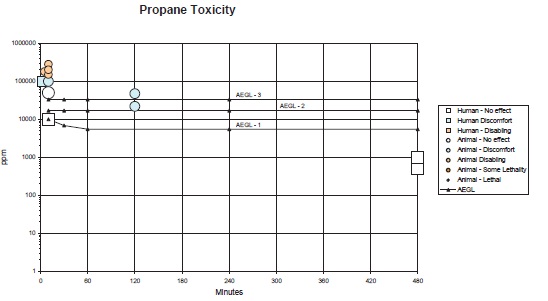
FIGURE B-1 Category graph of toxicity data and AEGLs values for propane.
APPENDIX C
ACUTE EXPOSURE GUIDELINE LEVELS FOR PROPANE
Derivation Summary for Propane
AEGL-1 VALUES
|
|
||||
| 10 min | 30 min | 1h | 4h | 8h |
|
|
||||
| 10,000 ppma (18,000 mg/m3) | 6,900 ppma (12,000 mg/m3) | 5,500 ppma (9,900 mg/m3) | 5,500 ppma (9,900 mg/m3) | 5,500 ppma (9,900 mg/m3) |
|
|
||||
Key reference: Patty, F.A., W.P. and Yant. 1929. Odor Intensity and Symptoms Produced by Commercial Propane, Butane, Pentane, Hexane, and Heptane Vapor.
U.S. Bureau of Mines Report of Investigation. No. 2979. Washington, DC: U.S. Department of Commerce, Bureau of Mines.
Test species/Strain/Number: Groups of 3-6 human subjects (males and females,20-30 years of age). The study was focused on the warning properties of several alkanes.
Exposure route/Concentrations/Durations: Subjects were exposed to slowly increasing concentrations up to 50,000 ppm (continuous exposure test, total exposure was at least 6 min), followed by exposure to fixed concentrations for a few minutes on the same day (intermittent exposure test). The fixed exposure concentrations were approximately 10,000, 20,000, 50,000, and 100,000 ppm.
Effects: No odor detection or irritation was reported during the continuous exposure test. No symptoms were reported after 10 min of exposure at 10,000 ppm, but distinct vertigo was reported when volunteers were exposed at 100,000 ppm for 2 min. No irritation was noticed at 100,000 ppm for 10 min. The subjects were capable of leaving the test chamber unassisted.
End point/Concentration/Rationale: No AEGL-1 effects at 10 min exposure to 10,000 ppm; consistent with butane.
Uncertainty factors/Rationale:
Total uncertainty factor: 1
Interspecies: 1, test subjects were humans
Intraspecies: 1, the concentration-response curve appears to be very steep indicating small interindividual variability; no irritation at 100,000 ppm for 10 min; a higher factor would result in unrealistically low values compared with occupational standards.
Modifying factor: Not applicable
Animal-to-human dosimetric adjustment: Not applicable
Time scaling: n = 3 for time scaling from 10 min to 60 min (animal data for cyclopropane and butane suggest high value of n); because steady state is reached within 30 min, the values for 4- and 8-h exposures are similar to the 60-min value.
Data adequacy: Database is poor.
aThe AEGL-1 value is greater than 10% of the lower explosive limit for propane in air of 23,000 ppm. Therefore, safety considerations against the hazard of explosion must be taken into account.
AEGL-2 VALUES
|
|
||||
| 10 min | 30 min | 1h | 4h | 8h |
|
|
||||
| See belowa | See belowa | See belowa | See belowa | See belowa |
|
|
||||
Key reference: Reinhardt, C.F., A. Azar, M.E. Maxfield, P.E. Smith Jr., and L.S. Mullin. 1971. Cardiac arrhythmias and aerosol “sniffing”. Arch Environ. Health 22(2):265-279.
Test species/Strain/Number: Male beagles, number of dogs exposed was 6 (low exposure group) or 12 (mid- and high-exposure group).
Exposure route/Concentrations/Durations: Inhalation exposure for 10 min at 50,000, 100,000, or 200,000 ppm.
| Effects: | |
| 0 ppm | No effects |
| 50,000 ppm | Xo effects |
| 100,000 ppm | Marked response in 2 12 dogs |
| 200,000 ppm | Marked response in 7 12 doas. one of which had cardiac arrest |
End point/Concentration/Rationale: No cardiac sensitization at 50,000 ppm
Uncertainty factors/Rationale:
Total uncertainty factor: 3
Interspecies: 1, canine cardiac sensitization assay appears to be a good model for the human heart.
Intraspecies: 3, the test is a conservative test for sensitive individuals because an excess of epinephrine is used.
Modifying factor: Not applicable
Animal-to-human dosimetric adjustment: Not applicable
Time scaling: Cardiac sensitization is a concentration-related threshold effect and concentrations that do not produce a positive response in short-term tests will also not produce the effect when exposures are continued for longer periods.
Data adequacy: Database is poor. Data on cardiac sensitization are sufficient but quantitative data are lacking on possible CNS effects so that a comparison of CNS effects and cardiotoxicity cannot be made.
aThe AEGL-2 values for all time periods is 17,000 ppm (31,000 mg/m3). The AEGL-2 value is greater than 50% of the lower explosive limit for propane in air of 23,000 ppm. Therefore, extreme safety considerations against the hazard of explosion must be taken into account.
AEGL-3 VALUES
|
|
||||
| 10 min | 30 min | 1h | 4h | 8h |
|
|
||||
| See belowa | See belowa | See belowa | See belowa | See belowa |
|
|
||||
Key reference: Reinhardt, C.F., A. Azar, M.E. Maxfield, P.E. Smith Jr., and L.S. Mullin. 1971. Cardiac arrhythmias and aerosol “sniffing”. Arch Environ.
Health 22(2):265-279.
Test species/Strain/Number: Male beagles, number of dogs exposed was 6 (low-exposure group) or 12 (mid- and high-exposure group).
|
|
||||
| 10 min | 30 min | 1h | 4h | 8h |
|
|
||||
| See belowa | See belowa | See belowa | See belowa | See belowa |
|
|
||||
Exposure route/Concentrations/Durations: Inhalation exposure for 10 min at 50,000, 100,000, or 200,000 ppm.
| Effects: | |
| 0 ppm | No effects |
| 50,000 ppm | No effects |
| 100,000 ppm | Marked response in 2 12 dogs |
| 200,000 ppm | Marked response in 7/12 dogs, one of which had cardiac arrest |
End point/Concentration/Rationale: No deaths from cardiac sensitization at 100,000 ppm.
Uncertainty factors/Rationale:
Total uncertainty factor: 3
Interspecies: 1, the canine cardiac sensitization assay appears to be a good model for the human heart.
Intraspecies: 3, the test is a conservative test for sensitive individuals because an excess of epinephrine is used.
Modifying factor: Not applicable
Animal-to-human dosimetric adjustment: Not applicable
Time scaling: Cardiac sensitization is a concentration-related threshold effect and concentrations that do not produce a positive response in short-term tests will also not produce the effect when exposures are continued for longer periods.
Data adequacy: Database is poor. Data on cardiac sensitization are sufficient but quantitative data are lacking on possible CNS effects so that a comparison on the potency for CNS effects and cardiotoxicity cannot be made.
aThe AEGL-3 values for all time periods is 33,000 ppm (59,000 mg/m3).The AEGL-3 value is greater than the lower explosive limit for propane in air of 23,000 ppm. Therefore, extreme safety considerations against the hazard of explosion must be taken into account.


