
3
Organization, Collaboration, and Communication—A Way Forward
During the first century of flight, NASA and its predecessor, the National Advisory Committee on Aeronautics (NACA), provided the United States with significant research advances in aeronautics that have shaped aviation in all of its domains. Today the U.S. aerospace industry represents 1.5 percent of the U.S. gross domestic product and 6.6 percent of total U.S. exports, and it provides 624,200 jobs to U.S. workers.
These advances were made possible by hard-fought victories on the frontier of aeronautical research. From the first digital fly-by-wire computer controlled aircraft to the development of unmanned aerial vehicles (UAVs) to the development of chevron nozzles that reduce jet engine noise and winglets that improve aerodynamic efficiency, NASA aeronautics research has directly, and recently, benefited the performance, efficiency, and safety of modern commercial and military aviation. Innovative flight research projects in NASA’s history have also motivated current engineers and scientists as well as inspired the next generation. U.S. worldwide leadership in aviation today owes a great deal of credit to NASA.
Despite these overwhelming achievements, NASA’s aeronautics research budget, a direct reflection of the prioritization and allocation of resources both within NASA and as mandated by congressional legislation, has declined from more than $1 billion in 2000 to approximately $570 million in 2010. As a percentage of the NASA budget, aeronautics research has declined from approximately 7 percent of NASA’s budget in 2000 to approximately 3 percent in 2010.
The erosion in NASA’s aeronautics research budget and the failure to prioritize flight research relative to other NASA objectives largely reflect a failure by the agency to adequately focus its research objectives, conduct compelling research relevant to the aerospace industry, and effectively communicate results to the public, Congress and the White House, and scientists and engineers working in aeronautics fields. The continued decline in NASA’s aeronautical research budget related to flight research activities is likely to have serious long-term consequences relative to the development of innovative aerospace technology and could ultimately result in the erosion of the U.S. leadership position in aerospace relative to other nations such as China.
Despite its history of cutting-edge flight research, which has spawned numerous technological innovations that have greatly influenced the aerospace industry, NASA does not currently include economic development of the aerospace industry as one of its primary objectives. This is in great contrast to other national aerospace research organizations that rationalize and manage their aeronautical research activities around their direct contributions to their nation’s aerospace industry. For example, the primary objective of the German Aerospace Center’s (DLR’s)
aerospace research activities is “to enhance the competitiveness of Germany and Europe’s aerospace and air transport industries and to achieve governmental and societal objectives.”1
In addition, NASA no longer plays a major role in fostering developments in national security aviation. Both the National Aeronautics and Space Act of December 18, 2010 (P.L. 111-314, 124 Stat. 3328) and Executive Order 13419, “National Aeronautics Research and Development” issued in December 2006, substantiate the purpose of a broader role for the agency. The Space Act itself states that NASA will “contribute materially to one or more of the following areas: … the improvement of the usefulness, performance, speed, safety, and efficiency of aeronautical and space vehicles.… [and] the making available to agencies directly concerned with national defense of discoveries that have military value or significance, and the furnishing by such agencies, to the civilian agency established to direct and control nonmilitary aeronautical and space activities, of information as to discoveries which have value or significance to that agency” (Section 20101). Executive Order 13419 states that “continued progress in aeronautics, the science of flight, is essential to America’s economic success and the protection of America’s security interests at home and around the globe.”
By establishing research programs that leverage government resources, NASA can achieve technology breakthroughs that are capable of leading to the development of competitive products that can be viable in a global economy. Specific objectives could be developed, including potentially adopting a research portfolio management approach that measures the economic impact of specific innovations driven by NASA-sponsored flight research on a fair and consistent basis. Clearly this is a senior-level policy decision.
During the course of its deliberations, the committee became aware of numerous opportunities available to NASA for collaborative partnerships. The committee consulted with U.S. industry, the Department of Defense (DOD), and international aerospace research organizations and specifically asked them for recommendations for collaborative flight research opportunities. The committee also was aware of relatively recent policy decisions that have limited NASA’s ability to effectively collaborate with DOD and other organizations. In the past decade, as NASA aeronautics budgets were being reduced, executive managers were encouraged to cut collaborative projects first based on the argument that DOD was better funded than NASA and that DOD should be viewed as a source of funding rather than a collaborative partner. Although such policy decisions are rarely written down, their effects can be witnessed in recent reductions in collaboration between NASA and DOD. The committee believes that such policy decisions have been short-sighted and could potentially weaken U.S. leadership in aviation and aeronautics and fail to enhance U.S. national security.
This chapter focuses on the barriers to effective prioritization of flight research dollars, people, and flight assets, including organizational and management issues, and barriers to collaboration and communication. Finally, it offers some opportunities for a way forward. Changes in these areas will be critical to the effective use of limited NASA aeronautics resources and create an environment that, once again in the words of Hugh Dryden, encourages people to “make the impossible, possible.”
Insufficient Strategic Planning Coupled with Micro-management at NASA Headquarters
The current approach to budget allocations within NASA aeronautics results in insufficient resources for flight research. This leads to incomplete technology development and internal competition for flight research funding rather than effective teamwork within NASA. Inter-center teamwork is reduced as each center is forced to compete for its share of the diminishing NASA aeronautics budget.
As mentioned in previous chapters, the organizational structure of the Aeronautics Research Mission Directorate (ARMD) includes many fragmented groups with common and overlapping interests. This fragmentation has caused limited resources to be spread over many different segments within these groups instead of being focused on a small number of specific goals. In addition, during the past decade, NASA Headquarters has reduced its
________________
1 German Aerospace Center, “Aeronautics Research,” available at http://www.dlr.de/dlr/en/desktopdefault.aspx/tabid-10195/337_read-279/, accessed on March 12, 2012.
strategic planning and direction of the work at the centers, with the centers taking over more of this function, essentially resulting in planning from a “bottom-up” process. Because these decisions have been made at very low levels, where project managers and principal investigators have relatively small budgets, these project plans rarely include plans for flight research, which often costs too much for them to afford.
At the same time that strategic planning was pushed down to the center level, center directors had less direct responsibility for managing their staffs and executing programs compared to their responsibility in previous decades. NASA aeronautics research leadership at NASA Headquarters appears to exercise a high level of control and authority over flight research programs.2
The committee concluded that the situation that evolved between headquarters and the centers during the past decade has created impediments to pursuing projects to the flight research phase and to transitioning the work of the centers to the outside world (whether that is the military, commercial aviation, or the general public). In a healthier system, headquarters would exercise greater strategic direction of the centers but less day-to-day management of resources and personnel at the working level at the centers. This would allow headquarters to plan for research projects that have a path to flight research, while allowing the centers to be flexible enough to deal with the challenges and obstacles that they naturally encounter for any research project. It would also enable headquarters to better ensure that the work done at the centers actually benefits the nation at large.
Full Cost Recovery
In the 1990s, NASA’s implemented full cost accounting to track actual costs, but this also evolved into a policy whereby all outside customers must pay the full cost of NASA participation in joint programs. This policy, referred to as “full cost recovery,” made it significantly more difficult to create major collaborative programs. Center directors could no longer leverage their assets to allow participation in major programs with “in kind” dollars from their baseline funding. Full cost recovery constraints within NASA aeronautics research often preclude leveraging of center assets to make effective partnerships with outside customers. To be useful, the full cost recovery process, although weakened somewhat recently, needs to permit sufficient flexibility to allow innovative partnerships with outside customers. For example, participation by NASA in major innovative technology demonstrations like the X-29 and international X-31 programs would likely not be possible under the current policies of ARMD.
Failure to Communicate to Stakeholders
Despite an outstanding history of NASA-led aeronautics flight research successfully transitioning to the U.S. aerospace industry, NASA has not been very effective in identifying and communicating these accomplishments to key stakeholders within industry, government, and academia, leading directly to reduced programmatic and political advocacy, even within the aerospace community, and ultimately resulting in reduced budget authority. Improved communication of NASA’s key innovations from flight research programs to its key stakeholders will help NASA justify future investment in new flight research programs.
One aspect of communication to stakeholders is the effective dissemination of technical data to relevant aerospace researchers after a flight research program is completed. NACA reports, generated more than 50 years ago, are rich resources of information for the aerospace community to this day and are relatively accessible. However, data from more recent NASA aeronautics flight research programs are relatively inaccessible to aerospace engineers and scientists. For example, the Pegasus Wing Glove experiment was flown underneath the wing of Pegasus rockets during the 1990s. Although this was an important boundary layer experiment, the data have languished because NASA has failed to publish the results. In addition, some NASA aeronautics programs may even have proprietary agreements that restrict data from public release or even from use by well-qualified researchers working on other government-sponsored programs.
NASA’s Science Mission Directorate, on the other hand, has many examples of databases and computer-based
________________
2 During its deliberations the committee heard stories of headquarters personnel calling a field center to inquire about the hours worked by a single employee on a project, a level of micro-management that seems excessive.
models that are maintained based on research results from a variety of planetary spacecraft and astronomical observatories. These models are generally accessible to researchers within government, universities, and industry. For example, NASA’s Jet Propulsion Laboratory Solar System Dynamics group develops and maintains computational databases, models, and simulations that are used to generate the accurate position and velocity histories (ephemerides) for solar system bodies, including the planets, planetary satellites, comets, and asteroids. NASA’s Goddard Space Flight Center Solar System Exploration Data Services maintains an archive of data products from NASA’s planetary missions called the Planetary Data System, a peer-reviewed, documented, and accessible system of online database catalogs incorporating standards for describing and storing data. This permits current and future scientists who are unfamiliar with the original experiments to analyze NASA’s planetary science data using a variety of computer platforms.
There is no equivalent database repository in NASA aeronautics to maintain and provide access to the scientific results and data generated by modern NASA aeronautics programs. The accessibility of pre-competitive data to industry and university communities is critical for the commercialization of these technologies. A compromise will have to be made between protecting the proprietary information of a partner and providing accessible results of a NASA-sponsored flight research program, perhaps in a time-delayed fashion, to the aeronautics community. Access to these research databases will have to be managed with the appropriate access controls and safeguards. NASA aeronautics could explore examples of effective databases in other areas of NASA, particularly in the Science Mission Directorate, in order to develop a strategic aerospace database resource for information generated under NASA aeronautics flight research programs.
In addition, one common problem with flight research projects is that when the projects are finished, the data are often not published. Often there is no requirement imposed on principal investigators to publish, and occasionally principal investigators have stated that they lacked sufficient funds to complete data analysis and publish their results. NASA should make publishing the results of its flight research a requirement and provide the funding necessary to do so. Unless data is published and made accessible to others, much of the value of these projects is lost.
Policy Stability
In the history of NASA and NACA, aeronautics research was led by outstanding managers and leaders. Foremost among these was Hugh Dryden, who led NACA from 1947 to 1958 and was the deputy administrator of NASA from 1958 to 1965. In describing the X-15 program that he led, Dryden said that the purpose of flight research “is to separate the real from the imagined problems and to make known the overlooked and the unexpected.” Dryden’s bold vision, “to make the impossible possible,” permeated the culture of NACA and NASA aeronautics in the 1950s and 1960s and became the leadership basis for many of the agency’s most significant flight research achievements.
NASA aeronautics has long had a frequent turnover in leadership. For example, in the past two decades, nine individuals have served as associate administrator for aeronautics, at an average tenure of only 2.2 years. Although historically NASA aeronautics has not had leadership stability, it can benefit greatly by longer-term policy stability. This stability can be fostered through strong strategic direction from NASA Headquarters and a recognition by aeronautics leaders that it is important to give projects time to bear results and a pathway through flight research to demonstrate their results.
Availability of Flight Research Aircraft
NASA’s flight research inventory is currently a mix of vehicles (a list of NASA’s current aircraft, including those used for transport, science missions, and astronaut training, is shown in Appendix A). Despite NASA’s relatively large aircraft fleet, ultimately few of NASA’s aircraft are actually devoted to flight research. NASA could conduct an internal assessment of the management, operations, and maintenance of its flight vehicle assets that are now distributed at the Dryden, Glenn, Ames, and Langley research centers. This assessment could address whether efficiencies can be achieved in maintenance and operations by reducing the number of aircraft, co-locating aircraft at a common center where it makes sense, and putting responsibility for flight research utility at the Dryden
Flight Research Center. This centralized flight research, modification, and maintenance organization could provide services to all of NASA, not just ARMD. Strategic direction would still be provided from NASA Headquarters, but the research fleet could be centralized to increase efficiencies.
The Stratospehric Observatory for Infrared Astronomy aircraft modified for the Science Mission Directorate is a good example of how this model can work, with Dryden operating an aircraft that supports other parts of NASA. Indeed, NASA’s Science Mission Directorate conducts much important scientific research using NASA aircraft, and some of these aircraft have been modified by or are otherwise supported by NASA’s aeronautics programs. Also, a more customer-centric attitude toward the operation of flight research assets could help in establishing new customers for their use, whether in NASA, other U.S. government agencies, industry, universities, or international agencies. By adopting a more customer-centric attitude, Dryden can seek a larger community of input into the flight research portfolio of opportunities. One example of this strategy can be found in Canada’s National Research Council Institute for Aerospace Research, which markets its flight resources to industry for training and testing. Through a flight research aircraft asset study and an assessment of opportunities for new partnerships for use, a more efficient use of these flight research assets could be implemented.
Lack of Focus Relative to Available Resources
NASA’s current aeronautics research budget is not adequate to properly address the wide range of flight research priorities it is currently tasked with. As a result, NASA’s current flight research programs are limited to relatively simple and therefore low-cost flight experiments. NASA’s aeronautics research program funding has declined to the point that the agency is unable to advance many projects from the simulation or wind tunnel stage to the flight testing stage.
The decadal survey of civil aeronautics3 conducted by the National Research Council in 2006 identified the 51 highest-priority research and technology challenges for NASA. Because of funding constraints, this ambitious agenda is not properly funded and is therefore both unrealistic and unattainable.
The current approach to budget allocations within NASA aeronautics dedicates insufficient resources to flight research. This leads to incomplete technology development, in that customers for the research will not accept results that have not been demonstrated in flight.
In a budget-constrained environment, NASA aeronautics could use collaborative partnerships with NASA’s other mission directorates to improve its efficiency. NASA could also increase its relationships with other government agencies such as the Air Force Research Laboratory, the Office of Naval Research, the National Oceanic and Atmospheric Administration, and others. NASA could seek ways that it can work more closely with industry in a manner that does not compromise intellectual property.
CONDUCTING FLIGHT RESEARCH WORTHY OF THE COLLIER TROPHY
As the committee noted in the previous chapters, by establishing bolder goals for a limited number of focused flight research programs, NASA could make more substantial progress and improve the relevance of its flight research programs to national needs. The agency already has an excellent aspirational goal: winning the Collier Trophy.
The Collier Trophy is the most prestigious award for aerospace achievement in the United States. Established 100 years ago in 1911, it is awarded for making “the greatest achievement in aeronautics and astronautics in America, with respect to improving the performance, efficiency, and safety of air or space vehicles.” NASA’s predecessor organization, NACA, first won the Collier Trophy in 1929 for developing cowlings for radial air-cooled engines. NACA, and then NASA, aeronautics continued to win Collier trophies: in 1946 for the development of thermal ice prevention systems for aircraft; in 1947 for determining the physical laws affecting supersonic flight and for conception of transonic research airplanes; in 1951 for the development of the transonic wind tunnel; in
________________
3 National Research Council, Decadal Survey of Civil Aeronautics: Foundation for the Future, The National Academies Press, Washington, D.C., 2006.
1954 for the discovery and experimental verification of the area rule; in 1961 for scientific advances from the X-15 flight test program; and in 1987 for the development of advanced turboprop propulsion concepts. NASA was on Collier-winning teams in 2007 and 2008.
The 2010 Collier Trophy was awarded to Sikorsky Aircraft for the X-2 program, which “demonstrated a revolutionary 250 knot helicopter, which marks a proven departure point for the future development of helicopters by greatly increasing their speed, maneuverability and utility.” This focused flight research program was conducted for approximately $50 million, using Sikorsky’s internal resources, in approximately 3 years. Although NASA had no direct role in the X-2 experimental aircraft program, the X-2 serves as an outstanding example of an affordable flight research program capable of advancing the aerospace industry. It is exactly the kind of project that NASA is capable of undertaking from both a technical and a budgetary perspective.
ACHIEVING INNOVATION IN FLIGHT RESEARCH
NASA’s flight research programs are most effective when they are focused on achieving innovation in aeronautics. Several examples exist of promising innovation-oriented NASA aeronautics programs that achieved significant early results. Unfortunately, many of these programs were terminated in the past decade because of budget constraints, including one program that was responsible for the birth of a new segment of the aerospace industry.
In 1994, NASA aeronautics established the Environmental Research Aircraft and Sensor Technology (ERAST) program with the goal of developing technologies that could lead to the production of remotely or autonomously operated UAVs. ERAST’s goals were as follows:
Develop and demonstrate UAV flight capability at altitudes up to one-hundred thousand feet and up to four days duration; further develop payload integration capabilities responsive to the data collection and measurement requirements of the atmospheric science community; research activity toward further resolution of UAV certification and civil operational issues; further demonstrate UAV viability to scientific, government, and civil users, leading to increased applications for UAVs; effect technology transfer to the parties as contemplated herein so as to grow a robust United States UAV industry capable of asserting the lead as the premier provider of UAVs for government and civil uses world-wide.4
ERAST was the largest program yet to use a Joint Sponsored Research Agreement (JSRA). NASA Dryden administered the ERAST program and was responsible for prioritizing objectives and designing technical approaches.
Under the ERAST program, several new and ambitious UAVs were developed, fabricated, and flight tested: Altus (later known as Predator B), Perseus, Theseus, Pathfinder, and Helios (see Figures 3.1, 3.2, and 3.3). The air vehicles developed under ERAST achieved significant flight records. Pathfinder beat the world record for altitude achieved by both propeller-driven and solar-powered aircraft in August 1998. Earlier in 1996, Altus flew at 20,000 feet for more than 24 hours. In 1998, Perseus B flew at 60,000 feet; and in 2001 Helios flew at 96,863 feet, just short of the 100,000-feet goal. An even more lasting contribution of ERAST was the development of Altair, which was the precursor of the Predator B (also known as Reaper) currently deployed by DOD.
The ERAST program funded four companies—Aerovironment, Aurora Flight Sciences, General Atomics, and Scaled Composites—which became the nucleus of an entire new segment of the aerospace industry focused on UAVs. These entrepreneurially driven companies helped revolutionize the aerospace industry through the development of disruptive technology related to UAVs.
The total cost of the ERAST program was approximately $160 million over a 10-year period, a relatively modest sum even relative to the current NASA aeronautics budget. Investments like ERAST could be evaluated on the basis of their contribution to the U.S. economy. Today the four companies engaged in the ERAST program have more than $1 billion in annual sales, employ more than 5,600 people, and play a vital role in U.S. national security and defense.
In many ways, NASA aeronautics gave birth to the U.S. UAV industry through its ERAST program, yet NASA
________________
4 Office of Aeronautics, Joint Sponsored Research Agreement, “Environmental Research Aircraft & Sensor Technology: 舖ERAST Alliance’ for High Altitude, Long Endurance Unmanned Aerial Vehicles,” dated August 1994.
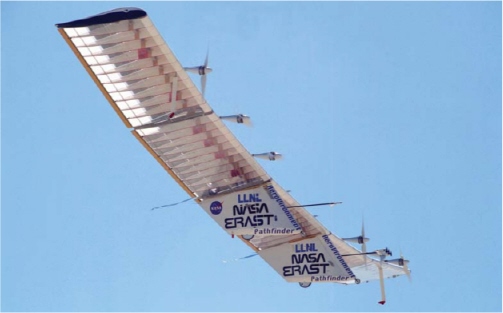
FIGURE 3.1 Pathfinder aircraft in flight. It is essentially a 99-foot flying wing powered by the solar cells mounted on top. SOURCE: NASA Dryden Flight Research Center Photo EC95-43207-76 by Tony Landis; available at http://www.dfrc.nasa.gov/gallery/photo/Pathfinder/Large/EC95-43207-76.jpg.
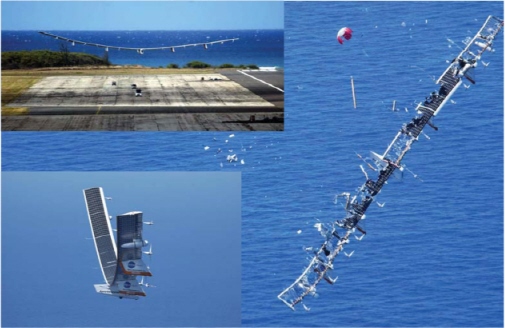
FIGURE 3.2 Helios, the prototype of Pathfinder, in flight, and suffering a catastrophic failure in June 2003. Accidents like this are a normal part of flight research. They provide lessons on what does and does not work. SOURCE: T.E. Noll, J.M. Brown, M.E. Perez-Davis, S.D. Ishmael, G.C. Tiffany, and M. Gaier, Investigation of the Helios Prototype Aircraft Mishap, Volume I, Mishap Report, Helios Mishap Investigation Board, NASA Langley Research Center, Hampton, Va., January 2004; available at http://www.nasa.gov/pdf/64317main_helios.pdf.
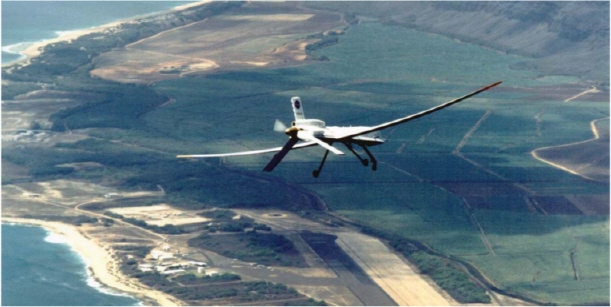
FIGURE 3.3 Altus, one of the ERAST vehicles, in flight over the Pacific Missile Test Range. SOURCE: Courtesy of NASA Dryden Flight Research Center; Photo EC99-45006-2 by Sandia Laboratories/Dick Jones.
has failed to articulate this message to its key stakeholders. For example, although NASA has produced histories of other recent aeronautics programs like the Ikhana UAV, no official NASA program history exists of the ERAST program.5 The public, and the U.S. political leadership, are unaware that NASA has made recent and substantial contributions to the most dynamic sector of the U.S. aerospace industry.
The ERAST program ended in 2003. Despite successful demonstrations of a large number of innovative UAVs on a relatively modest budget and numerous record-breaking flights, the ERAST program failed to achieve its primary objective of developing high-altitude UAV platforms that could be deployed for global environmental scientific research. That requirement still exists, and, as is discussed below, industry has expressed interest in the kind of data such platforms could gather to use in the design of national security aircraft. NASA aeronautics could decide to fill this requirement with a focused air vehicle development program. ERAST had major successes and also many accidents; it never did accomplish its initial technical objective, yet it created a thriving entrepreneurial new industry for the United States and provided one of the major tools in U.S. national security.
The ERAST program was one of several aeronautics research projects initiated by NASA during the 1990s. Others included Revolutionary Concepts (RevCon, 1999-2000), the Advanced General Aviation Transport Experiments (AGATE, 1996-2001), and an advanced rotorcraft program. These projects operated under different models, some including substantial industry participation (and funding) as well as collaboration with other government agencies. The models that NASA chooses for future collaborative efforts can be based on these past efforts, but will naturally have to be adapted to the particular circumstances and interests of the participants.
The ERAST example demonstrates that NASA in the relatively recent past has successfully sponsored important aeronautical innovation with relatively modest flight research budgets. NASA aeronautics research is entirely capable of initiating a program aimed at developing cost-effective flight research vehicles to demonstrate innovative aerospace technology in flight. Such programs could take advantage of modern concepts and techniques, such as rapid prototyping and robotic technologies, to keep costs affordable, with funding of $30 million to $50 million over a 3-year period. Such a program could fund multiple vehicles, with the goal of a new program start every
________________
5 P.W. Merlin, Ikhana: Unmanned Aircraft System Western States Fire Missions, NASA Monographs in Aerospace History #44, NASA SP-2009-4544.
year. In order to accelerate innovation and discovery through flight research, NASA may be willing to tolerate greater risk of failure in these development programs.
BUILDING TEAMS FOR LEVERAGING FLIGHT RESEARCH PROGRAMS
Throughout NASA’s history, many flight research programs have benefited from strong teaming between NASA and other U.S. government agencies, and in some cases with international partners. These include the following major programs (see Figures 3.4 through 3.8):
• X-29 Forward Swept Wing Demonstrator (Defense Advanced Research Projects Agency [DARPA]);
• X-31 Enhanced Fighter Maneuverability Program (DARPA, U.S. Navy, U.S. Air Force, and Germany);
• SR-71 LASRE Program (Air Force Research Laboratory [AFRL]);
• AFTI F-16 and AFTI F-111 (AFRL);
• F-18 HARV Program (U.S. Navy, U.S. Air Force, and DARPA); and
• HIFiRE (Hypersonic International Flight Research Experimentation) (AFRL and Australia).
Given this effective history, NASA has past models of success as well as a reputation that it can use to build future collaborative relationships with industry, universities, DOD, and possibly even international partners.
COLLABORATION WITH INDUSTRY AND UNIVERSITIES
Recently the National Research Council’s Aeronautics and Space Engineering Board established the Aeronautics Research and Technology Roundtable (ARTR) to “define and explore critical issues related to NASA’s
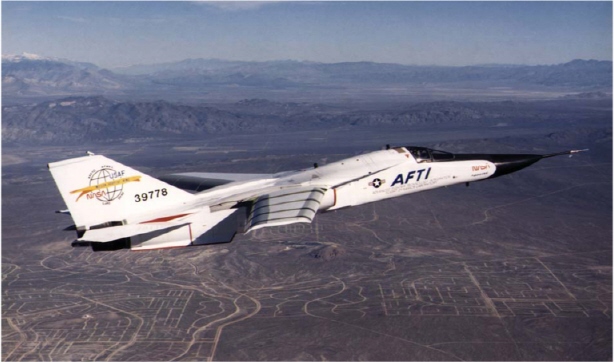
FIGURE 3.4 The AFTI F-111 Mission Adaptive Wing test aircraft in 1986, one of many joint research projects NASA participated in during the 1980s. SOURCE: NASA Dryden Flight Research Center Photo EC86-33385-002.
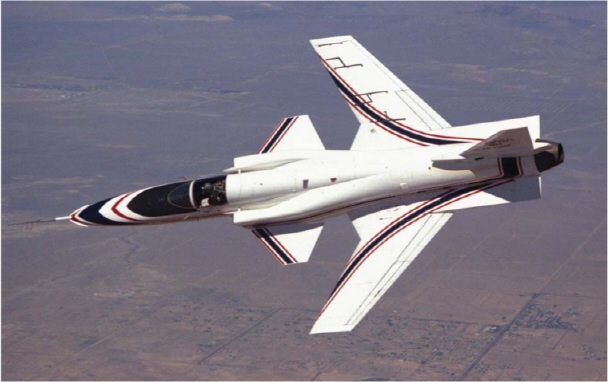
FIGURE 3.5 X-29 Forward Swept Wing in 1987, part of a joint project NASA participated in with DARPA. SOURCE: NASA Dryden Flight Research Center Photo EC87-0182-14.
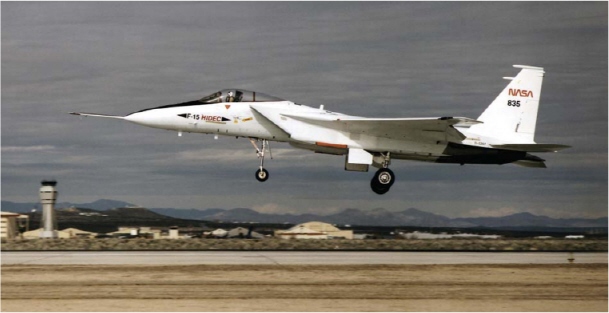
FIGURE 3.6 F-15 Highly Integrated Digital Electronic Control (HIDEC) aircraft in 1993. SOURCE: NASA Dryden Flight Research Center Photo EC93-2081-1.
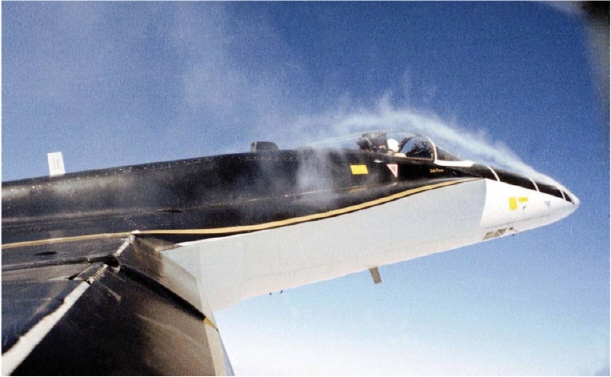
FIGURE 3.7 F-18 HARV forebody vortex flow experiment in 1988. SOURCE: NASA Dryden Flight Research Center Photo EC88-0220-021.
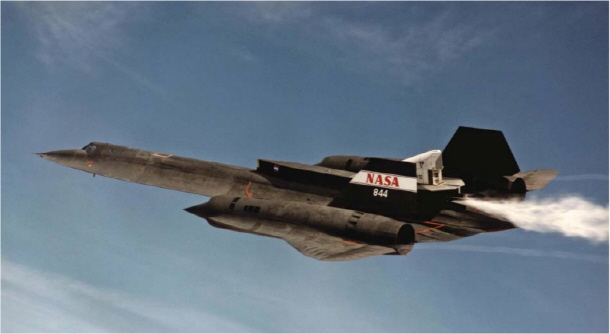
FIGURE 3.8 The LASRE device tested atop a NASA SR-71 during the 1990s. This joint project with the Air Force Research Laboratory was unsuccessful. SOURCE: NASA Dryden Flight Research Center Photo EC98-44440-4 by Carla Thomas.
aeronautics research agenda that are of shared interest, to frame systems-level research issues; and to explore options for public-private partnerships that could support rapid, high-confidence knowledge transfer.” The ARTR members include representatives from the aerospace industry and universities as well as representatives of NASA, the U.S. Air Force, and the Federal Aviation Administration.
The committee believes that this roundtable is a good first step toward improving communication between NASA and other partners, although the agency may be able to expand on such relationships and institutionalize this process, something that other countries have done with their own research programs. For example, Germany’s DLR utilizes a five-member Scientific-Technical Advisory Council (made up of four external members plus one DLR executive board member) that defines the main research objectives and then decides into which areas this funding will be channeled.
The United States has prior history with such collaborations. NACA, NASA’s predecessor organization, was run by an advisory committee that provided consistent input from key industry, university, and government experts (see Figure 3.9). Former NACA chairs included prominent aerospace leaders such as Vannevar Bush (1940 to 1941), Jerome Hunsaker (1941 to 1956), and Jimmy Doolittle (1957 to 1958).

FIGURE 3.9 Meeting of the National Advisory Committee for Aeronautics on April 20, 1944. Left to right: William Littlewood, Dr. Theodore Wright, Dr. William Durand, Maj. Gen. Oliver Echols, Dr. Vannevar Bush, Vice Adm. John McCain, Maj. Gen. Barney Giles, Orville Wright, Dr. George Lewis, Dr. Jerome Hunsaker (Chairman), John Victory (Secretary), Dr. Charles Abbot, Dr. Edward Warner, Dr. Lyman Briggs, Rear Adm. Ernest Pace, William Burden, and Dr. Francis Reichelderfer. SOURCE: Courtesy of Special Collections and Archives, Wright State University Libraries.
NASA’s ARMD has also built a growing NASA Research Announcement (NRA) awards program to solicit proposals for foundational research in areas where NASA seeks to enhance its core capabilities. Competition for such awards is open to both academia and industry. NRA awards could be enhanced by a focus on a defined path to in-flight testing in an appropriate environment, as in the committee’s first recommendation in Chapter 2.
POTENTIAL AREAS OF NASA RESEARCH BENEFICIAL TO INDUSTRY
During the course of this study the committee met with a number of representatives of industry, as well as former NASA officials, and asked for suggestions of the kinds of flight research that NASA was not currently undertaking but could conduct to offer benefits to the nation. The suggestions offered included:
• Collecting high-altitude atmospheric data that could be used in the design of new high-altitude uninhabited aerial systems. This includes characterization of high-altitude turbulence, which is fundamental to understanding the aeroelastic effects on flight vehicles as well as characterizing the radiation environment at high altitudes, which could affect avionics systems. NASA currently has assets such as the U-2 and WB-57 high-altitude aircraft, as well as balloons, capable of gathering this data, and the goals are consistent with those established for the cancelled ERAST program.
• Conducting research on pilotless commercial aircraft, perhaps starting with unpiloted cargo aircraft.
• Conducting research into electric aircraft propulsion and electric vehicle subsystems.
• A larger-scale experimental aircraft to explore ERA and N+3 technologies. This would be bigger than the X-48C, with a wingspan of perhaps 40 to 50 feet (compared to 21 feet for the X-48B). The cost of such a vehicle, according to an aerospace company with experience producing similar vehicles, could be in the range of $25 million to $60 million.
• Initiating programs to develop low-cost ($30 million to $50 million) innovative flight research vehicles, to demonstrate new technologies such as lift fan and fan-in-wing for a high-speed vertical takeoff and landing, or to gather useful data in the transonic or supersonic flight regimes.
• Conducting fundamental research on autonomous systems and the interaction between human operators and autonomous systems.
• Conducting research on hybrid propulsion, especially electric, quiet powered, distributed lift concepts, especially those enabled by hybrid electric systems, and quiet trans- and supersonic small aircraft for both commercial and military applications.
Collaboration with the Department of Defense
DOD conducts flight research and test programs within each of the four military service branches. The largest of these is the Air Force Research Laboratory (AFRL), which conducts aeronautics research within its Air Vehicles and Propulsion directorates. These two directorates employ more than 1,600 civilian, military, and contractor personnel, located primarily at Wright Patterson Air Force Base in Ohio, and have a combined budget of $595 million. AFRL does not maintain its own fleet of flight research assets. AFRL is focused on developing novel aircraft and propulsion systems to realize specific military goals that can ultimately result in transition of technology to the warfighter. For most of these programs, a flight vehicle is required to demonstrate the technology, and normally several flights are planned as an integral part of the program.
Prioritization of AFRL flight research projects is informed by the Technology Horizons study conducted by the Air Force’s chief scientist. Annual exchanges are held between AFRL and its primary customers, the Combatant Commands (CoCOMs) and Major Commands (MAJCOMs), to focus flight research programs.
Numerous examples exist of effective collaboration between AFRL and NASA on key flight research programs. One such example is HIFiRE, which involved collaboration between AFRL, NASA, and the Australian Defense Science and Technology Organization (DSTO). The $54 million HIFiRE agreement between AFRL and the Australian DSTO represents one of the largest aerospace collaborations ever between the two countries. This program is investigating the fundamental science of hypersonic air vehicle and propulsion technologies critical
to the realization of sustained hypersonic flight. Initial flight testing was conducted at Australia’s Woomera Test Range. NASA’s role included computational analysis and experimental validation of aero-thermal phenomena as well as the development of multiple experimental engine models. NASA performed testing activities and supported the flight activities with systems integration and launch operations. This program is a good example of collaboration between DOD, NASA, industry, and international partners on fundamental aeronautics research leading to a successful flight demonstration.
Another example is the Versatile Affordable Advanced Turbine Engines (VAATE) program led by AFRL with the participation of all the military services, NASA, and industry. VAATE is a goal-oriented program with challenging numerically defined goals and competitively bid tasks, such as the Adaptive Versatile Engine Technology and Advanced Affordable Turbine Engine (AATE) programs. The VAATE program evaluates industry on how it is using its independent research and development to leverage results related to these technologies. The members of the VAATE team work together to define goals and technology targets, while AFRL funds the demonstration programs competitively to allow individual aerospace contractors to maintain their proprietary data separate within the programs.
To ensure effective coordination across the government, the Office of Secretary of Defense has established the Fixed Wing Vehicle Executive Council, which includes representatives of the three largest aerospace companies (Boeing, Lockheed Martin, and Northrop Grumman) as well as representatives of AFRL and NASA. This group meets three times a year to discuss fundamental research in regard to fixed wing vehicles.
The AFRL Air Vehicle and Propulsion directorates have a combined budget larger than NASA’s aeronautics research budget. AFRL appears to have a very strong customer focus, with regular meetings with its military customers. AFRL also encourages collaboration with other military services, NASA, and the aerospace industry for both fundamental research and experimental programs.
Starting in the mid-1980s and continuing until the mid-1990s, a huge body of knowledge on high-alpha (i.e., high-angle-of-attack) flight regimes was developed by NASA working collaboratively across all NASA research centers, Air Force and Navy laboratories, industry, and academia. This led to significant levels of improved spin-stall and recovery techniques and technologies for military aircraft. Today’s F-18 E/F concept development and introduction into service owes its success to the concepts found in the Lewis (now Glenn) Research Center’s ground research and largely validated in flight on Dryden’s F-18 HARV (High Alpha Research Vehicle). NASA dedicated, on average, $20 million per year to this effort, not including personnel costs.
NASA has a history of successfully working with DARPA. Throughout the 1990s NASA worked in conjunction with DARPA, AFRL, the U.S. Naval Air Systems Command (NAVAIR), and the U.K. Ministry of Defense in developing requirements and testing technologies for the ASTOVL (Advanced Short Takeoff and Vertical Landing) program that has become the Joint Strike Fighter program, or F-35. Substantial support in wind tunnel testing and in flight control development and testing were provided by NASA Ames Research Center. Within the past few years NASA has been involved with DARPA programs such as the “Blackswift” hypersonic demonstrator project that was cancelled and the Integrated Sensor Is Structure stratospheric airship radar project, but to a much lesser extent than in the past. DARPA often has a larger budget than do other research offices such as AFRL, but DARPA projects must have a sponsoring agency to which technologies are transitioned.
In contrast with previous eras, the past decade has been particularly devoid of any emphasis on, and therefore collaboration with, military aviation organizations. Much of what ARMD can currently do in both ground and flight research can easily be adapted to serve military as well as civil and commercial interests. This was a principal issue in justifying NASA’s aeronautics program and was a major part of the legacy NASA inherited from NACA.
By more aggressively pursuing joint flight research development programs with key DOD organizations, including AFRL, DARPA, the Office of Naval Research, and others, NASA could effectively leverage its flight research programs. But in order to effectively participate in these programs, NASA has to be able to commit to provide adequate funding, facilities, and personnel resources for the duration of the development effort. To be effective, NASA will have to commit to being a flight research enabler for its partners, not an obstruction. This approach will help ARMD to create enduring partnerships based on long-term commitments to achieve common goals.
Collaboration with International Aerospace Research Agencies
In order to better understand the opportunities for integration of flight research within the NASA aeronautics research programs, the committee reviewed two examples of aeronautics research programs in other countries. This review included their organizational structures, flight research assets, funding prioritization processes, and their approach to collaboration.
The committee investigated the DLR, which has the largest flight research fleet in Europe. The primary objective of the German Aerospace Center’s aerospace research activities is to enhance the competitiveness of Germany’s and Europe’s aerospace and air transport industries and to achieve governmental and societal objectives. In addition to fundamental research work, the DLR is primarily concerned with applied aerospace research and development. The DLR annual budget for aeronautics research is approximately €215 million, with 49 percent of the funding from civilian government sources, 38 percent from military institutional sources, and 13 percent from industry. The five-member Scientific-Technical Advisory Council (made up of four members plus one DLR executive board member) defines the main research objectives and funding levels.
Collaboration between the DLR and other government agencies outside Germany is much more prevalent on the airborne science side, where agencies coordinate science project bundling. On the aeronautics research side, industrial competition and politics tend to hinder collaboration outside Germany, with the exception of some collaborative research with wind tunnels in the Netherlands and several European collaborations on rotary-wing-related issues. However, there has been successful collaboration in the past on rotary wing activities with a memorandum of understanding in the 1980s between the DLR and the U.S. Army, U.S. Air Force, and NASA. Current talks between NASA and the DLR point toward closer collaboration on projects in the future.
Within Germany, there is much collaboration between the DLR, WT61 (German Air Force Flight Test Center), and the German Air Force as well as with industry. The DLR does research in hypersonics/supersonics, but it collaborates with the German Air Force Flight Test Center for flight testing of programs. There is also close cooperation between the DLR and the German Air Traffic Control Organization in the area of UAVs, because this is of special interest to the country because of the very dense airspace in Germany.
The committee also investigated Canada’s National Research Council Institute for Aerospace Research (IARNRC), which supports the Canadian aerospace industry with R&D concerning the design, manufacture, performance, use, and safety of aerospace vehicles. The IAR-NRC is extremely focused on responding to the needs of the Canadian aerospace industry by addressing safety, weight, cost, and environmental issues. The IAR-NRC has an annual budget of $60 million (Canadian), two-thirds of which comes from outside the Canadian government. Because of the high fraction of work that comes from industrial partners, research strategy is defined largely by industry requirements. With a budget about one-tenth that of NASA aeronautics research, and primarily coming from external resources, the IAR-NRC is extremely customer-focused and uses its resources to best serve the Canadian aerospace industry. It has established business practices to facilitate interaction with industry. It has also consolidated its flight research aircraft in one location to reduce maintenance and labor costs.
Both the German Aerospace Center and Canada’s National Research Council Institute for Aerospace Research are possible partners for future collaboration with NASA. The X-31 Enhanced Fighter Maneuverability Program, a collaborative effort involving DARPA, the U.S Navy, the U.S. Air Force, and Germany, was a successful previous effort that could prove to be a model for the future (see Figure 3.10).
NASA plays a preeminent role in inspiring the next generation through its leadership role in space exploration. Beginning with the human space programs Mercury, Gemini, and Apollo in the 1960s, an entire generation was inspired by NASA’s stunning spaceflight achievements. This resulted in a significant increase in the numbers of university students pursuing careers in science, engineering, and other technical fields. Similarly, many aeronautical engineers working in industry and government today were inspired by NASA’s flagship flight research programs such as the X-15 hypersonic research program (see Figure 3.11).
NASA currently has no “flagship” flight research projects under development capable of providing appropriate
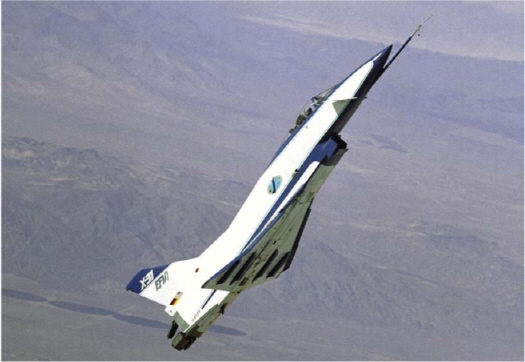
FIGURE 3.10 The X-31 aircraft, on a research mission from NASA’s Dryden Flight Research Center, Edwards, California, is flying nearly perpendicular to the direction of flight. This successful collaborative project included participation from DARPA, the U.S. Navy, U.S. Air Force, and Germany. Current practices, such as full cost recovery, may make similar collaborations impossible. SOURCE: NASA Dryden Flight Research Center Photo EC94-42478-3.
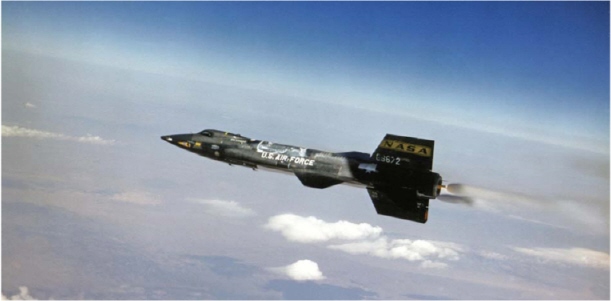
FIGURE 3.11 X-15 aircraft in flight. This was a joint Air Force/NASA research project that proved highly successful and also inspired a generation of students to become aeronautical engineers. SOURCE: NASA Dryden Flight Research Center Photo E-USAF-X-15.
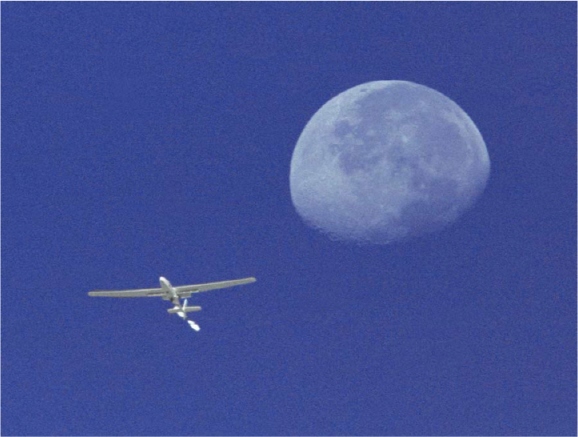
FIGURE 3.12 Perseus vehicle at high altitude. SOURCE: NASA Dryden Flight Research Center Photo EC94-42742-7.
inspiration for the next generation. NASA aeronautics has no public visibility, unlike the space activities of the agency. By embarking on flagship aeronautical flight research programs that advance the frontiers of flight, NASA can contribute to inspiring the next generation of scientists and engineers. New flight demonstration programs could be evaluated for their potential to achieve this goal (see Figure 3.12).
NASA aeronautics’ flight research programs could be more focused on public outreach, particularly with middle school and high school students, to more strongly support the U.S. government’s science, technology, engineering, and mathematics education initiatives. NASA’s space exploration enterprise has very active outreach programs on many of its missions. For example, the recently launched GRAIL Discovery-class lunar orbiter mission will allow students to photograph the Moon using onboard cameras. In addition NASA recently held a naming contest allowing middle school students to name the GRAIL twin spacecraft (the winning names were Ebb and Flow). The committee is unaware of similar efforts in aeronautics to engage the next generation with its current projects. The aeronautics program could look to other parts of NASA for ideas and innovation.
NASA aeronautics research requires significant improvement in management, organization, and leadership to address the serious concerns described in this report. The committee offers the following findings and recommendations:
Finding: NASA’s research goals in aeronautics are not currently closely aligned with the aerospace industry’s needs.
Finding: NASA does not effectively communicate the results and impact of its flight research programs to its key stakeholders.
Finding: NASA aeronautics’ current organization, which relies on program management from NASA Headquarters, drives behaviors that inhibit collaboration, stifle innovation and risk-taking, and limit the organization’s ability to effectively prioritize its programs to a critical few.
Finding: Full cost recovery rules can inhibit collaboration with other government agencies as well as industry and universities. Similarly, lack of flexibility for center directors to leverage their center’s resources limits their effectiveness.
Finding: NASA currently has no “flagship” air vehicles that are capable of exciting the next generation of engineers and scientists.
Finding: NASA aeronautics’ current approach to education and public outreach is marginally effective and could be significantly improved in order to help inspire the next generation to study math, science, and engineering.
Finding: NASA aeronautics currently operates a broad fleet of research aircraft, many of which appear to be underutilized, from four different NASA centers.
Recommendation: NASA aeronautics should aggressively pursue collaboration with the Department of Defense, the Federal Aviation Administration, the U.S. aerospace industry, and international aeronautics research agencies. NASA should adopt management practices to facilitate effective collaboration and treat external organizations as customers and partners. NASA leadership should develop a formal process for regularly soliciting input from the U.S. aerospace industry and universities as well as key government agencies to ensure the relevance of its flight research programs to national needs.
Recommendation: NASA aeronautics’ leadership should study designating Dryden Flight Research Center as the primary flight research organization of NASA, with responsibility for the efficient use of NASA flight research aircraft, facilities, and other support resources. Dryden should adopt a customer-focused approach to flight research sponsored by NASA and external partners.
Recommendation: NASA aeronautics should become the nation’s repository of flight research data and flight test results and should make these archival data readily accessible to key stakeholders—the engineers and scientists in industry, academia, and other government agencies. NASA should also require principal investigators in flight research projects to publish their results and provide funding for them to do so.
This page intentionally left blank.


