
6
Responses of the Natural Shoreline to Sea-Level Rise
Sea-level rise affects the natural shoreline in several ways. Higher water levels erode beaches, dunes, and cliffs; inundate wetlands and other low-lying areas; and increase the salinity of estuarine systems, displacing existing coastal plant and animal communities. These coastal environments provide a protective buffer to areas further inland, as wetlands can reduce flooding and cliffs, beaches, and dunes protect coastal property from storm waves.
The distribution and character of coastal habitats and geomorphic environments varies along the California, Oregon, and Washington coasts, as does their response to sea-level rise. The coast of California is dominated by uplifted terraces fronted by low cliffs, but also includes steep coastal mountains and areas of coastal lowlands and dunes. Oregon’s coast is similar and is characterized by rugged volcanic headlands separating areas of uplifted marine terraces and river mouth estuaries, dunes, and beaches. The southern coast of Washington is dominated by low relief sand spits, occasionally backed by bays. The northern coast and Olympic Peninsula are rocky and rugged, whereas Puget Sound retains the signature of Ice Age glaciation—a crenulated coastline with islands, embayments, and typically sandy bluffs.
This chapter summarizes what is known about (1) the responses of coastal habitats and geomorphic environments—including coastal cliffs and bluffs, beaches, dunes, estuaries, and marshes—to future sea-level rise and storminess along the west coast of the United States and (2) the role of coastal habitats (including benthic habitats), natural environments, and restored tidal wetlands in providing protection from future inundation and the impact of waves. The objective was to summarize existing knowledge, not to predict specific future shoreline responses or to assess coastal impacts of sea-level rise and storminess (see Box 1.1).
Cliffs and bluffs are dominant features along the west coast of the United States, and they have been retreating for thousands of years. The rate of coastal cliff and bluff retreat is controlled by the properties of the rock materials and the physical forces acting on the cliffs. Important rock properties include the hardness or degree of consolidation or cementation, the presence of internal weaknesses (e.g., fractures, joints, faults), and the degree of weathering. Rates of cliff retreat are generally well documented along the California coast (Dare, 2005; Hapke and Reid, 2007), and range from a few cm per year in granitic or volcanic rock to tens of cm per year or more in sedimentary rocks or unconsolidated materials (Griggs, 1994; Griggs et al., 2005). Moore et al. (1999) found cliff and bluff erosion rates of 2–20 cm yr-1 for 1932–1994 in San Diego County, and 6–14 cm yr-1 for 1953–1994 in Santa Cruz County. In California, cliffs and bluffs made of sedimentary rocks typically erode at rates of 15–30 cm yr-1 (Griggs and Patsch, 2004).
Fewer bluff retreat rates are available for the Oregon and Washington coasts. Komar and Shih (1991) and Komar (1997) described the temporal and spatial variability in cliff and bluff erosion along the Oregon coast,
noting that cliff erosion is slower where uplift rates are highest and the base of the cliff has been raised to an elevation seldom reached by wave runup. Priest (1999) found that cliffs and bluffs in Lincoln County, Oregon, generally retreated at rates less than 19 cm yr-1 for 1939–1991. In landslide areas, bluff retreat rates were somewhat higher, ranging from 11–50 cm yr-1.
The physical forces driving cliff and bluff erosion include marine processes—primarily wave energy and impact, but also tidal range or sea-level variations—and terrestrial processes, such as rainfall and runoff, groundwater seepage, and mass movements such as landslides and rockfalls. As discussed in Chapter 4 (“Short-Term Sea-Level Rise, Storm Surges, and Surface Waves”), waves may be getting higher (e.g., Figure 6.1). Increased wave heights mean that more wave energy is available to erode the coastline. Rising sea level would exacerbate this effect because waves will break closer to the coastline and will reach the base of the cliff or bluff more frequently, thereby increasing the rate of cliff retreat.
Cliff and bluff retreat is an episodic process whereby large blocks fail suddenly under conditions of heavy rainfall, large waves at times of elevated sea levels or high tides, or earthquakes, followed by periods of little or no failure. In steep, mountainous areas, failure is often through large landslides or rock falls (Figure 6.2), usually driven by excess or prolonged rainfall during the winter months. With very large landslides, such as the Portuguese Bend slide on the Palos Verdes Peninsula, the shoreline may actually be extended seaward for a decade or more before basal wave action removes the protrusion (Orme, 1991). The episodic nature of cliff retreat, combined with the frequent absence of an identifiable edge or reference feature, makes it difficult to quantify or verify cliff erosion rates in mountainous areas over short time intervals, such as a few decades, or to project future erosion rates (Priest, 1999).
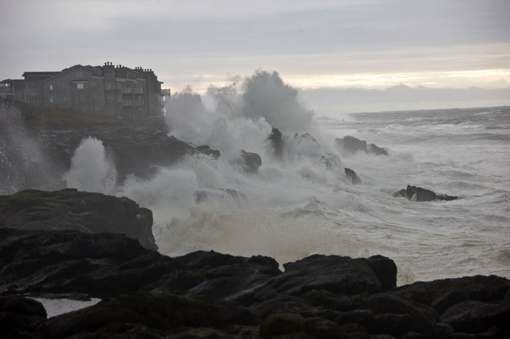
FIGURE 6.1 Boiler Bay, Oregon. Some evidence suggests that waves have been increasing in height off the west coast. SOURCE: Courtesy of Erica Harris, Oregon State University.
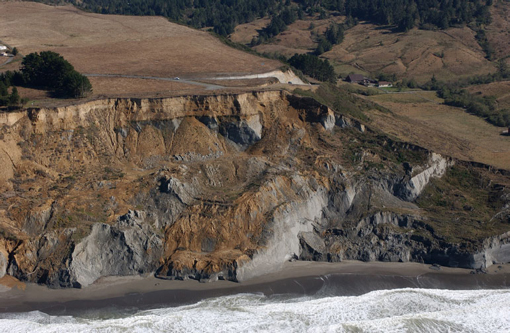
FIGURE 6.2 Large-scale landsliding along the Humboldt County, California, coast at Centerville. SOURCE: Copyright 2002–2012 Kenneth & Gabrielle Adelman, California Coastal Records Project, <www.Californiacoastline.org>.
Cliff and bluff erosion is not reversible. The most common human response has been to armor the cliff base with rock revetments (Figure 6.3) or seawalls (Figure 6.4). Ten percent of the California coastline has now been armored, including 33 percent of the coastline of the four most developed southern California counties (Ventura, Los Angeles, Orange, and San Diego; Griggs, 1999). Shoreline armoring also has increased over the past several decades in Oregon and Washington. Approximately one-third of the Puget Sound shoreline is now armored (Shipman et al., 2010). Despite this protection, coastal storm damage has increased over the past several decades because of intense development and the occurrence of a number of severe El Niño events, raising questions about the long-term efficacy of existing coastal protection structures (Griggs, 2005; Shipman et al., 2010). Moreover, while seawalls and revetments may provide current protection for oceanfront development and infrastructure, they are usually designed for a particular set of wave and sea-level conditions. If sea level increases substantially and wave heights continue to increase, the original freeboard will be gradually exceeded and overtopping will become more frequent.
Beaches respond quickly to the forces acting on them as waves and littoral currents easily move the sand. Along the west coast, beaches change seasonally in response to the different winter and summer wave climates. These fluctuations in beach width are predictable and temporary, and the losses of sand experienced each winter are normally recovered the following summer. Longer-term fluctuations in beach widths associated with the El Niño-Southern Oscillation and the Pacific Decadal Oscillation (PDO) also have been documented in southern California (Orme et al., 2011).
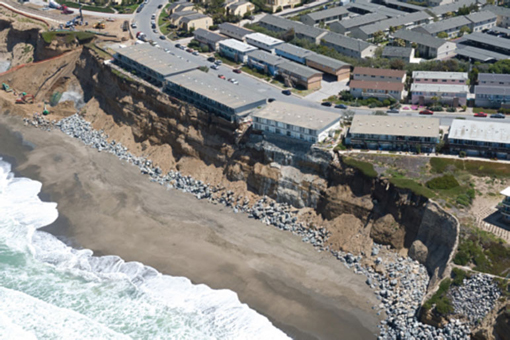
FIGURE 6.3 Erosion of poorly consolidated sedimentary cliffs at Pacifica, south of San Francisco, is threatening these apartments, and residents have had to move out. Riprap protection has been placed at the toe of the bluff in an attempt to slow the erosion. SOURCE: Hawkeye Photography.
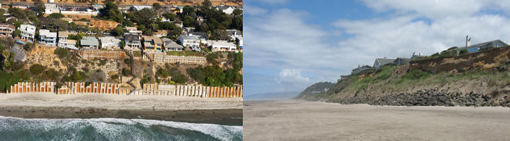
FIGURE 6.4 Seawalls and revetments fronting coastal cliffs and bluffs in California and Oregon. (Left) Concrete and timber seawalls protecting cliff top homes in Solana Beach, California. SOURCE: Copyright 2002–2012 Kenneth & Gabrielle Adelman, California Coastal Records Project, <www.Californiacoastline.org>. (Right) Rip rap protecting bluff top housing along the central Oregon coast. SOURCE: Courtesy of Gary Griggs, University of California, Santa Cruz.
Periodic El Niño events both enhance storm wave activity, leading to severe beach erosion, and increase rainfall and runoff, increasing sand delivery to the shoreline and thus sometimes leading to wider beaches in subsequent months. More frequent storms during warmer PDO cycles can lead to extended periods when beach widths are narrower than average. Over the long term, rising sea level will cause landward migration or retreat of beaches. The retreat is caused partly by inundation of the beach by the rising sea and partly by offshore transport of sand to maintain the beach profile. Because the berm or back beach is essentially a horizontal surface, even a small rise in sea level may lead to a horizontal retreat that is considerably larger than the sea-level rise (Edelman, 1972).
Beaches also can undergo erosion or long-term retreat in response to a reduction of sand supply. Coastal rivers and streams—many of which have been dammed for water supply, food control, hydroelectric power, or recreation—provide most beach sand along the west coast. Willis and Griggs (2003) determined that more than 500 dams have reduced the average annual sand and gravel flux to California’s coastal watersheds by 25 percent. Sherman et al. (2002) calculated that 28 dams and more than 150 debris basins in the watersheds of eight major rivers in southern California have impounded more than 4 million m3 yr-1 of sand. Statewide, approximately 152 million m3 of sand that would have been delivered to the shoreline to nourish beaches since 1885 has been trapped by coastal dams (Slagel and Griggs, 2008). The long-term effect of declining sand supply works in concert with rising sea level to progressively narrow beaches.
Barrier spits or other sandy peninsulas, which are common along the northern Oregon and southern Washington coastlines (Figure 6.5), will tend to erode
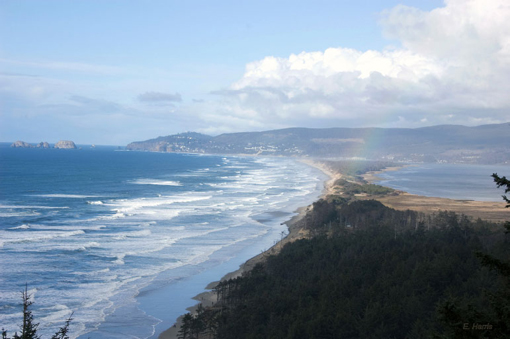
FIGURE 6.5 Oregon’s Cape Lookout State Park on Netarts Spit, which is backed by Netarts Bay. Long sand spits commonly form at the mouths of estuaries along the central and northern Oregon coasts and Washington coast. SOURCE: Courtesy of Erica Harris, Oregon State University.
or migrate under elevated sea levels and large storm waves. Erosion or landward migration of sand spits or barrier bars will occur more frequently with sea-level rise (Pilkey and Davis, 1987).
Back-beach barriers can slow or halt the natural inland migration of beaches because of rising sea level. Where a seawall, revetment, or structure exists, the shoreline cannot advance landward and the beach is progressively inundated (Figure 6.6). This process, known as coastal squeeze or passive erosion, has been documented in a number of locations along the west coast. Similarly, barrier spits that have been developed and then protected with revetments cannot migrate with sea-level rise (Figure 6.7). Depending on the rate of sea-level rise, all west coast beaches with hardened or constrained back beach edges will gradually be inundated.
Only a few studies have quantified rates of change along the sandy shoreline of the U.S. west coast. Kaminsky et al. (1999) found widely varying rates of change for the sandy shoreline of Pacific County, Washington, ranging from +0.8 to +14.2 m yr-1 for 1870–1926, -13.6 to +8.8 m yr-1 for 1926–1950, and -7.0 to +4.2 m yr-1 for 1950–1995. Sand spits eroded or accreted, depending on sand supply, wave energy, and relative sea level. Coastal land change along the sandy shoreline of California was assessed as part of the U.S. Geological Survey’s National Assessment of Shoreline Change program (Hapke et al., 2006). Maps, aerial photographs, and, more recently, lidar (light detection and ranging) were used to determine both long-term (1800s to 1998–2002) and short-term (1950s–1970s to 1998–2002) rates of shoreline or beach change. More than 16,000 transects revealed that the shoreline eroded 0.2 ± 0.4 m yr-1 over the short term. The average rate of long-term change was 0.2 ± 0.1 m yr-1, an accretional trend, although 40 percent of the transects showed net erosion. This net accretional trend was attributed to the large volumes of sediment that were added to the system from large rivers and to the impact of coastal engineering and beach nourishment projects (Hapke et al., 2006). A similar assessment effort is planned for the Oregon and Washington coasts.
Cooper (1958, 1967) mapped and described the coastal dunes of Washington, Oregon, and California, and found that extensive coastal sand dunes accumulate when the following conditions are met: (1) a large supply of fine-grained sand, (2) a barrier such as a headland to trap littoral drift and accumulate sand, (3) a low-relief area landward of the beach where sand can accumulate, and (4) a dominant or persistent onshore wind. Large dune fields are best preserved in areas that have undergone either net subsidence or limited uplift during the Quaternary (Orme, 1992). Dunes back about 45 percent of the Oregon coast and 31 percent of the
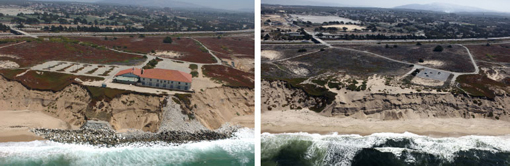
FIGURE 6.6 (Left) Passive erosion in front of a revetment, illustrating the loss of beach where the structure restricts the shoreline from migrating landward. The beach continues to migrate inland on either side of the revetment. (Right) Recovery of the beach following removal of the revetment and bluff top structure. SOURCE: Copyright 2002–2012 Kenneth & Gabrielle Adelman, California Coastal Records Project, <www.Californiacoastline.org>.
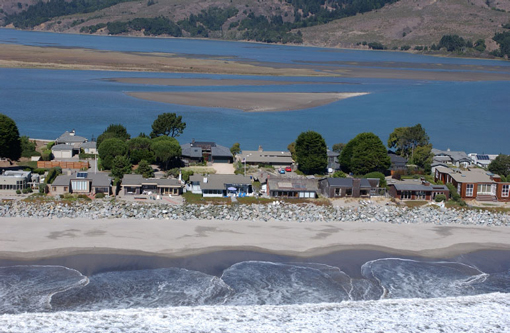
FIGURE 6.7 Developed sand spit at Stinson Beach in Marin County, California, where a revetment has been constructed in an effort to protect the homes. This spit cannot migrate with sea-level rise. SOURCE: Copyright 2002–2012 Kenneth & Gabrielle Adelman, California Coastal Records Project, <www.Californiacoastline.org>.
Washington coast (Komar, 1997). Many of the dune areas exposed along and inland from the west coast shoreline today formed during the lower sea levels of the past. At the end of the last ice age, when sea levels were about 120 m lower than today, the entire continental shelf was exposed. Sand from rivers and streams was deposited across this extensive plain, and onshore winds produced large dune fields, such as those in the Coos Bay area of central Oregon, which extend along the coast for nearly 240 km and are encroaching into some developed areas (Figure 6.8; Komar, 1997). As sea level rose, many of the dunes were cut off from their vast reservoir of offshore sand. Dunes still form and are active today along the shorelines of all three states, but they have a lower supply of sediment and are much less extensive than those that formed in the past.
Decades of observations of coastal dunes around the world have shown that the frontal dune, which is closest to the beach, is an ephemeral and unstable feature (e.g., McHarg, 1969). Sand dunes typically accrete or expand under the force of onshore winds and an ample supply of sand, but they can erode quickly under severe wave attack at times of high tide or elevated sea level. The hazards of building on the frontal dune have been known for centuries (McHarg, 1969). Nevertheless, many housing developments in California, Oregon, and Washington have been constructed on dunes and are periodically threatened or damaged (Figure 6.9). Dunes, whether modern or Pleistocene, can be expected to retreat quickly under rising sea levels and larger waves.
RETREAT OF CLIFFS AND BEACHES UNDER SEA-LEVEL RISE
Coastlines have been retreating globally since sea level began rising at the end of the last ice age, ap-
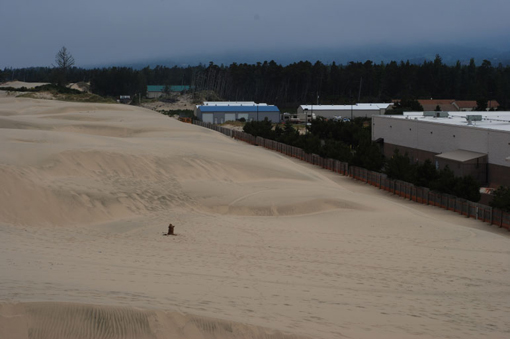
FIGURE 6.8 Dunes along the central Oregon coast at Florence are encroaching into development. SOURCE: Courtesy of Phoebe Zarnetske, Oregon State University.
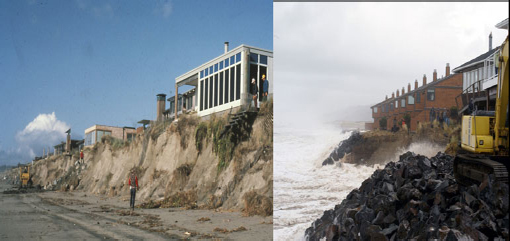
FIGURE 6.9 Construction of private homes on the frontal dunes. (Left) Homes in central Monterey Bay were threatened by erosion during the high tides, elevated sea levels, and large storm wave of the 1983 El Niño. SOURCE: Courtesy of Gary Griggs, University of California, Santa Cruz. (Right) Placement of riprap during storm conditions to protect development on dunes in Neskowin, Oregon. SOURCE: Courtesy of Armand Thibault.
proximately 21,000 years ago. At that time, the western shoreline of North America was located at the edge of the continental shelf (Shepard, 1963; Nummedal et al., 1987), which for Oregon and Washington is typically 25–50 km offshore (Komar, 1997). Off the California coast, the shelf width varies, averaging 15–30 km, but narrowing to 5 km or less off Big Sur and parts of southern California, and widening to 40 km off San Francisco (Figure 6.10). The average rate of coastline retreat over the post-glacial period of sea-level rise can be estimated by dividing the width of the continental shelf at a specific location by 21,000 years. For example, a shelf width of 5 km corresponds to an average retreat rate of 23.8 cm yr-1, and a 40 km wide shelf corresponds to an average rate of 190 cm yr-1. Of course, the actual rate at any given time and place may be significantly higher or lower, depending on variations in the rate of sea-level rise over the 21,000-year period as well as geographic variations in coastal geology, regional wave climate, offshore bathymetry, and the degree of coastal armoring.
Few studies have projected future shoreline and sea cliff retreat rates under rising sea level. For example, a Federal Emergency Management Administration-sponsored effort to assess future coastal erosion hazards (Crowell et al., 1999) simply projected historic erosion rates without considering changes in rates of sea-level rise or wave climate. Where data are available, projections for future coastal retreat could be made by extrapolating existing erosion trends (e.g., Box 6.1) and adding an appropriate safety factor to accommodate expected future sea-level rise and potential increases in storm wave heights. Because projected rates of sea-level rise are moderate in the near term (Chapter 5), extrapolation of current erosion rates is likely reasonable to at least 2030.
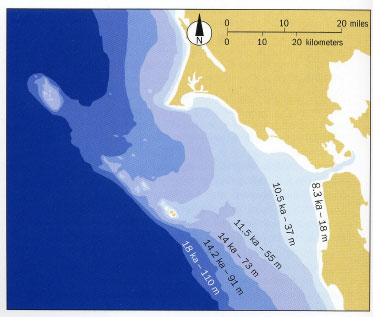
FIGURE 6.10 Sea-level rise has moved the San Francisco shoreline eastward by about 40 km since the last Ice Age ended. SOURCE: Griggs (2010).
An alternative approach to projections, developed by PWA (2009), relates rates of shoreline change to the coastal geology, then applies changes in total water level at the shoreline in exceedance of the elevation of the base of the bluff or cliff to predict erosion (Figure 6.11). Based on this approach, the central and northern California coast is projected to lose 81 km2 of land by 2100 relative to 2000 for 1 m of sea-level rise and 99 km2 of land for 1.4 m of sea-level rise (Table 6.1; Heberger et al., 2009; PWA, 2009). Due to their differing resistance to erosion, dunes and cliffs will respond differently to rising sea levels. Under the scenario of 1.4 m of sea-level rise by 2100, Revell et al. (2011) predicted that cliffs would erode an average distance of 33–60 m, depending on assumptions about geologic variability, and that dunes would erode an average distance of 170 m in the 11 counties studied. However, projected land losses vary significantly within each county and along the coast. In Del Norte County, for example, the average distance cliffs are projected to erode is 85 m by 2100 and the maximum distance is 400 m (Revell et al., 2011). The variability in how far cliffs are expected to erode under sea-level rise is illustrated in Figure 6.12. Such uncertainties in land losses, combined with uncertainties in exactly how sandy shorelines with back beach barriers or armor will respond to sea-level rise and with uncertainties in rates of future sea-level rise, make precise projections of future beach retreat or erosion in these areas problematic.
Wave Energy and Coastal Erosion
Wave-induced cliff and shoreline erosion is a significant problem along the west coast of the United States, and an increase in wave energy will only increase the rates of retreat. The amount of wave energy expended at any position on the coast is determined by the effects of wave height, tidal elevation or sea level,
BOX 6.1
Technology, Tools, and Resources for Evaluating Sea-Level Rise and Coastal Change
Most historic assessments of coastal change have relied on stereo vertical aerial photographs, which can be used to measure coastal erosion or retreat over time. However, most vertical photographs are in university libraries or must be obtained at considerable cost and time from aerial photographic companies or state or federal agencies. California has an online resource of oblique aerial photographsa as well as a selection of vertical photos. Ken and Gabrielle Adelman began flying and photographing the entire coast of California in 2002 and have rephotographed the coastline in 2004, 2005, 2006, 2008, and 2010. Three additional sets of oblique color slides taken in 1972, 1979, and 1987 by state agencies and some vertical aerial photographs have been scanned and added to the site. More than 90,000 high-resolution color photographs, covering every kilometer of the California coast, are available from the website. Using a time comparison option on the site allows users to immediately access photographs spanning 40 years of coastal change in California.
Lidar systems use a laser to precisely measure ground surface elevations or topography. Airborne scanning lidar can be used to estimate elevation every few square meters over tens to hundreds of kilometers of coast, allowing precise assessments of the spatial variability of beach and sea cliff changes (Sallenger et al., 2002). The first lidar topographic survey of the California coast was flown in October 1997 as a large El Niño event was approaching the west coast. A second survey of the same areas was flown in April 1998, after sea levels and storm waves returned to their normal state. The two surveys provided the first accurate comparison of the coastline before and after a severe event, and documented how much erosion or beach scour occurred (Figure).b
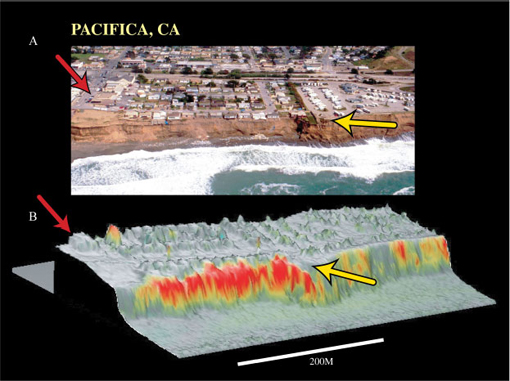
FIGURE (A) Photograph of the Pacifica region where extensive sea-cliff erosion occurred during the El Niño winter showing threatened houses at the top of the cliff. (B) Three-dimensional view using lidar data acquired prior to the El Niño winter of the area shown in (A). Note that the buildings are clearly shown. Superimposed on the topography is vertical change with warm (red) colors indicating loss over the El Niño winter. SOURCE: Sallenger et al. (2002).
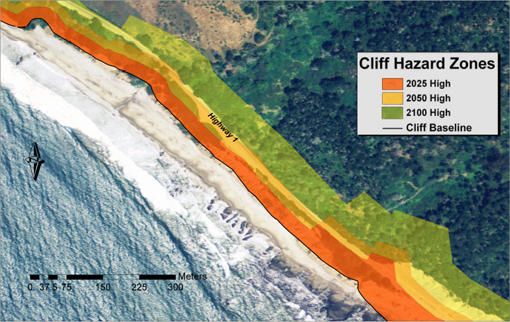
FIGURE 6.11 Example of projected sea-level rise hazard zones, defined as the historic erosion rate times the percent increase in total water level, in map view. SOURCE: PWA (2009).
TABLE 6.1 Projected Land Loss for 11 Central and Northern California Counties Under 1.0 m and 1.4 m of Sea-Level Rise
| Year | Cliff Land Lossa (km2) | Dune Land Lossb (km2) | Total Land Loss (km2) |
| 2025 | 5 | 21 | 27 |
| 2050 | 21 | 22–25 | 43–46 |
| 2100 | 53–61 | 27–38 | 81–99 |
SOURCE: Adapted from PWA (2009).
NOTE: Low end of the range is for 1.0 m of sea-level rise, and the high end of the range is for 1.4 m of sea-level rise.
a Includes 2 standard deviations of the historic shoreline change rates.
b Includes erosion associated with a 100-year storm event.
offshore and beach profile/slope, and beach width/height. Combined, these factors may significantly influence wave run-up and thus exert a major control on the hydraulic forces applied to the cliff, bluff, dune, or beach face (Benumof and Griggs, 1999). Conventional wisdom is that waves are the primary agent for seacliff erosion at the base of the cliff (Sunamura, 1992; Shih and Komar, 1994). Large storm waves occurring during high tide or times of elevated sea level are particularly effective in causing basal cliff erosion (Lee et al., 1976; Kuhn and Shepard, 1984; Griggs and Trenhaile, 1994; Benumof and Griggs, 1999). Any significant increase in wave heights or the amount of wave energy reaching the cliff will, therefore, lead to an increase in the erosive forces and the erosion rate.
A detailed investigation of cliff erosion in San Diego County, California, found significant variation in the rate of erosion, as well as in intrinsic proper-
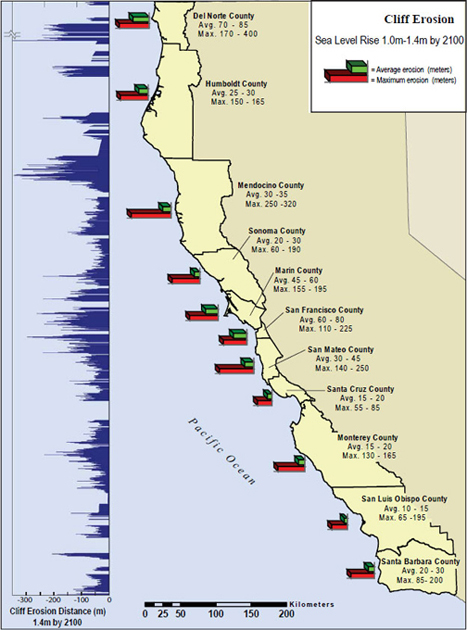
FIGURE 6.12 Variability in the distances coastal cliffs along the central and northern California coast are projected to erode under sea-level rise of 1.0 and 1.4 m by 2100 relative to 2000. Bar charts along the coast show average and maximum erosion distances between the 1.0 and 1.4 m sea-level rise scenarios. Chart on the left shows the projected erosion distance for each 500-m block for 1.4 m of sea-level rise. SOURCE: Revell et al. (2011).
ties of the cliff materials (e.g., lithology, structural weaknesses, rock strength, weathering) and extrinsic factors impacting the cliffs (e.g., wave energy, offshore bathymetry, rainfall). Although waves are the primary cause of seacliff erosion, the physical properties of the cliff materials in the San Diego study area strongly affect the erosion rates (Benumof and Griggs, 1999; Benumof et al., 2000).
Coastal Hazard Assessments
The U.S. Geological Survey developed an index of coastal vulnerability to sea-level rise in 2000 (Thieler and Hammar-Klose, 2000). The relative vulnerabilities of different coastal environments along the U.S. west coast to long-term sea-level rise were quantified based on variables including coastal geomorphology, regional coastal slope, rate of sea-level rise, wave and tide characteristics, and historical shoreline change rates. The rankings for each of the six variables at any particular location can be averaged to produce an overall coastal vulnerability index from 1 (very low) to 5 (very high; Table 6.2). This index provides a broad overview of how different regions of the west coast are likely to change in response to sea-level rise. Two specific regions (southwestern Washington/northwestern Oregon and San Francisco to Monterey, California) are covered in more detail, with maps delineating the distribution of various risk factors and an overall ranking of risk (Figure 6.13).
Living with the Changing California Coast (Griggs et al., 2005) provides a different approach for assessing coastal hazards in California and includes mile-by-mile maps of the entire coastline. Information on the maps include shoreline environment, erosion rates where published or known, presence and type of armoring, notes or comments on individual coastal areas and specific issues or problems, and a hazard ranking ranging from stable/low risk to hazard/high risk. An example is shown in Figure 6.14.
The high spatial variability portrayed in these maps underscores the difficulty of generalizing the response of coastal cliffs and bluffs, beaches, and dune to sea-level rise along the west coast of the United States.
Estuaries and tidal marshes are valuable ecosystems, providing a variety of services as well as the economic livelihoods of many communities (Mitsch and Gosselink, 2000; MA, 2005). Open waters, mudflats, and marshes offer refuge and forage for wildlife, fishes, and invertebrates. Shallow ponds and seed-producing vegetation provide overwintering habitat for millions of migratory waterfowl. Wetlands help absorb nutrients and reduce loading to the coastal ocean. They also help protect local communities from flooding, either by storing riverine floodwaters or by damping storm surges from the ocean.
Estuaries are bodies of water formed at the coastline where fresh water from rivers and streams flows into the ocean. The largest estuaries along the west coast of the United States include Puget Sound, the Columbia River Estuary, and the San Francisco Bay-Delta. Tidal marshes—herbaceous wetlands frequently or continu-
TABLE 6.2 Ranking of Variables Determining the Coastal Vulnerability Index
| Ranking of Coastal Vulnerability Index | |||||
| Very low | Low | Moderate | High | Very high | |
| Variable Geomorphology |
1 Rocky, cliffed coasts; fiords; fiards |
2 Medium cliffs, indented coasts |
3 Low cliffs, glacial drift, alluvial plains |
4 Cobble beaches, estuary, lagoon |
5 Barrier beaches, sand beaches, salt marsh, mudflats, deltas, mangrove, coral reefs |
| Coastal slope | > 1.9 | 1.3–1.9 | 0.9–1.3 | 0.6–0.9 | < 0.6 |
| Relative sea-level change (mm yr-1) | < -1.21 | -1.21–0.1 | 0.1–1.24 | 1.24–1.36 | > 1.36 |
| Shoreline erosion or accretion (m yr-1) | > 2.0 Accretion |
1.0–2.0 | -1.0–1.0 Stable |
-1.1– -2.0 | < -2.0 Erosion |
| Mean tide range (m) | > 6.0 | 4.1–6.0 | 2.0–4.0 | 1.0–1.9 | < 1.0 |
| Mean wave height (m) | < 1.1 | 1.1–2.0 | 2.0–2.25 | 2.25–2.60 | > 2.60 |
SOURCE: Thieler and Hammar-Klose (2000).
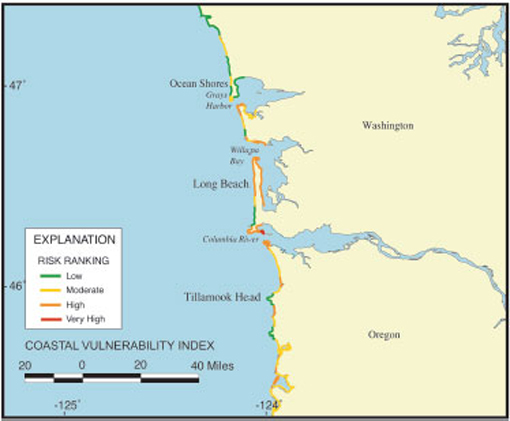
FIGURE 6.13 Coastal vulnerability index for southwestern Washington and northwestern Oregon. SOURCE: Thieler and Hammar-Klose (2000).
ally inundated with fresh, brackish, or saline water—are found within estuarine embayments or along protected coastlines (Figure 6.15). In California, extensive tidal marshes occur in Elkhorn Slough off Monterey Bay, San Francisco Bay, and the Sacramento-San Joaquin Delta, although smaller areas of marsh exist along the coast from San Diego to Humbolt Bay. In the Pacific Northwest, tidal marshes are common along the margins of rivers that flow directly into the ocean, such as the Salmon and Columbia rivers, and within bar-built estuaries such as the Tillamook Estuary in Oregon and Willapa Bay in Washington (Seliskar and Gallagher, 1983). Extensive tidal marshes also existed historically within the deltas of major rivers flowing into Puget Sound, such as the Nisqually and Skagit rivers.
Estuaries comprise subtidal (permanently flooded) areas, intertidal flats (unvegetated area regularly exposed by falling tides), and vegetated marshes (Figure 6.16). The transition between these environments depends on the interaction of tides with the local topography on timescales ranging from weeks to millennia (Figure 6.17). Changes in relative sea level may change the tidal dynamics within the estuary, including the tidal range. Changes in tidal dynamics affect saltwater penetration, the duration of flooding or exposure of intertidal flats and marshes, and the depth of flooding, which in turn influences wave activity, the potential for erosion, and a host of biological processes.
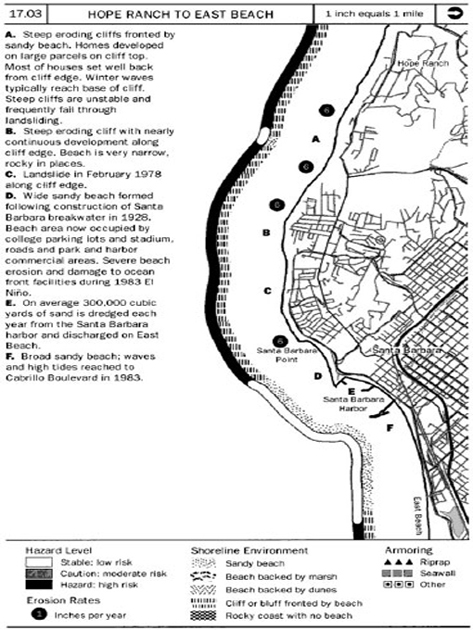
FIGURE 6.14 Map of portion of the Santa Barbara County coastline, delineating specific characteristics and an overall hazard rating. SOURCE: Griggs et al. (2005).
Vegetation plays a critical role in determining both the character of estuarine environments and their response to sea-level rise. The spread of emergent vegetation provides an effective trap for suspended sediment, stabilizing intertidal flats (e.g., Steers, 1948). The colonization of intertidal flats by vegetation depends on elevation (Williams and Orr, 2002), soil drainage, local dispersal mechanisms (e.g., Wolters et al., 2005), and/or exposure times, which determines whether propagules will survive or seeds will germinate. These conditions can change rapidly. Ward et al. (2003) noted
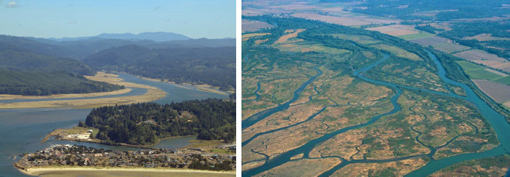
FIGURE 6.15 (Left) Marshes occur at the margins of river estuaries along parts of the west coast with steep gradients close to the ocean, such as the Alsea River Estuary near Waldport, Oregon. SOURCE: Courtesy of Laura Brophy, Green Point Consulting. (Right). More extensive coastal marshes occur in deltaic areas like the Skagit River Estuary, shown here near Milltown, Washington. Plant communities can vary with distance from the main channel as well as along the salinity gradient from river to sea. SOURCE: Courtesy of Greg Hood, Skagit River System Cooperative, <http://pers-erf.org/Gallery/>.
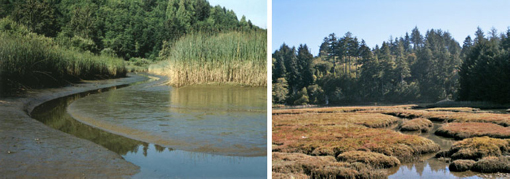
FIGURE 6.16 (Left) Tidal fluctuations periodically expose mudflats, such as this tidal channel and brackish marsh in the Umpqua River Estuary in Oregon. In areas of the estuary that are relatively remote from ocean influences, brackish water supports diverse vegetative communities. (Right) Low marsh in Alsea River Estuary, Oregon, showing that even small areas of tidal marsh can support well-developed tidal creek systems. SOURCE: Courtesy of Laura Brophy, Green Point Consulting.
that a single storm created the soil and elevation conditions necessary to allow the native Spartina foliosa to colonize a mudflat in the Tijuana Estuary in southern California.
Intertidal flats give way to marshes when the land surface reaches an elevation that supports salt- and/or flood-tolerant emergent vegetation (Pestrong, 1965). Important west coast marsh species in high-salinity habitats include Spartina foliosa (from Bodega Bay south), Spartina densiflora, Salicornia virginica, Scirpus spp., Distichlis spp., and Jaumea spp. Dominant species in low-salinity habitats include Carex lyngbyei, Scirpus californicus, Juncus balticus, Potentilla Pacifica, and Typha spp. (Seliskar and Gallagher, 1983; Barnhart et al., 1992). The transition from intertidal flats to marshes is especially sensitive to changes in sea level. If tolerance limits of the vegetation are exceeded, abrupt transitions could occur.
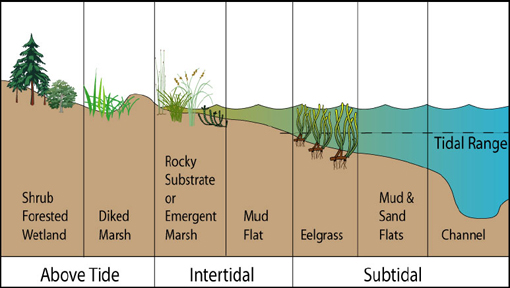
FIGURE 6.17 Relationship between elevation and types of habitat in the Columbia River Estuary. SOURCE: Thom et al. (2004).
The rate of transition from intertidal flat to emergent marsh depends on the vigor of the vegetative growth. Pestrong (1965) observed Spartina spp. colonizing tidal flats in San Francisco Bay and described luxuriant growth of dense stands. The efficacy of some Spartina species in trapping suspended sediments has been demonstrated in many areas, especially where invasive species have quickly covered large intertidal areas and raised elevations. For example, Feist and Simenstad (2000) noted that new colonies of invasive Spartina alterniflora expanded at rates of almost 80 cm yr-1 in Willapa Bay, Washington.
Mature marsh systems include a number of subsystems—vegetated plains, tidal courses, pans and ponds—as well as the adjacent intertidal zone (see Perillo, 2008, for a summary of the dynamics and interdependence of these subsystems). The biophysical characteristics of these environments influence the ability of estuaries to attenuate the effects of sea-level rise and storm waves on adjacent natural and human environments.
Historic and Current Patterns of Estuary Change on the West Coast
Many of the estuarine habitats along the U.S. west coast are a product of their sea level and tectonic histories, which control the position of the sea relative to valleys and coastal embayments and influence sediment delivery from adjacent steep watersheds. San Francisco Bay, for example, began to form 10,000 years ago as sea level rose through the Golden Gate (Atwater et al., 1977, 1979). When sea-level rise slowed, vegetation began to colonize and persist on tidal mudflats along the estuarine margins (Atwater et al., 1979; Collins and Grossinger, 2004). In the estuary’s marine embayments, the high availability of reworked sediments and the low rates of sea-level rise enabled the formation of extensive marsh plains capable of accreting with rising sea level (Orr et al., 2003). Sediment was delivered to the nearby freshwater delta during flood flows of the Sacramento and San Joaquin rivers. Far from the delta, organic-rich marshes began to accumulate (Atwater, 1982).
More recently, human activities have become a powerful force on estuarine wetlands. The 1850 Swamp and Overflow Land Act transferred ownership of all swamp and overflow land, including estuarine marshes like those in the Sacramento-San Joaquin Delta, from the federal government to the states. By 1871, most of California’s “swampland” was privately owned, and much of it was being converted to other uses (The Bay Institute, 1998). In the Puget Sound watershed, where approximately 70 percent of the Washington state population lives, the loss of historical nearshore ecosystems through development has been profound (see “Case Study on the Puget Sound” below).
Processes Determining Future Changes in Estuaries
The primary physical factors that influence coastal marsh development and survival are the fine sediment regime, tidal conditions, coastal configuration, and local sea-level history (French and Reed, 2001). Changes in soil elevation also may be important (Cahoon et al., 2002). If compaction rates exceed vertical accretion, the plant species dominating any particular tidal marsh ecosystem may cease to function physiologically (Kirwan and Murray, 2007). The response of flats and marshes to sea-level rise depends on the balance between submergence, erosive forces, and sediment supply, and is mediated by climatic influences on biotic processes (Reed, 1995). The cross-profile shape of intertidal flats in southern San Francisco Bay, an important determinant of their role in wave attenuation, is influenced by sediment deposition, tidal range, fetch length, sediment grain size, and tidal flat width (Bearman et al., 2010).
The resistance of tidal flats to erosion by waves and tides is heavily dependent on the biota. Widdows et al. (2004) estimated that as much as 50 percent of the sediment accumulation on a tidal flat in the Westerschelde Estuary (Netherlands) was due to biostabilization. The timescale on which various biotic factors influence tidal flat stability was conceptualized by Widdows and Brinsley (2002), who identified longer-term changes associated with the presence of persistent biota and shorter-term cyclic changes in the balance between microphytobenthos and sediment destabilizers, such as burrowing clams. Few studies have examined the interactions of biotic agents with intertidal morphology, although there is some evidence that invasive species can have dramatic effects (e.g., Hosack et al., 2006, studies in Willapa Bay) and that biotic agents can play a key role in wave attenuation within estuaries (Lacy and Wyllie-Echeverria, 2011; see also “Puget Sound Case Study” below).
The redistribution of sediments within and between tidal flats and marshes is strongly influenced by vegetation, which traps sediment, and by storm surges and waves (e.g., Reed et al., 2009; Williams, 2010). Storm surges can introduce sediment into marshes and redistribute sediment as portions of the marsh are eroded, resulting in substantial sediment accretion and geomorphic changes (Cahoon, 2006). The total amount of sediment deposition in coastal marshes depends on the prevailing meteorological and hydrographical conditions as well as on the number and magnitude of storm events (Bartholdy, 2001). The source of storm sediment deposited in marshes is rarely clear (e.g., Burkett et al., 2007), and erosion or deposition associated with individual storms is difficult to observe directly or infer from satellite images. Detailed geomorphologic surveys carried out before and after the storms are required to elucidate how these systems are linked during extreme events.
On the west coast of the United States, the role of storms in marsh sedimentation is mediated by precipitation and local runoff. In California’s Elkhorn Slough Watershed, the relationship between estuarine marshes and adjacent uplands varies according to the changing nature of watershed inputs (Byrd and Kelly, 2006). Along the coast, these inputs are controlled by watershed size and runoff (Figure 6.18) and by the sensitivity of sediment delivery to land-cover change caused by anthropogenic and climatic factors, including changes in storminess. Short, steep drainage areas, such as commonly found on the Oregon coast, are likely more sensitive to changes in coastal storm precipitation. Sediment runoff from rivers not bounded by the Coast Range (e.g., Sacramento and Columbia rivers) is influenced by a wider set of climatic factors. Thus, the effect of individual storms on water and sediment delivery to estuaries in these areas is more buffered. However, sediment delivery to the coast is highly variable, even from the larger drainage areas. McKee et al. (2006) examined almost 20 years of data on suspended sediment delivery from the Sacramento and
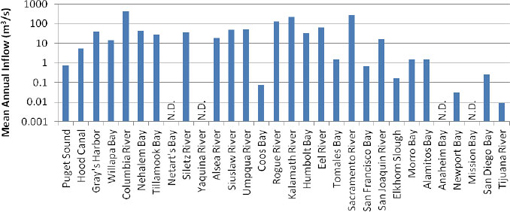
FIGURE 6.18 Mean annual inflows for U.S. west coast estuaries for 2000–2010. N.D. indicates that no data were available. SOURCE: Data from the U.S. Geological Survey, <http://waterdata.usgs.gov/nwis>.
San Joaquin rivers to the San Francisco Bay and noted that, on average, 88 percent of the annual suspended-sediment load was discharged during the wet season and 43 percent was discharged during the wettest 30-day period.
Dams and human actions have a large impact on estuaries. One of the best described examples concerns the effect of hydraulic mining and dams on sediment delivery from the Sacramento River to the northern San Francisco Bay (Gilbert, 1917; Wright and Schoellhamer, 2004; Jaffe et al., 2007). The huge pulse of sediment released during mining activities gradually moved down the Sacramento River and into San Pablo Bay. Recent losses of sediment from San Pablo Bay likely indicate the progressive movement of the sediment pulse toward the ocean.
The response of coastal marshes to sea-level rise is influenced by changes in sediment dynamics, mediated by physical forcing, biotic factors, and plant growth. Dating of buried salt marsh peats suggests that salt marsh surfaces are frequently in equilibrium with local mean sea level (see Allen, 1990, and references therein), as would be expected in areas where salt marshes survive for long periods. It is well established that the surface elevation and, in many cases, the accretion rate of marshes can change to keep pace with sea-level rise. However, it is unclear whether the elevation change is stimulated by increased inundation or whether rising sea level provides space for soil accumulation to proceed in areas where it is otherwise limited.
Much attention has been paid to the issue of landward migration of tidal marshes as a result of sea-level rise. Such migration will occur only if the landward margin of the marsh is unobstructed (e.g., Kraft et al., 1992). The rate of migration is determined by the slope of the land and the rate of rise. New marshes may develop at the landward margin, depending on the level of development. The limited availability of suitable land along the California coast is described in Heberger et al. (2009). But whether marshes at a particular location survive in the long term will be determined by their ability to build elevation. Figure 6.19 illustrates how marshes can be created by sea-level rise then lost if they cannot maintain their relative elevation. Although the figure shows an idealized uniform slope, many west coast shorelines steepen abruptly landward of the marsh, which would limit the extent of marshes as they move inland in response to sea-level rise.
Projecting the sustainability of salt marshes under future climate scenarios is complex because it depends on the relative importance of organic matter to marsh vertical development, the factors governing organic matter accumulation during rising sea level, the importance of subsurface processes in determining surface elevation change, and the role of storm events and hydrologic changes in controlling sediment deposition,
soil conditions, and plant growth. A good example of this complexity and the challenge of isolating the effects of sea-level rise from other climate-related influences is described in Kirwan et al. (2009), who found evidence of an increase in the productivity of a dominant east coast salt marsh grass with increases in temperature. Other studies have found changes in the productivity of some marsh plants with increased atmospheric CO2 levels (e.g., Cherry et al., 2009). This report’s assessment of the response of estuaries and marshes to future sea levels is therefore only one part of the climate change story. Fully assessing the fate of west coast marshes under climate change, including sea-level rise, is further hampered by the lack of long-term data on many west coast marshes and the differences in species composition compared to other more-studied systems.
Response of Mudflats and Marshes to Future Sea-Level Rise and Storms
The regional projections presented in Chapter 5 show substantial differences in the magnitude of sea-level change along the west coast. If space is available for landward migration, the rate of sea-level change over biologically important timescales will determine the fate of tidal marshes. Most models of marsh response to sea-level rise ignore interannual variability in sea level and assume a consistent monotonic pattern of rise (Kirwan and Temmerman, 2009). The potential consequences of the monotonic rise in the sea levels projected in Chapter 5, as well as the effect of potential interannual variations or other conditions that could modulate those responses, are discussed below. As discussed in Chapter 4, however, local vertical land motions (subsidence or uplift) may be significantly larger than the regional land motions used in the projections, and thus relative sea-level change at any particular place along the coast may differ from the committee’s regional projections.
Central and Southern California
Approximately 90–95 cm of sea-level rise is expected between 2000 and 2100 south of Cape Mendocino, but the value could be as high as ~167 cm and as low as 42 cm (Figure 5.9). The projected value of this study falls between two sea-level rise scenarios
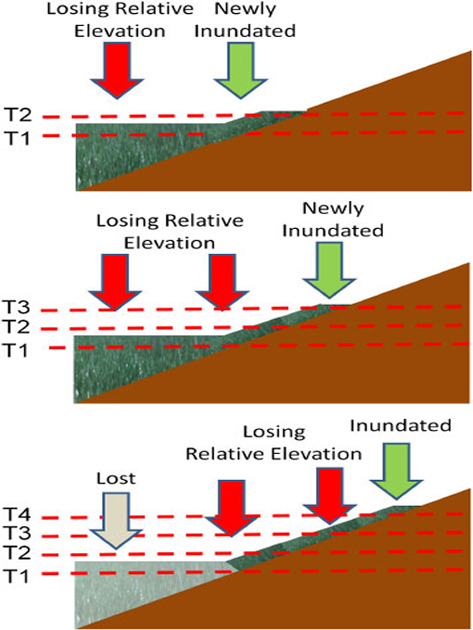
FIGURE 6.19 The change of marsh surface elevation is important to successful landward migration under sea-level rise. Depending on the difference between the rate of sea-level rise and the rate of marsh accretion, a narrow or wide band of wetlands will be present under any sea-level condition, but the area of marsh will not expand unless elevation change can keep pace with sea-level rise. (Top) Sea level has risen from T1 to T2. New marshes are created at the landward margin of the marsh and existing marshes lose relative elevation as the rate of sea-level rise exceeds the elevation increase. (Middle) Sea level rises to T3. Newly inundated marshes in T2 are now losing elevation and new marshes are created at the landward margin. (Bottom) Sea level continues to rise to T4. Existing marshes continue to lose elevation.
considered by Stralberg et al. (2011), who examined the fate of San Francisco Bay marshes under varying rates of organic matter accumulation and sediment supply. Their study showed that some types of marshes (e.g., those lower in the tidal frame, known as low marsh) are sustainable under even 1.65 m of sea-level rise as long as there are sufficiently high rates of suspended sediment supply. This implies that if the high estimates are realized, marshes will be sustainable by 2100 only under optimal conditions of sediment supply. Marshes respond more to rates of sea-level change over several years than they do to the absolute change in elevation. Observations suggest that marshes in San Francisco Bay can keep pace with a sea-level rise of 6 mm yr-1 (see Parker et al., 2011 and references therein). The committee projections for 2030 and 2050 yield rates on this order.
The supply of suspended sediment to estuarine marshes in central and southern California is driven by fluvial inputs. The few long-term studies of sediment delivery to estuaries in this area tend to show a decrease in suspended sediment in San Francisco Bay over time (Wright and Schoellhamer, 2004; Schoellhamer, 2011). Much of this decline occurred because a significant fraction of sediment that would enter the system naturally is now trapped in upstream reservoirs.
For coastal marsh accretion to occur, some of the suspended sediment carried in from rivers must be deposited (Reed, 1989). For example, at Morro Bay, high rates of sediment delivery from the adjacent watershed doubled the area of salt marsh between 1980 and 1990.1 Sediment deposition also can be influenced by sea-level rise and storminess. Ruhl and Schoellhamer (2004) noted that wind waves can resuspend erodible bed sediment. As sea level rises, wind wave stress on bed sediment decreases, reducing the potential for sediment resuspension (Ganju and Schoellhamer, 2010). An increase of 1 m in water depth, especially in shallow subtidal areas, could have substantial effects on sediment resuspension. Larger storm events, which produce larger waves, would be required to mobilize sediments and make them available for marsh accretion.
The depth and duration of flooding control the opportunity for sediment deposition on the marsh surface. If storm events elevate water levels at times of high sediment supply, the opportunity for sediment deposition increases. Under normal tidal inundation, times of flooding may not coincide with periods of high sediment availability. Further, periodic marsh flooding during storms can allow sediment to be deposited without subjecting marsh plants to prolonged inundation stress. Zedler (2010) found that storms were important for delivering sediment and increasing the elevation of marshes in the Tijuana Estuary in southern California, although the lack of subsequent tidal flooding may lead to high soil salinities and changes in species composition in high marsh areas. In some bar-built estuaries, especially those subject to natural closure (Jacobs et al., 2010), sea-level rise and storms may alter the configuration of the estuary and either increase or decrease sediment retention (e.g., Schwarz and Orme, 2005).
For the sea-level changes projected by the committee for central and southern California, a series of storms combined with some increase in tidal inundation could allow such marshes to persist to 2100, even under the highest sea levels projected. If storm events increase both sediment resuspension and marsh flooding, then rather than causing problems for coastal marshes, they may be essential to their survival.
Northern California, Oregon, and Washington
North of Cape Mendocino, the committee projects that sea level will rise 61–65 cm by 2100, with lower rates to the north (Figure 5.9). The high end projections are ~143 cm by 2100. In the southern part of this stretch of shoreline, isolated areas of marsh exist at the mouth of several estuaries, such as Humboldt Bay and Lake Earl in California and the Rogue River in Oregon. Most of these estuaries are relatively narrow without extensive intertidal flats for storing sediment, so their ability to survive sea-level rise depends greatly on fluvial inputs of sediment. The Eel River, entering the coast south of Humboldt Bay, supplies the largest amount of sediment to the California coast (Sommerfield and Nittrouer, 1999). The Klamath River may have a higher discharge than the Eel River during a storm event, but it carries a lower sediment load because there is less erodible material in its drainage basin (Pullen and Allen, 2000).
Along this part of the coast, the supply of sediment to coastal marshes is determined by storm-induced
__________
1 See <http://www.mbnep.org/Library/Files/Tidings/2006/Sedimentation.pdf>.
river flooding and by management practices. For example, Willis and Griggs (2003) reported that dams on the Klamath River control 46 percent of the drainage and have reduced sand transport to the coast by 37 percent. Although sand may not be necessary for marsh survival, reduction in the supply of sand will modify the bathymetry of the estuary with potential consequences for tidal exchanges and the resuspension of sediment for transport to marshes (see discussion above regarding the potential importance of wind wave resuspension of sediment availability within estuaries).
The committee’s projection of sea-level rise by 2100 is slightly lower than that used by Glick et al. (2007) to study the effects of sea-level rise on coastal habitats of the Pacific Northwest (69 cm). Using the SLAMM 5.0 model (Clough and Park, 2007), Glick et al. (2007) predicted that salt marsh would expand, partly at the expense of more inland fresh marsh areas. However, one of the drawbacks of the SLAMM 5.0 model is that it uses historic accretion rates to drive inundation and the vertical component of marsh response (Clough and Park, 2007). Rates of accretion may change with sea-level rise, and accretion is only one of several dynamic factors that determine the response of marsh elevation to sea-level change (see discussion above). For example, if historical measured rates of marsh accretion are limited by the accommodation space provided by the highest level of tidal flooding (e.g., Krone, 1987; Allen, 1990), then an increase in sea level could increase marsh accretion. Glick et al. (2007) set accretion rates at 3.6–3.75 mm yr-1 for coastal marshes in their study. For much of the Pacific Northwest, these rates are slightly higher than sea-level rise projected by the committee for 2030 and similar to the rise projected for 2050. If accretion rates subsequently increase in response to sea-level rise, the Glick et al. (2007) predictions for 2100 (e.g., salt marsh expands at the expense of other marsh types) will not be realized.
For 2030 and 2050, local influences, including changes in tidal hydrology and riverine sediment delivery, as well as development pressures, can be more of a threat to marsh sustainability than sea-level rise. If the highest estimates of sea-level rise are realized for this part of the coast, only marshes in areas with a high local sediment supply (e.g., at the mouth of major river estuaries) will persist in their current form.
Role of Mudflats and Marshes in Providing Protection from Future Inundation and Waves
Few controlled field studies have examined the role of coastal habitats in protecting inland areas from inundation and wave damage during sea-level rise, coastal storms, or tsunamis. Some small-scale studies (e.g., Möller et al., 1999) have detected a relationship between specific vegetative characteristics and wave attenuation, although bathymetric change appears to play a more important role. Several field studies have noted the importance of vegetation morphology or architecture in attenuating both tsunami waves (Tanaka et al., 2007) and wind-waves (Mazda et al., 1997). Field observations, measurements of wave forces, and modeling of fluid dynamics associated with the 2004 south Asian tsunami suggest that tree vegetation may shield coastlines from tsunami damage by reducing wave amplitude and energy (e.g., Danielsen et al., 2005). However, it is difficult to separate the effect of the vegetation from other aspects of coastal topography (Dahdouh-Guebas and Koedam, 2006; Feagin, 2008). The question of whether vegetation structure reduces coastal damage directly through wave attenuation or indirectly through alteration of the landscape has not been settled.
Modeling studies of hurricane storm surge and surge attenuation suggest that decreases in marsh elevation, which increases the water depth, and increases in bottom friction generally reduce storm-surge levels (e.g., Loder et al., 2009). Reductions in marsh continuity increase coastal surges. Wamsley et al. (2009) found that the extent to which wetlands attenuate surge depends on the storm and landscape characteristics.
The effect of vegetation on bottom friction or roughness can be approximated from detailed measurements of plant morphology and assumptions about stem density and flexure (see Feagin et al., 2011, for a detailed review). However, isolating this effect from the larger coastal configuration with which the storm waves or tidal flows are interacting requires numerical experiments. The depth of flooding and its interaction with plant stems and leaves is yet another nonlinear relationship as field studies of wave attenuation in seagrass beds have demonstrated (e.g., Koch et al., 2009). All of these studies point to the difficulty of generalizing the role
of coastal habitats in ameliorating the effects of future storms or tsunamis on the west coast.
The morphodynamic interactions among topography and bathymetry, vegetation, sediment deposition, and turbulent flows are difficult to predict, increasing uncertainties about the extent to which coastal habitats will mitigate the effects of future sea-level rise and storms. A means for reliably determining wave damping by vegetation for engineering studies has not been developed (Augustin et al., 2009). Models that reliably predict coastal morphology (independent of the role of vegetation) over decades and under episodic storm forcing are not widely available. For these reasons, significant tolerance for future coastal habitats, vegetation, and coastal morphology configurations will have to be built into coastal protection systems.
OPPORTUNITIES FOR MARSH RESTORATION AND THE EFFECT OF MARSHES ON STORM WAVE ATTENUATION
As shown above, the response of marshes to future sea-level rise and storminess along the west coast of the United States depends on local conditions. Marsh restoration is also site specific. Consequently, the committee chose two areas where data on prior restoration are available—the California Bay Delta and the Puget Sound—to explore the potential for marsh restoration given future sea-level rise and the effect of marshes on storm and wave attenuation.
Case Study on the California Bay-Delta
California’s Bay Delta estuary is one of the largest estuaries in the United States. The estuary consists of a series of interconnected bays and channels connecting San Francisco Bay to the Sacramento-San Joaquin River Delta. Salinity increases from the delta to the Golden Gate at the mouth of San Francisco Bay. At times of high river flood, fresh conditions can penetrate into the bay.
The estuary has been modified extensively by anthropogenic activities over the past 150 years (The Bay Institute, 1998; Goals Project, 1999; Brown, 2003). Approximately 80 percent of the tidal wetlands in San Francisco Bay and 95 percent of the tidal wetlands in the Sacramento-San Joaquin Delta have been lost (The Bay Institute, 1998). In the south bay, more than 90 percent of the historic tidal marsh area has been converted to salt ponds, agricultural areas, and urban developments (Foxgrover et al., 2004; Figure 6.20). Many of these areas are protected by an aging collection of levees.
The extensive loss of tidal marsh habitat has prompted calls for marsh restoration in the San Francisco Bay Delta (e.g., Goals Project, 1999; CALFED, 2000; Steere and Schaefer, 2001). Given the large investment required to restore thousands of acres of tidal marsh, it is important to understand the likely role of restored marshes in attenuating storms and waves and whether they will persist under future sea-level rise.
Potential for Marsh Restoration
One of the first steps in marsh restoration is to return the land surface to elevations that can be colonized by marsh vegetation. Many land surfaces within the delta are currently on the order of 3–5 m below water levels. Data from interferometric synthetic aperture radar show that the delta-interior regions are subsiding 3–5 mm yr-1 and that local regions in the delta are subsiding up to 2 cm yr-1 (Brooks et al., 2012). In areas where subsidence exceeds sediment accumulation, it may be necessary to fill low-lying areas to enable colonization. Sedimentation rates are low in much of the delta because fine sediments are slow to settle and waves keep them in suspension (Simenstad et al., 2000). In some shallow areas with nearly 100 years of sedimentation (e.g., Sherman Lake and Big Break), sediment accumulation has not yet been sufficient to allow vegetation to become reestablished.
Where sediment accumulation exceeds subsidence, vegetation colonization may proceed naturally. For example, high vertical accumulation rates of 3 cm yr-1 for 1955–1963 and 4.2 cm yr-1 for 1963–1983 were inferred from 137Cs measurements of marsh cores at Alviso in the south bay (Patrick and DeLaune, 1990). Orr et al. (2003) found accretion rates for restored marshes in San Pablo Bay of 18–70 mm yr-1 for low marsh and 9–10 mm yr-1 for high marsh. At these rates, marsh restoration could progress under all except the committee’s high projections of 2100 sea-level rise. However, high rates of past accretion may not
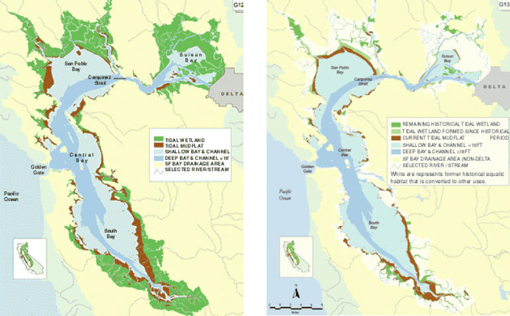
FIGURE 6.20 Extent of tidal wetlands in San Francisco Bay in the mid 19th century (left) compared with the extent c. 1997 (right). SOURCE: Courtesy of The Bay Institute.
continue in the future. Schoellhamer (2011) found a 36 percent decrease in suspended solids concentration in San Francisco Bay from water years 1991–1998 to 1999–2007. He attributed this decrease to the depletion of a large erodible sediment pool (Jaffe et al., 1998; Foxgrover et al., 2004) within the estuary. The availability of an erodible sediment pool prior to the late 1990s may have enabled higher accretion rates in restored marshes in the past than would be possible in the future. Transport of sediment from adjacent intertidal and subtidal flats into relatively quiescent restored areas where it cannot be readily suspended would promote accretion in restored marshes at the expense of the erodible sediment pool. The elimination of the sediment pool would lead to less sediment being available for development and maintenance of restored marshes around San Francisco Bay.
The committee’s projected sea-level rise for the San Francisco Bay Delta is 93 cm by 2100. The studies described above illustrate that with adequate migration space and sediment supply, marshes in some areas may be able to survive future sea-level rise. However, if the highest projections for the Bay Delta are realized (1.6 m by 2100), marsh restoration will be realistic only in areas with exceptionally high and sustained sediment supply.
Effect of Restored Marshes on Wave and Storm Attenuation
The Golden Gate carries storm surges from the open coastal Pacific into San Francisco Bay and the delta (Bromirski and Flick, 2008), and the bordering low-lying lands are vulnerable to the increased water levels (Knowles, 2010). Most measurements of the effect of marsh vegetation on wave attenuation in the bay delta have focused on small waves, such as boat wakes (e.g., Bauer et al., 2002). For example, Ellis
et al. (2002) measured the effect of brush bundles in attenuating waves from boat wakes and found up to a 60 percent reduction in wave energy impacting a delta levee when the bundles were in place, depending on the tides. In a study of small waves in a shallow lake, Lövstedt and Larson (2010) found an average decrease in wave height of 4–5 percent per meter within the first 5–14 m of beds of Phragmites australis. If these results are applicable to tules (Schaenoplectus spp.), which are similar in height, extensive tule restoration could result in substantial attenuation of waves (produced by wind or vessels) within the delta.
The transition from tules to Salicornia virginica dominated marshes in the bay is accompanied by a major change in plant morphology. Salicornia virginica resembles Atriplex portulacoides above ground, which has a lower stem density, height, and diameter than the two Spartina spp. (Feagin et al., 2011). This suggests that Salicornia virginica marshes in the bay may play less of a role on attenuating storm set-up and waves than the reed-like architecture of tule marshes in the delta.
Modeling of the propagation of long waves into the south bay (Letter and Sturm, 2010) suggests that small areas of marsh can ameliorate the effects of storm events on water level. Letter and Sturm (2010) predicted changes in water level at specific locations during simulated storm events, based on the roughness and extent of vegetation cover and other parameters. They found that water levels are lower at the edge of salt ponds fronted by some marsh than they are at the edge of mudflats. For storm tides during the January 1983 El Niño event, which set records for high sea level (see “Changes in Ocean Circulation” in Chapter 4), water elevations on levees not fronted by a small area of marsh were higher than those with marsh between the levee and the intertidal flats. The extent of marshes in the south bay is limited, so whether reductions in water levels in small areas can be extrapolated to larger landscapes will require more detailed modeling of potential future landscape configurations.
Case Study on the Puget Sound
Puget Sound includes more than 8,000 square kilometers of marine waters and nearshore environment, and 4,020 kilometers of shoreline. About 4 million people live in the Puget Sound watershed, and the population is expected to reach 5 million by 2020 and 8 million by 2040 (Puget Sound Regional Council, 2004). Commercial fish and shellfish harvesting in Puget Sound is an important industry for the state.
Tidal marshes and eelgrass beds are among the most important coastal habitats in Puget Sound. Extensive tidal marshes occur at the mouths of rivers that empty into Puget Sound. Eelgrass is found from the intertidal zone to the shallow subtidal zone in central and north Puget Sound. Loss of these habitats has been dramatic. Nearly three-quarters of the original salt marshes and essentially all river delta marshes in urbanized areas of the sound have been destroyed (Gelfenbaum et al., 2006). Eelgrass habitat is almost completely gone in Westcott Bay and several other small embayments (Mumford et al., 2003; Wyllie-Echeverria et al., 2003).
The nearshore environments of Puget Sound are maintained by a complex interplay of biological, geological, and hydrological processes that interact across the terrestrial-marine interface. Many of these processes have been significantly affected by human activities (Bortelson et al., 1980). For example, dikes have altered nearshore sedimentation patterns and eliminated the tidal influence that forms salt-marshes, and dams have reduced the magnitude and frequency of floods, limiting the sediment supply to river deltas. More than 33 percent of shoreline in the Puget Sound region has been modified (Puget Sound Action Team, 2002).
The dramatic nature of these changes and the need to accommodate future population growth without further environmental degradation has led to concerted efforts to improve coastal management and restore ecosystems (e.g., Puget Sound Partnership; Puget Sound Nearshore Ecosystem Restoration Program). Such efforts must factor in the effects of future sea-level rise, which is complicated by the strong gradients in vertical land motion in the area (Figure 6.21). Whether vertical land movements enhance or counteract the effects of regional sea-level rise has important implications for existing coastal habitats, the viability of future restoration, and the potential of these habitats to help mitigate the effects of future storms.
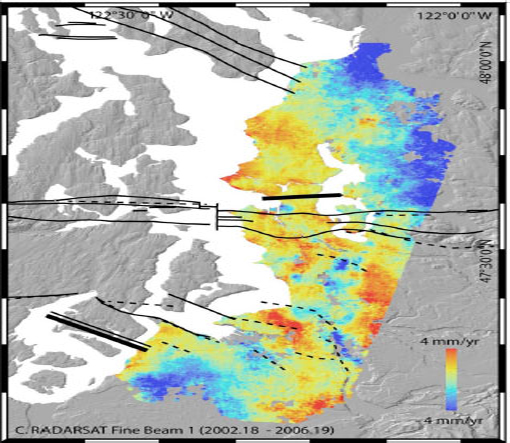
FIGURE 6.21 Vertical land movements in the Puget Sound area based on interferometric synthetic aperture radar from 2002 to 2006. Surface movements in the radar line of sight range from -4 mm yr-1 (subsidence, blue) to + 4 mm yr-1 (uplift, red). Black lines are fault locations, and dashed lines are geophysical anomalies. SOURCE: Finnegan et al. (2008).
Opportunities for Restoration
Efforts to restore tidal marshes have focused on the deltas of the major rivers draining into the sound, where many of the marshes have been diked for agriculture. A recent assessment of restoration needs in the sound (Schlenger et al., 2011) noted that delta shorelines have been so altered in the Duwamish, Puyallup, and Deschutes areas that they are now classified as artificial shoreforms. Restoring the tidal hydrology and riverine freshwater and sediment input are key elements of a delta restoration strategy. Tidal hydrology and sediment input affect many delta processes, including distributary channel migration, tidal channel formation and maintenance, sediment retention, and exchange of aquatic organisms.
Clancey et al. (2009) identified berm or dike removal or modification as the most efficient method of rapidly restoring tidal flow processes. This action could be complemented by modifying channels and making minor topographic changes such as filling ditches and removing road fill. In some areas, the tidal floodplain has been extensively filled and restoration may require resculpting of the land surface to ensure appropriate flooding and drainage of river and tidal waters.
Areas where tidal action was recently restored through these measures include portions of the Nisqually Delta and the Skokomish River. In October 2009, after a century of isolation from tidal flow, a dike was removed to inundate 308 ha of the Nisqually National Wildlife Refuge (e.g., Figure 1.13). The Nisqually Indian Tribe restored an additional 57 ha of wetlands, making the Nisqually Delta the largest tidal marsh restoration project in the Pacific Northwest. Studies show more than 3 cm of sedimentation in the first year of restoration.2 A smaller scale restoration was carried out on the Skokomish River in September 2007, when tides were reintroduced to a 108-acre site for the first time in 75 years. For such tidal reintroduction projects to be successful, sedimentation (both mineral and organic accumulation) must both raise elevations to a level where marsh flora and fauna can flourish and maintain those elevations over time as sea-level rise increases relative water levels. Within Puget Sound, variations in vertical land motion (Figure 6.21) either increase or decrease the amount of elevation change required.
The supply of river sediment also is important for maintaining elevation of existing marsh. Dams or road crossings within a delta’s watershed may indicate that river systems may not provide enough sediment to sustain the elevation of restored habitats. Rates of sediment delivery from the Puget Sound watershed vary over time and place, depending on runoff patterns and land use changes. For example, the Skagit River carries more than 2 million tons of sediment per year, and streams draining the Olympic Peninsula (excluding the Skokomish) carry generally less than 15,000 tons per year (Figure 6.22). The spatial patterns of sediment delivery, combined with general trends in vertical land motion, can be used to identify areas where restored coastal marshes would most likely survive future sea-level rise. In general, areas with high fluvial sediment supply and low subsidence or marginal uplift
__________
2 See <http://nisquallydeltarestoration.org/science_geomorphology_sedimentation.php>.
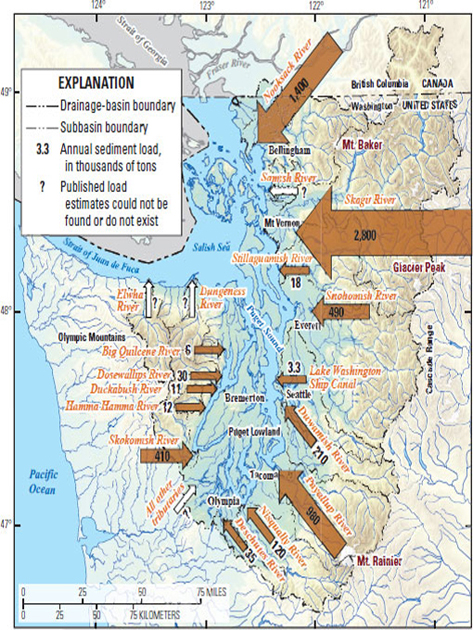
FIGURE 6.22 Annual sediment load of major rivers draining into Puget Sound measured at or near the river mouth. The size of the arrow is scaled to the annual sediment load. SOURCE: Czuba et al. (2011).
(e.g., north and western regions of the sound) are the most promising locations for sustainable coastal marsh restoration, at least under the committee’s projected sea-level rise for 2030 and 2050. Under the highest sea-level projections for 2100, a high sediment supply and uplift may not be enough for restoration to succeed, and additional steps will have to be taken (e.g., filling previously subsided areas).
Linking restoration plans in these areas with land use and watershed management plans would improve the sustainability of coastal habitats. Land use plans could include, for example, conservation easements or limits on construction to accommodate the lateral migration of coastal marshes as sea level rises. Watershed management plans could include changes in dam operations to increase the amount of sediment that reaches Puget Sound deltas.
Efforts to restore eelgrass in some areas of the sound have had only limited success (Thom, 1990; Carlisle, 2004; Mumford, 2007). Stamey (2004) found an overall success rate of 13–80 percent, concluding that eelgrass transplantation cannot yet be used reliably for mitigation in Puget Sound. Eelgrass restoration costs are high, between $100,000 and $1 million per acre (Fonseca et al., 1998). However, if appropriate substrate and water quality conditions can be established and maintained, the effects of sea-level rise on eelgrass is likely minimal.
Potential for Wave Attenuation
Eelgrass beds play an important role in nearshore ecosystems. The plant blades slow water currents and dampen waves, thereby trapping sediments, detritus,
and larvae. Lacy and Wyllie-Echeverria (2011) studied the influence of eelgrass (Zostera marina) on near-bed currents, turbulence, and drag in the San Juan archipelago of Puget Sound. Zostera marina grows at water depths less than 5 m relative to mean lower low water along 43 percent of Puget Sound’s shoreline (Berry et al., 2003). Lacy and Wyllie-Echeverria (2011) measured velocity profiles up to 1.5 m above the sea floor over a spring-neap tidal cycle, including measurements above and within the canopy. They found that eelgrass attenuated currents by a minimum of 40 percent, and by more than 70 percent at the most densely vegetated site, with attenuation decreasing with increasing current speed. Even sparse canopies influenced near-bed flow and significantly attenuated currents.
Most Puget Sound shorelines are sheltered, and waves are generated by local winds with little or no energy component from ocean swell. The topographic confines of Puget Sound limit the height of waves (Finlayson, 2006). Large waves (greater than 0.4 m significant wave height) occur only during infrequent wind storms. Consequently, the effect of eelgrass beds, and to some extent coastal marsh vegetation, on wave attenuation can be substantial.
Sea-level rise and storms along the west coast of the United States have caused significant coastal retreat. Cliff and bluff retreat, caused mainly by wave erosion and terrestrial processes (e.g., landslides, slumps, rockfalls, runoff), ranges from a few centimeters to tens of centimeters or more annually, with weaker rocks and areas of lower topography retreating more than resistant bedrock cliffs and headlands. Cliff retreat is not reversible. Although coastal armoring can buy time, today’s seawalls and revetments will eventually be overwhelmed by sea-level rise and increasing wave heights.
Sand dunes and beaches, which consist primarily of unconsolidated sand, provide little resistance to severe wave attack, especially at times of elevated sea level. Consequently, beaches and barrier spits may grow and shrink several meters or more per year. Because beaches are nearly flat, a small rise in sea level can cause a large retreat of a beach. Where beaches and barrier spits are prevented from migrating by coastal armor or structures, they will eventually be inundated by future sea-level rise.
Rising sea levels and increasing wave heights will exacerbate coastal erosion and shoreline retreat in all geomorphic environments along the west coast. Projections of future cliff and bluff retreat are limited by sparse data in Oregon and Washington and by a high degree of geomorphic variability along the coast. Projections using only historic rates of cliff erosion predict 10–30 meters or more of retreat along the west coast by 2100. An increase in the rate of sea-level rise combined with larger waves could significantly increase these rates. Future retreat of beaches will depend on the rate of sea-level rise and, to a lesser extent, the amount of sediment input and loss.
Some of the coastal damage expected from sea-level rise and storminess may be mitigated in some areas by coastal mudflats and marshes. Mudflats and marshes protect inland areas from inundation and wave damage, but the specific effect depends on local conditions. Some studies have found that certain plants, such as eelgrass, slow water currents. Other studies have found that marsh vegetation with high roughness, stem height, and density—along with coastal topography and bathymetry—reduces wave height and energy. However, this relationship has not been specifically demonstrated for many of the species populating west coast marshes.
West coast tidal marshes can survive sea-level rise by building elevation to keep pace with rising water levels, which requires an adequate supply of sediment and/or organic matter accumulation. They may migrate inland if the area is unobstructed, but unless they maintain elevation under sea-level rise, the area of marsh will be limited by the slope of the land surface and the tidal range. Storms are an important agent for delivering sediment and increasing the elevation of marshes. For the sea-level changes projected by the committee for 2030 and 2050 in central and southern California, frequent storms that increase tidal inundation and promote sediment deposition could allow marshes to survive. In northern California and southern Oregon, fluvial inputs of sediment, which depend on storms and water management practices, also are important for sediment deposition. Entrapment of sediment behind dams makes marshes less able to survive sea-level rise in this area. Coastal areas in Oregon and Washington are projected to have lower rates of sea-level rise, in
part because the land is rising. In some areas, the rising land surface will help coastal marshes maintain their elevation as sea level rises, making sea-level rise a less important threat in this area than other parts of the coast. Should the highest sea-level projections for 2100 be realized, marsh survival will be possible only in areas with high local sediment supply.
A detailed assessment of the response of west coast marshes to sea-level rise is hampered by the lack of long-term and/or comparable data and by the variety of geological (e.g., vertical land motion, sediment supply), hydrological (e.g., floods, storms, dams), and biological (e.g., accumulation of organic matter) factors that govern marsh survival, all of which combine to cause significant spatial variability along the coast. In general, most marshes with natural sediment delivery and unimpaired hydrology will survive the sea levels projected by the committee for 2030 and 2050. For 2100, marshes will need room to migrate, a high sediment supply, and uplift or low subsidence to survive projected sea-level rise.


