
Dams and levees can create opportunities for development in previously flood-prone areas, but increased development in these same areas results in an increase in the number of people and livelihoods that depend on the safe functioning of dam and levee infrastructure. In one way or another, the roughly 84,000 dams (USACE, 2011a) and 100,000 miles of levees (NCLS, 2009) in the United States directly or indirectly affect most of this country’s population. Although the presence of dams and levees may decrease the frequency of flooding, it can amplify the severity of flooding when it does occur (e.g., Burton et al., 1993; Pidgeon et al., 2003). The total number of fatalities associated with dam failures in the United States is less than the number associated with motor vehicles, bicycles, and commercial air travel, but a single dam failure has the potential to cause many hundreds or thousands of fatalities, to seriously affect services such as electric power, water supply, and irrigation, and to have major sociologic and psychologic effects, particularly when entire towns are involved.
In engineering terms, dams and levees fail when they do not deliver the services for which they are designed, such as flood protection, water supply, and hydropower. This report defines failure from a community member’s point of view; the infrastructure “failed” to protect the community from flooding. Therefore failure refers to flooding caused by any uncontrolled or controlled flow of water that threatens lives, property, or livelihoods. Modes of failure that result in flooding include overtopping, breaching, structural collapse, leakage, damage to or failure of hydraulic control systems (e.g., gates and valves), misoperation, and operational decisions that intentionally keep water levels high (in which case floods may result from controlled flow). The committee adopts this definition because community resilience, as described in this report, depends on understanding and acting against potential and actual flood consequences, regardless of whether dams and levees functioned as designed.
Direct effects of dam and levee failure are threats to health, safety, and property associated with inundation. Indirect physical effects include adverse effects on drinking-water
supplies, power generation and transmission, communication systems, transportation systems, agricultural resources, and sanitation. Social effects can include psychosocial impacts (e.g., depression), demographic impacts (e.g., in- and outmigration), economic impacts (e.g., business disruption), and political impacts (e.g., mobilization of emergent groups) (Lindell et al., 2006). Such social effects can cause major disturbances on the social and organizational networks that are the core of much of community functioning. Other effects on the proximate community are to be expected. Indirect effects, however, can expand well beyond the local area. The financial effect of flooding, for example, may be national or global as a result of interruptions to commercial supply chains or financial markets (e.g., see A.M. Best, 2012). Failure can cause widespread disruption of normal societal functioning and affect communities, commerce, and individuals.
Because the effects of dam or levee failure on physical and social infrastructures can be broad, a more comprehensive approach to dam and levee safety beyond traditional standards-based and structurally based safety goals is needed. The earthquake-engineering profession has learned through experience that engaging a community in hazard preparedness, risk communication programs, response and recovery planning and training, and formulation of new adaptations can pay large dividends in reducing the short-term and long-term effects of an event (e.g., NRC, 2011b). For example, property damage in the 1994 Northridge, California, earthquake was lower in communities that had stronger hazard mitigation plans and stronger code enforcement efforts than in communities that did not (Burby et al., 1998).
Similar outcomes may be expected as a result of safety and resilience initiatives associated with dams and levees, although the committee recognizes that plans implemented for each type of infrastructure will necessarily be different. Communication and collaboration among all affected before, during, and after a failure—including communication related to flood risks, anticipating and planning for likely events, evacuation planning, and warning—is essential if planning is to make mitigation, preparedness, response and recovery operations, and other long-term adaptations timely and successful. The Federal Emergency Management Agency (FEMA) requested the present study to aid in development of initiatives to help decision makers reduce risk to life and property caused by dam or levee failure—initiatives that take resilience of the community fully into account.
Under the sponsorship of FEMA, the National Research Council convened a panel of experts to consider how dam and levee safety as a concept and a practice can be expanded to promote the core values of FEMA’s mission—to improve community, regional, and national resilience. The committee includes researchers and practitioners who have expertise in dam and levee safety engineering, hydraulic engineering, risk reduction, disaster
management, and human response to risk. It also includes members who have expertise in critical-infrastructure protection; risk analysis, communication, and perception; quality assurance and compliance; economics; risk management and insurance; urban planning; and floodplain management. Appendix A presents brief biographies of the committee members. The committee’s statement of task from FEMA appears in Box 1.1.
This report communicates concepts of community resilience and describes the roles dam and levee professionals can serve with other community members in increasing community resilience with respect to dam and levee failure. The committee identifies efforts
BOX 1.l
Statement of Task
An ad hoc committee of the National Research Council will analyze and provide conclusions on how dam and levee safety programs may be broadened to include community- and regional-level preparation, response, mitigation, and recovery from potential infrastructure failure. The study will examine
• Holistic systematic approaches to safety analysis. Links between the geotechnical, geologic, hydrologic and hydraulic, and civil-structural engineering aspects of safety and the risks to communities and other stakeholders will be identified. The committee will consider how incorporating mitigation, preparedness, response, and recovery into safety programs can enhance long-term community- and regional-level resilience.
• Communication and engagement. The committee will describe current practices for identifying local and regional stakeholders, and for collecting and disseminating information among them, including how concerns are reassessed as infrastructure conditions change, safety issues emerge, and community needs and interests evolve. Conclusions regarding the improvement of these practices will be provided.
• Decision-making and decision-support systems. The committee will summarize how safety information, including stakeholder input, and inspection, monitoring, analysis, and impacts data are used in safety programs for decision making for both infrastructure management and improving community- and regional-level resilience against the primary (e.g., inundation) and secondary impacts (e.g., regional power loss) of infrastructure failure. The committee will provide conclusions regarding how stakeholder input may be incorporated into the design of safety and communication decision processes.
The committee will identify tools, products, and guidance that could be developed at the federal level to address the issues above. The human behavioral drivers that may promote or inhibit the expansion of dam and levee safety programs to promote community resilience will be considered. The committee's conclusions will assist the federal government in developing a more comprehensive and effective dam and levee safety program, but no policy or funding recommendations will be made.
that can be undertaken to enhance community resilience in the face of possible unexpected and adverse performance of dams and levees. The committee’s assessment is necessarily at a very high level, given the range of issues faced by individual communities as they deal with different infrastructure types, hazards, and risks. The committee presents a framework for incorporating resilience into dam and levee safety programs that can be applied by dam and levee owners at all levels, and by the broader community. Through the use of such a framework, safety programs and communities can individualize the steps necessary to promote resilience in their own communities. Those who will benefit from the proposed framework include dam safety professionals (e.g., owners, operators, and regulators), emergency management agencies, and the broad array of others, including persons and property owners at direct risk, members of the wider economy, and institutions and organizations involved in governance, communication, mass media, social support, and environmental and cultural management.
HISTORICAL DAM AND LEVEE PERFORMANCE
Dam and levee governance is a key factor in dam and levee safety. Much progress has been made, at least in the governance of dams, since the late 1970s and the establishment of the National Dam Safety Program (see Chapter 3 for discussion of dam and levee infrastructure, management, and governance). Review of the historical record of dam failures can yield information regarding failure likelihood and effects. Engineers and professional organizations have documented dam failure in an ad hoc manner for decades (e.g., Black, 1925; Middlebrooks, 1952; Babb and Mermel, 1968; ASCE/USCOLD, 1975, 1988). Failure-mode documentation is more commonly aimed at improving understanding of infrastructure failure and typically does not include consideration of failure consequences (Hoyt and Langbein, 1955; Ellingwood et al., 1993). Economic consequences, which can be considerable, are seldom considered (Ellingwood et al., 1993), and social, environmental, and other costs are rarely identified.
The committee was unable to identify a comprehensive list of levee failures and resulting consequences in the United States, but it did find a list of levee failures in the Sacramento–San Joaquin Delta area in California (USGS, 2000; Gaddie et al., 2007). Compilation of a list of historical levee failures would likely yield important information regarding hazards and risks associated with levees.
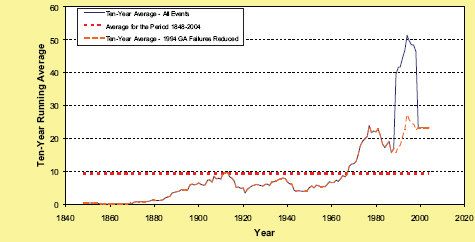
FIGURE 1.1 Average number of dam failures over the period of record and 10-year running averages of dam failures in the United States
since 1850.
NOTE: The red dashed line represents the resultwith failures from the 1994 extreme floods in southern Georgia excluded.
SOURCE: NPDP (2007). Reprinted with permission; copyright 2012, Stanford University.
Dam Failures
Nearly 1,500 dam failures have been recorded in the United States since the middle of the 19th century.1Figure 1.1 shows a running 10-year average of the dam failure rate and long-term (period of record) dam failure rates since 1850. The figure represents dams of all sizes and types, including small dams, whose failures have little or no consequences.2 The long-term average rate of dam failures is about 10 per year. The increase in failure rates beginning in about 1970 probably correlates with the increase in the number of dams built in the latter half of the 20th century combined with the increased reporting of dam failures after the 1972 Buffalo Creek and 1976 Teton Dam failures. Many failures are associated with dam spillways designed to discharge the estimated 50-year or 100-year peak flood flow rate, and many small dams are not designed with adequate spillway capacities to handle a 100-year-flood event. Many of those dams can be expected to fail at some point in their operation. Figure 1.2 shows the long-term average and 10-year running average of fatalities on record as a result of dam failures in the United States.
_____________
1 There is no way to know the accuracy of the historical record of dam failures in the United States.
2 See Stamey (1996), for information about the effects of Tropical Storm Alberto in 1994 on flooding, especially the failures from extreme floods in southern Georgia excluded from Figure 1.1.
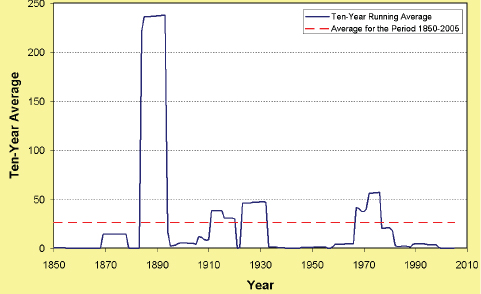
FIGURE 1.2 Ten-year running average (blue line) and average reported fatalities due to dam failure in the United States. SOURCE: NPDP (2007). Reprinted with permission; copyright 2012, Stanford University.
Consequences of individual dam failures have been substantial. For example, the failure of the South Fork Dam in Johnstown, Pennsylvania, in 1889 resulted in 2,209 fatalities (Graham, 1999). Table 1.1 is a partial list of major dam failures in the United States and their consequences. Since the middle of the 19th century, over 4,000 fatalities have been associated with dam failures; over half resulted from the South Fork Dam failure in Johnstown, Pennsylvania.3
Levee Failures
A comprehensive list of levee failures in the United States is not readily accessible. However, the Sacramento–San Joaquin Delta, with about 1,100 miles of levee, has experienced approximately 160 levee failures in the last 110 years (Gaddie et al., 2007). The 1993 and 2011 flooding in the Midwest also caused multiple levee failures or prompted intentional breaches4 (Larson, 1996). The most costly levee failures in the United States
_____________
3It is not known whether all the fatalities are attributable to the dam failure or if some occurred as a result of natural flooding that caused the dam failure.
4For example, see water.usgs.gov/osw/floods/2011_BPNM/ (accessed March 1, 2012) for information and resources related to the 2011 intentional breach of the Birds Point—New Madrid Floodway.
TABLE 1.1 Selected Major Dam Failures in the United States
|
|
||
|
Date |
Dam Location |
Consequences of Dam Failure |
|
|
||
|
May 16, 1864 |
Williamsburg Dam |
Flooding from the Mill River resulted in 139 fatalities, left 740 homeless, and destroyed several factories (Sharpe, 2004). |
|
Williamsburg, |
||
|
Massachusetts |
||
|
May 31,1889 |
South Fork Dam |
Overtopping resulted in 2,209 fatalities and an estimated $17 million (1889 dollars) in property damage in Johnstown (McCullough, 1987; see also JAHA, 2012). |
|
Johnstown, Pennsylvania |
||
|
June 29, 1925 |
Sheffield Dam Near Santa |
Dam failure resulted from liquefaction induced by the Santa Barbara earthquake; no fatalities were reported (Seed et al., 1970). |
|
Barbara, California |
St. Francis Dam Santa |
|
|
March 12, 1928 |
Clarita, California |
More than 450 people died, and the city of Los Angeles paid $7 million (1929 dollars) in restitution to families. Failure of the dam focused public scrutiny on the safety of dams in the United States (Rogers, 2006). |
|
February 26, 1972 |
Buffalo Creek, West |
Failure of a mine tailings embankment resulted in 125 fatalities, 1,121 injuries, over 4,000 left homeless, over 500 homes destroyed, and property and highway damage estimated in excess of $65 million (WV Ad Hoc Commission of Inquiry, 1973; Erikson, 1978). Public attention to the hazards created by water reservoirs after the disaster led to the enactment of the National Dam Inspection Act (Public Law 92-367). |
|
Virginia |
||
|
June 5, 1976 |
Teton Dam |
Failure of a U.S. Bureau of Reclamation dam due to internal erosion resulted in 11 fatalities and over $1 billion dollars in property damages. The failure led to widespread review by federal agencies regarding dam inspection, evaluation, and modification. The federal government paid 7,563 claims ($322 million) (USBR, 2011b). |
|
Date |
Dam Location |
Consequences of Dam Failure |
|
November 6, 1977 |
Kelly Barnes Lake Dam |
Floods from the dam failure resulted in 39 fatalities and $2.8 million in damages (1978 dollars) (Sanders and Sauer, 1979). |
|
March 14, 2006 |
Kaloko Reservoir |
The flood destroyed homes, damaged a highway, and resulted in seven deaths (Godbey, 2007). |
|
Kauai, Hawaii |
||
|
|
||
occurred as a result of Hurricane Katrina in 2005 (Knabb et al., 2005), which resulted in substantial loss of life and social-ecological and economic impacts in New Orleans. Hurricane Katrina prompted a modern recognition of the potential scale of effects of levee failure in populated areas. Table 1.2 is a partial list of floods and consequences in the United States caused by levee failure or overtopping.
Hazard and risk are terms that are sometimes used carelessly (and often interchangeably) in the technical literature of many fields of expertise. In this report, hazard refers to the potential to cause harm. Flooding from dam or levee infrastructure, for example, is a hazard. Risk is the combination of the likelihood a hazard will occur, and consequences of the hazard, should it occur. The probability and consequences of flooding are risks of flooding. Currently, dam and levee safety focuses on geotechnical, geologic, hydrologic, hydraulic, and structural factors that are critical in the performance of dam and levee infrastructure. Dam and levee safety also currently focuses on the control of hazards rather than control of risk. From the perspective of dam and levee safety professionals, the basis of many safety issues is literally and figuratively grounded in the engineering design of the critical infrastructure. For example, geotechnical issues were at the root of floodwall failures in New Orleans during Hurricane Katrina (IPET, 2007a) and remain a systemic problem for many embankment structures. Geologic and hydrologic properties are the driving forces of many dam-safety issues, including the persistent foundation issues of the Wolf Creek Dam on the Cumberland River in Kentucky (see Box 1.2) and increased inflow hydrographs for reservoirs in the Sierra Nevada Mountains due to early snowmelt and runoff (e.g., Cayan et al., 1997). Hydraulic issues were paramount in fighting the epic Mississippi River flood of 2011 when unprecedented volumes of water needed to be managed to prevent wide-
TABLE 1.2 Selected Major Flood Events Involving Levees
|
|
||
|
Date |
Location |
Description |
|
|
||
|
April-October 1993 |
Midwest region |
Flooding resulted in 50 fatalities, $15.6 billion in damages, breaching or overtopping of 40 of 229 federal levees, and breaching or overtopping of 1,043 of 1,347 nonfederal levees (Larson, 1996; NCLS, 2009). |
|
January 1997 |
Northern California |
Flooding in the Sacramento and San Joaquin river basins forced 120,000 people to evacuate and caused about $2 billion in damages, including over $1 billion in damages of public infrastructure (FEAT, 1997). |
|
August-September 2005 |
New Orleans, Louisiana |
Storm surge produced by Hurricane Katrina caused 50 levee or floodwall failures throughout New Orleans (Sills et al., 2008), flooding, and evacuation of over 800,000 residents (Wolshon, 2006). Flooding caused over 1,600 fatalities, about $26 billion in insured property losses, and over $100 billion in total losses (Knabb et al., 2005). |
|
June-July 2008 |
Midwest region |
Flooding resulted in 11 fatalities and an estimated $2 billion in property loss; about $2.7 billion in federal disaster relief was approved in 2009 (NCLS, 2009). |
|
May-June 2011 |
Midwest region |
Floods caused no direct fatalities or breaches in federal levees. The U.S. Army Corps of Engineers induced breaching to activate floodways to reduce pressure on mainline river levees below St. Louis. |
|
|
||
spread losses.5 Such issues affect dam and levee structures for which the ability to forecast performance is often (especially for levees) limited by lack of information concerning their condition and reliability. Such issues directly contribute to hazards and risks faced by associated communities that may not have full understanding of the extent of risk.
_____________
5See www.mvn.usace.army.mil/bcarre/floodfight.asp.(accessed March 1, 2012).
BOX 1.2
Wolf Creek Dam, Kentucky
The Wolf Creek Dam (Figure 1) in south central Kentucky was built as part of the development of the Cumberland River Basin. The dam serves multiple purposes in the region: it provides flood control, stores water, is a source of hydroelectric power production, allows navigation on the river, and is a major source of recreation in the area. A U.S. highway was built on top of the dam. Construction of the rolled-earth fill and concrete gravity structure began in the 1940s and was completed in 1952. In the late 1960s, muddy waters were noted near the dam, and two sinkholes developed at the toe of the embankment (Figure 2). Studies indicated an extensive and interconnected network of solution channels in the limestone beneath the dam. Grouting was done as an emergency measure, and in the late 1970s, a diaphragm wall was constructed through the earth embankment into the limestone foundation to block seepage.
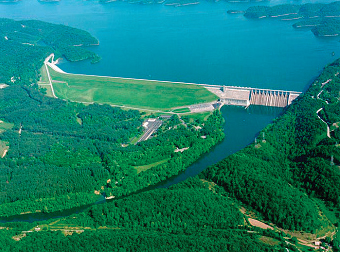
FIGURE 1 Wolf Creek Dam on the Cumberland River in Kentucky. SOURCE: USACE, Nashville District, 2011.
The dam continues to have seepage problems and is considered to be at high risk of failure. The U.S. Army Corps of Engineers (USACE) estimates potential loss of over $3 billion in property damages in the event of sudden failure. USACE is taking emergency measures to prevent imminent failure, including lowering of reservoir levels, but the lowered reservoir levels significantly affect local communities. A new, deeper, and longer concrete diaphragm wall is being constructed at a cost of over $340 million to address the continuing seepage problem. Construction is expected to take 4 years to complete.
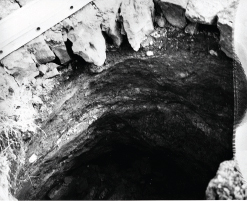
FIGURE 2 One of two sinkholes that appeared in the embankment of Wolf Creek Dam in 1968. SOURCE: USACE, Nashville District, 2011.
Being able to define hazards from all sources, understand the reliability and expected performance of dam and levee infrastructure, know the risk (potential for losses) associated with those hazards, and take measures that are necessary to reduce the risk to a point where a community can avoid, minimize, or recover from an undesirable event requires an evolution of focus beyond current concepts and practice of safety. A holistic and systematic approach on the part of dam and levee professionals and associated communities is required. Programs that take such an approach begin by assessing the geologic, geotechnical, hydrologic, and hydraulic processes and factors and their influence on the reliability and performance of dams and levees—all of which are fundamental to dam and levee safety with respect to the design and operation of infrastructure. Programs take the approach further by communicating hazards, the potential for failure events, and early warnings to communities and stakeholders. Programs go further still by working with communities to decide on appropriate risk-reduction measures. However, there are fundamental barriers to translating expertise and analyses of data to risk assessments and community emergency management that enable community risk reduction. For one, national guidelines and standards for dam safety are not well developed and hardly exist for levee programs. Another barrier is that dam and levee safety programs do not generally quantify risk and uncertainty explicitly in their design and operation of geologic, geotechnical, hydrologic, and hydraulic processes that can inform both themselves and associated communities.
In light of such barriers, the uniqueness of safety engineering issues related to specific dams and levees, and the uniqueness with which communities manifest resilience, this report focuses on dam and levee safety practices in general terms. Many challenges that dam and levee professionals face with respect to enhancing resilience are similar regardless of the professionals’ individual technical expertise. This report provides general fundamental perspectives for a holistic approach to dam and levee safety analysis and operation that can improve decision making for program and community management of risk. Given an understanding of the approach, the ideas can be tailored to individual safety programs and customized further to suit the needs of particular safety-program components.
The following sections define key terms used throughout this report. Many of these terms are used differently in different disciplines (e.g., engineering and the social sciences), and many of the terms in this report are used in a slightly different manner from those traditionally used in engineering. The committee has made efforts to use definitions consistent with those of FEMA.
Resilience
Resilience is often defined in the engineering, physical science, and ecological communities as the ability to recover from stress. Robustness is often defined as the ability to withstand stress without loss of function. Past National Research Council committees
(e.g., NRC, 2011a) have adopted broader definitions of resilience derived from Berkes and Folke (1998), Gunderson and Holling (2002), and Norris et al. (2008), who described it as the ability to prepare and plan for, recover from, or successfully adapt to adverse events. Walker and Salt (2006, p. 113) have defined it as “the capacity of a system to absorb change and disturbances, and still retain its basic structure and function—its identity.”The latter definition combines the engineering concepts of resilience and robustness and is consistent with FEMA’s use of the word. To be consistent with FEMA, the present committee has adopted the Walker and Salt definition.
Given this definition of resilience, it is important to understand that recovery from an adverse event does not necessarily involve a community’s returning to pre-event conditions. Healthy communities are not static, and resilient communities are the ones able to adapt to changing conditions so they can continue to function (Norris et al., 2008). Recovery from and adaptations made as a result of a flood or other adverse event can lead to a community that is different, and perhaps improved, from the one that existed before. Because resilience is dynamic, it requires continuing managerial and social change among the individuals, networks, and institutions that make up a community.
Hazard Mitigation and Adaptation
Resilience is ultimately demonstrated by the ability to anticipate hazard events, survive the disruptions that they cause, mount effective responses, recover from the effects of infrastructure failure, and change behaviors to mitigate and prepare for future events. It can be increased by the ability to predict the nature of potential failures, stresses, and consequences and with collective action to mitigate, prepare for, respond to, and recover from failures that occur. Resilience also implies readiness to respond to and recover from unanticipated events. Learning and adapting as a result of failure increases resilience and allows better preparation for future events.
The committee uses the term hazard mitigation to include the variety of actions taken by the private and public sectors to reduce vulnerability, to ease recovery from any losses that are experienced, and to plan for future events. Hazard-mitigation activities include developing and implementing infrastructure design standards and practices, land-use planning, regulation development and enforcement, the buildup of community awareness and knowledge, acquisition of appropriate flood insurance, and strengthening of institutions and communications. Post-disaster recovery planning can minimize hazards caused by the disaster, or minimize hazards that may emerge in the turbulent period following a disaster. From that perspective, activities that some consider part of recovery preparedness may also be mitigative. Hazard mitigation is much broader than what is sometimes termed structural hazard mitigation or hazard control—actions of dam and levee owners to improve resilience
through infrastructure design and operation. Mitigation measures can lead to community resilience with adequate capacities for preparedness, response, and recovery.
Adaptation refers to adjustments to a new or changing environment that take advantage of beneficial opportunities or moderates negative effects (NRC, 2010a). Adaptation often involves behavioral or institutional changes and can occur during mitigation, preparedness, contingency planning, and response and recovery operations. Communities adapt by reducing their vulnerability to emerging or future hazards that could become seriously disruptive if left unaddressed. Dam and levee failures and their consequences have traditionally been dealt with in the natural-hazards literature. Risk analysis in the broadest possible definition, however, is now the dominant analytic framework in the federal government, in major corporations, and internationally. The dam and levee safety community is beginning to take a more risk-informed approach in its activities.
Vulnerability and Risk Management
Vulnerabilities are characteristics and circumstances that make a community, system, or asset susceptible to the damaging effects of a hazard (UNISDR, 2009). Risk is a function of both the characteristics (consequences) and the likelihood (probability) of a potentially harmful event and the vulnerabilities of a community subject to that harm. Few policies or standards applicable for the majority of dams and levees are in place to direct practice with respect to the consequences and probabilities of harmful events, and with addressing vulnerabilities. Management of risk is possible if risks and uncertainties related to hazards are understood. Risk-based management approaches use risk as a metric to determine compliance with agreed-upon safety objectives to inform decision making. At times, however, risk or uncertainty cannot be completely quantified, or there are no standards to serve as a basis for decision making. Under such circumstances, knowledge of risk (e.g., available quantitative and qualitative information) allows risk-informed management. Risk information becomes input to decision making.
Reliability
Reliability is generally defined as the likelihood a system will not fail at any particular time (e.g., Hashimoto et al., 1982a,b). In this report, however, the notion of reliability is extended to incorporate not just the likelihood of a specific harmful event but the uncertainty in determining the likelihood. It also includes the performance of measures taken to reduce vulnerability.
Community
The committee defines community as individuals, groups, and institutions in the immediate geographic area of a dam or levee and all individuals, groups, and institutions that benefit from or experience the loss of services as a result of the direct or indirect effects of (in this case) flooding—whether in the geographic area or not. A National Research Council study on characterizing risk defined stakeholders as all interested and affected parties (NRC, 1996). Potentially affected parties are not always aware of—and perhaps not interested in—their exposure to risk.
The committee recognizes two facets of community. The proximate community is the community near dams and levees where failure threatens loss of life and property, and where community identity is connected to a geographic location. The broader community experiences the “ripple effects” of floods and typically exists in networks that extend beyond the proximate community. It includes all stakeholders who benefit from the continued safe functioning of the infrastructure in question, whether or not they recognize their stake. All stakeholders can be considered members of this broader community. To distinguish between the proximal and broader communities, the committee uses the term “community members” when referring to those in a geographic or jurisdictional region at risk of flooding, and “stakeholders” to refer to those outside of that region.
Communities are resilient if they learn from adversity and modify their social and physical infrastructure and lifeline systems to withstand major shock without long-term debilitating damage (e.g., Godschalk, 2003) and anticipate hazard events.
COMMITTEE REFLECTIONS ON ITS TASK
The statement of task charges the committee with determining how safety program objectives could evolve into those that include enhancing community resilience. It does not charge the committee to assess “safety,” or specific technical issues related to safety. Part of the evolution includes a greater emphasis on systems analysis—identifying the interactions and interdependencies of the infrastructure–river–reservoir–community system elements.
Stephen Verigin, vice president and a chief geotechnical engineer of GEI Consultants (and former chief of the California Department of Water Resources Division of Safety of Dams), stated a major paradigm shift would be necessary to move the nation’s dam and levee safety programs toward a culture of resilience.6 In his opinion, such a shift would include new authorizing legislation, changes in management, a reorientation from deterministic to risk-based approaches, and engagement and support from a much larger community, including local government, planning agencies, elected officials, and the public. He advocated
_____________
6S. Verigin, GEI Consultants, Presentation to the Committee, March 10, 2011.
for statutory definitions and broadening of dam safety programs that would include well-documented risk-based design criteria, disciplined land-use and zoning activities, flood control requirements set in law, and integrated flood control systems that include highly protected areas, planned floodways, and flood easements. Commitment on the part of agencies participating in the control of hazards and risks would be necessary, as would common understanding of roles and responsibilities among dam and levee safety professionals, local government, planning agencies, elected officials, and the public.
The committee endorses the sentiments of Mr. Verigin’s assessment, but before the committee could develop the elements of a framework for such changes, the committee established two underlying principles as the foundation of its discussion. The first principle is that although the likelihood of adverse performance of dams and levees can usually be reduced, failures will occur. The second principle is that communities can prepare for and reduce the consequences of failure and can institute adaptations through collective and collaborative efforts (based on mutual appreciation of hazards and consequences) to enhance community resilience. The next sections summarize the committee’s other starting assumptions and method of analysis.
Underappreciated and Undervalued Infrastructure
The nation as a whole may not appreciate the value of dam and levee infrastructure, the long-term life-cycle costs associated with built infrastructure, or the concerns of local community members. Maintenance and ultimate replacement costs need to be factored into life-cycle accounting for infrastructure, as do costs associated with enhancing resilience of communities that are placed at risk. Potential consequences need to be understood and values placed on them. Competing priorities often force community resilience to take a back seat to issues that seem more immediate. Maintenance is also postponed, sometimes indefinitely. Burby (2006) describes paradoxes that explain some losses caused by the failures due to Hurricane Katrina in 2005—that governments may actually increase the potential for catastrophic consequences in trying to make hazardous areas safer in the short term. Communities and their citizens ultimately suffer and bear financial loss because of land development practices that do not take into account the limitations of flood protection measures.
Physical and Social Infrastructure and Resilience
Dams and levees serve different functions in the control of surface water, but regardless of initial intent in design, they are components of surface-water systems. Infrastructure decisions made for one part of a river system are likely to affect other parts of the system. The resilience of the entire system depends on the robustness of physical and social infrastructure, on decisions made about infrastructure use and operations, on preparation for
and response to events, and on understanding the effects of decisions and how protective actions can be mounted. There is a reciprocal relationship between land use and dam and levee infrastructure design and operations. Efforts to enhance community resilience are hampered without an understanding of how the physical and social assets and services derived from the infrastructure are, or are not, resilient to disasters, although the connection between infrastructure resilience models and community resilience is not well understood (Miles, 2011).
Community resilience as related to dam and levee failure is built on a robust physical and social infrastructure. Components must be designed and maintained according to a set of specifications that are intended to limit the chance of failure and its effects over a given period. Given changes in land use, for example, levees built to protect agricultural lands are now expected to protect heavily populated areas. Attention is increasingly turning to the need for higher standards in design and construction when urban populations can be exposed to deep flooding. This report describes, in general terms, current dam and levee safety practices for ensuring robustness of infrastructure systems, how these practices might be improved, and how they might be extended to include a more holistic approach to improving the resilience of the community to a variety of foreseeable flood events.
Community Preparedness and Mitigation
A more holistic approach requires more communication among infrastructure safety engineers, owners, managers, and key community members and stakeholders—a continuing discussion that emphasizes risk and consequence communication and planning to avoid, mitigate, or adapt to the hazards associated with dam and levee failure. Dam and levee owners’ and (in the case of dams) regulators’ incomplete understanding of hazards, of potential failure scenarios, and of the short-term and long-term consequences for the entire community leads to increased risk for the community as a whole. Appropriate actions by dam and levee professionals and the broader community are necessary to prepare for and reduce physical and financial risks to public and private property and thus to protect, for example, the social, government, and economic dynamics that are the underpinnings of a resilient community.
Hazard mitigation requires close collaboration between dam and levee owners and the communities, both proximate and more broadly, that face risks from infrastructure failure. Effective collaboration extends beyond the provision of data by dam and levee owners on the degree of risk faced by communities and may include, for example, dam and levee owners acting as champions of community hazard mitigation and convening meetings of community members and stakeholders to discuss the serious nature of risk and the mitigation actions that are appropriate. Those and other examples are provided in Chapters 4 and 5 of this report. The interrelationships between infrastructure operators, the private and public
sectors, and individual citizens in decision-making processes that could increase community resilience are discussed throughout this report.
Tools for Improvement
The committee’s statement of task directs the committee to “identify tools, products, and guidance that could be developed at the federal level” to assist dam and levee safety programs in addressing holistic systematic approaches to safety analysis, communication and engagement, and decision-making and decision-support systems to support community resilience. This report defines tools as the guidelines, methods, and means of selecting or implementing best practices for a given process. Tools include products designed to accomplish specific tasks, and frameworks for general program organization. The committee provides a high-level assessment of what tools would facilitate action but does not conclude specifically what those actions should be.
Although tools, standards, and policies to improve infrastructure design and safety are important and necessary, the committee’s task does not include assessing those. Instead, the committee considers tools to assist individual safety programs (those responsible for the safe operation of individual dams and levees) in identifying the communities and stakeholders affected by the consequences of dam- and levee-related technical decisions. The committee also explores tools to improve two-way communication of information that can help communities become more resilient and provide additional information to safety programs that may guide technical decisions.
Methods
Given the above assumptions, the committee set about accomplishing its task through
1. Gathering data. During open sessions of its meetings, the committee heard presentations from and had discussions with multiple individuals representing different sectors within the dam and levee industry (see open session meeting agendas in Appendix B). Individual committee members conducted interviewers with other relevant professionals, requested and examined statistics from the USACE National Inventory of Dams,7 and collected an extensive amount of information on a variety of dam and levee safety topics including regulations, guidance, standards, historical dam and levee performance, and current safety practices. The committee
_____________
7 See geo.usace.army.mil/pgis/f?p=397:1:0. The committee was not given access to the full inventory, but received statistical information about dam type, height, storage, and hazard classification without reference to location.
also explored the literature in several disciplines, including and especially literature related to resilience.
2. Identifying practices, gaps, and challenges in current safety practice. The committee considered how current safety practices contribute to community resilience, and in what ways such practices could be improved.
3. Identifying frameworks for resilience building. The committee identified an appropriate model for a resilience framework that could be applied to dam and levee safety programs. The committee particularly focused on the work of the NRC Committee on Private-Public Sector Collaboration to Enhance Community Disaster Resilience tasked with recommending a structure that could enhance private-public collaboration with the objective of increasing community resilience (NRC, 2011a).
4. Developing a vision. The committee considered the potential of dam and levee safety programs for contributing to community and national resilience, and created a new dam- and levee-specific framework for resilience-focused community engagement, and the assessment of that engagement.
5. Considering the role of the federal government in promoting and facilitating resilience-focused activities.
This report addresses how to incorporate concepts of community resilience into dam and levee safety programs and practice. Much of the report is written for dam and levee safety professionals, but the discussion is general and of use to the broader community interested in becoming more resilient. Some background on dam and levee safety practices is provided for those not as familiar. Chapter 2 expands on the definition of community already provided and describes characteristics of resilient communities. Chapter 3 provides a general description of current dam and levee infrastructure, its management, and its governance. Chapter 4 provides the committee’s vision for future management of dam and levee infrastructure. It includes a framework for collaboration with the broader community that is necessary to enhance community resilience. Chapter 5 describes what would be necessary to make that vision a reality and provides the basis of assessing the progress of processes put into place to enhance resilience. Tools and guidance that could be provided at that federal level are also included. Chapter 6 reiterates the committee’s major conclusions related to the cultural shifts necessary to improve dam and levee safety practice to promote community resilience.


