
7
Veterinarians in Wildlife and Ecosystem Health
Life forms including humans, other animals, plants, and microbes are interdependent; together with the non-living environment they comprise ecological systems. Wildlife species in those systems have intrinsic value and are connected to human health and wellbeing. Thus, the promotion of healthy ecosystems that sustain wildlife is a social responsibility locally and globally. The need for veterinary expertise to address wildlife health and ecosystem dysfunction is exemplified by the accelerating declines and unprecedented extinctions of animal species (Wilcove and Master, 2005), the growing incidence of wildlife and zoonotic diseases (Daszak et al., 2000; Jones et. al., 2008), and the impacts of environmental contaminants such as mercury (Pacyna et al., 2006), toxins from harmful algal blooms (Anderson et al., 2002), endocrine disruptors, including ubiquitous polybrominated diphenyl ether flame retardants (Blazer et al., 2007; Guillette, 2006; Ross, 2005), and carcinogens (Martineau et al., 2002). These hazards directly affect humans and animals, causing food deprivation, epidemics of infectious diseases, altered sexual development, thyroid abnormalities, neurologic impairment, liver and other organ failures, a range of cancer, and psychological stress. Indirect exposure to toxic and infectious stressors can occur by way of the consumption of animals, for example, fish and shellfish, in which harmful chemicals and pathogens accumulate.
Human-Wildlife-Ecosystem Connection
The number of Americans whose lives include a focus on wildlife and the amount of private sector expenditures related to wildlife are remarkable. In 2006, for example, more than 87 million Americans of age 16 years and older
enjoyed some form of wildlife-related recreation and, in pursuit of these activities, spent $122 billion, about 1% of the U.S. gross domestic product (GDP) (FWS, 2007). This economic activity depends on an abundance of healthy wildlife, which is beautiful to witness, and for those who hunt and fish, bountiful and safe for human consumption. Recognizing and preventing the impacts of principal stressors that undermine the health and reproduction of animals in the wild is a core responsibility for wildlife and ecological veterinarians, but the challenges are significant, and the number of veterinarians in this sector of the profession is relatively small. In the United States, many species of invertebrates, fish, amphibians, birds, and mammals are threatened with extinction. Unless wildlife stewardship improves, wildlife recreation, and its economic benefits, will be undermined.
As a group of animals that are free to move about, wildlife can carry diseases to and from domestic animals and people. Examples include diseases such as influenza, which often arises in wild birds and infects domestic poultry, swine, and other species, and brucellosis, which originated in cattle and is now found in elk and bison. Wildlife diseases such as West Nile virus, Lyme disease, and Hantavirus infection are also a threat to human health. In some cases, wildlife and the diseases they carry come into contact with humans and domestic animals because of shrinking or degraded wildlife habitat, which in itself results in increased outbreaks of diseases that undermine wildlife populations and sustainability. Exotic species introductions also bring new diseases to wildlife, as in the case of chytrid fungal infections that have decimated frogs. Wildlife and ecological veterinarians therefore have key roles to play in limiting the risks of such diseases through surveillance, diagnosis, and implementation of control measures.
Veterinary expertise in wildlife and ecosystem health is essential for efficient exploration of the interactions that underlie these complex phenomena as well as their broader implications for public (human) health, but the number of veterinarians involved in this sector at present is relatively small. While veterinarians are spear-heading an interdisciplinary approach to understanding the health effects of mismanaged ecosystems, greater effectiveness will depend on the priority that colleges and schools of veterinary medicine place on educating future veterinarians to expand their knowledge and influence in this field and on the resources available to support research, advanced training, and responsible environmental stewardship. A new paradigm for veterinary education will be necessary, requiring courage and effort on the part of the profession’s leaders to reverse the divergence of the human and veterinary public health agencies over the last 30 years (Salman, 2009) and to acknowledge the relationships among the environment, the health of wildlife, domestic animals, and humans.
These relationships form the foundation of the “One Health” initiative (http://www.onehealthinitiative.com), a co-equal collaboration of physicians, veterinarians, conservation biologists, ecologists, and other scientific and health-related disciplines (Sherman, 2002; Kahn et al., 2007; Kaplan et al., 2009).
Endorsed by the American Medical Association, the American Society for Tropical Diseases and Hygiene, the Centers for Disease Control and Prevention, and the American Veterinary Medical Association, One Health seeks to support a holistic concept of health that recognizes the complex linkages among diseases of humans, livestock, poultry, and wildlife (See Box 7-1).
The EcoHealth Alliance (which until September, 2010, was called the Wildlife Trust), established in 1971, was among the earliest to address the essential links among human, animal, and ecosystem health (Daszak et al., 2004). In 2004, the Wildlife Conservation Society (WCS) drew attention to the plight of wildlife in an increasingly crowded world as well as to the related growing health risks from trade in wildlife and bush-meat. WCS outlined these concerns in “The Manhattan Principles” (Box 7-2), and recommended that wildlife health science become an essential component of global disease prevention, surveillance, monitoring, control, and mitigation.
BOX 7-1
Excerpts from the Executive Summary of One Health - A New Professional Imperative
The convergence of people, animals, and our environment has created a new dynamic in which the health of each group is inextricably interconnected. The challenges associated with this dynamic are demanding, profound, and unprecedented. While the demand for animal-based protein is expected to increase by 50% by 2020, animal populations are under heightened pressure to survive, and further loss of biodiversity is highly probable.
On top of that, of the 1,461 diseases now recognized in humans, approximately 60% are due to multi-host pathogens characterized by their movement across species lines. And, over the last three decades, approximately 75% of new emerging human infectious diseases have been zoonotic. Our increasing interdependence with animals and their products may well be the single most critical risk factor to our health and well-being with regard to infectious diseases.
There is a growing concern that the world's latest generation could be the first in history to experience a reduction in life expectancy and health in general. Yet, veterinary and human medicines are considered separate entities and the obvious links between them frequently ignored. According to the KPMG study, “The Current and Future Market for Veterinarians and Veterinary Medicine in the United States,” published in May of 1999, “our traditional approaches and past requisite skills and levels of knowledge may not be commensurate with the rapid changes and new demands of food-animal industries and the shifting requirements needed for the corporate and public opportunities in the future. These include public health, biomedical research, and the global food system.”
The Need for a Holistic, Collaborative Approach
One strategy to better understand and address the contemporary health issues created by the convergence of human, animal, and environmental domains is the concept of One Health. Although the concept of One Health is not new, our increasing interdependence with animals and their products has spurred the medical and veterinarian professions to readdress such an approach. This approach would encourage the collaborative efforts of multiple disciplines working locally, nationally, and globally, to attain optimal health for people, animals, and our environment.
Partnership is Critical to Success
The veterinary medical profession must implement solutions to the critical workforce challenges in collaboration with multiple professions, including public health, human medicine, bio-engineering, animal science, environmental science, and wildlife. By working together, more can be accomplished to improve health worldwide, and the veterinary medical profession has the responsibility to assume a major leadership role in that effort. One Health calls for the collaborative efforts of multiple disciplines working locally, nationally, and globally to attain optimal health for people, animals and our environment.
SOURCE: AVMA, 2008.
ROLES OF VETERINARIANS IN WILDLIFE AND ECOSYSTEM HEALTH
Veterinarians make important contributions to zoos, wildlife conservation, and ecosystems by focusing their efforts on the health of species ranging from coral (Work et al., 2008) and other invertebrates (Lutz-Collins et al., 2009) to fishes (Goldberg et al., 2003), amphibians (e.g. Lips et al., 2006; Rohr et al., 2008), reptiles (Katsu et al., 2010), birds (Franson et al., 2007), and mammals (e.g. rodents to bats, carnivores, ruminants, whales, and primates including humans) (Martineau et al., 2002; Goldberg et al., 2007, 2008). In the wildlife sector, veterinarians are increasingly confronted with the consequences of environmental contaminants and infectious disease outbreaks that potentially threaten wild and domesticated animals as well as humans. Because of the breadth of regions, species, and problems involved in the currently accelerating “sixth extinction” (Pimm et al., 1995; Raven, 2002; IUCN, 2008), veterinarians have abundant challenges, but the pathways to employment are typically nontraditional.
BOX 7-2
The Manhattan Principles on “One World, One Health”
Recent outbreaks of West Nile Virus, Ebola Hemorrhagic Fever, SARS, Monkey pox, bovine spongiform encephalopathy, and Avian Influenza remind us that human and animal health are intimately connected. A broader understanding of health and disease demands a unity of approach achievable only through a consilience of human, domestic animal and wildlife health - One Health. Phenomena such as species loss, habitat degradation, pollution, invasive alien species, and global climate change are fundamentally altering life on our planet from terrestrial wilderness and ocean depths to the most densely populated cities. The rise of emerging and resurging infectious diseases threatens not only humans (and their food supplies and economies), but also the fauna and flora comprising the critically-needed biodiversity that supports the living infrastructure of our world. The earnestness and effectiveness of humankind’s environmental stewardship and our future health have never been more clearly linked. To win the disease battles of the 21st Century while ensuring the biological integrity of the Earth for future generations requires interdisciplinary and cross-sectoral approaches to disease prevention, surveillance, monitoring, control and mitigation, as well as to environmental conservation more broadly.
We urge the world’s leaders, civil society, the global health community and institutions of science to:
1. Recognize the essential link between human, domestic animal, and wildlife health and the threat disease poses to people, their food supplies and economies, and the biodiversity essential to maintaining the healthy environments and functioning ecosystems we all require.
2. Recognize that decisions regarding land and water use have real implications for health. Alterations in the resilience of ecosystems, and shifts in patterns of disease emergence and spread manifest themselves when we fail to recognize this relationship.
3. Include wildlife health science as an essential component of global disease prevention, surveillance, monitoring, control, and mitigation.
4. Recognize that human health programs can greatly contribute to conservation efforts.
5. Devise adaptive, holistic, and forward-looking approaches to the prevention, surveillance, monitoring, control, and mitigation of emerging and resurging diseases that take the complex interconnections among species into full account.
6. Seek opportunities to fully integrate biodiversity conservation perspectives and human needs (including those related to domestic animal health) when developing solutions to infectious disease threats.
7. Reduce the demand for and better regulate the international live wildlife and bushmeat trade not only to protect wildlife populations but to lessen the risks of disease movement, cross-species transmission, and the development of novel pathogen-host relationships. The costs of this worldwide trade in terms of impacts on public health, agriculture, and conservation are enormous, and the global community must address this trade as the real threat that it is to global socioeconomic security.
8. Restrict the mass culling of free-ranging wildlife species for disease control to situations where there is a multidisciplinary, international scientific consensus that a wildlife population poses an urgent, significant threat to human health, food security, or wildlife health more broadly.
9. Increase investment in the global human and animal health infrastructure commensurate with the serious nature of emerging and resurging disease threats to people, domestic animals, and wildlife. Enhanced capacity for global human and animal health surveillance and for clear, timely information-sharing (that takes language barriers into account) can only help improve coordination of responses among governmental and nongovernmental agencies, public and animal health institutions, vaccine/pharmaceutical manufacturers, and other stakeholders.
10. Form collaborative relationships among governments, local people, and the private and public (i.e., non-profit) sectors to meet the challenges of global health and biodiversity conservation.
11. Provide adequate resources and support for global wildlife health surveillance networks that exchange disease information with the public health and agricultural animal health communities as part of early warning systems for the emergence and resurgence of disease threats.
12. Invest in educating and raising awareness among the world’s people and in influencing the policy process to increase recognition that we must better understand the relationships between health and ecosystem integrity to succeed in improving the prospects for a healthier planet.
SOURCE: Cook et al., 2004.
Determining with precision how many veterinarians are employed in jobs related to wildlife and ecosystem health is challenging because the data are not captured in any one place, such as the membership list of the American Veterinarian Medical Association (AVMA). Although AVMA includes some veterinarians who identify themselves as working on exotic animals and wildlife, others are more likely to be members of specialty groups, such as the American Association of Zoo Veterinarians (AAZV), the American Association of Wildlife Veterinarians (AAWV), and the Wildlife Disease Association (WDA). The
latter includes veterinarians and others, wildlife biologists, for example, who do not hold DVM degrees. Other veterinarians who work on wildlife and ecosystem health might be affiliated only with specialty bodies, such as the American College of Veterinary Pathologists (ACVP), which do not distinguish members according to types of animals investigated or the research environment. Some pathologists, for example, work only on domestic animals, others only on rodents or primates, and still others on a host of species including terrestrial and aquatic wildlife. The number of veterinarians in state and federal agencies with missions that are primarily oriented toward wildlife and ecosystem health is easier to determine, and the total number in these agencies is small.
It is also difficult to predict the number of jobs available for veterinarians in this sector in the future, in part because of the diversity and specificity of the situations that generate demand. In contrast to other sectors of the profession, preparation for jobs in this sector can be a greater challenge because animal populations, ecosystems, and their interactions with human activities differ by state and by region. Some jobs may not be classified as requiring a DVM, but could be filled by veterinarians. In spite of very broad legislated responsibilities, the federal and state agencies responsible for wildlife and ecosystem health do not show signs of meaningful expansion of their veterinary staffs; however, these agencies readily admit that their current veterinary expertise is inadequate to fulfill their missions. Until expertise for DVMs in this sector becomes an explicit and a well-identified demand, graduates of veterinary schools will need to define their own niche in wildlife and ecosystem health by identifying and filling a need, and by establishing the added value they bring to an existing position as a DVM.
Employers of veterinarians involved in wildlife and ecosystem health include federal and state agencies and laboratories, public and private universities, non-governmental organizations (NGOs), and zoos, aquaria, and marine and wildlife parks that may be publicly or privately operated. Because many of these institutions have common over-arching goals and conduct similar types of activities in which veterinarians are engaged, the roles of veterinarians in wildlife and ecosystem health can be best understood in the context of their major areas of responsibility, which include: 1) health management of free-ranging wildlife populations; 2) zoo animal medicine; 3) aquatic wildlife and marine mammal health; 4) wildlife rehabilitation; and 5) environmental, wildlife, or ecological toxicology. The careers of veterinarians who assume such responsibilities may focus on diagnostics, basic and applied research, and/or stewardship activities.
The following section describes each of those categories of veterinary activity, identifies the major employers in each category, and estimates the numbers of veterinarians employed. Information is also provided about membership in relevant associations, which gives a partial picture of the numbers of veterinarians in these fields.
Health Management of Free-Ranging Wildlife Populations
Veterinarians whose jobs are concerned with the health of free-ranging wildlife populations include specialists in epidemiology, pathology, infectious diseases, toxicology, reproductive biology, pharmacology, relocation, anesthesiology, endangered species management and reintroductions, public health, and clinical medicine. They often have expertise in more than one of the above specialties and work in team settings with specialists in other fields. Examples of the kinds of activities in which they are involved include conserving wildlife through diagnosing causes of die-offs, management actions to promote healthy wildlife populations, restoring numbers of endangered species, and protecting human and domestic animal populations from threats of infectious agents or toxic chemicals in wildlife.
Wildlife veterinarians at the state and federal levels, as well as those in universities, provide leadership and expertise in addressing infectious disease transfer at the domestic animal-wildlife interface. Preventing the movement of diseases between wildlife and domestic species might, for example, involve the vaccination of wildlife (as with raccoon rabies in the United States) or the use of alternative strategies such as vaccinating domestic food and companion animals, locating food-animal production facilities rationally, and reducing contact between domestic and wild animals.
There are a number of federal, state, university, and cooperative programs focused on wildlife diseases in the United States but not all states are involved. Some programs cooperate with Canadian organizations (Figure 7-1).1,2
Veterinarians in the Department of the Interior
Veterinary jobs related to free-ranging wildlife exist in several agencies. On federal lands, the Department of the Interior assumes a measure of responsibility for wildlife health and control. Nevertheless, in 2008, the agency reported having just 24 veterinarians, more than half in the U.S. Geological Survey (USGS), a number that increased to 34 in 2010 (TMAC, 2011). Only 4 veterinarians were identified in the Fish and Wildlife Service (FWS), and only 4 were employed by the National Park Service (NPS) (GAO, 2009).
_____________________________
1 The Southeastern Cooperative Wildlife Disease Study, University of Georgia, Athens provides diagnostic and other wildlife disease services for member wildlife conservation agencies in the states of: AL, AR, FL, GA, KS, KY, LA, MD, MS, MO, NC, OH, OK, PA, SC, TN, VA, WV among its program activities.
2 Canadian wildlife biologists are assisted by the Canadian Cooperative Wildlife Health Centre (CCWHC) program located in Saskatoon, Saskatchewan (Western/ Northern Canada), and have been since its establishment in 1992. Each of the Canadian Provincial Schools of Veterinary Medicine maintains a component of the program.
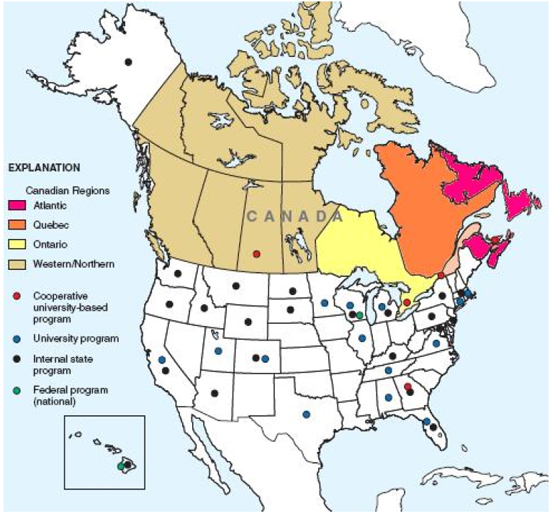
FIGURE 7-1 Locations and sponsorship of North American programs devoted to disease investigations involving free-ranging fauna (state, federal, and university cooperative programs). SOURCE: Friend, 2006. Reprinted with permission from M. Friend, USGS (Emeritus).
USGS veterinarians investigate, diagnose, develop control methods, and develop databases for wildlife diseases; provide training to wildlife biologists and resource managers in wildlife disease identification and control; conduct clinical veterinary research on wildlife diseases; and oversee the health and welfare of experimental and wild animals used in research, including research on wildlife diseases. The USGS’ National Wildlife Health Center (NWHC), located in Madison, Wisconsin, coordinates programs across the United States to respond to emerging and resurging diseases in wildlife. Initially, NWHC focused its attention on top priority health issues that influenced the sustainability of waterfowl (Friend and Franson, 1999) and hunted mammals (e.g. cervids), and over time has expanded substantially to include other vertebrates, including such divergent groups as fishes, amphibians, raptors, bats, and marine mammals. The mission of NWHC is to provide “information, technical assistance, research, education, and leadership on national and international wildlife health issues (NWHC, 2012).”
Veterinarians with FWS perform fish health management and diagnostic activities; conduct wildlife disease surveillance; perform diagnostic work and outbreak investigations; provide technical expertise; and draft policy, regulation, and management action plans. Similarly, the NPS veterinarians prepare surveillance and contingency response plans for addressing important wildlife diseases in the national park system and formulate policies for management of wildlife disease. NPS has an active One Health collaboration between its Wildlife Health Program and Office of Public Health. Focus areas of that effort include unified disease surveillance, interdisciplinary response, a combined research agenda, and consensus guidance.
In a GAO study of veterinarians in the federal government, USGS reported that the agency faces difficulty hiring veterinarians to address wildlife diseases, including those that kill many animals in a single outbreak, because the salaries they can offer are not competitive with funding for positions in the private sector. As a consequence, both FWS and NPS, the latter having responsibility for 84 million acres of the park system, reported having too few veterinarians to meet their needs (GAO, 2009).
Veterinarians in State Wildlife Agencies
Most states have agencies that are concerned with wildlife health and management. These range from departments of agriculture or natural resources to fish and game agencies. In 2009, the committee contacted the relevant agencies in each state to determine how many of them employed veterinarians. As indicated in Table 7-1, only 19 states were found to have one or more wildlife veterinarian(s).
Although it might seem obvious that veterinarians can make contributions to the mission of state wildlife agencies, few job openings in this sector explicitly seek individuals with DVM degrees at this time. As described in Box 7-3, state employers’ awareness of the potential role for veterinarians in wildlife management may only come about when they have had positive experience with what the profession can offer.
University Programs
Numerous colleges and schools of veterinary medicine have organized centers and educational programs that address wildlife. However, deriving an accounting of the numbers of individuals involved in academic veterinary medicine related to wildlife and ecosystem health is not a feasible goal because of the wide variety of departments, job titles, and duties involved, and because there is no one unifying organization to which these various professionals affiliate. A number of veterinarians have become specialists in epidemiology, pathology, infectious diseases, toxicology or clinical medicine, and devote much or most of their time to research, teaching, and outreach that helps wildlife and ecosystems.
| State | Wildlife Agency | Number |
| Alaska | Department of Fish and Game | 1 |
| Arizona | Game and Fish Department | 1 |
| California | Department of Fish and Game | 5 |
| Colorado | Division of Wildlife | 3 |
| Delaware | Department of Natural Resources | 1 |
| Florida | Fish and Wildlife Conservation Commission | 3 |
| Idaho | Department of Agriculture | 2 |
| Maryland | Department of Natural Resources | 2 |
| Michigan | Department of Natural Resources | 1 |
| Missouri | Department of Conservation | 1 |
| Montana | Fish, Wildlife and Parks | 1 |
| Nevada | Department of Agriculture | 1 |
| New York | State Department of Health | 1 |
| Oregon | Department of Fish and Wildlife | 2 |
| Pennsylvania | Game Commission | 1 |
| Virginia | Department of Game and Inland Fisheries | 1 |
| Washington | Department of Fish and Wildlife | 1 |
| Wisconsin | Department of Natural Resources | 2 |
| Wyoming | Game and Fish Department | 2 |
BOX 7-3
Defining the Role of the Wildlife Veterinarian
The value of hiring veterinarians in wildlife health has been demonstrated by at least one veterinarian who took a non-traditional path to employment in a state agency. Dr. Melody Roelke-Parker accepted a job as a wildlife biologist for the State of Florida, and applied her veterinary knowledge and skills to examine endangered Florida panthers, a subspecies of cougar (Puma concolor), revealing through her work their poor fertility and a number of abnormal physical characteristics. Dr. Roelke-Parker reached out to new collaborators, such as Dr. Stephen O’Brien, Chief of the Laboratory of Genomic Diversity at NIH, and they discovered that the animals were highly inbred and genetically impoverished (Roelke-Parker et al., 1993). Ultimately, this discovery prompted introduction of new genes from Texas cougars (historically a part of the same metapopulation), and this successfully offset health problems of the Florida animals. After Dr. Roelke-Parker moved to another position, the State of Florida created a position for a wildlife veterinarian to ensure stewardship of the cougars and other wildlife of the state; and currently, Florida employs three wildlife veterinarians. The recognition of the need for veterinary expertise became apparent after understanding how veterinarians can contribute to the agency’s goals.
Table 7-2 lists several active university-based programs that focus on wildlife, each with a different emphasis. Note that there is overlap in the training of veterinarians for work with free-ranging wildlife and wildlife in captive settings.
Additional innovative short courses in wildlife and ecosystem health are discussed later in this chapter in a section on Support for Training for Veterinary Careers in Wildlife and Ecosystem Health.
TABLE 7-2 Examples of University-based Wildlife Programs
| University Program | Areas of Emphasis |
| University of California, Davis - Wildlife Health Center | Wildlife health stewardship, avian influenza management, disease investigations, oiled wildlife, international conservation. All involve outreach, management, research, and training. |
| University of California, Davis - Masters in Preventative Veterinary Medicine Program | Population health, food safety, public health and zoonoses, wildlife disease and ecology, ecosystem health, international health, and independent topics. |
| University of California, Davis - The Avian Flu School | Education, research, prevention, and response to avian influenza in wildlife, poultry, and humans. |
| University of California, Davis - Veterinary Medical Teaching Hospital | Residency in Zoological Medicine in collaboration with the San Diego Zoo, the San Diego Wild Animal Park, the Sacramento Zoo, and SeaWorld. |
| University of California, Davis - The Emergency Preparedness - ESCAPE (Enhancing Surge Capacity and Partnership Effort) Project | Public health, disaster preparedness. |
| University of California, Davis - Calvin Schwabe One Health Project | Diversity in future veterinary student bodies, broadening veterinary education. |
| University of Georgia - The Southeast Cooperative Wildlife Disease Study | Diagnostic and research efforts with emphasis on new disease entities or diseases that threaten the sustainability of wildlife groups or individual species. |
| Tufts University, Cummings School of Veterinary Medicine - Wildlife Medical Clinic | Care of wild animals and federally endangered species and research. |
| University of Calgary, College of Veterinary Medicine -Capstone Course | Global health research, and ecosystem, global, and One Health conceptual frameworks. |
| University of Illinois, College of Veterinary Medicine - Wildlife Medical Clinic | Care of injured wildlife with the goal of release of native species back into the wild. |
| University of Illinois, Zoological Pathology Program, Residency in Zoo Medicine, Experiential Education for Veterinary Students in Zoo Medicine | Terrestrial and aquatic wildlife problems, with education, outreach, and research in zoos and/or in the wild, locally, regionally, and internationally. Residencies in zoo medicine and zoo and aquatic animal pathology in collaboration with the Brookfield and Lincoln Park Zoos and the Shedd Aquarium. |
| University Program | Areas of Emphasis |
| University of Tennessee, College of Veterinary Medicine - Avian and Zoological Medicine Service | Medical and surgical services, research and education in exotic animal and zoo animal health including residency training in zoo and wildlife medicine. |
| Texas A&M University, College of Veterinary Medicine - Schubot Exotic Bird Health Center | Captive and wild bird health research, with emphasis on infectious diseases and nutrition of psittacines and sustainability of endangered species. |
| University of Minnesota - The Raptor Center | Diagnosis, medicine, and research to support the recovery and population health of free-ranging raptors. |
| University of Minnesota - National Institute for Allergy and Infectious Diseases, Center of Excellence for Influenza Surveillance and Research, and Summer Public Health Institute | Identification of influenza viruses in domestic and international wild bird, poultry, and swine populations. Participant immersion in an individual field of study (food safety, public health, disease control, health surveillance systems, etc.). |
| University of Wisconsin, Madison, School of Veterinary Medicine - One Health/One Medicine Initiatives with Academic Health Partners | Human medicine, veterinary medicine, nursing, pharmacy. |
| North Carolina State University, College of Veterinary Medicine | Medicine, aquatic animal health, and epidemiology: education and research. |
| University of Florida, College of Veterinary Medicine - Wildlife Health Center | Herpetofauna medicine, infectious diseases, wildlife pathology and toxicology, zoo medicine residency in collaboration with White Oak Conservation Center and Disney’s Animal Kingdom, and tropical zoonotic disease research. |
| Cornell University, College of Veterinary Medicine | Epidemiology and conservation medicine, education, and research. |
| University of Illinois, Zoological Pathology Program, Residency in Zoo Medicine, Experiential Education for Veterinary Students in Zoo Medicine | Terrestrial and aquatic wildlife problems, with education, outreach, and research in zoos and/or in the wild, locally, regionally, and internationally. Residencies in zoo medicine and zoo and aquatic animal pathology in collaboration with the Brookfield and Lincoln Park Zoos and the Shedd Aquarium. |
Nongovernmental Organizations
Several nongovernmental organizations have longstanding programs in wildlife* health, including the Wildlife Conservation Society’s Field Veterinary Program (WCS FVP), which conducts research focused on threats to wildlife, including endangered species, with emphasis on training of in-country wildlife veterinarians for stewardship and research efforts around the world. The WCS FVP is also routinely involved in providing advice, informed by veterinary and ecological perspectives, on environmental and health policies to reduce transmission of disease organisms among wildlife, domestic animals, and human beings.
The EcoHealth Alliance (formerly the Wildlife Trust) focuses on research and education to protect biodiversity and especially endangered species in places where ecological health is most at risk because of habitat loss, species imbalance, pollution, and other human activities (http://www.ecohealthalliance.org/).
Its mission is to empower local conservation scientists worldwide to protect nature and safeguard ecosystem and human health.
The Consortium for Conservation Medicine focuses mainly on emerging diseases and projects to expand awareness of the basis for disease emergence and rational prioritization of efforts. Key projects of the Consortium include amphibian declines, emerging infectious disease hotspots, West Nile and Nipah virus infections, severe acute respiratory syndrome (SARS), wildlife trade and its role in emerging infectious diseases, and the Yellowstone to Yukon wildlife corridor project.
Membership of Veterinarians in Wildlife Associations
AVMA reported that of its 79,432 members in 2009, 408 indicated that wildlife medicine was their primary employment focus (AVMA, 2009d). As noted earlier, it is likely that not all veterinarians who work in wildlife are members of AVMA. Many companion-animal veterinarians join AVMA to take advantage of competitive insurance packages offered through the Association, but this is less of an incentive to join for wildlife veterinarians who may work for state and federal agencies.
Two organizations that provide insight into the workforce of veterinarians focused on free-ranging terrestrial wildlife population health are the American Association of Wildlife Veterinarians (AAWV) and the Wildlife Disease Association (WDA). Among their members are government veterinarians, and others who work for universities, non-governmental organizations, zoos, and other entities. Membership in AAWV is restricted to veterinarians, and there are about 175 members. AAWV exists to strengthen veterinary contributions to the welfare of wildlife resources through better management, preventive medicine, and research relevant to free-ranging species. It stresses the need to deal with reservoirs of diseases proactively, whether they lie in wildlife, domestic animal, or human populations. It also emphasizes the need for suitable habitats and limits on toxic chemicals. AAWV strongly supports improved teaching programs in colleges of veterinary medicine, and more effective collaborations among wildlife veterinarians, government agencies, and wildlife resource interest groups. AAWV hosts workshops on disease diagnostic methods and an annual meeting featuring presentations of research findings and case reports. The meeting is sometimes joined with that of the American Association of Zoo Veterinarians (AAZV). The 5-year strategic plan of AAWV stresses increasing membership through new student chapters (AAWV, 2007).
WDA, which was founded in 1951, does not compile the degrees of its members, preferring instead to be a unique interface among people of various academic backgrounds with a shared interest in the health of wildlife (www.wildlifedisease.org). The approach taken by WDA revolves around the reality that wildlife veterinarians need other experts and that other experts need wildlife veterinarians. WDA sponsors the Journal of Wildlife Diseases. Its stated mission is to acquire, disseminate and apply knowledge of the health and diseas-
es of wild animals in relation to their biology, conservation, and interactions with human and domestic animals. The organization includes veterinarians and others whose careers largely focus on wildlife disease concerns that affect endangered species, game and furbearing animals, conservation efforts, wildlife translocation, wildlife rehabilitation, zoological parks, public health, livestock, and poultry. WDA’s membership in 2009, which includes individuals from the United States, Australia, Canada, Europe, and Mexico, was 1,331, of which 587 are American and 63 are Canadian, plus 279 student members, of which 170 are from the United States and 28 are from Canada (Dr. Edward Addison, Wildlife Disease Association, personal communication, 2009).
Zoo Animal Medicine
In zoos and wildlife parks, responsibilities for protecting health and facilitating reproduction, as well as for research to address the many knowledge gaps, are shared among veterinarians, reproductive biologists, nutritionists, technicians, and zoo keepers. Veterinarians employed in this sector include clinicians, epidemiologists, reproductive specialists, and pathologists. Examples of larger zoos or zoo consortia that employ such diverse staffs include Disney’s Animal Kingdom, the San Diego Zoo and the San Diego Zoological Park, the Wildlife Conservation Society (formerly the Bronx Zoo), and the Zoological Medicine and Zoo Pathology Program of the University of Illinois at Loyola University, in collaboration with the Brookfield and Lincoln Park Zoos, as well as Shedd Aquarium in the Chicago area. In addition to caring for captive animals, zoos support free-ranging wildlife through public education and outreach to managers of rangelands, generally with a focus on species also found in the zoo’s collections. Such outreach work often includes training of in-country wildlife veterinarians. Zoos also use veterinary expertise in support of captive breeding programs that provide animals for collections of the source zoo and other zoos, offer opportunities for comprehensive research on the unique health challenges facing threatened and endangered species, and occasionally serve as sources of animals to restock wild areas.
Veterinarians Employed in Zoos and Aquaria
A recent assessment of the employment of veterinarians and the salaries they received in zoos and aquaria was conducted by McCain and Ramsey (2008). The authors employed a web-based survey of 158 zoos accredited by the Association of Zoos and Aquariums (AZA) and 31 accredited aquaria or marine-life parks in the United States and Canada.
Based on responses from 124 zoos and 15 aquaria, the survey found a total of 274 veterinarians employed full-time, and 96 employed part-time, including clinicians, non-clinical veterinarians, and pathologists. Comparing their findings to those of a 1988 survey, the authors concluded that both the number and per-
centage of zoos that employed full-time zoo veterinarians had increased. In 1988, only 45% (40 out of 89) of zoos had at least one full-time veterinarian (Gentz, 1990), a figure that increased to 59.7% (74 out of 124) in 2007. They also found an increase in the numbers of zoos that employed more than one fulltime veterinarian, from 13% in 1988 to 34.7% in 2007. In addition, during the same time span, the male to female ratio among zoo veterinarians has shifted from a predominantly male group to near 50:50. The authors reported an extremely wide range in annual salaries for full-time veterinarians in 2007—from $20,800 to $150,000 (McCain and Ramsay, 2008).
Membership of Zoo Veterinarians in Associations
Of the AVMA’s 77,972 members surveyed in 2008, only 209 indicated zoo medicine as a primary employment focus (AVMA, 2008). However, a better indicator of professional engagement in zoo medicine might be found in the membership of the American Association of Zoo Veterinarians (AAZV), which has the objectives of advancing preventive medicine, husbandry, and research in veterinary medicine related to captive and free-ranging wild animals; providing forums for presentation and discussion of problems related to captive and free-ranging wild animals; publishing and distributing scientific information pertinent to veterinary roles with captive and free-ranging wild animals; enhancing and upholding veterinary professional ethics; and, promoting the general welfare and conservation of captive and free-ranging wildlife. AAZV membership has steadily grown in recent years: there were 524 members in 1988, 754 in 1998, and 915 in 2008 (Dr. Robert Hilsenroth, American Association of Zoo Veterinarians, personal communication, 2009). The latter figure included 197 student members, some of whom had veterinary degrees and were engaged in graduate, residency, or postdoctoral studies.
Aquatic Wildlife and Marine Mammals
Veterinarians in this sector typically provide care for aquatic invertebrates (mollusks, crustaceans, corals), large numbers of fishes, aquatic reptiles (especially turtles), water birds (such as ducks, penguins, puffins), and marine mammals (such as otters, pinnipeds, odontocetes). Other aquatic animal veterinarians are employed in aquaculture for food and restocking, and in marine parks such as Sea World that house and provide public exposure to marine species. A growing role for veterinarians lies in aquatic animal pathology in aquaculture facilities and aquaria, and in determining the environmental causes of morbidity and mortality that influence the sustainability of free-ranging freshwater, estuarine, and marine species.
Larger aquaria, such as the National Aquarium located in Baltimore, the Shedd Aquarium in Chicago, the Aquarium of the Americas in New Orleans,
and the Georgia Aquarium in Atlanta are among those with full-time veterinary staffs.
Membership of Veterinarians in the International Association for Aquatic Animal Medicine
In 2008, there were 498 members of the International Association for Aquatic Animal Medicine (IAAAM) which included 12 institutional memberships (Pacifique Rugira, IAAAM, personal communication, 2009). The total number of those with a DVM degree was 301. There were also 102 student members. Among the members of IAAM are veterinarians who work in aquaria and marine parks, other aquatic animal health veterinarians, and other experts. IAAAM, which does not keep data on membership changes over time, describes itself as “an organization of individuals who are professionally interested in and devote a significant amount of time to the practice of aquatic animal medicine, teaching and research in aquatic animal medicine, or the husbandry and management of aquatic animals” (www.iaaam.org). There is a fish health subunit of the organization. Marine mammal health specialists are also well represented within IAAAM.
As noted in its website (www.iaaam.org), DVMs and PhDs comprise most of its leadership. IAAAM hosts an annual meeting, which includes scientific presentations, wet labs, and a proceedings document. Also, IAAAM members have a voice through the AVMA Committee on Environmental Issues as well as the Marine Mammal Unusual Mortality Event Working Group of the National Oceanic and Atmospheric Administration. The organization has a monthly newsletter and offers guidance to students interested in careers in aquatic animal health.
Wildlife Rehabilitation
Veterinarians work with a wide array of wildlife rehabilitation facilities in the United States, in which the diversity of species and funds available for their care necessitate both flexibility and resourcefulness. The work involves both hands-on medicine and surgery for the animals presented for care as well as population health studies based on data collected from those animals. Veterinarians serve in both clinical and administrative roles, and they may guide aspects of public education and outreach programs. The size of the veterinary workforce dedicated to wildlife rehabilitation is unclear. Some states guide the public to approved wildlife rehabilitation facilities where veterinary care is accessible. For example, Massachusetts has established a network of wildlife rehabilitators and veterinarians (http://www.mass.gov/dfwele/dfw/wildlife/rehab/wildlife_rehab_index.htm); and in Wisconsin, wildlife rehabilitators must enter into a written agreement with a consulting veterinarian in order to be licensed (http://www.dnr.state.wi.us/org/land/wildlife/Whealth/rehab/VetAgree-2300298a.pdf).
Veterinarians in Wildlife Rehabilitation Associations
The National Wildlife Rehabilitators Association (NWRA), headquartered in St. Cloud, Minnesota, reported a total membership of 221 in 1984, which increased to 781 in 1988, and almost 1,800 in 2009 (NWRA, 2012). Members of NWRA range from interested beginners who work at their homes to experienced wildlife professionals who administer large wildlife rehabilitation centers. Based on its membership survey, NWRA indicated that 30% of its members were veterinarians, veterinary students, or veterinary technicians; however, it did not distinguish among these groups. Other members included individuals who were affiliated with zoos or humane societies, and those who work as educators and biologists. NWRA did not provide information about compensation for the veterinarians, veterinary technicians or others who lend their expertise to the centers’ activities.
In 2002, FWS issued 2,164 Special Purpose Rehabilitation Permits (NWRA, 2010). Thousands of rehabilitators (including many volunteers) operate under states’ permitting processes for state-protected non-migratory species. The NWRA website states that approximately 64,000 birds, 39,000 mammals and 2,300 herptiles (reptiles and amphibians) were treated by 343 NWRA survey respondents in 2007; and that release rates were 60% for birds, 72% for mammals, and 69% for herptiles (NWRA, 2012).
Respondents to an NWRA membership survey indicate that they handled more than 250,000 wildlife-related telephone calls. NWRA estimates that more than 75% of the animals cared for by their members have been harmed by human activities. Among the major stressors listed by NWRA as the basis for presentation of wildlife to their centers are: destruction of nest trees, vehicle collisions, unrestrained pets, illegal or legal wild “pet” trading, deliberate or accidental poisonings (including petroleum), window collisions, and non-target trapping or shooting. Although the members of NWRA focus on individual wild animals rather than entire populations and their habitats, they also invest efforts in educating the public about wild animals—both as individuals with inherent value, and as part of the intertwining web of life.
Because many veterinary schools involve their students in clinical work with wildlife presented for care and because many wildlife rehabilitation centers offer externship opportunities, there does not appear to be a shortage of veterinarians with the skills necessary to work in wildlife rehabilitation.
Environmental, Wildlife, and Ecological Toxicology
Environmental toxicology is often conceptualized as the study of the effects of contaminants from the outdoor environment or the food system on human health. However, humans routinely isolate themselves from some toxic exposures, washing their bodies, filtering their air, purifying their water, and eating a diverse diet. Free-ranging animals are not similarly protected. Because of their
training and experience in comparative medicine, as well as the routine back-and-forth extrapolation between animal and human toxicologic processes, veterinarians are well suited to careers in environmental, wildlife, and ecological toxicology (Beasley, 1993, 2009).
Toxicology encompasses the study of all adverse, chemically-mediated effects of all elements and compounds on all life forms. Ecology encompasses the study of myriad complex interactions, not only among species, but also with the non-living components of the environment. Thus, ecotoxicology necessarily encompasses the chemically-mediated adverse effects of all chemicals on all the non-human, non-domesticated life forms, and on all of their interactions with one another, as well as with the non-living environment. Because of the number of species and interactions involved, ecotoxicologists have to make recommendations based on incomplete knowledge. Variables include the suite of chemicals involved, their concentrations in different locations, the climate and time of year, and the biotic communities at risk. The major way that preventive medicine in environmental, wildlife, and ecological toxicology is achieved is through regulation coupled with informed and responsible stewardship choices by manufacturers and users of chemicals.
Understanding the complex effects of contaminants on cells, tissues, organs, body systems, organisms, and interactions among organisms, not only in the traditional ecological context, but also in the context of the ecology of infectious disease requires veterinarians to collaborate with other experts. Veterinarians function in wildlife and ecological toxicology through roles in diagnostic medicine; research in mechanistic and applied toxicology, pathology, and epidemiology; and regulatory medicine.
There are many ways in which environmental, wildlife and ecological toxicologists focus their careers. They may specialize in a toxicant group, such as heavy metals, hazardous wastes, pesticides, endocrine disruptors, or polyaromatic hydrocarbons, for example. They may focus on monitoring for exposure and impacts in regard to damage to a given body system or organ (e.g. nervous system, gonads, reproductive tract, kidneys, or respiratory systems). They may address immunotoxicity and the incidence/severity of diseases from viruses, bacteria, fungi, or parasites. Alternatively, they may focus on the indirect effects of contaminants (via impacts on plants, the microbial environment, or “micropredators” that normally consume pathogens or vector species).
Few toxicologists, other than veterinarians, are taught about infectious diseases, body systems pathology, and clinical pathology in a differential diagnosis context. When veterinarians work with others to examine free-ranging animals comprehensively, combining contaminant monitoring in environmental media with assays of residues in tissues, measures of body condition, gross and histologic lesions, parasites and microbial pathogens, they find unique associations among contaminant exposures and other health threats (Rohr et al., 2008).
One problem with such a comprehensive approach to research is the high costs of logistical deployment of teams of collaborators with sophisticated instrumentation. Another challenge is that the multiple permutations that occur in
the “real world” cannot all be replicated efficiently in the lab. The concentration at which chemicals are toxic not only to mammals, birds, fishes, reptiles and amphibians, but also to invertebrates and native microbes, is an important consideration in evaluating risks related to chemicals released from human activities into natural areas (corridors, streams, reserves, etc.). Wildlife must not only compete with one another to find food, nesting sites, and mates, but also care for their young, avoid predation, and contend with infectious disease entities. Since this occurs not only in pristine areas, but also in crowded, physically-degraded, habitat remnants, there is a greater need than ever to protect them from additional disabilities related to exposures to chemical contaminants.
Veterinary Membership in Environmental Toxicological Associations
The Society of Environmental Toxicology and Chemistry (SETAC), which focuses on wildlife and ecological toxicology, was founded in 1979 to develop “principles and practices for protection, enhancement, and management of sustainable environmental quality and ecosystem integrity”(SETAC, 2012). Its members address problems related to chemicals through research, analysis, regulation, product substitution, and education. SETAC convenes an annual meeting for scientists, managers, and other professionals to learn from each another through poster and platform presentations, and publishes the journal Environmental Toxicology and Chemistry. SETAC membership has increased from 230 charter members in 1980 to nearly 5,000 members at present, representing all 50 states of the United States, 13 Canadian provinces, and more than 70 countries worldwide. Another indication of growth is that participants at SETAC annual meetings increased from 470 in 1980 to more than 2,500 in 2003. SETAC membership includes nearly equal representation from industry, government, and academia. SETAC does not sort its members based on their training, and thus the percentage of members with veterinary degrees is unavailable. Because of the global reach of toxicants and the value of harmonization of environmental standards, SETAC has fostered sister organizations, including SETAC/Europe, SETAC Asia/Pacific, and SETAC/Latin America. SETAC established a Foundation for Environmental Education and a SETAC World Council to promote international communication of environmental issues. SETAC members and other ecotoxicologists focus on reconciling agriculture, forestry, mining, industry, and urban/suburban management with ecological stewardship.
THE FUTURE SUPPLY OF VETERINARIANS FOR JOBS IN WILDLIFE AND ECOSYSTEM HEALTH
In advising students with interests in careers involving zoos, wildlife, conservation, ecosystems, and environments (including human-dominated ones), and in deciding how to allocate limited slots in DVM classes, a number of ques-
tions arise. Is the job market to accommodate the interests of such students meager, or instead, is it elastic, and able to capitalize on additional inputs of veterinary knowledge and skills? Does society need and will it hire more veterinarians focused on wildlife health, conservation medicine, ecosystem health, and environmental health? Finally, if there are substantial numbers of jobs that would pay acceptable salaries for veterinary medical expertise, how can veterinary students and veterinarians most readily become aware of and prepare for them?
Many North American veterinary students currently enter into DVM programs intent on careers that address the needs of wildlife and conservation medicine. About a third of students currently accepted into the DVM program at the University of Illinois College of Veterinary Medicine expressed an interest in wildlife or zoo medicine, a reflection of their identity as part of the “Animal Planet generation” (Jonathan Foreman, University of Illinois, personal communication, 2009).
While about 30% of the students in the DVM program initially volunteer to work in the College’s Wildlife Medical Clinic, at present only about two or three accept zoo- or wildlife-related positions immediately after graduation. This apparent disjunction may result because the novelty of working with wildlife recedes with time, the students are discouraged by faculty members who suggest that job opportunities involving wildlife are exceedingly few, and there are few advertisements for wildlife and ecosystem health specialists. Graduates might be seeking job positions that do not exist—i.e., ones that explicitly call for veterinary expertise—instead of identifying jobs they can fill regardless of the title.
Defining Positions in Wildlife and Ecosystem Health
Most veterinary students were not aware of the field of wildlife and ecosystem health 30 years ago, but student interest has grown dramatically in recent years and some students have created their own programs of study. Few wildlife and ecosystem health jobs are clearly labeled to target veterinarians, there is no job “guarantee” after training, and few are available in academia (Patricia Conrad, University of California at Davis, personal communication, 2008).
Individuals who get training in this field may need to be mobile and persistent. Veterinary graduates who maintain an interest in wildlife and ecosystem health take a number of pathways into the field. Some, for example, take an internship (often in small animal medicine and surgery) and then a residency in zoo medicine to qualify for employment in a zoo. Others decide to focus on the accelerating structural, biotic, and functional changes in environments for the sake of free-ranging wild animals as well as their fellow human beings.
Of course, there are opportunities to involve veterinarians who usually work on domestic animal patients as specialists in pathology, small animal, equine, and food-animal medicine and surgery through collaborative projects that address needs in wildlife health. Such collaborations address a wide array of dis-
ease phenomena, trauma to endangered species, and control of overpopulation of wildlife in crowded habitats. For example, wildlife veterinarians and veterinary surgeons collaborated to develop techniques for minimally-invasive vasectomies of bull elephants in areas of southern Africa where elephant populations have the capacity to devastate plant communities, with secondary effects on a host of other species.
Success in the pursuit of wildlife medicine in academia can come about through involvement in public health and/or ecosystem health. For some individuals, preparation for such careers may include completing a Masters in Preventive Veterinary Medicine degree focused on wildlife. For others, it may include finishing a PhD that involves aspects of public health in an ecological context, such as focusing on vector reservoirs. Some DVM/PhD students who began their graduate work with a specific interest in wildlife health eventually become associated with public health organizations, such as state departments of public health or the federal Centers for Disease Control and Prevention. A new and important area of specialization for which specially trained veterinarians are well-equipped is disease ecology. For those who want to discover new knowledge needed in many aspects of wildlife and ecosystem health or, in the even more integrative discipline of One Health, a PhD and postdoctoral training can be invaluable.
Many wildlife veterinarians work in integrated programs of preventive medicine and research that simultaneously protect the health of wildlife, domestic animal, and human populations, in what might be called a “cross-sectorial” approach (Osofsky et al., 2008). The intensifying wildlife-livestock-human interface is increasingly motivating actions that have the potential to simultaneously protect public health and also biodiversity and agricultural biosecurity. Osofsky and his colleagues suggest that wildlife health and ecological sustainability depend on societal “buy-in” that is most reliably achieved when humans derive multiple health and economic benefits in the process. Ensuring such benefits and effectively communicating them has therefore become a core competency for some wildlife and ecosystem health specialists. An example of this kind of cross-sectorial approach to infectious disease is described in Box 7-4.
Protecting the health of populations of free-ranging wild animals is a different (and arguably greater) challenge than protecting the health of groups of domesticated or laboratory animals. With all species of non-human animals, responsibilities for health are shared—commonly involving veterinarians in leadership roles—with ample dependence on others. With domesticated animals, the others who influence health are generally owners of the animals who provide the economic resources for their care. In contrast, free-ranging wildlife are not owned by individuals or small groups of people; in accordance with state and federal laws, they are a public trust resource held by the government for the benefit of all citizens (Organ et al., 2010; Prukop and Regan, 2005). Laws and regulations that triggered this now long-standing but still evolving legal tradition
BOX 7-4
Cross-Sectorial Approach to Emerging Infectious Diseases
In 2009, the U.S. Agency for International Development (USAID) developed an unprecedented set of initiatives under its Emerging Pandemic Threats (EPT) program to help the world preempt future pandemics at their source. The focus is to prevent the emergence of, prepare for, avoid, and better mitigate infectious diseases that move between wildlife and people, such as H1N1 pandemic influenza, avian influenza, SARS, and Ebola. The EPT program consists of 5 projects: PREDICT, RESPOND, IDENTIFY, PREVENT, and DELIVER. USAID funded two large 5-year grants under its PREDICT and RESPOND initiatives. The first group, PREDICT, received more than $60 million over five years to develop a global emerging infectious disease early warning system. Led by the University of California at Davis School of Veterinary Medicine, its coalition includes the Wildlife Conservation Society, the Wildlife Trust, the Smithsonian Institution, the World Organization for Animal Health, the Food and Agricultural Organization of the United Nations, and the Global Viral Forecasting, Inc. The second group received a 5-year grant exceeding $150 million for the RESPOND project to develop outbreak investigation and response training technologies. Its partners include the Tufts University's Cummings School of Veterinary Medicine, University of Minnesota College of Veterinary Medicine, Development Alternatives, Inc., Training and Resources Group, and Ecology and Environment Inc.
SOURCE: USAID, 2009, 2010.
came about after over-exploitation of wildlife, often for commercial purposes. Today, state wildlife agencies have authority for wildlife and wildlife management on most lands, not just in state parks and reserves. NPS has authority for wildlife in national parks, and FWS has general authority for migratory bird management. International laws dealing with wildlife stewardship responsibilities include the Migratory Bird Treaty, which was signed in 1916, and the Convention on International Trade in Endangered Species of Wild Fauna and Flora, which was signed by 80 nations in 1973, and which now has 175 signatories (Prukop and Regan, 2005). The application and refinement of those laws are key to the successful restoration and maintenance of healthy wildlife populations.
The economic resources available to influence the health of wildlife on public and private lands depend in large measure on programs of state and federal agencies, but the health of wildlife is also influenced by the choices and related investments of private land-owners. Overall, determining where monies will come from for wildlife health endeavors is dependent on understanding governmental authorities, the related funding streams, and the attitudes, incentives, and disincentives that influence private land holders. Funding, of course, is also de-
pendent upon political constituencies and thus on the knowledge and interests of influential members of the public and their elected officials.
Wildlife are viewed very differently by different stakeholders, such as groups of individuals whose livelihoods or forms of recreation depend on harvest of the animals (fishing, hunting), and people who view the animals themselves in different ways—such as parts of natural beauty and essential to human well-being, or alternatively as pests, competitors, threats, or of such limited importance that their suffering and demise should be dismissed. Moreover, the same individual may regard different species, or even different individuals within a species, in a variety of ways, depending on where, how often, and how many of the animals are encountered. The wildlife and ecological veterinarian, therefore, is often a member of a team or agency that will encounter pressures to help sustain and enhance numbers of some species and to limit the numbers of other species.
As a “transdisciplinary” professional, today’s wildlife and ecological health veterinarians must collaborate with others, such as other health professionals (other veterinarians, epidemiologists, physicians, public health specialists, technicians and technologists), as well as wildlife managers, wildlife biologists, conservation biologists, ecologists, engineers, business leaders, private citizens, and policy makers. Depending on the situation, any of these stakeholders may exert crucial influence that determines whether the health management of wildlife and ecosystems will be effective. Accordingly, good interpersonal dynamics and diplomacy are often key components for success in wildlife and ecosystem health.
Educational and Training Needs
In a study of 87 wildlife veterinarians, 16 job seekers, 22 students, and 7 employers exploring the relevance of veterinary training to work experiences, only 39% of respondents reported that the training they received prepared them for their jobs (Mazet et al., 2006). Most felt that their veterinary education would have benefited from courses in wildlife health, zoo medicine, wildlife handling, and ecosystem health. “Mentorship with an experienced wildlife veterinarian, training in leadership and communication, courses and externships in wildlife health, and additional formal training beyond the veterinary degree” was considered important in preparation for success (Mazet et al., 2006).
Despite the involvement of faculty members of several colleges of veterinary medicine in wildlife and ecosystem health, the vast majority of time and effort of the veterinary schools is devoted to preparing small animal practitioners, which increasingly obstructs preparation to meet the new opportunities and challenges of other aspects of veterinary medicine. Veterinarians who will serve in wildlife and ecosystem health roles will not need so much insight into common ailments of companion animals as in methods to prevent an outbreak of avian influenza from spreading between wildlife and domestic poultry or swine populations, or in how to re-establish diverse genetics in endangered native ver-
tebrates, or in how to re-introduce threatened species into previously occupied and rehabilitated habitat. Unless curricula, course offerings, and licensing examinations emphasize some of the key concepts related to wildlife and ecosystem health, the education of wildlife and ecosystem health veterinarians may remain a mystery to most veterinary students and most members of veterinary faculties. In addition to the need for inclusion of some core aspects of wildlife and ecosystem health into veterinary curricula, there is a need to establish more graduate training opportunities in endangered species conservation, One Health epidemiology and preventive medicine, shared infectious diseases, wildlife pathology, and wildlife, ecological, and environmental toxicology in veterinary academia. Box 7-5 outlines examples of essential concepts that would be encompassed in core and elective content in wildlife and ecosystem health education.
Recognizing the importance of the concept of One Health, even veterinary students interested solely in domestic animals could benefit from better training in population health, epidemiology, and ecosystem health, including: 1) how patterns of disease occurrence and transmission are a function of population sizes, contact rates, local biodiversity and vector involvement; 2) how failings at the wildlife-domestic animal interface enable spillover of infectious agents from domestic animals to wildlife, and spillback from wildlife to domestic animals; 3) how accumulation of toxicants in household, farm, and regional environments puts domestic animal, human, and wildlife populations at risk of acute and chronic illnesses; and, 4) how new technologies and coordinated efforts for surveillance, assessment, control, and prevention of diseases can simultaneously protect domestic animal, human, and wildlife populations.
BOX 7-5
Knowledge and Career Competencies in Wildlife and Ecosystem Health
• Conservation of indigenous wildlife populations with attention to genetic diversity and fitness in both disease resistance and reproduction.
• Infectious disease ecology, surveillance, control, and preventive measures at the wildlife-domestic animal and wildlife-human interface.
• The design, implementation, study, and refinement of rehabilitated aquatic and terrestrial ecosystems characterized by reduced threats of toxi-cologic and infectious diseases and invasive species, as well as improvements in biodiversity.
• Siting and management of food-animal production medicine in ways that enable recovery of biodiversity in nearby agricultural landscapes, natural areas, streams, corridors, and buffer zones.
• The diagnosis and prevention of the adverse impacts of chemical pollutants through knowledge and skills in clinical and diagnostic veterinary toxicology, regulatory toxicology, environmental toxicology, and wildlife/ecological toxicology.
For One Health to be more readily understood and capitalized on as a way to reconcile ecological stewardship responsibilities with economically-viable food-animal production and improved public health, there is a need to have more interaction among veterinary students and medical students and among veterinary and human health faculties. Accordingly, teaching students in overlapping sections in histology, physiology, epidemiology, infectious diseases, basics of pharmacology and toxicology, and preventive medicine seems to be both timely and logical. Also, fusion of meetings of toxicology and wildlife health groups with meetings of mainstream human and veterinary medical specialists, cancer epidemiologists, endocrinologists, and other experts would also be helpful in creating a greater understanding of the shared risks and the underlying sources of health impairment that arise in the global and local environment.
Support for Training for Veterinary Careers in Wildlife and Ecosystem Health
A number of short courses, such as Envirovet, Aquavet, Aquamed, and Marvet (described in detail in Appendix F) have helped veterinary students develop the skills to deal with multiple, often interacting, stressors that undermine the health and sustainability of different types of wildlife populations and communities. Such courses provide knowledge, skills, and mentors needed for specialization in wildlife and ecosystem health.
Convening students and faculty from a host of locations in the United States and abroad, these intensive short courses are sufficiently flexible to adapt their teaching to fill important voids in training not met through openings in degree, internship, and residency programs in universities. Well over a thousand veterinary students and veterinarians have been trained in these programs. Future support for these courses and for new offerings in aquatic ecotoxicology and terrestrial wildlife and ecosystem health could catalyze greater application of veterinary expertise in wildlife and ecosystem health to address emerging needs.
Veterinary schools have the potential to be leaders in the evolving discipline of One Health if faculty positions, graduate programs, and research projects on wildlife and ecosystem health receive greater emphasis. Many of the faculty members of veterinary schools whose research programs are funded by NIH play important roles in core and elective courses needed by veterinarians, and those funds support basic research, laboratory animal medicine, pathology, infectious diseases, toxicology, epidemiology, and other fields that advance One Health. However, given that the risks of infectious and toxicologic diseases are shared by humans and animals, it is consistent with the NIH mission to support the study of diseases that affect humans and other species, as well as the mechanisms of disease prevention at an ecosystem level. There may an appropriate role for the National Science Foundation (NSF) to support some elements of research and education in wildlife and ecosystem health at veterinary colleges
and schools to address endangered species and disease emergence at the ecosystem level. In addition to funding for research by graduate and postdoctoral students, support for professional degree DVM participation in summer projects and hourly jobs in wildlife and ecosystem health is also needed.
The interests of numerous state and federal agencies (such as state departments of natural resources or environmental protection, DOI, U.S. Department of Agriculture, Department of Health and Human Services, and the U.S. Environmental Protection Agency) overlap with the educational needs of veterinary students interested in this field. There is an opportunity for these agencies to increase their collaboration with universities to expand and guide capacity building, internship, and research programs in wildlife and ecosystem health.
Foundations and non-governmental organizations that value wildlife as components of the world’s natural heritage for ecotourism, or for fishing and hunting, could also play a role in fostering research and education in the United States as well as international partnerships in training and stewardship. Additional user fees on hunting and fishing, for example, could support the training of wildlife and ecological specialists in veterinary medicine and related research programs.
The chaos of interdependent global societies of the early 21st century, with soaring human populations, climate change, exotic species invasions, overharvest of wildlife, infectious disease outbreaks, and chemical contamination, has created opportunities for veterinary medicine to be more relevant than at any other time in history. Protecting wildlife and ecosystem health through organized surveillance and stewardship is essential because of the intrinsic value of wildlife and biodiversity. Such protection is also essential to maintain native species in their traditional roles as food, as species that regulate ecological productivity, as sentinels of environmental health threats, and as objects that enable us to understand the underpinnings of life.


