As the only health discipline with expertise across multiple species and ecosystems, veterinary medicine in the United States plays a vital role in protecting and enhancing human and animal life. The profession is currently facing many challenges. Because of competing priorities and limited resources, veterinary academe is struggling to prepare entry-level veterinarians, provide specialty training, and pursue research to advance veterinary knowledge. Some employers are seeking veterinarians with advanced degrees, but cannot find them, while others cannot support veterinarians they need. Meanwhile, new veterinary school graduates are carrying educational debt that cannot be serviced practically with the salaries they command at present. Those mismatches and others are impeding the ability of veterinary medicine to fulfill its potential.
To address some of the problems facing the veterinary profession, greater public and private support for education and research in veterinary medicine is needed. However, for that support to be forthcoming, society must be convinced that an investment in veterinary medicine is an imperative. The public, policymakers, and even medical professionals are frequently unaware of how veterinary medicine fundamentally supports both animal and human health and wellbeing. Broadening the public’s understanding will require a commitment by veterinary leadership, the academe, and practitioners to develop and promote the profession as a complex, divergent, open-ended set of careers, with many different niches for veterinarians, ranging from traditional farm and companion-animal practice to public- and private-sector positions in biomedicine, animal research, wildlife, the environment, global food production, and public health. Because some of those positions require additional education beyond the Doctor of Veterinary Medicine (DVM)1 degree, the colleges and schools of veterinary medicine have to engage employers and public and private funders in their efforts to target and strengthen some fields of veterinary expertise and research, while also pursuing less costly approaches to delivering veterinary education and veterinary services.
For some time, the leadership of the veterinary medical profession has been concerned about the health of the profession, the future of its graduates, and the strength of its schools and colleges. To gain a clearer picture of the factors shaping the profession and the implications of those factors for the preparation of the future workforce, the Association of American Veterinary Medical Colleges
_____________________
1 The University of Pennsylvania awards the Veterinariae Medicinae Doctoris (VMD), an equivalent to the DVM.
(AAVMC)—with the support of the American Veterinary Medical Association (AVMA), Bayer Animal Health, Inc., the American Animal Hospital Association, and the Burroughs Wellcome Fund—asked the National Research Council to conduct a study on the supply of and demand for veterinarians in the United States. This report of the study’s findings characterizes the historical and current state of the veterinary workforce, describes the factors shaping future demand for veterinary expertise, and evaluates the collective potential of the 28 U.S. colleges and schools of veterinary medicine to meet that demand.
STATE OF THE VETERINARY WORKFORCE
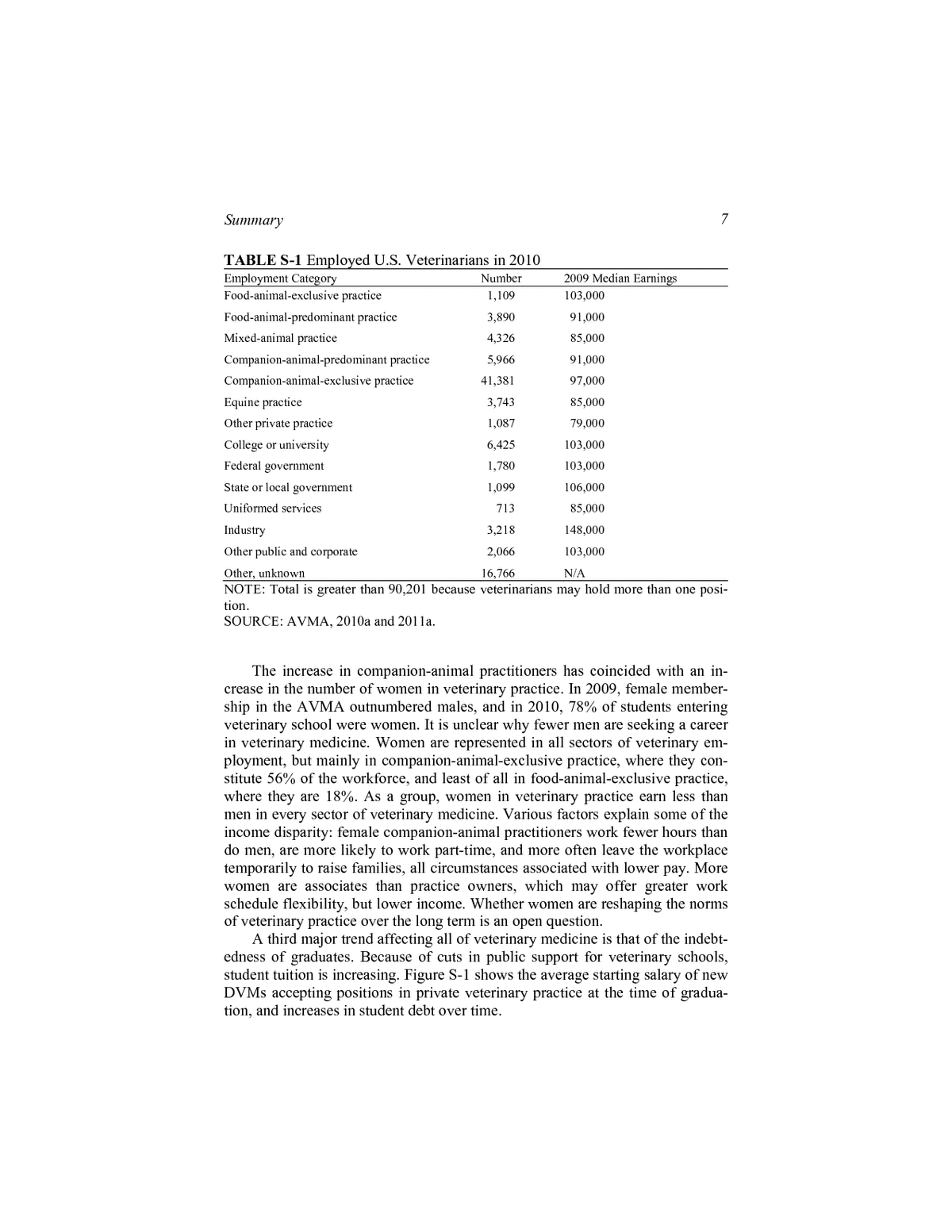
The total number of veterinarians in the United States is about 92,000, based on statistics collected by the largest veterinary professional association, AVMA, and other veterinary associations. In 2010, AVMA surveys of members and non-members counted 90,201 veterinarians employed in private practice, publicly-funded positions, and private industry. Table S-1 shows the numbers of veterinarians by categories of employment in 2010, along with the median annual income for each employment category in 20092.
Table S-1 understates the diversity of employment in veterinary medicine, considering the large number of animal species with which veterinarians work (from dogs, mice, dairy cows and elk to marine mammals and elephants) and more importantly, the context for veterinary medicine beyond animals themselves. Veterinarians are involved in work that affects human welfare as much as animals, for example, conducting research on chronic (human and animal) illness and hereditary pathologies, monitoring food safety, surveying wildlife for infectious and zoonotic diseases, investigating environmental toxins, boosting food production, reducing agricultural pollution, improving recreational opportunities, and supporting the military.
Major Trends in Veterinary Medicine
More than half of AVMA members in 2010 practiced companion-animal medicine. They now dominate a profession once defined by its service to agriculture and food animals—the original reason for establishing and supporting veterinary schools at Land Grant colleges and state universities. Veterinary support of the food-animal supply is still important to the $120 billion U.S. livestock, poultry, and aquaculture industries, which remain major proponents of state-based support for U.S. veterinary schools.
_____________________
2 The AVMA biennial compensation surveys have a response rate of approximately 25%. If DVMs who are more successful are more likely to respond, the reported earnings may exceed actual medians.
TABLE S-1 Employed U.S. Veterinarians in 2010
| Employment Category | Number | 2009 Median Earnings |
| Food-animal-exclusive practice | 1,109 | 103,000 |
| Food-animal-predominant practice | 3,890 | 91,000 |
| Mixed-animal practice | 4,326 | 85,000 |
| Companion-animal-predominant practice | 5,966 | 91,000 |
| Companion-animal-exclusive practice | 41,381 | 97,000 |
| Equine practice | 3,743 | 85,000 |
| Other private practice | 1,087 | 79,000 |
| College or university | 6,425 | 103,000 |
| Federal government | 1,780 | 103,000 |
| State or local government | 1,099 | 106,000 |
| Uniformed services | 713 | 85,000 |
| Industry | 3,218 | 148,000 |
| Other public and corporate | 2,066 | 103,000 |
| Other, unknown | 16,766 | N/A |
NOTE: Total is greater than 90,201 because veterinarians may hold more than one position.
SOURCE: AVMA, 2010a and 2011a.
The increase in companion-animal practitioners has coincided with an increase in the number of women in veterinary practice. In 2009, female membership in the AVMA outnumbered males, and in 2010, 78% of students entering veterinary school were women. It is unclear why fewer men are seeking a career in veterinary medicine. Women are represented in all sectors of veterinary employment, but mainly in companion-animal-exclusive practice, where they constitute 56% of the workforce, and least of all in food-animal-exclusive practice, where they are 18%. As a group, women in veterinary practice earn less than men in every sector of veterinary medicine. Various factors explain some of the income disparity: female companion-animal practitioners work fewer hours than do men, are more likely to work part-time, and more often leave the workplace temporarily to raise families, all circumstances associated with lower pay. More women are associates than practice owners, which may offer greater work schedule flexibility, but lower income. Whether women are reshaping the norms of veterinary practice over the long term is an open question.
A third major trend affecting all of veterinary medicine is that of the indebtedness of graduates. Because of cuts in public support for veterinary schools, student tuition is increasing. Figure S-1 shows the average starting salary of new DVMs accepting positions in private veterinary practice at the time of graduation, and increases in student debt over time.
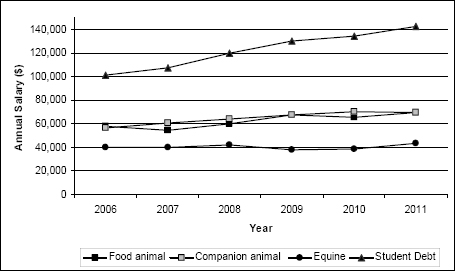
FIGURE S-1 Student debt and mean starting salary for new DVM graduates. DATA
SOURCE: AVMA Market Statistics, 2006-2011.
In 2011, new DVM recipients graduated with an average student debt of $142,613 and an average starting salary of $66,469. At the current rate of interest on student loans (6.8%), the annual debt service will be in excess of $18,000 per year for a 10-year payoff. Although the trend toward increased student debt is common in higher education, incomes remain low in veterinary medicine relative to the cost of the education. Most other health-related jobs require fewer years of education and offer higher salaries.
Trends in Companion-Animal Practice
The largest sector of the veterinary medical profession is comprised of private practitioners who treat companion animals exclusively. The companion-animal sector has experienced an increasing degree of specialization, including the development of emergency clinics in urban and suburban settings that have reduced practitioners’ after-hours obligations, and opened up opportunities in emergency medicine. In addition, more veterinarians are seeking board certification in one of 21 specialties, such as surgery, oncology, and orthopedic medicine. In 2010, about half of veterinary graduates pursued advanced study in some specialty (including those unrelated to companion-animal medicine). Explanations for the trend include demand (pets are living longer, requiring specialized services), higher earnings of specialists and the need to pay-off debt, and intellectual interest in the specialty fields.
Another trend in companion-animal medicine is the emergence of corporate-owned clinics, like Banfield, a division of Mars, Inc., which owns about 800 hospitals. Corporations have been able to take advantage of the economies
of scale in providing services, and use greater numbers of veterinary technicians, so veterinarians can treat more patients per day than in smaller practices.
Projections about the future growth of companion-animal medicine practice are uncertain. Recent average salaries of companion-animal-exclusive practitioners, especially practice owners, continue to rise, while salaries in companion-animal-predominant practice have fallen. The current economic recession makes it difficult to judge trends. Some studies show that expenditures on pets are closely tied to household income, which is likely to rebound. However, the recent accreditation of additional veterinary schools outside the United States (attended by U.S. students) will increase the supply of companion-animal veterinarians in the workforce, placing downward pressure on salaries.
The success of companion-animal medicine has become a double-edged sword in veterinary academe. In orienting veterinary school curricula toward the goals of the majority of students, important subjects (for example, infectious diseases, public health, and environmental toxicology) receive less emphasis. Although fewer numbers of veterinary graduates seek employment in public practice and industry settings (only about 3.5% in fourth year student surveys suggest that they will seek jobs in those sectors) the expertise needed in those positions is no less critical; it requires knowledge of a broader spectrum of veterinary subject matter than that focused on companion animals. Moreover, the pursuit of specialties is competing for resources, thus skewing educational priorities in veterinary schools. The 2-3 year specialty programs, whose requirements are determined by independent boards and colleges, typically involve internships and residencies and require two or more faculty mentors. This draws resources away from the central obligation of veterinary schools to educate entry-level DVMs.
Trends in Equine Practice
The economic downturn has affected almost all major sectors of the profession, and in private practice, equine medicine has been most negatively affected. Investment in the racing industry, horse ownership, and demand for veterinary services have all declined. Associates in equine medicine have the lowest starting salaries of the private-sector practitioners. The average starting salary in equine practice declined by 3.5% between 2010 and 2011, and median salaries for equine practitioners fell from $91,000 to 85,000 between 2007 and 2009. However, the most experienced equine practitioners make salaries higher than those in any other private practice (an average of $160,240 for practitioners over 60 years of age). Still, the current situation suggests that opportunities in equine practice will not substantively increase in the near term.
Unlike companion-animal practice, emergency clinics have not developed in equine practice. Consequently, equine practitioners spend a great deal of time on call. Although equine practitioners are now predominantly male, the proportion of women in the field is growing.
Trends in Food-Animal Practice
Reflecting a decrease in the number of livestock farms nationwide and the consolidation of food-animal production, the demand for veterinarians in the livestock, poultry, and swine industries is changing. Although the median salary for food-animal-exclusive veterinarians has been higher than that of any in private practice ($109,000 in 2009), it is not growing, and neither are the numbers of veterinarians in this sector. The number of food-animal-predominant veterinarians has actually declined, diversifying to treat companion animals and horses.
Consolidation of food-animal production has been accompanied by a decrease in the economic value of animal products relative to feed prices by about half since 1980 (see Figure 4-1 in the full report). The small profit margins received by producers mean that managerial decisions are increasingly based on cost containment, and consequently, much of primary veterinary care is being transferred to non-veterinary farm staff. Those developments have challenged the food-animal veterinary profession to change its role in animal production. For large-scale, intensive farms, that requires maintaining the health of animal herds, rather than individual animals, overseeing environmental stewardship, and increasing overall farm productivity and income. The profession has been slow to adapt to changes in the food-animal sector.
Although the demand for veterinary care in food-animal practice is generally declining, primary veterinary services are still needed in rural areas where widely-dispersed, smaller-scale food-animal producers must share the cost of supporting a large-animal veterinary practice—unsuccessfully, in many cases. The reduced number of rural food-animal veterinarians has left a gap in animal care and raises concerns about the level of animal disease surveillance in the field, which is critical to the prompt detection of outbreaks with potentially massive economic consequences, not to mention public health threats such as H5N1 avian influenza. Although the states and the federal government have launched programs to subsidize educational loan repayment for veterinarians needed in rural areas, it is uncertain whether those incentives will keep veterinarians in food-animal practice long term.
Trends in Public Sector Practice
Public sector veterinarians are employed by states and the federal government to fulfill a wide array of public responsibilities, including regulatory oversight and enforcement (food safety, animal welfare, and animal health), research (laboratory animal science, toxicology, risk assessment, disease control, antimicrobial resistance, drug-reactions, and disease-outbreak investigations), naturalre-source stewardship (wildlife and ecosystem management and disease monitoring), national security (medical intelligence, biosecurity, and agro-terrorism prevention), and human health (human- and animal drug review, health commissioners and sanitarians).
The number of veterinarians employed in state governments is small, perhaps fewer than 1,500, working in departments of public health, agriculture, and natural resources. About 3,000 veterinarians work in the federal government, the majority in the U.S. Department of Agriculture (USDA), the Department of Defense (DOD), and the Department of Health and Human Services (DHHS) (Table S-2). According to a 2009 Government Accountability Office (GAO) report, the number of veterinarians in the federal government has declined by 40% since 1990; numbers in state public-health services have been static or have declined. In addition to vacancies, one-third of veterinarians employed by USDA, the Food and Drug Administration, and the Army were eligible to retire in 2011.
Since the GAO report was issued, the Office of Personnel Management established an advisory council to evaluate the federal government’s need for veterinary expertise, and several agencies within USDA, DHHS and DOD increased hiring. Salaries for veterinarian positions in the federal government also have increased. However, some positions require a PhD or additional expertise. There are not many individuals available to fill those jobs, considering the demand for similarly qualified veterinarians in the biomedical industry, where salaries are significantly higher.
Trends in One Health: Wildlife, Ecosystems, and Global Food Security
A category of veterinary medicine that cuts across the public and private sectors is the broad discipline of wildlife and ecosystem health, which can be best understood in the context of its major areas of responsibility, which include: 1) health management of free-ranging wildlife populations; 2) zoo-animal medicine; 3) aquatic wildlife and marine mammal health; 4) wildlife rehabilitation; and 5) environmental, wildlife, or ecological toxicology. Determining how many veterinarians are employed in these fields is challenging because quantitative data are not captured by any one professional association. Employers include federal and state agencies, public and private universities, non-governmental organizations (NGOs), and zoos, aquaria, and marine and wildlife parks that may be publicly or privately operated.
Given the numbers of wildlife species and their multiple direct and indirect interactions with humans, the needs are quite broad. Numerous veterinary schools have established centers and educational programs that address wildlife, but there is no single career track pursued by DVMs with these interests, and students are advised to be entrepreneurial in defining veterinary roles in these fields.
Many aspects of veterinary medicine in wildlife and ecosystem health epitomize the multi-disciplinary field of One Health—a holistic concept of health that recognizes and addresses the complex linkages between humans, wild and domestic animals, and their ecosystems. Although not new for veterinarians, the concept is not yet in the mainstream of public consciousness. Greater
TABLE S-2 Veterinarians in the Federal Government
| Federal Agency | Number of Veterinarians |
| U.S. Department of Agriculture | 1,771 |
| Department of Defense | 841 |
| Department of Health and Human Services | 316 |
SOURCE: GAO, 2009.
interactions among veterinary students and medical students, and between veterinary and human-health faculties, could advance the understanding of One Health as a way to reconcile wildlife and ecological stewardship with food-animal production and improved public health.
The connection of disease to food production argues for an expansion of the One Health agenda from one that is U.S.-centric to a more global view of the role of veterinarians in meeting the challenges of feeding the world’s growing population. Veterinary expertise will be needed to address the intertwined problems of urban food security, intensification of livestock production, and environmental health in the developing world. The eradication in 2010 of rinder-pest—a dreaded livestock disease and the only viral pathogen since smallpox to be eliminated globally, highlights what is possible, given financial support and leadership. The facilitation of broader interactions with those involved in global food security outside of veterinary colleges could bring additional resources to the wide range of activities related to this important field.
Trends in Veterinary Medicine in Private Industry
The highest paying jobs for veterinarians are those in pharmaceutical, biotechnology, diagnostics, contract research, animal health, animal feeds, and agrochemical companies, which in 2009 paid an average annual salary of $167,415. Positions for veterinarians include those in basic (discovery) research, product development, pre-clinical research and product safety research, regulatory affairs, marketing and sales, and customer support.
Trends affecting private industry suggest that hiring of veterinarians is poised to grow. Food-animal producers want scientific and financial evidence to prove the value of animal-health products in their increasingly complex operations, so veterinarians are needed to educate customers and to demonstrate the value of products. Similarly, companion-animal owners want products that prevent and treat diseases or improve an animal’s quality of life. As the technologic complexity of veterinary products has increased, so have regulatory requirements related to product safety, driving the need for veterinarians with specialized training in laboratory animal studies, pharmacokinetics, and toxicology.
The high salaries offered in industry are suggestive of a strong demand for veterinary expertise for which there is a true shortage. Simply expanding the number of new DVMs by itself, however, will have little effect in filling indus-
try positions, which require advanced training in pathology, toxicology, laboratory animal medicine or other sciences. The major associations and societies of board certified veterinarians in industry-relevant specialties are taking steps to attract and train diplomate candidates. Their efforts to establish student clubs, mentorships, training positions, and fellowship programs with support from industry have begun to show encouraging results.
Trends in Veterinary Medicine in Academe
AVMA statistics indicate that there are 6,425 veterinarians employed by U.S. colleges and universities. Of that number, about 4,000 comprise the academic faculty for colleges and schools of veterinary medicine. In addition to preparing students to be “practice ready” in 4 years, academic veterinary faculty also conduct research and participate in the post-graduate programs offered by most colleges of veterinary medicine, including MS and PhD programs, as well as internships and residency programs. The post-graduate programs, which are housed within veterinary science departments in U.S. colleges of agriculture and comparative medicine departments in U.S. medical schools, are designed to develop additional expertise for positions in academe, industry, regulatory agencies, biomedical research, or specialty private practice.
A major trend affecting veterinary academe is the precipitous decline in state support for faculty positions and tuition support, resulting in reduced hiring, layoffs, and the elimination of whole programs from veterinary schools. As noted earlier, veterinary schools cannot easily support the needs for advanced specialty training. The academic environment is a logical place for specialty training, with a diverse caseload and expertise in many core disciplines, but the proliferation of specialties has been pursued without adequate infrastructure support, core funding for faculty, and other training resources and equipment.
Increasingly, veterinary faculty are required to cover a portion of their salaries from grants, and purchase laboratory equipment and support graduate students with funds from extramural sources. Competitive research grants from the National Institutes of Health (NIH) offer one source of such extramural funding, but only a few veterinary schools are competitive in attracting research dollars. More than half of NIH funding to veterinary colleges in 2011 went to 5 institutions. The total funding awarded to all veterinary colleges was approximately $171 million.
Colleges and schools of veterinary medicine face a precarious situation. They are in desperate need of trained graduates for faculty positions in structural biology, physiology, pharmacology, pathology, clinical pathology, infectious diseases of animals and zoonotic diseases, virology, microbiology, food safety, epidemiology, and nutrition. Also needed are clinical faculty members with expertise in both companion-animal and food-animal specialties, who would typically be expected to have specialty-board certification or a PhD in addition to the DVM. In the near future, the profession will experience major setbacks if
veterinary schools lack a sufficient number of experts to serve as faculty. Unfortunately, the trends suggest that the academic veterinary community will not meet its own needs, let alone those of state diagnostic laboratories, federal research and regulatory agencies, or the pharmaceutical and biologics industry.
CONCLUSIONS AND RECOMMENDATIONS
Matching the supply of veterinarians to demand for veterinary expertise depends on the commitment of the profession to promote and develop diverse careers paths in veterinary medicine and on the efficient delivery of veterinary services. In the conclusions and recommendations presented below, the committee calls for partnerships, resource sharing, and collective action to consider how to strengthen the profession’s foundations.
CONCLUSION 1: In its review of the profession, the committee found little evidence of widespread workforce shortages in veterinary medicine, although industry and some areas of academic veterinary medicine are experiencing shortages of veterinarians who have advanced training. The committee noted a difference between workforce shortages and unmet needs for veterinarian positions. Societal needs for veterinary expertise are substantial and growing, but the potential contributions of veterinary medicine are not realized because appropriate positions in relevant sectors are lacking.
True personnel shortages occur when positions go unfilled, even as employers increase salaries in an attempt to attract qualified candidates. In contrast, a situation of unmet needs occur in settings where positions with competitive salaries are lacking, for varying reasons. The committee found that each sector of the profession faces somewhat different issues, and each will require different solutions.
Recommendation 1A: Industry veterinary workforce shortages can be addressed by deeper partnerships between academe and industrial employers of veterinarians. Academe should more actively seek industry biomedical research partnerships, student mentoring, and opportunities in the curriculum to expose students to corporate practice.
In the committee’s view, the new and vacant positions found in industry represent a clear shortage because there are few qualified individuals to fill those jobs. This shortage can only be addressed by partnering with industry to educate future veterinarians with the skills for these positions.
The establishment of student clubs for pathology and laboratory-animal science at veterinary colleges, as recently initiated by the American College of Laboratory Medicine, the American Society of Laboratory Animal Practitioners,
and the American College of Veterinary Pathologists (ACVP) is a favorable development, as is industry support for internships and training positions through the ACVP/STP [Society of Toxicologic Pathology] Coalition for Veterinary Pathology Fellows. Such programs, in addition to tracking options in veterinary colleges, offer the best opportunity for channeling students into careers in laboratory-animal medicine, pathology, and comparative biomedical research.
Recommendation 1B: To meet the need for positions for veterinarians in public practice, the committee urges state and federal governments to re-examine their policies on remuneration, recruitment, and retention of veterinarians.
In the federal government, the work of the Veterinary Medical Officers Talent Management Advisory Council should continue to refine veterinary positions. Changing a number of personnel policies—from recruitment strategies and hiring practices to retention initiatives, including child care and parental leave—could improve the government’s opportunity to employ veterinarians.
Recommendation 1C: The Association of American Veterinary Medical Colleges, American Animal Hospital Association, and American Veterinary Medical Association should develop realistic strategies for meeting companion-animal veterinary medical workforce needs. Building such a strategy requires reliable national data on consumer demand for companion-animal care, the economics of private practice, the role of veterinary technicians in extending companion-animal care, and the implications for the profession of growth in accredited and non-accredited veterinary schools both inside and outside the United States.
Companion-animal veterinary medicine has come to dominate the curriculum and resources of veterinary schools, sometimes to the detriment of other fields of veterinary medicine. To accommodate more students, some veterinary colleges have increased enrollment, and the AVMA has accredited additional veterinary schools. However, better data on the demand for companion-animal services and the capacity of the economy to support companion-animal practitioners would help to inform decisions about increasing the number of DVM graduates. Strategic planning is needed to identify how to support the clinical faculty, specialists, and others required to train new companion-animal practitioners and the companion-animal paraprofessionals who assist them. Those decisions also should consider how to maintain the quality of a veterinary education, provide access to students at a reasonable cost, and meet the need for veterinary services in all sectors of the profession.
CONCLUSION 2: The decade-long decline in funding of education and research has jeopardized the profession’s future capacity to serve societal needs.
Strengthening the scholarly base for veterinary medicine is fundamental to its future. Agricultural industries have effectively promoted state government support for veterinary education, but there is little support from the federal government. Although an American veterinary education is widely regarded as the world’s gold standard for veterinary education, low salaries, heavy workloads, and inconsistent policies for federal funding of research on animals have made it extremely difficult to attract research leaders to academic veterinary medicine. If the schools and colleges will not be able to fill faculty positions, some segments of teaching in veterinary education will be reduced.
Recommendation 2: Veterinary academe should increase its commitment to research, developing future faculty, and encouraging current faculty to work across disciplinary and professional boundaries. The Association of American Veterinary Medical Colleges is well positioned to take on the challenge.
Effective research programs require long-term commitments by teams of investigators. Efforts to restructure veterinary medical education using distance learning and consortia should develop in ways that build on the research base. Research-based educational environments draw students to research careers, an essential process for sustaining the profession’s intellectual core.
To remain in the mainstream of biomedical research, veterinary schools can improve their ability to attract funding by hiring more DVM-PhD and PhD mentors to attract grants and provide graduate training of veterinarians at the doctoral level, both in biomedical research and in research projects of primary importance to animals. There are unique opportunities for building such programs in the biomedical sciences. For example, comparative veterinary medicine addresses a broad spectrum of spontaneously occurring diseases that are homologues of diseases in humans and could be funded by the NIH.
CONCLUSION 3: The current return on investment for veterinary education is unsustainable and the cost of veterinary education is at a crisis point. The profession may be at risk for lowering the quality of applicants to the profession and the quality of veterinary education. The veterinary profession has been slow to respond to these challenges.
The financial reward for the investment of seven to eight years or more for a student to obtain a professional veterinary degree is out of synchrony with the debt carried by graduates. For about the same number of years of training, veterinarians make much less than dentists and about the same as pharmacists, who can graduate with the required PharmD in as little as six years.
The large debt load has another adverse effect on the future of academic veterinary medicine; it undermines the willingness of young veterinarians to pursue PhD research training that would prepare them to take positions in academe. The current level of state support has kept academic salaries low (relative to those in industry and clinical specialty practices) so the additional years of training do not ultimately provide an adequate economic reward for the education investment made.
Recommendation 3a: Professional veterinary organizations, academe, industry, and government should work together with a sense of urgency to stimulate the collective actions needed to ensure the economic sustainability of veterinary colleges, practices, and students. A national consortium or committee should be jointly supported to bring together initiatives that focus on the economic sustainability of the profession in all sectors of service, education, and research.
Veterinary education is the most expensive of all health-science education, in part because of the intense clinical training that produces “practice-ready” graduates. The full cost of a 4-year veterinary education is substantial—about $66,000 per year. Previous groups have called for a change and coordination in the nation’s approach to veterinary education and its costs. In 2011, the North American Veterinary Medical Education Consortium report Roadmap for Veterinary Medical Education in the 21st Century: Responsive, Collaborative, Flexible provided a wide array of options. An ongoing consortium of key veterinary organizations, deans, industry, government, and economists is needed to put into place those solutions that improve the sustainability of the profession.
Recommendation 3b: As part of a comprehensive strategy to address the economic sustainability of the veterinary profession, the working groups appointed by the consortium should create nationally shared curricula.
To reduce costs, veterinary schools and colleges urgently need to share facilities and expertise. The growth of distance education and webinars offers an opportunity to achieve this goal. The emerging power of distance education provides the greatest opportunity for advancing food-animal veterinary education at a comparatively modest cost. Webinars and similar technologies can lead to continuing-education credits for veterinarians. Teaching veterinary students from other developed and developing countries should be encouraged to extend the reach of U.S. academic programs and to capture the potential revenue that these sources can generate.
Recommendation 3c: U.S. veterinary colleges should evaluate and implement alternative options for the delivery of veterinary education and research.
Veterinary teaching is evolving and some non-traditional models are now used by AVMA-accredited veterinary colleges. Alternative models for veterinary education, and those that spread the cost of specialty training, in particular, need to be evaluated by inter-professional committees to identify those that hold promise for improving the efficiency of veterinary medical education and research in the United States. Alternatives for further evaluation include:
• Creating university-private sector collaborations to establish comprehensive medical centers that can meet the needs of animal owners and provide a state-of-the-art infrastructure for specialist training in companion-animal and equine medicine. Such centers would also serve as a focus for clinical trials and other research.
• Sharing responsibility for specialty training though interschool collaborations; relying on talent in private veterinary practices, specialty practices, industry, and public agencies; and by enlisting the support of government, nongovernmental organizations, and other stakeholders.
• Reducing the length of pre-veterinary education to permit students with strong academic records to apply to veterinary school after 1 or 2 years of undergraduate study.
• Establishing more joint degree programs, such as the DVM-MPH and DVM-MBA. Finding financial support for DVM-PhD programs is essential to make the pursuit of a PhD more attractive, increase the pool of potential veterinary faculty, and broaden the base of veterinary medicine.
CONCLUSION 4: The veterinary profession is losing its presence in food-animal production and care.
With the changing nature of food-animal production in America, the demand for traditional veterinary services has declined, creating two related problems: how to develop production medicine to serve the dynamically changing and increasingly intensive livestock and poultry industries; and, how to provide veterinary services in the rural United States where fewer and more widely dispersed farms make it difficult for food-animal clinicians to remain in practice.
Recommendation 4a: To increase the economic value of veterinary services to producers, the education of food-animal practitioners should be reoriented towards herd health and interventions aimed at improving the financial health of the farm operation. Veterinary schools and colleges should work together to achieve this goal by creating centers of emphasis on food-animal medicine.
Veterinary academia has been slow to respond to educational needs in food-animal production medicine. Large producers who dominate the livestock industries expect veterinarians to make decisions aimed at increasing herd health, productivity, and the overall profitability of the farming operation. Those are the services that producers seek and for which they are willing to pay. At the same time, the profession is also expected to increase its role in monitoring food safety, drug residues, animal welfare, nutrient management, and stewardship of the environment.
The most compelling case for creating centers of emphasis is in those disciplines where small numbers of students are involved and it is difficult for each school or college to justify faculty costs. Such is the case for food-animal medicine. There are models of successful centers in which advanced practical training and research is available, such as the Agricultural Research Service Meat Animal Research Center at Clay Center, Nebraska; the Swine Center of Excellence at Iowa State University in conjunction with the Audubon-Manning Veterinary Clinic; the University of California at Davis Dairy Center at the Veterinary Medical Teaching and Research Center at Tulare, California; and the recently formed National Center of Excellence in Dairy Production Medicine Education for Veterinarians funded by USDA that is a collaboration among the veterinary schools of the Universities of Georgia, Minnesota, Illinois, and Kansas State University.
Forming centers of emphasis is not a new idea, but it needs to be revisited and nurtured by veterinary leaders and affected stakeholders. In addition to advancing the quality of food-animal education, the committee sees the advantages of a strategically-planned network of cooperating centers for reducing a duplication of effort, faculty salaries, and facilities.
The centers will develop only as entrepreneurial deans and faculty initiate inter-institutional discussion, formulate creative ideas, use distance education, and attract funding from industry, public-health agencies, foundations, international organizations, and federal and international governments. Maintaining flexibility in center programs will be an ongoing challenge. A system of regular review or accreditation should be put in place at the time the centers are created.
Recommendation 4b: The veterinary profession should formulate new ways of delivering cost-effective services to rural America, using veterinary technicians to extend animal-health services to underserved areas.
In rural areas where there are too few farms to support a full-time veterinarian, a system of animal health care that integrates the licensed clinicians with rigorously trained paraprofessionals is needed. For this to be accomplished, AVMA and the professional associations of food-animal practitioners will need to enter a dialogue with officials to modify state practice acts to permit credentialed veterinary technicians to administer livestock health services provided that they are subject to oversight by (and in constant communication with) licensed
practitioners who may be in distant locations. Veterinary technicians working with veterinarians have the potential to strengthen the nation’s capacity to implement and administer health surveillance and early warning systems in rural America. Supporting this capacity could be an opportunity for private-public partnerships.
CONCLUSION 5: Global food security is one of the most pressing challenges of the 21st century. The food and water security and safety concerns confronting the world today are far more daunting than anything veterinary medicine has previously had to confront. Because these challenges are enormously complex, they will require the veterinary profession to engage in interdisciplinary and interprofessional One Health solutions.
One Health issues cut across the interests of both industrialized and developing countries. The rapid urbanization in many newly-industrializing societies will create significant challenges to public health related to the spread of disease, the availability of clean water resources, the safety and abundance of food production, and the quality of the natural environment. These are local-scale issues with global implications. In view of the importance of increasing world food supplies, and the growing global trade in foods of animal origin, the establishment of global health programs would strengthen veterinary manpower in developing countries while protecting U.S. and global interests.
Recommendation 5: Veterinary medical organizations and the deans of veterinary colleges should work to increase the visibility, standing, and potential of the profession to address global food security. Establishing a One Health think tank with the goal of advancing food-animal husbandry and welfare policies, ecosystem health standards, and the capacity of the veterinary profession in the developing world would help future generations of veterinarians to collaborate across professions, disciplines and cultures. A part of this body should also consider the necessary competencies required of U.S. veterinary graduates to address the global challenges of food and water safety and security, and the health of wildlife and ecosystems.
The scientific and medical issues at the nexus of animal, human, and ecosystem health are of growing importance, and knowledge can be gained from understanding how changes in one system can affect others. To meet the demand for animal protein by a growing world population, animal production in the developing world has expanded, and with it has come increased environmental pollution, food-safety concerns, and the potential for infectious diseases to spread. Antibiotic resistance, greenhouse-gas emissions, and feed- and food-based toxins are the issues the veterinary medical profession is poised to address, but ultimately, defining and implementing the priorities for a One Health
initiative is a responsibility to be shared with public health professionals, social scientists, and others.
Every sector of veterinary medicine is experiencing changes that have important implications for the profession and the future tasks that it inevitably needs to assume. The greatest challenge facing the profession is how its educational system and the research enterprise at its foundation will survive economic constraints, at a time when the private and public sector are looking for increasingly sophisticated veterinary expertise. With a serious examination of their collective purpose and a national perspective on the future of the veterinary workforce, the schools and colleges of veterinary medicine can meet those expectations.