
Nuclear Physics
Exploring the Heart of Matter
Committee on the Assessment of and Outlook for Nuclear Physics
Board on Physics and Astronomy
Division on Engineering and Physical Sciences
NATIONAL RESEARCH COUNCIL
OF THE NATIONAL ACADEMIES
THE NATIONAL ACADEMIES PRESS
Washington, D.C.
www.nap.edu
THE NATIONAL ACADEMIES PRESS 500 Fifth Street, NW Washington, DC 20001
NOTICE: The project that is the subject of this report was approved by the Governing Board of the National Research Council, whose members are drawn from the councils of the National Academy of Sciences, the National Academy of Engineering, and the Institute of Medicine. The members of the committee responsible for the report were chosen for their special competences and with regard for appropriate balance.
This study was supported by Grant No. PHY-80933 between the National Academy of Sciences and the National Science Foundation and by Grant No. DE-SC0002593 between the National Academy of Sciences and the Department of Energy. Any opinions, findings, conclusions, or recommendations expressed in this publication are those of the author(s) and do not necessarily reflect the views of the organizations or agencies that provided support for the project.
Cover: “Circles in a Circle” by Wassily Kandinsky.
Dedication (p. xv): Photo courtesy of University of California, Berkeley, Department of Physics.
International Standard Book Number-13: 978-0-309-0-309-26040-4
International Standard Book Number-10: 0-309-26040-X
Library of Congress Control Number: 2013931504
Additional copies of this report are available from the National Academies Press, 500 Fifth Street, NW, Keck 360, Washington, DC 20001; (800) 624-6242 or (202) 334-3313; http://www.nap.edu; and the Board on Physics and Astronomy, National Research Council, 500 Fifth Street, NW, Washington, DC 20001; http://www.national-academies.org/bpa.
Copyright 2013 by the National Academy of Sciences. All rights reserved.
Printed in the United States of America
THE NATIONAL ACADEMIES
Advisers to the Nation on Science, Engineering, and Medicine
The National Academy of Sciences is a private, nonprofit, self-perpetuating society of distinguished scholars engaged in scientific and engineering research, dedicated to the furtherance of science and technology and to their use for the general welfare. Upon the authority of the charter granted to it by the Congress in 1863, the Academy has a mandate that requires it to advise the federal government on scientific and technical matters. Dr. Ralph J. Cicerone is president of the National Academy of Sciences.
The National Academy of Engineering was established in 1964, under the charter of the National Academy of Sciences, as a parallel organization of outstanding engineers. It is autonomous in its administration and in the selection of its members, sharing with the National Academy of Sciences the responsibility for advising the federal government. The National Academy of Engineering also sponsors engineering programs aimed at meeting national needs, encourages education and research, and recognizes the superior achievements of engineers. Dr. Charles M. Vest is president of the National Academy of Engineering.
The Institute of Medicine was established in 1970 by the National Academy of Sciences to secure the services of eminent members of appropriate professions in the examination of policy matters pertaining to the health of the public. The Institute acts under the responsibility given to the National Academy of Sciences by its congressional charter to be an adviser to the federal government and, upon its own initiative, to identify issues of medical care, research, and education. Dr. Harvey V. Fineberg is president of the Institute of Medicine.
The National Research Council was organized by the National Academy of Sciences in 1916 to associate the broad community of science and technology with the Academy’s purposes of furthering knowledge and advising the federal government. Functioning in accordance with general policies determined by the Academy, the Council has become the principal operating agency of both the National Academy of Sciences and the National Academy of Engineering in providing services to the government, the public, and the scientific and engineering communities. The Council is administered jointly by both Academies and the Institute of Medicine. Dr. Ralph J. Cicerone and Dr. Charles M. Vest are chair and vice chair, respectively, of the National Research Council.
This page intentionally left blank.
COMMITTEE ON THE ASSESSMENT OF AND OUTLOOK FOR NUCLEAR PHYSICS
STUART J. FREEDMAN, University of California at Berkeley, Chair
ANI APRAHAMIAN, University of Notre Dame, Vice-Chair
RICARDO ALARCON, Arizona State University
GORDON A. BAYM, University of Illinois
ELIZABETH BEISE, University of Maryland
RICHARD F. CASTEN, Yale University
JOLIE A. CIZEWSKI, Rutgers, The State University of New Jersey
ANNA HAYES-STERBENZ, Los Alamos National Laboratory
ROY J. HOLT, Argonne National Laboratory
KARLHEINZ LANGANKE, GSI Helmholtz Zentrum Darmstadt and Technische Universität Darmstadt
CHERRY A. MURRAY, Harvard University
WITOLD NAZAREWICZ, University of Tennessee
KONSTANTINOS ORGINOS, The College of William and Mary
KRISHNA RAJAGOPAL, Massachusetts Institute of Technology
R.G. HAMISH ROBERTSON, University of Washington
THOMAS J. RUTH, TRIUMF/British Columbia Cancer Research Centre
HENDRIK SCHATZ, National Superconducting Cyclotron Laboratory
ROBERT E. TRIBBLE, Texas A&M University
WILLIAM A. ZAJC, Columbia University
Staff
JAMES C. LANCASTER, Director
DONALD C. SHAPERO, Senior Scholar
CARYN J. KNUTSEN, Associate Program Officer
TERI G. THOROWGOOD, Administrative Coordinator
SARAH NELSON WILK, Christine Mirzayan Science and Technology Policy Graduate Fellow
BETH DOLAN, Financial Associate
BOARD ON PHYSICS AND ASTRONOMY
ADAM S. BURROWS, Princeton University, Chair
PHILIP H. BUCKSBAUM, Stanford University, Vice-Chair
RICCARDO BETTI, University of Rochester
JAMES DRAKE, University of Maryland
JAMES EISENSTEIN, California Institute of Technology
DEBRA ELMEGREEN, Vassar College
PAUL FLEURY, Yale University
PETER F. GREEN, University of Michigan
LAURA H. GREENE, University of Illinois at Urbana-Champaign
MARTHA P. HAYNES, Cornell University
JOSEPH HEZIR, EOP Group, Inc.
MARC A. KASTNER, Massachusetts Institute of Technology
MARK B. KETCHEN, IBM Thomas J. Watson Research Center
JOSEPH LYKKEN, Fermi National Accelerator Laboratory
PIERRE MEYSTRE, University of Arizona
HOMER A. NEAL, University of Michigan
MONICA OLVERA DE LA CRUZ, Northwestern University
JOSE N. ONUCHIC, University of California at San Diego
LISA J. RANDALL, Harvard University
MICHAEL S. TURNER, University of Chicago
MICHAEL C.F. WIESCHER, University of Notre Dame
Staff
DONALD C. SHAPERO, Director
JAMES C. LANCASTER, Associate Director, Senior Program Officer
DAVID B. LANG, Program Officer
CARYN J. KNUTSEN, Associate Program Officer
TERI G. THOROWGOOD, Administrative Coordinator
BETH DOLAN, Financial Associate
Preface
The National Research Council convened the Committee on the Assessment of and Outlook for Nuclear Physics (NP2010 Committee) as part of the decadal studies of physics and astronomy conducted under the auspices of the Board on Physics and Astronomy. The principal goals of the study were to articulate the scientific rationale and objectives of the field and then to take a long-term strategic view of U.S. nuclear science in the global context for setting future directions for the field. The complete charge is presented in Appendix A.
The NP2010 Committee was composed of experts from universities and national laboratories in the United States, Canada, and Europe, mainly researchers in nuclear physics but also experts in other disciplines (see Appendix C for biographical information about committee members). The committee met four times in person, with the first meeting taking place on April 9-10, 2010, in Washington, D.C., and the fourth and final meeting on February 12-13, 2011 in Irvine, California. To provide an international context for research taking place in the United States, the NP2010 Committee heard from experts representing nuclear science from the Organisation for Economic Co-operation and Development global nuclear forum, from India, Europe, Canada, and Japan. The federal agencies that support nuclear physics research also briefed the committee, providing their perspectives on the issues to be addressed in this report. The committee thanks all those who met with it and supplied information. Their materials and discussions were valuable contributions to the committee’s deliberations.
As chair and vice chair of the committee, we are particularly grateful to the committee members for their willingness to devote many hours to meeting and
discussing all of the issues that arose and then to preparing the report. Finally, we thank the NRC staff for their guidance and assistance.
Stuart Freedman, Chair
Ani Aprahamian, Vice Chair
Committee on the Assessment of and Outlook for Nuclear Physics
Acknowledgment of Reviewers
This report has been reviewed in draft form by individuals chosen for their diverse perspectives and technical expertise, in accordance with procedures approved by the National Research Council’s (NRC’s) Report Review Committee. The purpose of this independent review is to provide candid and critical comments that will assist the institution in making its published report as sound as possible and to ensure that the report meets institutional standards for objectivity, evidence, and responsiveness to the study charge. The review comments and draft manuscript remain confidential to protect the integrity of the deliberative process. We wish to thank the following individuals for their review of this report:
John Beacom, Ohio State University,
Paul Debevec, University of Illinois at Urbana-Champaign,
Gerry Garvey, Los Alamos National Laboratory,
Barbara Jacak, Stony Brook University,
Noemie Koller, Rutgers, The State University of New Jersey,
Alice Mignerey, University of Maryland,
Martin Savage, University of Washington,
Susan J. Seestrom, Los Alamos National Laboratory,
Brad Sherrill, Michigan State University, and
Priya Vashishta, University of Southern California.
Although the reviewers listed above have provided many constructive comments and suggestions, they were not asked to endorse the conclusions or
recommendations, nor did they see the final draft of the report before its release. The review of this report was overseen by William H. Press, University of Texas at Austin, as monitor. Appointed by the NRC, he was responsible for making certain that an independent examination of this report was carried out in accordance with institutional procedures and that all review comments were carefully considered. Responsibility for the final content of this report rests entirely with the authoring committee and the institution.
Contents
How Did Visible Matter Come Into Being and How Does It Evolve?
How Does Subatomic Matter Organize Itself and What Phenomena Emerge?
Are the Fundamental Interactions That Are Basic to the Structure of Matter Fully Understood?
Perspectives on the Structure of Atomic Nuclei
Revising the Paradigms of Nuclear Structure
Neutron-Rich Matter in the Laboratory and the Cosmos
Nature and Origin of Simple Patterns in Complex Nuclei
Discovery of the Near-Perfect Liquid Plasma
Toward a Theoretical Framework for Strongly Coupled Fluids
The Strong Force and the Internal Structure of Neutrons and Protons
The Basic Properties of Protons and Neutrons: Spatial Maps of Charge and Magnetism
Momentum and Spin Within the Proton
In-Medium Effects: Building Nuclei with QCD
Identifying the Full Array of Bound States—The Spectroscopy of Mesons and Baryons
Toward the Next Steps: An Electron-Ion Collider
Fundamental Symmetries Studies in the United States and Around the World
HIGHLIGHT: DIAGNOSING CANCER WITH PET
3 SOCIETAL APPLICATIONS AND BENEFITS
Diagnosing and Curing Medical Conditions
Nuclear Imaging of Disease and Functions
New Radioisotopes for Targeted Radioimmunotherapy
Future Technologies in Nuclear Medicine
Making Our Borders and Our Nation More Secure
Protecting Our Borders from Proliferation of Nuclear Materials
Certifying the Nation’s Nuclear Stockpile
The Greatest Challenge: Nuclear Devices in the Hands of Terrorists or a Rogue Nation
Innovations in Technologies and Applications of Nuclear Science
Addressing Challenges in Medicine, Industry, and Basic Science with Accelerators
Information and Computer Technologies
Cosmic Rays, Electronic Devices, and Nuclear Accelerators
Helping to Understand Climate Effects One Nucleus at a Time
U.S. Nuclear Science Leadership in the G-20
HIGHLIGHT: THE FUKUSHIMA EVENT—A NUCLEAR DETECTIVE STORY
5 NUCLEAR SCIENCE GOING FORWARD
A Nuclear Workforce for the Twenty-first Century
Challenges and Critical Shortages
The Role of Graduate Students and Postdocs
Balance of Investments in Facilities and Universities
Mechanisms for Ensuring a Robust Pipeline
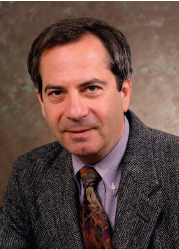
STUART JAY FREEDMAN
1944-2012
The committee dedicates this report to Stuart Freedman, its chair, who passed away unexpectedly on November 10, 2012. Stuart brought intellectual leadership, humor, friendship, and the highest standards of scientific excellence to his work. His loss is deeply felt throughout the community of nuclear physicists.


